Month: February 2015

  • Embracing Syncretism

    When I first encountered the concept of cultural immersion, it sounded something like this:

    To understand—to truly understand—another place and people, you must eat, sleep, dress, breathe and speak like the locals.

    The Anthropological principle of “participant observation” essentially takes the same tact.
    And it’s simple, right? Not easy, but simple:

    When in Nepal, eat dal bhat, sleep on wooden pallets topped by thin thin cushions, wear salwar kameez, learn Nepali—or, in my case, attempt to learn Tibetan—take the bus and wear a mask against air pollution. When in Italy, eat pasta with bread to fare la scarpetta, speak Italian, ride scooters and dress… however it is Italian women dress. When in Kenya… need I go on?

    Except, no. It’s not that simple.
    First of all, unless you’re a linguistic genius, you can’t possibly learn all of the languages, and if you want to travel to many places, your communication skills will suffer in the balance. More than two months in Kenya, and I have yet to muster the energy to tackle Ki-Swahili. (I will though… I will.)
    And then, what is “Italian” in the patchwork of dialects that is Italy? In Nepal, a country of at least fifteen distinct ethnic/cultural/linguistic groups, what language should you learn?
    What is “traditional dress” when every other “modern Indian woman” opts for blue jeans?
    What is local food? Sure, staff meal might be rice and beans, but those who can afford it sup on steak frites or pasta marinara. Valid or non-valid dimension of a “local” experience?
    The answer, of course, is valid. It’s all valid. Local ≠ traditional ≠ authentic. We attach far too many judgments of value, ignorant assumptions and foreign stereotypes to these words (as I have, doubtless, asserted many, many times already…).
    Local, at this moment in Kilifi, Kenya, means teaching yoga and tango at a four-day milonga event. The absolute last thing I expected to find here, and I could not be more pleased.
    At this moment, local means dancing five hours a day and creating lesson plans with my new Italian dance partner, so that we can teach foreigners and Kenyans alike about connecting to their bodies and one another through Tango.
    Local means ordering grilled cheese and butternut squash soup for lunch because it’s f*cking delicious and I have no desire to eat rice and stew every day.

    I no longer wish to limit my experience to what is appropriately immersive. Not, I hope, at the expense of learning (I really need to get it together and study Ki-Swahili), but in the interest of embracing reality in all its syncretic, contradictory beauty.
    ***
  • The Dhow

    [The following is an adaptation of a piece I recently published at elephant journal, “Facing Fear in Handstand.” Or maybe the piece in elephant is an adaptation of this, as this is a near exact excerpt from my travel journal. Either way, enjoy!]

    ***

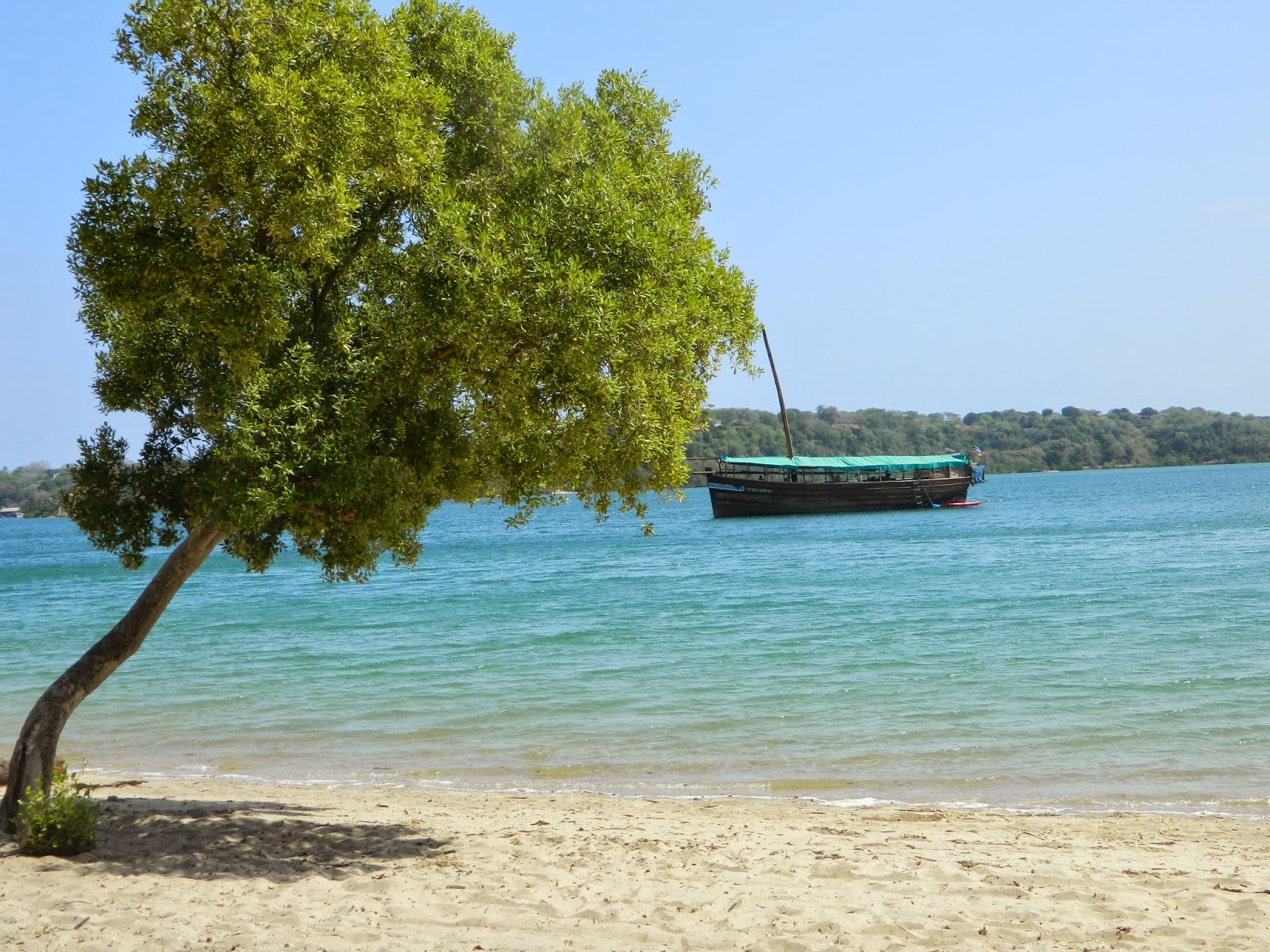
    I swim to the Dhow—a traditional Arab/East African (/originally Chinese?!) sailing vessel—anchored in Kilifi Creek. I alternate between front and back crawl, and though it only takes a couple minutes, it feels much longer, as is always the case with swimming.

    The Dhow (named musafir, Arabic for traveller) is unfinished. Three years in the making, the boat has a bit of work remaining. The deck boards wobble and gape in places.

    The ship’s builder, a Frenchman with a feather in his dreads, is leaving when I arrive. I hoist myself up the rope ladder that dangles into the water, then he lets himself down into a waiting dingy.

    Alone now, save for a snoozing workman at the bow, I make my way to a single plank of wood jutting out at the back of the boat and sit down. The four o’clock sun is still hot on my skin; it dries the seawater on my arms, leaving a salty film.

    I think about jumping into the water, but delay a while yet. I watch, fascinated, the journey of a single fish. He looks like a seahorse stretched out flat: long, pointy snout, eyes on the side of his equestrian head, mint green and brown body, undersized blue tail fin. He plies the water two meters below my feet.

    A dog barks from shore and reminds me I have something to do.

    I probably stand on that wooden plank a full five minutes thinking. Thinking how I could just climb back down the rope ladder, but I won’t. Because I have something to prove. Not to anyone else—the small beach is deserted—but to myself. Thinking how I feel the need to jump off boats and bridges precisely because it scares me so.

    Some people will always turn back to the rope ladder, but I am no longer one of them, I think. I have decided to be “fearless.” A better word, however, might be “fear-defying.” I refuse to abide by my fears.

    I am thinking how fearlessness, or courage, rather, is not the absence of fear. It is doing things anyway. I hope I always will.

    And I jump, of course. The water is warm-cool after the heat of the sun, and it rearranges itself effortlessly around my body.

    And of course, the jump is a non-event. Nothing of note has happened, and yet I am pleased enough to write all about it. I swim back to shore with a smile on my face. It’s the little things, after all…

    ***
  • When the Power Goes Out (a poem for quiet moments)

    When the Power Goes Out (a poem for quiet moments)

    I wrote this during one of Kenya’s (frequent, albeit brief) power outages. Though inconvenient, I find they can offer some much-needed respite from the constant activity that light, connectivity and music demand. They leave a bit of space for reflection…


    When the Power Goes Out: Quiet

    When the power goes out,
    I return home to pen and paper
    and write by the glow of a single
    (electronic) lantern on the bar.
    When the power goes out,
    the hum of never-ending action pauses,
    and I can hear the wind in the leaves
    and the whine of mosquitoes—
    Magic stillness.
    When the power goes out,
    Quiet touches the darkness
    with its fingertips
    and wraps around my mind.
    When the power goes out,
    I take a deep breath,
    wonder—for a moment—what to do,
    And smile.


    Power outages, delays, mistakes… so many blessings in disguise. Don’t you think?

  • The Paradise Mask

    Diani Beach, South Coast, Kenya, 4.3222° S


    “Everybody—everybody who is escaping from something ends up in Diani. Shady people, criminals, expats… everybody.”

    Such was the prognosis of a Diani resident and regular at the South Coast Backpackers bar (where I have been working for the last three weeks), and I am inclined to believe he is right.
    Though it doesn’t seem it outright—packed with tourist shopping centers and hotels as it is—Diani Beach is kind of a final frontier. A “la-la land” for expats and Kenyans alike escaping from their pasts—or simply fleeing the big cities (“Nairobbery,” I have learned, is actually a common nickname for Nairobi). A no-man’s land where many normal social conceits do not seem to reach.
    What does that mean? Allow me to illustrate:
    Here in Diani Beach you have the “beach boys,” the name by which everyone—and I mean everyone—calls the men who pass their time at the beach, either trying to sell something—coconuts, jewelry, boat trips, sunglasses, aloe leaves, safaris and anything else you can or can’t think of—or just loitering… or betting on a Roulette of foreign women. They almost always lose that bet… after all, only so many women will respond kindly to verbal assault: Hey! Beautiful-lady-how-are-you-Where-are-you-going? Why-you-don’t-want-to-talk-you-are-very-beautiful.
    Local bars, however, are brimming with those who have won. Young Kenyan men and women share cocktails and seductive glances with much, much older foreign women and men. The Kenyan men wear their good fortune with a touch of arrogance, while the women adjust their skin-tight dresses and scan the room for something better.
    Residents and long-term visitors prove a bottomless repository of stories—bar brawls, unsavory characters, intrigue—leading a new arrival to wonder how Diani manages to appear so… idyllic. The ever-swaying palm trees, smoldering white sand, jewel-toned water and algae, beachfront thatch-roofed restaurants and resorts, technicolor kites speckling the sky, two resident Diani Beach camels—it all belies a much less serene, much duskier palette of hidden shadows and secrets… Or so it would seem.
    She who ventures out at night must not walk along the road for pickpockets; must be wary of piki pikis and taxis for drunk drivers; must avoid matatus for questionable passengers.
    A guest in a five-star, gated compound on Diani Beach might easily—very easily; too easily—forget that Kenyan law allows for detention in jail up to one year on suspicion of terrorism; might refuse to acknowledge that police checkpoints on roads are no more than systematized bribery collection centers; might overlook the streets lined with garbage and the fact that most of the young local women at the bars are probably prostitutes.
    Here is a carefully imagined idea of a paradisiac tropical hideaway spread like a semi-translucent shroud atop the reality of Kenya: corruption and a starving tourism industry. At times (most of the time, even), I have certainly overlooked it all, lulled into la-la land by the breeze and the sun and the sand and the coconuts.

    But then again, Diani Beach is hardly unique in these regards. What earth-bound paradise is truly what it pretends to be?
    ***

    ***