Tag: africa

  • Kenya V United States (A Fun Chart)

    This blip of time back in the U.S. has offered me some perspective on both Kenya and my home country, and a chance to reflect on how the two compare. So I had myself some fun and made this chart.

    Granted, some of these are generalizations based only on my own experiences; nonetheless, I think the following juxtaposition could be both entertaining and illuminating. Enjoy!

    ***

    Kenya
    United States
    Airport employees mostly smile.
    The women working security at the Mombasa International Airport are delighted at my attempts to speak Ki-Swahili, try to convince me to find a Kenyan husband, and totally crack up when I joke that I already have seven and I don’t want any more.
    Airport employees rarely smile.
    I try to make a joke with the woman directing the passport control line about the man who seems to be trying to cut in front of me. The look she gives me is closer to shock than anything else.
    Pedestrians are responsible for themselves.
    Crossing the street is on you. Try not to get hit.
    Pedestrians are the drivers’ responsibility.
    There are crosswalks. Cars stop at them.
    Metonyms.
    Salad could be anything made from vegetables, be it mango salsa or tomatoes and onion… or mixed greens!
    Divisions (or the corresponding linguistic term).
    Caeser salad; cobb salad; garden salad; waldorf salad… you get the point. So many kinds of salad out there, and we will name them all!
    Mpesa.
    People have been using digital currency for a while. Not a big deal.
    Apple Pay.
    You can pay for things with your iPhone now. It’s a big deal.
    Music.
    All the time. Everywhere. Buses blast awesome music (sometimes too loudly), as do shops, restaurants and motorcycles. Usually I like it.
    Music.
    The usual suspects (restaurants, bars, retail) play the usual tunes, and then yoga classes, of all places, blast terrible hip hop. I don’t like it.
    Corruption.
    Police take people’s money and call it Christmas. (As in, “So, what did you get me for Christmas?”)
    Corruption.
    Police take people’s money and call it the law.

    (See the excellent John Oliver clip below.)

    Cats…
    Are nuisances so problematic in Lamu that they were loaded onto boats and shipped to a remote island (Kiwayu), where they continue to be nuisances.
    Cats…
    Are beloved pets.
     Obama:

    Love him (from what I can tell). I even bought playing cards with Obama’s face on them a couple weeks ago.
     Obama:

    Apparently at least 50% of citizens do not love him. And I’ve never seen Obama cards, though they might exist here too.
     Local food is the norm.
    The main fruit and veg market in Kilifi features whatever is grown (which is a lot!). Imported foods are exorbitantly marked up.
     Local food is a trend.

    I hope it’s a trend that will stick, but the supermarkets I’ve seen still stock masses of produce from around the country and the world.

    ***

    And there you have it! Kenya V United States… Not so different? Not so similar? Maybe a venn diagram would have been better..
    .

    Youtube video


  • Lamu, Kiwayu and the Danger of Playing it Safe

    For those of you who have been following recent events in Garissa, Kenya, and who were aware of the proximity of Lamu and Kiwayu Island (my location this past week) to the Somali border, you will be happy to know that I am back safe in Kilifi, several hundred kilometers away.
    As events progressed and the news of Al Shabab’s brutal attack on Garissa University broke, sitting on a bus for eight hours while following updates on Twitter, stopping at multiple police checkpoints and traveling with a police escort could have been a nerve-wracking experience, but with the company of my three travel mates and the shaky consolation that lightening rarely strikes twice, we managed to comfortably ride out the journey.
    I don’t want to write about Garissa today, though. (I’ve done that already here.) I want to share a little about the gorgeous regions in the north of Kenya devastated not just by attacks, but also by foreign travel advisories. 
    At 7:30am on Friday, March 27th, three friends and I boarded a bus bound for Lamu, a Unesco World Heritage Site on the north coast of Kenya accessible only by boat.
    Well, to be exact, we waited at the bus stop for three hours first, bags baking in the sun, and then boarded…
    ***
    Day 1: Friday
    At 3:00pm, we pull off the road and wait a couple hours more for an armed convoy to escort us and the other buses of the afternoon through the more forested area north of Garsen. The roads become increasingly rough as the buses continually race past one another for no apparent reason.
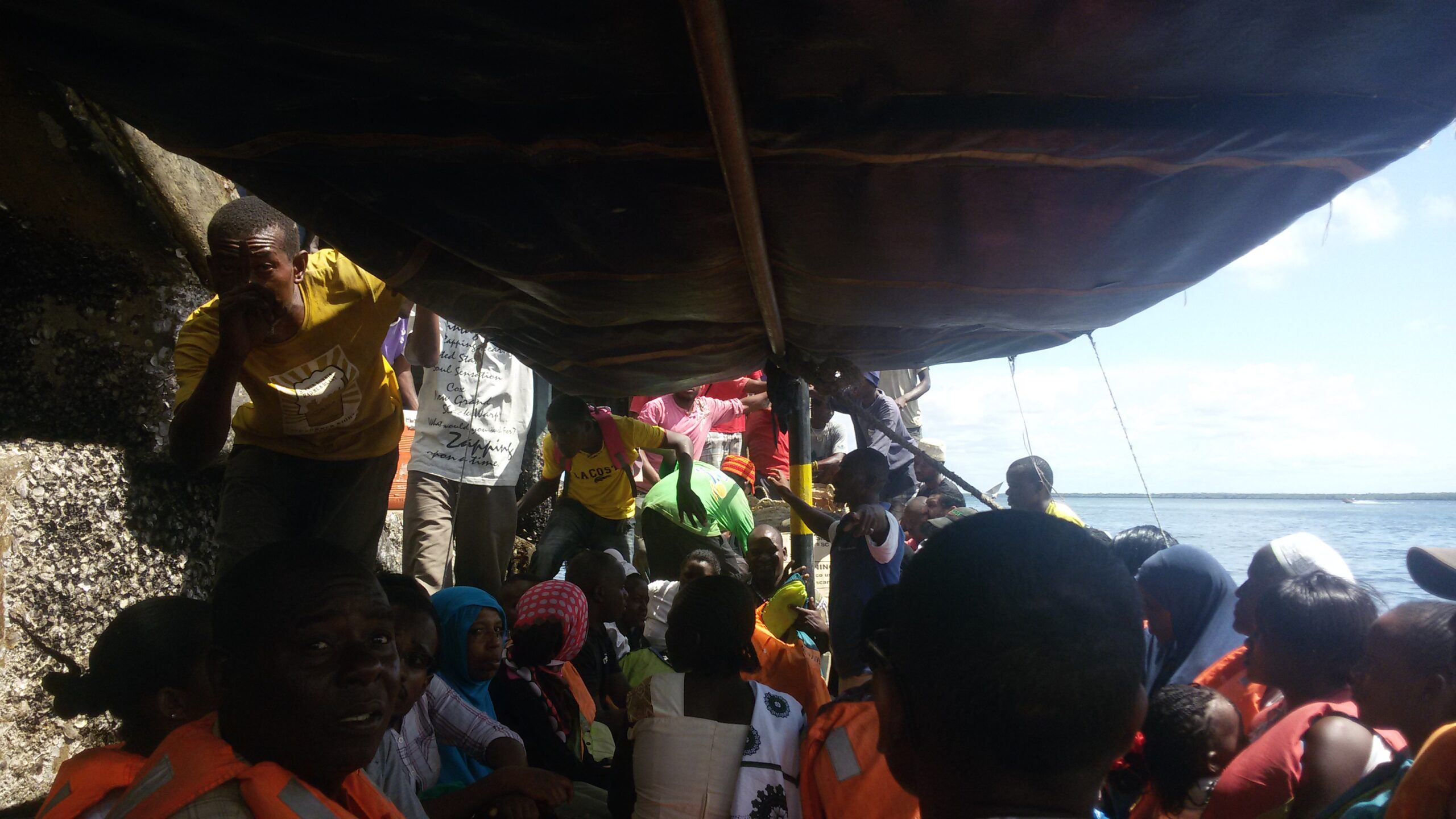
    We arrive at Mokoi Port around 7:30pm and crowd into an already packed ferry. The stars grin overhead as we move towards Lamu Island, and I trail my fingers in the dark water.
    After a quick meal of the best nyama choma (grilled kebabs) I have yet tasted in Kenya, I sleep heavily.
    Day 2: Saturday
    I rise at dawn in order to wander the alleys of Lamu before the town and the sun are fully awake. 
    Winding stone pathways tinted with just the slightest bit of tension (or perhaps desperation would be more precise) speak eloquently of Lamu’s prosperous past as a key Swahili port. The sunlight glows on the waterfront, casting in shadow the men who accumulate around boats and food stalls, hoping for better business. 
    We are the only tourists in sight so far. Gorgeous old houses filled with guest rooms stand empty.
    At 6pm, we learn that the dhow (boat) that should have carried us on to Kiwayu Island (originally at noon, then at 7pm) will not leave until the next day. We make a split-second decision to take a speed boat instead, and are spirited away in the night to an even more remote location. We hurriedly load water, produce and other supplies for 5 days and head out into open water.
    The stars are bright bright and curved around the sky like a snow globe.
    Around 9pm, we arrive at Champali (a luxury camp made available to us four grateful travelers through family connections). My room is quintessential island paradise in one room-sized package: big bed, balcony overlooking the ocean, woven mats and open windows on all sides.
    Day 3: Sunday
    I wake again at dawn in a pool of light, the soft sounds of birds and water lapping at the shore welcoming me into the day. I move slowly, from morning yoga to a brief walk away from the camp, to cooking breakfast.
    We play cards and lounge for a while, then make the fifteen-minute “trek” to the other side of the island and eight kilometers of wild, empty beach. Strewn with seaweed, backed by sand dunes and with an unobstructed view of the Indian Ocean, this beach is the definition of remote. My definition, anyways. You would never guess, to stand there, that several hundred people inhabit the island, residing largely in two villages.
    The cicadas in the trees here are terrifyingly loud at times, their buzzing so pervasive it seems to be coming from inside my own head. A noise like that could drive you crazy if you were stuck in a tree with it for long enough.
    Day 4: Monday
    This time we bring boogey boards to the other beach, and for the first time I really understand why people find this activity fun. The waves are just big enough to carry me all the way to shore when I catch them right. I stand up dripping seaweed and sand, and feel decidedly like a six-year-old mermaid version of myself.
    A walk into the village later in the afternoon reveals the hub of human activity that the exterior of the island obscures. The women are beautiful, dressed in a style that looks almost Indian to me, and the children are utterly enthralled by our appearance, trailing behind our small group as we wander a web of thatch-roofed homes and dirt paths speckled with shells—remnants of an aquatic time long past.
    As the sun begins to set we start for Champali, stopping at a beach along the way to watch the color show.
    Day 5: Tuesday
    We all wake up before dawn to race to the top of “Conical Hill,” the tallest point on the island, in time for sunrise.
    Afterwards, we visit Mike and his camp a long walk further down the beach. He, like Kenya’s tourist economy, is struggling. Since two English tourists were kidnapped in 2011, Kiwayu has hardly been a popular destination. All of Lamu region, really, has suffered.
    Gorgeous island getaways stare out at a magnificent ocean view, empty and waiting to be filled again.
    That afternoon, I return to the village and a local woman covers my left arm—from fingers to shoulder—with bold henna designs.
    Day 6: Wednesday
    I wake up slowly, recovering from the long day on Tuesday, luxuriating in the comfort of my big bed. We savor our last hours on Kiwayu, knowing that we will leave at 4am the next day.
    We sit on my balcony to watch one more sunset, the day fading from yellow to orange to dark.
    Day 7: Thursday
    Our boat is late bringing us back to Lamu. We leave at 5:30 instead of 4:30. When we sit down at La Banda, a reasonably priced restaurant overlooking the water, for breakfast, the first news on the Garissa attacks plays on a television at the back of the room.
    The bus ride back to Kilifi is as long and dusty as the first. I feel refreshed and content, though—despite the danger, despite the unrest, I feel secure…

     ***

    I describe my trip in such detail not to brag, but rather to make a point.

    I almost didn’t go.
    When Earl backed out days before our planned departure, I considered doing the same and making the trip another time. Finally though, despite increased travel advisories, Kiwayu’s proximity to Somalia, and the general tone of fear set by foreign governments, international media and even some locals, I decided to go.
    I do not believe I put myself in any serious danger, but I certainly did not “play it safe” according to the conventional wisdom of travel. As more and more tourists opt to visit Tanzania rather than Kenya (playing it safe), unemployment rates here continue to rise (48% for Kenyan youth). These are not conditions for recovery, stability or growth. There is a serious danger there.
    The region of Kenya I just returned from is among the most beautiful areas I have ever visited… the whole coast of Kenya is, in fact. Following yesterday’s events, this hardly seems the moment to encourage anyone to visit, and yet, I want to remind you that there is more here than what you see on the news. That is true everywhere—everything is more than what you hear secondhand.

    Everything you see is certainly true, but it is only one piece of a 1,000-piece puzzle.

    ***

  • Before the Rains

    ***
    We are at the very edge of the rainy season here in Kenya… This is what it feels like. (All photos taken yesterday at the Gede Ruins and nearby beach in Watamu.)

    ***

    Before the rains come, the air grows thick—
    Cough syrup thick
    Wool hat thick
    Toffee thick—
    and clings to me like an extra layer of skin.

    The heat becomes heavy—
    Oppressive like chains
    Lethargic like city traffic in the summertime
    Slow like the honey melting of sunset—
    Fattening itself on the waterless days, weeks and months.

    Before the rains come, the animals appear—
    One by one
    Two by two—
    Frogs and lizards, ants and spiders, and all manner of creatures seek shelter,
    Dragging the storms behind them.

    Palm fronds and mangrove branches sigh a warning in the waning breeze:
    The rains will come
    The skies will clear
    The world will turn to water overnight.
    These are the rains in which some civilizations have crumbled and others have risen, they murmur.

    Before the rains come, the clouds gather to promise change—
    Air thick like honey
    Heat heavy like wool—

    We hold our breath to hear them, hovering in wait for the gift of a new season.
    ***
  • Why Travel Should Be Stressful

    Why Travel Should Be Stressful

    The journey from Diani Beach (South Coast, Kenya) to Kilifi (North Coast) by public transport is long, sweaty and chaotic. (Indeed, going just about anywhere in Kenya is all of these things.)

    It involves a matatu(bus) to the main road, and another to almost-Mombasa. Each is filled to capacity, quite likely blaring rap music or Kenyan pop, and located only by navigating an insistent throng of taxi drivers, hangers-on of indeterminate employment and buses bound for every direction.

    A ferry packed end-to-end crosses into Mombasa proper—a sort-of island linked on most sides by bridges–and then, with luck, a coach bus may be waiting at the other side, saving an extra ride to the station. A man stands at the top of the ramp from the water shouting, “,Malindi-Kilifi-Malindi-Kilifi-Malindi-Kilifi,”without pause. In the crush of the crowd, one could hardly understand him.

    And it’s not over yet. The bus will let off in Kilifi Town, a 15+ minute tuk tuk ride from the Creek, and the Distant Relatives Ecolodge.

    We made this journey just over a month ago, and I have since settled into the easy tranquility of the lodge, the nearby beach and the comfortable isolation of the place. When I do go into town—relatively laid back when compared to Nairobi—I am thrown off by the sudden return to chaos, stares, noise and confusion.

    Thinking back to that trip from Diani, as well as the much longer odyssey from Western Kenya, I recall the sweat trickling down my spine as I sat wedged between two ample-sized women in the back row of a matatu, the weight of my purse on my thighs an added layer of heat. I remember the stillness of the air on the coach bus waiting for traffic to clear, the noise of the speakers just above my head, the inescapable midday sun over the ferry and the coating of grime that covered my skin by the time we reached Kilifi. And that was only a few hours.

    But that is, I believe, an essential part of travel.

    Comfortably ensconced in the coastal paradise I currently call home, I feel a decided aversion to the unpleasant harassment and disorder of going into town. I contemplate another day of bus journeys, sweat-soaked clothing and dirt-covered hair with reluctance. I am loathe to invite back the arguments and anxiety that naturally accompany reams of buses, unfamiliar routes and missed stops.

    But, if I left all that out of the equation, where would the challenge be?

    Stress has always, always been an inconsequential—yet, paradoxically, fundamental—footnote to my travels. Bumbling through Italy with my family—utterly lost; wandering the streets of Istanbul with my best friend, utterly lost; scouring Kolkata for a guest house alone, utterly lost. Anxiously running to catch trains; bartering for taxis, tuk tuks, motorcycles, often walking instead in stubborn frustration; searching for addresses, waiting for rides or fruitlessly seeking a quiet corner to regroup—stress and adrenaline saturating my blood.

    None of it is fun, and most of it gets pushed to the sidelines of our and rose-toned memories of voyages and adventures. But it is all travel.

    That stress means I am stretching the limits of my comfort zone, crossing boundaries and pushing myself to be both stronger and more pliant. No, I don’t like it, and sometimes I allow it to get the best of me, but stress should be a (manageable, eventually forgettable) part of travel.

    If travel isn’t just a little stressful at times, and all-out infuriating at others, then what is it? Because if it’s too easy, then it isn’t challenging; and if it isn’t challenging, then I’m not learning or growing as much as I could.

    I’ll take sweat, stress and anxious searching over stagnation any day… When’s my next bus ride?

  • Making Art

    I love when people ask me, “Are you an artist?”

    These days, it happens often as guests and staff at the Distant Relatives Ecolodge in Kilifi pass by my public work spaces: an outdoor pizza oven and a formerly-blank wall in the communal kitchen. Someone will stop, watch me work for a while, and then ask: “Are you an artist?”

    It strikes me as a particularly odd question in this context, since I am, quite obviously, making art.

    Photo Credit: Ivan Ziccardi Brogna

    And I don’t know how to answer. Only in the last year have I begun to identify as “A Writer,” and that is an occupation in which I have a lot more confidence. But artist? My grades in High School Art were middling, and I haven’t taken a class since. Maybe because of that, or maybe because I could never draw with the easy accuracy of my desk-mates, I have never thought of myself as a “Good Artist.”

    Yet there I am, very clearly and very boldly creating massive pieces of art. Are we what we do and make, then, or are we only our self-professed identities?

    Usually I answer evasively, saying, “Well, I’m creative, and I like to make things… no, not exactly, but if you give me a blank wall and free reign I will definitely paint on it…”

    Maybe I should just say yes, though.

    Look what happened when I started calling myself a writer. Nothing changed—I wrote before, and I continued to write after—but I began to identify more deeply with my work, and take more pride in it, too. My words are not merely something I produce; they are a part of me. I am a writer.

    That is a powerful shift.

    If I am what I create, and I find myself making art, then what stops me from calling myself an artist? High School? If I followed that logic, there are many things I would not be today.

    So. Here I am, making art. I am an artist. The plums and ochres and teals and terracottas I mix are a part of me—as I am a part of them. The broken glass I piece together, too—bottle green and cobalt seeping into my thoughts. I stand for hours a day with my face inches from a bursting array of hues. I spend longer meditating on color than I do meditating on my mat, and with fuller concentration to boot! I am utterly absorbed in this work.

    I am creating something that will remain here long after I have moved on. That feeling is immensely satisfying.

    So. Here I am, a writer and an artist—and a dancer, too—inking my inner world on paper and canvas, by pen and brush and keyboard and broken glass.

    …Why?

    Now that is a story for another day…

    ***
  • Kilifi in Words


    [“Kilifi in Pictures” coming soon!]

    I have been in Kilifi, Kenya now for over 3 weeks. I think some (word) snapshots are overdue…

    Kilifi lies 3.6 degrees south of the equator on the north coast of Kenya. Despite what the U.S. and other governments would have you think, most of the coast here is very safe and very calm—even though it is majority Muslim (Sarcasm. Please catch the sarcasm.)—statistically much safer than Nairobi.

    Sunrise and sunset both occur sometime around seven o’clock. I only seem to hear the call to prayer at four in the afternoon, though I know it happens five times a day. Most mornings at seven an outraged cacophony of clucking erupts from one of the bird pens; the dogs, too, rise to a frenzy at the taunting of crows.

    The roots of mangroves along Kilifi Creek are as so many riddles, twisted mysteries temporarily revealed at low tide. The crabs seem at home there in their world of slick sideways and salt-cured dark.

    The water is brine-y and calm. Everything about Kilifi, in fact, seems quieter than Diani. The dogs more mellow; the beach less windy; the locals who spend time there less aggressive. The Distant Relatives Ecolodge is a lush experiment in permaculture and sustainability. Sawdust composting toilets and resident chickens immediately show that this is not your typical backpackers.

    The fingers of my right hand sport small gashes from my daily work on a recycled glass mosaic on the outdoor pizza oven. Tired of smashing glass and working with cement, I will switch to painting an indoor mural tomorrow.

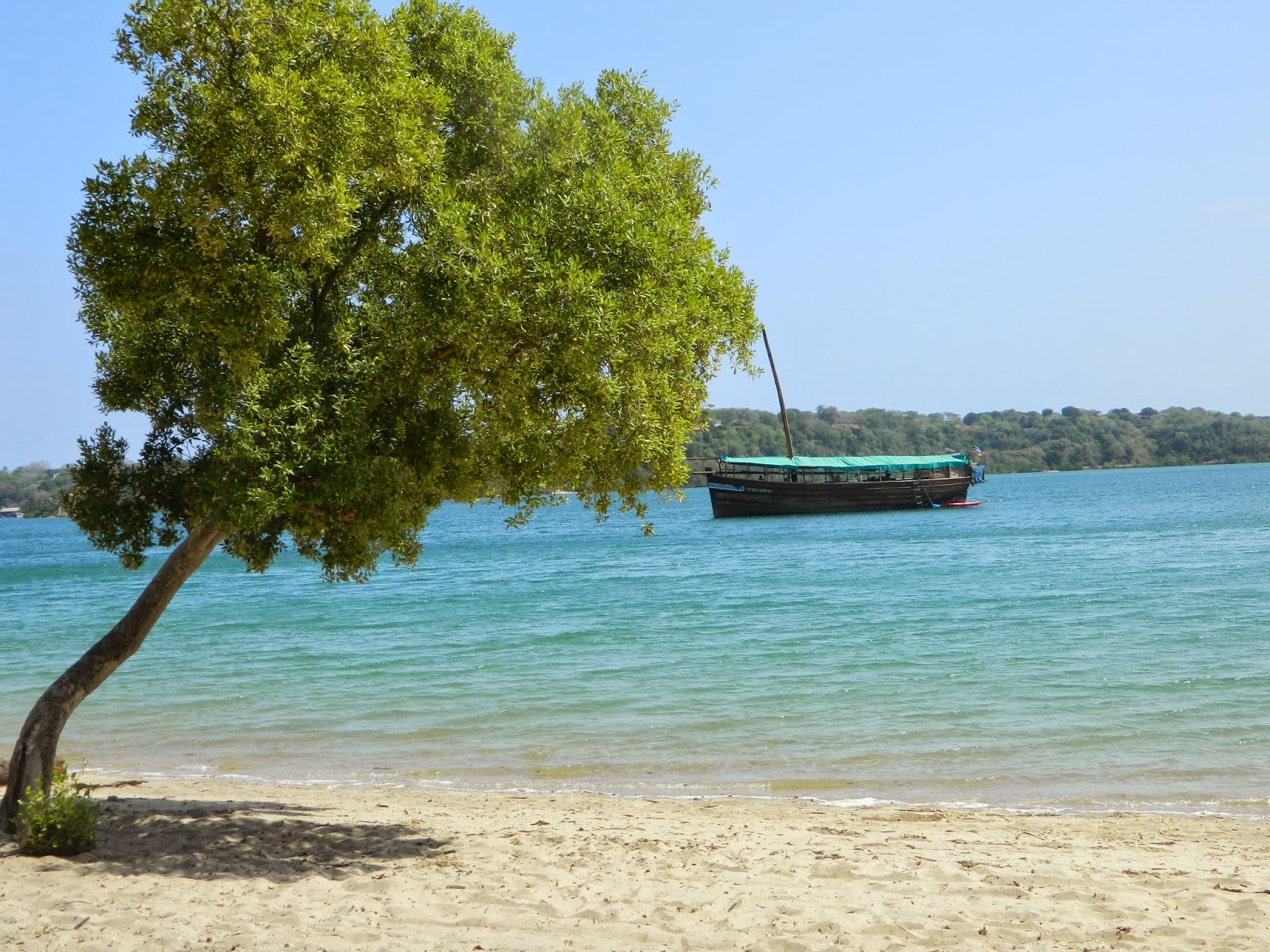
    Pineapple juice drips down my arms as I lounge on Musafir’s (a traditional Arabic/Swahili ship) unfinished deck. A volunteer sings in Italian as he empties buckets of water overboard—a twice-weekly task, as cotton fills the gaps between boards. We are far enough from shore that no flies would dream of making the journey out. The tide rises, approaching the roots of the first mangrove trees on shore.

    I come to the beach often to write, resting in the welcoming arms of one of the trees. Kilifi inspires peace and creativity, movement and poetry… that, I believe, is plenty.

    ***
  • Embracing Syncretism

    When I first encountered the concept of cultural immersion, it sounded something like this:

    To understand—to truly understand—another place and people, you must eat, sleep, dress, breathe and speak like the locals.

    The Anthropological principle of “participant observation” essentially takes the same tact.
    And it’s simple, right? Not easy, but simple:

    When in Nepal, eat dal bhat, sleep on wooden pallets topped by thin thin cushions, wear salwar kameez, learn Nepali—or, in my case, attempt to learn Tibetan—take the bus and wear a mask against air pollution. When in Italy, eat pasta with bread to fare la scarpetta, speak Italian, ride scooters and dress… however it is Italian women dress. When in Kenya… need I go on?

    Except, no. It’s not that simple.
    First of all, unless you’re a linguistic genius, you can’t possibly learn all of the languages, and if you want to travel to many places, your communication skills will suffer in the balance. More than two months in Kenya, and I have yet to muster the energy to tackle Ki-Swahili. (I will though… I will.)
    And then, what is “Italian” in the patchwork of dialects that is Italy? In Nepal, a country of at least fifteen distinct ethnic/cultural/linguistic groups, what language should you learn?
    What is “traditional dress” when every other “modern Indian woman” opts for blue jeans?
    What is local food? Sure, staff meal might be rice and beans, but those who can afford it sup on steak frites or pasta marinara. Valid or non-valid dimension of a “local” experience?
    The answer, of course, is valid. It’s all valid. Local ≠ traditional ≠ authentic. We attach far too many judgments of value, ignorant assumptions and foreign stereotypes to these words (as I have, doubtless, asserted many, many times already…).
    Local, at this moment in Kilifi, Kenya, means teaching yoga and tango at a four-day milonga event. The absolute last thing I expected to find here, and I could not be more pleased.
    At this moment, local means dancing five hours a day and creating lesson plans with my new Italian dance partner, so that we can teach foreigners and Kenyans alike about connecting to their bodies and one another through Tango.
    Local means ordering grilled cheese and butternut squash soup for lunch because it’s f*cking delicious and I have no desire to eat rice and stew every day.

    I no longer wish to limit my experience to what is appropriately immersive. Not, I hope, at the expense of learning (I really need to get it together and study Ki-Swahili), but in the interest of embracing reality in all its syncretic, contradictory beauty.
    ***
  • The Dhow

    [The following is an adaptation of a piece I recently published at elephant journal, “Facing Fear in Handstand.” Or maybe the piece in elephant is an adaptation of this, as this is a near exact excerpt from my travel journal. Either way, enjoy!]

    ***

    I swim to the Dhow—a traditional Arab/East African (/originally Chinese?!) sailing vessel—anchored in Kilifi Creek. I alternate between front and back crawl, and though it only takes a couple minutes, it feels much longer, as is always the case with swimming.

    The Dhow (named musafir, Arabic for traveller) is unfinished. Three years in the making, the boat has a bit of work remaining. The deck boards wobble and gape in places.

    The ship’s builder, a Frenchman with a feather in his dreads, is leaving when I arrive. I hoist myself up the rope ladder that dangles into the water, then he lets himself down into a waiting dingy.

    Alone now, save for a snoozing workman at the bow, I make my way to a single plank of wood jutting out at the back of the boat and sit down. The four o’clock sun is still hot on my skin; it dries the seawater on my arms, leaving a salty film.

    I think about jumping into the water, but delay a while yet. I watch, fascinated, the journey of a single fish. He looks like a seahorse stretched out flat: long, pointy snout, eyes on the side of his equestrian head, mint green and brown body, undersized blue tail fin. He plies the water two meters below my feet.

    A dog barks from shore and reminds me I have something to do.

    I probably stand on that wooden plank a full five minutes thinking. Thinking how I could just climb back down the rope ladder, but I won’t. Because I have something to prove. Not to anyone else—the small beach is deserted—but to myself. Thinking how I feel the need to jump off boats and bridges precisely because it scares me so.

    Some people will always turn back to the rope ladder, but I am no longer one of them, I think. I have decided to be “fearless.” A better word, however, might be “fear-defying.” I refuse to abide by my fears.

    I am thinking how fearlessness, or courage, rather, is not the absence of fear. It is doing things anyway. I hope I always will.

    And I jump, of course. The water is warm-cool after the heat of the sun, and it rearranges itself effortlessly around my body.

    And of course, the jump is a non-event. Nothing of note has happened, and yet I am pleased enough to write all about it. I swim back to shore with a smile on my face. It’s the little things, after all…

    ***
  • When the Power Goes Out (a poem for quiet moments)

    When the Power Goes Out (a poem for quiet moments)

    I wrote this during one of Kenya’s (frequent, albeit brief) power outages. Though inconvenient, I find they can offer some much-needed respite from the constant activity that light, connectivity and music demand. They leave a bit of space for reflection…


    When the Power Goes Out: Quiet

    When the power goes out,
    I return home to pen and paper
    and write by the glow of a single
    (electronic) lantern on the bar.
    When the power goes out,
    the hum of never-ending action pauses,
    and I can hear the wind in the leaves
    and the whine of mosquitoes—
    Magic stillness.
    When the power goes out,
    Quiet touches the darkness
    with its fingertips
    and wraps around my mind.
    When the power goes out,
    I take a deep breath,
    wonder—for a moment—what to do,
    And smile.


    Power outages, delays, mistakes… so many blessings in disguise. Don’t you think?

  • The Paradise Mask

    Diani Beach, South Coast, Kenya, 4.3222° S


    “Everybody—everybody who is escaping from something ends up in Diani. Shady people, criminals, expats… everybody.”

    Such was the prognosis of a Diani resident and regular at the South Coast Backpackers bar (where I have been working for the last three weeks), and I am inclined to believe he is right.
    Though it doesn’t seem it outright—packed with tourist shopping centers and hotels as it is—Diani Beach is kind of a final frontier. A “la-la land” for expats and Kenyans alike escaping from their pasts—or simply fleeing the big cities (“Nairobbery,” I have learned, is actually a common nickname for Nairobi). A no-man’s land where many normal social conceits do not seem to reach.
    What does that mean? Allow me to illustrate:
    Here in Diani Beach you have the “beach boys,” the name by which everyone—and I mean everyone—calls the men who pass their time at the beach, either trying to sell something—coconuts, jewelry, boat trips, sunglasses, aloe leaves, safaris and anything else you can or can’t think of—or just loitering… or betting on a Roulette of foreign women. They almost always lose that bet… after all, only so many women will respond kindly to verbal assault: Hey! Beautiful-lady-how-are-you-Where-are-you-going? Why-you-don’t-want-to-talk-you-are-very-beautiful.
    Local bars, however, are brimming with those who have won. Young Kenyan men and women share cocktails and seductive glances with much, much older foreign women and men. The Kenyan men wear their good fortune with a touch of arrogance, while the women adjust their skin-tight dresses and scan the room for something better.
    Residents and long-term visitors prove a bottomless repository of stories—bar brawls, unsavory characters, intrigue—leading a new arrival to wonder how Diani manages to appear so… idyllic. The ever-swaying palm trees, smoldering white sand, jewel-toned water and algae, beachfront thatch-roofed restaurants and resorts, technicolor kites speckling the sky, two resident Diani Beach camels—it all belies a much less serene, much duskier palette of hidden shadows and secrets… Or so it would seem.
    She who ventures out at night must not walk along the road for pickpockets; must be wary of piki pikis and taxis for drunk drivers; must avoid matatus for questionable passengers.
    A guest in a five-star, gated compound on Diani Beach might easily—very easily; too easily—forget that Kenyan law allows for detention in jail up to one year on suspicion of terrorism; might refuse to acknowledge that police checkpoints on roads are no more than systematized bribery collection centers; might overlook the streets lined with garbage and the fact that most of the young local women at the bars are probably prostitutes.
    Here is a carefully imagined idea of a paradisiac tropical hideaway spread like a semi-translucent shroud atop the reality of Kenya: corruption and a starving tourism industry. At times (most of the time, even), I have certainly overlooked it all, lulled into la-la land by the breeze and the sun and the sand and the coconuts.

    But then again, Diani Beach is hardly unique in these regards. What earth-bound paradise is truly what it pretends to be?
    ***

    ***
  • The Gift

    Several days ago, I sat in a matatu (bus) plying the main road of Diani, Kenya. On my way to Diani Beach Hospital for a precautionary Malaria test (I don’t have malaria, Mom, you can exhale).
    A muzungu (a sight far more common on the coast than it had been upcountry) boarded several stops after. Hale and tan in the way that Northern Europeans tan—russet, rather than gold—he must have been around 70. His thick white hair and beard shone starkly amongst the rows of shaved Kenyan skulls.
    He sat by the door, and when we stopped to let off passengers, he held out a coin (50 kesh—50 cents—, I think) to a small boy a few yards away.
    A man carried the boy over to accept the gift. As the matatu began to roll away, the white-bearded man said in a thick (Dutch?) accent, “It’s for him [the boy]! Not you—him!” Thus ensuring that his gift would not fall into other hands, he sat back, satisfied.
    This foreigner bestowed his gift with the ease of frequent practice. His manner brought to mind other tourists I have seen in other places, of a similar ilk.
    Simply put, something about the gift—or rather, its giving—bothered me.
    Two years ago, far up in the Himalayan foothills, very small children would emerge from nowhere, holding out phantom hands and pleading eyes, and ask me and my trekking companions for “candy! candy!” or, even more baffling, “ball-oon. ball-oon.”
    From whence had come this peculiar fixation with candy and balloons? Well, from other trekkers, of course. Foreign hikers toting bags of candy—and balloons—to give to children along their path.
    There is something presumptuous—maybe—about giving unsolicited gifts to strangers. An assumption that we as outsiders know what is needed, and by whom. That we have a right to give when and to whom we wish, without asking anyone’s opinion. A whiff of a lingering imperialism, perhaps. (Of course, now these children do ask, having learned from experience to expect bounty of visitors.)
    I am reminded of a class I took on Jewish Ethics 10 years ago, about which I have not once thought in the interim… According to Maimonedes, there are eight levels of charity. The greatest, you may or may not have guessed, is to support another Jew (this merits another conversation entirely). The lowest, naturally, is to give unwillingly.
    Ringing in at number five: giving before one is asked.
    This may all be a bit off point, but Western altruism in Africa has a long and problematic history of unsolicited giving, unscrupulous giving, and giving without once thinking to ask what is desired or needed by the recipients.
    These sorts of giving smack of colonial condescension. Translated into 18th century garb, the image of the foreign man handing money to a Kenyan child becomes that of the beneficent overlord deigning to notice a black child, reaching down magnanimously from his carriage with the gift.
    I do not think I exaggerate so greatly in this leap of imagination.
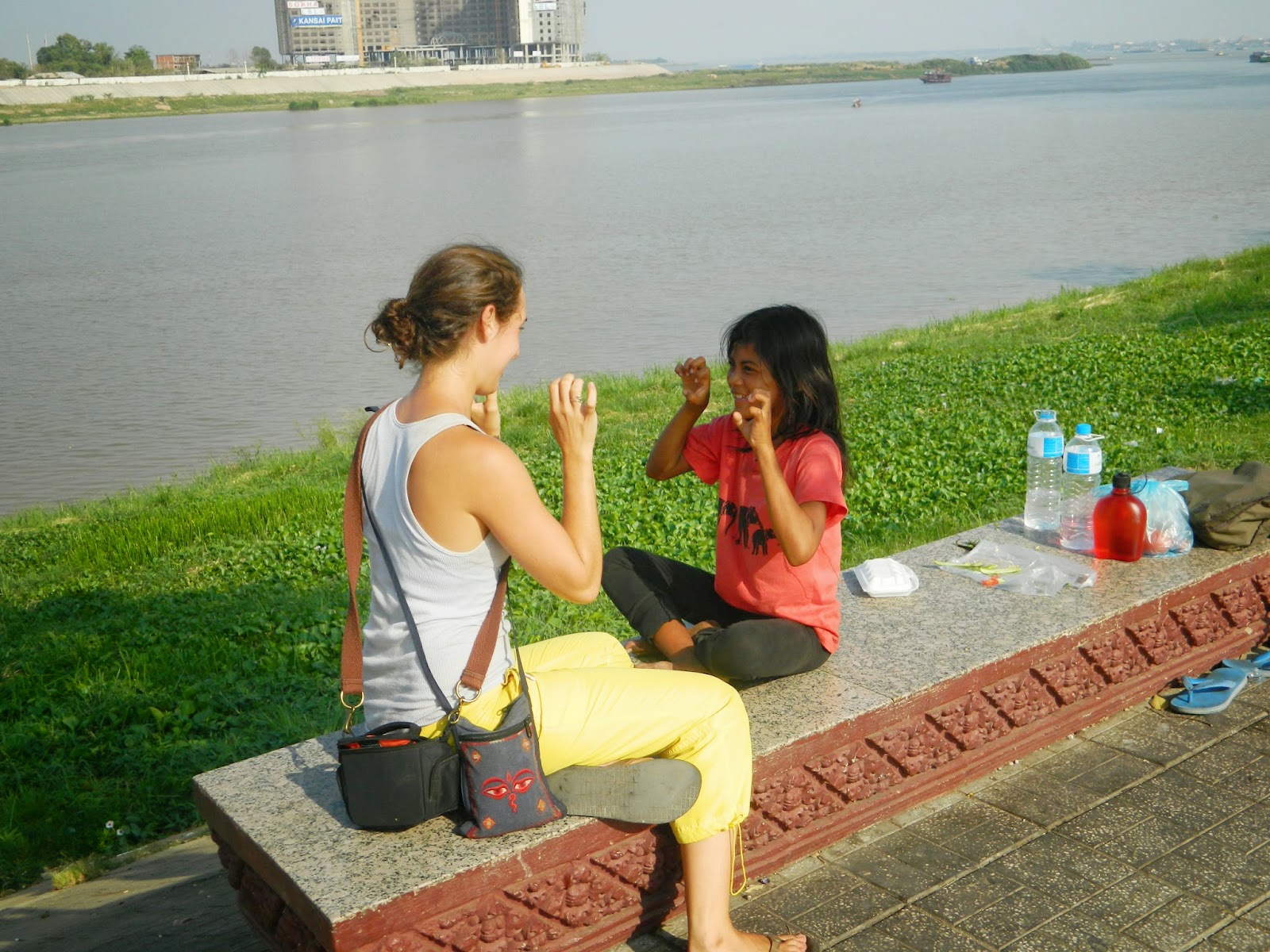
    Sharing food and games in Phnom Penh.
    Surely, you might say, I don’t need to ask to know that a starving child needs food, or that a village with no well needs potable water. Yes, there are certain basic needs, but no, you can’t assume that you know best what they are and may thus dictate another’s priorities.
    In some touristic destinations, poverty is rampant, and in advising visitors to these places, study abroad or travel guides will usually take one of three tracks:
    1. Don’t give anything to anyone. Not to beggars, not to children, not even to new friends. Just don’t, because one friendly gesture of generosity will call upon your head a veritable surge of unanticipated requests.
    2. Bring gifts that are useful—flashlights, notebooks, clothing, etc.—to give to hosts or friends. You will be offering something worthwhile, not a symbolic gesture doomed to sit on a shelf beside its untouched kin.
    3. If you are going to give a stranger something, give them food. Children, especially, almost certainly need it, and your gift will not be misused or appropriated, as money so often is.
    Other responses include: giving to a reputable non-profit, thus ensuring (in theory) that your money will be well spent; sponsoring an individual’s schooling; or offering skills or instruction, which has no (or greater) monetary value.
    I don’t have a set position on the question. All of these suggestions have merit. Personally, I am disillusioned by the distribution of spending in corporation-sized non-profits, and I much prefer the work of grassroots organizations that work in tandem with local communities. I love the option of sharing food; I think it is the most human of acts, and almost universally understood and appreciated. Sharing skills—if you have them—equally so. Material gifts are tricky. I lived with a home-stay family in Kathmandu who had an entire shelf of unused gifts from other guests like me—picture books, snow globes, and salt-water taffy, all untouched and unopened. I don’t know about the worth of gifts that serve no function beyond expressing gratitude for hospitality.
    And then, even if you do ask a community what it is they want, you will not receive a unified answer. Children may indeed want bicycles and candy—and balloons. Male elders will not seek the same help as women; each may have different priorities.

    But if you want to help the “poor, starving children of Africa” (a platitude which, to my absolute shock, some tourists have actually employed), don’t throw up your hands in despair. I think doing good begins with good intentions. Do, however, leave your presumption, your condescension and your self-importance at home. Be mindful of these complexities in your giving.
    ~
  • That Sand in your Toes Feeling

    Today was a gorgeous day at Diani Beach. For the first time in a long time, I felt poetry pushing at my fingertips. I hope it will transport you to where I am, if just for a moment…

    ~


    You know that feeling
    of sand slipping between
    your toes
    like silk ribbons,
    so soft and yielding
    you could almost
    sink your heels to the center
    of the earth?
    Take my hand,
    and follow me there.
    Kick off your shoes here—
    Yes, here at the edge—
    you won’t need them.
    Squint a little
    against the glare—
    white white sand too bright
    to look at.
    There.
    Where the sand forms
    miniature dunes
    in the shifting wind.
    Before the damp, packed
    floor of high tide.
    Just there—
    Try on a pair of sand slippers
    for size.
    Material so fine
    it will hug every millimeter
    of your toenails
    and soothe your soles
    like nothing before.
    Dig deeper,
    and feel the cool gasp
    of another layer,
    untouched by the sun.
    Drink the salt breeze
    in your hair.
    Stay as long as you like.
    Watch the waves carry
    blown glass jellyfish
    and green sea tangle
    In and away.
    When you’re ready,
    brush off your feet with
    sandpaper fingers,
    and put your shoes back on.
    Shade your eyes
    for one last look
    at that sand between your toes feeling.
    ~
  • Sound Impressions from a Hammock

    As I lie here resting, gently swaying, I reflect on the day’s noises…
    There are the birds who say “Oh Yeah” in a melodic chorus of positivity.
    Then there are the birds who welcome me in Swahili: “Karibu! Karibu!”
    The birds swoop and swivel and swish and swerve—a limitless parade the likes of which I do not have the expertise to catalog, let alone describe. They wake me in the morning and sing me to sleep at mid-day.
    The goats scream with human indignance and bleat with an infant’s piteous yowl.
    They caper and cavort, cradle sunlight in the sleek hollows of their sides. They stand on hind legs to grasp out-of-reach shrubbery. They block the roads with impunity.
    The children shout, “Muzungu! How are you?” with the the same lilt as the birds who say “Karibu.”
    They are sudden apparitions at the side of the road, emerging like smoke through fences and paths. Some smile and wave; others stare with scrutinizing solemnity.
    The motorcyclists ask, “where are you going?” and have nothing more to say to my reply: “I’m just walking.”
    The donkey wheezes through a comical fit of seeming laughter—or sneezes. Sometimes at noon; sometimes at midnight.
    The dogs howl like wolves to the moon.
    The crickets chirp a thunder and an avalanche in the otherwise quiet of dark.

    My ears are working hard to keep up…
    ~
  • Rusinga Island, Lake Victoria, Kenya

    Here, I am Muzungu: foreign, white, outsider. Kids yell after us as we pass on foot (or, after realizing the walk from Mbita is at least an hour, on pika pika, moto-taxi). It hasn’t gotten old quite yet.
    There is something… there is something about the impossibility of fitting in that has always challenged me in the best of ways. In Nepal and India, no matter the effort I made to wear the right clothing, to learn the language, to immerse, I was always patently, immutably other. Here too—I can already tell.
    In Europe, not so much. I have a face that can appear French, Italian, Slavic or even Turkish according to context. Without my backpack, I can walk through a city unmolested, my status as tourist unknown, and blend into the crowd of a subway car. The chameleon has many merits, and I have certainly enjoyed exploring new places in the guise of a local.
    And on the other hand, I do not like the constant attention, stares of curiosity, shouts, deference and, conversely, hostility I receive when I travel as an obvious tourist. I certainly do not like being singled out by the Nairobi police as an easy source of a bribe, and I do not like the behavior of those men who seem to believe that as a foreigner I do not warrant the same respect as women of their own race.
    But still, there is something.
    There is something about the impossibility of fitting in that I do like. Standing out, not because of a voluntarily articulated identifier like religion, sexuality, or dress, but because of an immediately evident, insuppressible feature like skin color—like eye color, height, even language, too.
    That experience was very rare growing up in Boston, or going to school at Middlebury College. And I think most people, of all backgrounds, shy away from it because it is uncomfortable. It is inescapable. It can be exhausting and challenging. It is also, I think, important.
    There is something about the impossibility of fitting in that forces us to confront the reality of our otherness—no greater or lesser than anyone else’s. Amongst so many other reasons, perhaps that is why I travel. It is too easy to fall into the comfortable trap of sameness. Surrounded by people who look— and maybe more significantly behave speak dress and think—like us, we relax not into multiplicity, but into uniformity.
    I would rather learn how to be equally at home in my otherness as I am in my belonging.
    ~

    Home for the moment.
    Here at the western edge of Kenya, the roads are dirt and dust. An energy center in town offers drinking water, internet and computer use, solar energy and more to residents. Wifi is scattered at best.
    At the Wayando Beach Eco-Lodge, our neighbors appear to be hippos to one side and nonstop music to the other. I will teach yoga at 7:30 in the morning… if anyone shows up. I serve Tusker Pilsner to guests and fry Tilapia fresh from the lake for dinner. I have seen three different jewel-colored birds—ruby, emerald, sapphire—since writing that sentence.
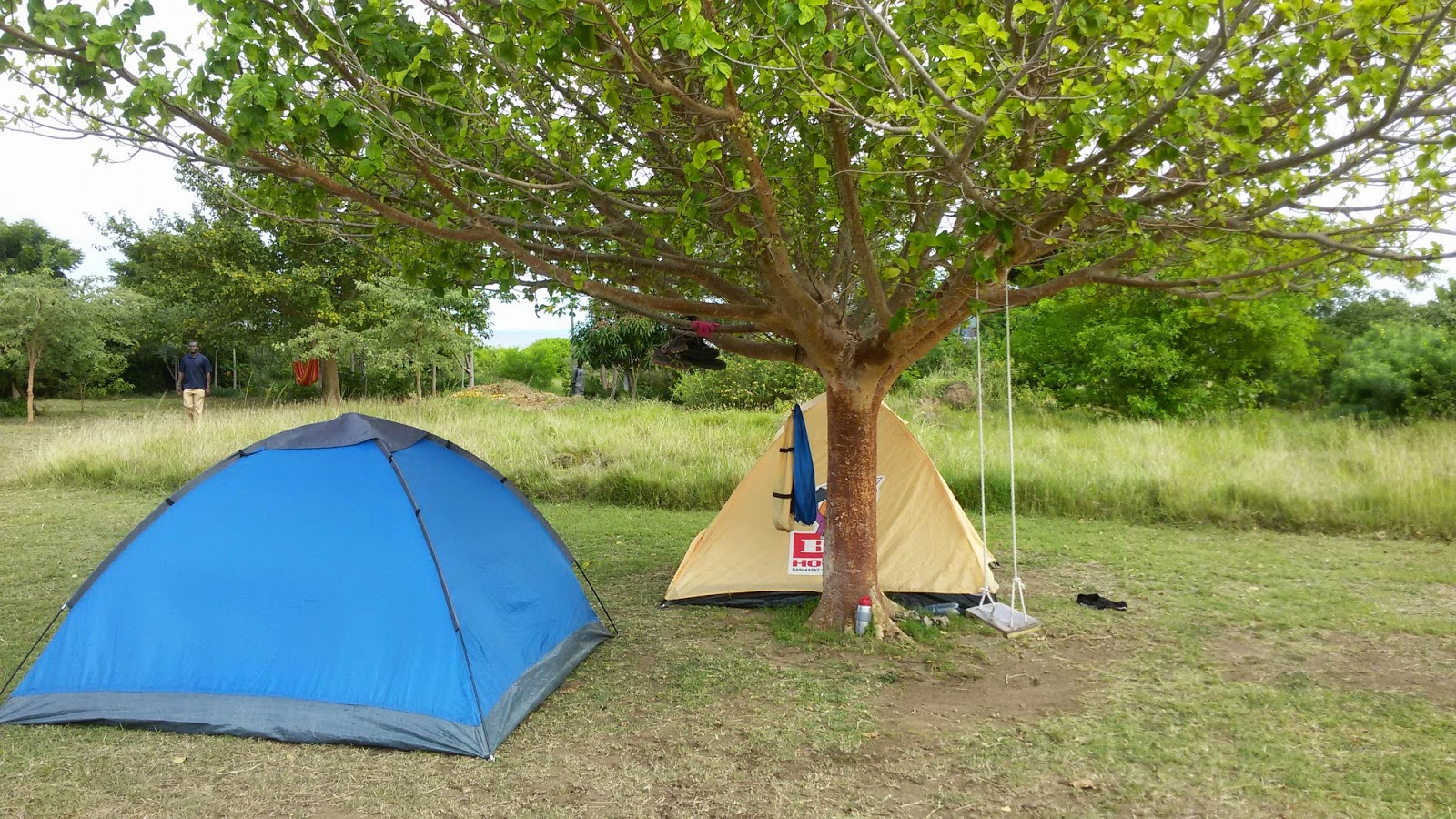
    The sun burns hot at midday, but the nights bring light rain and heavy wind, and I am happy for the warm blanket in my tent.
    Eco-lodge means sawdust-composting latrines, round, self-contained huts for guests, and lake water showers (don’t worry— it’s treated for parasites). It also means fresh papaya, mango, bananas, ginger, arugula, peppers, passion fruit and sweet potato from the garden.
    We will spend two weeks here, or hopefully longer…
    …To Be Continued.

    ~
  • Zanzibar!

    Have you ever written a sonnet?*

    A sonnet’s beauty and difficulty both lie in the restraints placed around its form. Fourteen lines, iambic pentameter, and a rhyme scheme of a-b-a-b;c-d-c-d;e-f-e-f;g-g, the sonnet is no quick jaunt on a summer day. It is hard work to fit depth of thought and poetic sentiment within its narrow frame. But when it works, it’s magic: the sonnet emerges as just reward for the poet’s pains.

    This trip I have just begun (arriving in Paris on November 17th, and checking in now from Barcelona) is a bit like writing a sonnet.

    Why?

    Have I mentioned that I am traveling with my partner? And have I mentioned that said partner is traveling on a Ghanaian passport– a document that grants today’s international traveler few privileges?

    Well, I am, and he is.

    We arrived in Europe knowing that we would have to leave within 30 days– the length of his visa. Yesterday, we returned from the Moroccan Consulate in Barcelona giddy with disbelief. We would not continue on to Morocco by ferry as we had expected.

    Why?

    Because one week prior the Consulate had received instruction to grant Moroccan visas only to residents of the Barcelona area. We would have to return to the U.S. or Ghana now to apply.

    And so we are back to square one. The fourteen lines, iambic pentameter and strict rhyme scheme of travel sonnets and bureaucratic poetry close in ever tighter.

    The following two maps represent our respective “green zones” for international travel. Green and yellow mean we can obtain visas on arrival or do not need them. Gray typically entails a lengthy visa application process, and often the necessity of returning to the U.S. to undertake it.

    Were you to lay one map on top of the other, the world would be mostly gray.

    Add to that the places we do not wish to travel, for various safety concerns, and the gray spreads farther still.

    Yet even as borders tighten and possibilities shrink before my eyes, I feel an odd sense of freedom then, faced by our obstacles. When our plans shatter and we are forced to return with all haste to the drawing board, we have to opportunity to create a sonnet of exceptional spontaneity.

    Where will we go now?

    To Zanzibar! (You may have guessed it.) City of rare consonants that beckons my imagination to wander. To East Africa. Nairobi, Kenya first, in fact– though its lack of Z’s renders it a less tempting contender for title line– then on to Botswana and Tanzania and maybe South Africa.

    I hope the sonnet that emerges is worth all the trouble.

    ~

    *[The credit for this analogy goes to a friend– he managed to express perfectly the nature of this trip.]