Tag: creativity

  • 4 Steps to Transform Self-Doubt into Self-BeliefBelieve in Yourself First

    4 Steps to Transform Self-Doubt into Self-BeliefBelieve in Yourself First

    “I just don’t know if anyone really wants to hear what I have to say. I don’t feel confident that I am qualified to offer these services — or that anyone should be interested.”

    Rachel was a 30-year-old yogipreneur grappling with self-doubt about taking her workshop and retreat business to the next level. We needed to relaunch her website, start up a monthly newsletter, establish a consistent social media strategy, and develop a stellar brand identity. We had our work cut out for us, but first, we needed to move through Rachel’s own internal blocks.

    We couldn’t get anywhere until she got out of her own way.

    Rachel shared her misgivings with me during our second meeting as we began to discuss creating a content calendar for newsletters and social media posts. “I’m just not sure anyone is interested,” she confessed, “or that I have anything worth sharing.” Her insecurity was palpable through the two-dimensional Zoom window.

    I was a brand consultant, not a coach, I thought. Yet it was clear that I wouldn’t be able to deliver meaningful results unless we addressed my client’s paralyzing doubts first.

    Rachel’s body language and tone shifted drastically as I asked her to share about the success of her first workshops and the lives she had touched in her yoga classes. Voice firm, head high. Beneath the doubt and misgivings was a self-assured core of certainty: her work had value, it was of benefit, and there were people out there who wanted and needed to hear what she had to say and know about what she had to offer.

    When doubts resurfaced during our work together, we would come back to that essential knowing: this matters.

    Believe in Yourself First

    “The moment you doubt whether you can fly, you cease forever to be able to do it.” — J. M. Barrie

    No one will ever believe in us as much as we can believe in ourselves (with the exception, maybe, if we’re lucky, of our family, friends, or partners). Even so, we need to be our own best cheerleaders in the face of the inevitable failures, rejections, roadblocks, and doubts along the path of the fearless creative.

    What’s more, if we don’t think our business/book/art/fill-in-the-blank creative project is worthwhile, how can we expect anyone else to buy-in? Or, to rephrase that, if we truly believe in the value of our work, our audience, clients, or participants will pick up what we’re putting down — sooner or later.

    If only saying the words would make it so. I’m no psychologist, and motivational speakers usually make me slightly nauseous, so don’t expect too much of a pep talk here.

    The best advice for which I can personally vouch is simply this: fake it ’til you make it. Start this journey with all the bravado of a Greek hero(ine) — reluctantly, but inevitably, because the gods are breathing down your neck, and you have no choice.

    We don’t have a choice. We, humans, are creative in essence. We can let it move through us, or it will find a way to break out, probably in less beautiful ways.

    Sometimes, action has to come first, and belief follows. As a tween, I used to practice my self-confidence in front of the mirror. Somewhere along the way, it became real and effortless. I acted confident long enough, and my brain jumped on the bandwagon and believed it.

    Words and actions can shape our worldview, so start acting and talking like you believe in yourself 100 percent. I hope it will become your deepest truth somewhere along the way.

    Don’t Just Read About It, Be About It.

    Reading about doing stuff is not enough. If we want to do something, we have to actually do the things.

    Transforming Doubt

    1. Make a list in your journal or on your computer or phone of at least 10 (it can be more) doubts, fears, or limiting beliefs about yourself or your work. (e.g., “I don’t have enough experience on Xyz.” “I don’t have anything worthwhile to say.” “No one will want to buy it.”)
    2. Now, in a new column or on a fresh page, rewrite those doubts as positive statements, transforming them into encouragement or motivation. (e.g., “I have trained/studied extensively in Xyz, and I am ready to share my knowledge.” “I have a lot of meaningful things to say, and someone needs to hear them.” “Someone out there is waiting for the gift that only I can offer.”)
    3. Choose a few positive statements, the ones that make your heart race, or give you goosebumps, or feel like a “yes” in your belly. Copy them onto Post-it notes to leave on your desk, fridge, mirror, or anywhere else you will see them frequently. If it feels good, repeat them aloud whenever you need a boost.
    4. Come back to this practice anytime in the creative journey that you find yourself getting in your own way.

    How do you work with self-doubt and transform it into self-belief? I would love to read about your go-to strategies in the comments!


    Originally published in elephant journal.
  • It’s Not about Being Good—It’s about Being Bold

    It’s Not about Being Good—It’s about Being Bold

    “It’s time to be bold, stand up, and share your art OUT LOUD.”

    Thus reads the event description for the open mic night I’m organizing this week. Out Loud (En Voz Alta) is an opportunity for artists, performers, and secret creatives to take risks and share their art—out loud.

    Here’s the thing. If I’m going to tell anyone else to be bold, I’d better start with myself.

    That’s why, today, I made my first Facebook Live post (below). That’s why I’m beginning to share my songs with a wider audience than the monkeys outside my house (they think I’m pretty alright). That’s why I’ll be performing first this Thursday night.

    I hope to set a tone for the evening. And the tone goes something like this:

    If you were waiting for someone to give you permission to fail, this is it.

    If you were waiting for someone to tell you it’s okay to suck, this is it.

    If you were waiting for someone to promise that they’ll cheer you on regardless, this is it.

    This isn’t a talent show.

    An open mic night is an opportunity to stand up and take a risk. To share your art, your voice, your heart out loud.

    If you were waiting for someone to give you permission to screw up, to be terrible, to fail—that’s happening right now.

    So please, take the risk. Be bold.

    I’ll be there cheering you on.

    And so, here I am. Trying to make a point by singing… I didn’t sing much the first twenty-plus years of my life, because someone once told me I couldn’t, or shouldn’t. What a loss! We all carry around these incredible instruments all the time, we might as well use them, enjoy them. Who cares if they’re harsh or ugly or off key?

    Then, in April of this year, I started to write songs.

    Are they good songs? That’s not really the point.

    I’m not trying to be famous. I’m trying to do something true.

    And if someone reads this or sees me sing/perform/publish and decides to take their own risk, then it will be doubly worth it.

    It’s easy to share the things we believe we’re good at. Harder to share when others (or our own brains) have told us we’re utter failures.

    But the world doesn’t need more people who hide. It needs more artists. It needs not fearlessness, but boldness. It needs more people who will stand up and say,

    “This is me. I don’t care if you like it. I don’t care if my hands shake. I have a voice, so I am going to use it. Because I am human.”

    That’s why I’m here—organizing open mic nights, sharing my music with the big, scary internet. Not because I’ve overcome those deeply rooted insecurities, but because I’ve decided that this is more important. I believe art is meant to be shared. I do not believe life is always a talent show.

    And, finally, it’s not enough for me to be bold; I want you to be bold too.

    We have these amazing instruments—our voices, our hands, our bodies—that can sing, speak, write, play, and dance. Shouldn’t we use them?


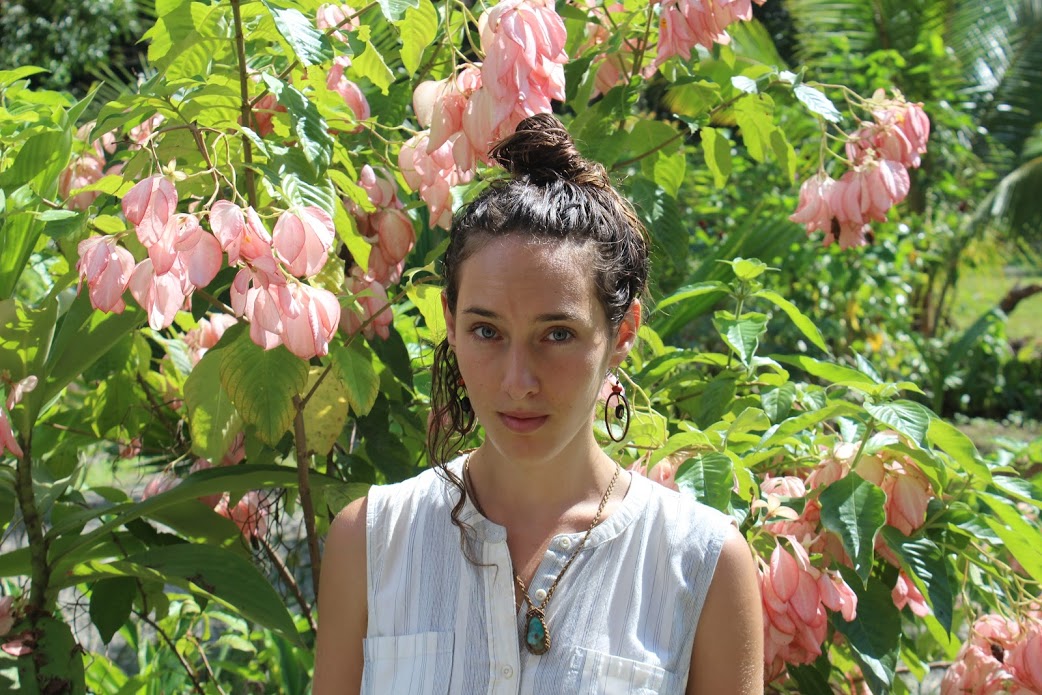
    Photo Credit: Halley McClure

  • An Artist’s Statement, Kind of

    An Artist’s Statement, Kind of

    In addition to the travel, culture, and adventure writing I focus on here, I also dabble in poetry, fiction, and other creative writing. Through these pursuits, I have come to collaborate with a wonderful artist named Paula Barkmeier.

    We hope to make a book soon.

    To that end, I have started thinking—and writing—about my creative process pretty much for the first time in my career. This is what I have so far…feedback is welcome!

    On my Creative Process

    I typically begin a piece of writing in one of two ways. Either I have a specific story I want to tell or article I want to write, and I do that—or I have a vague idea pushing at my fingertips, my tongue, my belly, a somewhat undefined urge to create bubbling to the surface, and I follow it.

    I’d like to talk about the first one, very briefly. I know, it’s really not glamorous. I just decide to be creative and write something down? No blood, sweat, or tears? No agony or writer’s block? That goes against everything we’re told about creativity: You have to wait for inspiration. It’s a delicate process. Creativity can’t be forced.

    I have a secret for you: It can.

    You see, storytelling isn’t just a passion for me; it’s also my job. I write, I edit, I blog, I copywrite, I ghostwrite, I create marketing materials… I don’t always have the luxury of waiting for inspiration. Especially when I have a deadline. So I don’t wait. I just sit down and write.

    A writing teacher once told our class of young, bushy-tailed university students: “Writing is a craft. You can force it—and you should.” It was some of the soundest advice I have ever received about writing. In the past few years, it has proved true for me time and time again. I think it’s an important thing for creative people, working in any medium, to remember.

    This, whatever “this” is, is our craft, as well as our art. Inspiration will come and go—and we all know how it feels when it hits!—but we have to carry on regardless.

    Poetry, for me, is the exception to that rule. Poetry falls into that second category I mentioned, of fluid, spontaneous, elusive creative impulse. I do not force it. It is not a craft for me. The pieces that emerge out of that hazy, insistent urge to create become some of my favorites—perhaps more so because when I look back on it weeks, months, or years later, I almost can’t recognize the writer behind the words. She is transfigured by the creative process. She became a conduit for words, rather than their source, and I almost suspect she is another person entirely because of it.

    Poetry—and, let’s not be too strict, lyrical prose and some stories too—involves for me a semi-mystical process of creation. When I sit down to write, not because I have a story to tell that day, but simply because I feel I must, I enter into a different kind of creative space. This space is not always productive or focused, but it is inspired, intoxicating, and kind of magic.

    At its best, I believe writing—or any art—can express the inexpressible: It can take the inarticulate, murky language of dreams, hopes, fear, or loss, and translate it into words, images, and form. This articulation of the formerly formless is at the essence of my broadest aspirations as a writer, an artist, a creator. I write to give wings to heartbreak, and thus allow it to take flight. I write to put words to my wandering heart, and thus allow it to sing. I write to give a voice to my spirit, and thus—I hope—allow it to speak to yours.

    This process is both the most personal—drawing on the intimate details of my lived experience to imbue my work with raw truth—and the most universal—discovering the shared fears, joys, loves and losses at the core of every story. And so the archetype enters the scene. By its very definition the archetype is both universal and personal; the every man, the every woman, the every child speaks to the most profound depths of our souls.

    My work centers on the following themes:

    joy, adventure, fear, seeking, discovery, wildness, and transformation.

    And it often draws on archetypal models almost by accident—such is the nature of the archetype, that we cannot wander far without stumbling across its path.

    The hero’s journey. The goddess. The winged woman. The seeker. The gypsy. The lover. The masked man. The trickster. The vagabond. The wildling.

    To call it an accident is perhaps to sell the archetype short, however. It is through the exploration of archetypal forms that we understand ourselves more fully—or, that is what I believe. These figures people my dreams and my poetry. Together, they create the thematic loom into which I weave my words.

    But that is only the beginning. I write to express, it’s true, but lately that is only one layer. Lately, I also write to connect, to inspire, to, in the smallest of ways, engender change. I believe in the potential for stories, words, art to build understanding, teach joy, promote healing, and sustain peace. It is my hope that I have accomplished this with this collection. If my words encourage anyone to go out, explore and seek meaning in the world, I’ll consider my writing a great success.

    Seriously, feedback welcome! (I already know it’s long.)

    Photo Credit: Zen Monkey Photography

  • Making Art

    I love when people ask me, “Are you an artist?”

    These days, it happens often as guests and staff at the Distant Relatives Ecolodge in Kilifi pass by my public work spaces: an outdoor pizza oven and a formerly-blank wall in the communal kitchen. Someone will stop, watch me work for a while, and then ask: “Are you an artist?”

    It strikes me as a particularly odd question in this context, since I am, quite obviously, making art.

    Photo Credit: Ivan Ziccardi Brogna

    And I don’t know how to answer. Only in the last year have I begun to identify as “A Writer,” and that is an occupation in which I have a lot more confidence. But artist? My grades in High School Art were middling, and I haven’t taken a class since. Maybe because of that, or maybe because I could never draw with the easy accuracy of my desk-mates, I have never thought of myself as a “Good Artist.”

    Yet there I am, very clearly and very boldly creating massive pieces of art. Are we what we do and make, then, or are we only our self-professed identities?

    Usually I answer evasively, saying, “Well, I’m creative, and I like to make things… no, not exactly, but if you give me a blank wall and free reign I will definitely paint on it…”

    Maybe I should just say yes, though.

    Look what happened when I started calling myself a writer. Nothing changed—I wrote before, and I continued to write after—but I began to identify more deeply with my work, and take more pride in it, too. My words are not merely something I produce; they are a part of me. I am a writer.

    That is a powerful shift.

    If I am what I create, and I find myself making art, then what stops me from calling myself an artist? High School? If I followed that logic, there are many things I would not be today.

    So. Here I am, making art. I am an artist. The plums and ochres and teals and terracottas I mix are a part of me—as I am a part of them. The broken glass I piece together, too—bottle green and cobalt seeping into my thoughts. I stand for hours a day with my face inches from a bursting array of hues. I spend longer meditating on color than I do meditating on my mat, and with fuller concentration to boot! I am utterly absorbed in this work.

    I am creating something that will remain here long after I have moved on. That feeling is immensely satisfying.

    So. Here I am, a writer and an artist—and a dancer, too—inking my inner world on paper and canvas, by pen and brush and keyboard and broken glass.

    …Why?

    Now that is a story for another day…

    ***