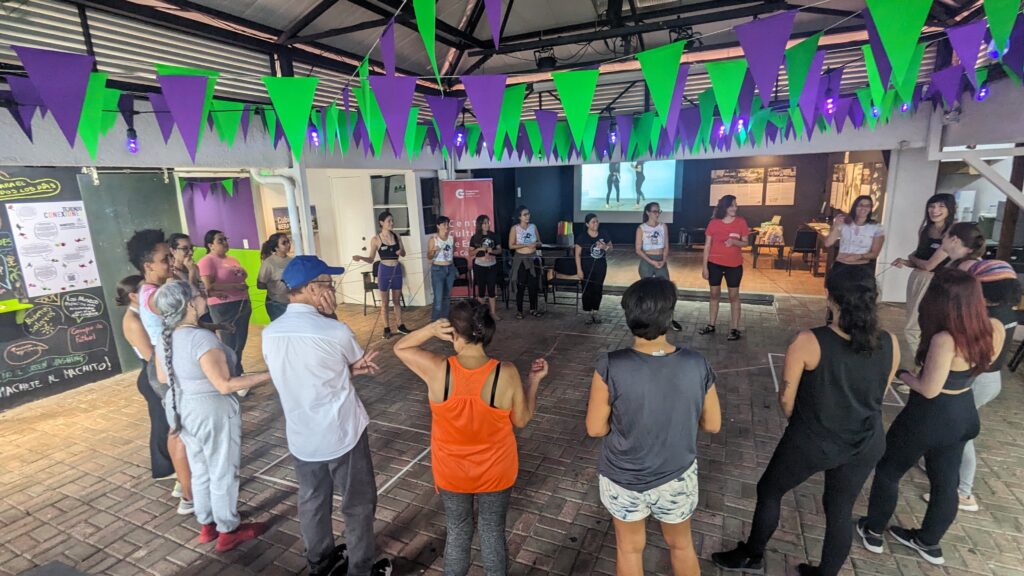
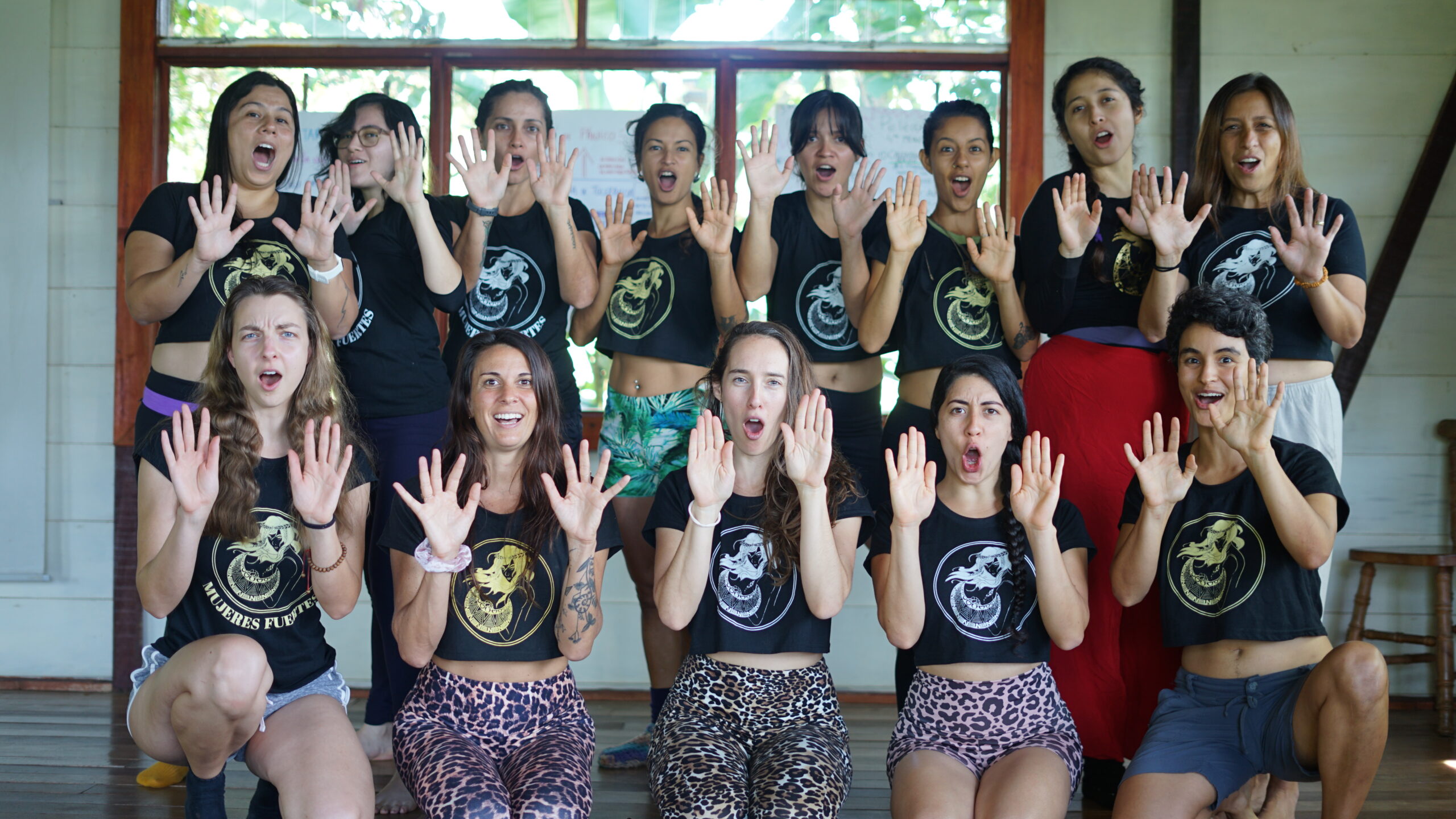
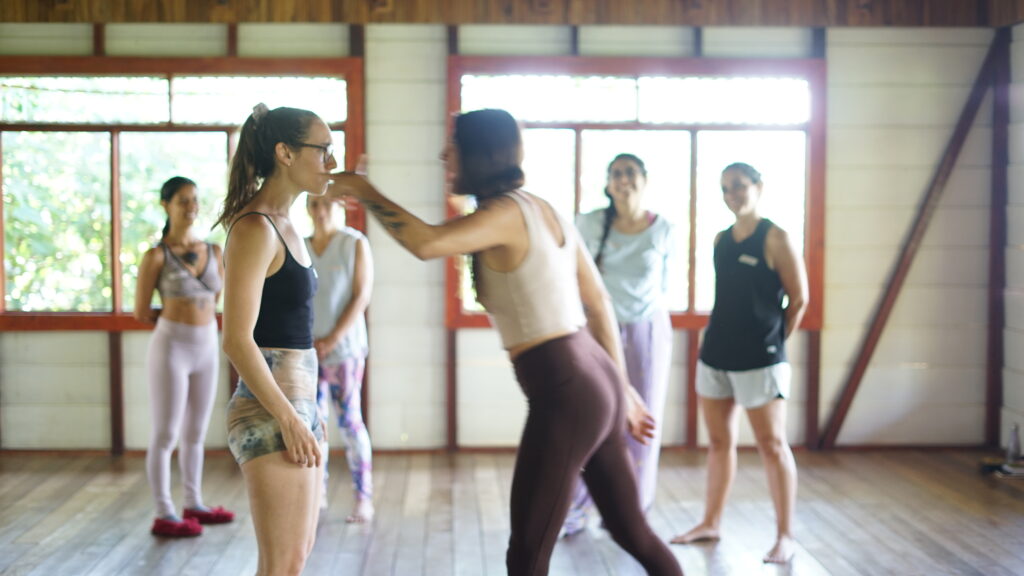
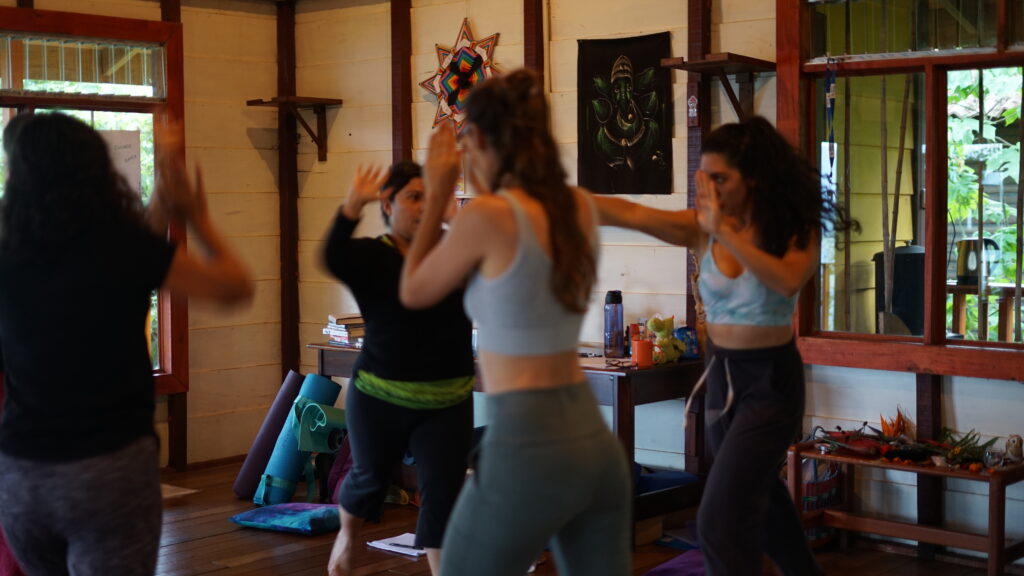
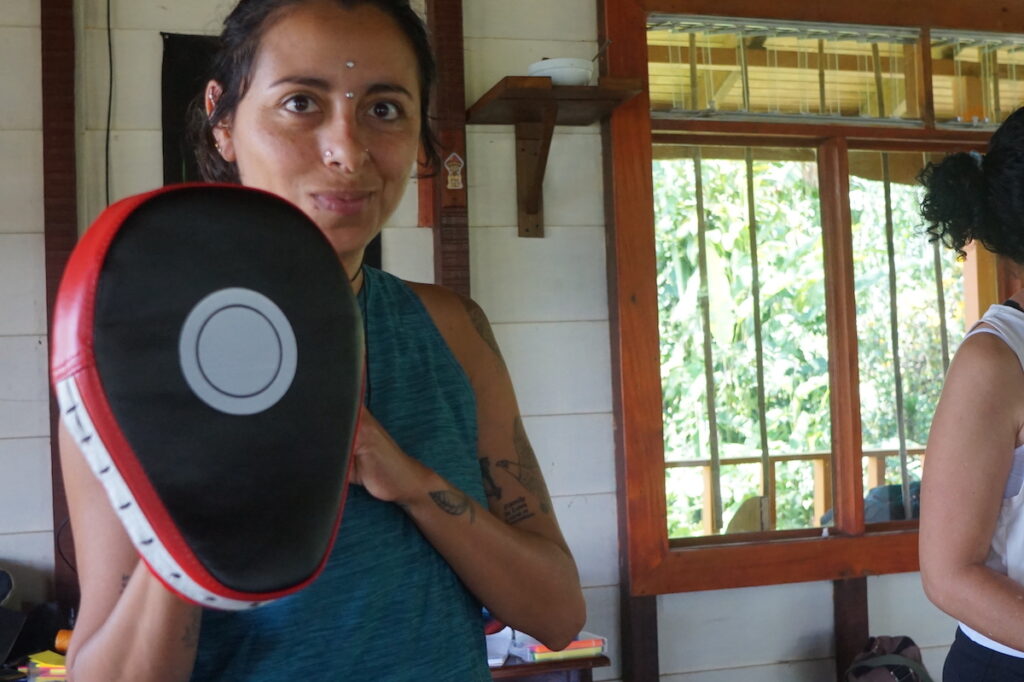
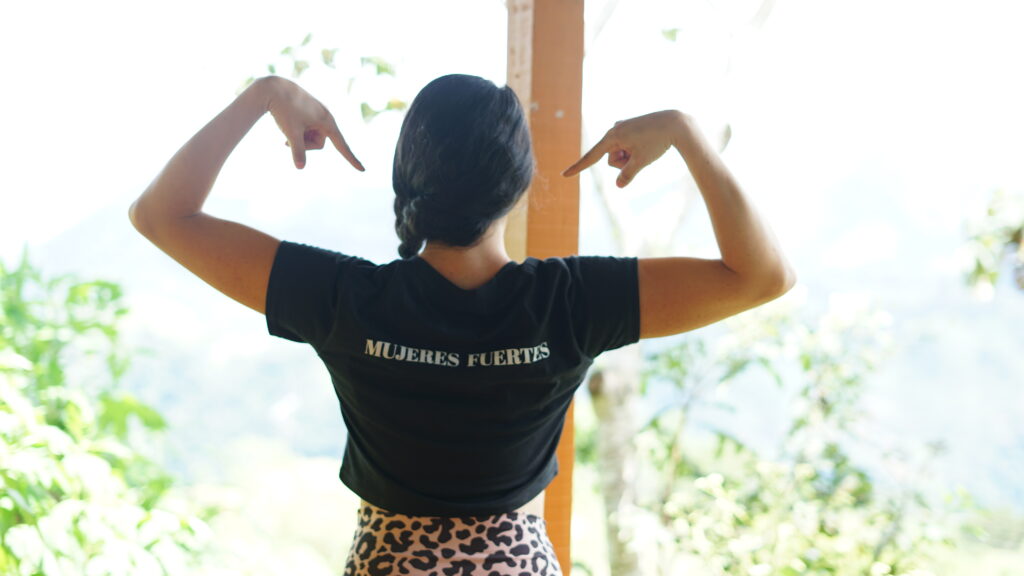
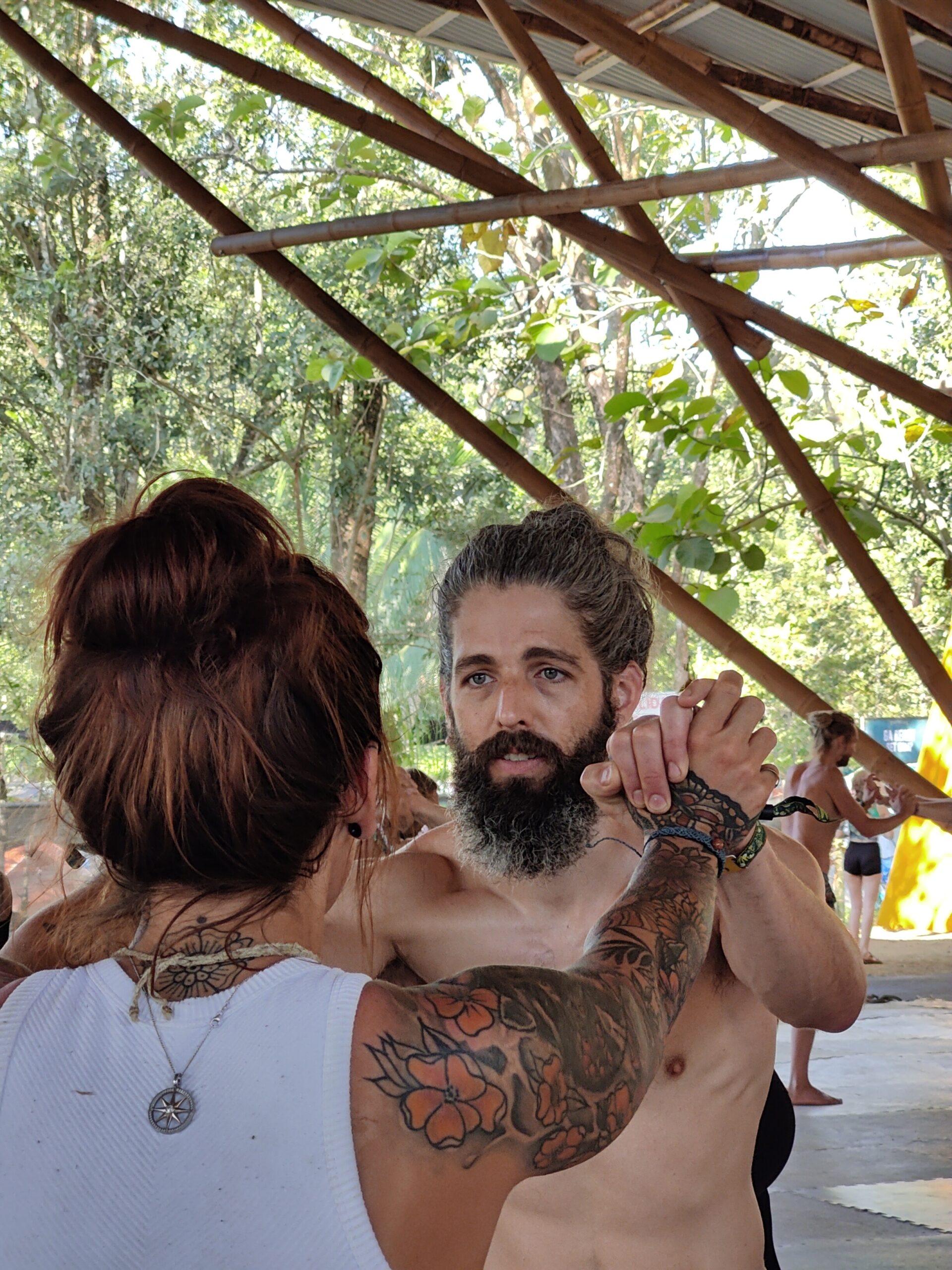
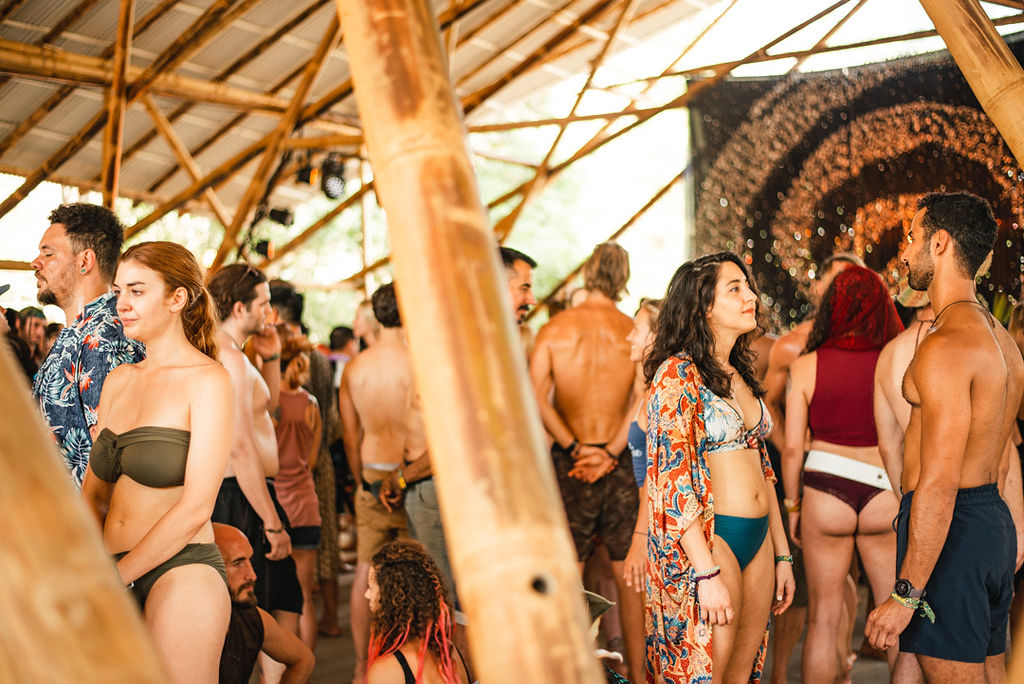
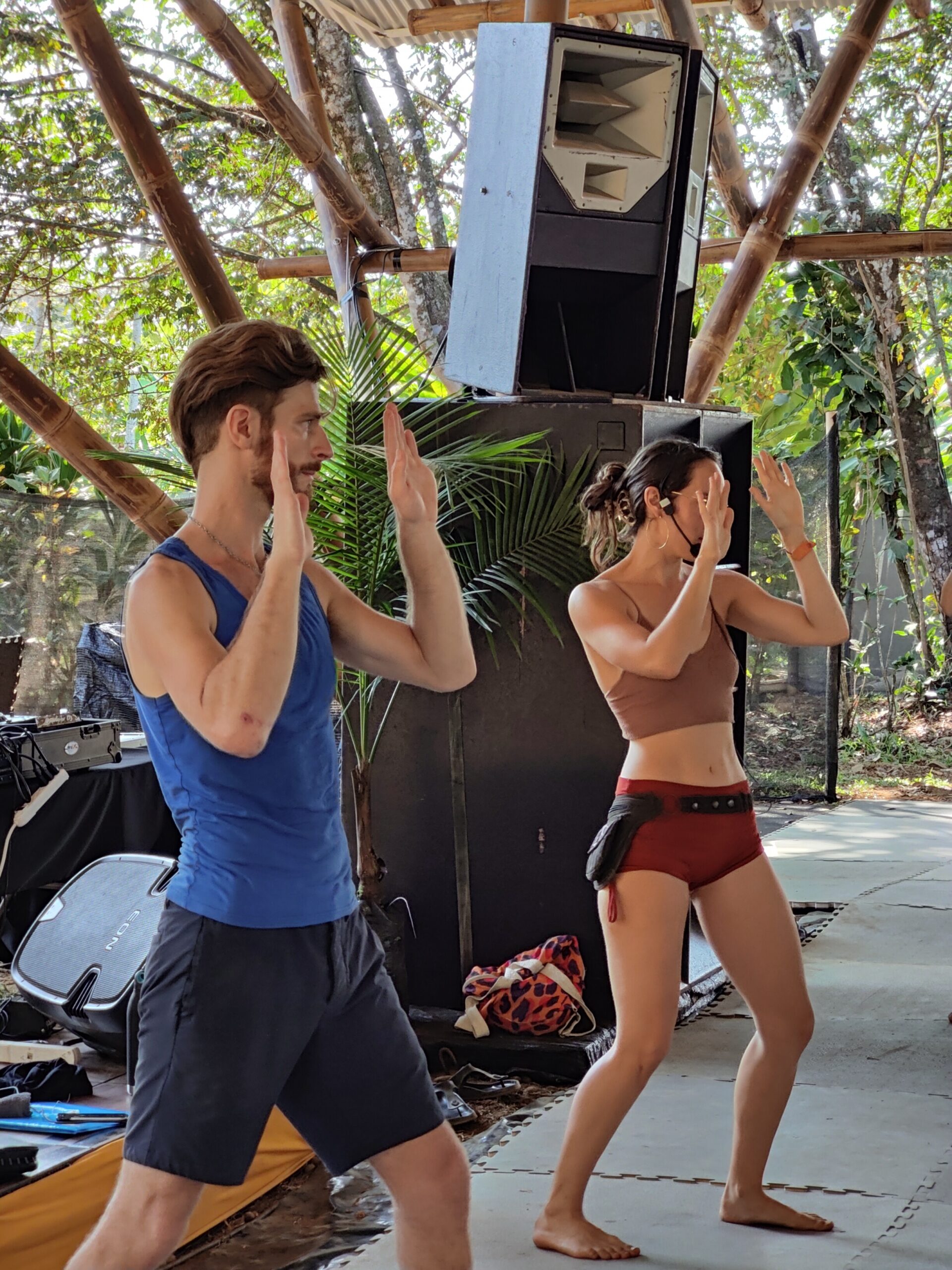
It’s March 8, 2023. Between a “voice activation” exercise where we shout “no” at high, higher, and highest volume and a round of practicing palm heel strikes, my phone pings over and over. I’ve received a flood of messages wishing me a “Happy International Women’s Day.”
I send back a few emojis without too much enthusiasm and continue with my empowerment self-defense (ESD) class. The participants yell, strike, play, and discuss gender issues. It’s neither a protest nor a celebration for March 8th; it’s part of the daily struggle for a world without violence against women.
I work towards that world—a world where everyone can live with the freedom and dignity we demand each year on March 8th—every single day.
This year will likely be similar. In over five years of teaching self-defense workshops, I’ve noticed a pattern: there is a spike in demand for classes during key dates like March 8th (International Women’s Day) and November 25th (International Day for the Elimination of Violence against Women). A month before, several companies, municipalities, hotels, and other groups call us to schedule activities. And at the same time, allied groups ask us if we will be participating in marches around the country.
Every person in the Mujeres Fuertes Autodefensa network makes their own decisions. I tend to choose to give workshops on those dates.
Of course, I’m thrilled that there are so many institutions and communities that want to commemorate March 8th with empowerment and violence prevention education. It is an aligned way to recognize women’s struggle for justice throughout history, which, as I understand it, is exactly the point of March 8th. I am inspired to see so many people take to the streets, from the center of San José to the beaches of Guanacaste and Limón.
I don’t even mind—too much—when people congratulate me for being a woman, even though they don’t do it any other day of the year, and even though I believe the day deserves more solidarity than congratulations.
What disappoints me is the lack of interest (and funds, and participation) in justice and violence prevention the other 364 days of the year. In the context of my work, an introductory empowerment self-defense (ESD) workshop of around two or three hours is a start, not the final goal. Of course, it’s better than nothing, and people can learn key tools to empower their personal safety in a very short time.
But on March 8th, I would love to see all the companies, institutions, and individuals who support women’s rights back up their words with a larger time investment. In a 12-hour ESD course, lives can be transformed and statistics can be changed. In an annual, ongoing, committed ESD course, a community and a culture can be transformed.
March 8th is a symbolic day that marks, represents, and commemorates a constant, generational struggle, which we continue to fight every day.
I invite everyone to remember that March 8th is not really a special day, but a day like any other, where it is our responsibility and privilege to raise our voices for justice, equality, peace, and freedom.
We are Mujeres Fuertes. As a Costa Rican-based social business, we are dedicated to supporting women, children, and all people to live lives free from fear and full of confidence through holistic self-defense workshops.
Our fundraiser seeks to raise sufficient funds to cover 2 years of operations and development. To reach more people, we need to develop our team of instructors and administrators to organize more trainings in more places. We want to realize our goal of being self-sustaining so that we can reach exponentially more people with our self-defense methodology.
What it will achieve: a 2-year runway to cover all operating and development costs
The pitch: Change lives. Prevent violence. Help us build a thriving community centered on empowerment and healing.
What’s the catch? There is none! 100% of your donation will go towards realizing our vision for delivering our self-defense training at a MUCH bigger scale! (Even if we don’t hit our full goal, we will be on our way.)
State of the Holistic Self-Defense Revolution: Donor & Ally Update
A huge thank you to all who joined us for our end-of-year ‘State of the Holistic Self-Defense Revolution’ event! And another huge thank you to the donors, allies and mentors who have made it possible to come so far in just a few short years!
What is Mujeres Fuertes Autodefensa (Strong Women Self-Defense)?
Mujeres Fuertes is a Costa Rican-based social business dedicated to supporting women, children, and all people to live lives free from fear and full of confidence. Our holistic self-defense methodology connects our participants with a sense of power, freedom and agency through physical skills, communication strategies, mindfulness practices, and healing arts and connection. We offer profoundly transformative experiences, with a unique perspective on self-defense, empowerment, and learning.
We work with various community, organizational and corporate allies to bring our holistic self-defense methodology to as many people as possible.
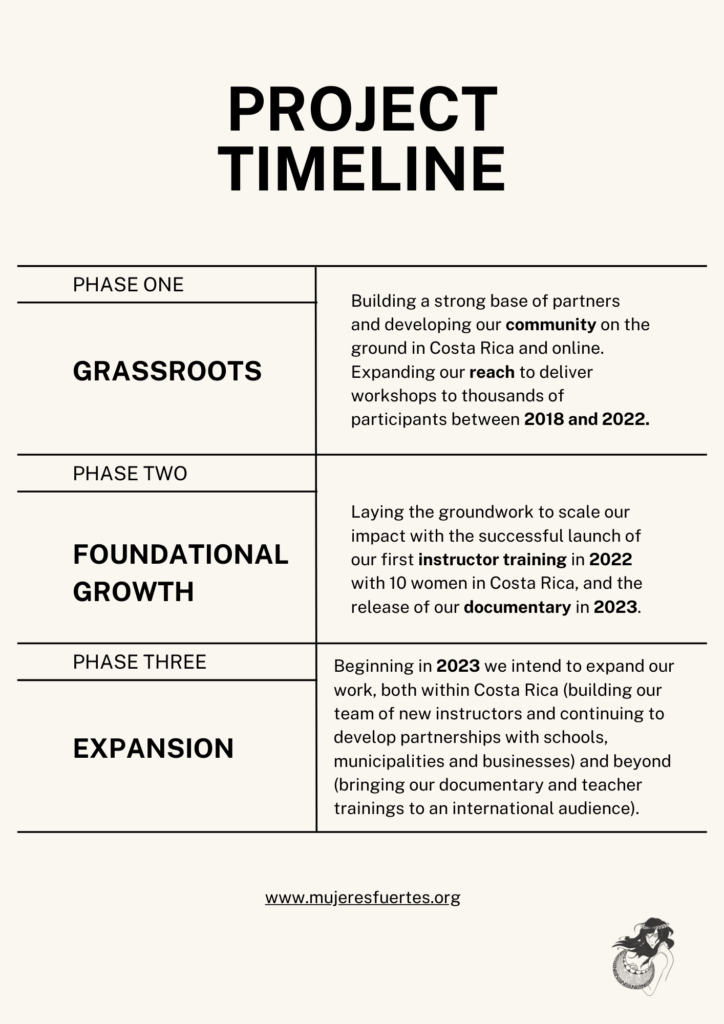
In the interest of scaling our impact, since 2022 we have begun to shift our focus towards training trainers. Our yearly instructor training program prepares people of all backgrounds to confidently teach holistic self-defense in their communities.
For the past 5 years, with plenty of help from incredible friends and allies in Costa Rica and around the world, I have sustained taken Mujeres Fuertes as a passion project. We have not generated enough income to regularly pay a team, so our team has been largely volunteer-based, and fueled by a lot of love, but very few monetary resources.
Despite such limited resources, we have managed to:
Run an “empowerment tour” of Costa Rica, visiting 11 locations in just 2 weeks to deliver 12 introductory ESD workshops.
Produced a documentary about the tour and about our violence prevention methodology with an all-women production team and a crowdfunded micro-budget.
Deliver thousands of hours of self-defense training around Costa Rica, and around Central America.
Reached thousands of students of all ages and social backgrounds.
Provided scholarships, work exchanges, or low-cost access to those who could not afford to participate at-cost.
Developed an online course that provides our full self-defense methodology at a low cost to anyone with an internet connection and a personal device.
Cultivated a community of students, allies and friends who are as passionate about our violence prevention work as we are.
Trained our first generation of holistic self-defense instructors in Costa Rica (10 women trained in 2022, and another 10+ to be trained in September of 2023).
All of this because we believe deeply and fiercely in the value of this work. We don’t just dream of a world free from violence, where all people live with the freedom and confidence to exist as they are and move through the world however they desire… we work to make that world a reality every single day.
The Catch 22: Without the resources to pay a team, we are stuck at a flexion point.
To reach more people, we need a proper team of instructors and administrators to organize more trainings in more places. To become truly self-sustaining, and ultimately to thrive, we need more clients—schools, districts, businesses and NGOs that wish to offer regular Empowerment Self-Defense (ESD) classes. To realize our vision, we need two things:
More instructors fully trained and ready to give workshops on their own, first in Costa Rica, then around the region, and maybe one day… all over the world! (In the works as we speak! In the first days of August 2023, we ran a 2-day training with 6 of our most dedicated new instructors to provide additional training, strengthen our community ties, and get reenergized and re-inspired. In December of 2023 we ran the First National Gathering of Holistic Self-Defense Instructors in Costa Rica. We hope to make it an annual or bi-annual event to deepen our network and keep training up.)
Money to pay our team to conduct outreach, manage social media, administrate our online and in-person workshops, provide ongoing professional training for our instructors, and cultivate community with regular gatherings and spaces for practice and support.
Where will your money go?
I believe in paying people what they deserve for the work they do. To realize this vision for a scaled-up project that can reach exponentially more people with our self-defense methodology and ultimately sustain itself (by holding onto a percentage of all fees charged for workshops and courses to pay our team and other organizational costs).
“I dream of making a living doing what I would do for free.”
—Mariel Carmona, long-time Mujeres Fuertes assistant, dear friend, and one of the first generation of instructors trained by Mujeres Fuertes in 2022.
Every cent of your donation (with the exception of the transaction fees charged by this platform) will go towards the operating costs outlined below. All team members have been involved in this project for years and have demonstrated their passion for and commitment to its long-term success. What’s more, all administrative team members, as well as those in training to become members of our instructor team, are Costa Rican women, the right people to carry Mujeres Fuertes into its most sustainable, mission-centered and ethically aligned future.
This fundraiser seeks to raise sufficient funds to cover 2 years of operations and development. Even if we do not reach this goal, any amount will support our ongoing sustainability and bring us closer to our long-term vision.
We are a firmly anti-capitalist social business wholly unfit for traditional investment (registered in Costa Rica), and you can be assured that every cent of your contribution will go towards paying our team what they deserve to earn for the work they are driven to do by purpose, passion, and the belief that a more beautiful world is possible.
With a two-year runway to conduct ongoing outreach, build client relationships and partnerships, and level up our digital marketing, we believe that this project can become self-sustaining, thus potentiating the scaling of our impact–first in Costa Rica, then in Central America, and finally… taking over the world! (But, you know, in a non-violent, feminist kind of way. 😉 )
Currently, our only source of revenue is workshop participant or client fees, most of which goes to pay facilitators. Most workshops are offered on a sliding scale for payment, because we want this material to be accessible to everyone. And so, while we are not a nonprofit, we operate with a mission-first value system.
You Can Make THE Difference
See our fundraiser page (or watch the video above) for the full breakdown of our projected costs and growth strategy.
I am asking YOU for your support to realize the full potential of this project. We have done so much already, and… it is only the beginning. Mujeres Fuertes (Strong Women) has already reached thousands with a research-backed violence prevention methodology, holistic healing arts, and meaningful networks of community and support. Now, we want to reach tens of thousands… to start!
Will you help us to change lives, prevent violence, and build a future of peace, empowerment, and connection?
Ometepe, Nicaragua | January, 2023 | Photo: Thomas Blanc
Safety is a human right. So is solitude.
Solo female travel? That’s not possible. It’s too dangerous. Women shouldn’t do that. You should never travel alone. What if you get kidnapped? Aren’t you scared? Go with someone, a friend, a partner—ideally a man.
As a woman, I have heard every argument in the book against going out into the big, bad world on my own. The fears and warnings above are just the tip of the iceberg.
These questions/concerns do not intend to fear-monger. They come from friends, parents, uncles, lovers, and well-meaning readers—people who want to see me safe and well. Yet it seemed unfair from the outset that I had to bear the brunt of my family’s concern as I traveled solo, while my older brother had jetted off first without much ado. The double standard always chafed. Of course it all came from love, but that’s not the point.
Why did everyone worry so much about my safety, and yet no one ever suggested I take it into my own hands?
The problem is not so easily reduced to a few knee-jerk comments and Hollywood-induced travel phobias alone. Rather, it’s how these well-intentioned aphorisms reinforce an out-dated social contract that discourages women from enjoying the same freedoms men do that does the bulk of the harm.
There is a depressing kind of fatalism in writing off solo travel for women forever because, “the world is a dangerous place,” rather than consider, for a moment, that there might be solutions. That there might be strategies for personal safety that do not come at the high cost of freedom and adventure.
For most of my years of solo travel, I got by on instinct and bravado. “Fake it ‘til you make it” was my response to getting lost, harassed, followed, or accosted. Act like you know where you’re going, like you’re fearless, like you’re unshakeable. Most people will believe it. Eventually, you will too.
And while this worked, I made it through a decade of solo adventures unscathed, I still lacked some basic tools to not only stay safe, but also enjoy solo travel more.
In 2018, however, I seized an opportunity to train as an Empowerment Self-Defense instructor with ESD Global, an organization dedicated to women’s safety around the globe. Realizing that many women yearned to travel solo, but were held back by fear, I decided to offer more than just words of advice or encouragement. It was time for practical skills.
Action is the antidote to fear.
Developed over the past 50 years by female martial artists and violence prevention experts, ESD teaches a compelling mix of physical techniques and verbal strategies for deescalation and boundary setting.
It was the missing link, a one-stop shop for women desiring to feel both safer and freer in any environment. After nearly four years teaching this methodology across Central America, I can confidently attest to the transformative power of discovering our inner fire. Knowing what our body and voice can do, and trusting we know exactly how to use them, instills cultivates a valuable baseline of confidence and self-reliance for solo female travelers.
Amalfi Coast, Italy | November 2023 | Photo: Thomas Blanc
Below are my 5 go-to strategies for staying safe as you travel, without sacrificing a single glorious moment of your solo adventure.
Listen to Your Intuition Women too often internalize the social conditioning that everyone else knows more about our boundaries and our bodies than we do. In fact, we know very well when a situation is unsafe and, conversely, when we can relax and settle.Intuition is the soft, quiet voice that whispers in your gut, “Yes.” “No.” “This way, not that way.” “Danger.” “All clear. The trick is learning to listen, and then trust that voice. When we are conditioned to ignore our gut, intuition feels ungrounded and impractical.In fact, it is very much the opposite. Intuition warns us when a person, place or situation is potentially dangerous. It may feel like tightness in the chest or belly, shaking in the hands or legs, buzzing in the forehead, or a general sense of tension or closing in. And, it will guide us to know when to trust new friends or dive into “risky” adventures. That may feel like openness in the chest, relaxation or softness in the belly or jaw, or a general feeling of leaning in. The more we heed these signs and engage with our intuitive mind, the sharper it will become.We can practice listening to our intuition in small ways—eating when hungry, resting when tired, changing position or taking a deep breath when our body asks for it—and with mindfulness practices such as yoga, meditation, martial arts, or unhurried time in nature.
Understand “The Interview” The interview is a well-documented occurrence in gender-based violence, whereby a potential attacker “interviews” a potential victim by slowly and progressively pushing her boundaries to see if or when she will act in self-defense.Whereas popular culture leads us to think that violence against women is sudden and unexpected, most attacks are in fact slow and deliberate. Each step of the interview is an opportunity to set a boundary: They follow you in the street or on the trail. They start to ask you personal questions on the bus or at your campsite. They touch you in a way that feels uncomfortable. They don’t respect your “no.”We will often wait to be “sure” of a person’s intentions before setting a hard boundary or expressing a firm “no.”Fear of offending or overreacting leads us to disregard our own needs and our own intuition to avoid rocking the boat. This is exactly what a would-be attacker is counting on. The sooner you can identify an “interview” situation while traveling, the more easefully you can de-escalate, speak up, escape, seek support, or otherwise stay safe.
Use Your Voice Be loud, assertive, and unapologetic. The best way to stop “the interview” in its tracks is to use one of the most powerful weapons in our arsenal: our voice. Setting clear, firm boundaries can deter a would-be attacker and deescalate a potentially violent situation before it starts. Your intuition will tell you when and how to use your voice, be it calmly stating a boundary, or shouting “NO” at the top of your lungs. Women often learn from a very young age to stay quiet, to play nice. And so it takes practice to override this conditioning and train ourselves to speak up when we feel uncomfortable or unsafe. It is vital that we do so, however. In a situation of attempted assault, it can save our life. (Note: Using the voice is not about calling for help, although we can also ask for support from bystanders if that feels like an option. Activating the voice connects us to our own core power, disrupts the “freeze” response to danger, and also discourages a potential attacker.)
Stay (& Look) Aware Whether on the road, in the woods, or right at home in your neighborhood, awareness is key for personal safety. Staying vigilant—no need for stress or tension—not only helps us to identify danger or risk well before it becomes an emergency; it also can help us get oriented in a new environment, observe more details and beauty along our journey, and enjoy our adventure with full-bodied presence. As we rely more and more heavily on technology for navigation and communication, we may feel the urge to check our phones frequently. As a traveler, the best thing you can do is keep your eyes up, phone away, and look and act like you are confident and at ease, regardless of how you feel. Keeping your shoulders back, your chin up, your gaze relaxed and alert, and your feet wide serves two purposes: It communicates to the outside world that you are confident and aware (and you are). And, it sends a message to your own brain and body that you are not afraid to take up space, increasing your self-confidence and security at a cellular level.
Keep it in Context Let’s put the concept of women’s safety in context. At least 90% of gender-based violence worldwide is perpetrated by someone known to the victim. 59% by an intimate partner. The “stranger danger” narrative of personal safety and self-defense ignores the bigger picture: As women, we are not at higher risk out in the woods or on the road. In fact, we may be safer there. Despite the cultural narrative around personal safety, all the fears and warnings I shared above, solo female travel is not in fact more dangerous than being a woman at home, at work, or in a relationship. So if doubts about safety are holding you back, or if friends or family challenge your travel choices, it may be helpful to consider that just being a woman is risky stuff. Staying home won’t necessarily keep you safe, and neither will staying close to friends or significant others. At times, these may in fact pose a greater threat. So you might as well go out there solo and live your adventure. (If you would like to dive deeper into this kind of training, I recommend exploring ESD or IMPACT Personal Safety Classes in your area.)
Empowerment Self-Defense is about offering new options and alternatives, not tossing out all the strategies we already have. I know every single one of you already has a toolkit packed with self-defense techniques, whether you call them by that name or another.
So what would you add to this list? What are your go-to strategies for feeling secure and confident on your solo adventures? Share your experience in the comments!
Originally published on Roofnest.
Learn more about my empowerment self-defense work at www.mujeresfuertes.org, or support our fundraising efforts here.
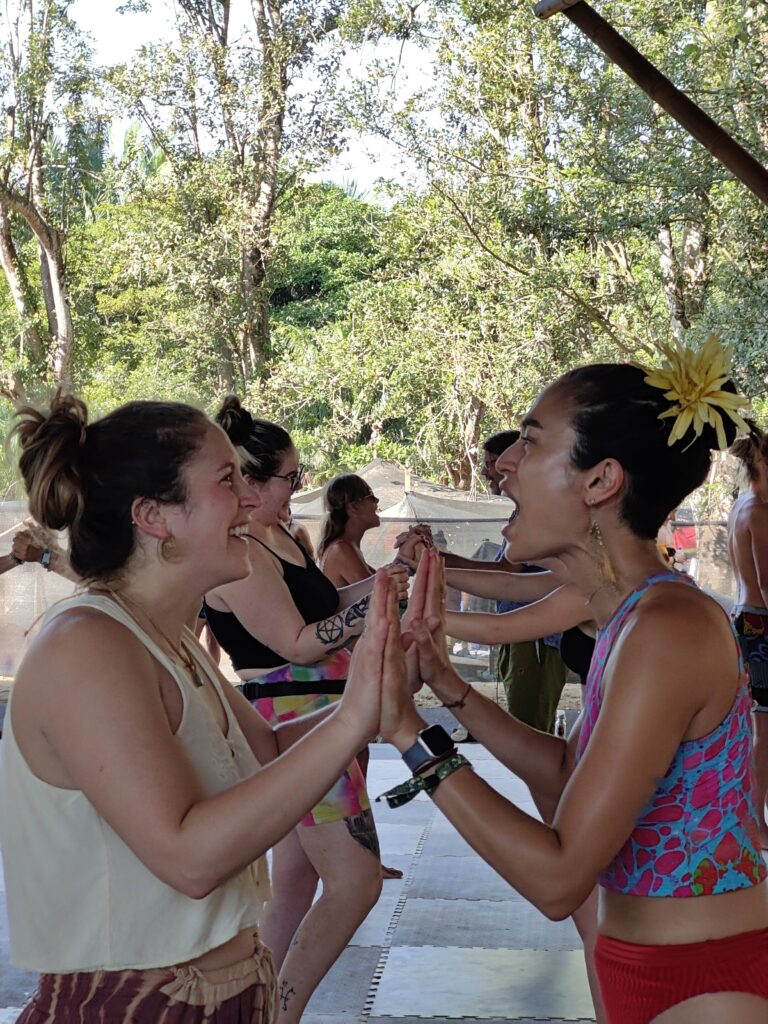
Empowerment Self-Defense workshop at Envision Festival in Costa Rica, 2023.
Understanding the traffic light approach to evaluating risk — & safety.
What does self-defense mean to you? Is it just about martial arts strikes and yelling at an attacker? Or is it also about expressing firm boundaries, communicating a “No” without excuses or apologies, and interrupting uncomfortable situations before they become dangerous.
Or, is it about improving our relationships, relaxing into deeper connection and pleasure, knowing that the tools for self-defense are within reach, just in case.
For me, the answer is D, all of the above.
As an empowerment self-defense instructor, I define both violence and self-defense along a broad spectrum. An attack by a stranger in the street or on the beach is violence. Emotional abuse is violence. Street harassment is violence.
As a general rule, we humans don’t learn basic skills for defending ourselves anywhere along this spectrum. Empowerment self-defense provides choices and practical strategies — both verbal and physical — for dealing with risk, danger, or simple discomfort in ways that support safety and agency.
At its best, I think it can also improve our day-to-day interactions with family, friends, and partners by helping us dial into our needs, desires and boundaries, hone our intuition, and speak from it with confidence and power.
The Interview: Leaning Back from Danger (Red)
Perhaps the first step to building healthy relationships is learning to listen to the voice of intuition and hit the brakes at the red flags.
News stories and popular culture give the impression that gender-based violence always appears out of nowhere. You’re walking down the street and someone attacks you. You’re alone at the beach and someone attacks you. You’re in your house and someone attacks you…
While these situations are real, they don’t represent the majority of cases of violence.
It is a well-documented fact that gender-based violence (whether initiated by someone known or unknown) normally begins with an “interview.” In an interview, the potential agressor tests your boundaries, little by little, to see how you will respond. In a public space, the interview might start with a simple, “Hey, how’s it going?” and then escalate to more intimate questions or a breach of your personal space. With someone known, the interview could begin with “innocent” but undesired touch, and then proceed to cross more serious boundaries.
The interview (along with domestic violence) makes it especially difficult to practice self-defense, for two reasons. First, the social contract demands that we respond politely (or politely ignore) these first, “harmless” steps of the interview process, even if we feel uncomfortable. Second, agressors aptly erode a person’s boundaries and trust in their own intuition.
The question is: When will you pay attention to your intuition and put a stop to the behavior that is making you uncomfortable? This is exactly what a potential aggressor is waiting to see.
We can interrupt the interview with the assertive and direct communication of a boundary: “I don’t want to talk.” “Don’t touch me.” “You’re making me uncomfortable. Stop.” If successful, we won’t have to use any other self-defense techniques.
That’s why I don’t like to draw a distinction between physical and verbal self-defense. All the techniques have the same objective: to protect your safety.
The Traffic Light: Leaning into Safety (Green)
In empowerment self-defense, we like to use the metaphor of a traffic light to understand boundaries and risk.
When we are in green, everything is okay, normal, calm. The body should be relaxed, without too much tension, the breath even, and the heartrate at a natural resting rhythm.
An intimate relationship, friendship, or work environment should feel green most of the time, for most of us. This is a healthy place for our nervous systems, a place where healing and learning can occur, because the heart and mind are open to receive and connect.
When we are in yellow, we are on higher alert. We notice that something isn’t right, we feel uncomfortable, or someone is crossing a personal boundary. The body may become more tense, the heartrate or breath might accelerate, and our posture and body language display more awareness.
And finally, when we are in red, we are already in danger, and we need to apply self-defense principles (Think, Yell, Run, Fight, or Tell/Seek Support) in order to stay safe. Unfortunately, these situations often occur with someone we know, but we have the power to interrupt them.
It is critical to understand that self-defense does not begin when we are in red. Self-defense begins when we are in green, with a continual process of self-discovery and exploration. It starts with knowing our boundaries, understanding what we like and want, and getting clear about which behaviors we will not allow.
This clarity can improve all of our relationships — especially with the people we really want to have close to us.
Then, empowerment self-defense continues in yellow, when we express our boundaries and put a stop to potentially risky situations before we get to red.
Staying Curious about Our Needs & Boundaries (Yellow)
Boundary work is complex and constantly changing. Keep in mind that your red and green zones may look different than your best friend’s, your partner’s, or your family’s. Rembember that no one else gets to tell you where your boundaries are, or if the lines you draw are “reasonable” or “valid.”
We can stay curious about our yellow zone, especially, asking ourselves when discomfort is an invitation to question our biases or explore the possibility for healing, and when it is a simple warning cry to step away from danger and into safety. We can embrace the discomfort of genuine growth, while also protecting our hearts, minds, and bodies against violence.
Remember, too, that we are in a process of constant evolution, and that we may have different boundaries today than we did yesterday, and that tomorrow will surely bring another shift. Accepting and honoring this process of change and growth — in ourselves and in our loved ones — is a perpetual challenge. But, I think the rewards are worth it.
A Short Exercise in Defining Boundaries
Where are your boundaries today? Make a list of ten “green” situations, ten “yellow” situations, and ten “red” situations. Don’t forget that boundaries are personal! The important thing is how each situation feels for you.
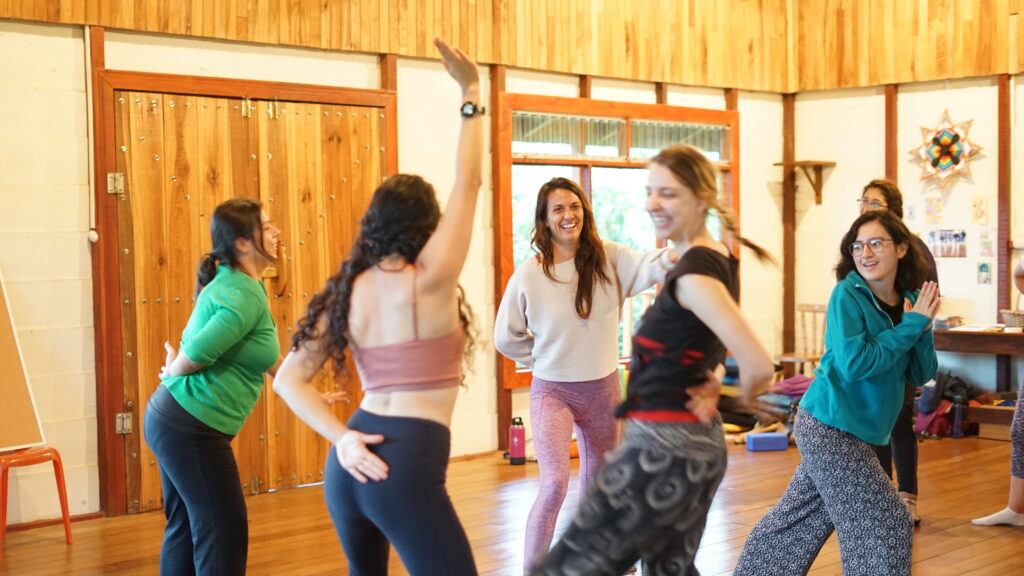
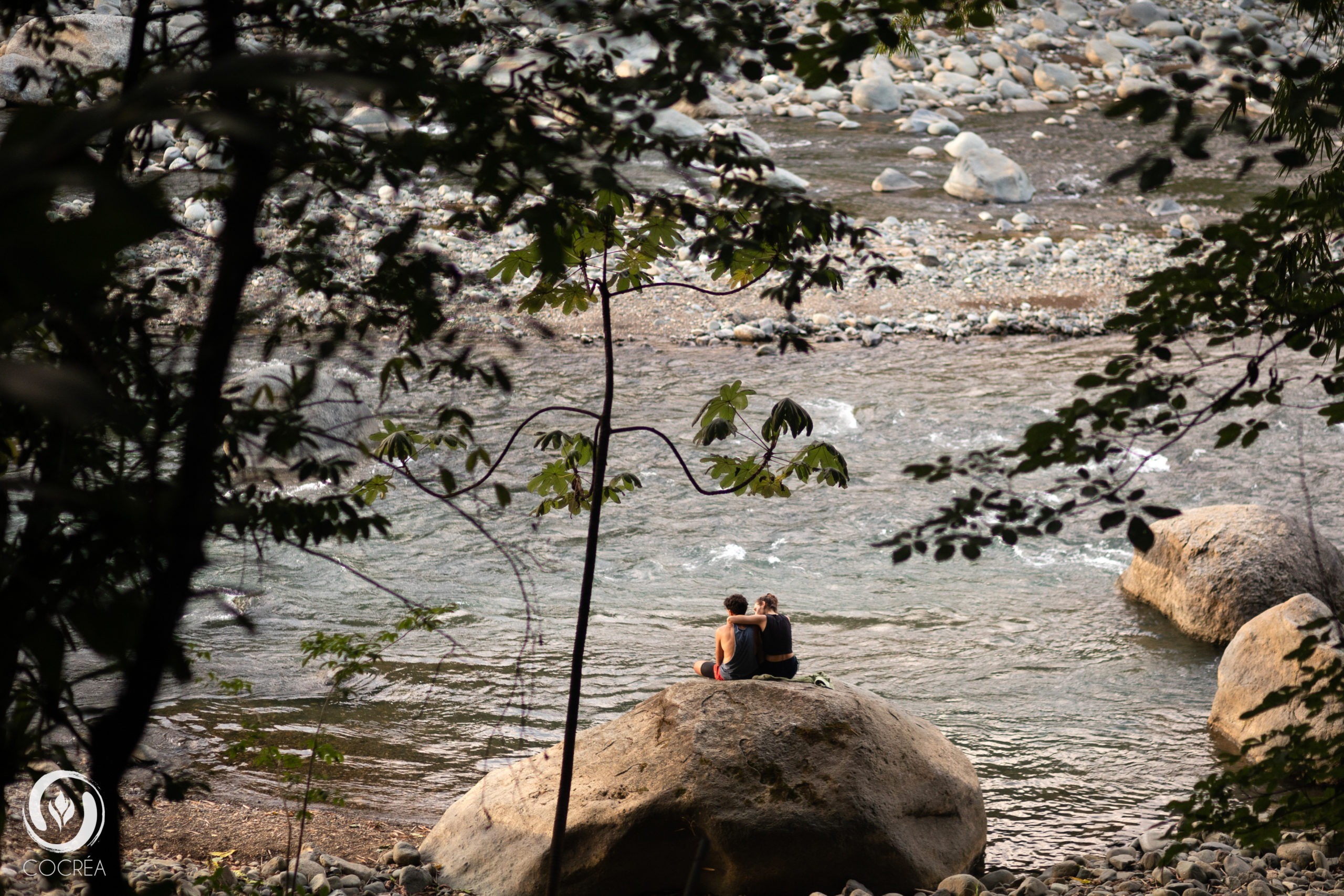
March 24-31, 2023 – Dance Your Medicine Retreat at Posada Natura Healing Center in Londres, Costa Rica. (Photo by: Foster Snell | @FosterTheEexplorer)
One breath can change everything.
The “sacred pause” can be the difference between reaction and response, between contraction and expansion, between inaction and action.
In the spaciousness at the top of our inhale, everything expands and possibilities open before us. In the emptiness at the bottom of our exhale, clarity crystalizes.
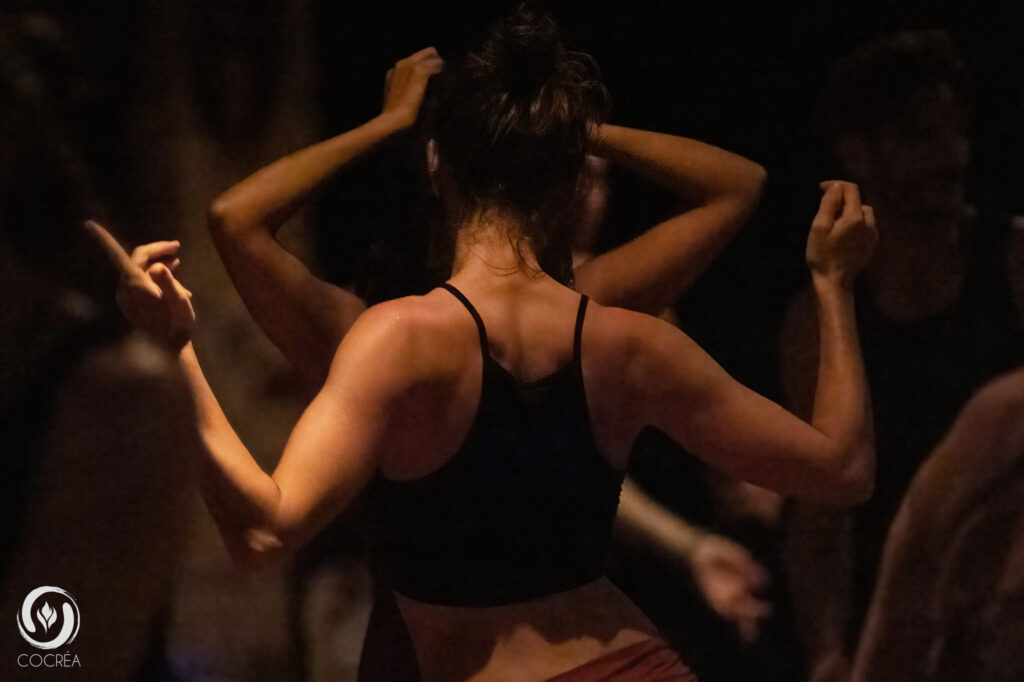
After a week of exploring “mindful partner dance” with the amazing humans behind CoCrea last month, I found myself thinking a lot about the “sacred pause.” In dance, this pause can be a single breath, or even a microsecond of stillness that allows us to listen to our own body and our partner’s—and allow movement to arise from there.
It is a moment of beauty, attunement, and awareness, rich with potential. And it is a moment to reconnect with our own body and its needs, giving ourselves the opportunity to act in integrity with our own self-knowing.
Here is where we can carry the sacred pause with us from dance into self-defense.
That same, seemingly-insignificant moment of renewed awareness, when applied to a situation of danger or violence, can again change everything. The sacred pause can restore our agency and power when we find ourselves in an adrenalized or activated state, helping us to access our self-defense toolkit, in spite of fear or confusion.
In the holistic self-defense classes I teach through my empowerment project, Mujeres Fuertes, we often encourage participants to take a breath before practicing a strike. We also regularly discuss the importance of taking time to check in with ourselves when a person or situation makes us feel uncomfortable or unsafe. In this moment, we choose how we want to respond, if we need to set a boundary, if we would rather get up and walk away, and so on.
Fear can easily cloud our judgment as well as affect our coordination; pausing helps us choose, speak, and act with clarity.
Similarly, the social contract and social conditioning around “niceness” and “politeness” often keep us in places we actually don’t want to be. Utilizing the pause to touch base with our intuition and listen to the body, we can recognize more easily when a situation is “yellow” or “red.”
From a trauma-informed perspective, the sacred pause—taking a breath and bringing awareness back to the present moment—can mean the difference between freezing or acting (yelling, running, fighting, and so on) to defend ourselves. When the alarm system is activated in the brain, most people unconsciously default to their go-to adaptive strategy: fight, flight, freeze, flop, or fawn. For many, and especially for women, the freeze/flop/fawn response is a well-honed survival strategy.
“What if I freeze?” is probably the most frequent question in our self-defense classes.
No one can guarantee breaking the freeze response, nor do we wish to write it off entirely, as it is itself a survival strategy. However, we do know that the more we practice pausing, breathing, and bringing awareness to the body when adrenalized or activated, the more we augment our capacity to notice—and to choose a different response.
Furthermore, we invite participants to reframe freezing as “active waiting.” The animal that freezes in nature when danger approaches often proceeds to run away or otherwise act in self-preservation. People are no different. Through training our body to breathe through discomfort or fear, notice our instinctive reactions, and then yell, run, or fight, we curtail the freeze response and prepare ourselves for what follows.
The more tools and options we have, the more possibilities will open ahead of us in the momentary lift of the sacred pause.
Why “sacred”? Because for me, anything that connects us with our embodied wisdom, intuition, or inner knowing is a mystical practice. Anytime we enter into communion with that soft, clear voice who speaks or dances from our center, I believe we are in conversation with the divine. And what is more sacred than that?
How do you apply the sacred pause in your life, relationships, or creative work? I would love to read your perspectives!
Finally, I invite you to remember the sacred pause when you feel afraid, uncomfortable, confused, or overwhelmed.
In the spaciousness of this moment, everything is possible.
Empowerment Self-Defense at Envision Festival, Costa Rica, 2023 | Photo Credit: Hestia Photograph Experience
Heading to any festivals this year? Brush up on your boundary skills before you go to make it the most integrated, aligned and FUN experience possible!
The motto of my holistic self-defense project, Mujeres Fuertes Autodefensa, is “Find your NO. Live your YES.” I believe that when we understand our boundaries and have the tools to express them (and defend them if necessary) we are better equipped to fully embody our “yes”—to live with openness and curiosity, and to enjoy deep connection, pleasure, and play.
Festivals are unique spaces for exploration, expanding limits, and broadening comfort zones. This is a wonderful thing, as long as we go into them with self-awareness, a working understanding of consent, and a toolbox full of tools for staying safe.
It is my wish that every festival-goer, dancer, lover, and seeker be able to experience the magic of these spaces feeling secure and confident in their safety and agency. To that end, below I will share 6 tools for boundary setting and assertive communication. I hope they will empower your festival journey—and your day-to-day life!
Before we dive in, remember:
Boundaries are personal. No one else gets to tell you where yours are… and vice versa.
Boundaries can change. It is okay and totally normal to want one thing one day, and something different the next. You get to decide how and when your boundaries shift, always.
It depends on context. Your boundaries may be different with different people or in different spaces or situations, and again, that’s okay and normal!
It is never too late to set a boundary. You can always let someone know a minute, hour, or year later that they crossed a line.
You are responsible for communicating your boundary, but not for how other people react to that. Usually the people who react negatively to your boundaries don’t want you to have any.
There are always (at least) two sides to consent. Try to treat other people’s boundaries the way you would like yours to be treated.
When in doubt, trust your gut. If it feels wrong, unsafe, or undesired, it is.
6 Boundary Setting Tools for a Safe & Expansive Festival Experience
Listen to Your Intuition.
We often internalize the social conditioning that everyone else knows more about our boundaries and our bodies than we do. In fact, we know very well when a situation is unsafe and, conversely, when we can relax and settle. Intuition is the soft, quiet voice that whispers in your gut, “Yes.” “No.” “This way, not that way.” “Danger.” “All clear. The trick is learning to listen, and then trust that voice.
Intuition warns us when a person, place or situation is potentially dangerous. It may feel like tightness in the chest or belly, shaking in the hands or legs, buzzing in the forehead, or a general sense of tension or closing in. And, it will guide us to know when to trust new friends or dive into “risky” adventures. That may feel like openness in the chest, relaxation or softness in the belly or jaw, or a general feeling of leaning in. The more we heed these signs and engage with our intuitive mind, the sharper it will become.
Be Aware.
Awareness is key for staying and feeling safe, no matter where we are. Staying conscious of our environment—no need for stress or tension—not only helps us to identify danger or risk well before it becomes an emergency; it also can help us get oriented in a new environment, observe more details and beauty along our journey, and enjoy our adventure with full-bodied presence. As we rely more and more heavily on technology for navigation and communication, we may feel the urge to check our phones frequently, even at festivals. But the best thing to do is keep your eyes up, phone away, and look and act like you are confident and at ease.
Alert body language communicates to the outside world that you are confident and aware (and you are). And, it sends a message to your own brain and body that you are not afraid to take up space, increasing your self-confidence and security at a cellular level.
Remember, you have a right to set the boundaries that feel good to you, no explanation required. With the crowds and stimulation of a festival environment, sometimes you need to say “no” to a dance, a hug, or any number of other invitations. It can be a “no” with a smile, or a “no, but thank you so much.” However, if the message isn’t getting across with gentle, polite communication, sometimes you have to be more assertive: “I said no,” on repeat, with an even, low tone of voice and confident posture, usually gets results.
“No” is a complete sentence, requiring neither apology nor explanation. Do not fall into the trap of negotiating over your no, or you will end up spending time and energy on conversations, situations, and people you don’t actually want. Of course you can apologize or explain if you want to. The point, as I am constantly reminding students in my self-defense classes, is that it is a choice, not an obligation.
Be a Broken Record.
When dealing with harassment—unwanted touch, flirtation, or other behavior—a similar technique works well. Choose one line (e.g. “I don’t want to talk right now.” “Do not touch me.” “Leave me alone.”) and stick with it. It is hard to argue or manipulate past stolid repetition. Be a broken record, repeating your one, assertive line until the person gets the message. There is no need to shout or get defensive unless the harasser becomes more threatening.
A low, even tone, confident body language, and a refusal to enter into any negotiations (but why? Come on… I’m just being nice, etc.) can put a stop to a lot of unwanted behaviors. Even in festival spaces, where consent culture tends to be dominant and the vibes are high, it is good to be prepared to neatly end unwanted interactions or uncomfortable, potentially unsafe situations.
Name and Transform It.
An alternative strategy involves “naming” the behavior we want to change or stop. This is one of my favorite techniques. We first name the behavior (e.g. “Your hand is on my leg.” “You’re staring at me.” “You’re following me.”) without questions or qualifications. Questions invite response, denial, or negotiation. In a dangerous or uncomfortable situation, we don’t want to start a conversation or argue over the facts; we just want to make the necessary changes to feel safe.
After naming the behavior, we demand the change we wish to see (e.g. “Stop touching me.” “Leave me alone.”) without feeling obliged to ask nicely or say please. If once is not enough, we can return to repetition until the message lands.
I love this technique for several reasons. First, it leaves no room for doubt; we both know what’s going on here, and we’re not going to argue over that. Second, it alerts any bystanders to the situation. Finally, it clearly states a boundary: “You’re doing this. I don’t want you to. Stop.” If the behavior persists, we then know a person does not respect our boundaries or care about our needs.
Don’t be Afraid to Get Loud.
If the situation calls for it, you may also want to turn up the volume. Yelling has been shown to prevent as many as 50% of assaults against women. The voice is a powerful self-defense tool. To yell effectively, be sure to use your belly—singers, actors, and public speakers will already know how to do that—to protect your vocal chords and bring more power and resonance to your voice.
I encourage trying this at home! Grab a few friends, blast some music, and practice shouting “NO!” as loud as you can. Remember to yell from your center; it can be helpful to keep your hands on your belly as a tactile reminder when practicing.
How to set boundaries and utilize assertive communication tools in any culture and any situation
Stories of harassment and stalking for solo female travelers are a dime a dozen. At home as much as on the road, a woman’s body, space, and boundaries are liable to be disrespected on a daily basis. Assertive communication can make a world of difference—wherever you want to go in the world.
Harassment is an unforgivably common part of the female experience, and it has become unremarkable in its ubiquity. However, just because we have normalized this behavior, that does not mean it is in any way acceptable.
Particularly for women traveling alone, harassment can be a serious issue, causing feelings of insecurity, potentially leading to serious danger, and almost always turning an epic adventure into a battle for basic respect. The good news? It is entirely possible—and necessary!—to communicate and enforce boundaries with grounded assertiveness whenever you feel unsafe or at risk.
It may feel uncomfortable at first. That’s okay. It gets easier. You’ll probably even start to enjoy your newfound no-nonsense communication style after a while.
You have a right to move through the world without the socially mandated protection of a travel companion or partner. You have a right to define and defend your boundaries, regardless of who is traveling beside you—if anyone.
As women, as travelers, and as human beings, we have an opportunity to practice setting and standing up for our boundaries in small ways every single day. As a self-defense instructor, I believe it is imperative that we do so.
In this blog I will share my top three strategies for boundary setting and assertive communication. These are my favorite verbal techniques to teach in my self-defense workshops, and I believe they are critical skills to practice in daily life—whether in your home territory, out on the road, or on the other side of the world.
Note: While it is good to push beyond your comfort zone and engage with an unfamiliar culture as much as possible, a hard no is still a hard no. Cultural differences are real, and may impact norms around communication, personal space and physical affection. Nonetheless, you are in charge of your body and your space, and ultimately you decide what is okay for you, and what isn’t.
3 Fundamental Boundary Setting Techniques for Solo Female Travelers:
Say No. As a solo traveler, you should quickly get comfortable with saying no: “No, I don’t need a taxi.” “No, I don’t want a guide.” “No, thank you, that’s beautiful, but I don’t want to buy it.” It can be a “no” with a smile, or a “no, but thank you so much.” However, if the message isn’t getting across with gentle, polite communication, sometimes you have to be more assertive: “I said no,” on repeat, with an even, low tone of voice and confident posture, usually gets results.
Unfortunately, just about anywhere you go in the world, a woman’s “no” doesn’t receive the same immediate respect as a man’s. Nevertheless, “no” is a complete sentence, requiring neither apology nor explanation. Do not fall into the trap of negotiating over your no, or you will end up spending time, money, and energy on conversations, things, and people you don’t actually want. Of course you can apologize or explain if you want to. The point, as I am constantly reminding students in my self-defense classes, is that it is a choice, not an obligation.
Be a Broken Record. When dealing with harassment—unwanted touch, flirtation, or other behavior—a similar technique works well. Choose one line (e.g. “I don’t want to talk right now.” “Do not touch me.” “Leave me alone.”) and stick with it. It is hard to argue or manipulate past stolid repetition. Be a broken record, repeating your one, assertive line until the person gets the message. There is no need to shout or get defensive unless the harasser becomes more threatening.
A low, even tone, confident body language, and a refusal to enter into any negotiations (but why? Come on… I’m just being nice, etc.) can put a stop to a lot of unwanted behaviors.
Name and Change It. An alternative strategy involves “naming” the behavior we want to change or stop. This is one of my favorite techniques.
We first name the behavior (e.g. “Your hand is on my leg.” “You’re staring at me.” “You’re following me.”) without questions or qualifications. Questions invite response, denial, or negotiation. In a dangerous or uncomfortable situation, we don’t want to start a conversation or argue over the facts; we just want to make the necessary changes to feel safe.
After naming the behavior, we demand the change we wish to see (e.g. “Stop touching me.” “Leave me alone.”) without feeling obliged to ask nicely or say please. If once is not enough, we can return to repetition until the message lands.
I love this technique for several reasons. First, it leaves no room for doubt; we both know what’s going on here, and we’re not going to argue over that. Second, it alerts any bystanders to the situation. Finally, it clearly states a boundary: “You’re doing this. I don’t want you to. Stop.” If the behavior persists, we then know a person does not respect our boundaries or care about our needs.
If the situation calls for it, you may also want to turn up the volume. Yelling has been shown to prevent as many as 50% of assaults against women. The voice is a powerful self-defense tool. To yell effectively, be sure to use your belly—singers, actors, and public speakers will already know how to do that—to protect your vocal chords and bring more power and resonance to your voice. I encourage trying this at home! Tell your neighbors you’re taking an acting class (this explains everything), grab a few friends, blast some music, and practice shouting “NO!” as loud as you can. Remember to yell from your center; it can be helpful to keep your hands on your belly as a tactile reminder when practicing.
People who attack, assault, or harass other people are not superhumans. They are vulnerable to someone shouting in their face, the shame of being called out publicly, or the human discomfort of being confronted directly with their bad behavior. While it should never, ever be anyone’s responsibility to avoid assault or harassment—and a victim is never, ever to blame—these are real risks, especially for women, everywhere in the world. Whether close to home or abroad, we should all feel prepared to take our safety into our own hands.
Solo travelers, what are your go-to strategies for setting boundaries and keeping your communication clear and assertive? Share your wisdom in the comments!