Tag: paradise

  • One Reason I Am in Love with Cape Town

    South Africa—Cape Town included—is a complicated place. 

    It is complex, fraught with tension and not particularly safe. It is fascinating, for this half-anthropologist, half-writer (and 100% curious human being), and it is sad. Cape Town, specifically, is diverse, vibrant, disjointed, anachronistic, cosmopolitan, wild, chilled, cohesive and embattled, all at once.
    It is the kind of city you fall in love with.
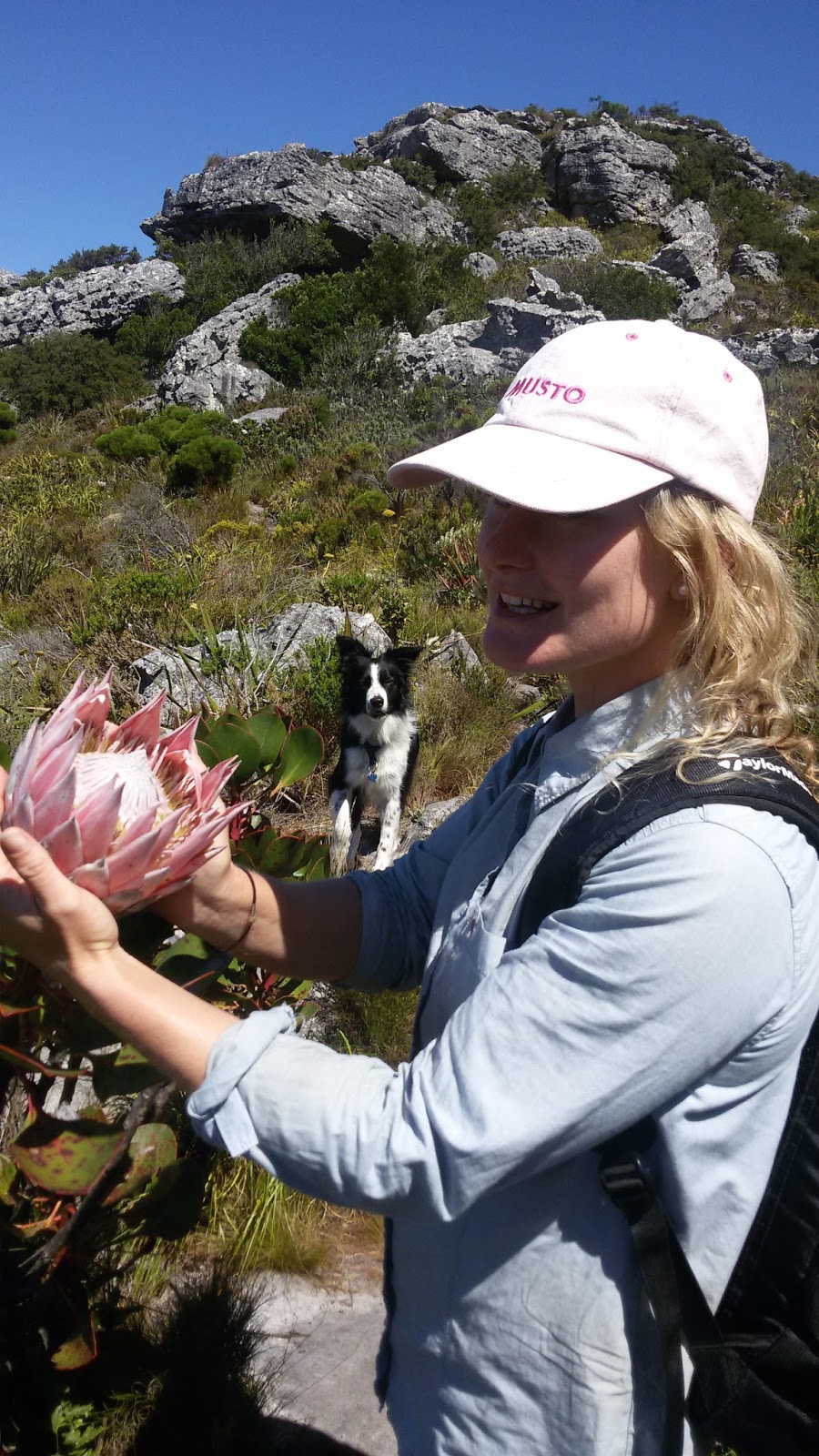
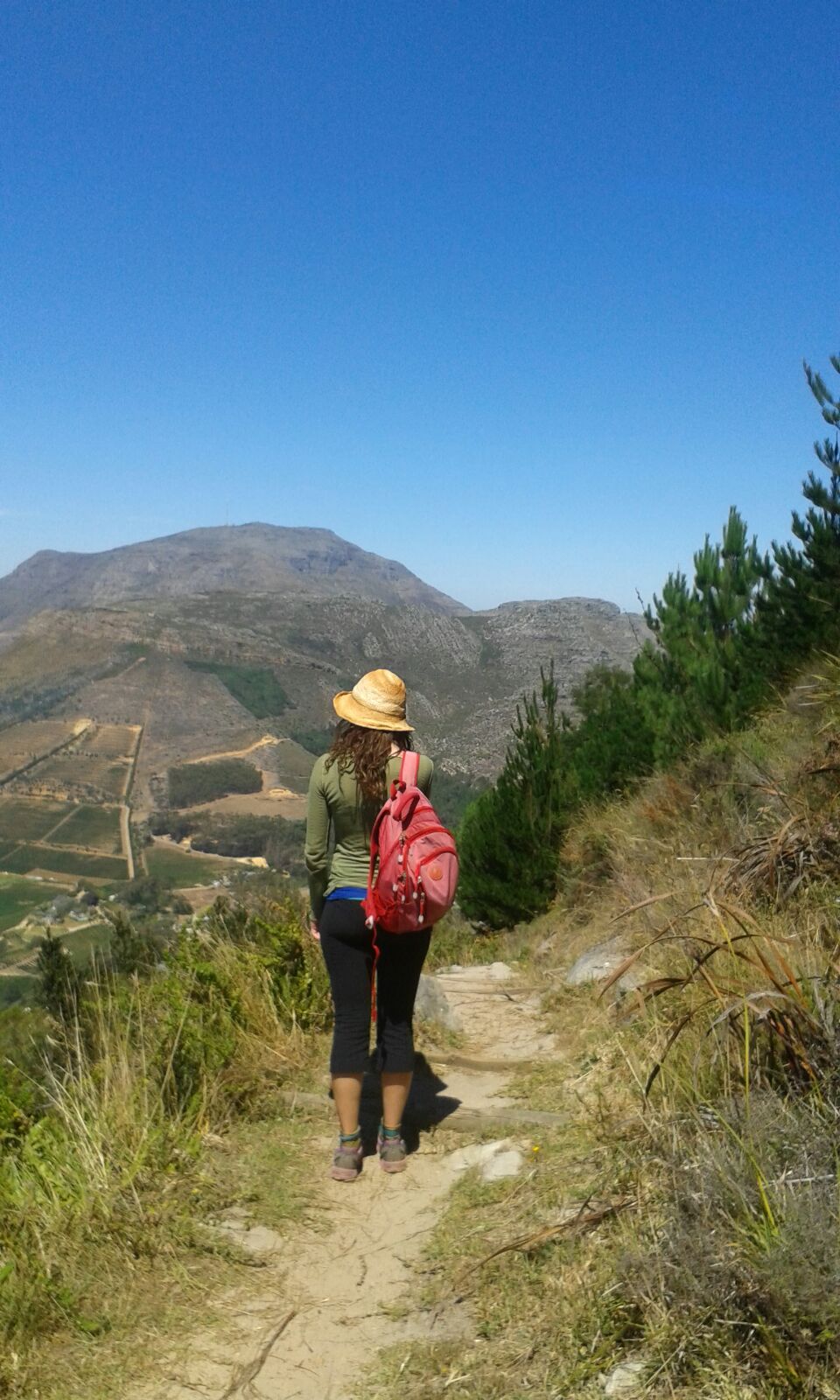
    But you could take all that away, and I would still love Cape Town for the simple fact that this natural beauty
    is everywhere.

    Mountains. Lakes. Oceans. Rivers.
    Sparkling cobalt water,
    An ecosystem like nowhere else in the world, and more hikes than I could possibly cover in 3 months of weekends,
    All literally within the city.
    No adjectives could do these mountains justice, but they are enough to steal your heart.
    ***

  • An Incomplete Guide to Sicily in Quotes & Pictures

    Valle dei Templi (Valley of the Temples), Agrigento, Sicily

    “The climate’s delicate; the air most sweet.
    Fertile the isle, the temple much surpassing
    The common praise it bears.”
    — Shakespeare

    I could write—and, indeed, have written—many pages about Sicily. However, I’m hardly the first person to be taken with the island’s complex history, natural beauty and unique charms, so for a change I would like to share the words of other writers, whose perspectives, combined with pictures from my recent visit, make for a woefully incomplete (but very poetic) look at the place. I hope it may whet your appetite for more, as I never tire of convincing people to visit!

    Scala dei Turchi (Stair of the Turks), Realmonte, Sicily.  
    “Ho capito che la Sicilia è molto più complessa di quello che si può pensare: la paragonerei ad una cipolla dai molti strati.” — Paco Ignacio Taibo II
    (“I have understood that Sicily is much more complex than one might think: I would compare it to an onion of many layers.”)
    Cattedrale di San Givanni Battista, Ragusa.
    “Sicily has suffered 13 foreign dominations from which she has taken both the best and the worst. The sequence of different cultures has made Sicily a fascinating place, quite unlike any other.” — Andrea Camilleri
    Valle dei Templi.

    “This is the homeland of the Gods of Greek mythology. Near these places, Pluto abducted Persephone from her mother. In this wood we just walked through, Ceres ceased her swift running and tired of her fruitless search, sat on a rock, and despite being a goddess, she wept, the Greeks say, since she was a mother. In these valleys, Apollo pastured his flocks; these groves, stretching down to the seashore, have echoed with Pan’s flute; the nymphs got lost under their shade and breathed their scent. Galatea fled from Polyphemus and Acis, close to succumbing to the blows of his rival, enthralled these shores leaving his name here … In the distance you can see the lake of Hercules and the rocks of the Cyclops. Land of gods and heroes!” — Alexis De Tocqueville

    Valle dei Templi.

    “Sicily is more beautiful than any woman.”
    Truman Capote

    Valle dei Templi.
    “Il siciliano è il prodotto di un territorio che non è un pezzo staccato d’Italia, che non ha mai fatto parte di alcuna parte del mondo in epoca storica, che è stato occupato da nord, sud, est, ma mai è stato assimilato, l’isola in cui niente è stabile se non il movimento, il non-stabile, dove un giorno distrugge quanto l’altro giorno ha costruito, dove vulcanismo e nettunismo sono continuamente all’opera, dove un giorno trasforma la storia di secoli.” — Paul Yorck von Wartenburg

    (“The Sicilian is the product of a territory that is separate from Italy, that has never been part of any part of the world in any period of history, that has been occupied by the North, South, East, but never assimilated, the island in which nothing is stable except movement, non-stability, where one day destroys that which another the other day built, where volcanic and marine forces are always at work, where one day transforms the history of centuries.”)

    “Sicilians build things like they will live forever and eat like they will die tomorrow.” — Plato

    Valle dei Templi.

    “For over twenty-five centuries we’ve been bearing the weight of superb and heterogeneous civilizations, all from outside, none made by ourselves, none that we could call our own.”

    This violence of landscape, this cruelty of climate, this continual tension in everything, and even these monuments of the past, magnificent yet incomprehensible because not built by us and yet standing round us like lovely mute ghosts; all those rulers who landed by main force from every direction who were at once obeyed, soon detested, and always misunderstood, their only expressions works of art we couldn’t understand and taxes which we understood only too well and which they spent elsewhere: all these things have formed our character, which is thus conditioned by events outside our control as well as by a terrifying insularity of mind.”

    ― Giuseppe Tomasi di Lampedusa

    Sunset from a lighthouse.
    “I was enchanted… the limpidity of the sky, the restless splendor of the sun, the beauty of the countryside, a certain excitement of the fantasy…which brought to mind the time when in the fields one encountered the divine.” — Jean Houel

    Ragusa Ibla, Sicily

    “In Sicilia abbiamo tutto. Ci manca il resto.” — Pino Caruso
    (“In Sicily we have everything. We’re just missing the rest.”)


    Valle dei Templi.
    “Noi fummo i Gattopardi, i Leoni; quelli che ci sostituiranno saranno gli sciacalletti, le iene; e tutti quanti gattopardi, sciacalli e pecore, continueremo a crederci il sale della terra.”

    (“We were the Leopards, the Lions; those who will replace us will be little jackals, hyenas; and all of us Leopards, jackals and sheep, we’ll go on thinking ourselves the salt of the earth.”)
    ― Giuseppe Tomasi di Lampedusa

    Macalube, Aragona, Sicily.

    “Per me la Sicilia ha una luce particolare, qualcosa di primordiale. Io non sono nato in Sicilia anche se mia madre è di Palermo. È come se con questa terra ci fosse un richiamo anche più lontano della mia esistenza, che appartenga alla mia memoria. Scrivo volentieri qui, c’è un’aria speciale, istintiva. Non mi va neanche di dargli un nome sennò darei dei confini che non ha.” — Emanuele Crialese

    (“For me, Sicily has a particular light, something of the primordial. I wasn’t born in Sicily even though my mother is from Palermo. It’s as if with this land were a recollection even further back in my existence, which belongs to my memory. I write often here, there’s a special atmosphere, instinctive. I do not even give it a name, as to do so would give it boundaries which it does not have.”)
    Scala dei Turchi.

    “There it was again: the sweeping verbal gesture magnified in the prism of Sicily, the pronouncement so poetic it nullified any arguments before they could take their first breath. The vines, the amphorae, the thousands of years of history, the palmenti, the volcano, the beauty, the power of it all. In Italy, of course, beauty is next to holiness. Sicily was long the most treasured daughter of the Mediterranean. So who can teach Sicily anything about beauty?” — Robert Camuto

    Fountain, Ragusa, Sicily.

    “All of Sicily is a dimension of the imagination.” — Leonardo Sciascia

    “Raccontano, infatti, che secondo il mito la Sicilia è sacra a Core poiché qui avvenne il suo rapimento e perché l’isola fu offerta alla dea come dono di nozze.” — Plutarco
    (“They say, in fact, that according to legend Sicily is sacred to Persephone since her abduction took place here and because the island was offered to the goddess as a wedding gift.”)

    Train tracks at the edge of the Valle dei Templi.

    “And anyone who has once known this land can never be quite free from the nostalgia for it.” — D. H. Lawrence

    *** 
    [All translations mine. :)]
  • In Zanzibar. Paradise has Cracks. (Poem)

    In Zanzibar. Paradise has Cracks. (Poem)

    In Zanzibar
    Fruit falls from trees–
    Like shimmering coins–
    And is trampled underfoot.

    No one wants to sell it
    When tourist dollars
    Taste so much sweeter.

    In Zanzibar
    Living is cheap
    But being a peacock
    Is free.

    Proud muscles;
    Proud feathers…
    Looks the same to me.

    In Zanzibar
    The clock starts
    At 6 o’clock–
    It’s rarely on time.

    The sunset is melted caramel
    On heaving tides,
    But no one wakes for sunrise.

    In Zanzibar
    If you read between the lines
    Hakuna matata doesn’t really mean
    No worries.

    In Zanzibar
    Glittering veils drape
    Over hair piled high,
    But eyes are dull.

    In Zanzibar
    Alcohol is haram
    But Konyagi is cheap–
    The rules change at night.

    In Zanzibar
    The sky is heavy
    And God is white.

    In Zanzibar
    Pole pole’ is a slogan
    Crafted from handicap.

    In Zanzibar.
    The rain is sudden.

    In Zanzibar.
    The colors are hard.

    In Zanzibar.
    Life is white and black.

    In Zanzibar.
    Paradise has cracks.

    In Zanzibar… In Zanzibar… In Zanzibar.

    In Zanzibar
    Fruit falls from trees,
    And I want to pick it up.

  • The Tropical Beach Paradox

    Walk along Miami Beach in a string bikini, and you’ll fit right in. Opt for boy shorts, and you’ll probably feel overdressed.
    Now, do the same thing in Zanzibar, and unless you are on a truly private beach, chances are you’ll feel very uncomfortably exposed.
    That’s why many large resorts have private beaches. That, and the fact that nothing says luxury like owning your own piece of the ocean.
    Zanzibar is between 95% and 99% Muslim, depending on who you ask, and though local women express their faith in various fashions—some wearing full sleeved dresses and somber-hued veils, others donning brightly colored and fashionably tailored items, and still others wrapping vast kangas (traditional patterned fabric) around their bodies and heads—all of them do so modestly.
    Women don’t show their bodies in public, so men don’t see many bodies. Thus, as my partner once—rather rudely—pointed out, for local men, “seeing exposed skin is like porn.” Harsh, but not inaccurate.
    There’s a paradox here, because Zanzibar’s major industry is tourism.
    This industry packages Zanzibar as a remote, tropical island paradise escape and sells this vision to tourists looking for beach holidays, water sports and romantic adventures—for the most part. The people who populate the island, however, are Muslims, the female half of whom does not swim, does not frolic, lightly clad, in the surf (like the beautiful images on brochures) and seemingly finds it quite entertaining to observe the foreign antics of ever-growing hordes of visitors. (How they really feel about these foreigners, I will not presume to guess.)
    It’s a paradox because we are looking at a massive (and growing) industry built on a beach culture that never before existed and, in context, appears shocking and clumsily out-of-place.
    (A foreign woman visiting Zanzibar is left with three options. She can:
    A. Wear the swimsuits which would feel appropriate or even modest at any American or European beach and feel very uncomfortably exposed.
    B. Not swim. (Not a real option.)
    C. Find a truly deserted beach—as most of the coast is populated by fishing villages or mangrove forests, this last option is unlikely, unless she books her stay at an exclusive, gated resort.
    D. Why is there no D?)
    (It’s not as deserted as it looks.)
    This paradox is hardly unique to Zanzibar. If you follow the equatorial belt around the world, you won’t find many places where short shorts and bikinis seem appropriate. And still, as travelers seek more exotic, more remote, more different destinations, anywhere with a nice beach is liable to become “the next Thailand,” or the next “place you need to visit in the next decade.”
    Why the hurry? I think that’s a story for another day.
    Meanwhile, many of these tropical paradise escapes are rather unlikely and incongruous candidates when you really think about it. I mean, I want to comfortably lie on a beach without offending anyone’s religion, attracting large amounts of attention, arousing anyone’s fantasies of “Western Women,” or shocking anyone with different expectations of modesty… I can’t be the only one!
    Where’s the solution?

    I don’t think there is one… anyone have any better ideas?
    ***
  • Other Words for Turquoise

    Over the last week, I have been struggling to find other words for what has always been one of my favorite colors: turquoise.
    As I help to write new website content for a Zanzibari hotel, and as I research other accommodations in the industry, I am struck by the dearth of alternatives. Hundreds of hotels, lodges, hostels and villas, and all any of us can come up with is, “the warm, turquoise waters of the Indian Ocean.”
    Really? I mean, I love turquoise—the color, the word, the evocative sound of it—but there must be more creative ways to describe this coast.
    The following words are officially out, for overuse: stunning; warm; turquoise; aquamarine; tropical blue; island blue; exquisite.
    Not to say the Indian Ocean isn’t all of those things… only, words begin to seem trite when used in such limited permutations.
    The ocean here is truly a bevy of hues, none of them simply blue. When the tide is out, there is a short stretch of water a few shades lighter than teal, then a wide bay of deep and surprising periwinkle, tapering into indigo at the meeting point with the sky—azure fading to white. Throughout this vocabulary test of colors emerge hints of sea green (a color none can replicate, it is mined from the ocean depths to fill a gap between green and blue). And at the border between every pair lie colors without names, achingly beautiful blues never seen before that moment and never to appear again.
    Everything changes with the sun, of course. In the rain, add a few shades of grey to every hue. In full sun, the color at the horizon brightens to sparkling sapphire. The faraway depths become a cobalt seasoned by saltwater. The shallows at high tide almost insist upon the label of “turquoise,” yet if you look very closely you will find each and every shade from the imperfect white of the surf to the navy-black of the shadows. And in-between, a spectrum of blues, named and unnamed, which, lacking more and better words, we call turquoise.
    Are there other words for turquoise? Undoubtedly. Can any one of them truly describe the explosion of color that laps at these shores? Unlikely.

    And so, I am back where I began, watching the warm, turquoise waters of the Indian Ocean recede with the tide. Any other words I chose would be equally insufficient.
    Bonus: Massive double rainbow spotted last week!
  • Lamu, Kiwayu and the Danger of Playing it Safe

    For those of you who have been following recent events in Garissa, Kenya, and who were aware of the proximity of Lamu and Kiwayu Island (my location this past week) to the Somali border, you will be happy to know that I am back safe in Kilifi, several hundred kilometers away.
    As events progressed and the news of Al Shabab’s brutal attack on Garissa University broke, sitting on a bus for eight hours while following updates on Twitter, stopping at multiple police checkpoints and traveling with a police escort could have been a nerve-wracking experience, but with the company of my three travel mates and the shaky consolation that lightening rarely strikes twice, we managed to comfortably ride out the journey.
    I don’t want to write about Garissa today, though. (I’ve done that already here.) I want to share a little about the gorgeous regions in the north of Kenya devastated not just by attacks, but also by foreign travel advisories. 
    At 7:30am on Friday, March 27th, three friends and I boarded a bus bound for Lamu, a Unesco World Heritage Site on the north coast of Kenya accessible only by boat.
    Well, to be exact, we waited at the bus stop for three hours first, bags baking in the sun, and then boarded…
    ***
    Day 1: Friday
    At 3:00pm, we pull off the road and wait a couple hours more for an armed convoy to escort us and the other buses of the afternoon through the more forested area north of Garsen. The roads become increasingly rough as the buses continually race past one another for no apparent reason.
    We arrive at Mokoi Port around 7:30pm and crowd into an already packed ferry. The stars grin overhead as we move towards Lamu Island, and I trail my fingers in the dark water.
    After a quick meal of the best nyama choma (grilled kebabs) I have yet tasted in Kenya, I sleep heavily.
    Day 2: Saturday
    I rise at dawn in order to wander the alleys of Lamu before the town and the sun are fully awake. 
    Winding stone pathways tinted with just the slightest bit of tension (or perhaps desperation would be more precise) speak eloquently of Lamu’s prosperous past as a key Swahili port. The sunlight glows on the waterfront, casting in shadow the men who accumulate around boats and food stalls, hoping for better business. 
    We are the only tourists in sight so far. Gorgeous old houses filled with guest rooms stand empty.
    At 6pm, we learn that the dhow (boat) that should have carried us on to Kiwayu Island (originally at noon, then at 7pm) will not leave until the next day. We make a split-second decision to take a speed boat instead, and are spirited away in the night to an even more remote location. We hurriedly load water, produce and other supplies for 5 days and head out into open water.
    The stars are bright bright and curved around the sky like a snow globe.
    Around 9pm, we arrive at Champali (a luxury camp made available to us four grateful travelers through family connections). My room is quintessential island paradise in one room-sized package: big bed, balcony overlooking the ocean, woven mats and open windows on all sides.
    Day 3: Sunday
    I wake again at dawn in a pool of light, the soft sounds of birds and water lapping at the shore welcoming me into the day. I move slowly, from morning yoga to a brief walk away from the camp, to cooking breakfast.
    We play cards and lounge for a while, then make the fifteen-minute “trek” to the other side of the island and eight kilometers of wild, empty beach. Strewn with seaweed, backed by sand dunes and with an unobstructed view of the Indian Ocean, this beach is the definition of remote. My definition, anyways. You would never guess, to stand there, that several hundred people inhabit the island, residing largely in two villages.
    The cicadas in the trees here are terrifyingly loud at times, their buzzing so pervasive it seems to be coming from inside my own head. A noise like that could drive you crazy if you were stuck in a tree with it for long enough.
    Day 4: Monday
    This time we bring boogey boards to the other beach, and for the first time I really understand why people find this activity fun. The waves are just big enough to carry me all the way to shore when I catch them right. I stand up dripping seaweed and sand, and feel decidedly like a six-year-old mermaid version of myself.
    A walk into the village later in the afternoon reveals the hub of human activity that the exterior of the island obscures. The women are beautiful, dressed in a style that looks almost Indian to me, and the children are utterly enthralled by our appearance, trailing behind our small group as we wander a web of thatch-roofed homes and dirt paths speckled with shells—remnants of an aquatic time long past.
    As the sun begins to set we start for Champali, stopping at a beach along the way to watch the color show.
    Day 5: Tuesday
    We all wake up before dawn to race to the top of “Conical Hill,” the tallest point on the island, in time for sunrise.
    Afterwards, we visit Mike and his camp a long walk further down the beach. He, like Kenya’s tourist economy, is struggling. Since two English tourists were kidnapped in 2011, Kiwayu has hardly been a popular destination. All of Lamu region, really, has suffered.
    Gorgeous island getaways stare out at a magnificent ocean view, empty and waiting to be filled again.
    That afternoon, I return to the village and a local woman covers my left arm—from fingers to shoulder—with bold henna designs.
    Day 6: Wednesday
    I wake up slowly, recovering from the long day on Tuesday, luxuriating in the comfort of my big bed. We savor our last hours on Kiwayu, knowing that we will leave at 4am the next day.
    We sit on my balcony to watch one more sunset, the day fading from yellow to orange to dark.
    Day 7: Thursday
    Our boat is late bringing us back to Lamu. We leave at 5:30 instead of 4:30. When we sit down at La Banda, a reasonably priced restaurant overlooking the water, for breakfast, the first news on the Garissa attacks plays on a television at the back of the room.
    The bus ride back to Kilifi is as long and dusty as the first. I feel refreshed and content, though—despite the danger, despite the unrest, I feel secure…

     ***

    I describe my trip in such detail not to brag, but rather to make a point.

    I almost didn’t go.
    When Earl backed out days before our planned departure, I considered doing the same and making the trip another time. Finally though, despite increased travel advisories, Kiwayu’s proximity to Somalia, and the general tone of fear set by foreign governments, international media and even some locals, I decided to go.
    I do not believe I put myself in any serious danger, but I certainly did not “play it safe” according to the conventional wisdom of travel. As more and more tourists opt to visit Tanzania rather than Kenya (playing it safe), unemployment rates here continue to rise (48% for Kenyan youth). These are not conditions for recovery, stability or growth. There is a serious danger there.
    The region of Kenya I just returned from is among the most beautiful areas I have ever visited… the whole coast of Kenya is, in fact. Following yesterday’s events, this hardly seems the moment to encourage anyone to visit, and yet, I want to remind you that there is more here than what you see on the news. That is true everywhere—everything is more than what you hear secondhand.

    Everything you see is certainly true, but it is only one piece of a 1,000-piece puzzle.

    ***
  • Before the Rains

    ***
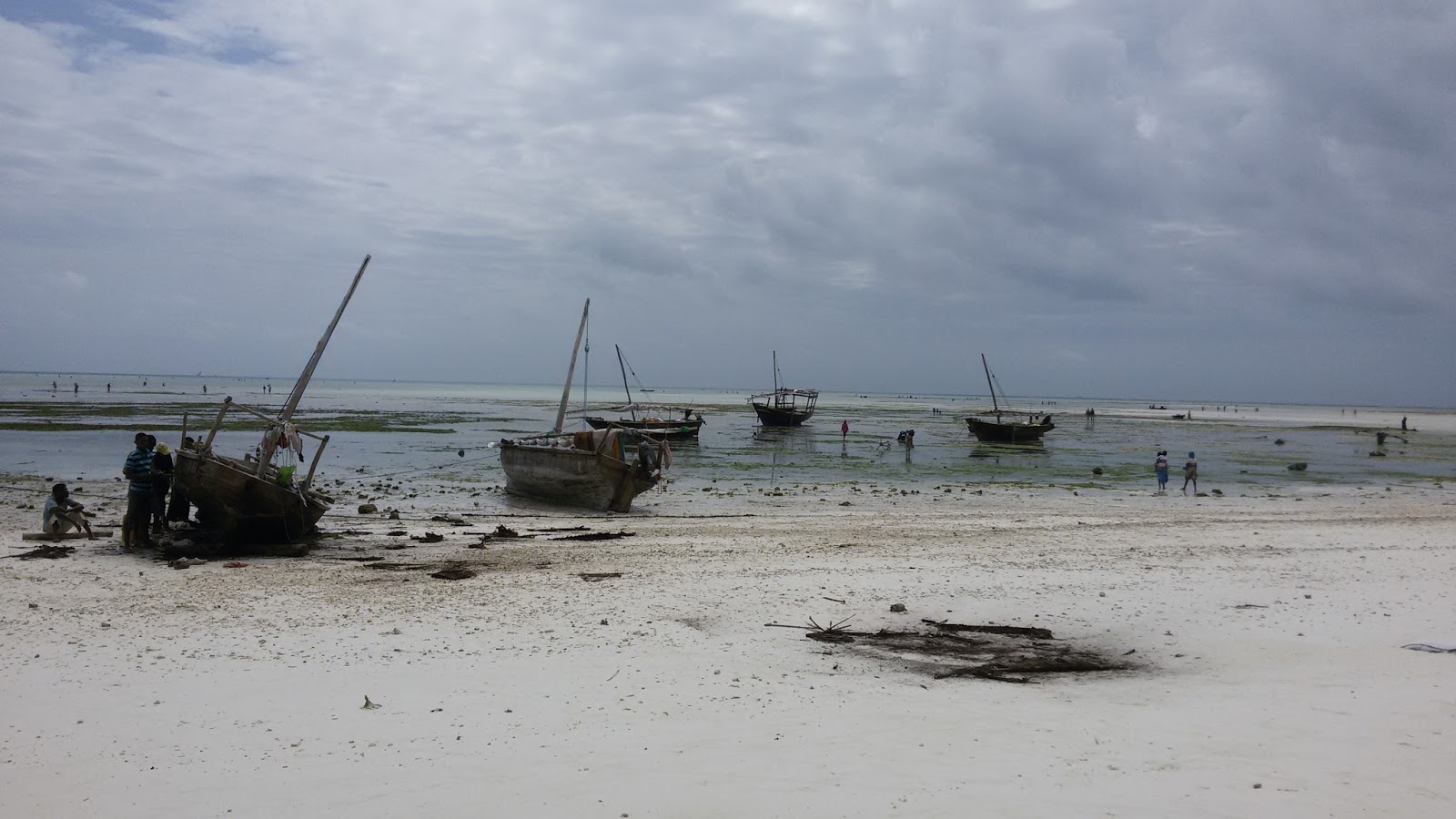
    We are at the very edge of the rainy season here in Kenya… This is what it feels like. (All photos taken yesterday at the Gede Ruins and nearby beach in Watamu.)

    ***

    Before the rains come, the air grows thick—
    Cough syrup thick
    Wool hat thick
    Toffee thick—
    and clings to me like an extra layer of skin.

    The heat becomes heavy—
    Oppressive like chains
    Lethargic like city traffic in the summertime
    Slow like the honey melting of sunset—
    Fattening itself on the waterless days, weeks and months.

    Before the rains come, the animals appear—
    One by one
    Two by two—
    Frogs and lizards, ants and spiders, and all manner of creatures seek shelter,
    Dragging the storms behind them.

    Palm fronds and mangrove branches sigh a warning in the waning breeze:
    The rains will come
    The skies will clear
    The world will turn to water overnight.
    These are the rains in which some civilizations have crumbled and others have risen, they murmur.

    Before the rains come, the clouds gather to promise change—
    Air thick like honey
    Heat heavy like wool—

    We hold our breath to hear them, hovering in wait for the gift of a new season.
    ***
  • The Paradise Mask

    Diani Beach, South Coast, Kenya, 4.3222° S


    “Everybody—everybody who is escaping from something ends up in Diani. Shady people, criminals, expats… everybody.”

    Such was the prognosis of a Diani resident and regular at the South Coast Backpackers bar (where I have been working for the last three weeks), and I am inclined to believe he is right.
    Though it doesn’t seem it outright—packed with tourist shopping centers and hotels as it is—Diani Beach is kind of a final frontier. A “la-la land” for expats and Kenyans alike escaping from their pasts—or simply fleeing the big cities (“Nairobbery,” I have learned, is actually a common nickname for Nairobi). A no-man’s land where many normal social conceits do not seem to reach.
    What does that mean? Allow me to illustrate:
    Here in Diani Beach you have the “beach boys,” the name by which everyone—and I mean everyone—calls the men who pass their time at the beach, either trying to sell something—coconuts, jewelry, boat trips, sunglasses, aloe leaves, safaris and anything else you can or can’t think of—or just loitering… or betting on a Roulette of foreign women. They almost always lose that bet… after all, only so many women will respond kindly to verbal assault: Hey! Beautiful-lady-how-are-you-Where-are-you-going? Why-you-don’t-want-to-talk-you-are-very-beautiful.
    Local bars, however, are brimming with those who have won. Young Kenyan men and women share cocktails and seductive glances with much, much older foreign women and men. The Kenyan men wear their good fortune with a touch of arrogance, while the women adjust their skin-tight dresses and scan the room for something better.
    Residents and long-term visitors prove a bottomless repository of stories—bar brawls, unsavory characters, intrigue—leading a new arrival to wonder how Diani manages to appear so… idyllic. The ever-swaying palm trees, smoldering white sand, jewel-toned water and algae, beachfront thatch-roofed restaurants and resorts, technicolor kites speckling the sky, two resident Diani Beach camels—it all belies a much less serene, much duskier palette of hidden shadows and secrets… Or so it would seem.
    She who ventures out at night must not walk along the road for pickpockets; must be wary of piki pikis and taxis for drunk drivers; must avoid matatus for questionable passengers.
    A guest in a five-star, gated compound on Diani Beach might easily—very easily; too easily—forget that Kenyan law allows for detention in jail up to one year on suspicion of terrorism; might refuse to acknowledge that police checkpoints on roads are no more than systematized bribery collection centers; might overlook the streets lined with garbage and the fact that most of the young local women at the bars are probably prostitutes.
    Here is a carefully imagined idea of a paradisiac tropical hideaway spread like a semi-translucent shroud atop the reality of Kenya: corruption and a starving tourism industry. At times (most of the time, even), I have certainly overlooked it all, lulled into la-la land by the breeze and the sun and the sand and the coconuts.

    But then again, Diani Beach is hardly unique in these regards. What earth-bound paradise is truly what it pretends to be?
    ***

    ***
  • Sound Impressions from a Hammock

    As I lie here resting, gently swaying, I reflect on the day’s noises…
    There are the birds who say “Oh Yeah” in a melodic chorus of positivity.
    Then there are the birds who welcome me in Swahili: “Karibu! Karibu!”
    The birds swoop and swivel and swish and swerve—a limitless parade the likes of which I do not have the expertise to catalog, let alone describe. They wake me in the morning and sing me to sleep at mid-day.
    The goats scream with human indignance and bleat with an infant’s piteous yowl.
    They caper and cavort, cradle sunlight in the sleek hollows of their sides. They stand on hind legs to grasp out-of-reach shrubbery. They block the roads with impunity.
    The children shout, “Muzungu! How are you?” with the the same lilt as the birds who say “Karibu.”
    They are sudden apparitions at the side of the road, emerging like smoke through fences and paths. Some smile and wave; others stare with scrutinizing solemnity.
    The motorcyclists ask, “where are you going?” and have nothing more to say to my reply: “I’m just walking.”
    The donkey wheezes through a comical fit of seeming laughter—or sneezes. Sometimes at noon; sometimes at midnight.
    The dogs howl like wolves to the moon.
    The crickets chirp a thunder and an avalanche in the otherwise quiet of dark.

    My ears are working hard to keep up…
    ~
  • Paradise in Pictures

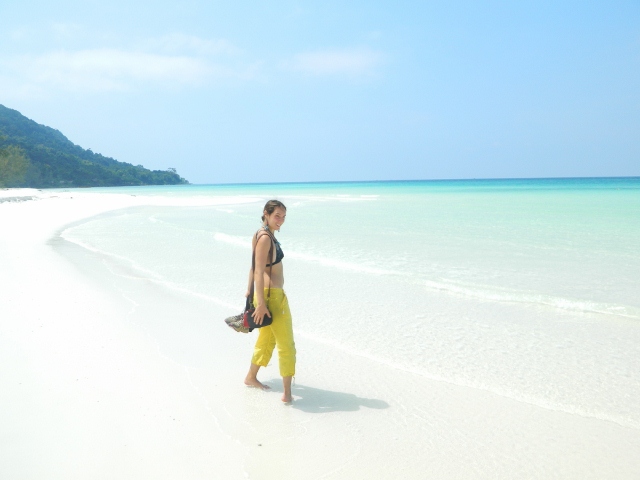
    A typical day on Koh Rong:

    Wake up to this.
    Run through the jungle…
    To this, the “other side” of the island, also known as Long Beach.
    Run back to this and paint these:


    Spend the night bar-tending or enjoying an open no-mic night.

    And a few shots from Angkor Wat…

  • Escape to Paradise


    The universe provides. Yes, she really does, and I will explain the recent series of events that have bolstered my belief in that statement.  Three days ago I woke up at the Golden Fisth Guesthouse in Siem Reap, the developing Cambodian town twelve kilometers from Angkor Wat.  The temple ruins were as spectacular as I had hoped, with the murmurs of history humming beneath every stone, and I had spent two days biking back and forth to visit them.  I had also spent an enjoyable couple of evenings at the Angkor What? Bar with some new friends. In short, now I was ready to leave.
    I packed my bag (a process that has shortened from thirty minutes to ten), checked out, and spent a while deciding where I wanted to go next.  The boat to Battambang, a pretty colonial town a few hours downriver and one of my potential stops, had already left. Not wanting to waste a day, I bought a ticket to Sihanoukville instead and spent a decently comfortable night’s sleep on the ten hour bus to the coast.  In the interim, I began to hear rumors that Sihanoukville—praised for its pristine beaches and calm atmosphere—had been ruined by an excess of parties, neon paint, construction, loud music and loud tourists… exactly what I was not looking for.
    I arrived at 7am and set out on foot for town, as per usual, stubbornly ignoring the tuk tuk drivers’ warnings that it was eight kilometers away. Eight means four, generally, which is manageable.  I must have taken a wrong turn somewhere along the way, because after well over an hour I arrived not at the beach, but at the port.  It is a large, dirty collection of warehouses, smog, street food I don’t want any part in, construction, and minimal signage.  Frustrated and unwilling to retrace my steps, I formed a plan B.  Maybe I shouldn’t be stopping in Sihanoukville at all, I thought.  Maybe this means I should be continuing straight to the islands, said to be some of Southeast Asia’s finest.
    I found my way to the passenger ferry area where a few tourists from the Czech Republic were waiting.
                “Where are you guys going?” I asked.
                “Koh Rong.”
                “Is it a nice place?
                “We hope so!” They laughed.
                “Alright, works for me!”  Tickets were twenty dollars and the boat left four hours later.  I bought my ticket, found breakfast (hunted down breakfast, really), and played cards and chatted until 2pm—departure time.  In the interim, I flipped through my friends’ Lonely Planet and realized the island was a bit beyond my budget.  Oops! Perfect timing for Dave to step on the scene. The dreadlocked Aussie appeared around 1pm wearing angry birds shorts and carrying bags of supplies to the docks.  I guessed that he must work on the island.  He owns two guesthouses, in fact, one about to open, and that is how by the end of the two hour boat ride I had work decorating the soon-to-be Vagabonds Bar in exchange for room and board.  And that is how, less than twenty-four hours after leaving Siem Reap I found myself behind the bar of Island Boys Guesthouse mixing drinks and drinking in my fully affordable  new island life.
    So if you don’t hear from me over the next week, it is because I am temporarily lost in paradise with a lot to get done.  You can call it luck, fate or providence, but I am exactly where I was meant to end up, and I credit the universe.