Tag: slow travel

  • The Floating Pirate Community you always wanted to Join is Real… & it has a Name

    The Floating Pirate Community you always wanted to Join is Real… & it has a Name

    Musafir is more than a ship. She’s an ideal—a vision and symbol of another way of life.

    Those who built her and those who meet her find themselves swept up by the singularity of her story.

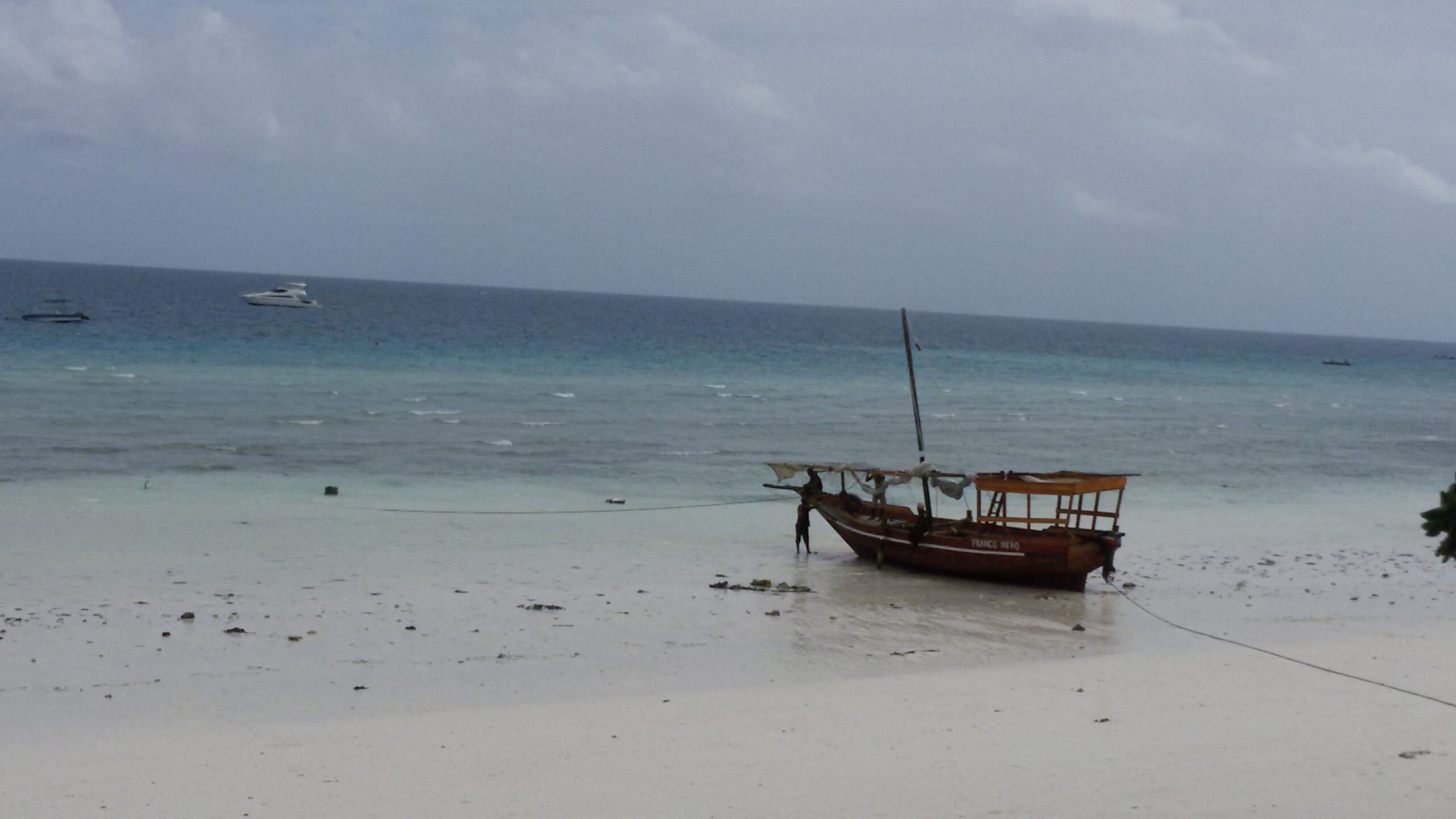
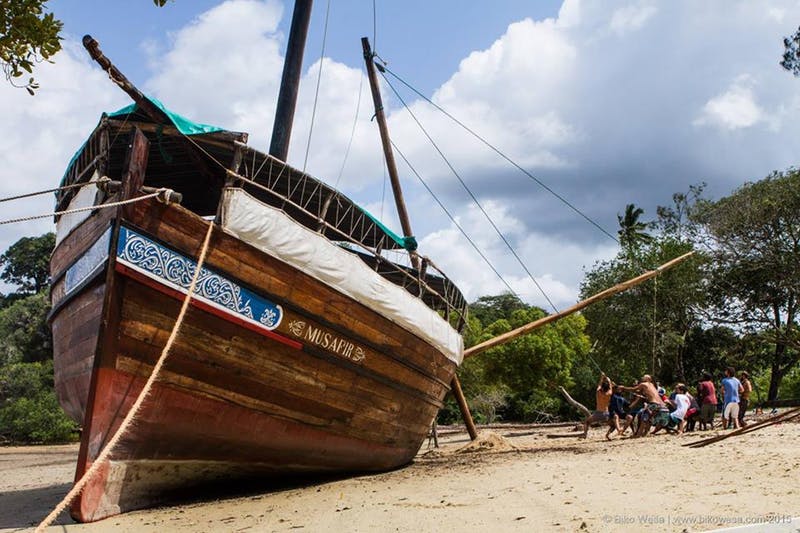
    Musafir—or Msafr in Ki-Swahili—is Arabic for traveler. And indeed, the soul of the 70-foot (21-meter) dhow is travel. When I met her in early 2015, she lay at anchor in Kilifi Creek, on the North Coast of Kenya. Just 3.6 degrees south of the equator, Kilifi rests in equal proximity to the chaos of Mombasa to the south and the ancient port town of Lamu to the north, yet remains utterly tranquil.

    During my two months in Kilifi, I visited the nearly-finished vessel often.
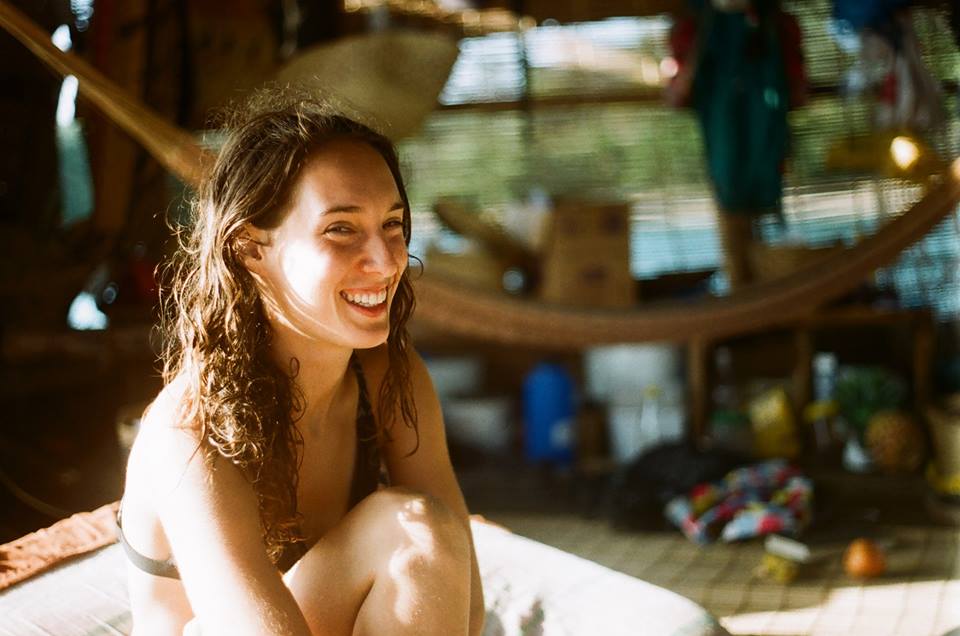
    sailboat, dhow, musafir, distant relatives, toby israel

    The approach to Musafir required a two-minute swim, or a one-minute kayak ride, through calm saltwater. At the boat’s hull, the water glowed a brilliant green as though illuminated by the vessel itself.

    Louis, a 30-year-old Frenchman from Burgundy who arrived in Kenya in September 2011, rested on board, a feather in his dreadlocks and a worn pair of shorts around his narrow hips. He had been building the Musafir for three and a half years.

    Work on the deck had begun only a week prior to my arrival, and a jumble of boards—some secure, others less so—sprawled before him. From several beams a collection of items hung: one hammock; woven baskets; a blue glass evil eye; a shard of mirror; solar lights; and a Kenyan flag.

    The mirror reflected the bright afternoon sun as Louis spoke:

    “It was the idea of freedom that called to me. The idea of doing something else. That’s why I started traveling, because I saw that this life that was suggested to me was not exciting. I think with this vehicle [Musafir] we can send a message somehow to the world. Not screaming it loud, you know, but by touching people pole pole [slowly in Ki-Swahili], showing that another way is possible. And if you follow your dream, even if you think “no, it’s impossible,” it’s possible.”

    Louis, along with an Italian man named Paolo, is one of the project’s “initiators.”
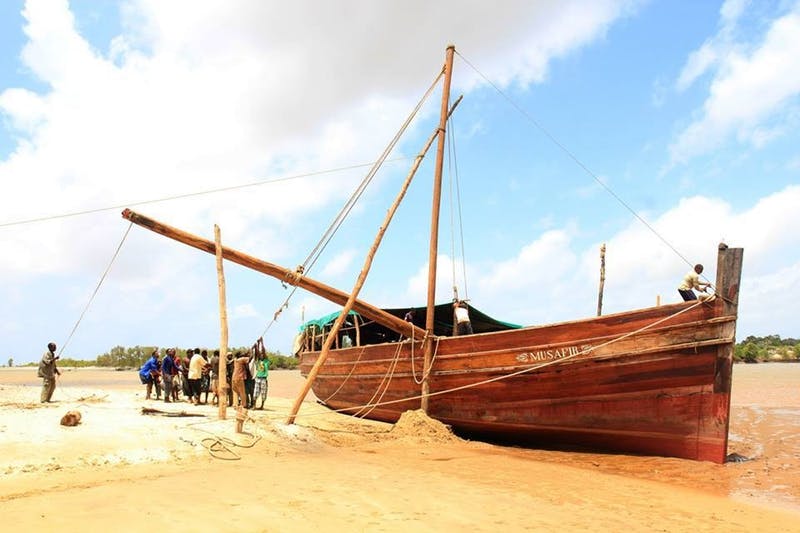
    kenya, sailing, dhow, kilifi, musafir, numundo, transformational travel

    In theory, however, “the boat belongs to whoever is on board.”

    He laughs and adds, “Me I’m just the Chai Wallah. My job on board will be to make chai and coffee. Just now, you know there are so many other jobs to do and no one else is around to do them.”

    The project relies on donations, crowdfunding, and—above all—the resources of those who have devoted their lives to actualizing it. Louis, Paolo and many volunteers repeatedly poured their savings into building costs.

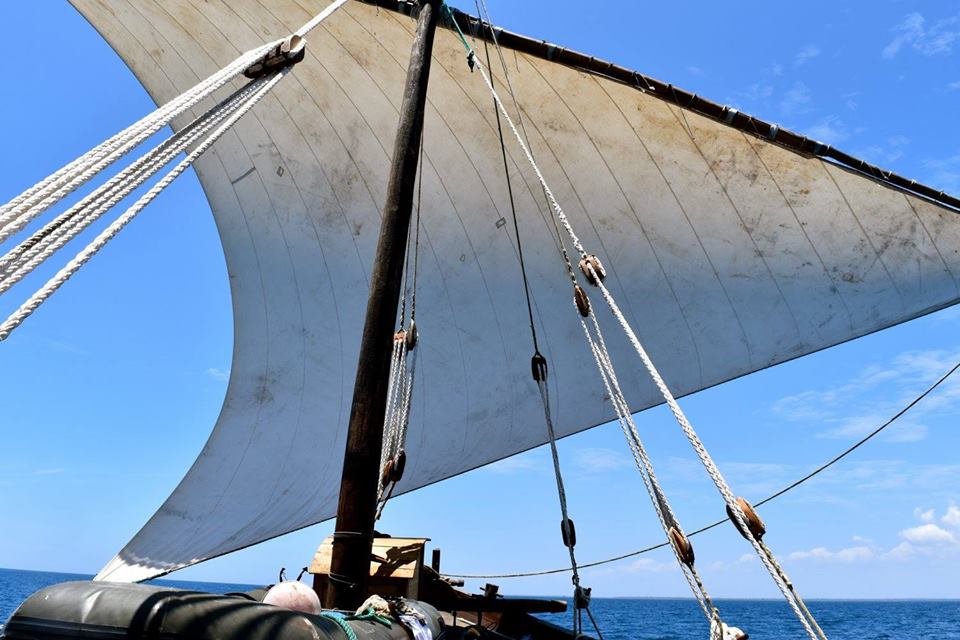
    Historians differ on the exact origins of the dhow (a broad category encompassing many particular models). Some declare it Arab in origin, while others trace its roots as far as ancient China. A lateen sail and long, narrow hull differentiated the dhow from its Mediterranean kin. Many were constructed in Kerala, South India, known for the quality of its timber. Until Vasco da Gama’s arrival to Africa in the 15th century, wooden pegs and coconut rope—not nails—held the vessels together.

    Kipini has long been a notorious hub of expert Swahili construction, and thus a natural, far-off-the-beaten-path starting point. Musafir made its maiden voyage from Kipini to Kilifi (more accessible and less isolated) in November of 2014. In four days, she traveled 75 nautical miles, carrying fifteen passengers, a goat who would not see the end of the journey, and several chickens who would.

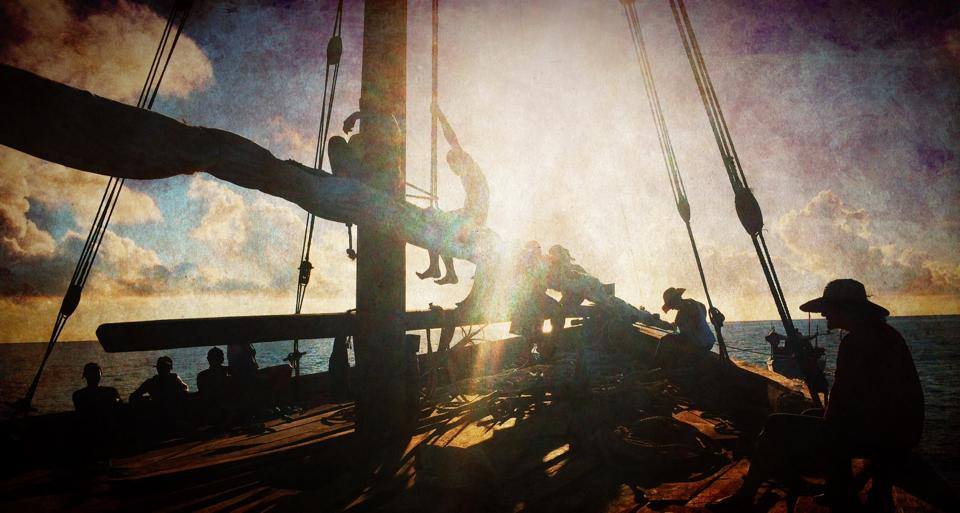
    Musafir, which, more precisely, is a jahazi (a Lamu-style dhow), is held together by copper nails rather than coconut rope. A few power tools for sanding and drilling assisted her construction, and she will eventually have an engine, too. However, Badi (the fundi, or master ship-builder), largely employed traditional techniques.

    Cotton canvas sail; old wood from Kipini; axes and sweat.
    musafir, boat, dhow, sailing, kenya, africa, adventure travel

    Building a boat of this size by hand is an endeavor few would undertake, but those involved agree that their labor adds inimitable depth.

    Louis elaborates, “Does it have soul? Does it have a special energy added to it? I think it does… Day after day of work, you start to know every piece, every nail. It makes it totally unique. You can be sure there won’t be two dhows like this in the world.”

    Dhows once traversed the Indian Ocean, sailing along the Arabian and East African coasts, and following the monsoon winds all the way to India and back. They carried dates from Basra, curved daggers from Muscat, gold and ivory, carved chests, spices and mangrove poles—and ideas. The dhow enabled the exchange of languages, people and ideas as well as goods.

    Likewise, Musafir will transport stories, goodwill, and possibly trade items. When the traveler and its travelers make port, “the vision is to have this exchange of culture—learning from communities and doing what we can to fill any specific needs.”

    Louis, Paolo and others made an exceptional effort to integrate into their temporary homes. They learned Ki-Swahili and befriended the Kilifi men who spend vast swathes of time cleaning the nearby beach. They drank mnazi (coconut palm wine) and worked closely with local experts.

    Cross-cultural understanding, they have understood, is an integral component of modern-day travel. Along the Swahili Coast—a vibrant blending of deep Islamic roots and centuries of Bantu, Arab and Indian influence—such insight requires time and complex awareness.
    musafir, distant relatives, pirates, community, travel, africa, toby israel

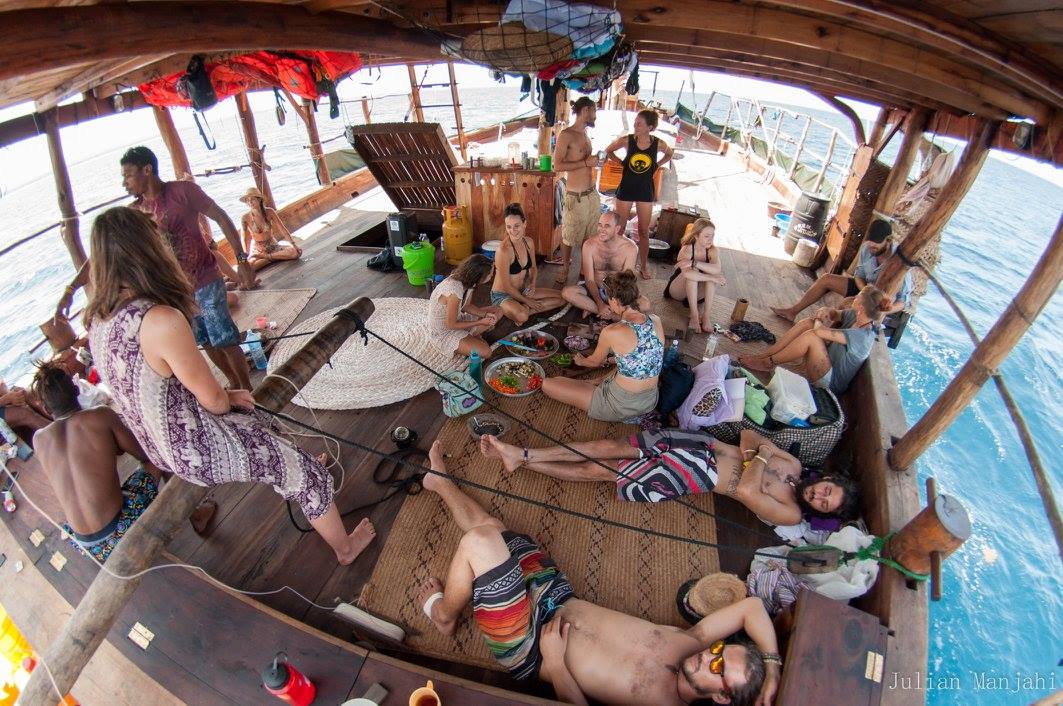
    What could inspire a group of unconnected people from around the globe to live and work together towards a common goal? It’s not the physical ship, though many involved love to be at sea. More than anything, it is the promise of freedom.
    Dario, a volunteer from Sicily, explained,

    “I think it appeals to people who are curious, adventurous… and who have a little craziness around, because it’s not a safe environment. I fell in love with the idea. To travel, to have access to any country. There are no roads, you know; you are just thinking where to go and you go.”

    Travel represents both a means and an end. For these Musafiri, there is no “after” in sight—only oceans and journeys to discover.

    Dario peeled a mango with a recycled blade and spoke over the snapping of the green tarp overhead as the wind churned and the light became hazy with the setting sun.

    “Musafir is about traveling,” he says. “It’s about life. It’s about getting to know new cultures, new people. It’s about growing, because while you travel across the globe you’re able to learn many, many things that can be illuminating. It’s about helping out as well. It’s an idea that can amuse people, because if you think about building a 70-foot sailing boat in order to travel around the world, wow, it’s a bit of a crazy idea. But eventually… You’re sitting on it. The boat floats. We’re here talking about it. So it’s a project that shows that if you really want something, you can do it.”

    To leave the ship, I could either climb down the rope ladder on her port side or jump into the warm waters of Kilifi Creek. The inimitable Distant Relatives Ecolodge was only a five-minute walk away. Their eclectic blend of earthy vibes and tropical hospitality served as a base for the Musafir team, as well as myself, for some time.
    musafir, kenya, kilifi, distant relatives, transformational travel


    When Louis and Paolo first arrived in Kipini, many of the villagers regarded them with suspicion.

    Why did they live in poverty while spending large sums on Musafir’s construction? Why wouldn’t they use the finished ship to turn a profit? With their long hair and beards, the villagers concluded, the men must be undercover Mossad or CIA agents come to spy on them.

    The answer to these questions, however, was and is simple:

    Musafir is not a business. She is a message.

    Dario concluded, “It’s important as well to come down here and understand what it means to take part in such a big project. It’s very challenging, and it’s wonderful in itself. It teaches you a lot—shows you great beauty.”

    For those who dreamt her into being, Musafir is a message of freedom and unity. She is a lesson in perseverance and an example of a way of life not yet lost to the world.

    When she sets sail, a traveler’s soul will go with her.


    Anyone inspired by this project has several options. One can, if the fit is right, sign on as a volunteer for several months. Alternately, one may support the project financially by donating here.


    Originally published on NuMundo’s Transformational Times. 

  • How to Return when there is No Turning Back

    How to Return when there is No Turning Back

    The plane lands. The boat docks. The train whistles as it arrives at the station.

    You step off. Pause. Look around.

    Friends and loved ones wait with brilliant smiles and open arms to welcome your return. They look just like the pictures you carried in your mind, and yet… The station looks just like your memory of your departure, and yet…

    Is this home? The place you left? It feels different, but you know it has not changed. No, you have changed. Or rather, you have become more yourself, and you do not yet know how to share this new, deeper you-ness with these specters of an earlier time.

    You have crossed oceans, scaled mountains, fought dragons, and befriended shadows. You have faced challenges you could not imagine, and you have learned your strength.

    But this. This seems insurmountable. How can you possibly carry your lessons back? How do you return?

    A post shared by Toby Israel (@tobyintheworld) on

    Reintegration. Maybe this is the hardest part of the journey. The return.

    I know this. We all do. It’s archetypal stuff. Gather so much beauty, so much wisdom, so much knowing—but then, how to bring it home, into the body, into the mind, into the world?

    The heart opening, horizon shattering, mind growing is the first step, not the end of the road. For every obstacle we overcome, there is a higher one around the bend. For every road we walk, there is a longer one still to travel. For every difficult journey we complete, there are yet more turbulent waters to navigate up ahead:

    The return.

    Everything that follows.

    We come back from our journeys changed. More sombre, or more joyful. Heavy with nostalgia, or lighter with all the baggage we have dropped along the way. Wiser, or more innocent—or both.

    A post shared by Toby Israel (@tobyintheworld) on

    We live more lifetimes than we could hope. We die small deaths, traverse dark nights, emerge at dawn with new perspective. None of it matters, and yet—I go on, we go on, because the sun still shines. Because the leaves still whisper. The birds still call. The guitar strings still vibrate.

    Just as they have always done.

    And so we still follow rules of time, of dress, of conduct. We still shine, speak, sing, dance, play—just as we have always done. But we feel like crying and laughing both, because we won’t be the same. We will never be the same.

    the return, cape town, toby israel, beach

    We have traveled far. We have met dragons. We have shed the layers of ourselves, and now we put them back on. Now we return, full of questions.

    We have said hello to the unknown and moved beyond it. We have touched secrets and tasted their blessings on our tongues, our skin, our hearts.

    One thing is certain. There is no turning back.


    Beach Photos Used with Permission from A Different Story Studio

  • Microadventure in Costa Rica: 3 Snippets of Daily Life

    Microadventure in Costa Rica: 3 Snippets of Daily Life

    Whether I’m hopping continents or battling insects in my jungle house, life is always some kind of a wild ride… or a microadventure!

    These days, I’m not moving around much. Between organizing events, being a full-time masters student, and working on the amazing NuMundo platform, I haven’t had time for big travel.

    And I feel pretty great about that, because every day is already an adventure.

    I read an article once about microadventure that meshed perfectly with my own vagabondish philosophy. According to Alastair Humphreys, microadventures are “short, simple, local, cheap—yet still fun, exciting, challenging, refreshing and rewarding.” I would expand that definition even beyond planned experiences; to my mind, a microadventure occurs anytime we approach a situation with a spirit of “I am here,” “anything can happen,” and “might as well play in the rain.”

    Travel, adventure, exploration—they’re not about taking that one “trip of a lifetime.” In fact, if we only make one grand tour and then spend the rest of our lives in mundane monotony, I think we’ve lost the plot…

    microadventure, costa rica

    Below are a few microadventurous snippets of pura vida, Costa Rica style. I hope you will try slipping on on some adventure-colored glasses and looking at your own days through a similar lens:

    Trickster Monkey

    A post shared by Toby Israel (@tobyintheworld) on

    There is one particular monkey who likes to play in the banana tree just outside my porch. One day, I ran to see what was happening when I heard him thrashing around through the palms, then watched as he tore all the white petals off the top of the purple banana flower, then nonchalantly dropped them to the ground one by one. ]

    I don’t think he wanted to eat them, was only making trouble. The monkey thrashed away just as loudly as he had come, and I was left laughing to myself about the absurdity of the scene.

    Insect Wars

    A post shared by Toby Israel (@tobyintheworld) on

    “Can this kill me?” I’ve never asked this question so often before, but the diversity of small and threatening wildlife that appears in my jungle house is really unprecedented. One night a baby scorpion appears on my cutting board when I turn my back for a minute. The next, a freaky, sneaky-quick spider flashes along my wall. And the next? Could be a millipede in my shoe, a black widow spider under my table, or an army of ants in my sink. I check my shoes before putting them on. I catch and release bugs, whose names I’ll likely never know, on a daily basis.

    weird bugs, microadventure, costa rica

    When I think or write about living in attunement with nature, this is the part I always conveniently omit. I don’t like these critters—especially when they fly up my nose or bite my ankles, but I do coexist with them. And then, these bugs are the part I conveniently omit when I talk about how much I love living alone. No one is going to deal with the dead lizard, the spider eggs, or the creepy flying creature if I don’t. But that is a good thing.

    Sunday Morning Gratitude

    gratitude, hammock, costa rica, microadventure

    Sunday morning hammock time. I’ve managed to crawl out of bed without my dreams, which slipped away too quickly. I thought about going down to the river after a long rainy season hiatus, but my body is calling for a slower start. I sit in my hammock and catch the sun through my eyelashes.

    Jungle mornings. It will be hard to live in a city again. Wake up to birds, green-tinged sunlight catching the steam rising from my tea, yellow-flowering bushes pushing their noses up against the porch screen—and sometimes raccoon creatures too. Sure, the spiders and lizards and stupid flying beetles win some battles, but if the war is to live a good life, then I think I’m winning.

    Gratitude—for this home, this body this earth, this opportunity to honor it all by living. I don’t write about it every day, but it is always there. The roadblocks don’t even register against the generosity of it all. It is a blessing, this steam rising in the sun. It is a blessing, this exuberance of birdsong. It is a blessing, this gentle rocking, this skin, this heartbeat, and this one, and this. It is a blessing.
    A post shared by Toby Israel (@tobyintheworld) on


    On my way to Guatemala this afternoon—will report back with tales of Lake Atitlan, Cosmic Convergence, and anything else microadventure… or macro! 🙂

  • Pure Light, Pure Life: A Costa Rica Snapshot

    Pure Light, Pure Life: A Costa Rica Snapshot

    At the edge of Ciudad Colón, Costa Rica, in 6 am light

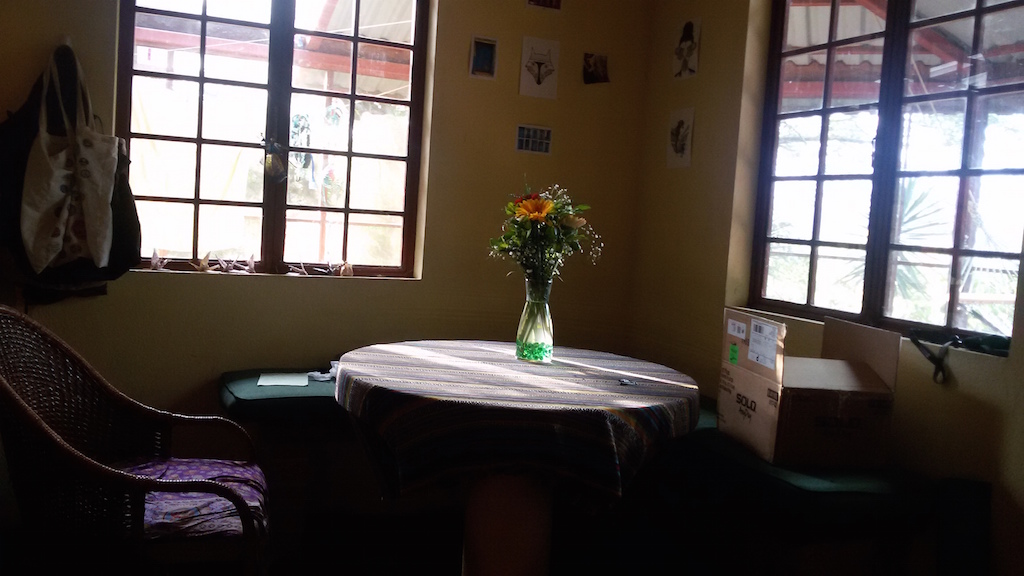
    The light falling through my windows at 6 am cleans the sleep from my eyes.

    I study how it falls on the striped tablecloth, on the laundry hanging on the porch, on the dishes in the rack by the sink, now dry.

    This light has weight. Depth. And levity.

    As I walk through it to bring my compost to the pile at the edge of my yard, the light transforms the ordinary into magic. Last night’s rain glistens on blades of grass, hibiscus flowers, palm fronds. The air itself breathes, infused with life, illuminated.

    The mossy track up the hill to the road could lead anywhere, in this light.

    Portals could appear around the bend, elves could shimmy down the velvety rays, and I would not be surprised.

    This 6 am, 7 am, 8 am clarity washes away the dark and the rain and the heaviness of the night before. It redeems the incessancy of the September rains. One could take flight in it; its very existence defies the gravity of the season, washes the soul, and lifts the spirit, suspending it in lush, velvet lucidity for the rest of the day.

    And this 6 am tableau expands to touch all the senses. Birdsong rides upon the coattails of the light, insisting that all who hear it enter into the day. It is more effective than any alarm. Moths who stumbled inside at midnight, addled by electric bulbs, buzz now at the windows, anxious to rejoin the jungle. Close behind the birdsong sings the scent of dawn—wet earth and drip-drying branches—with the promise of a fresh beginning.

    Amnesiac mornings, yesterday forgotten.

    And within the light that trails the birdsong that carries the wet earth smell, a prescience of the daytime heat to come. Already, nighttime chill begins to dissolve. Cool tiles underfoot raise goosebumps, and the air is just brisk enough that one feels compelled to carry a sweater, which will be obsolete within hours.

    Finally, the taste of 6 am light—because sunlight like this has flavour just as it has weight… dark green, a little bit dusty, rich and smooth on the tongue like homemade whipped cream. Or sweet and bright like ripe pineapple. Or tart and effervescent like good champagne.

    It lingers. Leaves an impression.

    A post shared by Toby Israel (@tobyintheworld) on

    Pure life, this light.

    But I don’t think there is anything particularly rare about it. Surely you could find light like this—uplifting and exquisite and soft to the touch—anywhere. Not only in Costa Rica. Not only in the jungle.

    I think, though I have no proof, that we can find this light whenever we open space to it. When we slow down our mornings to hear it, deepen our gaze to observe it, stick out our tongue to taste it…

    Sunlight everywhere reaches out its fingertips, nudges the soul to take wing, offers prayers for a velvet, amnesiac morning.

    Pure life—

    Not a destination, but a way of beginning.

  • What to Do with a 10-Hour Train Ride

    What to Do with a 10-Hour Train Ride

    I’ve done that thing again.

    That thing where I look at plane tickets, look at train tickets, enter all available data into an elaborate equation (something like, Value = Adventure / Cost + Adventure x Time + Cost/Environmental Cost) and decide to take the ten-hour train.

    Again.

    You see, adventure counts twice in my calculations… and I value my time a bit differently.

    So I’m sipping on free hot water (having exhausted my ten-hour snack supply in just over seven hours), watching an obstinately rainy day pass me by—all the way from Vermont to Philadelphia.

    It’s not a bad day for a train ride, I have to admit. The sky is a study in gray. Wisps of cloud catch in green hills, blur the horizon, put me to sleep.

    I wake up quickly; I think my feet are getting frostbite. I set up camp in the cafe car. Consider diving into a pile of work. Think the better of it. Return to staring out at the nondescript, along-the-tracks landscape.

    I’ve taken so many absurdly long train, bus, and ferry rides, keeping count lost all meaning a long time ago. Barcelona to London: Why go in two hours when you can take two days, via Paris and the Chunnel? Tangier to Barcelona: What fun is the plane when a thirty-hour boat ride gets you 100% there? Stockholm to Turku: Thirteen hours and no regrets! Goa to Kolkata: In hindsight, maybe forty hours was a a bit long…

    A love of slow travel, a desire to lighten my footprint whenever possible, and a stubborn resistance to doing things the easy way all feed into these choices.

    But I realize that whiling away an entire day—or more—on a train doesn’t come without practice. I haven’t forgotten my astonishment at my fellow passengers in Nepal, where I took some of my first twelve-hour bus journeys. They put me to shame, doing nothing for the entire journey, never complaining, and maintaining perfect serenity during the hours of touch-and-go traffic leaving Kathmandu Valley.

    And so, if you have a ten-hour train journey ahead of you, or another trip just as daunting, I’d like to offer a few of my favorite activities to help you pass the hours:

    1. People watch. This activity could, without exaggeration, occupy all ten of those hours, especially when coupled with eavesdropping. The man in the seat behind me telling another passenger how he never learned how to read words, only concepts. The woman across the aisle discussing, at length, a petty workplace drama. The endless procession of human faces, voices, expressions—mundane and extraordinary at once. Yes, one could certainly people watch for ten hours.
    2. Crochet, or otherwise make things. When I traveled from Philadelphia to Miami by train in 2013, I spent about four hours of the thirty-hour odyssey crocheting a hat for a particularly odd and impressively drunk character sharing the cafe car with me. Activities that occupy the hands but leave the mind free to wander are ideal for long trips.
    3. Read. Bring a fresh book you know you’ll love. The longer the better. This time I brought The Wayfinders by Wade Davis, and it enthralled me. If you’d happily sit on the couch with a good book all day, you can stop reading right now; your ten hours are sorted.
    4. Write. Whether or not you’re a writer is beside the point. Write down observations, stream of consciousness, the funny things people said while you were eavesdropping. These words may serve some purpose later on, or you may never look at them again. Also not the point.
    5. Make lists. If you can’t think of anything else to write, there are always lists. I happen to love lists—the way they sit uselessly on my desktop after I make them, their satisfying list-ness, the irrational sense of efficiency I feel when writing them. Maybe you’ll be equally entertained by this activity… or maybe not.
    6. Eat. On travel days, I drop any preferences or pretenses I usually have about food. Today I feasted on cherries and leftovers, but sometimes it’s chocolate and chips. While normally I wouldn’t advocate for eating out of boredom, long train (or bus, or ferry) rides are a special exception. Entering a liminal space, free from the normal constraints of time and metabolic physics, is one of the advantages of traveling this way after all.
    7. Work. Just kidding—travel days aren’t work days! Be it a lack of reliable wifi or the soporific rattling of tracks, these journeys don’t usually support much work. But if you need to get things done, there’s certainly time.
    8. Do nothing. Nothing nothing nothing. Stare out the window and daydream about mountains that hold up the sky. Close your eyes and turn the rocking of the train into music. Lean back, put your hands in your lap, and just sit there. I think we could all do with a little more nothing in our days. A ten-hour train ride is a good place to start.
    Additional uses of time that may inspire you: listening to music, meditating, talking to strangers, walking up and down the aisles, stretching, deleting old files off your phone, gobbling fresh air in the areas between coaches…

    Think that just about covers it!


    How do you pass a long journey? Please share your favorites with me!

  • In Defense of Aimless Wandering, Revisited

    In Defense of Aimless Wandering, Revisited

    I’m riding from Sweden to Finland on a ferry named Grace, pondering over aimless wandering. I’ll come back to that.

    Grace is probably ten stories high. She has a club room and a casino, cafes and restaurants, cocktail bars and a dog toilet. She is more floating apartment building than ship, but she floats as she is meant to and she will bring me from Stockholm, Sweden to Turku, Finland in just over eleven hours. For fifteen pounds, that was a slow travel bargain I couldn’t pass up.

    I’m the foggy kind of tired after a weekend of midsommar celebrations, camping adventures, and repeated sunrise-instigated wakeup calls at 4:30am.

    The weather sympathizes. Thick clouds crowd the sky and cast the archipelago (stunning, by the way) in monochromatic grayscale. A drizzle comes and goes; the “sun deck” is slick and empty.
    I sip sour-tasting ferry coffee, which does nothing to clear my head, but successfully destabilizes my hands, and watch the procession of tiny islands. Some have just enough space for a single house; others boast dense stretches of pine forests. I daydream up a contraption that could hitch to and unhitch from the passing ferries and allow me to island hop. (I realize they’ve already invented one better…it’s called a motorboat.)

    And I’m thinking about wandering. Aimless wandering.

    In fact, I’ve been thinking about aimless wandering since it came up in discussion during the week-long wild wandering school in which I participated earlier this month.

    Actually, I’ve been thinking about aimless wandering for much longer than that—since one of my first forays into vagabonding in early 2014—and just briefly forgot to think about it until that discussion reminded me.

    For the past couple of years, my wandering hasn’t been so aimless. With so much work to do and so many friends to visit, I’ve planned my travels more often than not. “You’re in London in July? Great, I’ll come to London in July.” “I have one week free after Portugal…perfect, I’ll see you in Barcelona.” “I need wifi for work this week; I’ll just stay in the city.”

    But there is value in wandering aimlessly. So much value. I still believe that.

    As I gather the skills to wander ever more gracefully, I hope to welcome more aimlessness back into my life. I’d like to invite you to do the same…

    What is aimlessness? It is space, and it is time. Space to move without restraint or reservation, and time to observe without hurry. Space to expand, in body and spirit—and time to be utterly still. Space for silence. Time for reflection. Space for reflection. Time for silence.

    Aimlessness isn’t purposelessness. Not to me.

    Aimlessness isn’t meaningless. Quite the contrary.

    Aimlessness isn’t absence from life; it is full-bodied presence in it.

    To wander aimlessly is to move through the world without the conceit that we actually know what is coming next. That is, to move through the world with grace. (Told you we’d come back to it.)

    So here I am, sitting on a ferry named Grace, thinking about aimless wandering.

    And I’m thinking that maybe aimless wandering isn’t a choice, but a description of how we are, all of us, moving through life. Whether we like it or not. Whether we acknowledge it or not.

    We don’t know what’s coming next, but we can go to it with purpose. We can go to it dancing.

    There is space to expand, and there is time to be still.

    Why not embrace it?


    Leaving Stockholm:

    A post shared by Toby Israel (@tobyintheworld) on

  • This is What Conscious Travel Looks Like

    This is What Conscious Travel Looks Like

    I wrote this for a masters application, but I think it’s worth sharing with more than a few admissions officers! What follows is an incomplete, but nonetheless important, analysis of the social, political and environmental issues facing the growing international tourism industry—and what we can do about them…

    ***

    The tuk-tuk driver is angry. The passengers are drunk. Instigating.

    They don’t want to pay. Too much. A crowd of other drivers and tourists collects around the ugly scene. It’s past midnight.

    The situation nearly escalates to blows before friends of the passengers pay for them, and the tuk-tuk driver withdraws, hardly pacified. A bitter tasted remains in the air as the crowd disperses.

    Everything wrong with a global, multi-billion dollar industry comes to a head in these few moments. Economic disparity. Cultural ignorance. Tension: between tourist and local. Competition: between local and local. Anger: everywhere.

    In several years I have witnessed an excess of these scenarios; it is difficult to choose just one.

    Tourism is the fastest-growing industry worldwide, surpassing oil, agriculture and automobiles. Many economies already depend on it, and more will join their ranks as the global middle class continues to expand, nurturing a growing curiosity about other people and other places. International tourist arrivals are forecasted to reach 1.8 billion annually by 2030—up 66% from their current levels.

    If anyone thinks tourism is a frivolous area of concern, now would be the time to think again. The industry has a far-reaching impact, touching environmental, social and political sectors with long, insistent fingers.

    Now, there are meaningful, constructive, sustainable and mutually beneficial ways for tourism to develop in a community, and then there is everything else.

    Unsustainable tourism looks like luxury hotels in Zanzibar that truck in their drinking, washing and toilet water from the mainland (the island was never made to support such population density), and then flush it into the no-longer-so-pristine Indian Ocean. Unethical development looks like private tour companies in Shanghai that exploit local peoples—foreign tour operators organizing for tourists and expats to visit local homes, schools and community centers in order to offer clients an “authentic” experience, yet forgetting to allow those local communities the privilege of self-representation. Economically-damaging tourism looks like property costs rocketing in Cape Town—rendering the cost of living in the city prohibitively expensive to most South Africans, while European visitors happily pay top-euro for short-term rentals.

    I have observed all of these trends up close. Working in media and travel, I regularly witness the negative impact of tourism—and the narratives around it—on local communities. I observe traditions warped to a narrow, outsider’s view of what they should be; competition for American dollars festering amongst former friends; natural havens destroyed by overeager and under-planned development; real, complex history and conflict glossed over by an appealing portrait of tropical paradise.

    Initiatives in sustainable tourism, ethnotourism, slow travel and community-driven tourism are numerous and promising, however.

    As I see it, for the travel industry to move forward—toward promoting cross-cultural understanding, integration and peace, and away from perpetuating disparity, conflict and ignorance—it must proceed in the following ways:

    >> Industry professionals must empower local communities to represent themselves—their stories, traditions, spiritual practices and identities—and move the typical industry narratives far beyond the usual stereotypes and generalizations. Words like “authentic,” “real,” and “untouched”—frequently used in marketing by tourists, professionals and locals alike—must be scrutinized for the rigid cultural portraits they propagate and the complexities they belie.

    >> Local communities must leave space for multiple storylines, idiosyncrasies and complexity to coexist. The wealthy, privileged male perspective commonly embodied by local leaders in tourism is not the only one. Creating space for female voices, religious and ethnic minorities, and other less favored stories to be heard—diversifying tour guides, business owners, service industry professionals and marketing materials—will be a crucial element of inclusive development.

    >> Both local communities and industry professionals must seek to integrate education, interaction and meaningful connection to place wherever possible. It is not enough to gloss over conflict and offer an artificial, romanticized image of a place and its history and people. Moving beyond one-line summaries and fantasized, fetishized representations of otherness, we begin to foster true cross-cultural awareness.

    >> Foreign visitors must seek out experiences of cultural exchange and learning. The power of asking questions, listening (with open ears and closed lips), and maintaining an open mind and heart cannot be exaggerated. Good intentions are not enough; tourists have tremendous power to change industry standards by demanding sustainability, social justice and cultural awareness from the industry they fuel.

    In addition, growing numbers of Chinese and African tourists—both domestic and international—are introducing a new demographic into the industry, with all the challenges that entails. Any initiative in sustainable, socially conscious travel must take into account the varied cultural norms and values of a shifting clientele. Working to understand the market they wish to influence, industry professionals will better develop it to positive effect.

    Lastly, in particularly conflict-prone regions such as Israel and Palestine or post-conflict regions like Bosnia and Herzegovina, it is crucial to take into account the intersection of political events—past and present—and international tourism. Much as one might try, a visit to a foreign country does not occur in a vacuum. The political climate and history of a place are unavoidably relevant to the foreigner, impacting as they do the development of the tourism sector, the on-the-ground experience of the visitor, and the very identities with which one interacts. Moreover, the foreigner acts as a mirror and ambassador, influencing, at the micro level, global awareness and perception of a given place. Given these considerations, we cannot underestimate the power of 1.8 billion people moving around the globe to reflect and influence political, social and cultural dynamics.

    The responsibility for further development lies not only with industry professionals, nor only with local communities or foreign visitors. Indeed, only with a concerted effort from all three sides will this massive modern entity act as a positive force for understanding, tolerance and harmony.

    ***

  • Johnny Cash and Slow Travel

    Johnny Cash and Slow Travel

    8:15 a.m. Self-Service Restaurant “Mediterraneo.” Grandi Navi Veloci ferry from Tangier to Barcelona.

    I look up from my breakfast—a somewhat sad assortment of boxed orange juice, cold croissant and drinkable cappuccino—and observe the other diners. Some are in groups or pairs. Many are young Moroccan families. Many are alone.

    Of this last group, few are doing anything (checking phones, or even reading). They’re just sitting there, drinking coffee, looking around. For some reason it reminds me of Johnny Cash’s famous response when asked for his definition of paradise:

    “This morning, with her, having coffee.”

    I’m not even a particular Johnny Cash fan, but something about that phrase—or more, the slowness it implies—fits this mood.

    People choose to travel by ferry (around thirty hours from Tangier to Barcelona, rather than two or three by plane) for many reasons. The slightly cheaper cost. The relative ease and comfort of sleeper cabins and lots of space to roam. The vaguely romantic allure of faded, Titanic-style old world luxury.

    And—I suspect—some people choose it for the slowness.

    Sitting in a deck chair for hours watching the boat’s trailing wake. Pacing the endless red-carpeted hallways, hands skimming smudged brass banisters, stepping inside and outside and inside again with no special aim.

    Sitting there, drinking coffee, looking around.

    Because there’s nothing better to do. Because the boat will get there—slowly—and we have time. Because, just like Johnny Cash, we recognize that the smallest moments contain the whole universe—if we slow down enough to dwell there for a while.

    For me, that is the essence of slow travel: dwelling in a moment while everything shifts around us, knowing that we’re on our way.

    Another reason to take the ferry: They have puppies!!! (If you’re lucky…)
  • This Is Why We Walk—Maybe

    This Is Why We Walk—Maybe

    spain, camino, walk

    Ancient Practice in the Modern Landscape


    Sixteen kilometers of open road. No turns. No twists.
    The trees are thick on either side, and I’m grateful for the shade they provide. The road tilts up, then drops down again. Relentless.
    It is my third-to-last day on the Camino del Norte. My legs are already tired, my feet already sore. I have walked already ten kilometers when I begin this section of road.
    Normally, there are trails, or a dirt edge to walk on at the least. Not today.
    The occasional car speeds past. They will arrive at the end of the road in minutes.
    The road is hard. Straight. Empty.
    Relentless.

    ***

    I’ve said it before: traditions have a way of reviving themselves.

    We as humans are wired for ritual. We seek it, gravitate toward it and cling to it, and when we don’t find it the world suffers.

    It has been theorized that there is a cross-cultural link between lack of ritual and conflict. Or, to put it positively, ritual is a necessary component of conflict resolution. That’s a longer discussion I’d love to have with you personally.

    If this gravitation is (as theorized) a response to a lack of ritual in modern society, the wild success of trends like yoga and meditation would arguably be the same. I believe that tendency to seek meaning through practice has everything to do with the recent resurgence of interest in the Camino—and other pilgrimage.

    The juxtaposition of this ancient journey with the modern landscape through which it now passes fascinated me from start to finish.

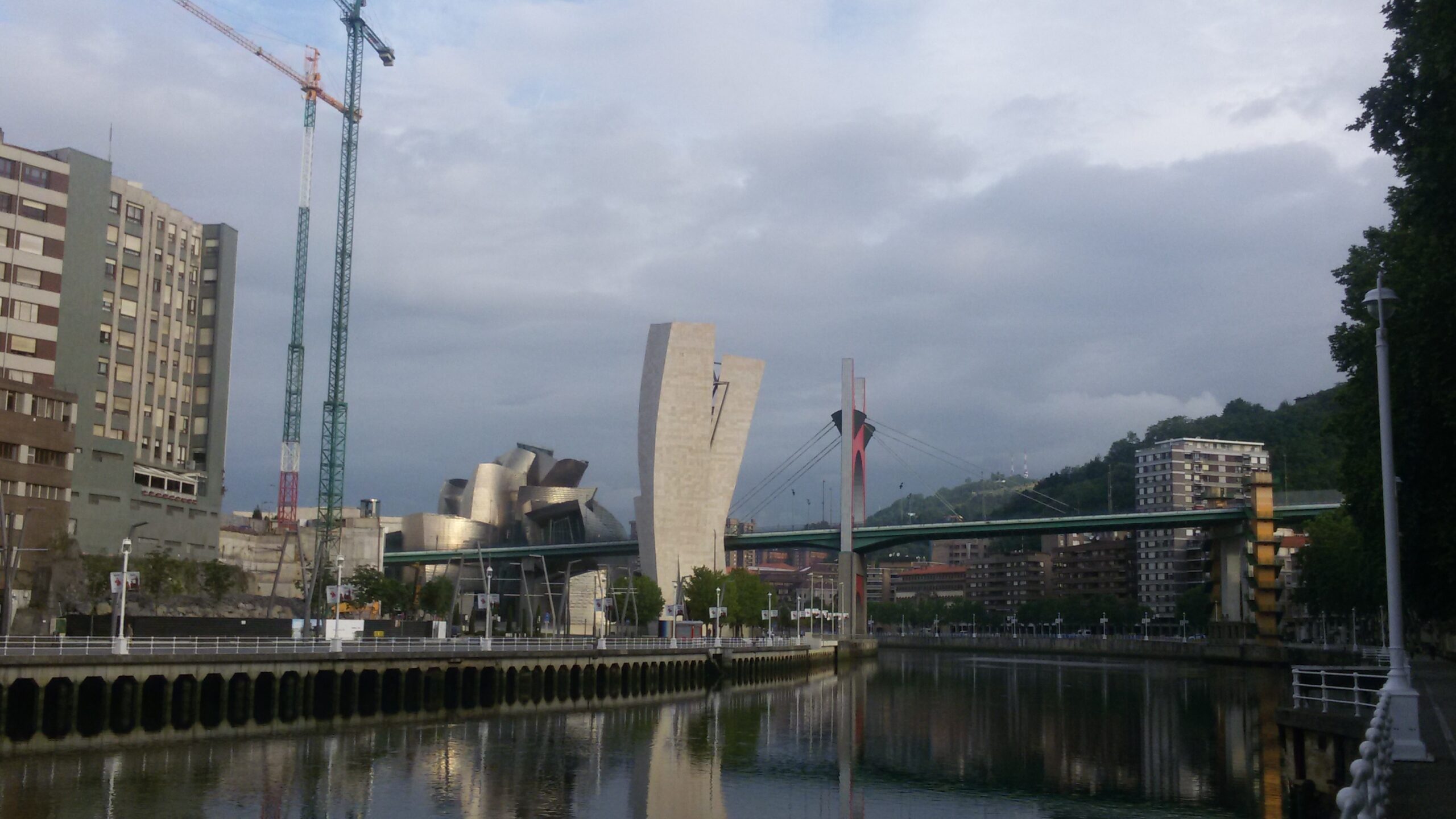
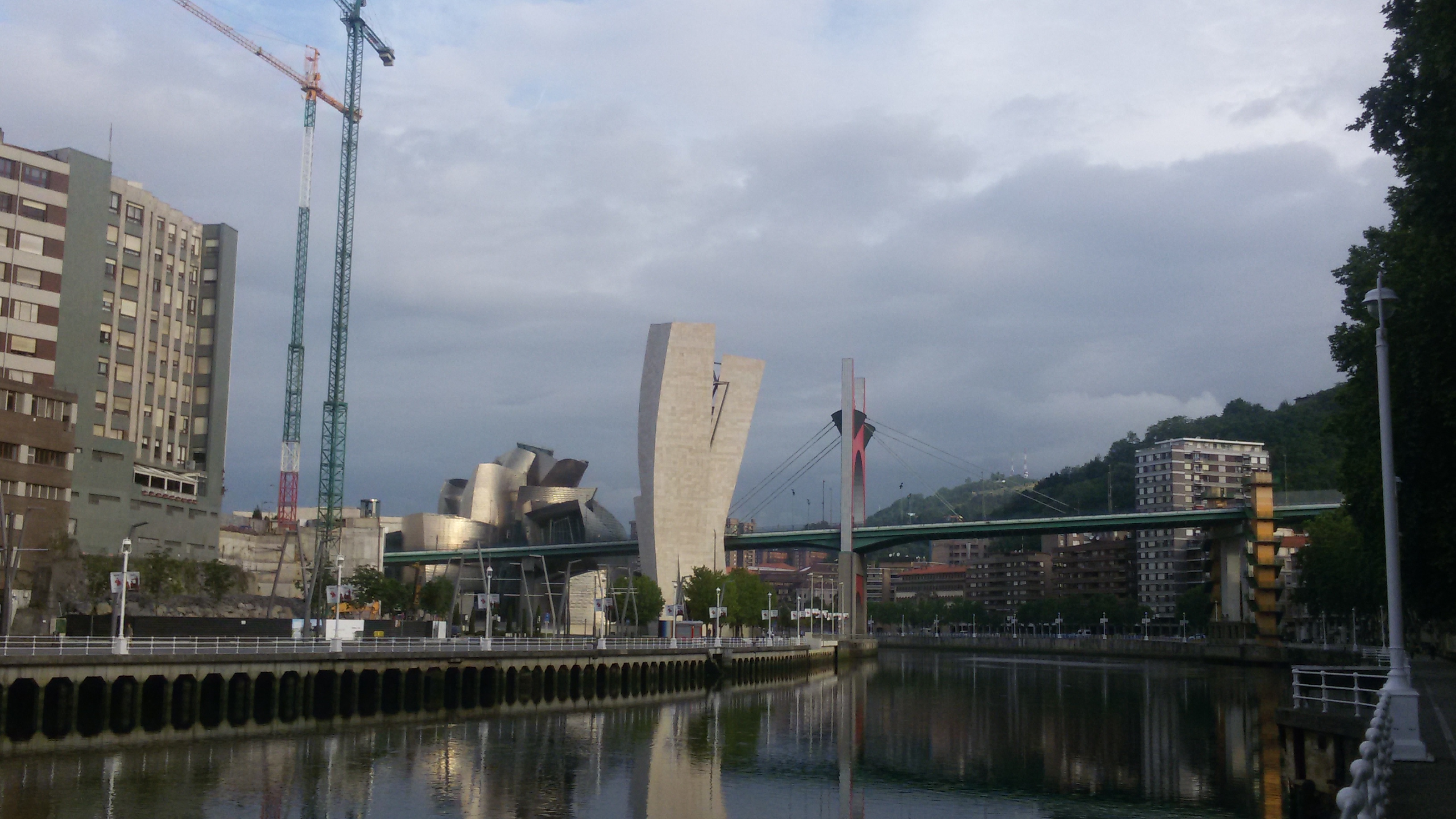
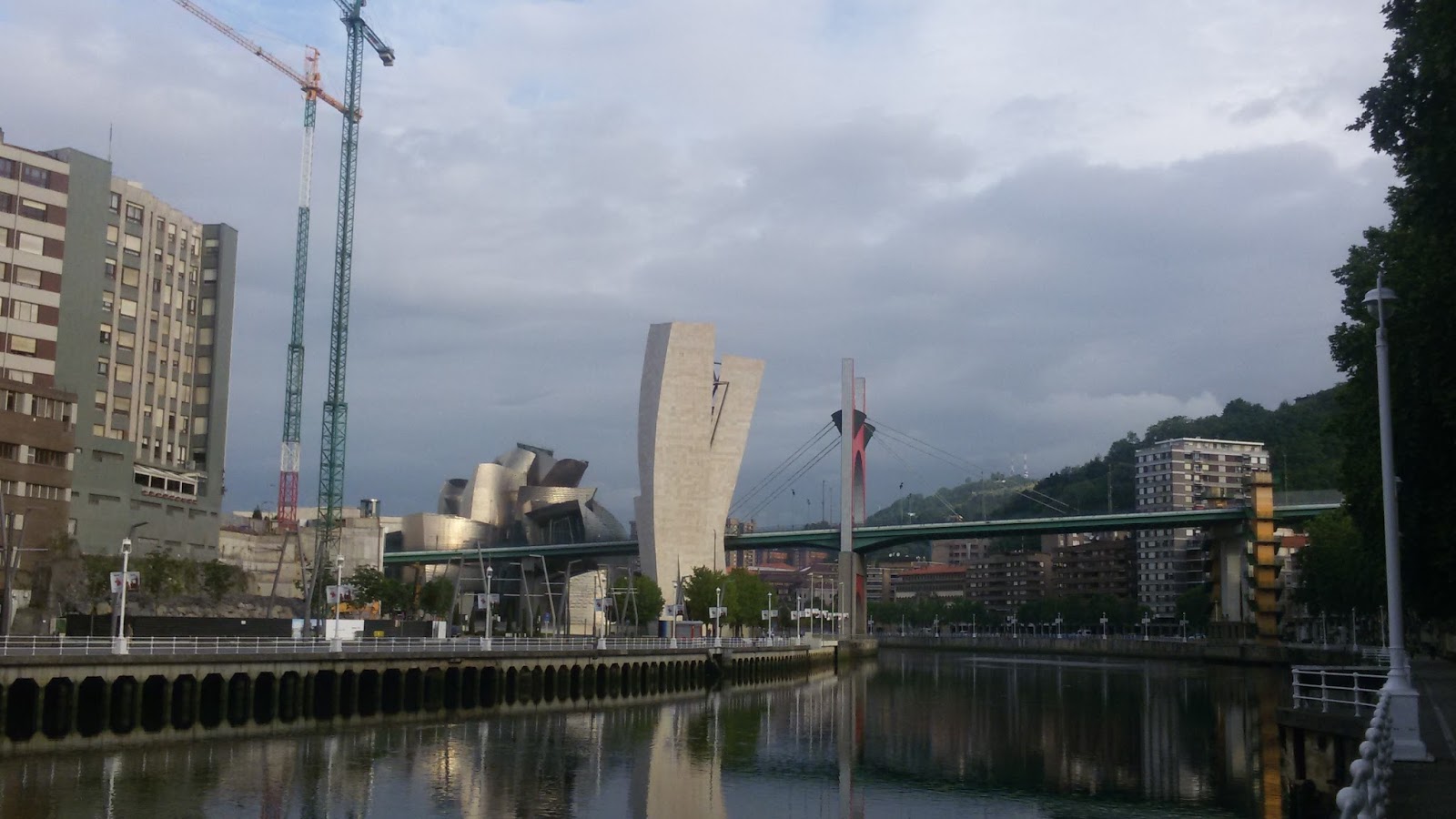
    What does it mean to walk a centuries-old trail alongside a six-lane highway? Beside a railroad track? Through a buzzing city like Bilbao?

    How does the addition of asphalt, smartphones, gortex and wifi change the experience? Enhance it? Devalue it?

    If you change everything—the trappings, the clothing, often the landscape, the food, the language, the Road itself—but keep the journey, is it still the same Camino?

    I’m inclined to say yes—in spirit.

    If you take a human body, give it artificial limbs, blood transfusions, organ transplants—replace everything, say—do you still have the same person?

    Your answer may depend on whether or not you believe in a consciousness, a soul, a Self (call it what you will) that is greater than the sum of all its parts.

    If you change every piece of the Camino, from the culture around it and the people walking it to the very structure and environment of the journey, what remains the same?

    In my opinion, it is the spirit of the journey. It is the seeking, the act of walking, that has somehow drawn us across history to follow the same path.

    And you can lament the omnipresence of wifi or cell service, you can dismiss the validity of smartphone navigation, you can wax poetic about the good old days when pilgrims carried nothing but a skein of water and the cloaks on their backs…but to what end?

    This is our world.

    There is asphalt that wears down our joints. There are trains that travel many times faster than our feet. There is social media and multiculturalism and sturdy trekking gear.

    One thing has not changed.

    Us.

    We still walk on two feet (when we choose).

    We still require food and water to survive—for now.

    We still seek—relentlessly—to create meaning in our lives.

    That is why, I believe, an ancient rite like the Camino de Santiago still makes sense. In spite of this modern world and modern landscape. Maybe because of it.

    It is not just possible, but perhaps necessary to walk the same paths we have walked for centuries. Maybe that connection is the ritual we’re seeking.<

    What do you think?

  • Did You Find What You Were Looking For? (Camino Reflections, Part 10000)


    My last visit to London, in July of this year, I had dinner with a former classmate. We had taken “Intro to Buddhism” together.
    I didn’t know it then, in my first semester at Middlebury College, but many themes from that course would wind their way through the following years of my life.
    Over our glasses of red wine—Merlot, I think—I recounted a memory of that class that stands out from the rest. It’s funny, sometimes, what ends up sticking in our minds.
    Someone had asked our professor if he wanted to reach enlightenment—if that’s what he was seeking.
    He had answered softly (he always spoke softly):

    “I’m not so interested in enlightenment. I’m interested in the possibility of expanding my awareness.”

    Maybe this is unhelpful, and maybe I’ve spent too much time around Buddhist philosophy, but this is what I have to say in answer to that oft-repeated question, “Did you find what you were looking for.”

    No.

    Longer answer: 

    I wasn’t looking for anything, so I doubt I would find it. That’s the difference between a trip and a journey—only one has a destination.
    I found no thing on my Camino journey. Nothing. I did not have any epiphany. My life did not change.
    If you set out walking (meditating, praying, anything) in search of enlightenment, I think you will be disappointed.
    And that’s not depressing; it’s inspiring. It is exhilarating, this not knowing. It is enthralling, this seeking-but-not-finding. It is magnetic, this grey in-between-ness of no-thing—neither empty of wisdom nor full of answers.
    If “no” is not a satisfying response, I’m sorry, but it’s the only one I’ll give—at least for now.
    No, I did not find what I was looking for.
    I wasn’t looking for, you see.
    Something on the same subject I wrote about halfway through the Camino, in a moment of clarity:

    “Will I come back wiser?” asked my ego. 

    I don’t know, my more honest self replied. I think I’d be the last to know.Do any of us come back “wiser” from anything? 

    I have my doubts. 

    I will come back with bigger calves from walking and stronger shoulders from carrying my pack. 

    This is certain. 

    I will carry in my heart thirty peaceful mornings where dawn breaks over still meadows, and the wind whispers a song only I can hear. 

    This is certain.

    I’m not interested in finding. The beauty is in the in-between.

    ***
  • Pilgrimage Today—It’s Still Relevant

    Pilgrimage Museum, Santiago de Compostela, Galicia, Spain

    I placed the noise canceling headphones over my ears, and an ancient melody flowed straight to my soul.
    It was my foodsteps—hundreds, thousands of them—plucked from a harp. It was the daily rhythm of walking made song.
    I stood at that display in the Pilgrimage Museum for a long time, and I listened to some of the recordings of the Resonet Musica Antiga group more than once. Recreated from sheets music in the Cathedral’s archives and reconstructed medieval instruments, the music might have run through my head at a distance.
    But somehow it didn’t. Somehow it connected.
    I arrived in Santiago on Friday, July 1, 2016. That Friday marked the culmination of a month of walking across Northern Spain (approximately 800 kilometers) begun in the vague interest of “seeking.”
    (We can talk about what I “found” once I figure that out—story for another day.)
    Pilgrimage is an ancient phenomenon. Historians have found evidence of its occurrence in Mesopotamia, Vedic India and ancient Egypt. Wherever it appears in human history, it follows the same principle: an outward, often arduous journey serving as an allegory for the spiritual path.
    Since the alleged discovery of the remains of Saint James (one of the Twelve Apostles) in the ninth century, Santiago—and its cathedral—has been one of the most important pilgrimage sites in the world. It is said that the Camino de Santiago—the Way to Santiago, and there are many—is a metaphor for the trail marked by the Milky Way across the sky. Again, a physical manifestation of a metaphysical path.
    That sounds heady and outmoded, right?
    Wrong.
    In the last decade, traffic on the Camino Frances (the most popular route) has surged into the thousands. Clearly, the ancient tradition still resonates. And lately, its popularity is growing fast.
    Just as ritual will always revive itself and traditions will be reborn, pilgrimage is finding its place in the modern world.
    The scallop shell, long worn as an insignia by peregrinos walking to Santiago, now hangs from my backpack, too. Symbol of water, life and healing, it is as timeless, endlessly resonant, as it is timeworn.
    These themes are eternal:

    WanderingSeekingThe JourneyWalkingLooking to the SkyWalking upon the Earth
    Questioning 

    The WarriorThe SeekerThe Scholar [1]

    As I listened to those modern recordings of centuries-old music, I heard my experience translated—so precisely—into sound. I walked a path that thousands, perhaps millions, had walked before me, and though the asphalt beneath my feet and electric lights in the distance were new, the the experience had somehow been the same. [2]

    That, in short, is why pilgrimage is still deeply relevant today.

    ***

    [1] The Warrior, The Seeker and The Scholar are the three archetypes represented by Saint James.
    [2] Sadly I have not been able to find the same recordings anywhere online. This is the closest I could find, but you may have to visit the Pilgrimage Museum in Santiago to hear the music I’ve described:
    Youtube video
    ***

  • The Camino de Santiago in 100 words and 27 Untouched Pictures

    When I set out for the San Sebastian (my starting point for the Camino del Norte) at the start of June, I decided not to take my camera with me.
    Too heavy. Too much of a burden. Too unnecessary.
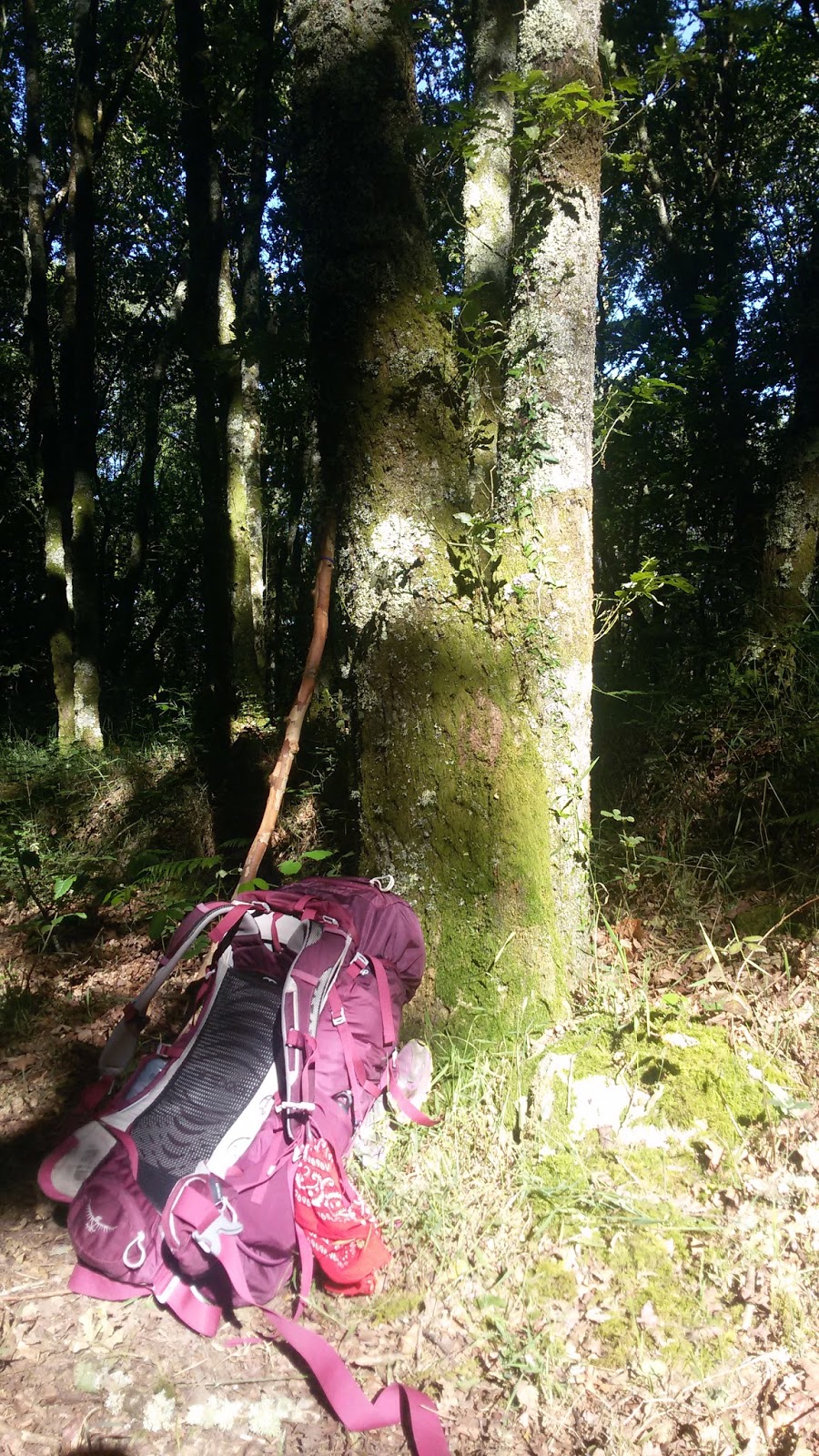
    Then came the bright idea to take only one to two (smartphone) photos per day throughout my thirty-day walk. To capture what captured my heart, without being a slave to documenting the journey—that was the idea.
    And I think it worked pretty well. On average, I took two pictures a day—sometimes none, sometimes three—and while the result is not comprehensive, I believe it is in some way representative of those days.
    I have selected twenty-seven of those sixty photos and paired them with lines from a brief stream of consciousness I wrote one day to summarize the experience of walking the Camino. The collection below is not chronological, and it isn’t complete, but I think it is more true than a complete, chronological photo diary could ever be.

    ***
    Walking. 
    Walking in mud, in rain, 
    in grass; 
    on gravel, asphalt, 
    bridges stone, wood, paved; 
    at first light, 
    at last light, 
    under clear skies 
    and into fading sunsets.
    Waking beneath stars in freezing meadows, 
    waking in a village whose name already evades recollection.
    Glossy maps,  
    cafe chairs, 
    Spanish words that somehow make sense.
    Bare feet,
    dirty feet, 
    tired and sore feet.
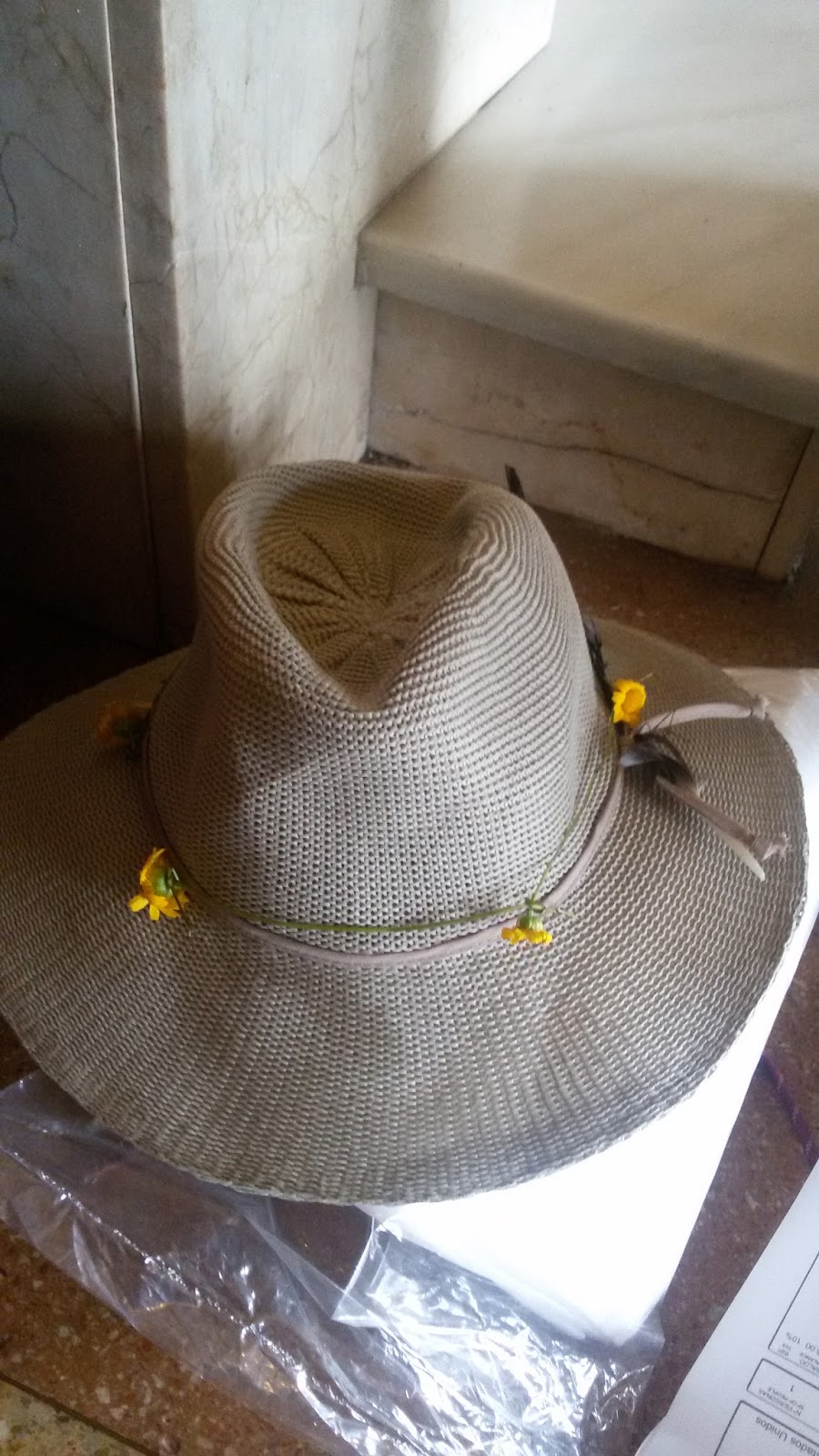
    The same hat every day, always a different flower in it.
    Yellow arrows, yellow arrows, yellow arrows.
    The path ahead. 
    Sleep that comes without invitation. 
    Absence of thought.
    Peace of 
    single-minded activity. 
    Never boring. 
    Seashells. 
    The way forward. 
    Yellow arrows.

    ***

    The Camino in Short: 

    Walking. Walking in mud, in rain, in grass; on gravel, asphalt, bridges stone, wood, paved; at first light, at last light, under clear skies and into fading sunsets. Waking beneath stars in freezing meadows, waking in a village whose name already evades recollection. Glossy maps, plastic cafe chairs, Spanish words that somehow make sense. Bare feet, dirty feet, tired and sore feet. The same hat every day, always a different flower in it. Yellow arrows, yellow arrows, yellow arrows. The path ahead. Sleep that comes without invitation. Absence of thought. Peace. Single-minded activity. Never boring. Seashells. The way forward. Yellow arrows.

    ***

    About

  • Coffee Culture, Slow Food, and Why Cape Town Has Both

    Coffee Culture, Slow Food, and Why Cape Town Has Both

    cape town coffee culture slow food

    A side alley off Buitenkant Street, Gardens, City Center, Cape Town

    The first sip is bitter, sour, almost acrid, before my palette adjusts and the taste mellows into a more complex configuration of nutty, earthy, sweet and rich.

    This is good coffee.

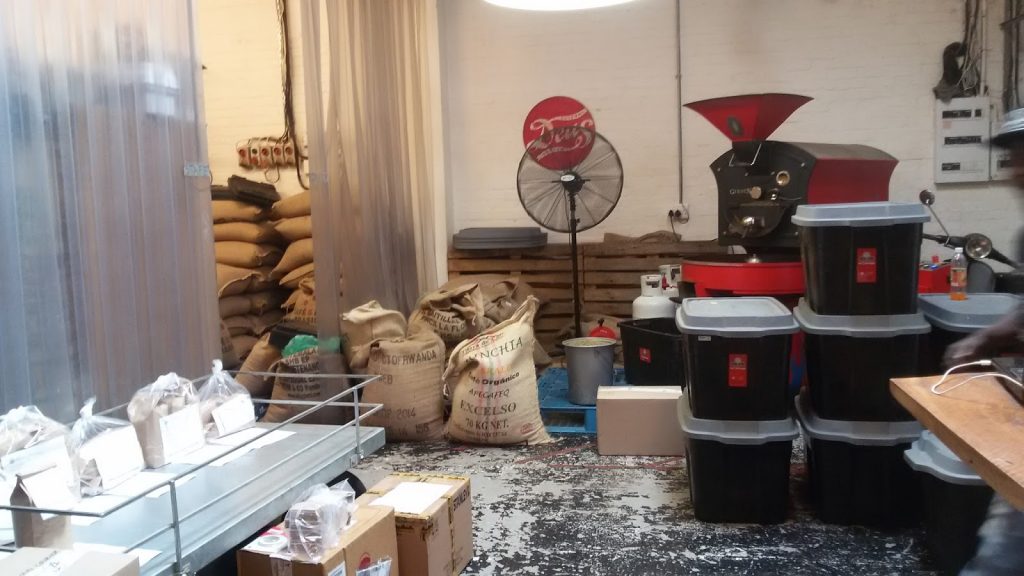
    I’m sitting at my favorite Cape Town cafe, Deluxe Coffee (also called YARD, the Dog’s Bollocks and the Bitch’s Tits), where motorcycle parts, vintage bicycles and canvas sacks of wholesale coffee beans make for original decor.

    I’ve occupied this stool at the counter for well over an hour now, and nobody cares. Par for the course.

    Cape Town has an exceptional coffee culture. (The reason I’ve consumed more coffee in the past three months than probably the last three years prior—well, that, and the fact that a cappuccino costs a bit more than a dollar.)

    What is “coffee culture”?

    Well, to answer in negatives, the U.S. does not have a coffee culture—or a cafe culture, to be more precise. A coffee culture does not “run” on coffee (like Americans run on Dunkins), but rather stops. Sits. Stays. Connects.

    And when you stop to taste your “cup of joe,” quality matters. Deluxe Coffee may be my favorite spot, but easily half a dozen others tie for second. There is a lot of good coffee in this city.

    To-go cups are more rare, too, and at least among my friends, “going for coffee” is an hour(s)-long undertaking—not a five-minute quick fix.

    Cape Town generally moves more slowly. Less rush, less stress, none of the high-powered, shiny, corporate velocity of New York, London or Hong Kong. None of the humorless, chain-brand cafes, either.

    Starbucks hasn’t made it to Cape Town, yet, but I hear it’s coming. When it gets here, I hope Cape Townians will put it out of business.

    In a cafe culture, independent roasters, brewers and purveyors of coffee thrive. Character and personality matter—or maybe that’s just me.

    And I think there’s a common denominator between coffee cultures and Slow Food. Shared values. An appreciation of quality, and a willingness to wait for it.

    Many of the cafes where I go to do work have some of the worst service I have seen anywhere in the world. Friendly, but extraordinarily slow.

    But, good food. Good coffee.

    See the connection? I do.

    I am more than a little bit enamored of the Slow Food movement—and of Cape Town’s coffee culture.

    I like the pace, the time for detail, the space for real connection. This is what a cafe should be, in my opinion.

    This is how coffee should taste. This is how life should move.