Tag: spirituality

  • No One is Talking about God (Poetry)

    No One is Talking about God (Poetry)

    Quite a few months ago, I traveled down to the south of Costa Rica to visit friends living in a remote community on a very special stretch of coastline.

    I had a lot of time to reflect. A lot of time to sit in the dark too. Real dark, untouched by any trace of electric light.

    That kind of darkness opens us up to a kind of spirituality, or creativity, often blinded by the modern world. At least, it seemed that way to me.

    That kind of darkness brought me a lot of words. These are a few of them:
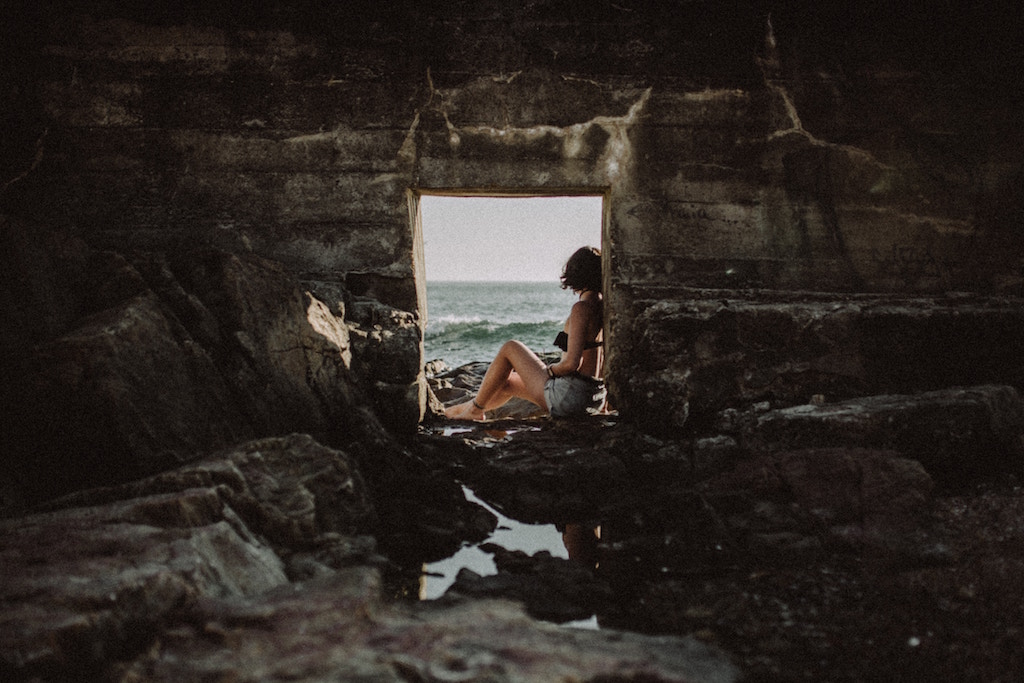
    god, wanderlust, woman, travel, ocean

    Talking about God

    I went to the ocean on a cloudy night, just to stare at darkness.

    I felt my heart beat faster as the waves rolled against the beach,
    and my body rolled too, in sympathy.
    This was solitude.
    Utter blankness upon the canvas of my cornea.
    This was emptiness.
    Division between water and sky barely visible on the horizon.

    My voice, when I sang out to that ocean beat,
    was unique in all the darkness,
    for it was the only thing that told itself to itself.
    The sea spoke to the moon,
    the raindrops spoke to the trees,
    the rocky beach spoke to the colonies of crickets —
    and then, there was me.

    I want so much to be a part of it.
    To lose track of my voice in harmony with the waves.
    To see my footprints disappear,
    my skin melt into the everything
    of that shifting, sucking darkness.

    I love my life, my body, my breath.
    Just, I want to be a part of it.
    The whole.

    You see, no one I know seems to be talking about god —
    it’s out of vogue to seek the divine,
    the mysterious, the ethereal and the invisible;
    children learn to count money but hear nothing of souls;
    we don’t care why we’re here as long as there’s football —

    And no one I know seems to be talking about god;
    we’re all too educated for that,
    leave it to the zealots and the black hats,
    write your gratitude journal and bow down to the fat cats —

    No, no one I know seems to be talking about god,
    but I want to find her,

    so I go down to the water and look into my own heart,
    because a wise teacher or two once said
    I would find a spark —
    there, where all the secret things we pretend not to believe in sing;
    where the ancient longing we don’t understand goes to hide;
    where the invisible and magical and wild abide.

    I heard, once, that god was at the heart of everything,
    including me.
    I read, once, that gods played and ate and shifted faces
    at the bottom of the sea.
    I knew, once —
    I knew, I knew, I knew, I knew, I knew —
    about the mysteries dancing at the horizon,
    where water meets sky,
    about the spirits who live between worlds
    and send stories with serpents and dolphins and dragonflies,
    about the beauty that gave birth to every single thing.

    But I forgot,
    we forgot,
    and I want so much to remember:
    I am part of it.

    No one I know seems to be talking about god,
    but, call me crazy,
    I want to find her.
    So every day, for a few minutes,
    I try to stare at darkness.
    I dive into that shifting, sucking water,
    and I look into my own heart.


    Originally published on Rebelle Society, July 2018.

    Written in November, 2017 at Finca Morpho.
  • I’m not responsible for anyone’s Transformation

    I’m not responsible for anyone’s Transformation

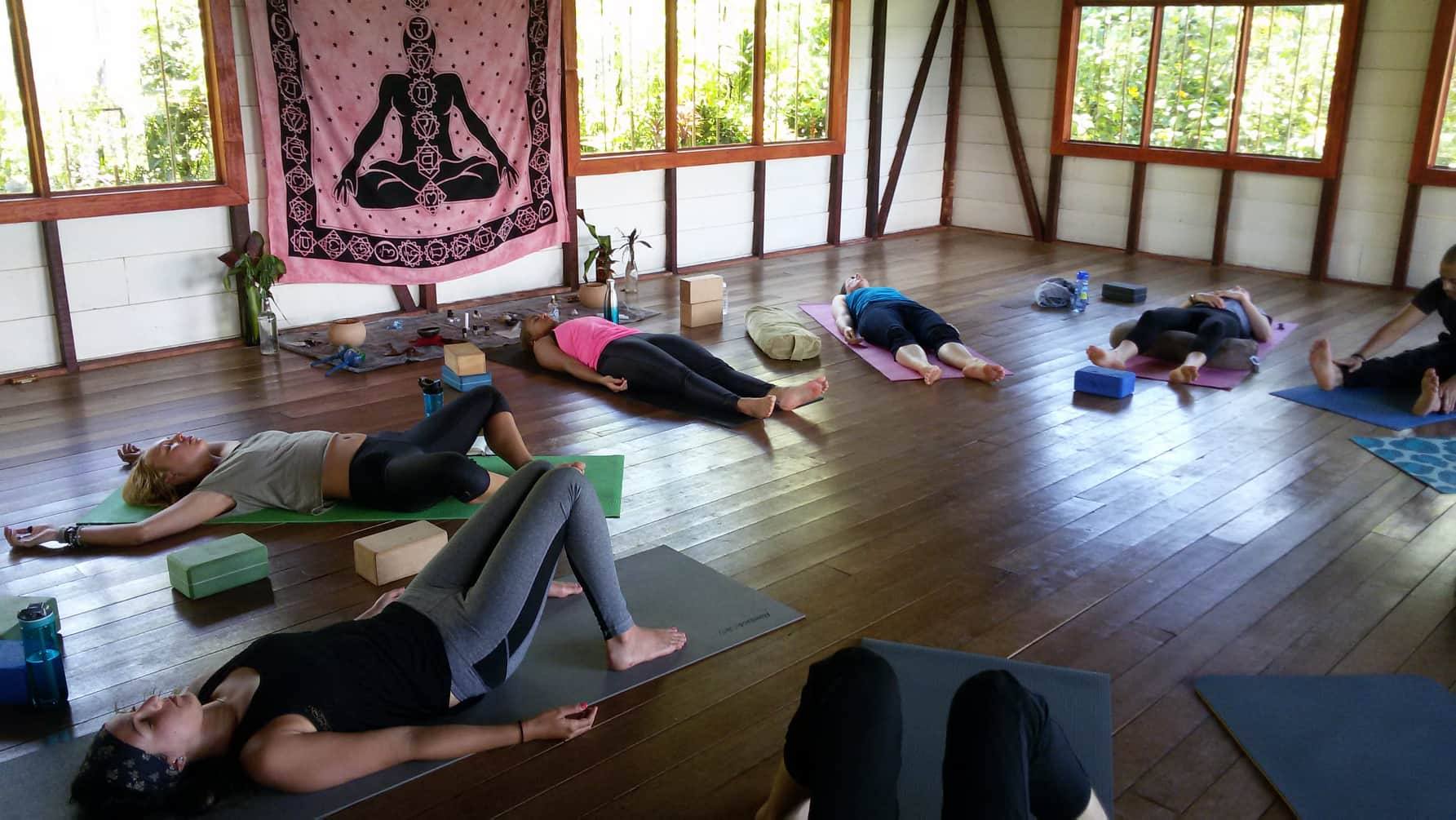
    Saturday, 23 June, 2018 — Finca Agroecologica La Flor, Cartago, Costa Rica — Yoga & Mindfulness Immersion

    I sit straddling the drum, rocking forward with each beat—the only way I know to comfortably play this instrument.

    My knee has slipped off the mat and onto the hard studio floor, but the pain dulls in the background, my focus absorbed in rhythm. Driving rhythm. Holding rhythm.

    As I relax into the drumbeat pattern, I am able to expand my awareness to the people in the circle with me: One has moved to the back of the room to dance; others lie down, motionless; and others sing, sway or clap in conversation with the music. A web of sound makes our many points of connection nearly-tangible.

    finca la flor, yoga retreat, transformation, costa rica, travel

    I should be exhausted after co-facilitating our first “Yoga & the Art of Listening” retreat at Finca la Flor, Costa Rica, but I have wings.

    Maybe it’s the cacao we drank, still sharp and bitter in my throat. Yet, this sense of inspired-ness—of in-purpose-ness—has been building since day one of our five-day experience.

    Eyes closed to hold onto our rhythm, I see the room in my mind’s eye instead: low light, candles at the center of a rainbow of yoga mats, faces glowing—transformed.

    “I did this!” my ego wants to shout, claiming for itself all the credit for this transformation, but no… there’s something truer beneath this voice:

    At my core, another, wiser self is in awe. I am in awe.

    A post shared by Toby Israel (@tobyintheworld) on

    In retreat, as in ceremony, we have each held space for one another to delve inward and to expand outward. I am in awe of the sheer beauty and courage and power of each individual who answered the call and co-created a unique container for accelerated growth. I am in awe of the journey that brought us to the selves sitting together in our closing ceremony, expressing and blessing with joy and freedom and grace.

    My ego, of course, is wrong. I didn’t do this.

    I didn’t make this transformation happen in the space of five short days. That would be madness. An impossible task.

    Each participant was responsible for their own growth and (dare I say it?) transformation.

    A post shared by Toby Israel (@tobyintheworld) on

    I—as a co-facilitator, co-creator, and co-learner—may have shared movement and mindfulness practices. I may have designed a schedule. But I am not responsible for the scene tonight, which makes me (rarely sentimental) feel like tearing up.

    This is why I prefer the term “facilitator.” A facilitator facilitates individual and collective self-inquiry and development through invitation, sharing, and loving support. A facilitator does not presume to have any monopoly on knowledge—or potential outcomes.

    After this experience (the first of hopefully many to follow), I feel grateful, blessed, honored and inspired by what I helped to create. But I do not feel the pride of ownership, because I don’t own this outcome, laid out tonight in my mind’s eye, dancing over drums and twining with the taste of cacao. I recognize that our collective effort, love, and generosity made the experience what it was.

    I didn’t do this; we did.

    And I am in awe of that.

  • Choose Power: A Dream-Inspired Thought Experiment

    Choose Power: A Dream-Inspired Thought Experiment

    It’s been a wildly busy month, and though sharing something here has been on my to-do list every week, it just keeps getting pushed to the bottom. So as not to fall into the habit of not posting, I thought I would share this short thought experiment.

    About a month ago, I dreamt about a bus that wouldn’t stop. The more I yelled at the driver, the more he seemed to ignore me. I watched with growing panic as my destination disappeared behind me on the highway, until it became just a speck.

    But finally, the bus did stop. I thought I was angry… the driver was outraged! “Who are you?” He shouted. “Who are you to tell me to stop?”

    Hmmm.

    And so here is my thought experiment about choices and power and surrender and control:

    A post shared by Toby Israel (@tobyintheworld) on

    The bus is moving, and none of us gets to decide when we get off.

    Angry? Too bad, the wheels are still turning.

    Sad? You’re not the only one, but there are no breaks (…and no brakes) on this ride.

    Confused? Join the club—no one’s been down this road before.

    The bus is moving, and you don’t get to choose when it stops. The driver is deaf to your shouts of “slow down!” and “hurry up!”

    But don’t think that means you don’t have any power.

    You have all the power.

    You choose whether to yell or laugh. You get to decide to make a scene when the familiar vanishes in the distance—or to sit down and soak in the wild frontiers.

    You, and only you, determine how you react to the bumps, flat tires, detours and accidents.

    So someone stomped through with dirty boots. That’s alright too. Or maybe, for a few minutes, it’s not alright at all. Be angry. Be sad. Be confused. But then remember that you don’t have to be. Their dirty boots don’t have to be your problem.

    You still have power over you.

    Even though the driver doesn’t listen, your heart will. So tell it sweet things, always.

    A post shared by Toby Israel (@tobyintheworld) on

  • How to Return when there is No Turning Back

    How to Return when there is No Turning Back

    The plane lands. The boat docks. The train whistles as it arrives at the station.

    You step off. Pause. Look around.

    Friends and loved ones wait with brilliant smiles and open arms to welcome your return. They look just like the pictures you carried in your mind, and yet… The station looks just like your memory of your departure, and yet…

    Is this home? The place you left? It feels different, but you know it has not changed. No, you have changed. Or rather, you have become more yourself, and you do not yet know how to share this new, deeper you-ness with these specters of an earlier time.

    You have crossed oceans, scaled mountains, fought dragons, and befriended shadows. You have faced challenges you could not imagine, and you have learned your strength.

    But this. This seems insurmountable. How can you possibly carry your lessons back? How do you return?

    A post shared by Toby Israel (@tobyintheworld) on

    Reintegration. Maybe this is the hardest part of the journey. The return.

    I know this. We all do. It’s archetypal stuff. Gather so much beauty, so much wisdom, so much knowing—but then, how to bring it home, into the body, into the mind, into the world?

    The heart opening, horizon shattering, mind growing is the first step, not the end of the road. For every obstacle we overcome, there is a higher one around the bend. For every road we walk, there is a longer one still to travel. For every difficult journey we complete, there are yet more turbulent waters to navigate up ahead:

    The return.

    Everything that follows.

    We come back from our journeys changed. More sombre, or more joyful. Heavy with nostalgia, or lighter with all the baggage we have dropped along the way. Wiser, or more innocent—or both.

    A post shared by Toby Israel (@tobyintheworld) on

    We live more lifetimes than we could hope. We die small deaths, traverse dark nights, emerge at dawn with new perspective. None of it matters, and yet—I go on, we go on, because the sun still shines. Because the leaves still whisper. The birds still call. The guitar strings still vibrate.

    Just as they have always done.

    And so we still follow rules of time, of dress, of conduct. We still shine, speak, sing, dance, play—just as we have always done. But we feel like crying and laughing both, because we won’t be the same. We will never be the same.

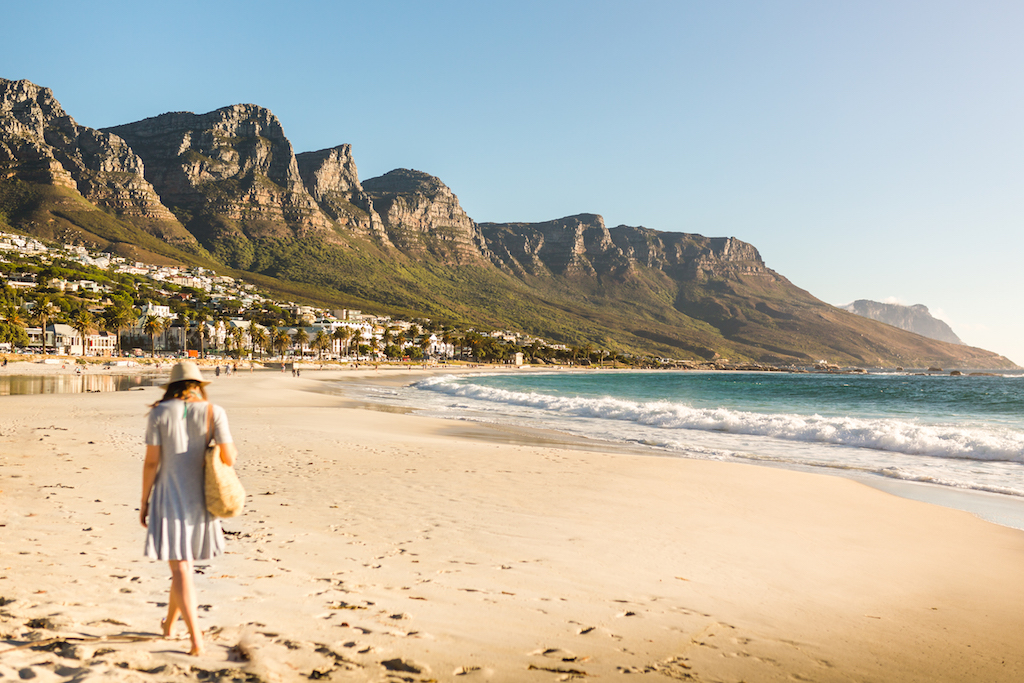
    the return, cape town, toby israel, beach

    We have traveled far. We have met dragons. We have shed the layers of ourselves, and now we put them back on. Now we return, full of questions.

    We have said hello to the unknown and moved beyond it. We have touched secrets and tasted their blessings on our tongues, our skin, our hearts.

    One thing is certain. There is no turning back.


    Beach Photos Used with Permission from A Different Story Studio

  • On Leaving

    On Leaving

    London, England. Late November. 12:30 p.m.

    My backpack leans against the wall. My second suitcase stands next to it. The kitchen is clean, lights off, curtains drawn.

    I look around one last time, step into the hallway, and shut the door. I’ve left the keys—let’s hope I didn’t forget anything.

    I walk to the Tube (South Kensington) and board the Piccadilly train for Heathrow Airport. I sit down and close my eyes, but I don’t sleep. Instead, I run my thoughts over the past two weeks: the people I’ve met, the food I’ve cooked, the dances I’ve danced.
    (more…)

  • Zen & the Motorcycle Passenger

    Sorrento Coast,  Italy

    (Mom, you’ll want to skip this one.)
    The headlights of oncoming cars are a blur as we race down the center line of the autostrada (highway) from Sorrento to Napoli. I settle into the peculiar flow of this navigating traffic as we weave in and out.
    Yellow lines, black sky, breathe in, breathe out.
    Yellow lights, black tires, breathe in, breathe out.
    Accelerate, brake. In. Out.
    It’s just me (passenger-monkey) and my friend (driver-pilot). Fear hopped off this train hours ago, and I’ll tell you why.
    ***
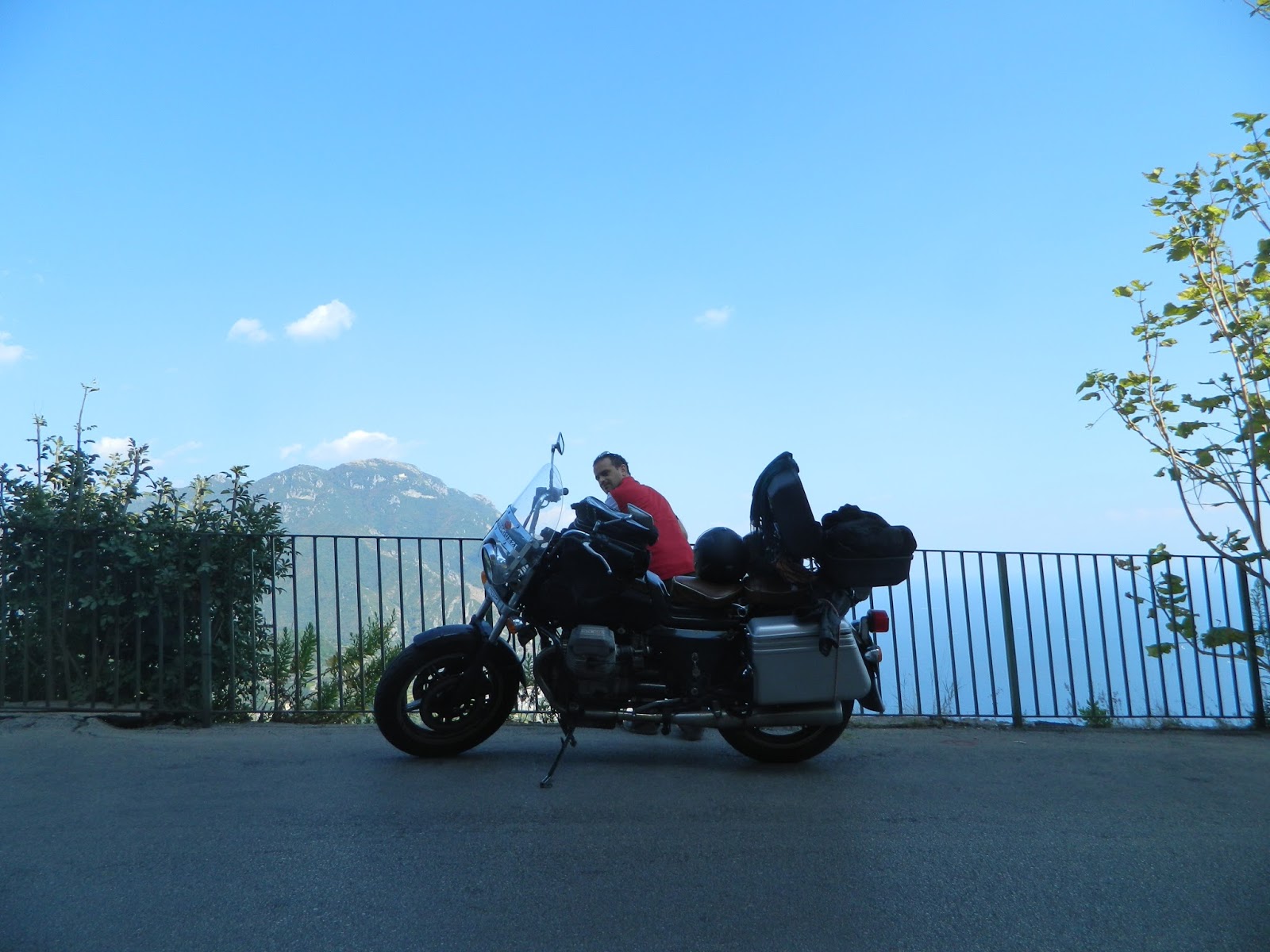
    È stata una giornata bellissima. It was a gorgeous day. Perfect. My friend met me with his vintage motorcycle at the Salerno train station (a half-hour train ride from Napoli), and we (along with seemingly every Italian ever on this last weekend of summer) set off for the Amalfi Coast.
    The fresh wind in my face balanced the hot sun as we followed hairpin turns opening onto one dazzlingly beautiful vista after another. The hum (or, more accurately, roar) of the engine blended with the waves and the wind, and conversation was sparse. The sky turned to dusty rose, orange, teal as we rounded past Amalfi and up the Sorrentino coast at sunset.
    I must have contemplated my death a hundred times that day.
    I usually do when I travel as a motorcycle passenger, and I don’t think it’s morbid. There is a quality of zen to this process of that renders it uniquely compelling for me.
    There’s the, “oh shit, this is dangerous” moment, followed by the, “there’s nothing I can do to change my vulnerability in this situation” realization, culminating in (temporary) total surrender to the inalterable fact of my own mortality.
    Then a sudden acceleration and, “oh shit,” and we begin again. As the minutes or hours blur on, I slowly stop picturing the many gruesome ways in which this could end badly, my pulse slows, and my shoulders relax. Once that last ripple of fear smooths out, I ender a space of zen acceptance—it’s pretty blissful there.
    If you’re thinking I sound nuts, allow me to ask you a question:
    How often, in your day-to-day life, do you contemplate your own mortality?
    If you’re a healthy, well-enough-off human, I’m guessing it’s not all that often. And yet, we are all mortal; we are all helplessly vulnerable to myriad risks. We all walk a fine line between life and death all the time.
    We are all on a precipice.
    ***
    That yellow double line of a Napoletano highway, framed by black sky and black asphalt, is only a metaphor, no more and no less terrifying than the reality we all face. Every day.
    The magic of this motorcycle zen is not the “added risk.” Rather, it (and surely a thousand other activities) forces me to reckon with the transience always enveloping me—always enveloping us—and to breathe in, breathe out, and enjoy the view.
    ***

    I took a video so you could catch a view, too!

     
  • The Intoxicating Unknown, and Solitude

    The Intoxicating Unknown, and Solitude

    The plane lands with a jolt. Rolls to the gate. Shuts off the engines.

    You and the other passengers file off the aircraft. Through the terminal. Past immigration. Baggage Claim. Customs.

    You step outside into a country where you know no one.

    Perhaps you don’t speak the language. The air is different. Heavy and humid. Or maybe cold and sharp. Your nose catches new smells and catalogues them as memories—later, this will be a remembered place.

    Welcome. You have just crossed into a vast field of unknowns.

    Is it terrifying—or exhilarating?

    Someone asked me recently if it ever gets lonely, this solo traveling.

    There are many answers to that question. I’m having a bit of deja vu, because I think I’ve offered some of them before (maybe in this, or this), but I have something new to say about it today.

    Basically, no, I don’t.

    I have experienced dozens of iterations of the above scenario—arriving by air, land or sea—and for me it is always exhilarating. That is, in part, why I will fly from Rome to Agadir, Morocco at the end of September—to spend six or seven weeks in a place where I know nobody.

    While I love traveling with or visiting friends (and do so often), I crave the spaciousness that only comes with solitude. Maybe you do too.

    Nothing can replicate it. It arrives the moment we leave every known thing behind us. Hug our loved ones goodbye outside the airport. See our traveling companion to the train station, then turn back to a foreign city alone. Click “complete payment” on a one-way ticket for one.

    Solitary spaciousness arrives when face the forest, the mountains, the desert—whatever our alluring yet frightening place may be—with a pack on our shoulders and uncertainty in our chest, knowing that no one is coming with us this time.

    Does that scare you? It probably should. There are monsters in the forests, the mountains and most of all the cities. But more than that—more than that there are monsters in our hearts and minds.

    I believe that is what people fear most of all when they fear setting out to travel alone. There is the external risk, of course, but I suspect loneliness—ourself facing ourself—instills greater terror.

    Why don’t I ever get lonely, then? I’m not actually sure, not entirely. Maybe I do, but it no longer scares me, and so I call it solitude instead of loneliness. I do know this:

    Our comfort zone expands every time we step outside of it and thrive there. There is nothing more intoxicating, full of life and purpose, than entering the unknown territory alone.

    So go.

    “The cave you fear to enter holds the treasure you seek.”

  • This Is Why We Walk—Maybe

    This Is Why We Walk—Maybe

    spain, camino, walk

    Ancient Practice in the Modern Landscape


    Sixteen kilometers of open road. No turns. No twists.
    The trees are thick on either side, and I’m grateful for the shade they provide. The road tilts up, then drops down again. Relentless.
    It is my third-to-last day on the Camino del Norte. My legs are already tired, my feet already sore. I have walked already ten kilometers when I begin this section of road.
    Normally, there are trails, or a dirt edge to walk on at the least. Not today.
    The occasional car speeds past. They will arrive at the end of the road in minutes.
    The road is hard. Straight. Empty.
    Relentless.

    ***

    I’ve said it before: traditions have a way of reviving themselves.

    We as humans are wired for ritual. We seek it, gravitate toward it and cling to it, and when we don’t find it the world suffers.

    It has been theorized that there is a cross-cultural link between lack of ritual and conflict. Or, to put it positively, ritual is a necessary component of conflict resolution. That’s a longer discussion I’d love to have with you personally.

    If this gravitation is (as theorized) a response to a lack of ritual in modern society, the wild success of trends like yoga and meditation would arguably be the same. I believe that tendency to seek meaning through practice has everything to do with the recent resurgence of interest in the Camino—and other pilgrimage.

    The juxtaposition of this ancient journey with the modern landscape through which it now passes fascinated me from start to finish.

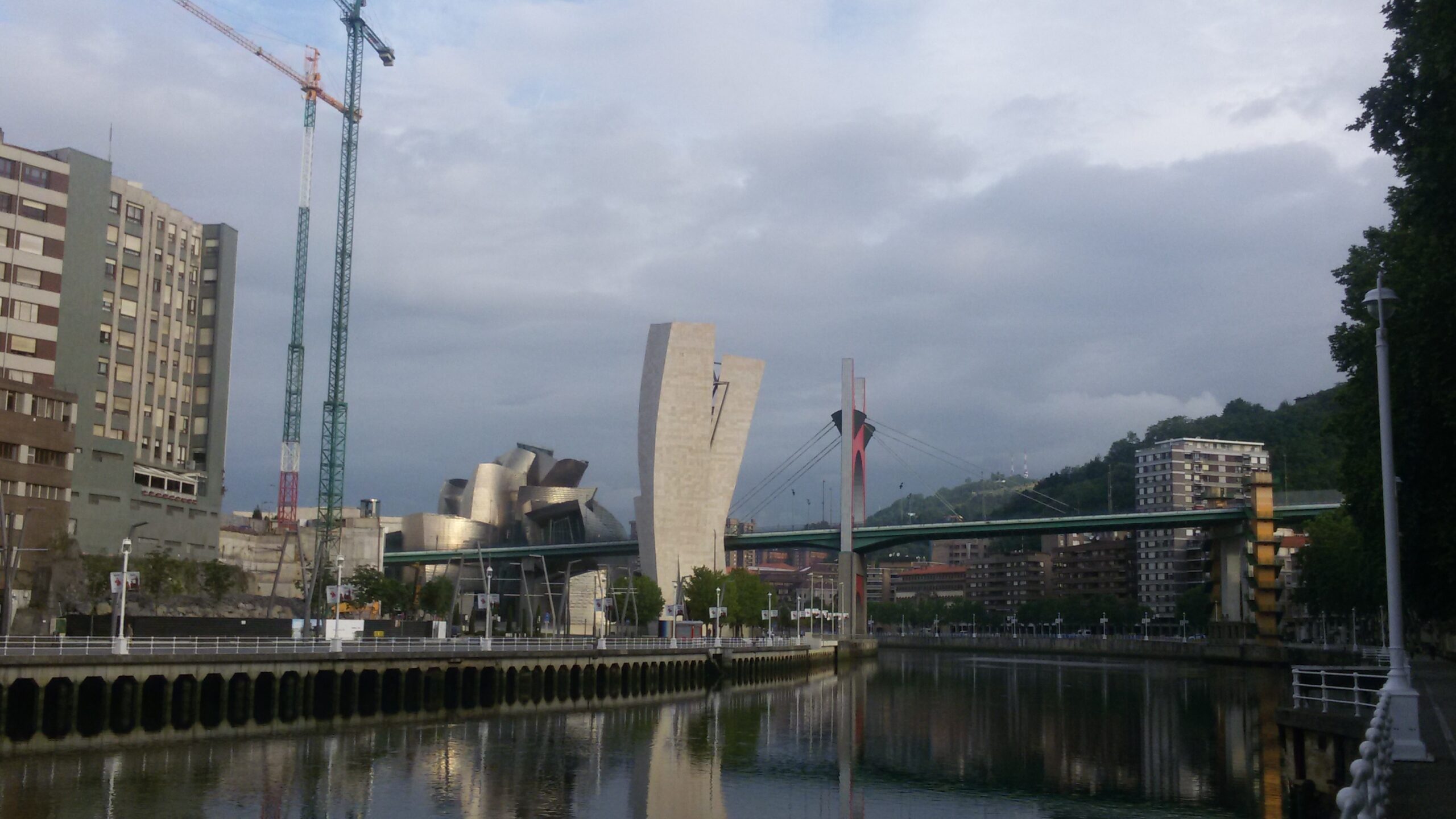
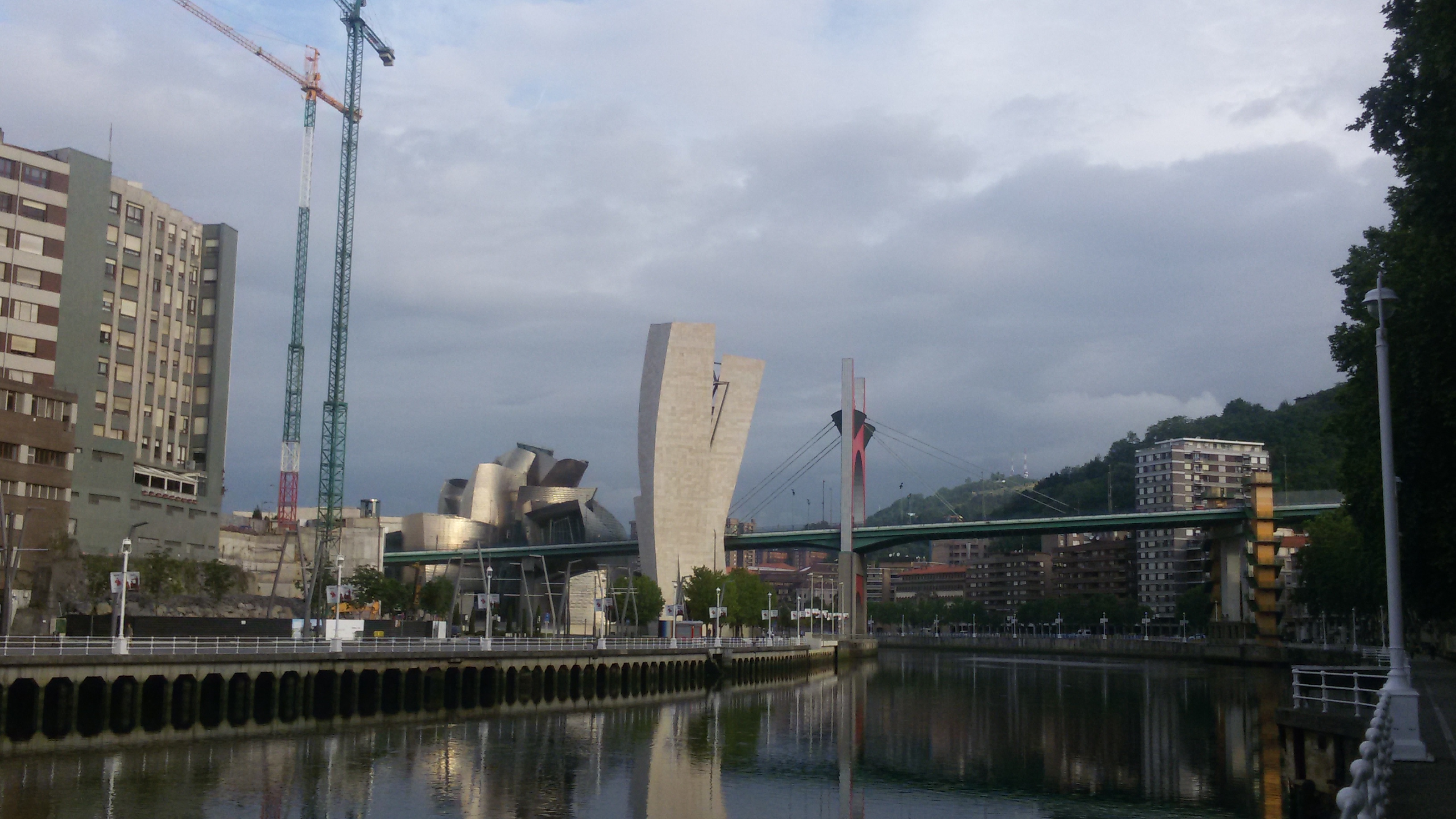
    What does it mean to walk a centuries-old trail alongside a six-lane highway? Beside a railroad track? Through a buzzing city like Bilbao?

    How does the addition of asphalt, smartphones, gortex and wifi change the experience? Enhance it? Devalue it?

    If you change everything—the trappings, the clothing, often the landscape, the food, the language, the Road itself—but keep the journey, is it still the same Camino?

    I’m inclined to say yes—in spirit.

    If you take a human body, give it artificial limbs, blood transfusions, organ transplants—replace everything, say—do you still have the same person?

    Your answer may depend on whether or not you believe in a consciousness, a soul, a Self (call it what you will) that is greater than the sum of all its parts.

    If you change every piece of the Camino, from the culture around it and the people walking it to the very structure and environment of the journey, what remains the same?

    In my opinion, it is the spirit of the journey. It is the seeking, the act of walking, that has somehow drawn us across history to follow the same path.

    And you can lament the omnipresence of wifi or cell service, you can dismiss the validity of smartphone navigation, you can wax poetic about the good old days when pilgrims carried nothing but a skein of water and the cloaks on their backs…but to what end?

    This is our world.

    There is asphalt that wears down our joints. There are trains that travel many times faster than our feet. There is social media and multiculturalism and sturdy trekking gear.

    One thing has not changed.

    Us.

    We still walk on two feet (when we choose).

    We still require food and water to survive—for now.

    We still seek—relentlessly—to create meaning in our lives.

    That is why, I believe, an ancient rite like the Camino de Santiago still makes sense. In spite of this modern world and modern landscape. Maybe because of it.

    It is not just possible, but perhaps necessary to walk the same paths we have walked for centuries. Maybe that connection is the ritual we’re seeking.<

    What do you think?

  • Did You Find What You Were Looking For? (Camino Reflections, Part 10000)


    My last visit to London, in July of this year, I had dinner with a former classmate. We had taken “Intro to Buddhism” together.
    I didn’t know it then, in my first semester at Middlebury College, but many themes from that course would wind their way through the following years of my life.
    Over our glasses of red wine—Merlot, I think—I recounted a memory of that class that stands out from the rest. It’s funny, sometimes, what ends up sticking in our minds.
    Someone had asked our professor if he wanted to reach enlightenment—if that’s what he was seeking.
    He had answered softly (he always spoke softly):

    “I’m not so interested in enlightenment. I’m interested in the possibility of expanding my awareness.”

    Maybe this is unhelpful, and maybe I’ve spent too much time around Buddhist philosophy, but this is what I have to say in answer to that oft-repeated question, “Did you find what you were looking for.”

    No.

    Longer answer: 

    I wasn’t looking for anything, so I doubt I would find it. That’s the difference between a trip and a journey—only one has a destination.
    I found no thing on my Camino journey. Nothing. I did not have any epiphany. My life did not change.
    If you set out walking (meditating, praying, anything) in search of enlightenment, I think you will be disappointed.
    And that’s not depressing; it’s inspiring. It is exhilarating, this not knowing. It is enthralling, this seeking-but-not-finding. It is magnetic, this grey in-between-ness of no-thing—neither empty of wisdom nor full of answers.
    If “no” is not a satisfying response, I’m sorry, but it’s the only one I’ll give—at least for now.
    No, I did not find what I was looking for.
    I wasn’t looking for, you see.
    Something on the same subject I wrote about halfway through the Camino, in a moment of clarity:

    “Will I come back wiser?” asked my ego. 

    I don’t know, my more honest self replied. I think I’d be the last to know.Do any of us come back “wiser” from anything? 

    I have my doubts. 

    I will come back with bigger calves from walking and stronger shoulders from carrying my pack. 

    This is certain. 

    I will carry in my heart thirty peaceful mornings where dawn breaks over still meadows, and the wind whispers a song only I can hear. 

    This is certain.

    I’m not interested in finding. The beauty is in the in-between.

    ***
  • Pilgrimage Today—It’s Still Relevant

    Pilgrimage Museum, Santiago de Compostela, Galicia, Spain

    I placed the noise canceling headphones over my ears, and an ancient melody flowed straight to my soul.
    It was my foodsteps—hundreds, thousands of them—plucked from a harp. It was the daily rhythm of walking made song.
    I stood at that display in the Pilgrimage Museum for a long time, and I listened to some of the recordings of the Resonet Musica Antiga group more than once. Recreated from sheets music in the Cathedral’s archives and reconstructed medieval instruments, the music might have run through my head at a distance.
    But somehow it didn’t. Somehow it connected.
    I arrived in Santiago on Friday, July 1, 2016. That Friday marked the culmination of a month of walking across Northern Spain (approximately 800 kilometers) begun in the vague interest of “seeking.”
    (We can talk about what I “found” once I figure that out—story for another day.)
    Pilgrimage is an ancient phenomenon. Historians have found evidence of its occurrence in Mesopotamia, Vedic India and ancient Egypt. Wherever it appears in human history, it follows the same principle: an outward, often arduous journey serving as an allegory for the spiritual path.
    Since the alleged discovery of the remains of Saint James (one of the Twelve Apostles) in the ninth century, Santiago—and its cathedral—has been one of the most important pilgrimage sites in the world. It is said that the Camino de Santiago—the Way to Santiago, and there are many—is a metaphor for the trail marked by the Milky Way across the sky. Again, a physical manifestation of a metaphysical path.
    That sounds heady and outmoded, right?
    Wrong.
    In the last decade, traffic on the Camino Frances (the most popular route) has surged into the thousands. Clearly, the ancient tradition still resonates. And lately, its popularity is growing fast.
    Just as ritual will always revive itself and traditions will be reborn, pilgrimage is finding its place in the modern world.
    The scallop shell, long worn as an insignia by peregrinos walking to Santiago, now hangs from my backpack, too. Symbol of water, life and healing, it is as timeless, endlessly resonant, as it is timeworn.
    These themes are eternal:

    WanderingSeekingThe JourneyWalkingLooking to the SkyWalking upon the Earth
    Questioning 

    The WarriorThe SeekerThe Scholar [1]

    As I listened to those modern recordings of centuries-old music, I heard my experience translated—so precisely—into sound. I walked a path that thousands, perhaps millions, had walked before me, and though the asphalt beneath my feet and electric lights in the distance were new, the the experience had somehow been the same. [2]

    That, in short, is why pilgrimage is still deeply relevant today.

    ***

    [1] The Warrior, The Seeker and The Scholar are the three archetypes represented by Saint James.
    [2] Sadly I have not been able to find the same recordings anywhere online. This is the closest I could find, but you may have to visit the Pilgrimage Museum in Santiago to hear the music I’ve described:
    Youtube video
    ***

  • The Modern-Day Renunciate

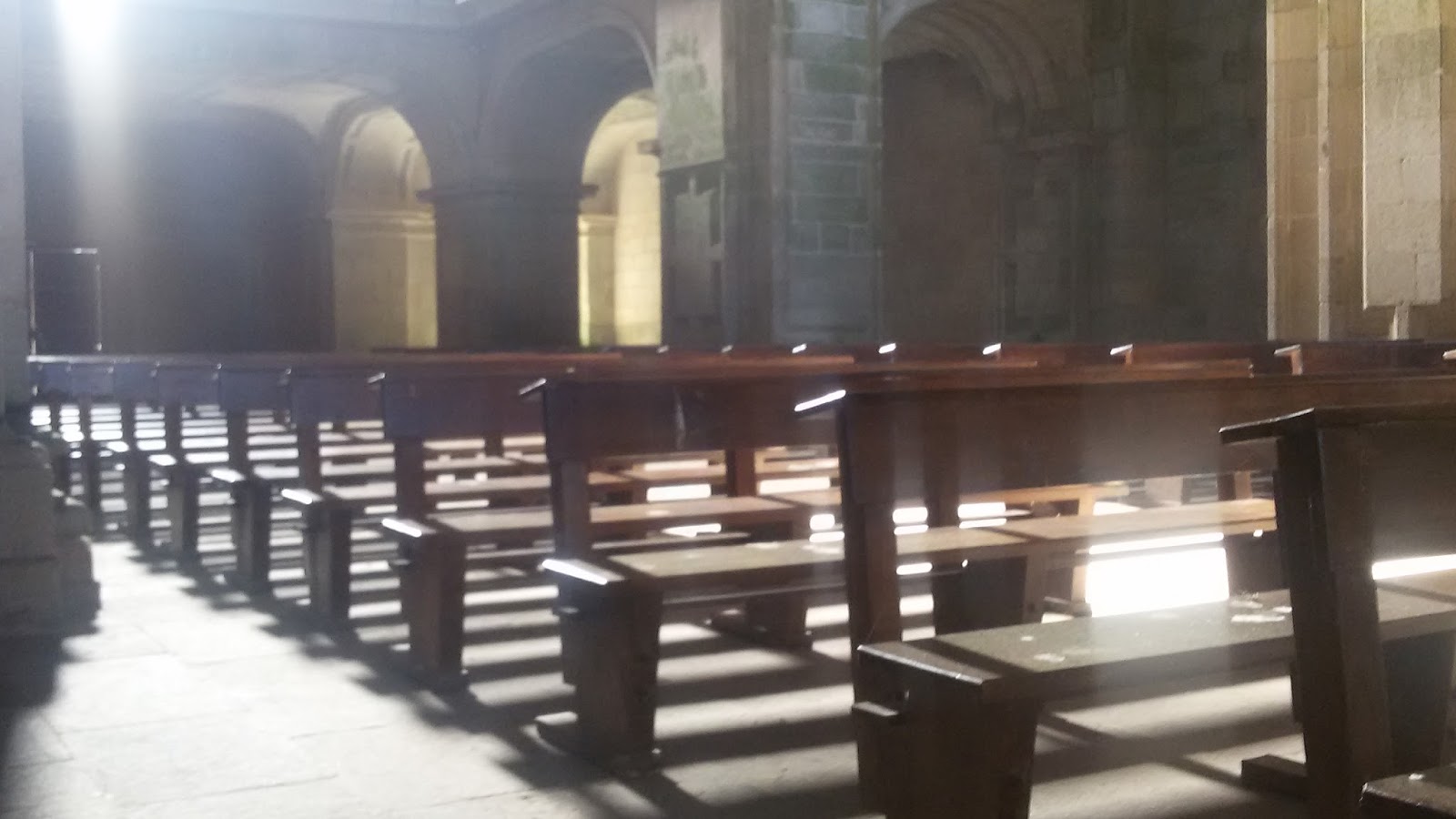
    Sobrado de Monxes Cathedral, Galicia, Spain.
    He asked if there was water nearby.
    The two dogs, attached to his belt by lengths of thick rope, were thirsty.
    We were about sixty kilometers (or several days) outside of Santiago when we met him. I regret that we didn’t get a chance to ask his name.
    He carried a huge walking stick, clearly decorated and carved by him, and an unraveling straw hat with a green band around it advertising for Amstel. He carried fishing gear, slept in a tent with his dogs and was running out of money. He had lost his passport one night in a flash flood, given away his watch. His hair and beard were unkempt and reddish brown. His eyes, wide, never quite focused on ours.
    In a thick, thick accent, he briefly told us his story.
    He had been a farmer in the Czech Republic. In December of 2015, the bank took his farm and everything he owned. So, he left with his dog and started walking. The second dog they found drowning in a river one night—still a puppy, it had huge paws, sure to be a big dog.
    When he reached Santiago via the Camino Frances (the most popular route, a bit farther south), he turned around and started walking the other direction along the Camino Norte (the Northern Way, where we met him). After telling us about the dog, the money, the passport and the watch, he concluded:

    “So probably I will spend my life walking. Just me, the dogs. I speak Spanish, so when I run out of money maybe I will find work somewhere, for a while. I think it is a good way to live, just to walk.”

    I think I can empathize. If I lost everything like that, I would probably lose any faith I had in property, money, things. I would probably—maybe—start walking and settle into a state of non-owning, non-needing, non-grasping, too.
    On the Camino, you run into a few of these modern-day renunciates.
    They’re not out for a month-long holiday, or even a six-month sabbatical. They’ve dropped—or lost—everything, and they’re walking, not for pilgrimage, not for a temporary detox, but for life. 

    I admire them, just as I admire anyone with a single-minded passion so single-minded that it borders on pathological. I think I understand the impulse, though I can’t imagine ever committing my life to just one activity. Different strokes, is all.
    More than anything, I’m fascinated by what appears to me to be a growing global trend, as the “real world” becomes harder and harder to stomach, of starting walking (or traveling, or what have you) and never stopping.
    Society has always had its renunciates. Those who live outside the bounds of normalcy—normal time, normal family, normal work, normal life—and follow another Way. I suppose the only difference is that our modern world doesn’t know as well what to do with them. It demands passports. It requires that we identify our place, our role, our function. It is, quite frankly, nonplussed by this growing race of outsiders. And yet, they are growing. 
    If you ask me, there will always be renunciates—those who chose not to participate in the world offered to them. And if you ask me, it’s not a problem; rather, it is for the rest of us to accept and allow their presence, walking the narrow paths between the borders of society.
    We told the former Czech farmer that there was a small shop in a house in the next town, just a kilometer farther along. He woke the dogs from their nap on the sidewalk, and we set off in opposite directions.

    Without a doubt, he is still walking.
    ***

  • Welcome to the World: First Post-Camino Reflections and Impressions.

    Sunrise over Bolibar, Basque Country, after an accidental four a.m. start time.
    High heels tap-tapping on the pavement. SALE signs in every storefront. The familiar turning on sound of my shiny laptop that I haven’t heard in a month. 
    Not one single “hola, peregrina!”* as I pass crowds of strangers in the streets.
    Walking through central London is quite the “welcome” to the world. But arriving in London town on this beautiful July day, that’s just what I’ve done, scallop shell hanging from my backpack, dusty shoes on my feet and cool breeze on my face.
    While many reflections are sure to follow, here are the first thoughts I’ve had since officially “returning” from my journey:

    I’m damn proud of what I’ve just done.
    Estimates vary from 795 to 863 kilometers (San Sebastian to Santiago de Compostela), but whichever way you hang it, that’s a long walk. I’m proud of these legs that have put up with unplanned 35-kilometer days, these feet that have weathered blisters and mysterious swelling without (much) complaint, this brain that has learned passable Spanish in four weeks. While part of me was underwhelmed by my accomplishment and tempted to understate it, another part of me felt like turning around in the street and shouting, “Look what I did!”
    I really want others to know that they can do it too.
    Over the past month, I have heard of or personally encountered pilgrims on horseback, bicycle (“bicigrinos”) and wheelchairs; overweight men, non-athletic girls and heavy smokers; young children, women in their seventies and everything—everything—in between. Think you can’t do the Camino? I think you can.
    Being a pilgrim is a privileged way to experience another place—maybe the most privileged.
    Never have I been so utterly accepted in my travels, nor my purpose and my role so completely understood. As a pilgrim (as opposed to a traveler/tourist/visiter/all the other things I have been), I found local people exceptionally welcoming, caring, understanding and accommodating. The people of Northern Spain have happily put up with my (and thousands of other pilgrims’) poor language skills, smelly clothes, abysmal navigation and overall cluelessness as we passed through their homes. It was a privilege to be received so kindly.
    I’ll miss it.
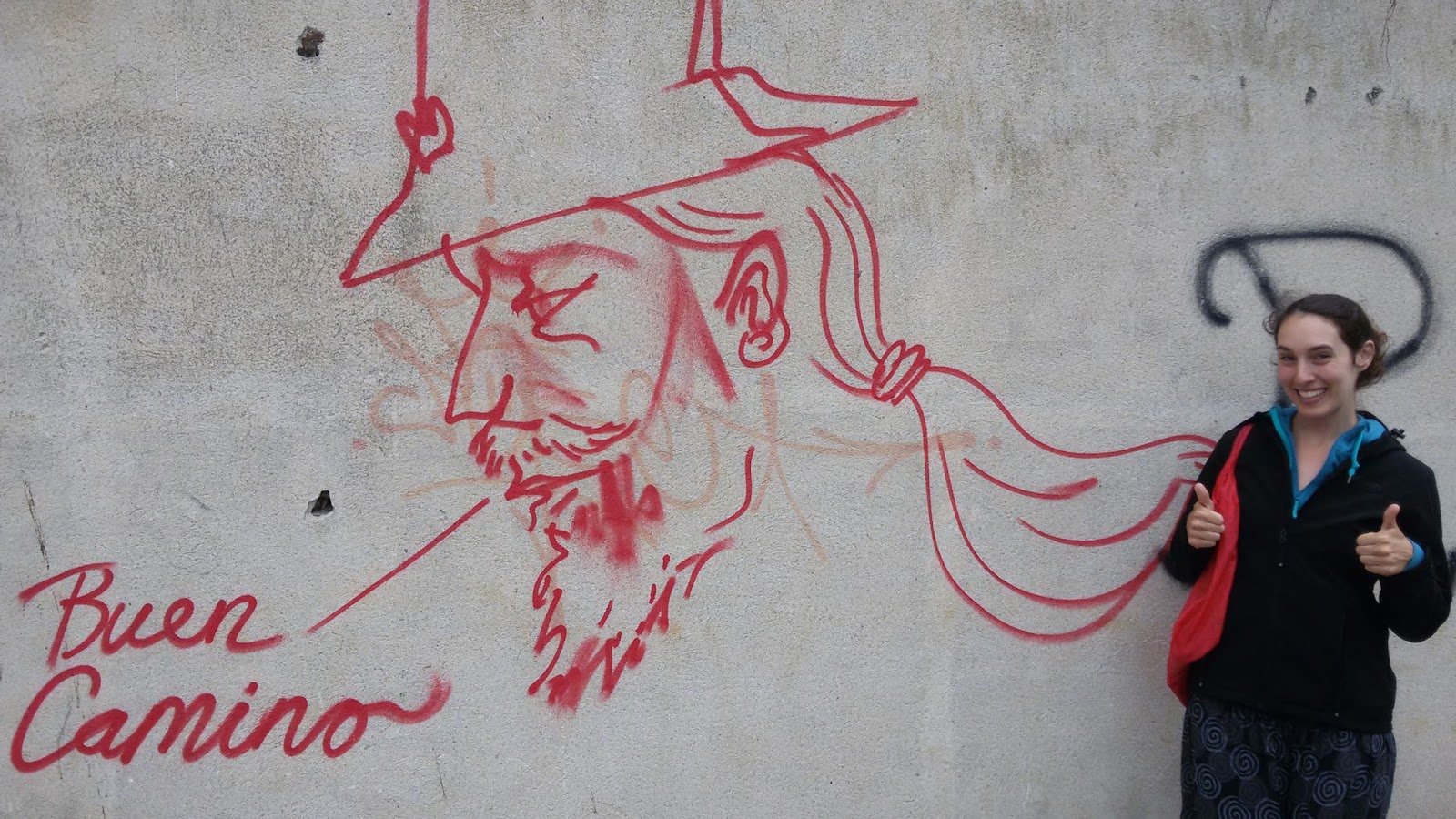
    Backpack, staff, sturdy shoes and scallop shell. The trappings of the modern day pilgrim are different from those of our predecessors, but nonetheless unmistakeable. On a daily basis I received unsolicited directions and support from passerby. From farmers in their fields, cyclists whizzing by and cars on the road, shouts of “Hola, peregrina!” and “Buen Camino!” were common and comforting. To be so firmly rooted in a fixed purpose, and to have that role understood and supported by the community, infrastructure and even landscape around you is a rare gift. Though difficult to describe, pilgrimage as a state of being was an unparalleled experience, and I will miss it.
    I definitely don’t know what I’ve learned yet.
    Deep thoughts? Rare. More common: “My feet hurt.” “I’m hungry.” “Why is the sky still spitting at me?” “Ooohhh, that’s a pretty mountain.” “Cows are funny.” “Goats are funny.” “Hehe, sheep are really, really funny.” “Ooohhh, pretty horses.” “Hmm, my feet still hurt.”
    You get the idea. Even more common: “…  …  …” Clear mind. That was the best part. So, I don’t know yet what the big lessons were—but I’m sure they’re in there.
    But everything was perfect and exactly how it needed to be.
    There’s no “right” way to do the Camino. Everyone will walk at different paces, stop different places and learn different lessons. And that’s exactly as it should be. I’m still entirely in the processing phase of my return, but I know one thing for certain about my journey: It was perfect.


    *Peregrino(a) is the Spanish word for “pilgrim.”
    ***

    Some bonus awesomeness: Check out my friend and fellow pilgrim, Margaret’s inspiring campaign, WALKING FOR WOMEN WITH BREAST CANCER IN TIMOR-LESTE – HALIKU.

    ***

    I expect to be writing a fair bit in the coming weeks and months about the Camino, so if there’s anything in particular you want to hear about, please let me know!

  • Journeys All The Way Down

    Goes into the post office to mail home some books… 30 minutes and 90 stamps later ^^

    Once, a great guru came to a small village. 

    He gave a long speech and held forth on many subjects, and he claimed that the world rested on the back of four elephants. These, in turn, stood on the back of a turtle.

    After the wise man had finished talking, an old woman came to ask him a question.

    “Guru-ji,” she said, “You say the world is held by four elephants, which in turn are standing on the back of a turtle. But I want to know, what is the turtle standing on?”

    The man’s eyes sparkled as he answered, “Why, it’s standing on the back of another turtle.”

    “But what is that turtle standing on?” asked the old woman. 

    He smiled and said, “Madam, it’s turtles all the way down.”

    The above is an amalgamation of a dozen versions of one of my favorite philosophical tales (variously attributed to Eastern and Western lore). It comes to mind today as I slowly, dare I say reluctantly, pack my things and prepare to leave Cape Town.
    Why, I’m not exactly sure, but I think its suggestion of infinite yet symmetrical unknowns appeals to me in this moment of transition.
    As I clear out the fridge, eating my last grapefruit, savor my last coffee at my favorite cafe, enjoy a last (unseasonably hot) afternoon at Clifton Beach and write a “last blog post” before shipping off to my next destination, I seek a clever way to avoid the “lasts” altogether.
    An enigmatic symmetry and circularity have entered into my travels lately. Returns and revisits abound, and endings, more often than not, prove to be intermissions.
    And so as I peer into the infinite unknowns ahead, I suspect there is more circularity in my future. Journeys bending and spiraling in on themselves in unexpected ways.
    After my last coffee, I go to the post office to mail home a few notebooks’ worth of extra weight. Thirty minutes later, I leave behind a medium-sized envelope impressively plastered with 90 stamps.
    The scenario is comical and exaggerated; together, the post office teller and I systematically paste rows of stamps onto the package.
    I’m reminded of other boxes and envelopes I have shipped from other locations—usually filled with items whose monetary value falls far short of the cost of shipping. (Of course, you can’t put a price on memories.) Often accompanied by absurd postage situations.
    Circularity and symmetry.
    No “lasts” in sight.
    If I were to ask a wise man to surmise my future, I think I could guess at the conversation:

    “What comes after today?” 

    “It’s another journey ahead for you, of course.”

    “And what comes after that journey?”

    “Why Madam, it’s journeys all the way down.”


    Journeys all the way down…

    ***
  • Minibus Freedom: On Risk and Reward

    Stand-Up Paddleboarding (well, kneel-up paddleboarding) in Smitswinkel Bay.

    “Better the devil you know than the devil you don’t…”
    The sun beats down on my left arm, and the wind blows strong from the sea. I watch waves break and sparkle offshore as my minibus taxi races down the coastal road from Hout Bay to Cape Town.
    The views are magnificent. Breathtaking. Spectacular.
    Although, my fellow passengers seem desensitized to the sight, for which we pay 12 rand ($0.75) each.
    South African music blasts from the speakers, a mix of African polyrhythmic beats, electronic pulse and gospel-like vocals. The driver skips tracks on the mix CD—yup, mix CD—as he holds a cell phone in the other hand, seemingly impervious to the perils of this endeavor.
    These minibus taxis—cheaper and faster than a regular bus, and far cheaper than a cab—evoke a sense of freedom that their more staid (and safer) counterparts do not. Diverse rhythms, accents and languages swirling in my ear, unfettered ocean wind in my hair, shimmer of merciless heat in the air, my senses tingle, come alive to welcome the spectrum of experience on offer.
    It is more than physical freedom, though that is part of it. (By now I know the fastest, car-less route to just about anywhere I want to go in Cape Town.) It is more than the speed and ease of movement, more than the volume of wind and music, and more than the independence of needing to rely on no one to go wherever I please.
    No, if I am honest with myself—and you—there is another kind of freedom epitomized by these minibus journeys, which eclipses all the others.
    It is the freedom of choosing my own risks.

    Cape Town has huge populations of great white sharks in its waters, but that doesn’t
    stop dozens of surfers, paddleboarders and swimmers from getting out there every day.
    I’m not talking about risk-seeking behavior here. Rather, I believe most of us take most of our risks unconsciously. We drive our cars, smoke our cigarettes, drink our six packs of beer, eat our pesticide-laden food—that is, dance with our proverbial devils—all the while pretending, or perhaps believing, that our existence is safe. Secure. Unthreatened.
    I have written about this before, but maybe never so explicitly.
    I believe it is because we tend to ignore risk (or rather, complacently engage in it) where it is an accepted norm, that consciously, actively choosing our risks can inspire such a deep sense of freedom.
    People ask me, how can you hitchhike, take the minibus taxis, travel alone, go out alone, [fill-in-the-blank] as a woman, a foreigner, a young person, a small person? Aren’t you scared?
    Aren’t you scared when you cross the street, go to the mall, eat your food, send your children anywhere alone, smoke your cigarette, drive your car? How can you be a human being in this world—frail, feeble, mortal, vulnerable—day after day after day?
    That is, essentially, the question you are asking me.
    Better the devil we know. Better the risk we acknowledge.
    There is risk everywhere. We are never safe. We are weak, mortal, vulnerable to the vagaries of the world every day of our lives.
    Yet, we cross the street. We live anyway.
    I know the risks I take, and I choose them willingly, because the benefits (ah, the benefits, story for another time) far outweight them.
    The other side of the street; the end of the dance; the other side of risk?
    It’s worth it.
    On one level, my choices bring me joy, full-bodied experience, and inspiration

    But if you wanted to get philosophical about it, each time I choose my own risks, I also acknowledge and make peace with my own mortality—and that is a powerful freedom, indeed.

    Smitswinkel Bay.

    ***


  • The Bittersweet Beauty of Goodbye

    If I sift through the shadowy pathways of my memory, I will touch a hundred moments of parting and a thousand words of farewell in an instant.
    A woman stands on a provincial train station platform with her son, waving goodbye, goodbye, goodbye as my train pulls away.

    A friend hugs me in the pre-dawn shadows of an empty parking lot, then stands aside as my bus coughs to life and I step inside.

    An open window lets in dust and exhaust fumes and the last echoes of Good luck!

    The sterile lights of an airport terminal look on as I hug loved ones goodbye; they stay to watch as I pass through security and disappear.

    A last smile at the threshold before the house, car, bus, taxi, train door closes. A last wave. A last glance.
    These memories are steeped in the mixed emotions that partings will inevitably evoke—the fragrant cinnamon of nostalgia, and the piquant tingle of anticipation; the bitter smoke of an ending, and the sweet pine needle smell of journeys beginning.
    When we travel often, some things become easier with practice.
    We learn to sit with discomfort, be it overpacked buses, insufficient legroom, long flights, missed meals or interminable waiting—for delays, friends, food and horizontal sleep. And we come to accept a certain level of stress, uncertainty, insecurity—all fundamental tenets of life on the road—as the norm.
    We learn the language of timetables and airport terminals, maps and foreign street signs, and perhaps we come to navigate these worlds with a degree of ease. We find ourselves at home in a sea of strangers, untroubled by change—exhilarated, even.
    And finally, we become accustomed to goodbyes (comfortable may be too strong a word). Without a doubt we come to realize the ineptitude of words—the insufficiency of phrases like, I’ll miss you, See you soon, Good luck with everything, or even the more sardonic, Have a great life and, See you when I see you—to serve in these situations.
    We become accustomed to goodbyes, yet there is no art to them, or none that I have found. No failsafe formula. No skillful lyricism to master.
    Each one is unique in its blend of sadness, resignation, looking forward and looking behind.
    Each one is, in its singular fashion, beautiful. 
    Or, this is what I am beginning to believe. For, more than cinnamon nostalgia or pine needle anticipation, a goodbye is steeped in love. Platonic, familial, romantic, age-old or brand new, this  is love surrendered to the utter unknowability of what lies beyond this moment.
    If that love, tempered by the bittersweet awareness of impermanence, is not beautiful, then I don’t know what is.

    And so, as I say See you soon, Good luck, I’ll miss you, and Goodbye to friends and loved ones in the U.S. and turn toward the next leg of my journey, I hold onto that beauty, and my smile smells like cinnamon and pine needles, chili and smoke.

    ***