Month: October 2016

  • It’s. A. Trap! (Fair Doesn’t Always Mean Equal)

    It’s. A. Trap! (Fair Doesn’t Always Mean Equal)

    Ourika Valley, near Marrakech, Morocco

    “Very good price. Very low. Better than free.”

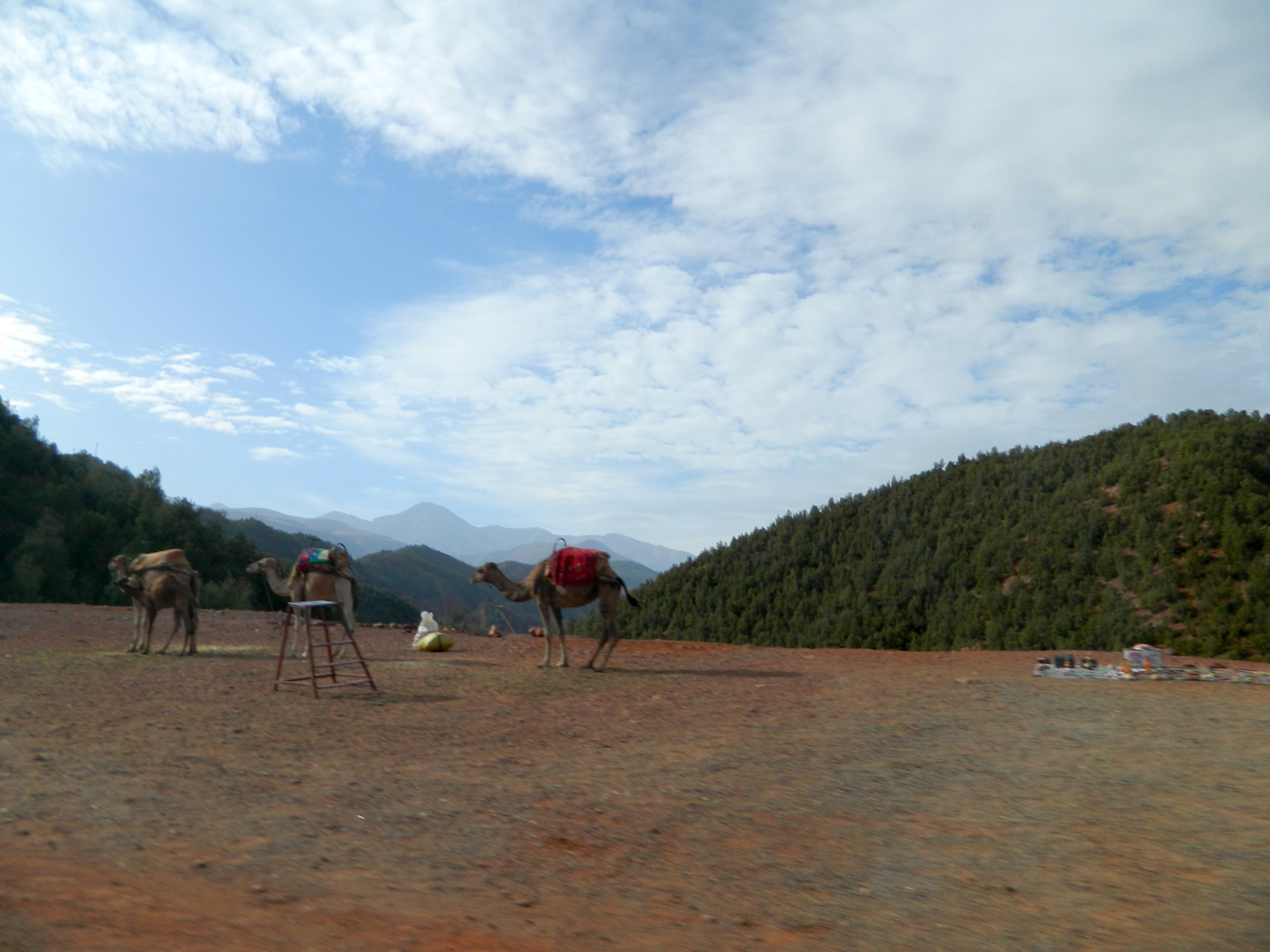
    We’re standing outside the van on the road to Ourika Valley, a verdant, majority-Berber region about two hours from Marrakech, popular with tourists for its many waterfalls.

    A half-dozen camels on short tethers wait for curious tourists to approach. It’s well past 11 o’clock, but the sun is just making it over the mountains to warm the deep valley.

    The man speaking proffers a tangle of necklaces. Plastic. The artisanal products are waiting in well-planned shops, with tougher hagglers behind the counter. My companions for the day, a French couple from outside of Paris, laugh and tell him that’s a good marketing plan.

    In a way it is, but then…maybe not.

    You see, I don’t want anything for free (unless it’s a sincere gift). I don’t want the cheapest price (anymore). I want a fair price.

    And that’s a very different thing.

    Ostensibly we’ve stopped for photos, but the view was around the last bend, and we’re really here to have time to spend money. We’ll stop at three more tourist establishments (some would call them traps, but I won’t today and I’ll explain why soon) before actually reaching our intended destination.

    > The Argan Oil Cooperative. Smiling women sit outside the building grinding argan nuts into a paste, which will later be separated into cosmetic oil and the base ingredient for savon noir (black soap). They beckon us to sit beside them. Ashkid, ashkid. (Come, come.) You can take pictures, we’re told. No problem. There’s a dish in front of the women with a few dirham notes in it. We can leave money there.

    > The Berber House. A traditional Berber house, which I might have found more exciting had I not spent a great deal of the last five weeks visiting my Berber friends in their (yes) Berber Houses. We’re shown the kitchen, the store room, the family room, the hamam (bath) and the backyard. You can take pictures. No problem. On the way out, there’s a well-placed souvenir shop and a donation box for the welcoming Berber House family.

    > The Guide. We stop in the village near the waterfalls to pick up the guide. We haven’t asked for the guide, but the guide is going to come with us. He accompanies our small group halfway up the trail, to the first set of falls, and then tells us it’s time to turn back. When we insist on continuing, and he insists on not going back without us, I convince him to wait at the halfway-up cafe while we finish the hike.

    Now, I don’t like being forced to pay for things I didn’t ask for or want in the first place. I also don’t like not paying someone for work completed or services rendered. I don’t like feeling cheated out of my money. And I don’t like feeling I’ve cheated someone out of their fairly-earned money.

    Most people in the world would probably agree with those sentiments.

    I think all of these scenarios and concerns come down to the same fundamental issue: fairness. Fairness to local people working in the tourism sector, and fairness to tourists seeking to spend their money well (ethically, reasonably and in a way that feels good to them).

    So, what’s fair?

    I’m going to seriously oversimplify for a moment. The tourist-local marketplace dynamic—as I see it—breaks down like this:

    Tourists don’t want to feel ripped off or trapped. (That’s a low bar.) These things are traps: Telling someone to take a picture (no problem, pictures are free!), and then asking them to pay for it. Insisting someone take a bracelet as a gift—and then insisting they pay for it. Following someone through the souk, though they have clearly stated they do not want a guide—and then asking them to pay for it. (These are all common experiences for unsuspecting foreigners in Morocco.)

    Tourists do want to feel like they’re getting a good deal. Sure, some are pinching pennies, but most just want fair. Many, like me, will feel frustrated when they know an item’s market price, and then are asked to pay four times that because said item has been handily transported into a souvenir shop. They don’t want to pay “tourist prices.”

    Local people want to make a decent living. They see foreign tourists and assume (reasonably) that if they had enough money to pay for a plane ticket to Morocco, they also have enough money to pay a few dollars above market price for a bottle of oil, silver necklace, taxi ride, and everything else. They might also encourage (or push) said tourists to spread their money evenly—a few gifts at the Argan Cooperative, a dollar to the Berber House, a tip to the guide. From this perspective, those tourist establishments mentioned above are not traps, but simply an integral component of the day’s adventure.

    Some believe that tourists should pay tourist prices, because they can. And hey, I get where they’re coming from.

    Naturally, I also get where tourists are coming from. I’ve been pondering this a lot lately, and I think the fair solution is neither “equal” (tourists often do earn significantly more than the locals they’re buying from, so why shouldn’t they pay more too?), nor excessive (no one likes traps and cheating). Rather, it’s somewhere in the middle, where everyone is happy—or at least not pissed off.

    So, when buying abroad, keep three questions in mind:

    1. How much is this worth to me? (How much do I want to spend on it? Keep in mind, for perspective, what you would spend at home.)

    2. What is the “market price”? (What would this cost a local?)

    3. What can I afford? (What’s my budget for this day? Week? Holiday? Will this meal/souvenir/excursion put me over?)

    The “fair” price exists somewhere at the nexus of those three answers.

    Happy shopping!

    *** 

    And to justify this blog title:

    Youtube video
     

  • Ah, The Life Of A Vagabond (Poetry)

    It’s rare that I share poetry here (if you want more of that, check out my column on elephant journal). But I would like to share this piece with you, as I think it gets at the heart of something bittersweet and utterly beautiful, which I and my vagabonding friends sometimes struggle to express.

    I hope it will speak to you.

    ***
    Ah, the life of a vagabond—
    We all say it with the same
    self-mocking irony
    and laughing-sad eyes.
    The same funny mix
    of melancholy
    and mad joy.
     
    Ah, the life of a vagabond—
    We choose to be the mad ones,
    don’t you think?
    Must keep choosing it,
    lest the madness
    Slip
    through our twirling hands
    and leave us with
    mundanity.
     
    So we love
    madly—
    and leave
    And dance
    wildly—
    and believe
    Seek ceaselessly—
    and receive,
    Maybe.
     
    Ah, the life of a vagabond—
    Do you ever wonder
    why we don’t
    just
    stay?
    I do, but then I remember
    we are all following the same
    piper,
    dancing a rhythm only some can hear—
    The call doesn’t stop,
    and neither
    can
    we.
     
    Ah, the life of a vagabond—
    Keep choosing it,
    lest the madness
    Slip
    out of reach
    like tears,
    lest passion
    settle back down
    to the silt
    at the depths of our eyes,
    lest love become
    a rarity.
     
    Ah, the life of a vagabond—
    They intone,
    and I echo their prayer.
    Call
    and response.
    A psalm
    for swirling, wandering
    souls,
    A litany so powerful
    we must believe it,
    An incantation writ on the horizon—
    we go to it dancing.
    we go to it dancing.
    ***
  • 6 Awesome-Sauce Pictures of Morocco (or, Why you Should Follow Me on Instagram)


    I haven’t been writing much the last couple weeks. I think sometimes, when it comes to writing about our experiences, there have to be periods of writing—and then periods of experiencing. So, let’s just say it’s been the latter, and I’ll get to the writing part again soon.

    In the meantime, did you know I’m on Instagram these days? I share snippets of writing or travelogue with nearly every post. Here are five reasons to follow me:

    *

    *

    *

    *

    ***

  • How to Pour Tea, It’s Out of our Hands, and Other Lessons from the Moroccan Coast

    View of Taghazout from one of my favorite cafes.

    We watch the waves crash against the cliffs beneath our table, the spray catching the sunlight over and over again.

    Our tea arrives—the classic combination of Moroccan mint and strong green that everyone drinks, but without the usual pound of sugar, per my request. A simple silver teapot with a long spout. Two small glasses (not mugs, but glasses).

    I lift the teapot and pour, starting low, then lifting higher, and higher, and a bit higher, steam rising up from the cascade of tea and a slight froth forming at the top of each glass.

    (If I wanted to mix in sugar, I would pour out glasses of tea and dump them back in the pot several times to avoid using a spoon—bad luck, I learned later. But I don’t, so I only pour once.)

    I can’t remember where I first learned to pour tea—properly. I think it was in a Senegalese village when I was 16. Everyone laughed at my first attempts, of course. Even today I spill more than any veteran tea pourer ever would. But I know the technique, and I can make a few bubbles.

    It’s a small thing, arguably, pouring tea well, and yet drinking tea proves such a fundamental aspect of so many cultures that I think it’s important, too. Worth learning. Worth sharing.

    ***

    Let’s drink tea together tomorrow!

    Inshallah.

    You should open a cafe there—you would get so much business!

    It’s a good idea. Inshallah.

    Are you moving this week?Inshallah.

    When does the high season start?

    Things will get busy next week—inshallah.

    Inshallah (also written insha’Allah). If God wills it. God willing. Used throughout the Arabic-speaking and Muslim world—and often. At times my plan-making mind gets irritated by the ceaseless string of Inshallahs spoken and exchanged each day.

    Is nothing certain?

    Well, no, it’s not—is it? To visitors from outside cultures, I think this nonstop Inshallah business can seem like a cop out. Noncommittal. But I suspect (I don’t know nearly enough to say for certain) that it stems more from a different perspective.

    Everything—everything—is out of our hands. Maybe. It’s probably a good brain exercise to consider the possibility, even if you disagree. Living here, then, is like a daily mind workout.

    ***

    Every day I learn here.

    I learned that until the 1950s there was a small Jewish settlement alongside the Berber ones in the mountains behind Taghazout. I visited a new friend’s home in those mountains, and I could feel the history in the ground under my feet.

    I learned that Friday is couscous day and that soup is a summer food.

    I learned that no length of fabric will cover my foreignness here—no matter how Mediterranean I like to think I look.

    I’ve learned that if you sit long enough in one spot it is really possible to see every person you know in this town, and that if you start walking you can spend a whole day just stopping in for chats with old and new friends.

    I’ve learned how to roll under a wave with my surfboard, and that lip sunburn is real.

    I’ve learned to count to ten (though I’ve forgotten at the moment), and how to greet.

    There’s no other message today. There are lessons everywhere, every day and in every culture; I hope you’ll go find some!

    ***

  • Taghazout, Morocco: 10 First Impressions in 10 lines

    First impressions aren’t everything, but they are something. After nine days in the small town of Taghazout, Morocco, I’d like to offer a (first) glimpse into my experience.

    When people greet, they touch their their heart after shaking hands. For some reason, it reminds me of my brother. I like it.
    The air is cool—cold even—after dark. Fog rolls in at dusk and wraps up the boys playing soccer on the beach, the tourists strolling to dinner, the shouts and drumbeats floating in the air.
    Blue tiles everywhere—in bits of mosaic, in staircases. Blue paint, too—on houses, on boats laid out in dozens on the shore.
    A population explosion of cats and dogs. The dogs follow me on my morning run, a pack at my heels—I just hope I’m the alpha. The cats seem determined to ruin my clothes—and my laptop.
    Narrow streets, all leading to the sea, all quite clean, except for that one path that smells like sewage.
    Where are the women?? I wonder. The cafes are full of men. The streets, too. And the beaches. The few women I do see don’t seem like they want to be my friends. The little girls, yes. (That’s true everywhere.)
    Tagine every day. Layers of chicken or fish, potatoes, carrots, spices, olives, citrus—slow-cooked until soft in a clay pot with a conical lid. Fragrant.
    I’m going to get good at surfing; I’m determined. For now, though, I’m focusing on wiping out. The water is muddied with sand most days. Photographs come out in gradations of blue-brown.

    There is no atm in this town. No bar (welcome to Morocco). Surf hotels, corner shops and small cafes abound, though. Everyone knows everyone, too—and that’s not just an impression, I think it’s really true!

    Every house has a terrace. Every terrace a view of the ocean. Every view meets the sound of waves crashing on shore, and I am content to sit and listen.

    ***