Category: Nomadism

  • Don’t Take My Word For It

    Don’t Take My Word For It

    Everything I have ever written, everything I will ever write, represents an infinitesimal slice (mine) of an infinitely complex whole.

    I may speak of the universality of experiences such as fear, joy, loss and love. And I do believe in the value of sharing knowledge. But still, someone else’s words will never be enough.

    A single truth only brings us so far.

    I can write that it is Saturday, that I am in Muizenberg, South Africa, that the sun is hot and high for so early in the day. And that is all true.

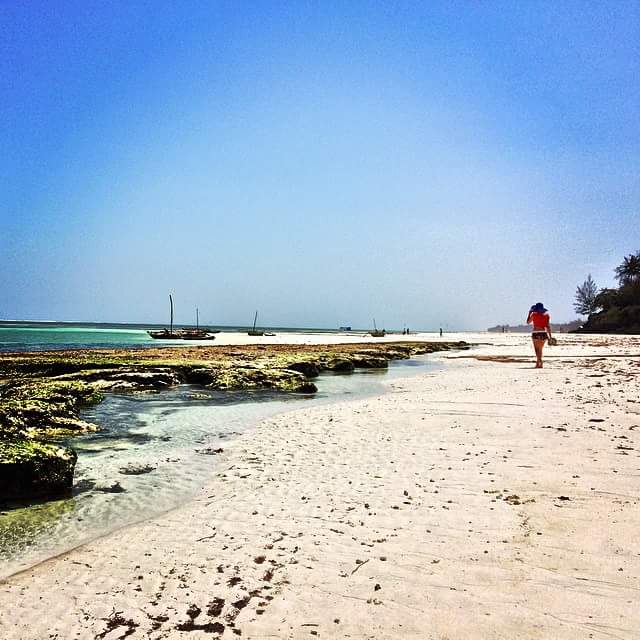
    I can write that I am sitting at one of the southernmost edges of the world watching the waves roll in against a backdrop of rocky peaks; that the wind and my hair and the sky taste of salt; that my shoulders ache from surfing; that seashells crunch under my feet as I walk. And that is all true.

    But this information is mine only. What of yours?

    The Buddha was fond of saying, “Don’t take my word for anything; go find out for yourself.” (I’m paraphrasing here.) In the Jewish tradition, debate and inquisitiveness are encouraged. We are not to simply take another’s words (or even doctrine) as truth, but rather—to fall back on a much-overused phrase—to discover our own.

    I believe much of the world’s wisdom boils down to this:

    Go and see.

    Today, I was going to write a snapshot of Muizenberg, a small coastal town just a thirty-minute train ride from Cape Town. But I changed my mind.

    You can Wikipedia that, and I think this is more important.

    “Go and see” does not necessarily mean, “Drop everything and go travel the world.” Although, if that is within your means and your calling, I certainly recommend it.

    “Go and see” means, “Experience the world—any world, your world—for yourself. Don’t just take my word for it.”

    Perhaps you won’t venture to the southernmost edge of the world, but touch the edge of something.

    Maybe you won’t be crossing international borders, but find a limit, a frontier, and surpass it.

    You may not “watch the sunset from every coast,” but you can watch the sunset every evening—and if it’s the watching that counts, then that’s kind of the same thing.

    There are many ways to seek, many ways to wander, many ways to cross borders; I share only mine. And while I hope you enjoy seeing a certain world through my particular gaze, I also hope you will go and see, because these words, these truths, are only the beginning.

  • The First Time: When the Travel Bug Bites

    The First Time: When the Travel Bug Bites

    Some people will reminisce—with nostalgia, regret, or a little bit of each—about their first cigarette, their first drink, or their first time trying X (fill in the blank with your substance of choice).

    Me?

    Alcohol was never a big deal in my family, and I’ve stayed away from cigarettes like my life depended on it (oh wait, it kind of does).

    That doesn’t mean, though, that I don’t have a “first” on which to reflects with the romantic fondness of well over a decade of distance.

    I’m talking about travel, of course.

    Several early family vacations could count as that first—London, Canada, Florida—but one in particular stands out in the box of mismatched, half-faded memories I carry: Italy.

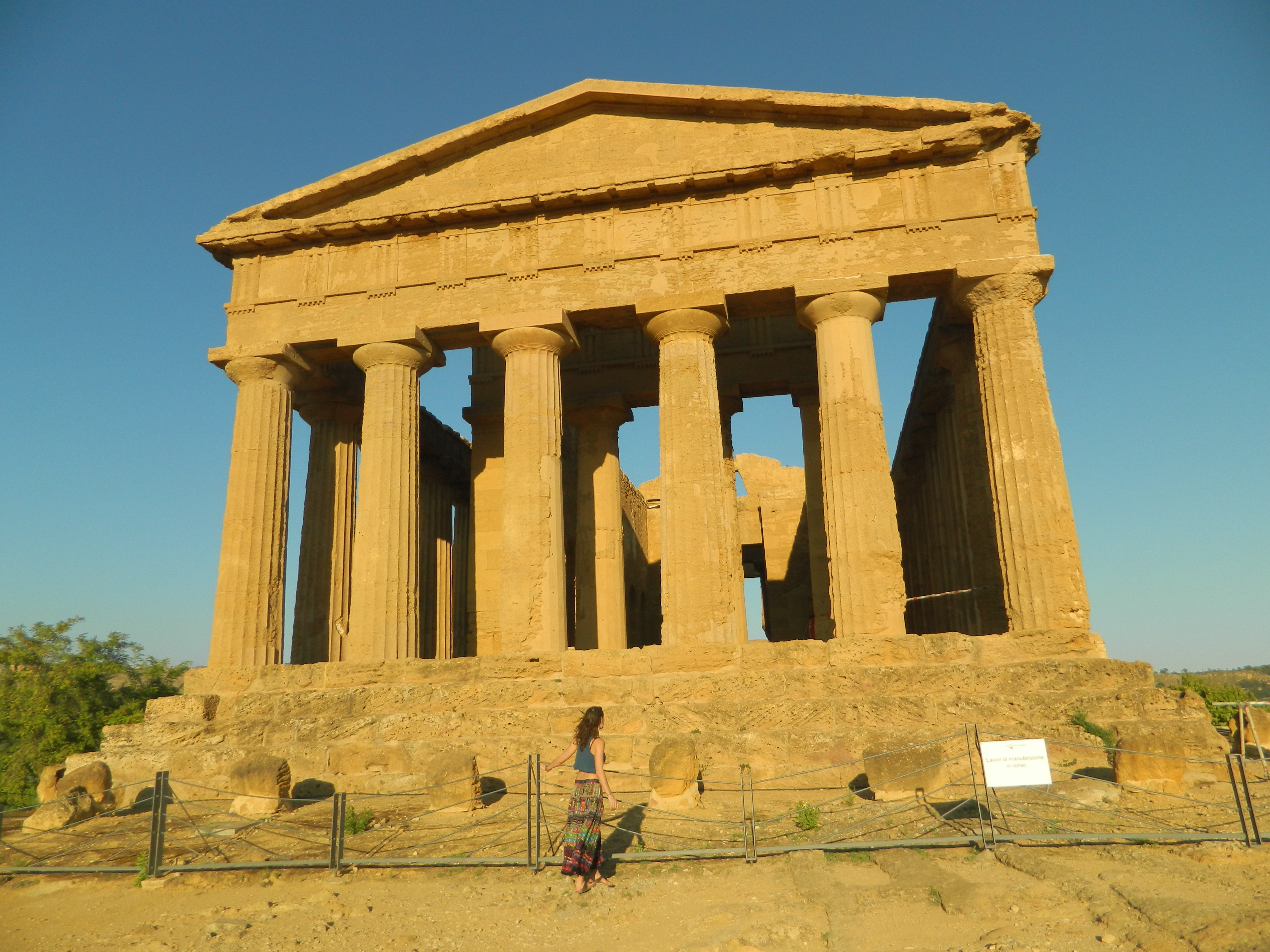
    Italy, first and most enduring love of my life… after horses. That first visit I only remember in glimpses: The heat (there was a record-breaking heatwave that summer). An old woman in a bead shop, and a strand of irregular, aquamarine beads (I would finally turn them into a necklace some fifteen years later). Crisp, white slices of coconut beneath a cascade of water glittering in the sun. Venice canals and dreams of carnevale (I have yet to visit at the right time). Cappuccinos for breakfast, and several subsequent bathroom breaks over the course of the morning. Fairytale mountain villages, and cities shimmering under summer sun.

    I have since been back to visit nearly a dozen times, learned the language, and made numerous friends across the country. I have bungee jumped in Piedmonte and reignited a passion for adventure in Sicily. I’ve indulged in pizza in Napoli, anchovies in Genoa, and fiori di zucca in Rome.

    Just thinking of it makes my mouth water and my palms tingle.

    Italy.

    But the dreamlike beauty of these childhood memories is about so much more than one country. It marks a beginning.

    I could trace my enthusiasm for the wonder of discovery to many moments—many trips:

    Dancing in a circle of women in rural Senegal at age sixteen.

    Wandering the streets of Spanish cities at Christmas-time with my peers, age fifteen.

    Age seventeen, arriving in Paris alone, and growing into a sense of adventure once too big for me.

    I could pick any of those or countless other journeys, but I choose to locate my travel awakening in that sweltering Italian summer many years prior. A seed already planted. A map already drawn across my future—big, swirling letters spelling, WANDER.

    And so I have. And so I do.

    The first time we meet ourselves is extraordinary indeed. Even if we’re too young to realize it. Even if we repeat the experience countless times thence. Even if we’re full of shit, and it wasn’t like that at all, and that dreamlike beauty is just the result of fifteen years’ obfuscation.

    So, I’m curious: what was your first time traveling like?

  • Familiar Things

    Familiar Things

    Sea Point, Cape Town, South Africa

    I’ve been in Cape Town for less than a week now (after nearly a year away), but it seems much longer. In a way, it feels like I never left.

    I’m living (per total coincidence) 15 minutes up the road in Sea Point from where I lived before; the mountains have not changed; I recognize the roads and know the bus routes; friends welcome me back.

    Here are a few of the sights, sounds and sensations that feel familiar, this time around:

    The knobby summit of Lion’s Head Mountain, which has never—not once—looked like a lion’s head to me. (more…)

  • On Leaving

    On Leaving

    London, England. Late November. 12:30 p.m.

    My backpack leans against the wall. My second suitcase stands next to it. The kitchen is clean, lights off, curtains drawn.

    I look around one last time, step into the hallway, and shut the door. I’ve left the keys—let’s hope I didn’t forget anything.

    I walk to the Tube (South Kensington) and board the Piccadilly train for Heathrow Airport. I sit down and close my eyes, but I don’t sleep. Instead, I run my thoughts over the past two weeks: the people I’ve met, the food I’ve cooked, the dances I’ve danced.
    (more…)

  • How to Pack One Bag for Life (What’s in my Backpack)

    It’s been two years that I’ve lived out of one bag.

    In two weeks I will take a second (small) suitcase with me to Cape Town, so I might as well write this while it’s still true.

    One of you lovely readers asked me what’s in my bag, and I’m glad you did, because packing lists are one of my favorite things to write. I’m serious. Growing up, I would start making my list weeks before family vacations; I started packing pretty far in advance, too. I’ve stopped making lists (but kept the habit of packing way too early), so this is a fun throwback.

    A few caveats:

    I chase the sun. If you expect your life to include winter, you’ll need more warm things.

    I have my hobbies, you have yours. Your “extras” will likely be completely different from mine.

    I leave things, give things away and pick things up near-continuously. It is useful to have friends and family, in whose basements, attics and closets you can leave things you don’t want to let go of but don’t want to carry with you (especially books). It is also useful to get used to giving away something old to make room for something new.

    I carry many extraneous items. I suggest it to you, too, even if it’s impractical. It’s the difference between going on vacation and carrying “home” with you.

    I will write this packing list like I write recipes—Italian style, not-too-specific, and with room for creative interpretation.

    I’ve split the following list into (I think) logical sections. I hope it may help someone pack for a nomadic existence, a long backpacking trip or an extended stint abroad. At the very least, I hope it will give you a glimpse into the very practical side of long-term vagabonding, and make you smile.

    One Bag for Life

    For when it gets chilly:

    • Bright blue wool socks for which your friends will mercilessly mock you
    • A shower-resistant outer shell (when it rains, you will wish it were rain-resistant too)
    • Bright blue fleece, because there’s no such thing as too much turquoise
    • Sturdy boots/shoes (right now I have trail shoes, but sometimes I opt for boots)
    • A sweater, preferably stolen from a friend

    For all the time:

    • 1 pair hiking pants
    • 1 pair yoga pants
    • 1 pair “Toby pants” (also known as harem pants by those who don’t know me)
    • 1 pair jeans/passably normal pants
    • X pairs socks and underwear (how many? it depends how often you want to do laundry…)
    • 5-6 shirts (some for hiking, some for exercise, and some for normal person-ing)
    • 1 bathing suit
    • Toiletries (pure argan, coconut or almond oil, natural bar soap, toothpaste, toothbrush, tea tree oil, natural deodorant, comb, nail clippers, lip balm, sunblock—yes, that’s it!)
    • First aid kit (which you will never use but carry around forever “just in case”)
    • Sunglasses and glasses
    • Passport, expired driver’s license, bank card, and other assorted bits of paper that sometimes come in handy
    • Birkenstock sandals
    • Reusable bags (for food-shopping, beach day-ing, or hanging on doorknobs to look at and wonder why you’re carrying so many extra bags)
    • Sarong, which serves equally well as scarf, towel and pillow cover

    Because I’m a woman who likes dresses:

    • 1 long skirt.
    • 2 dresses, neither of which are as practical as they should be, and one bright red

    Me-specific things (yours will be different):

    • Yoga mat (I’ve gone with Manduka’s travel mat—it doesn’t get any lighter, it also doesn’t get any less cushioned)
    • Climbing shoes
    • Dance shoes (the super lightweight practice kind—heels are heavy!)
    • Books (rotating; right now The Prophet by Kahlil Gibran, a book of Italian fairy tales by Carlo Collodi, and Bushido’s Way of the Warrior)
    • Notebooks and many, many pens (you will lend them to people and not get them back, so it’s good to have 5-10 on hand at any given time)
    • Laptop (for work; if you don’t work online, maybe skip the laptop—it’s a hassle)
    • Sleeping bag (and sometimes, but not right now, tent or camping hammock)

    Unnecessary but still important things:

    • A large quartz crystal
    • A large quantity of jewelry
    • A large camera
    • Smartphone (for staying up-to-date with loved ones and total strangers)
    • Gifts (for people in the next place you’re heading)
    • Oversized purple headphones
    • Smaller-sized purple headphones
    • Pretty scarves to put on top of ugly tables

    And just like every time I pack my bag, I feel like I’m forgetting something really, really important, but I haven’t left anything out, so that must be everything!

    The moral of this story? We actually can fit everything we need into one bag—for life, or at least for a few years. It’s probably going to be too heavy, and we’ll probably find ourselves missing variety (of shoes especially), but not nearly as often as we’d expect. We’ll get accustomed to accumulating more belongings when we pause for a while, and equally accustomed to shedding them when it’s time to move once again.

    The other moral: Good food is always money well spent. So are experiences. Our stomachs are like endlessly refillable backpacks, and our brains are like slightly leaky, endlessly expandable suitcases. Fill them.

    ***

  • Ah, The Life Of A Vagabond (Poetry)

    It’s rare that I share poetry here (if you want more of that, check out my column on elephant journal). But I would like to share this piece with you, as I think it gets at the heart of something bittersweet and utterly beautiful, which I and my vagabonding friends sometimes struggle to express.

    I hope it will speak to you.

    ***
    Ah, the life of a vagabond—
    We all say it with the same
    self-mocking irony
    and laughing-sad eyes.
    The same funny mix
    of melancholy
    and mad joy.
     
    Ah, the life of a vagabond—
    We choose to be the mad ones,
    don’t you think?
    Must keep choosing it,
    lest the madness
    Slip
    through our twirling hands
    and leave us with
    mundanity.
     
    So we love
    madly—
    and leave
    And dance
    wildly—
    and believe
    Seek ceaselessly—
    and receive,
    Maybe.
     
    Ah, the life of a vagabond—
    Do you ever wonder
    why we don’t
    just
    stay?
    I do, but then I remember
    we are all following the same
    piper,
    dancing a rhythm only some can hear—
    The call doesn’t stop,
    and neither
    can
    we.
     
    Ah, the life of a vagabond—
    Keep choosing it,
    lest the madness
    Slip
    out of reach
    like tears,
    lest passion
    settle back down
    to the silt
    at the depths of our eyes,
    lest love become
    a rarity.
     
    Ah, the life of a vagabond—
    They intone,
    and I echo their prayer.
    Call
    and response.
    A psalm
    for swirling, wandering
    souls,
    A litany so powerful
    we must believe it,
    An incantation writ on the horizon—
    we go to it dancing.
    we go to it dancing.
    ***
  • The Intoxicating Unknown, and Solitude

    The Intoxicating Unknown, and Solitude

    The plane lands with a jolt. Rolls to the gate. Shuts off the engines.

    You and the other passengers file off the aircraft. Through the terminal. Past immigration. Baggage Claim. Customs.

    You step outside into a country where you know no one.

    Perhaps you don’t speak the language. The air is different. Heavy and humid. Or maybe cold and sharp. Your nose catches new smells and catalogues them as memories—later, this will be a remembered place.

    Welcome. You have just crossed into a vast field of unknowns.

    Is it terrifying—or exhilarating?

    Someone asked me recently if it ever gets lonely, this solo traveling.

    There are many answers to that question. I’m having a bit of deja vu, because I think I’ve offered some of them before (maybe in this, or this), but I have something new to say about it today.

    Basically, no, I don’t.

    I have experienced dozens of iterations of the above scenario—arriving by air, land or sea—and for me it is always exhilarating. That is, in part, why I will fly from Rome to Agadir, Morocco at the end of September—to spend six or seven weeks in a place where I know nobody.

    While I love traveling with or visiting friends (and do so often), I crave the spaciousness that only comes with solitude. Maybe you do too.

    Nothing can replicate it. It arrives the moment we leave every known thing behind us. Hug our loved ones goodbye outside the airport. See our traveling companion to the train station, then turn back to a foreign city alone. Click “complete payment” on a one-way ticket for one.

    Solitary spaciousness arrives when face the forest, the mountains, the desert—whatever our alluring yet frightening place may be—with a pack on our shoulders and uncertainty in our chest, knowing that no one is coming with us this time.

    Does that scare you? It probably should. There are monsters in the forests, the mountains and most of all the cities. But more than that—more than that there are monsters in our hearts and minds.

    I believe that is what people fear most of all when they fear setting out to travel alone. There is the external risk, of course, but I suspect loneliness—ourself facing ourself—instills greater terror.

    Why don’t I ever get lonely, then? I’m not actually sure, not entirely. Maybe I do, but it no longer scares me, and so I call it solitude instead of loneliness. I do know this:

    Our comfort zone expands every time we step outside of it and thrive there. There is nothing more intoxicating, full of life and purpose, than entering the unknown territory alone.

    So go.

    “The cave you fear to enter holds the treasure you seek.”

  • Did You Find What You Were Looking For? (Camino Reflections, Part 10000)


    My last visit to London, in July of this year, I had dinner with a former classmate. We had taken “Intro to Buddhism” together.
    I didn’t know it then, in my first semester at Middlebury College, but many themes from that course would wind their way through the following years of my life.
    Over our glasses of red wine—Merlot, I think—I recounted a memory of that class that stands out from the rest. It’s funny, sometimes, what ends up sticking in our minds.
    Someone had asked our professor if he wanted to reach enlightenment—if that’s what he was seeking.
    He had answered softly (he always spoke softly):

    “I’m not so interested in enlightenment. I’m interested in the possibility of expanding my awareness.”

    Maybe this is unhelpful, and maybe I’ve spent too much time around Buddhist philosophy, but this is what I have to say in answer to that oft-repeated question, “Did you find what you were looking for.”

    No.

    Longer answer: 

    I wasn’t looking for anything, so I doubt I would find it. That’s the difference between a trip and a journey—only one has a destination.
    I found no thing on my Camino journey. Nothing. I did not have any epiphany. My life did not change.
    If you set out walking (meditating, praying, anything) in search of enlightenment, I think you will be disappointed.
    And that’s not depressing; it’s inspiring. It is exhilarating, this not knowing. It is enthralling, this seeking-but-not-finding. It is magnetic, this grey in-between-ness of no-thing—neither empty of wisdom nor full of answers.
    If “no” is not a satisfying response, I’m sorry, but it’s the only one I’ll give—at least for now.
    No, I did not find what I was looking for.
    I wasn’t looking for, you see.
    Something on the same subject I wrote about halfway through the Camino, in a moment of clarity:

    “Will I come back wiser?” asked my ego. 

    I don’t know, my more honest self replied. I think I’d be the last to know.Do any of us come back “wiser” from anything? 

    I have my doubts. 

    I will come back with bigger calves from walking and stronger shoulders from carrying my pack. 

    This is certain. 

    I will carry in my heart thirty peaceful mornings where dawn breaks over still meadows, and the wind whispers a song only I can hear. 

    This is certain.

    I’m not interested in finding. The beauty is in the in-between.

    ***
  • Pilgrimage Today—It’s Still Relevant

    Pilgrimage Museum, Santiago de Compostela, Galicia, Spain

    I placed the noise canceling headphones over my ears, and an ancient melody flowed straight to my soul.
    It was my foodsteps—hundreds, thousands of them—plucked from a harp. It was the daily rhythm of walking made song.
    I stood at that display in the Pilgrimage Museum for a long time, and I listened to some of the recordings of the Resonet Musica Antiga group more than once. Recreated from sheets music in the Cathedral’s archives and reconstructed medieval instruments, the music might have run through my head at a distance.
    But somehow it didn’t. Somehow it connected.
    I arrived in Santiago on Friday, July 1, 2016. That Friday marked the culmination of a month of walking across Northern Spain (approximately 800 kilometers) begun in the vague interest of “seeking.”
    (We can talk about what I “found” once I figure that out—story for another day.)
    Pilgrimage is an ancient phenomenon. Historians have found evidence of its occurrence in Mesopotamia, Vedic India and ancient Egypt. Wherever it appears in human history, it follows the same principle: an outward, often arduous journey serving as an allegory for the spiritual path.
    Since the alleged discovery of the remains of Saint James (one of the Twelve Apostles) in the ninth century, Santiago—and its cathedral—has been one of the most important pilgrimage sites in the world. It is said that the Camino de Santiago—the Way to Santiago, and there are many—is a metaphor for the trail marked by the Milky Way across the sky. Again, a physical manifestation of a metaphysical path.
    That sounds heady and outmoded, right?
    Wrong.
    In the last decade, traffic on the Camino Frances (the most popular route) has surged into the thousands. Clearly, the ancient tradition still resonates. And lately, its popularity is growing fast.
    Just as ritual will always revive itself and traditions will be reborn, pilgrimage is finding its place in the modern world.
    The scallop shell, long worn as an insignia by peregrinos walking to Santiago, now hangs from my backpack, too. Symbol of water, life and healing, it is as timeless, endlessly resonant, as it is timeworn.
    These themes are eternal:

    WanderingSeekingThe JourneyWalkingLooking to the SkyWalking upon the Earth
    Questioning 

    The WarriorThe SeekerThe Scholar [1]

    As I listened to those modern recordings of centuries-old music, I heard my experience translated—so precisely—into sound. I walked a path that thousands, perhaps millions, had walked before me, and though the asphalt beneath my feet and electric lights in the distance were new, the the experience had somehow been the same. [2]

    That, in short, is why pilgrimage is still deeply relevant today.

    ***

    [1] The Warrior, The Seeker and The Scholar are the three archetypes represented by Saint James.
    [2] Sadly I have not been able to find the same recordings anywhere online. This is the closest I could find, but you may have to visit the Pilgrimage Museum in Santiago to hear the music I’ve described:
    Youtube video
    ***

  • The Camino de Santiago in 100 words and 27 Untouched Pictures

    When I set out for the San Sebastian (my starting point for the Camino del Norte) at the start of June, I decided not to take my camera with me.
    Too heavy. Too much of a burden. Too unnecessary.
    Then came the bright idea to take only one to two (smartphone) photos per day throughout my thirty-day walk. To capture what captured my heart, without being a slave to documenting the journey—that was the idea.
    And I think it worked pretty well. On average, I took two pictures a day—sometimes none, sometimes three—and while the result is not comprehensive, I believe it is in some way representative of those days.
    I have selected twenty-seven of those sixty photos and paired them with lines from a brief stream of consciousness I wrote one day to summarize the experience of walking the Camino. The collection below is not chronological, and it isn’t complete, but I think it is more true than a complete, chronological photo diary could ever be.

    ***
    Walking. 
    Walking in mud, in rain, 
    in grass; 
    on gravel, asphalt, 
    bridges stone, wood, paved; 
    at first light, 
    at last light, 
    under clear skies 
    and into fading sunsets.
    Waking beneath stars in freezing meadows, 
    waking in a village whose name already evades recollection.
    Glossy maps,  
    cafe chairs, 
    Spanish words that somehow make sense.
    Bare feet,
    dirty feet, 
    tired and sore feet.
    The same hat every day, always a different flower in it.
    Yellow arrows, yellow arrows, yellow arrows.
    The path ahead. 
    Sleep that comes without invitation. 
    Absence of thought.
    Peace of 
    single-minded activity. 
    Never boring. 
    Seashells. 
    The way forward. 
    Yellow arrows.

    ***

    The Camino in Short: 

    Walking. Walking in mud, in rain, in grass; on gravel, asphalt, bridges stone, wood, paved; at first light, at last light, under clear skies and into fading sunsets. Waking beneath stars in freezing meadows, waking in a village whose name already evades recollection. Glossy maps, plastic cafe chairs, Spanish words that somehow make sense. Bare feet, dirty feet, tired and sore feet. The same hat every day, always a different flower in it. Yellow arrows, yellow arrows, yellow arrows. The path ahead. Sleep that comes without invitation. Absence of thought. Peace. Single-minded activity. Never boring. Seashells. The way forward. Yellow arrows.

    ***

    About

  • The Modern-Day Renunciate

    Sobrado de Monxes Cathedral, Galicia, Spain.
    He asked if there was water nearby.
    The two dogs, attached to his belt by lengths of thick rope, were thirsty.
    We were about sixty kilometers (or several days) outside of Santiago when we met him. I regret that we didn’t get a chance to ask his name.
    He carried a huge walking stick, clearly decorated and carved by him, and an unraveling straw hat with a green band around it advertising for Amstel. He carried fishing gear, slept in a tent with his dogs and was running out of money. He had lost his passport one night in a flash flood, given away his watch. His hair and beard were unkempt and reddish brown. His eyes, wide, never quite focused on ours.
    In a thick, thick accent, he briefly told us his story.
    He had been a farmer in the Czech Republic. In December of 2015, the bank took his farm and everything he owned. So, he left with his dog and started walking. The second dog they found drowning in a river one night—still a puppy, it had huge paws, sure to be a big dog.
    When he reached Santiago via the Camino Frances (the most popular route, a bit farther south), he turned around and started walking the other direction along the Camino Norte (the Northern Way, where we met him). After telling us about the dog, the money, the passport and the watch, he concluded:

    “So probably I will spend my life walking. Just me, the dogs. I speak Spanish, so when I run out of money maybe I will find work somewhere, for a while. I think it is a good way to live, just to walk.”

    I think I can empathize. If I lost everything like that, I would probably lose any faith I had in property, money, things. I would probably—maybe—start walking and settle into a state of non-owning, non-needing, non-grasping, too.
    On the Camino, you run into a few of these modern-day renunciates.
    They’re not out for a month-long holiday, or even a six-month sabbatical. They’ve dropped—or lost—everything, and they’re walking, not for pilgrimage, not for a temporary detox, but for life. 

    I admire them, just as I admire anyone with a single-minded passion so single-minded that it borders on pathological. I think I understand the impulse, though I can’t imagine ever committing my life to just one activity. Different strokes, is all.
    More than anything, I’m fascinated by what appears to me to be a growing global trend, as the “real world” becomes harder and harder to stomach, of starting walking (or traveling, or what have you) and never stopping.
    Society has always had its renunciates. Those who live outside the bounds of normalcy—normal time, normal family, normal work, normal life—and follow another Way. I suppose the only difference is that our modern world doesn’t know as well what to do with them. It demands passports. It requires that we identify our place, our role, our function. It is, quite frankly, nonplussed by this growing race of outsiders. And yet, they are growing. 
    If you ask me, there will always be renunciates—those who chose not to participate in the world offered to them. And if you ask me, it’s not a problem; rather, it is for the rest of us to accept and allow their presence, walking the narrow paths between the borders of society.
    We told the former Czech farmer that there was a small shop in a house in the next town, just a kilometer farther along. He woke the dogs from their nap on the sidewalk, and we set off in opposite directions.

    Without a doubt, he is still walking.
    ***

  • Journeys All The Way Down

    Goes into the post office to mail home some books… 30 minutes and 90 stamps later ^^

    Once, a great guru came to a small village. 

    He gave a long speech and held forth on many subjects, and he claimed that the world rested on the back of four elephants. These, in turn, stood on the back of a turtle.

    After the wise man had finished talking, an old woman came to ask him a question.

    “Guru-ji,” she said, “You say the world is held by four elephants, which in turn are standing on the back of a turtle. But I want to know, what is the turtle standing on?”

    The man’s eyes sparkled as he answered, “Why, it’s standing on the back of another turtle.”

    “But what is that turtle standing on?” asked the old woman. 

    He smiled and said, “Madam, it’s turtles all the way down.”

    The above is an amalgamation of a dozen versions of one of my favorite philosophical tales (variously attributed to Eastern and Western lore). It comes to mind today as I slowly, dare I say reluctantly, pack my things and prepare to leave Cape Town.
    Why, I’m not exactly sure, but I think its suggestion of infinite yet symmetrical unknowns appeals to me in this moment of transition.
    As I clear out the fridge, eating my last grapefruit, savor my last coffee at my favorite cafe, enjoy a last (unseasonably hot) afternoon at Clifton Beach and write a “last blog post” before shipping off to my next destination, I seek a clever way to avoid the “lasts” altogether.
    An enigmatic symmetry and circularity have entered into my travels lately. Returns and revisits abound, and endings, more often than not, prove to be intermissions.
    And so as I peer into the infinite unknowns ahead, I suspect there is more circularity in my future. Journeys bending and spiraling in on themselves in unexpected ways.
    After my last coffee, I go to the post office to mail home a few notebooks’ worth of extra weight. Thirty minutes later, I leave behind a medium-sized envelope impressively plastered with 90 stamps.
    The scenario is comical and exaggerated; together, the post office teller and I systematically paste rows of stamps onto the package.
    I’m reminded of other boxes and envelopes I have shipped from other locations—usually filled with items whose monetary value falls far short of the cost of shipping. (Of course, you can’t put a price on memories.) Often accompanied by absurd postage situations.
    Circularity and symmetry.
    No “lasts” in sight.
    If I were to ask a wise man to surmise my future, I think I could guess at the conversation:

    “What comes after today?” 

    “It’s another journey ahead for you, of course.”

    “And what comes after that journey?”

    “Why Madam, it’s journeys all the way down.”


    Journeys all the way down…

    ***
  • Vagabonding vs Bonding: On Staying in Touch

    Reunited in Cape Town: Hiking Table Mountain
    Is it hard to form deep, enduring friendships when you’re always moving around?
    I get that question a lot.
    The answer, as you could probably guess, is no and yes.
    My close friends and family span the globe, but I know I could call any one of them today—or, better yet, show up at their doorstep—and they would offer me all the love and support I could need. Of course, it goes both ways… minus the doorstep, which I don’t always have.
    And then, I typically find it easy to connect with the people around me, wherever I find myself.
    My neighbor? New friend and dance buddy.
    My housemate? New friend and hiking buddy.
    Strangers on a train? You get the idea.
    Answer one: Depth is easy. So no, it’s not difficult to connect deeply—be it for an hour, a week or a month. The more layers of artifice I burn, the more easily, and more deeply, I find connection—everywhere.
    But then there’s that other, more elusive quality: endurance. 
    Does it last? How? And if it doesn’t, how meaningful is a friendship formed in Thailand and set to rest in Laos? How deep does connection really run if it can’t follow me across borders and years?
    Answer two is longer…
    Recently, a close friend from university paid me an impromptu visit in Cape Town. Keeping the spontaneity flowing, we rented a car, picked it up the next day, and drove nearly 1,000 kilometers east, toward the Garden Route (a popular region for tourists) and a particularly beautiful place called Nature’s Valley (though we didn’t know yet that we were going there).
    As we drove on the wrong side of the road through endless stretches of caramel-colored hillsides, we caught up on the milestones of the last year of our lives. As we hiked through fynbos (vegetation unique to the Western Cape) and down to wild, windswept beaches, we discussed philosophy and travel, mistakes and purpose. As we pitched our tiny camping tent amidst rows of elaborate palatial campsites in a dilapidated caravan park, we laughed like no time at all had passed.
    Time had passed. Clear from the very new lines around my eyes and the shifting sands of love, death and discovery that shaped the contours of the interim months—or was it years?—of our lives.
    And yet, connection had endured.

    Roadside picnic on the Garden Route, and a very rare selfie.
    I could list a dozen more examples off the top of my head. Old friends joining me for segments of my travels; new friends opening their homes to me when I arrive in their city; strangers offering me a place to sleep, and becoming friends through that inimitable alchemy of giving and gratitude.
    And then there are the other friendships, the ones that take root in the rich soil of new experiences shared, yet wither when transplanted to the barren realms of social media and virtual communication—or perhaps they refuse to leave in the first place.
    Still, these, too, endure in their own way.
    A note out of the blue from a passing acquaintance met several years prior.
    A supportive comment on an article from a familiar face whose name I had forgotten.
    An unexpected coffee with a high school friend with whom correspondence had been sporadic and stunted.
    Silence doesn’t always mean disinterest.
    I should know, since I rarely hear from many I consider my closest friends.
    Distance doesn’t mean detachment.
    I should know, since I repeatedly choose to be continents, miles and time zones away from my loved ones.
    Staying in touch is remarkably difficult for an era of unprecedented “connectedness.” I have nothing to brag about—those who know me will be sure to tell you—but I am constantly working to do better.
    I’ll repeat: distance doesn’t mean detachment. 
    Connection is there. Depth is there. Consistency? We’re all working on it. 

    Forced to choose between travel and connection (that is, vagabonding and bonding), I’ll choose “C” every time. No and yes. Both. I think it’s possible.

    ***
  • The Bittersweet Beauty of Goodbye

    If I sift through the shadowy pathways of my memory, I will touch a hundred moments of parting and a thousand words of farewell in an instant.
    A woman stands on a provincial train station platform with her son, waving goodbye, goodbye, goodbye as my train pulls away.

    A friend hugs me in the pre-dawn shadows of an empty parking lot, then stands aside as my bus coughs to life and I step inside.

    An open window lets in dust and exhaust fumes and the last echoes of Good luck!

    The sterile lights of an airport terminal look on as I hug loved ones goodbye; they stay to watch as I pass through security and disappear.

    A last smile at the threshold before the house, car, bus, taxi, train door closes. A last wave. A last glance.
    These memories are steeped in the mixed emotions that partings will inevitably evoke—the fragrant cinnamon of nostalgia, and the piquant tingle of anticipation; the bitter smoke of an ending, and the sweet pine needle smell of journeys beginning.
    When we travel often, some things become easier with practice.
    We learn to sit with discomfort, be it overpacked buses, insufficient legroom, long flights, missed meals or interminable waiting—for delays, friends, food and horizontal sleep. And we come to accept a certain level of stress, uncertainty, insecurity—all fundamental tenets of life on the road—as the norm.
    We learn the language of timetables and airport terminals, maps and foreign street signs, and perhaps we come to navigate these worlds with a degree of ease. We find ourselves at home in a sea of strangers, untroubled by change—exhilarated, even.
    And finally, we become accustomed to goodbyes (comfortable may be too strong a word). Without a doubt we come to realize the ineptitude of words—the insufficiency of phrases like, I’ll miss you, See you soon, Good luck with everything, or even the more sardonic, Have a great life and, See you when I see you—to serve in these situations.
    We become accustomed to goodbyes, yet there is no art to them, or none that I have found. No failsafe formula. No skillful lyricism to master.
    Each one is unique in its blend of sadness, resignation, looking forward and looking behind.
    Each one is, in its singular fashion, beautiful. 
    Or, this is what I am beginning to believe. For, more than cinnamon nostalgia or pine needle anticipation, a goodbye is steeped in love. Platonic, familial, romantic, age-old or brand new, this  is love surrendered to the utter unknowability of what lies beyond this moment.
    If that love, tempered by the bittersweet awareness of impermanence, is not beautiful, then I don’t know what is.

    And so, as I say See you soon, Good luck, I’ll miss you, and Goodbye to friends and loved ones in the U.S. and turn toward the next leg of my journey, I hold onto that beauty, and my smile smells like cinnamon and pine needles, chili and smoke.

    ***
  • Revisiting

    “Revisiting” Sicily

    I have rarely been one to visit the same place twice.

    I always used to squirm uncomfortably when new friends, by way of goodbye, would ask when I was coming back, because I knew I didn’t know. I didn’t know if I would, indeed, be coming back.
    Lately, however, I meet those new friends’ eyes and say with confidence, “I’ll see you next time,” because I’ve since learned that the universe likes nothing more than to send us what, where and whom we least expect. (It seems to particularly delight in setting me down on the same path twice.)
    I can never say when or where or how this next meeting will occur, but it no longer seems so far-fetched to expect that it will.
    You see, though I was never one to visit the same place twice—the pull of the uncertain new always stronger than that of the friendly and inviting known—I can no longer claim this to be so. In the last two and a half months, I have revisited: Rome, Sicily, London and Amsterdam. I have seen friends made in Serbia, Kenya, Germany, India and Vermont.
    As I write this, I am en route to Helsinki for visit number 2.
    Lonely shoe, Helsinki.
    For a serial seeker of new places, it is an odd thing to go back to—to revisit—a place.
    And then, as most strange things are, it is also wonderful.
    I find, in revisiting, that such an act does not in fact exist; it is impossible to visit the same place twice. Friends cut their hair, or grow it; beloved restaurants close, and new ones open; memories, friendships and connections are planted, and new experiences grow from those seeds.
    More important than anything, my perspective—ever evolving, never exactly the same—makes of each “known” something entirely new, and so, in going back, I find I am always going forward, after all.
    The repercussions of this fact are almost terrifying in their magnitude. For each step that I take, there are infinite possibilities, not only ahead of me, but behind me as well. The tree that I see in summer might present itself entirely anew stripped bare in winter; the rose in bud another matter altogether in flower; the city of my 17-year-old travels lent a thousand shades of nuance by seven years’ distance.
    And so?
    And so.
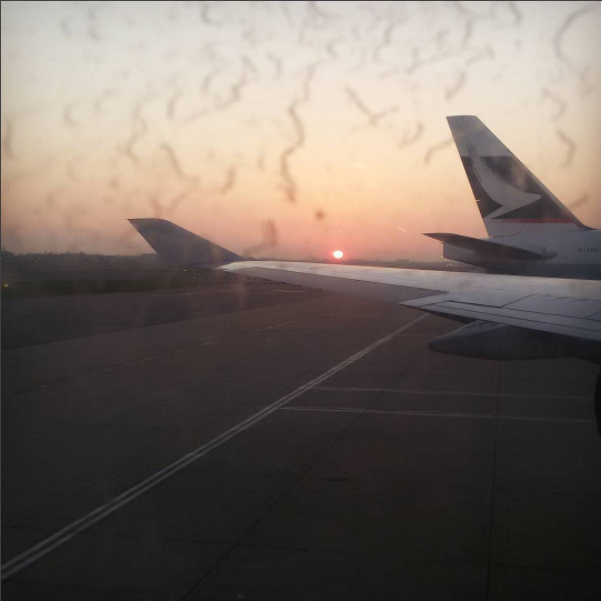
    Sunset on the plane…
    Always moving onward, but am I?
    Maybe I am no longer “not one to visit the same place twice.” Maybe only now does it truly sink in that “everything” or “everywhere” is a receding mirage, the pursuit of which can carry us in endless circles.
    And still, I pursue it—encouraged, not dissuaded by the ever-expanding nature of the illusion—I willingly, obligingly circle back, and forward, and back again.
    Moving forward, or backward, exploring the new, or revisiting the old, I find the unknown in everything everyone everyplace, and I am inspired, in-spiralled, enthralled…
    “It’s no use going back to yesterday, because I was a different person then.” — Lewis Caroll
     
    ***