Tag: adventure

  • Did You Find What You Were Looking For? (Camino Reflections, Part 10000)


    My last visit to London, in July of this year, I had dinner with a former classmate. We had taken “Intro to Buddhism” together.
    I didn’t know it then, in my first semester at Middlebury College, but many themes from that course would wind their way through the following years of my life.
    Over our glasses of red wine—Merlot, I think—I recounted a memory of that class that stands out from the rest. It’s funny, sometimes, what ends up sticking in our minds.
    Someone had asked our professor if he wanted to reach enlightenment—if that’s what he was seeking.
    He had answered softly (he always spoke softly):

    “I’m not so interested in enlightenment. I’m interested in the possibility of expanding my awareness.”

    Maybe this is unhelpful, and maybe I’ve spent too much time around Buddhist philosophy, but this is what I have to say in answer to that oft-repeated question, “Did you find what you were looking for.”

    No.

    Longer answer: 

    I wasn’t looking for anything, so I doubt I would find it. That’s the difference between a trip and a journey—only one has a destination.
    I found no thing on my Camino journey. Nothing. I did not have any epiphany. My life did not change.
    If you set out walking (meditating, praying, anything) in search of enlightenment, I think you will be disappointed.
    And that’s not depressing; it’s inspiring. It is exhilarating, this not knowing. It is enthralling, this seeking-but-not-finding. It is magnetic, this grey in-between-ness of no-thing—neither empty of wisdom nor full of answers.
    If “no” is not a satisfying response, I’m sorry, but it’s the only one I’ll give—at least for now.
    No, I did not find what I was looking for.
    I wasn’t looking for, you see.
    Something on the same subject I wrote about halfway through the Camino, in a moment of clarity:

    “Will I come back wiser?” asked my ego. 

    I don’t know, my more honest self replied. I think I’d be the last to know.Do any of us come back “wiser” from anything? 

    I have my doubts. 

    I will come back with bigger calves from walking and stronger shoulders from carrying my pack. 

    This is certain. 

    I will carry in my heart thirty peaceful mornings where dawn breaks over still meadows, and the wind whispers a song only I can hear. 

    This is certain.

    I’m not interested in finding. The beauty is in the in-between.

    ***
  • Pilgrimage Today—It’s Still Relevant

    Pilgrimage Museum, Santiago de Compostela, Galicia, Spain

    I placed the noise canceling headphones over my ears, and an ancient melody flowed straight to my soul.
    It was my foodsteps—hundreds, thousands of them—plucked from a harp. It was the daily rhythm of walking made song.
    I stood at that display in the Pilgrimage Museum for a long time, and I listened to some of the recordings of the Resonet Musica Antiga group more than once. Recreated from sheets music in the Cathedral’s archives and reconstructed medieval instruments, the music might have run through my head at a distance.
    But somehow it didn’t. Somehow it connected.
    I arrived in Santiago on Friday, July 1, 2016. That Friday marked the culmination of a month of walking across Northern Spain (approximately 800 kilometers) begun in the vague interest of “seeking.”
    (We can talk about what I “found” once I figure that out—story for another day.)
    Pilgrimage is an ancient phenomenon. Historians have found evidence of its occurrence in Mesopotamia, Vedic India and ancient Egypt. Wherever it appears in human history, it follows the same principle: an outward, often arduous journey serving as an allegory for the spiritual path.
    Since the alleged discovery of the remains of Saint James (one of the Twelve Apostles) in the ninth century, Santiago—and its cathedral—has been one of the most important pilgrimage sites in the world. It is said that the Camino de Santiago—the Way to Santiago, and there are many—is a metaphor for the trail marked by the Milky Way across the sky. Again, a physical manifestation of a metaphysical path.
    That sounds heady and outmoded, right?
    Wrong.
    In the last decade, traffic on the Camino Frances (the most popular route) has surged into the thousands. Clearly, the ancient tradition still resonates. And lately, its popularity is growing fast.
    Just as ritual will always revive itself and traditions will be reborn, pilgrimage is finding its place in the modern world.
    The scallop shell, long worn as an insignia by peregrinos walking to Santiago, now hangs from my backpack, too. Symbol of water, life and healing, it is as timeless, endlessly resonant, as it is timeworn.
    These themes are eternal:

    WanderingSeekingThe JourneyWalkingLooking to the SkyWalking upon the Earth
    Questioning 

    The WarriorThe SeekerThe Scholar [1]

    As I listened to those modern recordings of centuries-old music, I heard my experience translated—so precisely—into sound. I walked a path that thousands, perhaps millions, had walked before me, and though the asphalt beneath my feet and electric lights in the distance were new, the the experience had somehow been the same. [2]

    That, in short, is why pilgrimage is still deeply relevant today.

    ***

    [1] The Warrior, The Seeker and The Scholar are the three archetypes represented by Saint James.
    [2] Sadly I have not been able to find the same recordings anywhere online. This is the closest I could find, but you may have to visit the Pilgrimage Museum in Santiago to hear the music I’ve described:
    Youtube video
    ***

  • The Camino de Santiago in 100 words and 27 Untouched Pictures

    When I set out for the San Sebastian (my starting point for the Camino del Norte) at the start of June, I decided not to take my camera with me.
    Too heavy. Too much of a burden. Too unnecessary.
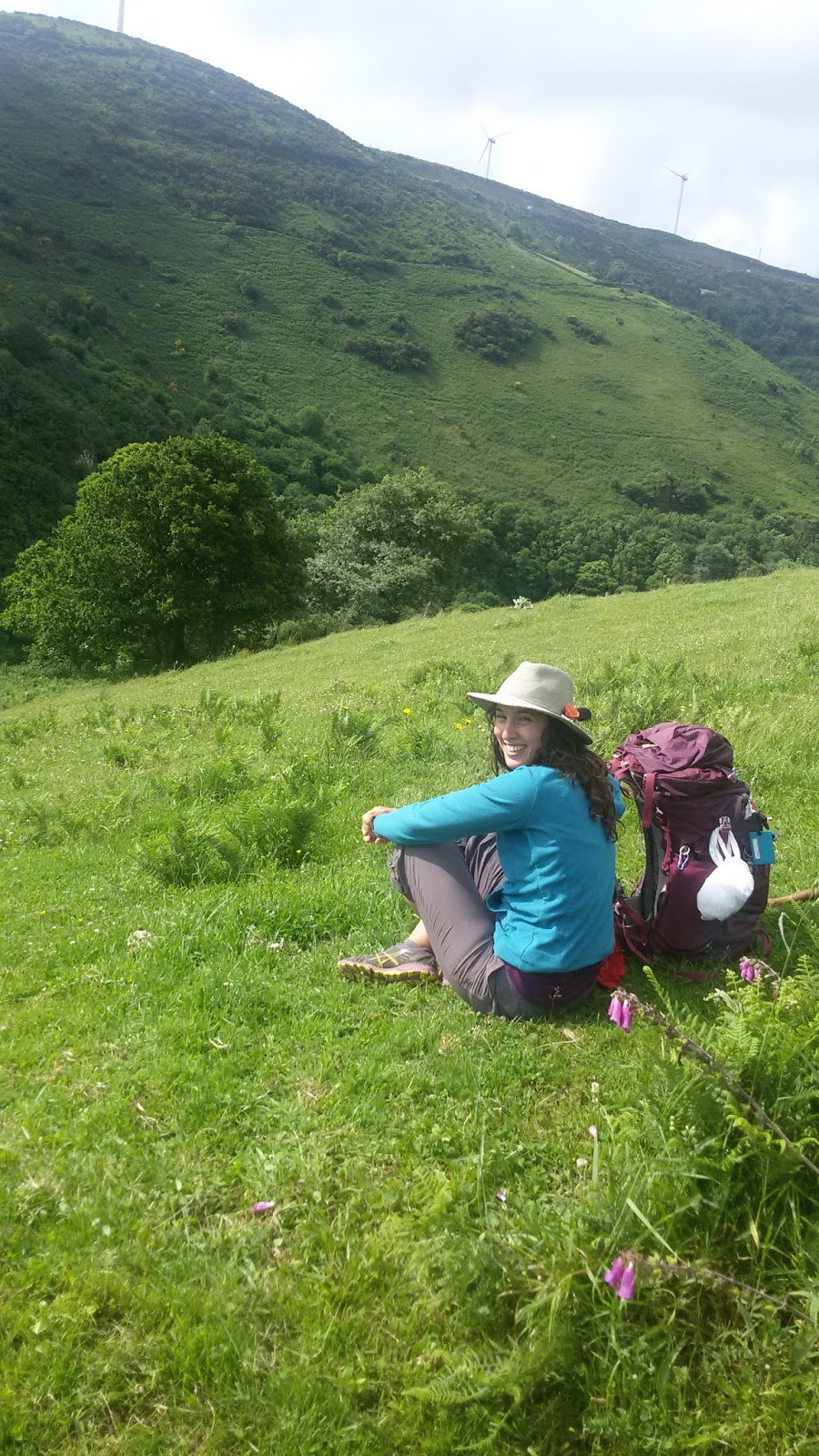
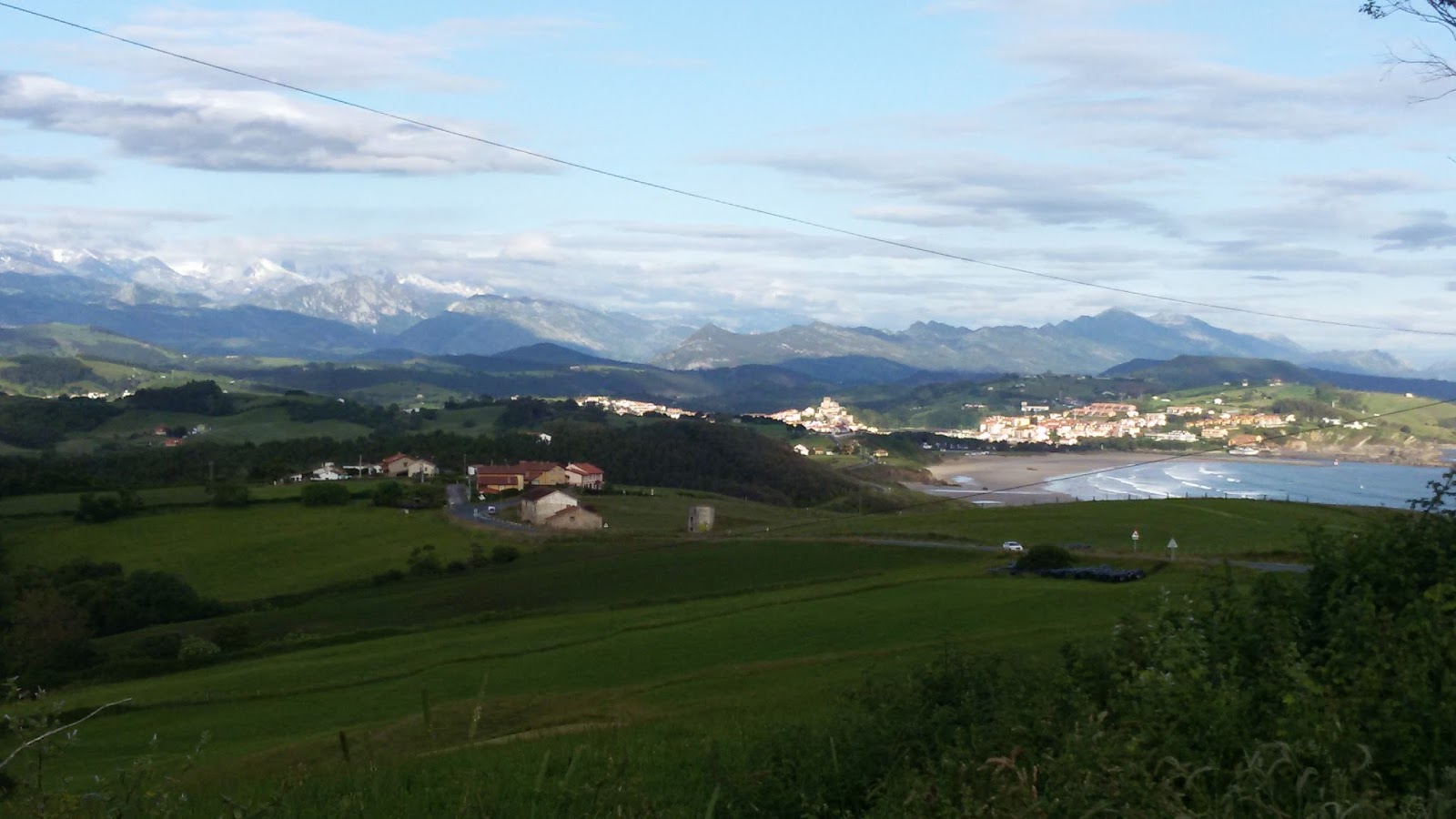
    Then came the bright idea to take only one to two (smartphone) photos per day throughout my thirty-day walk. To capture what captured my heart, without being a slave to documenting the journey—that was the idea.
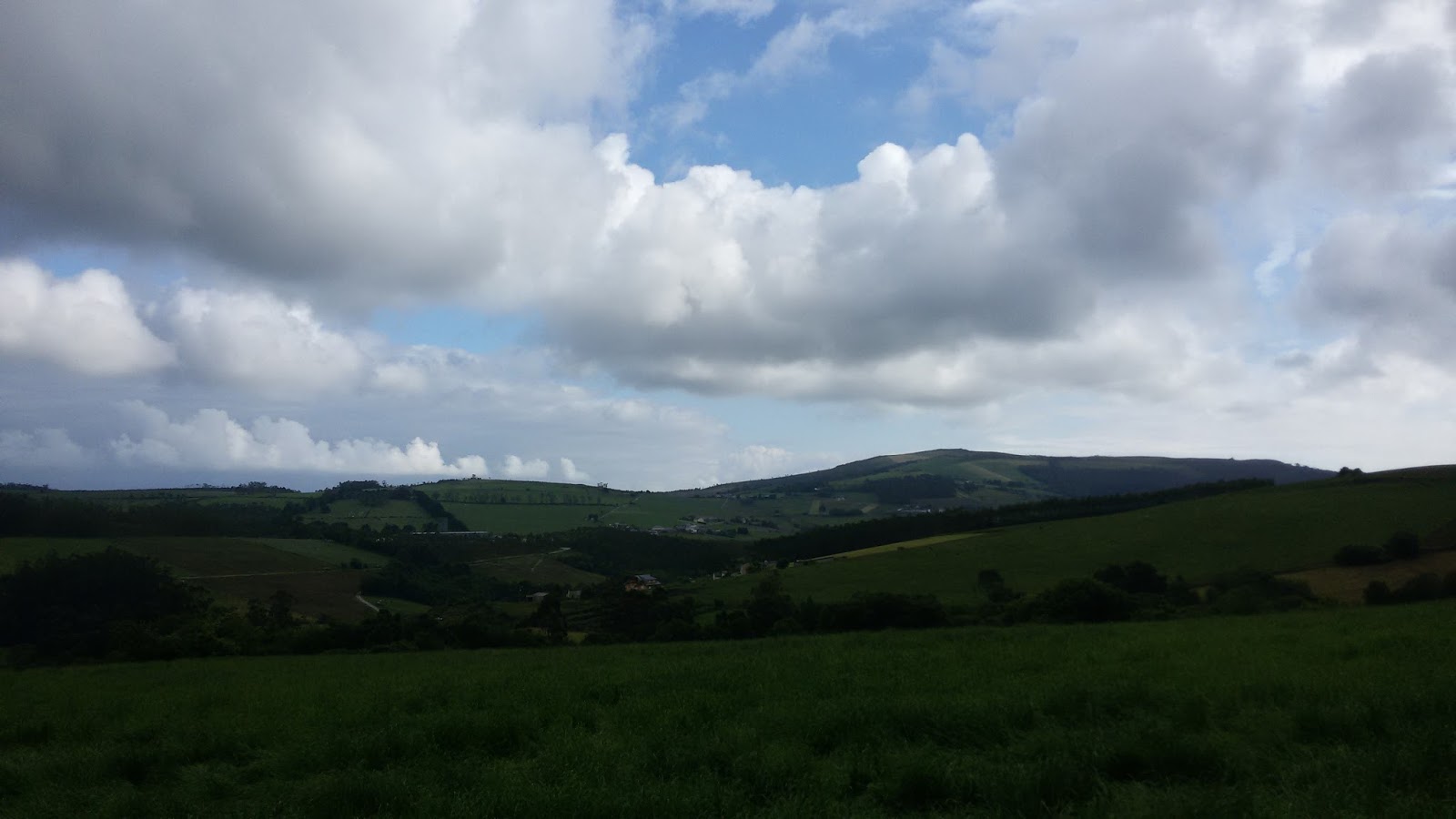
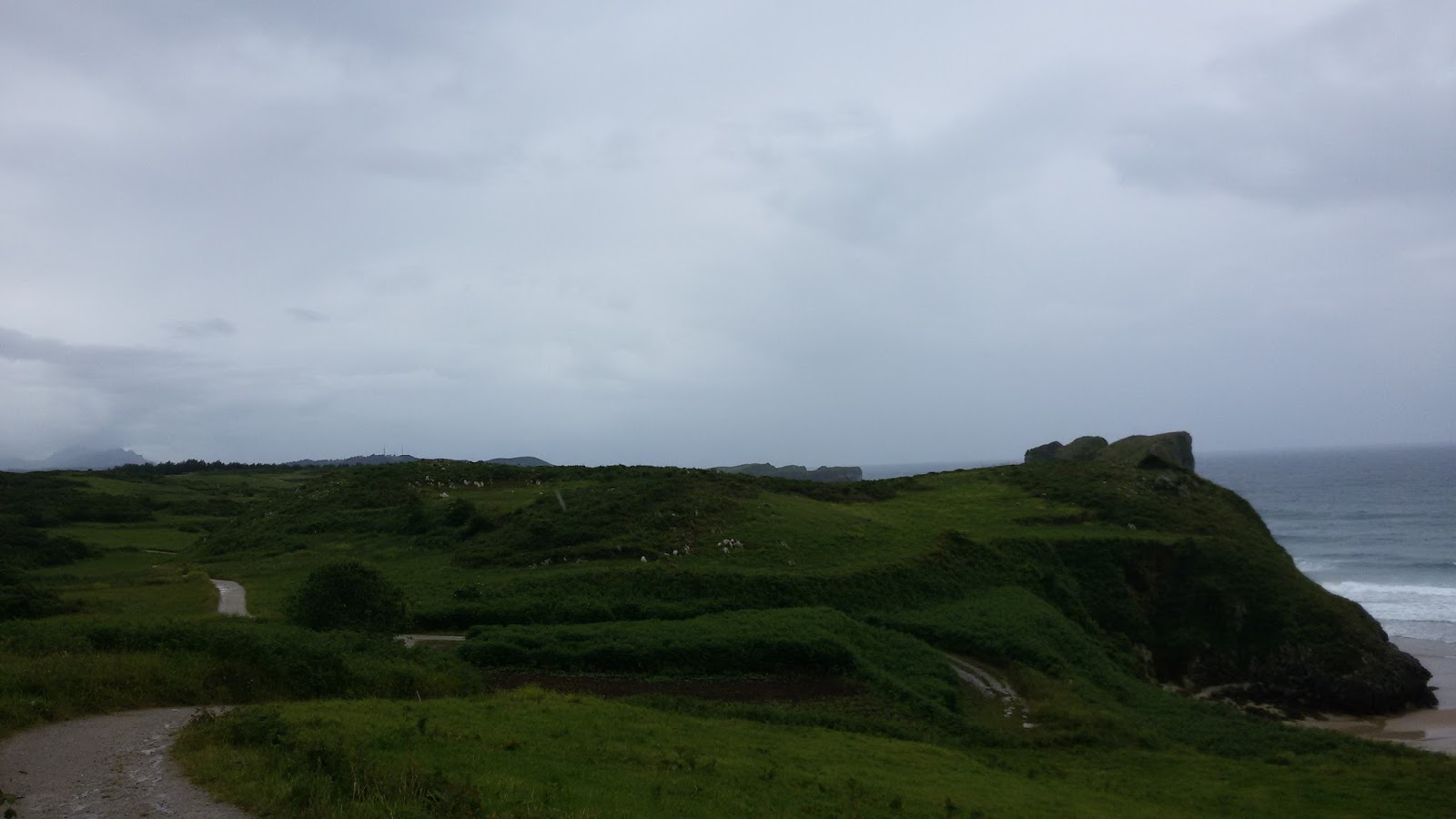
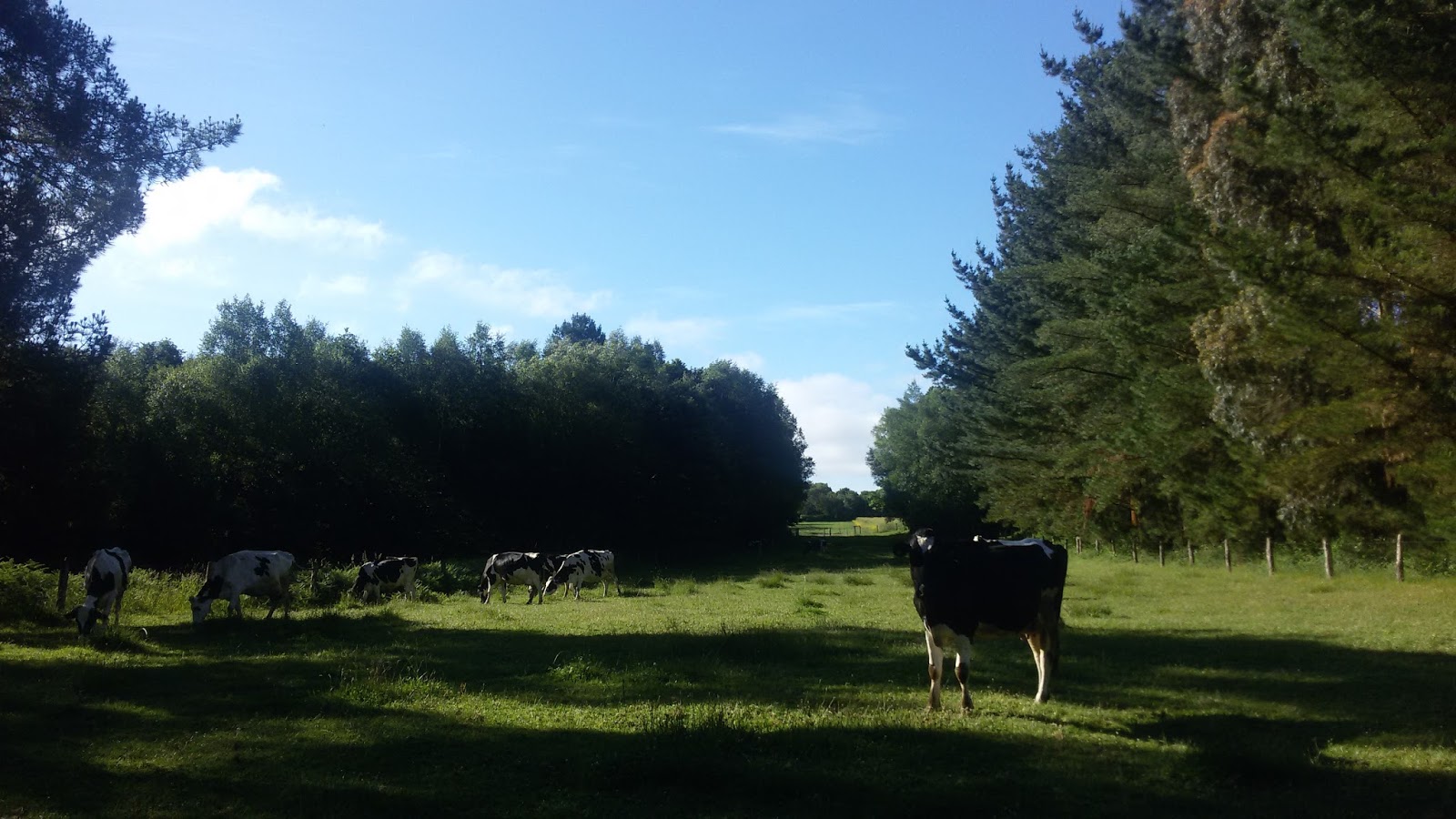
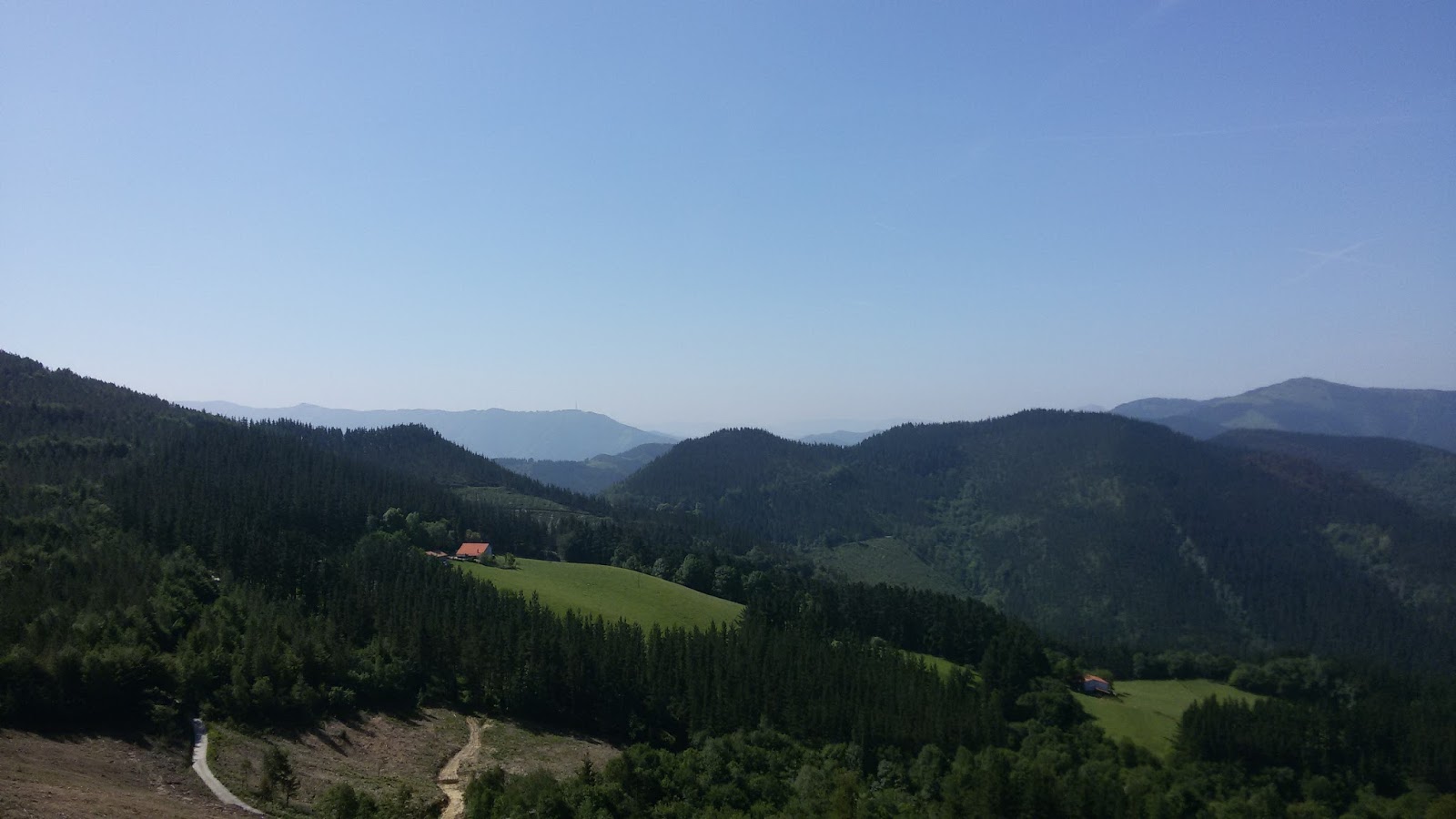
    And I think it worked pretty well. On average, I took two pictures a day—sometimes none, sometimes three—and while the result is not comprehensive, I believe it is in some way representative of those days.
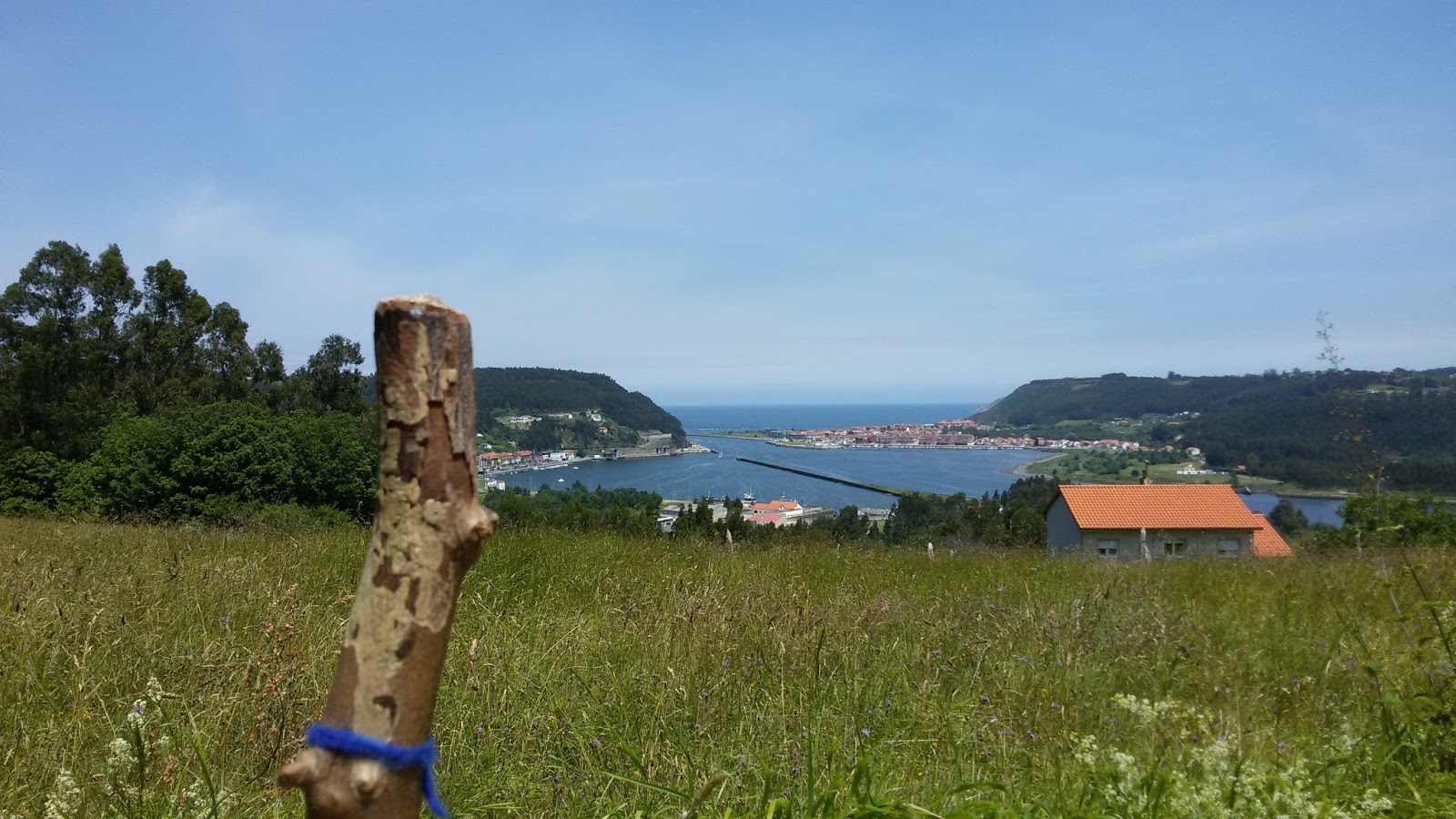
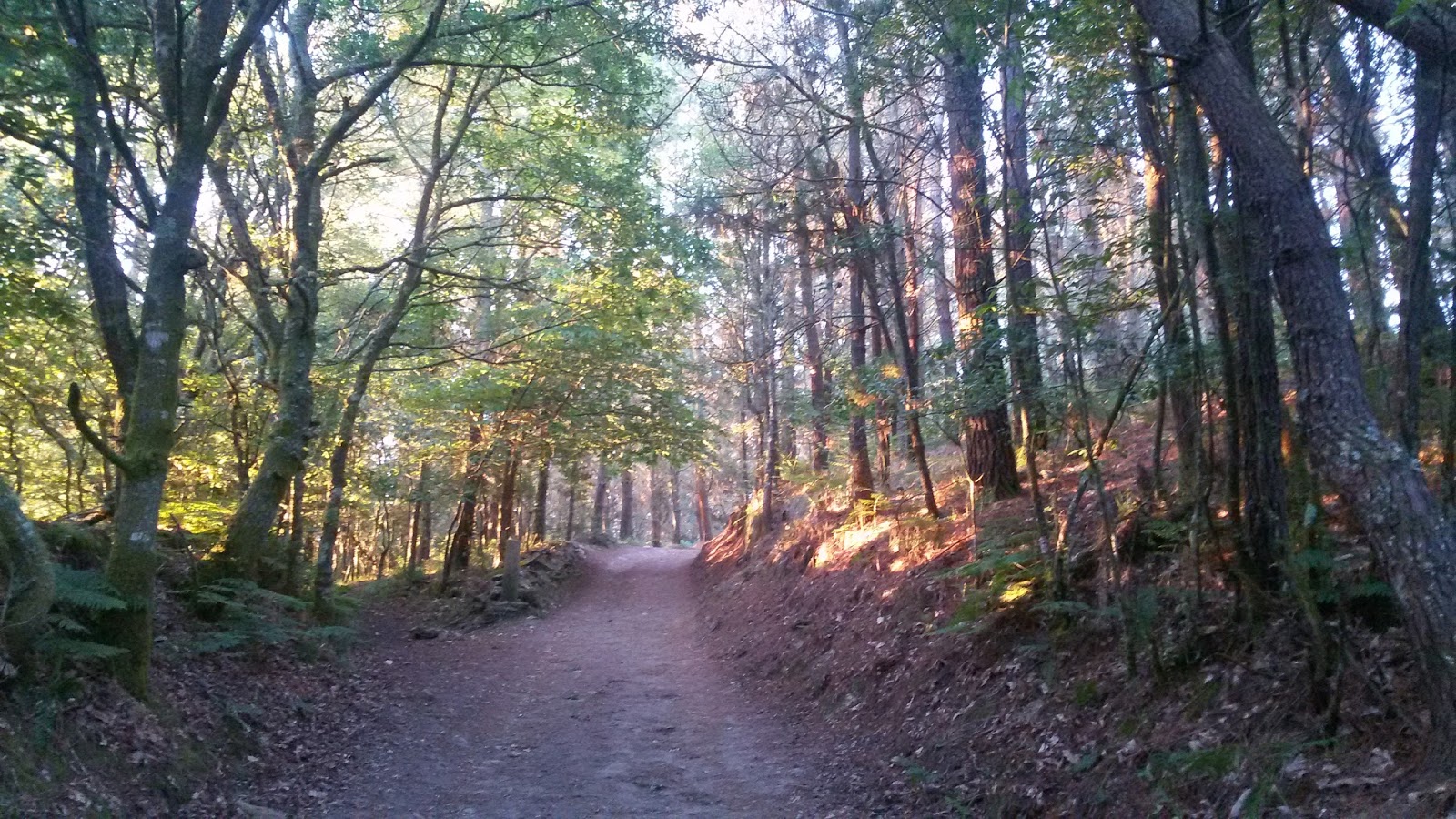
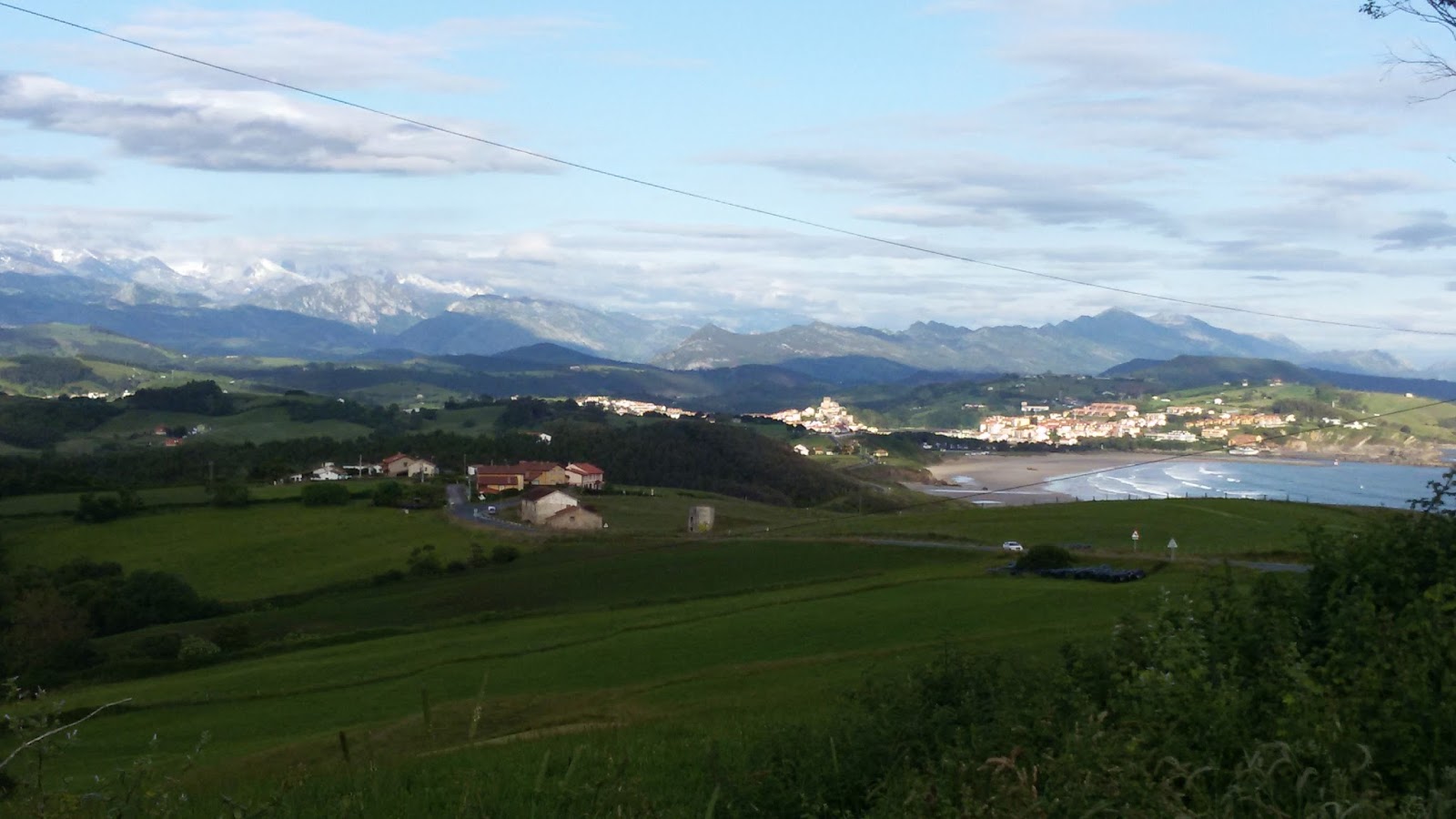
    I have selected twenty-seven of those sixty photos and paired them with lines from a brief stream of consciousness I wrote one day to summarize the experience of walking the Camino. The collection below is not chronological, and it isn’t complete, but I think it is more true than a complete, chronological photo diary could ever be.

    ***
    Walking. 
    Walking in mud, in rain, 
    in grass; 
    on gravel, asphalt, 
    bridges stone, wood, paved; 
    at first light, 
    at last light, 
    under clear skies 
    and into fading sunsets.
    Waking beneath stars in freezing meadows, 
    waking in a village whose name already evades recollection.
    Glossy maps,  
    cafe chairs, 
    Spanish words that somehow make sense.
    Bare feet,
    dirty feet, 
    tired and sore feet.
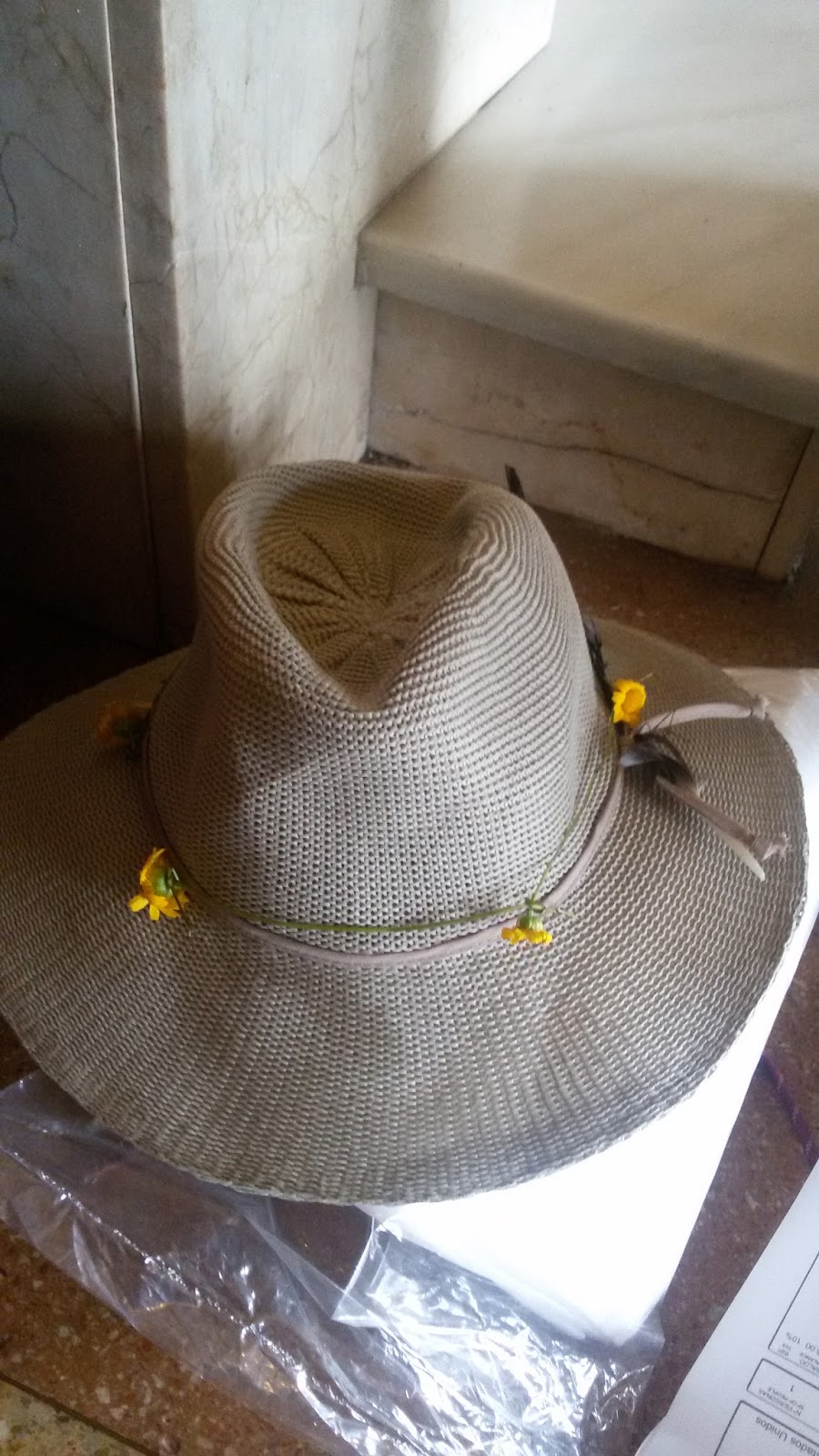
    The same hat every day, always a different flower in it.
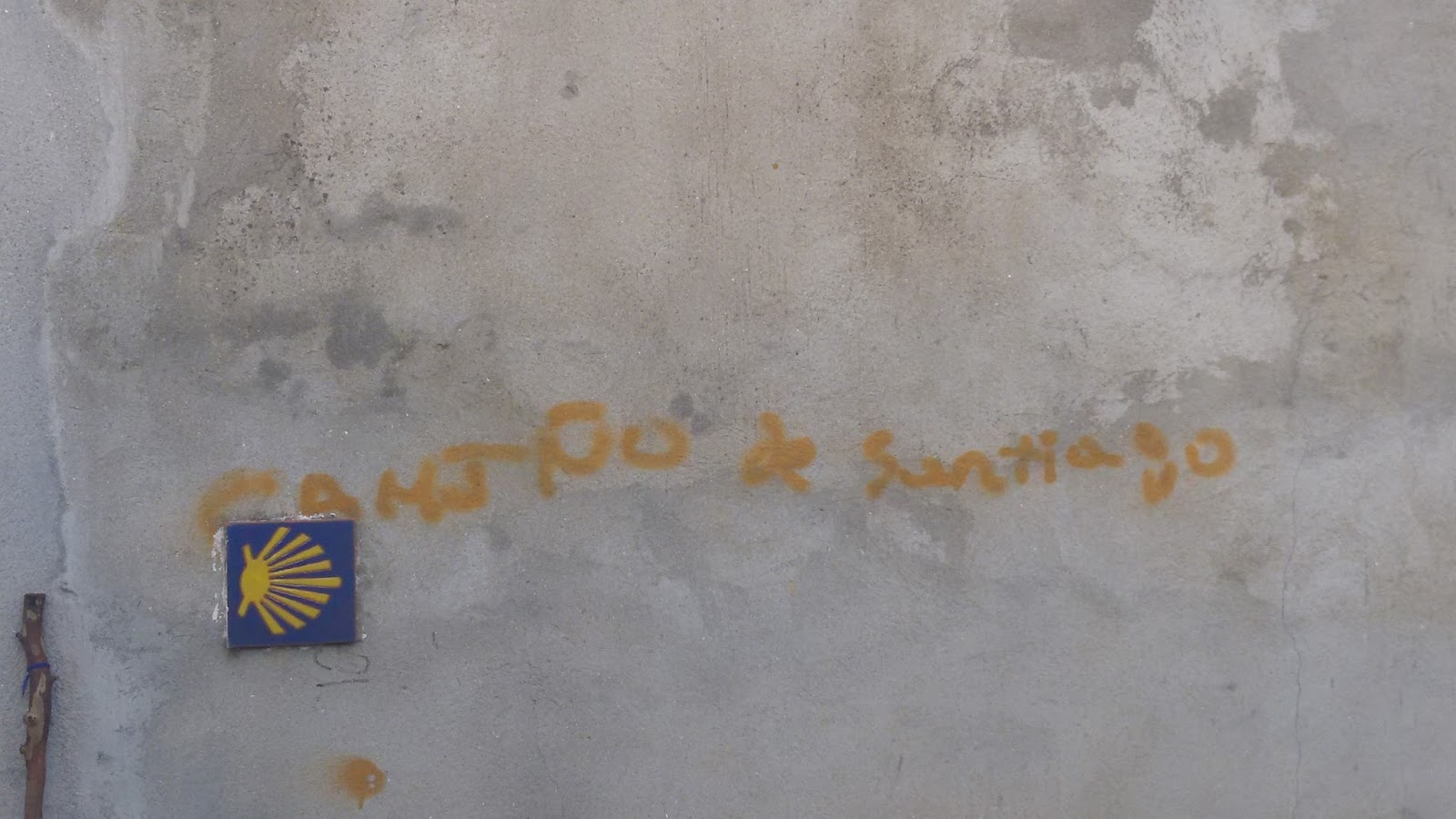
    Yellow arrows, yellow arrows, yellow arrows.
    The path ahead. 
    Sleep that comes without invitation. 
    Absence of thought.
    Peace of 
    single-minded activity. 
    Never boring. 
    Seashells. 
    The way forward. 
    Yellow arrows.

    ***
    The Camino in Short: 

    Walking. Walking in mud, in rain, in grass; on gravel, asphalt, bridges stone, wood, paved; at first light, at last light, under clear skies and into fading sunsets. Waking beneath stars in freezing meadows, waking in a village whose name already evades recollection. Glossy maps, plastic cafe chairs, Spanish words that somehow make sense. Bare feet, dirty feet, tired and sore feet. The same hat every day, always a different flower in it. Yellow arrows, yellow arrows, yellow arrows. The path ahead. Sleep that comes without invitation. Absence of thought. Peace. Single-minded activity. Never boring. Seashells. The way forward. Yellow arrows.

    ***
    About

  • The Modern-Day Renunciate

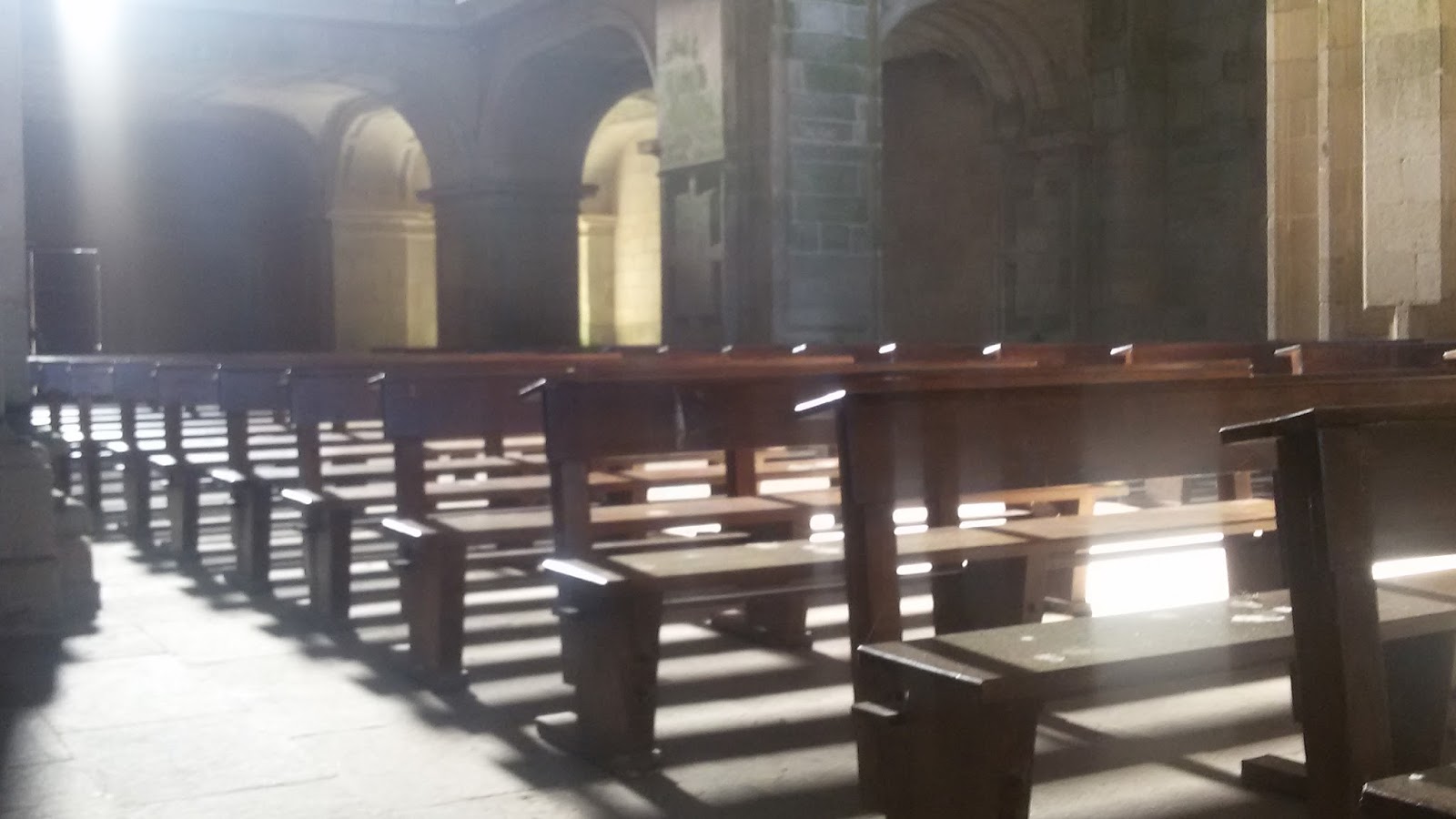
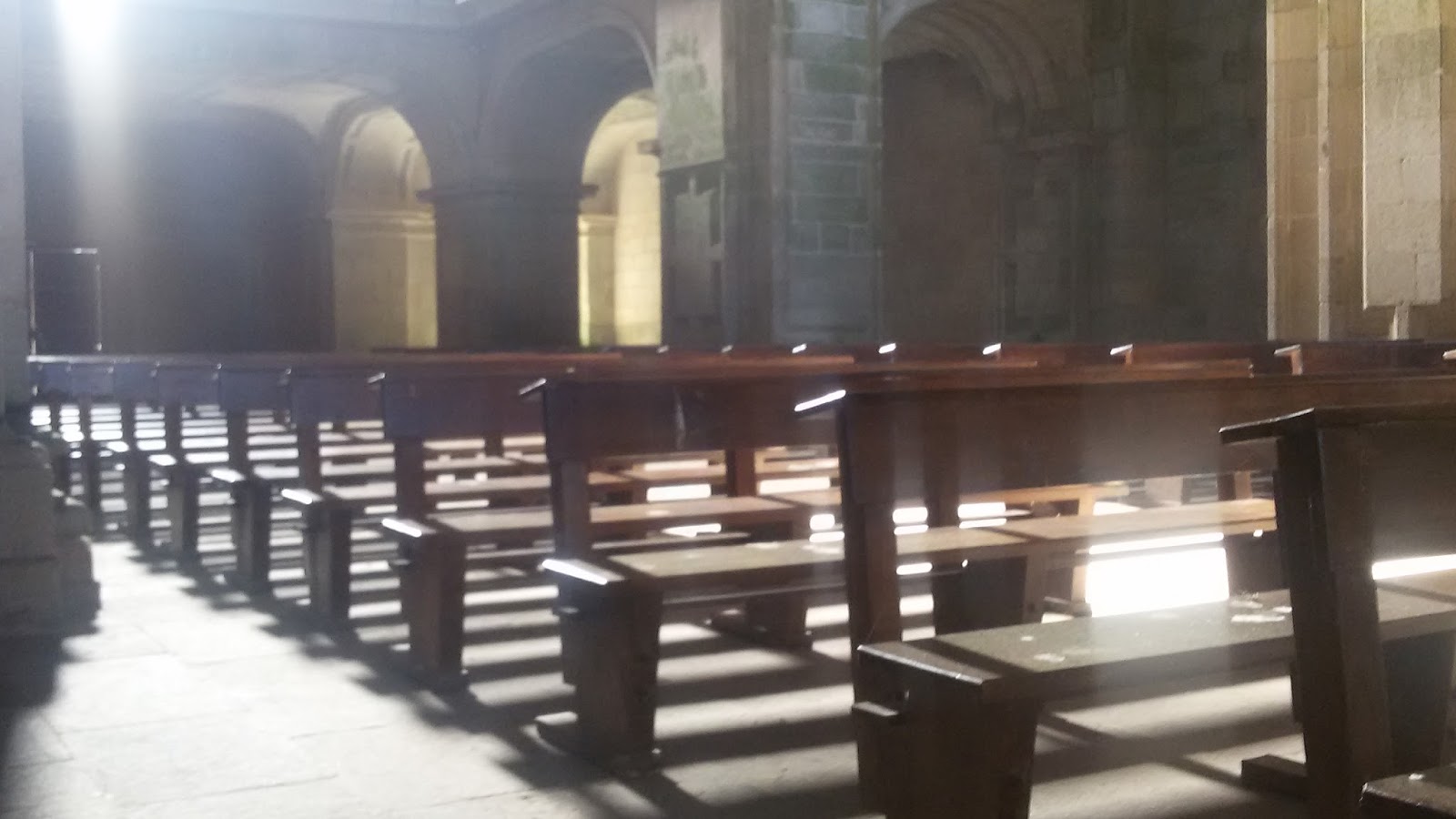
    Sobrado de Monxes Cathedral, Galicia, Spain.
    He asked if there was water nearby.
    The two dogs, attached to his belt by lengths of thick rope, were thirsty.
    We were about sixty kilometers (or several days) outside of Santiago when we met him. I regret that we didn’t get a chance to ask his name.
    He carried a huge walking stick, clearly decorated and carved by him, and an unraveling straw hat with a green band around it advertising for Amstel. He carried fishing gear, slept in a tent with his dogs and was running out of money. He had lost his passport one night in a flash flood, given away his watch. His hair and beard were unkempt and reddish brown. His eyes, wide, never quite focused on ours.
    In a thick, thick accent, he briefly told us his story.
    He had been a farmer in the Czech Republic. In December of 2015, the bank took his farm and everything he owned. So, he left with his dog and started walking. The second dog they found drowning in a river one night—still a puppy, it had huge paws, sure to be a big dog.
    When he reached Santiago via the Camino Frances (the most popular route, a bit farther south), he turned around and started walking the other direction along the Camino Norte (the Northern Way, where we met him). After telling us about the dog, the money, the passport and the watch, he concluded:

    “So probably I will spend my life walking. Just me, the dogs. I speak Spanish, so when I run out of money maybe I will find work somewhere, for a while. I think it is a good way to live, just to walk.”

    I think I can empathize. If I lost everything like that, I would probably lose any faith I had in property, money, things. I would probably—maybe—start walking and settle into a state of non-owning, non-needing, non-grasping, too.
    On the Camino, you run into a few of these modern-day renunciates.
    They’re not out for a month-long holiday, or even a six-month sabbatical. They’ve dropped—or lost—everything, and they’re walking, not for pilgrimage, not for a temporary detox, but for life. 

    I admire them, just as I admire anyone with a single-minded passion so single-minded that it borders on pathological. I think I understand the impulse, though I can’t imagine ever committing my life to just one activity. Different strokes, is all.
    More than anything, I’m fascinated by what appears to me to be a growing global trend, as the “real world” becomes harder and harder to stomach, of starting walking (or traveling, or what have you) and never stopping.
    Society has always had its renunciates. Those who live outside the bounds of normalcy—normal time, normal family, normal work, normal life—and follow another Way. I suppose the only difference is that our modern world doesn’t know as well what to do with them. It demands passports. It requires that we identify our place, our role, our function. It is, quite frankly, nonplussed by this growing race of outsiders. And yet, they are growing. 
    If you ask me, there will always be renunciates—those who chose not to participate in the world offered to them. And if you ask me, it’s not a problem; rather, it is for the rest of us to accept and allow their presence, walking the narrow paths between the borders of society.
    We told the former Czech farmer that there was a small shop in a house in the next town, just a kilometer farther along. He woke the dogs from their nap on the sidewalk, and we set off in opposite directions.

    Without a doubt, he is still walking.
    ***

  • Welcome to the World: First Post-Camino Reflections and Impressions.

    Sunrise over Bolibar, Basque Country, after an accidental four a.m. start time.
    High heels tap-tapping on the pavement. SALE signs in every storefront. The familiar turning on sound of my shiny laptop that I haven’t heard in a month. 
    Not one single “hola, peregrina!”* as I pass crowds of strangers in the streets.
    Walking through central London is quite the “welcome” to the world. But arriving in London town on this beautiful July day, that’s just what I’ve done, scallop shell hanging from my backpack, dusty shoes on my feet and cool breeze on my face.
    While many reflections are sure to follow, here are the first thoughts I’ve had since officially “returning” from my journey:

    I’m damn proud of what I’ve just done.
    Estimates vary from 795 to 863 kilometers (San Sebastian to Santiago de Compostela), but whichever way you hang it, that’s a long walk. I’m proud of these legs that have put up with unplanned 35-kilometer days, these feet that have weathered blisters and mysterious swelling without (much) complaint, this brain that has learned passable Spanish in four weeks. While part of me was underwhelmed by my accomplishment and tempted to understate it, another part of me felt like turning around in the street and shouting, “Look what I did!”
    I really want others to know that they can do it too.
    Over the past month, I have heard of or personally encountered pilgrims on horseback, bicycle (“bicigrinos”) and wheelchairs; overweight men, non-athletic girls and heavy smokers; young children, women in their seventies and everything—everything—in between. Think you can’t do the Camino? I think you can.
    Being a pilgrim is a privileged way to experience another place—maybe the most privileged.
    Never have I been so utterly accepted in my travels, nor my purpose and my role so completely understood. As a pilgrim (as opposed to a traveler/tourist/visiter/all the other things I have been), I found local people exceptionally welcoming, caring, understanding and accommodating. The people of Northern Spain have happily put up with my (and thousands of other pilgrims’) poor language skills, smelly clothes, abysmal navigation and overall cluelessness as we passed through their homes. It was a privilege to be received so kindly.
    I’ll miss it.
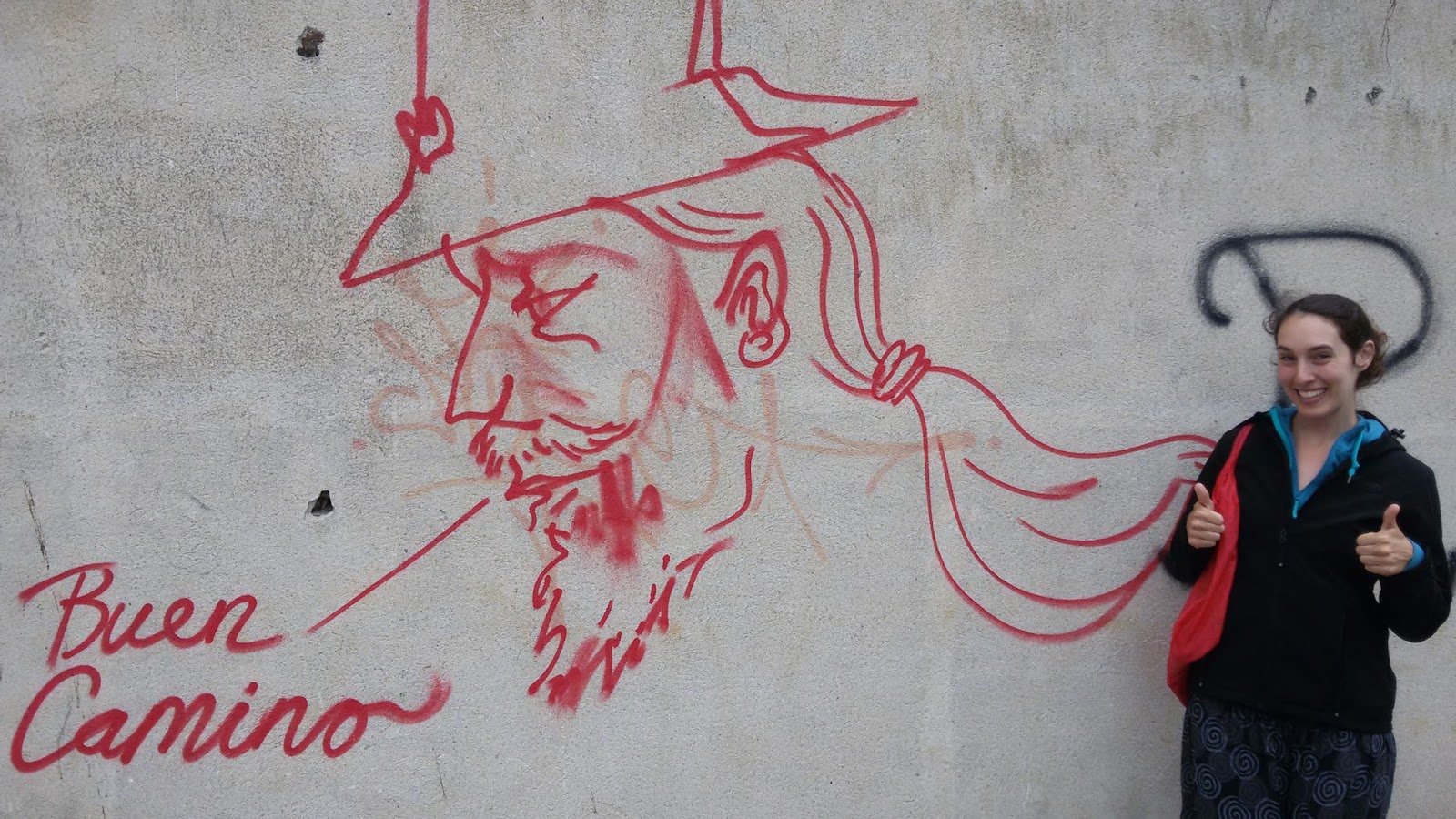
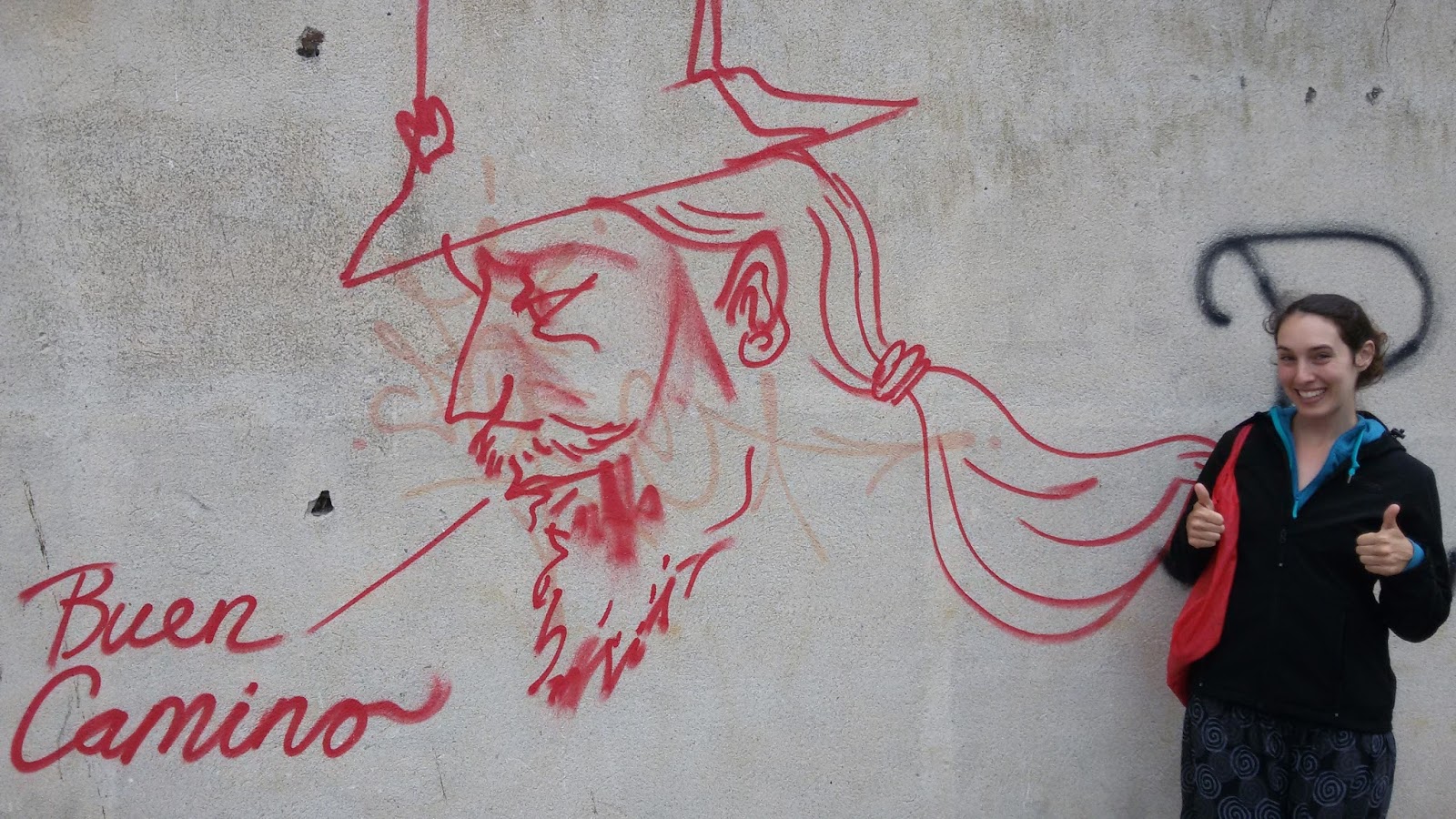
    Backpack, staff, sturdy shoes and scallop shell. The trappings of the modern day pilgrim are different from those of our predecessors, but nonetheless unmistakeable. On a daily basis I received unsolicited directions and support from passerby. From farmers in their fields, cyclists whizzing by and cars on the road, shouts of “Hola, peregrina!” and “Buen Camino!” were common and comforting. To be so firmly rooted in a fixed purpose, and to have that role understood and supported by the community, infrastructure and even landscape around you is a rare gift. Though difficult to describe, pilgrimage as a state of being was an unparalleled experience, and I will miss it.
    I definitely don’t know what I’ve learned yet.
    Deep thoughts? Rare. More common: “My feet hurt.” “I’m hungry.” “Why is the sky still spitting at me?” “Ooohhh, that’s a pretty mountain.” “Cows are funny.” “Goats are funny.” “Hehe, sheep are really, really funny.” “Ooohhh, pretty horses.” “Hmm, my feet still hurt.”
    You get the idea. Even more common: “…  …  …” Clear mind. That was the best part. So, I don’t know yet what the big lessons were—but I’m sure they’re in there.
    But everything was perfect and exactly how it needed to be.
    There’s no “right” way to do the Camino. Everyone will walk at different paces, stop different places and learn different lessons. And that’s exactly as it should be. I’m still entirely in the processing phase of my return, but I know one thing for certain about my journey: It was perfect.


    *Peregrino(a) is the Spanish word for “pilgrim.”
    ***

    Some bonus awesomeness: Check out my friend and fellow pilgrim, Margaret’s inspiring campaign, WALKING FOR WOMEN WITH BREAST CANCER IN TIMOR-LESTE – HALIKU.

    ***
    I expect to be writing a fair bit in the coming weeks and months about the Camino, so if there’s anything in particular you want to hear about, please let me know!

  • Off to the Camino… Travel Update and See You Later!

    On Sunday, June fifth (yes, that’s tomorrow), I will close my laptop. I will put it on a shelf, and I will not see it again for a month. I will put two pairs of pants, three shirts and a sleeping bag into my backpack, and I will head to San Sebastian in the Northeast of Spain.

    I’ve been waiting for this day for a while now.

    I need a vacation, yes. I need a total break from society—also yes.

    But it’s more than that. It always is.

    The Camino de Santiago has been on my list for awhile now. (It’s not a bucket list. I like to call it my, “Do These Things as Soon as Possible List.”)

    I don’t know why I want to do it, just like I don’t know why I want to travel the Trans-Siberian Railway, ride on horseback across Mongolia or sail the seven seas (all on my list). Except, I know that it calls to me; I know that adventure is my way of searching—of seeking.

    I know that a search need not have an object—that it is the act of searching that matters—sometimes…


    ***

    So, that’s about it. I’m not packing my camera, so I’m sorry to say I may not have many beautiful pictures to show for this trip at the end of the month. I also haven’t decided how much, if at all, I’ll stay connected. I may be updating here over the next month—or I may not. If not, I’ll be back in a month with a whole lot of stories to tell. See you then! 🙂
  • What Makes this Mountain Different from all other Mountains?

    Villa Borghese Gardens, Rome
    Valle Aurelia, Rome, Italy
    This could be any street in any city.
    Mixed-era apartment buildings. Imposing stone architecture at turns. Cobblestones and pavement following no particular logic. Crush of cars and scooters. Cafes. Hairdressers. Passerby dressed in scales of gray.
    So, what makes this different from any other street—any other city?

    ***
    As we made our way along a dry riverbed, through native South African fynbos vegetation, toward a spectacular (but, again, arguably nondescript) stretch of shoreline, my friend put to me a similar question. Not quite verbatim, it was this:

    Most mountains are pretty similar. Most cities are pretty similar. There are trees and rocks and wide sky spaces. There are streets and cafes and passerby in scales of gray. So, what makes these mountains different? If we can go hiking at home, why ever go anywhere else? And if we do go, how do we choose? 

    Why these mountains?

    The question was philosophical in nature. My friend is nearly as avid a traveler as I.
    I would like to offer three answers to these questions—one of which sounds nice, one of which I believe most strongly, and one of which I feel, irrationally, to be true.
    It doesn’t matter which is which.
    First, terroir. Terroir is a French term I fell in love with while studying the anthropology of food. Essentially, it claims that taste is deeply rooted in place—territory. The elements unique to a given locale—water, specific bacteria, culture, human traditions, soil, weather, everything—combine to create the particular circumstances in which a given food item is produced. And we can taste it. While terroir is a culinary concept, I believe it can just as easily apply to cities, landscapes and really anything else.
    Thus, these mountains are made unique by an intangible yet undeniably meaningful agregate of water, culture, air, bacteria, soil, and human idiosyncrasy. 
    Why go anywhere? Terroir.
    Second, intuition. Some part of our deepest self knows where we need to be. It doesn’t make sense, and it can’t be proven, but those who have experienced will swear that the voice of intuition is real—and that it is always right.
    So, how do we know, how do we decide where to go? Instinct.
    Or third, the difference isn’t out there at all. It’s us. The mountains are, more or less, all the same. Trees and rocks and wide sky spaces. The cities, too. We, however, change, and we can understand that change by observing its reflection in the places we visit—or rather our experiences of them.
    What makes these mountains different from all the rest? We do.
    Or, most probably, the answer is some combination of the three.
    What makes these mountains different from any others? Nothing, or precious little. Yet, they will be different, because we will change—always.
    Why go anywhere else? Terroir. 
    And if it’s all the same, how do we possibly decide on one mountain, one city, one street over another? Oh yes, intuition.
    Maybe this could be any street in any city, but it isn’t. It’s this one—the one I’m in. And it is utterly unique, both for its composition of individuals, elements and other intangibles, and for my experience of it, in this particular moment. No other street in any other moment will ever be this. I don’t know why I’m here—and not in another street, city, mountain—but I trust the voice that called me.

  • Journeys All The Way Down

    Goes into the post office to mail home some books… 30 minutes and 90 stamps later ^^

    Once, a great guru came to a small village. 

    He gave a long speech and held forth on many subjects, and he claimed that the world rested on the back of four elephants. These, in turn, stood on the back of a turtle.

    After the wise man had finished talking, an old woman came to ask him a question.

    “Guru-ji,” she said, “You say the world is held by four elephants, which in turn are standing on the back of a turtle. But I want to know, what is the turtle standing on?”

    The man’s eyes sparkled as he answered, “Why, it’s standing on the back of another turtle.”

    “But what is that turtle standing on?” asked the old woman. 

    He smiled and said, “Madam, it’s turtles all the way down.”

    The above is an amalgamation of a dozen versions of one of my favorite philosophical tales (variously attributed to Eastern and Western lore). It comes to mind today as I slowly, dare I say reluctantly, pack my things and prepare to leave Cape Town.
    Why, I’m not exactly sure, but I think its suggestion of infinite yet symmetrical unknowns appeals to me in this moment of transition.
    As I clear out the fridge, eating my last grapefruit, savor my last coffee at my favorite cafe, enjoy a last (unseasonably hot) afternoon at Clifton Beach and write a “last blog post” before shipping off to my next destination, I seek a clever way to avoid the “lasts” altogether.
    An enigmatic symmetry and circularity have entered into my travels lately. Returns and revisits abound, and endings, more often than not, prove to be intermissions.
    And so as I peer into the infinite unknowns ahead, I suspect there is more circularity in my future. Journeys bending and spiraling in on themselves in unexpected ways.
    After my last coffee, I go to the post office to mail home a few notebooks’ worth of extra weight. Thirty minutes later, I leave behind a medium-sized envelope impressively plastered with 90 stamps.
    The scenario is comical and exaggerated; together, the post office teller and I systematically paste rows of stamps onto the package.
    I’m reminded of other boxes and envelopes I have shipped from other locations—usually filled with items whose monetary value falls far short of the cost of shipping. (Of course, you can’t put a price on memories.) Often accompanied by absurd postage situations.
    Circularity and symmetry.
    No “lasts” in sight.
    If I were to ask a wise man to surmise my future, I think I could guess at the conversation:

    “What comes after today?” 

    “It’s another journey ahead for you, of course.”

    “And what comes after that journey?”

    “Why Madam, it’s journeys all the way down.”


    Journeys all the way down…

    ***
  • The Bittersweet Beauty of Goodbye

    If I sift through the shadowy pathways of my memory, I will touch a hundred moments of parting and a thousand words of farewell in an instant.
    A woman stands on a provincial train station platform with her son, waving goodbye, goodbye, goodbye as my train pulls away.

    A friend hugs me in the pre-dawn shadows of an empty parking lot, then stands aside as my bus coughs to life and I step inside.

    An open window lets in dust and exhaust fumes and the last echoes of Good luck!

    The sterile lights of an airport terminal look on as I hug loved ones goodbye; they stay to watch as I pass through security and disappear.

    A last smile at the threshold before the house, car, bus, taxi, train door closes. A last wave. A last glance.
    These memories are steeped in the mixed emotions that partings will inevitably evoke—the fragrant cinnamon of nostalgia, and the piquant tingle of anticipation; the bitter smoke of an ending, and the sweet pine needle smell of journeys beginning.
    When we travel often, some things become easier with practice.
    We learn to sit with discomfort, be it overpacked buses, insufficient legroom, long flights, missed meals or interminable waiting—for delays, friends, food and horizontal sleep. And we come to accept a certain level of stress, uncertainty, insecurity—all fundamental tenets of life on the road—as the norm.
    We learn the language of timetables and airport terminals, maps and foreign street signs, and perhaps we come to navigate these worlds with a degree of ease. We find ourselves at home in a sea of strangers, untroubled by change—exhilarated, even.
    And finally, we become accustomed to goodbyes (comfortable may be too strong a word). Without a doubt we come to realize the ineptitude of words—the insufficiency of phrases like, I’ll miss you, See you soon, Good luck with everything, or even the more sardonic, Have a great life and, See you when I see you—to serve in these situations.
    We become accustomed to goodbyes, yet there is no art to them, or none that I have found. No failsafe formula. No skillful lyricism to master.
    Each one is unique in its blend of sadness, resignation, looking forward and looking behind.
    Each one is, in its singular fashion, beautiful. 
    Or, this is what I am beginning to believe. For, more than cinnamon nostalgia or pine needle anticipation, a goodbye is steeped in love. Platonic, familial, romantic, age-old or brand new, this  is love surrendered to the utter unknowability of what lies beyond this moment.
    If that love, tempered by the bittersweet awareness of impermanence, is not beautiful, then I don’t know what is.

    And so, as I say See you soon, Good luck, I’ll miss you, and Goodbye to friends and loved ones in the U.S. and turn toward the next leg of my journey, I hold onto that beauty, and my smile smells like cinnamon and pine needles, chili and smoke.

    ***
  • Next Up, Cape Town: Meeting the Voice of Intuition

    Chapman’s Peak, near one of my possible next homes.
    The flights are booked.
    Philadelphia —> NYC —> Amsterdam —> Helsinki. Short pause. Helsinki —> London —> Cape Town.
    Don’t ask. Flights, once booked, are very difficult to reroute.
    Why Cape Town?
    Summer.

    Why else? Well then, summer, right time zone for work schedule, visa on arrival, not Europe (I’m at the end of my 90-day limit for Schengen Zone), ocean, low cost of living, mountains, city…
    But actually, none of that really, truly answers your question: Why Cape Town?
    Yes, those are all reasons why it’s a good choice, yet my choice did not stem from them. Rather, Cape Town felt right, and the rational reasons followed.
    Too “woo woo” for you? Consider this: Whenever we have a decision to make, there is a part of us (call it intuition, gut instinct, whatever you will) that knows the “right” answer before we do. We can arrive at it by logic, or we can skip the winding road and hop straight to our destination—what feels right is right.
    You argue, but this is how drug addicts, hedonists and psychiatric patients are made—acting on impulse. I counter, impulse is not the same as intuition. I sat with my decision to head to Cape Town for nearly two weeks before buying tickets. I reconsidered all my other options, gave logic its chance to sort through the possibilities. But my intuition didn’t waver:
    Warm air, ocean tides—a chance to learn to surf, finally!—and hiking trails, even horses, and then all the things a city can offer: a blank slab of the unknown where you can inscribe the next months of this adventure word by novel word.
    It should come as no surprise that the unknown and my intuition are particularly enmeshed. What feels “right,” more often than not, is what appears shrouded in mystery—the yet-to-be-revealed of a new culture, new community, new dance, new sport, new path, new chance. 
    Of course, that is my “what feels right,” and I neither suggest nor expect it should be the same for another.
    It is only interesting, and instructive, to note where our intuition points us, time after time.
    When we hold a question in our mind’s hands, turning it this way and that, asking where, who, what, when and, most of all, why—what is the first voice to answer, and what does it say?
    Hello, intuition, nice to meet you!

    Cape Town, you say? I trust you.

    Trust. Jump. Fly. Photo Credit: Toni Toreno, Cambodia.
    ***

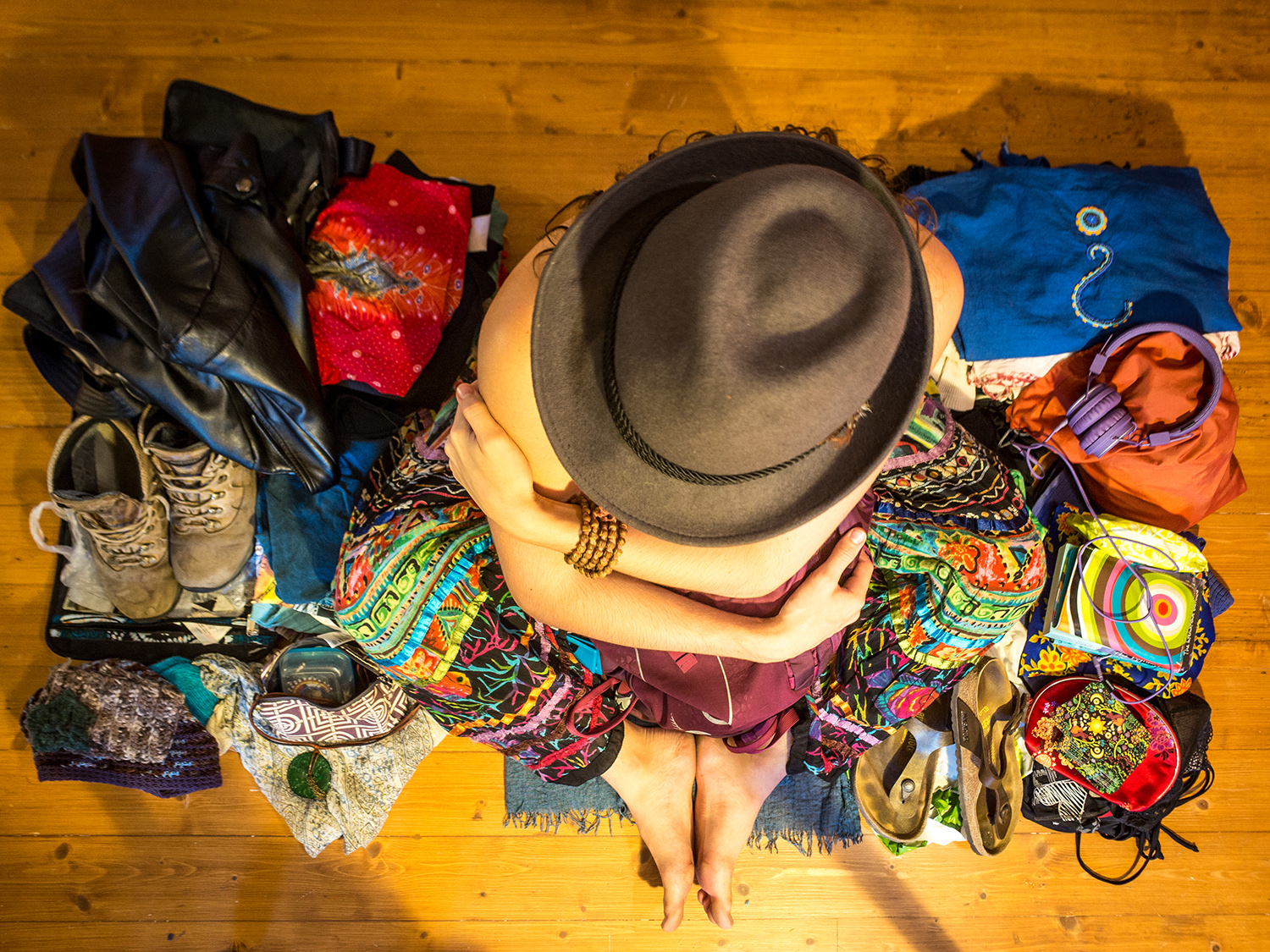
  • Traveling Light: “Only What I Can Carry” Photo Project

    Traveling Light: “Only What I Can Carry” Photo Project

    Saturday, October 3rd, 2015. Helsinki, Finland.

    [This is only an excerpt from a longer piece about this project written for elephant journal. For the full story please click here.]

    The afternoon sun is kissing the tops of the pines surrounding my friend’s house, and I am packing.

    I’ve had an idea in my head for months now, and seeing as I’m in no hurry for once, this seems like the perfect opportunity to realize it.

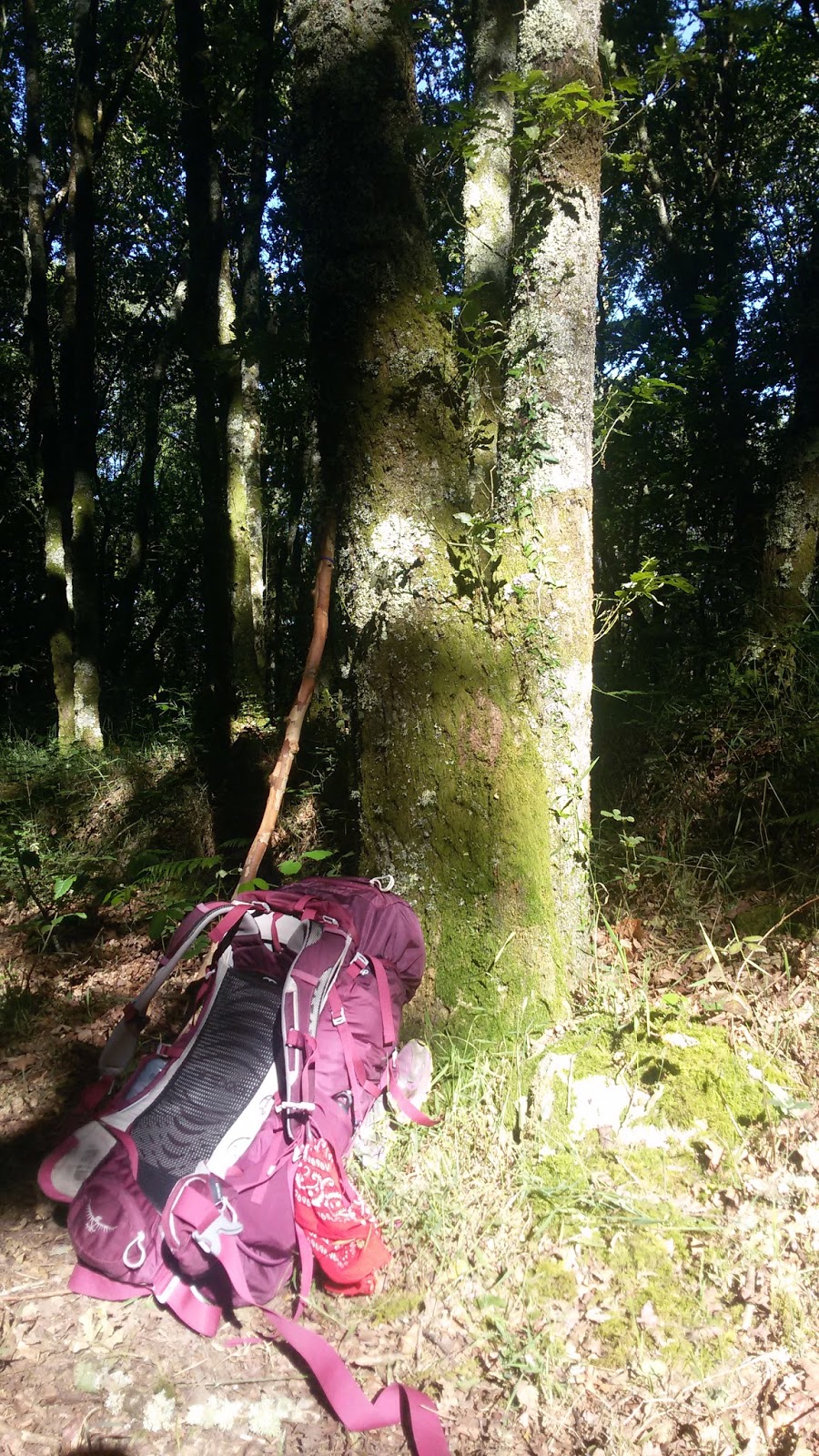
    I’ve been living out of my purple, 60-liter Osprey backpack for just under a year now. This is the second time I’ve done so, and I can pack in 10 minutes—15 tops—when needed.

    Today, though, I take my time to fold my clothing into neat piles and gather every last small belonging into a compact square in the center of the floor.

    I’m not exactly sure why, but taking stock seems important…

    The more I travel and the longer I wander, the better I understand how much I need, and how much I am able to carry. (And still, always, it is too much.)

    More and more, too, I recognize the difference between need and desire—the meaning of priorities. I don’t need even half of what I choose to carry with me. I do in fact need my laptop for work, and maybe a few changes of clothing and some warm layers.

    But my practice poi? Small bag of jewelry? Pretty shirts, oversized headphones and red lipstick? Indulgences and whimsy—and I know it…

    What I keep—I recognize I keep out of attachment, not out of necessity…

    This is only what I can carry.

    Some of it I need; some of it I want, but if it’s too much weight or doesn’t all fit, something has to go.

    This isn’t for everyone; hell, it may not always be for me. Nevertheless, this is a viable way to live, and—I believe—a powerful exercise in living simply.

    I hope these images might inspire you to try the same—even if it’s only for a walk around the block! 😀

    [This is only an excerpt from a longer piece about this project written for elephant journal. For the full story please click here.]

  • I Want to Do All of the Things

    This is not a bucket list.

    I wrote this list a few weeks ago as the realization dawned on me that, without exaggeration, I want to do “all of the things.”

    There is not a country I wouldn’t want to visit, a language I wouldn’t like to study, an art or dance I wouldn’t want to learn or a food I wouldn’t want to try.

    Whenever someone shares a story of adventure, I listen carefully—not only out of friendly curiosity, but also out of a vested self-interest—making mental notes for the day I can follow their trail, or blaze my own.

    In the invigorating—and overwhelming—rush of ideas that tends to accompany an “I want to do all the things” epiphany (it’s not my first) I decided to try something new.

    I decided to write it all down.

    This list is a work in progress. I have surely forgotten things, and will doubtless add other ideas I haven’t even thought of yet. The list of places on the left is woefully incomplete, and I know I’m missing something major… no matter.

    One thing is certain, however: This is not a bucket list.

    These are not things I’m hoping to do some day in the future, before I “kick the bucket”; rather, these are (all) things I want do do now. Tomorrow. Next month. As soon as possible… It might take a decade or five, but I’m starting yesterday.

    My list includes the following items:

    • Travel the TransSiberian (or TransMongolian) Railway
    • Go to Argentina to study Tango—and Spanish
    • Go to Brazil to study Capoeira—and Portuguese
    • Travel across a country by horseback
    • Join the circus (learn a circus skill first)
    • Travel through Poland and Eastern Europe with my grandmother’s suitcase.
    • Chase the Northern Lights (I tried last week… no success)
    • Hike the Long Trail (VT)
    • Climb some tall mountains
    • Find a way to contribute—anywhere… everywhere.

    That’s just a few.

    Is it an extraordinary privilege to be able to look at every single item on this list as a real possibility? Absolutely yes. Am I still searching for the right way to be of service as I pursue these passions? Of course—although, since starting work at elephant journal I feel more assured of that side of things.

    Perhaps most importantly, why? Why do I want to do/try/learn/see all this?

    Why the tireless pursuit of adventure?

    A little secret: There is no why.

    There are secondary reasons—to learn, understand and grow are all real and valid motives. But they are secondary. The primary “reason why” is formless.

    Because.

    Adventure, travel, wandering, journeying for me have always been (and may always be) a raison d’être. A “why” unto themselves.

    That is, I do not wander because ______, or travel to _______; but rather, when in movement, when in the pursuit of adventure, I have no need of why’s.

    I do not wonder why I am here, what I should be doing or what my purpose is… I simply am.

    And so I want to do “All of the Things,” because so long as this list (and its much longer mental counterpart) are close to my heart, my wings beat of their own accord. Existence, then, is its own end—and that is every thing.

    So… what’s on your list?
    ***
    [I’ll be in London now through (almost) the end of October. Checking in after 2 weeks in Helsinki, Finland, which were so packed with adventure I haven’t had time to write about them yet! Much more to come on that very soon.]

  • An Incomplete Guide to Sicily in Quotes & Pictures

    Valle dei Templi (Valley of the Temples), Agrigento, Sicily

    “The climate’s delicate; the air most sweet.
    Fertile the isle, the temple much surpassing
    The common praise it bears.”
    — Shakespeare

    I could write—and, indeed, have written—many pages about Sicily. However, I’m hardly the first person to be taken with the island’s complex history, natural beauty and unique charms, so for a change I would like to share the words of other writers, whose perspectives, combined with pictures from my recent visit, make for a woefully incomplete (but very poetic) look at the place. I hope it may whet your appetite for more, as I never tire of convincing people to visit!

    Scala dei Turchi (Stair of the Turks), Realmonte, Sicily.  
    “Ho capito che la Sicilia è molto più complessa di quello che si può pensare: la paragonerei ad una cipolla dai molti strati.” — Paco Ignacio Taibo II
    (“I have understood that Sicily is much more complex than one might think: I would compare it to an onion of many layers.”)
    Cattedrale di San Givanni Battista, Ragusa.
    “Sicily has suffered 13 foreign dominations from which she has taken both the best and the worst. The sequence of different cultures has made Sicily a fascinating place, quite unlike any other.” — Andrea Camilleri
    Valle dei Templi.

    “This is the homeland of the Gods of Greek mythology. Near these places, Pluto abducted Persephone from her mother. In this wood we just walked through, Ceres ceased her swift running and tired of her fruitless search, sat on a rock, and despite being a goddess, she wept, the Greeks say, since she was a mother. In these valleys, Apollo pastured his flocks; these groves, stretching down to the seashore, have echoed with Pan’s flute; the nymphs got lost under their shade and breathed their scent. Galatea fled from Polyphemus and Acis, close to succumbing to the blows of his rival, enthralled these shores leaving his name here … In the distance you can see the lake of Hercules and the rocks of the Cyclops. Land of gods and heroes!” — Alexis De Tocqueville

    Valle dei Templi.

    “Sicily is more beautiful than any woman.”
    Truman Capote

    Valle dei Templi.
    “Il siciliano è il prodotto di un territorio che non è un pezzo staccato d’Italia, che non ha mai fatto parte di alcuna parte del mondo in epoca storica, che è stato occupato da nord, sud, est, ma mai è stato assimilato, l’isola in cui niente è stabile se non il movimento, il non-stabile, dove un giorno distrugge quanto l’altro giorno ha costruito, dove vulcanismo e nettunismo sono continuamente all’opera, dove un giorno trasforma la storia di secoli.” — Paul Yorck von Wartenburg

    (“The Sicilian is the product of a territory that is separate from Italy, that has never been part of any part of the world in any period of history, that has been occupied by the North, South, East, but never assimilated, the island in which nothing is stable except movement, non-stability, where one day destroys that which another the other day built, where volcanic and marine forces are always at work, where one day transforms the history of centuries.”)

    “Sicilians build things like they will live forever and eat like they will die tomorrow.” — Plato

    Valle dei Templi.

    “For over twenty-five centuries we’ve been bearing the weight of superb and heterogeneous civilizations, all from outside, none made by ourselves, none that we could call our own.”

    This violence of landscape, this cruelty of climate, this continual tension in everything, and even these monuments of the past, magnificent yet incomprehensible because not built by us and yet standing round us like lovely mute ghosts; all those rulers who landed by main force from every direction who were at once obeyed, soon detested, and always misunderstood, their only expressions works of art we couldn’t understand and taxes which we understood only too well and which they spent elsewhere: all these things have formed our character, which is thus conditioned by events outside our control as well as by a terrifying insularity of mind.”

    ― Giuseppe Tomasi di Lampedusa

    Sunset from a lighthouse.
    “I was enchanted… the limpidity of the sky, the restless splendor of the sun, the beauty of the countryside, a certain excitement of the fantasy…which brought to mind the time when in the fields one encountered the divine.” — Jean Houel

    Ragusa Ibla, Sicily

    “In Sicilia abbiamo tutto. Ci manca il resto.” — Pino Caruso
    (“In Sicily we have everything. We’re just missing the rest.”)


    Valle dei Templi.
    “Noi fummo i Gattopardi, i Leoni; quelli che ci sostituiranno saranno gli sciacalletti, le iene; e tutti quanti gattopardi, sciacalli e pecore, continueremo a crederci il sale della terra.”

    (“We were the Leopards, the Lions; those who will replace us will be little jackals, hyenas; and all of us Leopards, jackals and sheep, we’ll go on thinking ourselves the salt of the earth.”)
    ― Giuseppe Tomasi di Lampedusa

    Macalube, Aragona, Sicily.

    “Per me la Sicilia ha una luce particolare, qualcosa di primordiale. Io non sono nato in Sicilia anche se mia madre è di Palermo. È come se con questa terra ci fosse un richiamo anche più lontano della mia esistenza, che appartenga alla mia memoria. Scrivo volentieri qui, c’è un’aria speciale, istintiva. Non mi va neanche di dargli un nome sennò darei dei confini che non ha.” — Emanuele Crialese

    (“For me, Sicily has a particular light, something of the primordial. I wasn’t born in Sicily even though my mother is from Palermo. It’s as if with this land were a recollection even further back in my existence, which belongs to my memory. I write often here, there’s a special atmosphere, instinctive. I do not even give it a name, as to do so would give it boundaries which it does not have.”)
    Scala dei Turchi.

    “There it was again: the sweeping verbal gesture magnified in the prism of Sicily, the pronouncement so poetic it nullified any arguments before they could take their first breath. The vines, the amphorae, the thousands of years of history, the palmenti, the volcano, the beauty, the power of it all. In Italy, of course, beauty is next to holiness. Sicily was long the most treasured daughter of the Mediterranean. So who can teach Sicily anything about beauty?” — Robert Camuto

    Fountain, Ragusa, Sicily.

    “All of Sicily is a dimension of the imagination.” — Leonardo Sciascia

    “Raccontano, infatti, che secondo il mito la Sicilia è sacra a Core poiché qui avvenne il suo rapimento e perché l’isola fu offerta alla dea come dono di nozze.” — Plutarco
    (“They say, in fact, that according to legend Sicily is sacred to Persephone since her abduction took place here and because the island was offered to the goddess as a wedding gift.”)

    Train tracks at the edge of the Valle dei Templi.

    “And anyone who has once known this land can never be quite free from the nostalgia for it.” — D. H. Lawrence

    *** 
    [All translations mine. :)]
  • The Importance of a Quest

    Today, I spent an hour looking for soap.
    Not just any soap (those who know me will know how picky I am about my soap… shampoo, lotion and face wash too!), but a soap without chemicals, fragrance, glycerin or dye.
    As I walked down the uneven dirt road from the beach to the village—slick with mud from the rains that won’t stop this year—I thought about three things:
    First, I wondered if my skin would be red later from the inescapable equatorial sun, still hot-hot at three in the afternoon. Second, I considered the fact that a less stubborn person would have long ago sucked it up and bought any of the ten brands of Imperial Leather impersonators—all rich with the aromas of chemical fragrance and a lingering colonial stench. And last, I recalled countless similar hunts from this trip and others past, and I wondered why they were so important to me.
    I love a good quest.
    A walk through a crowded market becomes a treasure hunt when I am looking for an uncommon fruit, or a rare blend of spices. The simplest of goals—acquiring a cup of chai, the perfect gift, stamps or fish sandwiches; finding a historical monument; the beach; the highest outlook or the bus onward—transmutes the everyday into something vital and full of purpose.
    When I am looking for something, no matter how trivial, every interaction suddenly has a point. Intensity. Urgency. Meaning. Senseless conversation finds itself replaced by words imbued with the strongest magic: A reason for existing.
    I am not merely walking; I am searching. And a search is an adventure.
    Now, I will be the first to champion aimless wandering for the sake of wandering—searching not for,but because. A search for nothing is far preferable to no search at all. But a search for something—anything—well, that is the best of all.
    As I stride from supermarket—proffering Dettol, Imperial Leather, medicated soap, skin lightening crap and a host of other pastel-hued and plastic-scented delights–to gift shop stocked floor to ceiling with everything but soap, I exchange the now familiar greetings and then ask for soap (sabuni ya kuoga). I explain in a mish-mosh of Swahili and English that I don’t want chemicals, and people are helpful, understanding, and repeatedly direct me onward, toward the village.
    Stepping into a shop selling only soap and flip flops, I am presented with more options. An unmarked, waxy pink bar, which I don’t trust because it is the color of pepto bismal. A new and equally off-putting brand of skin-lightening bullshit. And a bar of clove soap marked “herbal” and “home-made” on the box, on which the lack of ingredients at least allows for the possibility that it is actually chemical-free.
    I buy it and return home. My quest is complete.
    A search for soap—or chai, or the beach, or any number of things—is, on the one hand, silly and hardly worth thinking about. And yet, a quest is a quest, no matter how small. Those who have experienced the alchemical change that occurs when purpose is added to their day’s equation will understand that it is not the depth, but rather the presence of an objective that counts.
    Today, it was soap. Tomorrow perhaps it will be a decent cappuccino, gifts for my family or an empty stretch of shoreline. I won’t know until the next whim or need grips me and I set off again in pursuit of something, someplace or even someone (I may hate waiting, but it is another kind of purpose, after all).

    There is joy in wandering, and there is joy in searching simply because, but the single-mindedness of quest is a different, and I think necessary, component of travel and life.
    ***
  • Sometimes We Don’t Take Pictures: Camping on the Beach and Other Undocumented Adventures

    Greetings from Tanzania!

    In the week since I returned from the U.S., I have not taken a single photograph.
    In that time, we have spent five days camping on the deserted Tiwi Beach south of Mombasa, two days exploring Mombasa—one of them very soggy–and one day on a very long bus ride to Dar Es Salaam, Tanzania.
    At low tide in Tiwi, a treacherous trail through sea urchin mines and slippery pathways of rock led to two wide, deep tidal pools, called Africa Pool and Australia Pool respectively. Africa Pool had a shape remarkably reminiscent of the African continent… Australia Pool less so.
    The pools receded into the overhanging cliffs, and in these dimly lit recesses I could float on my back staring up at a small patch of blue sky revealed by a hole in the stone ceiling. Roots and vines and glimpses of the greenery overhead trailed from the opening, and bright sun, too, at the right time of day.
    One of these caves echoed with the calls of kingfishers and the steady sound of water dripping from pockets collected at high tide. Magic. With goggles, I could explore the meter-high seaweed at the edges of the pools and try to follow the paths of schools of fish—yellow and black striped, iridescent gray with a black line along the top—and observe the forbidding stillness of sea urchins.
    The journey, though only 10 or 15 minutes from camp, felt like an enormous expedition due to the various perils along the way. The sandy beach by our tents (we had joined two friends already there) felt like home when I returned.
    As I floated in the tidal pools watching the clouds pass and the water ripple, I couldn’t help but wish I had brought my camera with me—though how I would have managed it in the pools (water well above my head in places) is beyond me. What lovely pictures I could have taken and shared with all of you.
    Mombasa, gray and narrow upon our rain-soaked arrival, looked far more appealing the following day in the sun. Old Town proffered windows into other eras: curio shops, mosques, cafes and old architecture nestled into every alleyway, a sea view always just minutes away by foot.
    Again, I left my camera at the guest house—and perhaps even had I brought it could not have taken pictures for fear of theft or unwanted attention—and found myself observing picturesque doors and street-fronts longingly. If only I could capture this fascinating swirl of urban culture and take it home with me.
    Finally, the 12-hour bus ride to Tanzania… I was probably awake for half of it. I alternately dozed and gazed out the window, watching the landscape change. As I daydreamt, the earth grew redder; the trees thicker, and the sea more distant and, finally, out of sight altogether. The women I watched on the side of the road when we stopped wore different styles of clothing—some shoulders bare, more and brighter colored fabrics, and somehow more “African” to my eyes.
    Snacks available at rest stops—offered in baskets held up to the high bus windows—shifted too. Plantain chips appeared, mishkaki (skewers of barbecued meat) became more seasoned, and exchange rates grew by a factor of 20.
    As we rocked and bounced and sped along the road to Dar Es Salaam, I felt the old, familiar feeling of excitement return to my gut. 
    New country. New city. New adventure.
    I would have loved to document this leg of our journey. The doorway to a new chapter. The doorway to Dar Es Salaam, House of Peace.
    I did not, however, photograph any of it.
    Typically, I take pictures on designated days during a long trip, opting to leave my camera at home the rest of the time. This choice results in some odd collections of photos—a hundred pictures of Angkor Wat, and none of Phnom Penh; fifty photos of Kilifi Beach, and none of Tiwi—but I prefer it to constantly watching the world through a viewfinder, which I find hugely alters my experience.
    Sometimes, I don’t take pictures. 
    Sometimes, I just travel. For a travel writer, that’s a hard choice to make. It limits how I can record and share my experiences with others. It limits how I can record my travels for myself, restricting me to journal writing, or worse, the incomplete caprice of memory.
    Still, I think most who travel reach a certain point—once or twice, or on a regular basis—where a camera becomes an unwelcome companion.
    We then can choose to bring it along anyways and bear the burden, or we can leave it behind for a day, a week or a month. We might regret the choice later on, when left with no means for capturing the most amazing view, most engaging face, most extraordinary sunset, or we might thank ourselves for creating this space to simply enjoy, imbibe, and, quite possibly, forget.
    Sometimes we don’t take pictures, and we have “nothing” to show for our journey. No evidence. No documentation. No justification.
    And you know what? It’s okay.
    It’s okay if we forget the view from an epic bus ride, the sunset on a remote island, or the face of the old woman we bought vegetables from every day for a week. It’s okay, and it’s even natural, I’d argue. We don’t have to remember every detail, carefully wrapped and preserved in slideshow form.
    I think experiences are most valuable not for the memories they bestow us, but for the subtle changes they initiate within our minds. These we cannot photograph, anyways.
    And so sometimes I don’t take pictures, and all I have to offer are these words.
    ***