Tag: facing fear

  • Yes, I’m Traveling Solo: Self-Defense as a Path to Freedom

    Yes, I’m Traveling Solo: Self-Defense as a Path to Freedom

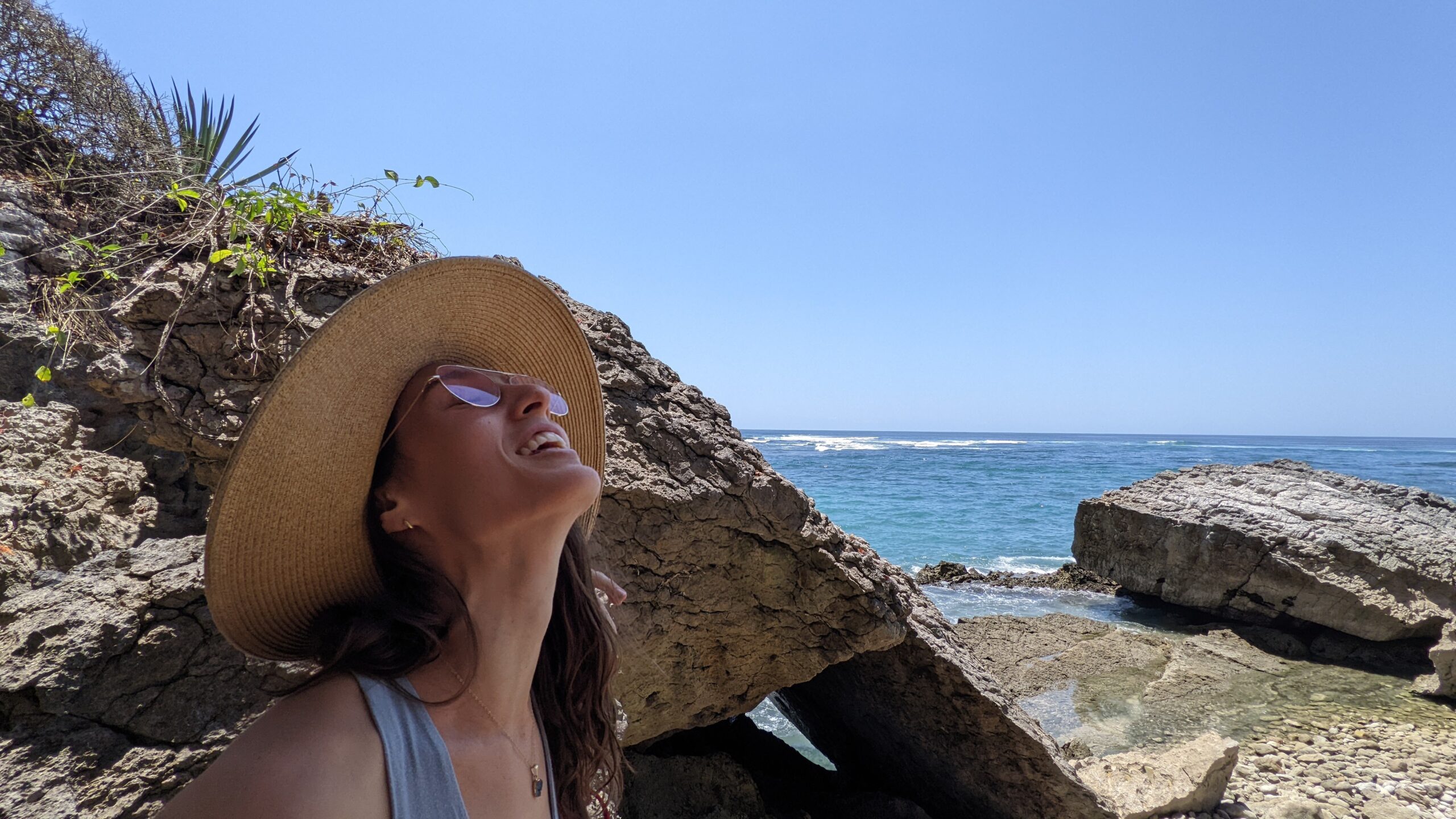
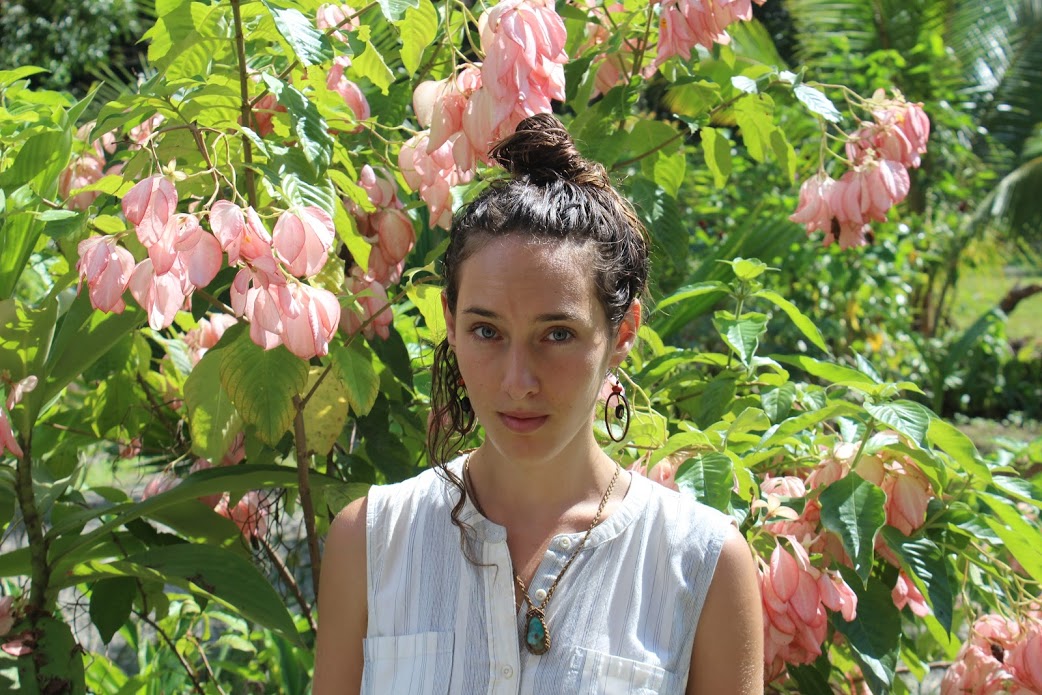
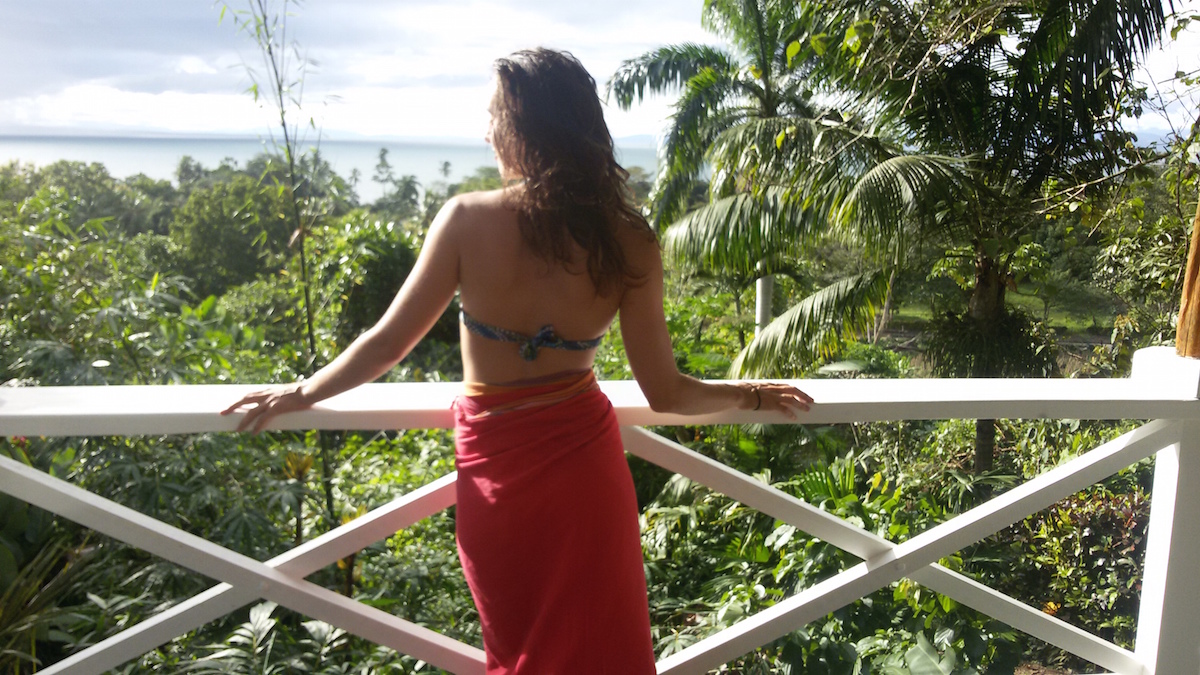
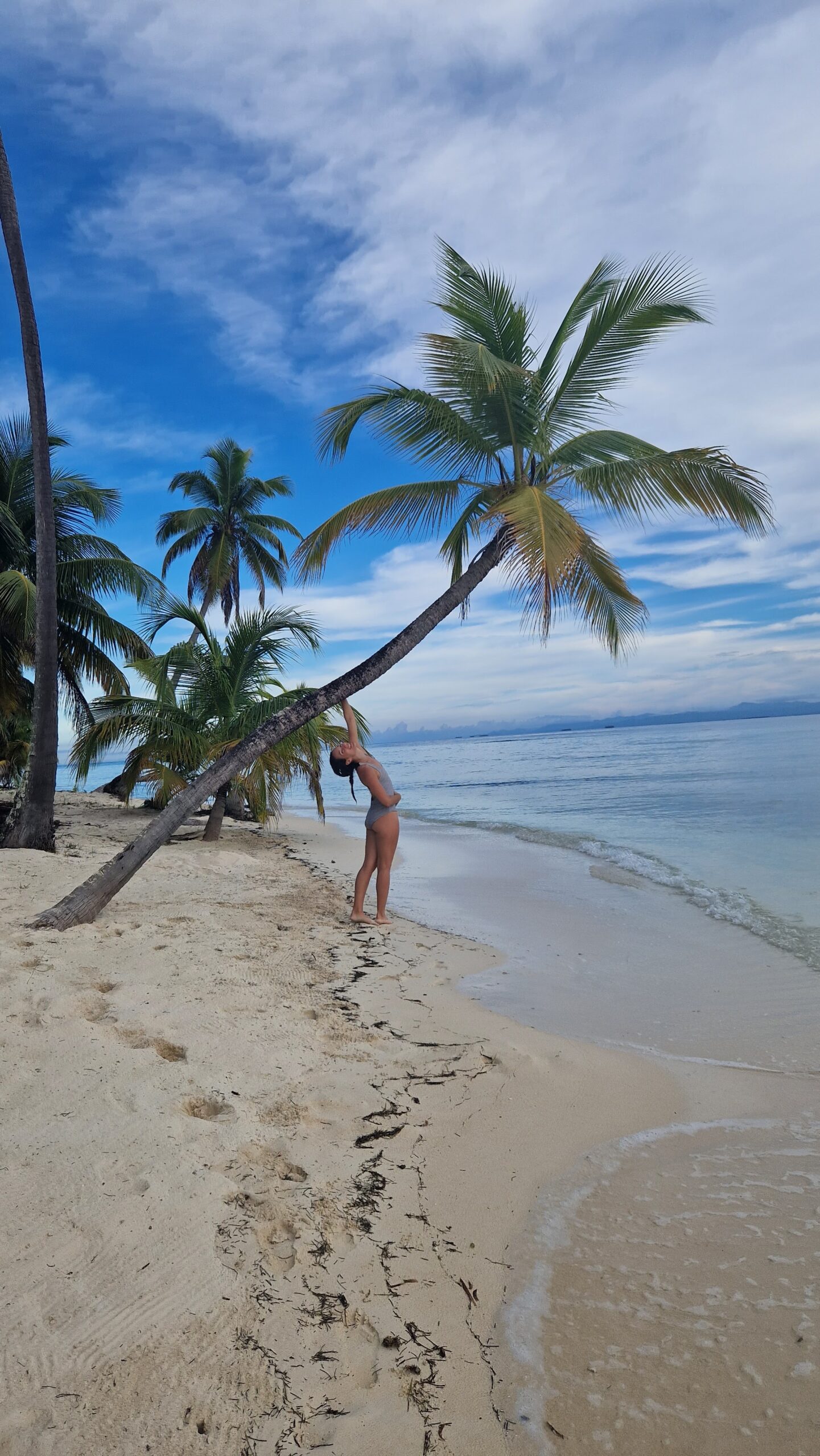
    Ometepe, Nicaragua | January, 2023 | Photo: Thomas Blanc

    Safety is a human right. So is solitude.

    Solo female travel? That’s not possible. It’s too dangerous. Women shouldn’t do that. You should never travel alone. What if you get kidnapped? Aren’t you scared? Go with someone, a friend, a partner—ideally a man.

    As a woman, I have heard every argument in the book against going out into the big, bad world on my own. The fears and warnings above are just the tip of the iceberg.

    These questions/concerns do not intend to fear-monger. They come from friends, parents, uncles, lovers, and well-meaning readers—people who want to see me safe and well. Yet it seemed unfair from the outset that I had to bear the brunt of my family’s concern as I traveled solo, while my older brother had jetted off first without much ado. The double standard always chafed. Of course it all came from love, but that’s not the point. 

    Why did everyone worry so much about my safety, and yet no one ever suggested I take it into my own hands?

    The problem is not so easily reduced to a few knee-jerk comments and Hollywood-induced travel phobias alone. Rather, it’s how these well-intentioned aphorisms reinforce an out-dated social contract that discourages women from enjoying the same freedoms men do that does the bulk of the harm.

    There is a depressing kind of fatalism in writing off solo travel for women forever because, “the world is a dangerous place,” rather than consider, for a moment, that there might be solutions. That there might be strategies for personal safety that do not come at the high cost of freedom and adventure.

    For most of my years of solo travel, I got by on instinct and bravado. “Fake it ‘til you make it” was my response to getting lost, harassed, followed, or accosted. Act like you know where you’re going, like you’re fearless, like you’re unshakeable. Most people will believe it. Eventually, you will too.

    And while this worked, I made it through a decade of solo adventures unscathed, I still lacked some basic tools to not only stay safe, but also enjoy solo travel more. 

    In 2018, however, I seized an opportunity to train as an Empowerment Self-Defense instructor with ESD Global, an organization dedicated to women’s safety around the globe. Realizing that many women yearned to travel solo, but were held back by fear, I decided to offer more than just words of advice or encouragement. It was time for practical skills.

    Action is the antidote to fear. 

    Developed over the past 50 years by female martial artists and violence prevention experts, ESD teaches a compelling mix of physical techniques and verbal strategies for deescalation and boundary setting. 

    It was the missing link, a one-stop shop for women desiring to feel both safer and freer in any environment. After nearly four years teaching this methodology across Central America, I can confidently attest to the transformative power of discovering our inner fire. Knowing what our body and voice can do, and trusting we know exactly how to use them, instills cultivates a valuable baseline of confidence and self-reliance for solo female travelers.
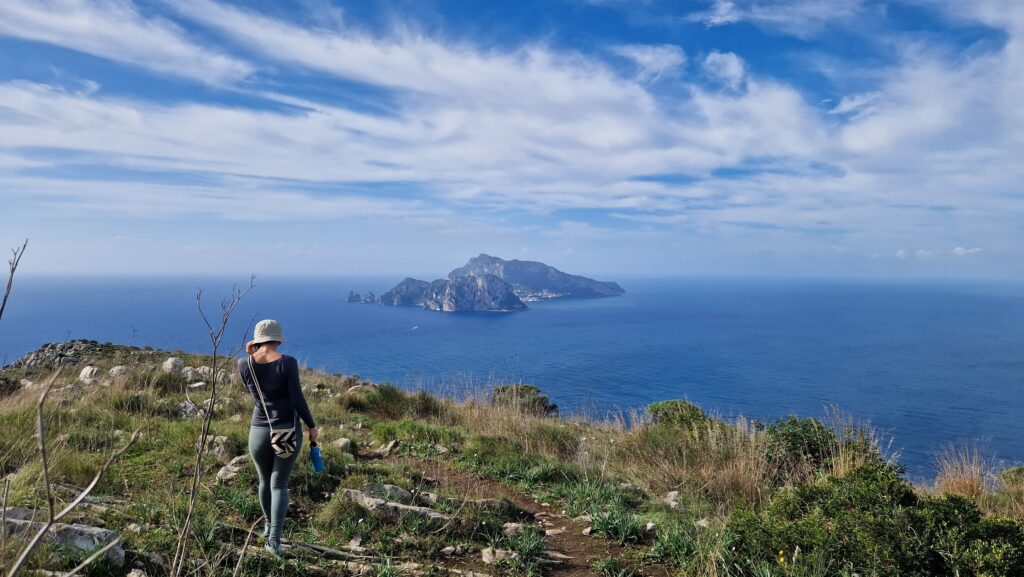
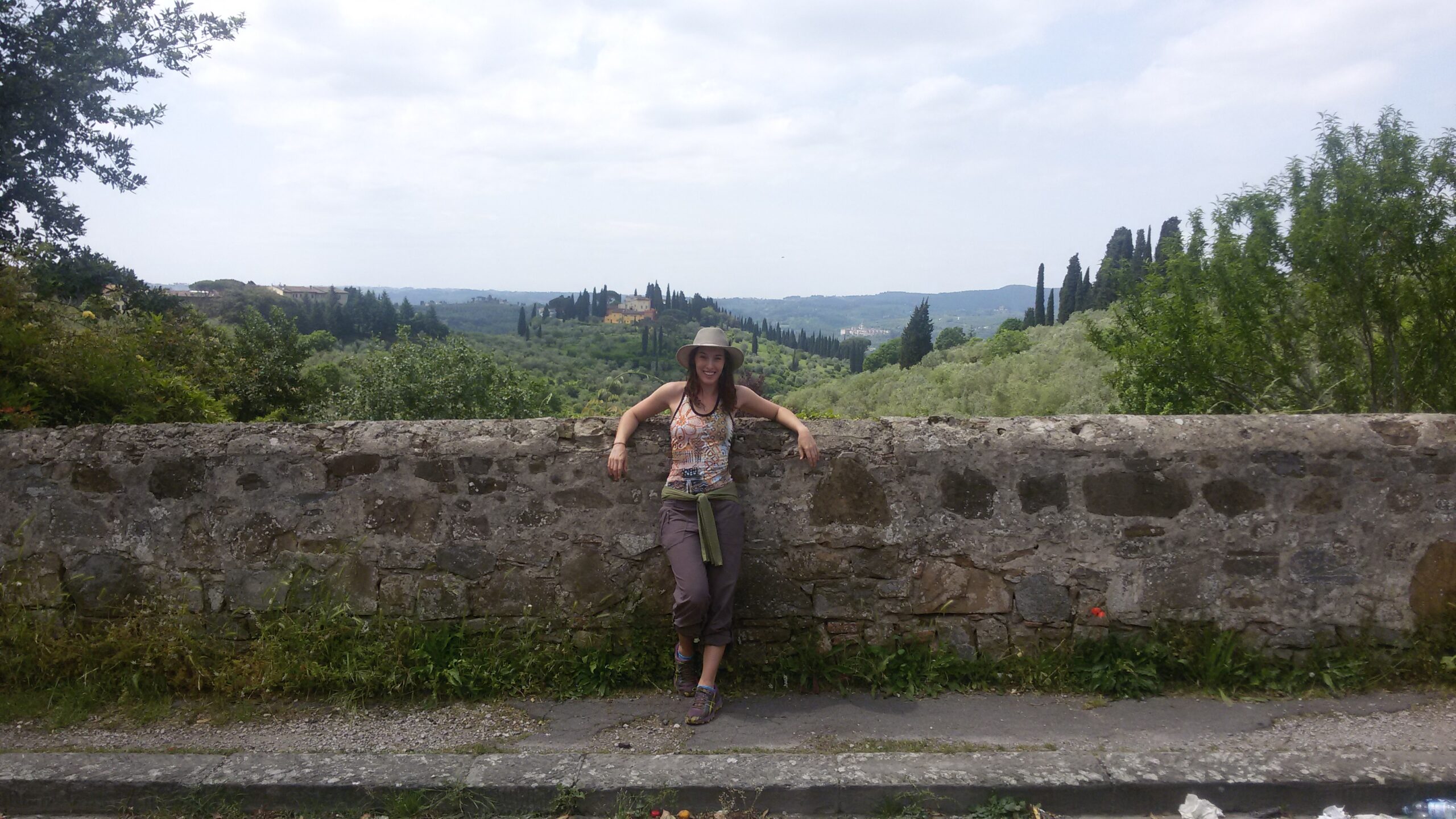
    Amalfi Coast, Italy | November 2023 | Photo: Thomas Blanc

    Below are my 5 go-to strategies for staying safe as you travel, without sacrificing a single glorious moment of your solo adventure.

    1. Listen to Your Intuition 
      Women too often internalize the social conditioning that everyone else knows more about our boundaries and our bodies than we do. In fact, we know very well when a situation is unsafe and, conversely, when we can relax and settle.Intuition is the soft, quiet voice that whispers in your gut, “Yes.” “No.” “This way, not that way.” “Danger.” “All clear. The trick is learning to listen, and then trust that voice. When we are conditioned to ignore our gut, intuition feels ungrounded and impractical.In fact, it is very much the opposite. Intuition warns us when a person, place or situation is potentially dangerous. It may feel like tightness in the chest or belly, shaking in the hands or legs, buzzing in the forehead, or a general sense of tension or closing in. And, it will guide us to know when to trust new friends or dive into “risky” adventures. That may feel like openness in the chest, relaxation or softness in the belly or jaw, or a general feeling of leaning in. The more we heed these signs and engage with our intuitive mind, the sharper it will become.We can practice listening to our intuition in small ways—eating when hungry, resting when tired, changing position or taking a deep breath when our body asks for it—and with mindfulness practices such as yoga, meditation, martial arts, or unhurried time in nature.
    2. Understand “The Interview”
      The interview is a well-documented occurrence in gender-based violence, whereby a potential attacker “interviews” a potential victim by slowly and progressively pushing her boundaries to see if or when she will act in self-defense.Whereas popular culture leads us to think that violence against women is sudden and unexpected, most attacks are in fact slow and deliberate. Each step of the interview is an opportunity to set a boundary: They follow you in the street or on the trail. They start to ask you personal questions on the bus or at your campsite. They touch you in a way that feels uncomfortable. They don’t respect your “no.”We will often wait to be “sure” of a person’s intentions before setting a hard boundary or expressing a firm “no.”Fear of offending or overreacting leads us to disregard our own needs and our own intuition to avoid rocking the boat. This is exactly what a would-be attacker is counting on. The sooner you can identify an “interview” situation while traveling, the more easefully you can de-escalate, speak up, escape, seek support, or otherwise stay safe.
    3. Use Your Voice
      Be loud, assertive, and unapologetic. The best way to stop “the interview” in its tracks is to use one of the most powerful weapons in our arsenal: our voice. Setting clear, firm boundaries can deter a would-be attacker and deescalate a potentially violent situation before it starts. Your intuition will tell you when and how to use your voice, be it calmly stating a boundary, or shouting “NO” at the top of your lungs.
      Women often learn from a very young age to stay quiet, to play nice. And so it takes practice to override this conditioning and train ourselves to speak up when we feel uncomfortable or unsafe. It is vital that we do so, however. In a situation of attempted assault, it can save our life. (Note: Using the voice is not about calling for help, although we can also ask for support from bystanders if that feels like an option. Activating the voice connects us to our own core power, disrupts the “freeze” response to danger, and also discourages a potential attacker.)
    4. Stay (& Look) Aware
      Whether on the road, in the woods, or right at home in your neighborhood, awareness is key for personal safety. Staying vigilant—no need for stress or tension—not only helps us to identify danger or risk well before it becomes an emergency; it also can help us get oriented in a new environment, observe more details and beauty along our journey, and enjoy our adventure with full-bodied presence. As we rely more and more heavily on technology for navigation and communication, we may feel the urge to check our phones frequently. As a traveler, the best thing you can do is keep your eyes up, phone away, and look and act like you are confident and at ease, regardless of how you feel.
      Keeping your shoulders back, your chin up, your gaze relaxed and alert, and your feet wide serves two purposes: It communicates to the outside world that you are confident and aware (and you are). And, it sends a message to your own brain and body that you are not afraid to take up space, increasing your self-confidence and security at a cellular level.
    5. Keep it in Context
      Let’s put the concept of women’s safety in context. At least 90% of gender-based violence worldwide is perpetrated by someone known to the victim. 59% by an intimate partner. The “stranger danger” narrative of personal safety and self-defense ignores the bigger picture: As women, we are not at higher risk out in the woods or on the road. In fact, we may be safer there. Despite the cultural narrative around personal safety, all the fears and warnings I shared above, solo female travel is not in fact more dangerous than being a woman at home, at work, or in a relationship. So if doubts about safety are holding you back, or if friends or family challenge your travel choices, it may be helpful to consider that just being a woman is risky stuff.
      Staying home won’t necessarily keep you safe, and neither will staying close to friends or significant others. At times, these may in fact pose a greater threat. So you might as well go out there solo and live your adventure. (If you would like to dive deeper into this kind of training, I recommend exploring ESD or IMPACT Personal Safety Classes in your area.)

    Empowerment Self-Defense is about offering new options and alternatives, not tossing out all the strategies we already have. I know every single one of you already has a toolkit packed with self-defense techniques, whether you call them by that name or another.

    So what would you add to this list? What are your go-to strategies for feeling secure and confident on your solo adventures? Share your experience in the comments!


    Originally published on Roofnest.

    Learn more about my empowerment self-defense work at www.mujeresfuertes.org, or support our fundraising efforts here.
  • The Sacred Pause: from Dance to Self-Defense

    The Sacred Pause: from Dance to Self-Defense

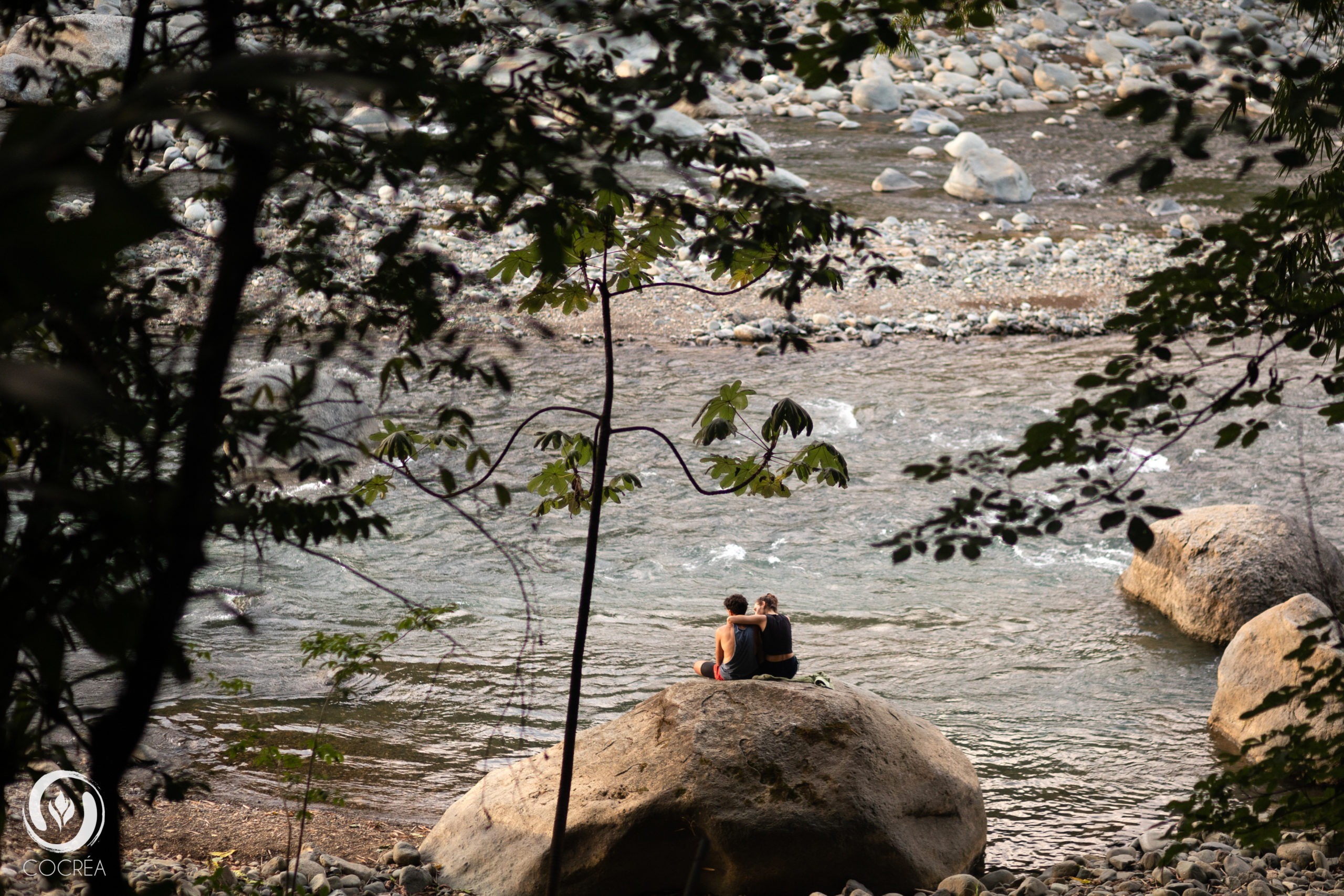
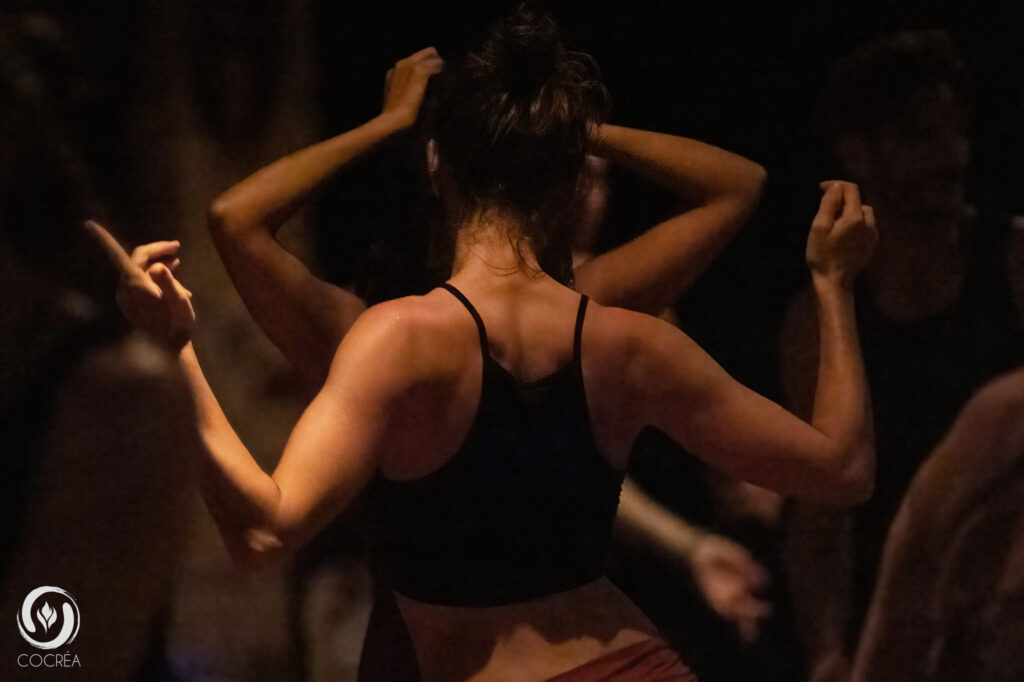
    March 24-31, 2023 – Dance Your Medicine Retreat at Posada Natura Healing Center in Londres, Costa Rica. (Photo by: Foster Snell | @FosterTheEexplorer)

    One breath can change everything.

    The “sacred pause” can be the difference between reaction and response, between contraction and expansion, between inaction and action.

    In the spaciousness at the top of our inhale, everything expands and possibilities open before us. In the emptiness at the bottom of our exhale, clarity crystalizes.

    After a week of exploring “mindful partner dance” with the amazing humans behind CoCrea last month, I found myself thinking a lot about the “sacred pause.” In dance, this pause can be a single breath, or even a microsecond of stillness that allows us to listen to our own body and our partner’s—and allow movement to arise from there.

    It is a moment of beauty, attunement, and awareness, rich with potential. And it is a moment to reconnect with our own body and its needs, giving ourselves the opportunity to act in integrity with our own self-knowing.

    Here is where we can carry the sacred pause with us from dance into self-defense.

    That same, seemingly-insignificant moment of renewed awareness, when applied to a situation of danger or violence, can again change everything. The sacred pause can restore our agency and power when we find ourselves in an adrenalized or activated state, helping us to access our self-defense toolkit, in spite of fear or confusion.

    In the holistic self-defense classes I teach through my empowerment project, Mujeres Fuertes, we often encourage participants to take a breath before practicing a strike. We also regularly discuss the importance of taking time to check in with ourselves when a person or situation makes us feel uncomfortable or unsafe. In this moment, we choose how we want to respond, if we need to set a boundary, if we would rather get up and walk away, and so on.

    Fear can easily cloud our judgment as well as affect our coordination; pausing helps us choose, speak, and act with clarity.

    Similarly, the social contract and social conditioning around “niceness” and “politeness” often keep us in places we actually don’t want to be. Utilizing the pause to touch base with our intuition and listen to the body, we can recognize more easily when a situation is “yellow” or “red.”

    From a trauma-informed perspective, the sacred pause—taking a breath and bringing awareness back to the present moment—can mean the difference between freezing or acting (yelling, running, fighting, and so on) to defend ourselves. When the alarm system is activated in the brain, most people unconsciously default to their go-to adaptive strategy: fight, flight, freeze, flop, or fawn. For many, and especially for women, the freeze/flop/fawn response is a well-honed survival strategy.

    “What if I freeze?” is probably the most frequent question in our self-defense classes.

    No one can guarantee breaking the freeze response, nor do we wish to write it off entirely, as it is itself a survival strategy. However, we do know that the more we practice pausing, breathing, and bringing awareness to the body when adrenalized or activated, the more we augment our capacity to notice—and to choose a different response.

    Furthermore, we invite participants to reframe freezing as “active waiting.” The animal that freezes in nature when danger approaches often proceeds to run away or otherwise act in self-preservation. People are no different. Through training our body to breathe through discomfort or fear, notice our instinctive reactions, and then yell, run, or fight, we curtail the freeze response and prepare ourselves for what follows.

    The more tools and options we have, the more possibilities will open ahead of us in the momentary lift of the sacred pause.

    Why “sacred”? Because for me, anything that connects us with our embodied wisdom, intuition, or inner knowing is a mystical practice. Anytime we enter into communion with that soft, clear voice who speaks or dances from our center, I believe we are in conversation with the divine. And what is more sacred than that?

    How do you apply the sacred pause in your life, relationships, or creative work? I would love to read your perspectives!

    Finally, I invite you to remember the sacred pause when you feel afraid, uncomfortable, confused, or overwhelmed.

    In the spaciousness of this moment, everything is possible.


    Originally published at elephant journal.

  • 4 Steps to Transform Self-Doubt into Self-BeliefBelieve in Yourself First

    4 Steps to Transform Self-Doubt into Self-BeliefBelieve in Yourself First

    “I just don’t know if anyone really wants to hear what I have to say. I don’t feel confident that I am qualified to offer these services — or that anyone should be interested.”

    Rachel was a 30-year-old yogipreneur grappling with self-doubt about taking her workshop and retreat business to the next level. We needed to relaunch her website, start up a monthly newsletter, establish a consistent social media strategy, and develop a stellar brand identity. We had our work cut out for us, but first, we needed to move through Rachel’s own internal blocks.

    We couldn’t get anywhere until she got out of her own way.

    Rachel shared her misgivings with me during our second meeting as we began to discuss creating a content calendar for newsletters and social media posts. “I’m just not sure anyone is interested,” she confessed, “or that I have anything worth sharing.” Her insecurity was palpable through the two-dimensional Zoom window.

    I was a brand consultant, not a coach, I thought. Yet it was clear that I wouldn’t be able to deliver meaningful results unless we addressed my client’s paralyzing doubts first.

    Rachel’s body language and tone shifted drastically as I asked her to share about the success of her first workshops and the lives she had touched in her yoga classes. Voice firm, head high. Beneath the doubt and misgivings was a self-assured core of certainty: her work had value, it was of benefit, and there were people out there who wanted and needed to hear what she had to say and know about what she had to offer.

    When doubts resurfaced during our work together, we would come back to that essential knowing: this matters.

    Believe in Yourself First

    “The moment you doubt whether you can fly, you cease forever to be able to do it.” — J. M. Barrie

    No one will ever believe in us as much as we can believe in ourselves (with the exception, maybe, if we’re lucky, of our family, friends, or partners). Even so, we need to be our own best cheerleaders in the face of the inevitable failures, rejections, roadblocks, and doubts along the path of the fearless creative.

    What’s more, if we don’t think our business/book/art/fill-in-the-blank creative project is worthwhile, how can we expect anyone else to buy-in? Or, to rephrase that, if we truly believe in the value of our work, our audience, clients, or participants will pick up what we’re putting down — sooner or later.

    If only saying the words would make it so. I’m no psychologist, and motivational speakers usually make me slightly nauseous, so don’t expect too much of a pep talk here.

    The best advice for which I can personally vouch is simply this: fake it ’til you make it. Start this journey with all the bravado of a Greek hero(ine) — reluctantly, but inevitably, because the gods are breathing down your neck, and you have no choice.

    We don’t have a choice. We, humans, are creative in essence. We can let it move through us, or it will find a way to break out, probably in less beautiful ways.

    Sometimes, action has to come first, and belief follows. As a tween, I used to practice my self-confidence in front of the mirror. Somewhere along the way, it became real and effortless. I acted confident long enough, and my brain jumped on the bandwagon and believed it.

    Words and actions can shape our worldview, so start acting and talking like you believe in yourself 100 percent. I hope it will become your deepest truth somewhere along the way.

    Don’t Just Read About It, Be About It.

    Reading about doing stuff is not enough. If we want to do something, we have to actually do the things.

    Transforming Doubt

    1. Make a list in your journal or on your computer or phone of at least 10 (it can be more) doubts, fears, or limiting beliefs about yourself or your work. (e.g., “I don’t have enough experience on Xyz.” “I don’t have anything worthwhile to say.” “No one will want to buy it.”)
    2. Now, in a new column or on a fresh page, rewrite those doubts as positive statements, transforming them into encouragement or motivation. (e.g., “I have trained/studied extensively in Xyz, and I am ready to share my knowledge.” “I have a lot of meaningful things to say, and someone needs to hear them.” “Someone out there is waiting for the gift that only I can offer.”)
    3. Choose a few positive statements, the ones that make your heart race, or give you goosebumps, or feel like a “yes” in your belly. Copy them onto Post-it notes to leave on your desk, fridge, mirror, or anywhere else you will see them frequently. If it feels good, repeat them aloud whenever you need a boost.
    4. Come back to this practice anytime in the creative journey that you find yourself getting in your own way.

    How do you work with self-doubt and transform it into self-belief? I would love to read about your go-to strategies in the comments!


    Originally published in elephant journal.

  • Remember: This Journey is Just a Walk in the Woods

    Remember: This Journey is Just a Walk in the Woods

    Uncertainty. How many times must I meet you before I remember your stubborn face?

    In work, in travel, in body, in love—nothing is truly stable, not at the core. That is the only certainty.

    I have learned this lesson so many times, it rolls off my tongue like a prophecy when I speak to friends and vagabonds-to-be about my lifestyle. Yet, I find I must repeatedly teach myself my own lessons, too.

    We’re all just human.

    We seek, endlessly, for a secure future, a safe home, a lasting relationship, a full stomach, a rich coffer. To do otherwise would render us saints or bodhisattvas. To do otherwise would mean to no longer be human.

    A post shared by Toby Israel (@tobyintheworld) on

    The best we can do, then—maybe—is to remind ourselves often that our search for certainty is futile… and then to go on searching anyway.

    The best we can do, maybe, is to see the humor in it all.

    To observe our fallible human hearts and laugh at them—and love them.

    Lately, I’ve been obsessing somewhat over where I’ll live when I return to Costa Rica in September. I know it’s too early to make this decision. I know. Each time I jump on the same cycle of thought, I remind myself of this. I stop. And then the next day I start all over again.

    It just is. Asi es.

    A post shared by Toby Israel (@tobyintheworld) on

    It’s okay. I’m human.

    I note without blame or frustration the patterns in my own life—the relationships where I’ve grasped at tomorrow, cities where I’ve hastily sought a room to call home, homes where I’ve ignored the “here” to plan my escape to “there.” I observe all this with a glint of happy laughter.

    What a blessing, to have arms strong enough to grasp and a heart strong enough to learn, over and over again, to relinquish control.

    “I know you’re tired but come, this is the way.” — Rumi

    A post shared by Toby Israel (@tobyintheworld) on

    This journey is really an aimless walk in the woods, but we forget that. In my imagination, the remembering goes something like this:

    Angel: Look how many beautiful trails there are! So many possibilities!

    Devil: But, which is the best route to get where we’re going?

    A: We’re not going anywhere, come on! Remember, we’re just walking for the joy of it.

    D: Right… right. Any path will do, just—

    A: Just what?! Any path will do. That’s all.

    D: Just, better be careful to choose the right one.

    A: What do you mean? There is no right way to get there if we’re not going to any “there” in particular. That’s the whole point.

    D: But, what if there are waterfalls on that trail? We wouldn’t want to miss out on any natural wonders, would we?

    A: And maybe there are unicorns on this trail. We just don’t know until we try, do we? We’ll see what we see and miss what we miss, and our walk will be exactly perfect.

    D: Might as well just stay here. Wouldn’t want to risk heading off in the wrong direction.

    A: Not an option. We’re walking. Anywhere. Somewhere. Nowhere. Does. Not. Matter. But we can’t stay here. Life is moving, and we have to move too. So get up, count to three, and choose.

    D: But, but… what about unicorns? And waterfalls? What about monsters? There could be monsters! No way, not worth the risk.

    A: One.

    D: Nope. Not going anywhere.

    A: Two. Remember: There’s no right way, only the way you choose to walk.

    D: Not sold. Monsters, remember.

    A: Wherever you walk, that is where you’re going. Three.

    D: …

    A: I’ll choose, then. That way.

    toby israel, vagabondess, nomadic, uncertainty, journey, choose, walk

  • It’s Not about Being Good—It’s about Being Bold

    It’s Not about Being Good—It’s about Being Bold

    “It’s time to be bold, stand up, and share your art OUT LOUD.”

    Thus reads the event description for the open mic night I’m organizing this week. Out Loud (En Voz Alta) is an opportunity for artists, performers, and secret creatives to take risks and share their art—out loud.

    Here’s the thing. If I’m going to tell anyone else to be bold, I’d better start with myself.

    That’s why, today, I made my first Facebook Live post (below). That’s why I’m beginning to share my songs with a wider audience than the monkeys outside my house (they think I’m pretty alright). That’s why I’ll be performing first this Thursday night.

    I hope to set a tone for the evening. And the tone goes something like this:

    If you were waiting for someone to give you permission to fail, this is it.

    If you were waiting for someone to tell you it’s okay to suck, this is it.

    If you were waiting for someone to promise that they’ll cheer you on regardless, this is it.

    This isn’t a talent show.

    An open mic night is an opportunity to stand up and take a risk. To share your art, your voice, your heart out loud.

    If you were waiting for someone to give you permission to screw up, to be terrible, to fail—that’s happening right now.

    So please, take the risk. Be bold.

    I’ll be there cheering you on.

    And so, here I am. Trying to make a point by singing… I didn’t sing much the first twenty-plus years of my life, because someone once told me I couldn’t, or shouldn’t. What a loss! We all carry around these incredible instruments all the time, we might as well use them, enjoy them. Who cares if they’re harsh or ugly or off key?

    Then, in April of this year, I started to write songs.

    Are they good songs? That’s not really the point.

    I’m not trying to be famous. I’m trying to do something true.

    And if someone reads this or sees me sing/perform/publish and decides to take their own risk, then it will be doubly worth it.

    It’s easy to share the things we believe we’re good at. Harder to share when others (or our own brains) have told us we’re utter failures.

    But the world doesn’t need more people who hide. It needs more artists. It needs not fearlessness, but boldness. It needs more people who will stand up and say,

    “This is me. I don’t care if you like it. I don’t care if my hands shake. I have a voice, so I am going to use it. Because I am human.”

    That’s why I’m here—organizing open mic nights, sharing my music with the big, scary internet. Not because I’ve overcome those deeply rooted insecurities, but because I’ve decided that this is more important. I believe art is meant to be shared. I do not believe life is always a talent show.

    And, finally, it’s not enough for me to be bold; I want you to be bold too.

    We have these amazing instruments—our voices, our hands, our bodies—that can sing, speak, write, play, and dance. Shouldn’t we use them?


    Photo Credit: Halley McClure

  • On Growing Wings & The Value of Figuring It Out for Yourself

    On Growing Wings & The Value of Figuring It Out for Yourself

    wings

    I have the clearest memory of asking my father for help tying my shoes.

    I was sitting on the bottom step of our unfinished basement—I must have been around four years old—trying to remember something about a rabbit and a hole. And there was my father, who already had all the knowledge I needed about shoelaces and rabbits; he could help me.

    But instead he said, “You can tie your shoes yourself.”

    And I did.

    Maybe that memory is real. Maybe my mind constructed it out of dozens of memories like it. I don’t think it matters.

    My parents pushed me to “tie my own shoes” throughout my childhood in countless ways, large and small. It’s one of the gifts for which I’m most grateful. Without a doubt there is a fine balance between holding a child’s hand and pushing them out into the world alone. I have no idea what that balance is—one of many reasons I’m not a parent.

    As an adult, I’ve made a religion of self-sufficiency. Perhaps I’ve taken it to too much of an extreme, but that is what I have done. Solo travel, distance walks, one-way flights to countries where I know nobody, constant seeking for edges—my own, and the world’s…

    Some people are adrenaline junkies. The Unknown gives me my high.

    When I moved to Cape Town for the first time in early 2016, I didn’t know anyone there. I came with a name—a friend of a friend—and an address. When I found out that the house I’d already paid a deposit on was nowhere near the center of the city, I hitchhiked my way to climbing gyms, dance classes, and cozy cafes until I figured out the informal shared taxis.

    Would it have been easier to have friends, family, or resources at my disposal, ready to give me rides, show me the ropes of a chaotic transport system, and introduce me to new friends? I’m sure it would have—but then, would I have learned as much?

    I’m a firm believer that we grow fastest and fly farthest when we push ourselves well beyond our comfort zones. Experience has taught me a key paradox to traveling (and living) in a state of discovery: To thrive outside our comfort zone, we must trust, absolutely, that we can thrive outside our comfort zone. But to truly believe in our capacity for flight, we have to fly.

    In essence:

    “We have to continually be jumping off cliffs and developing our wings on the way down.” — Kurt Vonnegut

    Now, there are a few key elements to this jumping-off-cliffs-and-growing-wings business…

    First, that balance. We are none of us an island, as a wise writer once said, more or less. For every cliff we jump off alone, there may well be another to whom we say, “not today,” and third on which we find a companion to hold our hand on the way down. Balance.

    Second, support. While my parents were teaching me to tie my own shoes, they were also giving me love and support every step of the way. I am blessed to know that my family and friends are always there, ready to cheer me on when I fly, or pick me up if I take any knocks on the way down. Family, friends, community—a support system, even if we never call on it, makes it so much easier to jump.

    Third, will. You could argue that personality or background determine our ability to grow wings, and I would disagree with you. While stubbornness is my dominant personality trait, and I don’t like following directions, I have met so many others far more resourceful than I, of every possible personality type and cultural background. I don’t believe it is personality; it’s will. Tautological though it may sound, to figure it out for yourself, you have to want to figure it out for yourself.

    To grow wings, you have to grow wings.

    Easy?

    Wrong question. It’s possible, and that’s really all we need to know.

    Happy flying!


    Many thanks to a good friend here in Costa Rica, whose conversation on this subject pushed me to articulate what exactly I think about it!

  • But Still: A Short Story on the Wisdom of Trust

    But Still: A Short Story on the Wisdom of Trust

    “Trust no one,” the wise ones said.

    Deep-lined faces, milk eyes clouded with all the memories of all the misfortunes of all the ages, they hummed with knowledge of the world’s evils and ills.

    “But why?” the innocent ones asked.

    Smooth smooth skin, crystal eyes free of such heavy knowing, they saw only beauty — believed in the bright spark glowing in all the souls of all the bodies of all the beings around them.

    “Take heed,” the wise ones replied. “Once, we were like you, crystal eyes and silk skin and child hearts untouched by sorrow. But now, but now, but now, but now…” the fragments of harsh lessons learned echoed in that mournful “but now.

    The innocent ones began to look around them with more caution.

    The knife-edge teeth of the sharks — who had once been their friends and accomplices in underwater adventures — suddenly inspired fear. The midnight eyes of hawks and gulls — who had once delighted the children with their dramatic displays of flight — now reflected frightened stares.

    The highest branches of the oldest trees — once safe refuges of friendship and warmth — revealed the word Danger writ into the grooves of their bark.

    The knowing, the knowing, the knowing — it descended upon the children like a milky white shroud, swirling thoughts of evils and ills in once-clear minds, and soon it was they who echoed the mournful tales of the ancient wind and rocks around them:

    But now, but now, but now.

    Yet, not all the children bowed before the knowing and donned the severe cloud eyes of the wise ones.

    No, there were the other ones too, and when the wise ones said Trust no one and the innocent ones asked But why, these last few held up a hand for quiet and called softly, “Wait.”

    And some of the innocent ones stopped to listen.

    The other ones continued, “Once, we were like you, crystal eyes and silk skin and child hearts untouched by sorrow. Now, our eyes, our backs, our hearts, too, carry all the memories of all the misfortunes of all the ages. Our skin, too, carries knowing in every pore.

    Yes, the world will knock you down, cheat you, hurt you, lie to you and disappoint you. You will not be innocent forever; the wise ones speak true…”

    And then, milk eyes creased in child heart smiles, and the other ones echoed the joyful melody of the waves and the sky and the mountains around them:

    “… But still, but still, but still, but still —

    the spark you see in all the souls of all the bodies of all the beings is there.

    But still, but still, but still —

    Trust anyway.”

    trust


    Originally published at Rebelle Society.

  • How to be an Incorrigible Optimist, or, What I’m Doing in Costa Rica

    How to be an Incorrigible Optimist, or, What I’m Doing in Costa Rica

    “We are the crazy ones who choose to believe in peace,” he concluded.

    One sliver in a blurred progression of notable speakers and presentations that overfilled my two-day orientation at UPeace (University for Peace) in El Rodeo, Costa Rica, his words stuck with me.

    The volcanic mountains of San José rose in the hazy distance outside the window. Over 100 students from several dozen countries filled the seats beside me. Anyone pursuing a master’s degree in Peace Studies must be at least a tiny bit of an optimist.

    I certainly am.

    To trust, to believe, to hope—this is my daily act of rebellion in a world that tells us only to fear, to hate, and to doubt.

    Our world is full of darkness. And it is full of light. I am an optimist not because I do not see the darkness (of course I do—who could ignore it?), but because I choose to always strive for its opposite.

    The world is at war; I hope for peace.

    Humans are cruel, petty, hateful, and foolish, but I believe—I know—they are more often kind, generous, loving, and wise.

    No matter how many times I encounter the former, I continue to trust. This is not naïveté; it is optimism. Because my world—the world I want to live in—must deserve my faith.

    peace, optimist, costa rica

    How can we be incorrigible optimists in a world that is constantly turning on its head?

    Simple.

    We choose it.

    We rebel against cynicism and decide to be optimists. There is no other way.

    That’s what I’m doing here at the University for Peace in Costa Rica. Choosing to believe in peace.


    More stories of discovery, peace and adventure in Costa Rica are on the way. What do you want to read about? Let me know and I’ll probably take your suggestion on board!

  • How to Go Out Alone (& Not Hate It)

    How to Go Out Alone (& Not Hate It)

    It’s 2009, and I’m eighteen. Paris is home for the year.

    It’s a chilly night in early winter. Ten or eleven o’clock. I’ve just gotten off the metro somewhere in the center of the city.

    Buzz. Buzz. The text messages, which don’t yet reach underground, arrive in a flurry. “Can’t make it.” “Running late. Might bail.” “May come later. Not sure.”

    Well shit. I’m not going in there alone. My first instinct is to flee right back the way I came.

    But then I glance at the bar—warmly lit wood and brass, clientele dressed in the ultra-chic black uniform of the city—and my natural stubborn streak takes over.

    So what if no one else is coming? It’s Friday night, and it took me forty-five minutes to get here. I’ll be damned if I go home without at least checking out the scene.

    I open the door. Step into the warm light. Rest an elbow on the narrow wooden bar. Order a glass of wine—white, I think.

    The clamor of several dozen voices reaches my ears at once. I absorb it as I sip my wine, but before long someone strikes up a conversation with me, and my focus narrows to just one. I practice my French. Find that it comes easily with strangers, without pressure. Somehow I find myself at a table with a dozen young people from the south of France. Celebrating a birthday—I think.

    The evening flows, and I leave for home many hours later, glowing with perverse satisfaction more than anything. I went out alone, and it didn’t suck. So there, world!


    I’ve been meaning to write this piece for years. All credit goes to the friend who asked me last week what I did about going out alone when I travel: Thank you for reminding me.

    That night in Paris was, in a way, a pivotal moment in my solo travel career. It’s one thing to hop on a train alone, sightsee alone, or even eat at a restaurant alone. We might do all of these things with ease, yet panic at the thought of entering a bar or club without backup. And by “we” I mostly mean “we women,” as that is the experience I feel I can speak to.

    Why? Why is this the impassable limit of independence?

    Well, first off, we’ve had it drilled into our heads that this simply is not done. That old fear rhetoric strikes again. Creepy guys, lechy guys, drunk guys; social stigma, weird looks, pitying stares; feeling lonely, awkward, unpopular, uncomfortable—

    Ahhh stop! Forget it. Let’s never go out alone. We’re convinced. Right?

    No! Let’s go out alone, because, as usual, reality is better than our imagination—and certainly better than our nightmares.

    I went to bed that November night in Paris feeling empowered. “Not sucking” may seem like a low bar for an evening out, but when we’re conditioned to expect utter disaster from any solo foray into social adventures, “not sucking” is actually high achievement.

    In the years since, I’ve often gone to pubs, live shows, dance clubs, bars, and festivals alone. Sometimes I even—gasp—prefer it. Story for another time.

    going out alone, dance, dancing

    I think the “how” of going out alone is fairly self-explanatory, but I’d break it down something like this:

    > No expectations/low expectations. If you’ll happily go home disappointed, a nice evening out is a pleasant surprise.
    >> Stay sober-ish. Obvious. Safety in self-possession, especially if you’re trying the solo adventure thing.
    >> Stay open—to possibility, to people, to surroundings. There’s potential in everything.
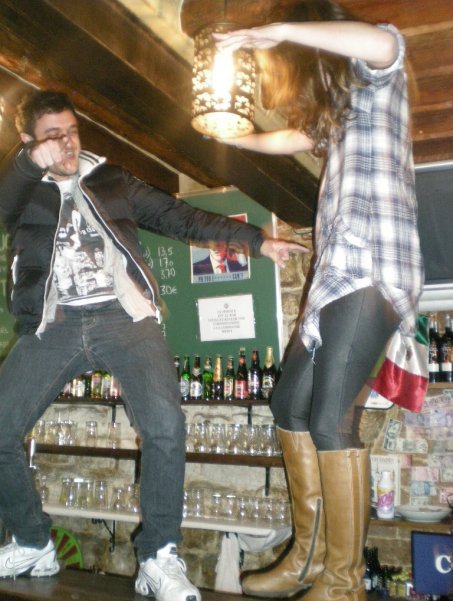
    >> But be prepared to deflect all the kinds of creepy. Welcome to the world. Books are excellent shields. So are crazy-arm, spinning-jumping dance moves.
    >> Just open the damn door and go in.

    Worst case scenario? It’s terrible, you go home, and you can blame me later for even suggesting such a thing.

    Best case scenario? You learn that you truly can do anything, because you’re a badass, and life isn’t as scary as everyone tells you.

    Cheers!

  • 7 Hardcore Life Lessons Travel Teaches Faster

    7 Hardcore Life Lessons Travel Teaches Faster

    Travel is a relentless teacher.

    There are no bathroom breaks, no question and answer sessions, and no weeks off for study or review.

    We jump in, and there we are. We learn on the fly, or we fall on our face. Or, we fall, and then we learn to fly.

    Whatever the order of events, we learn, and we learn fast when we get out there. These are a few of the life lessons I’ve found travel teaches fastest:

    1. Let Go of Expectations.

    That time you think you bought an apple pastry at the Finnish supermarket, but when you bite into it the orange mush inside is anything but apple—and it might be tuna fish. The time you order the cheapest thing on the menu at a rural Kenyan restaurant, and of course it turns out to be beef tongue. When you board your train to Rome, and find out you’re heading to Geneva…

    Yes, life is full of surprises; never more so than when we don’t speak the local language, or are in too much of a hurry to ask questions. At some point, I realized I’m more surprised when I do get what (or where) I wanted than when I don’t.

    Welcome the unexpected.

    2. Eat the Food.

    I’m not vegetarian, gluten-free, paleo, vegan, low-fat or high anything else. While I’ve met many brave souls who stick to their dietary restrictions while on the road, I’ve learned it’s a hell of a lot easier (and maybe healthier) to eat whatever’s available. Not to mention unique culinary-cultural experiences don’t usually follow our rules. I frequently choose to eschew the privilege of choice (the eschewing of which, yes, is a privilege in of itself) in favor of honoring a friend’s hospitality or sampling a street snack I’ve never seen before.

    Eat the food. Maybe we regret it the next morning, but in the balance, it’s worth it.

    3. Be Flexible.

    Would you sleep in a boat? Would you sleep on a coat? Would you sleep on the floor? Would you sleep while they snore? It’s not Dr. Seuss; it’s a night in the life of a traveler. Parks, boats, train hallways, packed dirt, wooden pallet, moldy shack, noisy dorm—if you can name it, I’ve probably slept there.

    Flexibility is a skill, not an inbred talent, and one which I’ve cultivated over many years. Be it food, sleeping quarters, hygiene or travel arrangements, I’ve learned—had no choice but to learn—flexibility is king of the travel kingdom.

    Travel will teach us to be flexible like a ballet class on steroids.

    4. The World is your Toilet.

    Lest this be misconstrued, I’m not suggesting you relieve yourself in your friend’s bedroom or the public gardens. Rather more in the vein of number three, we don’t always get to be picky about our WC. London city street at three a.m.? Hey, everything’s closed, and the next bus is an hour away. Edge of a Himalayan field? The alternative is the middle of the village road.

    Bottom line: we can’t be prissy about where we piss, and sometimes we have to get creative.

    5. Technology Won’t Save You.

    Sure, Google Maps is super handy for getting from point A to B in a new city, but it has never helped me get back when my phone dies. I’ve seen enough power blackouts and internet outages to firmly believe we can never rely on technology. It may disappear without warning—or it may not be useful once we drop far enough off the map.

    We have to be resourceful—without any resources.

    6. People Will.

    When you’re outside the service zone, a friendly shepherd will give you directions, and he and his three dogs and two dozen goats will accompany you for the next kilometer of your journey. When you’re stranded on the side of the road, well-meaning strangers will (usually) stop and pick you up.

    When emergency strikes, technology won’t save us, but the human beings around us will.

    7. No Fear.

    When I said yes to a stranger’s invitation to dinner in Nepal, she became a friend, and her family’s hospitality gave me one of my most memorable experiences of the trip. Jumping on another friend’s motorcycle for a two-day ride from Mustang to Pokhara tied it for first. Wherever I go, I try to say yes to every (reasonable) opportunity.

    Not everyone will agree with my “yes-woman” policy, but I stand by it. From hitchhiking to midnight swims, and mountain climbs to backstreet wanders, it has led me to a treasure trove of adventures—and no regrets.

    In short: leave fear behind, along with the high heels. Where we’re going, we won’t need them.


    What did I miss? Please share your travel-taught lessons—I’d love to hear them!

    ***

    Originally published on elephant journal.

  • Struggle: A Travel Manifesto

    Struggle: A Travel Manifesto

    If you travel (or live), where the mother tongue is not your mother tongue, you will struggle. The mundane will become complex and challenging, and you will no longer take your habitual fluency in the everyday for granted.

    This is a good thing.

    It shouldn’t be easy. (Or at least, I strongly believe that it is through challenge, discomfort, dis-ease that we grow best.) So, this is my travel manifesto for you…

    Go out into the world, and struggle:

    Struggle, to purchase underwear.
    Struggle, to ask directions.
    Struggle, to talk about the things that matter to you.

    Comprehending the cost of your coffee will be a minor victory.
    Catching a compliment on the first go will be cause for celebration.
    Navigating a simple interaction will thrill you—as it never could at home.

    These are all very good things.

    For it should not be easy, this day-to-day living.
    It should not be easy, this being in the world.

    So struggle, to take the bus.
    And struggle, to order at the bar.
    Struggle, to understand.
    Struggle, to say you have understood.

    For it should not be easy, this everyday living.
    It should not be easy, this quotidian life thing.

    When it is easy, we forget—

    We forget that buying our coffee is in fact a minor victory,
    that a compliment is cause for celebration,
    that understanding is a miracle,
    and being understood doubly so.

    So struggle,
    and don’t forget
    that it is a privilege to move through this world with grace.

    And when you do forget,
    as, invariably, we do,
    Go out again
    and travel.

    Remember what it feels like
    to struggle for the simplest of rewards.

    Remember not to take
    anything for granted.

    Remember how to move
    through this world
    with grace.


    — Monday, 15 May; train Barcelona—Paris


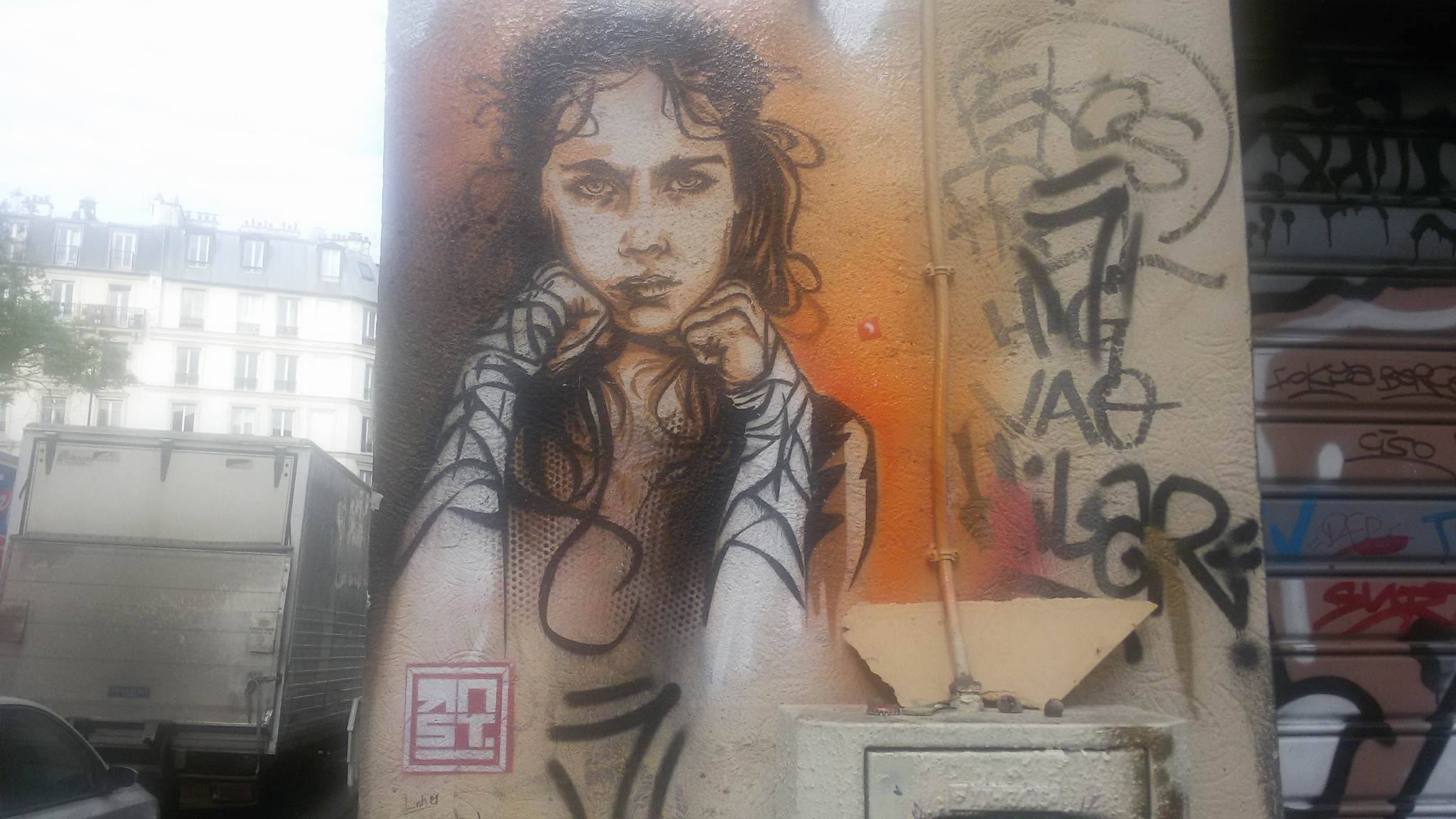
    *Image photographed in Belleville, Paris. Artwork by rnst.

  • The Girl Who was Afraid of Everything—Fiction

    The Girl Who was Afraid of Everything—Fiction

    The Girl Who Was Afraid of Everything.

    (A break from the usual—story time!)

    ***

    Once there was a girl who was afraid of everything.

    She lived on a tropical island of fearsome forests surrounded by cavernous seas. All the other islanders lived for adventure, it seemed, but not her.

    She watched the towering ocean waves rolling toward her, and gasped at the audacity of the swimmers who danced in the roar of the surf, bodies like slippery eels.

    Hugging her knees at a safe distance on the beach, the girl said to herself, “I could never do that.”

    As the children of the island dove, jumped, and spun into a thundering waterfall, the girl dipped her toes in the pool below and shivered with fright.

    “I could never do that,” she thought again.

    She hovered at the edge of the forest that bordered the village and peered through the trees. The hunters chased great beasts on foot, leaping tree roots and serpents with ease and clutching arrows in their teeth.

    The girl sucked in her breath at the sight and shook her head with finality as she whispered, “I could never do that.”

    And so the days turned into months turned into years, and the girl became a young woman. Still she was afraid of everything. The other young men and women of the island made fun of her, and she withdrew ever deeper into her fearful heart.

    One day, all the young people of the village ran off to play in the waves. A storm was brewing, and each wanted to prove their mettle. Only the girl stayed behind. She sat on a rock, drawing patterns in the dust, and an old, old woman came to sit beside her.

    “What’s wrong?” asked the old woman.

    “Everyone has gone to play in the waves, and I am all alone,” said the young woman.

    “Why don’t you go with them then?”

    “Oh, I could never do that.”

    “Do you want to?”

    “I… I don’t know. I never thought about it.”

    And indeed, she never had, so fixed she had been in her certainty that it was impossible.

    “Well,” said the old woman, “perhaps you should ask the others how it is they manage to do what you believe you never could.”

    And that is what the young woman did.

    She went to the swimmers and asked, “Oh swimmers, tell me how you can be so brave to swim like slippery eels in such big waves. Are you not scared?”

    They laughed. “Of course we are scared, little sister,” they said, “but we must swim.”

    Next she went to the divers and asked, “Oh divers, please tell me how you can be so fearless to dive without hesitation into such a big waterfall. Are you not scared?”

    They laughed. “Of course we are scared, little sister. But we must dive.”

    Finally, the young woman went to the hunters and asked, “Oh warriors, please tell me how you can run after such big beasts. Are you not scared?”

    They laughed. “Of course we are scared, little sister. But we must hunt.”

    She had a lot to think about.

    And so she sat on her rock at the edge of the village, and she thought. And thought. And thought. And thought. And this is what she decided:

    “If the swimmers must swim, and the divers must dive, and the hunters must hunt, perhaps everyone has something they must do, which, when they find it, makes them brave. Perhaps I too have something I must do, and when I find it, I will not be afraid.”

    Soon after, a terrible drought struck the island. The oldest of the villagers could not remember its equal. The fruit in the trees withered in the sun and fell like stones, and the crops in the gardens shriveled and disappeared like smoke. The river dried up to a trickle, and the waterfall ceased to thunder. The people began to starve.

    Now, there is something I have not told you about this island.

    While the islanders were daring and brave and courageous and fearless, while they could swim and dive and hunt with abandon, and though they were happy, they could not love. From the youngest boy to the oldest woman, it was, they believed, quite impossible. Legend had it that this love business was far more perilous than any wave, or rock, or beast.

    But, the legend went on, one would be born amongst them who would be braver than all the rest, who would not be afraid of loving, and who would save their island from destruction when calamity struck.

    The young woman who was afraid of everything (formerly the girl who was afraid of everything) watched her neighbors starving and the crops failing and the river drying up to a trickle. She watched these things, and she listened to the prophecy and the legends that issued from parched, ancient lips, and she retreated deep into her fearful heart. Deeper than she had ever gone.

    And there, beneath the fear, she discovered something she had not expected. Something that was not fear. Something that moved and flowed and had no bottom.

    As she touched this mysterious well at her core, it spilled over and fell onto the cracked earth. She opened her eyes and looked at the blurred scene before her.

    And… she… loved.

    She loved the village, and the villagers. She loved the jungle, and the beasts. She loved the river and the waterfall, the ocean and the beach. She loved the island, the earth, the sky…

    … and so the prophecy came to pass.

    With her love, the woman ended the drought. The skies opened, the rains came, and the island prospered for a long, long time.

    And she never stopped loving, the woman who was afraid of everything except that most perilous of nature’s inventions. She grew old, and still she loved.

    Whenever a young, fearful villager asked her how she could be so brave as to love, when all around her believed it to be impossible, and was she not scared (and they asked her this often), the woman who loved laughed and laughed.

    “Of course I am scared,” she would answer, “but I must love.”

    ***

    Previously published on Rebelle Society.

  • When the World is in Chaos: Dance

    When the World is in Chaos: Dance

    “Yougottadance. Aslongasthemusicplays. Yougotta dance. Don’teventhinkwhy. Starttothink, yourfeetstop. Yourfeetstop, wegetstuck. Wegetstuck, you’restuck. Sodon’tpayanymind, nomatterhowdumb. Yougottakeepthestep. Yougottalimberup. Yougottaloosenwhatyoubolteddown. Yougottauseallyougot. Weknowyou’re tired, tiredandscared. Happenstoeveryone, okay? Justdon’tletyourfeetstop.” ― Haruki Murakami, Dance Dance Dance

    7:00 p.m. Table Mountain summit, Cape Town, South Africa. 

    The sun is setting, and we are dancing.

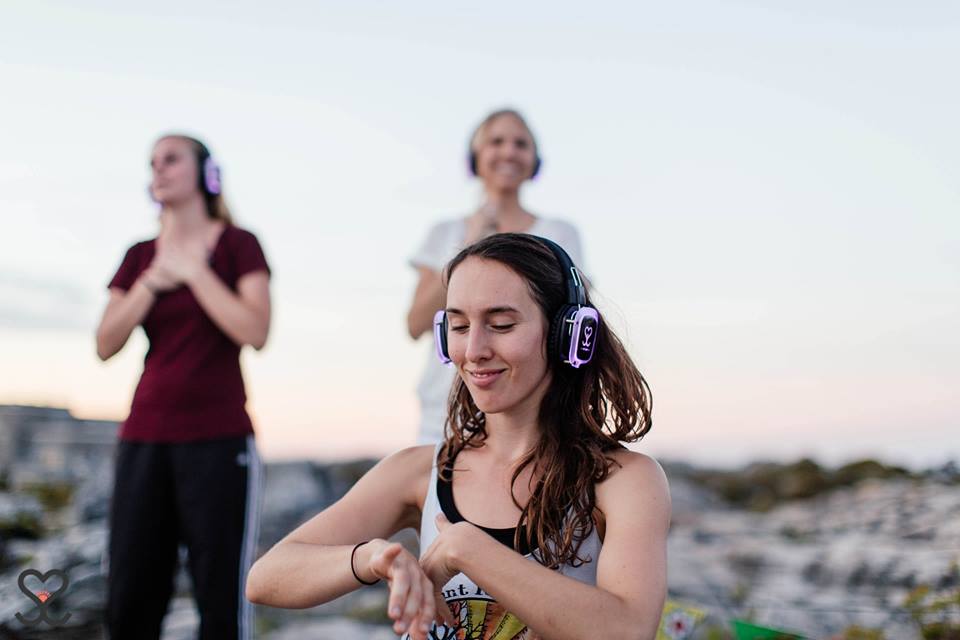
    Two hundred participants, most dressed in white, headphones on—we are praising the earth, this mountain, the clouds streaming across the rocks and bathing the world in dreamlike mist.

    It’s my first time at a “Secret Sunrise” (or, in this case, Secret Sunset) event.

    I’ve taken the hard way up, along with one friend and two strangers picked up along the way, and my endorphins are already surging after a two-and-a-half-hour hike.

    But the world is in chaos.

    I can’t glance at Facebook, work a shift at elephant journal, or even have a casual conversation without this truth becoming painfully apparent.

    I, like many, feel compelled to do something say something change something—but, paralyzed by the overwhelming madness of it, I do little, say little, change little. And yet, and yet, and yet—every day I work to promote mindfulness. Every day I write to nurture cross-cultural understanding. Soon, I will return to school to study the art of peacebuilding.

    And yet, and yet, and yet—more importantly, in my humble opinion—every day I seek joy.

    The world is full of fear. So I fight my own demons. The world is full of chaos, and so I strive for inner balance. The world is full of uncertainty, so I dance with it.*

    And here we are. Dancing.

    Piano keys draw clouds through the sky. Eighties rock compels bodies—eight years old to eighty-eight—to move to the same beat. House music lifts feet up, gravity-defying, and down, solid and real.

    Each of us in our own headphone-cordoned world, we dance. Alone and together. And hell, if that’s not an apt metaphor, I don’t know what is.

    Alone and wrapped up in our own worlds, we are all nonetheless connected to one another by the same melodies in our ears, the same rhythm in our blood, the same music in our bones. We are all dancing, whether we realize it or not, on the same sacred ground.

    So, is this an odd time to be turning to joy, music, community?

    I don’t think so. In fact, I’d say that moments of chaos, uncertainty, fear are very much the right time to dance. To connect, however we do that. To create. To keep pushing for meaning.

    Because if we lose that now, then we’ve lost.

    So dance—not in spite of the chaos, but for it, with it, and through it.

    Dance—”as long as the music plays.”

    Dance—and don’t stop, because the world, chaos and all, is still spinning.

    Youtube video

    *This is a poetic response to turmoil; none of it is meant to underplay the value of activism in our current global climate. Act. Protest. Make change, by all means. But don’t forget the value of personal growth. I genuinely believe in “the power that living a good life can have,” as a friend once put it. Ideally, do both!


    Photo Credit: Juliette Bisset Photography

  • 12 Ways to Move/Travel to a New City/Country Where you Don’t Know Anyone—and Totally Rock It

    12 Ways to Move/Travel to a New City/Country Where you Don’t Know Anyone—and Totally Rock It

    I write about venturing into the unknown often.

    You might say it’s my favorite theme—in life and in art. You could say it’s my greatest fear—in love and in travel. You could say it is a subject so rich and fascinating it proves an inexhaustible source of meaning and poetry.

    You could say any of those things, and you would be right.

    Ah, the not-knowing…it is terrifying, exhilarating, life-affirming indeed. But maybe you want a bit more practicality and a bit less poetry; maybe you have concrete travel plans on the horizon (even tenuous possibilities or dreams), and poetic rambling philosophizing isn’t helping all that much. I get that.

    I drop myself into cities and countries where I know no one on a regular basis. I enjoy the challenge and the freedom, but I also forget that this is a practice like any other, and may seem somewhat inaccessible at first. I want to demystify it.

    The following suggestions stem from my years of solo traveling. I don’t necessarily follow them all for every trip, but one could in theory. I believe each one has a deep potential to cushion the fall into unknown territory.

    1. Reach out to friends and acquaintances.
    A simple “Do I know anyone in _____?” on Facebook can yield unexpected results. This method has found me friends (and often couches) in otherwise totally anonymous destinations from Prague and Montenegro to Berlin, Sicily and more.

    2. Mine for connections.
    Social media is a multifaceted beast, but it really comes in handy for certain kinds of travel. Asking my Facebook friends (and sometimes blog followers), “Does anyone have any connections in ___?” in the past has found me a house to rent in Cape Town, a Shabbat dinner in Paris, a yoga teaching gig in Zanzibar and so much more. The more I travel, the more this network grows—exponentially, it would seem. Couchsurfing is another amazing resource for making connections for friends and couches both.

    3. Be bold—ask questions.
    Every piece of information we could possibly need is available on the ground. No need to read travel forums, or even look up directions (although by all means do both if it sets your mind at ease). Depending on where I am in the world, there are metro maps, info centers, or throngs of aggressive taxi drivers at every possible port of arrival. Barring that, the local person sitting next to me on the bus/plane/train/ferry is usually an excellent resource.

    4. Get Lost and Like It.
    I have developed an impressive habit of always going the wrong way first. If it’s straight, I go left. If it’s left, I go right. I then employ method #3, ad infinitum, to take the longest route possible to my intended destination (thank you, legs). Getting lost is a common consequence of going in blind; even if we don’t like it, we can bring our sense of humor along for the walk.

    5. Set up a work trade.

    While it is 100% possible (and yes, fun and exciting) to just go explore a new place and find your way upon arrival, I have often found more depth and connection through work exchanges. Websites like wwoofing, workaway and helpx are just a few of many platforms for finding interesting, short-term placements abroad. Working or volunteering is, in my experience, one of the most effective ways to integrate into a community and create my place in the formerly unfamiliar. It is also an incredibly practical resource for information.

    6. Set up an Airbnb.
    If, like me, you need to work while you wander (or, also like me, you don’t want to commit to too much socializing), but still want an entree into local community, Airbnb is unparalleled. Set your price, browse your options, and choose a host who seems interesting. I’m still in contact with several of my Airbnb hosts, and owe unique memories (like tasting the best chocolate gelato in the whole world) to them.

    7. Keep up with hobbies.
    I always carry two extra pairs of shoes with me: dance and climbing. Dancing tango in Kenya, salsa-ing in Berlin and climbing in Cape Town, I’ve connected with people I never would have met otherwise. Same goes for surfing in Morocco and hiking in Spain. Those are my passions; follow yours, and you’ll find your people—anywhere.

    8. Become a regular.
    There is something uniquely grounding in being a regular customer (in a cafe, restaurant or even corner store)—in simply being recognized. When our default mode is anonymity, feeling seen, known, familiar offers a powerful sense of place. Especially when I have a few weeks or months somewhere, I find myself accumulating these “regular” spots. Though utterly departing from all known routine is a key—even necessary—element of travel for me, glimpses of familiarity within the unknown provide welcome—even necessary—moments of respite.

    9. Let go of should’s.
    I believe having a mile-long checklist of “must sees” and “must dos” limits potential for spontaneous discovery. I tend to get a decent amount of touristing in when I visit a new place, but I try not to force it. Excursions happen organically—often with new friends—when I genuinely want to do them, and not because I feel like I’ll be failing at travel if I don’t.

    10. Cook.
    My experience of travel altered hugely when I started to prepare a lot of my own meals (just as I used to when I lived in one place). Not all, of course, since tasting local cuisines is hands down the best part of traveling, but many. Wandering local markets, I’ve honed new language skills, felt rooted in my home-of-the-moment, and saved serious money. Choosing an Airbnb with a kitchen facilitates this, as does staying with friends. Cooking a beautiful meal has long been my favorite way to thank my hosts for their hospitality.

    11. Talk to strangers.
    They’re not scary—usually. When they are creepy, it’s usually pretty clear to my intuition. Strangers are typically one of three things: treasure troves of insider information, friends you haven’t met yet, or an excellent story for later. Instructions for talking to strangers: eyes up, shoulders down, words out.

    12. When all else fails, fail.
    I have days—sometimes weeks—where my social self goes into hibernation, my patience drops to zero, and the challenge of the unknown shifts from exhilarating to tiresome. When that happens, I take time to write, read, call friends and family, and simply be. No one can be “on” all the time. This lifestyle of exploration and discovery has curves and cycles, just like any other. These moments of pause make the adventure all the richer.
     
    May your journeys be—yours.

  • “Don’t go to Morocco Alone.” And other Fear-mongering you should Ignore.

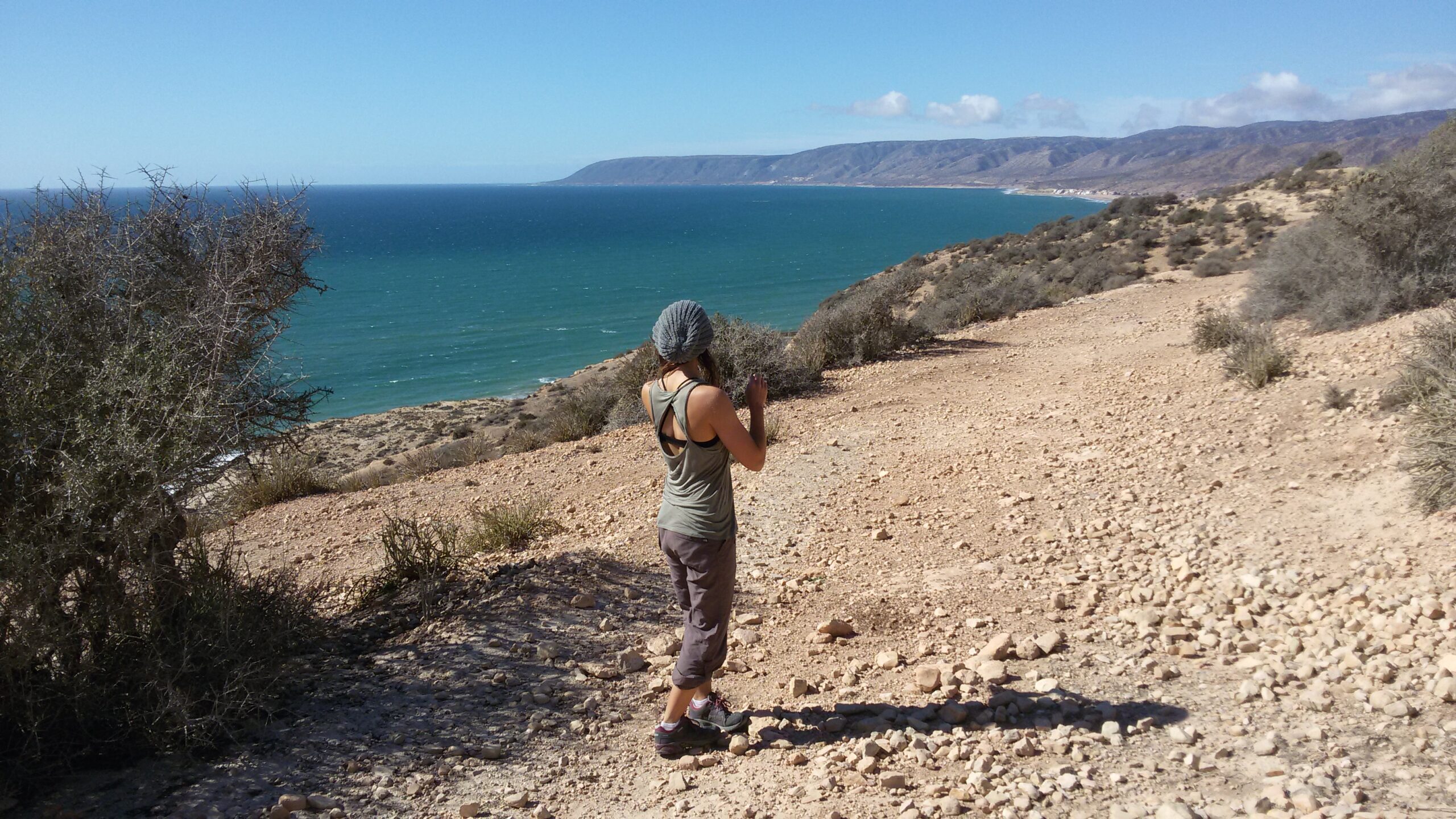
    A rooftop terrace in Taghazout, Morocco.

    Me: “I’m thinking of going to Morocco.”

    Everyone: “Awesome! Just don’t go alone.”

    As you may have guessed, I didn’t listen to everyone, and here I am: in Morocco, very much solo, and so far quite pleased about it.

    (For the next month, I’ll be living in Taghazout, a small town on the Atlantic coast, teaching some yoga, learning the fine art of surf bummery, and generally winding down after an overly hectic few months. And I’ll have time to visit a few Moroccan cities afterward, not to worry!)

    There is a saying here, which a new friend taught me:

    One rotten fish can make the whole bucket stink.

    For those who work in the tourism industry, that rotten fish (in the form of robberies, political unrest or an isolated attack) is the proverbial boogeyman. Just a whiff of danger and foreigners will cancel their flights. An act of terror (as occurred while I was living in Kenya)? Total disaster for the industry—and, by extension, a great many people’s livelihoods.

    I digress somewhat. I don’t to tell you what happens to the tourism industry when the fear-mongers win. I want to tell you why you shouldn’t listen to them in the first place.

    Every country- or city-shaped bucket has a rotten fish—often many.

    In my opinion, those rotten fish are the reason why people will tell women not to travel solo to India, Zanzibar, Turkey, fill-in-the-blank-with-your-country-of-choice. “It’s not safe.” “Men don’t respect women there.” “It won’t be pleasant.” Et cetera, et cetera, et cetera.

    And sure, there’s a good chance I will encounter an asshole or two before I leave Morocco in six months’ time. I’ve spent time alone in all of the aforementioned countries, and I’ve had occasional negative experiences in all of them (though always far outweighed by the positive). But do you know where I’ve encountered the most assholes? On college campuses in the U.S. In Parisian metro stations. Walking down the street in Boston.

    So what can we learn here?

    ***

    Well, for starters, check your assumptions. Are you giving more credence to warnings of danger or disrespect because the destination in question is “over there”? Keep in mind that nowhere is perfect, and nowhere is particularly “safe.” I have yet to investigate, but I’ve heard Morocco may be one of the statistically safest countries in the world. Chew on that.

    Second, ask yourself if you’re discounting cultural differences. If so, you may be falling victim to the understandable yet problematic epidemic of Western ethnocentrism. That is, judging another culture purely by your own values. Quick tips for women wishing to avoid harassment while traveling alone: cover your hair, cover your shoulders, and cover your legs (generally, follow cultural codes for modesty and behavior). Oh yes, that’s problematic in its own way, and I take issue with it sometimes, but we don’t get to make the rules when we visit someone else’s home.

    Lastly, choose your devil, because there is nowhere—nowhere–you will be utterly and inalterably at ease.

    ***

    I (and just about every woman ever) learned since birth to fear. Fear attack. Fear violence. Fear bad men. Fear everything, right? Society teaches us that.

    And it’s true. Of course it’s true! The world is a scary place. Especially for women. We’re working on it, but we have a very, very long way to go. Change, however, has never happened when we stick to the status quo. Fear-mongering doesn’t keep us safe; it keeps us the same. So if you want something different, you have to ignore the fear-mongers.

    There’s a lot of space between reckless risk-taking and bubble-girl-style caution. Here’s what you may find there:

    > Deserted tropical islands where you can run naked across miles of sand, because you are totally, beautifully alone.

    > Kind shop owners who will invite you inside for tea, show you pictures of their wife and children, and invite you to stay with their family if ever you return to their country.

    > Fascinating strangers on trains, buses and trails, in hostels, campsites and smoke-filled restaurants, whom you never would have met if you hadn’t been traveling solo.

    > The best meal of your month, discovered only by following your nose and your intuition (yours alone) through a labyrinthine bazaar.

    > And last, but unavoidably, rotten fish. It’s part of the travel bucket. But hey, it’s part of every bucket, and you can’t avoid them all.

    I hope, if nothing else, this will make you think—maybe reconsider. Please share your thoughts in the comments if so inclined!

    ***