Tag: mindfulness

  • The Sacred Pause: from Dance to Self-Defense

    The Sacred Pause: from Dance to Self-Defense

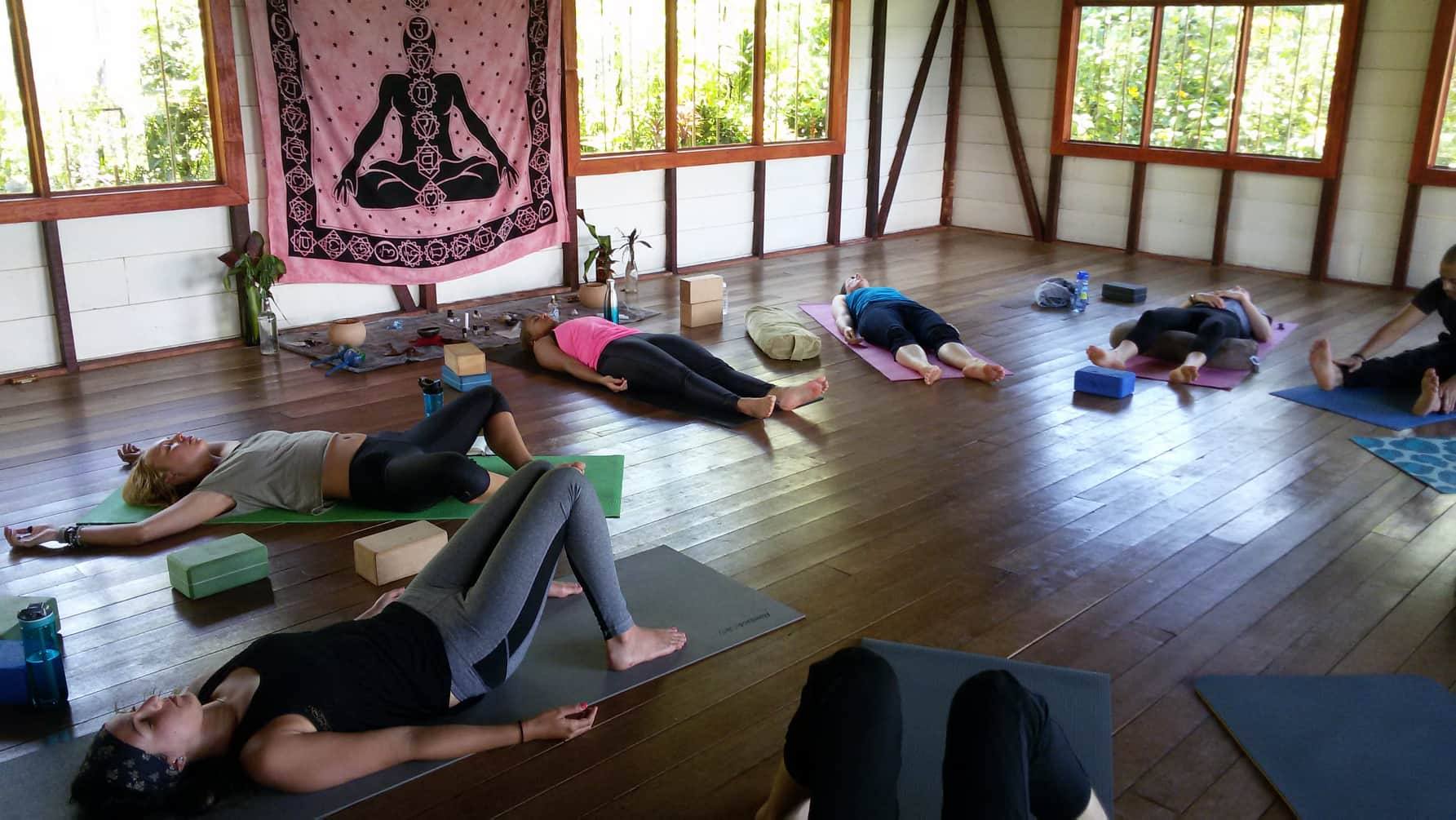
    March 24-31, 2023 – Dance Your Medicine Retreat at Posada Natura Healing Center in Londres, Costa Rica. (Photo by: Foster Snell | @FosterTheEexplorer)

    One breath can change everything.

    The “sacred pause” can be the difference between reaction and response, between contraction and expansion, between inaction and action.

    In the spaciousness at the top of our inhale, everything expands and possibilities open before us. In the emptiness at the bottom of our exhale, clarity crystalizes.

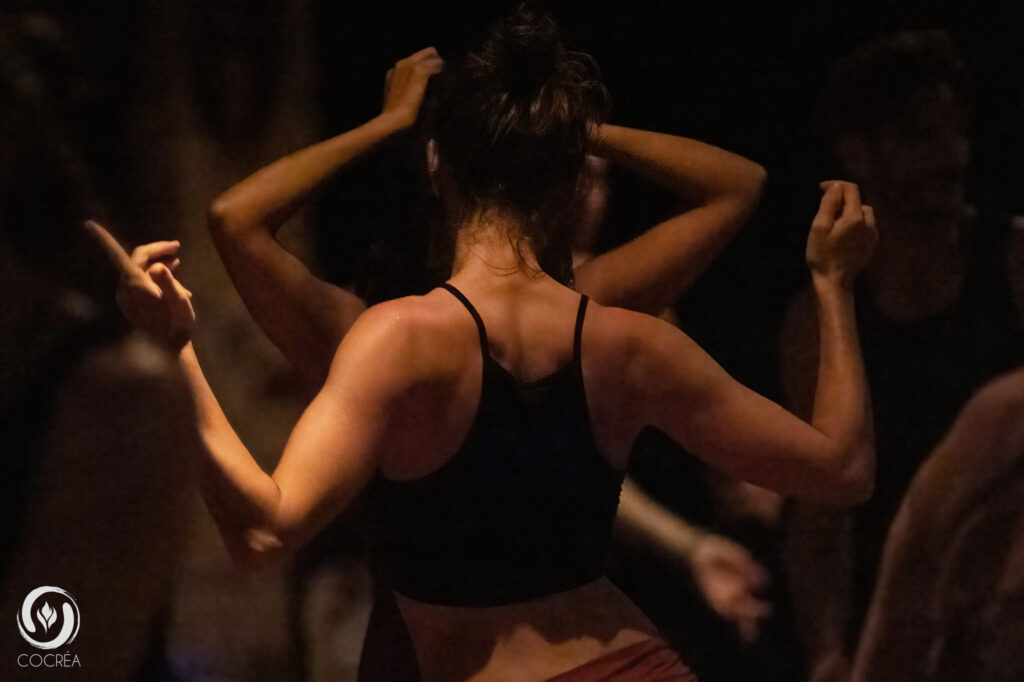
    After a week of exploring “mindful partner dance” with the amazing humans behind CoCrea last month, I found myself thinking a lot about the “sacred pause.” In dance, this pause can be a single breath, or even a microsecond of stillness that allows us to listen to our own body and our partner’s—and allow movement to arise from there.

    It is a moment of beauty, attunement, and awareness, rich with potential. And it is a moment to reconnect with our own body and its needs, giving ourselves the opportunity to act in integrity with our own self-knowing.

    Here is where we can carry the sacred pause with us from dance into self-defense.

    That same, seemingly-insignificant moment of renewed awareness, when applied to a situation of danger or violence, can again change everything. The sacred pause can restore our agency and power when we find ourselves in an adrenalized or activated state, helping us to access our self-defense toolkit, in spite of fear or confusion.

    In the holistic self-defense classes I teach through my empowerment project, Mujeres Fuertes, we often encourage participants to take a breath before practicing a strike. We also regularly discuss the importance of taking time to check in with ourselves when a person or situation makes us feel uncomfortable or unsafe. In this moment, we choose how we want to respond, if we need to set a boundary, if we would rather get up and walk away, and so on.

    Fear can easily cloud our judgment as well as affect our coordination; pausing helps us choose, speak, and act with clarity.

    Similarly, the social contract and social conditioning around “niceness” and “politeness” often keep us in places we actually don’t want to be. Utilizing the pause to touch base with our intuition and listen to the body, we can recognize more easily when a situation is “yellow” or “red.”

    From a trauma-informed perspective, the sacred pause—taking a breath and bringing awareness back to the present moment—can mean the difference between freezing or acting (yelling, running, fighting, and so on) to defend ourselves. When the alarm system is activated in the brain, most people unconsciously default to their go-to adaptive strategy: fight, flight, freeze, flop, or fawn. For many, and especially for women, the freeze/flop/fawn response is a well-honed survival strategy.

    “What if I freeze?” is probably the most frequent question in our self-defense classes.

    No one can guarantee breaking the freeze response, nor do we wish to write it off entirely, as it is itself a survival strategy. However, we do know that the more we practice pausing, breathing, and bringing awareness to the body when adrenalized or activated, the more we augment our capacity to notice—and to choose a different response.

    Furthermore, we invite participants to reframe freezing as “active waiting.” The animal that freezes in nature when danger approaches often proceeds to run away or otherwise act in self-preservation. People are no different. Through training our body to breathe through discomfort or fear, notice our instinctive reactions, and then yell, run, or fight, we curtail the freeze response and prepare ourselves for what follows.

    The more tools and options we have, the more possibilities will open ahead of us in the momentary lift of the sacred pause.

    Why “sacred”? Because for me, anything that connects us with our embodied wisdom, intuition, or inner knowing is a mystical practice. Anytime we enter into communion with that soft, clear voice who speaks or dances from our center, I believe we are in conversation with the divine. And what is more sacred than that?

    How do you apply the sacred pause in your life, relationships, or creative work? I would love to read your perspectives!

    Finally, I invite you to remember the sacred pause when you feel afraid, uncomfortable, confused, or overwhelmed.

    In the spaciousness of this moment, everything is possible.


    Originally published at elephant journal.
  • What is Transformational Travel, Really?

    What is Transformational Travel, Really?

    transformational travel, costa rica, toby israel, numundo

    Look closer. That yoga class is a portal into mindful movement and heightened self-awareness. That farm tour is an introduction to the revolutionary world of permaculture, closed-system loops, and community living. That simple sharing circle is an initiation into a different way of communicating and relating.

    Look closer. Our world is shifting…evolving…transforming — for better and worse. Widespread ecological degradation, disconnection from self and nature, and lack of purpose urgently demand solutions. We must respond with a global shift toward regeneration, reconnection, and repurposing.

    We are already responding. These shifts are happening.

    They are present in the inspiring growth of the global ecovillage movement. They are present in the increasing traffic to platforms like NuMundo, Gen Europe, and Fellowship for Intentional Community.

    Look closer, and you’ll see that the regenerative future is right under your nose.


    View this post on Instagram


    A post shared by lola méndez☽ ethical travel (@missfilatelista) on

    Last month, I had the unique privilege of both facilitating and participating in a press trip highlighting the thriving transformational travel movement in Costa Rica.

    We visited NuMundo impact center Rancho Margot, an exceptional permaculture research, education and retreat center in the Arenal area, and Nammbu, the physical manifestation of your dream (eco) beach getaway. Along the way, we explored the theme of transformation in theory and practice, with ceremonies, yoga classes, excursions in nature, sharing circles, profound conversation and a collective effort toward digital detox.


    View this post on Instagram


    A post shared by The Tico Times (@theticotimes) on

    The pre-trip documents included the following thoughts on the multifaceted travel phenomenon at the heart of our mission:

    “What is Transformational Travel?

    This is not a simple question. As “Transformational Travel” becomes an increasingly popular buzzword in the wellness tourism industry, it is getting harder to pin down the essence of this trend. But we believe it’s important to try…

    A woman jumps from a waterfall, conquering her fear of heights and reigniting her hunger for adventure and new experiences.

    Is this transformational travel?

    Following a difficult breakup, a young professional quits their job, sells everything but a backpack’s worth of belongings, and sets off to explore the world. They discover many ways of living they never could have imagined at home.
    Is this transformational travel?

    Burnt out from a stressful, overstimulated life in the city, a woman travels to Costa Rica for a 7-day nature and yoga retreat. After delving into many mindfulness practices she never had the time to try, she rearranges her world to support a healthy mind, body, and spirit.

    Is this transformational travel?

    A man participates in a plant medicine ceremony, facilitated by trained guides, and returns to his former life with entirely altered thought patterns and a new connection to nature.

    Is this transformational travel?

    The answer to all of these questions is yes. Each of these scenarios is, potentially, a perfect example of transformational travel. Of course, this is far from an exhaustive list.


    View this post on Instagram


    A post shared by Tui @ Blue Butterfly CR (@blubutterfly88) on

    Overall, this evolution marks an exciting progression toward traveling with greater intention, growth, positive impact, and (of course) transformation.

    Transformational travel is, to us, more than the “next big thing” to follow sustainable travel, intentional travel, and eco travel. It represents the deep potential for tourism (a rapidly growing global industry) to evolve into meaningful, life-enhancing journeys. And it simultaneously supports the notion that the tourism industry can be regenerative — rather than extractive — for local people and environments.

    Those are some big shoes to fill. It won’t happen all at once, but we’re extremely optimistic about the trends toward eco-restorative and human-restorative travel in our home of Costa Rica… and around the world!”


    View this post on Instagram


    A post shared by Nu_Mundo (@nu_mundo) on

    Beneath the Buzz: The reality of Transformational Travel

    As I’ve mulled over this concept in preparation for our press trip(s), I’ve come to believe we can break down this buzzword into a couple key components:

    Transformational travel is personal. It can be small, like deciding to keep a regular mindfulness practice or cooking at home more. It can be a massive life shift like moving to the other side of the world or starting a new business. But there is some kind of internal shift, personal growth, or deepening of self-awareness.

    But it also ripples out to touch our communities back “home.” Transformational travel doesn’t stop when the trip ends. Or rather, a transformational journey does not have a fixed end point. Transformation is about process, evolution, and action. And so, the movement sparked by a transformational experience continues, according to the laws of inertia, far beyond the initial impetus. It follows us, fuels us, and ignites further shifts in our communities.

    And it must have a positive impact on the places visited. This last element is crucial. It makes the difference between a nice-sounding travel trend and a real, meaningful shift in the tourist/traveler mindset. Transformational travel requires that we flip the traditional extractive model of tourism on its head — regenerating and contributing rather than Not to be confused with “eco-tourism” or “greenwashing,” transformational travel implies grassroots, integrated, inclusive initiatives that benefit local communities on their own terms.


    View this post on Instagram


    A post shared by Amarna Miller (@amarnamiller) on

    Of course, this summary is far from exhaustive. In conversations about transformational travel, each press trip participant offered their own perspectives, based on their own experiences, expertise, and passions. Some focused more on adventure and conquering self-imposed limitations, others on spirituality and self-actualization, and still others on getting off the beaten path and into truly local experiences.

    All of these are valid, and all bring value to our dynamic conversation about the evolution of travel.

    Because ultimately, transformational travel is about you. It’s about me. And it’s about how we’ll connect — to one another and to our communities — to create something real.


    View this post on Instagram


    A post shared by Toby Israel (@tobyintheworld) on

    What Do You Think?

    This is a conversation, and there are as many answers as there are travelers experiencing true transformation through their journeys. So, I’d love to hear from you:

    What does transformational travel mean to you? How can we do it, share it, and live it?

    Please share your thoughts and experiences!


    Originally published on the NuMundo blog.

    This unique experience came to fruition in collaboration with Desafio Adventure Company, Blue Butterfly Events, and the Costa Rica Tourism Board.

    Check out my upcoming transformational experiences at my retreats page!

  • “How Many Countries Have You Been To?” & Other Questions I Avoid

    “How Many Countries Have You Been To?” & Other Questions I Avoid

    Originally published on elephant journal.

    Nowhere on my website will you find a tally of countries I’ve visited. Not on my Instagram either.

    Several times, I’ve debated changing my policy about this. It appears to be de rigueur for writers and bloggers in my niche of adventure travel and digital nomadism. And, I am proud of the ground I’ve managed to cover in relatively few years.

    However, I’m much prouder of how I’ve covered it.

    Hitchhiking thousands of kilometers through Europe, learning (basic) Swahili in Zanzibar, building community in Costa Rica—these are the stories I want to tell about my years on the road, which numbers can never do justice.

    Numbers may tell you how many kilometers I walked, how many years I lived out of a backpack, or—yes—how many stamps I have in my passport. But numbers won’t tell you what the Phnom Penh pavement felt like under my bare feet, how my shoulders ached after carrying my life with me across Spain, or the many amusing (stressful) ways I crossed all those borders.

    I think you get my point. The number of countries I have visited is, like any other tally, just a number. It is not, in my opinion, very interesting information.

    Furthermore, it is already an exceptional privilege to travel as I have done. I am deeply grateful to sustainably maintain the nomadic lifestyle I find so exhilarating. It seems unnecessary to proceed to flaunt that privilege in such a one-dimensional way.

    I also dislike the rhetoric, only too common in the travel blogosphere, that “more countries = more happy.” There is no happiness equation. A fuller passport does not equate to a higher happiness index—though travel can certainly lead us down many paths to fulfillment. I am wary of contributing to this superficial conversation in any way.

    countries, travel, vagabonding, nomadic

    All that said, I would hate to raise objections without offering solutions. I wouldn’t waste your time with criticisms of displaying the “travel number” if I didn’t have some alternatives in mind.

    When I tell new friends about my vagabondish lifestyle, more often than not their first question is, “So, how many countries have you been to?” I’ve come up with a lot of ways to avoid (or transform) that one. Here are my favorites:

    1. “Let me tell you about my most recent trip to X.” Stays on topic, but narrows the conversation down to a specific, less superficial angle that I actually want to explore.

    2. “A lot… I’ve been living nomadically for quite a few years.” Vague, but hopefully avoids anything that might come off as boasting.

    3. “Honestly, I’d rather answer a different question.” The most direct answer, and usually goes over well when delivered with a genuine smile.

    4. “I actually don’t think it’s that interesting. Let me tell you a story instead.” Also direct, and opens space for the exchange to move toward a subject of mutual interest.

    5. Just tell them the number…once in a while, it’s easier to go with the flow and answer the damn question.

    I like these answers because most of them are rather versatile. The same tactics can help us to gracefully evade personal questions we don’t want to answer, small talk we don’t want to engage in, and norms of conversation we don’t want to support.

    I hope travelers with similar misgivings to my own may take away a helpful solution or two.

    May your backpack be light and your feet happy—no matter how many borders they’ve crossed!


    I also don’t really like “Where do you come from?” Stay tuned for some thoughts on that.

  • I’m not responsible for anyone’s Transformation

    I’m not responsible for anyone’s Transformation

    Saturday, 23 June, 2018 — Finca Agroecologica La Flor, Cartago, Costa Rica — Yoga & Mindfulness Immersion

    I sit straddling the drum, rocking forward with each beat—the only way I know to comfortably play this instrument.

    My knee has slipped off the mat and onto the hard studio floor, but the pain dulls in the background, my focus absorbed in rhythm. Driving rhythm. Holding rhythm.

    As I relax into the drumbeat pattern, I am able to expand my awareness to the people in the circle with me: One has moved to the back of the room to dance; others lie down, motionless; and others sing, sway or clap in conversation with the music. A web of sound makes our many points of connection nearly-tangible.

    finca la flor, yoga retreat, transformation, costa rica, travel

    I should be exhausted after co-facilitating our first “Yoga & the Art of Listening” retreat at Finca la Flor, Costa Rica, but I have wings.

    Maybe it’s the cacao we drank, still sharp and bitter in my throat. Yet, this sense of inspired-ness—of in-purpose-ness—has been building since day one of our five-day experience.

    Eyes closed to hold onto our rhythm, I see the room in my mind’s eye instead: low light, candles at the center of a rainbow of yoga mats, faces glowing—transformed.

    “I did this!” my ego wants to shout, claiming for itself all the credit for this transformation, but no… there’s something truer beneath this voice:

    At my core, another, wiser self is in awe. I am in awe.

    A post shared by Toby Israel (@tobyintheworld) on

    In retreat, as in ceremony, we have each held space for one another to delve inward and to expand outward. I am in awe of the sheer beauty and courage and power of each individual who answered the call and co-created a unique container for accelerated growth. I am in awe of the journey that brought us to the selves sitting together in our closing ceremony, expressing and blessing with joy and freedom and grace.

    My ego, of course, is wrong. I didn’t do this.

    I didn’t make this transformation happen in the space of five short days. That would be madness. An impossible task.

    Each participant was responsible for their own growth and (dare I say it?) transformation.

    A post shared by Toby Israel (@tobyintheworld) on

    I—as a co-facilitator, co-creator, and co-learner—may have shared movement and mindfulness practices. I may have designed a schedule. But I am not responsible for the scene tonight, which makes me (rarely sentimental) feel like tearing up.

    This is why I prefer the term “facilitator.” A facilitator facilitates individual and collective self-inquiry and development through invitation, sharing, and loving support. A facilitator does not presume to have any monopoly on knowledge—or potential outcomes.

    After this experience (the first of hopefully many to follow), I feel grateful, blessed, honored and inspired by what I helped to create. But I do not feel the pride of ownership, because I don’t own this outcome, laid out tonight in my mind’s eye, dancing over drums and twining with the taste of cacao. I recognize that our collective effort, love, and generosity made the experience what it was.

    I didn’t do this; we did.

    And I am in awe of that.