Tag: travel advice

  • Traveling Light: “Only What I Can Carry” Photo Project

    Traveling Light: “Only What I Can Carry” Photo Project

    Saturday, October 3rd, 2015. Helsinki, Finland.

    [This is only an excerpt from a longer piece about this project written for elephant journal. For the full story please click here.]

    The afternoon sun is kissing the tops of the pines surrounding my friend’s house, and I am packing.

    I’ve had an idea in my head for months now, and seeing as I’m in no hurry for once, this seems like the perfect opportunity to realize it.

    I’ve been living out of my purple, 60-liter Osprey backpack for just under a year now. This is the second time I’ve done so, and I can pack in 10 minutes—15 tops—when needed.

    Today, though, I take my time to fold my clothing into neat piles and gather every last small belonging into a compact square in the center of the floor.

    I’m not exactly sure why, but taking stock seems important…

    The more I travel and the longer I wander, the better I understand how much I need, and how much I am able to carry. (And still, always, it is too much.)

    More and more, too, I recognize the difference between need and desire—the meaning of priorities. I don’t need even half of what I choose to carry with me. I do in fact need my laptop for work, and maybe a few changes of clothing and some warm layers.

    But my practice poi? Small bag of jewelry? Pretty shirts, oversized headphones and red lipstick? Indulgences and whimsy—and I know it…

    What I keep—I recognize I keep out of attachment, not out of necessity…

    This is only what I can carry.

    Some of it I need; some of it I want, but if it’s too much weight or doesn’t all fit, something has to go.

    This isn’t for everyone; hell, it may not always be for me. Nevertheless, this is a viable way to live, and—I believe—a powerful exercise in living simply.

    I hope these images might inspire you to try the same—even if it’s only for a walk around the block! 😀

    [This is only an excerpt from a longer piece about this project written for elephant journal. For the full story please click here.]

  • The Difference A Word Makes

    [Greetings from Nungwi, Zanzibar, my new home-for-the-moment! It was a tough choice, but I decided to switch tracks and will now be living here and teaching yoga for the summer. Come visit. J]

    ***

    Considering I will be here for so long, and mostly on my own, I decided my favorite method of dealing with unwanted attention and attempted sales—the “ignore and conquer” tactic—may not be my best option here. After all, I don’t really want to be that rude muzungu lady who never talks to anyone for three months (even if, secretly, I would be totally happy to have three reclusive months free of dealing with strangers).
    Instead, I’ve decided, I will engage. Stop to chat with, or at least greet, everyone. Practice my increasingly passable Ki-Swahili.
    And it’s amazing the difference a few words make. Knowing that “poa” is the response to “mambo,” the most common greeting. Even better, greeting with “mambo vipi,” a more colloquial version, rarely used by tourists.
    Five basic words of greeting are all it takes to distance myself from foreigners “fresh off the Zanzibar ferry.” The fact that I can hold an introductory conversation and explain that I am here to live and work, all in (broken) Ki-Swahili? Just icing.
    Being able to decline, politely, in Ki-Swahili when offered goods and services means I usually only need to say “no” once, rather than six or seven times. Already, I think I have probably avoided hours of pointless sales pitches for jet-skiing, fishing trips and spice tours.
    It is truly incredible to observe the difference a word or two makes. Some seem to appreciate my effort, smiling or laughing with good-natured surprise. Others just respond in English, but my language skills are far too rudimentary for me to take offense at that. Overall, the response has convinced me to share my experience here.
    To those traveling or living abroad who are tired of being treated as wallets (or breasts) with legs, try learning a few words of the local language. You’ll still stand out (and women, you’ll still be harassed), but you’ll also stand out from other tourists.
    You don’t have to be fluent—no one expects you to be—even ten words will often make a huge difference.

    Have you ever experienced the difference a word makes? What was it like?
    ***
  • Just a Little Bit of Culture Shock

    Piles of fruit in Malindi, Kenya.
    ***

    I’ve always scoffed at the concept of culture shock.

    I go somewhere; there I am. Okay. I go back to the U.S. There I am. Great.

    Depending on where you go, toilets smell worse or better. Water is more or less potable. People stare openly, or pretend not to. Buses leave on time, or they don’t. I could go on and on. Yes, everywhere is different–sometimes exceptionally so. Still, I maintain: What’s the big deal?

    We may be creatures of habit, but we’re also highly adaptable. This is, in my opinion, one of humankind’s greatest assets.

    Meetings and discussions to prepare for “reentry” (offered by any self-respecting study abroad program) struck me as mildly ridiculous. “You might be overwhelmed at the supermarket… blah, blah blah…”

    How could anything top the embodied chaos that are foreign marketplaces? Food shopping in Kilifi replaces my exercise for the day as I lug bags of fresh produce through narrow, narrow lanes between food stalls. Attempting to haggle in my limited (though growing) Swahili, I am rewarded by an incomprehensible verbal assault from the usually serene, matronly mango vendor. Dust and flies and sweat hold court in a small room filled with giant sacks of grain.

    Shopping, much to my delight, is an adventure in other parts of the world. And I’m supposed to be overwhelmed by an American supermarket?

    Street food in Shanghai.

    Now. Here I am in Southfield, Michigan to visit my grandmother. (Sorry to everyone everywhere else in the U.S., I’m here for four days and then I’m flying back to Kenya. I’ll catch you next time.) I arrived yesterday to the shoddy basement International Arrivals hall of Detroit Metropolitan Wayne County Airport. I used a payphone to call my Uncle (When’s the last time I used a payphone?!) and, as has become our routine, we stopped at Plum Market to buy groceries on the way to my grandmother’s house, her fridge being very full of a very limited variety of foods.

    Now. I will happily eat my own words if you would be so kind as to serve them to me, because I was, indeed, overwhelmed.

    I thought I could get pretty much anything at Nakumatt or Tuskys–two Kenyan supermarkets boasting aisles of imported foods.

    Market in Barcelona.

    I was wrong.

    This supermarket truly had everything…

    An entire aisle devoted to bottled juices, smoothies, kombucha and specialty water of dubious benefits.

    Floor-to-ceiling (almost ceiling, anways) choices of canned beans and bagged chips.

    Another whole aisle of cheese. Cheese! I missed cheese much more than I realized. As I stood frozen before the bright display of savory abundance, a man came over to ask if I needed help finding anything. I replied that I was simply overwhelmed by choice.

    He smiled knowingly, but he didn’t know.

    Produce three times larger than what I am now accustomed to teetered at eye level. Onions bigger than baseballs and elephant garlic of the same proportions. Fat eggplant and butternut squash, and apples to feed giants. And these were, supposedly, the organically grown foods!

    How many brands of pasta could there be in one place? I grabbed the first pack in sight, worried that if I stopped to examine my options I would be standing there for an hour.

    And let me not start about prices, because when you live someplace where just about everything seems to cost fifty cents or less, a dollar for a lime is obscene.

    One-stop (one-person?) shopping in Nepal.

    I love to go food shopping. I love to take my time selecting produce and comparing options. I love to wander through piles of promises–ingredients waiting to become meals–anywhere I go.

    But yesterday, for the first time, I understood how a simple supermarket could be overwhelming–the lights too bright; the prices too high; the air too cool; the clientele too calm; the selection too bewilderingly massive.

    I rushed through my list, knowing that if I took the time I wanted to look at everything I would be there until nightfall. Such an overabundance of everything! I was–almost, but not really–in shock.

    I still feel culture shock is too strong to describe my experience. Shock is a sudden death or a push from behind. Shock leaves you paralyzed… I’m still functioning, breathing and standing on two feet. I’m just a few hairs shy of indifferent.

    How about “culture pinch,” that slight twinge of strangeness we experience when we show up someplace new, or return somewhere that used to be familiar but now doesn’t quite fit. Or “culture” bewilderment,” when we’re just kind of confused, but dealing with it all the same. Or, better yet, “culture wonder,” when everything inspires a mild form of awe with few symptoms beyond wide eyes.

    (Any other “culture shock” alternatives to offer? I’m all ears!)

    I’m starting to think that all of those lectures on culture shock and “reentry” shock weren’t wrong; they were just exaggerated and alarmist. So extreme were the warnings that I could never take them seriously. This isn’t an illness we need to carefully monitor and shield against. It’s not a disease that will lay us up in bed for months. But it’s not entirely delusional, either.

    I suspect that we (I) could learn a lot about ourselves (myself) by paying attention to when we feel uncomfortable, overwhelmed or bewildered, and why.

    Food for thought.

    Vermont summer blueberries. Now there’s another thing I miss.

    More importantly though, cheese! So much cheese.

    ***
  • Why Travel Should Be Stressful

    Why Travel Should Be Stressful

    The journey from Diani Beach (South Coast, Kenya) to Kilifi (North Coast) by public transport is long, sweaty and chaotic. (Indeed, going just about anywhere in Kenya is all of these things.)

    It involves a matatu(bus) to the main road, and another to almost-Mombasa. Each is filled to capacity, quite likely blaring rap music or Kenyan pop, and located only by navigating an insistent throng of taxi drivers, hangers-on of indeterminate employment and buses bound for every direction.

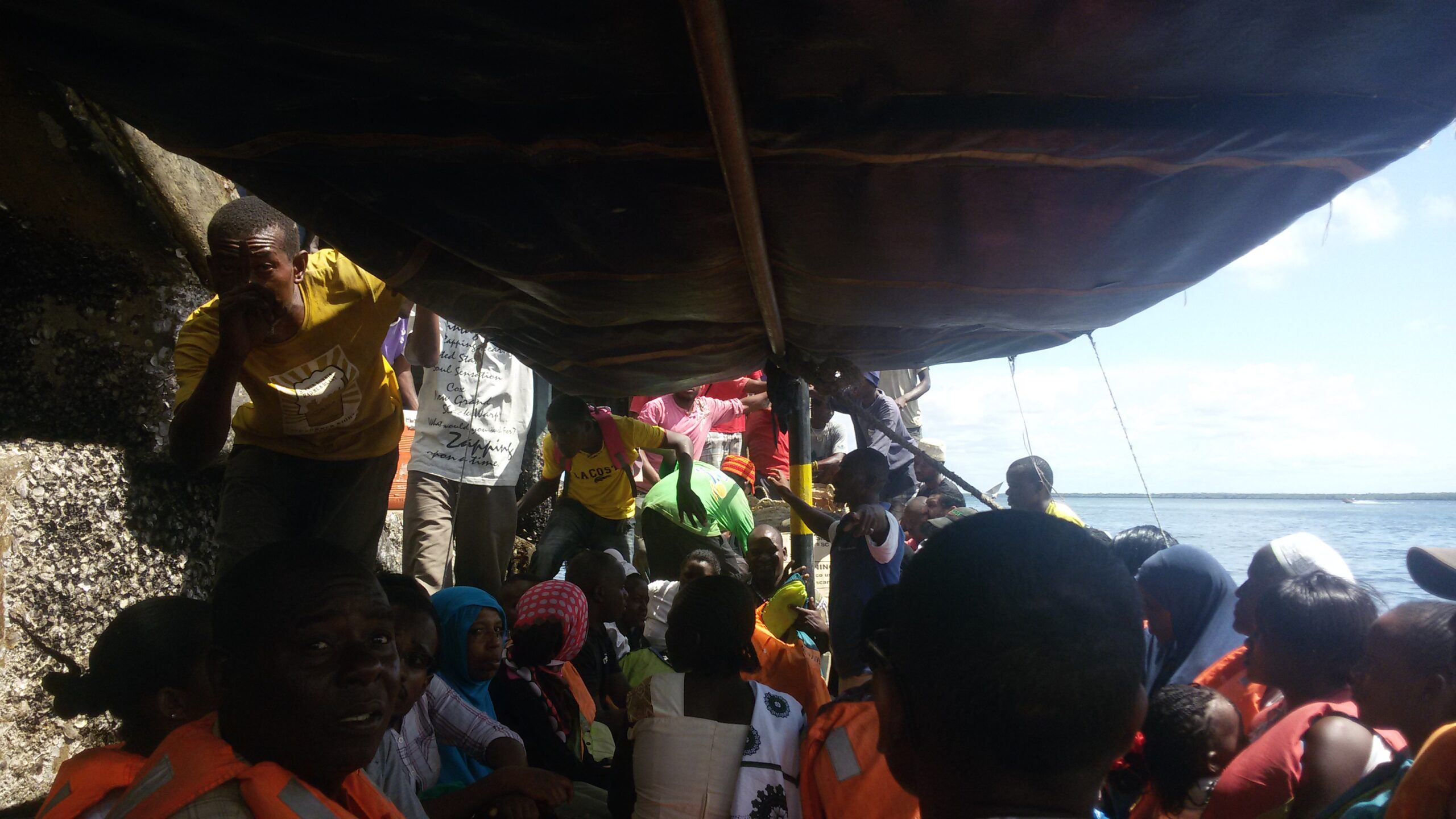
    A ferry packed end-to-end crosses into Mombasa proper—a sort-of island linked on most sides by bridges–and then, with luck, a coach bus may be waiting at the other side, saving an extra ride to the station. A man stands at the top of the ramp from the water shouting, “,Malindi-Kilifi-Malindi-Kilifi-Malindi-Kilifi,”without pause. In the crush of the crowd, one could hardly understand him.

    And it’s not over yet. The bus will let off in Kilifi Town, a 15+ minute tuk tuk ride from the Creek, and the Distant Relatives Ecolodge.

    We made this journey just over a month ago, and I have since settled into the easy tranquility of the lodge, the nearby beach and the comfortable isolation of the place. When I do go into town—relatively laid back when compared to Nairobi—I am thrown off by the sudden return to chaos, stares, noise and confusion.

    Thinking back to that trip from Diani, as well as the much longer odyssey from Western Kenya, I recall the sweat trickling down my spine as I sat wedged between two ample-sized women in the back row of a matatu, the weight of my purse on my thighs an added layer of heat. I remember the stillness of the air on the coach bus waiting for traffic to clear, the noise of the speakers just above my head, the inescapable midday sun over the ferry and the coating of grime that covered my skin by the time we reached Kilifi. And that was only a few hours.

    But that is, I believe, an essential part of travel.

    Comfortably ensconced in the coastal paradise I currently call home, I feel a decided aversion to the unpleasant harassment and disorder of going into town. I contemplate another day of bus journeys, sweat-soaked clothing and dirt-covered hair with reluctance. I am loathe to invite back the arguments and anxiety that naturally accompany reams of buses, unfamiliar routes and missed stops.

    But, if I left all that out of the equation, where would the challenge be?

    Stress has always, always been an inconsequential—yet, paradoxically, fundamental—footnote to my travels. Bumbling through Italy with my family—utterly lost; wandering the streets of Istanbul with my best friend, utterly lost; scouring Kolkata for a guest house alone, utterly lost. Anxiously running to catch trains; bartering for taxis, tuk tuks, motorcycles, often walking instead in stubborn frustration; searching for addresses, waiting for rides or fruitlessly seeking a quiet corner to regroup—stress and adrenaline saturating my blood.

    None of it is fun, and most of it gets pushed to the sidelines of our and rose-toned memories of voyages and adventures. But it is all travel.

    That stress means I am stretching the limits of my comfort zone, crossing boundaries and pushing myself to be both stronger and more pliant. No, I don’t like it, and sometimes I allow it to get the best of me, but stress should be a (manageable, eventually forgettable) part of travel.

    If travel isn’t just a little stressful at times, and all-out infuriating at others, then what is it? Because if it’s too easy, then it isn’t challenging; and if it isn’t challenging, then I’m not learning or growing as much as I could.

    I’ll take sweat, stress and anxious searching over stagnation any day… When’s my next bus ride?

  • The Gift

    Several days ago, I sat in a matatu (bus) plying the main road of Diani, Kenya. On my way to Diani Beach Hospital for a precautionary Malaria test (I don’t have malaria, Mom, you can exhale).
    A muzungu (a sight far more common on the coast than it had been upcountry) boarded several stops after. Hale and tan in the way that Northern Europeans tan—russet, rather than gold—he must have been around 70. His thick white hair and beard shone starkly amongst the rows of shaved Kenyan skulls.
    He sat by the door, and when we stopped to let off passengers, he held out a coin (50 kesh—50 cents—, I think) to a small boy a few yards away.
    A man carried the boy over to accept the gift. As the matatu began to roll away, the white-bearded man said in a thick (Dutch?) accent, “It’s for him [the boy]! Not you—him!” Thus ensuring that his gift would not fall into other hands, he sat back, satisfied.
    This foreigner bestowed his gift with the ease of frequent practice. His manner brought to mind other tourists I have seen in other places, of a similar ilk.
    Simply put, something about the gift—or rather, its giving—bothered me.
    Two years ago, far up in the Himalayan foothills, very small children would emerge from nowhere, holding out phantom hands and pleading eyes, and ask me and my trekking companions for “candy! candy!” or, even more baffling, “ball-oon. ball-oon.”
    From whence had come this peculiar fixation with candy and balloons? Well, from other trekkers, of course. Foreign hikers toting bags of candy—and balloons—to give to children along their path.
    There is something presumptuous—maybe—about giving unsolicited gifts to strangers. An assumption that we as outsiders know what is needed, and by whom. That we have a right to give when and to whom we wish, without asking anyone’s opinion. A whiff of a lingering imperialism, perhaps. (Of course, now these children do ask, having learned from experience to expect bounty of visitors.)
    I am reminded of a class I took on Jewish Ethics 10 years ago, about which I have not once thought in the interim… According to Maimonedes, there are eight levels of charity. The greatest, you may or may not have guessed, is to support another Jew (this merits another conversation entirely). The lowest, naturally, is to give unwillingly.
    Ringing in at number five: giving before one is asked.
    This may all be a bit off point, but Western altruism in Africa has a long and problematic history of unsolicited giving, unscrupulous giving, and giving without once thinking to ask what is desired or needed by the recipients.
    These sorts of giving smack of colonial condescension. Translated into 18th century garb, the image of the foreign man handing money to a Kenyan child becomes that of the beneficent overlord deigning to notice a black child, reaching down magnanimously from his carriage with the gift.
    I do not think I exaggerate so greatly in this leap of imagination.
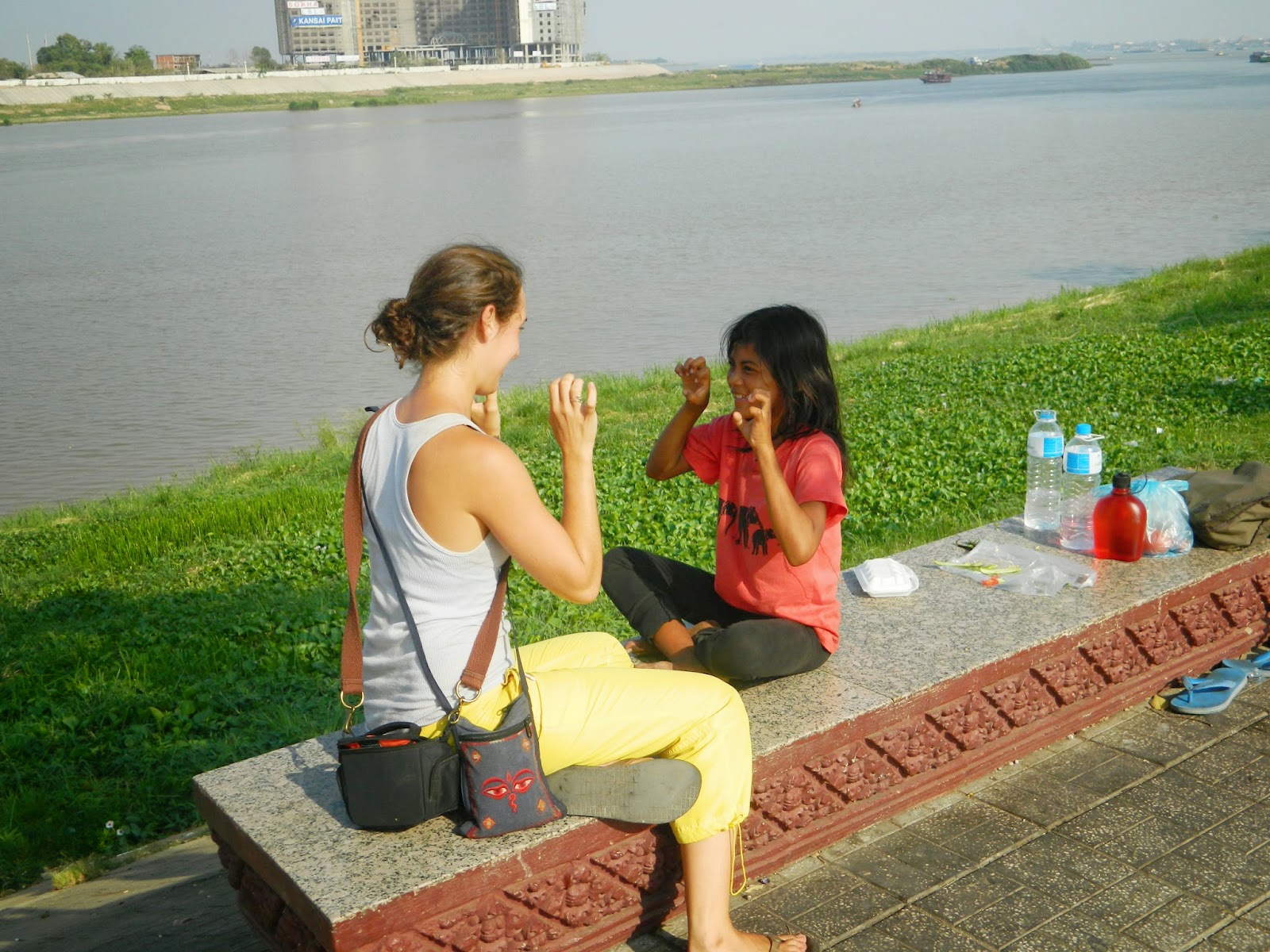
    Sharing food and games in Phnom Penh.
    Surely, you might say, I don’t need to ask to know that a starving child needs food, or that a village with no well needs potable water. Yes, there are certain basic needs, but no, you can’t assume that you know best what they are and may thus dictate another’s priorities.
    In some touristic destinations, poverty is rampant, and in advising visitors to these places, study abroad or travel guides will usually take one of three tracks:
    1. Don’t give anything to anyone. Not to beggars, not to children, not even to new friends. Just don’t, because one friendly gesture of generosity will call upon your head a veritable surge of unanticipated requests.
    2. Bring gifts that are useful—flashlights, notebooks, clothing, etc.—to give to hosts or friends. You will be offering something worthwhile, not a symbolic gesture doomed to sit on a shelf beside its untouched kin.
    3. If you are going to give a stranger something, give them food. Children, especially, almost certainly need it, and your gift will not be misused or appropriated, as money so often is.
    Other responses include: giving to a reputable non-profit, thus ensuring (in theory) that your money will be well spent; sponsoring an individual’s schooling; or offering skills or instruction, which has no (or greater) monetary value.
    I don’t have a set position on the question. All of these suggestions have merit. Personally, I am disillusioned by the distribution of spending in corporation-sized non-profits, and I much prefer the work of grassroots organizations that work in tandem with local communities. I love the option of sharing food; I think it is the most human of acts, and almost universally understood and appreciated. Sharing skills—if you have them—equally so. Material gifts are tricky. I lived with a home-stay family in Kathmandu who had an entire shelf of unused gifts from other guests like me—picture books, snow globes, and salt-water taffy, all untouched and unopened. I don’t know about the worth of gifts that serve no function beyond expressing gratitude for hospitality.
    And then, even if you do ask a community what it is they want, you will not receive a unified answer. Children may indeed want bicycles and candy—and balloons. Male elders will not seek the same help as women; each may have different priorities.

    But if you want to help the “poor, starving children of Africa” (a platitude which, to my absolute shock, some tourists have actually employed), don’t throw up your hands in despair. I think doing good begins with good intentions. Do, however, leave your presumption, your condescension and your self-importance at home. Be mindful of these complexities in your giving.
    ~

  • How to Take the Bus Everywhere

    Jesus travels… and so can you!
    Don’t let anyone tell you otherwise… there is always another way to get there.
    In October, I visited my parents in Shanghai (their home base at the moment). Day two of my trip, I took an afternoon to explore on my own, wandering the tiny alleys of Tianze Feng, in and out of stores selling tins of tea and other adorably packaged goods.
    I have a “taxi card” to return—a business card with the name and address of my parents’ residence written in Mandarin and English. Taxis are cheap. Simple.
    But then, naturally, there’s a catch: I cannot, for the life of me, catch a cab. I stand first on one street corner of the main road by Tianze Feng, then on the divider between lanes, next on another corner. 
    Most of the passing cars already carry passengers, while other drivers seem to be intentionally avoiding my gaze. The afternoon shadows grow longer as I watch one Chinese shopper after another run to intercept an incoming car. There are people crowded on all sides; traffic moves at around 60 km/hour; I am never fast enough.
    Finally, someone does stop, but when he looks at my card he shakes his head and drives off. Does he not feel like going there, or can he not read the card? I will never know.
    Meanwhile, I have seen at least 20 public buses pass me by. I know I need to go *that way.* New plan…
    I think it really is possible to take the bus nearly anywhere and everywhere—if you want to. Here’s how:
    Step 1: Learn the word for “bus” and/or the proper pronunciation of the place you wish to go.
    In Shanghai, it took showing my taxi card to several people to learn to say the name of my parents’ road: Nanjing Shu-Lu.
    In Kenya, buses are “matatus,” and knowing that makes them a lot easier to ask for.

    Sometimes there might be a boat involved… even better!!
    Step 2: Find the bus stop.
    In many places, there will be a physical structure, replete with maps, schedules and names. In many others, there will be nothing but a small sign bearing the image of a bus—or nothing but a crowd of people standing at the side of the road.
    Ask people for the *bus* to [fill in the blank] until you find your stop. In my experience, other bus drivers and shop keepers are the best people to ask, and most likely to know the buses in the area, while taxi drivers are the worst, since they have ulterior motives.
    In Shanghai, I was lucky enough to find an old woman who understood my question, and knew that the 42 bus would take me to the right place.

    Or you can do this.

    Step 3: Catch your bus.
    It might stop automatically, or it might barrel past if you don’t flag it down. A sign bearing a name or number may tell you it is the right bus, or it might be a skinny man hanging from the window, calling out the destination.
    I usually like to confirm at least a couple times that it is indeed the right bus, as I have ended up on the wrong bus far too often.
    Step 4: Revel, and ignore the funny looks.
    Depending on where you are, you might well be the only obvious foreigner on the bus. People will stare. It will get old. Just do your thing and try not to do anything egregious—appropriate dress and conduct is always a good call.
    Revel in being on your way to where you’re trying to go! There is truly no better feeling than the surprise of success after a stressful search!

    If your bus looks like this, wait for the next one.

    Step 5: Pay.
    Often, fare will be collected at some point along your journey—or upfront, or upon arrival. Try to pay attention to how much other passengers are paying to avoid a high “tourist tax.” But if you do end up paying a few cents—or dollars—more, well, the tourist tax is real. I’m sorry.
    Step 6: Arrive.
    Chaos, confusion and disorientation may accompany your arrival… sweat, frustration and elation, too. One thing I can almost guarantee: you will arrive having spent less money. A second thing: it gets easier with practice.
    I love taking the bus. Despite the dust. Despite the confusion, often frustrating and hectic. Despite everything. Because the bus is always an adventure. Always. And that’s kind of the point.
    Need to make a connection? Repeat steps 1-5. Chances are, someone on your first bus will be able to point you to your next one, or even lead you there.
    “Trunk-seat” heading out of Mbita, Kenya a few days ago.

    Enjoy the adventure!
  • Where Do You Go When Nowhere Is Safe?

    Naturally, after our disappointment at the Moroccan embassy and finally, finally finding a place we could both visit without visas (Kenya), new obstacles have arisen. Al Shabab has been targeting non-Muslim Kenyans in the North, Mombassa and Nairobi in retaliation for Kenya’s recent military action in Somalia. Is nowhere safe? I find myself wondering.
    To turn on the news of late is to open the floodgates to a barrage of ill-tidings. Terrorist attacks, Ebola, protests, and political turmoil. That is not to write off the gravity of these situations, for they are undeniably serious. But still, I can’t help wondering where is left to visit. Where do you go when nowhere is safe?
    My musings inspired the creation of this folk tale:
    ~
    Once upon a time, there was a girl. She loved to explore and go on adventures. The spray of light on the horizon played a lilting melody on the back of her eyelids.
    One day, the girl announced that she wished to go into the woods at the edge of town.
    “Don’t go into the woods!” Cried the townspeople. “Don’t go; don’t go,” they pleaded. “The woods are not safe,” they admonished. “There are wolves and witches and monsters and men. Nowhere is safe. Nowhere is safe,” they said.
    And so she stayed, safe in the town, and gazed at the woods, imagination aglow. “Oh how I wish to go into the woods,” thought the girl. “Oh how I wish to go!”
    Months passed, and the girl’s gaze shifted. “I will go to sea,” she announced one day, “to see what lies beyond it.” The townspeople shuddered and shivered and quivered with fear:
    “Don’t go out to sea,” they cried. “Don’t go; don’t go! The sea is not safe,” they admonished. “There are sharks and storms and sirens and surges. Nowhere is safe, my girl. Nowhere is safe; stay here,” they said.
    So the girl sighed and laid aside her plans, and she did not go. But she sat upon the shore and watched the waves, and her thoughts crashed against her skull in time: “Oh how I wish to go out to sea. Oh, how I wish to go!”
    In only a few weeks, she had yet another design: “Surely the mountains are safe enough… that is where I will go,” said the girl, jaw set.
    “Oh!” Cried the townspeople. “Don’t go to the mountains!” They pleaded with her. “Don’t go; don’t go! The mountains are not safe,” they admonished. “There are winds and ghosts and bandits and banshees. Nowhere is safe, you see. Nowhere is safe; stay here,” they said.
    The girl craned her neck to look up at the rocky crags that broke up the sunsets and cast long evening shadows across the town. And she did not go. She sat and she glowered  and her mind raced on. “Oh how I wish to go to the mountains,” thought she. “Oh how I wish to go!”
    Again and again she presented new ideas, and again and again the townspeople shuddered and shivered and shook their fingers sternly:
    “Nowhere is safe, my girl. Nowhere is safe,” they said. “Don’t go there; no you mustn’t go there. There is war and sickness and there are demons and dragons; you see, the world is not safe, my girl. Best to stay here—oh yes, best to stay here,” they repeated. “Don’t go! Don’t go!”
    Months passed in this way, or perhaps they were years, and the girl began to sit longer, to stare farther, to think deeper. Finally, this is what she thought: “If the woods and the sea and the mountains are not safe, then surely neither is this town,” she said to herself. “And indeed if nowhere is safe, then it is “nowhere” where I must go!”
    And with that, she packed her bag with books and bread and blankets and bottles and she set out along the road. The townspeople, when they caught sight of the girl, ran after her, calling frantically, “Where are you going? Where are you going?”
    “Nowhere!” The girl shouted over her shoulder. “I am going nowhere. You needn’t worry—it is safe there!” And she laughed and walked on.
    And she crossed the woods and the sea and the mountains, “nowhere” always just ahead. She encountered dragons and dangers, monsters and men, but fairies and angels and vagabonds, too, and these last guided her way.
    “Nowhere is safe. Nowhere is safe. Oh how I wish to go,” her thoughts chanted through her head in time with her feet, and never did they tire. On the girl walked. Up and out and onward she looked.
    “Go,” whispered the sun. “Go! Go!”
    ~
    Much to my regret, we don’t live in the world of fairy tales and fables. The troubles reported nightly are very real—though occasionally exaggerated by those on the outside. We can’t totally ignore them like the girl in my story. And so, though we still plan to fly to Kenya next week, we will do so cautiously, avoiding population centers like Nairobi and Mombassa and staying in the Lake Victoria region, which appears to remain out of danger.
    Where do you go when nowhere is safe? That is the question facing the 21stcentury nomad, isn’t it.

    ~
  • Hostels: Beyond the Horror Movie Story

    Picture it: A group of Portuguese boys play ping pong and try not to spill beer. Behind them, Spanish girls converse– loudly– with strangers via a smartphone translation app. Upstairs, Karaoke. Someone knocks over a stool with a bang. Ten bunk beds crowd into a room about 5m2; the room is rarely quiet. Dirty dishes accumulate in the sink, and most people cook pasta.
    No, it’s not an international frat house. It’s a hostel.
    If it sounds rowdy, messy and overwhelming, well, it often is. If it also sounds like a one-stop-shop for meeting other travelers and making friends from other places, well, it’s that too.
    Once upon a time, I loved to stay in hostels. At 18, I found the chaotic collision of cultures exhilarating. Likewise the endless procession of potential friends. The noise, the mess and the banality of bar-stool banter? It was new to me.
    Over the last five years, however, something has shifted. I prefer noise in moderation. Though I still enjoy meeting new friends—and I hope I always will—I am no longer awestruck by the air of international cool that hostels exude.
    Last week, I spent six days in a Barcelona hostel after all better options fell through. For seven euros a night, I didn’t mind that one of the two stoves didn’t work, or that I had to share space with twenty people smellier than me.
    My second evening I overheard a conversation that brought home the change in my relationship to hostels. What once would have seemed a thrilling exchange of travelers’ stories and philosophy now felt decidedly, disappointingly… trite, I suppose.
    What’s changed?
    Certainly not the people, the stories, or the philosophy. So it must be me. Hostels are the same everywhere, anytime, and maybe that’s the problem. I have started to see what is the same rather than what stands out and enchants. My god, I have never felt so cynical!
    As I look at hostels now, I see less the excitement, more the noise. I see lecherous older men rather than good stories. I see travelers who never leave their rooms and parties that I could just as easily find at home.
    This is no longer where I want to be.
    ~
    Picture it: “Dragon’s breath” fog rolls in between purple mountains in the twilight. Terraces of fruit trees reach out above it. The nearest town, where square white houses cling to the mountainside, measures an altitude of 4,000ft. Nobody speaks English. Home is a small caravan with one outlet and the most spectacular view of sunrises and sunsets. Farmers load bags of almonds onto mules to carry them up the slopes.
    For the next two weeks I will be “wwoofing” (working on an organic farm) in the south of Spain. I still like parties and socializing and noise, but lately this environment feels much more my speed. There is nothing wrong with hostels, per se—my criticism may be heavy-handed—but I think I am done with them.

    I feel good here—in the heavy quiet of fog and deep space I can breathe. I can write, too, and that is more than I could say in Barcelona.
    ~
  • Servers Love When You Do These Things (Just Kidding. Never Do Any Of It!)

    After a few years working as a server, sometimes part-time, sometimes full-time, always questioning my sanity, I think it is time to let you all in on a few trade secrets. Servers really hate when you do these things:
    Hide your credit inside the checkbook.
    We don’t have x-ray vision, and it is impossible to know if there is a card in there or not. On a busy day, your server will only have time to glance over, and will assume you haven’t looked at your check yet if there is nothing poking out of or sitting on top of it.
    Split checks.
    Okay, sure, it’s convenient for you. But really, how hard is it to figure out what your lunch cost and put in that much money, or to split the check evenly between a few cards? Does that dollar difference between your meal and your friend’s really matter that much? And anyways, you probably eat with these people every week. Why not go in rounds—you know, I’ll pay this week, you pay next week? It will probably work out.
    Be impatient when you ask to split the check six ways.
    So no one has cash and you have to split the check. It happens. No worries. But realize it takes a lot of time to run 6 cards through the credit card machine. No magic wands here. Sorry.
    Hold the check hostage when it is brought to your table.
    You want to sit a while. That’s okay! (Unless it’s busy and there’s a long wait for tables, in which case it’s not really okay. But we’ll say it is.) Just pay for your food so we can close your table and forget about you. There’s no implicit contract saying that once you pay you must leave immediately, so calm down and hand over the checkbook.
    Stand right in the line of traffic while waiting for your table.
    Everyone will dislike you for doing this. When things get busy, we are running, and getting in the way is hazardous for all parties. Fifteen minute wait? Go away, sit in a corner, or stand off to the side. Be anywhere but that spot. Please.
    Ask for extra dressing. Wait for your server to bring it. Ask for more bread. Wait until they return. Ask for another beer. Repeat ad infinitum.
    Oh, your table is low on bread, beer, and dressing? Why not save us three trips back and forth and ask for it all at once? Waiting until your server brings one thing to ask for the next is one of the most inconvenient things you can do.
    Tip poorly.
    There is no excuse for tipping less than 15 percent. I tip 15 for bad service. Good service gets 18 at least, but anyone who realizes that minimum wage is $4/hour and isn’t a miser generally tips at least 20. Regulars who never tip over 15 might be the worst; clearly you like the place. For an extremely comprehensive guide to tipping, check this out: https://www.tobyisrael.me/wp-content/uploads/2014/09/TABLE-final-3.png.
    Say you are ready to order, then take 5 minutes to make up your mind.
    Every minute spent at your table is a minute a server can’t be doing any of the 50 other things they need to do, like running food, bussing a table, making drinks, or going to the bathroom. Have pity, and don’t ask to place your order until you are actually ready.
    Complain when you receive the food you ordered.
    We want you to be happy and enjoy your food. However, that statement has limitations. If a mistake has legitimately been made, by all means say something. But if you’re unhappy that the garlic potato soup you ordered has too much garlic in it, or that the salad you asked for is too salad-y, sleep in the bed you made.
    Wait to complain until it’s too late to do anything.
    If you are unhappy and there is a way to fix it, don’t say everything is fine when your server checks in on you (unless you are actually fine with it). Once you finish eating, your complaints no longer count.
    Complain, and then insist on doing nothing about it.
    Don’t complain unless you want something changed. Letting your server know the burger is under-cooked, “just to tell them,” is utterly pointless. Don’t take advantage of the free-dessert-to-unhappy-customers-policy, either.
    Be the last people sitting when it’s closing time.
    At this point, you are the only thing stopping your servers from breaking down, sweeping up, and going home. Don’t be those a**holes. When you realize the restaurant is suddenly empty and the servers are sneaking glances at you every minute or so, it’s time to leave.
    Play music loudly on your phone, sit with your chair way out blocking the path, or otherwise disrupt the meals of other diners.
    A restaurant is not your private dining room. Please remember to be a respectful human being while there.
    Invent your own menu options to order.
    Most restaurants will be flexible around modifications and substitutions. Within limits. Yes there is a chicken sandwich, pesto, and asiago chese on the menu. No, it does not say “build your own sandwich” anywhere. All of you no cheese, no gluten faddists are also getting old. The researchers who discovered non-celiac gluten intolerance now think it may not be a real thing (http://www.alternet.org/food/new-study-claims-gluten-intolerance-may-not-exist-separate-celiac-disease), so why not enjoy the bread?
    As always, I present these comments to you with love and appreciation for all those kind, considerate, easy-going diners that find their way to my tables as well. And ultimately, if you must do any of these things, it’s okay. Just realize that they are inconvenient, time-consuming or disruptive and remember to say thank you!

    Did I miss anything? Feel free share your addition in the comments!
    ~
  • And How Is Your Family?

    A recent conversation with the lovely Alec MacMillen (Arabic speaker and traveler on his way to Jordan on a Fulbright at the end of this month) reminded me of this topic…

    And How is Your Family? Making Connections Abroad

    In the first unit of my Tibetan language class, we learned words for family members and how to ask about them. “Do you have any brothers or sisters? Where are your children? What do they do?” Beyond “how are you?” these were the first questions I learned how to ask the Tibetan residents of my neighborhood in Boudha, Kathmandu, Nepal.
    My friend, a novice monk. We could converse only at a very basic level, but he knew that I had one brother who lived in Canada.
    When I traveled to Senegal on a High School summer exchange program, I learned much the same phrases in Wolof. “Where is your family?” “They are here,” was a classic exchange between strangers or friends. What I didn’t quite understand at age 16, I began to see more clearly while studying in Nepal: In almost any corner of the globe, family is literally the foundation of every relationship. If you want to form a friendship, begin by asking about someone’s parents, sisters, brothers, children. If you wish to grow closer to your host family, ask about children, cousins or siblings abroad.
    In most beginning language courses, vocabulary for family members and questions about family almost always show up in the very first unit. In 6th grade French, I remember finding this awkward and a little bit silly. Many college language students feel much the same way.
    In the U.S., these are not the first questions we are taught to ask. At least, these were not the questions I was taught to ask. For many Americans I know, inquiring about family members is intimate, almost invasive for acquaintances or strangers. Here, if you want to form a friendship, begin by talking about shared interests, food, school… Family comes later.
    In that Tibetan language class, my teachers stressed the importance of asking about family first, before anything else. This was crucial to respectfully initiating conversations and friendships; omitting to ask about family could be perceived as inconsiderate or even offensive.
    Istanbul, where I probably sat down to drink tea in every candy shop over the course of my week-long visit.
    Once learned, this was a lesson I would carry with me. In Turkey, I made friends with every shopkeeper I met, exclusively by asking about family. In Italy, I remembered to ask new friends the same. Regardless of country or age, new acquaintances responded with warmth and enthusiasm to my queries. Do you have children? Where are they? What do they do? Do you have any brothers or sisters? What do they do? Where are they? Are you married? Where is your husband? Your wife? What are their names? Detailed, personal questions repeatedly forged an immediate intimacy and connection that flippant conversations about the weather or school could never produce.
    I became more comfortable in the asking as I saw how people opened to my questions. When I returned home and began conducting interviews for my senior thesis work, I employed the same technique, with surprisingly similar results.
    There exists in the U.S. an individualism that de-emphasizes the role of family. We are individuals. We are not where or who we come from. As I traveled and made friends, however, I found that most people do not agree. Questions about family are so crucial to forming relationships because family is crucial to forming individuals. No matter how much we pretend, we do not exist independently of it.
    While hitchhiking, I bonded quickly with strangers by asking about siblings, children, parents, etc.
    At least, that is the belief that drove my experience of connecting with strangers. Whether or not I believed it didn’t even matter so much; my new friends did.

    So, if you are traveling and you want to make friends, after you ask “how are you?” remember to go on with, “And how is your family?” See what happens.