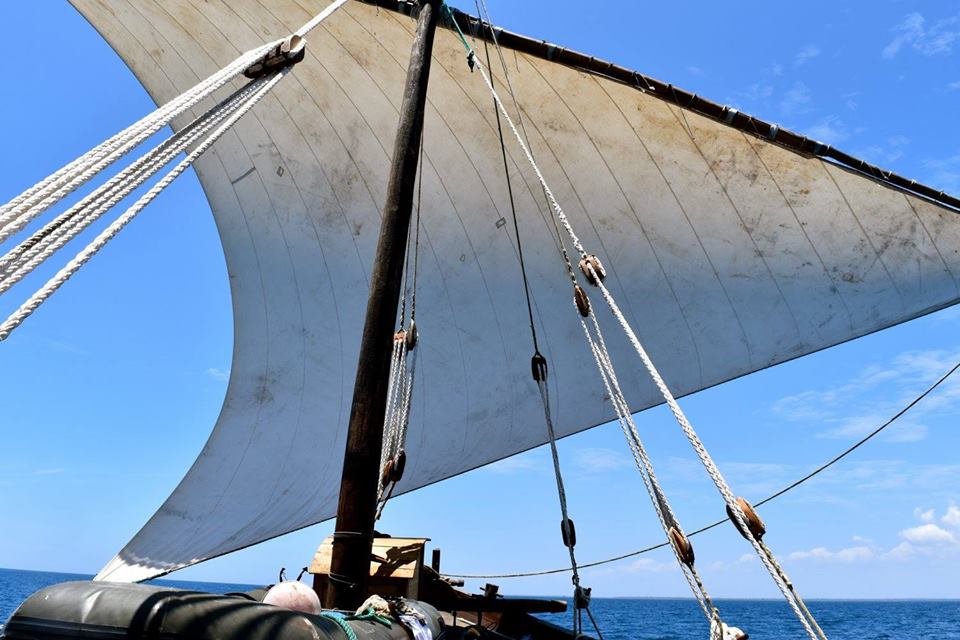
Category: Africa

  • The Floating Pirate Community you always wanted to Join is Real… & it has a Name

    The Floating Pirate Community you always wanted to Join is Real… & it has a Name

    Musafir is more than a ship. She’s an ideal—a vision and symbol of another way of life.

    Those who built her and those who meet her find themselves swept up by the singularity of her story.

    Musafir—or Msafr in Ki-Swahili—is Arabic for traveler. And indeed, the soul of the 70-foot (21-meter) dhow is travel. When I met her in early 2015, she lay at anchor in Kilifi Creek, on the North Coast of Kenya. Just 3.6 degrees south of the equator, Kilifi rests in equal proximity to the chaos of Mombasa to the south and the ancient port town of Lamu to the north, yet remains utterly tranquil.

    During my two months in Kilifi, I visited the nearly-finished vessel often.
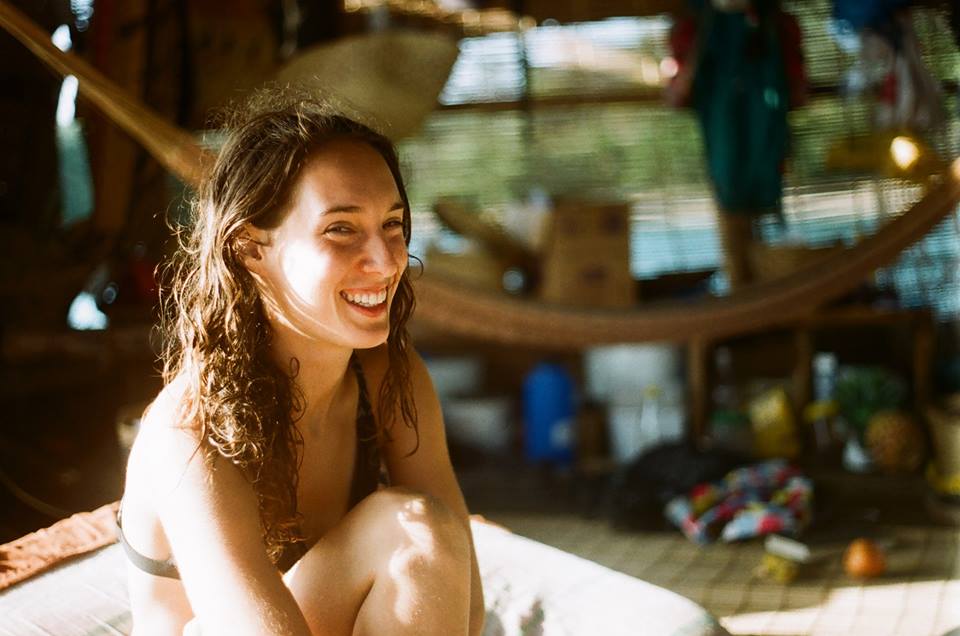
    sailboat, dhow, musafir, distant relatives, toby israel

    The approach to Musafir required a two-minute swim, or a one-minute kayak ride, through calm saltwater. At the boat’s hull, the water glowed a brilliant green as though illuminated by the vessel itself.

    Louis, a 30-year-old Frenchman from Burgundy who arrived in Kenya in September 2011, rested on board, a feather in his dreadlocks and a worn pair of shorts around his narrow hips. He had been building the Musafir for three and a half years.

    Work on the deck had begun only a week prior to my arrival, and a jumble of boards—some secure, others less so—sprawled before him. From several beams a collection of items hung: one hammock; woven baskets; a blue glass evil eye; a shard of mirror; solar lights; and a Kenyan flag.

    The mirror reflected the bright afternoon sun as Louis spoke:

    “It was the idea of freedom that called to me. The idea of doing something else. That’s why I started traveling, because I saw that this life that was suggested to me was not exciting. I think with this vehicle [Musafir] we can send a message somehow to the world. Not screaming it loud, you know, but by touching people pole pole [slowly in Ki-Swahili], showing that another way is possible. And if you follow your dream, even if you think “no, it’s impossible,” it’s possible.”

    Louis, along with an Italian man named Paolo, is one of the project’s “initiators.”
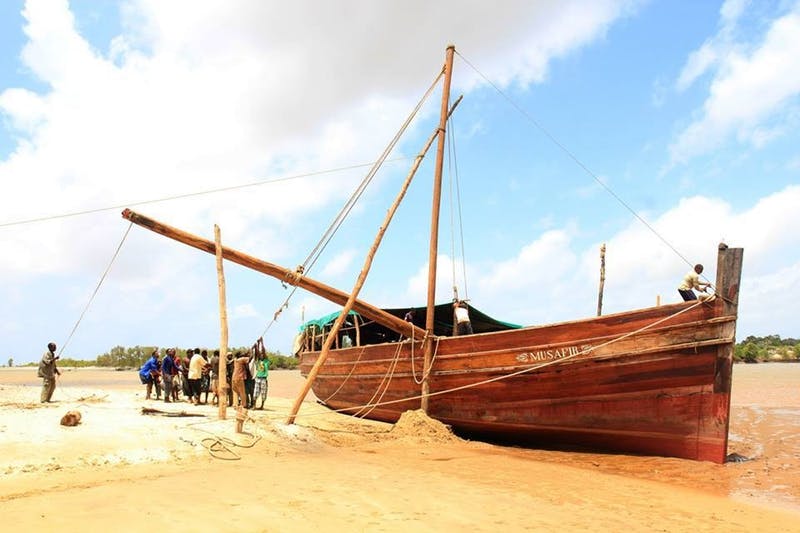
    kenya, sailing, dhow, kilifi, musafir, numundo, transformational travel

    In theory, however, “the boat belongs to whoever is on board.”

    He laughs and adds, “Me I’m just the Chai Wallah. My job on board will be to make chai and coffee. Just now, you know there are so many other jobs to do and no one else is around to do them.”

    The project relies on donations, crowdfunding, and—above all—the resources of those who have devoted their lives to actualizing it. Louis, Paolo and many volunteers repeatedly poured their savings into building costs.

    Historians differ on the exact origins of the dhow (a broad category encompassing many particular models). Some declare it Arab in origin, while others trace its roots as far as ancient China. A lateen sail and long, narrow hull differentiated the dhow from its Mediterranean kin. Many were constructed in Kerala, South India, known for the quality of its timber. Until Vasco da Gama’s arrival to Africa in the 15th century, wooden pegs and coconut rope—not nails—held the vessels together.

    Kipini has long been a notorious hub of expert Swahili construction, and thus a natural, far-off-the-beaten-path starting point. Musafir made its maiden voyage from Kipini to Kilifi (more accessible and less isolated) in November of 2014. In four days, she traveled 75 nautical miles, carrying fifteen passengers, a goat who would not see the end of the journey, and several chickens who would.

    Musafir, which, more precisely, is a jahazi (a Lamu-style dhow), is held together by copper nails rather than coconut rope. A few power tools for sanding and drilling assisted her construction, and she will eventually have an engine, too. However, Badi (the fundi, or master ship-builder), largely employed traditional techniques.

    Cotton canvas sail; old wood from Kipini; axes and sweat.
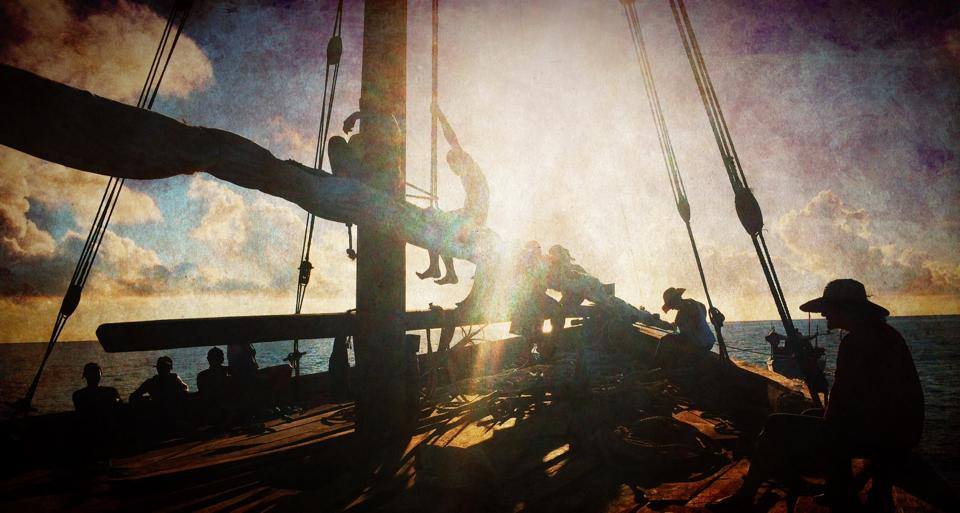
    musafir, boat, dhow, sailing, kenya, africa, adventure travel

    Building a boat of this size by hand is an endeavor few would undertake, but those involved agree that their labor adds inimitable depth.

    Louis elaborates, “Does it have soul? Does it have a special energy added to it? I think it does… Day after day of work, you start to know every piece, every nail. It makes it totally unique. You can be sure there won’t be two dhows like this in the world.”

    Dhows once traversed the Indian Ocean, sailing along the Arabian and East African coasts, and following the monsoon winds all the way to India and back. They carried dates from Basra, curved daggers from Muscat, gold and ivory, carved chests, spices and mangrove poles—and ideas. The dhow enabled the exchange of languages, people and ideas as well as goods.

    Likewise, Musafir will transport stories, goodwill, and possibly trade items. When the traveler and its travelers make port, “the vision is to have this exchange of culture—learning from communities and doing what we can to fill any specific needs.”

    Louis, Paolo and others made an exceptional effort to integrate into their temporary homes. They learned Ki-Swahili and befriended the Kilifi men who spend vast swathes of time cleaning the nearby beach. They drank mnazi (coconut palm wine) and worked closely with local experts.

    Cross-cultural understanding, they have understood, is an integral component of modern-day travel. Along the Swahili Coast—a vibrant blending of deep Islamic roots and centuries of Bantu, Arab and Indian influence—such insight requires time and complex awareness.
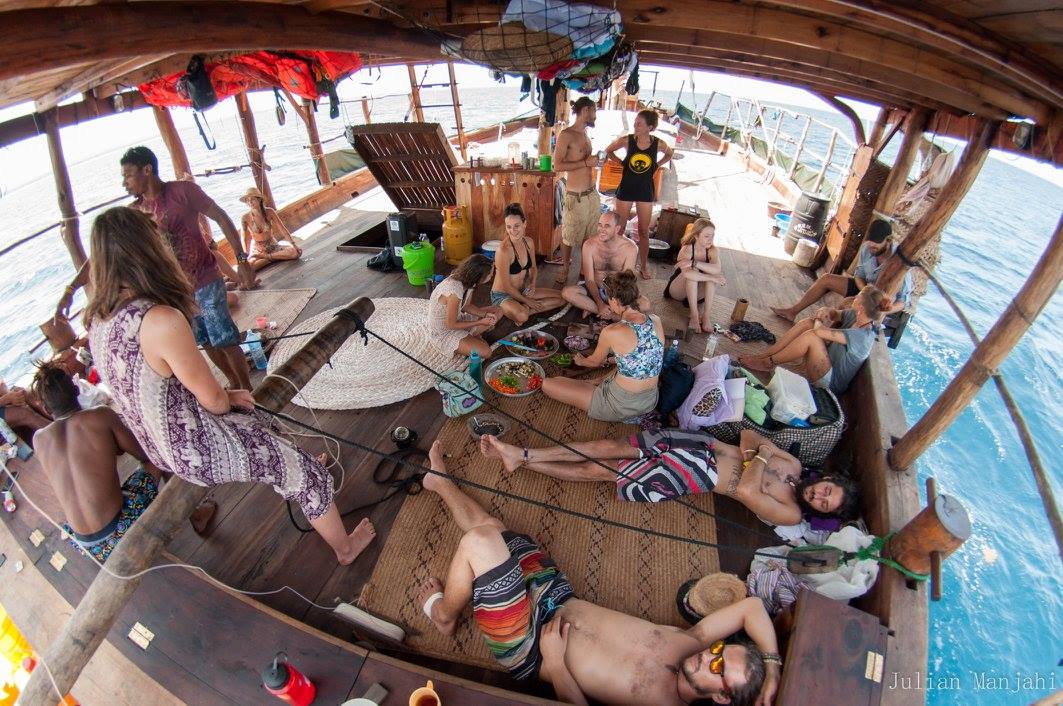
    musafir, distant relatives, pirates, community, travel, africa, toby israel

    What could inspire a group of unconnected people from around the globe to live and work together towards a common goal? It’s not the physical ship, though many involved love to be at sea. More than anything, it is the promise of freedom.
    Dario, a volunteer from Sicily, explained,

    “I think it appeals to people who are curious, adventurous… and who have a little craziness around, because it’s not a safe environment. I fell in love with the idea. To travel, to have access to any country. There are no roads, you know; you are just thinking where to go and you go.”

    Travel represents both a means and an end. For these Musafiri, there is no “after” in sight—only oceans and journeys to discover.

    Dario peeled a mango with a recycled blade and spoke over the snapping of the green tarp overhead as the wind churned and the light became hazy with the setting sun.

    “Musafir is about traveling,” he says. “It’s about life. It’s about getting to know new cultures, new people. It’s about growing, because while you travel across the globe you’re able to learn many, many things that can be illuminating. It’s about helping out as well. It’s an idea that can amuse people, because if you think about building a 70-foot sailing boat in order to travel around the world, wow, it’s a bit of a crazy idea. But eventually… You’re sitting on it. The boat floats. We’re here talking about it. So it’s a project that shows that if you really want something, you can do it.”

    To leave the ship, I could either climb down the rope ladder on her port side or jump into the warm waters of Kilifi Creek. The inimitable Distant Relatives Ecolodge was only a five-minute walk away. Their eclectic blend of earthy vibes and tropical hospitality served as a base for the Musafir team, as well as myself, for some time.
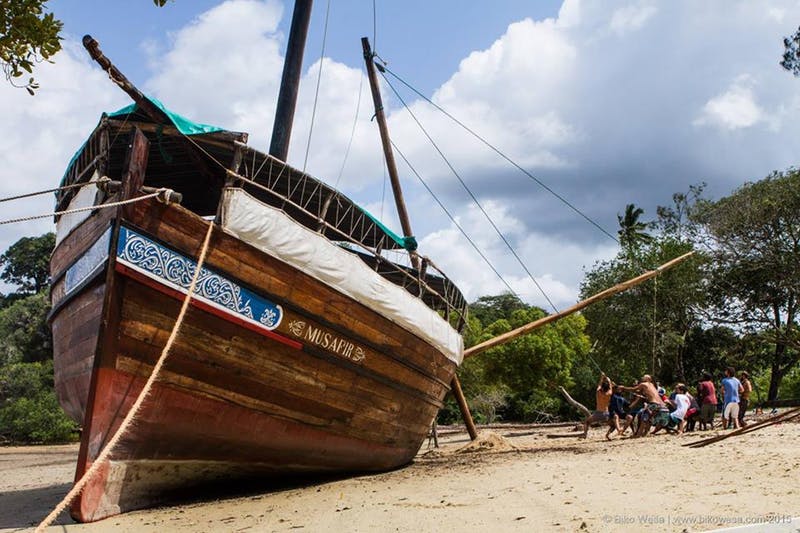
    musafir, kenya, kilifi, distant relatives, transformational travel


    When Louis and Paolo first arrived in Kipini, many of the villagers regarded them with suspicion.

    Why did they live in poverty while spending large sums on Musafir’s construction? Why wouldn’t they use the finished ship to turn a profit? With their long hair and beards, the villagers concluded, the men must be undercover Mossad or CIA agents come to spy on them.

    The answer to these questions, however, was and is simple:

    Musafir is not a business. She is a message.

    Dario concluded, “It’s important as well to come down here and understand what it means to take part in such a big project. It’s very challenging, and it’s wonderful in itself. It teaches you a lot—shows you great beauty.”

    For those who dreamt her into being, Musafir is a message of freedom and unity. She is a lesson in perseverance and an example of a way of life not yet lost to the world.

    When she sets sail, a traveler’s soul will go with her.


    Anyone inspired by this project has several options. One can, if the fit is right, sign on as a volunteer for several months. Alternately, one may support the project financially by donating here.

    Originally published on NuMundo’s Transformational Times. 

  • How I’m Overcoming the Tension of Teaching Storytelling in Africa

    How I’m Overcoming the Tension of Teaching Storytelling in Africa

    In my first workshop meeting, I share a TED Talk by Nigerian author Chimamanda Ngozi Adichie and she discusses how throughout history those in power—especially colonialists—have dispossessed others by choosing how to tell their stories.

    I am a young, white, American woman facilitating a workshop in Cape Town, South Africa sponsored (I think) by the U.S. embassy.

    The title of this workshop? Storytelling for Social Justice.

    As my “students” introduce themselves at our first of five meetings, they speak with courageous vulnerability about identity, hope, passion, and overcoming adversities I can scarcely imagine—genocide, violence, disease, loss.

    They are mostly African, mostly POC, and mostly ten years older than me.

    Sitting at the table with these eight extraordinary individuals in a bland classroom in the “American Corner” of the Central Library, I facilitate a discussion about “finding our authentic voice.”

    Am I following in the well-worn tracks of those colonialists and neo-colonialists who sought to dictate how the stories of the African continent should be told?

    Am I, too, somehow disempowering my students by seeking to facilitate their storytelling? Is “facilitate” just a nice word for “control”?

    Damn, I sure hope not.

    But I also hope that my race, age, and nationality do not disqualify me from sharing what I know with this exceptional group of human beings. They have honored me with their trust, their time, and their attention—and I feel humbled and motivated in equal measure. I want to support them in telling their stories, and I want to do it in the right way. So, as I do, I’ve spent a lot of time thinking about what the “right way” would be.

    I’ve never quite faced a situation like this before. I’ve taught dance and yoga, but writing is another level. When we talk about telling stories—our stories—we step into sensitive territory.

    For too long academia has arrogantly claimed ownership of the world’s stories. For too long,  media and politics have propagated incomplete stories, visiting a kind of violence on their subjects by flattening them into one dimension. For too long, those who possess privilege and power have thought to police the self-expression—the stories—of those who have less.

    And on and on and on…yes, storytelling is sensitive territory.

    But, I’m still facilitating the workshop. This is how I’m moving past these stumbling blocks:

    1. I choose the word “facilitate” over “teach.”

    I would not presume to teach a group of people older, wiser, and more seasoned than me. I prefer to understand my role as that of facilitator, enabling my workshop participants to learn from one another and from my experience. (I also expect to learn just as much from them as they do from me!)

    2. To that end, I focus on the knowledge I do have to share, which may be of value.

    Introducing this workshop, I told my group that I came to them primarily as an editor who has worked on thousands of articles and several full-length books. I also come to them as a writer who has published for years on many online platforms. I believe the knowledge I have gathered from that work could benefit anyone wishing to improve their writing skills.

    3. I accept the tension.

    I think there is an inherent tension to my position. There are layers of nuance whenever a person steps into a teaching role, travels in foreign countries, or enters any cultural context other than their own—and I’m doing all three. That’s okay. I hope that by keeping those nuances in mind I will manage to avoid any particularly inappropriate gaffes.


    ***


    Photo Credit: Zen Monkey Photography

  • The Wild-Tame Peculiarity of Safari (and 10 Wild Photos)

    The Wild-Tame Peculiarity of Safari (and 10 Wild Photos)

    Sabi Sand Game Reserve, Mpumalanga, South Africa

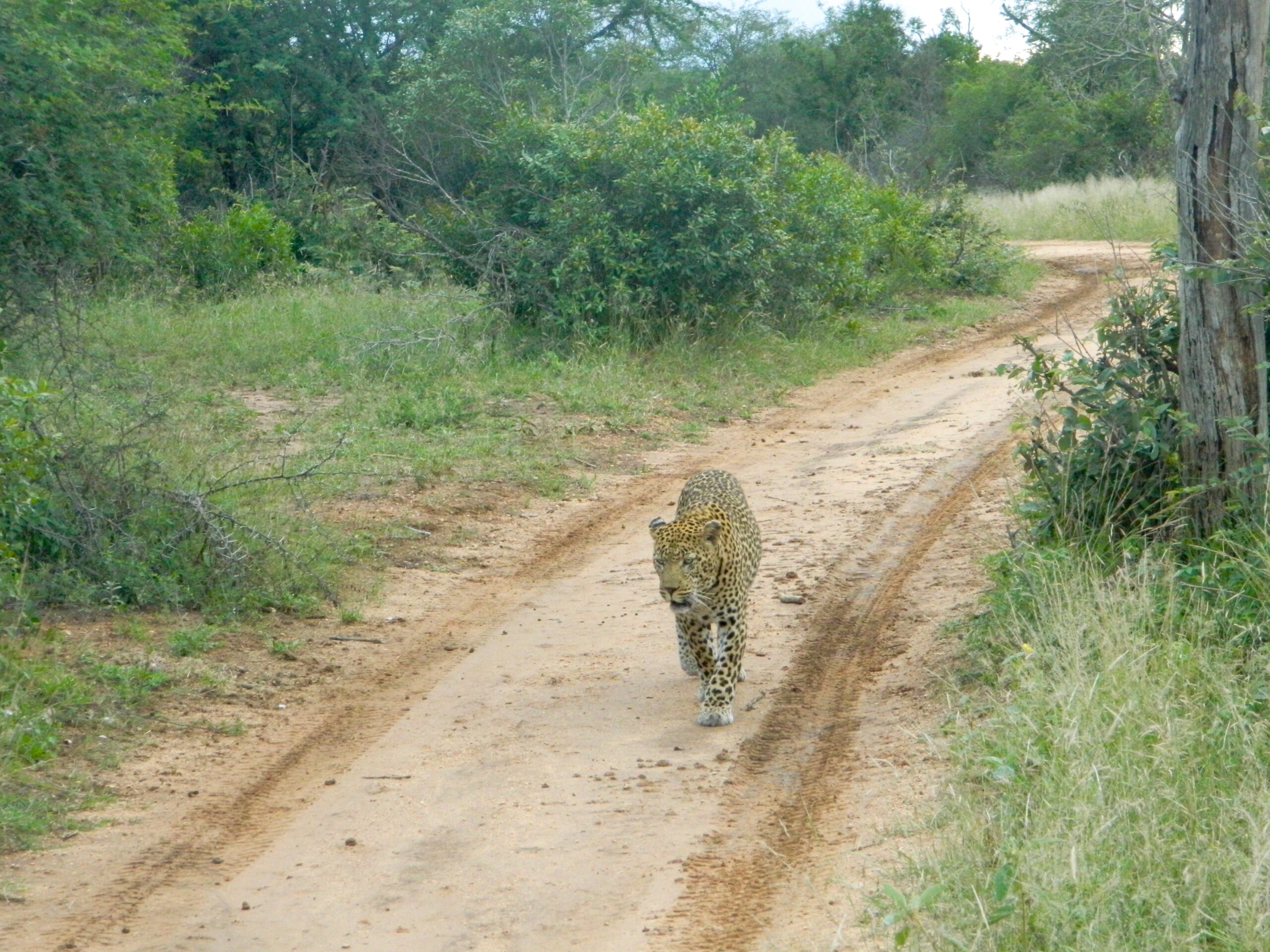
    A male leopard wakes from his nap and stretches lazily.

    Three safari cars—Land Rovers, I think—have parked just meters away.

    The leopard yawns, stretches again, and begins to move.

    His eyes are amber-grey, and he gives us only the briefest of disinterested sidelong glances before deciding to ignore us entirely and amble along the road. He remains impervious as the three cars crisscross his path to allow their passengers optimum angles—a bizarre new animal behavior pattern to which he and many other species in the bush appear wholly adapted.

    At one point he passes so close to my side of the car that I can see the individual hairs that make up his spots and the supple play of muscle beneath his skin.

    ***

    There is something both bizarre and breathtaking about finding yourself within hand’s reach of a wild animal and knowing that you’re safe.

    That is the wild-tame peculiarity of safari. Or, at least, of my safari.

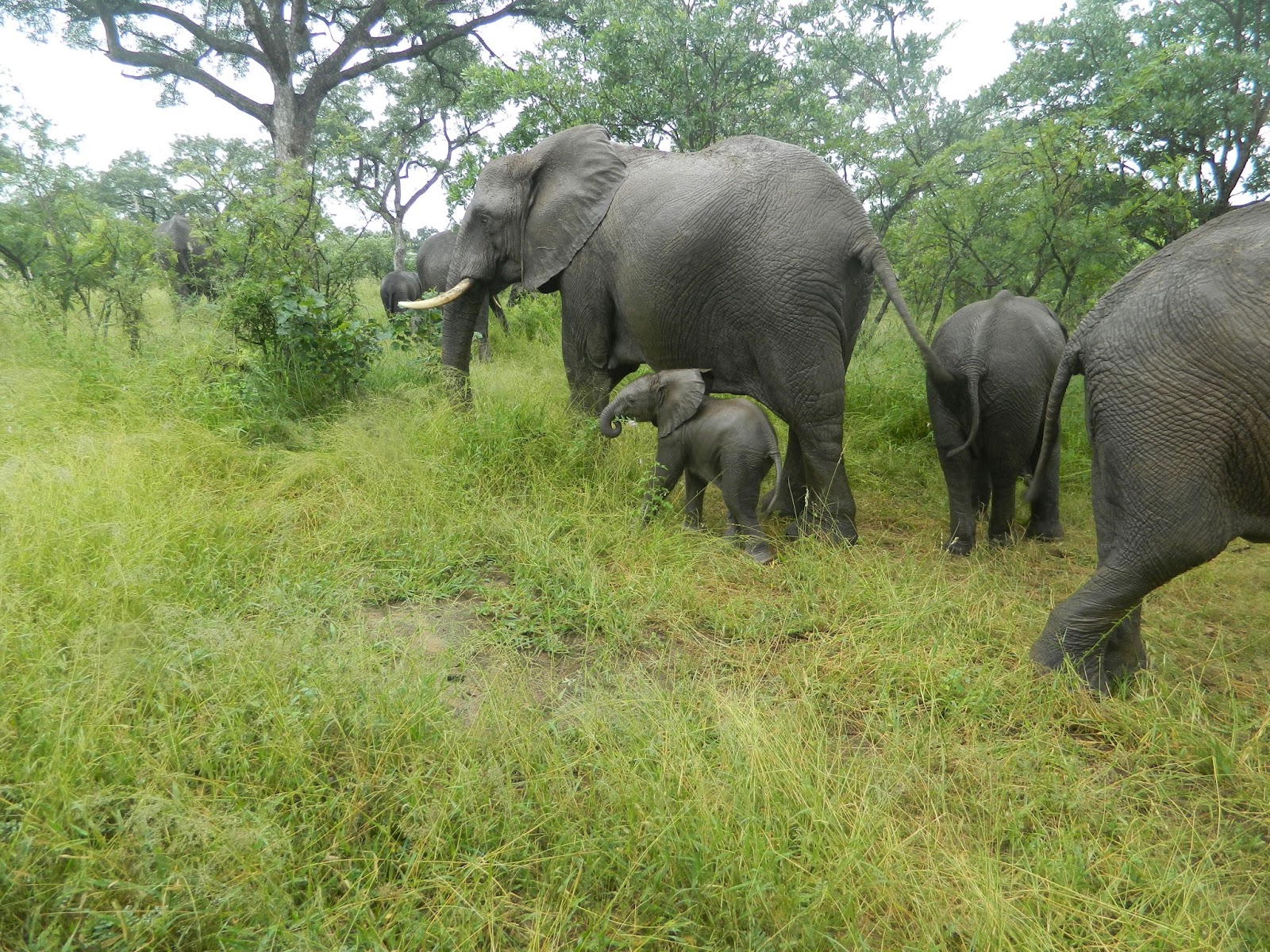
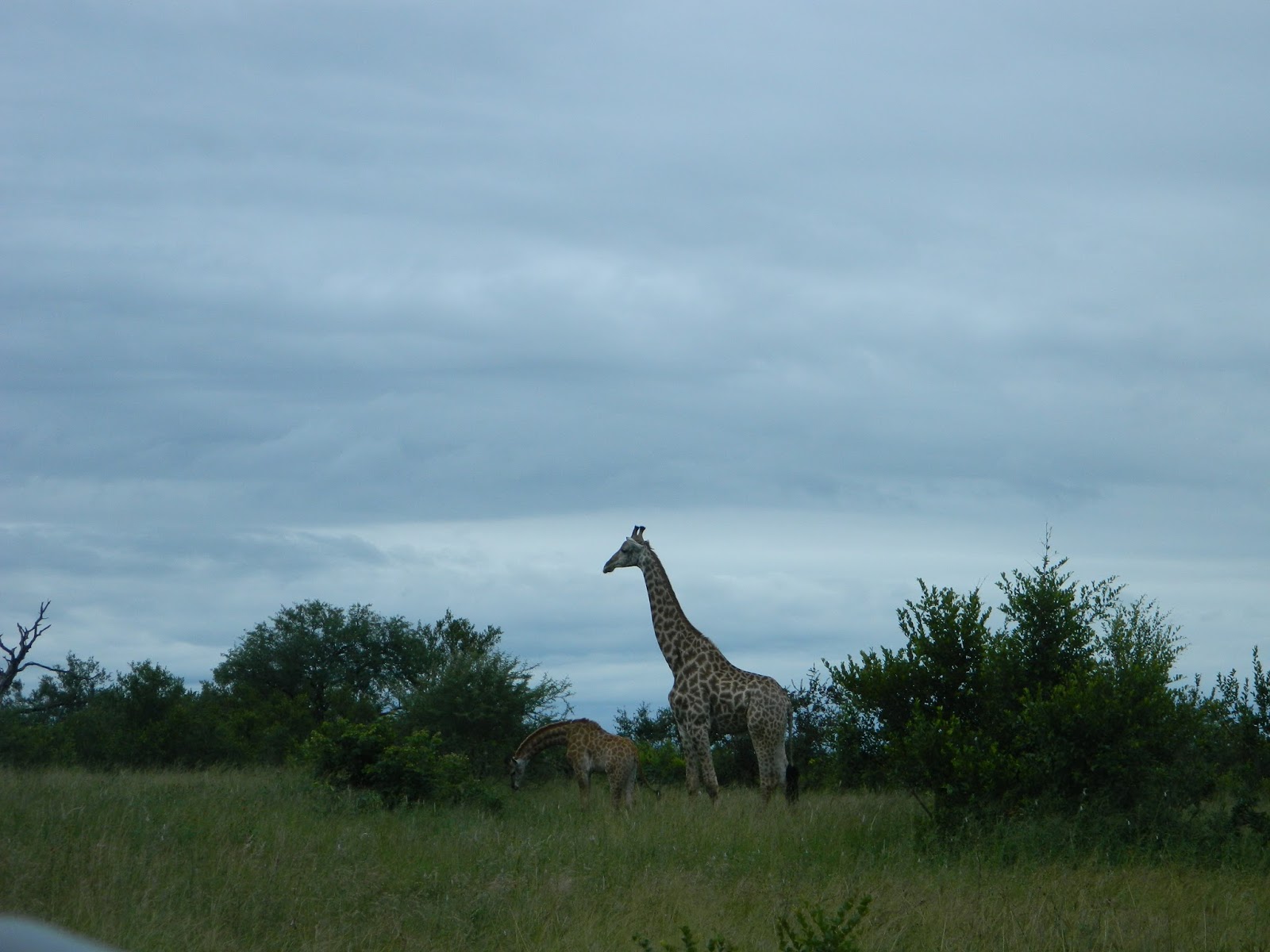
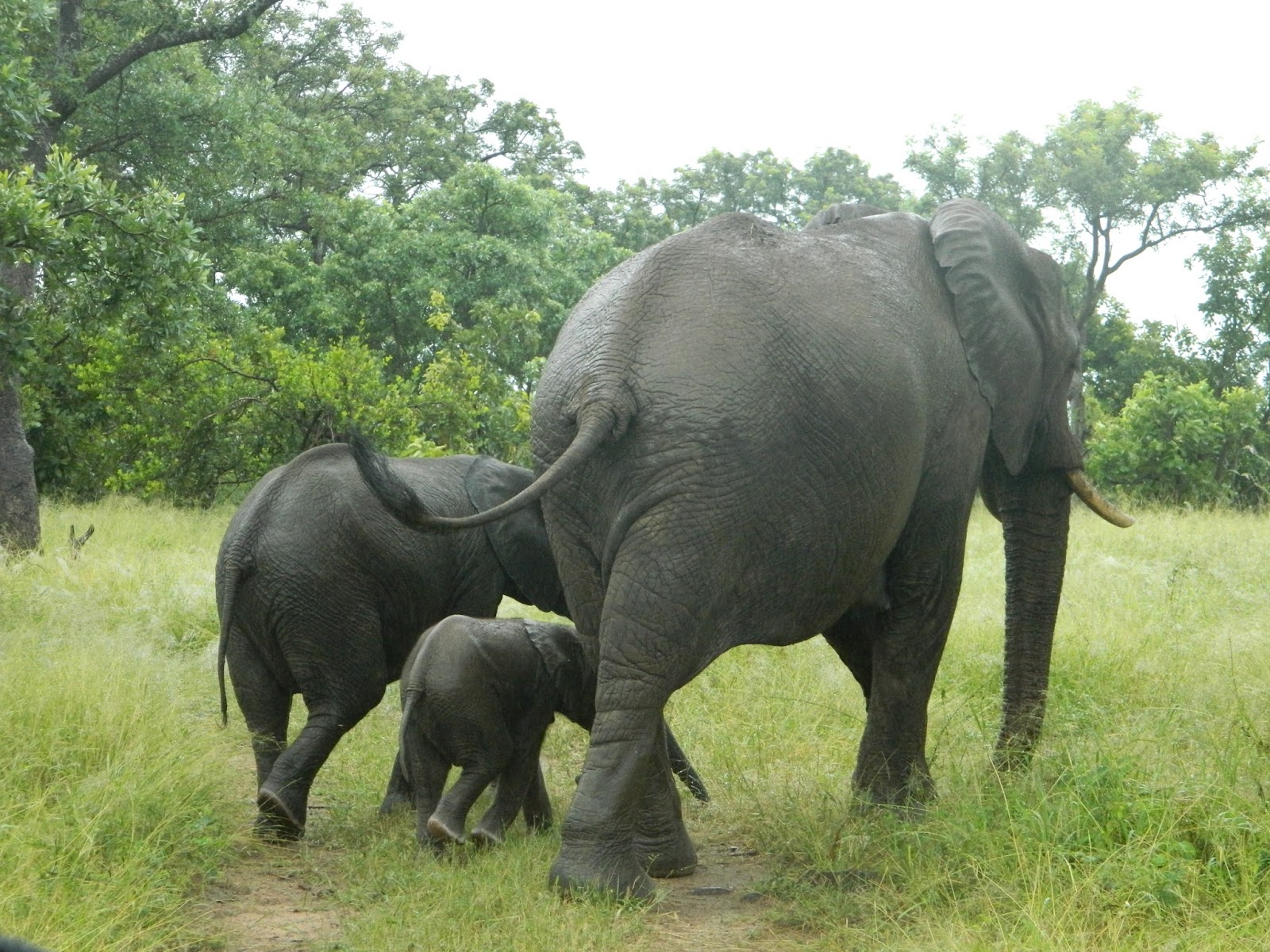
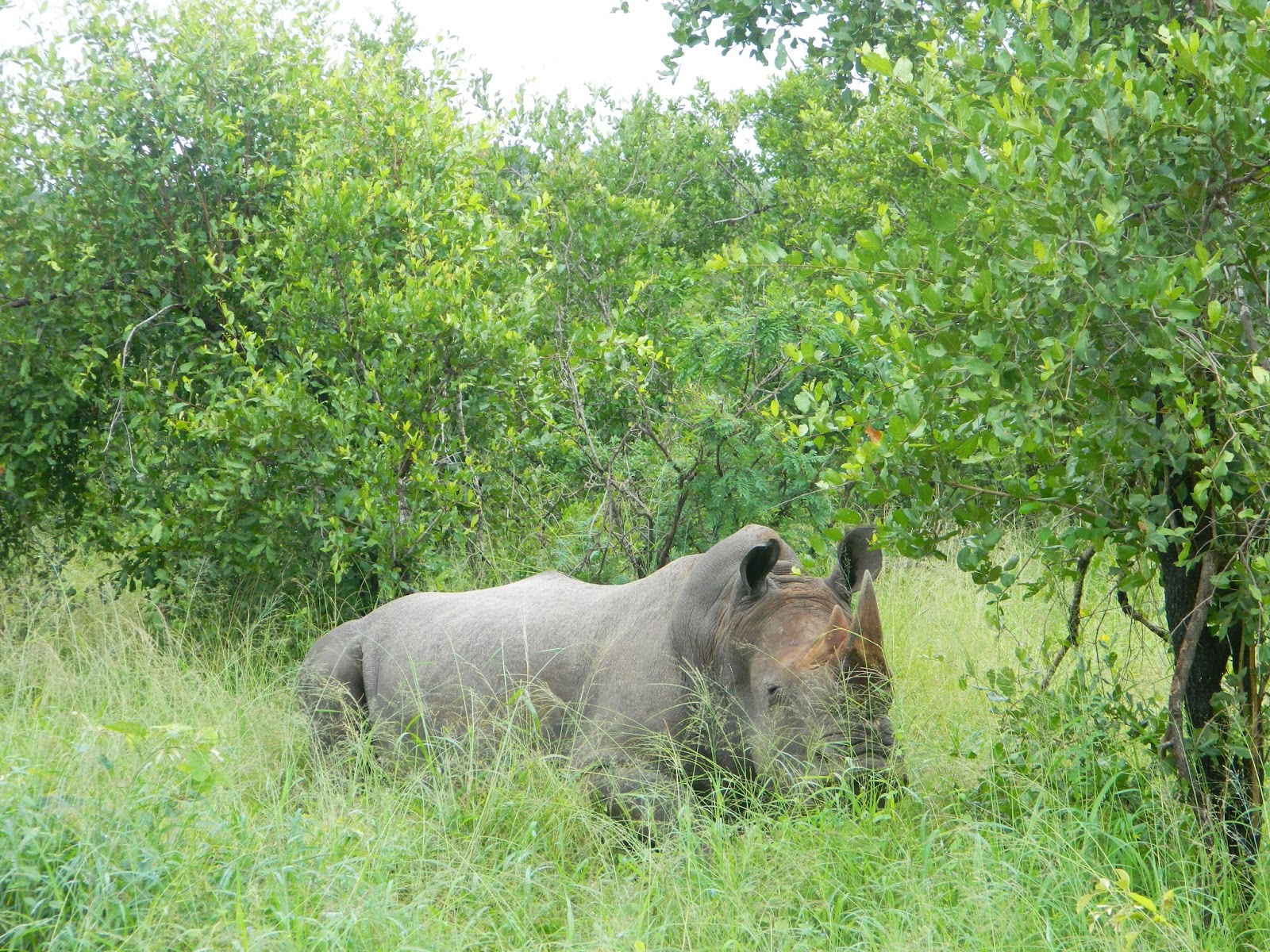
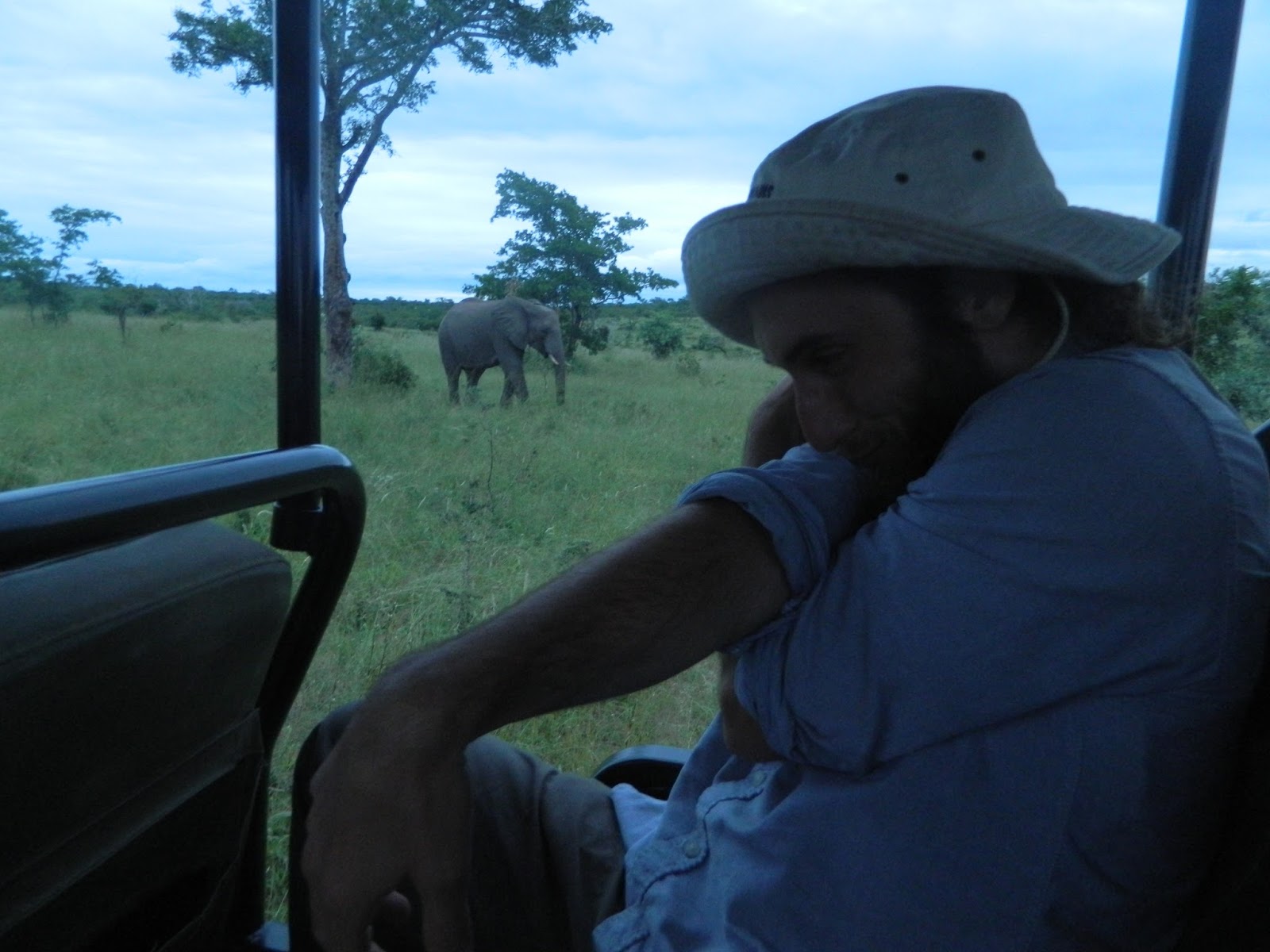
    Over the course of three days, my family and I found ourselves nose-to-nose with elephants, zebra, giraffes, leopards, and lions, thanks to the skill of our third-generation guide and the collaboration of the game reserves. We observed hippos, white rhinos, hyenas, and vultures from just a couple meters away.

    The sheer size, power, and wildness took my breath away—and it made me wonder about this paradoxical dynamic whereby wild animals accept wacky, camera-toting tourist behavior as the norm and an ecological system seems to evolve to accommodate it.

    Predator and prey alike enjoy the ease of travel on dirt roads cut for the convenience of safari trucks. A mother leopard defends her cubs against hyenas as you would expect, but observes our approach with indifference. Some—though not all—impala (a species of adorable antelope) fail to shy away at the no-longer-alien sounds of car engines and human voices.

    One thing is certain: This industry is a boon for the anti-poaching efforts across the safari-regions of the African continent. It brings revenue to places that desperately need it, and government protection to the wild animals responsible for it.

    Perhaps even more important, it has the potential to raise awareness about and appreciation for species and environments slipping into endangerment or collapse. A key element of environmental protection not to be underestemated.

    I hope to share more as I learn more, but in the meantime, here are some “up close and personal” photos of the wild animals that allowed us to share their space:

    Mama leopard with cubs.
     
    Fun fact: A herd of zebras can also be called a dazzle.


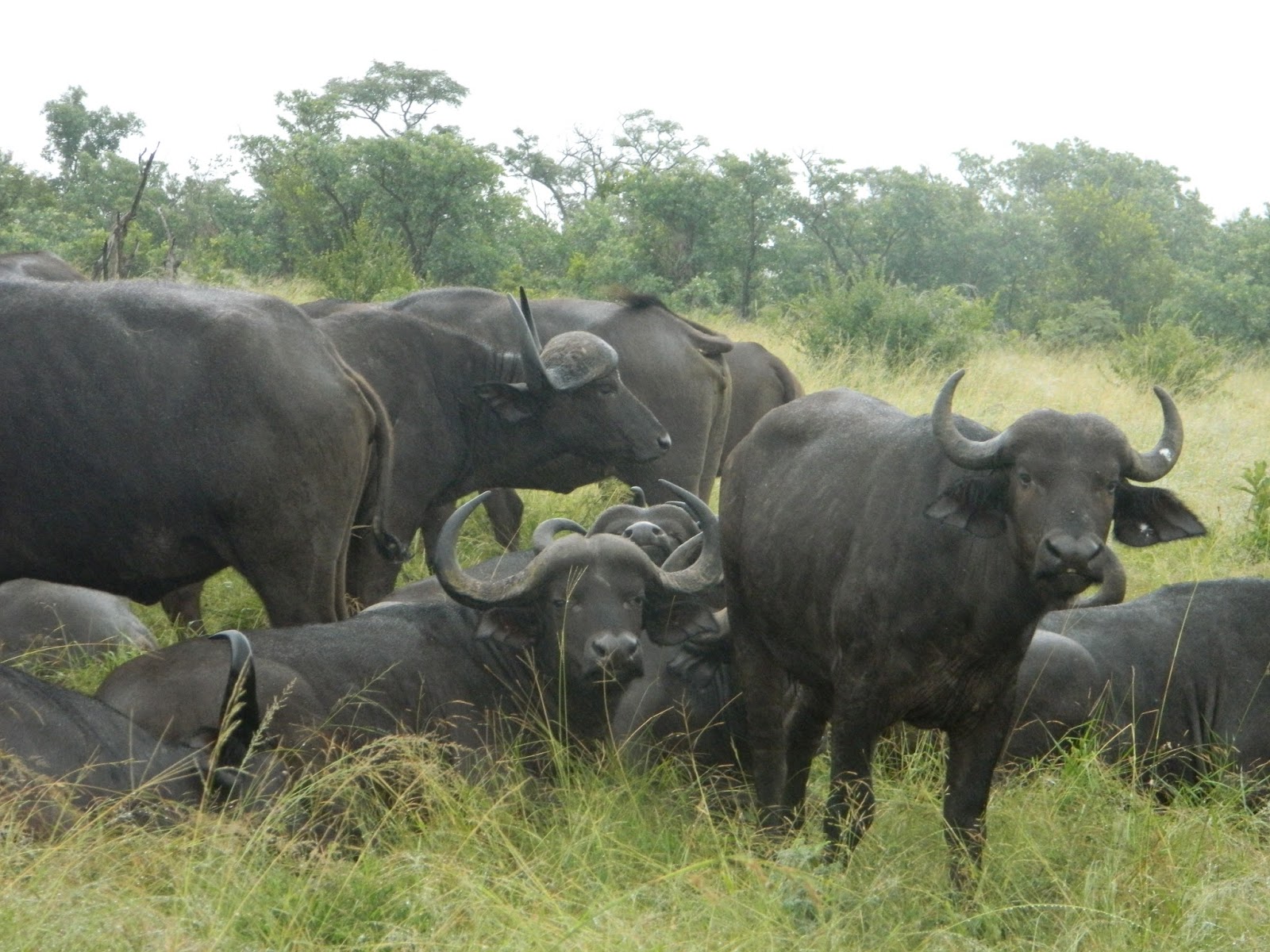
    “They look at you like you owe them money.” — Unknown, on water buffaloes
    No introduction needed.
    Who wants to go for a swim?
    So many elephants!
    The animal that evolution seems to have forgotten.
     
    My brother, the rarest of the wild animals.
  • Don’t Take My Word For It

    Don’t Take My Word For It

    Everything I have ever written, everything I will ever write, represents an infinitesimal slice (mine) of an infinitely complex whole.

    I may speak of the universality of experiences such as fear, joy, loss and love. And I do believe in the value of sharing knowledge. But still, someone else’s words will never be enough.

    A single truth only brings us so far.

    I can write that it is Saturday, that I am in Muizenberg, South Africa, that the sun is hot and high for so early in the day. And that is all true.

    I can write that I am sitting at one of the southernmost edges of the world watching the waves roll in against a backdrop of rocky peaks; that the wind and my hair and the sky taste of salt; that my shoulders ache from surfing; that seashells crunch under my feet as I walk. And that is all true.

    But this information is mine only. What of yours?

    The Buddha was fond of saying, “Don’t take my word for anything; go find out for yourself.” (I’m paraphrasing here.) In the Jewish tradition, debate and inquisitiveness are encouraged. We are not to simply take another’s words (or even doctrine) as truth, but rather—to fall back on a much-overused phrase—to discover our own.

    I believe much of the world’s wisdom boils down to this:

    Go and see.

    Today, I was going to write a snapshot of Muizenberg, a small coastal town just a thirty-minute train ride from Cape Town. But I changed my mind.

    You can Wikipedia that, and I think this is more important.

    “Go and see” does not necessarily mean, “Drop everything and go travel the world.” Although, if that is within your means and your calling, I certainly recommend it.

    “Go and see” means, “Experience the world—any world, your world—for yourself. Don’t just take my word for it.”

    Perhaps you won’t venture to the southernmost edge of the world, but touch the edge of something.

    Maybe you won’t be crossing international borders, but find a limit, a frontier, and surpass it.

    You may not “watch the sunset from every coast,” but you can watch the sunset every evening—and if it’s the watching that counts, then that’s kind of the same thing.

    There are many ways to seek, many ways to wander, many ways to cross borders; I share only mine. And while I hope you enjoy seeing a certain world through my particular gaze, I also hope you will go and see, because these words, these truths, are only the beginning.

  • When the World is in Chaos: Dance

    When the World is in Chaos: Dance

    “Yougottadance. Aslongasthemusicplays. Yougotta dance. Don’teventhinkwhy. Starttothink, yourfeetstop. Yourfeetstop, wegetstuck. Wegetstuck, you’restuck. Sodon’tpayanymind, nomatterhowdumb. Yougottakeepthestep. Yougottalimberup. Yougottaloosenwhatyoubolteddown. Yougottauseallyougot. Weknowyou’re tired, tiredandscared. Happenstoeveryone, okay? Justdon’tletyourfeetstop.” ― Haruki Murakami, Dance Dance Dance

    7:00 p.m. Table Mountain summit, Cape Town, South Africa. 

    The sun is setting, and we are dancing.

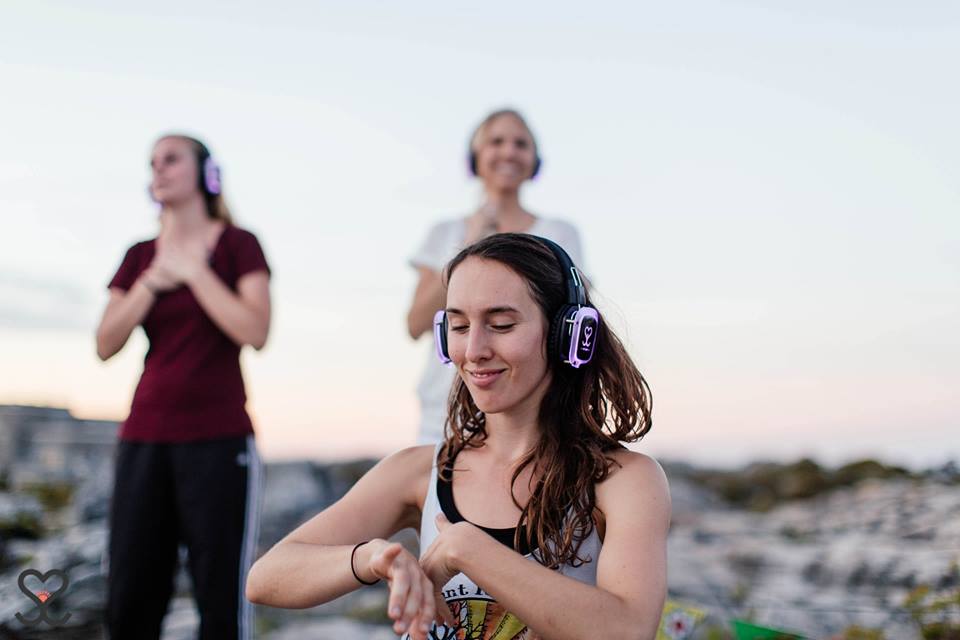
    Two hundred participants, most dressed in white, headphones on—we are praising the earth, this mountain, the clouds streaming across the rocks and bathing the world in dreamlike mist.

    It’s my first time at a “Secret Sunrise” (or, in this case, Secret Sunset) event.

    I’ve taken the hard way up, along with one friend and two strangers picked up along the way, and my endorphins are already surging after a two-and-a-half-hour hike.

    But the world is in chaos.

    I can’t glance at Facebook, work a shift at elephant journal, or even have a casual conversation without this truth becoming painfully apparent.

    I, like many, feel compelled to do something say something change something—but, paralyzed by the overwhelming madness of it, I do little, say little, change little. And yet, and yet, and yet—every day I work to promote mindfulness. Every day I write to nurture cross-cultural understanding. Soon, I will return to school to study the art of peacebuilding.

    And yet, and yet, and yet—more importantly, in my humble opinion—every day I seek joy.

    The world is full of fear. So I fight my own demons. The world is full of chaos, and so I strive for inner balance. The world is full of uncertainty, so I dance with it.*

    And here we are. Dancing.

    Piano keys draw clouds through the sky. Eighties rock compels bodies—eight years old to eighty-eight—to move to the same beat. House music lifts feet up, gravity-defying, and down, solid and real.

    Each of us in our own headphone-cordoned world, we dance. Alone and together. And hell, if that’s not an apt metaphor, I don’t know what is.

    Alone and wrapped up in our own worlds, we are all nonetheless connected to one another by the same melodies in our ears, the same rhythm in our blood, the same music in our bones. We are all dancing, whether we realize it or not, on the same sacred ground.

    So, is this an odd time to be turning to joy, music, community?

    I don’t think so. In fact, I’d say that moments of chaos, uncertainty, fear are very much the right time to dance. To connect, however we do that. To create. To keep pushing for meaning.

    Because if we lose that now, then we’ve lost.

    So dance—not in spite of the chaos, but for it, with it, and through it.

    Dance—”as long as the music plays.”

    Dance—and don’t stop, because the world, chaos and all, is still spinning.

    Youtube video

    *This is a poetic response to turmoil; none of it is meant to underplay the value of activism in our current global climate. Act. Protest. Make change, by all means. But don’t forget the value of personal growth. I genuinely believe in “the power that living a good life can have,” as a friend once put it. Ideally, do both!


    Photo Credit: Juliette Bisset Photography

  • White Spaces: Combatting Racism with Subtle Awareness

    White Spaces: Combatting Racism with Subtle Awareness

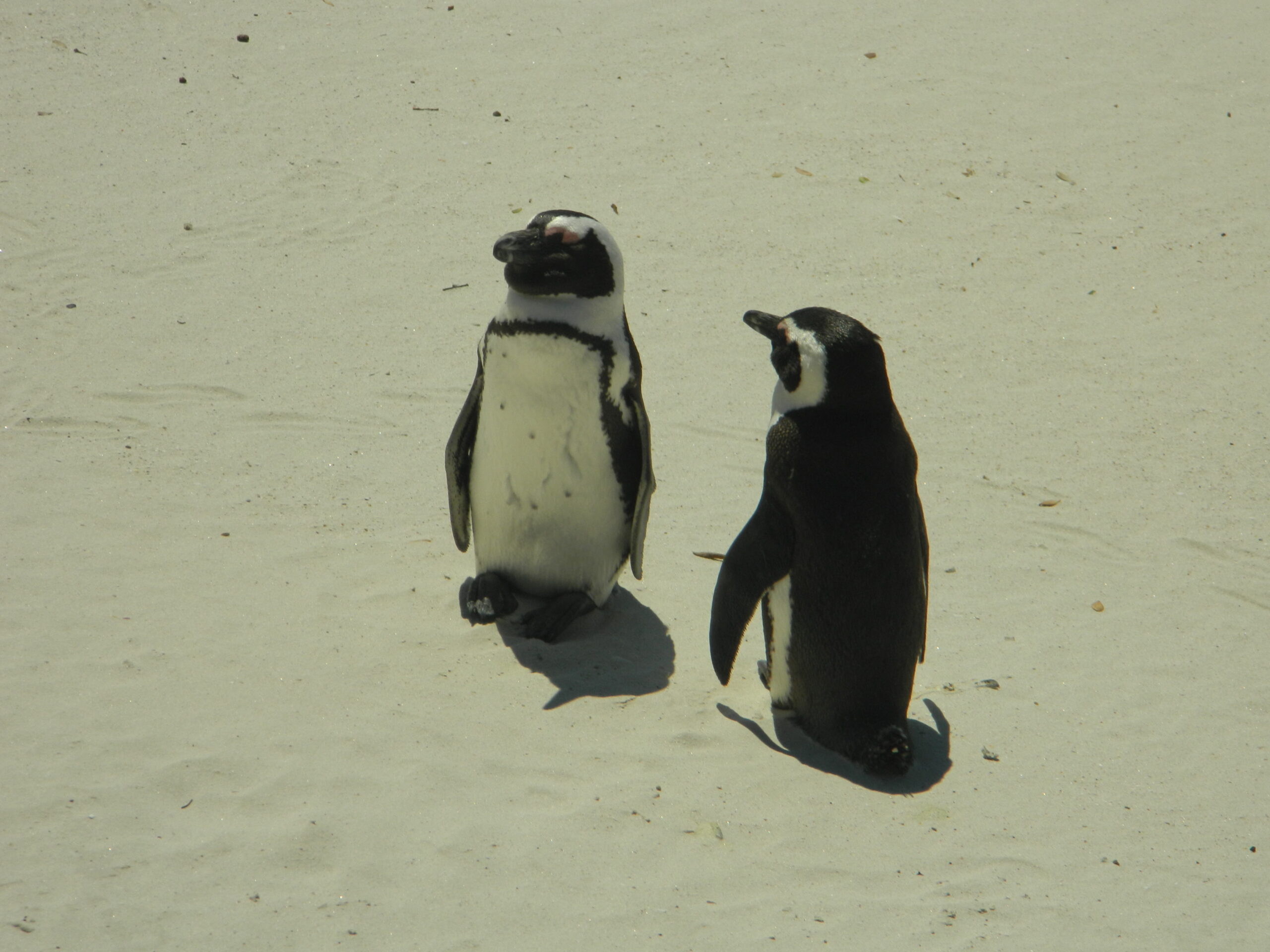
    Here’s a totally irrelevant picture of penguins to lighten the mood…

    Late December, Sea Point, Cape Town

    The walls and tables are painted a matte black, with the name of the cafe written in white. The decor is rustic-chic—a style I’m beginning to identify as a hallmark of upper-middle class Capetonian hipster culture. Bonobo plays on the stereo.

    When I look around, I’m not surprised to see that all of the customers here are white. The servers (just as predictably) are black, but let’s leave that aside for now.

    While the prevalence of these “white spaces” no longer surprises me here (or anywhere, for that matter), I still find them troubling: the climbing gym, music venues, bars, cafes…

    A conversation with my new housemates this morning brought this subject to the front of my mind, though I’ve repeatedly followed this line of thinking during my time in Cape Town—both this year and last. And I think it’s pretty relevant to any society (not just South African) that is both highly stratified and intricately diverse.

    Disclaimer: This is one tiny, ~800-word slice of a massively complex issue. I am not offering any solutions. If I make you stop, think, examine, I will be more than satisfied.

    So.

    The reason for which these white spaces exist are plentiful and fairly obvious. A massive wealth gap divided along racial lines, cultural differences in taste and recreation—the list goes on. Rather than discuss why we have them, however, I’d like to focus on how (or even if) we can confront this phenomenon.

    To be precise, I would like to share how I confront it, in the hopes that it may help someone else. Note that I’m sharing from my position as a white woman experiencing “white spaces”—I’d be curious how the response changes (or doesn’t) when the deck shifts.

    Situation One:

    You walk into a funky little cafe, bar, concert, fill-in-the-blank, and the homogeneity of the whitewashed crowd immediately strikes you, given that you’re in a country whose population is less than 10% white.

    Here’s what you don’t do: You don’t turn around and walk out, because you actually dig this band, the coffee’s awesome, or you’re getting super hungry. You don’t harangue your fellow customers with your guilt-laden complaints about the bitter vestiges of apartheid ruining your cappuccino, because that’s pointless. And you don’t call up your non-white friend to see if they want to hang out—immediately—because, well, I think it’s obvious.

    Here’s what I actually do; it’s something I’d call subtle awareness, and I believe it to be meaningful:

    > First, I acknowledge that I have indeed entered a glaringly white space. I’m not going to ignore it or deny it. The first step to addressing any issue is being aware of it.

    > Second, I examine my motives for being here. Am I drawn to this cafe because it is comfortably, familiarly, safely white? Or have my 25 years of cultural conditioning simply predisposed me to seek out cafes, bars and activities that equally appeal to others of my socioeconomic and cultural background? It’s probably the latter, but it’s always good to check in—honestly—with myself.
    > Lastly, I enjoy my goddamn cappuccino and write this blog while I’m at it, because at this particular moment, what else am I going to do?

    Situation Two:

    You start to notice a pattern. You seem to be consistently ending up in these homogenous spaces, and you’re worried that it’s not helping you become a more aware, cross-culturally fluent or educated individual.

    Here’s what you don’t do: Dig in your heels and maintain your status quo, all the while patting yourself on the back for being more enlightened than “those” people at the table next to you. You don’t immediately dump all your friends and hobbies and look for better ones, either, because that’s silly.

    Here’s what I’ve done in the past:

    > If I think I’m ending up in these spaces because my neighborhoods of choice are problematically homogenous, I may choose to spend time in other, more integrated areas.

    > If I notice that one of my activities (like salsa dance) or one of my favorite bars appears to be more inclusive, I may give that preferential treatment when deciding how to use my time.

    > If I observe one of my regular cafes promoting exchange and openness of any kind, I will offer it my patronage more frequently.

    I don’t know that any of these actions are solutions, really, but I believe they are steps we can take as individuals to ensure that—at the very least—we are not unconsciously supporting subtle segregation in our cities.

    And, I’m not saying there’s not a time and a place for homogenous spaces. Religious, ethnic and other identity groups have every right, and valid need, to assemble as such; however, when we never step beyond our insular spaces, everyone loses.
    Don’t you want to meet and learn from as many (and as many kinds of) people as possible? I certainly do.

  • Familiar Things

    Familiar Things

    Sea Point, Cape Town, South Africa

    I’ve been in Cape Town for less than a week now (after nearly a year away), but it seems much longer. In a way, it feels like I never left.

    I’m living (per total coincidence) 15 minutes up the road in Sea Point from where I lived before; the mountains have not changed; I recognize the roads and know the bus routes; friends welcome me back.

    Here are a few of the sights, sounds and sensations that feel familiar, this time around:

    The knobby summit of Lion’s Head Mountain, which has never—not once—looked like a lion’s head to me. (more…)

  • Johnny Cash and Slow Travel

    Johnny Cash and Slow Travel

    8:15 a.m. Self-Service Restaurant “Mediterraneo.” Grandi Navi Veloci ferry from Tangier to Barcelona.

    I look up from my breakfast—a somewhat sad assortment of boxed orange juice, cold croissant and drinkable cappuccino—and observe the other diners. Some are in groups or pairs. Many are young Moroccan families. Many are alone.

    Of this last group, few are doing anything (checking phones, or even reading). They’re just sitting there, drinking coffee, looking around. For some reason it reminds me of Johnny Cash’s famous response when asked for his definition of paradise:

    “This morning, with her, having coffee.”

    I’m not even a particular Johnny Cash fan, but something about that phrase—or more, the slowness it implies—fits this mood.

    People choose to travel by ferry (around thirty hours from Tangier to Barcelona, rather than two or three by plane) for many reasons. The slightly cheaper cost. The relative ease and comfort of sleeper cabins and lots of space to roam. The vaguely romantic allure of faded, Titanic-style old world luxury.

    And—I suspect—some people choose it for the slowness.

    Sitting in a deck chair for hours watching the boat’s trailing wake. Pacing the endless red-carpeted hallways, hands skimming smudged brass banisters, stepping inside and outside and inside again with no special aim.

    Sitting there, drinking coffee, looking around.

    Because there’s nothing better to do. Because the boat will get there—slowly—and we have time. Because, just like Johnny Cash, we recognize that the smallest moments contain the whole universe—if we slow down enough to dwell there for a while.

    For me, that is the essence of slow travel: dwelling in a moment while everything shifts around us, knowing that we’re on our way.

    Another reason to take the ferry: They have puppies!!! (If you’re lucky…)
  • It’s. A. Trap! (Fair Doesn’t Always Mean Equal)

    It’s. A. Trap! (Fair Doesn’t Always Mean Equal)

    Ourika Valley, near Marrakech, Morocco

    “Very good price. Very low. Better than free.”

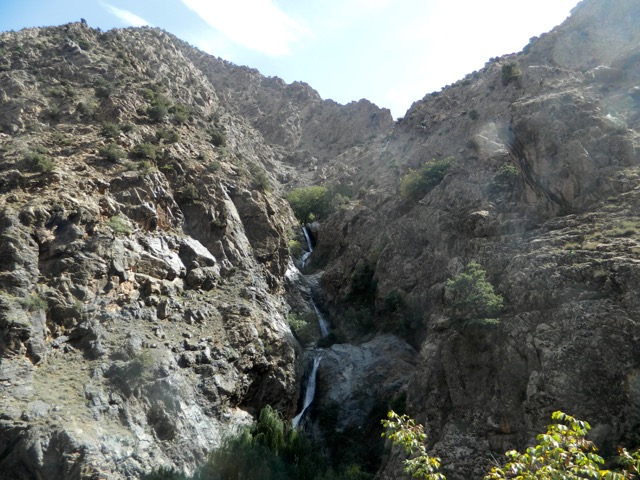
    We’re standing outside the van on the road to Ourika Valley, a verdant, majority-Berber region about two hours from Marrakech, popular with tourists for its many waterfalls.

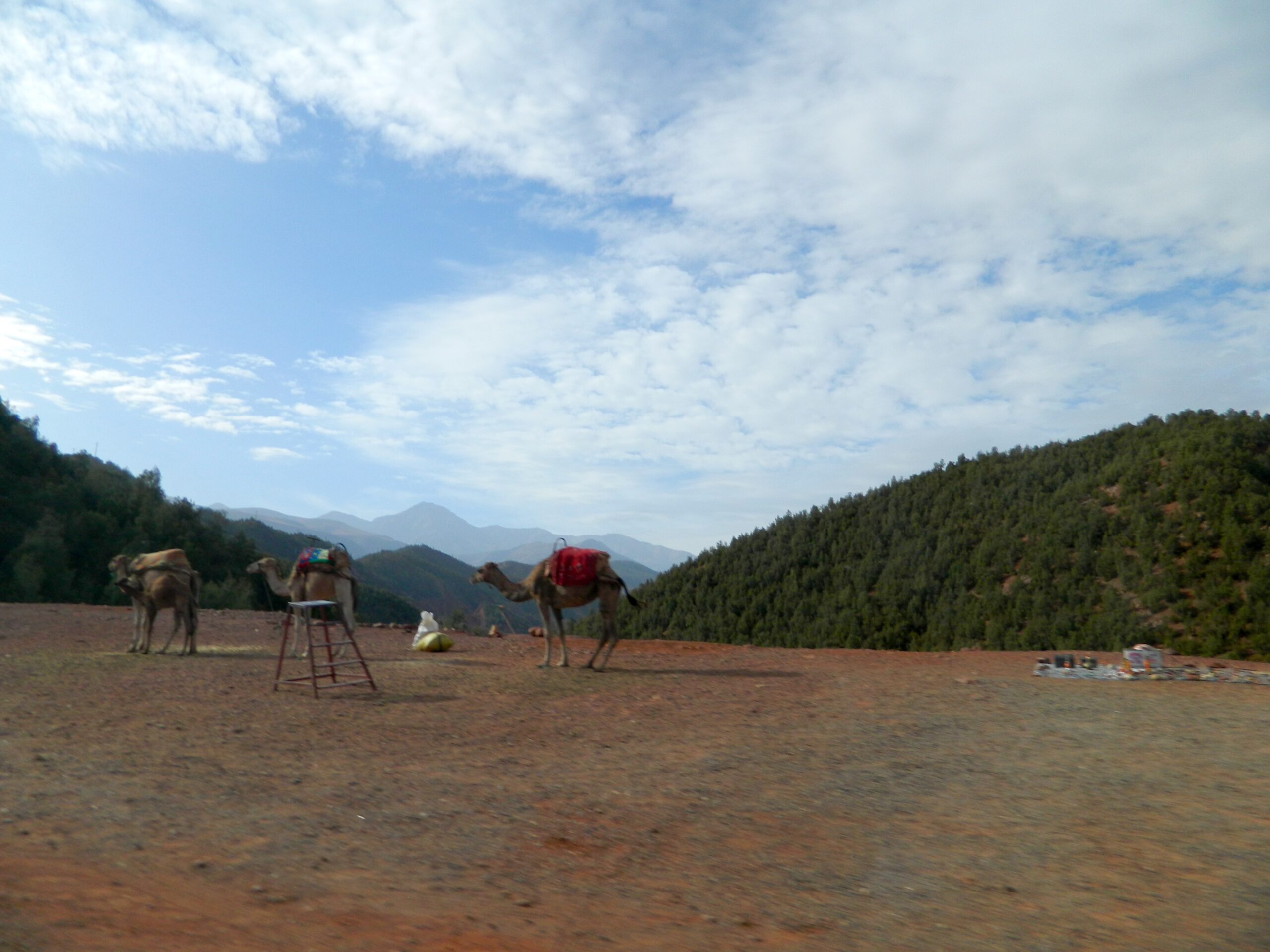
    A half-dozen camels on short tethers wait for curious tourists to approach. It’s well past 11 o’clock, but the sun is just making it over the mountains to warm the deep valley.

    The man speaking proffers a tangle of necklaces. Plastic. The artisanal products are waiting in well-planned shops, with tougher hagglers behind the counter. My companions for the day, a French couple from outside of Paris, laugh and tell him that’s a good marketing plan.

    In a way it is, but then…maybe not.

    You see, I don’t want anything for free (unless it’s a sincere gift). I don’t want the cheapest price (anymore). I want a fair price.

    And that’s a very different thing.

    Ostensibly we’ve stopped for photos, but the view was around the last bend, and we’re really here to have time to spend money. We’ll stop at three more tourist establishments (some would call them traps, but I won’t today and I’ll explain why soon) before actually reaching our intended destination.

    > The Argan Oil Cooperative. Smiling women sit outside the building grinding argan nuts into a paste, which will later be separated into cosmetic oil and the base ingredient for savon noir (black soap). They beckon us to sit beside them. Ashkid, ashkid. (Come, come.) You can take pictures, we’re told. No problem. There’s a dish in front of the women with a few dirham notes in it. We can leave money there.

    > The Berber House. A traditional Berber house, which I might have found more exciting had I not spent a great deal of the last five weeks visiting my Berber friends in their (yes) Berber Houses. We’re shown the kitchen, the store room, the family room, the hamam (bath) and the backyard. You can take pictures. No problem. On the way out, there’s a well-placed souvenir shop and a donation box for the welcoming Berber House family.

    > The Guide. We stop in the village near the waterfalls to pick up the guide. We haven’t asked for the guide, but the guide is going to come with us. He accompanies our small group halfway up the trail, to the first set of falls, and then tells us it’s time to turn back. When we insist on continuing, and he insists on not going back without us, I convince him to wait at the halfway-up cafe while we finish the hike.

    Now, I don’t like being forced to pay for things I didn’t ask for or want in the first place. I also don’t like not paying someone for work completed or services rendered. I don’t like feeling cheated out of my money. And I don’t like feeling I’ve cheated someone out of their fairly-earned money.

    Most people in the world would probably agree with those sentiments.

    I think all of these scenarios and concerns come down to the same fundamental issue: fairness. Fairness to local people working in the tourism sector, and fairness to tourists seeking to spend their money well (ethically, reasonably and in a way that feels good to them).

    So, what’s fair?

    I’m going to seriously oversimplify for a moment. The tourist-local marketplace dynamic—as I see it—breaks down like this:

    Tourists don’t want to feel ripped off or trapped. (That’s a low bar.) These things are traps: Telling someone to take a picture (no problem, pictures are free!), and then asking them to pay for it. Insisting someone take a bracelet as a gift—and then insisting they pay for it. Following someone through the souk, though they have clearly stated they do not want a guide—and then asking them to pay for it. (These are all common experiences for unsuspecting foreigners in Morocco.)

    Tourists do want to feel like they’re getting a good deal. Sure, some are pinching pennies, but most just want fair. Many, like me, will feel frustrated when they know an item’s market price, and then are asked to pay four times that because said item has been handily transported into a souvenir shop. They don’t want to pay “tourist prices.”

    Local people want to make a decent living. They see foreign tourists and assume (reasonably) that if they had enough money to pay for a plane ticket to Morocco, they also have enough money to pay a few dollars above market price for a bottle of oil, silver necklace, taxi ride, and everything else. They might also encourage (or push) said tourists to spread their money evenly—a few gifts at the Argan Cooperative, a dollar to the Berber House, a tip to the guide. From this perspective, those tourist establishments mentioned above are not traps, but simply an integral component of the day’s adventure.

    Some believe that tourists should pay tourist prices, because they can. And hey, I get where they’re coming from.

    Naturally, I also get where tourists are coming from. I’ve been pondering this a lot lately, and I think the fair solution is neither “equal” (tourists often do earn significantly more than the locals they’re buying from, so why shouldn’t they pay more too?), nor excessive (no one likes traps and cheating). Rather, it’s somewhere in the middle, where everyone is happy—or at least not pissed off.

    So, when buying abroad, keep three questions in mind:

    1. How much is this worth to me? (How much do I want to spend on it? Keep in mind, for perspective, what you would spend at home.)

    2. What is the “market price”? (What would this cost a local?)

    3. What can I afford? (What’s my budget for this day? Week? Holiday? Will this meal/souvenir/excursion put me over?)

    The “fair” price exists somewhere at the nexus of those three answers.

    Happy shopping!

    *** 

    And to justify this blog title:

    Youtube video
     

  • 6 Awesome-Sauce Pictures of Morocco (or, Why you Should Follow Me on Instagram)


    I haven’t been writing much the last couple weeks. I think sometimes, when it comes to writing about our experiences, there have to be periods of writing—and then periods of experiencing. So, let’s just say it’s been the latter, and I’ll get to the writing part again soon.

    In the meantime, did you know I’m on Instagram these days? I share snippets of writing or travelogue with nearly every post. Here are five reasons to follow me:

    *

    *

    *

    *

    ***

  • How to Pour Tea, It’s Out of our Hands, and Other Lessons from the Moroccan Coast

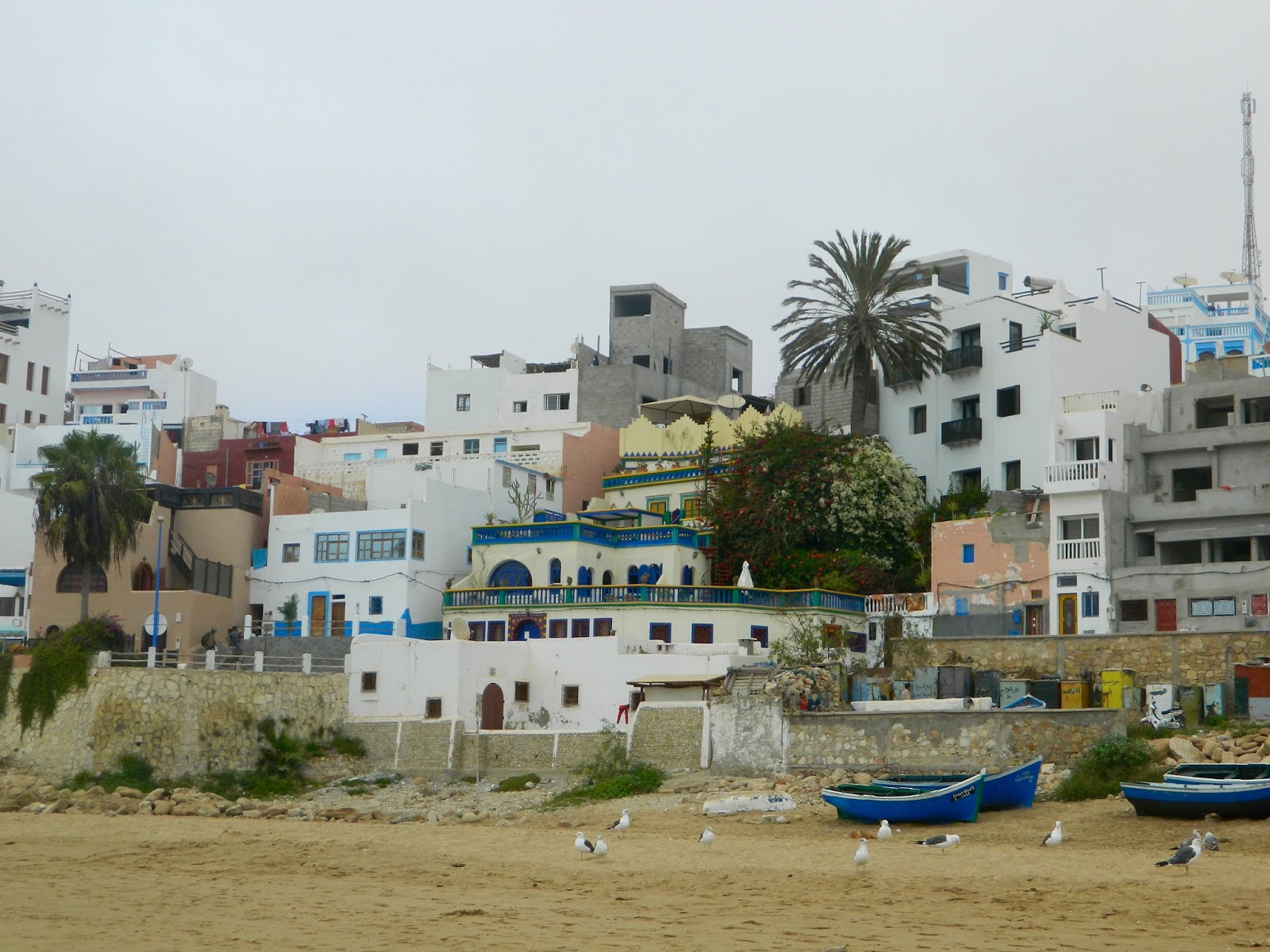
    View of Taghazout from one of my favorite cafes.

    We watch the waves crash against the cliffs beneath our table, the spray catching the sunlight over and over again.

    Our tea arrives—the classic combination of Moroccan mint and strong green that everyone drinks, but without the usual pound of sugar, per my request. A simple silver teapot with a long spout. Two small glasses (not mugs, but glasses).

    I lift the teapot and pour, starting low, then lifting higher, and higher, and a bit higher, steam rising up from the cascade of tea and a slight froth forming at the top of each glass.

    (If I wanted to mix in sugar, I would pour out glasses of tea and dump them back in the pot several times to avoid using a spoon—bad luck, I learned later. But I don’t, so I only pour once.)

    I can’t remember where I first learned to pour tea—properly. I think it was in a Senegalese village when I was 16. Everyone laughed at my first attempts, of course. Even today I spill more than any veteran tea pourer ever would. But I know the technique, and I can make a few bubbles.

    It’s a small thing, arguably, pouring tea well, and yet drinking tea proves such a fundamental aspect of so many cultures that I think it’s important, too. Worth learning. Worth sharing.

    ***

    Let’s drink tea together tomorrow!

    Inshallah.

    You should open a cafe there—you would get so much business!

    It’s a good idea. Inshallah.

    Are you moving this week?Inshallah.

    When does the high season start?

    Things will get busy next week—inshallah.

    Inshallah (also written insha’Allah). If God wills it. God willing. Used throughout the Arabic-speaking and Muslim world—and often. At times my plan-making mind gets irritated by the ceaseless string of Inshallahs spoken and exchanged each day.

    Is nothing certain?

    Well, no, it’s not—is it? To visitors from outside cultures, I think this nonstop Inshallah business can seem like a cop out. Noncommittal. But I suspect (I don’t know nearly enough to say for certain) that it stems more from a different perspective.

    Everything—everything—is out of our hands. Maybe. It’s probably a good brain exercise to consider the possibility, even if you disagree. Living here, then, is like a daily mind workout.

    ***

    Every day I learn here.
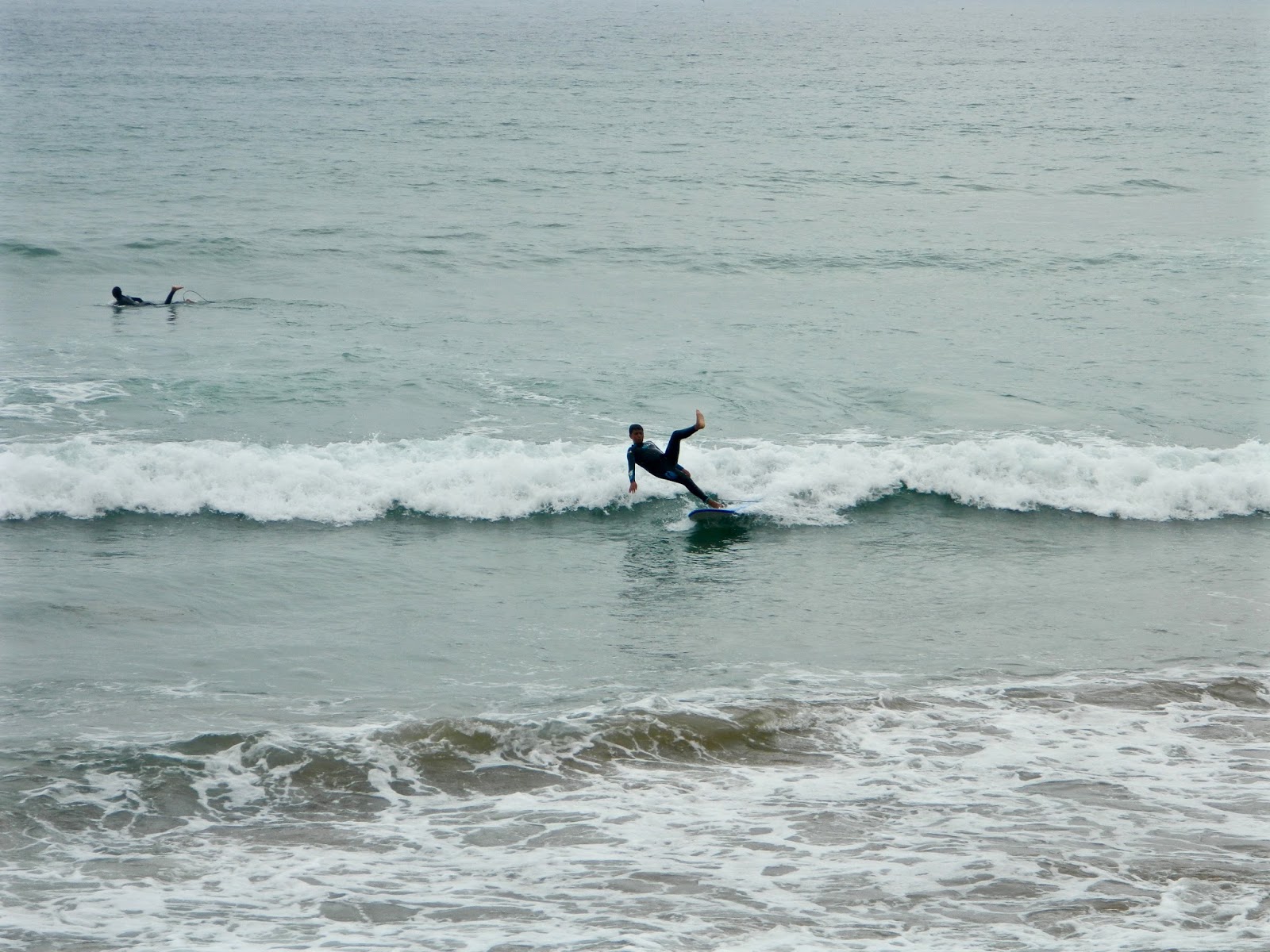
    I learned that until the 1950s there was a small Jewish settlement alongside the Berber ones in the mountains behind Taghazout. I visited a new friend’s home in those mountains, and I could feel the history in the ground under my feet.

    I learned that Friday is couscous day and that soup is a summer food.

    I learned that no length of fabric will cover my foreignness here—no matter how Mediterranean I like to think I look.

    I’ve learned that if you sit long enough in one spot it is really possible to see every person you know in this town, and that if you start walking you can spend a whole day just stopping in for chats with old and new friends.

    I’ve learned how to roll under a wave with my surfboard, and that lip sunburn is real.

    I’ve learned to count to ten (though I’ve forgotten at the moment), and how to greet.

    There’s no other message today. There are lessons everywhere, every day and in every culture; I hope you’ll go find some!

    ***

  • Taghazout, Morocco: 10 First Impressions in 10 lines

    First impressions aren’t everything, but they are something. After nine days in the small town of Taghazout, Morocco, I’d like to offer a (first) glimpse into my experience.

    When people greet, they touch their their heart after shaking hands. For some reason, it reminds me of my brother. I like it.
    The air is cool—cold even—after dark. Fog rolls in at dusk and wraps up the boys playing soccer on the beach, the tourists strolling to dinner, the shouts and drumbeats floating in the air.
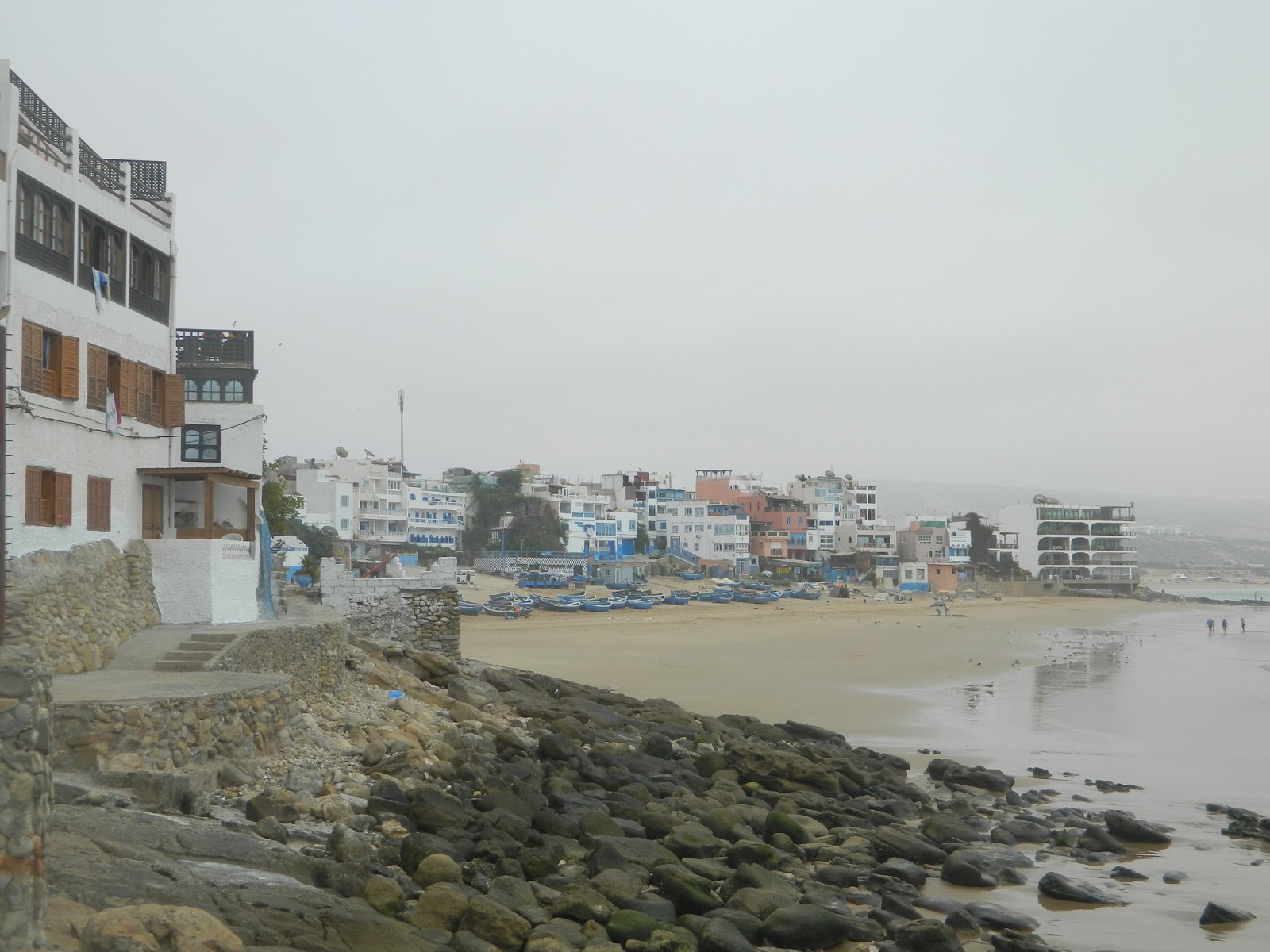
    Blue tiles everywhere—in bits of mosaic, in staircases. Blue paint, too—on houses, on boats laid out in dozens on the shore.
    A population explosion of cats and dogs. The dogs follow me on my morning run, a pack at my heels—I just hope I’m the alpha. The cats seem determined to ruin my clothes—and my laptop.
    Narrow streets, all leading to the sea, all quite clean, except for that one path that smells like sewage.
    Where are the women?? I wonder. The cafes are full of men. The streets, too. And the beaches. The few women I do see don’t seem like they want to be my friends. The little girls, yes. (That’s true everywhere.)
    Tagine every day. Layers of chicken or fish, potatoes, carrots, spices, olives, citrus—slow-cooked until soft in a clay pot with a conical lid. Fragrant.
    I’m going to get good at surfing; I’m determined. For now, though, I’m focusing on wiping out. The water is muddied with sand most days. Photographs come out in gradations of blue-brown.

    There is no atm in this town. No bar (welcome to Morocco). Surf hotels, corner shops and small cafes abound, though. Everyone knows everyone, too—and that’s not just an impression, I think it’s really true!

    Every house has a terrace. Every terrace a view of the ocean. Every view meets the sound of waves crashing on shore, and I am content to sit and listen.

    ***


  • “Don’t go to Morocco Alone.” And other Fear-mongering you should Ignore.

    A rooftop terrace in Taghazout, Morocco.

    Me: “I’m thinking of going to Morocco.”

    Everyone: “Awesome! Just don’t go alone.”

    As you may have guessed, I didn’t listen to everyone, and here I am: in Morocco, very much solo, and so far quite pleased about it.

    (For the next month, I’ll be living in Taghazout, a small town on the Atlantic coast, teaching some yoga, learning the fine art of surf bummery, and generally winding down after an overly hectic few months. And I’ll have time to visit a few Moroccan cities afterward, not to worry!)

    There is a saying here, which a new friend taught me:

    One rotten fish can make the whole bucket stink.

    For those who work in the tourism industry, that rotten fish (in the form of robberies, political unrest or an isolated attack) is the proverbial boogeyman. Just a whiff of danger and foreigners will cancel their flights. An act of terror (as occurred while I was living in Kenya)? Total disaster for the industry—and, by extension, a great many people’s livelihoods.

    I digress somewhat. I don’t to tell you what happens to the tourism industry when the fear-mongers win. I want to tell you why you shouldn’t listen to them in the first place.

    Every country- or city-shaped bucket has a rotten fish—often many.

    In my opinion, those rotten fish are the reason why people will tell women not to travel solo to India, Zanzibar, Turkey, fill-in-the-blank-with-your-country-of-choice. “It’s not safe.” “Men don’t respect women there.” “It won’t be pleasant.” Et cetera, et cetera, et cetera.

    And sure, there’s a good chance I will encounter an asshole or two before I leave Morocco in six months’ time. I’ve spent time alone in all of the aforementioned countries, and I’ve had occasional negative experiences in all of them (though always far outweighed by the positive). But do you know where I’ve encountered the most assholes? On college campuses in the U.S. In Parisian metro stations. Walking down the street in Boston.

    So what can we learn here?

    ***

    Well, for starters, check your assumptions. Are you giving more credence to warnings of danger or disrespect because the destination in question is “over there”? Keep in mind that nowhere is perfect, and nowhere is particularly “safe.” I have yet to investigate, but I’ve heard Morocco may be one of the statistically safest countries in the world. Chew on that.

    Second, ask yourself if you’re discounting cultural differences. If so, you may be falling victim to the understandable yet problematic epidemic of Western ethnocentrism. That is, judging another culture purely by your own values. Quick tips for women wishing to avoid harassment while traveling alone: cover your hair, cover your shoulders, and cover your legs (generally, follow cultural codes for modesty and behavior). Oh yes, that’s problematic in its own way, and I take issue with it sometimes, but we don’t get to make the rules when we visit someone else’s home.

    Lastly, choose your devil, because there is nowhere—nowhere–you will be utterly and inalterably at ease.

    ***

    I (and just about every woman ever) learned since birth to fear. Fear attack. Fear violence. Fear bad men. Fear everything, right? Society teaches us that.

    And it’s true. Of course it’s true! The world is a scary place. Especially for women. We’re working on it, but we have a very, very long way to go. Change, however, has never happened when we stick to the status quo. Fear-mongering doesn’t keep us safe; it keeps us the same. So if you want something different, you have to ignore the fear-mongers.

    There’s a lot of space between reckless risk-taking and bubble-girl-style caution. Here’s what you may find there:

    > Deserted tropical islands where you can run naked across miles of sand, because you are totally, beautifully alone.

    > Kind shop owners who will invite you inside for tea, show you pictures of their wife and children, and invite you to stay with their family if ever you return to their country.

    > Fascinating strangers on trains, buses and trails, in hostels, campsites and smoke-filled restaurants, whom you never would have met if you hadn’t been traveling solo.

    > The best meal of your month, discovered only by following your nose and your intuition (yours alone) through a labyrinthine bazaar.

    > And last, but unavoidably, rotten fish. It’s part of the travel bucket. But hey, it’s part of every bucket, and you can’t avoid them all.

    I hope, if nothing else, this will make you think—maybe reconsider. Please share your thoughts in the comments if so inclined!

    ***

  • De-Nile, and other Ugandan States

    Last week, I visited friends in Jinja “Source of the Nile” Uganda and stayed with them at the lodge they manage.
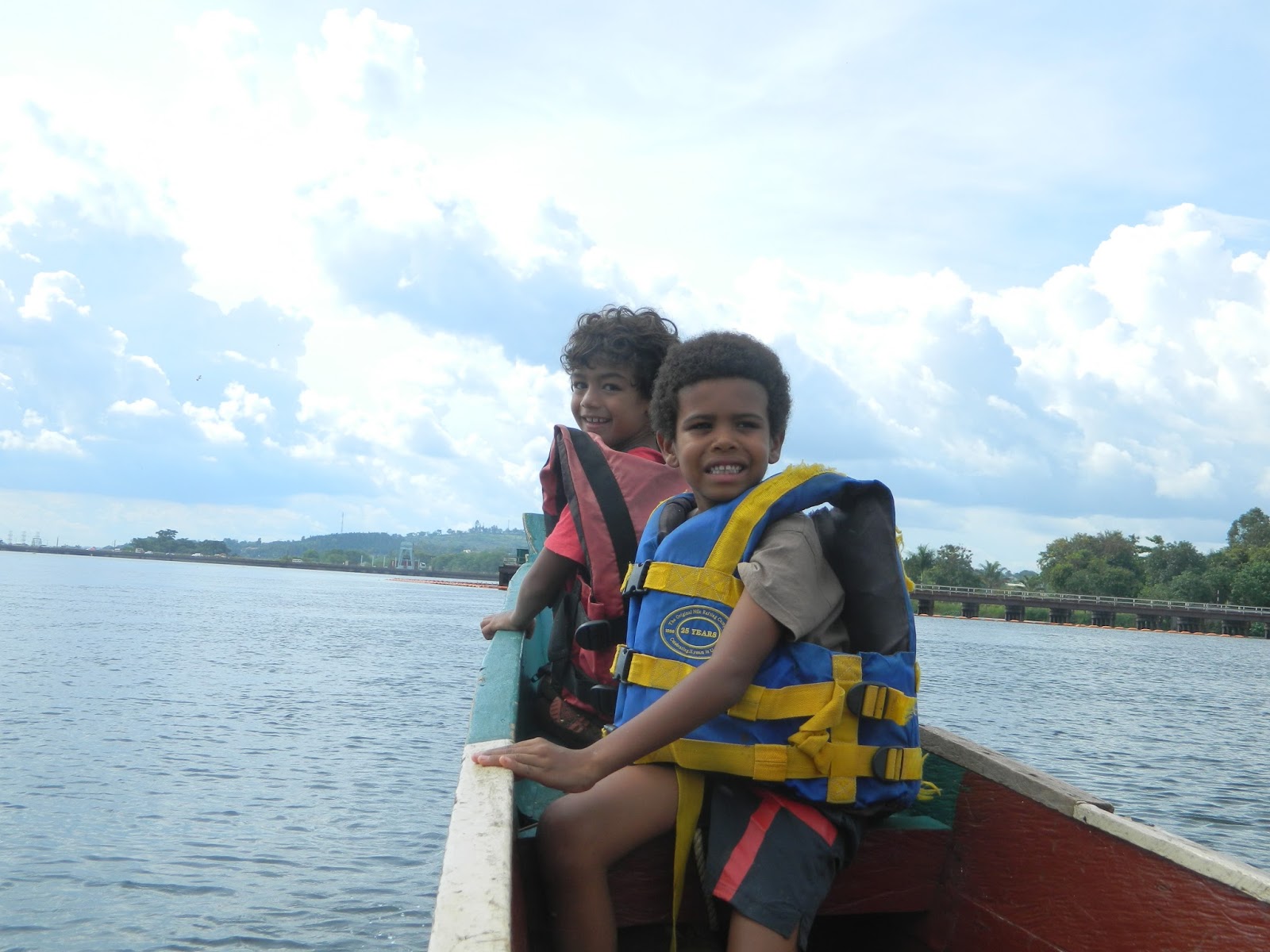
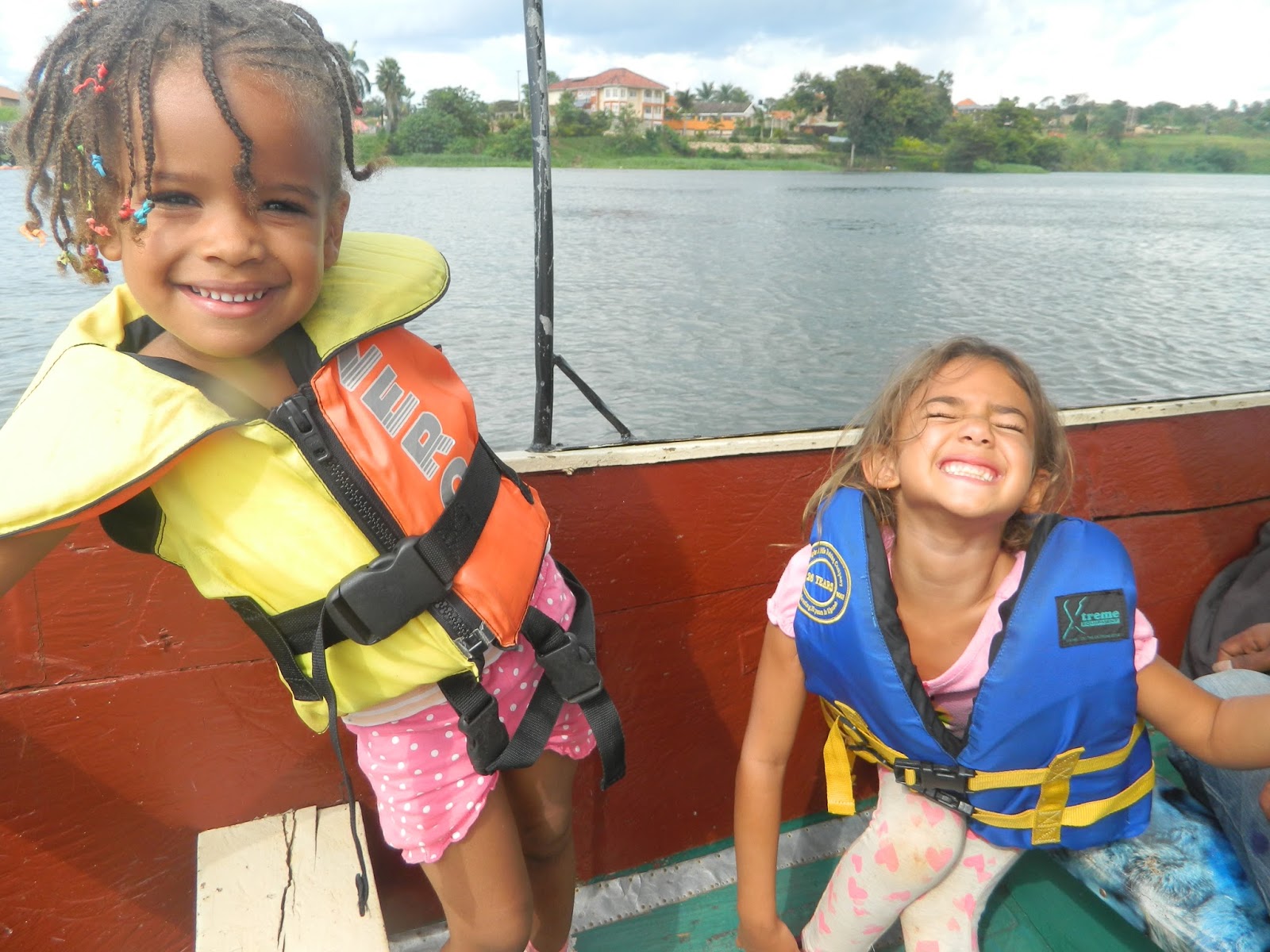
    Between playing sharks and mermaids with their two beautiful children, drinking excessive amounts of African tea laced with ginger, feasting on their restaurant’s famous ribs (had to be a bad Jew for a day before heading to Israel for Passover!), practicing yoga poolside and working full time, there wasn’t much time for sightseeing.
    So, for my last day in town, all of us—plus a few extra kids and friends—hopped on a boat to check out Lake Victoria, some wildlife, and the infamous source of the Nile.

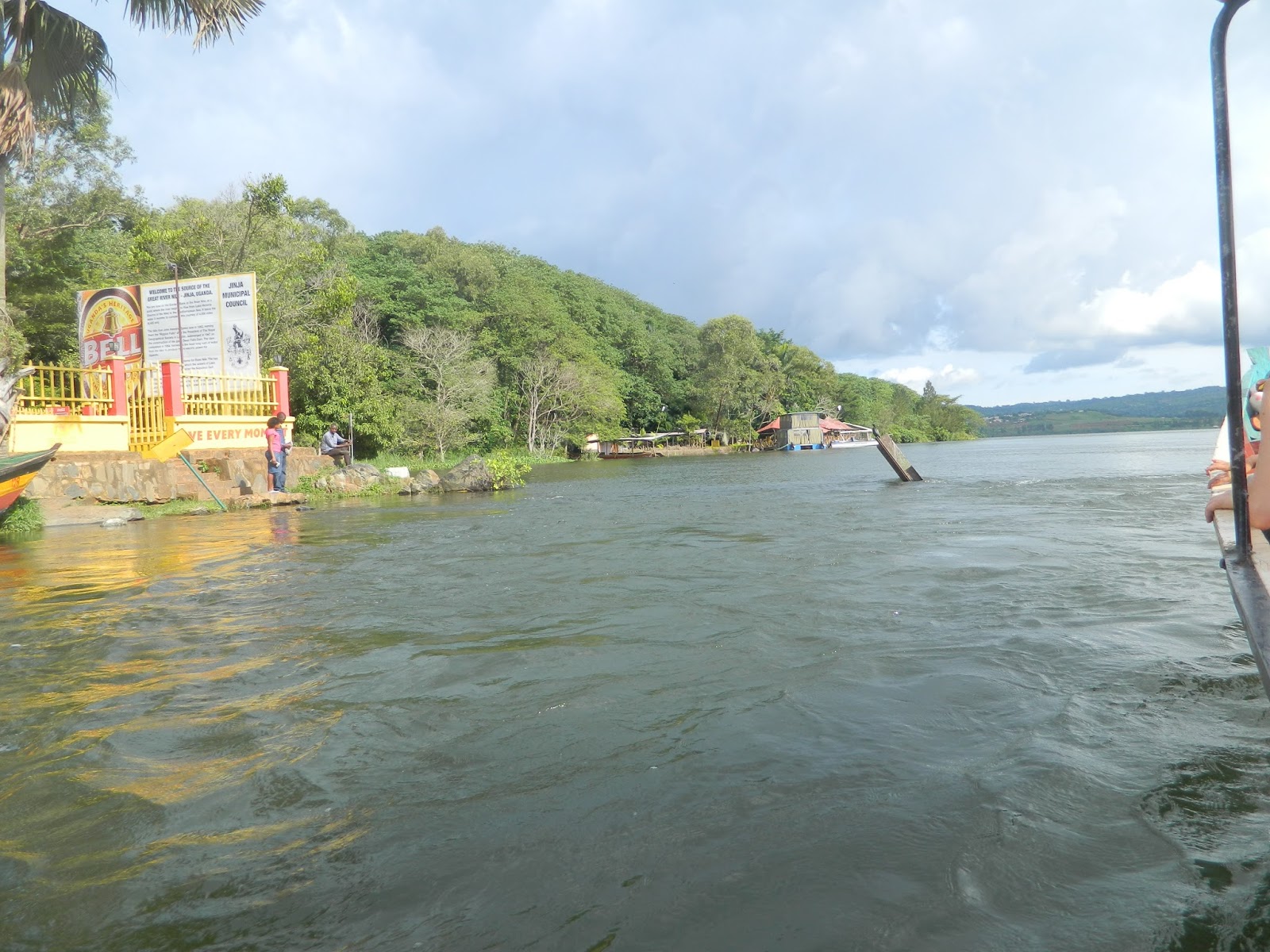
    Jinja lay claim to an impressive 5-meter column of water springing from the river’s start at the edge of Lake Victoria. The world class rapids along this following stretch attracted droves of adventure seeking tourists, fueling an industry of rafting and whitewater kayaking.
    On August 3rd, 1858, an avidly adventurous Englishman named John Hanning Speke “discovered” the source of the Nile, although it wasn’t until after his death that his claims were finally verified. Our guide, however, pointed out the exact spot from which Speke first spotted it.
    A few minuscule drops of rain excepted, it was a perfect afternoon for a boat ride. We observed vibrant-hued kingfishers and bee-eaters, ungainly pelicans and a particularly ugly vulture-type bird whose name I’ve forgotten, monitor lizards, otters and more.
    When we neared the source of the Nile and our gaze followed our guide’s finger between two small Islands, I already knew what to expect:

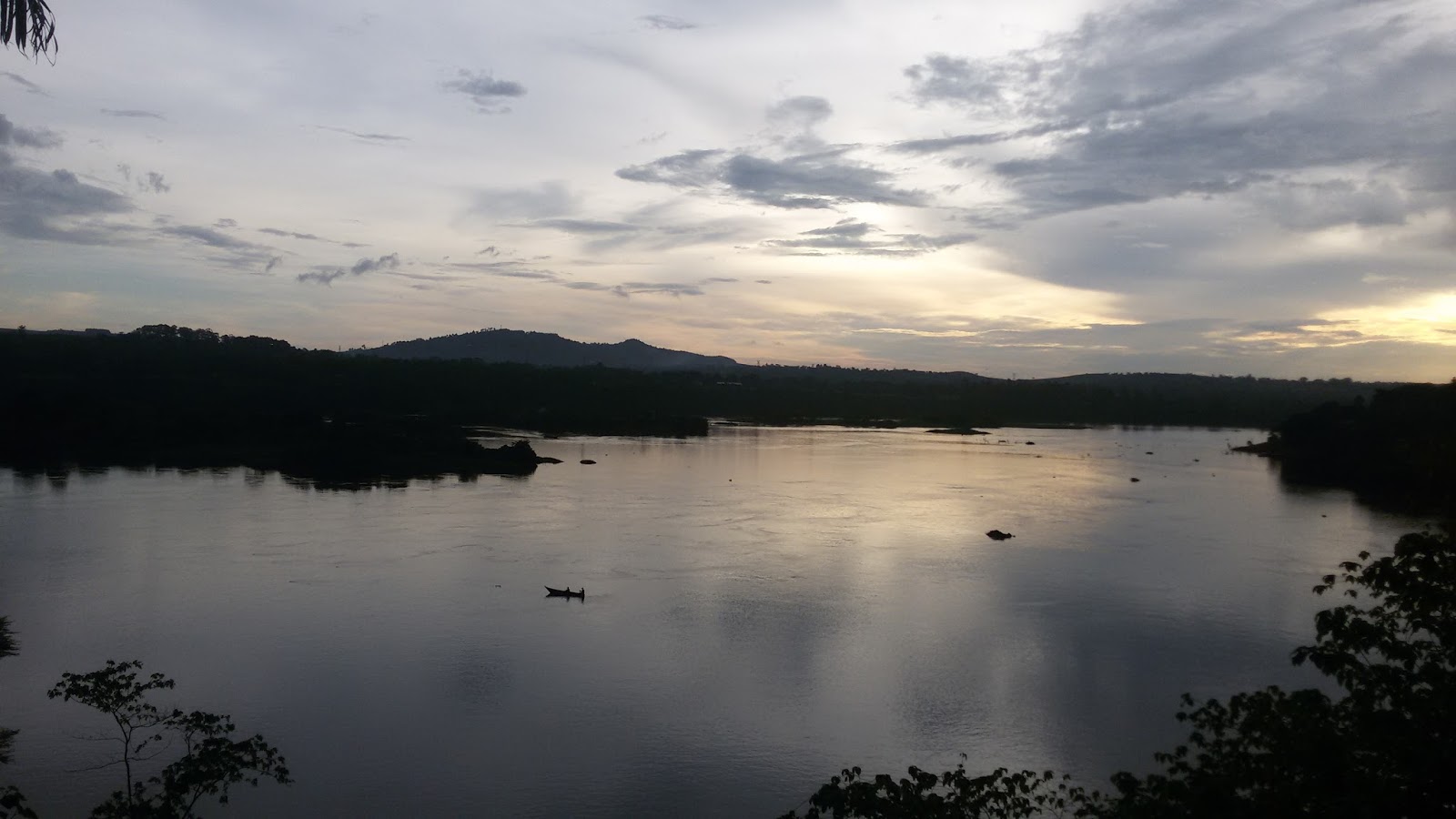
    The construction of two hydroelectric dams downriver in 2012 quickly turned the wild origins into the Nile into the still lovely—but rather more staid—river that meandered past my tent:

    The full ecological (and economic) implications of this shift remain to be seen.
    In classic irony, we had to run generators at the lodge for nearly two days when the power cut out. (Rumor has it Uganda is selling all that juicy new electricity from the dams to neighboring Kenya.)
    The car ride home hosted a 45-minute game of “I Spy,” in which I participated as a laughing spectator to the shenanigans of three rowdy kids (two small, and one grown up). Back in Entebbe airport in Kampala the following day, I studied a bevy of glossy banners promoting the #PearlOfAfrica’s lush green landscapes, diverse wildlife and smiling inhabitants.

    Juxtaposing those lustrous landscapes and straightforward hashtags, I am struck now—as I so often am—by the depth of the gray space between simple facades and complex realities. Fraught with tensions, ironies, vibrancy and intensity as they are, I’ll always choose the latter.

    ***


  • 10 Hours in Nairobi (Airport!)

    Final Destination: Jinja, Uganda—the mouth of the Nile

    Tuesday, 12 April, 2016—Nairobi, Kenya

    The New York Times may have all the tips for how to spend your 36-hour weekend in Nairobi, but you only need 10 hours to enjoy all the delights of the Jomo Kenyatta International Airport!

    It’s going to be a long day, so wear comfortable shoes. The following is only a sample itinerary—feel free to craft your own.
    5:50 a.m. Early bird gets the worm and all that. Arrive at Nairobi airport from whatever your previous port of embarkment may be. Drink in the fresh morning air (but please, not the water) and stumble toward your connecting flight. 
    (Note: This is best enjoyed on minimal rest, so try not to sleep too much on your red eye.)
    7:15 a.m. Pole pole (slowly), friends. Delays are normal, especially with Kenya Airways. The Avanti Cafe on the ground floor has reasonably priced tea and friendly and sympathetic staff. (They’ve heard your story before; don’t bother.)
    Savor your mediocre latte and partake of the only free wifi in NBO. Don’t miss the sights: Watching disgruntled tourists aimlessly milling about in growing impatience is one of the unique pleasures of the airport experience.
    8:15 a.m. Board your flight and prepare for take-off. Don’t worry, your day’s not over that quickly—we’re just going for a quick aerial tour of the beautiful city of Nairobi.
    Sit back, relax, and enjoy the view on your 10-minute cruise above Kenya. “Technical issues” are just an official way of saying, “please don’t leave yet, Nairobi airport has so much more to offer.” 
    9:35 a.m. Make good use of an hour on the ground before deplaning, and get to know your fellow adventurers. Enjoy a stale, rubbery apology croissant, courtesy of the airline, too. You’ll need your fuel; we still have 6 hours to go! You may also like to observe the unloading of your luggage, which was heading toward your final destination just minutes before.
    10:50 a.m. Experience extreme disorganization first-hand. Join the pack, and wander confusedly from gate to gate, really getting to know the twists and turns of the Nairobi airport. Intimate knowledge like this is rare for the average tourist; you may even have time to peruse the least authentic curio shops in all of Kenya.
    11:25 a.m. Head to Table 49 for a classic airport dining experience. As you sample your chocolate-cardboard muffin and piping hot tea, you may appreciate the opportunity to practice your Italian, French, Swahili or German language skills with some of the other diners—this is an international airport, after all.
    12:10 p.m. Wave goodbye to some of your new friends as they head to the next (now fully booked) flight, then get to know some of the airline staff as they place you on the next one—5 hours later.

    12:45 p.m. Why not head back to the unsurpassed Avanti Cafe for another visit? After all, no one has given you any free water, and you’re probably thirsty. Browse through Facebook, and daydream about arriving at your destination before dark.

    1:25 p.m. Stroll upstairs to Table 49 for another complimentary meal. Totally edible chicken, rice and spinach, and a bottle of water to boot! Enjoy getting to know the remaining stranded passengers from the morning, and observe the effect that sleep deprivation may have on your conversational skills (hint: they improve).
    2:55 p.m. Meander down those gray, expressionless airport terminal hallways one last time before you have to leave. Join the desperate crowd at gate 15, and since you’re early, why not finish up your conversations with your new friends.
    3:50 p.m. Get on that plane, friends, it’s time to fly. Cross your fingers that your checked baggage makes it on with you, and settle in for a nap—you’ll need it. Safari njema (safe travels)!

    ***
    In complete seriousness, as desperately long and painfully disorganized as my unplanned, extended layover in Nairobi was, I don’t think I’ve ever had as many conversations, in as many languages, with as many strangers, in one day. We were all looking out for each other, united in common misfortune and misery—which, miserable as it was, was also pretty cool.
    And, it’s always better to laugh. Running on 3 hours of sleep and very disappointed to be spending my day off in an airport—instead of with friends in Uganda—I quickly found the entire situation completely absurd, and I had to laugh.
    You have to laugh.
    Frustration is useless, especially in airports, and a bit of humor can make a bleak day far more bearable.

    So, enjoy your next visit to the Nairobi Airport, and let me know if you want any more tips—I’m probably an expert now.

    ***

    Update: In Jinja, Uganda now, visiting some friends I haven’t seen since a year ago in Kenya, and enjoying some much-needed R and R. My checked luggage, if you were wondering, miraculously made it here, too!

    ***