![]() |
| The in-between bingo sets show… it’s pretty much what it looks like. |
![]() |
| German Sparkle Party capture (not mine). |
![]() |
| Elephant journal HQ, Helsinki—my coworker, Sara and I working at the kitchen table. |
![]() |
| The hill. |
![]() |
| The in-between bingo sets show… it’s pretty much what it looks like. |
![]() |
| German Sparkle Party capture (not mine). |
![]() |
| Elephant journal HQ, Helsinki—my coworker, Sara and I working at the kitchen table. |
![]() |
| The hill. |
![]() |
| “Joulupukki” by Lauri Rantala from Espoo, Finland – Santaclaus at Helsinki Cathedral. |
Consider this my holiday blog post. I could talk about Hanukkah (the holiday I celebrate), or Christmas markets (delightful all around the world), or any number of things. But why would I when scary monsters and mythology are on the menu?
It is September, and I am walking through the the Finnish tunturi (mountains in Lapland, way North), the setting sun to my right. Low bushes, a few turned to orange, carpet the ground. The trail is wide and mostly flat, and it carries me and my hiking partner past Pyhäkero (Sacred Mountain), herds of reindeer silent as dusk and rocca (unique shards formed by the freezing of water in crevices of rock and their subsequent explosion).
As the colors in the sky deepen and a nighttime chill settles over this landscape, I learn the real story of Santa Claus and his Nordic predecessor, Joulupukki (Yule Goat).
A terrifying creature with a goat’s skull for a head and flaming eyes, Joulupukki—so it is said—appears at homes during the Christmas season, demanding food, occasionally taking away those who have not been good. He dresses in gray furs and sows fear wherever he walks.
Jolly Saint Nick, is it?
Eventually, this Joulupukki became more or less synonymous with the Christian Santa we all know today. Funny how we always seem to do that to the less cuddly figures of mythology.
As I listen to this alternate (and, I must admit, much more interesting) Yuletide legend, I consider the gray, shifting light of this place and conclude it is much better suited to such a dark and mystical creation than a rotund, white-bearded figure in red.
Near Rovaniemi, where the train from Helsinki leaves us and we begin our journey, there is a place called The North Pole, where tourists seeking a merrier experience can visit Santa Claus’ Village.
I opt out. Biting wind, icy mountain lakes and ever-so-slightly magical mountains do so much more justice to this fascinating culture.
As for Joulupukki, the “real” Santa Claus? No, I didn’t run into him. But, it wouldn’t have surprised me if I had…
![]() |
| Greetings from Tallinn! |
On Monday, my friend and I took the 2-hour ferry from Helsinki, Finland to Tallinn, Estonia.
Our mission? Like nearly every other passenger on board, buying alcohol. Tallinn, evidently, is the everyman’s solution to avoiding Finland’s high taxes and stocking up on liquor for parties and general consumption.
With a house party coming up this weekend, we had an important task to complete, and an extra seven hours to explore Tallinn… Here’s just a taste:
The ferry itself is six stories tall, boasting its own liquor store, luxury “trends” store and nightclub—where drinking habits go to breed and a night out consists of a round trip to Tallinn without ever leaving the boat.
The breakfast buffet offers Karelian tarts (hailing from the Finnish region of Karelia, pastries full of rice, topped with a special “egg butter”), smoked salmon and cold cuts, mysterious meatballs and an assortment of very particular cured fish. We spend the entire trip to Tallinn slowly working our way through it all.
![]() |
| My favorite poster from the day. |
Tallinn’s Old Town winds away from the harbor, a pleasant mix of cobblestones I’m still feeling in my sore legs, kitsch tourist restaurants loosely modeled after medieval times, posters that seem stuck in another century, souvenir shops and folk art galleries.
![]() |
| My friend, travel sister and current host, posing with an eye-catching door. |
Outside one of those restaurants, bored waiters crouch down to scatter crumbs to a few pigeons. Next door, a woman in full-on (presumably) traditional Estonian garb acts as a human signboard—brightly colored embroidery, tightly braided pigtails and elaborate headdress demanding the passerby’s attention. We try to covertly get a picture of her… and fail:
![]() |
| I think she saw us… |
But, we are photo-bombed brilliantly by a passing stranger, which makes up for it:
![]() |
| Never seen this guy before in my life. |
I spot Captain Jack Sparrow walking down one of the main streets, swagger and all. I get a little bit too excited, fumbling with my camera and missing the photo op. I still wonder what restaurant he was promoting.
As Jack Sparrow disappears down the street, we follow the sound of a Steel HandPan to a busker, and I meet my soulmate in puppy form:
![]() |
| More puppy pictures to come. |
As is the case in dedicated tourist towns the world over, we are met with considerable indifference by a considerable portion of Tallinn’s population, with some friendly exceptions. As dusk falls (around 4p.m. in this part of the world), exhausted from some combination of cobblestones and cloudy skies, we settle in for a dinner of Modern Estonian Cuisine before making our way back to the ferry.
![]() |
| Tallinn at dusk—beautiful. |
It’s a good day.
![]() |
| Believe it or not, this is right in Stockholm! |
I’ve fallen behind. There are several cities I have seen and enjoyed without writing a single word… And so now I’m revisiting not only in person, but also in spirit as I backtrack to bring you these snapshots.
Stockholm first.
(Evidently I have almost no pictures, so these will mostly be word snapshots.)
I arrive in Stockholm in mid-September to visit my oldest friend (for all intents and purposes my big sister) in her new Swedish life. She and her boyfriend graciously share their one-bedroom apartment with me for a week, and I get in what sightseeing I can between work and catching up.
We bake miniature apple pies for fika, Sweden’s infamous coffee and cake time, and cook kugel (noodle casserole) and brisket (Jewish soul food) for a belated Rosh Hashanah celebration.
![]() |
| Based on the tradition of fika alone, I should probably move to Sweden. |
I also discover morotsmuffins (the most delicious carrot cake muffins in existence, with cardamom and cream cheese frosting), of which I unfortunately have no photographic evidence. (Ben & Jerry’s, on the other hand, I find myself morally obligated to document—the VT brand has officially gone global.)
![]() |
| Ben & Jerry’s in Stockholm? Oh yeah! (No, I didn’t buy any. Morotsmuffins, remember?) |
I dip my toes into my friend’s life here, meeting friends and learning a few useful Swedish phrases: “tak” (thanks), “hey” (you guessed it, hey) and “var festin mit fulla killor?” (where’s the party with the drunk guys?) I think I should be all set, no?
We also discuss politics and the refugee crisis (with Sweden poised to take in 200,000, it’s a particularly salient topic), but that is a far more serious discussion for another time.
![]() |
| Entrance to Haga Park. |
Haga Park, just minutes from my friend’s Solna apartment, is a sprawling oasis sprinkled with a few architectural oddities. “Am I really in Stockholm?” I write as I watch the shadows grow over a massive lake. Difficult to believe.
![]() |
| Haga park—attempted dusk capture. |
And lastly, wandering through Gamla Stan (Old Town) on my rainy day off, I stumble upon a marching band playing Abba’s “Dancing Queen” as a motley group of protesters waits to march through the square—one of many wonderfully incongruous details I observe over the course of the week.
I might as well stop there, as nothing could be better…
(Stay posted for Helsinki and Amsterdam/Haarlem snapshots!)
![]() |
| Valle dei Templi (Valley of the Temples), Agrigento, Sicily |
“The climate’s delicate; the air most sweet.
Fertile the isle, the temple much surpassing
The common praise it bears.”
— Shakespeare
I could write—and, indeed, have written—many pages about Sicily. However, I’m hardly the first person to be taken with the island’s complex history, natural beauty and unique charms, so for a change I would like to share the words of other writers, whose perspectives, combined with pictures from my recent visit, make for a woefully incomplete (but very poetic) look at the place. I hope it may whet your appetite for more, as I never tire of convincing people to visit!
![]() |
| Scala dei Turchi (Stair of the Turks), Realmonte, Sicily. |
![]() |
| Cattedrale di San Givanni Battista, Ragusa. |
![]() |
| Valle dei Templi. |
“This is the homeland of the Gods of Greek mythology. Near these places, Pluto abducted Persephone from her mother. In this wood we just walked through, Ceres ceased her swift running and tired of her fruitless search, sat on a rock, and despite being a goddess, she wept, the Greeks say, since she was a mother. In these valleys, Apollo pastured his flocks; these groves, stretching down to the seashore, have echoed with Pan’s flute; the nymphs got lost under their shade and breathed their scent. Galatea fled from Polyphemus and Acis, close to succumbing to the blows of his rival, enthralled these shores leaving his name here … In the distance you can see the lake of Hercules and the rocks of the Cyclops. Land of gods and heroes!” — Alexis De Tocqueville
![]() |
| Valle dei Templi. |
![]() |
| Valle dei Templi. |
“Sicilians build things like they will live forever and eat like they will die tomorrow.” — Plato
![]() |
| Valle dei Templi. |
“For over twenty-five centuries we’ve been bearing the weight of superb and heterogeneous civilizations, all from outside, none made by ourselves, none that we could call our own.”
This violence of landscape, this cruelty of climate, this continual tension in everything, and even these monuments of the past, magnificent yet incomprehensible because not built by us and yet standing round us like lovely mute ghosts; all those rulers who landed by main force from every direction who were at once obeyed, soon detested, and always misunderstood, their only expressions works of art we couldn’t understand and taxes which we understood only too well and which they spent elsewhere: all these things have formed our character, which is thus conditioned by events outside our control as well as by a terrifying insularity of mind.”
― Giuseppe Tomasi di Lampedusa
![]() |
| Sunset from a lighthouse. |
![]() |
| Ragusa Ibla, Sicily |
“In Sicilia abbiamo tutto. Ci manca il resto.” — Pino Caruso
(“In Sicily we have everything. We’re just missing the rest.”)
![]() |
| Valle dei Templi. |
(“We were the Leopards, the Lions; those who will replace us will be little jackals, hyenas; and all of us Leopards, jackals and sheep, we’ll go on thinking ourselves the salt of the earth.”)
― Giuseppe Tomasi di Lampedusa
![]() |
| Macalube, Aragona, Sicily. |
“Per me la Sicilia ha una luce particolare, qualcosa di primordiale. Io non sono nato in Sicilia anche se mia madre è di Palermo. È come se con questa terra ci fosse un richiamo anche più lontano della mia esistenza, che appartenga alla mia memoria. Scrivo volentieri qui, c’è un’aria speciale, istintiva. Non mi va neanche di dargli un nome sennò darei dei confini che non ha.” — Emanuele Crialese
![]() |
| Scala dei Turchi. |
“There it was again: the sweeping verbal gesture magnified in the prism of Sicily, the pronouncement so poetic it nullified any arguments before they could take their first breath. The vines, the amphorae, the thousands of years of history, the palmenti, the volcano, the beauty, the power of it all. In Italy, of course, beauty is next to holiness. Sicily was long the most treasured daughter of the Mediterranean. So who can teach Sicily anything about beauty?” — Robert Camuto
![]() |
| Fountain, Ragusa, Sicily. |
“All of Sicily is a dimension of the imagination.” — Leonardo Sciascia
“Raccontano, infatti, che secondo il mito la Sicilia è sacra a Core poiché qui avvenne il suo rapimento e perché l’isola fu offerta alla dea come dono di nozze.” — Plutarco
(“They say, in fact, that according to legend Sicily is sacred to Persephone since her abduction took place here and because the island was offered to the goddess as a wedding gift.”)
![]() |
| Photo Credit: Flickr |
“Hakuna Matata! It means no worries…”
I’m sure everyone can finish that sentence–especially those who, like me, grew up on The Lion King and other Disney movies.
Except, did you know “hakuna matata” actually does mean “no worries” in Ki-Swahili? Maybe I’m the odd one out, but I didn’t!
Hakuna, “there are no,” matata, “problems” (or worries, colloquially).
Incidentally, Simba, our favorite main character’s name, means “lion,” Rafiki, our favorite supporting monkey, means “friend,” and Nala means “gift.” The list actually goes on and on, fatally crushing my (totally baseless) childhood assumption that Disney had made it all up. That I can recall, no credit was given. Classic.
What I find really fascinating is the way the phrase “Hakuna Matata” has come to define tourism along the Swahili Coast in many ways.
The following are my observations and hypotheses only, and in no way represent a comprehensive study or survey of tourism in the region. With that caveat in mind, I think we have some good old-fashioned Orientalism at play here.
Very briefly put, “Orientalism” describes a process (first laid out by Edward Said in his 1978 book by the same name) by which Western, largely fictional accounts of an exotic, Eastern “Other” serve to reinforce existing cultural stereotypes. This “knowledge” is then internalized by those “Others” when they observe themselves through Western lenses and reflected back to Western observers as reality. The original sense of Orientalism was limited to academia and a particular corner of the globe; however, the concept can have far-reaching applications.
When it comes to the phrase “Hakuna Matata,” Disney’s The Lion King effectively fed generations of Americans (and others) a heavily fictionalized and distorted portrait of Swahili culture without our realizing it.
Now, in the parts of Tanzania and Kenya I have visited, it’s a catchphrase for rastas on the beach, shopkeepers, souvenirs (T-shirts, pottery, paintings, postcards, keychains, sarongs, and every form of kitsch) and tourism.
![]() |
| Photo Credit: The Hunt |
It has managed to insinuate itself into the most mundane of daily interactions between tourists and locals: “Hi, how are you?” “I’m fine.” “Everything good? Hakuna Matata?” Or: “Coconut oil? Bracelet? Sister, you want something?” “No, thank you brother, I’m okay.” “Okay. Hakuna matata.”
And even in intrusive non-interactions: “Wei (You)! Where are you going? Just walking? Very good, Hakuna Matata.” Or muttered, half-interactions: “Helloooo.” “Hi.” “Jambooo. Helooo. Hakuna Matata…”
I don’t know what role those words played pre-Lion King and multi-million dollar tourism industry, but I doubt they were quite so widespread. Now, for the tourist world and the people that cater to it, those words are everything. I’ve started thinking of this as the “Hakuna Matata Complex,” though perhaps that’s undeserved.
My point is, whatever the initial impetus (did tourists’ expectations start the trend? did an enterprising salesman realize the opportunity for profit? I don’t know.), Hakuna Matata has become more than a catchy phrase to print on souvenirs.
It’s an identity and a brand. The East African coast seems to be turning into a caricature of itself—or, at least the face it presents to tourists is:
The carefree, “no worries” attitudes of the young men who roam the beach offering boat rides, bracelets and (sometimes) romantic flings. The escapist, happy-go-lucky language covering hotel brochures and tourism websites. The one-dimensional, highly stereotypical idea of a culture that is packaged, sold and summed up in two words: Hakuna Matata.
Most interesting are the many manners in which our favorite Swahili-turned-Disney slogan is used. Sometimes there is irony, and a look that I interpret as, “I am making a lot of money off your daft willingness to believe my culture boils down to two silly words, so I’ll follow the script.” Sometimes I read eagerness and sincerity: “Welcome to the land of Hakuna Matata. Really.” And sometimes I perceive something like resentment, which, considering the veritable flood of foreigners, would be understandable.
Sometimes, when I’ve heard “Hakuna Matata” for the thirtieth time that day, I want to tear someone’s Hakuna Matata T-shirt to shreds. I don’t. I just file it away in the Hakuna Matata compartment in my brain and keep walking… at some point, I will open that box and sort out what I’ve collected there. (This is a first attempt.)
I wonder: How many tourists go home thinking, “This is East Africa”?
I don’t know.
How many of the young men on the beach present this idea of themselves with sincerity, and genuinely identify with the Hakuna Matata Africa of brochures and T-shirts?
I don’t know. If they do, though, then these old and tired cultural stereotypes have triumphed, and indeed a limiting caricature has been made reality.
Or. Or maybe the joke is on us. Maybe there is more self-awareness and agency than I can observe from my position as an outsider. Maybe it’s not tourist demand driving Hakuna Matata supply, but a cheeky, ironic or simply pragmatic internal effort to determine how and by whose terms outsiders may experience Swahili culture.
I draw no conclusions as of yet, and only offer my working theories as food for thought. If anyone has been to this region and has a different perspective to share, I would love to hear it.
One thing is certain: It’s a wonderful phrase!
![]() |
| (It’s not as deserted as it looks.) |
This blip of time back in the U.S. has offered me some perspective on both Kenya and my home country, and a chance to reflect on how the two compare. So I had myself some fun and made this chart.
Granted, some of these are generalizations based only on my own experiences; nonetheless, I think the following juxtaposition could be both entertaining and illuminating. Enjoy!
|
Kenya
|
United States
|
|
Airport employees mostly smile.
The women working security at the Mombasa International Airport are delighted at my attempts to speak Ki-Swahili, try to convince me to find a Kenyan husband, and totally crack up when I joke that I already have seven and I don’t want any more.
|
Airport employees rarely smile.
I try to make a joke with the woman directing the passport control line about the man who seems to be trying to cut in front of me. The look she gives me is closer to shock than anything else.
|
|
Pedestrians are responsible for themselves.
Crossing the street is on you. Try not to get hit.
|
Pedestrians are the drivers’ responsibility.
There are crosswalks. Cars stop at them.
|
|
Metonyms.
Salad could be anything made from vegetables, be it mango salsa or tomatoes and onion… or mixed greens!
|
Divisions (or the corresponding linguistic term).
Caeser salad; cobb salad; garden salad; waldorf salad… you get the point. So many kinds of salad out there, and we will name them all!
|
|
Mpesa.
People have been using digital currency for a while. Not a big deal.
|
Apple Pay.
You can pay for things with your iPhone now. It’s a big deal.
|
|
Music.
All the time. Everywhere. Buses blast awesome music (sometimes too loudly), as do shops, restaurants and motorcycles. Usually I like it.
|
Music.
The usual suspects (restaurants, bars, retail) play the usual tunes, and then yoga classes, of all places, blast terrible hip hop. I don’t like it.
|
|
Corruption.
Police take people’s money and call it Christmas. (As in, “So, what did you get me for Christmas?”)
|
Corruption.
Police take people’s money and call it the law.
(See the excellent John Oliver clip below.) |
|
Cats…
Are nuisances so problematic in Lamu that they were loaded onto boats and shipped to a remote island (Kiwayu), where they continue to be nuisances.
|
Cats…
Are beloved pets.
|
|
|
|
|
The main fruit and veg market in Kilifi features whatever is grown (which is a lot!). Imported foods are exorbitantly marked up.
|
|

![]() |
| Piles of fruit in Malindi, Kenya. |
I’ve always scoffed at the concept of culture shock.
I go somewhere; there I am. Okay. I go back to the U.S. There I am. Great.
Depending on where you go, toilets smell worse or better. Water is more or less potable. People stare openly, or pretend not to. Buses leave on time, or they don’t. I could go on and on. Yes, everywhere is different–sometimes exceptionally so. Still, I maintain: What’s the big deal?
We may be creatures of habit, but we’re also highly adaptable. This is, in my opinion, one of humankind’s greatest assets.
Meetings and discussions to prepare for “reentry” (offered by any self-respecting study abroad program) struck me as mildly ridiculous. “You might be overwhelmed at the supermarket… blah, blah blah…”
How could anything top the embodied chaos that are foreign marketplaces? Food shopping in Kilifi replaces my exercise for the day as I lug bags of fresh produce through narrow, narrow lanes between food stalls. Attempting to haggle in my limited (though growing) Swahili, I am rewarded by an incomprehensible verbal assault from the usually serene, matronly mango vendor. Dust and flies and sweat hold court in a small room filled with giant sacks of grain.
Shopping, much to my delight, is an adventure in other parts of the world. And I’m supposed to be overwhelmed by an American supermarket?
![]() |
| Street food in Shanghai. |
Now. Here I am in Southfield, Michigan to visit my grandmother. (Sorry to everyone everywhere else in the U.S., I’m here for four days and then I’m flying back to Kenya. I’ll catch you next time.) I arrived yesterday to the shoddy basement International Arrivals hall of Detroit Metropolitan Wayne County Airport. I used a payphone to call my Uncle (When’s the last time I used a payphone?!) and, as has become our routine, we stopped at Plum Market to buy groceries on the way to my grandmother’s house, her fridge being very full of a very limited variety of foods.
Now. I will happily eat my own words if you would be so kind as to serve them to me, because I was, indeed, overwhelmed.
I thought I could get pretty much anything at Nakumatt or Tuskys–two Kenyan supermarkets boasting aisles of imported foods.
![]() |
| Market in Barcelona. |
I was wrong.
This supermarket truly had everything…
An entire aisle devoted to bottled juices, smoothies, kombucha and specialty water of dubious benefits.
Floor-to-ceiling (almost ceiling, anways) choices of canned beans and bagged chips.
Another whole aisle of cheese. Cheese! I missed cheese much more than I realized. As I stood frozen before the bright display of savory abundance, a man came over to ask if I needed help finding anything. I replied that I was simply overwhelmed by choice.
He smiled knowingly, but he didn’t know.
Produce three times larger than what I am now accustomed to teetered at eye level. Onions bigger than baseballs and elephant garlic of the same proportions. Fat eggplant and butternut squash, and apples to feed giants. And these were, supposedly, the organically grown foods!
How many brands of pasta could there be in one place? I grabbed the first pack in sight, worried that if I stopped to examine my options I would be standing there for an hour.
And let me not start about prices, because when you live someplace where just about everything seems to cost fifty cents or less, a dollar for a lime is obscene.
![]() |
| One-stop (one-person?) shopping in Nepal. |
I love to go food shopping. I love to take my time selecting produce and comparing options. I love to wander through piles of promises–ingredients waiting to become meals–anywhere I go.
But yesterday, for the first time, I understood how a simple supermarket could be overwhelming–the lights too bright; the prices too high; the air too cool; the clientele too calm; the selection too bewilderingly massive.
I rushed through my list, knowing that if I took the time I wanted to look at everything I would be there until nightfall. Such an overabundance of everything! I was–almost, but not really–in shock.
I still feel culture shock is too strong to describe my experience. Shock is a sudden death or a push from behind. Shock leaves you paralyzed… I’m still functioning, breathing and standing on two feet. I’m just a few hairs shy of indifferent.
How about “culture pinch,” that slight twinge of strangeness we experience when we show up someplace new, or return somewhere that used to be familiar but now doesn’t quite fit. Or “culture” bewilderment,” when we’re just kind of confused, but dealing with it all the same. Or, better yet, “culture wonder,” when everything inspires a mild form of awe with few symptoms beyond wide eyes.
(Any other “culture shock” alternatives to offer? I’m all ears!)
I’m starting to think that all of those lectures on culture shock and “reentry” shock weren’t wrong; they were just exaggerated and alarmist. So extreme were the warnings that I could never take them seriously. This isn’t an illness we need to carefully monitor and shield against. It’s not a disease that will lay us up in bed for months. But it’s not entirely delusional, either.
I suspect that we (I) could learn a lot about ourselves (myself) by paying attention to when we feel uncomfortable, overwhelmed or bewildered, and why.
Food for thought.
![]() |
| Vermont summer blueberries. Now there’s another thing I miss. |
More importantly though, cheese! So much cheese.
I love when people ask me, “Are you an artist?”
These days, it happens often as guests and staff at the Distant Relatives Ecolodge in Kilifi pass by my public work spaces: an outdoor pizza oven and a formerly-blank wall in the communal kitchen. Someone will stop, watch me work for a while, and then ask: “Are you an artist?”
It strikes me as a particularly odd question in this context, since I am, quite obviously, making art.
![]() |
| Photo Credit: Ivan Ziccardi Brogna |
And I don’t know how to answer. Only in the last year have I begun to identify as “A Writer,” and that is an occupation in which I have a lot more confidence. But artist? My grades in High School Art were middling, and I haven’t taken a class since. Maybe because of that, or maybe because I could never draw with the easy accuracy of my desk-mates, I have never thought of myself as a “Good Artist.”
Yet there I am, very clearly and very boldly creating massive pieces of art. Are we what we do and make, then, or are we only our self-professed identities?
Usually I answer evasively, saying, “Well, I’m creative, and I like to make things… no, not exactly, but if you give me a blank wall and free reign I will definitely paint on it…”
Maybe I should just say yes, though.
Look what happened when I started calling myself a writer. Nothing changed—I wrote before, and I continued to write after—but I began to identify more deeply with my work, and take more pride in it, too. My words are not merely something I produce; they are a part of me. I am a writer.
That is a powerful shift.
If I am what I create, and I find myself making art, then what stops me from calling myself an artist? High School? If I followed that logic, there are many things I would not be today.
So. Here I am, making art. I am an artist. The plums and ochres and teals and terracottas I mix are a part of me—as I am a part of them. The broken glass I piece together, too—bottle green and cobalt seeping into my thoughts. I stand for hours a day with my face inches from a bursting array of hues. I spend longer meditating on color than I do meditating on my mat, and with fuller concentration to boot! I am utterly absorbed in this work.
I am creating something that will remain here long after I have moved on. That feeling is immensely satisfying.
So. Here I am, a writer and an artist—and a dancer, too—inking my inner world on paper and canvas, by pen and brush and keyboard and broken glass.
…Why?
Now that is a story for another day…
[“Kilifi in Pictures” coming soon!]
I have been in Kilifi, Kenya now for over 3 weeks. I think some (word) snapshots are overdue…
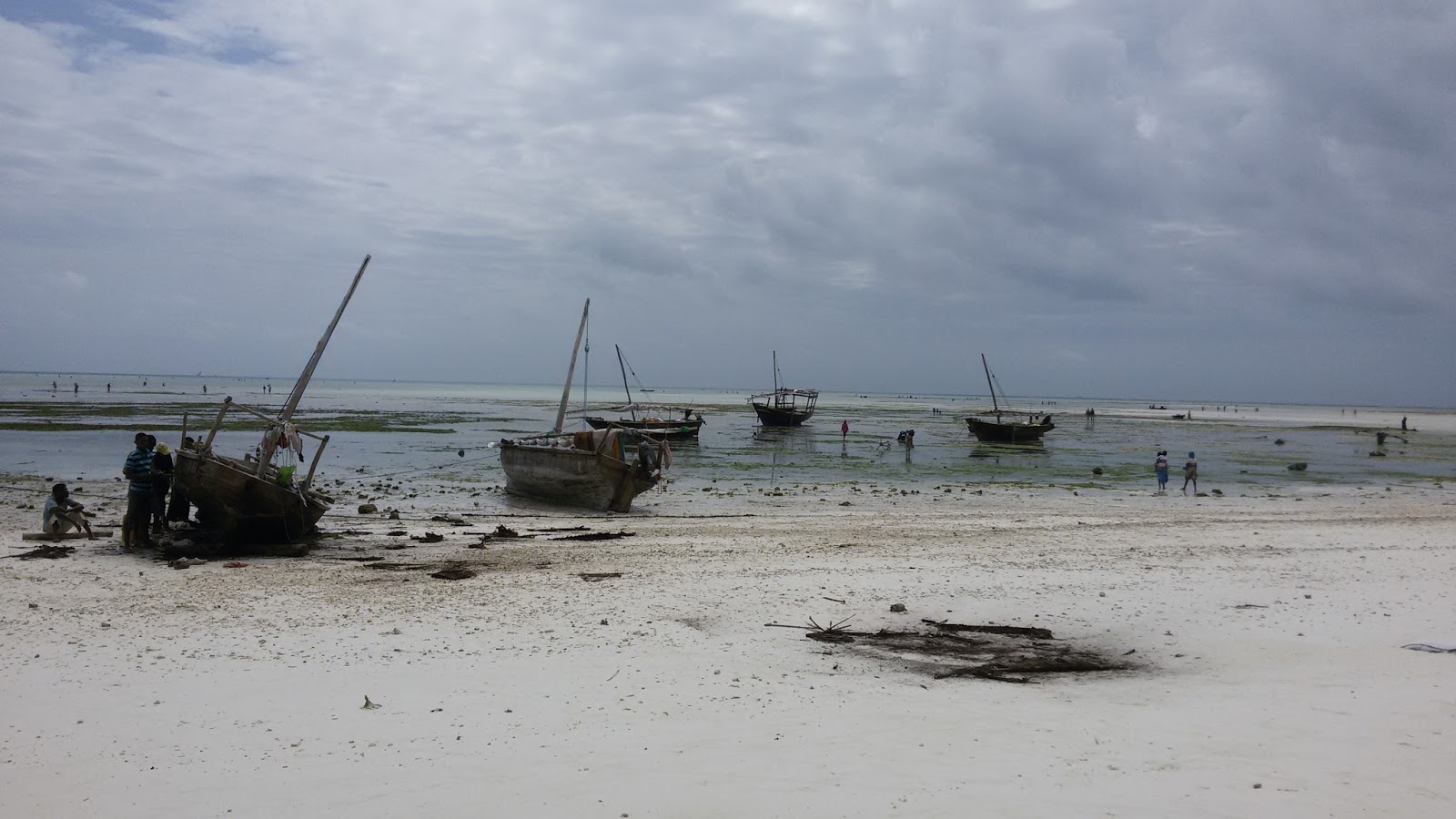
Kilifi lies 3.6 degrees south of the equator on the north coast of Kenya. Despite what the U.S. and other governments would have you think, most of the coast here is very safe and very calm—even though it is majority Muslim (Sarcasm. Please catch the sarcasm.)—statistically much safer than Nairobi.
Sunrise and sunset both occur sometime around seven o’clock. I only seem to hear the call to prayer at four in the afternoon, though I know it happens five times a day. Most mornings at seven an outraged cacophony of clucking erupts from one of the bird pens; the dogs, too, rise to a frenzy at the taunting of crows.
The roots of mangroves along Kilifi Creek are as so many riddles, twisted mysteries temporarily revealed at low tide. The crabs seem at home there in their world of slick sideways and salt-cured dark.
The water is brine-y and calm. Everything about Kilifi, in fact, seems quieter than Diani. The dogs more mellow; the beach less windy; the locals who spend time there less aggressive. The Distant Relatives Ecolodge is a lush experiment in permaculture and sustainability. Sawdust composting toilets and resident chickens immediately show that this is not your typical backpackers.
The fingers of my right hand sport small gashes from my daily work on a recycled glass mosaic on the outdoor pizza oven. Tired of smashing glass and working with cement, I will switch to painting an indoor mural tomorrow.
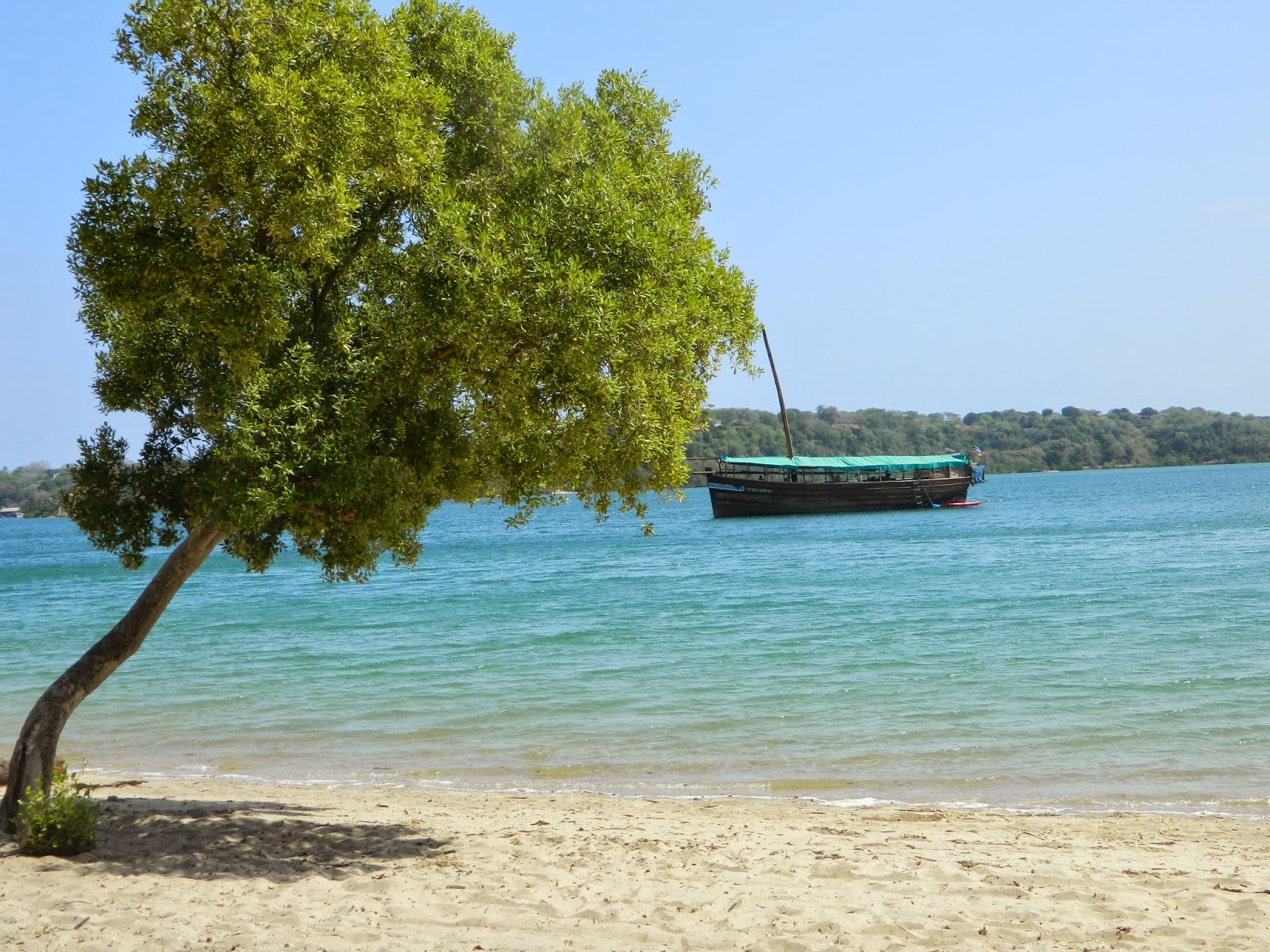
Pineapple juice drips down my arms as I lounge on Musafir’s (a traditional Arabic/Swahili ship) unfinished deck. A volunteer sings in Italian as he empties buckets of water overboard—a twice-weekly task, as cotton fills the gaps between boards. We are far enough from shore that no flies would dream of making the journey out. The tide rises, approaching the roots of the first mangrove trees on shore.
I come to the beach often to write, resting in the welcoming arms of one of the trees. Kilifi inspires peace and creativity, movement and poetry… that, I believe, is plenty.
To understand—to truly understand—another place and people, you must eat, sleep, dress, breathe and speak like the locals.
When in Nepal, eat dal bhat, sleep on wooden pallets topped by thin thin cushions, wear salwar kameez, learn Nepali—or, in my case, attempt to learn Tibetan—take the bus and wear a mask against air pollution. When in Italy, eat pasta with bread to fare la scarpetta, speak Italian, ride scooters and dress… however it is Italian women dress. When in Kenya… need I go on?