Tag: culture

  • The Paradise Mask

    Diani Beach, South Coast, Kenya, 4.3222° S


    “Everybody—everybody who is escaping from something ends up in Diani. Shady people, criminals, expats… everybody.”

    Such was the prognosis of a Diani resident and regular at the South Coast Backpackers bar (where I have been working for the last three weeks), and I am inclined to believe he is right.
    Though it doesn’t seem it outright—packed with tourist shopping centers and hotels as it is—Diani Beach is kind of a final frontier. A “la-la land” for expats and Kenyans alike escaping from their pasts—or simply fleeing the big cities (“Nairobbery,” I have learned, is actually a common nickname for Nairobi). A no-man’s land where many normal social conceits do not seem to reach.
    What does that mean? Allow me to illustrate:
    Here in Diani Beach you have the “beach boys,” the name by which everyone—and I mean everyone—calls the men who pass their time at the beach, either trying to sell something—coconuts, jewelry, boat trips, sunglasses, aloe leaves, safaris and anything else you can or can’t think of—or just loitering… or betting on a Roulette of foreign women. They almost always lose that bet… after all, only so many women will respond kindly to verbal assault: Hey! Beautiful-lady-how-are-you-Where-are-you-going? Why-you-don’t-want-to-talk-you-are-very-beautiful.
    Local bars, however, are brimming with those who have won. Young Kenyan men and women share cocktails and seductive glances with much, much older foreign women and men. The Kenyan men wear their good fortune with a touch of arrogance, while the women adjust their skin-tight dresses and scan the room for something better.
    Residents and long-term visitors prove a bottomless repository of stories—bar brawls, unsavory characters, intrigue—leading a new arrival to wonder how Diani manages to appear so… idyllic. The ever-swaying palm trees, smoldering white sand, jewel-toned water and algae, beachfront thatch-roofed restaurants and resorts, technicolor kites speckling the sky, two resident Diani Beach camels—it all belies a much less serene, much duskier palette of hidden shadows and secrets… Or so it would seem.
    She who ventures out at night must not walk along the road for pickpockets; must be wary of piki pikis and taxis for drunk drivers; must avoid matatus for questionable passengers.
    A guest in a five-star, gated compound on Diani Beach might easily—very easily; too easily—forget that Kenyan law allows for detention in jail up to one year on suspicion of terrorism; might refuse to acknowledge that police checkpoints on roads are no more than systematized bribery collection centers; might overlook the streets lined with garbage and the fact that most of the young local women at the bars are probably prostitutes.
    Here is a carefully imagined idea of a paradisiac tropical hideaway spread like a semi-translucent shroud atop the reality of Kenya: corruption and a starving tourism industry. At times (most of the time, even), I have certainly overlooked it all, lulled into la-la land by the breeze and the sun and the sand and the coconuts.

    But then again, Diani Beach is hardly unique in these regards. What earth-bound paradise is truly what it pretends to be?
    ***

    ***
  • The Gift

    Several days ago, I sat in a matatu (bus) plying the main road of Diani, Kenya. On my way to Diani Beach Hospital for a precautionary Malaria test (I don’t have malaria, Mom, you can exhale).
    A muzungu (a sight far more common on the coast than it had been upcountry) boarded several stops after. Hale and tan in the way that Northern Europeans tan—russet, rather than gold—he must have been around 70. His thick white hair and beard shone starkly amongst the rows of shaved Kenyan skulls.
    He sat by the door, and when we stopped to let off passengers, he held out a coin (50 kesh—50 cents—, I think) to a small boy a few yards away.
    A man carried the boy over to accept the gift. As the matatu began to roll away, the white-bearded man said in a thick (Dutch?) accent, “It’s for him [the boy]! Not you—him!” Thus ensuring that his gift would not fall into other hands, he sat back, satisfied.
    This foreigner bestowed his gift with the ease of frequent practice. His manner brought to mind other tourists I have seen in other places, of a similar ilk.
    Simply put, something about the gift—or rather, its giving—bothered me.
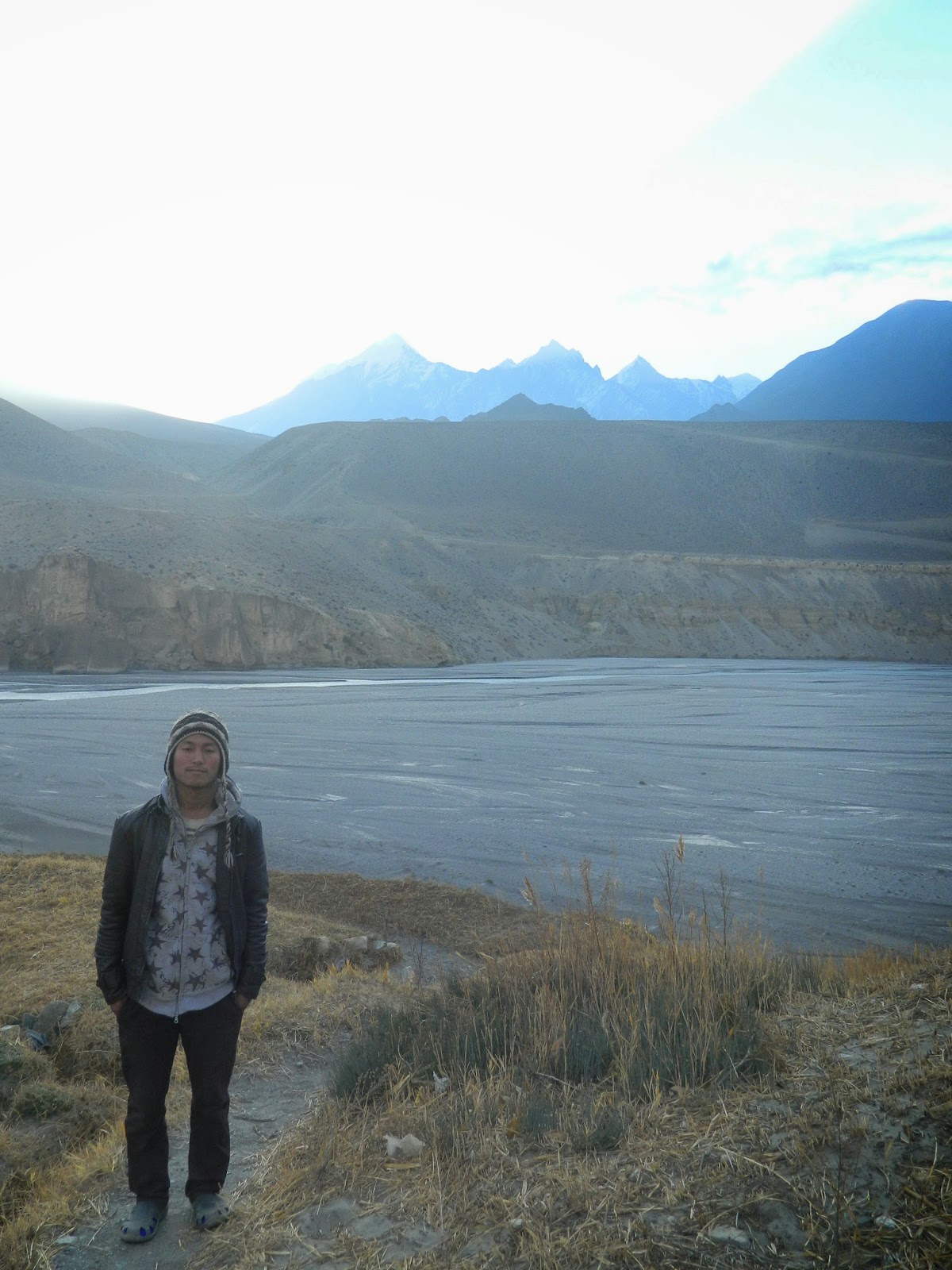
    Two years ago, far up in the Himalayan foothills, very small children would emerge from nowhere, holding out phantom hands and pleading eyes, and ask me and my trekking companions for “candy! candy!” or, even more baffling, “ball-oon. ball-oon.”
    From whence had come this peculiar fixation with candy and balloons? Well, from other trekkers, of course. Foreign hikers toting bags of candy—and balloons—to give to children along their path.
    There is something presumptuous—maybe—about giving unsolicited gifts to strangers. An assumption that we as outsiders know what is needed, and by whom. That we have a right to give when and to whom we wish, without asking anyone’s opinion. A whiff of a lingering imperialism, perhaps. (Of course, now these children do ask, having learned from experience to expect bounty of visitors.)
    I am reminded of a class I took on Jewish Ethics 10 years ago, about which I have not once thought in the interim… According to Maimonedes, there are eight levels of charity. The greatest, you may or may not have guessed, is to support another Jew (this merits another conversation entirely). The lowest, naturally, is to give unwillingly.
    Ringing in at number five: giving before one is asked.
    This may all be a bit off point, but Western altruism in Africa has a long and problematic history of unsolicited giving, unscrupulous giving, and giving without once thinking to ask what is desired or needed by the recipients.
    These sorts of giving smack of colonial condescension. Translated into 18th century garb, the image of the foreign man handing money to a Kenyan child becomes that of the beneficent overlord deigning to notice a black child, reaching down magnanimously from his carriage with the gift.
    I do not think I exaggerate so greatly in this leap of imagination.
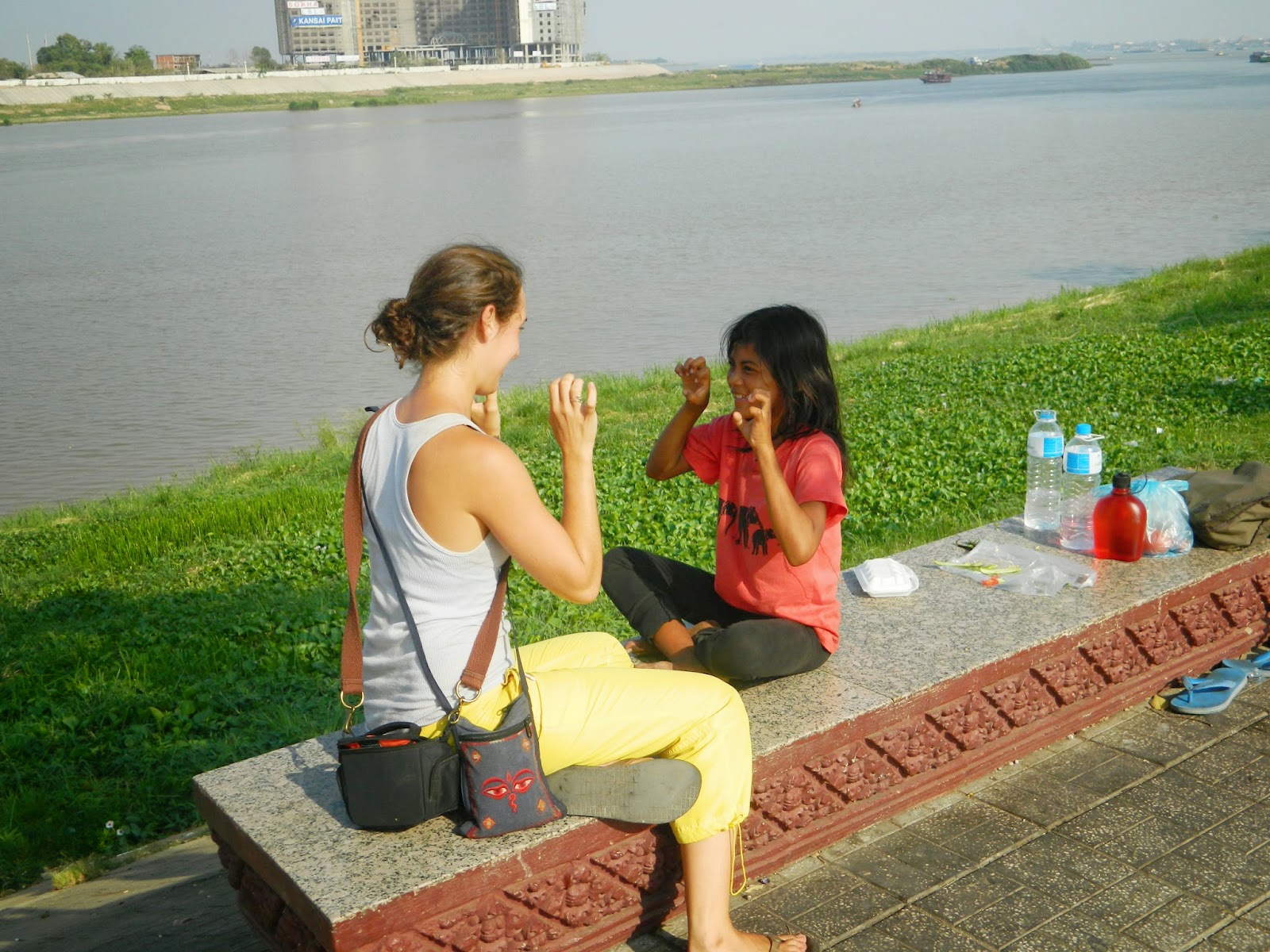
    Sharing food and games in Phnom Penh.
    Surely, you might say, I don’t need to ask to know that a starving child needs food, or that a village with no well needs potable water. Yes, there are certain basic needs, but no, you can’t assume that you know best what they are and may thus dictate another’s priorities.
    In some touristic destinations, poverty is rampant, and in advising visitors to these places, study abroad or travel guides will usually take one of three tracks:
    1. Don’t give anything to anyone. Not to beggars, not to children, not even to new friends. Just don’t, because one friendly gesture of generosity will call upon your head a veritable surge of unanticipated requests.
    2. Bring gifts that are useful—flashlights, notebooks, clothing, etc.—to give to hosts or friends. You will be offering something worthwhile, not a symbolic gesture doomed to sit on a shelf beside its untouched kin.
    3. If you are going to give a stranger something, give them food. Children, especially, almost certainly need it, and your gift will not be misused or appropriated, as money so often is.
    Other responses include: giving to a reputable non-profit, thus ensuring (in theory) that your money will be well spent; sponsoring an individual’s schooling; or offering skills or instruction, which has no (or greater) monetary value.
    I don’t have a set position on the question. All of these suggestions have merit. Personally, I am disillusioned by the distribution of spending in corporation-sized non-profits, and I much prefer the work of grassroots organizations that work in tandem with local communities. I love the option of sharing food; I think it is the most human of acts, and almost universally understood and appreciated. Sharing skills—if you have them—equally so. Material gifts are tricky. I lived with a home-stay family in Kathmandu who had an entire shelf of unused gifts from other guests like me—picture books, snow globes, and salt-water taffy, all untouched and unopened. I don’t know about the worth of gifts that serve no function beyond expressing gratitude for hospitality.
    And then, even if you do ask a community what it is they want, you will not receive a unified answer. Children may indeed want bicycles and candy—and balloons. Male elders will not seek the same help as women; each may have different priorities.

    But if you want to help the “poor, starving children of Africa” (a platitude which, to my absolute shock, some tourists have actually employed), don’t throw up your hands in despair. I think doing good begins with good intentions. Do, however, leave your presumption, your condescension and your self-importance at home. Be mindful of these complexities in your giving.
    ~
  • Rusinga Island, Lake Victoria, Kenya

    Here, I am Muzungu: foreign, white, outsider. Kids yell after us as we pass on foot (or, after realizing the walk from Mbita is at least an hour, on pika pika, moto-taxi). It hasn’t gotten old quite yet.
    There is something… there is something about the impossibility of fitting in that has always challenged me in the best of ways. In Nepal and India, no matter the effort I made to wear the right clothing, to learn the language, to immerse, I was always patently, immutably other. Here too—I can already tell.
    In Europe, not so much. I have a face that can appear French, Italian, Slavic or even Turkish according to context. Without my backpack, I can walk through a city unmolested, my status as tourist unknown, and blend into the crowd of a subway car. The chameleon has many merits, and I have certainly enjoyed exploring new places in the guise of a local.
    And on the other hand, I do not like the constant attention, stares of curiosity, shouts, deference and, conversely, hostility I receive when I travel as an obvious tourist. I certainly do not like being singled out by the Nairobi police as an easy source of a bribe, and I do not like the behavior of those men who seem to believe that as a foreigner I do not warrant the same respect as women of their own race.
    But still, there is something.
    There is something about the impossibility of fitting in that I do like. Standing out, not because of a voluntarily articulated identifier like religion, sexuality, or dress, but because of an immediately evident, insuppressible feature like skin color—like eye color, height, even language, too.
    That experience was very rare growing up in Boston, or going to school at Middlebury College. And I think most people, of all backgrounds, shy away from it because it is uncomfortable. It is inescapable. It can be exhausting and challenging. It is also, I think, important.
    There is something about the impossibility of fitting in that forces us to confront the reality of our otherness—no greater or lesser than anyone else’s. Amongst so many other reasons, perhaps that is why I travel. It is too easy to fall into the comfortable trap of sameness. Surrounded by people who look— and maybe more significantly behave speak dress and think—like us, we relax not into multiplicity, but into uniformity.
    I would rather learn how to be equally at home in my otherness as I am in my belonging.
    ~

    Home for the moment.
    Here at the western edge of Kenya, the roads are dirt and dust. An energy center in town offers drinking water, internet and computer use, solar energy and more to residents. Wifi is scattered at best.
    At the Wayando Beach Eco-Lodge, our neighbors appear to be hippos to one side and nonstop music to the other. I will teach yoga at 7:30 in the morning… if anyone shows up. I serve Tusker Pilsner to guests and fry Tilapia fresh from the lake for dinner. I have seen three different jewel-colored birds—ruby, emerald, sapphire—since writing that sentence.
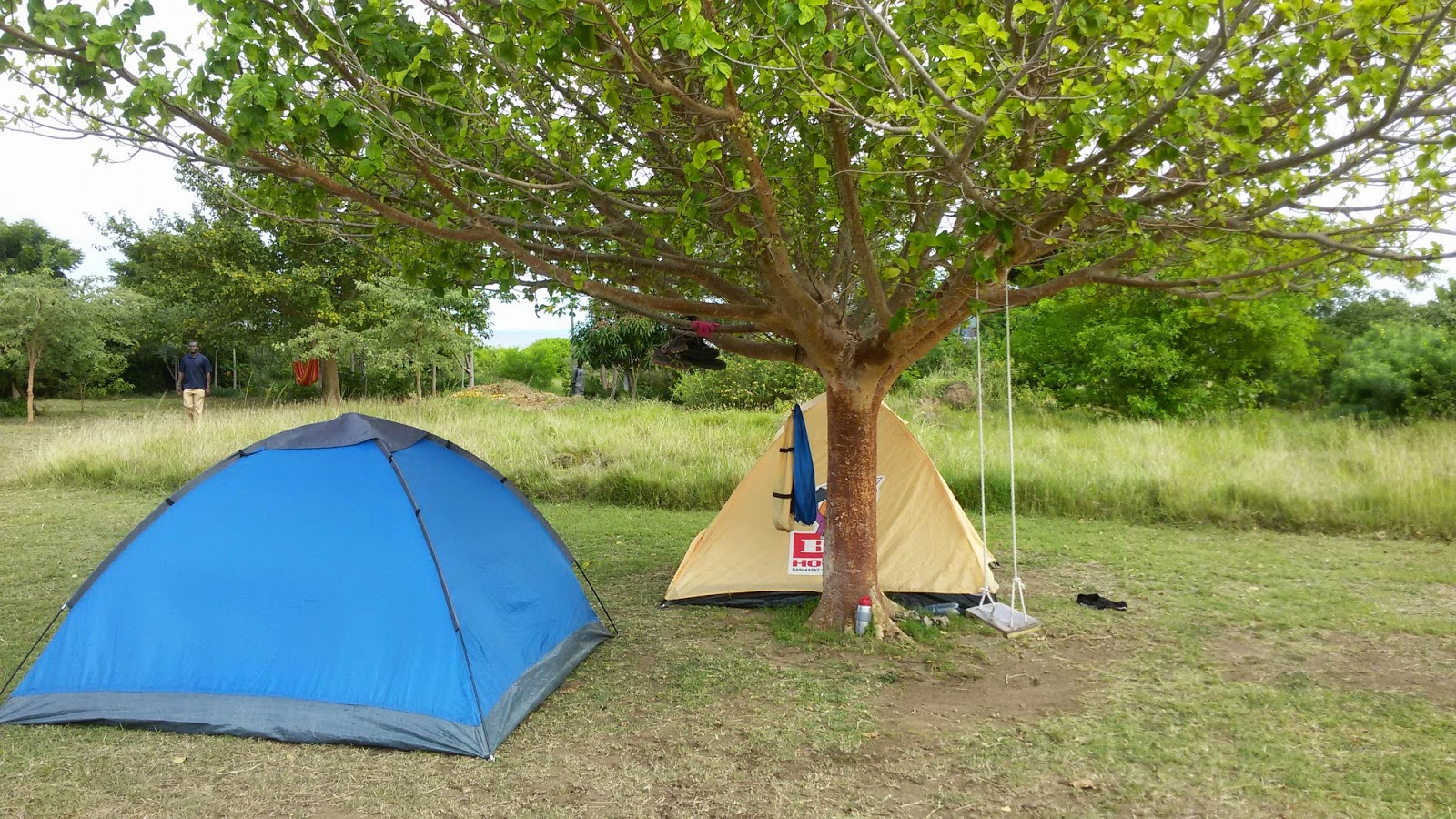
    The sun burns hot at midday, but the nights bring light rain and heavy wind, and I am happy for the warm blanket in my tent.
    Eco-lodge means sawdust-composting latrines, round, self-contained huts for guests, and lake water showers (don’t worry— it’s treated for parasites). It also means fresh papaya, mango, bananas, ginger, arugula, peppers, passion fruit and sweet potato from the garden.
    We will spend two weeks here, or hopefully longer…
    To Be Continued.

    ~
  • Hostels: Beyond the Horror Movie Story

    Picture it: A group of Portuguese boys play ping pong and try not to spill beer. Behind them, Spanish girls converse– loudly– with strangers via a smartphone translation app. Upstairs, Karaoke. Someone knocks over a stool with a bang. Ten bunk beds crowd into a room about 5m2; the room is rarely quiet. Dirty dishes accumulate in the sink, and most people cook pasta.
    No, it’s not an international frat house. It’s a hostel.
    If it sounds rowdy, messy and overwhelming, well, it often is. If it also sounds like a one-stop-shop for meeting other travelers and making friends from other places, well, it’s that too.
    Once upon a time, I loved to stay in hostels. At 18, I found the chaotic collision of cultures exhilarating. Likewise the endless procession of potential friends. The noise, the mess and the banality of bar-stool banter? It was new to me.
    Over the last five years, however, something has shifted. I prefer noise in moderation. Though I still enjoy meeting new friends—and I hope I always will—I am no longer awestruck by the air of international cool that hostels exude.
    Last week, I spent six days in a Barcelona hostel after all better options fell through. For seven euros a night, I didn’t mind that one of the two stoves didn’t work, or that I had to share space with twenty people smellier than me.
    My second evening I overheard a conversation that brought home the change in my relationship to hostels. What once would have seemed a thrilling exchange of travelers’ stories and philosophy now felt decidedly, disappointingly… trite, I suppose.
    What’s changed?
    Certainly not the people, the stories, or the philosophy. So it must be me. Hostels are the same everywhere, anytime, and maybe that’s the problem. I have started to see what is the same rather than what stands out and enchants. My god, I have never felt so cynical!
    As I look at hostels now, I see less the excitement, more the noise. I see lecherous older men rather than good stories. I see travelers who never leave their rooms and parties that I could just as easily find at home.
    This is no longer where I want to be.
    ~
    Picture it: “Dragon’s breath” fog rolls in between purple mountains in the twilight. Terraces of fruit trees reach out above it. The nearest town, where square white houses cling to the mountainside, measures an altitude of 4,000ft. Nobody speaks English. Home is a small caravan with one outlet and the most spectacular view of sunrises and sunsets. Farmers load bags of almonds onto mules to carry them up the slopes.
    For the next two weeks I will be “wwoofing” (working on an organic farm) in the south of Spain. I still like parties and socializing and noise, but lately this environment feels much more my speed. There is nothing wrong with hostels, per se—my criticism may be heavy-handed—but I think I am done with them.

    I feel good here—in the heavy quiet of fog and deep space I can breathe. I can write, too, and that is more than I could say in Barcelona.
    ~
  • What is Cultural Immersion? I Don’t Think It’s This…

    “When I’m in a new place, I don’t want to go to the tourist places; I don’t want to go to museums. I want to see real things.”
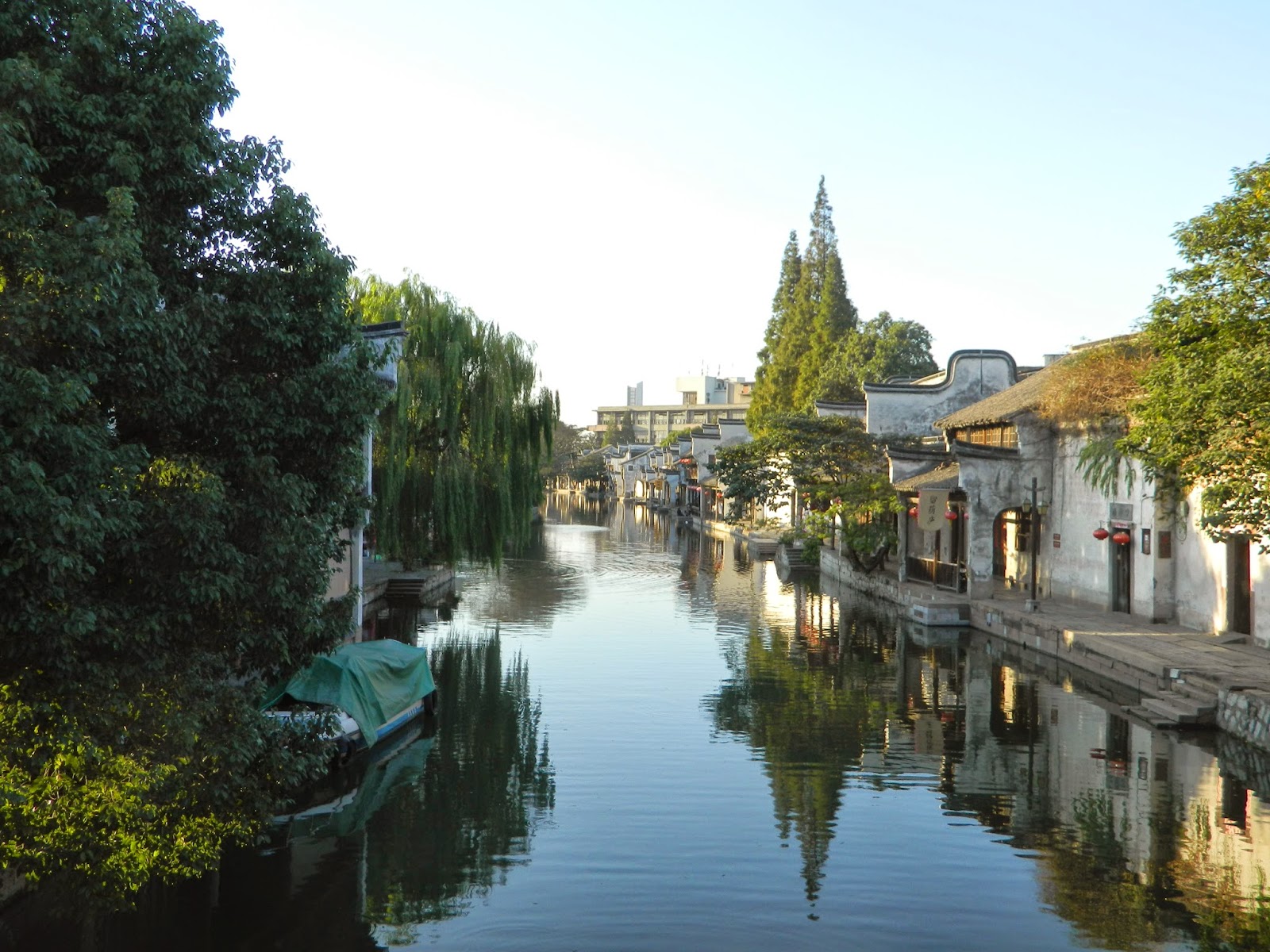
    Thus began my tour of Nanxun, a water village 1.5 hours outside Shanghai. Our guide, Stacy, began her introduction loudly, Midwestern inflection un-dampened by seven years in China.
    Here we go, I thought. I would not be sleeping as I had hoped, for all 18 participants would be introducing themselves next. I’m not sure I had ever been on a real group tour like this before, but that weekend I had the distinct pleasure two days in a row.
    Will I do it again? Quite unlikely. Am I glad I went, if only for the wealth of new writing material to come of it? Oh yes.
    As our bus hiccupped out of Shanghai, the platitudes rolled on. Introducing her partner, Mike, Stacy continued, “Of course, because Mike is Chinese, he’s good with numbers and dates and things.” 
    Chinese towns, people and art, on this tour, were only authentic if over 80 years old.
    Those who know me are aware of my crusade against terms like “real” and “authentic.” Last year, after months around tourists bemoaning the loss of “real” Tibetan-Nepali-Indian-etc culture, criticizing restaurants, cafes and people who were not “authentic” and congratulating those who were, I lost my taste for such judgments. After reading a large amount of literature on these discourses, I am convinced that “is it real?” “is it traditional?” and “is it authentic?” are the wrong questions to ask.
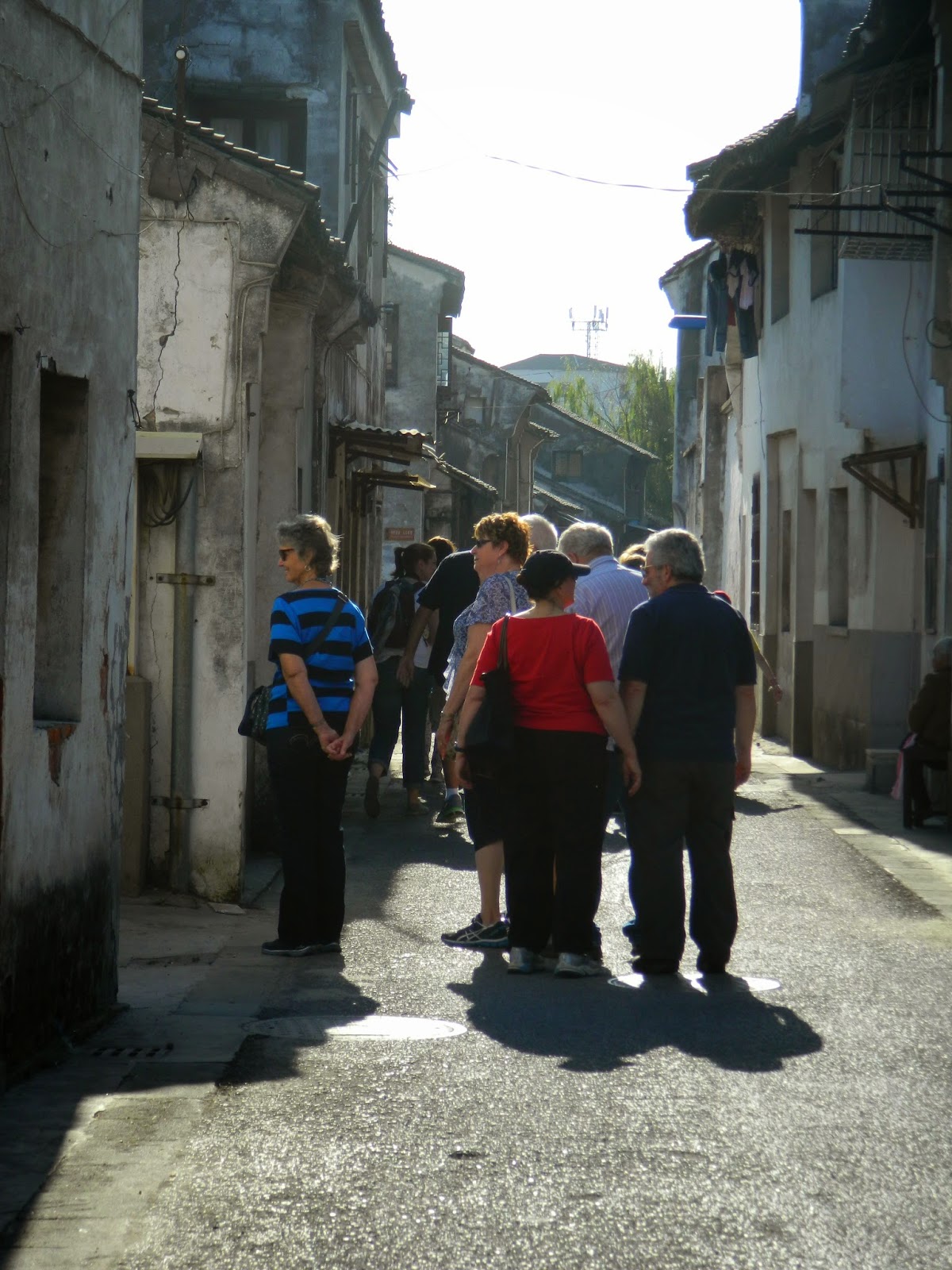
    Our first stop in Nanxun, naturally, was for toilets. We pulled up outside a large, nondescript hotel where around 40 staff reluctantly moved through their “morning exercises”—something resembling the bastard son of the Macarena and the electric slide. They looked especially mortified to have an American, camera-laden audience, and I couldn’t find the spirit to take any pictures. After all, we all know the miserable feeling of dragging through forced routines.
    Indeed, much of the day felt disturbingly reminiscent of an elementary school field trip I and my two aunts didn’t want to be on. We were the disruptive kids at the back of the bus.

    As we marched single file through the house of a certain Mr. Wang (a retired blacksmith well over 80 years) to see his traditional Chinese oven, all I could think was, “What is the point of this?” 
    I, like Stacy, enjoy seeing into people’s lives and homes. I tend to be nosy and curious and have few boundaries when I travel. I have participated in many home-stays and exchanges. But I hope I would never be so entitled as to walk into a stranger’s home, practically without conversation, take a few pictures, and leave.
    What did we all learn that day in Mr. Weng’s home? I, for one, have no idea.
    Stacy has branded her tours as off-the-beaten-track cultural immersion experiences. Certainly, I saw parts of Nanxun and Shanghai that I may not have stumbled on alone, but is it even possible to immerse ourselves in another culture in any meaningful way in just 8 hours? 
    I wonder.
    We spent a hefty chunk of the afternoon in a retirement home with three charming Chinese women. Why? Because, “these old folks have so much wisdom to share.” Our interview, however, proved far too short to extract much of any depth. And though I did learn that I should not dry my face immediately after washing it and that “There is more food now” than in the Mao years, that was about it.
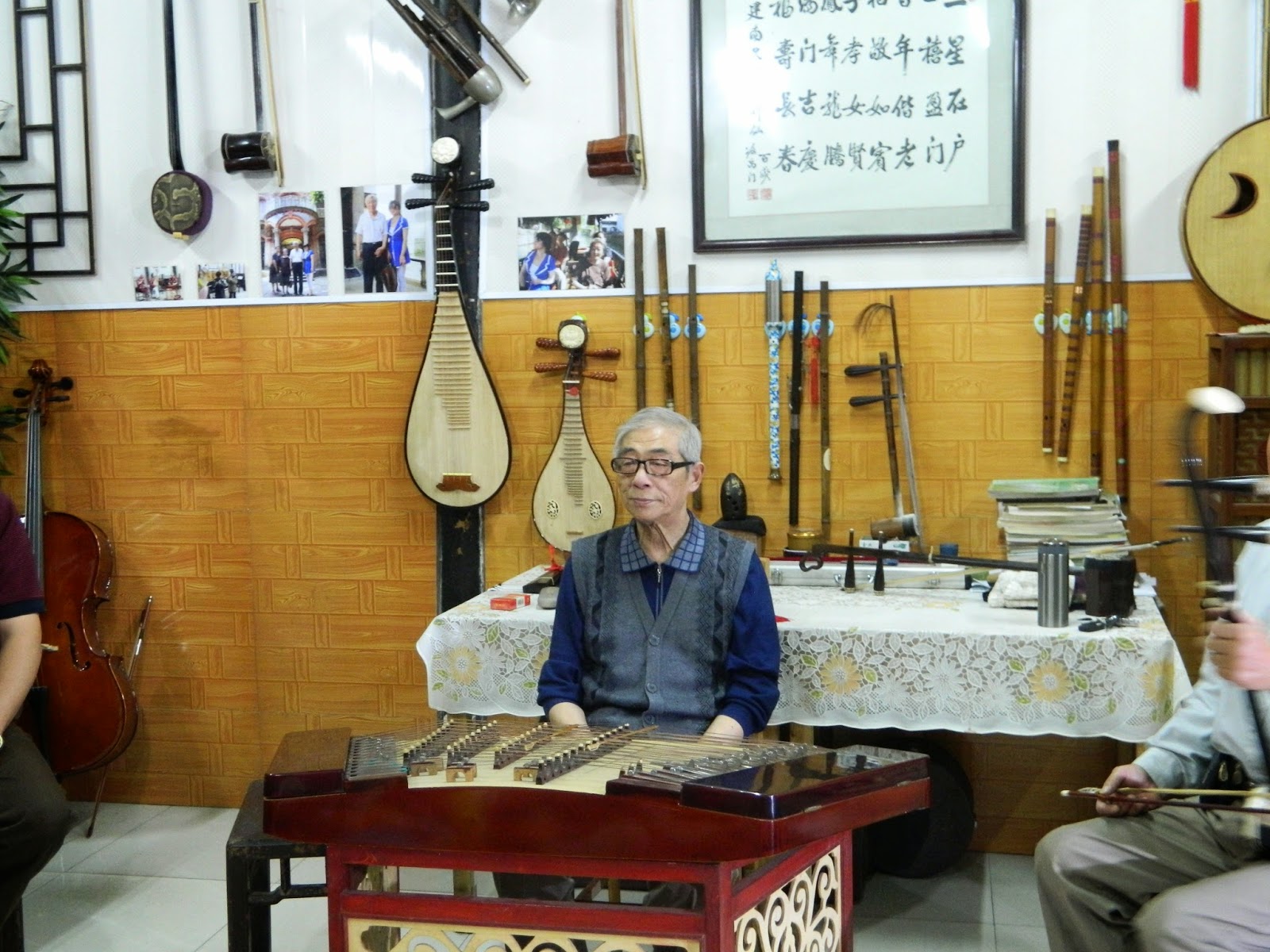
    One spry and flexible 90-something retiree led us through her morning Qi Gong routine. Later, I had the dubious honor of hearing “Jingle Bells” played on traditional Chinese instruments. Still, each stop on our itinerary, our “conversations” with local people, and our glossy overviews of entire schools of religious thought struck me as more shallow than anything else.

    Museums and retirees are equally “real.” Back alleys are not intrinsically superior to touristy main ways. Cultural immersion does not emerge automatically with the right combination of orchestrated meetings and exposure to dirt. Cultural immersion does not literally mean walking in and out of a local person’s kitchen. It is far more elusive. It requires more depth.

    That is not to say we should give up hope of having meaningful, culturally immersive experiences when we are short on time. 
    But let’s not place the things we see into two categories: real and unreal.
    When we have the opportunity to engage with another culture, let’s really engage. Ask questions. Look and see and taste and listen.
    Let’s decide for ourselves what is real.
    What is cultural immersion? That is a big question to answer, and maybe later I will try to go into it (though I’m not sure I have a satisfactory answer to give), but I am fairly certain it is not this.
    ~

  • Shanghai Snippets

    In Shanghai, everything is new. Or it wants to be new. Or it will be new just as soon as the old is knocked down and rebuilt. Retirees participate in state-sponsored activities in the park: old men manipulate Chinese yo-yo’s with surprising prowess, women join enthusiastically in chaotic dance fitness classes, and a single lane fills with the discordant cacophony of 20 different sound systems. I like it. More than I had expected. I take a stupid number of pictures of funny signs and storefronts, animal parts that no one wants to see, and gates and doors. My aunts take charge of photographing the family, and other things people will want to look at. Nonetheless, I want to share a few of those photos I took. These are the snippets and bits that caught my eye. I hope you will enjoy…
    Dancing in the park with maracas, what else?

    Fish heads– for sale or to discard? I’m not certain.

    Fresh pomegranate juice just outside the metro station.

    The Bund at night.

    Street food (pre cooking). For all of the street food fun, check out
    http://twohungryvagabonds.com/2014/10/25/cheap-eats-in-shanghai/

    “Open Lock. Make Key. Fix Lock.”
    An apt description of services offered.

    “Alley Curd,” purveyor of (the apparently
    very trendy) juice served in IV drips.
    Gates and doors.

     ~
  • Suzhou Snippets

    In it’s 2500-year history, the city of Suzhou has developed and refined many times over. It is known for its light, elegant, delicate cuisine and women. Marco Polo, when he visited in the late 13th century, declared it the “Venice of China.” Admittedly, every water town in China seems to bear this moniker, but I think Suzhou is the original.

    Suzhou strikes me as particularly ugly upon arrival. Massive, congested highways and bland, expressionless buildings. Never judge a city by its facades, of course. Tucked into pockets, Suzhou’s gardens and old walking streets are magical.

    At this time of the year, people come from all over China to eat hairy crab, a prized delicacy harvested from the lake nearby.

    If 1 billion people like something, I figure, it can’t be bad…

    You have to pull away the organs– heart, liver, etc.– in order to get to the edible parts. “No, that is not good to eat,” the woman helping us said, seemingly each time I pointed at a segment of my remaining crab.

    I am lucky to have a lot of “roe” (which I think is actually liver) in my crab. This is the best part… Finally, the crab is tasty, but very scarce, and a whole lot of work to get to. Something to try that I probably wouldn’t choose to order a second time, not least because of the cost– one 200 gram crab costs about 30 dollars!

    On our tour of Old Suzhou, our “guider,” Billy, leads us through gardens where rocks, trees and water have been arranged in perfect harmony. Everything symbolizes long life, prosperity and abundance.

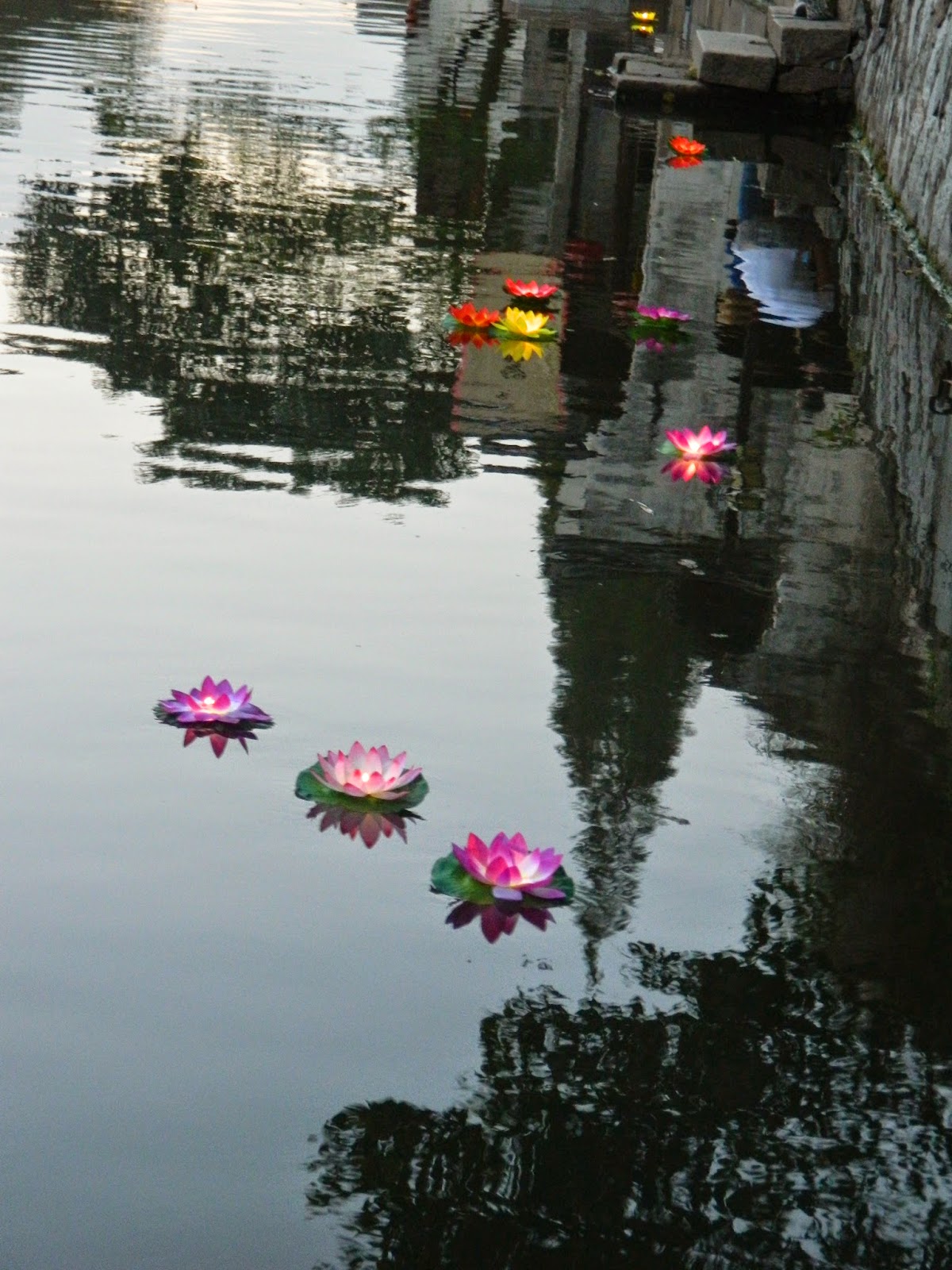
    The sky darkens as our boat steers down one of the main canals. Red lanterns come to life, and streams of tourists pour along the cobblestone banks.

    While on the boat, “fighting noisily and playing on board are forbidden.”

    The laborious process of silk making emerged from this bastion of Chinese culture. Silk, you may be interested to know, is not vegan. In order to extract the silk fibers, manufacturers must boil the silk worms’ cocoons, killing the aspiring moths in the process.

    Beauty

    Is neither tradition nor change,
    But somewhere in between.

    ~

  • An Ode to Small Towns

    In the spirit of Buzzfeed and the general ethos of blogging at present, I would like to begin this post with a list.

    You know you live in a small town when…

    1. Your customers for lunch show up at your other restaurant for dinner.

    2. You run into your “regulars” all over town. They always seem surprised to see you.
    3. Going grocery shopping consists of 2 parts socializing and 1 part buying food.

    4. “Downtown” is Main Street.

    5. Your yoga students show up for dinner, and your dinner customers show up for yoga.

    6. When you walk into the local coffee shop, it takes 30 minutes to get to work, because you have to stop and greet everyone already there.

    7. When you throw a party and invite people from various parts of your life, there is no need to make introductions.

    8. Going to the “City” (Burlington) is an excursion you indulge in about once a month.

    9. You expect greetings from strangers, and find it odd when people don’t say hello.

    10. At least a couple times a week, someone you know drives past you as you’re walking to work and offers you a ride.

    11. Everyone talks about their garden like most people talk about the weather.

    12. No one calls you a hipster when they see you a. fermenting things, b. knitting or crocheting, c. baking, d. biking, or e. wearing flannel.

    Soon-to-be homemade sauerkraut.
    Above all, it is a small, small world when you live in a small town. I have mixed feelings about the whole thing. On the one hand, I live for those coincidences and connections. On the other, I hate gossip, nosy neighbors and unattainable anonymity. For better, for worse, or for bizarre, I currently reside in Middlebury, Vermont, and that deserves a poetic tribute…

    An Ode to Small Towns

    Oh, small towns,
    I can’t decide if I love or hate you.
    You are full of people who compulsively read Front Porch Forum,
    Scanning for nuggets of gossip to purloin,
    or petty arguments to join.
    Still, your characters rival those of the Big City—
    Where else will my neighbor ride his tractor down the road,
    Wearing a cowboy hat and white Santa beard as he goes?
    Oh, small towns,
    I can’t spend a day on your streets without running across a friend, or twenty-two.
    If I have news in the morning,
    They’ve all heard it by noon.
    If I see Main Street I’ve seen all there is to see,
    That is, everything but the dump, the gym, and the local brewery.
    A night out with friends often ends with drinking tea.
    Oh, small towns,
    By your community I feel supported-
    Strangers offer rides into town
    When the rain is pouring.
    Yet at the end of the day
    When I look around,
    I see all the same faces,
    Hear all the same sounds.
    What you lack in variety you make up for in warmth,
    But even so, small towns,
    I think my time with you must be short.
    ~
  • And How Is Your Family?

    A recent conversation with the lovely Alec MacMillen (Arabic speaker and traveler on his way to Jordan on a Fulbright at the end of this month) reminded me of this topic…

    And How is Your Family? Making Connections Abroad

    In the first unit of my Tibetan language class, we learned words for family members and how to ask about them. “Do you have any brothers or sisters? Where are your children? What do they do?” Beyond “how are you?” these were the first questions I learned how to ask the Tibetan residents of my neighborhood in Boudha, Kathmandu, Nepal.
    My friend, a novice monk. We could converse only at a very basic level, but he knew that I had one brother who lived in Canada.
    When I traveled to Senegal on a High School summer exchange program, I learned much the same phrases in Wolof. “Where is your family?” “They are here,” was a classic exchange between strangers or friends. What I didn’t quite understand at age 16, I began to see more clearly while studying in Nepal: In almost any corner of the globe, family is literally the foundation of every relationship. If you want to form a friendship, begin by asking about someone’s parents, sisters, brothers, children. If you wish to grow closer to your host family, ask about children, cousins or siblings abroad.
    In most beginning language courses, vocabulary for family members and questions about family almost always show up in the very first unit. In 6th grade French, I remember finding this awkward and a little bit silly. Many college language students feel much the same way.
    In the U.S., these are not the first questions we are taught to ask. At least, these were not the questions I was taught to ask. For many Americans I know, inquiring about family members is intimate, almost invasive for acquaintances or strangers. Here, if you want to form a friendship, begin by talking about shared interests, food, school… Family comes later.
    In that Tibetan language class, my teachers stressed the importance of asking about family first, before anything else. This was crucial to respectfully initiating conversations and friendships; omitting to ask about family could be perceived as inconsiderate or even offensive.
    Istanbul, where I probably sat down to drink tea in every candy shop over the course of my week-long visit.
    Once learned, this was a lesson I would carry with me. In Turkey, I made friends with every shopkeeper I met, exclusively by asking about family. In Italy, I remembered to ask new friends the same. Regardless of country or age, new acquaintances responded with warmth and enthusiasm to my queries. Do you have children? Where are they? What do they do? Do you have any brothers or sisters? What do they do? Where are they? Are you married? Where is your husband? Your wife? What are their names? Detailed, personal questions repeatedly forged an immediate intimacy and connection that flippant conversations about the weather or school could never produce.
    I became more comfortable in the asking as I saw how people opened to my questions. When I returned home and began conducting interviews for my senior thesis work, I employed the same technique, with surprisingly similar results.
    There exists in the U.S. an individualism that de-emphasizes the role of family. We are individuals. We are not where or who we come from. As I traveled and made friends, however, I found that most people do not agree. Questions about family are so crucial to forming relationships because family is crucial to forming individuals. No matter how much we pretend, we do not exist independently of it.
    While hitchhiking, I bonded quickly with strangers by asking about siblings, children, parents, etc.
    At least, that is the belief that drove my experience of connecting with strangers. Whether or not I believed it didn’t even matter so much; my new friends did.

    So, if you are traveling and you want to make friends, after you ask “how are you?” remember to go on with, “And how is your family?” See what happens.
  • Oh, the Characters of Middlebury

    One of my favorite things about working in restaurants is the unlimited entertainment potential of observing the characters that pass through. Middlebury, Vermont does not disappoint.
    Once, in High School, I took a class in Nonfiction Prose. The first week, the teacher had us walk around the neighborhood, observe the people around us, and write a few character sketches. A few descriptive lines that form a verbal portrait. They can be straightforward or metaphorical, humorous or serious. In what seemed an apt metaphor at the time, and in retrospect more like poor judgment, I distinctly remember comparing my teacher to a baboon. Better choices have been made. Regardless, I love this exercise, and I would like to present to you some of the characters of the – Café. No names, of course, will be named.
    ~
    M— is a tall, odd man. He almost always comes alone and almost always orders a hummus salad to very precise specifications. It is shocking when these two things are not the case. He wears a bucket hat and leans slightly when he walks. Though a bit withdrawn at first impression, M– proves quite garrulous on any subject when engaged. He does not like ice in his water, and he eats very, very slowly.
    G—worked in the foreign service, but I would never have heard it from him. It took a long time for him to decide I was worth conversing with at all. He must have his soup piping hot and immediately. He comes for lunch with various friends. Last week, he asked me if I had seen any sea monsters lately in Otter Creek. I suspect he is hiding an eccentric sense of humor.
    Mr. and Mrs. – are my favorite regulars. They are understanding, appreciative, and very sweet. They always drink iced tea—many, many glasses—and sit for a while.
    C— sits at the bar and has a Switchback beer with his lunch. He might be in his seventies. He speaks gently, likes golf, and has a wife that I have never seen. We don’t have many things to talk about, but he is kind, pays in cash, and tips well.
    J—and A—, whether they come separately or together, are strange and, in my opinion, wonderfully entertaining. They have raised friendly banter to an art form, and on a busy day it is best to avoid them as much as possible. On a quiet day, a conversation at their table is a great way to fill up time. J—is tall with very short hair, and always leans in to speak. He likes Caesar salad and sometimes quiche. A—has curly hair and an old, lumbering dog who waits outside.
    Mr. and Mrs. A— are always very nice, and they always order the same thing. Always. I could tell you their exact order, but that might give it away. Inside, they like the table in the corner. Outside, the table against the wall. They like straws and lemons with their water, but they only sometimes use the straws. They never tip over 17%.
    The I—‘s would be lovely if they weren’t so troublesome. An order for two can be a foot long with all of their additions, substitutions and peculiarities. They usually come for brunch, order more food than I think a person could eat, and finish it. They think the — Cafe is their private kitchen, and we do nothing to disturb this conviction.
    The lawyers are very important people. They never have more than 50 minutes for lunch. They like their soups and salads first, and M—with the blonde hair must have her soup extra hot. With all that, they are surprisingly agreeable, and they never linger.
    Mr. D—owns something in town. He is also a very important person. He likes his iced tea with no spoon in it. His lackeys drink soda, sometimes; they defer to him in all matters. There are usually four of them; only Mr. D— orders an appetizer. As far as I can tell, only Mr. D— speaks. He takes up twice as much space as those around him, in every sense of the phrase.
    ~
    When I was little, and we had to eat at McDonalds on family road trips, I would order a cheeseburger without the burger. We called it a Toby Special. Now that I am not six years old however, one, I avoid McDonalds at all costs (along with the rest of my family), and two, I order off the menu. I can make myself a sandwich with no bread and nothing on it at home.
    When work is slow and I have time to, I often wonder how people come to have such exact, particular peculiarities. Likes and dislikes. Demands. Needs. Are they born that way, or is it a byproduct of aging? Are they raised to need straws in their water with no ice, to demand that their soup be hot enough to give third degree burns, and to require, absolutely, that there be no trace of onion on their burger? Are we all so peculiar in our tastes, only more self-conscious of demanding their satisfaction? Do I just have lower standards? Were our parents less indulgent? Are “characters” just average people whose idiosyncrasies have gone unchecked? Possibly.

    Or maybe, as my experience as a server indicates, idiosyncrasy is the norm, and those without restrictions, requirements and specifications are the exception. Maybe this pattern is a unique result of American culture and values. That seems likely, for in all the time I have spent outside the U.S., I have never seen someone order a sandwich without bread.*
    ~

    *That is not to say there is anything wrong, necessarily, with ordering a sandwich without bread. It is simply interesting, and  maybe indicative of something, to observe the frequency of such requests.
  • “Paying the Rent”

    It seemed about time to talk about what I am currently doing for money “to pay the rent.” As previously mentioned, I have five jobs at the moment. Only one, however, really pays the rent. It struck me recently that this one job may actually be pretty unhealthy for me.

    That job is waitressing.

    I identify myself as many things. As a writer, a yogini, a dancer and a wanderer. As a Jew, an artist, a woman and a traveler. Fairy, unicorn, and bird sometimes slip into that list as well. But never that I can recall have I identified with my current occupation. Waitressing, or “serving,” is something that I do to earn money, wholly separate and distinct from my essence or self.

    Now, before any servers start raising their hackles, I am not offering judgment on the value of food service professions.  I have a coworker who has payed her mortgage and supports herself through waitressing. This can only be viewed as impressive, and I respect her and anyone else who chooses to make a living as a server. I only wish to observe that I do not identify as such, probably because of the negative qualities that this profession has begun to hold for me. The longer I spend in it, the more conscious I am of its advantages, and its shortcomings. Most importantly, I am realizing that these are really two sides of the same coin. In writing this, I hope to explain why I am doing this work to begin with, and why, ultimately, I do not like it.

    While I do not intend to pass judgment, I am fairly certain that it also steals a little bit of your soul. Make of that what you will.

    So here they are, The Advantages of Waitressing… and Why They are not so Advantageous for me:

    Pro: There is no contract.
    That’s right. You can leave whenever you want (though it’s courteous to offer at least two weeks’ notice, especially if you hope to be welcomed back), and, if you find a good place, it is very likely you can come back whenever you want. It is also fairly easy to get shifts covered or traded. This makes being a server the ideal job for travelers, musicians, mothers, or anyone else looking for a flexible work schedule. For example, I am taking a week off in the middle of the busy season to go to a festival. What other kind of work would allow that?
    The Flip Side: There is no contract.
    Slow night? You might get cut (sent home). Over-staffed? You might get cut. Chef doesn’t like you? You might get cut. Really. There can’t possibly be a workplace more subject to the vagaries of individual whim. No contract means no promises, and that cuts two ways. I was recently cut from the schedule for several weeks at my second restaurant job due to over-staffing (as far as I know, no personal dislike was involved), and that’s fairly normal.

    Pro: You work for tips.
    Many times customers have tipped me 30 or 40 percent, or handed me an extra twenty for no apparent reason. (Maybe they liked my face?) There are a lot of generous people out there. Plus, in the U.S. it is convention to tip 18 percent on average.
    The Flip Side: You work for tips.
    Your hourly pay is about four dollars. If it’s slow, you make $4/hour. Plus, there are a lot of obnoxiously stingy people out there, and there are no actual laws on tipping. That means, outside of automatic gratuity, nothing is guaranteed. You depend entirely on the generosity of others for your wages.

    Pro: You work on your feet.
    You are constantly moving (running) around, with barely any time to drink water! Out of a six-hour shift, you spend six hours on your feet. There is very little need to add any additional exercise if you do this full time.
    The Flip Side: You work on your feet.
    You are constantly running around, with barely any time to drink water. It’s kind of exciting, but mostly it’s dehydrating and exhausting. Sure, I’d hate to be at a desk all day, but that doesn’t mean I love the unadulterated chaos.

    Pro: You get to work with people.
    New faces every day. Cool regulars that you get to know as the months go by.* I can’t think of a more effective way to hone communications skills.
    The Flip Side: You have to work with people.
    Horrible, self-important regulars who never tip well. Screaming children who insist they hate pasta as soon as the pasta they ordered arrives at the table. Every person who stubbornly refuses to notice you are waiting for them to leave so that you can go home. A lot of humanity passes through a restaurant’s doors… you end up wishing half of them would learn to cook and leave you alone.

    Pro: You make other people happy.
    I truly like this part of the job. I love giving people food, and I enjoy seeing them enjoy it. If it were that simple, I don’t think I would have so much to say.
    The Flip Side: Making other people happy can be a pain in the ass.
    Some people do not want to be happy. They want to be grumpy and discontented. They are demanding and unreasonable, and they can turn a day bad.

    Pro: You make a lot of money.
    The Flip Side: You make a lot of money.
    Enough that it seems illogical to switch to something else. But these days, I kind of think it’s a trap. You do make a lot of money waitressing. That is why a lot of people choose to do it. That is why I chose to stick with it while I save money to travel. But the longer I stay, the clearer the flip sides become. The more painful certain customers’ arrogance, self-centeredness and smallness feels. The more the lack of any consistent real human connection begins to wear on me.

    That is why I do not identify with this job. I am good at it (I forgot to mention that), but I can’t love work that yields negativity and spite in tandem with flexibility and profit. So I am scaling back, spending more time working for less money, and more time on writing, which pays nothing at present, but brings me joy.**

    *I think I will do a follow-up piece soon to describe some of these characters in more detail!
    **Stay tuned for the consequences of this ‘more writing’.

    Sorry, no pictures to go with this post. I promise I will include a lot of pictures next time to make up for it!

  • The Internets: A Story of Love and Hate

    I may be the last person you would expect to see managing communications and social media outreach for a small business. Doggedly resistant to Twitter. Irrationally dedicated to my Samsung flip phone and equally irrationally opposed to Smartphones. Lover of ink and paper. Paper and ink. The “Internets,” as I have been known to call that massive and barely comprehensible matrix of invisible threads (and a troll or two), are no place for a flower-child-smartphone-hipster-bookstore-nerd-in-denial-of-modern-technology-hippie. Right?

    What do you mean? This phone is top of the line!

    Wrong. You must be wrong, because here I am, suddenly Communications Manager for an amazing little holistic wellness center in Vergennes, Vermont called 2 Wolves. (And Events Coordinator, too. I’m sorry, I have to brag a little– it’s my first job with a title other than, “Our Intern,” “Toby Over There” or “Excuse Me Miss”) And here I am, starting a Twitter account on behalf of the center, learning a bit about website building, and gearing up for Instagram next. To a certain extent, I am probably wired for it, being a child of the Information Age. Computer keys feel like home and I can find my way around a website whether I want to or not.

    So there’s the catch. I am, whether or not I resist it, predisposed to excel in this swamp of technology we call communication. Up until now, I have by and large resisted it (with the exception, of course, of blogging… and email… and, well, yes, Facebook. But compare me to the average “twenty-something” and it starts to look a lot more like resistance). I have long resisted the omnipresence of the Internet. Now, however, I plan to bend it to my will.

    Below is a segment of the email I sent to the instructors and practitioners at the 2 Wolves Center before enumerating a long list of ways in which they could help me grow our online presence. I write:

    The internet is an extraordinary and a terrifying thing. It can be an impersonal, vast network of virtual connections, but it can also be very local in its scope. First and foremost, it is a tool that we can use in any way we choose, and I intend to use it to build conscious, cocreative community right here in Vermont. I know many of our students are not plugged in on Facebook, Twitter, etc, but many of them are, and many potential students and participants are as well, and these tools can be an amazingly effective way of building our individual classes and our collective community.

    There it is. The Internets (that’s “the Internet” to you) are a tool. Neither good nor evil in of themselves, but simply a vast, swampy, troll-ridden universe of as-yet-unfulfilled possibilities. Some beautiful. Some terrifying.

    So here I am. Trying to create something beautiful and meaningful with that troll-swamp of invisible roads.

    ~
  • Story Time!


    The fairy chimneys, as it turns out, were the name that the genius, or over-romantic imagination, of someone in Cappadocia’s tourism department assigned to the giant, fanciful (and often very phallic) rock formations that cover the landscape.
    Rather than go through the last two weeks I spent in Turkey, Bulgaria, Serbia and Bosnia, I would like to tell you a story for a change in pace. Or rather, I would like to retell a traditional Bulgarian folktale that I read while visiting my friend’s family in Plovdiv. In recent months I have been rediscovering my love of stories, and having some fun with the art of storytelling whenever it occurs to me. I hope you enjoy this one; it is called “Glavcho.”
    ~
    Once upon a time,a third son was born to a peasant family.  He had an ugly, misshapen body and a large, ugly head, so everyone called him Glavcho (big head, in Bulgarian).  His older brothers teased him mercilessly, and the other village children always picked on him, but rather than fight back, as Glavcho grew bigger and stronger he stuck more and more to himself. He gave to his animals all the tenderness and care that was not shown to him.  Sitting in the pasture, watching the smoke cult into the sky above the slate roofs of his village, Glavcho would sing to his horses and speak to them of his hopes and dreams.
    Now, some animal had been breaking into Glavcho’s family’s fields at night and eating their crops, so his father instructed his sons to keep watch and find out who was causing the trouble.  The first night, the eldest son set himself up at the edge of the field with a lantern and a length of rope, certain he would catch the animal and win his father’s approval.  Dawn, however, found him fast asleep; when his family awoke, he said, “I kept watch all night long, but I saw nothing!”
    The second night, the middle son kept watch.  He too awoke to the rising sun and insisted he had seen nothing.  And so the third night Glavcho had his turn.  He took the lantern and the rope and sat watch.  Though his eyelids drooped and his head grew heavy, he did not fall asleep.  Around midnight, a beautiful white stallion appeared at the edge of the field, glowing in the moonlight, and began to munch on the carrots.  Silently, Glavcho tied his rope into a loop, crept up behind the horse, and slipped the noose over its head!
    “Please,” said the horse, “let me go and I promise I will never eat your family’s crops again!”
    Glavcho looked at him dubiously. “I’m supposed to catch you and bring you to my father…”
    “Glavcho, you are all the horses’ favorite. They all say how kind and gentle you are. You must help me and let me go!”
    “Really? I didn’t know they talked about me.” Glavcho glowed at the rare compliment, and after a moment’s thought, released the white horse.
    “Because you have done me this favor, I will always help you in times of need,” said the horse, lowering his head in thanks.  “All you must do is go into the forest, clap three times and call, ‘horse, come to my aid!’ and I will be there.”  And with that, he disappeared into the night.
    In the morning, Glavcho told his father and brothers about the extraordinary thing that had happened to him, but they laughted at him and scolded him for falling asleep and dreaming instead of keeping watch.  Elated by his discovery, Glavcho did not care, and he went off to take a nap.
    Later that day, a royal herald arrived in the village to announce a competition.  There would be three days of horse races, and the victor would win the princess’ hand in marriage.  The King invited every able man in the kingdom to compete.  Glavcho’s brothers heard the proclamation and they were talking about the upcoming festivities excitedly when Glavcho awoke.
    “Brothers, may I come too?” He asked bashfully.
    “You?” The said, incredulous. “Why, you would only scare the young princess and embarrass us.  Why don’t you stay with your horses.”
    Desperately wanting to see the races (to compete was beyond the scope of his imagination), Glavcho wandered into the forest after supper.  The tall trees cast a murky gloom around him in the gathering night.  He clapped his hands three times and called, “horse, come to my aid!” and like that the beautiful white horse came trotting into the clearing, glowing as always.
    The horse knew already what was Glavcho’s problem.  He said, “Return to this spot tomorrow after your father and brother have left for the races. Bring your sack for collecting mushrooms. I will meet you.”
    And so, the next morning Glavcho took his sack and returned to the clearing.  The white horse was waiting. “Look in the sack,” he said.  Glavcho reached into the sack and brought out the most beautiful set of clothing he had ever seen.  The fabric was softer than silk, and trimmed with gold.  When he put it on, Glavcho became a tall, handsome young man, broad shouldered and strong.  He leapt upon the white horse and they galloped to the castle.
    All heads turned to watch as they entered the field.  Both horse and rider shone brilliantly, and no one could look away.  “Come now,” said Glavcho, “let any man who wishes to compete against me come and race!” No other riders stepped forward.  The white horse galloped around the track with unparalleled speed, and did not stop running until he had reached the clearing in the forest.
    Glavcho took off his beautiful clothes, filled the sack with mushrooms, and returned home.  His father and brothers followed shortly.  Throughout dinner, they talked of nothing but the mysterious rider at the races.
    The next morning, Glavcho again set out for the forest with his sack to meet the horse.  Again everyone turned to watch them with wonder when they arrived at the castle.  Again they raced around the track, unrivaled.  Again, Glavcho’s father and brothers spoke of nothing else at dinner, their voices thick with awe.
    The third day of the races, when Glavcho called out “let any man who wishes to compete against me come and race!” several of the strongest young men in the kingdom stepped forward.  The white horse sped forward, leaving the other riders far, far behind.  Glavcho stood went before the princess and bowed deeply.  Taking the ring that she offered to him, the winner, he said, “tomorrow I shall return for the wedding!” And with that he leapt back onto the white horse and they ran home.
    When Glavcho’s father and brothers returned, talking of the upcoming wedding, Glavcho asked humbly, “do you think we will be invited?”
    His brothers laughed. “Why would the King invite the likes of us?”
    Glavcho took from his pocket the ring that the Princess had given him.  Recognizing it at once, his family exclaimed joyfully and the entire village rejoiced at his good fortune.  And Glavcho, we assume, lived happily ever after.
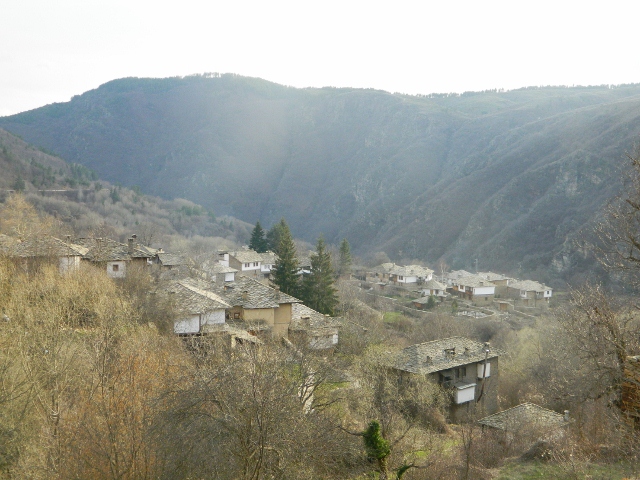
    A traditional Bulgarian village.
    ~
    Fables are nice, with their ready morals at the end (don’t steal, don’t lie, etc., etc.), but I really love these folk stories, with their more oblique messages and meanings.  What are we meant to take from this story? That less attractive men should dress nicely to get the girl? That our families will love us more if we make money? That we should be nice to horses?  The lesson here is actually a bit questionable when we consider that Glavcho only succeeds in life by changing his appearance.  
    For me, though, it doesn’t matter.  However we might interpret them, folktales are stories first and foremost, meant to entertain, and it is for this underlying simplicity of purpose that I love them.
    ~
    Location update: After flying through Bulgaria, Serbia, Bosnia and Montenegro, I am off to Croatia tomorrow—the Balkan adventure continues!
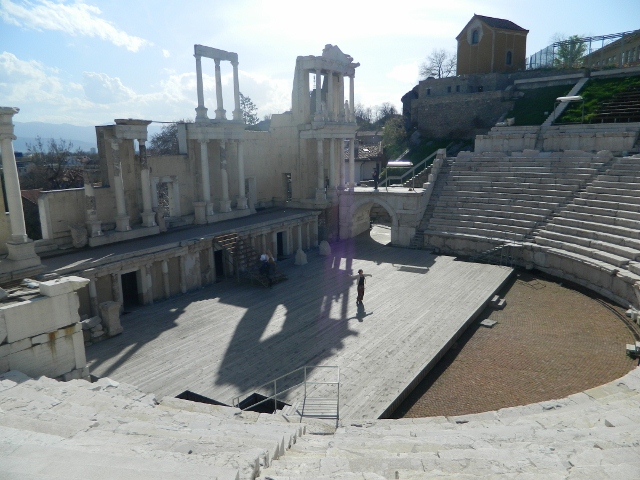
    Roman ruins in Plovdiv, Bulgaria.
  • Everything is Possible; Nothing is Free


    The hub of my front tire was bent at a worrisome angle. The brakes screeched so loudly they forgot to perform their intended function.  The bell did not ring and my feet did not reach the ground, but paying 10,000 kp, or $1.25 per day, I couldn’t complain about my rented bicycle.  It carried from the northwestern tip of Don Dep four kilometers along a wide dusty path to the southern side of the island, across a bridge to Don Khone, around, and back—about 25 kilometers in total—and never once muttered about the heat of the midday sun, which is more than I could say.  Don Det and Don Khone are two of the largest of the four thousand[i]islands that break up the Mekong River at the south of Laos.  I stayed on Don Det for four nights instead of my expected two, lolled into oblivion by the heady lotuses of palm trees, green water, good company and late-night bonfires.
    Both Don Det and Don Khone are incredibly flat, and my bicycle and I managed to navigate them easily enough. I stopped to see the Phapheng Falls—the massive series of cascades and rapids that thwarted 19thcentury French efforts to chart a water route from Vietnam to China.  I still haven’t seen the Phapheng Falls because when asked to pay a 25,000 kip entrance fee (approximately $3 and by all accords an inconsequential sum) I had a minor breakdown and went on my way instead.  Let me explain… I am more than happy to give my money to fledgling tourism industries, support the countries I am visiting within my means, and in normal circumstances I would never forgo a stunning natural sight over three measly dollars.  However, at that particular moment, something inside me snapped, perhaps triggered by the cold and offhanded attitude of the ticket taker: I wanted my humanity back! I was tired of being a wallet on legs, and I could not bear, at that moment, to pay for one more thing.
    A few hours later, repenting somewhat and feeling rather silly, I thought about doubling back, but the distance left to travel and the thought of the ticket taker’s face deterred me and I continued on without another thought for the waterfall.  I am not the only foreigner to lose patience with the aggressive profiteering in Southeast Asia, and I think I conducted myself relatively well.  In my two weeks in Laos, I witnessed shameful shouting matches between backpackers and tuk tuk drivers over a couple of dollars’ misunderstanding; I watched haggling turn ugly over the last quarter, and I saw smiles turn to anger in countless market interactions.
    In most of Asia, where haggling is accepted and even expected, the problem lies not in the bargaining itself, but in its tenor.  Backpackers especially complain that the locals try to cheat them and see in them only potential profit; locals complain that backpackers, who measure their poverty by a different scale, are stingy, want everything “cheap cheap” and ask rudely.  Both sides give reasonable cause for the other’s accusations.
    Everyone wants to be treated like a person. No one wants to feel like a tray of samosas or a wallet on legs, or a scheming villain.  In my opinion, for tourism to truly succeed someplace, a country’s motivation for drawing visitors cannot be solely monetary.  Obviously tourism is an industry and its purpose is to generate income, but when the desire exists to share one’s culture with outsiders, welcome them into it and benefit from their presence not only in a financial sense, transaction takes the leap to interaction.  In this best case scenario, we break the too-common boom-bust cycle of the tourism industry and see the birth of a new sustainable development model, with tourists returning regularly to places that are welcoming— neither “untouched” nor “ruined,” but real, warm, and human.


    [i]An approximate measure which I suspect was chosen for its poetic appeal in collusion with the ministry of tourism.
    ~
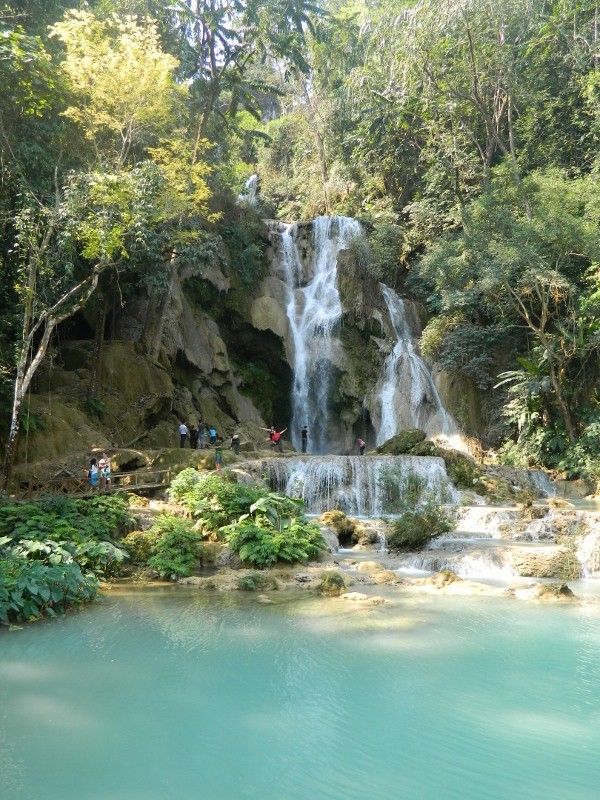
    Another beautiful waterfall in Laos, which I did pay to see. 🙂
  • 11 Things I Won’t Miss About Nepal

    On the (almost) eve of my departure, I have prepared this short rant, lest you mistakenly believe that I liked everything about my home of the last 3.5 months. The things I will not miss about Nepal are:

    1. The spitting. I don’t care if it’s culturally acceptable, hacking and spitting is still gross.
    2. The dogs. I have never before felt absolute hatred for any dog, but when gangs are barking outside my window at four in the morning, I am far too sleep-deprived to feel anything else.
    3. Specifically Lucky, SIT’s dog.
    4. Being talked about in my presence. Yes, I mean you, homestay family. I might not understand everything you say, but I know when you’re talking about me!
    5. The staring. It may be a cross-cultural phenomenon, doesn’t mean I have to like it. Besides, this is Nepal, I know I’m not that much of a novelty.
    6. Load-shedding. Twice-daily power cuts on a rotating schedule. It certainly made me appreciate the luxury of constant electricity, but I won’t miss it.
    7. Rice and potatoes. All the time.
    8. The honking. Unneccessary.
    9. The baby ladies (“please, my baby is hungry”) who borrow babies and will sell the milk you buy them back to the store and split the profits.
    10. The pollution. Carbon emissions control?
    11. Kathmandu’s Indian Embassy. Horrendous.

    Next stop India!