Tag: food

  • Some Stuff I Liked in Portugal: A Rough and Tumble Guide

    Some Stuff I Liked in Portugal: A Rough and Tumble Guide

    Portugal has made it onto just about every top travel list this year, and with good reason.

    I loved the month I spent there in every way, and I want to share some of the goodness with you.

    If you’re looking for the definitive guide to the country, this is not it. On the other hand, if you want to know about some of the places, food, and other things I really enjoyed, I’m so happy to share my favorite spots with you.

    Enjoy this rough and totally incomplete guide to sunny Portugal. And feel free to ask if I didn’t mention something you want to know about—maybe I forgot!

    I give to you…some stuff I liked and things I did in Portugal, in no particular order:

    Praia da Areia Branca

    Just 70 kilometers (1.5 hours by bus) North of Lisbon, Praia da Areia Branca is (one of) the chillest spot(s) I know to surf, yoga, and write songs in Portugal. Granted, I only went to two areas on the beach, but I’d go back, and that’s saying a lot. A week is perfect; I think less than that would be too short.

    Stay:

    Lemon Tree Hostel

    Gorgeous garden out back, choice of shared or private rooms, super affordable if you go in low or mid season and opt for the surf-yoga-stay package. Comfortable, clean, and graced by the warmest and most welcoming hosts.

    Pura Vida Surf Hostel

    Dorms, doubles, and privates. Not actual sure how it’s different from Lemon Tree. Maybe cheaper and closer to the beach?

    Surf:

    A post shared by Toby Israel (@tobyintheworld) on

    Ripar Surf School

    Nicest (and, in my roommate’s opinion, cutest) surf instructors around. Great value for money. Packages available for surf/yoga/stay, or just surf/stay. As it turns out, I don’t like surf lessons, but if you’re looking to learn, this is the deal for you.

    Yoga:

    Yoga lessons with Carla (organized through Ripar/Lemon Tree) are a necessary complement to hours of surfing in the cold Atlantic. She is a gem of a teacher, and I was lucky to wander into her class for a week.

    Eat/Drink:

    Foz—

    Fresh seafood, sunset views…what else is there to say? Go for one of the grill options. I won’t ruin it for you, but the skewers are served beautifully.

    Sol Mar—

    Catch the sun from the open terrace and relax to the sound of the waves, or sit inside and enjoy some particularly well-chosen beats. Veggie burger isn’t bad, and I hear their beetroot salad is excellent. Lemon-ginger infusion is perfect for post-surf warm-up.

    Bar Central (or maybe it’s Cafe Central…you should probably ask) (Lourinha)—

    If you have a car, or a friend with a car, this cafe is worth the 10 minute drive from Praia da Areia Branca for some of the tastiest Pasteis de Nata in the area. Buy a box and bring some back to share.

    Dance:

    Baracca Bar—

    I did not go on working-surfing holiday expecting to stay out dancing until two in the morning, but that’s exactly what I did my last night in Praia da Areia Branca. The DJs on a Saturday night were unexpectedly exceptional.

    Shop:

    Kidding. This is not where you go for shopping.

    Porto

    A post shared by Toby Israel (@tobyintheworld) on

    Porto and I are totally going steady. Portugal’s tiled, hilly, artistic northern city won my heart within twenty-four hours. I even forgive it for being uphill in every possible direction. A three-hour train or bus ride from Lisbon, it’s an easily accessible (and, in my humble opinion, unmissable) stop for any itinerary.

    Stay:

    Salema Cosy Home

    I would highly recommend the Airbnb studio apartment I rented just to the north of the city center. Ideal for solo travelers, couples, or really good friends. Hosts were kind, solicitous, and excellent communicators.

    Eat:

    Ristorante Sai Cão (Rua do Bonjardim)—

    Keep walking up past Trindade metro, cross the main road, and look for a blue awning on your left. Great local spot—according to my hosts people come from all over Porto to eat here—and menus for 4-5 euros.

    Raiz—

    Menu looks great. Comes highly recommended. I didn’t actually get a chance to eat here.

    Foz Fish Restaurants—

    Follow the Douro River toward the sea (walking). When the ocean comes into view and Foz is just around the corner, you’ll come to a strip of seafood restaurants on the sidewalk. Pick the busiest one, and enjoy some of the freshest, cheapest fish around.

    Francesinha—

    The famous Porto sandwich—layers of meat and cheese, and covered with a tomato-based sauce—available at just about any restaurant for 5-8 euros. I recommend sharing with a friend to avoid instant heart attack.

    Drink:

    Bar Candelabro—

    Enjoy a coffee or port wine surrounded by old books. This quickly became my favorite spot to read and write in the whole city. Social hub by night, calm cafe haven by day.

    Cafe Majestic—

    Gorgeous (almost over the top) explosion of mirrors, brass, candelabras, and overdressed waiters. Have high tea for 20 euros…or sit down, take pictures, look at the menu and walk back out and head for Bar Candelabro instead.

    Maus Hábitos—

    Art gallery with bar/restaurant space, situated above a parking garage (you have to know to look for it). Funky, creative ambiance, perfect for a drink with friends, and supposedly there’s dancing on the weekends.

    Dance:

    Rua Cândido dos Reis—

    Take your pick from a whole street full of standard bars-with-dance-floors. Nothing exceptional, but they serve their purpose if you’re looking for a party on a weeknight. Bar hop to get the full experience—Britney Spears one minute, Kizomba the next, and old school hip hop after that.

    Party Boat—

    Not sure how to give instructions for this…Walk along the river in the early evening. Look for a cruise boat blasting music and crowds of young people waiting to get on board. Get lucky, and buy the last two tickets to a sunset cruise dance party. Alternately, river sightseeing cruises are available daily (without the party).

    Shop:

    Out To Lunch

    Tiny but ultra-chic selection of footwear, bags, and a few clothing items, owned and stocked by a man from Tokyo with a great eye for functional-yet-beautiful style. Boutique prices.

    Pop-Up Store—

    Good luck finding it, as it comes and goes, but if you do manage to stumble upon it there’s a whole world of local designers and cooking classes inside!

    Do:

    Rent a Scooter (140 Rua da Alegria)—

    A post shared by Toby Israel (@tobyintheworld) on

    They think of everything, so you don’t have to. Equipped us with helmets, smartphone charger, maps, plans for the day, goggles. All we had to do was hop on and get lost—and we did this spectacularly well. Set your map directions to “bicycle” to avoid highways and get into some interesting wooded situations.


    Matosinhos

    Don’t go here unless there are waves. Maybe for an afternoon to eat fish (Matosinhos has the best fish in the world, according to their tourism office).

    Surf:

    If there are waves, Matosinhos is an easy day trip from Porto. Take the A metro or the 501 bus from Porto center, and hop out half an hour later in the dilapidated, possibly haunted, urban surf spot. Many surf schools on the beach where you can rent equipment.

    Stay:

    Fish Tail Sea House

    Good value for money. Well-equipped kitchen. Free bikes. Comfortable beds. Private rooms and suites available.

    Do:

    Kidding. Go for walks on the beach. Enjoy the downtime.

    Lisbon

    Charming, imperfect, and full of unexplored corners, this is my kind of city. Come for the food, the walking, and the music.

    Stay:

    Dom Dinis Studios

    This one’s a splurge. Save it for a special occasion or for traveling with your mom. 😉 Ideal location if you like things quiet at night, walking distance to Bairro Alto and lots of funky bars and restaurants, but situated in a local, not too touristed part of town.

    Be Lisbon Hostel

    Budget option. Basic, but nice breakfast, clean rooms. Basically all you can ask for from a hostel.

    Do:

    Take a Cooking Class

    lisbon, portugal

    Another splurge, but a day-long adventure complete with visiting a local food market, learning loads about Portuguese cuisine, and cooking a ridiculously tasty multi-course meal, wine included.

    Visit Sintra—

    Again, I didn’t actually do this, but my friend did, and suggests taking a train to Sintra, renting scooters there, and then motoring out to the Westernmost point in continental Europe, Cabo da Roca. I’d take her word for it.

    Walk—

    Everywhere. The famous Tram 28 is crowded, to say the least; if I had to do it again, I’d probably just pull on my walking shoes and take a three hour wander from Bairro Alto to Alfama (wonderful twisty little roads) and back.

    Go to Belém—

    portugal

    The port of departure for some of the most famous naval expeditions in history, Bélem is an easy (though hot and crowded) bus ride from the center of Lisbon. Wander over to the fort, but by all accounts don’t bother going inside, eat the Original Pastel de Belem at the cafe of the same name, Pasteis de Belem, and pause to soak in the ornate architecture of the Jerónimos Monastery.

    Listen:

    Fado—

    A Tasca do Chico in Bairro Alto came highly recommended for a Fado music experience. Don’t make the same mistake we did; you need a reservation or you will not get a table in this tiny spot. Go for the music, not the food.

    Eat:

    Everything.


    Sagres

    A post shared by Toby Israel (@tobyintheworld) on

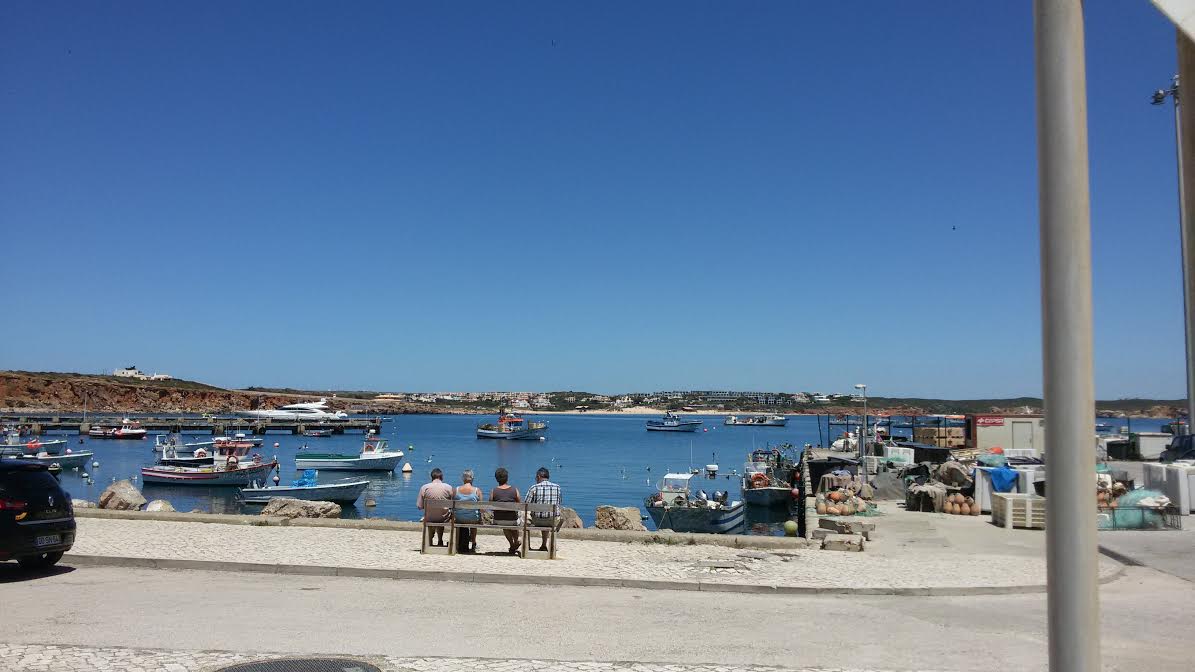
    I couldn’t resist visiting the farthest southwest town in Europe, and it far exceeded my expectations. This place is definitely magic. According to my airbnb host, it has something to do with the rocks. Whatever it is, this would have to be my top pick for a chilled out beach holiday. Go out of season; I hear the summer gets hectic.

    Stay:

    Sunshine Guest House

    I loved my stay at this laid-back oasis right at the edge of Sagres. Liz is a wonderful host, the garden is as peaceful as peaceful can be, and you could comfortably fit two people in the double room.

    Memmo Baleeira Hotel—

    If you’re going for upscale, this four-star hotel has some truly beautiful views of Sagres harbor. That’s all I can tell you about it, since I never actually stepped inside.

    Do:

    Surf—

    Watch out for the rocks at Tonel Beach, especially if you’re like me and wipe out more than you ride waves. But the water is beautiful, not as bitingly cold as farther north, and the dramatic cliffs surrounding the beaches make an unbeatable view once you make it past the break point.

    Cabo de São Vicente—

    A post shared by Toby Israel (@tobyintheworld) on

    This marks the actual farthest southwest point in all of continental Europe. It’s a slightly-hilly-but-enjoyable 6km pedal from Sagres town; if that’s not your windy cup of tea, I believe the regular local bus goes that way several times a day. Leave time to wander the paths along the cliffs

    Wander—

    The beaches. The cliffs. The harbor. The one sleepy main road that cuts through town. Time slows down here—let it.

    Eat:

    Mum’s

    This could not be more inaptly named—definitely not home cooking. A little pricey, but a good “last night of vacation” kind of treat.

    Agua Salgada—

    Casual, affordable, tasty. Fast wifi…if you’re into that kind of thing.

    Mar a Vista—

    Another beautiful view. Pricey-but-delicious food.

    Drink:

    Kiosk Perceve—

    Unassuming local cafe overlooking Mareta Beach. Nice spot for a morning coffee; I’d skip the pastries.

    Dromedario—

    Apparently where all the surfers hang out at night. I went too early. Good atmosphere. Drinks are pricey but good.


    ***Note: If I have not linked to something, that’s because you 1. can’t miss it, 2. can’t find it online, or 3. can easily Google it. Enjoy! Xx
  • Olive Oil on Everything—A Gastronomic Diary of Italy

    Sicily, 2013—where I first learned about putting olive oil on everything.
    Florence, Tuscany
    Gnocchi with fennel, mint and gorgonzola. A generous drizzle of olive oil (the frisky, green, good quality kind) on plain, unsalted bread.
    A lake near Rome somewhere
    Tiny fried fish, fresh marinated anchovies, mussels, salad with potato and octopus. Gnocchi with clams. Zucchini with mint. A drizzle of olive oil.
    Perugia, Umbria
    Hands dry from chalk after climbing. Spaghetti with shrimp, zucchini and tomatoes. Olive oil from my host’s grandmother’s home. On the pasta—and on my hands.
    It was in Italy that I learned you can truly put olive oil on everything. 

    This most recent visit was no different.
    I mean the good stuff, of course. The fresh, tangy-green and gorgeous kind. The kind with bite and soul that tastes like it came from somebody’s grandmother’s farm (it probably did).
    Here is a short list of ways I have seen olive oil used to perfection:
    • Drizzled (well, poured, really) into tomato sauce after it is cooked and off the heat.
    • Applied to dry hair, skin and lips—best directly after the shower while skin is damp.
    • On a plate with sea salt and balsamic vinegar, for dipping (soaking) bread.
    • Drizzled over pasta, salad, cut vegetables, meat, pizza—everything, I’m serious.
    • Straight from the jug—just a taste, a drop.

    Olive oil is everything. Condiment and cooking base. Start and finish. Salve for the body and soul. I suspect it could heal a broken heart, too, though I haven’t tried yet.

    In the North, butter features prominently in many recipes—but in the South, it’s always olive oil.
    And that’s really it. I mean, I could keep listing mouthwatering Italian meals. That never gets old for me… but I suspect others might have a shorter attention span.
    Olive oil. On everything. My time in Italy, in a nutshell.
    Try it. Don’t be moderate. Italian grandmothers never are. 
    Find the good stuff. Apply liberally. Buon appetito!

  • What Makes this Mountain Different from all other Mountains?

    Villa Borghese Gardens, Rome
    Valle Aurelia, Rome, Italy
    This could be any street in any city.
    Mixed-era apartment buildings. Imposing stone architecture at turns. Cobblestones and pavement following no particular logic. Crush of cars and scooters. Cafes. Hairdressers. Passerby dressed in scales of gray.
    So, what makes this different from any other street—any other city?

    ***
    As we made our way along a dry riverbed, through native South African fynbos vegetation, toward a spectacular (but, again, arguably nondescript) stretch of shoreline, my friend put to me a similar question. Not quite verbatim, it was this:

    Most mountains are pretty similar. Most cities are pretty similar. There are trees and rocks and wide sky spaces. There are streets and cafes and passerby in scales of gray. So, what makes these mountains different? If we can go hiking at home, why ever go anywhere else? And if we do go, how do we choose? 

    Why these mountains?

    The question was philosophical in nature. My friend is nearly as avid a traveler as I.
    I would like to offer three answers to these questions—one of which sounds nice, one of which I believe most strongly, and one of which I feel, irrationally, to be true.
    It doesn’t matter which is which.
    First, terroir. Terroir is a French term I fell in love with while studying the anthropology of food. Essentially, it claims that taste is deeply rooted in place—territory. The elements unique to a given locale—water, specific bacteria, culture, human traditions, soil, weather, everything—combine to create the particular circumstances in which a given food item is produced. And we can taste it. While terroir is a culinary concept, I believe it can just as easily apply to cities, landscapes and really anything else.
    Thus, these mountains are made unique by an intangible yet undeniably meaningful agregate of water, culture, air, bacteria, soil, and human idiosyncrasy. 
    Why go anywhere? Terroir.
    Second, intuition. Some part of our deepest self knows where we need to be. It doesn’t make sense, and it can’t be proven, but those who have experienced will swear that the voice of intuition is real—and that it is always right.
    So, how do we know, how do we decide where to go? Instinct.
    Or third, the difference isn’t out there at all. It’s us. The mountains are, more or less, all the same. Trees and rocks and wide sky spaces. The cities, too. We, however, change, and we can understand that change by observing its reflection in the places we visit—or rather our experiences of them.
    What makes these mountains different from all the rest? We do.
    Or, most probably, the answer is some combination of the three.
    What makes these mountains different from any others? Nothing, or precious little. Yet, they will be different, because we will change—always.
    Why go anywhere else? Terroir. 
    And if it’s all the same, how do we possibly decide on one mountain, one city, one street over another? Oh yes, intuition.
    Maybe this could be any street in any city, but it isn’t. It’s this one—the one I’m in. And it is utterly unique, both for its composition of individuals, elements and other intangibles, and for my experience of it, in this particular moment. No other street in any other moment will ever be this. I don’t know why I’m here—and not in another street, city, mountain—but I trust the voice that called me.

  • Coffee Culture, Slow Food, and Why Cape Town Has Both

    Coffee Culture, Slow Food, and Why Cape Town Has Both

    cape town coffee culture slow food

    A side alley off Buitenkant Street, Gardens, City Center, Cape Town

    The first sip is bitter, sour, almost acrid, before my palette adjusts and the taste mellows into a more complex configuration of nutty, earthy, sweet and rich.

    This is good coffee.

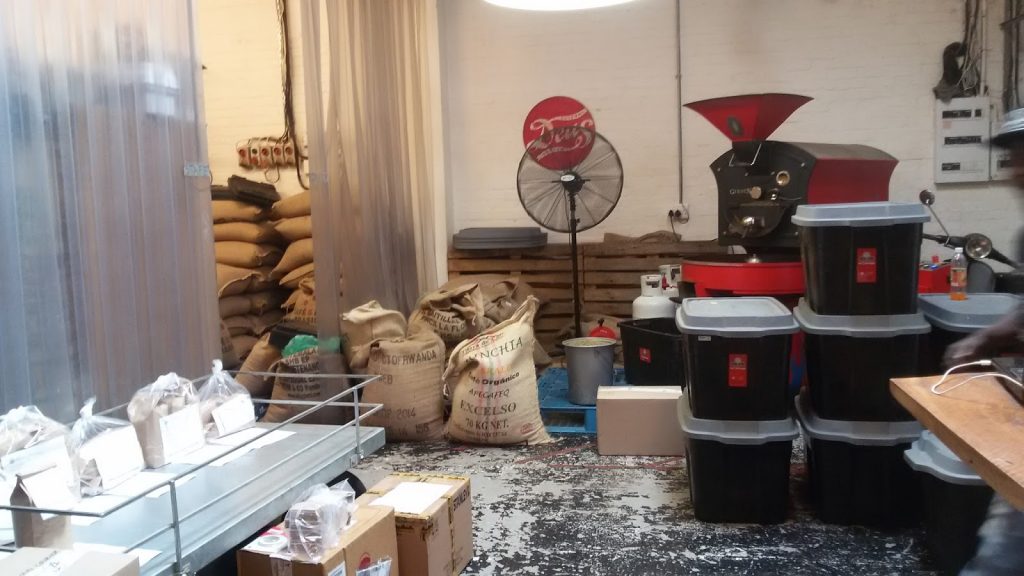
    I’m sitting at my favorite Cape Town cafe, Deluxe Coffee (also called YARD, the Dog’s Bollocks and the Bitch’s Tits), where motorcycle parts, vintage bicycles and canvas sacks of wholesale coffee beans make for original decor.

    I’ve occupied this stool at the counter for well over an hour now, and nobody cares. Par for the course.

    Cape Town has an exceptional coffee culture. (The reason I’ve consumed more coffee in the past three months than probably the last three years prior—well, that, and the fact that a cappuccino costs a bit more than a dollar.)

    What is “coffee culture”?

    Well, to answer in negatives, the U.S. does not have a coffee culture—or a cafe culture, to be more precise. A coffee culture does not “run” on coffee (like Americans run on Dunkins), but rather stops. Sits. Stays. Connects.

    And when you stop to taste your “cup of joe,” quality matters. Deluxe Coffee may be my favorite spot, but easily half a dozen others tie for second. There is a lot of good coffee in this city.

    To-go cups are more rare, too, and at least among my friends, “going for coffee” is an hour(s)-long undertaking—not a five-minute quick fix.

    Cape Town generally moves more slowly. Less rush, less stress, none of the high-powered, shiny, corporate velocity of New York, London or Hong Kong. None of the humorless, chain-brand cafes, either.

    Starbucks hasn’t made it to Cape Town, yet, but I hear it’s coming. When it gets here, I hope Cape Townians will put it out of business.

    In a cafe culture, independent roasters, brewers and purveyors of coffee thrive. Character and personality matter—or maybe that’s just me.

    And I think there’s a common denominator between coffee cultures and Slow Food. Shared values. An appreciation of quality, and a willingness to wait for it.

    Many of the cafes where I go to do work have some of the worst service I have seen anywhere in the world. Friendly, but extraordinarily slow.

    But, good food. Good coffee.

    See the connection? I do.

    I am more than a little bit enamored of the Slow Food movement—and of Cape Town’s coffee culture.

    I like the pace, the time for detail, the space for real connection. This is what a cafe should be, in my opinion.

    This is how coffee should taste. This is how life should move.

  • Snapshot: Bar Willy

    8:30a.m., Trastevere, Roma — 24 August 2015

    I begin the day with that most Italian of concoctions… il bar.

    Bar Willy sits at one corner of a busy plaza in Trastevere—at the edge of Rome.

    Its staff are a typically diverse mix, representing Asia, Africa and “the Continent” too. (Rome is a massive epicenter for immigrants to the country.) They joke about regional linguistic variations, for which Italy is famous.

    At 8:30 on a Sunday, the bar (anywhere else it would be a “cafe”) is buzzing with activity. The tables outside, however, are mostly empty, for—in typical Italian fashion—most of the patrons prefer to take their morning coffee and cornetto (croissants, but, sorry, not as good) standing up.

    And so the bar pulses with the ins and outs of customers on their way to the Sunday market just outside.

    They order a caffe’ (espresso), cappuccino or latte macchiato (hot milk with a touch of coffee), and the sounds of their orders rebound from barista to cashier to my ears and back. The clatter of tiny spoons on plate, plate on bar, cup on plate; the rustle of pastry on napkin and hands on newspaper; the din of shouts, greetings and laughter—all combines to a decibel of energy to which I am unaccustomed so early in the morning, but which, for some strange reason, pleases me.

    It is good-natured—all of it. It is pleasant, honest cheer—a thing the Italians (I find) do better than any others. It is the thing that pulls me back to this country again and again. It is the lushness of fresh pressed olive oil on green figs (speaking of which, the food I’m eating will have to wait for another day…).

    It is magnetic, for me—and clearly I’m not the only one.

    ***
  • Kenya V United States (A Fun Chart)

    This blip of time back in the U.S. has offered me some perspective on both Kenya and my home country, and a chance to reflect on how the two compare. So I had myself some fun and made this chart.

    Granted, some of these are generalizations based only on my own experiences; nonetheless, I think the following juxtaposition could be both entertaining and illuminating. Enjoy!

    ***

    Kenya
    United States
    Airport employees mostly smile.
    The women working security at the Mombasa International Airport are delighted at my attempts to speak Ki-Swahili, try to convince me to find a Kenyan husband, and totally crack up when I joke that I already have seven and I don’t want any more.
    Airport employees rarely smile.
    I try to make a joke with the woman directing the passport control line about the man who seems to be trying to cut in front of me. The look she gives me is closer to shock than anything else.
    Pedestrians are responsible for themselves.
    Crossing the street is on you. Try not to get hit.
    Pedestrians are the drivers’ responsibility.
    There are crosswalks. Cars stop at them.
    Metonyms.
    Salad could be anything made from vegetables, be it mango salsa or tomatoes and onion… or mixed greens!
    Divisions (or the corresponding linguistic term).
    Caeser salad; cobb salad; garden salad; waldorf salad… you get the point. So many kinds of salad out there, and we will name them all!
    Mpesa.
    People have been using digital currency for a while. Not a big deal.
    Apple Pay.
    You can pay for things with your iPhone now. It’s a big deal.
    Music.
    All the time. Everywhere. Buses blast awesome music (sometimes too loudly), as do shops, restaurants and motorcycles. Usually I like it.
    Music.
    The usual suspects (restaurants, bars, retail) play the usual tunes, and then yoga classes, of all places, blast terrible hip hop. I don’t like it.
    Corruption.
    Police take people’s money and call it Christmas. (As in, “So, what did you get me for Christmas?”)
    Corruption.
    Police take people’s money and call it the law.

    (See the excellent John Oliver clip below.)

    Cats…
    Are nuisances so problematic in Lamu that they were loaded onto boats and shipped to a remote island (Kiwayu), where they continue to be nuisances.
    Cats…
    Are beloved pets.
     Obama:

    Love him (from what I can tell). I even bought playing cards with Obama’s face on them a couple weeks ago.
     Obama:

    Apparently at least 50% of citizens do not love him. And I’ve never seen Obama cards, though they might exist here too.
     Local food is the norm.
    The main fruit and veg market in Kilifi features whatever is grown (which is a lot!). Imported foods are exorbitantly marked up.
     Local food is a trend.

    I hope it’s a trend that will stick, but the supermarkets I’ve seen still stock masses of produce from around the country and the world.

    ***

    And there you have it! Kenya V United States… Not so different? Not so similar? Maybe a venn diagram would have been better..
    .

    Youtube video


  • Just a Little Bit of Culture Shock

    Piles of fruit in Malindi, Kenya.
    ***

    I’ve always scoffed at the concept of culture shock.

    I go somewhere; there I am. Okay. I go back to the U.S. There I am. Great.

    Depending on where you go, toilets smell worse or better. Water is more or less potable. People stare openly, or pretend not to. Buses leave on time, or they don’t. I could go on and on. Yes, everywhere is different–sometimes exceptionally so. Still, I maintain: What’s the big deal?

    We may be creatures of habit, but we’re also highly adaptable. This is, in my opinion, one of humankind’s greatest assets.

    Meetings and discussions to prepare for “reentry” (offered by any self-respecting study abroad program) struck me as mildly ridiculous. “You might be overwhelmed at the supermarket… blah, blah blah…”

    How could anything top the embodied chaos that are foreign marketplaces? Food shopping in Kilifi replaces my exercise for the day as I lug bags of fresh produce through narrow, narrow lanes between food stalls. Attempting to haggle in my limited (though growing) Swahili, I am rewarded by an incomprehensible verbal assault from the usually serene, matronly mango vendor. Dust and flies and sweat hold court in a small room filled with giant sacks of grain.

    Shopping, much to my delight, is an adventure in other parts of the world. And I’m supposed to be overwhelmed by an American supermarket?

    Street food in Shanghai.

    Now. Here I am in Southfield, Michigan to visit my grandmother. (Sorry to everyone everywhere else in the U.S., I’m here for four days and then I’m flying back to Kenya. I’ll catch you next time.) I arrived yesterday to the shoddy basement International Arrivals hall of Detroit Metropolitan Wayne County Airport. I used a payphone to call my Uncle (When’s the last time I used a payphone?!) and, as has become our routine, we stopped at Plum Market to buy groceries on the way to my grandmother’s house, her fridge being very full of a very limited variety of foods.

    Now. I will happily eat my own words if you would be so kind as to serve them to me, because I was, indeed, overwhelmed.

    I thought I could get pretty much anything at Nakumatt or Tuskys–two Kenyan supermarkets boasting aisles of imported foods.

    Market in Barcelona.

    I was wrong.

    This supermarket truly had everything

    An entire aisle devoted to bottled juices, smoothies, kombucha and specialty water of dubious benefits.

    Floor-to-ceiling (almost ceiling, anways) choices of canned beans and bagged chips.

    Another whole aisle of cheese. Cheese! I missed cheese much more than I realized. As I stood frozen before the bright display of savory abundance, a man came over to ask if I needed help finding anything. I replied that I was simply overwhelmed by choice.

    He smiled knowingly, but he didn’t know.

    Produce three times larger than what I am now accustomed to teetered at eye level. Onions bigger than baseballs and elephant garlic of the same proportions. Fat eggplant and butternut squash, and apples to feed giants. And these were, supposedly, the organically grown foods!

    How many brands of pasta could there be in one place? I grabbed the first pack in sight, worried that if I stopped to examine my options I would be standing there for an hour.

    And let me not start about prices, because when you live someplace where just about everything seems to cost fifty cents or less, a dollar for a lime is obscene.

    One-stop (one-person?) shopping in Nepal.

    I love to go food shopping. I love to take my time selecting produce and comparing options. I love to wander through piles of promises–ingredients waiting to become meals–anywhere I go.

    But yesterday, for the first time, I understood how a simple supermarket could be overwhelming–the lights too bright; the prices too high; the air too cool; the clientele too calm; the selection too bewilderingly massive.

    I rushed through my list, knowing that if I took the time I wanted to look at everything I would be there until nightfall. Such an overabundance of everything! I was–almost, but not really–in shock.

    I still feel culture shock is too strong to describe my experience. Shock is a sudden death or a push from behind. Shock leaves you paralyzed… I’m still functioning, breathing and standing on two feet. I’m just a few hairs shy of indifferent.

    How about “culture pinch,” that slight twinge of strangeness we experience when we show up someplace new, or return somewhere that used to be familiar but now doesn’t quite fit. Or “culture” bewilderment,” when we’re just kind of confused, but dealing with it all the same. Or, better yet, “culture wonder,” when everything inspires a mild form of awe with few symptoms beyond wide eyes.

    (Any other “culture shock” alternatives to offer? I’m all ears!)

    I’m starting to think that all of those lectures on culture shock and “reentry” shock weren’t wrong; they were just exaggerated and alarmist. So extreme were the warnings that I could never take them seriously. This isn’t an illness we need to carefully monitor and shield against. It’s not a disease that will lay us up in bed for months. But it’s not entirely delusional, either.

    I suspect that we (I) could learn a lot about ourselves (myself) by paying attention to when we feel uncomfortable, overwhelmed or bewildered, and why.

    Food for thought.

    Vermont summer blueberries. Now there’s another thing I miss.

    More importantly though, cheese! So much cheese.

    ***
  • Embracing Syncretism

    When I first encountered the concept of cultural immersion, it sounded something like this:

    To understand—to truly understand—another place and people, you must eat, sleep, dress, breathe and speak like the locals.

    The Anthropological principle of “participant observation” essentially takes the same tact.
    And it’s simple, right? Not easy, but simple:

    When in Nepal, eat dal bhat, sleep on wooden pallets topped by thin thin cushions, wear salwar kameez, learn Nepali—or, in my case, attempt to learn Tibetan—take the bus and wear a mask against air pollution. When in Italy, eat pasta with bread to fare la scarpetta, speak Italian, ride scooters and dress… however it is Italian women dress. When in Kenya… need I go on?

    Except, no. It’s not that simple.
    First of all, unless you’re a linguistic genius, you can’t possibly learn all of the languages, and if you want to travel to many places, your communication skills will suffer in the balance. More than two months in Kenya, and I have yet to muster the energy to tackle Ki-Swahili. (I will though… I will.)
    And then, what is “Italian” in the patchwork of dialects that is Italy? In Nepal, a country of at least fifteen distinct ethnic/cultural/linguistic groups, what language should you learn?
    What is “traditional dress” when every other “modern Indian woman” opts for blue jeans?
    What is local food? Sure, staff meal might be rice and beans, but those who can afford it sup on steak frites or pasta marinara. Valid or non-valid dimension of a “local” experience?
    The answer, of course, is valid. It’s all valid. Local ≠ traditional ≠ authentic. We attach far too many judgments of value, ignorant assumptions and foreign stereotypes to these words (as I have, doubtless, asserted many, many times already…).
    Local, at this moment in Kilifi, Kenya, means teaching yoga and tango at a four-day milonga event. The absolute last thing I expected to find here, and I could not be more pleased.
    At this moment, local means dancing five hours a day and creating lesson plans with my new Italian dance partner, so that we can teach foreigners and Kenyans alike about connecting to their bodies and one another through Tango.
    Local means ordering grilled cheese and butternut squash soup for lunch because it’s f*cking delicious and I have no desire to eat rice and stew every day.

    I no longer wish to limit my experience to what is appropriately immersive. Not, I hope, at the expense of learning (I really need to get it together and study Ki-Swahili), but in the interest of embracing reality in all its syncretic, contradictory beauty.
    ***
  • Shanghai Snippets

    In Shanghai, everything is new. Or it wants to be new. Or it will be new just as soon as the old is knocked down and rebuilt. Retirees participate in state-sponsored activities in the park: old men manipulate Chinese yo-yo’s with surprising prowess, women join enthusiastically in chaotic dance fitness classes, and a single lane fills with the discordant cacophony of 20 different sound systems. I like it. More than I had expected. I take a stupid number of pictures of funny signs and storefronts, animal parts that no one wants to see, and gates and doors. My aunts take charge of photographing the family, and other things people will want to look at. Nonetheless, I want to share a few of those photos I took. These are the snippets and bits that caught my eye. I hope you will enjoy…
    Dancing in the park with maracas, what else?

    Fish heads– for sale or to discard? I’m not certain.

    Fresh pomegranate juice just outside the metro station.

    The Bund at night.

    Street food (pre cooking). For all of the street food fun, check out
    http://twohungryvagabonds.com/2014/10/25/cheap-eats-in-shanghai/

    “Open Lock. Make Key. Fix Lock.”
    An apt description of services offered.

    “Alley Curd,” purveyor of (the apparently
    very trendy) juice served in IV drips.
    Gates and doors.

     ~
  • Waiting For The Invisible, Part III

    I think I could write about autumn forever. Something about this turning of the season insists on words. I would like to complete the series I began at the start of the summer, ‘Waiting for the Invisible’ (though who knows, there may be more to come), on the process of planting and growing and mostly waiting…

    The invisible has made itself known in a brilliant display of flowering trees, fruit-bearing plants, and a startling array of greens. Now, so soon, it begins again to slip beneath the Earth’s surface. Exuberant vines shrink and fade to brown; trees begin to shake themselves free of their leaves, laying a blanket down upon their roots; and the flowers drop their petals and turn inward, arming themselves against the coming cold.
    Though we still have hot, Indian Summer days like today, which bewilder us with the promise of a winter-less year, the brisk nights and turning leaves belie the charade. Autumn lurks in the corners, and at her heels, Winter.
    As the summer picked up, gardening mostly lost out to other, more insistent commitments in my week. The weeding got away from me, until I could no longer where the paths had once lain. My cucumbers foundered in poor soil, and the squash—I forgot to check the squash, so I don’t know…
    You could say I forgot to wait for the invisible to fully unveil, and like an unwatched pot, summer came to a boil while my back was turned, my attention elsewhere.
    Soon, a crackling carpet of brown will cover the evidence. The lively communities that kept me company these past months will settle once more to a nearly inaudible hum underground. The creature who rummages each night in the compost pile will go into hibernation (or maybe not… I can’t be sure since I don’t know what he is, or if his kind hibernates!).
    The invisible, irrepressible clamor of life and green and growth will have come and gone, and I don’t know that I will be any the wiser for the waiting.

    But I will remember its exuberance. I will know, next time, that whether I wait and watch or not, heeded or not, the invisible will wake and unfurl and rise again.
    ~
  • A Picnic Revolution

    I’m starting a picnic revolution! Here’s how it came about:

    Yesterday, my friends invited me to an outdoor concert at Lincoln Peak Vineyard (about 3 miles north of Middlebury, VT). After a busy day at work, this seemed like the perfect way to spend my evening.

    Sunlight dripped like honey into the Adirondacks on the horizon, and its warmth melted away the constant action of the past few days of work. Vibrations lifted from violin strings. Blades of grass sprouted between my toes while Bluegrass music washed over my nose. For the first time in some days, I felt totally at peace. (I’m realizing that I need to step back from work, ‘other work’ and other ‘other work’ far more often.)

    Due to my new-found engagement with social media, I snapped photos of my friends, lively grape vines, and, of course, our new picnic innovation and the subject of this post…

    Naturally, Lincoln Peak Vineyard offers glasses of wine for sale during their outdoor summer concerts. Now, my parents, and probably many others, own special wine stakes meant to hold your wineglass in place while you use your hands for other things, like eating your beautiful picnic food. These stakes are somewhat unruly, however, and regardless, I don’t have any.

    Feet, I discovered yesterday evening, are equally, if not more, effective, and you never run the risk of leaving them at home! How had it taken me so long to stumble upon such a simple solution? In no time, all four of us were holding our glasses up with our toes while we feasted on tomato basil and feta salad, millet bread muffins, chicken, cherries, and chocolate.

    I suggested that this idea could revolutionize picnics, and I was only sort of kidding. Rise up with me against the tyranny of wineglasses over our picnic fun! Join my picnic revolution and take back your two-handed freedom! But seriously, give this a try and you may never picnic the same way again!

    ~

  • Waiting for the Invisible

    I expect this garden will teach me many things this summer. Though garden is perhaps too tame a word to describe it– too civilized. No tidy rows or neat squares here. On all sides of my house the land extends outward and upward in near vertical lines, and the eye loses track of the boundaries between the cultivated and the wild. Pockets of arable soil dot the landscape, reclaimed from the hill by sheer determination. Vines tangle with maples and violets fraternize with garlic chives and clover. Beans that were planted in one patch willfully assert themselves in the neighboring one– “volunteers,” as my friend Rae calls them.

    Nine days now have passed since I planted what remained of these plots. (The owner had already planted beans and peas, chives and thyme some weeks prior.) I contributed squash and zucchini, cucumbers and collard greens, turnips, parsley and arugula. Nine days later and I begin to lose patience. Where are they?

    The herbs and tomatoes I bought as starters stand strong in their pots by the driveway. Turnip shoots emerge from the earth in droves; the zucchini begin to display a few shy leaves; and the rest… the rest remain hidden, continuing along a mysterious, underground journey that I can only guess at. Well, thanks to high school Biology I can do more than guess, but even so, where are all the rest? I ask, exasperated. I don’t even like turnips!

    Calm down, I remind myself. Breath. In and out. These are seeds, not magic beans, and they don’t in fact grow overnight. When I ‘woofed’ (worked on an organic farm) in Sicily, I arrived in June, at the start of a lengthy harvest season. Zucchini already a foot long and figs falling off the trees. There was no waiting; I enjoyed an instant gratification of food production matched only by… supermarkets. And fairy tales.

    But in the real world of dirt and seeds and seasons and cycles, there is a germination period: 4-12 days for cucumbers, 7-14 for squash. That’s a lot of days. Nine days in, and I have to remind myself to have patience; to quiet the pessimistic, doubtful voice in my head whispering, they’re never coming.

    Where are those darn plants? They’re coming. Are we there yet? No, but we’re on our way.

  • Existential Apple Juice

    A section from my soon-to-be-turned-in research paper. A little slice of life in Kagbeni and some more thoughts on authenticity.  Next post will be on a new theme, I promise.


                In academic discourse on tourism and authenticity, we often mistakenly assume that either tourists or local peoples can authoritatively define what is authentic.  In reality, authenticity, of experience as much as objects, is a transient and ever-changing concept, different for everyone.  True authenticity depends on one’s state of mind and openness to experience.  It can be contained in a single apple, a single moment, or a single-minded willingness to engage authentically.
                Less than a week into my stay at the Red House Lodge, I already had a Nepali name (Kalpana), a host of familiar faces in town, and essentially a Nepali family.  One morning, upon returning “home” from a walk, Tenzin’s daughter and employees called to me from the picnic table on the flat roof where they were shredding apples to make juice.  Kalpana! Bosnus, Kalpana.” They made space for me and I sat down on the edge of the table, trying to avoid the sticky bits of apple scattered about.  I insisted on helping, as by then they must have expected, picking up a hand-held metal grater (the kind I had only used to grate cheese), and joined my effort to theirs. 
    For more than an hour we worked in semi-silence, speaking to ask for more apples (apple, dinnus) or pass a bowl of browning mush to Ammis, who would squeeze it in handfuls to separate liquid from solid.  The only other sounds came from the rasping of small, green apples against metal, the occasional cry of hawks circling the crumbling medieval fort across the alley, and the drip drip drip of fresh-squeezed apple juice trickling into a plastic bucket.  It being an unusually still morning, the prayer flags adorning nearly every rooftop remained quiet and the strong Mustangi sun heated the air.  I changed into a T-shirt, the first and last time that my arms would see the sun in Mustang.  We paused sometimes to sample from the abundance of produce spilling from the deep wicker basket next to us, punctuating the music of shredding apples with the crunch of teeth on fruit.
    Apples of every variety grow well in the region around Kagbeni.  Marpha (elevation 2670 meters), a four hour walk south of Kagbeni, boasts the moniker “apple capital of Mustang,” but I preferred the tart crispness of the apples heaped around the picnic table that morning, harvested from Tenzin’s orchard in Pangling, just across the Kali Gandaki River less than an hour from the Red House Lodge.  Though the climate and altitude of Lower Mustang are ideal for the cultivation of apples, it is only in the last few decades that an apple economy has developed there.  Landowners have converted much of their farmland or unused property into orchards, and nearly every restaurant and guest house carries out its own small-scale apple juice-, cider-, and brandy-making operations.  Small bags of dried apples and bottles of apple brandy satisfy the demand of Nepali and foreign tourists alike for edible souvenirs.
    My skin warm and my hands coated with sticky brown apple remains, I smiled contentedly at the easy companionship of that moment, which transcended linguistic and cultural barriers.  Shoulder-to-shoulder with my Nepali didi (sister), I grated apple after apple, as quickly and as diligently as the rest, working towards the simple common goal of juice.  Moments like these cannot be manufactured, I remember thinking.  In their beauty, simplicity and spontaneity, such instances of connection and, yes, authenticity, are precious in their inimitability.  Isn’t that the conundrum of the tourism industry, which makes its millions by selling “real” experiences. 
    Some research on tourism today is employing the Heideggerian concept of existential authenticity to solve that riddle.  According to Heidegger’s philosophy, inherent meaning and connection exist, and it is these qualities that make experience possible.  In terms of tourism, when one approaches the world with “existential authenticity […], a state of Being in which one is true to oneself,” a unique experience of the world, understood from an individual perspective, becomes possible, and the tourist may experience that inherent meaning.  In these terms, authenticity is not a fixed, objective quality, but rather a state of mind, rendering it nearly impossible to package and market.  Taking the Maori’s staged cultural demonstrations as an example (which emerged as a response to non-Maoris producing cultural shows for tourists), “staging pseudo-events for tourists can, in fact, be expressions of host authenticity in deciding how to present themselves to others.”[1]  Whether a tourist witnessing this show finds it authentic is not the question here; the tourist who is attuned to his or her “existential self” will experience it authentically regardless.
    At six o’clock, the night before apple juice-making day, I ate dinner with the group of Ukranian trekkers in the rooftop dining room.  Candlelight cast faces and food into a dynamic interplay of shadow and warm glow, and we lingered over glasses of Tenzin’s mother’s homemade cider.  My dinner companions struck me at first as naïve and impressionable— every monastery, every person they met, and every interaction with local people awed or inspired them, it seemed.  They attempted to quiz their Nepali guide about himself through several layers of translation (from Russian to English to Nepali and back), saying, “we have been in Nepal trekking two weeks, but we don’t know any real Nepalis.”  Predictably, the attempt at conversation faltered, yet the more I reflect on this group of trekkers, the more I appreciate their unusual and sustained efforts at making connections.  Revisiting that evening through a Heideggerian lens, I wonder if their willingness to engage with everyone and everything they encountered and the sincerity of their desire to experience Nepal, uninformed and naïve though it may have been, might not have resulted in a truly authentic experience.
    The philosophy behind existential authenticity may appear hopelessly complex, but its implications for tourism study and marketing are straightforward yet rich in possibility.  If we admit that there is no objective authentic culture, that neither outsiders nor locals can make such a judgment, and we focus instead on individual authentic experience, existing mainstays of tourism marketing may prove misguided.  The shopkeeper who insists that, “this bracelet is really Tibetan. Really” might realize that her neighbor who converses and connects with customers does more business.  The tour guide offering to show his group the “real Mustang,” and its most meaningful cultural treasures, might lose out to the one who allows visitors to determine for themselves what is meaningful and seek for themselves authentic engagement with a foreign culture.
    Apple juice perhaps can be bottled, mass-marketed, and sold at a profit (though I believe it tastes best in small batches), but the existential authenticity contained in a moment of shredding apples at a warm picnic table cannot.  Experiences like those are invaluable, fleeting and individual; at best, a guide or tour might provide support for those tourists who wish to attain them.


    [1]Steiner, Carol J. and Reisinger, Yvette. “Understanding Existential Authenticity.” Annals of Tourism Research, Vol. 33, No. 2. Pp. 299-318.
  • I Drank Yak Blood


     I drank yak blood. Really. Yesterday, after eight years of not eating red meat. The flavor had a quality surprisingly similar to raw milk, a bit salty and, of course, metallic.  It was still warm. I won’t go into details about the chewy bit that I couldn’t finish. 
    I stood at the top of a stone wall with two other Americans and a small crowd of children to watch the slaughter of three yaks from above.  The kids, none older than eight or nine, passed around fruit candies, shouted at us in shrill voices (the general belief being that if they spoke louder we would understand) and clambered onto rooftops and ledges to acquire prime seats for the show.  A woman sat behind us scraping creamy cheese off a flat stone, occasionally whacking me with a stick for blocking her sun.
    I had decided that watching this event, commonplace to life in Mustang but wholly absent from my prior experience, was something I should do.  The longer I sat above the courtyard, watching the men turn bodies into carcasses, their hands turning from brown to deep red, the more comfortable I became.  Maybe desensitized is a better word.  I have long rejected the part of my own nature that is programmed to hunt, kill and eat meat.  Now, as before, I have no desire to order a steak, but I found it valuable to acknowledge that side of myself, and humanity at large, in such a manner.
    When Tenzin, the owner of the Red House Lodge, beckoned to me, I made my way down the stairs on autopilot, having already committed myself several nights ago to trying yak blood.  “It will make you strong,” he had insisted, just as raksi(local alcohol), buckwheat, and nearly every other local product are said to do.  “You will try it, I think so.” And in the bravado of a moment I agreed.  I wasn’t about to back out later, and besides, what better way to go back to eating meat? 
    I passed through the doorway into the arena.  Tenzin’s mother and another woman were already at work in the corner turning intestines and other innards into sausages.  Someone handed me a mug with rivulets of brilliant red liquid running down the sides. I drank, but could not finish.  On my way down to the river to wash out the remainder, I slipped on the muddy steps and almost fell.  The men in the courtyard laughed and joked that I was drunk from the blood.  I don’t know if it was the adrenaline or the shot of nutrients, but I did feel jittery for quite some time after.
    That night before dinner, over cups of raksi, Tenzin and his friend lamented that they had not taken any pictures (sorry to disappoint) of me with blood smeared on my nose and teased me about falling down.  I felt I had proved my mettle to them and joined some secret boys’ club, at least temporarily.  There is nothing savage or bizarre about the process I witnessed.  Animals are butchered every day, everywhere; that is a part of life.  There is nothing disgusting or barbaric about the tradition I took part in; it made sense in its place, surrounded by others doing the same thing, with gusto.  Still, having proved myself to both the locals and to myself, it is unlikely I will choose to repeat the experience.  I am, however, glad that I did it.
    ~