Tag: travel

  • I Might Really Miss This Place

    A rainbow came out especially for my “picture-taking day.”

    As I prepare to leave Zanzibar (Nungwi, more specifically; East Africa, more broadly), the place that has begun to feel like home, I find myself struck by surprising waves of nostalgia…

    With one foot over the proverbial threshold, I observe this place with the forgiving nostalgia of things already past.

    Mambo poa? Poa, vipi? Poa poa. Za asubui? Salaama, na wei wei? Mzuri sana. Mzima. Mzima.

    The daily greetings—long and impossible to translate (in all honesty, I don’t know the meanings so much as the sense)—through which I finally navigate with ease after months in the region.

    For Travellers: Next door to my home, Kipangani Villa.
    The familiarity of Hafizi, the vegetable guy, Chef, the owner of “Chef’s Baking Shop,” and several other business owners and neighbors who, day by day, have slowly accepted my presence in their world—though I will never “fit in” here. To a few, I am not anonymous—more than a transient foreign face—and that means something.

    Chef’s Baking Shop (and Restaurant).

    Hafizi, the vegetable (and fruit) guy.

    My hard-won comfort—with the basics of Ki-Swahili; with the daily trials of moving through an unfamiliar cultural and physical landscape; with all the tiny frustrations that sometimes build… and sometimes fade into irrelevance.

    The neighborhood cow.

    Road to my house.

    The herds of cows on uneven dirt tracks, which I pass through on my borrowed bicycle with its one brake and working bell on my way to work; the brief but regular power outages and occasional mysterious absence of water in the taps; the proliferation of rambutan spiders, mangos and goats and the scarcity of apples, cheese pets and pavement; the trash cart hitched to a skinny cow, the call to prayer at sundown and the rocks that bite holes in my sandals.

    Nungwi Village.

    All of it—tiny details insignificant to some, inconveniences to others—to me, these minutiae are the source of my nostalgia. They are symbols, signifying that I am “there”: someplace far far older than I, but new to me. Not “here” in the familiar, alike, easy—“elsewhere,” and thriving in it.

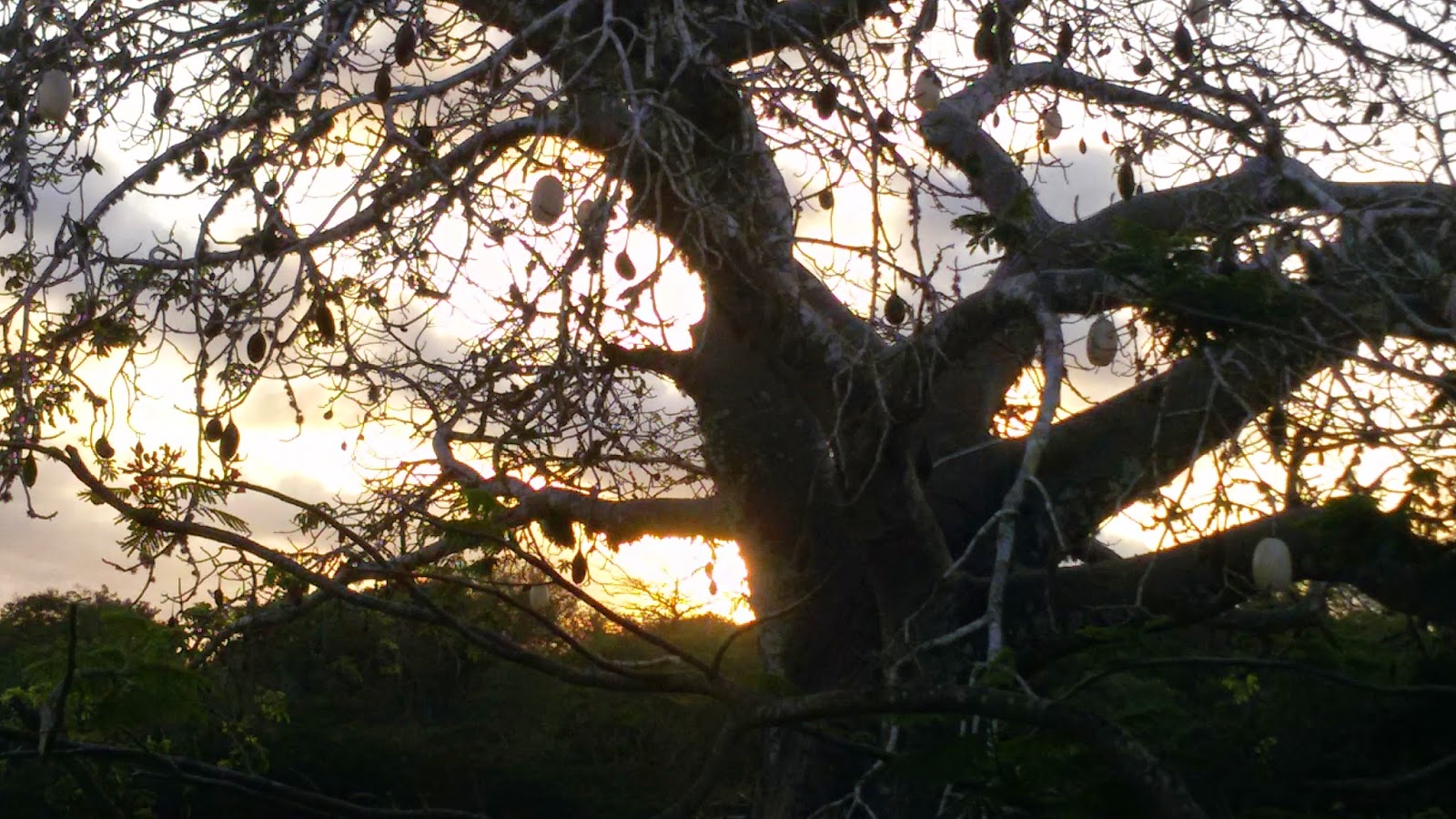
    Second-to-last sunset.

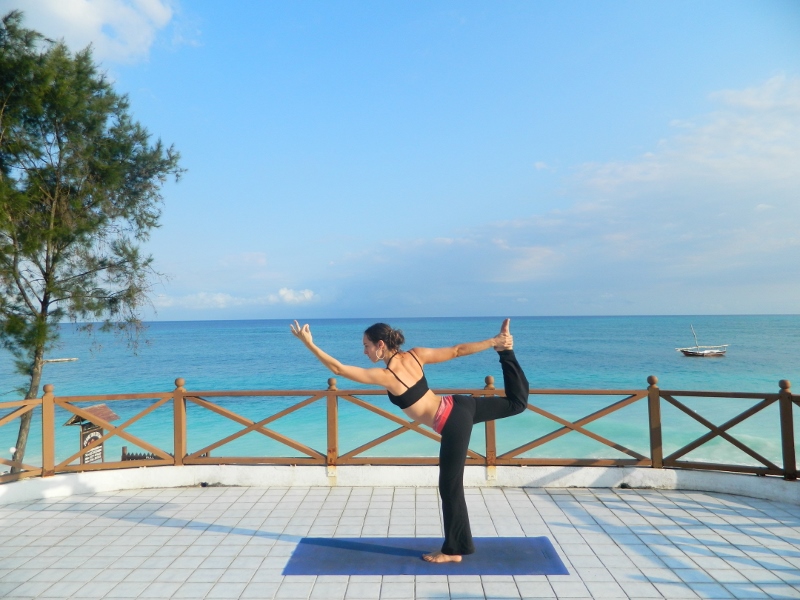
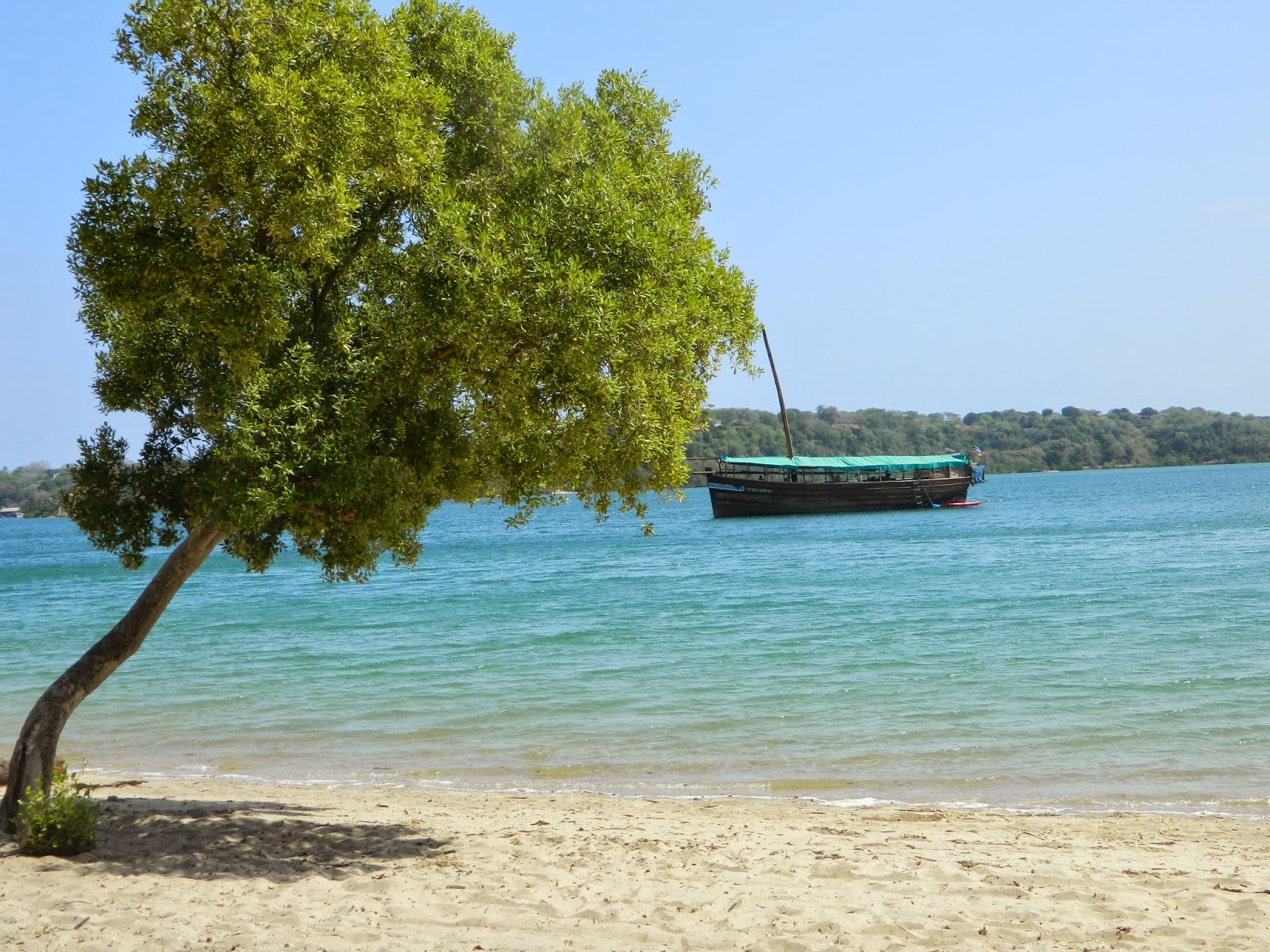
    And then there are the sunsets over the ocean, the orange-gold breeze as I teach yoga, the palm trees and the beach; the sumptuous Arabic-style décor of restaurants that charge less than MacDonald’s for a feast, the silhouette of dhow sails on the horizon—the part from guidebooks and travel adverts is also here, though far more complicated than the brochures would have you believe.

    Of course, a hundred moments of frustration, anger, discomfort, exasperation and rage punctuate that seeping, honeyed nostalgia, reminding me why I am leaving—why I am ready to go.

    Nonetheless, I think I might really miss this place.
    As I write this, I am sipping my last cappuccino at the Zanzibar Coffee House (my favorite place in Stone Town) and uploading the handful of pictures I managed to take in my last days on the island. I will go to the airport this evening and travel about 40 hours for a brief visit with my family in Vermont.

    Next stop: Sicily.

    I hover in the place of in-between’s as I figure out what is next—uncertainty looms as always in shades of vibrant expectation and somber apprehension. I am reminded, again, that home is a thing that fits in a cupboard in my mind… the trick is remembering where I left the keys.

    ***

  • The Joker

    Photo: Wikimedia Commons

    His eyebrows are raised at the center in a perpetual arc of surprise.

    A cap typical of observant Muslim men in Zanzibar perches over his round, childlike face, but he resides squarely in middle age. He wears a blue t-shirt and blue jeans, and in his arms he holds a little girl dressed in powder blue satin.

    She is not his daughter.

    Throughout the bus journey from Nungwi to Stone Town, each time a child arrives at the back of the open-air bus, the man immediately reaches down to lift it on board. Sometimes he returns it to the parent, sometimes he holds it on his lap.

    The children are unfazed, far more concerned with staring at me through kohl-rimmed eyes. He is normal; I am not.

    At one point, the man holds two children on his lap. He is a joker—comical expressions etched on his face. He loves children, he says. It becomes a joke: the women around him laugh each time he jealously pulls a child into the bus and onto his lap. No one thinks it odd, and no one at all questions his motives, as would surely happen in the U.S.

    He loves children, he says, and it is his great luck that there are so many aboard today.

    Maybe he has no family of his own. Maybe he is unable to have children. I don’t know, nor would I ask; nor could I understand the answer had I wanted to.

    Watching the man before me—the joker in the blue shirt and blue jeans, little doll baby dressed in blue satin on his lap—I can’t help but smile along with the other women.

    Photo: Wikimedia Commons

    This is one of the things I love about Zanzibar, and places like it: When it comes to minding children, everyone helps everyone. Neighbor helps neighbor; kin help kin; strangers help strangers.

    When a mother and her child approach a bus (more of an open-air, low-back truck), ten pairs of hands instantly reach to lift the child into the vehicle and hold it steady.

    You won’t see that in the U.S. or most of Europe (although, to be fair, getting on the bus in the U.S. is not quite the same ordeal). There, if a man went to hold a child he didn’t know, he would probably be screamed off the bus.

    I love the trust and community underlying the scene before me.

    That said, my appreciation is hardly romantic. This is one context… Where is that community when it comes to the “every man for himself” mentality of Nungwi businesses? I want to know. Where is that trust and support when business owners attempt to navigate the cloudy waters of the tourism industry, stepping on one another to keep from drowning? I don’t see it.

    Still, the man with the round, surprised face makes me smile today. I consider—not for the first time—that I will really miss this place.

    ***
  • Cows on the Beach (Photos)

    There is something delightful about seeing herds of cows wandering along the beach.

    Sure, when I stop to think about how much manure is probably swept up during high tide, it’s suddenly much less delightful. But still, they’re adorable and particularly photogenic, so I’ve found myself taking a (uselessly) large quantity of pictures of cows on the beach.

    Lest they be wasted, I am sharing the best ones here.

    Don’t worry—more are surely on the way. I will update this post with more cows on the beach as I see them!
    ***
  • The Invisibility Wish


    Living here, I find I cycle between feeling very comfortable and, dare I say it, assimilated (as much as such a thing is possible), and feeling totally out-of-place and exhausted with sticking out. This is a stream of consciousness on the latter:

    Sometimes, I wish I could be invisible here.

    A foreign feeling for me, who always wanted so much to stand out;
    Now here, hard as I may try, I could not hope to blend in,
    And though it is freeing at times and instructive at others,
    Sometimes, I would like to be invisible.

    Anonymity—a luxury I never appreciated—suddenly seems so very appealing:

    To spend a day where no cars screech to a stop to watch me pass, and no strangers want to talk to me simply because I am white (or foreign, or tourist, or moneyed or different… it’s all the same. And it is because I am white and foreign; I watch the women walking here, and no one wants to talk to them)…

    To spend a day anonymous; to slip under the water of hyper-conscious observation and simply watch for a change; to sit on the bus in silence—what a day that would be.

    Sometimes, when every day is a crowded audience for which I perform my life, I wouldn’t mind stepping into the shadows and only watching for a while.

    But I can’t.

    You can’t watch without being watched. You can’t be an observer without creating ripples through the world you observe. I think physics taught us that.

    You can’t be a white woman in Africa without recognizing the remnants of colonialism. (Irrelevant that at my ancestors were far removed at the time, living their lives in Eastern Europe at the time. I am still a white woman in Africa, here.) You can’t be a tourist without accepting that your money talks and it’s saying, “come talk to me.” You can’t be a foreigner without relinquishing your right to anonymity.

    Or maybe you can, but I haven’t figured out the secret. I will have to do without invisible days and unobserved observation, as I do without good cheese and potable tap water. Luckily, I have a vivid imagination—sometimes I pretend laughing cow is really a luscious Camembert, and sometimes I pretend the shouts and stares are all imaginary, and the beach is really a calm and peaceful oasis.

    It’s all perspective, anyway.

    *** 
  • “Hakuna Matata”

    Photo Credit: Flickr


    “Hakuna Matata! It means no worries…”

    I’m sure everyone can finish that sentence–especially those who, like me, grew up on The Lion King and other Disney movies.

    Except, did you know “hakuna matata” actually does mean “no worries” in Ki-Swahili? Maybe I’m the odd one out, but I didn’t!

    Hakuna, “there are no,” matata, “problems” (or worries, colloquially).

    Incidentally, Simba, our favorite main character’s name, means “lion,” Rafiki, our favorite supporting monkey, means “friend,” and Nala means “gift.” The list actually goes on and on, fatally crushing my (totally baseless) childhood assumption that Disney had made it all up. That I can recall, no credit was given. Classic.

    What I find really fascinating is the way the phrase “Hakuna Matata” has come to define tourism along the Swahili Coast in many ways.

    The following are my observations and hypotheses only, and in no way represent a comprehensive study or survey of tourism in the region. With that caveat in mind, I think we have some good old-fashioned Orientalism at play here.

    Very briefly put, “Orientalism” describes a process (first laid out by Edward Said in his 1978 book by the same name) by which Western, largely fictional accounts of an exotic, Eastern “Other” serve to reinforce existing cultural stereotypes. This “knowledge” is then internalized by those “Others” when they observe themselves through Western lenses and reflected back to Western observers as reality. The original sense of Orientalism was limited to academia and a particular corner of the globe; however, the concept can have far-reaching applications.

    When it comes to the phrase “Hakuna Matata,” Disney’s The Lion King effectively fed generations of Americans (and others) a heavily fictionalized and distorted portrait of Swahili culture without our realizing it.

    Now, in the parts of Tanzania and Kenya I have visited, it’s a catchphrase for rastas on the beach, shopkeepers, souvenirs (T-shirts, pottery, paintings, postcards, keychains, sarongs, and every form of kitsch) and tourism.

    Photo Credit: The Hunt

    It has managed to insinuate itself into the most mundane of daily interactions between tourists and locals: “Hi, how are you?” “I’m fine.” “Everything good? Hakuna Matata?” Or: “Coconut oil? Bracelet? Sister, you want something?” “No, thank you brother, I’m okay.” “Okay. Hakuna matata.”

    And even in intrusive non-interactions: “Wei (You)! Where are you going? Just walking? Very good, Hakuna Matata.” Or muttered, half-interactions: “Helloooo.” “Hi.” “Jambooo. Helooo. Hakuna Matata…”

    I don’t know what role those words played pre-Lion King and multi-million dollar tourism industry, but I doubt they were quite so widespread. Now, for the tourist world and the people that cater to it, those words are everything. I’ve started thinking of this as the “Hakuna Matata Complex,” though perhaps that’s undeserved.

    My point is, whatever the initial impetus (did tourists’ expectations start the trend? did an enterprising salesman realize the opportunity for profit? I don’t know.), Hakuna Matata has become more than a catchy phrase to print on souvenirs.

    It’s an identity and a brand. The East African coast seems to be turning into a caricature of itself—or, at least the face it presents to tourists is:

    The carefree, “no worries” attitudes of the young men who roam the beach offering boat rides, bracelets and (sometimes) romantic flings. The escapist, happy-go-lucky language covering hotel brochures and tourism websites. The one-dimensional, highly stereotypical idea of a culture that is packaged, sold and summed up in two words: Hakuna Matata.

    Most interesting are the many manners in which our favorite Swahili-turned-Disney slogan is used. Sometimes there is irony, and a look that I interpret as, “I am making a lot of money off your daft willingness to believe my culture boils down to two silly words, so I’ll follow the script.” Sometimes I read eagerness and sincerity: “Welcome to the land of Hakuna Matata. Really.” And sometimes I perceive something like resentment, which, considering the veritable flood of foreigners, would be understandable.

    Sometimes, when I’ve heard “Hakuna Matata” for the thirtieth time that day, I want to tear someone’s Hakuna Matata T-shirt to shreds. I don’t. I just file it away in the Hakuna Matata compartment in my brain and keep walking… at some point, I will open that box and sort out what I’ve collected there. (This is a first attempt.)

    I wonder: How many tourists go home thinking, “This is East Africa”?

    I don’t know.

    How many of the young men on the beach present this idea of themselves with sincerity, and genuinely identify with the Hakuna Matata Africa of brochures and T-shirts?

    I don’t know. If they do, though, then these old and tired cultural stereotypes have triumphed, and indeed a limiting caricature has been made reality.

    Or. Or maybe the joke is on us. Maybe there is more self-awareness and agency than I can observe from my position as an outsider. Maybe it’s not tourist demand driving Hakuna Matata supply, but a cheeky, ironic or simply pragmatic internal effort to determine how and by whose terms outsiders may experience Swahili culture.

    I draw no conclusions as of yet, and only offer my working theories as food for thought. If anyone has been to this region and has a different perspective to share, I would love to hear it.

    One thing is certain: It’s a wonderful phrase!

    ***
  • Nuns and Princesses

    I never knew there were so many ways of wearing a head scarf, but after more than a month in Zanzibar–people watching on dala dalas (public buses), at the beach and in Stone Town–I think I may have seen all of them.

    There is nothing birdlike about the women I see walking along the beach, jewel-bright against the stark white sand. Though their scarves flutter prettily in the wind, their arms are strong, supporting baskets on their heads, and their steps are deliberate–heavy, even.

    Some women wrap their heads in lengths of pattered fabric, leaving their faces and necks bare. Others dress in heavy black coverings that melt seamlessly into the fabric of their dresses. Some layer a heavy white and all-concealing cloth beneath a lighter outer piece.  Still others throw on a scarf as an afterthought, tossing one end over their shoulders as they usher their children outside or duck into the dukha (store) on the corner. For those particularly fashionable, and presumably wealthy, women, the scarf is a statement of personal style, wrapped asymmetrically or held with studied carelessness just below the hairline.

    Girls in their school uniforms, heads covered with long, plain pieces of white or gray fabric, walk in flocks of three to ten through the narrow stone alleys of their neighborhoods. Their rounded heads, demurely framed faces and tented apparel appear, to my mind, unmistakably reminiscent of the nuns I have seen in the streets of Rome.

    In Italy, however, those nuns are occasional (and for me, always remarkable) apparitions; whereas here, hundreds of such girls travel to and from school each day. Commonplace they may be, but something about them always strikes a chord in my imagination.

    Then there are the women who drape brightly colored, patterned scarves over hair piled high atop their heads. While sitting on the bus, I often find my attention fixed by a large, jeweled pin holding the entire construction in place for a woman beside me. Some tie a black piece of fabric over these scarves and across their faces, leaving only a narrow opening for their eyes. Tall and slender, jeweled and wrapped in silk, these women sharply remind me of the princesses of old storybooks.

    The impression is hard to shake. There is an old-world glamour made modern–to my eyes, at least. Coming from a place where head scarves are extremely rare (except for in my hardback copy of One Thousand and One Nights) I see shadows of a fabled past.

    In reality, though, I have simply entered a different paradigm–one where my uncovered head is the only anomaly, and where my limited knowledge of foreign fashions is baldly apparent.

    There is a stunning amount of diversity contained in this small, religiously homogeneous island. I hope my record of variety might serve to reveal the gaps in others’ understanding, as it has revealed mine.

    ***
  • The Tropical Beach Paradox

    Walk along Miami Beach in a string bikini, and you’ll fit right in. Opt for boy shorts, and you’ll probably feel overdressed.
    Now, do the same thing in Zanzibar, and unless you are on a truly private beach, chances are you’ll feel very uncomfortably exposed.
    That’s why many large resorts have private beaches. That, and the fact that nothing says luxury like owning your own piece of the ocean.
    Zanzibar is between 95% and 99% Muslim, depending on who you ask, and though local women express their faith in various fashions—some wearing full sleeved dresses and somber-hued veils, others donning brightly colored and fashionably tailored items, and still others wrapping vast kangas (traditional patterned fabric) around their bodies and heads—all of them do so modestly.
    Women don’t show their bodies in public, so men don’t see many bodies. Thus, as my partner once—rather rudely—pointed out, for local men, “seeing exposed skin is like porn.” Harsh, but not inaccurate.
    There’s a paradox here, because Zanzibar’s major industry is tourism.
    This industry packages Zanzibar as a remote, tropical island paradise escape and sells this vision to tourists looking for beach holidays, water sports and romantic adventures—for the most part. The people who populate the island, however, are Muslims, the female half of whom does not swim, does not frolic, lightly clad, in the surf (like the beautiful images on brochures) and seemingly finds it quite entertaining to observe the foreign antics of ever-growing hordes of visitors. (How they really feel about these foreigners, I will not presume to guess.)
    It’s a paradox because we are looking at a massive (and growing) industry built on a beach culture that never before existed and, in context, appears shocking and clumsily out-of-place.
    (A foreign woman visiting Zanzibar is left with three options. She can:
    A. Wear the swimsuits which would feel appropriate or even modest at any American or European beach and feel very uncomfortably exposed.
    B. Not swim. (Not a real option.)
    C. Find a truly deserted beach—as most of the coast is populated by fishing villages or mangrove forests, this last option is unlikely, unless she books her stay at an exclusive, gated resort.
    D. Why is there no D?)
    (It’s not as deserted as it looks.)
    This paradox is hardly unique to Zanzibar. If you follow the equatorial belt around the world, you won’t find many places where short shorts and bikinis seem appropriate. And still, as travelers seek more exotic, more remote, more different destinations, anywhere with a nice beach is liable to become “the next Thailand,” or the next “place you need to visit in the next decade.”
    Why the hurry? I think that’s a story for another day.
    Meanwhile, many of these tropical paradise escapes are rather unlikely and incongruous candidates when you really think about it. I mean, I want to comfortably lie on a beach without offending anyone’s religion, attracting large amounts of attention, arousing anyone’s fantasies of “Western Women,” or shocking anyone with different expectations of modesty… I can’t be the only one!
    Where’s the solution?

    I don’t think there is one… anyone have any better ideas?
    ***
  • Where the Tourist Things Are

    There is a road in Stone Town, Zanzibar. It is a big road, compared to most of the others, and on that road there are many big hotels.
    This road marks the edge of the most touristy part of an increasingly touristy town, cross it, and prices triple—or quadruple—loitering groups of young men disperse and much of the decay and jumbled details that lend the rest of Stown Town much of its charm is conspicuously absent.
    This is where the tourist things are.
    Not that you won’t find tourist things elsewhere. You will.
    The same painted bowls and beaded bracelets, colorful print shirts and cleverly packaged spices, are quite nearly everywhere. But not in this concentration.
    This is where the human tourist things are, too.
    Faced with so many wazungu (foreigners) in such high concentrations I find myself at a loss. Next to my quiet neighborhood interspersed with local cafes and dukas (small food shops), such foreignness is jarring.
    Yes, I know, I am a tourist thing too, and no one would let me forget it. But the groups of backpacked, sneakered oddities nonetheless throw me off. They happily pay two dollars for a mango or fifteen for a kikoi (sarong), making it all the more difficult for me to obtain fair prices. They meander in groups of five or six, shoulders bear or covered heads incongruously juxtaposed with short shorts, and no matter how I dress or walk or talk, I am just like them.
    And yet, I am comfortable where the tourist things are. No one looks at me as they would an alien invader. One of many, I do not attract the same attention I do in residential neighborhoods.
    Here, on this side of the big road, surrounded by other white faces who will never blend in, no matter what, I fit somebody’s paradigm, if not my own.
    Oh yes, I could stay where the tourist things are, surrounded by other tourist things “like” me, but I don’t want to. I will go back to my room at the edge of this quickly changing, quickly gentrifying center and cook maharagwe on a kerosene burner. I will take off the extra layers of clothing I don in a futile attempt to deflect attention. I will finish writing for the day, and I will live the life of my making, uniquely between the tourist things I don’t want and the local things I could never be.
    That is where you will find me.
    (Update: Irony of ironies, you will in fact find me ‘where the tourist things are’ beginning late May. Earl and I will be working at a boutique hotel in Michamvi, on the southeast coast of Zanzibar, for the next 6 months! More to come on this soon.)

    (Stay tuned for pictures. The rainy season does not lend itself to photography.)

  • Zanzibar! (Part II)

    View out my bedroom window in Zanzibar.

    Months ago, I wrote of Zanzibar, land of rare consonants, expecting to be there within the month.
    Things rarely happen as we expect.
    After more than four months in Kenya, we have finally continued on to Tanzania and on a whim have taken a Zanzibari apartment for the next month.
    Zanzibar of spices and Z’s. Zanzibar, epicenter of trade. Zanzibar, home for the moment.
    I think I could live in a place like this one day… for longer than a month, I mean.
    Cuisines and clothing styles from several corners of the world meet here and intertwine, as do architecture, faces and language. In one hour I might pass a Hindu temple, a Jain temple and a mosque. I could find every spice I know—and many I don’t—on one dusty market shelf. Children smile with faces as diverse as the nations who once (and still) found cause to trade here.
    Each time I step outside my door I discover a new road, a new food or a new detail.
    One moment, I look up to a shock of blue and green glass window panes. The next, I look down at a mosaic of yellow, terracotta and blue tiles.
    I might find a café or shop one day, only to wander helplessly in search of it the next, winding in circles through every lane but the one I seek. If I buy a particularly tasty samosa from a restaurant’s display case one morning, chances are their doors will be closed when I wish to buy another.
    I think I could happily live in a place like this, that delights in changing its clothes behind my back, covering one face with a veil while revealing another, opening one artfully carved door to another secret detail, only to close it when I wish to return.

    Stone Town is the trickster in city form. It keeps you guessing, turning around and tripping over your own heels, and always, always it holds another jewel in its sleeve to surprise and inspire.

    Or so it seems to me, at least.
    No place is perfect, and I will delve into other sides of Zanzibar another day, but for now let me leave you with these images of streets that disappear and reappear at will, doors that open at random, exotic fruits with no English names, and shifting veils of revelation.

    These are the images that best align with the hopes I had of a place called Zanzibar. Reality has many more facets, but the city herself lives up to her name.

    Greetings from Zanzibar—Spice Island; enigmatic destination of ancient traders and modern tourists; home for the moment.

    If nothing else, it would all be worth it simply for letting me write “Zanzibar” so many times. Of course, there is plenty else, too…

    ***
  • Sometimes We Don’t Take Pictures: Camping on the Beach and Other Undocumented Adventures

    Greetings from Tanzania!

    In the week since I returned from the U.S., I have not taken a single photograph.
    In that time, we have spent five days camping on the deserted Tiwi Beach south of Mombasa, two days exploring Mombasa—one of them very soggy–and one day on a very long bus ride to Dar Es Salaam, Tanzania.
    At low tide in Tiwi, a treacherous trail through sea urchin mines and slippery pathways of rock led to two wide, deep tidal pools, called Africa Pool and Australia Pool respectively. Africa Pool had a shape remarkably reminiscent of the African continent… Australia Pool less so.
    The pools receded into the overhanging cliffs, and in these dimly lit recesses I could float on my back staring up at a small patch of blue sky revealed by a hole in the stone ceiling. Roots and vines and glimpses of the greenery overhead trailed from the opening, and bright sun, too, at the right time of day.
    One of these caves echoed with the calls of kingfishers and the steady sound of water dripping from pockets collected at high tide. Magic. With goggles, I could explore the meter-high seaweed at the edges of the pools and try to follow the paths of schools of fish—yellow and black striped, iridescent gray with a black line along the top—and observe the forbidding stillness of sea urchins.
    The journey, though only 10 or 15 minutes from camp, felt like an enormous expedition due to the various perils along the way. The sandy beach by our tents (we had joined two friends already there) felt like home when I returned.
    As I floated in the tidal pools watching the clouds pass and the water ripple, I couldn’t help but wish I had brought my camera with me—though how I would have managed it in the pools (water well above my head in places) is beyond me. What lovely pictures I could have taken and shared with all of you.
    Mombasa, gray and narrow upon our rain-soaked arrival, looked far more appealing the following day in the sun. Old Town proffered windows into other eras: curio shops, mosques, cafes and old architecture nestled into every alleyway, a sea view always just minutes away by foot.
    Again, I left my camera at the guest house—and perhaps even had I brought it could not have taken pictures for fear of theft or unwanted attention—and found myself observing picturesque doors and street-fronts longingly. If only I could capture this fascinating swirl of urban culture and take it home with me.
    Finally, the 12-hour bus ride to Tanzania… I was probably awake for half of it. I alternately dozed and gazed out the window, watching the landscape change. As I daydreamt, the earth grew redder; the trees thicker, and the sea more distant and, finally, out of sight altogether. The women I watched on the side of the road when we stopped wore different styles of clothing—some shoulders bare, more and brighter colored fabrics, and somehow more “African” to my eyes.
    Snacks available at rest stops—offered in baskets held up to the high bus windows—shifted too. Plantain chips appeared, mishkaki (skewers of barbecued meat) became more seasoned, and exchange rates grew by a factor of 20.
    As we rocked and bounced and sped along the road to Dar Es Salaam, I felt the old, familiar feeling of excitement return to my gut. 
    New country. New city. New adventure.
    I would have loved to document this leg of our journey. The doorway to a new chapter. The doorway to Dar Es Salaam, House of Peace.
    I did not, however, photograph any of it.
    Typically, I take pictures on designated days during a long trip, opting to leave my camera at home the rest of the time. This choice results in some odd collections of photos—a hundred pictures of Angkor Wat, and none of Phnom Penh; fifty photos of Kilifi Beach, and none of Tiwi—but I prefer it to constantly watching the world through a viewfinder, which I find hugely alters my experience.
    Sometimes, I don’t take pictures. 
    Sometimes, I just travel. For a travel writer, that’s a hard choice to make. It limits how I can record and share my experiences with others. It limits how I can record my travels for myself, restricting me to journal writing, or worse, the incomplete caprice of memory.
    Still, I think most who travel reach a certain point—once or twice, or on a regular basis—where a camera becomes an unwelcome companion.
    We then can choose to bring it along anyways and bear the burden, or we can leave it behind for a day, a week or a month. We might regret the choice later on, when left with no means for capturing the most amazing view, most engaging face, most extraordinary sunset, or we might thank ourselves for creating this space to simply enjoy, imbibe, and, quite possibly, forget.
    Sometimes we don’t take pictures, and we have “nothing” to show for our journey. No evidence. No documentation. No justification.
    And you know what? It’s okay.
    It’s okay if we forget the view from an epic bus ride, the sunset on a remote island, or the face of the old woman we bought vegetables from every day for a week. It’s okay, and it’s even natural, I’d argue. We don’t have to remember every detail, carefully wrapped and preserved in slideshow form.
    I think experiences are most valuable not for the memories they bestow us, but for the subtle changes they initiate within our minds. These we cannot photograph, anyways.
    And so sometimes I don’t take pictures, and all I have to offer are these words.
    ***
  • Just a Little Bit of Culture Shock

    Piles of fruit in Malindi, Kenya.
    ***

    I’ve always scoffed at the concept of culture shock.

    I go somewhere; there I am. Okay. I go back to the U.S. There I am. Great.

    Depending on where you go, toilets smell worse or better. Water is more or less potable. People stare openly, or pretend not to. Buses leave on time, or they don’t. I could go on and on. Yes, everywhere is different–sometimes exceptionally so. Still, I maintain: What’s the big deal?

    We may be creatures of habit, but we’re also highly adaptable. This is, in my opinion, one of humankind’s greatest assets.

    Meetings and discussions to prepare for “reentry” (offered by any self-respecting study abroad program) struck me as mildly ridiculous. “You might be overwhelmed at the supermarket… blah, blah blah…”

    How could anything top the embodied chaos that are foreign marketplaces? Food shopping in Kilifi replaces my exercise for the day as I lug bags of fresh produce through narrow, narrow lanes between food stalls. Attempting to haggle in my limited (though growing) Swahili, I am rewarded by an incomprehensible verbal assault from the usually serene, matronly mango vendor. Dust and flies and sweat hold court in a small room filled with giant sacks of grain.

    Shopping, much to my delight, is an adventure in other parts of the world. And I’m supposed to be overwhelmed by an American supermarket?

    Street food in Shanghai.

    Now. Here I am in Southfield, Michigan to visit my grandmother. (Sorry to everyone everywhere else in the U.S., I’m here for four days and then I’m flying back to Kenya. I’ll catch you next time.) I arrived yesterday to the shoddy basement International Arrivals hall of Detroit Metropolitan Wayne County Airport. I used a payphone to call my Uncle (When’s the last time I used a payphone?!) and, as has become our routine, we stopped at Plum Market to buy groceries on the way to my grandmother’s house, her fridge being very full of a very limited variety of foods.

    Now. I will happily eat my own words if you would be so kind as to serve them to me, because I was, indeed, overwhelmed.

    I thought I could get pretty much anything at Nakumatt or Tuskys–two Kenyan supermarkets boasting aisles of imported foods.

    Market in Barcelona.

    I was wrong.

    This supermarket truly had everything

    An entire aisle devoted to bottled juices, smoothies, kombucha and specialty water of dubious benefits.

    Floor-to-ceiling (almost ceiling, anways) choices of canned beans and bagged chips.

    Another whole aisle of cheese. Cheese! I missed cheese much more than I realized. As I stood frozen before the bright display of savory abundance, a man came over to ask if I needed help finding anything. I replied that I was simply overwhelmed by choice.

    He smiled knowingly, but he didn’t know.

    Produce three times larger than what I am now accustomed to teetered at eye level. Onions bigger than baseballs and elephant garlic of the same proportions. Fat eggplant and butternut squash, and apples to feed giants. And these were, supposedly, the organically grown foods!

    How many brands of pasta could there be in one place? I grabbed the first pack in sight, worried that if I stopped to examine my options I would be standing there for an hour.

    And let me not start about prices, because when you live someplace where just about everything seems to cost fifty cents or less, a dollar for a lime is obscene.

    One-stop (one-person?) shopping in Nepal.

    I love to go food shopping. I love to take my time selecting produce and comparing options. I love to wander through piles of promises–ingredients waiting to become meals–anywhere I go.

    But yesterday, for the first time, I understood how a simple supermarket could be overwhelming–the lights too bright; the prices too high; the air too cool; the clientele too calm; the selection too bewilderingly massive.

    I rushed through my list, knowing that if I took the time I wanted to look at everything I would be there until nightfall. Such an overabundance of everything! I was–almost, but not really–in shock.

    I still feel culture shock is too strong to describe my experience. Shock is a sudden death or a push from behind. Shock leaves you paralyzed… I’m still functioning, breathing and standing on two feet. I’m just a few hairs shy of indifferent.

    How about “culture pinch,” that slight twinge of strangeness we experience when we show up someplace new, or return somewhere that used to be familiar but now doesn’t quite fit. Or “culture” bewilderment,” when we’re just kind of confused, but dealing with it all the same. Or, better yet, “culture wonder,” when everything inspires a mild form of awe with few symptoms beyond wide eyes.

    (Any other “culture shock” alternatives to offer? I’m all ears!)

    I’m starting to think that all of those lectures on culture shock and “reentry” shock weren’t wrong; they were just exaggerated and alarmist. So extreme were the warnings that I could never take them seriously. This isn’t an illness we need to carefully monitor and shield against. It’s not a disease that will lay us up in bed for months. But it’s not entirely delusional, either.

    I suspect that we (I) could learn a lot about ourselves (myself) by paying attention to when we feel uncomfortable, overwhelmed or bewildered, and why.

    Food for thought.

    Vermont summer blueberries. Now there’s another thing I miss.

    More importantly though, cheese! So much cheese.

    ***
  • Lamu, Kiwayu and the Danger of Playing it Safe

    For those of you who have been following recent events in Garissa, Kenya, and who were aware of the proximity of Lamu and Kiwayu Island (my location this past week) to the Somali border, you will be happy to know that I am back safe in Kilifi, several hundred kilometers away.
    As events progressed and the news of Al Shabab’s brutal attack on Garissa University broke, sitting on a bus for eight hours while following updates on Twitter, stopping at multiple police checkpoints and traveling with a police escort could have been a nerve-wracking experience, but with the company of my three travel mates and the shaky consolation that lightening rarely strikes twice, we managed to comfortably ride out the journey.
    I don’t want to write about Garissa today, though. (I’ve done that already here.) I want to share a little about the gorgeous regions in the north of Kenya devastated not just by attacks, but also by foreign travel advisories. 
    At 7:30am on Friday, March 27th, three friends and I boarded a bus bound for Lamu, a Unesco World Heritage Site on the north coast of Kenya accessible only by boat.
    Well, to be exact, we waited at the bus stop for three hours first, bags baking in the sun, and then boarded…
    ***
    Day 1: Friday
    At 3:00pm, we pull off the road and wait a couple hours more for an armed convoy to escort us and the other buses of the afternoon through the more forested area north of Garsen. The roads become increasingly rough as the buses continually race past one another for no apparent reason.
    We arrive at Mokoi Port around 7:30pm and crowd into an already packed ferry. The stars grin overhead as we move towards Lamu Island, and I trail my fingers in the dark water.
    After a quick meal of the best nyama choma (grilled kebabs) I have yet tasted in Kenya, I sleep heavily.
    Day 2: Saturday
    I rise at dawn in order to wander the alleys of Lamu before the town and the sun are fully awake. 
    Winding stone pathways tinted with just the slightest bit of tension (or perhaps desperation would be more precise) speak eloquently of Lamu’s prosperous past as a key Swahili port. The sunlight glows on the waterfront, casting in shadow the men who accumulate around boats and food stalls, hoping for better business. 
    We are the only tourists in sight so far. Gorgeous old houses filled with guest rooms stand empty.
    At 6pm, we learn that the dhow (boat) that should have carried us on to Kiwayu Island (originally at noon, then at 7pm) will not leave until the next day. We make a split-second decision to take a speed boat instead, and are spirited away in the night to an even more remote location. We hurriedly load water, produce and other supplies for 5 days and head out into open water.
    The stars are bright bright and curved around the sky like a snow globe.
    Around 9pm, we arrive at Champali (a luxury camp made available to us four grateful travelers through family connections). My room is quintessential island paradise in one room-sized package: big bed, balcony overlooking the ocean, woven mats and open windows on all sides.
    Day 3: Sunday
    I wake again at dawn in a pool of light, the soft sounds of birds and water lapping at the shore welcoming me into the day. I move slowly, from morning yoga to a brief walk away from the camp, to cooking breakfast.
    We play cards and lounge for a while, then make the fifteen-minute “trek” to the other side of the island and eight kilometers of wild, empty beach. Strewn with seaweed, backed by sand dunes and with an unobstructed view of the Indian Ocean, this beach is the definition of remote. My definition, anyways. You would never guess, to stand there, that several hundred people inhabit the island, residing largely in two villages.
    The cicadas in the trees here are terrifyingly loud at times, their buzzing so pervasive it seems to be coming from inside my own head. A noise like that could drive you crazy if you were stuck in a tree with it for long enough.
    Day 4: Monday
    This time we bring boogey boards to the other beach, and for the first time I really understand why people find this activity fun. The waves are just big enough to carry me all the way to shore when I catch them right. I stand up dripping seaweed and sand, and feel decidedly like a six-year-old mermaid version of myself.
    A walk into the village later in the afternoon reveals the hub of human activity that the exterior of the island obscures. The women are beautiful, dressed in a style that looks almost Indian to me, and the children are utterly enthralled by our appearance, trailing behind our small group as we wander a web of thatch-roofed homes and dirt paths speckled with shells—remnants of an aquatic time long past.
    As the sun begins to set we start for Champali, stopping at a beach along the way to watch the color show.
    Day 5: Tuesday
    We all wake up before dawn to race to the top of “Conical Hill,” the tallest point on the island, in time for sunrise.
    Afterwards, we visit Mike and his camp a long walk further down the beach. He, like Kenya’s tourist economy, is struggling. Since two English tourists were kidnapped in 2011, Kiwayu has hardly been a popular destination. All of Lamu region, really, has suffered.
    Gorgeous island getaways stare out at a magnificent ocean view, empty and waiting to be filled again.
    That afternoon, I return to the village and a local woman covers my left arm—from fingers to shoulder—with bold henna designs.
    Day 6: Wednesday
    I wake up slowly, recovering from the long day on Tuesday, luxuriating in the comfort of my big bed. We savor our last hours on Kiwayu, knowing that we will leave at 4am the next day.
    We sit on my balcony to watch one more sunset, the day fading from yellow to orange to dark.
    Day 7: Thursday
    Our boat is late bringing us back to Lamu. We leave at 5:30 instead of 4:30. When we sit down at La Banda, a reasonably priced restaurant overlooking the water, for breakfast, the first news on the Garissa attacks plays on a television at the back of the room.
    The bus ride back to Kilifi is as long and dusty as the first. I feel refreshed and content, though—despite the danger, despite the unrest, I feel secure…

     ***

    I describe my trip in such detail not to brag, but rather to make a point.

    I almost didn’t go.
    When Earl backed out days before our planned departure, I considered doing the same and making the trip another time. Finally though, despite increased travel advisories, Kiwayu’s proximity to Somalia, and the general tone of fear set by foreign governments, international media and even some locals, I decided to go.
    I do not believe I put myself in any serious danger, but I certainly did not “play it safe” according to the conventional wisdom of travel. As more and more tourists opt to visit Tanzania rather than Kenya (playing it safe), unemployment rates here continue to rise (48% for Kenyan youth). These are not conditions for recovery, stability or growth. There is a serious danger there.
    The region of Kenya I just returned from is among the most beautiful areas I have ever visited… the whole coast of Kenya is, in fact. Following yesterday’s events, this hardly seems the moment to encourage anyone to visit, and yet, I want to remind you that there is more here than what you see on the news. That is true everywhere—everything is more than what you hear secondhand.

    Everything you see is certainly true, but it is only one piece of a 1,000-piece puzzle.

    ***

  • Making Art

    I love when people ask me, “Are you an artist?”

    These days, it happens often as guests and staff at the Distant Relatives Ecolodge in Kilifi pass by my public work spaces: an outdoor pizza oven and a formerly-blank wall in the communal kitchen. Someone will stop, watch me work for a while, and then ask: “Are you an artist?”

    It strikes me as a particularly odd question in this context, since I am, quite obviously, making art.

    Photo Credit: Ivan Ziccardi Brogna

    And I don’t know how to answer. Only in the last year have I begun to identify as “A Writer,” and that is an occupation in which I have a lot more confidence. But artist? My grades in High School Art were middling, and I haven’t taken a class since. Maybe because of that, or maybe because I could never draw with the easy accuracy of my desk-mates, I have never thought of myself as a “Good Artist.”

    Yet there I am, very clearly and very boldly creating massive pieces of art. Are we what we do and make, then, or are we only our self-professed identities?

    Usually I answer evasively, saying, “Well, I’m creative, and I like to make things… no, not exactly, but if you give me a blank wall and free reign I will definitely paint on it…”

    Maybe I should just say yes, though.

    Look what happened when I started calling myself a writer. Nothing changed—I wrote before, and I continued to write after—but I began to identify more deeply with my work, and take more pride in it, too. My words are not merely something I produce; they are a part of me. I am a writer.

    That is a powerful shift.

    If I am what I create, and I find myself making art, then what stops me from calling myself an artist? High School? If I followed that logic, there are many things I would not be today.

    So. Here I am, making art. I am an artist. The plums and ochres and teals and terracottas I mix are a part of me—as I am a part of them. The broken glass I piece together, too—bottle green and cobalt seeping into my thoughts. I stand for hours a day with my face inches from a bursting array of hues. I spend longer meditating on color than I do meditating on my mat, and with fuller concentration to boot! I am utterly absorbed in this work.

    I am creating something that will remain here long after I have moved on. That feeling is immensely satisfying.

    So. Here I am, a writer and an artist—and a dancer, too—inking my inner world on paper and canvas, by pen and brush and keyboard and broken glass.

    …Why?

    Now that is a story for another day…

    ***
  • Kilifi in Words


    [“Kilifi in Pictures” coming soon!]

    I have been in Kilifi, Kenya now for over 3 weeks. I think some (word) snapshots are overdue…

    Kilifi lies 3.6 degrees south of the equator on the north coast of Kenya. Despite what the U.S. and other governments would have you think, most of the coast here is very safe and very calm—even though it is majority Muslim (Sarcasm. Please catch the sarcasm.)—statistically much safer than Nairobi.

    Sunrise and sunset both occur sometime around seven o’clock. I only seem to hear the call to prayer at four in the afternoon, though I know it happens five times a day. Most mornings at seven an outraged cacophony of clucking erupts from one of the bird pens; the dogs, too, rise to a frenzy at the taunting of crows.

    The roots of mangroves along Kilifi Creek are as so many riddles, twisted mysteries temporarily revealed at low tide. The crabs seem at home there in their world of slick sideways and salt-cured dark.

    The water is brine-y and calm. Everything about Kilifi, in fact, seems quieter than Diani. The dogs more mellow; the beach less windy; the locals who spend time there less aggressive. The Distant Relatives Ecolodge is a lush experiment in permaculture and sustainability. Sawdust composting toilets and resident chickens immediately show that this is not your typical backpackers.

    The fingers of my right hand sport small gashes from my daily work on a recycled glass mosaic on the outdoor pizza oven. Tired of smashing glass and working with cement, I will switch to painting an indoor mural tomorrow.

    Pineapple juice drips down my arms as I lounge on Musafir’s (a traditional Arabic/Swahili ship) unfinished deck. A volunteer sings in Italian as he empties buckets of water overboard—a twice-weekly task, as cotton fills the gaps between boards. We are far enough from shore that no flies would dream of making the journey out. The tide rises, approaching the roots of the first mangrove trees on shore.

    I come to the beach often to write, resting in the welcoming arms of one of the trees. Kilifi inspires peace and creativity, movement and poetry… that, I believe, is plenty.

    ***
  • Embracing Syncretism

    When I first encountered the concept of cultural immersion, it sounded something like this:

    To understand—to truly understand—another place and people, you must eat, sleep, dress, breathe and speak like the locals.

    The Anthropological principle of “participant observation” essentially takes the same tact.
    And it’s simple, right? Not easy, but simple:

    When in Nepal, eat dal bhat, sleep on wooden pallets topped by thin thin cushions, wear salwar kameez, learn Nepali—or, in my case, attempt to learn Tibetan—take the bus and wear a mask against air pollution. When in Italy, eat pasta with bread to fare la scarpetta, speak Italian, ride scooters and dress… however it is Italian women dress. When in Kenya… need I go on?

    Except, no. It’s not that simple.
    First of all, unless you’re a linguistic genius, you can’t possibly learn all of the languages, and if you want to travel to many places, your communication skills will suffer in the balance. More than two months in Kenya, and I have yet to muster the energy to tackle Ki-Swahili. (I will though… I will.)
    And then, what is “Italian” in the patchwork of dialects that is Italy? In Nepal, a country of at least fifteen distinct ethnic/cultural/linguistic groups, what language should you learn?
    What is “traditional dress” when every other “modern Indian woman” opts for blue jeans?
    What is local food? Sure, staff meal might be rice and beans, but those who can afford it sup on steak frites or pasta marinara. Valid or non-valid dimension of a “local” experience?
    The answer, of course, is valid. It’s all valid. Local ≠ traditional ≠ authentic. We attach far too many judgments of value, ignorant assumptions and foreign stereotypes to these words (as I have, doubtless, asserted many, many times already…).
    Local, at this moment in Kilifi, Kenya, means teaching yoga and tango at a four-day milonga event. The absolute last thing I expected to find here, and I could not be more pleased.
    At this moment, local means dancing five hours a day and creating lesson plans with my new Italian dance partner, so that we can teach foreigners and Kenyans alike about connecting to their bodies and one another through Tango.
    Local means ordering grilled cheese and butternut squash soup for lunch because it’s f*cking delicious and I have no desire to eat rice and stew every day.

    I no longer wish to limit my experience to what is appropriately immersive. Not, I hope, at the expense of learning (I really need to get it together and study Ki-Swahili), but in the interest of embracing reality in all its syncretic, contradictory beauty.
    ***