Tag: travel

  • How to Pour Tea, It’s Out of our Hands, and Other Lessons from the Moroccan Coast

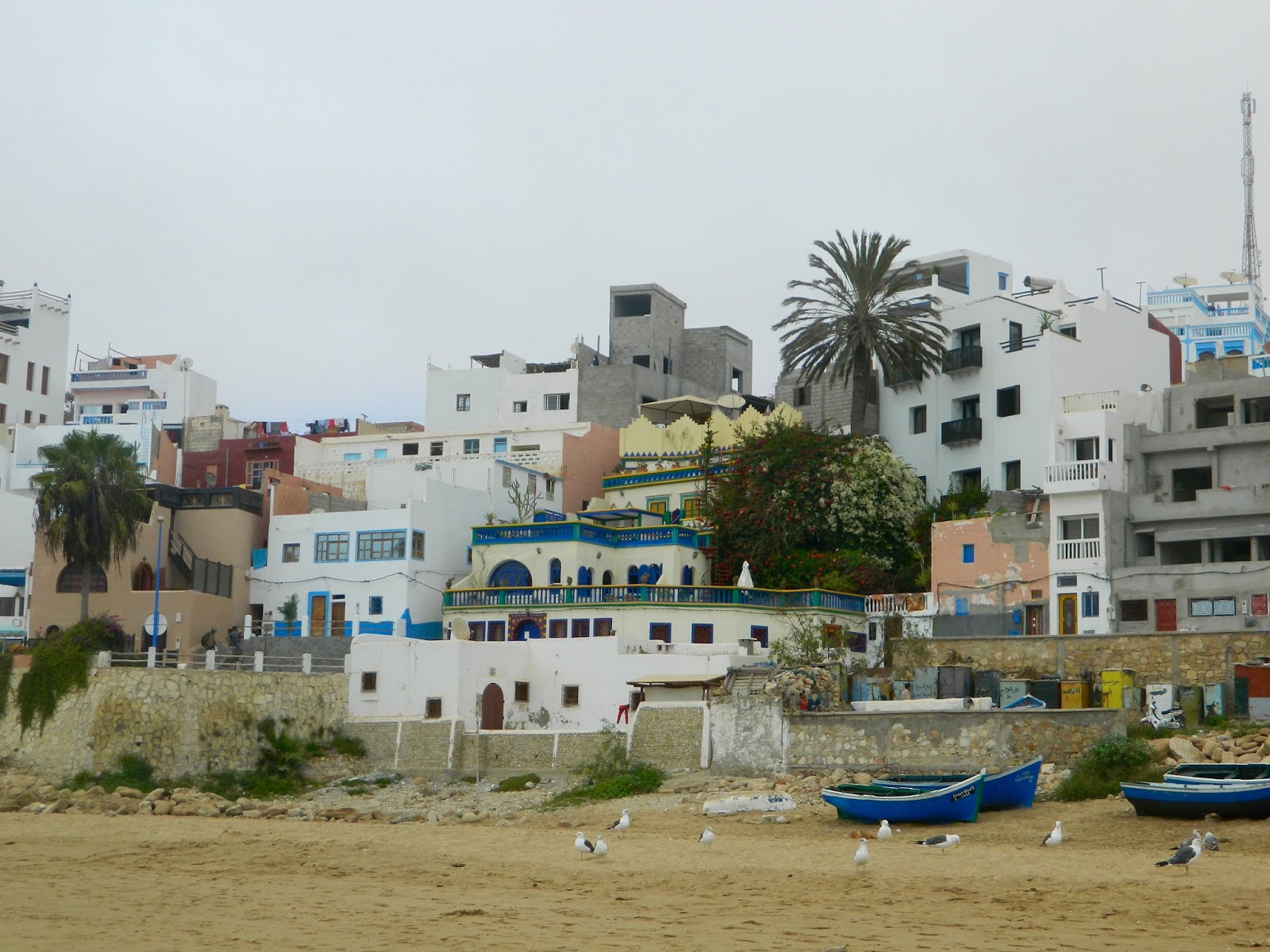
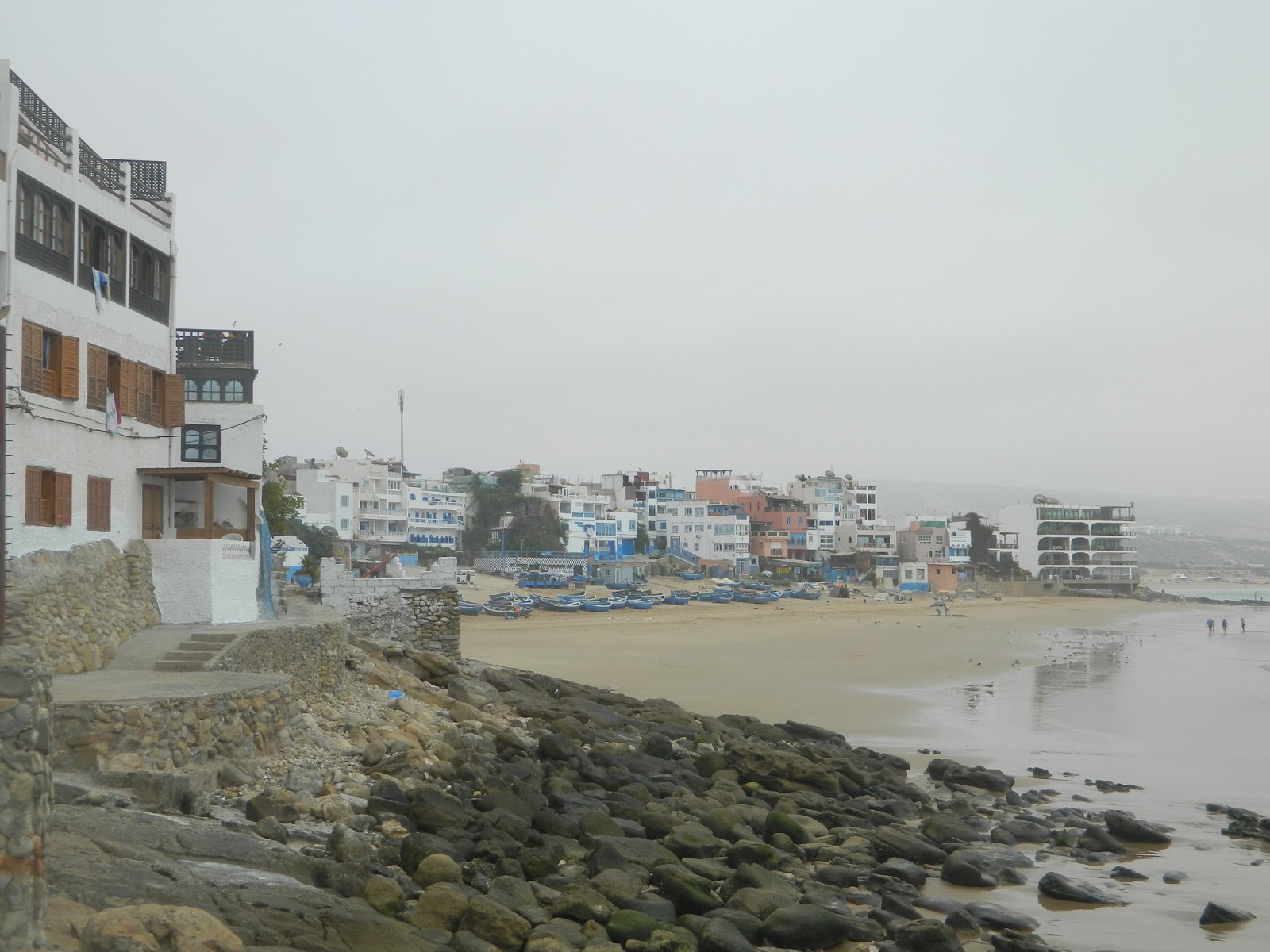
    View of Taghazout from one of my favorite cafes.

    We watch the waves crash against the cliffs beneath our table, the spray catching the sunlight over and over again.

    Our tea arrives—the classic combination of Moroccan mint and strong green that everyone drinks, but without the usual pound of sugar, per my request. A simple silver teapot with a long spout. Two small glasses (not mugs, but glasses).

    I lift the teapot and pour, starting low, then lifting higher, and higher, and a bit higher, steam rising up from the cascade of tea and a slight froth forming at the top of each glass.

    (If I wanted to mix in sugar, I would pour out glasses of tea and dump them back in the pot several times to avoid using a spoon—bad luck, I learned later. But I don’t, so I only pour once.)

    I can’t remember where I first learned to pour tea—properly. I think it was in a Senegalese village when I was 16. Everyone laughed at my first attempts, of course. Even today I spill more than any veteran tea pourer ever would. But I know the technique, and I can make a few bubbles.

    It’s a small thing, arguably, pouring tea well, and yet drinking tea proves such a fundamental aspect of so many cultures that I think it’s important, too. Worth learning. Worth sharing.

    ***

    Let’s drink tea together tomorrow!

    Inshallah.

    You should open a cafe there—you would get so much business!

    It’s a good idea. Inshallah.

    Are you moving this week?Inshallah.

    When does the high season start?

    Things will get busy next week—inshallah.

    Inshallah (also written insha’Allah). If God wills it. God willing. Used throughout the Arabic-speaking and Muslim world—and often. At times my plan-making mind gets irritated by the ceaseless string of Inshallahs spoken and exchanged each day.

    Is nothing certain?

    Well, no, it’s not—is it? To visitors from outside cultures, I think this nonstop Inshallah business can seem like a cop out. Noncommittal. But I suspect (I don’t know nearly enough to say for certain) that it stems more from a different perspective.

    Everything—everything—is out of our hands. Maybe. It’s probably a good brain exercise to consider the possibility, even if you disagree. Living here, then, is like a daily mind workout.

    ***

    Every day I learn here.

    I learned that until the 1950s there was a small Jewish settlement alongside the Berber ones in the mountains behind Taghazout. I visited a new friend’s home in those mountains, and I could feel the history in the ground under my feet.

    I learned that Friday is couscous day and that soup is a summer food.

    I learned that no length of fabric will cover my foreignness here—no matter how Mediterranean I like to think I look.

    I’ve learned that if you sit long enough in one spot it is really possible to see every person you know in this town, and that if you start walking you can spend a whole day just stopping in for chats with old and new friends.

    I’ve learned how to roll under a wave with my surfboard, and that lip sunburn is real.

    I’ve learned to count to ten (though I’ve forgotten at the moment), and how to greet.

    There’s no other message today. There are lessons everywhere, every day and in every culture; I hope you’ll go find some!

    ***

  • Taghazout, Morocco: 10 First Impressions in 10 lines

    First impressions aren’t everything, but they are something. After nine days in the small town of Taghazout, Morocco, I’d like to offer a (first) glimpse into my experience.

    When people greet, they touch their their heart after shaking hands. For some reason, it reminds me of my brother. I like it.
    The air is cool—cold even—after dark. Fog rolls in at dusk and wraps up the boys playing soccer on the beach, the tourists strolling to dinner, the shouts and drumbeats floating in the air.
    Blue tiles everywhere—in bits of mosaic, in staircases. Blue paint, too—on houses, on boats laid out in dozens on the shore.
    A population explosion of cats and dogs. The dogs follow me on my morning run, a pack at my heels—I just hope I’m the alpha. The cats seem determined to ruin my clothes—and my laptop.
    Narrow streets, all leading to the sea, all quite clean, except for that one path that smells like sewage.
    Where are the women?? I wonder. The cafes are full of men. The streets, too. And the beaches. The few women I do see don’t seem like they want to be my friends. The little girls, yes. (That’s true everywhere.)
    Tagine every day. Layers of chicken or fish, potatoes, carrots, spices, olives, citrus—slow-cooked until soft in a clay pot with a conical lid. Fragrant.
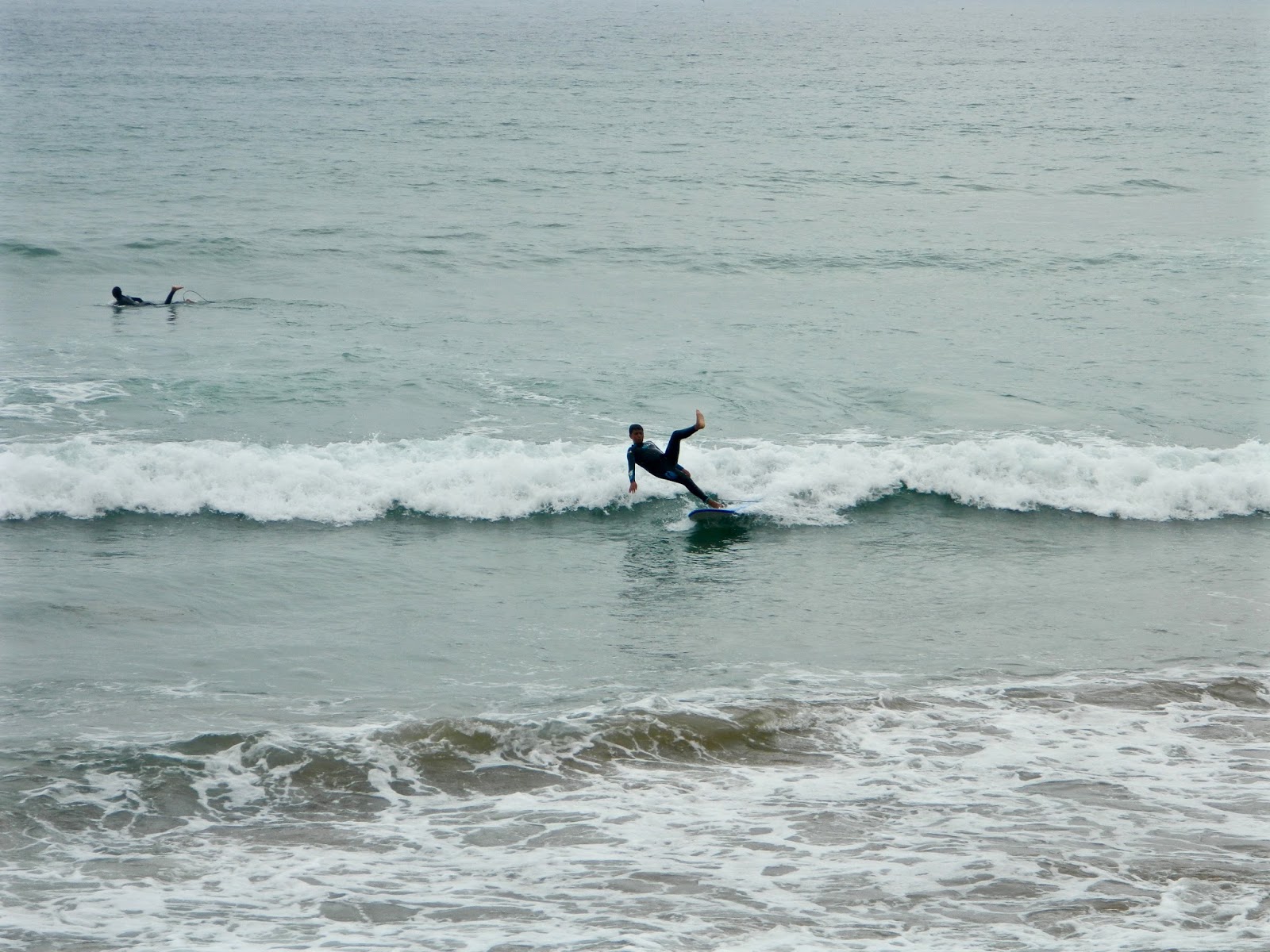
    I’m going to get good at surfing; I’m determined. For now, though, I’m focusing on wiping out. The water is muddied with sand most days. Photographs come out in gradations of blue-brown.

    There is no atm in this town. No bar (welcome to Morocco). Surf hotels, corner shops and small cafes abound, though. Everyone knows everyone, too—and that’s not just an impression, I think it’s really true!

    Every house has a terrace. Every terrace a view of the ocean. Every view meets the sound of waves crashing on shore, and I am content to sit and listen.

    ***


  • 3 Macabre Stories that Capture the Essence of Napoli

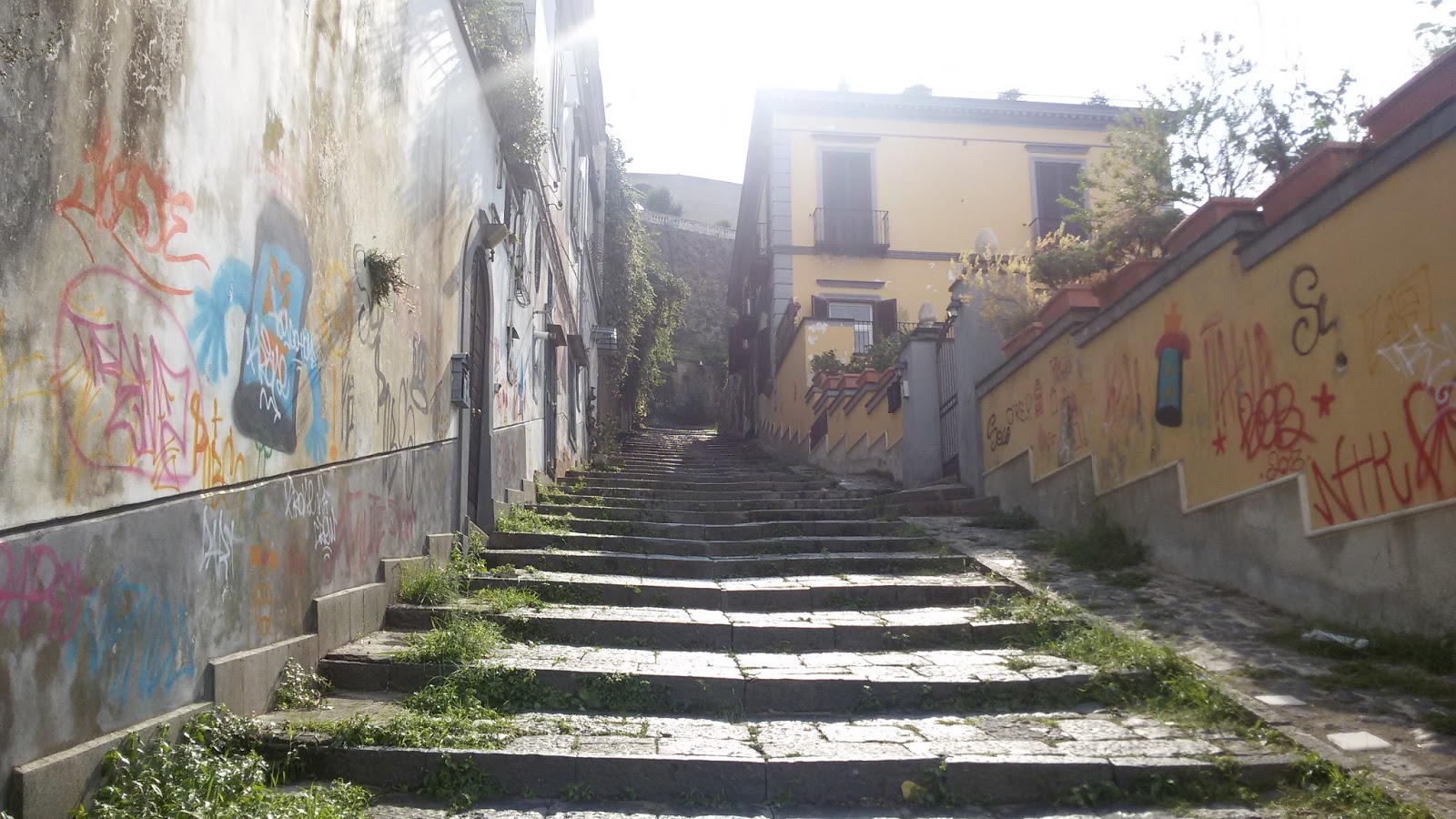
    Climbing hundreds of stairs for a good view, as per usual.
    Thursday, 1 September, Napoli, Italy

    The weather was a bit mercurial, and we took shelter from a sudden downpour in a nearby cafe. As the storm passed and we prepared to continue on our way, my friend (a Napoli native) informed me that we were about to cross an invisible boundary. 
    The police don’t come to this part of the city. It’s controlled by a powerful family (think mafia). Recently, three young men from a different, neighboring family were shot dead as they walked down the street.
    Suffice it to say, this was not a safe neighborhood. At least, unlike most tourists, I was acutely aware of the risk involved as we ambled onward on our quest for the best sfogliatelle in Napoli (and thus, seeing as it’s a Neapolitan specialty, the best sfogliatelle in the world).
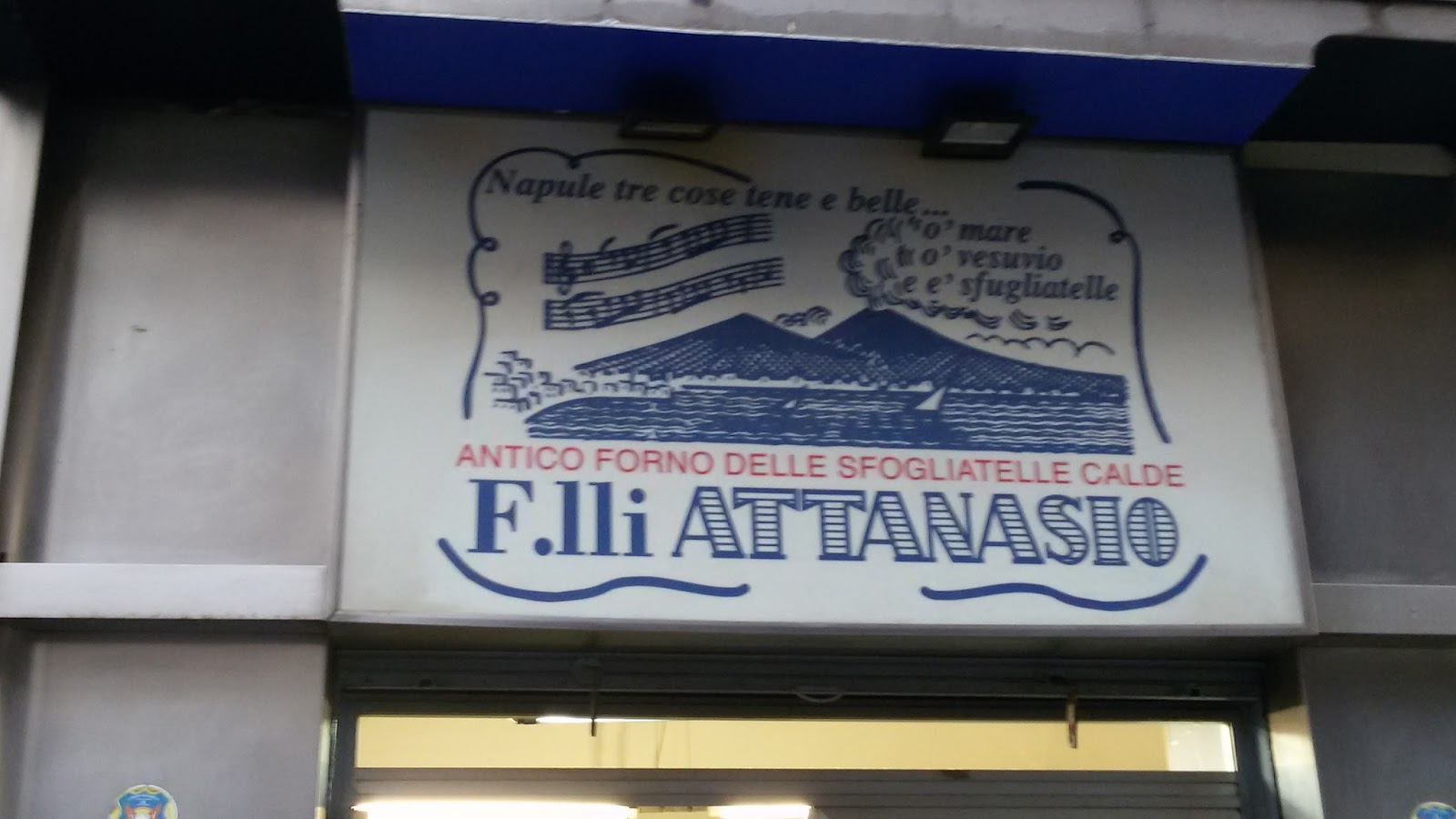
    Go fish! Can you find this famous Napolitano bakery? 🙂
    Now, if you’re thinking it’s insane to risk your life for a pastry, you’ve never eaten sfogliatella.
    Flaky layers of crisp pastry, artfully shaped to resemble a seashell, filled with sweet ricotta cream lightly flavored with local orange, and dusted with powdered sugar—one is already too much, too rich, and yet I bought four just in case.
    Napoli has a bit of a reputation as the more dangerous, more sordid Southern cousin of the well-frequented tourist destinations to the North (Rome, Florence, Venice, Milan). And indeed, the crowded warren of twisting streets layered atop a cavernous subterranean void (in turn layered atop the lava fields that fuel Vesuvius) is not the Italy many tourists may imagine.
    It may be better.
    As we walked from one end of the city to the other on our quixotic pastry mission, my friend, uniquely knowledgeable about Napoli’s architecture, history, language and culture, regaled me with stories—many macabre—that endeared me to this dark gem of a city.
    Here are three of them:

    Rub a skull for good luck.
    The Old Ladies and the Catacomb Skulls
    Twenty years ago, the old ladies of Napoli still maintained this tradition, originating in the plague years, or perhaps the war years (regardless, years of extraordinarily high mortality rates). Each would “care for” a particular skull in the catacombs beneath the city, bringing it flowers, offering it prayers, and grieving the death of a stranger who perhaps had no family left to mourn their passing. Sometimes, vicious arguments would break out over a particular skull when more than one woman lay claim to it. Questa è la mia testa! No! È la mia! (This is my head! No! It’s mine!) Talk about macabre.
    San Gennaro (Saint Januarius), Patron Saint of Napoli, and the Curious Affair of the Keys to the Church
    San Gennaro is not officially a saint, but don’t try telling that to the citizens of Napoli, who are particularly dedicated to their patron. A vial of the saint’s blood purportedly resides in the main church of the city, and twice a year, the miracle of the liquefaction takes place, in which the dried remains turn to liquid once again. Interestingly, the remains of San Gennaro do not belong to the church, but rather to a mysterious ancient sect with a centuries-old history in Napoli. They allow the church to hold the remains in exchange for the keys to the building. If you’re picturing creepy Satanic rituals in the catacombs of the cathedral, yeah, I’m right there with you.

    L’Ospedale delle Bambole (Doll Hospital)—a whole different kind of creepy.
    The Hospital of the Incurable Ones
    In medieval times, when pilgrimage to Jerusalem was a popular undertaking, Napoli occupied an important step along the journey. In plague years, and other times too, pilgrims would frequently fall ill and find themselves unable to complete their pilgrimage. Many of these stopped in Napoli, and the city became their final resting place. The Church built a thriving business around this occurrence, constructing buildings to house the sick and dying—partially out of Christian charity, surely, and partly because dying pilgrims, unable to reach Jerusalem, proved particularly disposed to leave everything to the Church instead. One of these, L’Ospedale deli Incurrabili (Hospital of the Incurables), still operates today, although I believe it is more concerned with saving lives than saving souls.

    This dark and fascinating history lays a particular foundation for the vibrant crush of life filling Napoli today. Young people sporting dark 70s-style fashion, 80s-style hair, lots of attitude and even more tattoos loiter outside cafes, nightclubs, pizzerias and bars. Crowds line up outside the best gelateria, stroll along the waterfront and press into the narrow streets of the Old City. The Napoletano language is alive and well, spoken by many if not most locals, changing and adapting as any healthy, living language should. Musicians play tarantela in the streets, and motorcyclists and pedestrians weave past, seemingly unaware of one another, in a seething dance. 

    There is life here. Tons of it. And maybe that’s the point of all the macabre underpinnings; they tell a story about all the living happening now.

    ***
  • La Notte della Taranta—or, Where I was on Saturday

    A post shared by Toby Israel (@tobyintheworld) on


    On the road to Melpignano

    Melpignano, Puglia, Italy; Saturday, 8:00 p.m.

    The sound of tambourines fills the air—not just from the stage, where the opening acts are performing, but also from thousands of tambourine-bearing audience members.

    Raucous festival-goers pass around three-liter jugs of local red wine. They dance in pairs, sometimes circles, in a style of dance that (to my Jewish eyes) most closely approximates the hora.

    It’s an odd blend: mostly Italians, from babies in carriages to elderly observers avoiding the crush in the center of the crowd (here, things more closely resemble a mosh pit), but mostly young people. Most appear to know the songs and sing along; many know the traditional steps, too.

    The main concert hasn’t even begun, and it’s already difficult to find a free patch of ground close to the stage. I have come from Rome for five days, pretty much just to witness this unique event. After hearing about the Notte della Taranta and the Pizzica style of dance and music that goes with it, I became fixated on experiencing it for myself.

    The History:

    In the twenty-first century, La Notte della Taranta (the Night of the Tarantula) is a modern music festival occurring every August throughout the Salento region of Puglia (Apulia) and culminating in a finale event in Melpignano. Its roots, however, stretch much, much farther back. The event centers on the Pizzica, a style of folk music and dance that originated in the Salento region in pre-Christian Italy.

    According to tradition, women in this region would become possessed by the spirit of the tarantula after being bitten by a spider during a certain season. They would begin to act out with strange antics and wild dancing. Nights of the Tarantula would break out in various villages as the spirit spread and more and more women succumbed to its grip.

    Now, through a modern anthropological lens, this is a clear case of a ritualized upheaval of social order and codes, whereby women living in an oppressive culture could express rage and wildness in a way that would normally be totally unacceptable. Stories of possession by various animal spirits, leading to trance, hysteria or other phenomena, abound across world folk cultures.

    La Notte della Taranta Today:

    I can’t speak too much to this, having only been to the main concert. Today, at least in Melpignano, the tradition seems to have been somewhat sanitized. 200,000 attendees can do that. The Pizzica has come a long way from the village square, and it looks a lot different with lights and sound production and weeks of rehearsal than (I imagine) it would have even a century ago.

    But who cares? I was hypnotized by the twirling white skirts on stage, fascinated by the folk lore surrounding the spirit of the spider, and enchanted by the percussive rhythms rolling on for hours.

    Worth the trip? Absolutely.

    Some outcomes of this excursion:

    1. I own a tambourine—which i can’t stuff into my backpack and which I will have to figure out how to carry with me everywhere.
    2. I must add another dance style on my to-learn list.
    3. I have a new love for a layer of Italian culture I never even knew existed until a few months ago.

    Looking for somewhere to go next August? Maybe check it out—don’t buy a tambourine, though.

    Youtube video

    Skip to minute 4:00 if ten minutes of Italian folk music isn’t your thing.


    Youtube video
    Skip to minute 5:00 to see a bit of traditional dancing.


    ***
     
  • Olive Oil on Everything—A Gastronomic Diary of Italy

    Sicily, 2013—where I first learned about putting olive oil on everything.
    Florence, Tuscany
    Gnocchi with fennel, mint and gorgonzola. A generous drizzle of olive oil (the frisky, green, good quality kind) on plain, unsalted bread.
    A lake near Rome somewhere
    Tiny fried fish, fresh marinated anchovies, mussels, salad with potato and octopus. Gnocchi with clams. Zucchini with mint. A drizzle of olive oil.
    Perugia, Umbria
    Hands dry from chalk after climbing. Spaghetti with shrimp, zucchini and tomatoes. Olive oil from my host’s grandmother’s home. On the pasta—and on my hands.
    It was in Italy that I learned you can truly put olive oil on everything. 

    This most recent visit was no different.
    I mean the good stuff, of course. The fresh, tangy-green and gorgeous kind. The kind with bite and soul that tastes like it came from somebody’s grandmother’s farm (it probably did).
    Here is a short list of ways I have seen olive oil used to perfection:
    • Drizzled (well, poured, really) into tomato sauce after it is cooked and off the heat.
    • Applied to dry hair, skin and lips—best directly after the shower while skin is damp.
    • On a plate with sea salt and balsamic vinegar, for dipping (soaking) bread.
    • Drizzled over pasta, salad, cut vegetables, meat, pizza—everything, I’m serious.
    • Straight from the jug—just a taste, a drop.

    Olive oil is everything. Condiment and cooking base. Start and finish. Salve for the body and soul. I suspect it could heal a broken heart, too, though I haven’t tried yet.

    In the North, butter features prominently in many recipes—but in the South, it’s always olive oil.
    And that’s really it. I mean, I could keep listing mouthwatering Italian meals. That never gets old for me… but I suspect others might have a shorter attention span.
    Olive oil. On everything. My time in Italy, in a nutshell.
    Try it. Don’t be moderate. Italian grandmothers never are. 
    Find the good stuff. Apply liberally. Buon appetito!

  • 10 Hours in Nairobi (Airport!)

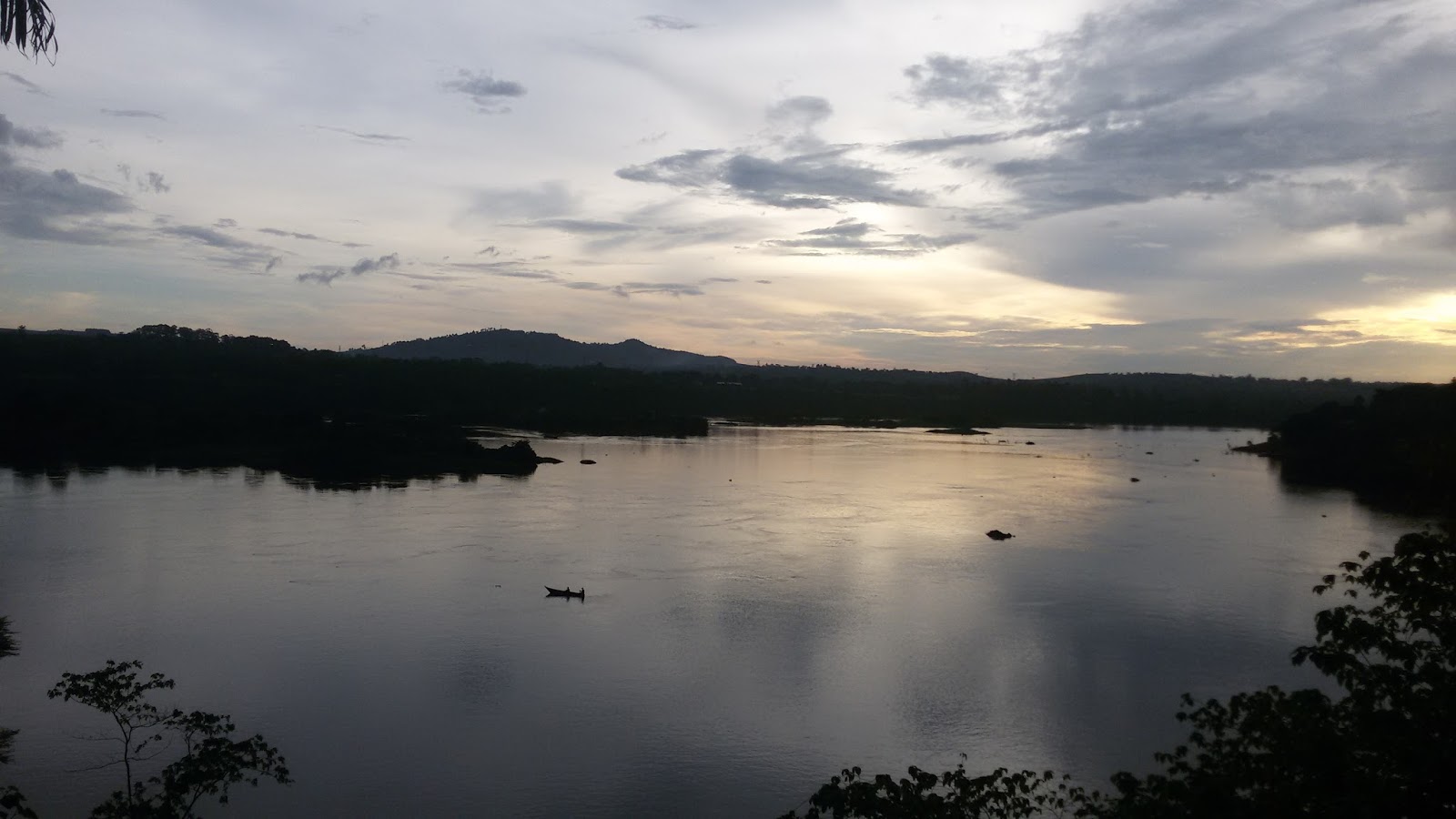
    Final Destination: Jinja, Uganda—the mouth of the Nile

    Tuesday, 12 April, 2016—Nairobi, Kenya

    The New York Times may have all the tips for how to spend your 36-hour weekend in Nairobi, but you only need 10 hours to enjoy all the delights of the Jomo Kenyatta International Airport!

    It’s going to be a long day, so wear comfortable shoes. The following is only a sample itinerary—feel free to craft your own.
    5:50 a.m. Early bird gets the worm and all that. Arrive at Nairobi airport from whatever your previous port of embarkment may be. Drink in the fresh morning air (but please, not the water) and stumble toward your connecting flight. 
    (Note: This is best enjoyed on minimal rest, so try not to sleep too much on your red eye.)
    7:15 a.m. Pole pole (slowly), friends. Delays are normal, especially with Kenya Airways. The Avanti Cafe on the ground floor has reasonably priced tea and friendly and sympathetic staff. (They’ve heard your story before; don’t bother.)
    Savor your mediocre latte and partake of the only free wifi in NBO. Don’t miss the sights: Watching disgruntled tourists aimlessly milling about in growing impatience is one of the unique pleasures of the airport experience.
    8:15 a.m. Board your flight and prepare for take-off. Don’t worry, your day’s not over that quickly—we’re just going for a quick aerial tour of the beautiful city of Nairobi.
    Sit back, relax, and enjoy the view on your 10-minute cruise above Kenya. “Technical issues” are just an official way of saying, “please don’t leave yet, Nairobi airport has so much more to offer.” 
    9:35 a.m. Make good use of an hour on the ground before deplaning, and get to know your fellow adventurers. Enjoy a stale, rubbery apology croissant, courtesy of the airline, too. You’ll need your fuel; we still have 6 hours to go! You may also like to observe the unloading of your luggage, which was heading toward your final destination just minutes before.
    10:50 a.m. Experience extreme disorganization first-hand. Join the pack, and wander confusedly from gate to gate, really getting to know the twists and turns of the Nairobi airport. Intimate knowledge like this is rare for the average tourist; you may even have time to peruse the least authentic curio shops in all of Kenya.
    11:25 a.m. Head to Table 49 for a classic airport dining experience. As you sample your chocolate-cardboard muffin and piping hot tea, you may appreciate the opportunity to practice your Italian, French, Swahili or German language skills with some of the other diners—this is an international airport, after all.
    12:10 p.m. Wave goodbye to some of your new friends as they head to the next (now fully booked) flight, then get to know some of the airline staff as they place you on the next one—5 hours later.

    12:45 p.m. Why not head back to the unsurpassed Avanti Cafe for another visit? After all, no one has given you any free water, and you’re probably thirsty. Browse through Facebook, and daydream about arriving at your destination before dark.

    1:25 p.m. Stroll upstairs to Table 49 for another complimentary meal. Totally edible chicken, rice and spinach, and a bottle of water to boot! Enjoy getting to know the remaining stranded passengers from the morning, and observe the effect that sleep deprivation may have on your conversational skills (hint: they improve).
    2:55 p.m. Meander down those gray, expressionless airport terminal hallways one last time before you have to leave. Join the desperate crowd at gate 15, and since you’re early, why not finish up your conversations with your new friends.
    3:50 p.m. Get on that plane, friends, it’s time to fly. Cross your fingers that your checked baggage makes it on with you, and settle in for a nap—you’ll need it. Safari njema (safe travels)!

    ***
    In complete seriousness, as desperately long and painfully disorganized as my unplanned, extended layover in Nairobi was, I don’t think I’ve ever had as many conversations, in as many languages, with as many strangers, in one day. We were all looking out for each other, united in common misfortune and misery—which, miserable as it was, was also pretty cool.
    And, it’s always better to laugh. Running on 3 hours of sleep and very disappointed to be spending my day off in an airport—instead of with friends in Uganda—I quickly found the entire situation completely absurd, and I had to laugh.
    You have to laugh.
    Frustration is useless, especially in airports, and a bit of humor can make a bleak day far more bearable.

    So, enjoy your next visit to the Nairobi Airport, and let me know if you want any more tips—I’m probably an expert now.

    ***

    Update: In Jinja, Uganda now, visiting some friends I haven’t seen since a year ago in Kenya, and enjoying some much-needed R and R. My checked luggage, if you were wondering, miraculously made it here, too!

    ***

  • Coffee Culture, Slow Food, and Why Cape Town Has Both

    Coffee Culture, Slow Food, and Why Cape Town Has Both

    cape town coffee culture slow food

    A side alley off Buitenkant Street, Gardens, City Center, Cape Town

    The first sip is bitter, sour, almost acrid, before my palette adjusts and the taste mellows into a more complex configuration of nutty, earthy, sweet and rich.

    This is good coffee.

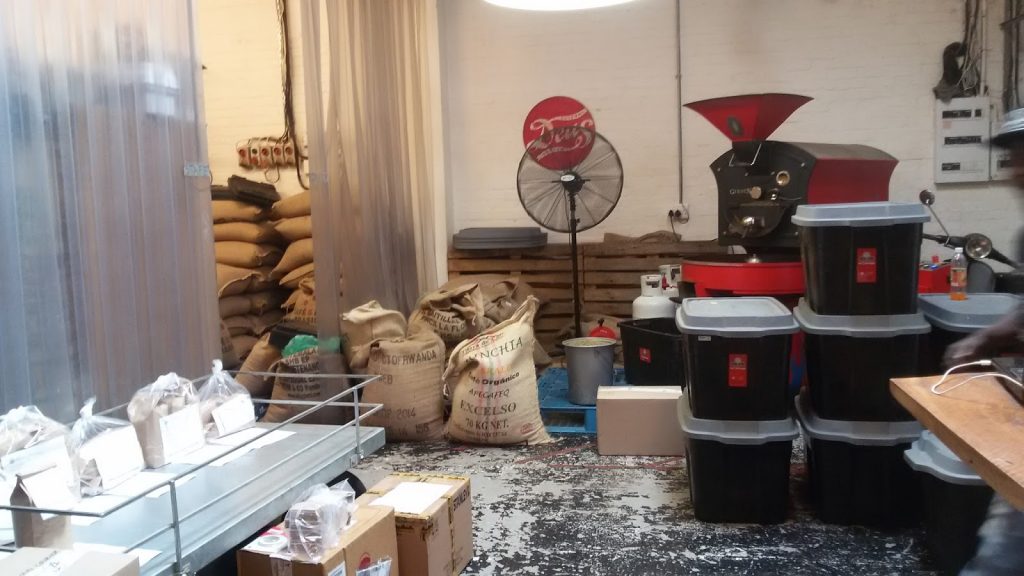
    I’m sitting at my favorite Cape Town cafe, Deluxe Coffee (also called YARD, the Dog’s Bollocks and the Bitch’s Tits), where motorcycle parts, vintage bicycles and canvas sacks of wholesale coffee beans make for original decor.

    I’ve occupied this stool at the counter for well over an hour now, and nobody cares. Par for the course.

    Cape Town has an exceptional coffee culture. (The reason I’ve consumed more coffee in the past three months than probably the last three years prior—well, that, and the fact that a cappuccino costs a bit more than a dollar.)

    What is “coffee culture”?

    Well, to answer in negatives, the U.S. does not have a coffee culture—or a cafe culture, to be more precise. A coffee culture does not “run” on coffee (like Americans run on Dunkins), but rather stops. Sits. Stays. Connects.

    And when you stop to taste your “cup of joe,” quality matters. Deluxe Coffee may be my favorite spot, but easily half a dozen others tie for second. There is a lot of good coffee in this city.

    To-go cups are more rare, too, and at least among my friends, “going for coffee” is an hour(s)-long undertaking—not a five-minute quick fix.

    Cape Town generally moves more slowly. Less rush, less stress, none of the high-powered, shiny, corporate velocity of New York, London or Hong Kong. None of the humorless, chain-brand cafes, either.

    Starbucks hasn’t made it to Cape Town, yet, but I hear it’s coming. When it gets here, I hope Cape Townians will put it out of business.

    In a cafe culture, independent roasters, brewers and purveyors of coffee thrive. Character and personality matter—or maybe that’s just me.

    And I think there’s a common denominator between coffee cultures and Slow Food. Shared values. An appreciation of quality, and a willingness to wait for it.

    Many of the cafes where I go to do work have some of the worst service I have seen anywhere in the world. Friendly, but extraordinarily slow.

    But, good food. Good coffee.

    See the connection? I do.

    I am more than a little bit enamored of the Slow Food movement—and of Cape Town’s coffee culture.

    I like the pace, the time for detail, the space for real connection. This is what a cafe should be, in my opinion.

    This is how coffee should taste. This is how life should move.

  • Vagabonding vs Bonding: On Staying in Touch

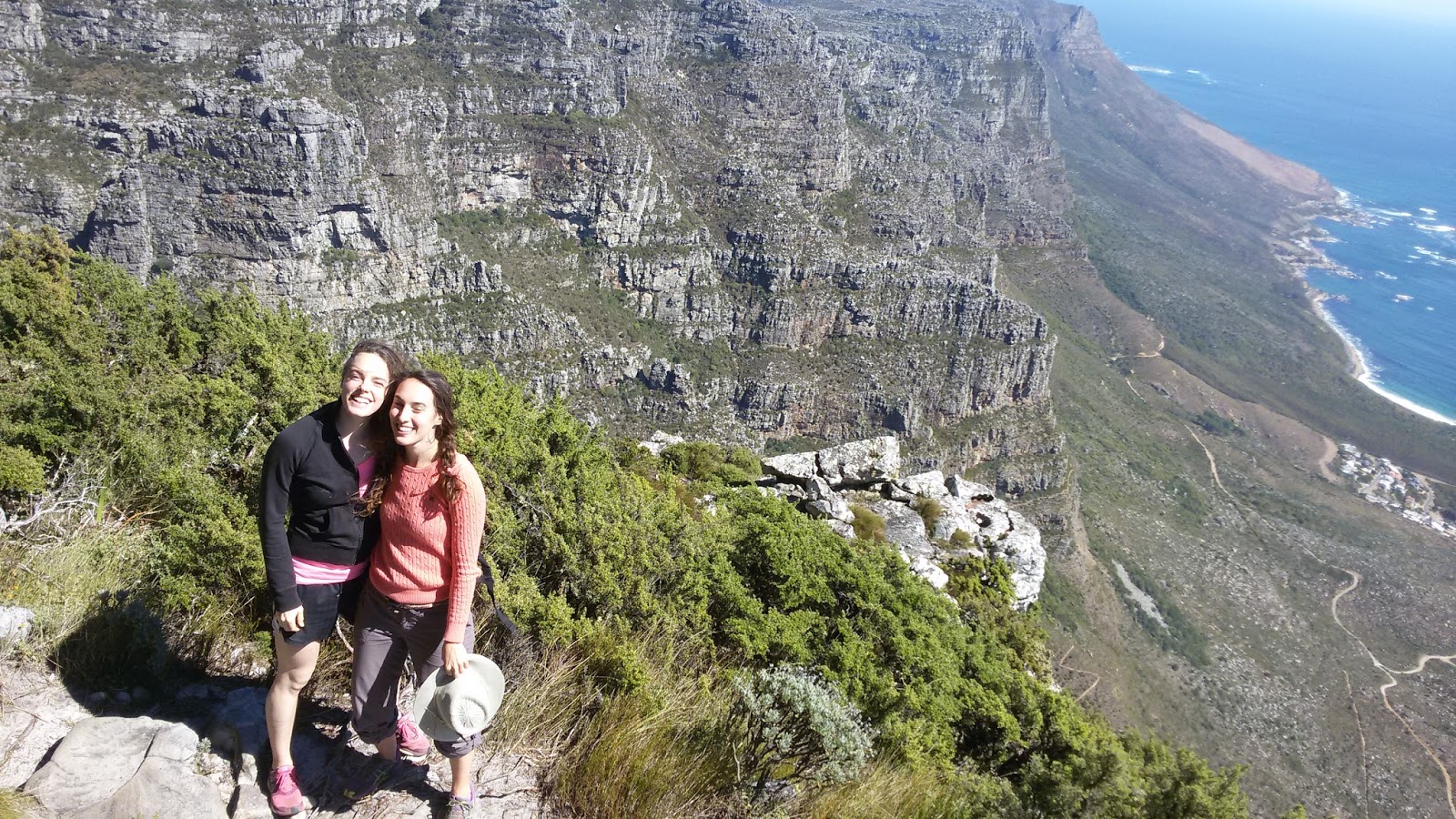
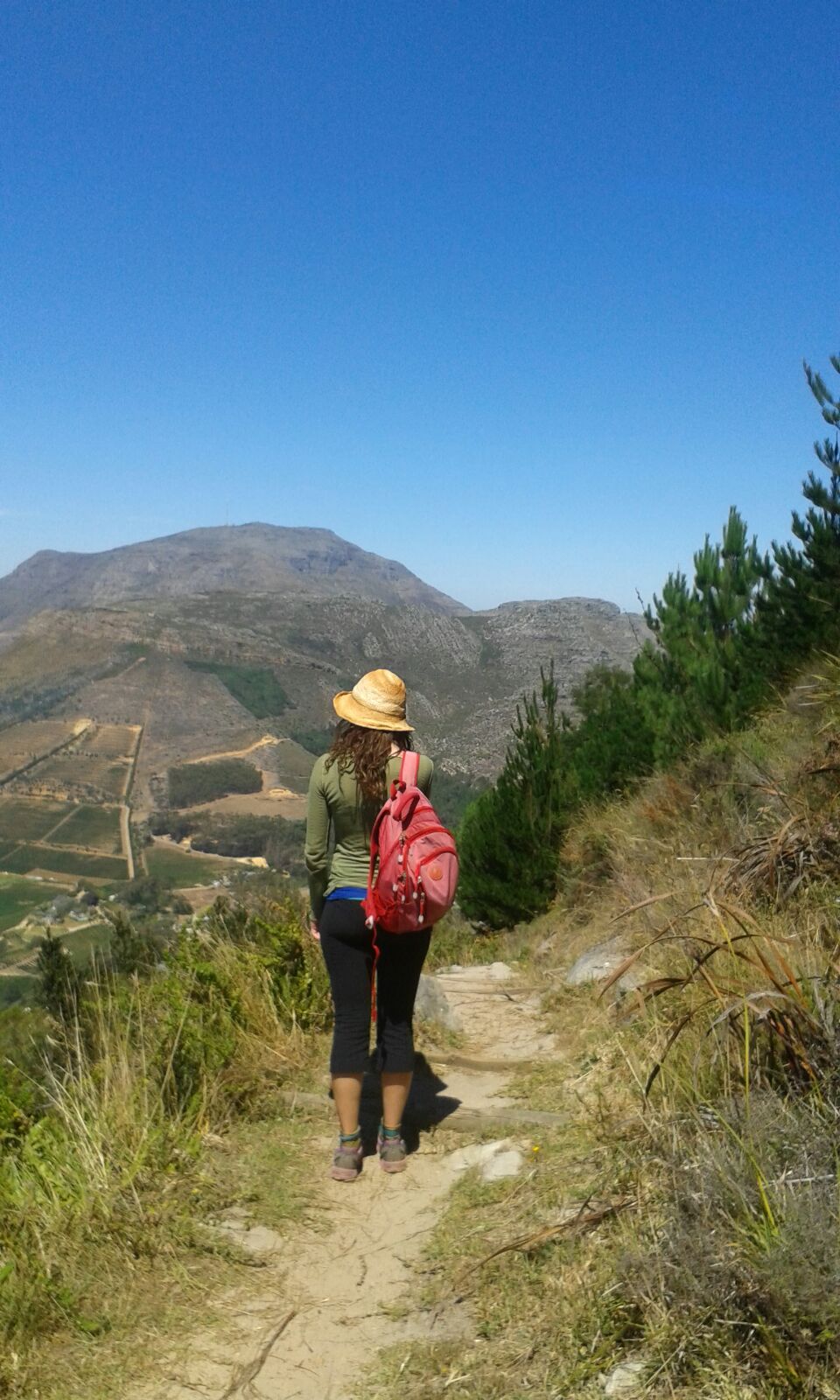
    Reunited in Cape Town: Hiking Table Mountain
    Is it hard to form deep, enduring friendships when you’re always moving around?
    I get that question a lot.
    The answer, as you could probably guess, is no and yes.
    My close friends and family span the globe, but I know I could call any one of them today—or, better yet, show up at their doorstep—and they would offer me all the love and support I could need. Of course, it goes both ways… minus the doorstep, which I don’t always have.
    And then, I typically find it easy to connect with the people around me, wherever I find myself.
    My neighbor? New friend and dance buddy.
    My housemate? New friend and hiking buddy.
    Strangers on a train? You get the idea.
    Answer one: Depth is easy. So no, it’s not difficult to connect deeply—be it for an hour, a week or a month. The more layers of artifice I burn, the more easily, and more deeply, I find connection—everywhere.
    But then there’s that other, more elusive quality: endurance. 
    Does it last? How? And if it doesn’t, how meaningful is a friendship formed in Thailand and set to rest in Laos? How deep does connection really run if it can’t follow me across borders and years?
    Answer two is longer…
    Recently, a close friend from university paid me an impromptu visit in Cape Town. Keeping the spontaneity flowing, we rented a car, picked it up the next day, and drove nearly 1,000 kilometers east, toward the Garden Route (a popular region for tourists) and a particularly beautiful place called Nature’s Valley (though we didn’t know yet that we were going there).
    As we drove on the wrong side of the road through endless stretches of caramel-colored hillsides, we caught up on the milestones of the last year of our lives. As we hiked through fynbos (vegetation unique to the Western Cape) and down to wild, windswept beaches, we discussed philosophy and travel, mistakes and purpose. As we pitched our tiny camping tent amidst rows of elaborate palatial campsites in a dilapidated caravan park, we laughed like no time at all had passed.
    Time had passed. Clear from the very new lines around my eyes and the shifting sands of love, death and discovery that shaped the contours of the interim months—or was it years?—of our lives.
    And yet, connection had endured.

    Roadside picnic on the Garden Route, and a very rare selfie.
    I could list a dozen more examples off the top of my head. Old friends joining me for segments of my travels; new friends opening their homes to me when I arrive in their city; strangers offering me a place to sleep, and becoming friends through that inimitable alchemy of giving and gratitude.
    And then there are the other friendships, the ones that take root in the rich soil of new experiences shared, yet wither when transplanted to the barren realms of social media and virtual communication—or perhaps they refuse to leave in the first place.
    Still, these, too, endure in their own way.
    A note out of the blue from a passing acquaintance met several years prior.
    A supportive comment on an article from a familiar face whose name I had forgotten.
    An unexpected coffee with a high school friend with whom correspondence had been sporadic and stunted.
    Silence doesn’t always mean disinterest.
    I should know, since I rarely hear from many I consider my closest friends.
    Distance doesn’t mean detachment.
    I should know, since I repeatedly choose to be continents, miles and time zones away from my loved ones.
    Staying in touch is remarkably difficult for an era of unprecedented “connectedness.” I have nothing to brag about—those who know me will be sure to tell you—but I am constantly working to do better.
    I’ll repeat: distance doesn’t mean detachment. 
    Connection is there. Depth is there. Consistency? We’re all working on it. 

    Forced to choose between travel and connection (that is, vagabonding and bonding), I’ll choose “C” every time. No and yes. Both. I think it’s possible.

    ***
  • Playing Tourist—Because, Penguins

    More tourist-ing on the way to the Garden Route.

    Sometimes, it’s fun to play tourist in your own town—or, you know, any town.

    Funny, coming from me, the anti-tourist. I know.

    And sure, I believe the following to be true:

    1) There are no “have to’s” in travel. (No must-see’s, no can’t misses. Things are only as meaningful as the value we ascribe to them.) 

    2) Tourist traps are just that—traps. (You want me to pay how much to play with a tiger? Which, by the way, I’m pretty sure has been drugged.)

    3) There’s nothing better than simply being wherever we are. (Sitting at my “local” cafe all day reading? Check. Wandering aimlessly through a new city? All the time.)

    Still, once in a while, the tourist things call.

    Because, well, penguins.

    Need I say more?

    Tuesday before last found me and a friend driving south out of Cape Town, bound for Boulders Beach and Simon’s Town.

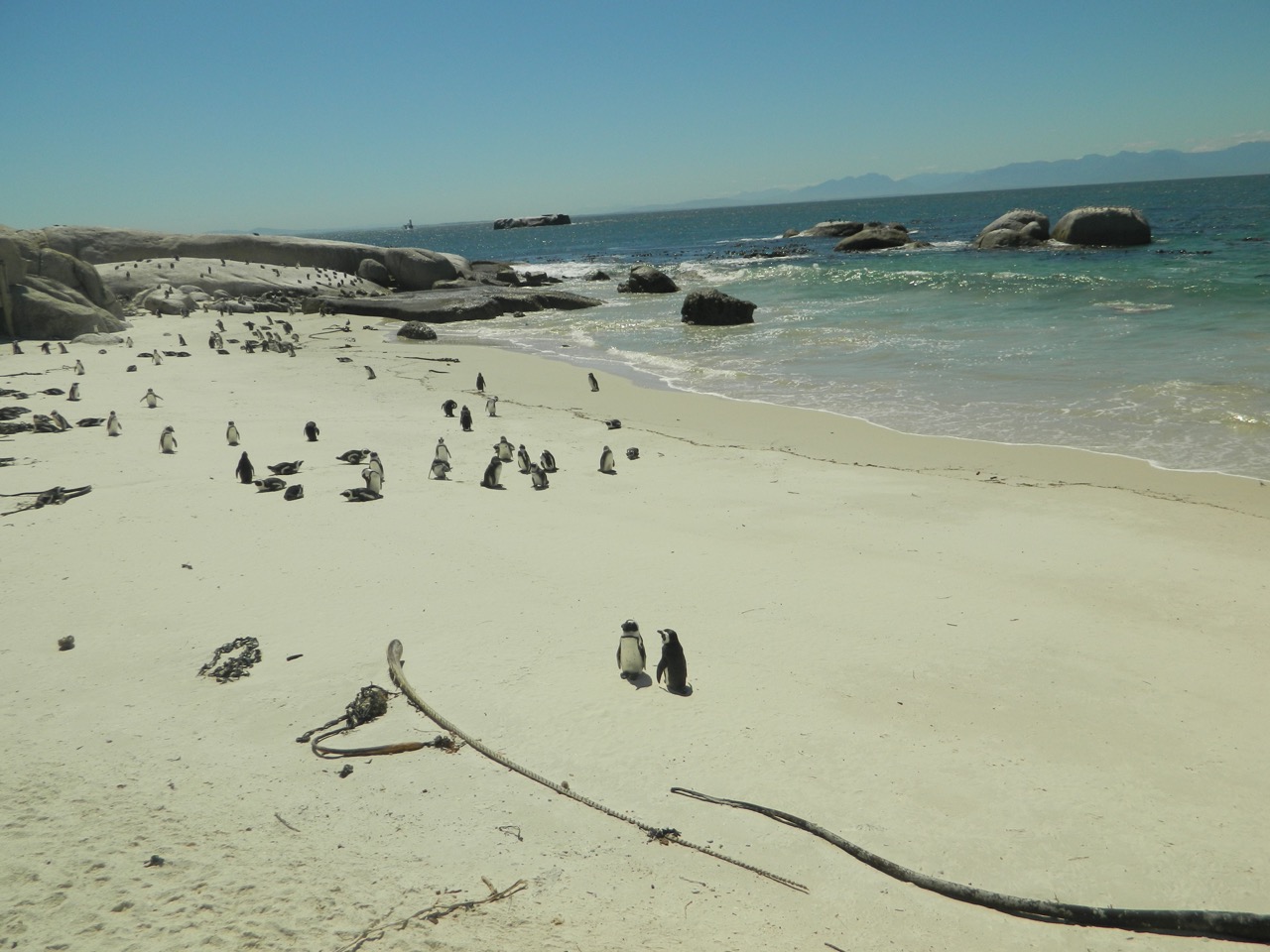
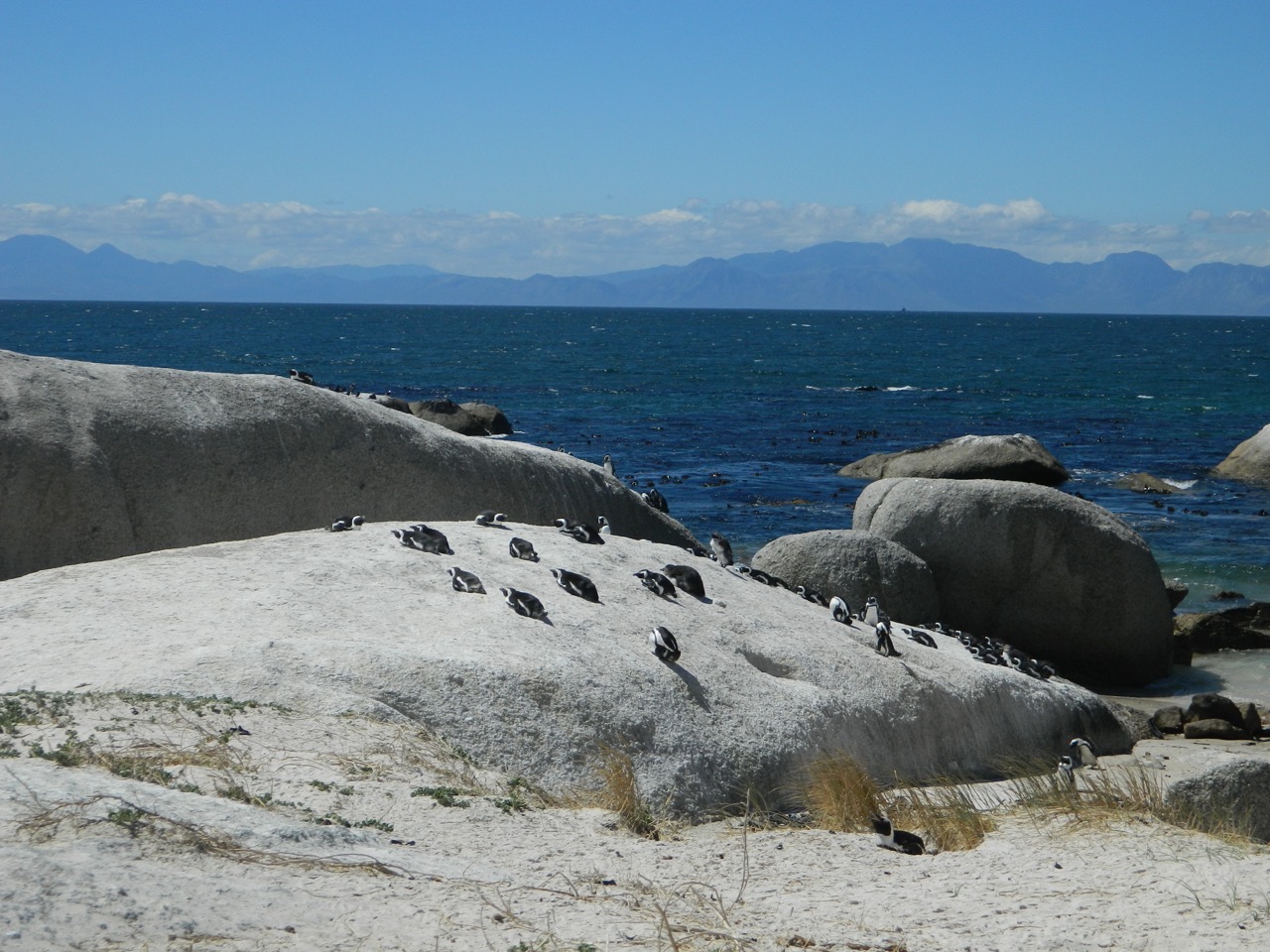
    Boulders Beach, if you didn’t know, is home to the largest colony of African penguins in town. They come for the slightly-warmer-than-icy water, and stay for the spectacular turquoise water and blinding white beaches.

    Oh wait, that’s us. The penguins just come for the warm water. Thousands of them.

    Flop.

    And yup, they are adorable.

    So there we were, one local and one wannabe-local standing on the viewing platforms along with dozens of other camera’d, sunblock’d and visor’d observers, utterly entertained.

    Funny, because the penguins seem committed to accomplishing as little as possible during their stay at Boulders Beach (the ultimate beachgoers). I watched one duo (African penguins mate for life) for a solid ten minutes, and neither moved a muscle.

    “Do you wanna do something else?” “No.” “Good, me neither.”

    They are also brilliant waddlers and unrivaled loafers.

    Afterward, we ate fish and chips, wandered through beachside shops oddly reminiscent of New England charm, and reviewed our pictures.

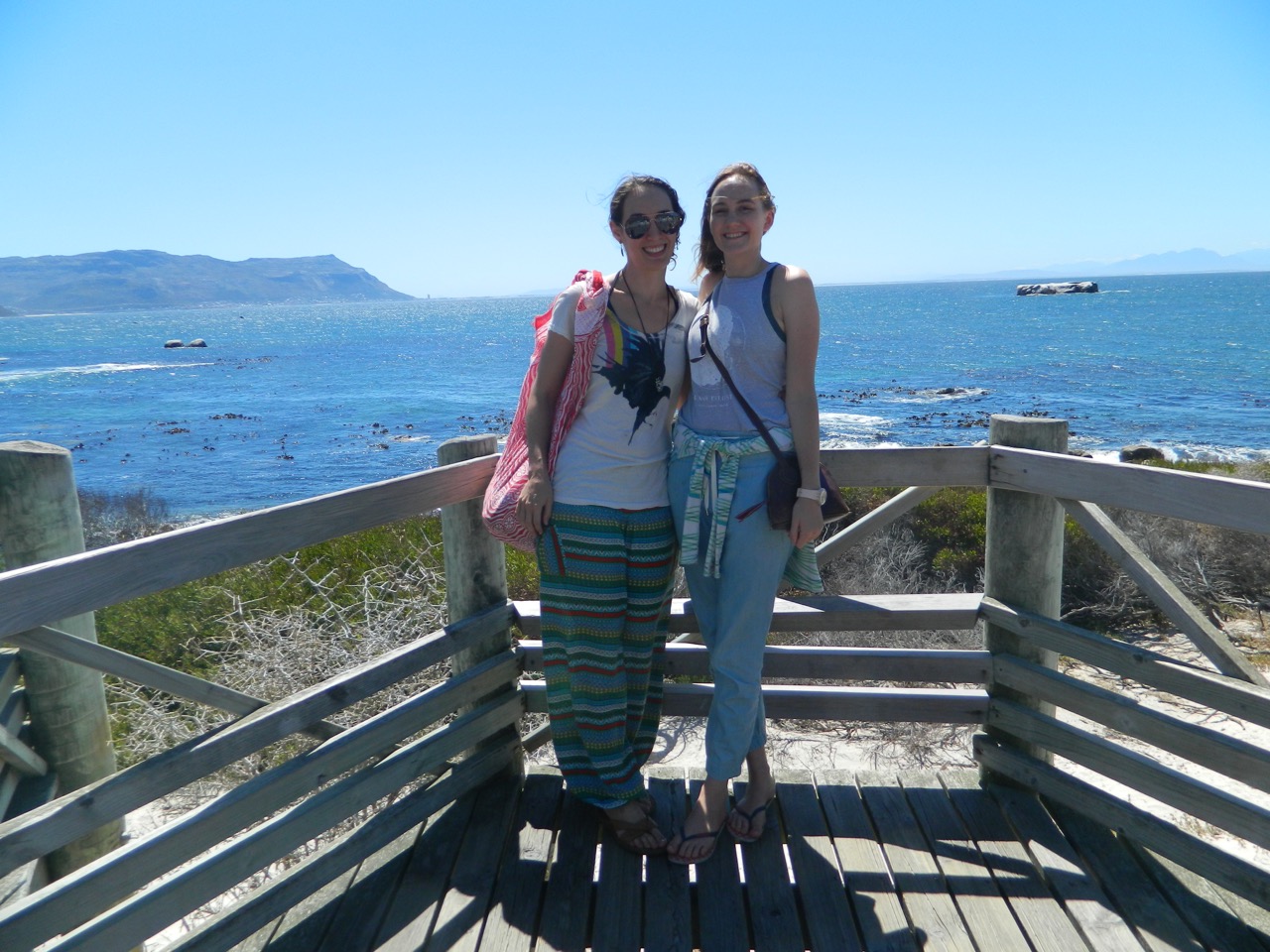
    These are our happy penguin faces.

    Sometimes, it’s fun to play tourist.

    You get to see penguins, climb spectacular mountains or window shop on streets overflowing with “custom designed African culture.”

    Shop on Long Street—my favorite street for tourist-ing.

    Fun. Nothing more, maybe, but nothing less, either.

    Many penguin acquaintances were indeed made.

    ***
  • Cape Town Snapshots

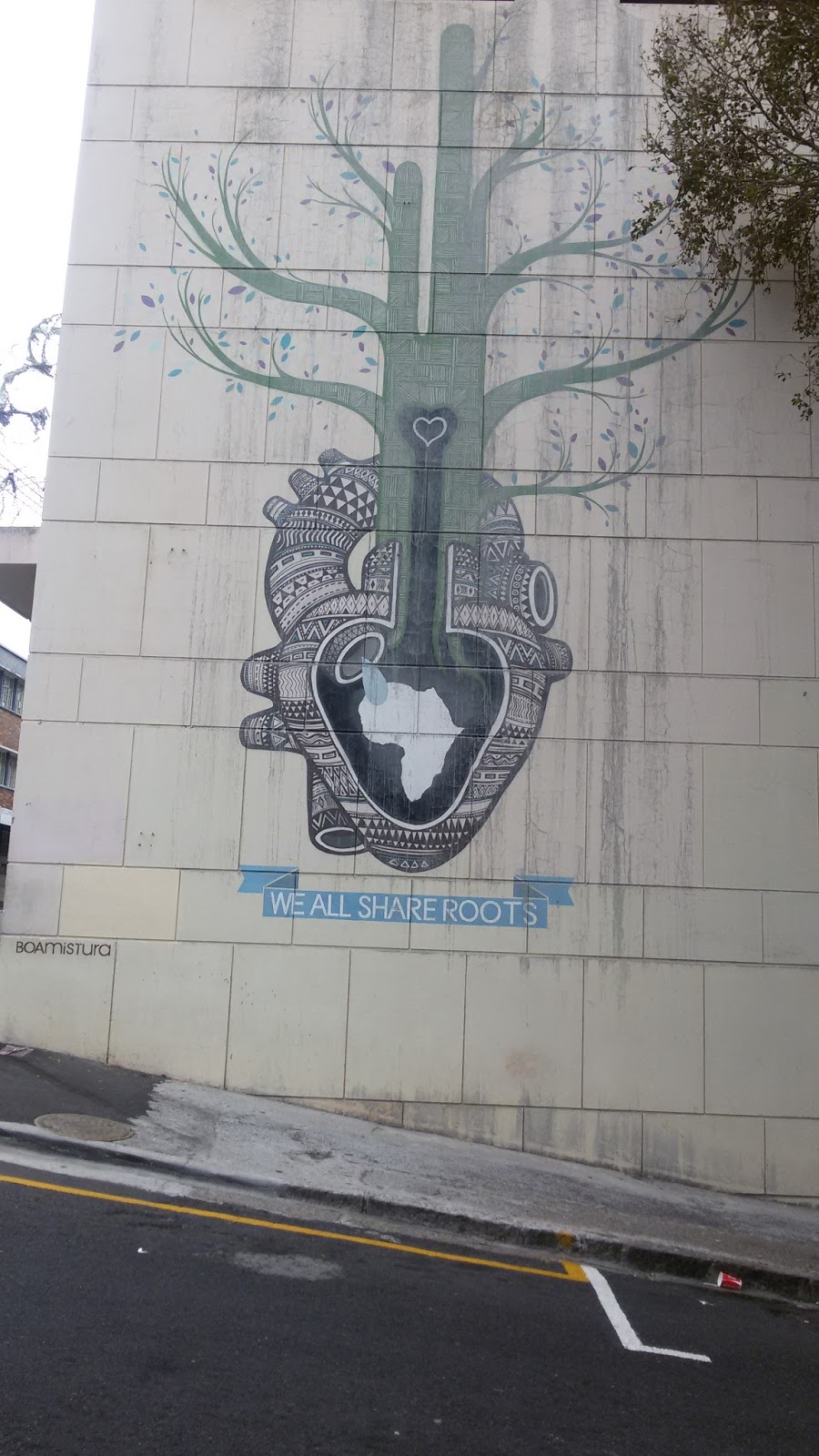
    Street art near Assembly, Cape Town.

    Are these snapshots I share so often an exercise in lassitude or creativity?

    I’ll admit I write them when I can’t think of a full article I want to lay out. At the same time, I think they might capture more of life in fewer words than any other format. I hope they serve to inspire your imaginations and whet your appetite to form your own snapshot memories of these places.

    Cape Town Snapshots:

    ***

    Two long-legged, long-necked birds cross the road near the Civic Center. One, then the other. Each looks both ways, takes a few steps, stops, looks, and steps again. Traffic flows around them. Their mother must have taught them about looking both ways.

    ***

    The wet sand along Long Beach, Kommetjie reflects the mountains in the early morning light. My friend’s golden retriever, a streak of ocher against shads of blue, plays in the surf.

    ***

    Saucer-eyed children materialize around the outdoor table off Long Street where my friend and I have just begun to eat our vegan lasagna and salad. Plant, the restaurant is called. The danger of sitting outside to eat in Cape Town: the reality of the city is on the same side of the window as you.

    ***

    The white-haired sales clerk at the Simon’s Town boutique is more interested in conversation than sales. “Nobody really needs any of this,” she confesses, “but sometimes you just have to buy something nice for yourself!” She laughs. When she hears my friend speaking in Afrikaans on the phone she says excitedly in her high, soft voice, “You have an Afrikaans friend! She’ll be your friend for life.” We all smile.

    ***

    Heaps of fresh fruit in every supermarket. Most (or all) of it grown here. Mangos, avocados and pomegranates, oranges, peaches and nectarines, papaya, apples, plums and grapes. I am spoiled for choice, wish I could buy some of everything, but know I couldn’t possibly eat it all fast enough. Choose just one or two each time I buy my groceries.

    ***
    We teach the students, all in their last years of high school, how to copy and paste, type in urls on a browser and do basic formatting in Word. I am helping my friend with the class he volunteer teaches on Monday afternoons in Masiphumelele, a township near Kommetjie. I never thought I had any computer skills to speak of—I realize I was wrong.
    ***

    The train to the coastal area south of Cape Town emits a banshee screech each time it heaves to a stop. Pick a compartment with lots of people, and don’t carry valuables, I was advised. The train is full of everyday commuters and seems mundane and secure, but I’ve heard the stories and I know looks can be deceiving.

    ***

    A cross between a motorcycle bar and a hipster cafe (my friend’s words, not mine) of my favorite cafes in Cape Town serves the best coffee and a morning’s worth of decorations to occupy the unhurried observer. No mirrors. In the bathroom, only a bare, framed cement square with black painted letters spelling, “You Are Fucking Amazing.”

    ***
    Thick fog rolls down over Table Mountain as the sun drops and the air chills. The “tablecloth,” this misty white blanket is called. It covers and reveals, slowly, silently. The city hides and reveals, slowly, silently. Every day a new facet. Every day a new mystery.

    View of False Bay from the southbound train.
    [Penguins and beaches—lots of pictures on the way, just as soon as I get them onto my computer!]
  • One Reason I Am in Love with Cape Town

    South Africa—Cape Town included—is a complicated place. 

    It is complex, fraught with tension and not particularly safe. It is fascinating, for this half-anthropologist, half-writer (and 100% curious human being), and it is sad. Cape Town, specifically, is diverse, vibrant, disjointed, anachronistic, cosmopolitan, wild, chilled, cohesive and embattled, all at once.
    It is the kind of city you fall in love with.
    But you could take all that away, and I would still love Cape Town for the simple fact that this natural beauty
    is everywhere.

    Mountains. Lakes. Oceans. Rivers.
    Sparkling cobalt water,
    An ecosystem like nowhere else in the world, and more hikes than I could possibly cover in 3 months of weekends,
    All literally within the city.
    No adjectives could do these mountains justice, but they are enough to steal your heart.
    ***

  • Helsinki Snapshots


    Monday, 11 January 2016
    It is 2:30 pm, and the sky already seems to be getting dark as I make my way to the Helsinki airport… in a taxi (gasp! I know! But my tennis shoes and single layer of pants just aren’t going to make it to the bus stop in this -20º C weather). 
    Somehow I have managed to visit this city three times over the past several months, for a total of six or seven weeks, and it’s about time I shared some snapshots of life here. What I lack in photos (I’ve taken very few) I’ll try to make up for with riveting description…
    The in-between bingo sets show… it’s pretty much what it looks like.
    Sunday nights find me at Mascot cafe with my friend Ella (and her friends) for bingo. A young, rambunctious crowd plays for free drink vouchers and the satisfaction of winning. They sing along with the flamboyant host (an out-of-costume drag queen who hardly looks his 40 years) for certain numbers—“I am 16 going on 17…” “when I’m 64…”—and cheer loudly whenever a player gets Bingo! I begin to get a solid grasp on Finnish numbers just in time to leave.
    Two locals sitting outside the fray stop me this week on my way to the door to ask what’s happening. But isn’t bingo just for old people? They say. Sometimes not, apparently! It is always when I can tell a local something they didn’t know about their own city that I begin to feel I have really settled in.
    Mascot, a down-to-earth bar with a lobby plastered with graffiti-letter posters advertising underground events, also plays host to Helsinki’s first spoken word festival, among other things.

    German Sparkle Party capture (not mine).
    My friend’s house in Käpylä, where I am very kindly welcomed as a long-term guest (maybe there is no Finnish saying about houseguests and fish…) is green. Snow covers the front lawn; when I first arrived it was autumn leaves and apples instead. Seven unique individuals coexist there with surprising harmony, and instantly make me feel at home. We practice jiujitsu on the tatami mats in the attic (later we will move the mats to make room for a massive “German Sparkle Party” (warning, click at your own risk) complete with mojito bar and black light dance floor.) and we play pinball on a vintage machine in the living room while sipping Salmiakki (licorice liqueur). In proper Finnish fashion, I become thoroughly addicted to the sauna in the basement. I learn that if you add a splash of beer to the ladle of water before tossing said water onto the hot stones, it makes a delightful smell (really). 
    Elephant journal HQ, Helsinki—my coworker, Sara and I working at the kitchen table.
    From the small kitchen table where I work, I can watch the light changing outside, fat snowflakes drifting lazily past the window or bunnies appearing from behind trees.
    The bouldering gym where I go to climb a couple times a week is small, but intense. Typically crowded and obscured by a haze of chalk, its routes challenge me and always hold my interest. In an open loft workout area, I observe people displaying more varied exercise routines than I have ever seen in my life. I become noticeably stronger over the weeks that I train here.
    At my favorite supermarket, I learn to distinguish between smoked and raw salmon, free-range and organic eggs, full fat and lactose-free milk, and more kinds of berries than I can name even now. My Finnish vocabulary seems to consist of equal halves food words and profanities.

    The hill.
    Finally, a quick walk from the house I briefly call home brings me to the top a small hill (the highest in Helsinki) topped with crumbling bunkers and criss-crossed with paths. When I don’t want to go anywhere else, I step outside, turn right and then right, and make my way there.

    ***

    Welcome to (what was) my world for a short while, I hope you enjoyed the tour! As of yesterday, I am now in Cape Town, South Africa—currently settling in, but lots more on this new place to come!
  • I Want to Do All of the Things

    This is not a bucket list.

    I wrote this list a few weeks ago as the realization dawned on me that, without exaggeration, I want to do “all of the things.”

    There is not a country I wouldn’t want to visit, a language I wouldn’t like to study, an art or dance I wouldn’t want to learn or a food I wouldn’t want to try.

    Whenever someone shares a story of adventure, I listen carefully—not only out of friendly curiosity, but also out of a vested self-interest—making mental notes for the day I can follow their trail, or blaze my own.

    In the invigorating—and overwhelming—rush of ideas that tends to accompany an “I want to do all the things” epiphany (it’s not my first) I decided to try something new.

    I decided to write it all down.

    This list is a work in progress. I have surely forgotten things, and will doubtless add other ideas I haven’t even thought of yet. The list of places on the left is woefully incomplete, and I know I’m missing something major… no matter.

    One thing is certain, however: This is not a bucket list.

    These are not things I’m hoping to do some day in the future, before I “kick the bucket”; rather, these are (all) things I want do do now. Tomorrow. Next month. As soon as possible… It might take a decade or five, but I’m starting yesterday.

    My list includes the following items:

    • Travel the TransSiberian (or TransMongolian) Railway
    • Go to Argentina to study Tango—and Spanish
    • Go to Brazil to study Capoeira—and Portuguese
    • Travel across a country by horseback
    • Join the circus (learn a circus skill first)
    • Travel through Poland and Eastern Europe with my grandmother’s suitcase.
    • Chase the Northern Lights (I tried last week… no success)
    • Hike the Long Trail (VT)
    • Climb some tall mountains
    • Find a way to contribute—anywhere… everywhere.

    That’s just a few.

    Is it an extraordinary privilege to be able to look at every single item on this list as a real possibility? Absolutely yes. Am I still searching for the right way to be of service as I pursue these passions? Of course—although, since starting work at elephant journal I feel more assured of that side of things.

    Perhaps most importantly, why? Why do I want to do/try/learn/see all this?

    Why the tireless pursuit of adventure?

    A little secret: There is no why.

    There are secondary reasons—to learn, understand and grow are all real and valid motives. But they are secondary. The primary “reason why” is formless.

    Because.

    Adventure, travel, wandering, journeying for me have always been (and may always be) a raison d’être. A “why” unto themselves.

    That is, I do not wander because ______, or travel to _______; but rather, when in movement, when in the pursuit of adventure, I have no need of why’s.

    I do not wonder why I am here, what I should be doing or what my purpose is… I simply am.

    And so I want to do “All of the Things,” because so long as this list (and its much longer mental counterpart) are close to my heart, my wings beat of their own accord. Existence, then, is its own end—and that is every thing.

    So… what’s on your list?
    ***
    [I’ll be in London now through (almost) the end of October. Checking in after 2 weeks in Helsinki, Finland, which were so packed with adventure I haven’t had time to write about them yet! Much more to come on that very soon.]

  • Being versus Seeing


    So, what are you doing here?

    They say it kindly—with honest curiosity—and they say it in Italian, but that is the question.

    The woman at the cheese shop who patiently helps me taste 10 local varieties before wrapping up my selections. The barista at the cafe on the large piazza near my apartment. The elderly gentleman who insists on guiding me through the steep valley from Ragusa (the newer city where I stay) to Ragusa Ibla (the old medieval part of town).

    They want to place me, and I want to help them.

    Entering the valley.

    I explain, in as few words as possible, my work-travel creation. That is, more working than traveling; more living than exploring.

    And, sheepishly, I recall inwardly how disappointing a tourist I have been…

    I managed to climb the bell tower of the main cathedral. I spent an hour in Modica, one of the next towns over, tasting chocolate made the traditional (unbelievably delicious) way and eating granita. I’ve visited a few beautifully restored churches (a huge earthquake in 1693 destroyed most of the older architecture, and I’ve wandered many of the small, hilly streets, eating gelato, canoli or any other treats I stumble upon. I have the good fortune to be staying with two teachers, and have attended a few dinners, lectures and expositions with them, too.

    Cattedrale di San Giovanni Battista (and the piazza)

    It’s not nothing, but it’s not much, considering I’ve been here 10 days already. Compared to past trips, when I managed to cover as many countries in a month and spent entire days on an expedition to see a city from top to bottom, it’s not much at all.

    What’s changed? Quite a bit…

    These days, I don’t have so much free time.

    Between trying to regain a daily yoga practice after injuring my hip, working six to seven hours, chatting with my hosts (my Italian gets better by the minute!), cooking all my meals and trying to write besides, I watch my days fill up fast.

    Most days, I’m happy to get a walk in, a visit to the market and maybe an hour at a cafe.

    In the valley: gate to nowhere.

    So when I feel “guilty” for not doing or seeing as much as I can while I’m in this new town—this place I’ve never been before—I gently remind myself that actually, I’m not here to visit, to tour, or to see.

    I am here to be.

    Not, I am in Ragusa to ____.

    Rather, I am in Ragusa.

    That’s all.

    Ragusa Ibla.

    It’s a subtle shift, but it relieves some of that odd pressure of being a tourist or traveler—here to see, absorb and record as much as possible.

    And I find I am only capable of this shift because I have “an excuse.” I’m working, I’m not on vacation, I’m girando (moving around), but I’m not a tourist… blah, blah blah. Excuse or no excuse, maybe this is the way to do it—for me. (You can do it however is the right way for you, of course.)

    Seeing what I see and doing what I manage to do, but moving my focus away from quantity of recordable events, I can experience my existence here without expectations. The same way I would anywhere, without the badge of “travel” tacked onto the box where I store and process those stories.

    What does it mean to focus on “being” in a place, rather than “seeing” a place?

    Well, that’s what I’m figuring out right now… I’ll let you know.

    Ragusa Ibla.

    ***

  • Snapshot: Bar Willy

    8:30a.m., Trastevere, Roma — 24 August 2015

    I begin the day with that most Italian of concoctions… il bar.

    Bar Willy sits at one corner of a busy plaza in Trastevere—at the edge of Rome.

    Its staff are a typically diverse mix, representing Asia, Africa and “the Continent” too. (Rome is a massive epicenter for immigrants to the country.) They joke about regional linguistic variations, for which Italy is famous.

    At 8:30 on a Sunday, the bar (anywhere else it would be a “cafe”) is buzzing with activity. The tables outside, however, are mostly empty, for—in typical Italian fashion—most of the patrons prefer to take their morning coffee and cornetto (croissants, but, sorry, not as good) standing up.

    And so the bar pulses with the ins and outs of customers on their way to the Sunday market just outside.

    They order a caffe’ (espresso), cappuccino or latte macchiato (hot milk with a touch of coffee), and the sounds of their orders rebound from barista to cashier to my ears and back. The clatter of tiny spoons on plate, plate on bar, cup on plate; the rustle of pastry on napkin and hands on newspaper; the din of shouts, greetings and laughter—all combines to a decibel of energy to which I am unaccustomed so early in the morning, but which, for some strange reason, pleases me.

    It is good-natured—all of it. It is pleasant, honest cheer—a thing the Italians (I find) do better than any others. It is the thing that pulls me back to this country again and again. It is the lushness of fresh pressed olive oil on green figs (speaking of which, the food I’m eating will have to wait for another day…).

    It is magnetic, for me—and clearly I’m not the only one.

    ***