It’s March 8, 2023. Between a “voice activation” exercise where we shout “no” at high, higher, and highest volume and a round of practicing palm heel strikes, my phone pings over and over. I’ve received a flood of messages wishing me a “Happy International Women’s Day.”
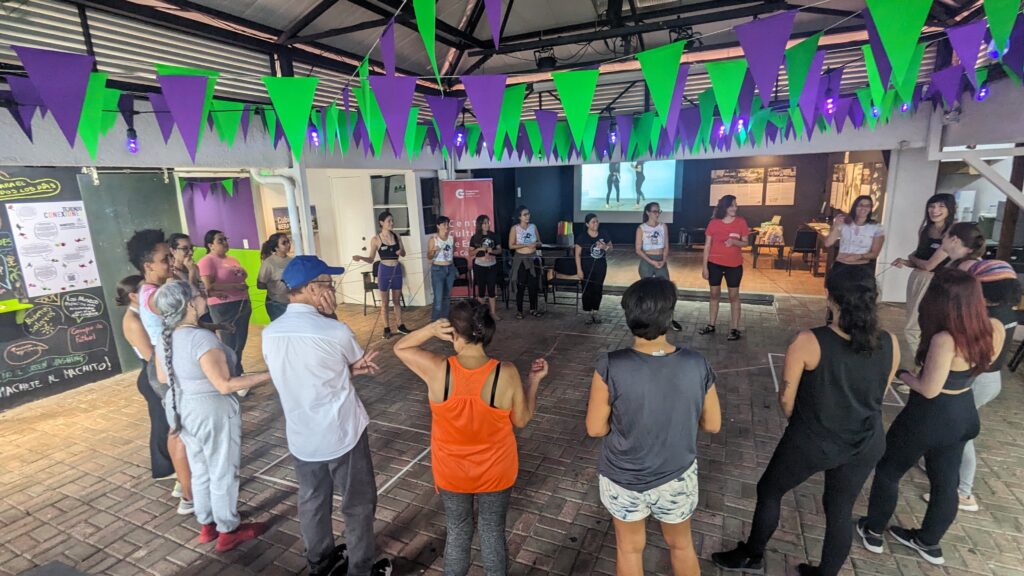
I send back a few emojis without too much enthusiasm and continue with my empowerment self-defense (ESD) class. The participants yell, strike, play, and discuss gender issues. It’s neither a protest nor a celebration for March 8th; it’s part of the daily struggle for a world without violence against women.
I work towards that world—a world where everyone can live with the freedom and dignity we demand each year on March 8th—every single day.
This year will likely be similar. In over five years of teaching self-defense workshops, I’ve noticed a pattern: there is a spike in demand for classes during key dates like March 8th (International Women’s Day) and November 25th (International Day for the Elimination of Violence against Women). A month before, several companies, municipalities, hotels, and other groups call us to schedule activities. And at the same time, allied groups ask us if we will be participating in marches around the country.
Every person in the Mujeres Fuertes Autodefensa network makes their own decisions. I tend to choose to give workshops on those dates.
Of course, I’m thrilled that there are so many institutions and communities that want to commemorate March 8th with empowerment and violence prevention education. It is an aligned way to recognize women’s struggle for justice throughout history, which, as I understand it, is exactly the point of March 8th. I am inspired to see so many people take to the streets, from the center of San José to the beaches of Guanacaste and Limón.
I don’t even mind—too much—when people congratulate me for being a woman, even though they don’t do it any other day of the year, and even though I believe the day deserves more solidarity than congratulations.
What disappoints me is the lack of interest (and funds, and participation) in justice and violence prevention the other 364 days of the year. In the context of my work, an introductory empowerment self-defense (ESD) workshop of around two or three hours is a start, not the final goal. Of course, it’s better than nothing, and people can learn key tools to empower their personal safety in a very short time.
But on March 8th, I would love to see all the companies, institutions, and individuals who support women’s rights back up their words with a larger time investment. In a 12-hour ESD course, lives can be transformed and statistics can be changed. In an annual, ongoing, committed ESD course, a community and a culture can be transformed.
March 8th is a symbolic day that marks, represents, and commemorates a constant, generational struggle, which we continue to fight every day.
I invite everyone to remember that March 8th is not really a special day, but a day like any other, where it is our responsibility and privilege to raise our voices for justice, equality, peace, and freedom.
How to set boundaries and utilize assertive communication tools in any culture and any situation
Stories of harassment and stalking for solo female travelers are a dime a dozen. At home as much as on the road, a woman’s body, space, and boundaries are liable to be disrespected on a daily basis. Assertive communication can make a world of difference—wherever you want to go in the world.
Harassment is an unforgivably common part of the female experience, and it has become unremarkable in its ubiquity. However, just because we have normalized this behavior, that does not mean it is in any way acceptable.
Particularly for women traveling alone, harassment can be a serious issue, causing feelings of insecurity, potentially leading to serious danger, and almost always turning an epic adventure into a battle for basic respect. The good news? It is entirely possible—and necessary!—to communicate and enforce boundaries with grounded assertiveness whenever you feel unsafe or at risk.
It may feel uncomfortable at first. That’s okay. It gets easier. You’ll probably even start to enjoy your newfound no-nonsense communication style after a while.
You have a right to move through the world without the socially mandated protection of a travel companion or partner. You have a right to define and defend your boundaries, regardless of who is traveling beside you—if anyone.
As women, as travelers, and as human beings, we have an opportunity to practice setting and standing up for our boundaries in small ways every single day. As a self-defense instructor, I believe it is imperative that we do so.
In this blog I will share my top three strategies for boundary setting and assertive communication. These are my favorite verbal techniques to teach in my self-defense workshops, and I believe they are critical skills to practice in daily life—whether in your home territory, out on the road, or on the other side of the world.
Note: While it is good to push beyond your comfort zone and engage with an unfamiliar culture as much as possible, a hard no is still a hard no. Cultural differences are real, and may impact norms around communication, personal space and physical affection. Nonetheless, you are in charge of your body and your space, and ultimately you decide what is okay for you, and what isn’t.
3 Fundamental Boundary Setting Techniques for Solo Female Travelers:
Say No. As a solo traveler, you should quickly get comfortable with saying no: “No, I don’t need a taxi.” “No, I don’t want a guide.” “No, thank you, that’s beautiful, but I don’t want to buy it.” It can be a “no” with a smile, or a “no, but thank you so much.” However, if the message isn’t getting across with gentle, polite communication, sometimes you have to be more assertive: “I said no,” on repeat, with an even, low tone of voice and confident posture, usually gets results.
Unfortunately, just about anywhere you go in the world, a woman’s “no” doesn’t receive the same immediate respect as a man’s. Nevertheless, “no” is a complete sentence, requiring neither apology nor explanation. Do not fall into the trap of negotiating over your no, or you will end up spending time, money, and energy on conversations, things, and people you don’t actually want. Of course you can apologize or explain if you want to. The point, as I am constantly reminding students in my self-defense classes, is that it is a choice, not an obligation.
Be a Broken Record. When dealing with harassment—unwanted touch, flirtation, or other behavior—a similar technique works well. Choose one line (e.g. “I don’t want to talk right now.” “Do not touch me.” “Leave me alone.”) and stick with it. It is hard to argue or manipulate past stolid repetition. Be a broken record, repeating your one, assertive line until the person gets the message. There is no need to shout or get defensive unless the harasser becomes more threatening.
A low, even tone, confident body language, and a refusal to enter into any negotiations (but why? Come on… I’m just being nice, etc.) can put a stop to a lot of unwanted behaviors.
Name and Change It. An alternative strategy involves “naming” the behavior we want to change or stop. This is one of my favorite techniques.
We first name the behavior (e.g. “Your hand is on my leg.” “You’re staring at me.” “You’re following me.”) without questions or qualifications. Questions invite response, denial, or negotiation. In a dangerous or uncomfortable situation, we don’t want to start a conversation or argue over the facts; we just want to make the necessary changes to feel safe.
After naming the behavior, we demand the change we wish to see (e.g. “Stop touching me.” “Leave me alone.”) without feeling obliged to ask nicely or say please. If once is not enough, we can return to repetition until the message lands.
I love this technique for several reasons. First, it leaves no room for doubt; we both know what’s going on here, and we’re not going to argue over that. Second, it alerts any bystanders to the situation. Finally, it clearly states a boundary: “You’re doing this. I don’t want you to. Stop.” If the behavior persists, we then know a person does not respect our boundaries or care about our needs.
If the situation calls for it, you may also want to turn up the volume. Yelling has been shown to prevent as many as 50% of assaults against women. The voice is a powerful self-defense tool. To yell effectively, be sure to use your belly—singers, actors, and public speakers will already know how to do that—to protect your vocal chords and bring more power and resonance to your voice. I encourage trying this at home! Tell your neighbors you’re taking an acting class (this explains everything), grab a few friends, blast some music, and practice shouting “NO!” as loud as you can. Remember to yell from your center; it can be helpful to keep your hands on your belly as a tactile reminder when practicing.
People who attack, assault, or harass other people are not superhumans. They are vulnerable to someone shouting in their face, the shame of being called out publicly, or the human discomfort of being confronted directly with their bad behavior. While it should never, ever be anyone’s responsibility to avoid assault or harassment—and a victim is never, ever to blame—these are real risks, especially for women, everywhere in the world. Whether close to home or abroad, we should all feel prepared to take our safety into our own hands.
Solo travelers, what are your go-to strategies for setting boundaries and keeping your communication clear and assertive? Share your wisdom in the comments!
I sit straddling the drum, rocking forward with each beat—the only way I know to comfortably play this instrument.
My knee has slipped off the mat and onto the hard studio floor, but the pain dulls in the background, my focus absorbed in rhythm. Driving rhythm. Holding rhythm.
As I relax into the drumbeat pattern, I am able to expand my awareness to the people in the circle with me: One has moved to the back of the room to dance; others lie down, motionless; and others sing, sway or clap in conversation with the music. A web of sound makes our many points of connection nearly-tangible.
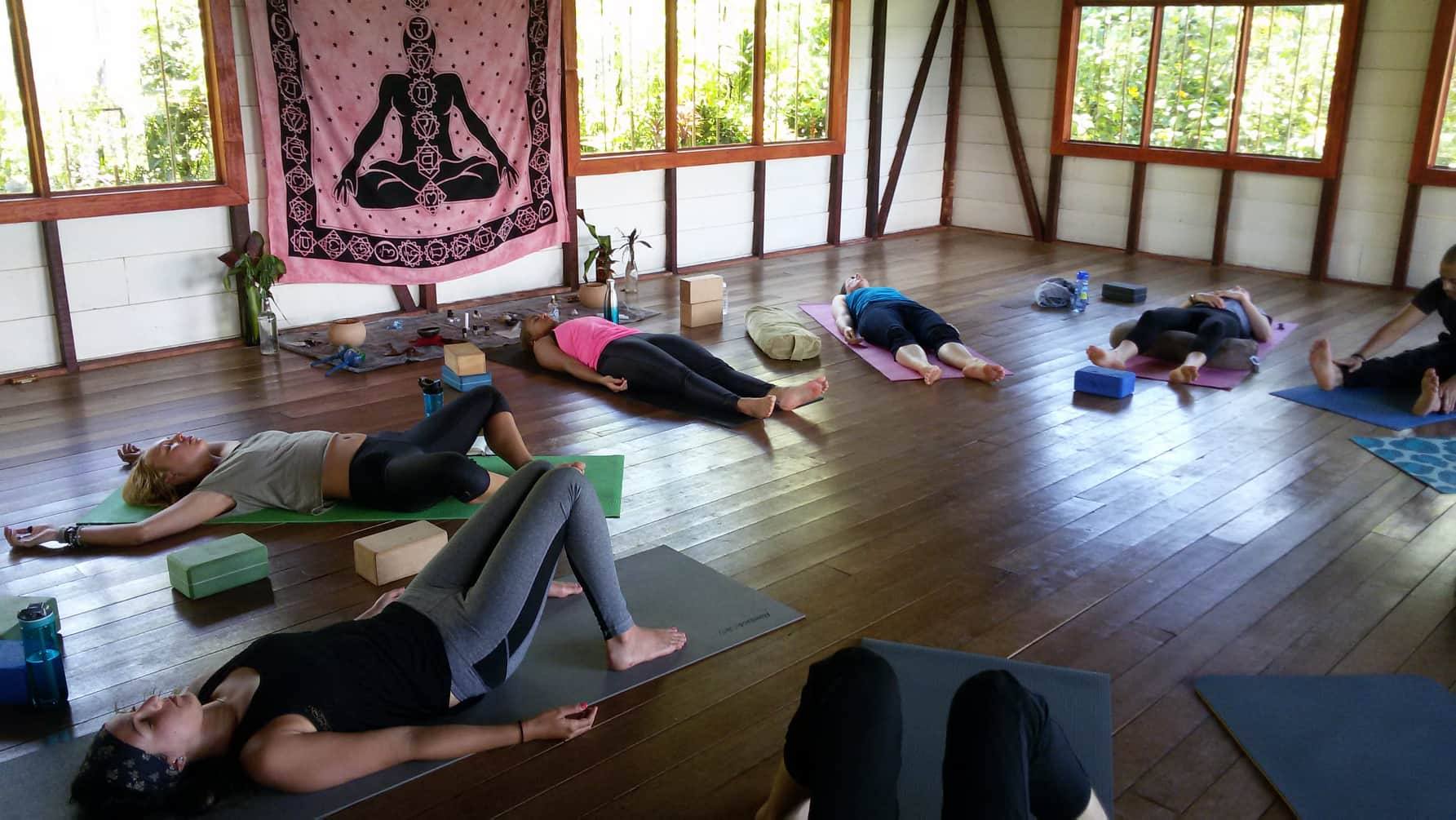
I should be exhausted after co-facilitating our first “Yoga & the Art of Listening” retreat at Finca la Flor, Costa Rica, but I have wings.
Maybe it’s the cacao we drank, still sharp and bitter in my throat. Yet, this sense of inspired-ness—of in-purpose-ness—has been building since day one of our five-day experience.
Eyes closed to hold onto our rhythm, I see the room in my mind’s eye instead: low light, candles at the center of a rainbow of yoga mats, faces glowing—transformed.
“I did this!” my ego wants to shout, claiming for itself all the credit for this transformation, but no… there’s something truer beneath this voice:
At my core, another, wiser self is in awe. I am in awe.
In retreat, as in ceremony, we have each held space for one another to delve inward and to expand outward. I am in awe of the sheer beauty and courage and power of each individual who answered the call and co-created a unique container for accelerated growth. I am in awe of the journey that brought us to the selves sitting together in our closing ceremony, expressing and blessing with joy and freedom and grace.
My ego, of course, is wrong. I didn’t do this.
I didn’t make this transformation happen in the space of five short days. That would be madness. An impossible task.
Each participant was responsible for their own growth and (dare I say it?) transformation.
I—as a co-facilitator, co-creator, and co-learner—may have shared movement and mindfulness practices. I may have designed a schedule. But I am not responsible for the scene tonight, which makes me (rarely sentimental) feel like tearing up.
This is why I prefer the term “facilitator.” A facilitator facilitates individual and collective self-inquiry and development through invitation, sharing, and loving support. A facilitator does not presume to have any monopoly on knowledge—or potential outcomes.
After this experience (the first of hopefully many to follow), I feel grateful, blessed, honored and inspired by what I helped to create. But I do not feel the pride of ownership, because I don’t own this outcome, laid out tonight in my mind’s eye, dancing over drums and twining with the taste of cacao. I recognize that our collective effort, love, and generosity made the experience what it was.
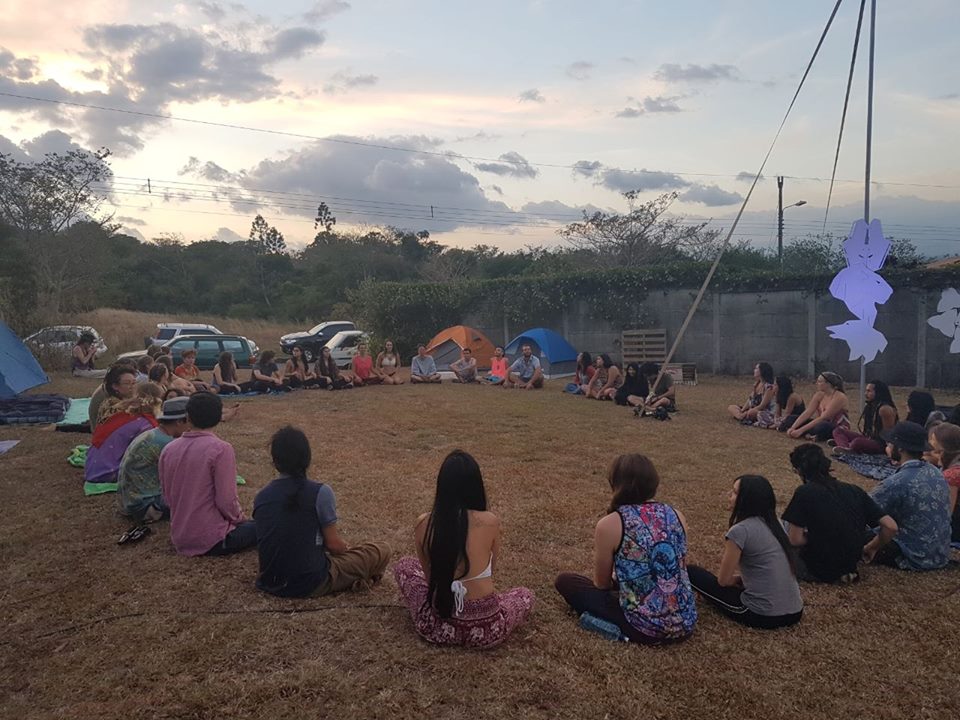
Fifty bodies lift and settle in unison. The light changes from day to dusk. I look around the circle at faces from here (Costa Rica), the U.S., Venezuela, Canada, Germany; I see peace and unity and potential.
A lot of potential.
This is the conscious community I want to cultivate in my life, and my world. This is the tribe I serve in my work with NuMundo. This is the culture of peace I strive toward in my studies at the University for Peace.
I speak in English as I lead our pre-cacao ceremony meditation. I’m still not confident enough in my Spanish to use it for facilitation. I am not local here in Costa Rica. Hardly. I have only lived here for seven months. I have never met most of the people attending. Really, I’m not quite sure how I ended up in this position.
Yet, here I am. Co-founder of Pura Bliss Microfestival, Costa Rica’s “first locally-sourced, co-created transformative festival.” We have big dreams for the future of the event—and the community we hope to foster through it. As we develop our mission statement, we describe ourselves as being, “by locals, for everyone.”
From our last event, March 2018. Next festival slated for early 2019.
Taking this project forward, my co-founders and co-creators are Costa Rican. When they speak of building something rooted in this place, it makes sense. But coming from me, it’s a bit more complicated.
So, I’m grappling with these questions: How can I organize a self-professed local event, when I am not a local? Is it even ethical? How can I be a co-founder of it? How can I root my initiative in this place when I do not know it, can never know it, with the intimacy of those who have always lived here.
But, you may argue, we’re all one global tribe anyways. Why does this even matter?
In my view, it matters a lot. Wherever I choose to live or travel, the very fact of my choice represents considerable privilege. Whatever actions I take in those places—be they small, like buying a coffee, or large, like organizing a festival—they have real impact.
That impact isn’t a simple negative or positive.
Water Flow Workshop with Lau Ra Gonzalez, owner of Da Corpo Studio in Ciudad Colon.
On the one hand, whenever we attempt to take an action outside of our “home context,”—as a development worker, community organizer, or even cafe customer—we are always acting within structures of power and colonial legacies of violence that color even the best of intentions gray. In my case, whether I agree to it or not, I will always be a representative of the hegemonic group into which I was born. We can’t escape these dynamics just because we disagree with them.
On the other hand, I refuse to accept the premise that because of these limitations, the only acceptable place for a white woman with a U.S. passport is “at home.” I am part of the Jewish diaspora, and while my official papers read, “United States,” I feel neither belonging to nor ownership of this identity group. Where can I ethically be and work and contribute? This question can be paralyzing.
On the other, other hand, what does it even mean to be local? Costa Rica, like any nation, is a simple name belying a complex society. If I collaborate with young, well-traveled artists from San Jose, is this representing the real Costa Rica? Can we somehow incorporate Costa Rica’s indigenous community into our efforts? Its immigrant community? Even if we try to represent every “local” group, someone is always left out. In a festival of just a few hundred people, basically everyone is left out.
Pre-sunset yoga class at Pura Bliss.
Perhaps the goal, then, is to create an event as collaboratively and inclusively as possible, knowing that it will never be perfect.
I’m still exploring the nuance of being a foreign organizer of a local event, but as we progress toward our vision, a few considerations help me to understand my role in it:
1. My Co-Founders are local, rooted in Costa Rica’s creative community, and deeply supportive of this initiative. While Pura Bliss may have originally been my baby, it is now a collective and co-creative project. It is not mine. It is ours. And most of the “I’s” in that “We” are in fact local.
2. Our Values support local, collaborative involvement at every turn. We are currently designing our financial structure, which rewards each collaborator equally with a fair share of the profits. The event itself is entirely non-profit. Local vendors, artists, teachers, and performers are our first priority.
3. Local is Global. Global is local. In an increasingly interconnected and globalized world, it is too simple to draw hard lines between insiders and outsiders. I literally feel like I am an outsider everywhere. Maybe it’s time for me to stop worrying about it and contribute where and how I am best able.
4. We’re All Here to Learn. And we’re all here to teach. Everyone has something to offer, regardless of nationality, location, age, gender, race, or any other label. And if another human being, or another community, welcomes that something sincerely, then it is our privilege and our responsibility to give it.
5. I’m Doing this for Free. If all else fails, I rest secure in the knowledge that I will not personally profit in any way from this initiative. I distance myself as far as possible from the historical trends of extraction and exploitation.
6. Listening with Humility. I take my cues from those with and for whom I work. I know that that there is a lot I don’t know. Hopefully I’ll learn some of it in this process. It’s not perfect, but we can’t wait for perfection. I will keep striving to fulfill my role with respect and integrity, and in service to this community. I welcome feedback, thoughts and suggestions on how to do better and do good.
To learn more about Pura Bliss and to stay up-to-date with our journey, follow us here!
Introducing (maybe): a new platform for all the podcast lovers in here!
Last week I had the honor of speaking with WERK for Peace founding organizer (and my good friend) Firas Nasr about peaceful protesting.
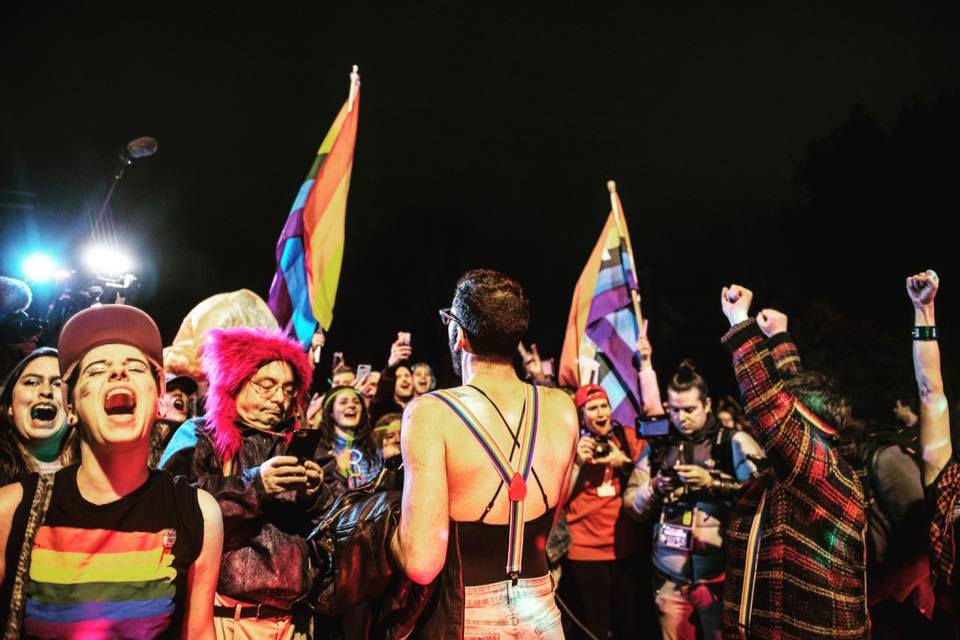
Since the movement started, I’ve been inspired by how WERK for Peace harnesses the power of dance to shift narratives, send a rainbow-hued message and empower the LGBTQ community in Washington DC and beyond. While the interview was ostensibly part of a University for Peace project on nonviolent resistance, Firas’ message is simply too good to share with only a few people.
“With the Mike Pence event, lots of people assume that our primary goal was to send Mike Pence a message. And lots of people ask me, you know, do you think Mike Pence heard you? Do you think you were effective? But for me, the goals are really centering the queer and trans community, and allowing us to celebrate our bodies, to celebrate our community, and to come together for a shared cause. And that’s I think why our events are so effective. I measure efficacy on whether or not the queer/trans community had fun, was safe, showed up… our protests are really about centering our bodies and our voices, our experiences, the marginalized individuals within our community, uplifting those voices and creating community through our events.” — Firas Nasr
WERK for Peace is a queer-based grassroots organization that uses dance to promote peace. It was founded in response to the Orlando Pulse Nightclub shooting in early 2016. Listen here:
“There’s a very clear underpinning as to why we use dance. Our bodies are ascribed political and social narratives, and so by moving our bodies we are actively shifting those political and social narratives. We’re redefining them, we’re reclaiming them, and we’re reclaiming our bodies in the process too. That is to me such a powerful means of both personal and social change happening at the same time. That encapsulates why dance is so powerful as a means for social change.” — Firas Nasr
Will podcasts become a regular menu item here? I’m not sure yet, but with this WERK for Peace spotlight I think I’m off to a good start! Watch my new Soundcloud page to see what’s next.
Everything you wanted to know about my new work with NuMundo and studies in Media and Peacebuilding… and then some.
What will the internet age look like?
Will it result in a “pax technologica” independent of hegemonic power and military force? Or will it only deepen existing divides between different nationalities, ethnicities, and cultural groups, perpetuating conflicts and impeding understanding?
It is an exciting time to be thinking about these questions.
The choices we make now—as users, thought-leaders, entrepreneurs, policy-makers, and consumers—could well direct the course of our technological future.
That is why I am passionate about the vision of NuMundo, a tech-forward company leading the way in “land-based online networks,” regenerative economies, and decentralized global tribalization. If those sound like a lot of strange terms, they are. But emerging organizations and businesses like NuMundo have the power to create and define the terms that will drive the future of technology and the social structures surrounding it.
NuMundo is a global, online network of “impact centers” with a focus on eco-restoration, education, empowerment, community living, and sustainable travel. It serves to link interested travelers, vacationers, and full-time escapees from The System with ecological, educational, and physical locations for stays, workshops, work-trades, and retreats.
I will argue that NuMundo (and other online-offline communities like it) solves the paradox of the “global tribe”—or at least has the potential to do so.
Rather than sacrificing individual and group identities for the dubious ideal of peace driven by homogeneity, it celebrates pluralism and cultivates close-knit, on-the-ground “tribal” communities. Rather than foregoing a global outlook in favor of insular “villages,” it encourages an inclusive and open-minded perspective through online resources, dialogue, and exchange across all borders.
NuMundo answers what I will call a “noble impulse” for connection, meaning, and peace; in so doing, it offers an alternative vision of “full spectrum media” that is earth-centered and regenerative, rather than transhumanist and exploitative. Defining media in as broad a manner as possible, I place this organization at the forefront of a promising trend toward “glocalization” bolstered (rather than hindered) by communications technologies.
“Minimalism: Just another thing rich people can buy?”
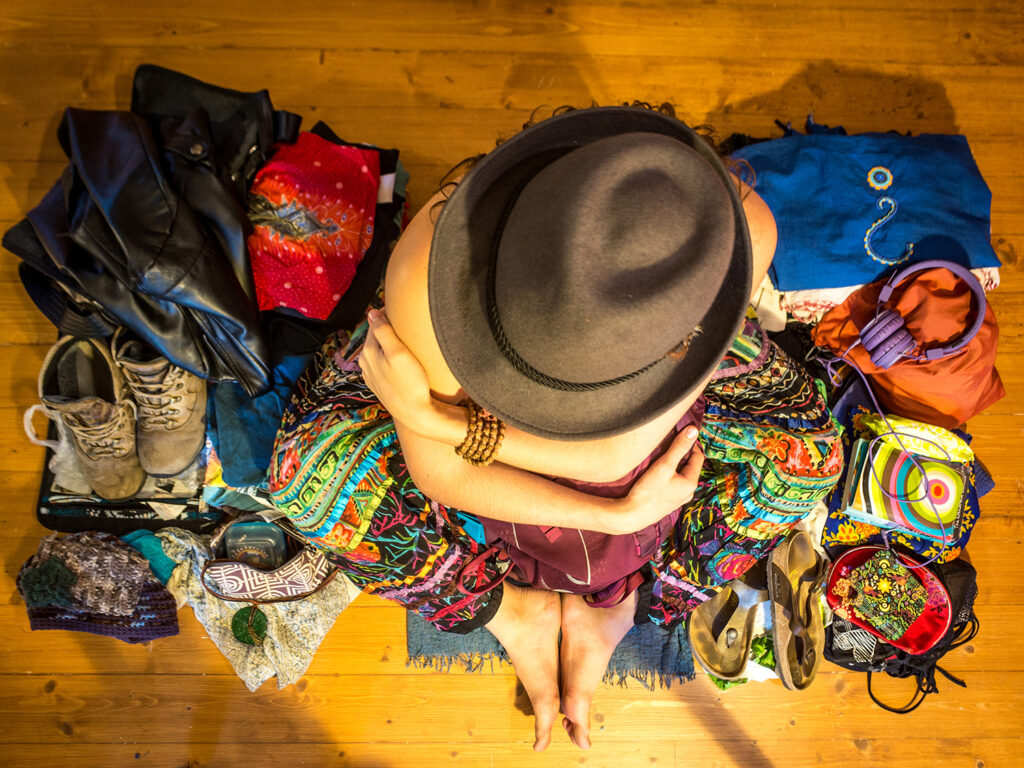
Packing light. Helsinki, 2015.
Using media to promote anti-consumerism and counterculture lifestyles may seem incongruous, but networks like NuMundo are attempting to do just that. Leading propagandist Edward Bernays wrote, “This general principle, that men are very largely actuated by motives which they conceal from themselves, is as true of mass as of individual psychology.” While he and Freud believed these “repressed impulses” to be wholly negative—aggression, sexual deviance, violence—one could make a case for the existence of neutral or even noble human impulses, equally repressed, and equally driving consumer choices.
What of wildness? Intuition? Connection (to nature, self, and fellow humans)?
These impulses, too, are present in modern humans, and repressed as much as, if not more than violence by mainstream culture and conditioning. Some of the emerging media technologies of today could indeed satisfy our hidden impulses—just not in the way Freud or Bernays might have imagined.
Looking at a pattern of consumption, or more broadly a cultural habit, “The modern propagandist therefore sets to work to create circumstances which will modify that custom” to suit his ends (Bernays 55). That is, the processes of propaganda (and marketing) run deep beneath the surface. The elusive goal of altering cultural desires and values through media can create docile consumers, obedient citizens… or something else.
Taking propaganda as a neutral term, this could also describe the process of guiding a reluctant public to first recognize their disconnectedness from community and nature and then seek to reclaim such a connection.
Of course, at times the “selling of peace” is itself part of a broader trend of commodifying meaning that, for example, appropriates ancient practices and strips them of context. The Westernization of yoga, Madonna-ization of Kabbalah, and corporate “greenwashing” should well serve as cautionary tales. Nonetheless, if mainstream marketing can tap into consumers’ darkest repressed desires, then alternative models can play to their noblest ones. Success in this endeavor would undoubtedly have a net positive effect on global peacebuilding efforts.
We Have the Medium. Still Waiting on the Message.
We could next consider what role these alternative media might play in building a new kind of peace.
The equation of Internet + Access = Peace is, most would agree, vastly oversimplified. It’s not only access to technology, but also how that technology is used that impacts social evolution. While that statement may seem self-evident, many appear tempted to label this new technological force as “good” or “evil.”
However, “It was not the machine, but what one did with the machine, that was its meaning or message” (McLuhan 7).
Communications technologies are the medium; how we use them will determine what meaning they ultimately have for human development.
Networks such as NuMundo seek to utilize new technologies in a focused and intentional manner, promoting ecological lifestyles, cross-cultural understanding and appreciation, and community-oriented systems. They do so by facilitating access to workshops on permaculture, natural building, indigenous wisdom, and traditional healing modalities. Furthermore, they enable “regular people” to discover “transformational experiences”—in the form of vacations, retreats, gatherings, or work trades—capable of permanently altering their worldview.
When we use “the machine” to promote sustainable travel, community empowerment, and ecological lifestyle, then the machine is…green.
If communications technologies ultimately serve to create a greener, more grounded, and more connected world, then we are a far cry from both the doomsday predictions and the transhumanist fantasies of many scholars and thinkers. “The “message” of any medium or technology is the change of scale or pace or pattern that it introduces into human affairs” (McLuhan 8). We are currently embedded in the change being wrought by the introduction of the internet and associated technologies. Thus it follows that we cannot know yet what the characteristics of that “change of scale” will be. However, it appears likely that the participation of users will prove a strong determining factor.
Convergence & A Full-Spectrum World
Full-spectrum experience in Manuel Antonio, Costa Rica
Convergence theory describes not only the convergence of media companies, but also consumers’ participation in and influence over media technologies. It is this “grassroots convergence” that applies to an analysis of NuMundo and similar digital communities.
Herein, “consumers are learning to use these different media technologies to bring the flow of media more fully under their control and to interact with other consumers” (Jenkins 18). Active and participatory internet users affect the form and function of media through their involvement.
What will they choose to do with the control of new media in their own hands?
Many are building tribes—some purely virtual, others avatars of more local groups. We will return to the topic of tribalization shortly. Other users, however, are building sophisticated digital networks of communication, growth, and resilience akin to those of the mycelium that run beneath the earth.
To follow the idea of convergence a step further, the concept of a “full spectrum world” takes on yet greater nuance when we extend our definition of “media” to concrete, physical experiences. If media, or communications technologies, are extensions of our own eyes, ears, mouths, hands, then the reverse could also be true.
By such a definition, NuMundo’s unique blend of physical, grounded “impact centers” and the tech-savvy “digital nomads” visiting them are actually part of the media they use. In this instance, “media” does not only refer to the website, blog, search directory, photos, videos, and Facebook, Twitter, and Instagram accounts that constitute NuMundo’s online presence.
It also encompasses the physical locations, the food forests, the dirty hands, the organic farm-to-table meals and the face-to-face interactions that characterize users’ lived experience.
At the risk of following the concept too far, we are the message. And the message is one of peaceful community and regenerative practices.
Networks like NuMundo promote peace at multiple levels. Permaculture principles engender food security, community empowerment, and nature connection. Respect for indigenous wisdom cultivates cultural exchange, learning, and awareness. A culture of travel and “transformational experience” de-commodifies the modern lifestyle and reinstates human interaction at the fore of our value system.
Many people, when picturing the future of technology, may imagine a dystopia (or utopia, depending on who’s imagining) of chips implanted in brains and credit cards embedded in forearms. However, there are alternative models.
NuMundo is one of them.
And this vision centers on the fusion of the global village and the local tribe.
Tribalization: The Good, The Bad, and the Nu
Finca Morpho, one of NuMundo’s impact centers.
The word “tribe” has many connotations—some negative, as in the conflict that often arises from “us versus them” dynamics and identity politics, but others positive.
Alternative communities across the globe are reclaiming the term, taking it to mean something quite different from the conventional usage. NuMundo, for example, often refers to their community as “tribe.”
In recent discourse, the idea of the global village frequently appears in opposition to the local tribe. And looking at the echo chambers of social media, the proliferation of online hate groups, and the fragmentation of the online world, we are likely to wonder which it will be: tribal or global.
The NuMundo model, on the other hand, synthesizes these two dynamics in a manner only possible because of modern technologies. Few species have achieved such a feat; mycelium are one of them. Underground mycelium networks can stretch for thousands of miles, cropping up above the surface at intervals, yet remaining interconnected through adept communication systems. Likewise, NuMundo impact centers and community members span the globe, and their virtual ties are invisible to the naked eye. However, through strong networks of communication, they remain intricately bound to one another.
The NuMundo approach to applying advanced technologies to modern society has its roots in natural processes. We would do well to ground our technology use in such a way more often.
Taken in the NuMundo sense of the term, tribalization is an overwhelmingly positive development. Modern “conscious tribes” represent small, closely knit and interdependent groups of people who support one another and their environment. These groups have strong identities, but ones which incorporate a global perspective and a value system centered on non-violence—between humans, and toward the earth.
However, retribalization can undoubtedly become a damaging and even violent process, whereby we we project our negative qualities onto an outside “other,” thus reinforcing an “in group” identity while demonizing an “out group.” Such trends have certainly arisen in many alternative lifestyle movements. Think militant veganism, minimalism, and sustainability. Dogmatic adherents to any value system will often move beyond their own choices to attack those who do not share them.
The inherent dangers of tribalization are not to be overlooked or brushed off.
What’s Ahead?
Can the global village coexist with the local tribe, then?
NuMundo would say yes.
If there is such a thing as pax technologica, I hope it will follow the NuMundo template: Technology-supported empathy and interconnection will lead to a “decentralized peace”—independent of hegemonic or state powers. Retribalization will occur along non-national, non-ethnic lines; rather, global citizens will group into value-aligned, semi-location-independent communities.
Potential for peace notwithstanding, however, we will do well to take cautionary measures against the divisive implications of a retribalization process. As this shift takes place, we must ensure that it is not divisive, with “eco-warriors” hunkering down in one camp, facing off against the status quo and corporate machine in the other.
Most likely, the dynamics of future digital communities will be far more fluid than either of these scenarios, a bit less black and white.
There is no utopian outcome to the global tribe paradox, whereby technology leads to perfect peace amongst mankind and harmony with nature. Not even an army of mission-driven, eco-focused organizations could achieve that. Still, in turning our focus toward globally linked, locally rooted projects, we could learn a lot about building new models of non-violent living.
If technology is going to define the world that future generations inhabit, let’s hope it’s less “Brave New World” and more “NuMundo.”
References Bernays, Edward (1928). Propaganda. Routledge. Chapter 4: The Psychology of Public Relations. pp. 47-61. Blondel, Ylva Isabelle. (2003). Violent Conflict and Roles of the Media. Uppsala University report commissioned by Sida and UNESCO. pp. 1-37. Jenkins, Henry. (2008). Convergence Culture: Where Old and New Media Collide. New York University Press. Introduction: Worship at the Alter of Convergence: A New Paradigm for Understanding Media Change, pp. 1-24. McLuhan, Marshall. (1964). Understanding Media: The Extensions of Man. Chapter 1: “The Medium is the Message” pp. 7-21 and Chapter 32: “Weapons: War of the Icons” pp. 338-345.
“We are the crazy ones who choose to believe in peace,” he concluded.
One sliver in a blurred progression of notable speakers and presentations that overfilled my two-day orientation at UPeace (University for Peace) in El Rodeo, Costa Rica, his words stuck with me.
The volcanic mountains of San José rose in the hazy distance outside the window. Over 100 students from several dozen countries filled the seats beside me. Anyone pursuing a master’s degree in Peace Studies must be at least a tiny bit of an optimist.
I certainly am.
To trust, to believe, to hope—this is my daily act of rebellion in a world that tells us only to fear, to hate, and to doubt.
Our world is full of darkness. And it is full of light. I am an optimist not because I do not see the darkness (of course I do—who could ignore it?), but because I choose to always strive for its opposite.
The world is at war; I hope for peace.
Humans are cruel, petty, hateful, and foolish, but I believe—I know—they are more often kind, generous, loving, and wise.
No matter how many times I encounter the former, I continue to trust. This is not naïveté; it is optimism. Because my world—the world I want to live in—must deserve my faith.
How can we be incorrigible optimists in a world that is constantly turning on its head?
Simple.
We choose it.
We rebel against cynicism and decide to be optimists. There is no other way.
That’s what I’m doing here at the University for Peace in Costa Rica. Choosing to believe in peace.
More stories of discovery, peace and adventure in Costa Rica are on the way. What do you want to read about? Let me know and I’ll probably take your suggestion on board!
If you travel (or live), where the mother tongue is not your mother tongue, you will struggle. The mundane will become complex and challenging, and you will no longer take your habitual fluency in the everyday for granted.
This is a good thing.
It shouldn’t be easy. (Or at least, I strongly believe that it is through challenge, discomfort, dis-ease that we grow best.) So, this is my travel manifesto for you…
Go out into the world, and struggle:
Struggle, to purchase underwear.
Struggle, to ask directions.
Struggle, to talk about the things that matter to you.
Comprehending the cost of your coffee will be a minor victory.
Catching a compliment on the first go will be cause for celebration.
Navigating a simple interaction will thrill you—as it never could at home.
These are all very good things.
For it should not be easy, this day-to-day living.
It should not be easy, this being in the world.
So struggle, to take the bus.
And struggle, to order at the bar.
Struggle, to understand.
Struggle, to say you have understood.
For it should not be easy, this everyday living.
It should not be easy, this quotidian life thing.
When it is easy, we forget—
We forget that buying our coffee is in fact a minor victory,
that a compliment is cause for celebration,
that understanding is a miracle,
and being understood doubly so.
So struggle, and don’t forget that it is a privilege to move through this world with grace.
And when you do forget,
as, invariably, we do,
Go out again
and travel.
Remember what it feels like
to struggle for the simplest of rewards.
Remember not to take
anything for granted.
Remember how to move
through this world
with grace.
— Monday, 15 May; train Barcelona—Paris
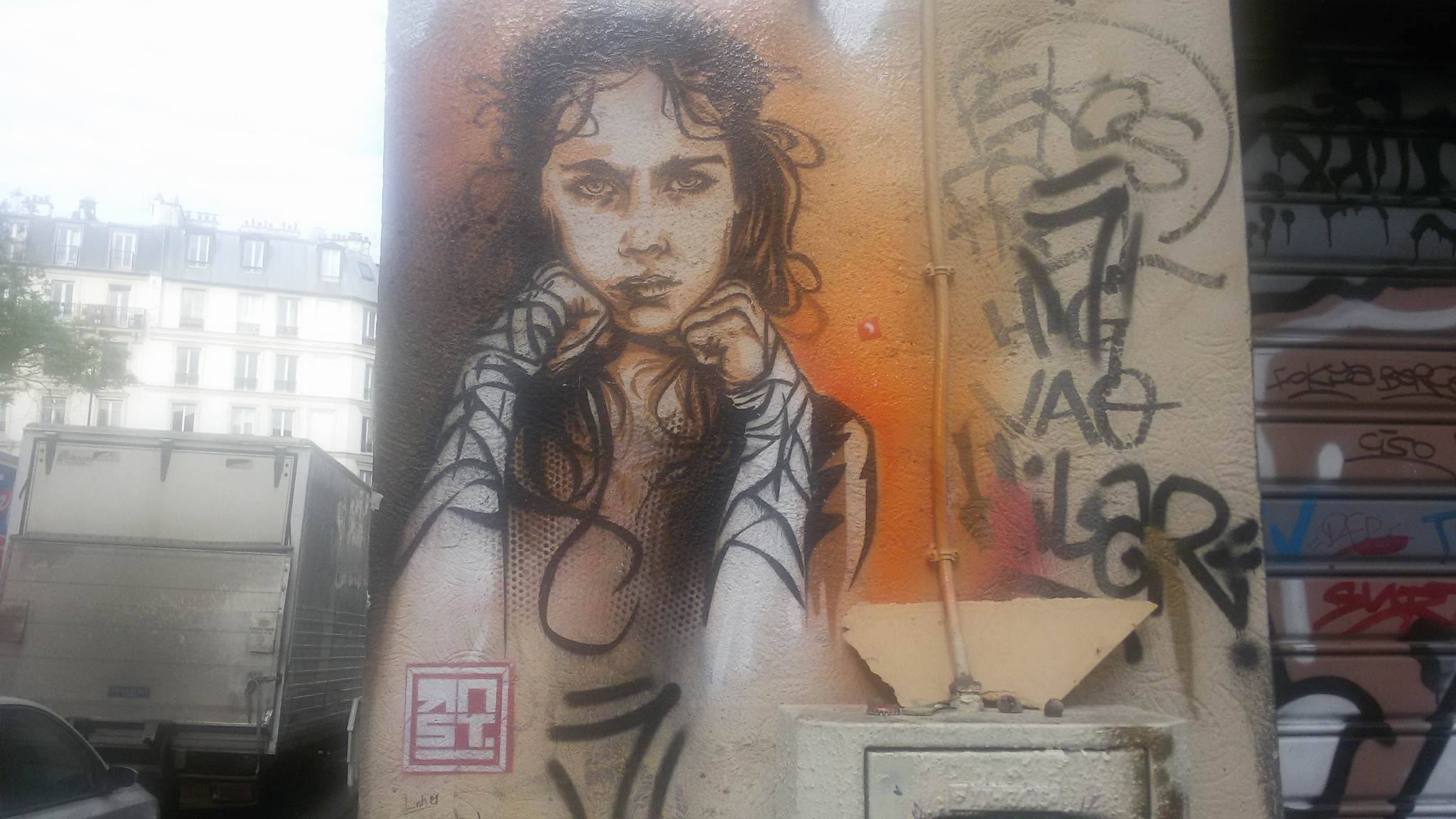
*Image photographed in Belleville, Paris. Artwork by rnst.
Portugal has made it onto just about every top travel list this year, and with good reason.
I loved the month I spent there in every way, and I want to share some of the goodness with you.
If you’re looking for the definitive guide to the country, this is not it. On the other hand, if you want to know about some of the places, food, and other things I really enjoyed, I’m so happy to share my favorite spots with you.
Enjoy this rough and totally incomplete guide to sunny Portugal. And feel free to ask if I didn’t mention something you want to know about—maybe I forgot!
I give to you…some stuff I liked and things I did in Portugal, in no particular order:
Praia da Areia Branca
Just 70 kilometers (1.5 hours by bus) North of Lisbon, Praia da Areia Branca is (one of) the chillest spot(s) I know to surf, yoga, and write songs in Portugal. Granted, I only went to two areas on the beach, but I’d go back, and that’s saying a lot. A week is perfect; I think less than that would be too short.
Gorgeous garden out back, choice of shared or private rooms, super affordable if you go in low or mid season and opt for the surf-yoga-stay package. Comfortable, clean, and graced by the warmest and most welcoming hosts.
Nicest (and, in my roommate’s opinion, cutest) surf instructors around. Great value for money. Packages available for surf/yoga/stay, or just surf/stay. As it turns out, I don’t like surf lessons, but if you’re looking to learn, this is the deal for you.
Yoga:
Yoga lessons with Carla (organized through Ripar/Lemon Tree) are a necessary complement to hours of surfing in the cold Atlantic. She is a gem of a teacher, and I was lucky to wander into her class for a week.
Eat/Drink:
Foz—
Fresh seafood, sunset views…what else is there to say? Go for one of the grill options. I won’t ruin it for you, but the skewers are served beautifully.
Sol Mar—
Catch the sun from the open terrace and relax to the sound of the waves, or sit inside and enjoy some particularly well-chosen beats. Veggie burger isn’t bad, and I hear their beetroot salad is excellent. Lemon-ginger infusion is perfect for post-surf warm-up.
Bar Central (or maybe it’s Cafe Central…you should probably ask) (Lourinha)—
If you have a car, or a friend with a car, this cafe is worth the 10 minute drive from Praia da Areia Branca for some of the tastiest Pasteis de Nata in the area. Buy a box and bring some back to share.
Dance:
Baracca Bar—
I did not go on working-surfing holiday expecting to stay out dancing until two in the morning, but that’s exactly what I did my last night in Praia da Areia Branca. The DJs on a Saturday night were unexpectedly exceptional.
Porto and I are totally going steady. Portugal’s tiled, hilly, artistic northern city won my heart within twenty-four hours. I even forgive it for being uphill in every possible direction. A three-hour train or bus ride from Lisbon, it’s an easily accessible (and, in my humble opinion, unmissable) stop for any itinerary.
I would highly recommend the Airbnb studio apartment I rented just to the north of the city center. Ideal for solo travelers, couples, or really good friends. Hosts were kind, solicitous, and excellent communicators.
Eat:
Ristorante Sai Cão (Rua do Bonjardim)—
Keep walking up past Trindade metro, cross the main road, and look for a blue awning on your left. Great local spot—according to my hosts people come from all over Porto to eat here—and menus for 4-5 euros.
Raiz—
Menu looks great. Comes highly recommended. I didn’t actually get a chance to eat here.
Foz Fish Restaurants—
Follow the Douro River toward the sea (walking). When the ocean comes into view and Foz is just around the corner, you’ll come to a strip of seafood restaurants on the sidewalk. Pick the busiest one, and enjoy some of the freshest, cheapest fish around.
Francesinha—
The famous Porto sandwich—layers of meat and cheese, and covered with a tomato-based sauce—available at just about any restaurant for 5-8 euros. I recommend sharing with a friend to avoid instant heart attack.
Drink:
Bar Candelabro—
Enjoy a coffee or port wine surrounded by old books. This quickly became my favorite spot to read and write in the whole city. Social hub by night, calm cafe haven by day.
Cafe Majestic—
Gorgeous (almost over the top) explosion of mirrors, brass, candelabras, and overdressed waiters. Have high tea for 20 euros…or sit down, take pictures, look at the menu and walk back out and head for Bar Candelabro instead.
Maus Hábitos—
Art gallery with bar/restaurant space, situated above a parking garage (you have to know to look for it). Funky, creative ambiance, perfect for a drink with friends, and supposedly there’s dancing on the weekends.
Dance:
Rua Cândido dos Reis—
Take your pick from a whole street full of standard bars-with-dance-floors. Nothing exceptional, but they serve their purpose if you’re looking for a party on a weeknight. Bar hop to get the full experience—Britney Spears one minute, Kizomba the next, and old school hip hop after that.
Party Boat—
Not sure how to give instructions for this…Walk along the river in the early evening. Look for a cruise boat blasting music and crowds of young people waiting to get on board. Get lucky, and buy the last two tickets to a sunset cruise dance party. Alternately, river sightseeing cruises are available daily (without the party).
Tiny but ultra-chic selection of footwear, bags, and a few clothing items, owned and stocked by a man from Tokyo with a great eye for functional-yet-beautiful style. Boutique prices.
Pop-Up Store—
Good luck finding it, as it comes and goes, but if you do manage to stumble upon it there’s a whole world of local designers and cooking classes inside!
They think of everything, so you don’t have to. Equipped us with helmets, smartphone charger, maps, plans for the day, goggles. All we had to do was hop on and get lost—and we did this spectacularly well. Set your map directions to “bicycle” to avoid highways and get into some interesting wooded situations.
Matosinhos
Don’t go here unless there are waves. Maybe for an afternoon to eat fish (Matosinhos has the best fish in the world, according to their tourism office).
Surf:
If there are waves, Matosinhos is an easy day trip from Porto. Take the A metro or the 501 bus from Porto center, and hop out half an hour later in the dilapidated, possibly haunted, urban surf spot. Many surf schools on the beach where you can rent equipment.
This one’s a splurge. Save it for a special occasion or for traveling with your mom. 😉 Ideal location if you like things quiet at night, walking distance to Bairro Alto and lots of funky bars and restaurants, but situated in a local, not too touristed part of town.
Another splurge, but a day-long adventure complete with visiting a local food market, learning loads about Portuguese cuisine, and cooking a ridiculously tasty multi-course meal, wine included.
Visit Sintra—
Again, I didn’t actually do this, but my friend did, and suggests taking a train to Sintra, renting scooters there, and then motoring out to the Westernmost point in continental Europe, Cabo da Roca. I’d take her word for it.
Walk—
Everywhere. The famous Tram 28 is crowded, to say the least; if I had to do it again, I’d probably just pull on my walking shoes and take a three hour wander from Bairro Alto to Alfama (wonderful twisty little roads) and back.
Go to Belém—
The port of departure for some of the most famous naval expeditions in history, Bélem is an easy (though hot and crowded) bus ride from the center of Lisbon. Wander over to the fort, but by all accounts don’t bother going inside, eat the Original Pastel de Belem at the cafe of the same name, Pasteis de Belem, and pause to soak in the ornate architecture of the Jerónimos Monastery.
Listen:
Fado—
A Tasca do Chico in Bairro Alto came highly recommended for a Fado music experience. Don’t make the same mistake we did; you need a reservation or you will not get a table in this tiny spot. Go for the music, not the food.
I couldn’t resist visiting the farthest southwest town in Europe, and it far exceeded my expectations. This place is definitely magic. According to my airbnb host, it has something to do with the rocks. Whatever it is, this would have to be my top pick for a chilled out beach holiday. Go out of season; I hear the summer gets hectic.
I loved my stay at this laid-back oasis right at the edge of Sagres. Liz is a wonderful host, the garden is as peaceful as peaceful can be, and you could comfortably fit two people in the double room.
Memmo Baleeira Hotel—
If you’re going for upscale, this four-star hotel has some truly beautiful views of Sagres harbor. That’s all I can tell you about it, since I never actually stepped inside.
Do:
Surf—
Watch out for the rocks at Tonel Beach, especially if you’re like me and wipe out more than you ride waves. But the water is beautiful, not as bitingly cold as farther north, and the dramatic cliffs surrounding the beaches make an unbeatable view once you make it past the break point.
This marks the actual farthest southwest point in all of continental Europe. It’s a slightly-hilly-but-enjoyable 6km pedal from Sagres town; if that’s not your windy cup of tea, I believe the regular local bus goes that way several times a day. Leave time to wander the paths along the cliffs
Wander—
The beaches. The cliffs. The harbor. The one sleepy main road that cuts through town. Time slows down here—let it.
In my first workshop meeting, I share a TED Talk by Nigerian author Chimamanda Ngozi Adichie and she discusses how throughout history those in power—especially colonialists—have dispossessed others by choosing how to tell their stories.
I am a young, white, American woman facilitating a workshop in Cape Town, South Africa sponsored (I think) by the U.S. embassy.
The title of this workshop? Storytelling for Social Justice.
As my “students” introduce themselves at our first of five meetings, they speak with courageous vulnerability about identity, hope, passion, and overcoming adversities I can scarcely imagine—genocide, violence, disease, loss.
They are mostly African, mostly POC, and mostly ten years older than me.
Sitting at the table with these eight extraordinary individuals in a bland classroom in the “American Corner” of the Central Library, I facilitate a discussion about “finding our authentic voice.”
Am I following in the well-worn tracks of those colonialists and neo-colonialists who sought to dictate how the stories of the African continent should be told?
Am I, too, somehow disempowering my students by seeking to facilitate their storytelling? Is “facilitate” just a nice word for “control”?
Damn, I sure hope not.
But I also hope that my race, age, and nationality do not disqualify me from sharing what I know with this exceptional group of human beings. They have honored me with their trust, their time, and their attention—and I feel humbled and motivated in equal measure. I want to support them in telling their stories, and I want to do it in the right way. So, as I do, I’ve spent a lot of time thinking about what the “right way” would be.
I’ve never quite faced a situation like this before. I’ve taught dance and yoga, but writing is another level. When we talk about telling stories—our stories—we step into sensitive territory.
For too long academia has arrogantly claimed ownership of the world’s stories. For too long, media and politics have propagated incomplete stories, visiting a kind of violence on their subjects by flattening them into one dimension. For too long, those who possess privilege and power have thought to police the self-expression—the stories—of those who have less.
And on and on and on…yes, storytelling is sensitive territory.
But, I’m still facilitating the workshop. This is how I’m moving past these stumbling blocks:
1. I choose the word “facilitate” over “teach.”
I would not presume to teach a group of people older, wiser, and more seasoned than me. I prefer to understand my role as that of facilitator, enabling my workshop participants to learn from one another and from my experience. (I also expect to learn just as much from them as they do from me!)
2. To that end, I focus on the knowledge I do have to share, which may be of value.
Introducing this workshop, I told my group that I came to them primarily as an editor who has worked on thousands of articles and several full-length books. I also come to them as a writer who has published for years on many online platforms. I believe the knowledge I have gathered from that work could benefit anyone wishing to improve their writing skills.
3. I accept the tension.
I think there is an inherent tension to my position. There are layers of nuance whenever a person steps into a teaching role, travels in foreign countries, or enters any cultural context other than their own—and I’m doing all three. That’s okay. I hope that by keeping those nuances in mind I will manage to avoid any particularly inappropriate gaffes.
7:00 p.m. Table Mountain summit, Cape Town, South Africa.
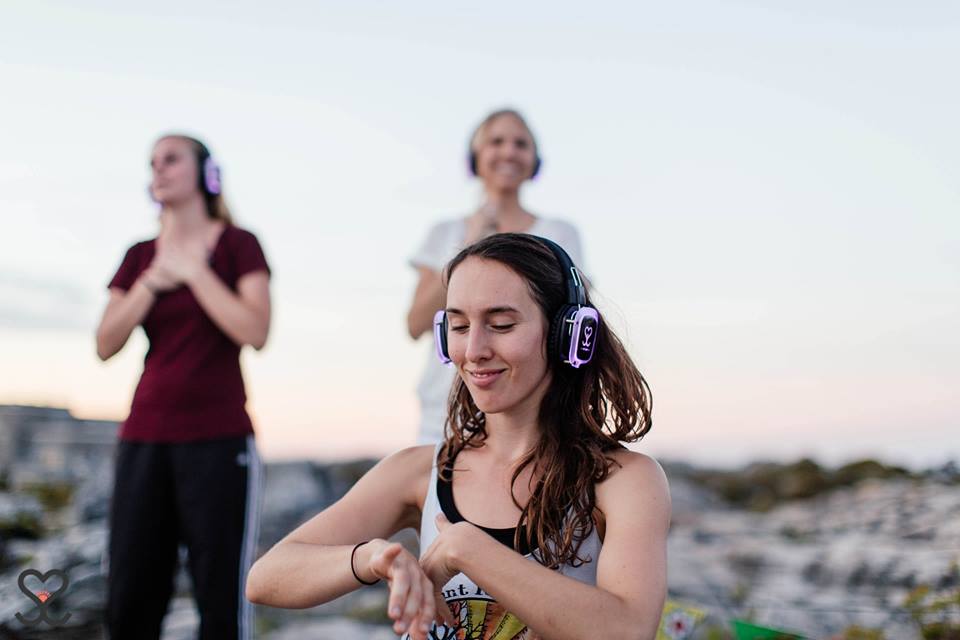
The sun is setting, and we are dancing.
Two hundred participants, most dressed in white, headphones on—we are praising the earth, this mountain, the clouds streaming across the rocks and bathing the world in dreamlike mist.
It’s my first time at a “Secret Sunrise” (or, in this case, Secret Sunset) event.
I’ve taken the hard way up, along with one friend and two strangers picked up along the way, and my endorphins are already surging after a two-and-a-half-hour hike.
But the world is in chaos.
I can’t glance at Facebook, work a shift at elephant journal, or even have a casual conversation without this truth becoming painfully apparent.
I, like many, feel compelled to do something say something change something—but, paralyzed by the overwhelming madness of it, I do little, say little, change little. And yet, and yet, and yet—every day I work to promote mindfulness. Every day I write to nurture cross-cultural understanding. Soon, I will return to school to study the art of peacebuilding.
And yet, and yet, and yet—more importantly, in my humble opinion—every day I seek joy.
The world is full of fear. So I fight my own demons. The world is full of chaos, and so I strive for inner balance. The world is full of uncertainty, so I dance with it.*
And here we are. Dancing.
Piano keys draw clouds through the sky. Eighties rock compels bodies—eight years old to eighty-eight—to move to the same beat. House music lifts feet up, gravity-defying, and down, solid and real.
Each of us in our own headphone-cordoned world, we dance. Alone and together. And hell, if that’s not an apt metaphor, I don’t know what is.
Alone and wrapped up in our own worlds, we are all nonetheless connected to one another by the same melodies in our ears, the same rhythm in our blood, the same music in our bones. We are all dancing, whether we realize it or not, on the same sacred ground.
So, is this an odd time to be turning to joy, music, community?
I don’t think so. In fact, I’d say that moments of chaos, uncertainty, fear are very much the right time to dance. To connect, however we do that. To create. To keep pushing for meaning.
Because if we lose that now, then we’ve lost.
So dance—not in spite of the chaos, but for it, with it, and through it.
Dance—”as long as the music plays.”
Dance—and don’t stop, because the world, chaos and all, is still spinning.
*This is a poetic response to turmoil; none of it is meant to underplay the value of activism in our current global climate. Act. Protest. Make change, by all means. But don’t forget the value of personal growth. I genuinely believe in “the power that living a good life can have,” as a friend once put it. Ideally, do both!
Some people will reminisce—with nostalgia, regret, or a little bit of each—about their first cigarette, their first drink, or their first time trying X (fill in the blank with your substance of choice).
Me?
Alcohol was never a big deal in my family, and I’ve stayed away from cigarettes like my life depended on it (oh wait, it kind of does).
That doesn’t mean, though, that I don’t have a “first” on which to reflects with the romantic fondness of well over a decade of distance.
I’m talking about travel, of course.
Several early family vacations could count as that first—London, Canada, Florida—but one in particular stands out in the box of mismatched, half-faded memories I carry: Italy.
Italy, first and most enduring love of my life… after horses. That first visit I only remember in glimpses: The heat (there was a record-breaking heatwave that summer). An old woman in a bead shop, and a strand of irregular, aquamarine beads (I would finally turn them into a necklace some fifteen years later). Crisp, white slices of coconut beneath a cascade of water glittering in the sun. Venice canals and dreams of carnevale (I have yet to visit at the right time). Cappuccinos for breakfast, and several subsequent bathroom breaks over the course of the morning. Fairytale mountain villages, and cities shimmering under summer sun.
I have since been back to visit nearly a dozen times, learned the language, and made numerous friends across the country. I have bungee jumped in Piedmonte and reignited a passion for adventure in Sicily. I’ve indulged in pizza in Napoli, anchovies in Genoa, and fiori di zucca in Rome.
Just thinking of it makes my mouth water and my palms tingle.
Italy.
But the dreamlike beauty of these childhood memories is about so much more than one country. It marks a beginning.
I could trace my enthusiasm for the wonder of discovery to many moments—many trips:
Dancing in a circle of women in rural Senegal at age sixteen.
Wandering the streets of Spanish cities at Christmas-time with my peers, age fifteen.
Age seventeen, arriving in Paris alone, and growing into a sense of adventure once too big for me.
I could pick any of those or countless other journeys, but I choose to locate my travel awakening in that sweltering Italian summer many years prior. A seed already planted. A map already drawn across my future—big, swirling letters spelling, WANDER.
And so I have. And so I do.
The first time we meet ourselves is extraordinary indeed. Even if we’re too young to realize it. Even if we repeat the experience countless times thence. Even if we’re full of shit, and it wasn’t like that at all, and that dreamlike beauty is just the result of fifteen years’ obfuscation.
So, I’m curious: what was your first time traveling like?
Here’s a totally irrelevant picture of penguins to lighten the mood…
Late December, Sea Point, Cape Town
The walls and tables are painted a matte black, with the name of the cafe written in white. The decor is rustic-chic—a style I’m beginning to identify as a hallmark of upper-middle class Capetonian hipster culture. Bonobo plays on the stereo.
When I look around, I’m not surprised to see that all of the customers here are white. The servers (just as predictably) are black, but let’s leave that aside for now.
While the prevalence of these “white spaces” no longer surprises me here (or anywhere, for that matter), I still find them troubling: the climbing gym, music venues, bars, cafes…
A conversation with my new housemates this morning brought this subject to the front of my mind, though I’ve repeatedly followed this line of thinking during my time in Cape Town—both this year and last. And I think it’s pretty relevant to any society (not just South African) that is both highly stratified and intricately diverse.
Disclaimer: This is one tiny, ~800-word slice of a massively complex issue. I am not offering any solutions. If I make you stop, think, examine, I will be more than satisfied.
So.
The reason for which these white spaces exist are plentiful and fairly obvious. A massive wealth gap divided along racial lines, cultural differences in taste and recreation—the list goes on. Rather than discuss why we have them, however, I’d like to focus on how (or even if) we can confront this phenomenon.
To be precise, I would like to share how I confront it, in the hopes that it may help someone else. Note that I’m sharing from my position as a white woman experiencing “white spaces”—I’d be curious how the response changes (or doesn’t) when the deck shifts.
Situation One:
You walk into a funky little cafe, bar, concert, fill-in-the-blank, and the homogeneity of the whitewashed crowd immediately strikes you, given that you’re in a country whose population is less than 10% white.
Here’s what you don’t do: You don’t turn around and walk out, because you actually dig this band, the coffee’s awesome, or you’re getting super hungry. You don’t harangue your fellow customers with your guilt-laden complaints about the bitter vestiges of apartheid ruining your cappuccino, because that’s pointless. And you don’t call up your non-white friend to see if they want to hang out—immediately—because, well, I think it’s obvious.
Here’s what I actually do; it’s something I’d call subtle awareness, and I believe it to be meaningful:
> First, I acknowledge that I have indeed entered a glaringly white space. I’m not going to ignore it or deny it. The first step to addressing any issue is being aware of it.
> Second, I examine my motives for being here. Am I drawn to this cafe because it is comfortably, familiarly, safely white? Or have my 25 years of cultural conditioning simply predisposed me to seek out cafes, bars and activities that equally appeal to others of my socioeconomic and cultural background? It’s probably the latter, but it’s always good to check in—honestly—with myself.
> Lastly, I enjoy my goddamn cappuccino and write this blog while I’m at it, because at this particular moment, what else am I going to do?
Situation Two:
You start to notice a pattern. You seem to be consistently ending up in these homogenous spaces, and you’re worried that it’s not helping you become a more aware, cross-culturally fluent or educated individual.
Here’s what you don’t do: Dig in your heels and maintain your status quo, all the while patting yourself on the back for being more enlightened than “those” people at the table next to you. You don’t immediately dump all your friends and hobbies and look for better ones, either, because that’s silly.
Here’s what I’ve done in the past:
> If I think I’m ending up in these spaces because my neighborhoods of choice are problematically homogenous, I may choose to spend time in other, more integrated areas.
> If I notice that one of my activities (like salsa dance) or one of my favorite bars appears to be more inclusive, I may give that preferential treatment when deciding how to use my time.
> If I observe one of my regular cafes promoting exchange and openness of any kind, I will offer it my patronage more frequently.
I don’t know that any of these actions are solutions, really, but I believe they are steps we can take as individuals to ensure that—at the very least—we are not unconsciously supporting subtle segregation in our cities.
And, I’m not saying there’s not a time and a place for homogenous spaces. Religious, ethnic and other identity groups have every right, and valid need, to assemble as such; however, when we never step beyond our insular spaces, everyone loses.
Don’t you want to meet and learn from as many (and as many kinds of) people as possible? I certainly do.
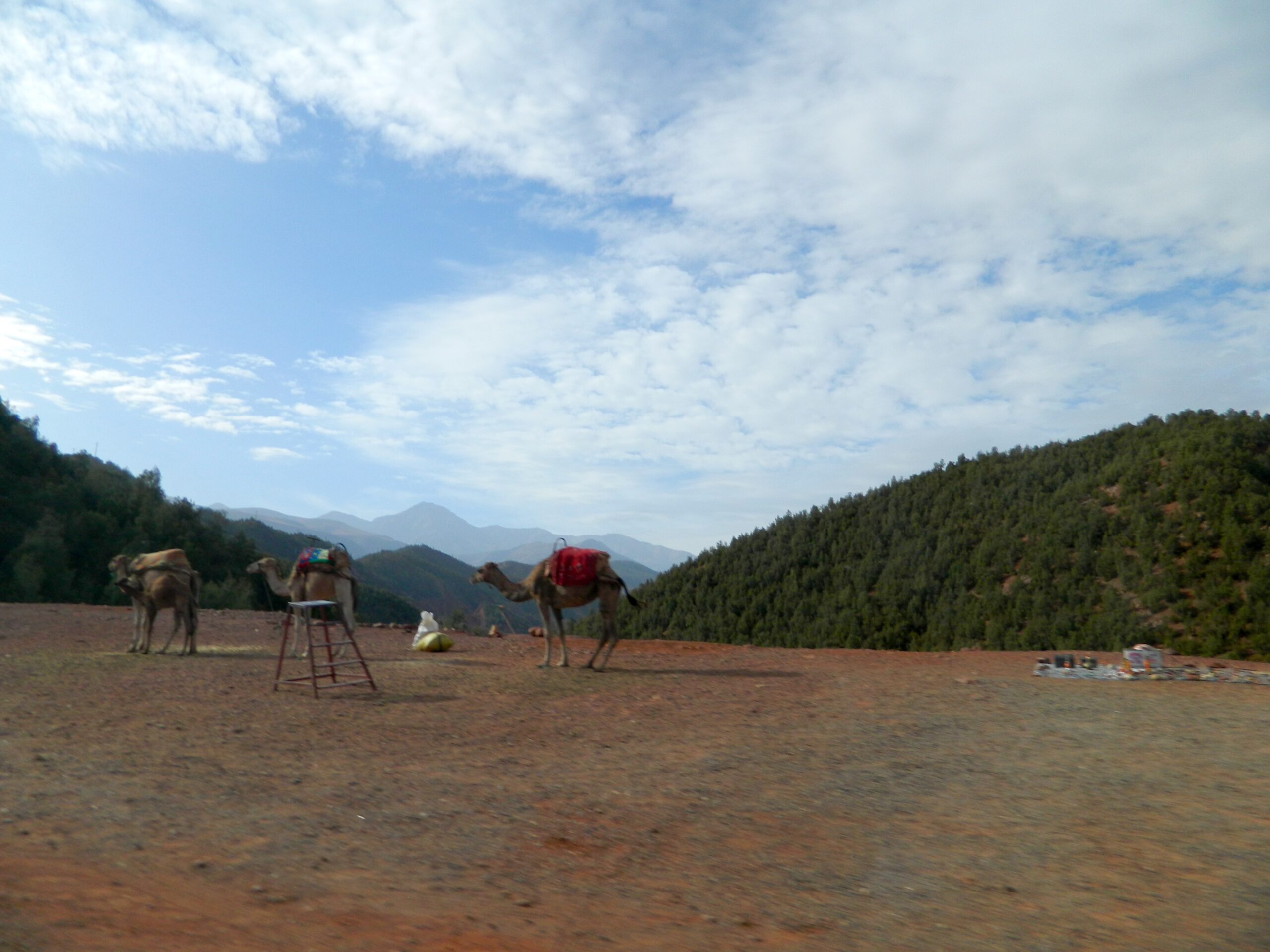
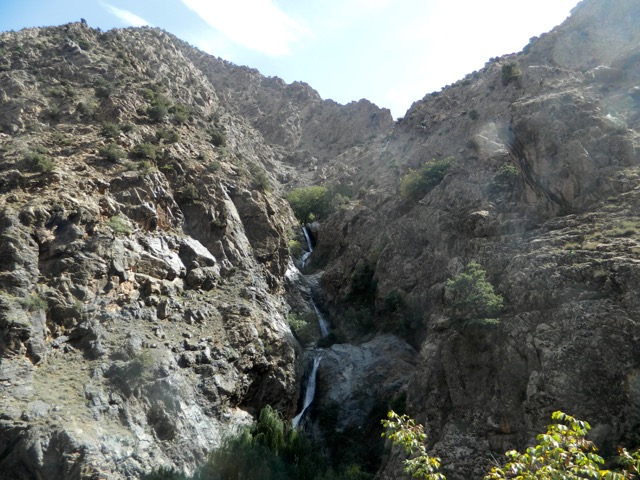
We’re standing outside the van on the road to Ourika Valley, a verdant, majority-Berber region about two hours from Marrakech, popular with tourists for its many waterfalls.
A half-dozen camels on short tethers wait for curious tourists to approach. It’s well past 11 o’clock, but the sun is just making it over the mountains to warm the deep valley.
The man speaking proffers a tangle of necklaces. Plastic. The artisanal products are waiting in well-planned shops, with tougher hagglers behind the counter. My companions for the day, a French couple from outside of Paris, laugh and tell him that’s a good marketing plan.
In a way it is, but then…maybe not.
You see, I don’t want anything for free (unless it’s a sincere gift). I don’t want the cheapest price (anymore). I want a fair price.
And that’s a very different thing.
Ostensibly we’ve stopped for photos, but the view was around the last bend, and we’re really here to have time to spend money. We’ll stop at three more tourist establishments (some would call them traps, but I won’t today and I’ll explain why soon) before actually reaching our intended destination.
> The Argan Oil Cooperative. Smiling women sit outside the building grinding argan nuts into a paste, which will later be separated into cosmetic oil and the base ingredient for savon noir (black soap). They beckon us to sit beside them. Ashkid, ashkid. (Come, come.) You can take pictures, we’re told. No problem. There’s a dish in front of the women with a few dirham notes in it. We can leave money there.
> The Berber House. A traditional Berber house, which I might have found more exciting had I not spent a great deal of the last five weeks visiting my Berber friends in their (yes) Berber Houses. We’re shown the kitchen, the store room, the family room, the hamam (bath) and the backyard. You can take pictures. No problem. On the way out, there’s a well-placed souvenir shop and a donation box for the welcoming Berber House family.
> The Guide. We stop in the village near the waterfalls to pick up the guide. We haven’t asked for the guide, but the guide is going to come with us. He accompanies our small group halfway up the trail, to the first set of falls, and then tells us it’s time to turn back. When we insist on continuing, and he insists on not going back without us, I convince him to wait at the halfway-up cafe while we finish the hike.
Now, I don’t like being forced to pay for things I didn’t ask for or want in the first place. I also don’t like not paying someone for work completed or services rendered. I don’t like feeling cheated out of my money. And I don’t like feeling I’ve cheated someone out of their fairly-earned money.
Most people in the world would probably agree with those sentiments.
I think all of these scenarios and concerns come down to the same fundamental issue: fairness. Fairness to local people working in the tourism sector, and fairness to tourists seeking to spend their money well (ethically, reasonably and in a way that feels good to them).
So, what’s fair?
I’m going to seriously oversimplify for a moment. The tourist-local marketplace dynamic—as I see it—breaks down like this:
Tourists don’t want to feel ripped off or trapped. (That’s a low bar.) These things are traps: Telling someone to take a picture (no problem, pictures are free!), and then asking them to pay for it. Insisting someone take a bracelet as a gift—and then insisting they pay for it. Following someone through the souk, though they have clearly stated they do not want a guide—and then asking them to pay for it. (These are all common experiences for unsuspecting foreigners in Morocco.)
Tourists do want to feel like they’re getting a good deal. Sure, some are pinching pennies, but most just want fair. Many, like me, will feel frustrated when they know an item’s market price, and then are asked to pay four times that because said item has been handily transported into a souvenir shop. They don’t want to pay “tourist prices.”
Local people want to make a decent living. They see foreign tourists and assume (reasonably) that if they had enough money to pay for a plane ticket to Morocco, they also have enough money to pay a few dollars above market price for a bottle of oil, silver necklace, taxi ride, and everything else. They might also encourage (or push) said tourists to spread their money evenly—a few gifts at the Argan Cooperative, a dollar to the Berber House, a tip to the guide. From this perspective, those tourist establishments mentioned above are not traps, but simply an integral component of the day’s adventure.
Some believe that tourists should pay tourist prices, because they can. And hey, I get where they’re coming from.
Naturally, I also get where tourists are coming from. I’ve been pondering this a lot lately, and I think the fair solution is neither “equal” (tourists often do earn significantly more than the locals they’re buying from, so why shouldn’t they pay more too?), nor excessive (no one likes traps and cheating). Rather, it’s somewhere in the middle, where everyone is happy—or at least not pissed off.
So, when buying abroad, keep three questions in mind:
1. How much is this worth to me? (How much do I want to spend on it? Keep in mind, for perspective, what you would spend at home.)
2. What is the “market price”? (What would this cost a local?)
3. What can I afford? (What’s my budget for this day? Week? Holiday? Will this meal/souvenir/excursion put me over?)
The “fair” price exists somewhere at the nexus of those three answers.
I haven’t been writing much the last couple weeks. I think sometimes, when it comes to writing about our experiences, there have to be periods of writing—and then periods of experiencing. So, let’s just say it’s been the latter, and I’ll get to the writing part again soon.
In the meantime, did you know I’m on Instagram these days? I share snippets of writing or travelogue with nearly every post. Here are five reasons to follow me: