Category: Culture

  • And How Is Your Family?

    A recent conversation with the lovely Alec MacMillen (Arabic speaker and traveler on his way to Jordan on a Fulbright at the end of this month) reminded me of this topic…

    And How is Your Family? Making Connections Abroad

    In the first unit of my Tibetan language class, we learned words for family members and how to ask about them. “Do you have any brothers or sisters? Where are your children? What do they do?” Beyond “how are you?” these were the first questions I learned how to ask the Tibetan residents of my neighborhood in Boudha, Kathmandu, Nepal.
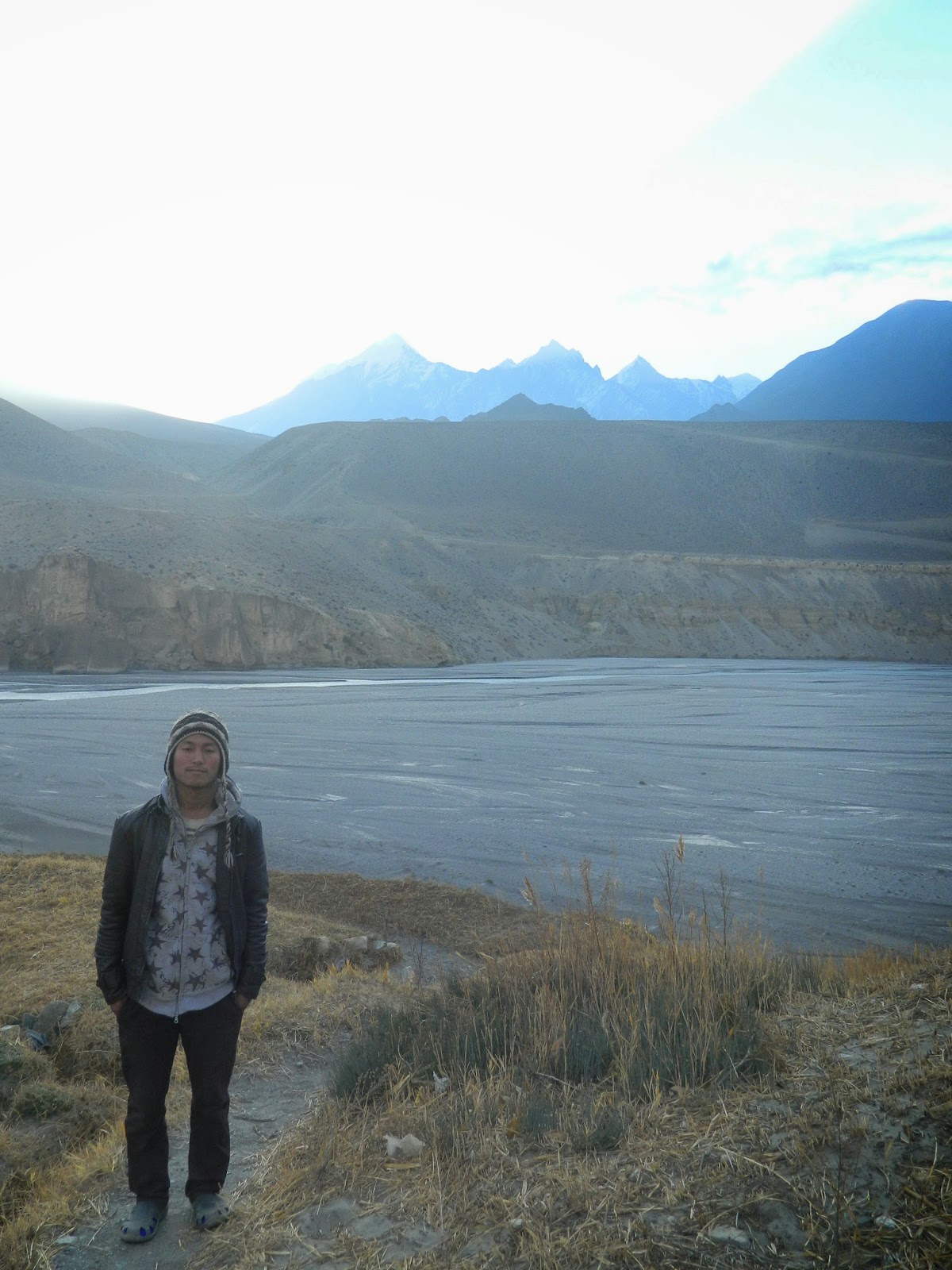
    My friend, a novice monk. We could converse only at a very basic level, but he knew that I had one brother who lived in Canada.
    When I traveled to Senegal on a High School summer exchange program, I learned much the same phrases in Wolof. “Where is your family?” “They are here,” was a classic exchange between strangers or friends. What I didn’t quite understand at age 16, I began to see more clearly while studying in Nepal: In almost any corner of the globe, family is literally the foundation of every relationship. If you want to form a friendship, begin by asking about someone’s parents, sisters, brothers, children. If you wish to grow closer to your host family, ask about children, cousins or siblings abroad.
    In most beginning language courses, vocabulary for family members and questions about family almost always show up in the very first unit. In 6th grade French, I remember finding this awkward and a little bit silly. Many college language students feel much the same way.
    In the U.S., these are not the first questions we are taught to ask. At least, these were not the questions I was taught to ask. For many Americans I know, inquiring about family members is intimate, almost invasive for acquaintances or strangers. Here, if you want to form a friendship, begin by talking about shared interests, food, school… Family comes later.
    In that Tibetan language class, my teachers stressed the importance of asking about family first, before anything else. This was crucial to respectfully initiating conversations and friendships; omitting to ask about family could be perceived as inconsiderate or even offensive.

    Istanbul, where I probably sat down to drink tea in every candy shop over the course of my week-long visit.
    Once learned, this was a lesson I would carry with me. In Turkey, I made friends with every shopkeeper I met, exclusively by asking about family. In Italy, I remembered to ask new friends the same. Regardless of country or age, new acquaintances responded with warmth and enthusiasm to my queries. Do you have children? Where are they? What do they do? Do you have any brothers or sisters? What do they do? Where are they? Are you married? Where is your husband? Your wife? What are their names? Detailed, personal questions repeatedly forged an immediate intimacy and connection that flippant conversations about the weather or school could never produce.
    I became more comfortable in the asking as I saw how people opened to my questions. When I returned home and began conducting interviews for my senior thesis work, I employed the same technique, with surprisingly similar results.
    There exists in the U.S. an individualism that de-emphasizes the role of family. We are individuals. We are not where or who we come from. As I traveled and made friends, however, I found that most people do not agree. Questions about family are so crucial to forming relationships because family is crucial to forming individuals. No matter how much we pretend, we do not exist independently of it.
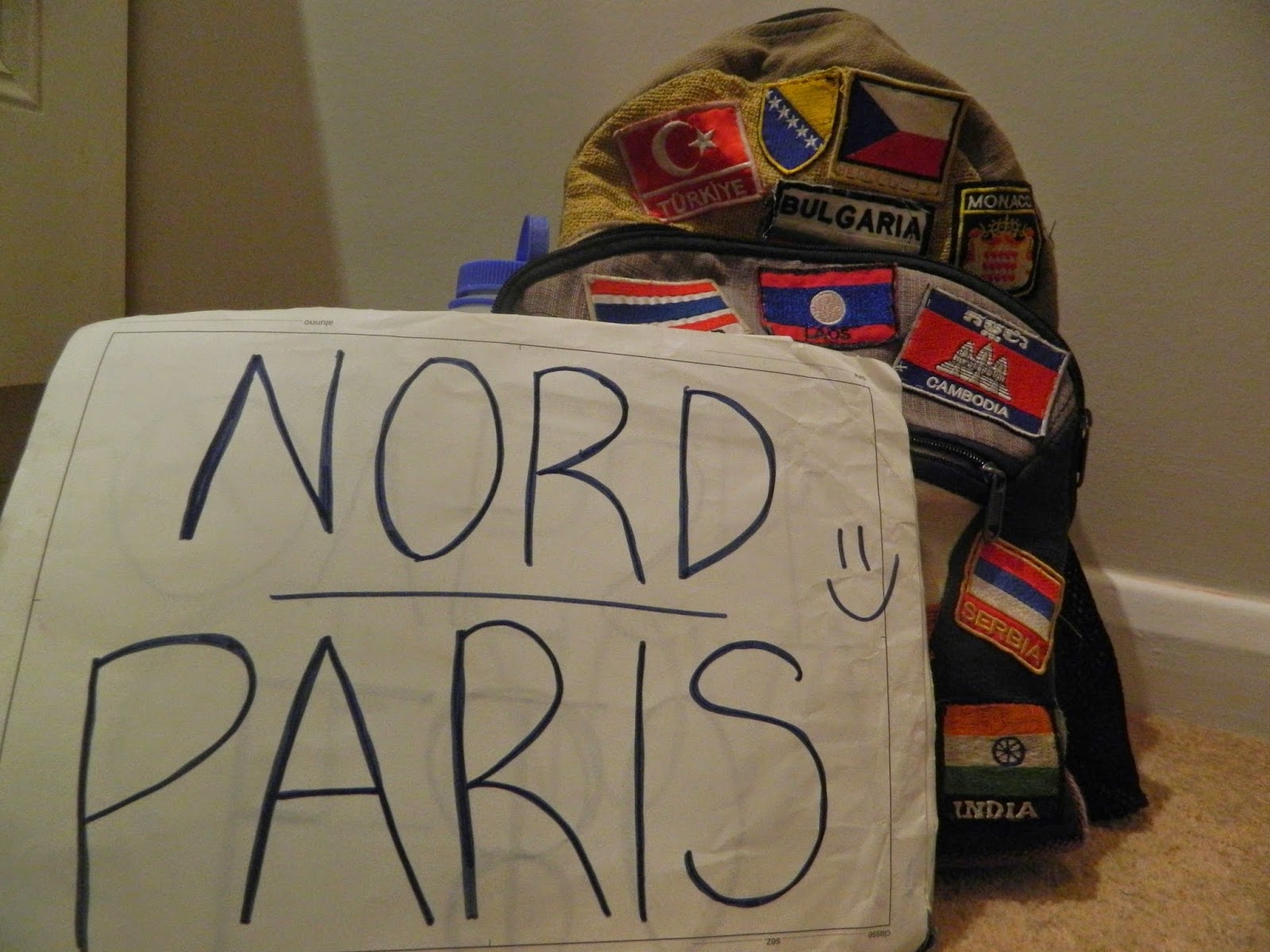
    While hitchhiking, I bonded quickly with strangers by asking about siblings, children, parents, etc.
    At least, that is the belief that drove my experience of connecting with strangers. Whether or not I believed it didn’t even matter so much; my new friends did.

    So, if you are traveling and you want to make friends, after you ask “how are you?” remember to go on with, “And how is your family?” See what happens.
  • Oh, the Characters of Middlebury

    One of my favorite things about working in restaurants is the unlimited entertainment potential of observing the characters that pass through. Middlebury, Vermont does not disappoint.
    Once, in High School, I took a class in Nonfiction Prose. The first week, the teacher had us walk around the neighborhood, observe the people around us, and write a few character sketches. A few descriptive lines that form a verbal portrait. They can be straightforward or metaphorical, humorous or serious. In what seemed an apt metaphor at the time, and in retrospect more like poor judgment, I distinctly remember comparing my teacher to a baboon. Better choices have been made. Regardless, I love this exercise, and I would like to present to you some of the characters of the – Café. No names, of course, will be named.
    ~
    M— is a tall, odd man. He almost always comes alone and almost always orders a hummus salad to very precise specifications. It is shocking when these two things are not the case. He wears a bucket hat and leans slightly when he walks. Though a bit withdrawn at first impression, M– proves quite garrulous on any subject when engaged. He does not like ice in his water, and he eats very, very slowly.
    G—worked in the foreign service, but I would never have heard it from him. It took a long time for him to decide I was worth conversing with at all. He must have his soup piping hot and immediately. He comes for lunch with various friends. Last week, he asked me if I had seen any sea monsters lately in Otter Creek. I suspect he is hiding an eccentric sense of humor.
    Mr. and Mrs. – are my favorite regulars. They are understanding, appreciative, and very sweet. They always drink iced tea—many, many glasses—and sit for a while.
    C— sits at the bar and has a Switchback beer with his lunch. He might be in his seventies. He speaks gently, likes golf, and has a wife that I have never seen. We don’t have many things to talk about, but he is kind, pays in cash, and tips well.
    J—and A—, whether they come separately or together, are strange and, in my opinion, wonderfully entertaining. They have raised friendly banter to an art form, and on a busy day it is best to avoid them as much as possible. On a quiet day, a conversation at their table is a great way to fill up time. J—is tall with very short hair, and always leans in to speak. He likes Caesar salad and sometimes quiche. A—has curly hair and an old, lumbering dog who waits outside.
    Mr. and Mrs. A— are always very nice, and they always order the same thing. Always. I could tell you their exact order, but that might give it away. Inside, they like the table in the corner. Outside, the table against the wall. They like straws and lemons with their water, but they only sometimes use the straws. They never tip over 17%.
    The I—‘s would be lovely if they weren’t so troublesome. An order for two can be a foot long with all of their additions, substitutions and peculiarities. They usually come for brunch, order more food than I think a person could eat, and finish it. They think the — Cafe is their private kitchen, and we do nothing to disturb this conviction.
    The lawyers are very important people. They never have more than 50 minutes for lunch. They like their soups and salads first, and M—with the blonde hair must have her soup extra hot. With all that, they are surprisingly agreeable, and they never linger.
    Mr. D—owns something in town. He is also a very important person. He likes his iced tea with no spoon in it. His lackeys drink soda, sometimes; they defer to him in all matters. There are usually four of them; only Mr. D— orders an appetizer. As far as I can tell, only Mr. D— speaks. He takes up twice as much space as those around him, in every sense of the phrase.
    ~
    When I was little, and we had to eat at McDonalds on family road trips, I would order a cheeseburger without the burger. We called it a Toby Special. Now that I am not six years old however, one, I avoid McDonalds at all costs (along with the rest of my family), and two, I order off the menu. I can make myself a sandwich with no bread and nothing on it at home.
    When work is slow and I have time to, I often wonder how people come to have such exact, particular peculiarities. Likes and dislikes. Demands. Needs. Are they born that way, or is it a byproduct of aging? Are they raised to need straws in their water with no ice, to demand that their soup be hot enough to give third degree burns, and to require, absolutely, that there be no trace of onion on their burger? Are we all so peculiar in our tastes, only more self-conscious of demanding their satisfaction? Do I just have lower standards? Were our parents less indulgent? Are “characters” just average people whose idiosyncrasies have gone unchecked? Possibly.

    Or maybe, as my experience as a server indicates, idiosyncrasy is the norm, and those without restrictions, requirements and specifications are the exception. Maybe this pattern is a unique result of American culture and values. That seems likely, for in all the time I have spent outside the U.S., I have never seen someone order a sandwich without bread.*
    ~

    *That is not to say there is anything wrong, necessarily, with ordering a sandwich without bread. It is simply interesting, and  maybe indicative of something, to observe the frequency of such requests.
  • “Paying the Rent”

    It seemed about time to talk about what I am currently doing for money “to pay the rent.” As previously mentioned, I have five jobs at the moment. Only one, however, really pays the rent. It struck me recently that this one job may actually be pretty unhealthy for me.

    That job is waitressing.

    I identify myself as many things. As a writer, a yogini, a dancer and a wanderer. As a Jew, an artist, a woman and a traveler. Fairy, unicorn, and bird sometimes slip into that list as well. But never that I can recall have I identified with my current occupation. Waitressing, or “serving,” is something that I do to earn money, wholly separate and distinct from my essence or self.

    Now, before any servers start raising their hackles, I am not offering judgment on the value of food service professions.  I have a coworker who has payed her mortgage and supports herself through waitressing. This can only be viewed as impressive, and I respect her and anyone else who chooses to make a living as a server. I only wish to observe that I do not identify as such, probably because of the negative qualities that this profession has begun to hold for me. The longer I spend in it, the more conscious I am of its advantages, and its shortcomings. Most importantly, I am realizing that these are really two sides of the same coin. In writing this, I hope to explain why I am doing this work to begin with, and why, ultimately, I do not like it.

    While I do not intend to pass judgment, I am fairly certain that it also steals a little bit of your soul. Make of that what you will.

    So here they are, The Advantages of Waitressing… and Why They are not so Advantageous for me:

    Pro: There is no contract.
    That’s right. You can leave whenever you want (though it’s courteous to offer at least two weeks’ notice, especially if you hope to be welcomed back), and, if you find a good place, it is very likely you can come back whenever you want. It is also fairly easy to get shifts covered or traded. This makes being a server the ideal job for travelers, musicians, mothers, or anyone else looking for a flexible work schedule. For example, I am taking a week off in the middle of the busy season to go to a festival. What other kind of work would allow that?
    The Flip Side: There is no contract.
    Slow night? You might get cut (sent home). Over-staffed? You might get cut. Chef doesn’t like you? You might get cut. Really. There can’t possibly be a workplace more subject to the vagaries of individual whim. No contract means no promises, and that cuts two ways. I was recently cut from the schedule for several weeks at my second restaurant job due to over-staffing (as far as I know, no personal dislike was involved), and that’s fairly normal.

    Pro: You work for tips.
    Many times customers have tipped me 30 or 40 percent, or handed me an extra twenty for no apparent reason. (Maybe they liked my face?) There are a lot of generous people out there. Plus, in the U.S. it is convention to tip 18 percent on average.
    The Flip Side: You work for tips.
    Your hourly pay is about four dollars. If it’s slow, you make $4/hour. Plus, there are a lot of obnoxiously stingy people out there, and there are no actual laws on tipping. That means, outside of automatic gratuity, nothing is guaranteed. You depend entirely on the generosity of others for your wages.

    Pro: You work on your feet.
    You are constantly moving (running) around, with barely any time to drink water! Out of a six-hour shift, you spend six hours on your feet. There is very little need to add any additional exercise if you do this full time.
    The Flip Side: You work on your feet.
    You are constantly running around, with barely any time to drink water. It’s kind of exciting, but mostly it’s dehydrating and exhausting. Sure, I’d hate to be at a desk all day, but that doesn’t mean I love the unadulterated chaos.

    Pro: You get to work with people.
    New faces every day. Cool regulars that you get to know as the months go by.* I can’t think of a more effective way to hone communications skills.
    The Flip Side: You have to work with people.
    Horrible, self-important regulars who never tip well. Screaming children who insist they hate pasta as soon as the pasta they ordered arrives at the table. Every person who stubbornly refuses to notice you are waiting for them to leave so that you can go home. A lot of humanity passes through a restaurant’s doors… you end up wishing half of them would learn to cook and leave you alone.

    Pro: You make other people happy.
    I truly like this part of the job. I love giving people food, and I enjoy seeing them enjoy it. If it were that simple, I don’t think I would have so much to say.
    The Flip Side: Making other people happy can be a pain in the ass.
    Some people do not want to be happy. They want to be grumpy and discontented. They are demanding and unreasonable, and they can turn a day bad.

    Pro: You make a lot of money.
    The Flip Side: You make a lot of money.
    Enough that it seems illogical to switch to something else. But these days, I kind of think it’s a trap. You do make a lot of money waitressing. That is why a lot of people choose to do it. That is why I chose to stick with it while I save money to travel. But the longer I stay, the clearer the flip sides become. The more painful certain customers’ arrogance, self-centeredness and smallness feels. The more the lack of any consistent real human connection begins to wear on me.

    That is why I do not identify with this job. I am good at it (I forgot to mention that), but I can’t love work that yields negativity and spite in tandem with flexibility and profit. So I am scaling back, spending more time working for less money, and more time on writing, which pays nothing at present, but brings me joy.**

    *I think I will do a follow-up piece soon to describe some of these characters in more detail!
    **Stay tuned for the consequences of this ‘more writing’.

    Sorry, no pictures to go with this post. I promise I will include a lot of pictures next time to make up for it!

  • The Internets: A Story of Love and Hate

    I may be the last person you would expect to see managing communications and social media outreach for a small business. Doggedly resistant to Twitter. Irrationally dedicated to my Samsung flip phone and equally irrationally opposed to Smartphones. Lover of ink and paper. Paper and ink. The “Internets,” as I have been known to call that massive and barely comprehensible matrix of invisible threads (and a troll or two), are no place for a flower-child-smartphone-hipster-bookstore-nerd-in-denial-of-modern-technology-hippie. Right?

    What do you mean? This phone is top of the line!

    Wrong. You must be wrong, because here I am, suddenly Communications Manager for an amazing little holistic wellness center in Vergennes, Vermont called 2 Wolves. (And Events Coordinator, too. I’m sorry, I have to brag a little– it’s my first job with a title other than, “Our Intern,” “Toby Over There” or “Excuse Me Miss”) And here I am, starting a Twitter account on behalf of the center, learning a bit about website building, and gearing up for Instagram next. To a certain extent, I am probably wired for it, being a child of the Information Age. Computer keys feel like home and I can find my way around a website whether I want to or not.

    So there’s the catch. I am, whether or not I resist it, predisposed to excel in this swamp of technology we call communication. Up until now, I have by and large resisted it (with the exception, of course, of blogging… and email… and, well, yes, Facebook. But compare me to the average “twenty-something” and it starts to look a lot more like resistance). I have long resisted the omnipresence of the Internet. Now, however, I plan to bend it to my will.

    Below is a segment of the email I sent to the instructors and practitioners at the 2 Wolves Center before enumerating a long list of ways in which they could help me grow our online presence. I write:

    The internet is an extraordinary and a terrifying thing. It can be an impersonal, vast network of virtual connections, but it can also be very local in its scope. First and foremost, it is a tool that we can use in any way we choose, and I intend to use it to build conscious, cocreative community right here in Vermont. I know many of our students are not plugged in on Facebook, Twitter, etc, but many of them are, and many potential students and participants are as well, and these tools can be an amazingly effective way of building our individual classes and our collective community.

    There it is. The Internets (that’s “the Internet” to you) are a tool. Neither good nor evil in of themselves, but simply a vast, swampy, troll-ridden universe of as-yet-unfulfilled possibilities. Some beautiful. Some terrifying.

    So here I am. Trying to create something beautiful and meaningful with that troll-swamp of invisible roads.

    ~
  • The Wind in my Armpit Hair and Other Uncoventional Pleasures

    “It’s like you’re doing the seventies, but in 2013,” my friend said, laughing as I posed in our Istanbul bedroom to display the luxurious dark hair flowing from my underarms.

    I twirled a strand thoughtfully. “They had a good thing going there.”
    I decided to stop shaving while studying abroad in Nepal in the fall of 2012. My reasoning? Standards of modesty demanded that I cover my arms at all times, so no one would have to confront the increasingly impressive tufts of hair beneath them, including me.
    I assumed I would begin shaving again as soon as I arrived at the beaches of southern India.
    And then, I changed my mind.
    I tossed my razor and let it grow for the remainder of my yearlong journey through Asia and Europe.
    Why?
    Let’s begin with why not?
    I’m still writing- thanks for still reading!!
  • Story Time!


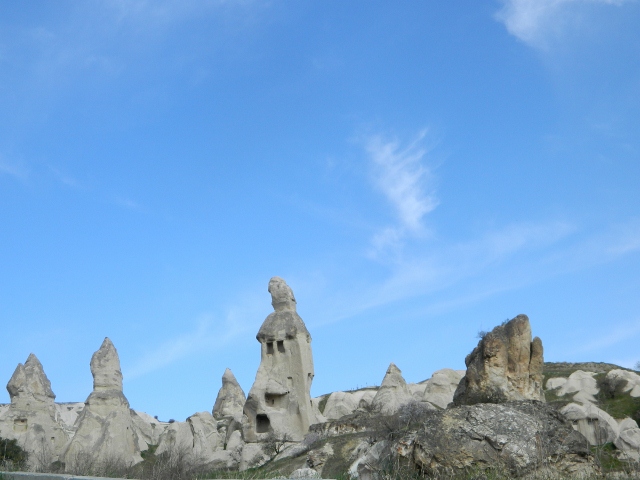
    The fairy chimneys, as it turns out, were the name that the genius, or over-romantic imagination, of someone in Cappadocia’s tourism department assigned to the giant, fanciful (and often very phallic) rock formations that cover the landscape.
    Rather than go through the last two weeks I spent in Turkey, Bulgaria, Serbia and Bosnia, I would like to tell you a story for a change in pace. Or rather, I would like to retell a traditional Bulgarian folktale that I read while visiting my friend’s family in Plovdiv. In recent months I have been rediscovering my love of stories, and having some fun with the art of storytelling whenever it occurs to me. I hope you enjoy this one; it is called “Glavcho.”
    ~
    Once upon a time,a third son was born to a peasant family.  He had an ugly, misshapen body and a large, ugly head, so everyone called him Glavcho (big head, in Bulgarian).  His older brothers teased him mercilessly, and the other village children always picked on him, but rather than fight back, as Glavcho grew bigger and stronger he stuck more and more to himself. He gave to his animals all the tenderness and care that was not shown to him.  Sitting in the pasture, watching the smoke cult into the sky above the slate roofs of his village, Glavcho would sing to his horses and speak to them of his hopes and dreams.
    Now, some animal had been breaking into Glavcho’s family’s fields at night and eating their crops, so his father instructed his sons to keep watch and find out who was causing the trouble.  The first night, the eldest son set himself up at the edge of the field with a lantern and a length of rope, certain he would catch the animal and win his father’s approval.  Dawn, however, found him fast asleep; when his family awoke, he said, “I kept watch all night long, but I saw nothing!”
    The second night, the middle son kept watch.  He too awoke to the rising sun and insisted he had seen nothing.  And so the third night Glavcho had his turn.  He took the lantern and the rope and sat watch.  Though his eyelids drooped and his head grew heavy, he did not fall asleep.  Around midnight, a beautiful white stallion appeared at the edge of the field, glowing in the moonlight, and began to munch on the carrots.  Silently, Glavcho tied his rope into a loop, crept up behind the horse, and slipped the noose over its head!
    “Please,” said the horse, “let me go and I promise I will never eat your family’s crops again!”
    Glavcho looked at him dubiously. “I’m supposed to catch you and bring you to my father…”
    “Glavcho, you are all the horses’ favorite. They all say how kind and gentle you are. You must help me and let me go!”
    “Really? I didn’t know they talked about me.” Glavcho glowed at the rare compliment, and after a moment’s thought, released the white horse.
    “Because you have done me this favor, I will always help you in times of need,” said the horse, lowering his head in thanks.  “All you must do is go into the forest, clap three times and call, ‘horse, come to my aid!’ and I will be there.”  And with that, he disappeared into the night.
    In the morning, Glavcho told his father and brothers about the extraordinary thing that had happened to him, but they laughted at him and scolded him for falling asleep and dreaming instead of keeping watch.  Elated by his discovery, Glavcho did not care, and he went off to take a nap.
    Later that day, a royal herald arrived in the village to announce a competition.  There would be three days of horse races, and the victor would win the princess’ hand in marriage.  The King invited every able man in the kingdom to compete.  Glavcho’s brothers heard the proclamation and they were talking about the upcoming festivities excitedly when Glavcho awoke.
    “Brothers, may I come too?” He asked bashfully.
    “You?” The said, incredulous. “Why, you would only scare the young princess and embarrass us.  Why don’t you stay with your horses.”
    Desperately wanting to see the races (to compete was beyond the scope of his imagination), Glavcho wandered into the forest after supper.  The tall trees cast a murky gloom around him in the gathering night.  He clapped his hands three times and called, “horse, come to my aid!” and like that the beautiful white horse came trotting into the clearing, glowing as always.
    The horse knew already what was Glavcho’s problem.  He said, “Return to this spot tomorrow after your father and brother have left for the races. Bring your sack for collecting mushrooms. I will meet you.”
    And so, the next morning Glavcho took his sack and returned to the clearing.  The white horse was waiting. “Look in the sack,” he said.  Glavcho reached into the sack and brought out the most beautiful set of clothing he had ever seen.  The fabric was softer than silk, and trimmed with gold.  When he put it on, Glavcho became a tall, handsome young man, broad shouldered and strong.  He leapt upon the white horse and they galloped to the castle.
    All heads turned to watch as they entered the field.  Both horse and rider shone brilliantly, and no one could look away.  “Come now,” said Glavcho, “let any man who wishes to compete against me come and race!” No other riders stepped forward.  The white horse galloped around the track with unparalleled speed, and did not stop running until he had reached the clearing in the forest.
    Glavcho took off his beautiful clothes, filled the sack with mushrooms, and returned home.  His father and brothers followed shortly.  Throughout dinner, they talked of nothing but the mysterious rider at the races.
    The next morning, Glavcho again set out for the forest with his sack to meet the horse.  Again everyone turned to watch them with wonder when they arrived at the castle.  Again they raced around the track, unrivaled.  Again, Glavcho’s father and brothers spoke of nothing else at dinner, their voices thick with awe.
    The third day of the races, when Glavcho called out “let any man who wishes to compete against me come and race!” several of the strongest young men in the kingdom stepped forward.  The white horse sped forward, leaving the other riders far, far behind.  Glavcho stood went before the princess and bowed deeply.  Taking the ring that she offered to him, the winner, he said, “tomorrow I shall return for the wedding!” And with that he leapt back onto the white horse and they ran home.
    When Glavcho’s father and brothers returned, talking of the upcoming wedding, Glavcho asked humbly, “do you think we will be invited?”
    His brothers laughed. “Why would the King invite the likes of us?”
    Glavcho took from his pocket the ring that the Princess had given him.  Recognizing it at once, his family exclaimed joyfully and the entire village rejoiced at his good fortune.  And Glavcho, we assume, lived happily ever after.
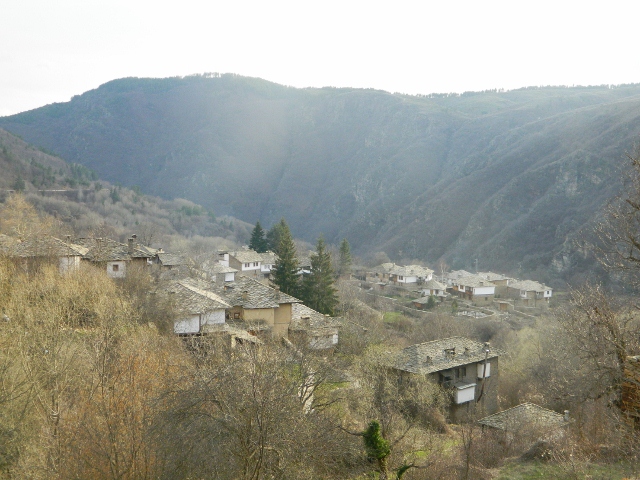
    A traditional Bulgarian village.
    ~
    Fables are nice, with their ready morals at the end (don’t steal, don’t lie, etc., etc.), but I really love these folk stories, with their more oblique messages and meanings.  What are we meant to take from this story? That less attractive men should dress nicely to get the girl? That our families will love us more if we make money? That we should be nice to horses?  The lesson here is actually a bit questionable when we consider that Glavcho only succeeds in life by changing his appearance.  
    For me, though, it doesn’t matter.  However we might interpret them, folktales are stories first and foremost, meant to entertain, and it is for this underlying simplicity of purpose that I love them.
    ~
    Location update: After flying through Bulgaria, Serbia, Bosnia and Montenegro, I am off to Croatia tomorrow—the Balkan adventure continues!
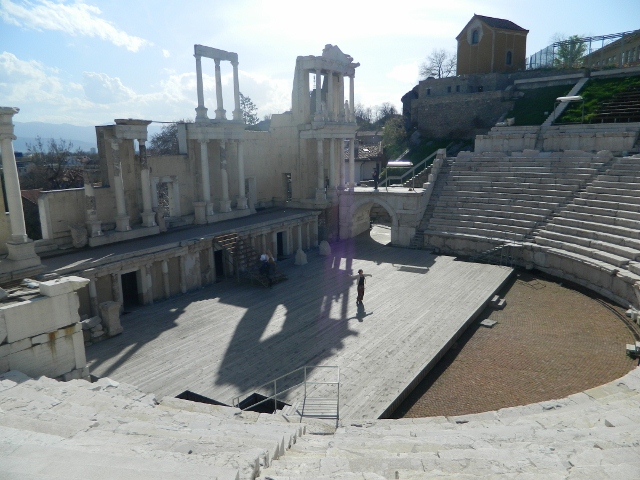
    Roman ruins in Plovdiv, Bulgaria.
  • Everything is Possible; Nothing is Free


    The hub of my front tire was bent at a worrisome angle. The brakes screeched so loudly they forgot to perform their intended function.  The bell did not ring and my feet did not reach the ground, but paying 10,000 kp, or $1.25 per day, I couldn’t complain about my rented bicycle.  It carried from the northwestern tip of Don Dep four kilometers along a wide dusty path to the southern side of the island, across a bridge to Don Khone, around, and back—about 25 kilometers in total—and never once muttered about the heat of the midday sun, which is more than I could say.  Don Det and Don Khone are two of the largest of the four thousand[i]islands that break up the Mekong River at the south of Laos.  I stayed on Don Det for four nights instead of my expected two, lolled into oblivion by the heady lotuses of palm trees, green water, good company and late-night bonfires.
    Both Don Det and Don Khone are incredibly flat, and my bicycle and I managed to navigate them easily enough. I stopped to see the Phapheng Falls—the massive series of cascades and rapids that thwarted 19thcentury French efforts to chart a water route from Vietnam to China.  I still haven’t seen the Phapheng Falls because when asked to pay a 25,000 kip entrance fee (approximately $3 and by all accords an inconsequential sum) I had a minor breakdown and went on my way instead.  Let me explain… I am more than happy to give my money to fledgling tourism industries, support the countries I am visiting within my means, and in normal circumstances I would never forgo a stunning natural sight over three measly dollars.  However, at that particular moment, something inside me snapped, perhaps triggered by the cold and offhanded attitude of the ticket taker: I wanted my humanity back! I was tired of being a wallet on legs, and I could not bear, at that moment, to pay for one more thing.
    A few hours later, repenting somewhat and feeling rather silly, I thought about doubling back, but the distance left to travel and the thought of the ticket taker’s face deterred me and I continued on without another thought for the waterfall.  I am not the only foreigner to lose patience with the aggressive profiteering in Southeast Asia, and I think I conducted myself relatively well.  In my two weeks in Laos, I witnessed shameful shouting matches between backpackers and tuk tuk drivers over a couple of dollars’ misunderstanding; I watched haggling turn ugly over the last quarter, and I saw smiles turn to anger in countless market interactions.
    In most of Asia, where haggling is accepted and even expected, the problem lies not in the bargaining itself, but in its tenor.  Backpackers especially complain that the locals try to cheat them and see in them only potential profit; locals complain that backpackers, who measure their poverty by a different scale, are stingy, want everything “cheap cheap” and ask rudely.  Both sides give reasonable cause for the other’s accusations.
    Everyone wants to be treated like a person. No one wants to feel like a tray of samosas or a wallet on legs, or a scheming villain.  In my opinion, for tourism to truly succeed someplace, a country’s motivation for drawing visitors cannot be solely monetary.  Obviously tourism is an industry and its purpose is to generate income, but when the desire exists to share one’s culture with outsiders, welcome them into it and benefit from their presence not only in a financial sense, transaction takes the leap to interaction.  In this best case scenario, we break the too-common boom-bust cycle of the tourism industry and see the birth of a new sustainable development model, with tourists returning regularly to places that are welcoming— neither “untouched” nor “ruined,” but real, warm, and human.


    [i]An approximate measure which I suspect was chosen for its poetic appeal in collusion with the ministry of tourism.
    ~
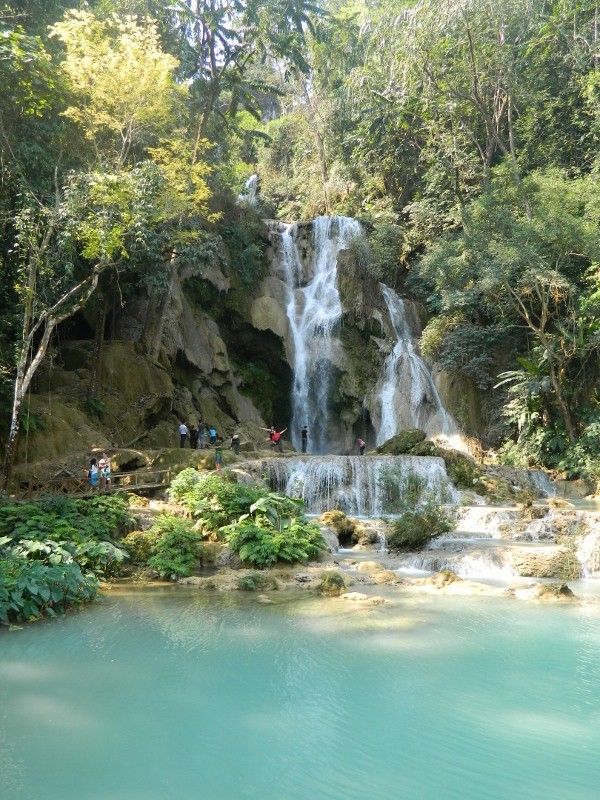
    Another beautiful waterfall in Laos, which I did pay to see. 🙂
  • Existential Apple Juice

    A section from my soon-to-be-turned-in research paper. A little slice of life in Kagbeni and some more thoughts on authenticity.  Next post will be on a new theme, I promise.


                In academic discourse on tourism and authenticity, we often mistakenly assume that either tourists or local peoples can authoritatively define what is authentic.  In reality, authenticity, of experience as much as objects, is a transient and ever-changing concept, different for everyone.  True authenticity depends on one’s state of mind and openness to experience.  It can be contained in a single apple, a single moment, or a single-minded willingness to engage authentically.
                Less than a week into my stay at the Red House Lodge, I already had a Nepali name (Kalpana), a host of familiar faces in town, and essentially a Nepali family.  One morning, upon returning “home” from a walk, Tenzin’s daughter and employees called to me from the picnic table on the flat roof where they were shredding apples to make juice.  Kalpana! Bosnus, Kalpana.” They made space for me and I sat down on the edge of the table, trying to avoid the sticky bits of apple scattered about.  I insisted on helping, as by then they must have expected, picking up a hand-held metal grater (the kind I had only used to grate cheese), and joined my effort to theirs. 
    For more than an hour we worked in semi-silence, speaking to ask for more apples (apple, dinnus) or pass a bowl of browning mush to Ammis, who would squeeze it in handfuls to separate liquid from solid.  The only other sounds came from the rasping of small, green apples against metal, the occasional cry of hawks circling the crumbling medieval fort across the alley, and the drip drip drip of fresh-squeezed apple juice trickling into a plastic bucket.  It being an unusually still morning, the prayer flags adorning nearly every rooftop remained quiet and the strong Mustangi sun heated the air.  I changed into a T-shirt, the first and last time that my arms would see the sun in Mustang.  We paused sometimes to sample from the abundance of produce spilling from the deep wicker basket next to us, punctuating the music of shredding apples with the crunch of teeth on fruit.
    Apples of every variety grow well in the region around Kagbeni.  Marpha (elevation 2670 meters), a four hour walk south of Kagbeni, boasts the moniker “apple capital of Mustang,” but I preferred the tart crispness of the apples heaped around the picnic table that morning, harvested from Tenzin’s orchard in Pangling, just across the Kali Gandaki River less than an hour from the Red House Lodge.  Though the climate and altitude of Lower Mustang are ideal for the cultivation of apples, it is only in the last few decades that an apple economy has developed there.  Landowners have converted much of their farmland or unused property into orchards, and nearly every restaurant and guest house carries out its own small-scale apple juice-, cider-, and brandy-making operations.  Small bags of dried apples and bottles of apple brandy satisfy the demand of Nepali and foreign tourists alike for edible souvenirs.
    My skin warm and my hands coated with sticky brown apple remains, I smiled contentedly at the easy companionship of that moment, which transcended linguistic and cultural barriers.  Shoulder-to-shoulder with my Nepali didi (sister), I grated apple after apple, as quickly and as diligently as the rest, working towards the simple common goal of juice.  Moments like these cannot be manufactured, I remember thinking.  In their beauty, simplicity and spontaneity, such instances of connection and, yes, authenticity, are precious in their inimitability.  Isn’t that the conundrum of the tourism industry, which makes its millions by selling “real” experiences. 
    Some research on tourism today is employing the Heideggerian concept of existential authenticity to solve that riddle.  According to Heidegger’s philosophy, inherent meaning and connection exist, and it is these qualities that make experience possible.  In terms of tourism, when one approaches the world with “existential authenticity […], a state of Being in which one is true to oneself,” a unique experience of the world, understood from an individual perspective, becomes possible, and the tourist may experience that inherent meaning.  In these terms, authenticity is not a fixed, objective quality, but rather a state of mind, rendering it nearly impossible to package and market.  Taking the Maori’s staged cultural demonstrations as an example (which emerged as a response to non-Maoris producing cultural shows for tourists), “staging pseudo-events for tourists can, in fact, be expressions of host authenticity in deciding how to present themselves to others.”[1]  Whether a tourist witnessing this show finds it authentic is not the question here; the tourist who is attuned to his or her “existential self” will experience it authentically regardless.
    At six o’clock, the night before apple juice-making day, I ate dinner with the group of Ukranian trekkers in the rooftop dining room.  Candlelight cast faces and food into a dynamic interplay of shadow and warm glow, and we lingered over glasses of Tenzin’s mother’s homemade cider.  My dinner companions struck me at first as naïve and impressionable— every monastery, every person they met, and every interaction with local people awed or inspired them, it seemed.  They attempted to quiz their Nepali guide about himself through several layers of translation (from Russian to English to Nepali and back), saying, “we have been in Nepal trekking two weeks, but we don’t know any real Nepalis.”  Predictably, the attempt at conversation faltered, yet the more I reflect on this group of trekkers, the more I appreciate their unusual and sustained efforts at making connections.  Revisiting that evening through a Heideggerian lens, I wonder if their willingness to engage with everyone and everything they encountered and the sincerity of their desire to experience Nepal, uninformed and naïve though it may have been, might not have resulted in a truly authentic experience.
    The philosophy behind existential authenticity may appear hopelessly complex, but its implications for tourism study and marketing are straightforward yet rich in possibility.  If we admit that there is no objective authentic culture, that neither outsiders nor locals can make such a judgment, and we focus instead on individual authentic experience, existing mainstays of tourism marketing may prove misguided.  The shopkeeper who insists that, “this bracelet is really Tibetan. Really” might realize that her neighbor who converses and connects with customers does more business.  The tour guide offering to show his group the “real Mustang,” and its most meaningful cultural treasures, might lose out to the one who allows visitors to determine for themselves what is meaningful and seek for themselves authentic engagement with a foreign culture.
    Apple juice perhaps can be bottled, mass-marketed, and sold at a profit (though I believe it tastes best in small batches), but the existential authenticity contained in a moment of shredding apples at a warm picnic table cannot.  Experiences like those are invaluable, fleeting and individual; at best, a guide or tour might provide support for those tourists who wish to attain them.


    [1]Steiner, Carol J. and Reisinger, Yvette. “Understanding Existential Authenticity.” Annals of Tourism Research, Vol. 33, No. 2. Pp. 299-318.
  • I Drank Yak Blood


     I drank yak blood. Really. Yesterday, after eight years of not eating red meat. The flavor had a quality surprisingly similar to raw milk, a bit salty and, of course, metallic.  It was still warm. I won’t go into details about the chewy bit that I couldn’t finish. 
    I stood at the top of a stone wall with two other Americans and a small crowd of children to watch the slaughter of three yaks from above.  The kids, none older than eight or nine, passed around fruit candies, shouted at us in shrill voices (the general belief being that if they spoke louder we would understand) and clambered onto rooftops and ledges to acquire prime seats for the show.  A woman sat behind us scraping creamy cheese off a flat stone, occasionally whacking me with a stick for blocking her sun.
    I had decided that watching this event, commonplace to life in Mustang but wholly absent from my prior experience, was something I should do.  The longer I sat above the courtyard, watching the men turn bodies into carcasses, their hands turning from brown to deep red, the more comfortable I became.  Maybe desensitized is a better word.  I have long rejected the part of my own nature that is programmed to hunt, kill and eat meat.  Now, as before, I have no desire to order a steak, but I found it valuable to acknowledge that side of myself, and humanity at large, in such a manner.
    When Tenzin, the owner of the Red House Lodge, beckoned to me, I made my way down the stairs on autopilot, having already committed myself several nights ago to trying yak blood.  “It will make you strong,” he had insisted, just as raksi(local alcohol), buckwheat, and nearly every other local product are said to do.  “You will try it, I think so.” And in the bravado of a moment I agreed.  I wasn’t about to back out later, and besides, what better way to go back to eating meat? 
    I passed through the doorway into the arena.  Tenzin’s mother and another woman were already at work in the corner turning intestines and other innards into sausages.  Someone handed me a mug with rivulets of brilliant red liquid running down the sides. I drank, but could not finish.  On my way down to the river to wash out the remainder, I slipped on the muddy steps and almost fell.  The men in the courtyard laughed and joked that I was drunk from the blood.  I don’t know if it was the adrenaline or the shot of nutrients, but I did feel jittery for quite some time after.
    That night before dinner, over cups of raksi, Tenzin and his friend lamented that they had not taken any pictures (sorry to disappoint) of me with blood smeared on my nose and teased me about falling down.  I felt I had proved my mettle to them and joined some secret boys’ club, at least temporarily.  There is nothing savage or bizarre about the process I witnessed.  Animals are butchered every day, everywhere; that is a part of life.  There is nothing disgusting or barbaric about the tradition I took part in; it made sense in its place, surrounded by others doing the same thing, with gusto.  Still, having proved myself to both the locals and to myself, it is unlikely I will choose to repeat the experience.  I am, however, glad that I did it.
    ~

  • Fair & Lovely


    [Also published at www.yourvox.org]
     When drugstores sell creams to lighten your skin, and your vagina, and women buy these things by the thousands, something is wrong.
     “Femininity itself has become a brand, a narrow and shrinking formula of commoditised identity which can be sold back to women who have become alienated from their own power as living, loving, labouring beings.”
    ― Laurie Penny, Meat Market
                “Oh, your skin is so beautiful. So white!” said my Nepali friend, Sariya, placing an exaggerated emphasis on almost every word.  I looked at her, speechless.  I and many of my peers have repeatedly been the object of envy and admiration here in Nepal, simply by virtue of our fairness.  In a typical gesture, wizened Tibetan women will brush their cheeks with the backs of their fingers, exclaiming “nying jepo!” (beautiful, Tib.) or smiling to express their approval.  Ironically, thousands of Americans flood beaches and tanning salons in the hopes of attaining the same flawless caramel-colored tone that Sariya laments.  In Nepal, and elsewhere in Southeast Asia, we see the standards of beauty reversed.  Fair, clear, white, light—these are the terms of beauty, and of class.
                We can trace the obsession with fairness back many centuries before colonialism and British Imperialism in this region.  Vedic culture, which originated in Northern and Northwestern India, eventually spread through the subcontinent, bringing with it a lighter-skinned Brahminic class and the foundations of a caste system that exists to this day.  According to the creation myth found in the Rigveda (the oldest of the sacred Vedic texts at the core of what we now call Hinduism, but which one Tamang taxi driver aptly termed Brahminism), the primordial man was sacrificed so that the gods could populate the earth.  They dismembered him, and from his head they created the Brahmins, the priests and scholars; from his arms they formed the nobles and warriors; from his legs the merchants and traders were made, and from his feet the servants.
                In the intervening centuries, caste (far more complex than the four sections of the primordial man’s body) and race have become somewhat convoluted.  “Aryan” Brahmins from the Notrth, imposing their religious and social order on Southern, darker-skinned peoples, have often followed racial and cultural prejudice in assigning caste designations.  The European preoccupation with fair-skinned beauty that arrived with the East India Company and subsequent British colonialism in the seventeenth century only served to reinforce existing structures of race and power.  One might argue that whiteness, as a defining attribute of the new ruling class, acquired even greater value than before.  In Nepal, the history of the caste system is even more complicated, but the resulting standards of beauty are similar.  Here, in preparation for a wedding, beauty salons will coat the bride’s face with layers of lightening make-up to accomplish a garish (or beautiful, depending on your perspective) final product.
                With many Indians and Southeast Asians placing such a premium on fairness, it should come as no surprise that they would take to easy and “safe” skin-lightening options.  In 1975, Fair & Lovely launched their newly developed “fairness enhancing” formula, and finally “Indian women found hope in a tube.”  On Fair & Lovely’s website, the company’s entire illustrious history, from “The Early Years” to the present day is narrated.  The 1980s and 1990s, for instance, saw shifting paradigms “as women started to take charge of their love life.” Fair & Lovely, of course, “supported her every step of the way by giving her a never before fair and beautiful look.”  Analysts expect that fairness products will become a $10 billion industry by 2015.
                Today, Fair & Lovely hardly stands alone; Garnier, Dove, Vaseline, and many other brands offer their own “skin-lightening,” “anti-tan” and “fairness enhancing” products.  Now men, too, can achieve the fair look they always desired, but were too embarrassed to seek out—a legitimately revolutionary development in the Asian beauty market, and hugely profitable.  And now, thanks to Eva Beauty, women’s labia can be as fair and beautiful as their faces.  Fair & Lovely claims that their formula, based on the lightening effects of Niacinamide, or Vitamin B3, is complete safe.  At the very least, bleach does not appear on the ingredients lists of these products, as it purportedly does in some (unsubstantiated).  However, uneven application of skin-lightening creams and lotions results in blotchy, chronically dry and unhealthy skin.  As young women form a large portion of the consumer base—12 to 14-year-olds made up 13% of the market in 2008, according to one survey—customers will suffer these effects from an unfortunately early age.
                Since 2003, the Fair & Lovely Foundation has offered scholarships to girls, working towards economic and social female empowerment. Their entire marketing strategy and self-representation centers around this rhetoric of helping women realize their dreams.  Reading through these advertising materials and information about the foundation, I found that I had to confront my own prejudices, which were affecting my analysis of the skin-lightening phenomenon.  This is not the first time I have had the experience of being coveted for my skin color, but it never fails to make me uncomfortable, and angry.  Why do these fairness products seem so bizarre to me, while America’s tanning obsession dos not? It is probably because I am more accustomed to the latter, but also because skin does become darker in nature, while the reverse is almost never true.  Compared to women in America who undergo plastic surgery to make their sexual organs more symmetrical, is Eva Beauty really so shocking?  No more shocking, no more disturbing, but Eva Beauty is symptomatic of an entire set of social issues; these issues of caste, inequality, and the subjugation of women to impossible standards of beauty are, in my opinion, extremely problematic.  Fair & Lovely has a foundation aimed at empowering women; have I judged it too harshly?  Fair & Lovely may “support” women to achieve their dreams, but it does so by selling their beauty back to them, after reinforcing the status quo and teaching girls to believe that fair is lovely and light is superior.  I stand by my initial reaction: the skin-lightening industry is damaging; marketing capitalizes on deeply engrained social values and strengthens the association of fairness with success, rather than challenging it.
    ~
  • When Cultural Sensitivity is Overrated and Mosquitoes Should Be Killed

    “Never step over people or tables. Don’t put books on the floor. Never point your feet at someone.” While we sat on cushions around the edges of the room, our Tibetan instructors listed for us the dos and don’ts of their culture.  “Don’t kill bugs; in Buddhism, you should show respect for all sentient beings.”  Girls should never reveal shoulders, knees or cleavage. Men and women shouldn’t touch. Never wear clothing inside out.  Presentation and cleanliness are very important to Tibetans. If you don’t follow these cultural guidelines, “you might make your families feel uncomfortable or offended.”

    My first night with my Tibetan homestay family, my homestay father zealously attacked several bu, bugs, crawling along the wall.  My second night, my homestay sister entered the room wearing pajama shorts and an inside-out T-shirt.  Day three, my homestay father wandered around with no shirt on, and day four my homestay mother wore her chuba (traditional Tibetan dress) with no shirt underneath it, revealing both cleavage and shoulders.  Their attitude, casual at all times, did not indicate any concern for the aforementioned cultural norms.

     I observed these incongruities with amusement.  My family’s behavior, so perfectly opposite from what my teachers had led me to expect, illustrates the limitations of cultural sensitivity.  In the documentary film, “Dalai Lama Renaissance,” the Dalai Lama said, “Sometimes I really find difficult dialogue with mosquito and my pain.  First mosquito come, sometimes I give blood, the second come, then the third, then difficult.”  If even the Dalai Lama feels the urge to kill mosquitoes, then we should hardly be surprised that my homestay father, an average lay Buddhist, might do the same.  The tendency to show an exaggerated amount of respect towards cultural practices not our own, to bow and scrape, even, to what we[1]don’t understand is in my opinion a little bit silly.

    Undoubtedly, our teachers’ advice proved relevant for many of my peers, but I wonder if the flood of instructions ultimately serves anyone well.  “You will make mistakes,” they concluded, “but don’t worry—Tibetans love to laugh, and they don’t hold grudges!” If breaking the rules will result in laughter, are we better off forgetting them? No; they still teach us a lot about another culture.  Nonetheless, as we worry about political correctness, cultural sensitivity and respect, I think we would be well served to not take any of it too seriously.

    The view from my roof in Bouddha!

    [1] By we I mean self-aware Americans, SIT students, anthropologists, etc…