Tag: snapshots

  • Zanzibar! (Part II)

    View out my bedroom window in Zanzibar.

    Months ago, I wrote of Zanzibar, land of rare consonants, expecting to be there within the month.
    Things rarely happen as we expect.
    After more than four months in Kenya, we have finally continued on to Tanzania and on a whim have taken a Zanzibari apartment for the next month.
    Zanzibar of spices and Z’s. Zanzibar, epicenter of trade. Zanzibar, home for the moment.
    I think I could live in a place like this one day… for longer than a month, I mean.
    Cuisines and clothing styles from several corners of the world meet here and intertwine, as do architecture, faces and language. In one hour I might pass a Hindu temple, a Jain temple and a mosque. I could find every spice I know—and many I don’t—on one dusty market shelf. Children smile with faces as diverse as the nations who once (and still) found cause to trade here.
    Each time I step outside my door I discover a new road, a new food or a new detail.
    One moment, I look up to a shock of blue and green glass window panes. The next, I look down at a mosaic of yellow, terracotta and blue tiles.
    I might find a café or shop one day, only to wander helplessly in search of it the next, winding in circles through every lane but the one I seek. If I buy a particularly tasty samosa from a restaurant’s display case one morning, chances are their doors will be closed when I wish to buy another.
    I think I could happily live in a place like this, that delights in changing its clothes behind my back, covering one face with a veil while revealing another, opening one artfully carved door to another secret detail, only to close it when I wish to return.

    Stone Town is the trickster in city form. It keeps you guessing, turning around and tripping over your own heels, and always, always it holds another jewel in its sleeve to surprise and inspire.

    Or so it seems to me, at least.
    No place is perfect, and I will delve into other sides of Zanzibar another day, but for now let me leave you with these images of streets that disappear and reappear at will, doors that open at random, exotic fruits with no English names, and shifting veils of revelation.

    These are the images that best align with the hopes I had of a place called Zanzibar. Reality has many more facets, but the city herself lives up to her name.

    Greetings from Zanzibar—Spice Island; enigmatic destination of ancient traders and modern tourists; home for the moment.

    If nothing else, it would all be worth it simply for letting me write “Zanzibar” so many times. Of course, there is plenty else, too…

    ***
  • Sometimes We Don’t Take Pictures: Camping on the Beach and Other Undocumented Adventures

    Greetings from Tanzania!

    In the week since I returned from the U.S., I have not taken a single photograph.
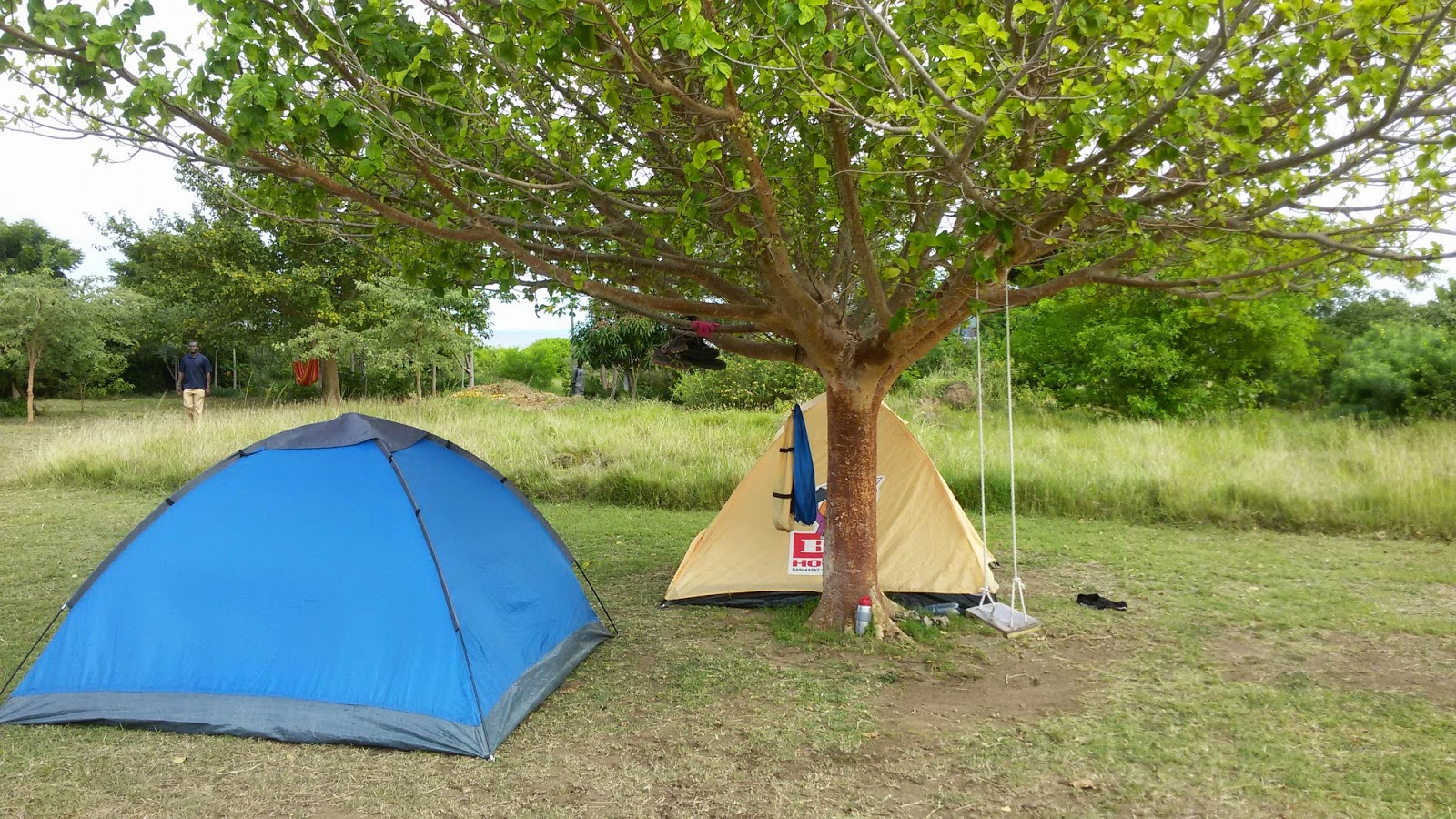
    In that time, we have spent five days camping on the deserted Tiwi Beach south of Mombasa, two days exploring Mombasa—one of them very soggy–and one day on a very long bus ride to Dar Es Salaam, Tanzania.
    At low tide in Tiwi, a treacherous trail through sea urchin mines and slippery pathways of rock led to two wide, deep tidal pools, called Africa Pool and Australia Pool respectively. Africa Pool had a shape remarkably reminiscent of the African continent… Australia Pool less so.
    The pools receded into the overhanging cliffs, and in these dimly lit recesses I could float on my back staring up at a small patch of blue sky revealed by a hole in the stone ceiling. Roots and vines and glimpses of the greenery overhead trailed from the opening, and bright sun, too, at the right time of day.
    One of these caves echoed with the calls of kingfishers and the steady sound of water dripping from pockets collected at high tide. Magic. With goggles, I could explore the meter-high seaweed at the edges of the pools and try to follow the paths of schools of fish—yellow and black striped, iridescent gray with a black line along the top—and observe the forbidding stillness of sea urchins.
    The journey, though only 10 or 15 minutes from camp, felt like an enormous expedition due to the various perils along the way. The sandy beach by our tents (we had joined two friends already there) felt like home when I returned.
    As I floated in the tidal pools watching the clouds pass and the water ripple, I couldn’t help but wish I had brought my camera with me—though how I would have managed it in the pools (water well above my head in places) is beyond me. What lovely pictures I could have taken and shared with all of you.
    Mombasa, gray and narrow upon our rain-soaked arrival, looked far more appealing the following day in the sun. Old Town proffered windows into other eras: curio shops, mosques, cafes and old architecture nestled into every alleyway, a sea view always just minutes away by foot.
    Again, I left my camera at the guest house—and perhaps even had I brought it could not have taken pictures for fear of theft or unwanted attention—and found myself observing picturesque doors and street-fronts longingly. If only I could capture this fascinating swirl of urban culture and take it home with me.
    Finally, the 12-hour bus ride to Tanzania… I was probably awake for half of it. I alternately dozed and gazed out the window, watching the landscape change. As I daydreamt, the earth grew redder; the trees thicker, and the sea more distant and, finally, out of sight altogether. The women I watched on the side of the road when we stopped wore different styles of clothing—some shoulders bare, more and brighter colored fabrics, and somehow more “African” to my eyes.
    Snacks available at rest stops—offered in baskets held up to the high bus windows—shifted too. Plantain chips appeared, mishkaki (skewers of barbecued meat) became more seasoned, and exchange rates grew by a factor of 20.
    As we rocked and bounced and sped along the road to Dar Es Salaam, I felt the old, familiar feeling of excitement return to my gut. 
    New country. New city. New adventure.
    I would have loved to document this leg of our journey. The doorway to a new chapter. The doorway to Dar Es Salaam, House of Peace.
    I did not, however, photograph any of it.
    Typically, I take pictures on designated days during a long trip, opting to leave my camera at home the rest of the time. This choice results in some odd collections of photos—a hundred pictures of Angkor Wat, and none of Phnom Penh; fifty photos of Kilifi Beach, and none of Tiwi—but I prefer it to constantly watching the world through a viewfinder, which I find hugely alters my experience.
    Sometimes, I don’t take pictures. 
    Sometimes, I just travel. For a travel writer, that’s a hard choice to make. It limits how I can record and share my experiences with others. It limits how I can record my travels for myself, restricting me to journal writing, or worse, the incomplete caprice of memory.
    Still, I think most who travel reach a certain point—once or twice, or on a regular basis—where a camera becomes an unwelcome companion.
    We then can choose to bring it along anyways and bear the burden, or we can leave it behind for a day, a week or a month. We might regret the choice later on, when left with no means for capturing the most amazing view, most engaging face, most extraordinary sunset, or we might thank ourselves for creating this space to simply enjoy, imbibe, and, quite possibly, forget.
    Sometimes we don’t take pictures, and we have “nothing” to show for our journey. No evidence. No documentation. No justification.
    And you know what? It’s okay.
    It’s okay if we forget the view from an epic bus ride, the sunset on a remote island, or the face of the old woman we bought vegetables from every day for a week. It’s okay, and it’s even natural, I’d argue. We don’t have to remember every detail, carefully wrapped and preserved in slideshow form.
    I think experiences are most valuable not for the memories they bestow us, but for the subtle changes they initiate within our minds. These we cannot photograph, anyways.
    And so sometimes I don’t take pictures, and all I have to offer are these words.
    ***
  • Lamu, Kiwayu and the Danger of Playing it Safe

    For those of you who have been following recent events in Garissa, Kenya, and who were aware of the proximity of Lamu and Kiwayu Island (my location this past week) to the Somali border, you will be happy to know that I am back safe in Kilifi, several hundred kilometers away.
    As events progressed and the news of Al Shabab’s brutal attack on Garissa University broke, sitting on a bus for eight hours while following updates on Twitter, stopping at multiple police checkpoints and traveling with a police escort could have been a nerve-wracking experience, but with the company of my three travel mates and the shaky consolation that lightening rarely strikes twice, we managed to comfortably ride out the journey.
    I don’t want to write about Garissa today, though. (I’ve done that already here.) I want to share a little about the gorgeous regions in the north of Kenya devastated not just by attacks, but also by foreign travel advisories. 
    At 7:30am on Friday, March 27th, three friends and I boarded a bus bound for Lamu, a Unesco World Heritage Site on the north coast of Kenya accessible only by boat.
    Well, to be exact, we waited at the bus stop for three hours first, bags baking in the sun, and then boarded…
    ***
    Day 1: Friday
    At 3:00pm, we pull off the road and wait a couple hours more for an armed convoy to escort us and the other buses of the afternoon through the more forested area north of Garsen. The roads become increasingly rough as the buses continually race past one another for no apparent reason.
    We arrive at Mokoi Port around 7:30pm and crowd into an already packed ferry. The stars grin overhead as we move towards Lamu Island, and I trail my fingers in the dark water.
    After a quick meal of the best nyama choma (grilled kebabs) I have yet tasted in Kenya, I sleep heavily.
    Day 2: Saturday
    I rise at dawn in order to wander the alleys of Lamu before the town and the sun are fully awake. 
    Winding stone pathways tinted with just the slightest bit of tension (or perhaps desperation would be more precise) speak eloquently of Lamu’s prosperous past as a key Swahili port. The sunlight glows on the waterfront, casting in shadow the men who accumulate around boats and food stalls, hoping for better business. 
    We are the only tourists in sight so far. Gorgeous old houses filled with guest rooms stand empty.
    At 6pm, we learn that the dhow (boat) that should have carried us on to Kiwayu Island (originally at noon, then at 7pm) will not leave until the next day. We make a split-second decision to take a speed boat instead, and are spirited away in the night to an even more remote location. We hurriedly load water, produce and other supplies for 5 days and head out into open water.
    The stars are bright bright and curved around the sky like a snow globe.
    Around 9pm, we arrive at Champali (a luxury camp made available to us four grateful travelers through family connections). My room is quintessential island paradise in one room-sized package: big bed, balcony overlooking the ocean, woven mats and open windows on all sides.
    Day 3: Sunday
    I wake again at dawn in a pool of light, the soft sounds of birds and water lapping at the shore welcoming me into the day. I move slowly, from morning yoga to a brief walk away from the camp, to cooking breakfast.
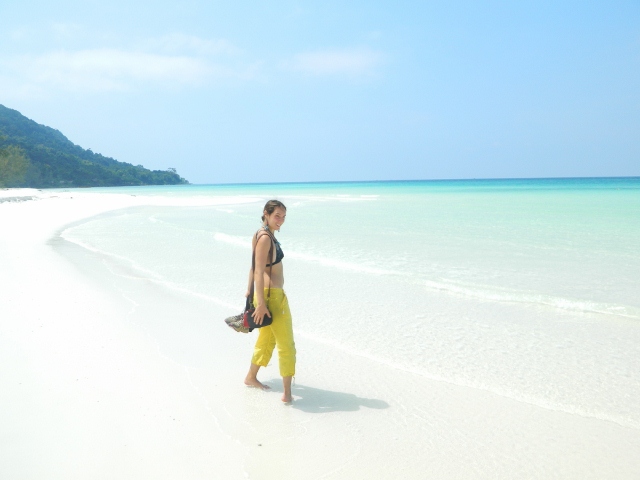
    We play cards and lounge for a while, then make the fifteen-minute “trek” to the other side of the island and eight kilometers of wild, empty beach. Strewn with seaweed, backed by sand dunes and with an unobstructed view of the Indian Ocean, this beach is the definition of remote. My definition, anyways. You would never guess, to stand there, that several hundred people inhabit the island, residing largely in two villages.
    The cicadas in the trees here are terrifyingly loud at times, their buzzing so pervasive it seems to be coming from inside my own head. A noise like that could drive you crazy if you were stuck in a tree with it for long enough.
    Day 4: Monday
    This time we bring boogey boards to the other beach, and for the first time I really understand why people find this activity fun. The waves are just big enough to carry me all the way to shore when I catch them right. I stand up dripping seaweed and sand, and feel decidedly like a six-year-old mermaid version of myself.
    A walk into the village later in the afternoon reveals the hub of human activity that the exterior of the island obscures. The women are beautiful, dressed in a style that looks almost Indian to me, and the children are utterly enthralled by our appearance, trailing behind our small group as we wander a web of thatch-roofed homes and dirt paths speckled with shells—remnants of an aquatic time long past.
    As the sun begins to set we start for Champali, stopping at a beach along the way to watch the color show.
    Day 5: Tuesday
    We all wake up before dawn to race to the top of “Conical Hill,” the tallest point on the island, in time for sunrise.
    Afterwards, we visit Mike and his camp a long walk further down the beach. He, like Kenya’s tourist economy, is struggling. Since two English tourists were kidnapped in 2011, Kiwayu has hardly been a popular destination. All of Lamu region, really, has suffered.
    Gorgeous island getaways stare out at a magnificent ocean view, empty and waiting to be filled again.
    That afternoon, I return to the village and a local woman covers my left arm—from fingers to shoulder—with bold henna designs.
    Day 6: Wednesday
    I wake up slowly, recovering from the long day on Tuesday, luxuriating in the comfort of my big bed. We savor our last hours on Kiwayu, knowing that we will leave at 4am the next day.
    We sit on my balcony to watch one more sunset, the day fading from yellow to orange to dark.
    Day 7: Thursday
    Our boat is late bringing us back to Lamu. We leave at 5:30 instead of 4:30. When we sit down at La Banda, a reasonably priced restaurant overlooking the water, for breakfast, the first news on the Garissa attacks plays on a television at the back of the room.
    The bus ride back to Kilifi is as long and dusty as the first. I feel refreshed and content, though—despite the danger, despite the unrest, I feel secure…

     ***

    I describe my trip in such detail not to brag, but rather to make a point.

    I almost didn’t go.
    When Earl backed out days before our planned departure, I considered doing the same and making the trip another time. Finally though, despite increased travel advisories, Kiwayu’s proximity to Somalia, and the general tone of fear set by foreign governments, international media and even some locals, I decided to go.
    I do not believe I put myself in any serious danger, but I certainly did not “play it safe” according to the conventional wisdom of travel. As more and more tourists opt to visit Tanzania rather than Kenya (playing it safe), unemployment rates here continue to rise (48% for Kenyan youth). These are not conditions for recovery, stability or growth. There is a serious danger there.
    The region of Kenya I just returned from is among the most beautiful areas I have ever visited… the whole coast of Kenya is, in fact. Following yesterday’s events, this hardly seems the moment to encourage anyone to visit, and yet, I want to remind you that there is more here than what you see on the news. That is true everywhere—everything is more than what you hear secondhand.

    Everything you see is certainly true, but it is only one piece of a 1,000-piece puzzle.

    ***

  • Kilifi in Words


    [“Kilifi in Pictures” coming soon!]

    I have been in Kilifi, Kenya now for over 3 weeks. I think some (word) snapshots are overdue…

    Kilifi lies 3.6 degrees south of the equator on the north coast of Kenya. Despite what the U.S. and other governments would have you think, most of the coast here is very safe and very calm—even though it is majority Muslim (Sarcasm. Please catch the sarcasm.)—statistically much safer than Nairobi.

    Sunrise and sunset both occur sometime around seven o’clock. I only seem to hear the call to prayer at four in the afternoon, though I know it happens five times a day. Most mornings at seven an outraged cacophony of clucking erupts from one of the bird pens; the dogs, too, rise to a frenzy at the taunting of crows.

    The roots of mangroves along Kilifi Creek are as so many riddles, twisted mysteries temporarily revealed at low tide. The crabs seem at home there in their world of slick sideways and salt-cured dark.

    The water is brine-y and calm. Everything about Kilifi, in fact, seems quieter than Diani. The dogs more mellow; the beach less windy; the locals who spend time there less aggressive. The Distant Relatives Ecolodge is a lush experiment in permaculture and sustainability. Sawdust composting toilets and resident chickens immediately show that this is not your typical backpackers.

    The fingers of my right hand sport small gashes from my daily work on a recycled glass mosaic on the outdoor pizza oven. Tired of smashing glass and working with cement, I will switch to painting an indoor mural tomorrow.

    Pineapple juice drips down my arms as I lounge on Musafir’s (a traditional Arabic/Swahili ship) unfinished deck. A volunteer sings in Italian as he empties buckets of water overboard—a twice-weekly task, as cotton fills the gaps between boards. We are far enough from shore that no flies would dream of making the journey out. The tide rises, approaching the roots of the first mangrove trees on shore.

    I come to the beach often to write, resting in the welcoming arms of one of the trees. Kilifi inspires peace and creativity, movement and poetry… that, I believe, is plenty.

    ***
  • The Dhow

    [The following is an adaptation of a piece I recently published at elephant journal, “Facing Fear in Handstand.” Or maybe the piece in elephant is an adaptation of this, as this is a near exact excerpt from my travel journal. Either way, enjoy!]

    ***

    I swim to the Dhow—a traditional Arab/East African (/originally Chinese?!) sailing vessel—anchored in Kilifi Creek. I alternate between front and back crawl, and though it only takes a couple minutes, it feels much longer, as is always the case with swimming.

    The Dhow (named musafir, Arabic for traveller) is unfinished. Three years in the making, the boat has a bit of work remaining. The deck boards wobble and gape in places.

    The ship’s builder, a Frenchman with a feather in his dreads, is leaving when I arrive. I hoist myself up the rope ladder that dangles into the water, then he lets himself down into a waiting dingy.

    Alone now, save for a snoozing workman at the bow, I make my way to a single plank of wood jutting out at the back of the boat and sit down. The four o’clock sun is still hot on my skin; it dries the seawater on my arms, leaving a salty film.

    I think about jumping into the water, but delay a while yet. I watch, fascinated, the journey of a single fish. He looks like a seahorse stretched out flat: long, pointy snout, eyes on the side of his equestrian head, mint green and brown body, undersized blue tail fin. He plies the water two meters below my feet.

    A dog barks from shore and reminds me I have something to do.

    I probably stand on that wooden plank a full five minutes thinking. Thinking how I could just climb back down the rope ladder, but I won’t. Because I have something to prove. Not to anyone else—the small beach is deserted—but to myself. Thinking how I feel the need to jump off boats and bridges precisely because it scares me so.

    Some people will always turn back to the rope ladder, but I am no longer one of them, I think. I have decided to be “fearless.” A better word, however, might be “fear-defying.” I refuse to abide by my fears.

    I am thinking how fearlessness, or courage, rather, is not the absence of fear. It is doing things anyway. I hope I always will.

    And I jump, of course. The water is warm-cool after the heat of the sun, and it rearranges itself effortlessly around my body.

    And of course, the jump is a non-event. Nothing of note has happened, and yet I am pleased enough to write all about it. I swim back to shore with a smile on my face. It’s the little things, after all…

    ***
  • Sound Impressions from a Hammock

    As I lie here resting, gently swaying, I reflect on the day’s noises…
    There are the birds who say “Oh Yeah” in a melodic chorus of positivity.
    Then there are the birds who welcome me in Swahili: “Karibu! Karibu!”
    The birds swoop and swivel and swish and swerve—a limitless parade the likes of which I do not have the expertise to catalog, let alone describe. They wake me in the morning and sing me to sleep at mid-day.
    The goats scream with human indignance and bleat with an infant’s piteous yowl.
    They caper and cavort, cradle sunlight in the sleek hollows of their sides. They stand on hind legs to grasp out-of-reach shrubbery. They block the roads with impunity.
    The children shout, “Muzungu! How are you?” with the the same lilt as the birds who say “Karibu.”
    They are sudden apparitions at the side of the road, emerging like smoke through fences and paths. Some smile and wave; others stare with scrutinizing solemnity.
    The motorcyclists ask, “where are you going?” and have nothing more to say to my reply: “I’m just walking.”
    The donkey wheezes through a comical fit of seeming laughter—or sneezes. Sometimes at noon; sometimes at midnight.
    The dogs howl like wolves to the moon.
    The crickets chirp a thunder and an avalanche in the otherwise quiet of dark.

    My ears are working hard to keep up…
    ~
  • Rusinga Island, Lake Victoria, Kenya

    Here, I am Muzungu: foreign, white, outsider. Kids yell after us as we pass on foot (or, after realizing the walk from Mbita is at least an hour, on pika pika, moto-taxi). It hasn’t gotten old quite yet.
    There is something… there is something about the impossibility of fitting in that has always challenged me in the best of ways. In Nepal and India, no matter the effort I made to wear the right clothing, to learn the language, to immerse, I was always patently, immutably other. Here too—I can already tell.
    In Europe, not so much. I have a face that can appear French, Italian, Slavic or even Turkish according to context. Without my backpack, I can walk through a city unmolested, my status as tourist unknown, and blend into the crowd of a subway car. The chameleon has many merits, and I have certainly enjoyed exploring new places in the guise of a local.
    And on the other hand, I do not like the constant attention, stares of curiosity, shouts, deference and, conversely, hostility I receive when I travel as an obvious tourist. I certainly do not like being singled out by the Nairobi police as an easy source of a bribe, and I do not like the behavior of those men who seem to believe that as a foreigner I do not warrant the same respect as women of their own race.
    But still, there is something.
    There is something about the impossibility of fitting in that I do like. Standing out, not because of a voluntarily articulated identifier like religion, sexuality, or dress, but because of an immediately evident, insuppressible feature like skin color—like eye color, height, even language, too.
    That experience was very rare growing up in Boston, or going to school at Middlebury College. And I think most people, of all backgrounds, shy away from it because it is uncomfortable. It is inescapable. It can be exhausting and challenging. It is also, I think, important.
    There is something about the impossibility of fitting in that forces us to confront the reality of our otherness—no greater or lesser than anyone else’s. Amongst so many other reasons, perhaps that is why I travel. It is too easy to fall into the comfortable trap of sameness. Surrounded by people who look— and maybe more significantly behave speak dress and think—like us, we relax not into multiplicity, but into uniformity.
    I would rather learn how to be equally at home in my otherness as I am in my belonging.
    ~

    Home for the moment.
    Here at the western edge of Kenya, the roads are dirt and dust. An energy center in town offers drinking water, internet and computer use, solar energy and more to residents. Wifi is scattered at best.
    At the Wayando Beach Eco-Lodge, our neighbors appear to be hippos to one side and nonstop music to the other. I will teach yoga at 7:30 in the morning… if anyone shows up. I serve Tusker Pilsner to guests and fry Tilapia fresh from the lake for dinner. I have seen three different jewel-colored birds—ruby, emerald, sapphire—since writing that sentence.
    The sun burns hot at midday, but the nights bring light rain and heavy wind, and I am happy for the warm blanket in my tent.
    Eco-lodge means sawdust-composting latrines, round, self-contained huts for guests, and lake water showers (don’t worry— it’s treated for parasites). It also means fresh papaya, mango, bananas, ginger, arugula, peppers, passion fruit and sweet potato from the garden.
    We will spend two weeks here, or hopefully longer…
    …To Be Continued.

    ~
  • Shanghai Snippets

    In Shanghai, everything is new. Or it wants to be new. Or it will be new just as soon as the old is knocked down and rebuilt. Retirees participate in state-sponsored activities in the park: old men manipulate Chinese yo-yo’s with surprising prowess, women join enthusiastically in chaotic dance fitness classes, and a single lane fills with the discordant cacophony of 20 different sound systems. I like it. More than I had expected. I take a stupid number of pictures of funny signs and storefronts, animal parts that no one wants to see, and gates and doors. My aunts take charge of photographing the family, and other things people will want to look at. Nonetheless, I want to share a few of those photos I took. These are the snippets and bits that caught my eye. I hope you will enjoy…
    Dancing in the park with maracas, what else?

    Fish heads– for sale or to discard? I’m not certain.

    Fresh pomegranate juice just outside the metro station.

    The Bund at night.

    Street food (pre cooking). For all of the street food fun, check out
    http://twohungryvagabonds.com/2014/10/25/cheap-eats-in-shanghai/

    “Open Lock. Make Key. Fix Lock.”
    An apt description of services offered.

    “Alley Curd,” purveyor of (the apparently
    very trendy) juice served in IV drips.
    Gates and doors.

     ~
  • Suzhou Snippets

    In it’s 2500-year history, the city of Suzhou has developed and refined many times over. It is known for its light, elegant, delicate cuisine and women. Marco Polo, when he visited in the late 13th century, declared it the “Venice of China.” Admittedly, every water town in China seems to bear this moniker, but I think Suzhou is the original.

    Suzhou strikes me as particularly ugly upon arrival. Massive, congested highways and bland, expressionless buildings. Never judge a city by its facades, of course. Tucked into pockets, Suzhou’s gardens and old walking streets are magical.

    At this time of the year, people come from all over China to eat hairy crab, a prized delicacy harvested from the lake nearby.

    If 1 billion people like something, I figure, it can’t be bad…

    You have to pull away the organs– heart, liver, etc.– in order to get to the edible parts. “No, that is not good to eat,” the woman helping us said, seemingly each time I pointed at a segment of my remaining crab.

    I am lucky to have a lot of “roe” (which I think is actually liver) in my crab. This is the best part… Finally, the crab is tasty, but very scarce, and a whole lot of work to get to. Something to try that I probably wouldn’t choose to order a second time, not least because of the cost– one 200 gram crab costs about 30 dollars!

    On our tour of Old Suzhou, our “guider,” Billy, leads us through gardens where rocks, trees and water have been arranged in perfect harmony. Everything symbolizes long life, prosperity and abundance.

    The sky darkens as our boat steers down one of the main canals. Red lanterns come to life, and streams of tourists pour along the cobblestone banks.

    While on the boat, “fighting noisily and playing on board are forbidden.”

    The laborious process of silk making emerged from this bastion of Chinese culture. Silk, you may be interested to know, is not vegan. In order to extract the silk fibers, manufacturers must boil the silk worms’ cocoons, killing the aspiring moths in the process.

    Beauty

    Is neither tradition nor change,
    But somewhere in between.

    ~

  • Oh, the Characters of Middlebury

    One of my favorite things about working in restaurants is the unlimited entertainment potential of observing the characters that pass through. Middlebury, Vermont does not disappoint.
    Once, in High School, I took a class in Nonfiction Prose. The first week, the teacher had us walk around the neighborhood, observe the people around us, and write a few character sketches. A few descriptive lines that form a verbal portrait. They can be straightforward or metaphorical, humorous or serious. In what seemed an apt metaphor at the time, and in retrospect more like poor judgment, I distinctly remember comparing my teacher to a baboon. Better choices have been made. Regardless, I love this exercise, and I would like to present to you some of the characters of the – Café. No names, of course, will be named.
    ~
    M— is a tall, odd man. He almost always comes alone and almost always orders a hummus salad to very precise specifications. It is shocking when these two things are not the case. He wears a bucket hat and leans slightly when he walks. Though a bit withdrawn at first impression, M– proves quite garrulous on any subject when engaged. He does not like ice in his water, and he eats very, very slowly.
    G—worked in the foreign service, but I would never have heard it from him. It took a long time for him to decide I was worth conversing with at all. He must have his soup piping hot and immediately. He comes for lunch with various friends. Last week, he asked me if I had seen any sea monsters lately in Otter Creek. I suspect he is hiding an eccentric sense of humor.
    Mr. and Mrs. – are my favorite regulars. They are understanding, appreciative, and very sweet. They always drink iced tea—many, many glasses—and sit for a while.
    C— sits at the bar and has a Switchback beer with his lunch. He might be in his seventies. He speaks gently, likes golf, and has a wife that I have never seen. We don’t have many things to talk about, but he is kind, pays in cash, and tips well.
    J—and A—, whether they come separately or together, are strange and, in my opinion, wonderfully entertaining. They have raised friendly banter to an art form, and on a busy day it is best to avoid them as much as possible. On a quiet day, a conversation at their table is a great way to fill up time. J—is tall with very short hair, and always leans in to speak. He likes Caesar salad and sometimes quiche. A—has curly hair and an old, lumbering dog who waits outside.
    Mr. and Mrs. A— are always very nice, and they always order the same thing. Always. I could tell you their exact order, but that might give it away. Inside, they like the table in the corner. Outside, the table against the wall. They like straws and lemons with their water, but they only sometimes use the straws. They never tip over 17%.
    The I—‘s would be lovely if they weren’t so troublesome. An order for two can be a foot long with all of their additions, substitutions and peculiarities. They usually come for brunch, order more food than I think a person could eat, and finish it. They think the — Cafe is their private kitchen, and we do nothing to disturb this conviction.
    The lawyers are very important people. They never have more than 50 minutes for lunch. They like their soups and salads first, and M—with the blonde hair must have her soup extra hot. With all that, they are surprisingly agreeable, and they never linger.
    Mr. D—owns something in town. He is also a very important person. He likes his iced tea with no spoon in it. His lackeys drink soda, sometimes; they defer to him in all matters. There are usually four of them; only Mr. D— orders an appetizer. As far as I can tell, only Mr. D— speaks. He takes up twice as much space as those around him, in every sense of the phrase.
    ~
    When I was little, and we had to eat at McDonalds on family road trips, I would order a cheeseburger without the burger. We called it a Toby Special. Now that I am not six years old however, one, I avoid McDonalds at all costs (along with the rest of my family), and two, I order off the menu. I can make myself a sandwich with no bread and nothing on it at home.
    When work is slow and I have time to, I often wonder how people come to have such exact, particular peculiarities. Likes and dislikes. Demands. Needs. Are they born that way, or is it a byproduct of aging? Are they raised to need straws in their water with no ice, to demand that their soup be hot enough to give third degree burns, and to require, absolutely, that there be no trace of onion on their burger? Are we all so peculiar in our tastes, only more self-conscious of demanding their satisfaction? Do I just have lower standards? Were our parents less indulgent? Are “characters” just average people whose idiosyncrasies have gone unchecked? Possibly.

    Or maybe, as my experience as a server indicates, idiosyncrasy is the norm, and those without restrictions, requirements and specifications are the exception. Maybe this pattern is a unique result of American culture and values. That seems likely, for in all the time I have spent outside the U.S., I have never seen someone order a sandwich without bread.*
    ~

    *That is not to say there is anything wrong, necessarily, with ordering a sandwich without bread. It is simply interesting, and  maybe indicative of something, to observe the frequency of such requests.
  • Snapshots of Living

    Snapshots in words and pictures of the last three weeks of life in Middlebury– plant, animal, and human.

    (Disclaimer: All photos were taken yesterday, when I couldn’t resist the sunshine and the realization that things were changing every day out in the garden, and I had better hurry up if I wanted to capture some of the journey. And so, as I am wont to do, I went on a photo-shooting spree after a month without touching my lovely Nikon. Really, it would be more accurate to call these “Snapshots of a Day at 56 High Street, and an Unconnected Assortment of Words.”)

    Green tomato today… what will tomorrow bring?

    New bean stalks rear dinosaur heads out of the cracked earth.

    Love spills out of my ears.

    Green tomato. Yellow flower.

    Rabbits and foxes and hedgehogs, oh my! They eat everything except the chives…

    One lost, baby-size sneaker sits on a windowsill outside a Main Street shop.

    An abundance of thyme. No pun here. 

    My neighbor, Mr. Cardinal, sits on his perch in royal ruby splendor, presiding over my morning commute along High Street.

    Snow pea spirals to get lost in.

    A vine explodes along the back deck. Green exuberance.

    Dreaming already of fiori di zucca!

    I notice two red glitter hearts stick to the pavement as I walk to work. They leave a smile in my thoughts that lasts the day.

    A teenage boy on a bicycle shouts at me as he zips by. His words are unexpected: “Have a good day!”

    So much green. An abundance of green. A superabundance of green! Green green green.

    Watermelon in Vermont? You bet! Gifted to me today at the Middlebury co-op, and planted by my neighbor’s granddaughter in a sunny patch of ground.

    Welcome summer.

         Vibrant

              Fresh.

                  Green.

                      Joyful.

                     Abundant.

    ~~~
  • Toby and Alyssa Take on Istanbul

    For the last six days I had the great pleasure of traveling with the beautiful, brilliant, best of friends, Alyssa Raven Thomas.  What a welcome change from the repetitive (though largely enjoyable) pattern of spending my time with people who don’t know me.

    Just the highlights, then. We met up Sunday at our hotel in Sultanahmet, one of several historic districts of Istanbul. Reunion joy. Our hotel room was called the Grand Bazaar. The next day we visited the real Grand Bazaar, an enclosed warren of alleys and shops that housed a frenzy of action, color, light and exchange.  There, Alyssa purchased  enough evil eye bracelets to protect a Sultan’s entire army.  We spent the afternoon at Hamam Cagaloglu, Istanbul’s oldest and grandest Turkish bath, sweating and scrubbing out at least a week’s worth of grime (on my part, anyways). We scooped water from marble basins and lounged on heated marble slabs as gray light and a few drops of rain filtered through small holes in the domed marble ceiling.  The Blue Mosque, Haiga Sofia (pronounced and spelled Ayasofia, it would seem), and Topkapi Palace of course had their places of honor, and despite the aggressive masses of anxious cattle pushing to the feeding troughs (over-zealous tourists), these sites were spectacular.  Huge Turkish breakfasts, nearly unlimited cups of free tea (thank you, Turkish hospitality!), and squares of flaky baklava dripping with honey formed the delicious brackets between which our sightseeing took place.  We cruised the Bosphorous, took a ferry from Europe to Asia and back, criss-crossed nearly every inch of the city by foot, and braved wind rain and cold to take on Istanbul.  I’d say we emerged victorious.

    ~
    The Blue Mosque (Sultanahmet Cami) as seen from the Bosphorous.

    Stunning Byzantine mural inside the Ayasofia.

    Alyssa and I enjoy one of the best views of the Ayasofia from a rooftop bar in Sultanahmet.
    ~

    Alyssa is now heading home and I am about to set out for Cappadocia, land of the fairy chimneys. I will find out what that means and report back.

  • Paradise in Pictures

    A typical day on Koh Rong:

    Wake up to this.
    Run through the jungle…
    To this, the “other side” of the island, also known as Long Beach.
    Run back to this and paint these:


    Spend the night bar-tending or enjoying an open no-mic night.

    And a few shots from Angkor Wat…

  • Around Kagbeni

    Now that I’ve left, I thought I’d share a few pictures from my time in Kagbeni…

    View from the old fort, 16th century, across the street from the Red House Lodge where I stayed.

    View of Kagbeni from above. Photo credit Tasha Kimmet.

    Protector grandfather standing guard at the old gate to the village, now somewhere in the middle of town.

    At the top of the Golden Hill– finally made it!!

    Baby dzo (yak-cow)- my favorites.

    Library at the Kag Chode Monastery.

    Yac Donald’s Restaurant. A little bit of America in Mustang… I’m lovin’ it?

    Traveling convenience store.

    My Nepali didi-ji. You don’t need to share a language to be sisters.

    Apple juice-making day!

    Making friends with monks. Typical day in Kagbeni.

    Apple juice and family time.

    That’s all for now. See you on the other side of 40 pages of writing!

    ~
  • The Journey that Wouldn’t End to the Edge of the World


     This is truly the edge of the world.  I know I have written those words before, but I never felt them so avidly to be true as I did on Tuesday morning, my first day in Mustang, Nepal.  The bus from Jomosom (elevation 2720m) to Kagbeni (2850m) rounded a bend in what my map calls a “jeepable gravel road” and  I caught my first full view of one of the most spectacularly empty landscapes I have ever seen.  None of the passengers (mostly pilgrims bound for the holy temple at Muktinath, several hours and a thousand meters farther) seemed the least bit concerned when our “road” passed directly through rivers and careened over small boulders.  I too have become accustomed to this specialty of road travel in Nepal.  My ten new Nepali friends, young business-owners from the south of the country also heading to Muktinath, sang along boisterously to the Nepali folk pop playing from the speakers.  We had stayed up late the night before drinking apple bandy (a Mustang specialty) and talking about “our culture” (as difficult to define in Nepal as it is in the U.S.).  The ticket-taker, whose three-day-old beard gave him a more rugged appearance than the average, never lifted his gaze from the open door and the rising dust beyond it.
    View of Kagbeni from above.
    At the junction to Muktinath, I alighted, shook hands with my friends, said goodbye, and turned to take in my new home.  Kagbeni’s ancient stone buildings, testament to the important place the town once held along the salt trade routes from India to Tibet, apple trees, and new solar panels lay beneath me, the Kali Gandaki River, quite low now in the dry season, winding alongside.  Beyond, in every direction, stretched golden mountains, cliffs and canyons— nothing but rock and dust and thorny shrubs invisible to my naked eye.  Beyond that, gray and white snow peaks and an unblemished turquoise sky.  The wind blew dust into my hair and face.  Exhilarated, awed, and entirely alone, I felt like laughing aloud.
    The journey from Kathmandu to Kagbeni took three days.  I traveled the first day from Kathmandu to Pokhara (810m), an 8 hour bus ride, which was dwarfed by the three buses I took the next day to Jomosom, rattling and dusty the whole 12 hours.  Finally, around 9:30 a.m. on day three, the journey I thought would never end—wearisome and devoid of any glamor—deposited me ten minutes above Kagbeni.  Alone, looking out at a village that might have been entirely forgotten if not for its placement along the Annapurna Circuit trek, I felt completely in my element in this wild land at the edge of the world.
    Kagbeni seen from a two-hour hike up.

    Sunset in Pokhara (Photo credit Marcelo Ogata)

     ~
    I’m picking up some very strange speech patterns these days, a byproduct of never speaking English with native speakers.  My Nepali-lish is getting excellent use—I managed a twenty minute conversation the other day! Long pauses accounted for about half of it, I think.  I will be in Kagbeni for another ten days or so, doing research on tourism, tourists, ethnic identity, etc. If you want to know more about that side of things ask me about it… I could go on for a while, but I won’t here.