Tag: travel thoughts

  • What is Transformational Travel, Really?

    What is Transformational Travel, Really?

    transformational travel, costa rica, toby israel, numundo

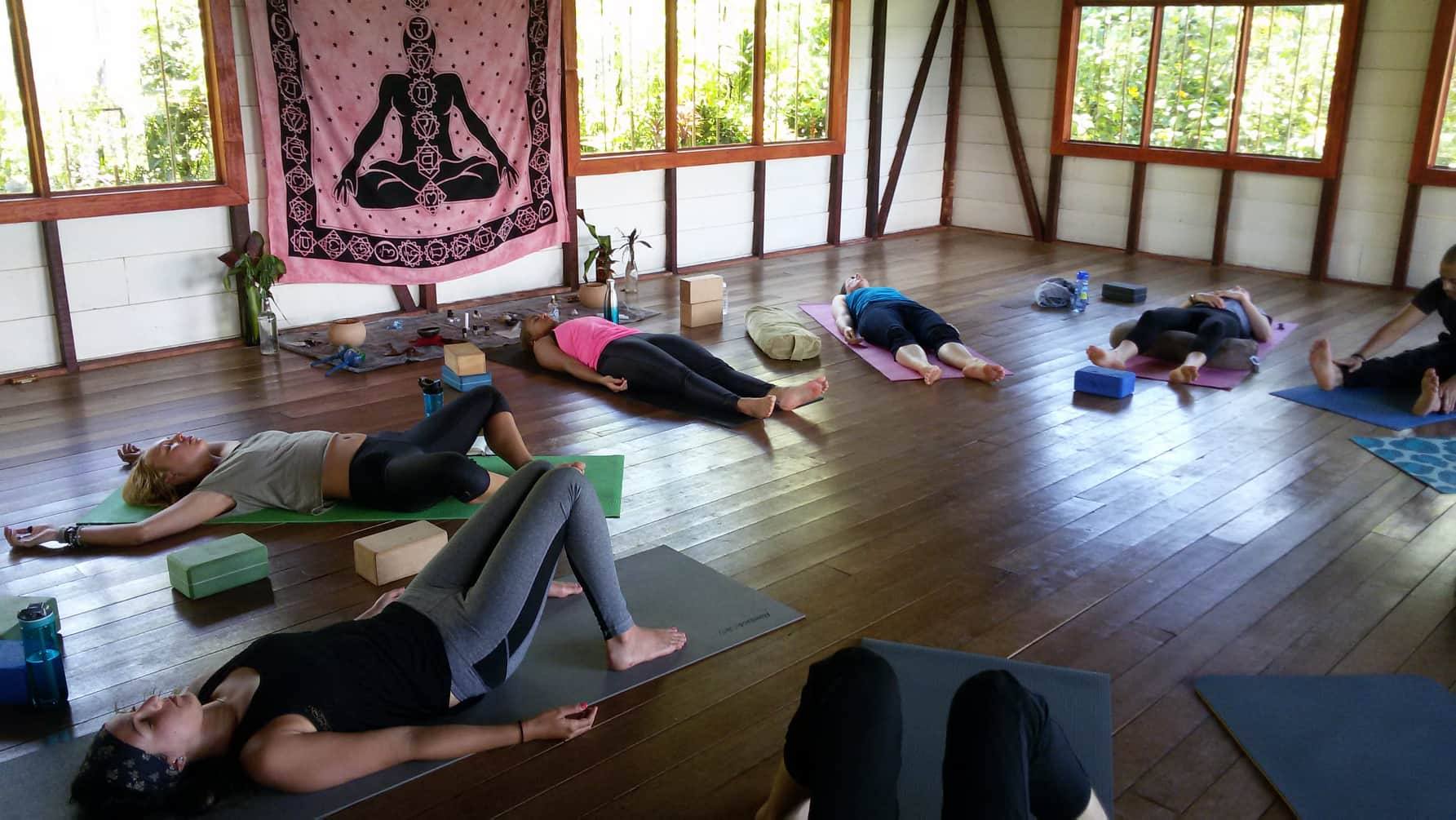
    Look closer. That yoga class is a portal into mindful movement and heightened self-awareness. That farm tour is an introduction to the revolutionary world of permaculture, closed-system loops, and community living. That simple sharing circle is an initiation into a different way of communicating and relating.

    Look closer. Our world is shifting…evolving…transforming — for better and worse. Widespread ecological degradation, disconnection from self and nature, and lack of purpose urgently demand solutions. We must respond with a global shift toward regeneration, reconnection, and repurposing.

    We are already responding. These shifts are happening.

    They are present in the inspiring growth of the global ecovillage movement. They are present in the increasing traffic to platforms like NuMundo, Gen Europe, and Fellowship for Intentional Community.

    Look closer, and you’ll see that the regenerative future is right under your nose.


    View this post on Instagram


    A post shared by lola méndez☽ ethical travel (@missfilatelista) on

    Last month, I had the unique privilege of both facilitating and participating in a press trip highlighting the thriving transformational travel movement in Costa Rica.

    We visited NuMundo impact center Rancho Margot, an exceptional permaculture research, education and retreat center in the Arenal area, and Nammbu, the physical manifestation of your dream (eco) beach getaway. Along the way, we explored the theme of transformation in theory and practice, with ceremonies, yoga classes, excursions in nature, sharing circles, profound conversation and a collective effort toward digital detox.


    View this post on Instagram


    A post shared by The Tico Times (@theticotimes) on

    The pre-trip documents included the following thoughts on the multifaceted travel phenomenon at the heart of our mission:

    “What is Transformational Travel?

    This is not a simple question. As “Transformational Travel” becomes an increasingly popular buzzword in the wellness tourism industry, it is getting harder to pin down the essence of this trend. But we believe it’s important to try…

    A woman jumps from a waterfall, conquering her fear of heights and reigniting her hunger for adventure and new experiences.

    Is this transformational travel?

    Following a difficult breakup, a young professional quits their job, sells everything but a backpack’s worth of belongings, and sets off to explore the world. They discover many ways of living they never could have imagined at home.
    Is this transformational travel?

    Burnt out from a stressful, overstimulated life in the city, a woman travels to Costa Rica for a 7-day nature and yoga retreat. After delving into many mindfulness practices she never had the time to try, she rearranges her world to support a healthy mind, body, and spirit.

    Is this transformational travel?

    A man participates in a plant medicine ceremony, facilitated by trained guides, and returns to his former life with entirely altered thought patterns and a new connection to nature.

    Is this transformational travel?

    The answer to all of these questions is yes. Each of these scenarios is, potentially, a perfect example of transformational travel. Of course, this is far from an exhaustive list.


    View this post on Instagram


    A post shared by Tui @ Blue Butterfly CR (@blubutterfly88) on

    Overall, this evolution marks an exciting progression toward traveling with greater intention, growth, positive impact, and (of course) transformation.

    Transformational travel is, to us, more than the “next big thing” to follow sustainable travel, intentional travel, and eco travel. It represents the deep potential for tourism (a rapidly growing global industry) to evolve into meaningful, life-enhancing journeys. And it simultaneously supports the notion that the tourism industry can be regenerative — rather than extractive — for local people and environments.

    Those are some big shoes to fill. It won’t happen all at once, but we’re extremely optimistic about the trends toward eco-restorative and human-restorative travel in our home of Costa Rica… and around the world!”


    View this post on Instagram


    A post shared by Nu_Mundo (@nu_mundo) on

    Beneath the Buzz: The reality of Transformational Travel

    As I’ve mulled over this concept in preparation for our press trip(s), I’ve come to believe we can break down this buzzword into a couple key components:

    Transformational travel is personal. It can be small, like deciding to keep a regular mindfulness practice or cooking at home more. It can be a massive life shift like moving to the other side of the world or starting a new business. But there is some kind of internal shift, personal growth, or deepening of self-awareness.

    But it also ripples out to touch our communities back “home.” Transformational travel doesn’t stop when the trip ends. Or rather, a transformational journey does not have a fixed end point. Transformation is about process, evolution, and action. And so, the movement sparked by a transformational experience continues, according to the laws of inertia, far beyond the initial impetus. It follows us, fuels us, and ignites further shifts in our communities.

    And it must have a positive impact on the places visited. This last element is crucial. It makes the difference between a nice-sounding travel trend and a real, meaningful shift in the tourist/traveler mindset. Transformational travel requires that we flip the traditional extractive model of tourism on its head — regenerating and contributing rather than Not to be confused with “eco-tourism” or “greenwashing,” transformational travel implies grassroots, integrated, inclusive initiatives that benefit local communities on their own terms.


    View this post on Instagram


    A post shared by Amarna Miller (@amarnamiller) on

    Of course, this summary is far from exhaustive. In conversations about transformational travel, each press trip participant offered their own perspectives, based on their own experiences, expertise, and passions. Some focused more on adventure and conquering self-imposed limitations, others on spirituality and self-actualization, and still others on getting off the beaten path and into truly local experiences.

    All of these are valid, and all bring value to our dynamic conversation about the evolution of travel.

    Because ultimately, transformational travel is about you. It’s about me. And it’s about how we’ll connect — to one another and to our communities — to create something real.


    View this post on Instagram


    A post shared by Toby Israel (@tobyintheworld) on

    What Do You Think?

    This is a conversation, and there are as many answers as there are travelers experiencing true transformation through their journeys. So, I’d love to hear from you:

    What does transformational travel mean to you? How can we do it, share it, and live it?

    Please share your thoughts and experiences!


    Originally published on the NuMundo blog.

    This unique experience came to fruition in collaboration with Desafio Adventure Company, Blue Butterfly Events, and the Costa Rica Tourism Board.

    Check out my upcoming transformational experiences at my retreats page!

  • Don’t Ask me where I’m From, Ask me where Home Is

    Don’t Ask me where I’m From, Ask me where Home Is

    One balmy evening in Domincal, Costa Rica, two friends and I found ourselves stuck in conversation with a friendly tourist from the United States. Despite the best of intentions, he was boring us all.

    We didn’t feel like chatting, and the dance floor was calling. So, when he inevitably asked, “Where are you all from?” we answered in the least gracious way possible:

    “I forgot,” said one friend.
    “I’m undecided,” said the other.
    “I don’t know,” I finished. 

    After close to a year living in Costa Rica, we thought our responses were a clever alternative to the repetitive small talk we had come to dread—with tourists and locals alike. Our unfortunate conversation partner doubtless thought we were very rude.

    However, our reluctance to answer a seemingly simple question touches on a deeper issue for me, and perhaps for many vagabonds.

    I have small talk fatigue. I’m tired of regurgitating the same facts. What’s more, I haven’t lived in the place I grew up (is that where I’m “from”?) for 10 years. I haven’t lived in the pace I receive mail (is that where I’m from?) for five years. It just doesn’t seem like relevant information anymore.

    I definitely have small talk fatigue. But that’s only part of the problem.

    As someone with vaguely European features, I never had to deal with the “No, where are you really from?” bullsh*t growing up. (That’s another ballgame entirely). But having spent most of my adult life outside the U.S., having a distinct accent in every other language I speak, and being obviously foreign more often than not, I face two questions with higher frequency than could possibly be healthy:

    Where are you from? And, why are you here?

    I just don’t want to answer these questions anymore. My place of origin is probably the least interesting thing about me. It leads inevitably to more uninteresting questions. Yet it is always, always the first thing we ask. (I am also guilty of this, though more and more I try to catch myself before it slips out). And, if I do answer the question, “ah,” they say, as if now they know everything there is to know about me.

    I reject the very premise of the question: that the world is made up of nations, and that we “belong” to the arbitrary borders within which we were born.

    I refuse to identify with a nation simply because we have collectively consented to buy into this fiction. I refuse to flaunt my country of origin (utterly accidental, and in no way representative of any personal merit), as if it were something to be proud of.

    Do the advantages and disadvantages of our birthplace, the cultural conventions of our upbringing, and the social constructs of our particular place in the world play a large role in shaping our selfhood? Of course. They play a massive role. I will be the first to make this point. But do these factors define us in our entirety? I strive every day to ensure that they do not.

    Is it an exceptional privilege to reject a national identity and seek a global one? In a way, yes. Few have the luxury to choose to dissociate from the title on their birth certificate or passport.

    Yet, I believe we are all capable of taking a critical look at the structures we have been handed as incontrovertible—at the stories we have been taught as truth. We all have the choice to accept the world given to us…or to deconstruct it, fiction by fiction, and build a new one.

    I was born in the United States. I have a U.S. passport.

    On the one hand, this tells you everything: my position of privilege, my opportunities for work and education, my background, and cultural references.

    But on the other, this tells you nothing about my values, my vision, my spirit, or my heart.

    I was born in the U.S., but don’t ask me about that.

    toby israel, home, travel, costa rica, nationalism

    Ask me, “Where is home?” I will tell you:

    Home is Costa Rica, for now.
    Home is with my family, wherever they happen to be.
    Home is my community—global.
    Home was South Africa, Zanzibar, London, and Italy… for a while.
    Home is in my body.
    Home is a hot shower and a good meal.
    Home is wherever I am welcomed—and wherever people are kind, good, and full of love (everywhere).
    Home is many, many places, and sometimes it is nowhere at all.

    And maybe tomorrow I will tell you something different. Isn’t that so much more interesting?

    Don’t ask me where I’m from, ask me where I’m at home. Then, maybe, we can talk about something real.


    Originally published on elephant journal.

    Image used with permission from Marc Maksim Photography.

  • No One is Talking about God (Poetry)

    No One is Talking about God (Poetry)

    Quite a few months ago, I traveled down to the south of Costa Rica to visit friends living in a remote community on a very special stretch of coastline.

    I had a lot of time to reflect. A lot of time to sit in the dark too. Real dark, untouched by any trace of electric light.

    That kind of darkness opens us up to a kind of spirituality, or creativity, often blinded by the modern world. At least, it seemed that way to me.

    That kind of darkness brought me a lot of words. These are a few of them:

    god, wanderlust, woman, travel, ocean

    Talking about God

    I went to the ocean on a cloudy night, just to stare at darkness.

    I felt my heart beat faster as the waves rolled against the beach,
    and my body rolled too, in sympathy.
    This was solitude.
    Utter blankness upon the canvas of my cornea.
    This was emptiness.
    Division between water and sky barely visible on the horizon.

    My voice, when I sang out to that ocean beat,
    was unique in all the darkness,
    for it was the only thing that told itself to itself.
    The sea spoke to the moon,
    the raindrops spoke to the trees,
    the rocky beach spoke to the colonies of crickets —
    and then, there was me.

    I want so much to be a part of it.
    To lose track of my voice in harmony with the waves.
    To see my footprints disappear,
    my skin melt into the everything
    of that shifting, sucking darkness.

    I love my life, my body, my breath.
    Just, I want to be a part of it.
    The whole.

    You see, no one I know seems to be talking about god —
    it’s out of vogue to seek the divine,
    the mysterious, the ethereal and the invisible;
    children learn to count money but hear nothing of souls;
    we don’t care why we’re here as long as there’s football —

    And no one I know seems to be talking about god;
    we’re all too educated for that,
    leave it to the zealots and the black hats,
    write your gratitude journal and bow down to the fat cats —

    No, no one I know seems to be talking about god,
    but I want to find her,

    so I go down to the water and look into my own heart,
    because a wise teacher or two once said
    I would find a spark —
    there, where all the secret things we pretend not to believe in sing;
    where the ancient longing we don’t understand goes to hide;
    where the invisible and magical and wild abide.

    I heard, once, that god was at the heart of everything,
    including me.
    I read, once, that gods played and ate and shifted faces
    at the bottom of the sea.
    I knew, once —
    I knew, I knew, I knew, I knew, I knew —
    about the mysteries dancing at the horizon,
    where water meets sky,
    about the spirits who live between worlds
    and send stories with serpents and dolphins and dragonflies,
    about the beauty that gave birth to every single thing.

    But I forgot,
    we forgot,
    and I want so much to remember:
    I am part of it.

    No one I know seems to be talking about god,
    but, call me crazy,
    I want to find her.
    So every day, for a few minutes,
    I try to stare at darkness.
    I dive into that shifting, sucking water,
    and I look into my own heart.


    Originally published on Rebelle Society, July 2018.

    Written in November, 2017 at Finca Morpho.

  • “How Many Countries Have You Been To?” & Other Questions I Avoid

    “How Many Countries Have You Been To?” & Other Questions I Avoid

    Originally published on elephant journal.

    Nowhere on my website will you find a tally of countries I’ve visited. Not on my Instagram either.

    Several times, I’ve debated changing my policy about this. It appears to be de rigueur for writers and bloggers in my niche of adventure travel and digital nomadism. And, I am proud of the ground I’ve managed to cover in relatively few years.

    However, I’m much prouder of how I’ve covered it.

    Hitchhiking thousands of kilometers through Europe, learning (basic) Swahili in Zanzibar, building community in Costa Rica—these are the stories I want to tell about my years on the road, which numbers can never do justice.

    Numbers may tell you how many kilometers I walked, how many years I lived out of a backpack, or—yes—how many stamps I have in my passport. But numbers won’t tell you what the Phnom Penh pavement felt like under my bare feet, how my shoulders ached after carrying my life with me across Spain, or the many amusing (stressful) ways I crossed all those borders.

    I think you get my point. The number of countries I have visited is, like any other tally, just a number. It is not, in my opinion, very interesting information.

    Furthermore, it is already an exceptional privilege to travel as I have done. I am deeply grateful to sustainably maintain the nomadic lifestyle I find so exhilarating. It seems unnecessary to proceed to flaunt that privilege in such a one-dimensional way.

    I also dislike the rhetoric, only too common in the travel blogosphere, that “more countries = more happy.” There is no happiness equation. A fuller passport does not equate to a higher happiness index—though travel can certainly lead us down many paths to fulfillment. I am wary of contributing to this superficial conversation in any way.

    countries, travel, vagabonding, nomadic

    All that said, I would hate to raise objections without offering solutions. I wouldn’t waste your time with criticisms of displaying the “travel number” if I didn’t have some alternatives in mind.

    When I tell new friends about my vagabondish lifestyle, more often than not their first question is, “So, how many countries have you been to?” I’ve come up with a lot of ways to avoid (or transform) that one. Here are my favorites:

    1. “Let me tell you about my most recent trip to X.” Stays on topic, but narrows the conversation down to a specific, less superficial angle that I actually want to explore.

    2. “A lot… I’ve been living nomadically for quite a few years.” Vague, but hopefully avoids anything that might come off as boasting.

    3. “Honestly, I’d rather answer a different question.” The most direct answer, and usually goes over well when delivered with a genuine smile.

    4. “I actually don’t think it’s that interesting. Let me tell you a story instead.” Also direct, and opens space for the exchange to move toward a subject of mutual interest.

    5. Just tell them the number…once in a while, it’s easier to go with the flow and answer the damn question.

    I like these answers because most of them are rather versatile. The same tactics can help us to gracefully evade personal questions we don’t want to answer, small talk we don’t want to engage in, and norms of conversation we don’t want to support.

    I hope travelers with similar misgivings to my own may take away a helpful solution or two.

    May your backpack be light and your feet happy—no matter how many borders they’ve crossed!


    I also don’t really like “Where do you come from?” Stay tuned for some thoughts on that.

  • Wanderlusters: Running Away Doesn’t Work. (But Run Anyway!)

    Wanderlusters: Running Away Doesn’t Work. (But Run Anyway!)

    Originally published at elephant journal—7 September, 2016.

    This is fun.

    I’m going through some old writings in anticipation of a possible project or two, and as always, it is a fascinating adventure to chat with my former self.

    And while I’m not currently in the wildest of wanderlusting phases (actually, I’m solidly planted in Costa Rica for at least another 6 months while I cultivate events and retreats here), I still think this is some pretty good advice.

    For you, wanderlusters:

    wanderlusters, toby israel, travel light

    Hello, my name is Toby Israel, and I am an adventure addict and wanderlust junkie.

    And no, I’m not sorry.

    I won’t lie to you. What everyone tells you is true: you can’t run away from your issues. Nope, doesn’t work.

    Every sadness, heartache, loss, fear and insecurity has trailed me down the road of my nomadic life, following my sandy footprints like unwanted travel companions. If my heart were a backpack, you could not lift it onto your shoulders, so full it is of loves and lives. These things do not simply vanish into an Instagram-ready snapshot captioned, “Let that sh*t go.” Oh, no. Did you really think it would?

    Vagabonding, as I like to call it, has never solved a single problem. Not a crumbling relationship. Not a fear of heights. Not a longing for security.

    Indeed, “running away” is an empty promise. Walking off into the sunset, guitar slung across your back, Sufjan Stevens illogically emanating from the empty fields—I mean, come on, I can hardly write it, it’s so cliché.

    Here’s the thing: running “away” may be impossible—but beautiful, wise wanderlusters, you should run anyway.

    Run as far and as hard as you can.

    Run with purpose. Run with laughter. Run with mad, passionate glee.

    You’ll know when it’s time to stop—or you won’t, in which case you’ll keep running.

    Wandering isn’t a cure, but it is (I believe) a path.

    If that path calls to you, sowing iridescent oceans and unfamiliar cobble-stoned streets in your dreams, then honor the call. (If it really calls to you though, you don’t need me or anyone to tell you that.) Wandering won’t fix you, but it could uncover your self to your self.

    wanderlusters, toby israel, travel

    Would I have ever jumped off a 152-meter bridge had I not chased the magical yeti of adventure, facing a fear of heights in the process? Would I have hitchhiked 6,000 kilometers across Europe had I not answered my call and started to run? Would I have healed my heart had I ignored the balm of open skies and fresh wings—instead staying earthbound and numb in the familiar places I once called home?

    Maybe. Probably not. And I’d have far fewer stories to show for it.

    Sorry, but I am not sorry. I am every damn cliché you could write about the wandering millennial seeker roaming the world for years on end—and I am exquisitely filled with joy about it.

    Sometimes, we have to come back, go home, stay still to “find ourselves”—but maybe, just maybe, sometimes we’re waiting to be found at the end of a bungee cord, the top of a mountain, the last hour of an 800-kilometer trail. Wouldn’t it be a shame not to go and see?

    Remind me then, what is this thing I’m supposedly running away from? I cannot see it, for I am too busy testing my wings.


    Hey, feeling wanderlusty? Check out my upcoming retreats in Costa Rica and come hang out in paradise for a while! 😉

  • I’m not responsible for anyone’s Transformation

    I’m not responsible for anyone’s Transformation

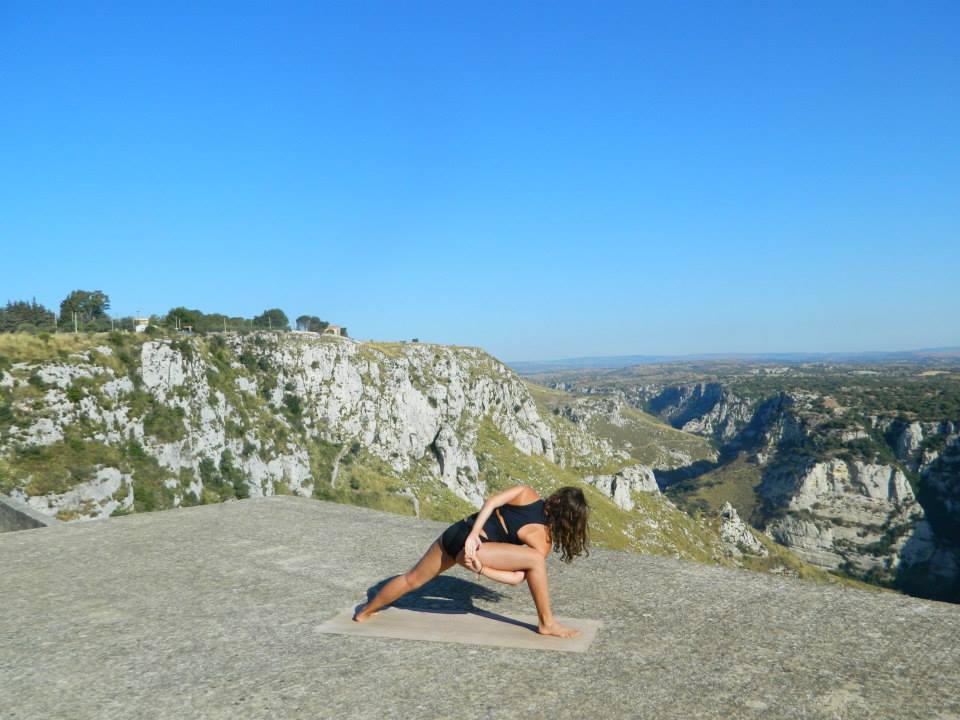
    Saturday, 23 June, 2018 — Finca Agroecologica La Flor, Cartago, Costa Rica — Yoga & Mindfulness Immersion

    I sit straddling the drum, rocking forward with each beat—the only way I know to comfortably play this instrument.

    My knee has slipped off the mat and onto the hard studio floor, but the pain dulls in the background, my focus absorbed in rhythm. Driving rhythm. Holding rhythm.

    As I relax into the drumbeat pattern, I am able to expand my awareness to the people in the circle with me: One has moved to the back of the room to dance; others lie down, motionless; and others sing, sway or clap in conversation with the music. A web of sound makes our many points of connection nearly-tangible.

    finca la flor, yoga retreat, transformation, costa rica, travel

    I should be exhausted after co-facilitating our first “Yoga & the Art of Listening” retreat at Finca la Flor, Costa Rica, but I have wings.

    Maybe it’s the cacao we drank, still sharp and bitter in my throat. Yet, this sense of inspired-ness—of in-purpose-ness—has been building since day one of our five-day experience.

    Eyes closed to hold onto our rhythm, I see the room in my mind’s eye instead: low light, candles at the center of a rainbow of yoga mats, faces glowing—transformed.

    “I did this!” my ego wants to shout, claiming for itself all the credit for this transformation, but no… there’s something truer beneath this voice:

    At my core, another, wiser self is in awe. I am in awe.

    A post shared by Toby Israel (@tobyintheworld) on

    In retreat, as in ceremony, we have each held space for one another to delve inward and to expand outward. I am in awe of the sheer beauty and courage and power of each individual who answered the call and co-created a unique container for accelerated growth. I am in awe of the journey that brought us to the selves sitting together in our closing ceremony, expressing and blessing with joy and freedom and grace.

    My ego, of course, is wrong. I didn’t do this.

    I didn’t make this transformation happen in the space of five short days. That would be madness. An impossible task.

    Each participant was responsible for their own growth and (dare I say it?) transformation.

    A post shared by Toby Israel (@tobyintheworld) on

    I—as a co-facilitator, co-creator, and co-learner—may have shared movement and mindfulness practices. I may have designed a schedule. But I am not responsible for the scene tonight, which makes me (rarely sentimental) feel like tearing up.

    This is why I prefer the term “facilitator.” A facilitator facilitates individual and collective self-inquiry and development through invitation, sharing, and loving support. A facilitator does not presume to have any monopoly on knowledge—or potential outcomes.

    After this experience (the first of hopefully many to follow), I feel grateful, blessed, honored and inspired by what I helped to create. But I do not feel the pride of ownership, because I don’t own this outcome, laid out tonight in my mind’s eye, dancing over drums and twining with the taste of cacao. I recognize that our collective effort, love, and generosity made the experience what it was.

    I didn’t do this; we did.

    And I am in awe of that.

  • Choose Power: A Dream-Inspired Thought Experiment

    Choose Power: A Dream-Inspired Thought Experiment

    It’s been a wildly busy month, and though sharing something here has been on my to-do list every week, it just keeps getting pushed to the bottom. So as not to fall into the habit of not posting, I thought I would share this short thought experiment.

    About a month ago, I dreamt about a bus that wouldn’t stop. The more I yelled at the driver, the more he seemed to ignore me. I watched with growing panic as my destination disappeared behind me on the highway, until it became just a speck.

    But finally, the bus did stop. I thought I was angry… the driver was outraged! “Who are you?” He shouted. “Who are you to tell me to stop?”

    Hmmm.

    And so here is my thought experiment about choices and power and surrender and control:

    A post shared by Toby Israel (@tobyintheworld) on

    The bus is moving, and none of us gets to decide when we get off.

    Angry? Too bad, the wheels are still turning.

    Sad? You’re not the only one, but there are no breaks (…and no brakes) on this ride.

    Confused? Join the club—no one’s been down this road before.

    The bus is moving, and you don’t get to choose when it stops. The driver is deaf to your shouts of “slow down!” and “hurry up!”

    But don’t think that means you don’t have any power.

    You have all the power.

    You choose whether to yell or laugh. You get to decide to make a scene when the familiar vanishes in the distance—or to sit down and soak in the wild frontiers.

    You, and only you, determine how you react to the bumps, flat tires, detours and accidents.

    So someone stomped through with dirty boots. That’s alright too. Or maybe, for a few minutes, it’s not alright at all. Be angry. Be sad. Be confused. But then remember that you don’t have to be. Their dirty boots don’t have to be your problem.

    You still have power over you.

    Even though the driver doesn’t listen, your heart will. So tell it sweet things, always.

    A post shared by Toby Israel (@tobyintheworld) on

  • How to Return when there is No Turning Back

    How to Return when there is No Turning Back

    The plane lands. The boat docks. The train whistles as it arrives at the station.

    You step off. Pause. Look around.

    Friends and loved ones wait with brilliant smiles and open arms to welcome your return. They look just like the pictures you carried in your mind, and yet… The station looks just like your memory of your departure, and yet…

    Is this home? The place you left? It feels different, but you know it has not changed. No, you have changed. Or rather, you have become more yourself, and you do not yet know how to share this new, deeper you-ness with these specters of an earlier time.

    You have crossed oceans, scaled mountains, fought dragons, and befriended shadows. You have faced challenges you could not imagine, and you have learned your strength.

    But this. This seems insurmountable. How can you possibly carry your lessons back? How do you return?

    A post shared by Toby Israel (@tobyintheworld) on

    Reintegration. Maybe this is the hardest part of the journey. The return.

    I know this. We all do. It’s archetypal stuff. Gather so much beauty, so much wisdom, so much knowing—but then, how to bring it home, into the body, into the mind, into the world?

    The heart opening, horizon shattering, mind growing is the first step, not the end of the road. For every obstacle we overcome, there is a higher one around the bend. For every road we walk, there is a longer one still to travel. For every difficult journey we complete, there are yet more turbulent waters to navigate up ahead:

    The return.

    Everything that follows.

    We come back from our journeys changed. More sombre, or more joyful. Heavy with nostalgia, or lighter with all the baggage we have dropped along the way. Wiser, or more innocent—or both.

    A post shared by Toby Israel (@tobyintheworld) on

    We live more lifetimes than we could hope. We die small deaths, traverse dark nights, emerge at dawn with new perspective. None of it matters, and yet—I go on, we go on, because the sun still shines. Because the leaves still whisper. The birds still call. The guitar strings still vibrate.

    Just as they have always done.

    And so we still follow rules of time, of dress, of conduct. We still shine, speak, sing, dance, play—just as we have always done. But we feel like crying and laughing both, because we won’t be the same. We will never be the same.

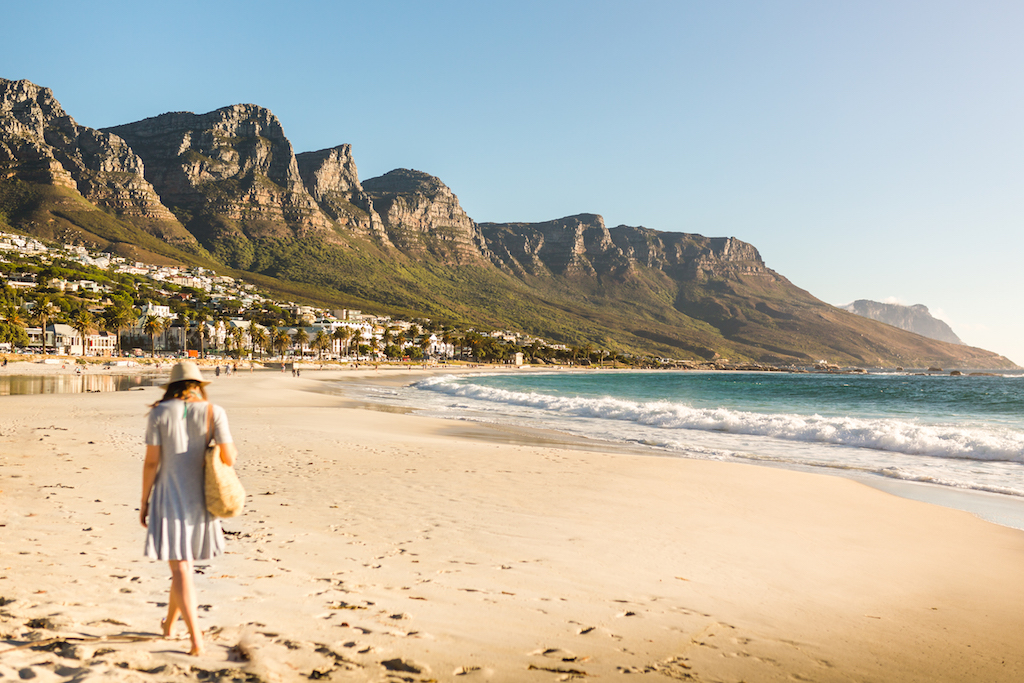
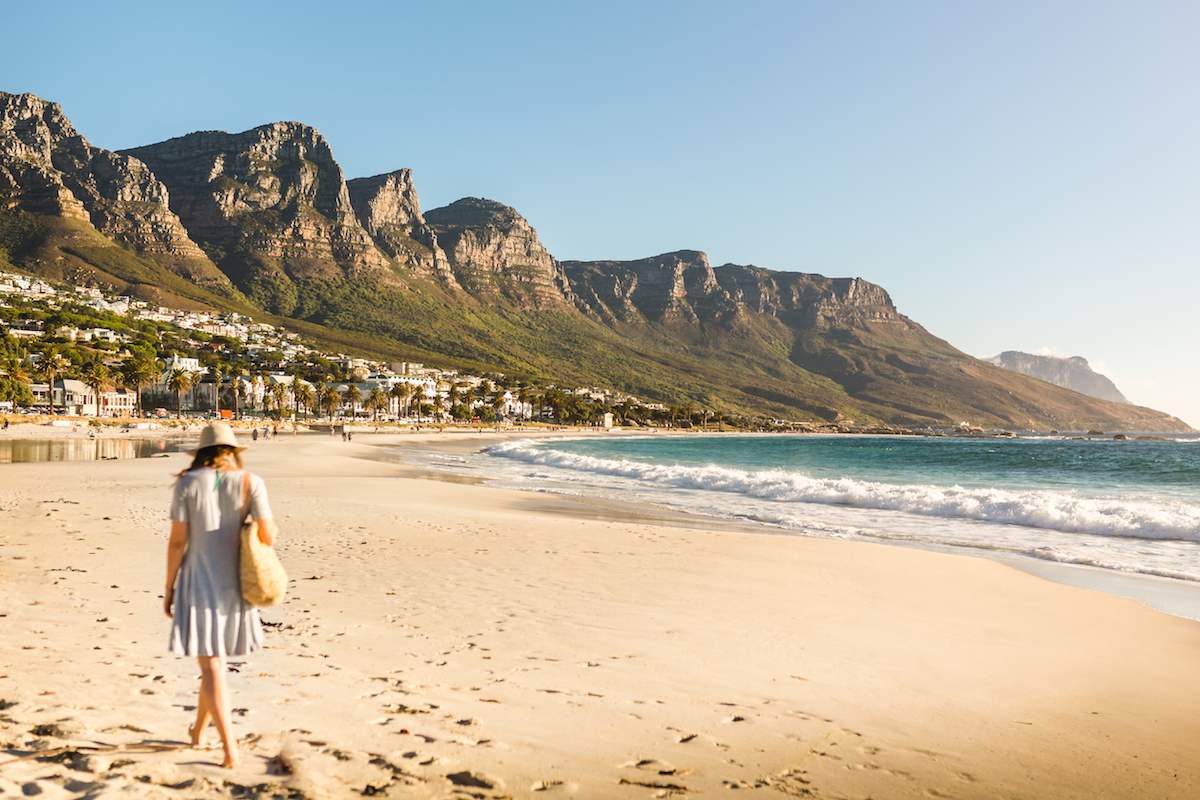
    the return, cape town, toby israel, beach

    We have traveled far. We have met dragons. We have shed the layers of ourselves, and now we put them back on. Now we return, full of questions.

    We have said hello to the unknown and moved beyond it. We have touched secrets and tasted their blessings on our tongues, our skin, our hearts.

    One thing is certain. There is no turning back.


    Beach Photos Used with Permission from A Different Story Studio

  • Why I Don’t Care about International Relations

    Why I Don’t Care about International Relations

    [Our] accomplishments do not make the Western paradigm exceptional or suggest in any way that it has or ought to have a monopoly on the path to the future. — Wade Davis, Wayfinders

    A post shared by Toby Israel (@tobyintheworld) on

    After a challenging three weeks in an International Relations course, I realized something…

    Wait. Let me rewind first. Three wekes ago, I wrote:

    Anthropologist Wade Davis—and particularly his book on indigenous systems, quoted above—has left a deep impression on me in the past year.

    He expresses, with compelling eloquence and abundant case studies, my own feelings about our modern status quo. In these first few weeks at UPeace, I have seen the Western paradigm for peacebuilding and conflict resolution repeatedly touted in assigned readings as the apex of human thought, with few voices raised in opposition. (Makau Mutua comes to mind.)

    While traveling over the last three years, I have encountered countless well-intentioned people doing far less good than they had hoped.

    I believe it comes down to arrogance.

    The problem is that we think we know everything. We think our truth is the only truth—that our reality is Reality. We are self-centered enough to believe human development is linear (and concentrated in the “West”) and that anything that came before, or from outside, is irrelevant to our future as a species.

    This narcissism holds repercussions far wider than the field of peace and conflict studies. It impacts economic systems, food production, development, immigration policy, and so much more. Even worse, it closes our minds to all the wisdom available to us within our own history, and it stunts our capacity for creative and critical thought.

    Human innovation is limitless, but only if we are humble enough to apply it to the flaws in our own paradigm.

    As a storyteller, I am most interested in the role individuals play—as agents of change, or as champions of a flawed system. It is individual arrogance that calls America the “Greatest Country on Earth” and believes it devoutly. It is individual arrogance that can watch a system of production far outpace the earth’s capacity for regeneration and call that progress. And it is human arrogance that promotes the universalization of broken structures in the name of peace, employing many kinds of violence to achieve it. I believe real progress will come from empowering individuals to think critically and tell new stories about peace.

    This is why I’m drawn to movements like social permaculture, rewilding, and experiential learning. These proceed with humility and open minds, don’t assume they have all the answers, and look beyond a human-centered, modern Western paradigm for solutions.

    I do not believe there is anything idealistic about such an approach; given the circumstances, it might be the most pragmatic yet.

    international relations

    You see, I wrote the above words from the perspective of a writer, a student of anthropology, and a poet with an enduring interest in indigenous wisdom. The readings in my recent course, on the other hand, offered answers mostly rooted in the rigid and ethnocentric tradition of International Relations.

    In our final assignment, we were asked to, “Cite the theoretical frameworks and readings that have most influenced your thinking.”

    Instead, I decided to be honest—and not to simply put words on the page for the sake of a grade.

    I had to admit that those theories and readings had not influenced my thinking—not in a meaningful way.

    They made me question the utility of any political system at all. They made me seriously consider becoming an anarchist. And they have made me wonder if perhaps my incorrigible optimism is not so well-founded.

    With the utmost respect to the field of International Relations and those dedicated to it, I am not at the University for Peace to learn about Neorealists and Neoliberals.

    I do not care about great powers, nor small ones.

    I do not care if China will be the next hegemon, not really.

    I do not care if my worldview would be classified as “Cosmopolitan” or “Neorealist.”

    I believe in the potential for transformation at the micro level, and I direct all of my efforts in my work—in writing, facilitating, editing, and learning—toward that end. I believe that the actions and choices of individuals and communities have an increasingly global impact.

    This impact does not care what experts on civil society say about it. This impact will go on impacting regardless of what I say about it.

    I believe in the exceptional power of media to inspire, accelerate, and sustain that transformation. International Relations speaks of hybrid warfare. Perhaps we could also speak of hybrid media: Individual “influencers” with audiences numbering in the millions. Online forums that subvert the status quo and utilize new blockchain technology to circumvent established channels of communication (and power) entirely. Anonymous “actors” who sway the tide of public opinion.

    A single policy change may touch millions of lives (for better or worse), but so can a single viral article.

    So, what do we do with that power? I am refining my answer to that question day by day. This new media is a masterless force, and I hope I can have a tiny, tiny role in directing its course—by adding my own voice to the multitudes and advocating for tolerance, understanding, equality, love, and curiosity, and by supporting individuals to find their voices and harness their experience for positive change.

    The theories and paradigms I have studied so far paint an excellently accurate picture of the “world as it is,” but I am more interested in the “world as it could be.”

    It is critical that we see things as they are if we wish to shape them to a vision of how they could be—absolutely. Frameworks and theories are useful tools for organizing practice, innovating solutions. Yet, as Einstein (or, it may have been Mark Twain) famously said, “Insanity is doing the same thing over and over again and expecting different results.”

    From where I sit, even new theories look suspiciously similar to old ones. Human-centric. Stubbornly rooted in a Western paradigm. Of limited relevance to the average human being.

    The extraordinary young entrepreneurs I met in South Africa, in Kenya, in Zanzibar do not need our theories. Are they not already doing more than any of us to promote peace in their communities? The writers I have worked with for years, supporting them to share stories of trauma, of sexual abuse, of mental disorder, may or may not agree with Kant’s theories on peace, but they are practicing peace—and inspiring others to do the same.

    The yoga students in my classes do not need theories of transformation to transform.

    The lesson is in the practice.

    None of this is to discount the value of large-scale institutions, nor the power of structural change. Indeed, transformation must occur at all levels—for instance, nations signing onto the Paris Agreement; big business investing in corporate responsibility; entrepreneurs pursuing eco-restorative initiatives and non-traditional models of growth; and individuals committing to drastic changes in lifestyle.

    But while the knowledge I have gained in the past three weeks is undoubtedly valuable as such, my work is not there at the level of state actors and UN resolutions.

    My work is not theoretical—or, I do not want it to be.

    I find it impossible to understand how my actions, here at the most micro of levels, have any bearing on these expansive theories.

    And that’s okay.

    There are seven billion of us here on the planet, and more on the way. There is no shortage of shoes to fill.


    Adapted from a (perhaps overly honest) final reflection paper for my recent course at UPEACE.

  • On Growing Wings & The Value of Figuring It Out for Yourself

    On Growing Wings & The Value of Figuring It Out for Yourself

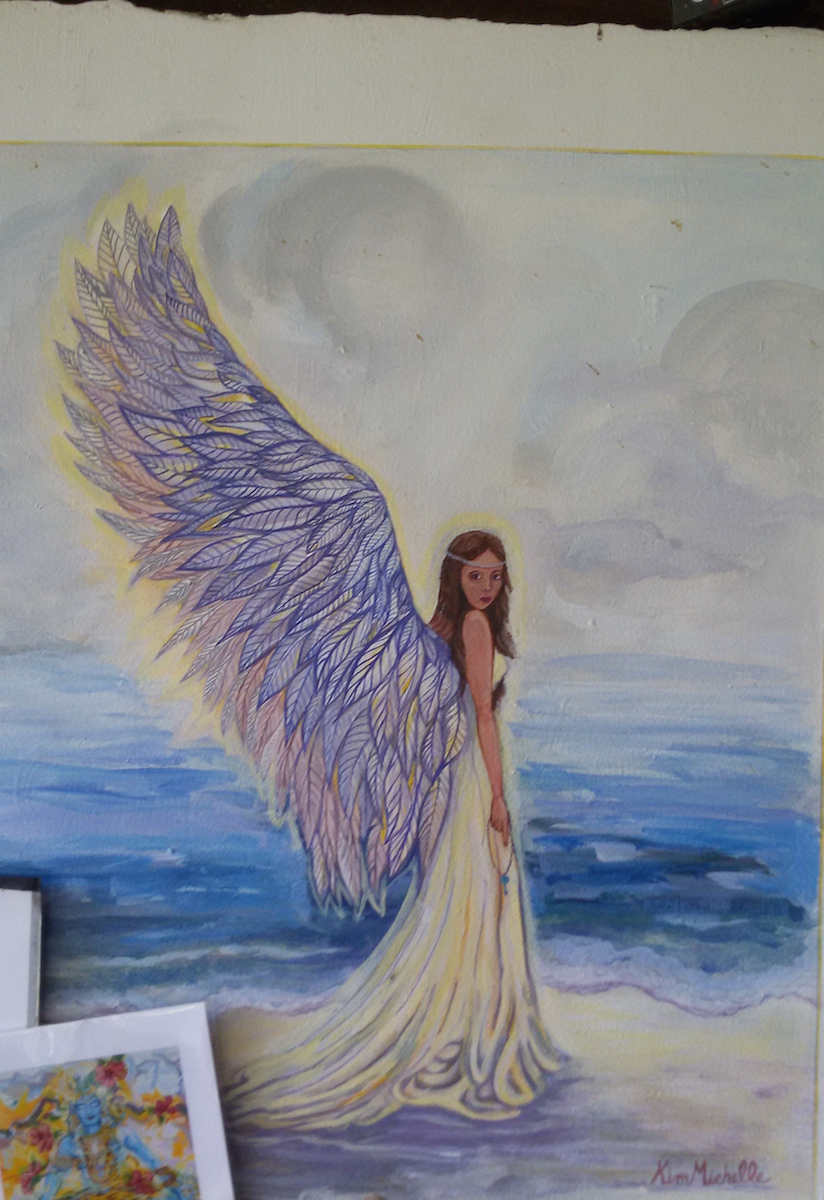
    wings

    I have the clearest memory of asking my father for help tying my shoes.

    I was sitting on the bottom step of our unfinished basement—I must have been around four years old—trying to remember something about a rabbit and a hole. And there was my father, who already had all the knowledge I needed about shoelaces and rabbits; he could help me.

    But instead he said, “You can tie your shoes yourself.”

    And I did.

    Maybe that memory is real. Maybe my mind constructed it out of dozens of memories like it. I don’t think it matters.

    My parents pushed me to “tie my own shoes” throughout my childhood in countless ways, large and small. It’s one of the gifts for which I’m most grateful. Without a doubt there is a fine balance between holding a child’s hand and pushing them out into the world alone. I have no idea what that balance is—one of many reasons I’m not a parent.

    As an adult, I’ve made a religion of self-sufficiency. Perhaps I’ve taken it to too much of an extreme, but that is what I have done. Solo travel, distance walks, one-way flights to countries where I know nobody, constant seeking for edges—my own, and the world’s…

    Some people are adrenaline junkies. The Unknown gives me my high.

    When I moved to Cape Town for the first time in early 2016, I didn’t know anyone there. I came with a name—a friend of a friend—and an address. When I found out that the house I’d already paid a deposit on was nowhere near the center of the city, I hitchhiked my way to climbing gyms, dance classes, and cozy cafes until I figured out the informal shared taxis.

    Would it have been easier to have friends, family, or resources at my disposal, ready to give me rides, show me the ropes of a chaotic transport system, and introduce me to new friends? I’m sure it would have—but then, would I have learned as much?

    I’m a firm believer that we grow fastest and fly farthest when we push ourselves well beyond our comfort zones. Experience has taught me a key paradox to traveling (and living) in a state of discovery: To thrive outside our comfort zone, we must trust, absolutely, that we can thrive outside our comfort zone. But to truly believe in our capacity for flight, we have to fly.

    In essence:

    “We have to continually be jumping off cliffs and developing our wings on the way down.” — Kurt Vonnegut

    Now, there are a few key elements to this jumping-off-cliffs-and-growing-wings business…

    First, that balance. We are none of us an island, as a wise writer once said, more or less. For every cliff we jump off alone, there may well be another to whom we say, “not today,” and third on which we find a companion to hold our hand on the way down. Balance.

    Second, support. While my parents were teaching me to tie my own shoes, they were also giving me love and support every step of the way. I am blessed to know that my family and friends are always there, ready to cheer me on when I fly, or pick me up if I take any knocks on the way down. Family, friends, community—a support system, even if we never call on it, makes it so much easier to jump.

    Third, will. You could argue that personality or background determine our ability to grow wings, and I would disagree with you. While stubbornness is my dominant personality trait, and I don’t like following directions, I have met so many others far more resourceful than I, of every possible personality type and cultural background. I don’t believe it is personality; it’s will. Tautological though it may sound, to figure it out for yourself, you have to want to figure it out for yourself.

    To grow wings, you have to grow wings.

    Easy?

    Wrong question. It’s possible, and that’s really all we need to know.

    Happy flying!


    Many thanks to a good friend here in Costa Rica, whose conversation on this subject pushed me to articulate what exactly I think about it!

  • If I Could Fly: Seeking Stillness in Movement

    If I Could Fly: Seeking Stillness in Movement

    Vermont. Early August, 2017. Stillness.

    It’s 1:04pm, and the August sun is hitting my laptop screen at just the right angle that I must squint to see what I write.

    The bus rattles and sways on the two-lane Vermont highway. Pen and paper prove unusable.

    I have music in my ears for a change, and it makes me think of caravan routes through the desert, the rolling gait of long-legged animals on sand, the scorching white heat of a cloudless sky at noon.

    I look out the window to my left and witness another set of elements entirely—green mountains, gentle New England sky. Yet, the felt sense is the same. It is a tenuous impression I have tried and failed to describe so many times, I nearly believe it impossible.

    It is the thing that calls me to move and whispers instructions to my intuition. It is the thing that taught me to dance, barefoot and alone. “Wanderlust” is an incomplete surrogate for the thing I mean.

    I look outside again.

    There is a story in the sky, like always; I could spend the whole ride watching the shapeshifting drama and chuckling to myself. Mountains undulate on the horizon, soft and green and melodic; I could spend the whole ride tapping out their rhythm against my thigh. Walls of trees enter and leave my sight, as varied yet indistinct as an ocean of faces in a crowded subway car. I could spend the whole ride absorbing their anonymous features.

    I could spend the whole ride sitting here, doing nothing, too—and for someone who loves to do things that’s already remarkable.

    Several weeks ago, I shared my favorite ways to pass a long train journey. Reading, writing, and snacking all featured on the list. So did “doing nothing.”

    stillness

    I wish I could remember the first time I experienced the peculiar, meditation-like (but not quite meditative) peace of being in motion, but I do remember the first time I wrote about it. Somewhere in Southeast Asia, frequently on endless bus rides through astonishing landscapes, I first tried to put words to an enigmatic sensation:

    What are you looking for?
    I am searching…
    I am searching for—
    I am searching because
    it is only in movement
    that I find stillness.
    In running I am free;
    In dancing I am liberated.
    But if I could fly—
    Ah if I could fly,
    I would be truly
    Boundless.

    — “If I Could Fly,” 2013

    ********************************

    I think it’s time to revisit this finding stillness in movement that has occupied my traveling thoughts for so long. I would like to try again to define the thing that calls me to move and calms me through action.

    What is it about being in motion—in trains or on foot, by boat or in dance—that soothes my mind into a stillness I have never found in sitting meditation?

    What is it about being in motion that, like an embodied lullaby, so entrances me—and, I suspect, many lovers of movement?

    The answer is in the question.

    Movement entrances. It occupies us—or at least it occupies me—so fully that there is absolutely no space for thoughts of elsewhere. Other times, other people, other places…these disappear in the all-pervading “this-ness” of moving. (Moving my body through space, or being moved through space, it hardly matters, so long as the coordinates change fast enough to pull my thoughts with them.)

    Four years ago I started writing about the inner stillness that arises when all else is in flux. Years before that, I experienced the same outcome in yoga and ecstatic dance. Its hold on me hasn’t loosened. I think it’s safe to say that this magic stillness is my only addiction. A single taste has you seeking it again for the rest of your life.

    A vagabond knows this. A dancer knows this. A meditator or a yogi knows this.

    However you step outside the borders of your skin and embrace “this-ness,” you will never be satisfied to remain inside the lines again.

    I hear two things more often than anything else:

    “What are you looking for?”

    and

    “I hope you find what you’re looking for.”

    But it’s not a “what.” It’s a who and a why and a how. It’s a voice that calls me to move and a sense of boundlessness that keeps me coming back. It is a way of moving through life and through space.

    It is not a thing I can find and then be done with.

    It is the searching that gives meaning and form to the sought.

    And so we keep chasing shadows through the desert and melodies through the mountains. We keep seeking stillness in movement.

  • As Long As You’re Moving, You’re On Your Path.

    As Long As You’re Moving, You’re On Your Path.

    In this moment of deep transition, a few brief thoughts on “following our path,” and what that really means.

    A well-intentioned friend recently cautioned me about falling too far from my path as I meander, in my peculiar way, through experience and discovery.

    I had to laugh. Such words of caution beg the question.

    If we do not believe there is One True Path, how can we fall from it?

    pathKinetic Freedom

    I am on my path.

    It twists and curves riotously, joyously. It is sheer movement.

    Angels dance on wingtips overhead, and devils on their tails below. They sing together of freedom.

    I am not lost, my dear. Or, if I am, I do not wish to be found.

    Because there is wilding here, on my path. There is witching, here on my path. There is wonder and meaning and laughter and growth—here on my path.

    And on yours too, I have no doubt. I never claimed to walk the One True Path.

    I know only a little about kinetic freedom, and it is enough to keep me spinning, spinning, spinning recklessly through parabolas and whorls—along this path that is unfailingly mine. Always changing. Always growing with me.

    I choose it for myself.

    No one is “falling” here. Only dancing.

    As long as you’re dancing, you are on your path. As long as you’re moving, you are on your path. As long as you can read your footprints in the sand, you are on your path.

    Choose it.


    Next Stop: Costa Rica. Home for the next 12 months. Hasta luego!


    Photo Credit: A Different Story

  • In Defense of Aimless Wandering, Revisited

    In Defense of Aimless Wandering, Revisited

    I’m riding from Sweden to Finland on a ferry named Grace, pondering over aimless wandering. I’ll come back to that.

    Grace is probably ten stories high. She has a club room and a casino, cafes and restaurants, cocktail bars and a dog toilet. She is more floating apartment building than ship, but she floats as she is meant to and she will bring me from Stockholm, Sweden to Turku, Finland in just over eleven hours. For fifteen pounds, that was a slow travel bargain I couldn’t pass up.

    I’m the foggy kind of tired after a weekend of midsommar celebrations, camping adventures, and repeated sunrise-instigated wakeup calls at 4:30am.

    The weather sympathizes. Thick clouds crowd the sky and cast the archipelago (stunning, by the way) in monochromatic grayscale. A drizzle comes and goes; the “sun deck” is slick and empty.

    I sip sour-tasting ferry coffee, which does nothing to clear my head, but successfully destabilizes my hands, and watch the procession of tiny islands. Some have just enough space for a single house; others boast dense stretches of pine forests. I daydream up a contraption that could hitch to and unhitch from the passing ferries and allow me to island hop. (I realize they’ve already invented one better…it’s called a motorboat.)

    And I’m thinking about wandering. Aimless wandering.

    In fact, I’ve been thinking about aimless wandering since it came up in discussion during the week-long wild wandering school in which I participated earlier this month.

    Actually, I’ve been thinking about aimless wandering for much longer than that—since one of my first forays into vagabonding in early 2014—and just briefly forgot to think about it until that discussion reminded me.

    For the past couple of years, my wandering hasn’t been so aimless. With so much work to do and so many friends to visit, I’ve planned my travels more often than not. “You’re in London in July? Great, I’ll come to London in July.” “I have one week free after Portugal…perfect, I’ll see you in Barcelona.” “I need wifi for work this week; I’ll just stay in the city.”

    But there is value in wandering aimlessly. So much value. I still believe that.

    As I gather the skills to wander ever more gracefully, I hope to welcome more aimlessness back into my life. I’d like to invite you to do the same…

    What is aimlessness? It is space, and it is time. Space to move without restraint or reservation, and time to observe without hurry. Space to expand, in body and spirit—and time to be utterly still. Space for silence. Time for reflection. Space for reflection. Time for silence.

    Aimlessness isn’t purposelessness. Not to me.

    Aimlessness isn’t meaningless. Quite the contrary.

    Aimlessness isn’t absence from life; it is full-bodied presence in it.

    To wander aimlessly is to move through the world without the conceit that we actually know what is coming next. That is, to move through the world with grace. (Told you we’d come back to it.)

    So here I am, sitting on a ferry named Grace, thinking about aimless wandering.

    And I’m thinking that maybe aimless wandering isn’t a choice, but a description of how we are, all of us, moving through life. Whether we like it or not. Whether we acknowledge it or not.

    We don’t know what’s coming next, but we can go to it with purpose. We can go to it dancing.

    There is space to expand, and there is time to be still.

    Why not embrace it?


    Leaving Stockholm:

    A post shared by Toby Israel (@tobyintheworld) on

  • 7 Hardcore Life Lessons Travel Teaches Faster

    7 Hardcore Life Lessons Travel Teaches Faster

    Travel is a relentless teacher.

    There are no bathroom breaks, no question and answer sessions, and no weeks off for study or review.

    We jump in, and there we are. We learn on the fly, or we fall on our face. Or, we fall, and then we learn to fly.

    Whatever the order of events, we learn, and we learn fast when we get out there. These are a few of the life lessons I’ve found travel teaches fastest:

    1. Let Go of Expectations.

    That time you think you bought an apple pastry at the Finnish supermarket, but when you bite into it the orange mush inside is anything but apple—and it might be tuna fish. The time you order the cheapest thing on the menu at a rural Kenyan restaurant, and of course it turns out to be beef tongue. When you board your train to Rome, and find out you’re heading to Geneva…

    Yes, life is full of surprises; never more so than when we don’t speak the local language, or are in too much of a hurry to ask questions. At some point, I realized I’m more surprised when I do get what (or where) I wanted than when I don’t.

    Welcome the unexpected.

    2. Eat the Food.

    I’m not vegetarian, gluten-free, paleo, vegan, low-fat or high anything else. While I’ve met many brave souls who stick to their dietary restrictions while on the road, I’ve learned it’s a hell of a lot easier (and maybe healthier) to eat whatever’s available. Not to mention unique culinary-cultural experiences don’t usually follow our rules. I frequently choose to eschew the privilege of choice (the eschewing of which, yes, is a privilege in of itself) in favor of honoring a friend’s hospitality or sampling a street snack I’ve never seen before.

    Eat the food. Maybe we regret it the next morning, but in the balance, it’s worth it.

    3. Be Flexible.

    Would you sleep in a boat? Would you sleep on a coat? Would you sleep on the floor? Would you sleep while they snore? It’s not Dr. Seuss; it’s a night in the life of a traveler. Parks, boats, train hallways, packed dirt, wooden pallet, moldy shack, noisy dorm—if you can name it, I’ve probably slept there.

    Flexibility is a skill, not an inbred talent, and one which I’ve cultivated over many years. Be it food, sleeping quarters, hygiene or travel arrangements, I’ve learned—had no choice but to learn—flexibility is king of the travel kingdom.

    Travel will teach us to be flexible like a ballet class on steroids.

    4. The World is your Toilet.

    Lest this be misconstrued, I’m not suggesting you relieve yourself in your friend’s bedroom or the public gardens. Rather more in the vein of number three, we don’t always get to be picky about our WC. London city street at three a.m.? Hey, everything’s closed, and the next bus is an hour away. Edge of a Himalayan field? The alternative is the middle of the village road.

    Bottom line: we can’t be prissy about where we piss, and sometimes we have to get creative.

    5. Technology Won’t Save You.

    Sure, Google Maps is super handy for getting from point A to B in a new city, but it has never helped me get back when my phone dies. I’ve seen enough power blackouts and internet outages to firmly believe we can never rely on technology. It may disappear without warning—or it may not be useful once we drop far enough off the map.

    We have to be resourceful—without any resources.

    6. People Will.

    When you’re outside the service zone, a friendly shepherd will give you directions, and he and his three dogs and two dozen goats will accompany you for the next kilometer of your journey. When you’re stranded on the side of the road, well-meaning strangers will (usually) stop and pick you up.

    When emergency strikes, technology won’t save us, but the human beings around us will.

    7. No Fear.

    When I said yes to a stranger’s invitation to dinner in Nepal, she became a friend, and her family’s hospitality gave me one of my most memorable experiences of the trip. Jumping on another friend’s motorcycle for a two-day ride from Mustang to Pokhara tied it for first. Wherever I go, I try to say yes to every (reasonable) opportunity.

    Not everyone will agree with my “yes-woman” policy, but I stand by it. From hitchhiking to midnight swims, and mountain climbs to backstreet wanders, it has led me to a treasure trove of adventures—and no regrets.

    In short: leave fear behind, along with the high heels. Where we’re going, we won’t need them.


    What did I miss? Please share your travel-taught lessons—I’d love to hear them!

    ***

    Originally published on elephant journal.

  • Struggle: A Travel Manifesto

    Struggle: A Travel Manifesto

    If you travel (or live), where the mother tongue is not your mother tongue, you will struggle. The mundane will become complex and challenging, and you will no longer take your habitual fluency in the everyday for granted.

    This is a good thing.

    It shouldn’t be easy. (Or at least, I strongly believe that it is through challenge, discomfort, dis-ease that we grow best.) So, this is my travel manifesto for you…

    Go out into the world, and struggle:

    Struggle, to purchase underwear.
    Struggle, to ask directions.
    Struggle, to talk about the things that matter to you.

    Comprehending the cost of your coffee will be a minor victory.
    Catching a compliment on the first go will be cause for celebration.
    Navigating a simple interaction will thrill you—as it never could at home.

    These are all very good things.

    For it should not be easy, this day-to-day living.
    It should not be easy, this being in the world.

    So struggle, to take the bus.
    And struggle, to order at the bar.
    Struggle, to understand.
    Struggle, to say you have understood.

    For it should not be easy, this everyday living.
    It should not be easy, this quotidian life thing.

    When it is easy, we forget—

    We forget that buying our coffee is in fact a minor victory,
    that a compliment is cause for celebration,
    that understanding is a miracle,
    and being understood doubly so.

    So struggle,
    and don’t forget
    that it is a privilege to move through this world with grace.

    And when you do forget,
    as, invariably, we do,
    Go out again
    and travel.

    Remember what it feels like
    to struggle for the simplest of rewards.

    Remember not to take
    anything for granted.

    Remember how to move
    through this world
    with grace.


    — Monday, 15 May; train Barcelona—Paris


    *Image photographed in Belleville, Paris. Artwork by rnst.