Tag: travel thoughts

  • The Importance of a Quest

    Today, I spent an hour looking for soap.
    Not just any soap (those who know me will know how picky I am about my soap… shampoo, lotion and face wash too!), but a soap without chemicals, fragrance, glycerin or dye.
    As I walked down the uneven dirt road from the beach to the village—slick with mud from the rains that won’t stop this year—I thought about three things:
    First, I wondered if my skin would be red later from the inescapable equatorial sun, still hot-hot at three in the afternoon. Second, I considered the fact that a less stubborn person would have long ago sucked it up and bought any of the ten brands of Imperial Leather impersonators—all rich with the aromas of chemical fragrance and a lingering colonial stench. And last, I recalled countless similar hunts from this trip and others past, and I wondered why they were so important to me.
    I love a good quest.
    A walk through a crowded market becomes a treasure hunt when I am looking for an uncommon fruit, or a rare blend of spices. The simplest of goals—acquiring a cup of chai, the perfect gift, stamps or fish sandwiches; finding a historical monument; the beach; the highest outlook or the bus onward—transmutes the everyday into something vital and full of purpose.
    When I am looking for something, no matter how trivial, every interaction suddenly has a point. Intensity. Urgency. Meaning. Senseless conversation finds itself replaced by words imbued with the strongest magic: A reason for existing.
    I am not merely walking; I am searching. And a search is an adventure.
    Now, I will be the first to champion aimless wandering for the sake of wandering—searching not for,but because. A search for nothing is far preferable to no search at all. But a search for somethinganything—well, that is the best of all.
    As I stride from supermarket—proffering Dettol, Imperial Leather, medicated soap, skin lightening crap and a host of other pastel-hued and plastic-scented delights–to gift shop stocked floor to ceiling with everything but soap, I exchange the now familiar greetings and then ask for soap (sabuni ya kuoga). I explain in a mish-mosh of Swahili and English that I don’t want chemicals, and people are helpful, understanding, and repeatedly direct me onward, toward the village.
    Stepping into a shop selling only soap and flip flops, I am presented with more options. An unmarked, waxy pink bar, which I don’t trust because it is the color of pepto bismal. A new and equally off-putting brand of skin-lightening bullshit. And a bar of clove soap marked “herbal” and “home-made” on the box, on which the lack of ingredients at least allows for the possibility that it is actually chemical-free.
    I buy it and return home. My quest is complete.
    A search for soap—or chai, or the beach, or any number of things—is, on the one hand, silly and hardly worth thinking about. And yet, a quest is a quest, no matter how small. Those who have experienced the alchemical change that occurs when purpose is added to their day’s equation will understand that it is not the depth, but rather the presence of an objective that counts.
    Today, it was soap. Tomorrow perhaps it will be a decent cappuccino, gifts for my family or an empty stretch of shoreline. I won’t know until the next whim or need grips me and I set off again in pursuit of something, someplace or even someone (I may hate waiting, but it is another kind of purpose, after all).

    There is joy in wandering, and there is joy in searching simply because, but the single-mindedness of quest is a different, and I think necessary, component of travel and life.
    ***
  • The Invisibility Wish


    Living here, I find I cycle between feeling very comfortable and, dare I say it, assimilated (as much as such a thing is possible), and feeling totally out-of-place and exhausted with sticking out. This is a stream of consciousness on the latter:

    Sometimes, I wish I could be invisible here.

    A foreign feeling for me, who always wanted so much to stand out;
    Now here, hard as I may try, I could not hope to blend in,
    And though it is freeing at times and instructive at others,
    Sometimes, I would like to be invisible.

    Anonymity—a luxury I never appreciated—suddenly seems so very appealing:

    To spend a day where no cars screech to a stop to watch me pass, and no strangers want to talk to me simply because I am white (or foreign, or tourist, or moneyed or different… it’s all the same. And it is because I am white and foreign; I watch the women walking here, and no one wants to talk to them)…

    To spend a day anonymous; to slip under the water of hyper-conscious observation and simply watch for a change; to sit on the bus in silence—what a day that would be.

    Sometimes, when every day is a crowded audience for which I perform my life, I wouldn’t mind stepping into the shadows and only watching for a while.

    But I can’t.

    You can’t watch without being watched. You can’t be an observer without creating ripples through the world you observe. I think physics taught us that.

    You can’t be a white woman in Africa without recognizing the remnants of colonialism. (Irrelevant that at my ancestors were far removed at the time, living their lives in Eastern Europe at the time. I am still a white woman in Africa, here.) You can’t be a tourist without accepting that your money talks and it’s saying, “come talk to me.” You can’t be a foreigner without relinquishing your right to anonymity.

    Or maybe you can, but I haven’t figured out the secret. I will have to do without invisible days and unobserved observation, as I do without good cheese and potable tap water. Luckily, I have a vivid imagination—sometimes I pretend laughing cow is really a luscious Camembert, and sometimes I pretend the shouts and stares are all imaginary, and the beach is really a calm and peaceful oasis.

    It’s all perspective, anyway.

    *** 
  • The Tropical Beach Paradox

    Walk along Miami Beach in a string bikini, and you’ll fit right in. Opt for boy shorts, and you’ll probably feel overdressed.
    Now, do the same thing in Zanzibar, and unless you are on a truly private beach, chances are you’ll feel very uncomfortably exposed.
    That’s why many large resorts have private beaches. That, and the fact that nothing says luxury like owning your own piece of the ocean.
    Zanzibar is between 95% and 99% Muslim, depending on who you ask, and though local women express their faith in various fashions—some wearing full sleeved dresses and somber-hued veils, others donning brightly colored and fashionably tailored items, and still others wrapping vast kangas (traditional patterned fabric) around their bodies and heads—all of them do so modestly.
    Women don’t show their bodies in public, so men don’t see many bodies. Thus, as my partner once—rather rudely—pointed out, for local men, “seeing exposed skin is like porn.” Harsh, but not inaccurate.
    There’s a paradox here, because Zanzibar’s major industry is tourism.
    This industry packages Zanzibar as a remote, tropical island paradise escape and sells this vision to tourists looking for beach holidays, water sports and romantic adventures—for the most part. The people who populate the island, however, are Muslims, the female half of whom does not swim, does not frolic, lightly clad, in the surf (like the beautiful images on brochures) and seemingly finds it quite entertaining to observe the foreign antics of ever-growing hordes of visitors. (How they really feel about these foreigners, I will not presume to guess.)
    It’s a paradox because we are looking at a massive (and growing) industry built on a beach culture that never before existed and, in context, appears shocking and clumsily out-of-place.
    (A foreign woman visiting Zanzibar is left with three options. She can:
    A. Wear the swimsuits which would feel appropriate or even modest at any American or European beach and feel very uncomfortably exposed.
    B. Not swim. (Not a real option.)
    C. Find a truly deserted beach—as most of the coast is populated by fishing villages or mangrove forests, this last option is unlikely, unless she books her stay at an exclusive, gated resort.
    D. Why is there no D?)
    (It’s not as deserted as it looks.)
    This paradox is hardly unique to Zanzibar. If you follow the equatorial belt around the world, you won’t find many places where short shorts and bikinis seem appropriate. And still, as travelers seek more exotic, more remote, more different destinations, anywhere with a nice beach is liable to become “the next Thailand,” or the next “place you need to visit in the next decade.”
    Why the hurry? I think that’s a story for another day.
    Meanwhile, many of these tropical paradise escapes are rather unlikely and incongruous candidates when you really think about it. I mean, I want to comfortably lie on a beach without offending anyone’s religion, attracting large amounts of attention, arousing anyone’s fantasies of “Western Women,” or shocking anyone with different expectations of modesty… I can’t be the only one!
    Where’s the solution?

    I don’t think there is one… anyone have any better ideas?
    ***
  • Where the Tourist Things Are

    There is a road in Stone Town, Zanzibar. It is a big road, compared to most of the others, and on that road there are many big hotels.
    This road marks the edge of the most touristy part of an increasingly touristy town, cross it, and prices triple—or quadruple—loitering groups of young men disperse and much of the decay and jumbled details that lend the rest of Stown Town much of its charm is conspicuously absent.
    This is where the tourist things are.
    Not that you won’t find tourist things elsewhere. You will.
    The same painted bowls and beaded bracelets, colorful print shirts and cleverly packaged spices, are quite nearly everywhere. But not in this concentration.
    This is where the human tourist things are, too.
    Faced with so many wazungu (foreigners) in such high concentrations I find myself at a loss. Next to my quiet neighborhood interspersed with local cafes and dukas (small food shops), such foreignness is jarring.
    Yes, I know, I am a tourist thing too, and no one would let me forget it. But the groups of backpacked, sneakered oddities nonetheless throw me off. They happily pay two dollars for a mango or fifteen for a kikoi (sarong), making it all the more difficult for me to obtain fair prices. They meander in groups of five or six, shoulders bear or covered heads incongruously juxtaposed with short shorts, and no matter how I dress or walk or talk, I am just like them.
    And yet, I am comfortable where the tourist things are. No one looks at me as they would an alien invader. One of many, I do not attract the same attention I do in residential neighborhoods.
    Here, on this side of the big road, surrounded by other white faces who will never blend in, no matter what, I fit somebody’s paradigm, if not my own.
    Oh yes, I could stay where the tourist things are, surrounded by other tourist things “like” me, but I don’t want to. I will go back to my room at the edge of this quickly changing, quickly gentrifying center and cook maharagwe on a kerosene burner. I will take off the extra layers of clothing I don in a futile attempt to deflect attention. I will finish writing for the day, and I will live the life of my making, uniquely between the tourist things I don’t want and the local things I could never be.
    That is where you will find me.
    (Update: Irony of ironies, you will in fact find me ‘where the tourist things are’ beginning late May. Earl and I will be working at a boutique hotel in Michamvi, on the southeast coast of Zanzibar, for the next 6 months! More to come on this soon.)

    (Stay tuned for pictures. The rainy season does not lend itself to photography.)

  • Sometimes We Don’t Take Pictures: Camping on the Beach and Other Undocumented Adventures

    Greetings from Tanzania!

    In the week since I returned from the U.S., I have not taken a single photograph.
    In that time, we have spent five days camping on the deserted Tiwi Beach south of Mombasa, two days exploring Mombasa—one of them very soggy–and one day on a very long bus ride to Dar Es Salaam, Tanzania.
    At low tide in Tiwi, a treacherous trail through sea urchin mines and slippery pathways of rock led to two wide, deep tidal pools, called Africa Pool and Australia Pool respectively. Africa Pool had a shape remarkably reminiscent of the African continent… Australia Pool less so.
    The pools receded into the overhanging cliffs, and in these dimly lit recesses I could float on my back staring up at a small patch of blue sky revealed by a hole in the stone ceiling. Roots and vines and glimpses of the greenery overhead trailed from the opening, and bright sun, too, at the right time of day.
    One of these caves echoed with the calls of kingfishers and the steady sound of water dripping from pockets collected at high tide. Magic. With goggles, I could explore the meter-high seaweed at the edges of the pools and try to follow the paths of schools of fish—yellow and black striped, iridescent gray with a black line along the top—and observe the forbidding stillness of sea urchins.
    The journey, though only 10 or 15 minutes from camp, felt like an enormous expedition due to the various perils along the way. The sandy beach by our tents (we had joined two friends already there) felt like home when I returned.
    As I floated in the tidal pools watching the clouds pass and the water ripple, I couldn’t help but wish I had brought my camera with me—though how I would have managed it in the pools (water well above my head in places) is beyond me. What lovely pictures I could have taken and shared with all of you.
    Mombasa, gray and narrow upon our rain-soaked arrival, looked far more appealing the following day in the sun. Old Town proffered windows into other eras: curio shops, mosques, cafes and old architecture nestled into every alleyway, a sea view always just minutes away by foot.
    Again, I left my camera at the guest house—and perhaps even had I brought it could not have taken pictures for fear of theft or unwanted attention—and found myself observing picturesque doors and street-fronts longingly. If only I could capture this fascinating swirl of urban culture and take it home with me.
    Finally, the 12-hour bus ride to Tanzania… I was probably awake for half of it. I alternately dozed and gazed out the window, watching the landscape change. As I daydreamt, the earth grew redder; the trees thicker, and the sea more distant and, finally, out of sight altogether. The women I watched on the side of the road when we stopped wore different styles of clothing—some shoulders bare, more and brighter colored fabrics, and somehow more “African” to my eyes.
    Snacks available at rest stops—offered in baskets held up to the high bus windows—shifted too. Plantain chips appeared, mishkaki (skewers of barbecued meat) became more seasoned, and exchange rates grew by a factor of 20.
    As we rocked and bounced and sped along the road to Dar Es Salaam, I felt the old, familiar feeling of excitement return to my gut. 
    New country. New city. New adventure.
    I would have loved to document this leg of our journey. The doorway to a new chapter. The doorway to Dar Es Salaam, House of Peace.
    I did not, however, photograph any of it.
    Typically, I take pictures on designated days during a long trip, opting to leave my camera at home the rest of the time. This choice results in some odd collections of photos—a hundred pictures of Angkor Wat, and none of Phnom Penh; fifty photos of Kilifi Beach, and none of Tiwi—but I prefer it to constantly watching the world through a viewfinder, which I find hugely alters my experience.
    Sometimes, I don’t take pictures. 
    Sometimes, I just travel. For a travel writer, that’s a hard choice to make. It limits how I can record and share my experiences with others. It limits how I can record my travels for myself, restricting me to journal writing, or worse, the incomplete caprice of memory.
    Still, I think most who travel reach a certain point—once or twice, or on a regular basis—where a camera becomes an unwelcome companion.
    We then can choose to bring it along anyways and bear the burden, or we can leave it behind for a day, a week or a month. We might regret the choice later on, when left with no means for capturing the most amazing view, most engaging face, most extraordinary sunset, or we might thank ourselves for creating this space to simply enjoy, imbibe, and, quite possibly, forget.
    Sometimes we don’t take pictures, and we have “nothing” to show for our journey. No evidence. No documentation. No justification.
    And you know what? It’s okay.
    It’s okay if we forget the view from an epic bus ride, the sunset on a remote island, or the face of the old woman we bought vegetables from every day for a week. It’s okay, and it’s even natural, I’d argue. We don’t have to remember every detail, carefully wrapped and preserved in slideshow form.
    I think experiences are most valuable not for the memories they bestow us, but for the subtle changes they initiate within our minds. These we cannot photograph, anyways.
    And so sometimes I don’t take pictures, and all I have to offer are these words.
    ***
  • Just a Little Bit of Culture Shock

    Piles of fruit in Malindi, Kenya.
    ***

    I’ve always scoffed at the concept of culture shock.

    I go somewhere; there I am. Okay. I go back to the U.S. There I am. Great.

    Depending on where you go, toilets smell worse or better. Water is more or less potable. People stare openly, or pretend not to. Buses leave on time, or they don’t. I could go on and on. Yes, everywhere is different–sometimes exceptionally so. Still, I maintain: What’s the big deal?

    We may be creatures of habit, but we’re also highly adaptable. This is, in my opinion, one of humankind’s greatest assets.

    Meetings and discussions to prepare for “reentry” (offered by any self-respecting study abroad program) struck me as mildly ridiculous. “You might be overwhelmed at the supermarket… blah, blah blah…”

    How could anything top the embodied chaos that are foreign marketplaces? Food shopping in Kilifi replaces my exercise for the day as I lug bags of fresh produce through narrow, narrow lanes between food stalls. Attempting to haggle in my limited (though growing) Swahili, I am rewarded by an incomprehensible verbal assault from the usually serene, matronly mango vendor. Dust and flies and sweat hold court in a small room filled with giant sacks of grain.

    Shopping, much to my delight, is an adventure in other parts of the world. And I’m supposed to be overwhelmed by an American supermarket?

    Street food in Shanghai.

    Now. Here I am in Southfield, Michigan to visit my grandmother. (Sorry to everyone everywhere else in the U.S., I’m here for four days and then I’m flying back to Kenya. I’ll catch you next time.) I arrived yesterday to the shoddy basement International Arrivals hall of Detroit Metropolitan Wayne County Airport. I used a payphone to call my Uncle (When’s the last time I used a payphone?!) and, as has become our routine, we stopped at Plum Market to buy groceries on the way to my grandmother’s house, her fridge being very full of a very limited variety of foods.

    Now. I will happily eat my own words if you would be so kind as to serve them to me, because I was, indeed, overwhelmed.

    I thought I could get pretty much anything at Nakumatt or Tuskys–two Kenyan supermarkets boasting aisles of imported foods.

    Market in Barcelona.

    I was wrong.

    This supermarket truly had everything

    An entire aisle devoted to bottled juices, smoothies, kombucha and specialty water of dubious benefits.

    Floor-to-ceiling (almost ceiling, anways) choices of canned beans and bagged chips.

    Another whole aisle of cheese. Cheese! I missed cheese much more than I realized. As I stood frozen before the bright display of savory abundance, a man came over to ask if I needed help finding anything. I replied that I was simply overwhelmed by choice.

    He smiled knowingly, but he didn’t know.

    Produce three times larger than what I am now accustomed to teetered at eye level. Onions bigger than baseballs and elephant garlic of the same proportions. Fat eggplant and butternut squash, and apples to feed giants. And these were, supposedly, the organically grown foods!

    How many brands of pasta could there be in one place? I grabbed the first pack in sight, worried that if I stopped to examine my options I would be standing there for an hour.

    And let me not start about prices, because when you live someplace where just about everything seems to cost fifty cents or less, a dollar for a lime is obscene.

    One-stop (one-person?) shopping in Nepal.

    I love to go food shopping. I love to take my time selecting produce and comparing options. I love to wander through piles of promises–ingredients waiting to become meals–anywhere I go.

    But yesterday, for the first time, I understood how a simple supermarket could be overwhelming–the lights too bright; the prices too high; the air too cool; the clientele too calm; the selection too bewilderingly massive.

    I rushed through my list, knowing that if I took the time I wanted to look at everything I would be there until nightfall. Such an overabundance of everything! I was–almost, but not really–in shock.

    I still feel culture shock is too strong to describe my experience. Shock is a sudden death or a push from behind. Shock leaves you paralyzed… I’m still functioning, breathing and standing on two feet. I’m just a few hairs shy of indifferent.

    How about “culture pinch,” that slight twinge of strangeness we experience when we show up someplace new, or return somewhere that used to be familiar but now doesn’t quite fit. Or “culture” bewilderment,” when we’re just kind of confused, but dealing with it all the same. Or, better yet, “culture wonder,” when everything inspires a mild form of awe with few symptoms beyond wide eyes.

    (Any other “culture shock” alternatives to offer? I’m all ears!)

    I’m starting to think that all of those lectures on culture shock and “reentry” shock weren’t wrong; they were just exaggerated and alarmist. So extreme were the warnings that I could never take them seriously. This isn’t an illness we need to carefully monitor and shield against. It’s not a disease that will lay us up in bed for months. But it’s not entirely delusional, either.

    I suspect that we (I) could learn a lot about ourselves (myself) by paying attention to when we feel uncomfortable, overwhelmed or bewildered, and why.

    Food for thought.

    Vermont summer blueberries. Now there’s another thing I miss.

    More importantly though, cheese! So much cheese.

    ***
  • Why Travel Should Be Stressful

    Why Travel Should Be Stressful

    The journey from Diani Beach (South Coast, Kenya) to Kilifi (North Coast) by public transport is long, sweaty and chaotic. (Indeed, going just about anywhere in Kenya is all of these things.)

    It involves a matatu(bus) to the main road, and another to almost-Mombasa. Each is filled to capacity, quite likely blaring rap music or Kenyan pop, and located only by navigating an insistent throng of taxi drivers, hangers-on of indeterminate employment and buses bound for every direction.

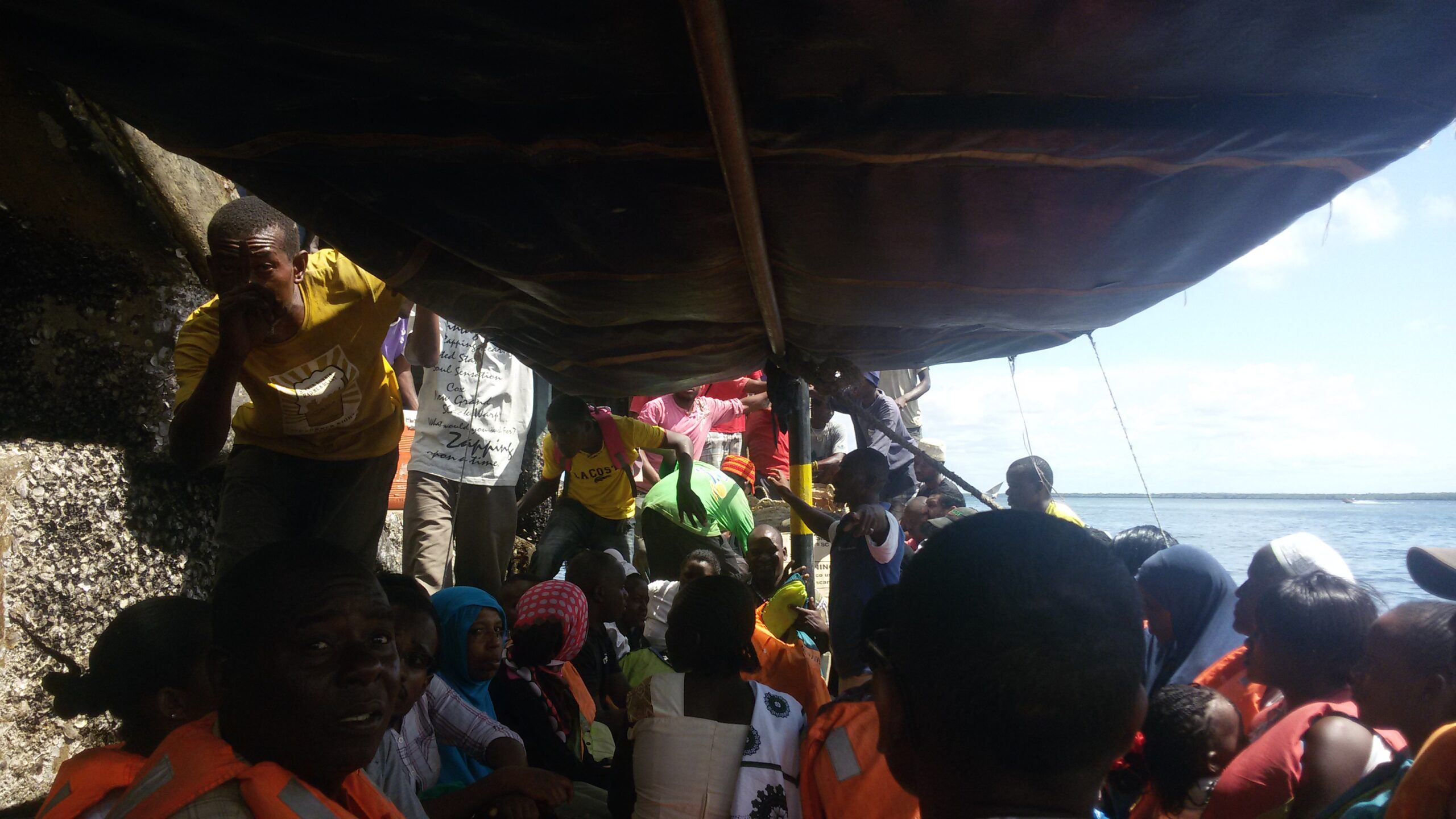
    A ferry packed end-to-end crosses into Mombasa proper—a sort-of island linked on most sides by bridges–and then, with luck, a coach bus may be waiting at the other side, saving an extra ride to the station. A man stands at the top of the ramp from the water shouting, “,Malindi-Kilifi-Malindi-Kilifi-Malindi-Kilifi,”without pause. In the crush of the crowd, one could hardly understand him.

    And it’s not over yet. The bus will let off in Kilifi Town, a 15+ minute tuk tuk ride from the Creek, and the Distant Relatives Ecolodge.

    We made this journey just over a month ago, and I have since settled into the easy tranquility of the lodge, the nearby beach and the comfortable isolation of the place. When I do go into town—relatively laid back when compared to Nairobi—I am thrown off by the sudden return to chaos, stares, noise and confusion.

    Thinking back to that trip from Diani, as well as the much longer odyssey from Western Kenya, I recall the sweat trickling down my spine as I sat wedged between two ample-sized women in the back row of a matatu, the weight of my purse on my thighs an added layer of heat. I remember the stillness of the air on the coach bus waiting for traffic to clear, the noise of the speakers just above my head, the inescapable midday sun over the ferry and the coating of grime that covered my skin by the time we reached Kilifi. And that was only a few hours.

    But that is, I believe, an essential part of travel.

    Comfortably ensconced in the coastal paradise I currently call home, I feel a decided aversion to the unpleasant harassment and disorder of going into town. I contemplate another day of bus journeys, sweat-soaked clothing and dirt-covered hair with reluctance. I am loathe to invite back the arguments and anxiety that naturally accompany reams of buses, unfamiliar routes and missed stops.

    But, if I left all that out of the equation, where would the challenge be?

    Stress has always, always been an inconsequential—yet, paradoxically, fundamental—footnote to my travels. Bumbling through Italy with my family—utterly lost; wandering the streets of Istanbul with my best friend, utterly lost; scouring Kolkata for a guest house alone, utterly lost. Anxiously running to catch trains; bartering for taxis, tuk tuks, motorcycles, often walking instead in stubborn frustration; searching for addresses, waiting for rides or fruitlessly seeking a quiet corner to regroup—stress and adrenaline saturating my blood.

    None of it is fun, and most of it gets pushed to the sidelines of our and rose-toned memories of voyages and adventures. But it is all travel.

    That stress means I am stretching the limits of my comfort zone, crossing boundaries and pushing myself to be both stronger and more pliant. No, I don’t like it, and sometimes I allow it to get the best of me, but stress should be a (manageable, eventually forgettable) part of travel.

    If travel isn’t just a little stressful at times, and all-out infuriating at others, then what is it? Because if it’s too easy, then it isn’t challenging; and if it isn’t challenging, then I’m not learning or growing as much as I could.

    I’ll take sweat, stress and anxious searching over stagnation any day… When’s my next bus ride?

  • Embracing Syncretism

    When I first encountered the concept of cultural immersion, it sounded something like this:

    To understand—to truly understand—another place and people, you must eat, sleep, dress, breathe and speak like the locals.

    The Anthropological principle of “participant observation” essentially takes the same tact.
    And it’s simple, right? Not easy, but simple:

    When in Nepal, eat dal bhat, sleep on wooden pallets topped by thin thin cushions, wear salwar kameez, learn Nepali—or, in my case, attempt to learn Tibetan—take the bus and wear a mask against air pollution. When in Italy, eat pasta with bread to fare la scarpetta, speak Italian, ride scooters and dress… however it is Italian women dress. When in Kenya… need I go on?

    Except, no. It’s not that simple.
    First of all, unless you’re a linguistic genius, you can’t possibly learn all of the languages, and if you want to travel to many places, your communication skills will suffer in the balance. More than two months in Kenya, and I have yet to muster the energy to tackle Ki-Swahili. (I will though… I will.)
    And then, what is “Italian” in the patchwork of dialects that is Italy? In Nepal, a country of at least fifteen distinct ethnic/cultural/linguistic groups, what language should you learn?
    What is “traditional dress” when every other “modern Indian woman” opts for blue jeans?
    What is local food? Sure, staff meal might be rice and beans, but those who can afford it sup on steak frites or pasta marinara. Valid or non-valid dimension of a “local” experience?
    The answer, of course, is valid. It’s all valid. Local ≠ traditional ≠ authentic. We attach far too many judgments of value, ignorant assumptions and foreign stereotypes to these words (as I have, doubtless, asserted many, many times already…).
    Local, at this moment in Kilifi, Kenya, means teaching yoga and tango at a four-day milonga event. The absolute last thing I expected to find here, and I could not be more pleased.
    At this moment, local means dancing five hours a day and creating lesson plans with my new Italian dance partner, so that we can teach foreigners and Kenyans alike about connecting to their bodies and one another through Tango.
    Local means ordering grilled cheese and butternut squash soup for lunch because it’s f*cking delicious and I have no desire to eat rice and stew every day.

    I no longer wish to limit my experience to what is appropriately immersive. Not, I hope, at the expense of learning (I really need to get it together and study Ki-Swahili), but in the interest of embracing reality in all its syncretic, contradictory beauty.
    ***
  • The Dhow

    [The following is an adaptation of a piece I recently published at elephant journal, “Facing Fear in Handstand.” Or maybe the piece in elephant is an adaptation of this, as this is a near exact excerpt from my travel journal. Either way, enjoy!]

    ***

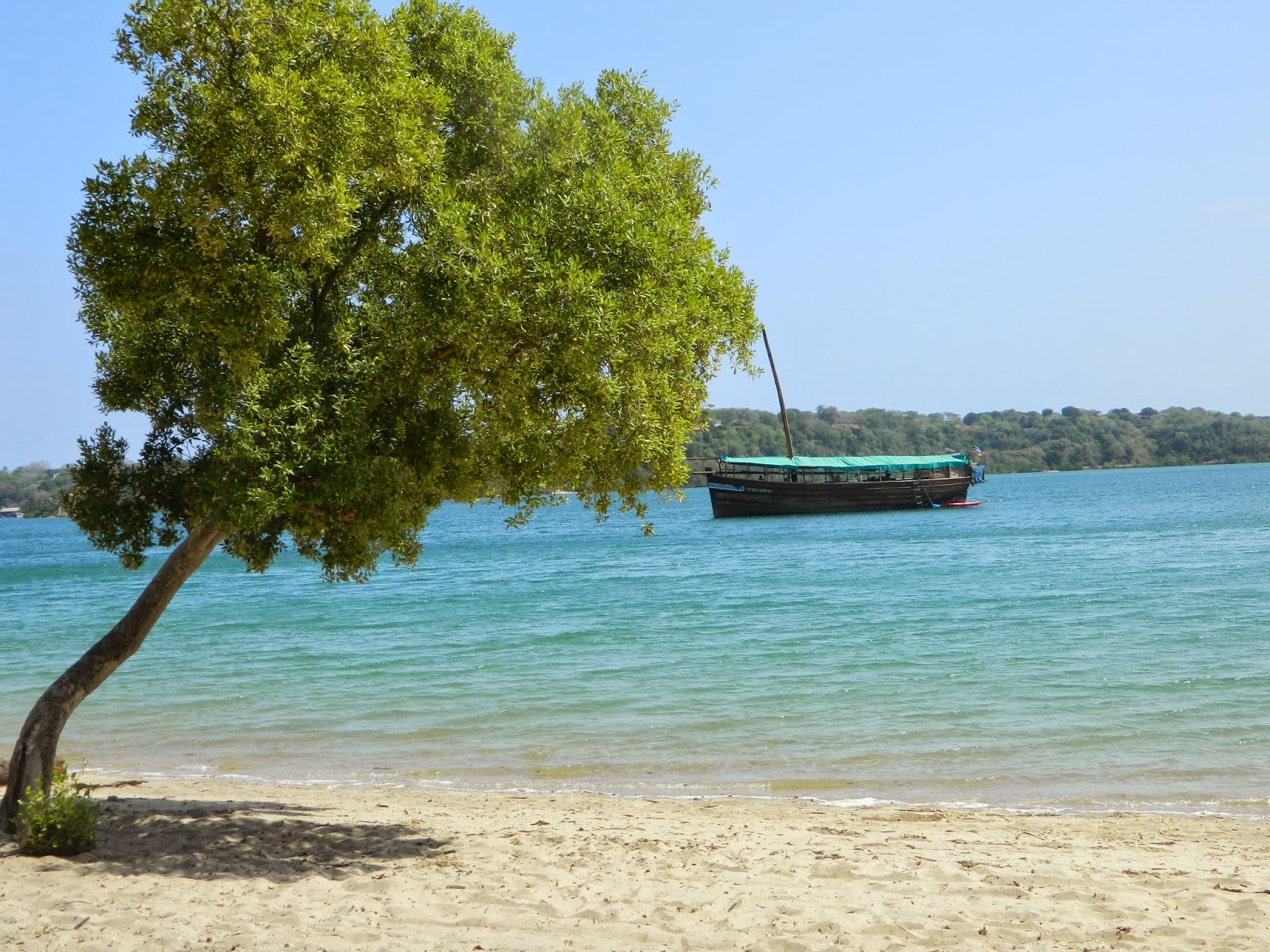
    I swim to the Dhow—a traditional Arab/East African (/originally Chinese?!) sailing vessel—anchored in Kilifi Creek. I alternate between front and back crawl, and though it only takes a couple minutes, it feels much longer, as is always the case with swimming.

    The Dhow (named musafir, Arabic for traveller) is unfinished. Three years in the making, the boat has a bit of work remaining. The deck boards wobble and gape in places.

    The ship’s builder, a Frenchman with a feather in his dreads, is leaving when I arrive. I hoist myself up the rope ladder that dangles into the water, then he lets himself down into a waiting dingy.

    Alone now, save for a snoozing workman at the bow, I make my way to a single plank of wood jutting out at the back of the boat and sit down. The four o’clock sun is still hot on my skin; it dries the seawater on my arms, leaving a salty film.

    I think about jumping into the water, but delay a while yet. I watch, fascinated, the journey of a single fish. He looks like a seahorse stretched out flat: long, pointy snout, eyes on the side of his equestrian head, mint green and brown body, undersized blue tail fin. He plies the water two meters below my feet.

    A dog barks from shore and reminds me I have something to do.

    I probably stand on that wooden plank a full five minutes thinking. Thinking how I could just climb back down the rope ladder, but I won’t. Because I have something to prove. Not to anyone else—the small beach is deserted—but to myself. Thinking how I feel the need to jump off boats and bridges precisely because it scares me so.

    Some people will always turn back to the rope ladder, but I am no longer one of them, I think. I have decided to be “fearless.” A better word, however, might be “fear-defying.” I refuse to abide by my fears.

    I am thinking how fearlessness, or courage, rather, is not the absence of fear. It is doing things anyway. I hope I always will.

    And I jump, of course. The water is warm-cool after the heat of the sun, and it rearranges itself effortlessly around my body.

    And of course, the jump is a non-event. Nothing of note has happened, and yet I am pleased enough to write all about it. I swim back to shore with a smile on my face. It’s the little things, after all…

    ***
  • The Paradise Mask

    Diani Beach, South Coast, Kenya, 4.3222° S


    “Everybody—everybody who is escaping from something ends up in Diani. Shady people, criminals, expats… everybody.”

    Such was the prognosis of a Diani resident and regular at the South Coast Backpackers bar (where I have been working for the last three weeks), and I am inclined to believe he is right.
    Though it doesn’t seem it outright—packed with tourist shopping centers and hotels as it is—Diani Beach is kind of a final frontier. A “la-la land” for expats and Kenyans alike escaping from their pasts—or simply fleeing the big cities (“Nairobbery,” I have learned, is actually a common nickname for Nairobi). A no-man’s land where many normal social conceits do not seem to reach.
    What does that mean? Allow me to illustrate:
    Here in Diani Beach you have the “beach boys,” the name by which everyone—and I mean everyone—calls the men who pass their time at the beach, either trying to sell something—coconuts, jewelry, boat trips, sunglasses, aloe leaves, safaris and anything else you can or can’t think of—or just loitering… or betting on a Roulette of foreign women. They almost always lose that bet… after all, only so many women will respond kindly to verbal assault: Hey! Beautiful-lady-how-are-you-Where-are-you-going? Why-you-don’t-want-to-talk-you-are-very-beautiful.
    Local bars, however, are brimming with those who have won. Young Kenyan men and women share cocktails and seductive glances with much, much older foreign women and men. The Kenyan men wear their good fortune with a touch of arrogance, while the women adjust their skin-tight dresses and scan the room for something better.
    Residents and long-term visitors prove a bottomless repository of stories—bar brawls, unsavory characters, intrigue—leading a new arrival to wonder how Diani manages to appear so… idyllic. The ever-swaying palm trees, smoldering white sand, jewel-toned water and algae, beachfront thatch-roofed restaurants and resorts, technicolor kites speckling the sky, two resident Diani Beach camels—it all belies a much less serene, much duskier palette of hidden shadows and secrets… Or so it would seem.
    She who ventures out at night must not walk along the road for pickpockets; must be wary of piki pikis and taxis for drunk drivers; must avoid matatus for questionable passengers.
    A guest in a five-star, gated compound on Diani Beach might easily—very easily; too easily—forget that Kenyan law allows for detention in jail up to one year on suspicion of terrorism; might refuse to acknowledge that police checkpoints on roads are no more than systematized bribery collection centers; might overlook the streets lined with garbage and the fact that most of the young local women at the bars are probably prostitutes.
    Here is a carefully imagined idea of a paradisiac tropical hideaway spread like a semi-translucent shroud atop the reality of Kenya: corruption and a starving tourism industry. At times (most of the time, even), I have certainly overlooked it all, lulled into la-la land by the breeze and the sun and the sand and the coconuts.

    But then again, Diani Beach is hardly unique in these regards. What earth-bound paradise is truly what it pretends to be?
    ***

    ***
  • Where Do You Go When Nowhere Is Safe?

    Naturally, after our disappointment at the Moroccan embassy and finally, finally finding a place we could both visit without visas (Kenya), new obstacles have arisen. Al Shabab has been targeting non-Muslim Kenyans in the North, Mombassa and Nairobi in retaliation for Kenya’s recent military action in Somalia. Is nowhere safe? I find myself wondering.
    To turn on the news of late is to open the floodgates to a barrage of ill-tidings. Terrorist attacks, Ebola, protests, and political turmoil. That is not to write off the gravity of these situations, for they are undeniably serious. But still, I can’t help wondering where is left to visit. Where do you go when nowhere is safe?
    My musings inspired the creation of this folk tale:
    ~
    Once upon a time, there was a girl. She loved to explore and go on adventures. The spray of light on the horizon played a lilting melody on the back of her eyelids.
    One day, the girl announced that she wished to go into the woods at the edge of town.
    “Don’t go into the woods!” Cried the townspeople. “Don’t go; don’t go,” they pleaded. “The woods are not safe,” they admonished. “There are wolves and witches and monsters and men. Nowhere is safe. Nowhere is safe,” they said.
    And so she stayed, safe in the town, and gazed at the woods, imagination aglow. “Oh how I wish to go into the woods,” thought the girl. “Oh how I wish to go!”
    Months passed, and the girl’s gaze shifted. “I will go to sea,” she announced one day, “to see what lies beyond it.” The townspeople shuddered and shivered and quivered with fear:
    “Don’t go out to sea,” they cried. “Don’t go; don’t go! The sea is not safe,” they admonished. “There are sharks and storms and sirens and surges. Nowhere is safe, my girl. Nowhere is safe; stay here,” they said.
    So the girl sighed and laid aside her plans, and she did not go. But she sat upon the shore and watched the waves, and her thoughts crashed against her skull in time: “Oh how I wish to go out to sea. Oh, how I wish to go!”
    In only a few weeks, she had yet another design: “Surely the mountains are safe enough… that is where I will go,” said the girl, jaw set.
    “Oh!” Cried the townspeople. “Don’t go to the mountains!” They pleaded with her. “Don’t go; don’t go! The mountains are not safe,” they admonished. “There are winds and ghosts and bandits and banshees. Nowhere is safe, you see. Nowhere is safe; stay here,” they said.
    The girl craned her neck to look up at the rocky crags that broke up the sunsets and cast long evening shadows across the town. And she did not go. She sat and she glowered  and her mind raced on. “Oh how I wish to go to the mountains,” thought she. “Oh how I wish to go!”
    Again and again she presented new ideas, and again and again the townspeople shuddered and shivered and shook their fingers sternly:
    “Nowhere is safe, my girl. Nowhere is safe,” they said. “Don’t go there; no you mustn’t go there. There is war and sickness and there are demons and dragons; you see, the world is not safe, my girl. Best to stay here—oh yes, best to stay here,” they repeated. “Don’t go! Don’t go!”
    Months passed in this way, or perhaps they were years, and the girl began to sit longer, to stare farther, to think deeper. Finally, this is what she thought: “If the woods and the sea and the mountains are not safe, then surely neither is this town,” she said to herself. “And indeed if nowhere is safe, then it is “nowhere” where I must go!”
    And with that, she packed her bag with books and bread and blankets and bottles and she set out along the road. The townspeople, when they caught sight of the girl, ran after her, calling frantically, “Where are you going? Where are you going?”
    “Nowhere!” The girl shouted over her shoulder. “I am going nowhere. You needn’t worry—it is safe there!” And she laughed and walked on.
    And she crossed the woods and the sea and the mountains, “nowhere” always just ahead. She encountered dragons and dangers, monsters and men, but fairies and angels and vagabonds, too, and these last guided her way.
    “Nowhere is safe. Nowhere is safe. Oh how I wish to go,” her thoughts chanted through her head in time with her feet, and never did they tire. On the girl walked. Up and out and onward she looked.
    “Go,” whispered the sun. “Go! Go!”
    ~
    Much to my regret, we don’t live in the world of fairy tales and fables. The troubles reported nightly are very real—though occasionally exaggerated by those on the outside. We can’t totally ignore them like the girl in my story. And so, though we still plan to fly to Kenya next week, we will do so cautiously, avoiding population centers like Nairobi and Mombassa and staying in the Lake Victoria region, which appears to remain out of danger.
    Where do you go when nowhere is safe? That is the question facing the 21stcentury nomad, isn’t it.

    ~
  • What is Cultural Immersion? I Don’t Think It’s This…

    “When I’m in a new place, I don’t want to go to the tourist places; I don’t want to go to museums. I want to see real things.”
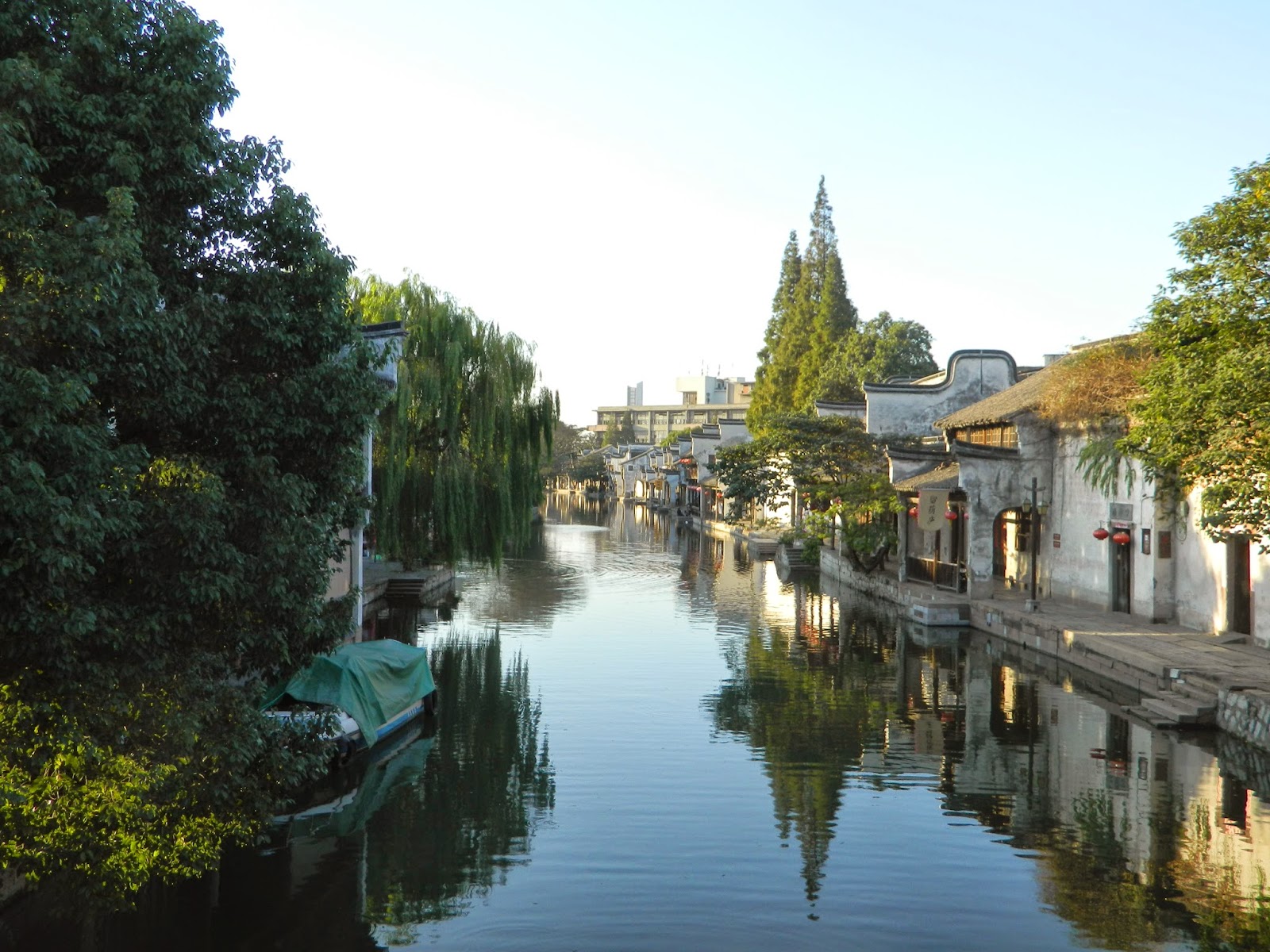
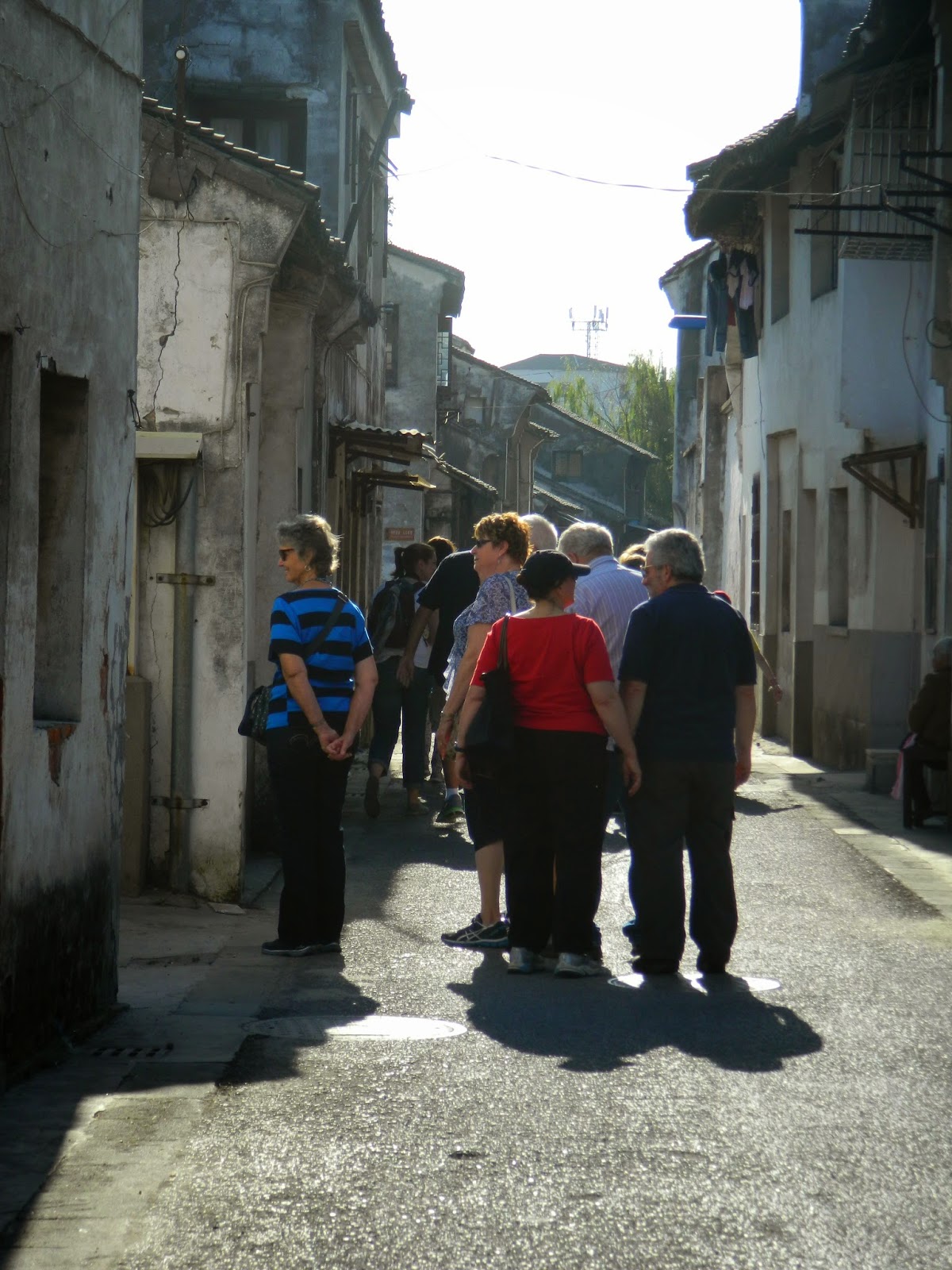
    Thus began my tour of Nanxun, a water village 1.5 hours outside Shanghai. Our guide, Stacy, began her introduction loudly, Midwestern inflection un-dampened by seven years in China.
    Here we go, I thought. I would not be sleeping as I had hoped, for all 18 participants would be introducing themselves next. I’m not sure I had ever been on a real group tour like this before, but that weekend I had the distinct pleasure two days in a row.
    Will I do it again? Quite unlikely. Am I glad I went, if only for the wealth of new writing material to come of it? Oh yes.
    As our bus hiccupped out of Shanghai, the platitudes rolled on. Introducing her partner, Mike, Stacy continued, “Of course, because Mike is Chinese, he’s good with numbers and dates and things.” 
    Chinese towns, people and art, on this tour, were only authentic if over 80 years old.
    Those who know me are aware of my crusade against terms like “real” and “authentic.” Last year, after months around tourists bemoaning the loss of “real” Tibetan-Nepali-Indian-etc culture, criticizing restaurants, cafes and people who were not “authentic” and congratulating those who were, I lost my taste for such judgments. After reading a large amount of literature on these discourses, I am convinced that “is it real?” “is it traditional?” and “is it authentic?” are the wrong questions to ask.
    Our first stop in Nanxun, naturally, was for toilets. We pulled up outside a large, nondescript hotel where around 40 staff reluctantly moved through their “morning exercises”—something resembling the bastard son of the Macarena and the electric slide. They looked especially mortified to have an American, camera-laden audience, and I couldn’t find the spirit to take any pictures. After all, we all know the miserable feeling of dragging through forced routines.
    Indeed, much of the day felt disturbingly reminiscent of an elementary school field trip I and my two aunts didn’t want to be on. We were the disruptive kids at the back of the bus.

    As we marched single file through the house of a certain Mr. Wang (a retired blacksmith well over 80 years) to see his traditional Chinese oven, all I could think was, “What is the point of this?” 
    I, like Stacy, enjoy seeing into people’s lives and homes. I tend to be nosy and curious and have few boundaries when I travel. I have participated in many home-stays and exchanges. But I hope I would never be so entitled as to walk into a stranger’s home, practically without conversation, take a few pictures, and leave.
    What did we all learn that day in Mr. Weng’s home? I, for one, have no idea.
    Stacy has branded her tours as off-the-beaten-track cultural immersion experiences. Certainly, I saw parts of Nanxun and Shanghai that I may not have stumbled on alone, but is it even possible to immerse ourselves in another culture in any meaningful way in just 8 hours? 
    I wonder.
    We spent a hefty chunk of the afternoon in a retirement home with three charming Chinese women. Why? Because, “these old folks have so much wisdom to share.” Our interview, however, proved far too short to extract much of any depth. And though I did learn that I should not dry my face immediately after washing it and that “There is more food now” than in the Mao years, that was about it.
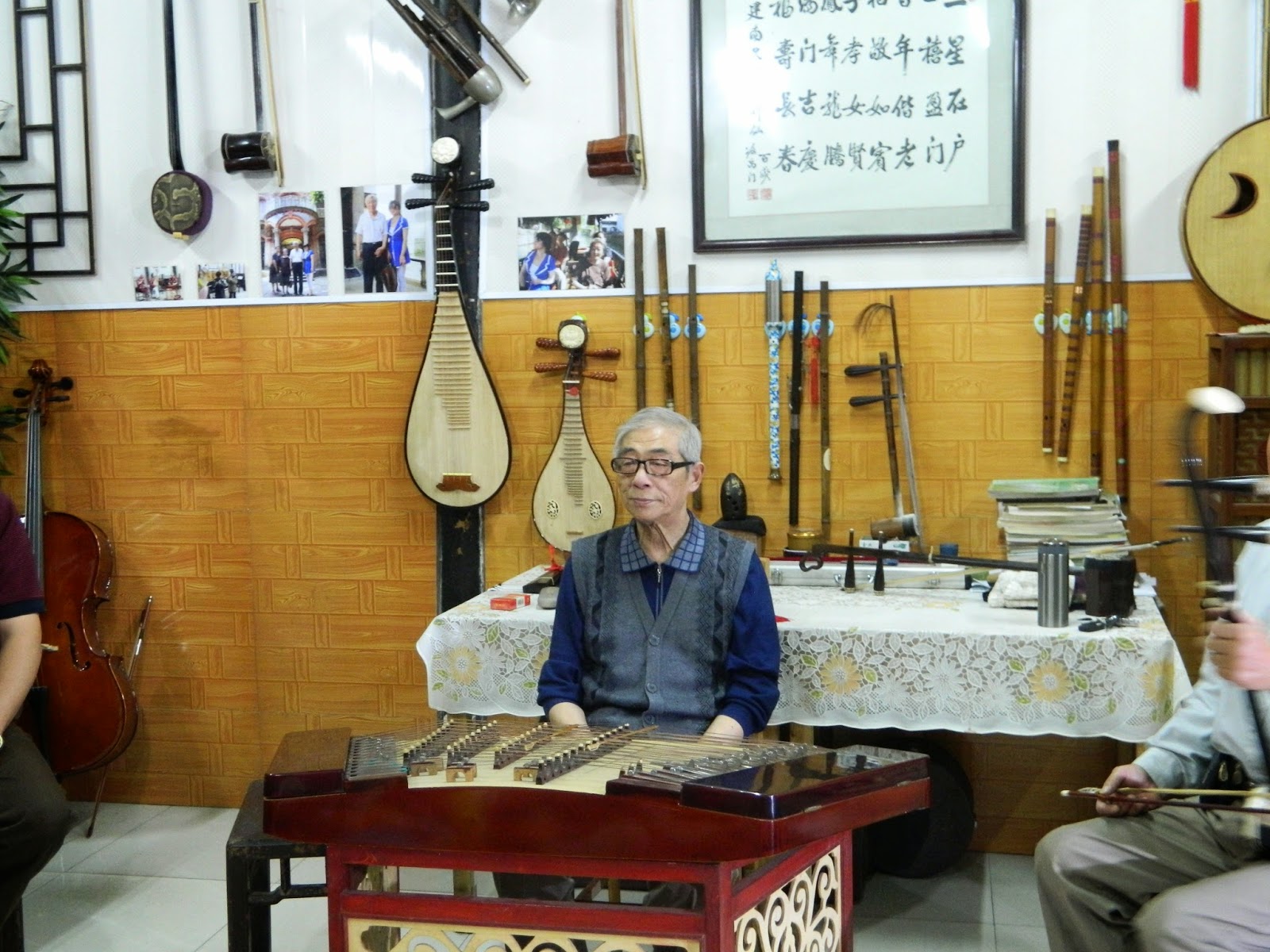
    One spry and flexible 90-something retiree led us through her morning Qi Gong routine. Later, I had the dubious honor of hearing “Jingle Bells” played on traditional Chinese instruments. Still, each stop on our itinerary, our “conversations” with local people, and our glossy overviews of entire schools of religious thought struck me as more shallow than anything else.

    Museums and retirees are equally “real.” Back alleys are not intrinsically superior to touristy main ways. Cultural immersion does not emerge automatically with the right combination of orchestrated meetings and exposure to dirt. Cultural immersion does not literally mean walking in and out of a local person’s kitchen. It is far more elusive. It requires more depth.

    That is not to say we should give up hope of having meaningful, culturally immersive experiences when we are short on time. 
    But let’s not place the things we see into two categories: real and unreal.
    When we have the opportunity to engage with another culture, let’s really engage. Ask questions. Look and see and taste and listen.
    Let’s decide for ourselves what is real.
    What is cultural immersion? That is a big question to answer, and maybe later I will try to go into it (though I’m not sure I have a satisfactory answer to give), but I am fairly certain it is not this.
    ~

  • Airports

    In the last three weeks, I have spent approximately 35 hours in airports. Just in airports. I stayed the night in JFK, had a 10-hour layover in Newark, and passed in and out of the truly lovely Burlington International Airport at least 4 times. In my time here, I’ve noticed a few things.
    Airports are strange. They are a bit like the purgatory of travel—the holding area you must pass through before moving on to better things (or worse, depending on where you’re heading). And this limbo-land of modern-day crossings offers every temptation your heart might desire: free WiFi (with the notable exception of JFK), cuisine from every part of the globe that never quite satisfies, an orgy of coffee and a baffling number of retail options.
    Like purgatory, airports play host to every kind of person, too. Uniformed escorts wheeling old ladies with too much perfume to and fro. Business men in suits. Children visiting relatives, signs that read “unaccompanied minor” (or something to that effect) draped around their necks. Students carrying tattered backpacks. The mysterious person who left an empty handle of cherry-flavored vodka lying on the bathroom floor at the airport in Detroit. Somebody had a very drunk, cherry-scented neighbor on their flight Monday.
    These vague, loosely defined souls crowd onto escalators and through security lines, into cafes and along moving walkways, each with their own, individual mission to arrive. They rarely seem to notice one another.
    Babies are the notable exception to this rule. They will stare at you forever if no one stops them.
    In the first class lounge (which I talked my way into in Newark), the light is softer, the announcements muted, and the cushions thicker. (Oh yes, and the food is free.) But you can make yourself comfortable elsewhere if you only find the right nook, the right corner in which to nest. I have found, too, that it is worthwhile to buy a drink or a sandwich at a sit-down restaurant just to have someplace to sit.
    There is a 24/7 diner in JFK where the waitresses don’t mind if you lie down and sleep at night.
    In Detroit, there is a really interesting fountain that can easily kill 10 minutes if you are early—I have been sitting here gazing at it for at least that long now. I have yet to find the pattern the jets of water follow.
    I have noticed that most people are happy to chat if you engage them, like the Australian girls I met in Newark, or the guy working at the Skinny Pancake in Burlington. Others are perhaps too happy to chat, like the people trying to buy drinks for the Australian girls in Newark, whom I obdurately ignored. Still others will surprise you by how much they don’t want to talk, like the woman I smiled at in line last week who abruptly turned away in response.
    Airports exist at a strange midpoint between private and public space. Most people seem to carry a small bubble of impermeable air with them as they travel through. I know I certainly do. And yet our meals, our naps, our personal conversations and our arguments take place in shared, public space. The airport paradox.

    It is always too cold, or too loud, or too hard or too rushed. Airports are anything but comfortable and warm. And yet, I kind of like them. They are the limbo-land of my crossings to the next place, my next destination, and for that alone, they are bearable.
    And then there is this awesome tunnel at DTW (Detroit):
    https://www.flickr.com/photos/nirak/1314140482/?rb=1

    ~
  • A Vagabond’s Manifesto

    I believe in coincidence. Happenstance. Chance. It has been responsible for so many of my experiences—too real to ignore—creating connections where I expected none, and repeatedly linking past interactions to present ones. I recently picked up Milan Kundera’s “The Unbearable Lightness of Being,” and he believes in coincidences too. He writes, “Only chance can speak to us. We read its message much as gypsies read the images made by coffee grounds at the bottom of a cup.” I believe that meaning pools in the cracks between our expectations.
    Only this kind of meaning-full coincidence could explain how often the word “vagabond” crossed my path during my travels through Asia and Europe.
    I saw it painted across the front of buses in Nepal. Printed on a license plate in Thailand. Written on a Guest House sign in Cambodia. On graffiti. On T-shirts. Everywhere. I took its recurrence as an endorsement of my wandering activities by the world of signs.
    “Be Happy. Be Free. Vagabond,” became my motto for that year. I carved it into trees, painted it on walls, and tucked it into emails and postcards.
    In most every religious tradition, words themselves are understood to have power. That is why we are encouraged to repeat mantras or prayers even when we don’t understand them. I had long been drawn to words like “gypsy,” “wander,” “journey,” “nomad,” “wayfaring,” and, of course, “vagabond,” not only for their meanings and the images they conjured, but also for their taste in my mouth, rich and piquant. Their sensual, abstract power touched me deeply. I wrote essays on wanderlust, papers on nomads, and blog posts on wandering. These words cast a spell on me, saturating my dreams, and my waking life too.
    According to the Merriam Webster dictionary, a vagabond is, “a person who travels from place to place and doesn’t have a home or much money.” It can also refer to “leading an unsettled, irresponsible, or disreputable life.” Well, yes. The word “vagabond” often does, admittedly, hold negative connotations. Vagabonds are gypsies, tramps, and vagrants too. Our society often stigmatizes and demonizes these titles and the people who hold them. There is an implied element of disreputability, unsavoriness, or indolence.
    Such definitions have merit, too, and yet, I never lost my love—idealistic though it may be— for the vivid flavor of these words and what they describe. One word, “vagabond,” through chance or predestination, came to inspire my actions, beliefs and perspectives over the course of that year-long journey, and it continues to do so.
    For me, a vagabond is indeed one “who travels from place to place and [maybe] doesn’t have a home or much money,” but he or she is also one who is content with little, open to the world, and ever curious and optimistic. A vagabond defies society’s rules, certainly, but is by no means immoral; we need rule-breakers, (well-meaning) trouble-makers and chance-takers in the world. Vagabonds defy what is expected of them and read signs in the coffee grounds of coincidence. By this definition, I am proud to assign myself such a title.
    In sharing this accumulated list of a vagabond’s guiding principles, garnered from my experiences, I hope to highlight the beauty of this word and its impact on me and my travels. Maybe I will succeed in redefining it for you as I did for myself.
    A Vagabond’s Manifesto:
    • Always expect the absolute best of others, but have the resourcefulness and resiliency to recover when you encounter the worst.
    • Be fluid, open and expansive.
    • Carry little on your back, much in your mind.
    • Embrace spontaneity. Have contingency plans.
    • Never turn down free food.
    • Turn theory into action. Learn courage and fearlessness by doing things that are courageous and fearless.
    • Trust your instincts. Your intuition. Your belly.
    • Never say no to an adventure.
    • When unsure how to proceed, laugh.
    • Play often.
    • Walk everywhere. (Or bike. Or hitchhike. Or scooter. Or swim.)
    • Don’t believe anything everyone tells you. Believe everything anyone tells you.
    • Love and live like your train is leaving tomorrow.
    • Find joy in movement. Find joy in stillness.
    • Wander. Seek. Pursue. In body, mind and soul.
    • Be Happy. Be Free. Vagabond.

    ~

  • On Going Home


    Here I am. London Heathrow International Airport. 1:11pm. Twenty-three degrees Celsius. Gray skies.  Eleven months, 21 countries, one visa problem and one stomach bug ago I set out for my “year”-long journey. My goals? To explore. To learn. To play.  I didn’t want to change the world. And more importantly, I didn’t want to change.  I wasn’t seeking enlightenment, wisdom or self-improvement.  I didn’t go abroad “to find myself” in the Himalayas, and I didn’t travel to discover the secret of life in that elusive elsewhere.
    Nonetheless, I did search. And in the clear blue skies of the Himalayas, in the phosphorescent seas of Cambodia, in the jagged black rocks of Sicily and in the cosmopolitan bustle of Berlin, Bangkok and Belgrade I found answers.  Truth, beauty and joy. In the winding, tangential, abstract manner beloved of Buddhist scriptures and Beat poetry, the world answered me. Like a garrulous friend who prattles on without encouragement, the faces and places I encountered over the last 11 months have taught me so much more than I could or would have asked of them.
    I will return in much the same condition I left.  Zero piercings, tattoos, or drastic hairstyle changes. A few barely-visible scars. I don’t know if I look or sound like someone who has spent the last year traveling.  I don’t know what such a person is supposed to look like.  I don’t have any brilliant conclusions to offer.  I am less certain of what I want to be doing than I was before starting this trip—whatever I found, it wasn’t direction.  At this moment I mostly feel bewildered. Where am I going now?
    I’m going home. I guess. I’m flying to Boston, where I grew up. But since my parents moved to London while I was away, one could argue that I’ve actually just spent the last two weeks “home” here in London. Since I’ve lived and studied in Vermont, and spent a good portion of my summers there, I generally call it home now. And yet it doesn’t feel quite complete.
    Home is wherever there are people who love and care about you, and those people are spread out across the globe for me. Home is where you feel welcome and comfortable, and I have felt at home after one day at a Rainbow Gathering in the mountains of Sicily, after one evening with an old friend in Hamburg, after two days with like-minded people in India. When it came time for my parents to sell the house I grew up in, I was somewhere in Southeast Asia and I felt… indifferent. As much as I had loved that house, it was only that: a house. Walls and a floor, paint colors I had helped choose and rooms upon rooms of memories, yes, but just wood and paint after all.  I realized that I had begun to carry “home” with me.  Home was my body. Home was the network of friends, family and strangers that stretched out in a shimmering web to catch me where and if I needed them. Home was laughter, handmade bread, and warmth—home was everywhere and anywhere I wanted it to be.
    You could say I’m going back, then, I suppose.  But back to what? To “normal” life? As if this year were somehow removed from the rest of my life, a collection of adventures on which I will look back with longing and nostalgia, which will sustain me as I spend the next several decades sitting behind a cubicle desk speaking with belligerent self-importance of my year abroad. Hate to break it to you, but this is my reality. Truth, beauty, and joy are not temporary ideals, applicable only to some fantasy alternate life with an expiration date; they are a worldview, an optimism and a set of values by which I will, hopefully, continue to live, be it traveling abroad, studying, working, at “home” and “away.”
    So no, I am not going back.  I am continuing a journey that is not defined by national boundaries, a search that is not defined by questions, and an adventure that is not circumstantial, but inherent.  This life is an adventure and a journey, full of the potential for truth, beauty and joy. That is neither a secret nor an answer; it is my own personal conviction.
    I am going back to the United State with a broken backpack full of dirty clothes and not much else.  I am going back to one of the many places I choose to call home. The answers and the secrets can wait; I have never felt more content—full of joy and gratitude—and that is enough for me.
    “Home”-made pizza in Sicily.
    Home on my mat.
    Feeling at home in my hammock, Don Det, Laos.