Author: Toby

  • When the Power Goes Out (a poem for quiet moments)

    When the Power Goes Out (a poem for quiet moments)

    I wrote this during one of Kenya’s (frequent, albeit brief) power outages. Though inconvenient, I find they can offer some much-needed respite from the constant activity that light, connectivity and music demand. They leave a bit of space for reflection…


    When the Power Goes Out: Quiet

    When the power goes out,
    I return home to pen and paper
    and write by the glow of a single
    (electronic) lantern on the bar.
    When the power goes out,
    the hum of never-ending action pauses,
    and I can hear the wind in the leaves
    and the whine of mosquitoes—
    Magic stillness.
    When the power goes out,
    Quiet touches the darkness
    with its fingertips
    and wraps around my mind.
    When the power goes out,
    I take a deep breath,
    wonder—for a moment—what to do,
    And smile.


    Power outages, delays, mistakes… so many blessings in disguise. Don’t you think?

  • The Paradise Mask

    Diani Beach, South Coast, Kenya, 4.3222° S


    “Everybody—everybody who is escaping from something ends up in Diani. Shady people, criminals, expats… everybody.”

    Such was the prognosis of a Diani resident and regular at the South Coast Backpackers bar (where I have been working for the last three weeks), and I am inclined to believe he is right.
    Though it doesn’t seem it outright—packed with tourist shopping centers and hotels as it is—Diani Beach is kind of a final frontier. A “la-la land” for expats and Kenyans alike escaping from their pasts—or simply fleeing the big cities (“Nairobbery,” I have learned, is actually a common nickname for Nairobi). A no-man’s land where many normal social conceits do not seem to reach.
    What does that mean? Allow me to illustrate:
    Here in Diani Beach you have the “beach boys,” the name by which everyone—and I mean everyone—calls the men who pass their time at the beach, either trying to sell something—coconuts, jewelry, boat trips, sunglasses, aloe leaves, safaris and anything else you can or can’t think of—or just loitering… or betting on a Roulette of foreign women. They almost always lose that bet… after all, only so many women will respond kindly to verbal assault: Hey! Beautiful-lady-how-are-you-Where-are-you-going? Why-you-don’t-want-to-talk-you-are-very-beautiful.
    Local bars, however, are brimming with those who have won. Young Kenyan men and women share cocktails and seductive glances with much, much older foreign women and men. The Kenyan men wear their good fortune with a touch of arrogance, while the women adjust their skin-tight dresses and scan the room for something better.
    Residents and long-term visitors prove a bottomless repository of stories—bar brawls, unsavory characters, intrigue—leading a new arrival to wonder how Diani manages to appear so… idyllic. The ever-swaying palm trees, smoldering white sand, jewel-toned water and algae, beachfront thatch-roofed restaurants and resorts, technicolor kites speckling the sky, two resident Diani Beach camels—it all belies a much less serene, much duskier palette of hidden shadows and secrets… Or so it would seem.
    She who ventures out at night must not walk along the road for pickpockets; must be wary of piki pikis and taxis for drunk drivers; must avoid matatus for questionable passengers.
    A guest in a five-star, gated compound on Diani Beach might easily—very easily; too easily—forget that Kenyan law allows for detention in jail up to one year on suspicion of terrorism; might refuse to acknowledge that police checkpoints on roads are no more than systematized bribery collection centers; might overlook the streets lined with garbage and the fact that most of the young local women at the bars are probably prostitutes.
    Here is a carefully imagined idea of a paradisiac tropical hideaway spread like a semi-translucent shroud atop the reality of Kenya: corruption and a starving tourism industry. At times (most of the time, even), I have certainly overlooked it all, lulled into la-la land by the breeze and the sun and the sand and the coconuts.

    But then again, Diani Beach is hardly unique in these regards. What earth-bound paradise is truly what it pretends to be?
    ***

    ***
  • The Gift

    Several days ago, I sat in a matatu (bus) plying the main road of Diani, Kenya. On my way to Diani Beach Hospital for a precautionary Malaria test (I don’t have malaria, Mom, you can exhale).
    A muzungu (a sight far more common on the coast than it had been upcountry) boarded several stops after. Hale and tan in the way that Northern Europeans tan—russet, rather than gold—he must have been around 70. His thick white hair and beard shone starkly amongst the rows of shaved Kenyan skulls.
    He sat by the door, and when we stopped to let off passengers, he held out a coin (50 kesh—50 cents—, I think) to a small boy a few yards away.
    A man carried the boy over to accept the gift. As the matatu began to roll away, the white-bearded man said in a thick (Dutch?) accent, “It’s for him [the boy]! Not you—him!” Thus ensuring that his gift would not fall into other hands, he sat back, satisfied.
    This foreigner bestowed his gift with the ease of frequent practice. His manner brought to mind other tourists I have seen in other places, of a similar ilk.
    Simply put, something about the gift—or rather, its giving—bothered me.
    Two years ago, far up in the Himalayan foothills, very small children would emerge from nowhere, holding out phantom hands and pleading eyes, and ask me and my trekking companions for “candy! candy!” or, even more baffling, “ball-oon. ball-oon.”
    From whence had come this peculiar fixation with candy and balloons? Well, from other trekkers, of course. Foreign hikers toting bags of candy—and balloons—to give to children along their path.
    There is something presumptuous—maybe—about giving unsolicited gifts to strangers. An assumption that we as outsiders know what is needed, and by whom. That we have a right to give when and to whom we wish, without asking anyone’s opinion. A whiff of a lingering imperialism, perhaps. (Of course, now these children do ask, having learned from experience to expect bounty of visitors.)
    I am reminded of a class I took on Jewish Ethics 10 years ago, about which I have not once thought in the interim… According to Maimonedes, there are eight levels of charity. The greatest, you may or may not have guessed, is to support another Jew (this merits another conversation entirely). The lowest, naturally, is to give unwillingly.
    Ringing in at number five: giving before one is asked.
    This may all be a bit off point, but Western altruism in Africa has a long and problematic history of unsolicited giving, unscrupulous giving, and giving without once thinking to ask what is desired or needed by the recipients.
    These sorts of giving smack of colonial condescension. Translated into 18th century garb, the image of the foreign man handing money to a Kenyan child becomes that of the beneficent overlord deigning to notice a black child, reaching down magnanimously from his carriage with the gift.
    I do not think I exaggerate so greatly in this leap of imagination.
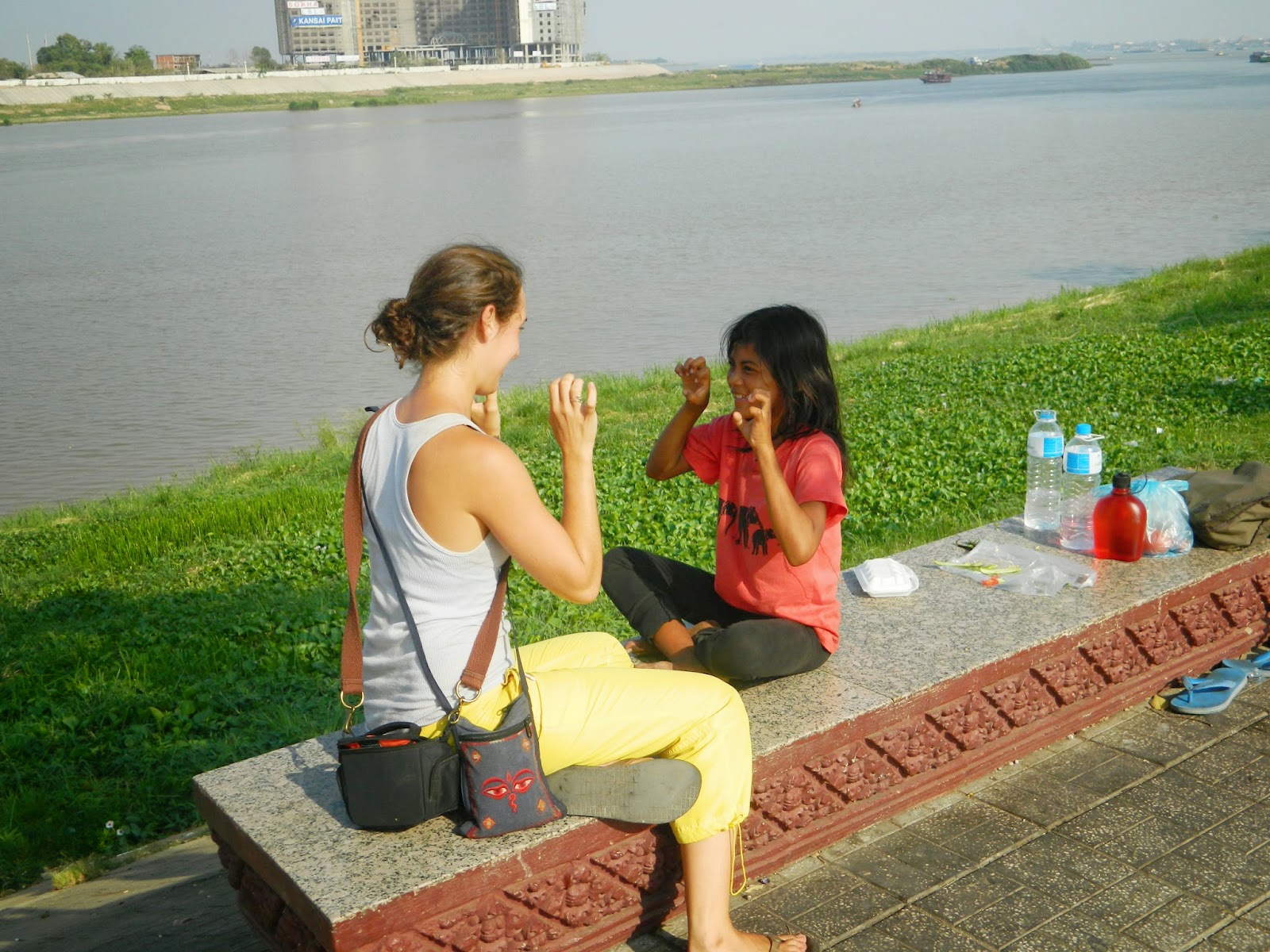
    Sharing food and games in Phnom Penh.
    Surely, you might say, I don’t need to ask to know that a starving child needs food, or that a village with no well needs potable water. Yes, there are certain basic needs, but no, you can’t assume that you know best what they are and may thus dictate another’s priorities.
    In some touristic destinations, poverty is rampant, and in advising visitors to these places, study abroad or travel guides will usually take one of three tracks:
    1. Don’t give anything to anyone. Not to beggars, not to children, not even to new friends. Just don’t, because one friendly gesture of generosity will call upon your head a veritable surge of unanticipated requests.
    2. Bring gifts that are useful—flashlights, notebooks, clothing, etc.—to give to hosts or friends. You will be offering something worthwhile, not a symbolic gesture doomed to sit on a shelf beside its untouched kin.
    3. If you are going to give a stranger something, give them food. Children, especially, almost certainly need it, and your gift will not be misused or appropriated, as money so often is.
    Other responses include: giving to a reputable non-profit, thus ensuring (in theory) that your money will be well spent; sponsoring an individual’s schooling; or offering skills or instruction, which has no (or greater) monetary value.
    I don’t have a set position on the question. All of these suggestions have merit. Personally, I am disillusioned by the distribution of spending in corporation-sized non-profits, and I much prefer the work of grassroots organizations that work in tandem with local communities. I love the option of sharing food; I think it is the most human of acts, and almost universally understood and appreciated. Sharing skills—if you have them—equally so. Material gifts are tricky. I lived with a home-stay family in Kathmandu who had an entire shelf of unused gifts from other guests like me—picture books, snow globes, and salt-water taffy, all untouched and unopened. I don’t know about the worth of gifts that serve no function beyond expressing gratitude for hospitality.
    And then, even if you do ask a community what it is they want, you will not receive a unified answer. Children may indeed want bicycles and candy—and balloons. Male elders will not seek the same help as women; each may have different priorities.

    But if you want to help the “poor, starving children of Africa” (a platitude which, to my absolute shock, some tourists have actually employed), don’t throw up your hands in despair. I think doing good begins with good intentions. Do, however, leave your presumption, your condescension and your self-importance at home. Be mindful of these complexities in your giving.
    ~
  • That Sand in your Toes Feeling

    Today was a gorgeous day at Diani Beach. For the first time in a long time, I felt poetry pushing at my fingertips. I hope it will transport you to where I am, if just for a moment…

    ~


    You know that feeling
    of sand slipping between
    your toes
    like silk ribbons,
    so soft and yielding
    you could almost
    sink your heels to the center
    of the earth?
    Take my hand,
    and follow me there.
    Kick off your shoes here—
    Yes, here at the edge—
    you won’t need them.
    Squint a little
    against the glare—
    white white sand too bright
    to look at.
    There.
    Where the sand forms
    miniature dunes
    in the shifting wind.
    Before the damp, packed
    floor of high tide.
    Just there—
    Try on a pair of sand slippers
    for size.
    Material so fine
    it will hug every millimeter
    of your toenails
    and soothe your soles
    like nothing before.
    Dig deeper,
    and feel the cool gasp
    of another layer,
    untouched by the sun.
    Drink the salt breeze
    in your hair.
    Stay as long as you like.
    Watch the waves carry
    blown glass jellyfish
    and green sea tangle
    In and away.
    When you’re ready,
    brush off your feet with
    sandpaper fingers,
    and put your shoes back on.
    Shade your eyes
    for one last look
    at that sand between your toes feeling.
    ~
  • How to Take the Bus Everywhere

    Jesus travels… and so can you!
    Don’t let anyone tell you otherwise… there is always another way to get there.
    In October, I visited my parents in Shanghai (their home base at the moment). Day two of my trip, I took an afternoon to explore on my own, wandering the tiny alleys of Tianze Feng, in and out of stores selling tins of tea and other adorably packaged goods.
    I have a “taxi card” to return—a business card with the name and address of my parents’ residence written in Mandarin and English. Taxis are cheap. Simple.
    But then, naturally, there’s a catch: I cannot, for the life of me, catch a cab. I stand first on one street corner of the main road by Tianze Feng, then on the divider between lanes, next on another corner. 
    Most of the passing cars already carry passengers, while other drivers seem to be intentionally avoiding my gaze. The afternoon shadows grow longer as I watch one Chinese shopper after another run to intercept an incoming car. There are people crowded on all sides; traffic moves at around 60 km/hour; I am never fast enough.
    Finally, someone does stop, but when he looks at my card he shakes his head and drives off. Does he not feel like going there, or can he not read the card? I will never know.
    Meanwhile, I have seen at least 20 public buses pass me by. I know I need to go *that way.* New plan…
    I think it really is possible to take the bus nearly anywhere and everywhere—if you want to. Here’s how:
    Step 1: Learn the word for “bus” and/or the proper pronunciation of the place you wish to go.
    In Shanghai, it took showing my taxi card to several people to learn to say the name of my parents’ road: Nanjing Shu-Lu.
    In Kenya, buses are “matatus,” and knowing that makes them a lot easier to ask for.

    Sometimes there might be a boat involved… even better!!
    Step 2: Find the bus stop.
    In many places, there will be a physical structure, replete with maps, schedules and names. In many others, there will be nothing but a small sign bearing the image of a bus—or nothing but a crowd of people standing at the side of the road.
    Ask people for the *bus* to [fill in the blank] until you find your stop. In my experience, other bus drivers and shop keepers are the best people to ask, and most likely to know the buses in the area, while taxi drivers are the worst, since they have ulterior motives.
    In Shanghai, I was lucky enough to find an old woman who understood my question, and knew that the 42 bus would take me to the right place.

    Or you can do this.

    Step 3: Catch your bus.
    It might stop automatically, or it might barrel past if you don’t flag it down. A sign bearing a name or number may tell you it is the right bus, or it might be a skinny man hanging from the window, calling out the destination.
    I usually like to confirm at least a couple times that it is indeed the right bus, as I have ended up on the wrong bus far too often.
    Step 4: Revel, and ignore the funny looks.
    Depending on where you are, you might well be the only obvious foreigner on the bus. People will stare. It will get old. Just do your thing and try not to do anything egregious—appropriate dress and conduct is always a good call.
    Revel in being on your way to where you’re trying to go! There is truly no better feeling than the surprise of success after a stressful search!

    If your bus looks like this, wait for the next one.

    Step 5: Pay.
    Often, fare will be collected at some point along your journey—or upfront, or upon arrival. Try to pay attention to how much other passengers are paying to avoid a high “tourist tax.” But if you do end up paying a few cents—or dollars—more, well, the tourist tax is real. I’m sorry.
    Step 6: Arrive.
    Chaos, confusion and disorientation may accompany your arrival… sweat, frustration and elation, too. One thing I can almost guarantee: you will arrive having spent less money. A second thing: it gets easier with practice.
    I love taking the bus. Despite the dust. Despite the confusion, often frustrating and hectic. Despite everything. Because the bus is always an adventure. Always. And that’s kind of the point.
    Need to make a connection? Repeat steps 1-5. Chances are, someone on your first bus will be able to point you to your next one, or even lead you there.
    “Trunk-seat” heading out of Mbita, Kenya a few days ago.

    Enjoy the adventure!
  • Time to Move

    Once upon a time, nomads—largely hunter gatherers or pastoralists—knew it was time to move when the game animals moved on, or the fields became depleted. They followed the tides of nature.
    Some traveled in caravans of camels or on horseback. They were self-sufficient. They carried their homes with them—bundled tents, cookware and provisions.
    I will be the first to admit I have nothing in common with those nomads.
    I travel by bus, train, or car. Boat if I’m lucky. I do not gather my food—though the markets in Mbita are hardly a walk in the park. If you dropped me in the middle of the desert, I would not have the requisite resources for survival…
    I carry no tent; no cookware; few provisions.
    But maybe I still share something with those wanderers of old who have always captured my imagination.
    I, too, follow a kind of tide.
    An initial wave of excitement carries me to a new place. The promise of a work exchange. The open door to a friend’s home. A spark catching in my belly and igniting my anticipation.
    That first surge crests, and the tide begins to ebb—weeks later, or maybe months. The work is monotonous. The place too isolated or too busy. The enthusiasm never dies, but it smolders more faintly.
    Then a new opportunity calls. This time on the coast, or in the mountains, or across the border. Another surge gathers momentum and I follow.
    I can usually feel when it is time to move.
    No matter how many times I follow this cycle, that initial burst of excitement never seems to lessen. The making of plans, the preparation to move, transition, journey, holds a special kind of magic for me.
    In three days, it will be time again. The ocean is calling. The sand, waves, salt and always, always the

    unknown beckon. From tides of intuition to tides of water.

    There is a backpackers on Diani Beach (30 km south of Mombasa) with room for volunteers. I still have 2 months left on my Kenyan visa, so I think I may stay there a month if it fits.
    Time to say goodbye to Rusinga Island and the rock paintings I may never find. Time to pack up and head east to meet the sun.
    Time to move.

    ~
  • Sound Impressions from a Hammock

    As I lie here resting, gently swaying, I reflect on the day’s noises…
    There are the birds who say “Oh Yeah” in a melodic chorus of positivity.
    Then there are the birds who welcome me in Swahili: “Karibu! Karibu!”
    The birds swoop and swivel and swish and swerve—a limitless parade the likes of which I do not have the expertise to catalog, let alone describe. They wake me in the morning and sing me to sleep at mid-day.
    The goats scream with human indignance and bleat with an infant’s piteous yowl.
    They caper and cavort, cradle sunlight in the sleek hollows of their sides. They stand on hind legs to grasp out-of-reach shrubbery. They block the roads with impunity.
    The children shout, “Muzungu! How are you?” with the the same lilt as the birds who say “Karibu.”
    They are sudden apparitions at the side of the road, emerging like smoke through fences and paths. Some smile and wave; others stare with scrutinizing solemnity.
    The motorcyclists ask, “where are you going?” and have nothing more to say to my reply: “I’m just walking.”
    The donkey wheezes through a comical fit of seeming laughter—or sneezes. Sometimes at noon; sometimes at midnight.
    The dogs howl like wolves to the moon.
    The crickets chirp a thunder and an avalanche in the otherwise quiet of dark.

    My ears are working hard to keep up…
    ~
  • Rusinga Island, Lake Victoria, Kenya

    Here, I am Muzungu: foreign, white, outsider. Kids yell after us as we pass on foot (or, after realizing the walk from Mbita is at least an hour, on pika pika, moto-taxi). It hasn’t gotten old quite yet.
    There is something… there is something about the impossibility of fitting in that has always challenged me in the best of ways. In Nepal and India, no matter the effort I made to wear the right clothing, to learn the language, to immerse, I was always patently, immutably other. Here too—I can already tell.
    In Europe, not so much. I have a face that can appear French, Italian, Slavic or even Turkish according to context. Without my backpack, I can walk through a city unmolested, my status as tourist unknown, and blend into the crowd of a subway car. The chameleon has many merits, and I have certainly enjoyed exploring new places in the guise of a local.
    And on the other hand, I do not like the constant attention, stares of curiosity, shouts, deference and, conversely, hostility I receive when I travel as an obvious tourist. I certainly do not like being singled out by the Nairobi police as an easy source of a bribe, and I do not like the behavior of those men who seem to believe that as a foreigner I do not warrant the same respect as women of their own race.
    But still, there is something.
    There is something about the impossibility of fitting in that I do like. Standing out, not because of a voluntarily articulated identifier like religion, sexuality, or dress, but because of an immediately evident, insuppressible feature like skin color—like eye color, height, even language, too.
    That experience was very rare growing up in Boston, or going to school at Middlebury College. And I think most people, of all backgrounds, shy away from it because it is uncomfortable. It is inescapable. It can be exhausting and challenging. It is also, I think, important.
    There is something about the impossibility of fitting in that forces us to confront the reality of our otherness—no greater or lesser than anyone else’s. Amongst so many other reasons, perhaps that is why I travel. It is too easy to fall into the comfortable trap of sameness. Surrounded by people who look— and maybe more significantly behave speak dress and think—like us, we relax not into multiplicity, but into uniformity.
    I would rather learn how to be equally at home in my otherness as I am in my belonging.
    ~

    Home for the moment.
    Here at the western edge of Kenya, the roads are dirt and dust. An energy center in town offers drinking water, internet and computer use, solar energy and more to residents. Wifi is scattered at best.
    At the Wayando Beach Eco-Lodge, our neighbors appear to be hippos to one side and nonstop music to the other. I will teach yoga at 7:30 in the morning… if anyone shows up. I serve Tusker Pilsner to guests and fry Tilapia fresh from the lake for dinner. I have seen three different jewel-colored birds—ruby, emerald, sapphire—since writing that sentence.
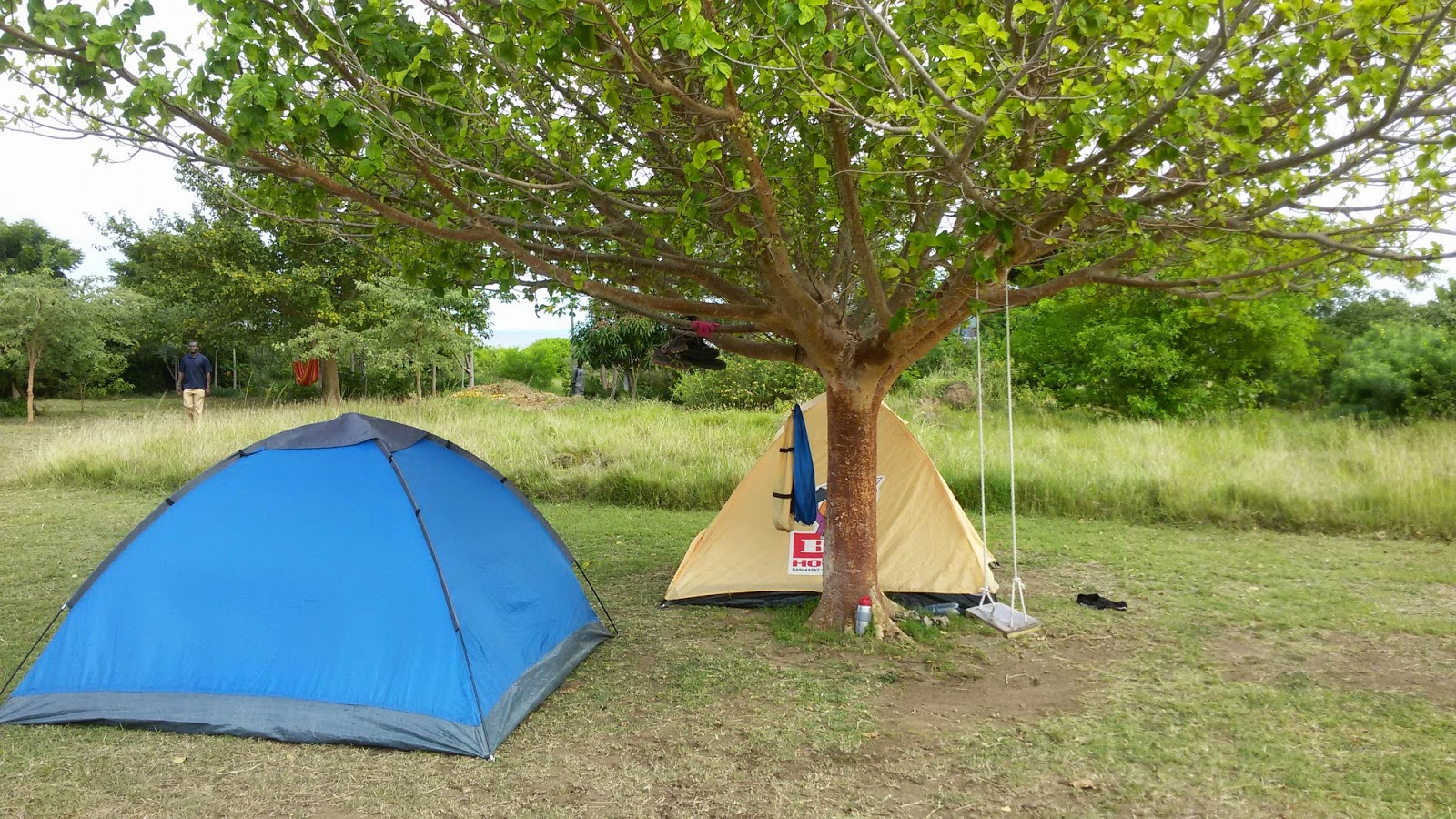
    The sun burns hot at midday, but the nights bring light rain and heavy wind, and I am happy for the warm blanket in my tent.
    Eco-lodge means sawdust-composting latrines, round, self-contained huts for guests, and lake water showers (don’t worry— it’s treated for parasites). It also means fresh papaya, mango, bananas, ginger, arugula, peppers, passion fruit and sweet potato from the garden.
    We will spend two weeks here, or hopefully longer…
    To Be Continued.

    ~
  • This Blog Post is Slumped Against the Bathroom Wall

    This blog post is slumped against the bathroom wall like a drunk sorority girl on Saturday night.
    This blog post is camping out at the Madrid Barajas International Airport for the next 12 hours.
    This blog post isn’t wearing any underwear.
    This blog post is afraid of the rain… which is why this blog post is stuck at the only café in Terminal 1 where it is apparently forbidden to lie down.
    This blog post was disappointed to discover that the only source of power in the entire Estacion Intermodal de Almeria resided in the women’s restroom.
    This blog post ate digestives and coffee for breakfast at 6am, purchased with centimos.
    This blog post will continue wearing these clothes (perhaps with a change of underwear) for another 24 hours, because this blog post is the virtual incarnation of honey badger.
    This blog post brushes its teeth in public bathrooms.
    This blog post is running out of free wifi, and, furthermore, is rather irritated by the lack of free wifi at airports worldwide.
    This blog post is going to Kenya.
    This blog post is the unglamorous side of travel: sleep-deprived, hemmed in by bad weather, and rough around the edges. But you know what? This blog post doesn’t mind.

    …This blog post needs more water…
    ~

    My most recent home: Murtas, Spain

  • Where Do You Go When Nowhere Is Safe?

    Naturally, after our disappointment at the Moroccan embassy and finally, finally finding a place we could both visit without visas (Kenya), new obstacles have arisen. Al Shabab has been targeting non-Muslim Kenyans in the North, Mombassa and Nairobi in retaliation for Kenya’s recent military action in Somalia. Is nowhere safe? I find myself wondering.
    To turn on the news of late is to open the floodgates to a barrage of ill-tidings. Terrorist attacks, Ebola, protests, and political turmoil. That is not to write off the gravity of these situations, for they are undeniably serious. But still, I can’t help wondering where is left to visit. Where do you go when nowhere is safe?
    My musings inspired the creation of this folk tale:
    ~
    Once upon a time, there was a girl. She loved to explore and go on adventures. The spray of light on the horizon played a lilting melody on the back of her eyelids.
    One day, the girl announced that she wished to go into the woods at the edge of town.
    “Don’t go into the woods!” Cried the townspeople. “Don’t go; don’t go,” they pleaded. “The woods are not safe,” they admonished. “There are wolves and witches and monsters and men. Nowhere is safe. Nowhere is safe,” they said.
    And so she stayed, safe in the town, and gazed at the woods, imagination aglow. “Oh how I wish to go into the woods,” thought the girl. “Oh how I wish to go!”
    Months passed, and the girl’s gaze shifted. “I will go to sea,” she announced one day, “to see what lies beyond it.” The townspeople shuddered and shivered and quivered with fear:
    “Don’t go out to sea,” they cried. “Don’t go; don’t go! The sea is not safe,” they admonished. “There are sharks and storms and sirens and surges. Nowhere is safe, my girl. Nowhere is safe; stay here,” they said.
    So the girl sighed and laid aside her plans, and she did not go. But she sat upon the shore and watched the waves, and her thoughts crashed against her skull in time: “Oh how I wish to go out to sea. Oh, how I wish to go!”
    In only a few weeks, she had yet another design: “Surely the mountains are safe enough… that is where I will go,” said the girl, jaw set.
    “Oh!” Cried the townspeople. “Don’t go to the mountains!” They pleaded with her. “Don’t go; don’t go! The mountains are not safe,” they admonished. “There are winds and ghosts and bandits and banshees. Nowhere is safe, you see. Nowhere is safe; stay here,” they said.
    The girl craned her neck to look up at the rocky crags that broke up the sunsets and cast long evening shadows across the town. And she did not go. She sat and she glowered  and her mind raced on. “Oh how I wish to go to the mountains,” thought she. “Oh how I wish to go!”
    Again and again she presented new ideas, and again and again the townspeople shuddered and shivered and shook their fingers sternly:
    “Nowhere is safe, my girl. Nowhere is safe,” they said. “Don’t go there; no you mustn’t go there. There is war and sickness and there are demons and dragons; you see, the world is not safe, my girl. Best to stay here—oh yes, best to stay here,” they repeated. “Don’t go! Don’t go!”
    Months passed in this way, or perhaps they were years, and the girl began to sit longer, to stare farther, to think deeper. Finally, this is what she thought: “If the woods and the sea and the mountains are not safe, then surely neither is this town,” she said to herself. “And indeed if nowhere is safe, then it is “nowhere” where I must go!”
    And with that, she packed her bag with books and bread and blankets and bottles and she set out along the road. The townspeople, when they caught sight of the girl, ran after her, calling frantically, “Where are you going? Where are you going?”
    “Nowhere!” The girl shouted over her shoulder. “I am going nowhere. You needn’t worry—it is safe there!” And she laughed and walked on.
    And she crossed the woods and the sea and the mountains, “nowhere” always just ahead. She encountered dragons and dangers, monsters and men, but fairies and angels and vagabonds, too, and these last guided her way.
    “Nowhere is safe. Nowhere is safe. Oh how I wish to go,” her thoughts chanted through her head in time with her feet, and never did they tire. On the girl walked. Up and out and onward she looked.
    “Go,” whispered the sun. “Go! Go!”
    ~
    Much to my regret, we don’t live in the world of fairy tales and fables. The troubles reported nightly are very real—though occasionally exaggerated by those on the outside. We can’t totally ignore them like the girl in my story. And so, though we still plan to fly to Kenya next week, we will do so cautiously, avoiding population centers like Nairobi and Mombassa and staying in the Lake Victoria region, which appears to remain out of danger.
    Where do you go when nowhere is safe? That is the question facing the 21stcentury nomad, isn’t it.

    ~
  • Hostels: Beyond the Horror Movie Story

    Picture it: A group of Portuguese boys play ping pong and try not to spill beer. Behind them, Spanish girls converse– loudly– with strangers via a smartphone translation app. Upstairs, Karaoke. Someone knocks over a stool with a bang. Ten bunk beds crowd into a room about 5m2; the room is rarely quiet. Dirty dishes accumulate in the sink, and most people cook pasta.
    No, it’s not an international frat house. It’s a hostel.
    If it sounds rowdy, messy and overwhelming, well, it often is. If it also sounds like a one-stop-shop for meeting other travelers and making friends from other places, well, it’s that too.
    Once upon a time, I loved to stay in hostels. At 18, I found the chaotic collision of cultures exhilarating. Likewise the endless procession of potential friends. The noise, the mess and the banality of bar-stool banter? It was new to me.
    Over the last five years, however, something has shifted. I prefer noise in moderation. Though I still enjoy meeting new friends—and I hope I always will—I am no longer awestruck by the air of international cool that hostels exude.
    Last week, I spent six days in a Barcelona hostel after all better options fell through. For seven euros a night, I didn’t mind that one of the two stoves didn’t work, or that I had to share space with twenty people smellier than me.
    My second evening I overheard a conversation that brought home the change in my relationship to hostels. What once would have seemed a thrilling exchange of travelers’ stories and philosophy now felt decidedly, disappointingly… trite, I suppose.
    What’s changed?
    Certainly not the people, the stories, or the philosophy. So it must be me. Hostels are the same everywhere, anytime, and maybe that’s the problem. I have started to see what is the same rather than what stands out and enchants. My god, I have never felt so cynical!
    As I look at hostels now, I see less the excitement, more the noise. I see lecherous older men rather than good stories. I see travelers who never leave their rooms and parties that I could just as easily find at home.
    This is no longer where I want to be.
    ~
    Picture it: “Dragon’s breath” fog rolls in between purple mountains in the twilight. Terraces of fruit trees reach out above it. The nearest town, where square white houses cling to the mountainside, measures an altitude of 4,000ft. Nobody speaks English. Home is a small caravan with one outlet and the most spectacular view of sunrises and sunsets. Farmers load bags of almonds onto mules to carry them up the slopes.
    For the next two weeks I will be “wwoofing” (working on an organic farm) in the south of Spain. I still like parties and socializing and noise, but lately this environment feels much more my speed. There is nothing wrong with hostels, per se—my criticism may be heavy-handed—but I think I am done with them.

    I feel good here—in the heavy quiet of fog and deep space I can breathe. I can write, too, and that is more than I could say in Barcelona.
    ~
  • Zanzibar!

    Have you ever written a sonnet?*

    A sonnet’s beauty and difficulty both lie in the restraints placed around its form. Fourteen lines, iambic pentameter, and a rhyme scheme of a-b-a-b;c-d-c-d;e-f-e-f;g-g, the sonnet is no quick jaunt on a summer day. It is hard work to fit depth of thought and poetic sentiment within its narrow frame. But when it works, it’s magic: the sonnet emerges as just reward for the poet’s pains.

    This trip I have just begun (arriving in Paris on November 17th, and checking in now from Barcelona) is a bit like writing a sonnet.

    Why?

    Have I mentioned that I am traveling with my partner? And have I mentioned that said partner is traveling on a Ghanaian passport– a document that grants today’s international traveler few privileges?

    Well, I am, and he is.

    We arrived in Europe knowing that we would have to leave within 30 days– the length of his visa. Yesterday, we returned from the Moroccan Consulate in Barcelona giddy with disbelief. We would not continue on to Morocco by ferry as we had expected.

    Why?

    Because one week prior the Consulate had received instruction to grant Moroccan visas only to residents of the Barcelona area. We would have to return to the U.S. or Ghana now to apply.

    And so we are back to square one. The fourteen lines, iambic pentameter and strict rhyme scheme of travel sonnets and bureaucratic poetry close in ever tighter.

    The following two maps represent our respective “green zones” for international travel. Green and yellow mean we can obtain visas on arrival or do not need them. Gray typically entails a lengthy visa application process, and often the necessity of returning to the U.S. to undertake it.

    Were you to lay one map on top of the other, the world would be mostly gray.

    Add to that the places we do not wish to travel, for various safety concerns, and the gray spreads farther still.

    Yet even as borders tighten and possibilities shrink before my eyes, I feel an odd sense of freedom then, faced by our obstacles. When our plans shatter and we are forced to return with all haste to the drawing board, we have to opportunity to create a sonnet of exceptional spontaneity.

    Where will we go now?

    To Zanzibar! (You may have guessed it.) City of rare consonants that beckons my imagination to wander. To East Africa. Nairobi, Kenya first, in fact– though its lack of Z’s renders it a less tempting contender for title line– then on to Botswana and Tanzania and maybe South Africa.

    I hope the sonnet that emerges is worth all the trouble.

    ~

    *[The credit for this analogy goes to a friend– he managed to express perfectly the nature of this trip.]

  • What is Cultural Immersion? I Don’t Think It’s This…

    “When I’m in a new place, I don’t want to go to the tourist places; I don’t want to go to museums. I want to see real things.”
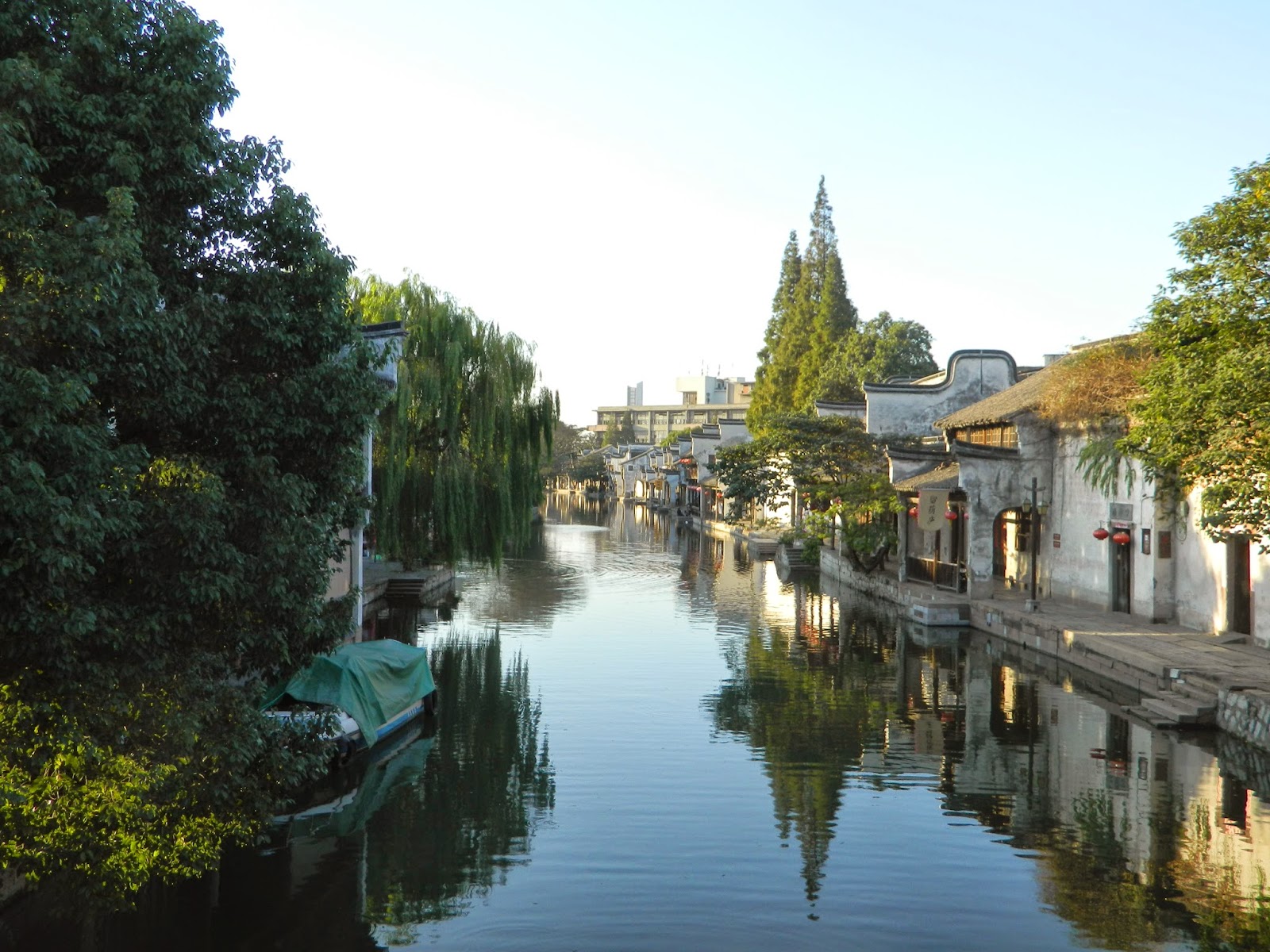
    Thus began my tour of Nanxun, a water village 1.5 hours outside Shanghai. Our guide, Stacy, began her introduction loudly, Midwestern inflection un-dampened by seven years in China.
    Here we go, I thought. I would not be sleeping as I had hoped, for all 18 participants would be introducing themselves next. I’m not sure I had ever been on a real group tour like this before, but that weekend I had the distinct pleasure two days in a row.
    Will I do it again? Quite unlikely. Am I glad I went, if only for the wealth of new writing material to come of it? Oh yes.
    As our bus hiccupped out of Shanghai, the platitudes rolled on. Introducing her partner, Mike, Stacy continued, “Of course, because Mike is Chinese, he’s good with numbers and dates and things.” 
    Chinese towns, people and art, on this tour, were only authentic if over 80 years old.
    Those who know me are aware of my crusade against terms like “real” and “authentic.” Last year, after months around tourists bemoaning the loss of “real” Tibetan-Nepali-Indian-etc culture, criticizing restaurants, cafes and people who were not “authentic” and congratulating those who were, I lost my taste for such judgments. After reading a large amount of literature on these discourses, I am convinced that “is it real?” “is it traditional?” and “is it authentic?” are the wrong questions to ask.
    Our first stop in Nanxun, naturally, was for toilets. We pulled up outside a large, nondescript hotel where around 40 staff reluctantly moved through their “morning exercises”—something resembling the bastard son of the Macarena and the electric slide. They looked especially mortified to have an American, camera-laden audience, and I couldn’t find the spirit to take any pictures. After all, we all know the miserable feeling of dragging through forced routines.
    Indeed, much of the day felt disturbingly reminiscent of an elementary school field trip I and my two aunts didn’t want to be on. We were the disruptive kids at the back of the bus.

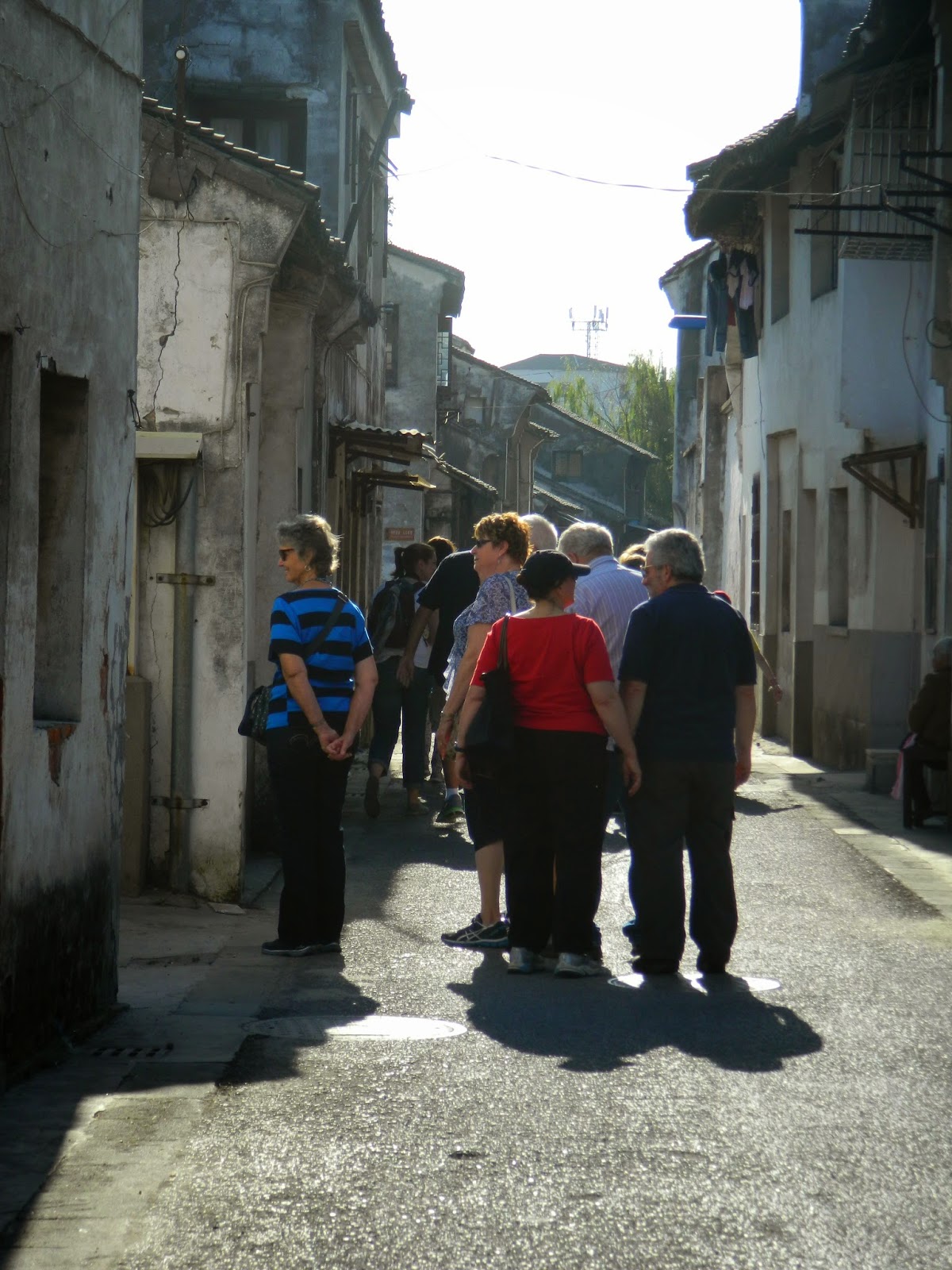
    As we marched single file through the house of a certain Mr. Wang (a retired blacksmith well over 80 years) to see his traditional Chinese oven, all I could think was, “What is the point of this?” 
    I, like Stacy, enjoy seeing into people’s lives and homes. I tend to be nosy and curious and have few boundaries when I travel. I have participated in many home-stays and exchanges. But I hope I would never be so entitled as to walk into a stranger’s home, practically without conversation, take a few pictures, and leave.
    What did we all learn that day in Mr. Weng’s home? I, for one, have no idea.
    Stacy has branded her tours as off-the-beaten-track cultural immersion experiences. Certainly, I saw parts of Nanxun and Shanghai that I may not have stumbled on alone, but is it even possible to immerse ourselves in another culture in any meaningful way in just 8 hours? 
    I wonder.
    We spent a hefty chunk of the afternoon in a retirement home with three charming Chinese women. Why? Because, “these old folks have so much wisdom to share.” Our interview, however, proved far too short to extract much of any depth. And though I did learn that I should not dry my face immediately after washing it and that “There is more food now” than in the Mao years, that was about it.
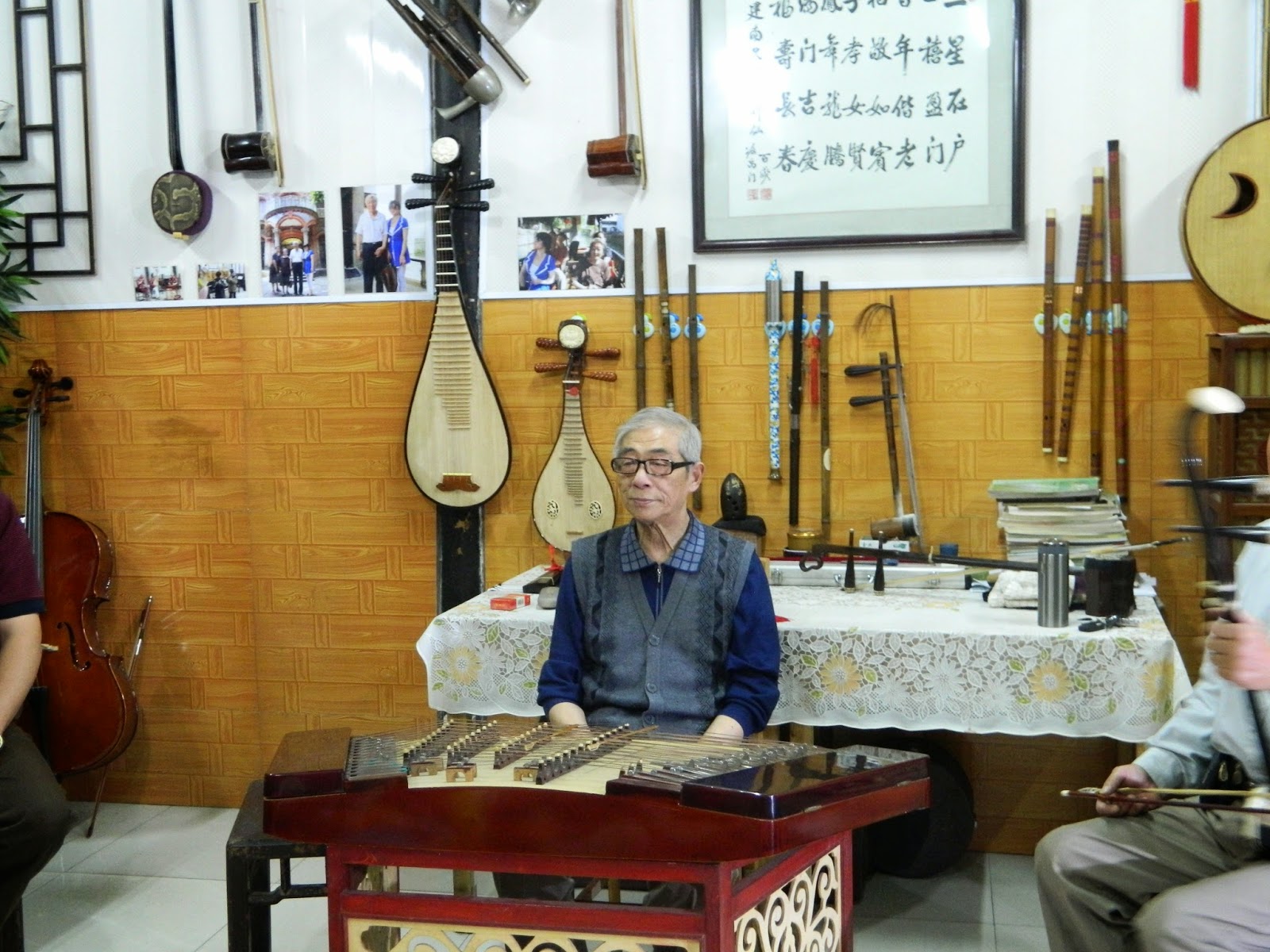
    One spry and flexible 90-something retiree led us through her morning Qi Gong routine. Later, I had the dubious honor of hearing “Jingle Bells” played on traditional Chinese instruments. Still, each stop on our itinerary, our “conversations” with local people, and our glossy overviews of entire schools of religious thought struck me as more shallow than anything else.

    Museums and retirees are equally “real.” Back alleys are not intrinsically superior to touristy main ways. Cultural immersion does not emerge automatically with the right combination of orchestrated meetings and exposure to dirt. Cultural immersion does not literally mean walking in and out of a local person’s kitchen. It is far more elusive. It requires more depth.

    That is not to say we should give up hope of having meaningful, culturally immersive experiences when we are short on time. 
    But let’s not place the things we see into two categories: real and unreal.
    When we have the opportunity to engage with another culture, let’s really engage. Ask questions. Look and see and taste and listen.
    Let’s decide for ourselves what is real.
    What is cultural immersion? That is a big question to answer, and maybe later I will try to go into it (though I’m not sure I have a satisfactory answer to give), but I am fairly certain it is not this.
    ~

  • Airports

    In the last three weeks, I have spent approximately 35 hours in airports. Just in airports. I stayed the night in JFK, had a 10-hour layover in Newark, and passed in and out of the truly lovely Burlington International Airport at least 4 times. In my time here, I’ve noticed a few things.
    Airports are strange. They are a bit like the purgatory of travel—the holding area you must pass through before moving on to better things (or worse, depending on where you’re heading). And this limbo-land of modern-day crossings offers every temptation your heart might desire: free WiFi (with the notable exception of JFK), cuisine from every part of the globe that never quite satisfies, an orgy of coffee and a baffling number of retail options.
    Like purgatory, airports play host to every kind of person, too. Uniformed escorts wheeling old ladies with too much perfume to and fro. Business men in suits. Children visiting relatives, signs that read “unaccompanied minor” (or something to that effect) draped around their necks. Students carrying tattered backpacks. The mysterious person who left an empty handle of cherry-flavored vodka lying on the bathroom floor at the airport in Detroit. Somebody had a very drunk, cherry-scented neighbor on their flight Monday.
    These vague, loosely defined souls crowd onto escalators and through security lines, into cafes and along moving walkways, each with their own, individual mission to arrive. They rarely seem to notice one another.
    Babies are the notable exception to this rule. They will stare at you forever if no one stops them.
    In the first class lounge (which I talked my way into in Newark), the light is softer, the announcements muted, and the cushions thicker. (Oh yes, and the food is free.) But you can make yourself comfortable elsewhere if you only find the right nook, the right corner in which to nest. I have found, too, that it is worthwhile to buy a drink or a sandwich at a sit-down restaurant just to have someplace to sit.
    There is a 24/7 diner in JFK where the waitresses don’t mind if you lie down and sleep at night.
    In Detroit, there is a really interesting fountain that can easily kill 10 minutes if you are early—I have been sitting here gazing at it for at least that long now. I have yet to find the pattern the jets of water follow.
    I have noticed that most people are happy to chat if you engage them, like the Australian girls I met in Newark, or the guy working at the Skinny Pancake in Burlington. Others are perhaps too happy to chat, like the people trying to buy drinks for the Australian girls in Newark, whom I obdurately ignored. Still others will surprise you by how much they don’t want to talk, like the woman I smiled at in line last week who abruptly turned away in response.
    Airports exist at a strange midpoint between private and public space. Most people seem to carry a small bubble of impermeable air with them as they travel through. I know I certainly do. And yet our meals, our naps, our personal conversations and our arguments take place in shared, public space. The airport paradox.

    It is always too cold, or too loud, or too hard or too rushed. Airports are anything but comfortable and warm. And yet, I kind of like them. They are the limbo-land of my crossings to the next place, my next destination, and for that alone, they are bearable.
    And then there is this awesome tunnel at DTW (Detroit):
    https://www.flickr.com/photos/nirak/1314140482/?rb=1

    ~
  • Shanghai Snippets

    In Shanghai, everything is new. Or it wants to be new. Or it will be new just as soon as the old is knocked down and rebuilt. Retirees participate in state-sponsored activities in the park: old men manipulate Chinese yo-yo’s with surprising prowess, women join enthusiastically in chaotic dance fitness classes, and a single lane fills with the discordant cacophony of 20 different sound systems. I like it. More than I had expected. I take a stupid number of pictures of funny signs and storefronts, animal parts that no one wants to see, and gates and doors. My aunts take charge of photographing the family, and other things people will want to look at. Nonetheless, I want to share a few of those photos I took. These are the snippets and bits that caught my eye. I hope you will enjoy…
    Dancing in the park with maracas, what else?

    Fish heads– for sale or to discard? I’m not certain.

    Fresh pomegranate juice just outside the metro station.

    The Bund at night.

    Street food (pre cooking). For all of the street food fun, check out
    http://twohungryvagabonds.com/2014/10/25/cheap-eats-in-shanghai/

    “Open Lock. Make Key. Fix Lock.”
    An apt description of services offered.

    “Alley Curd,” purveyor of (the apparently
    very trendy) juice served in IV drips.
    Gates and doors.

     ~