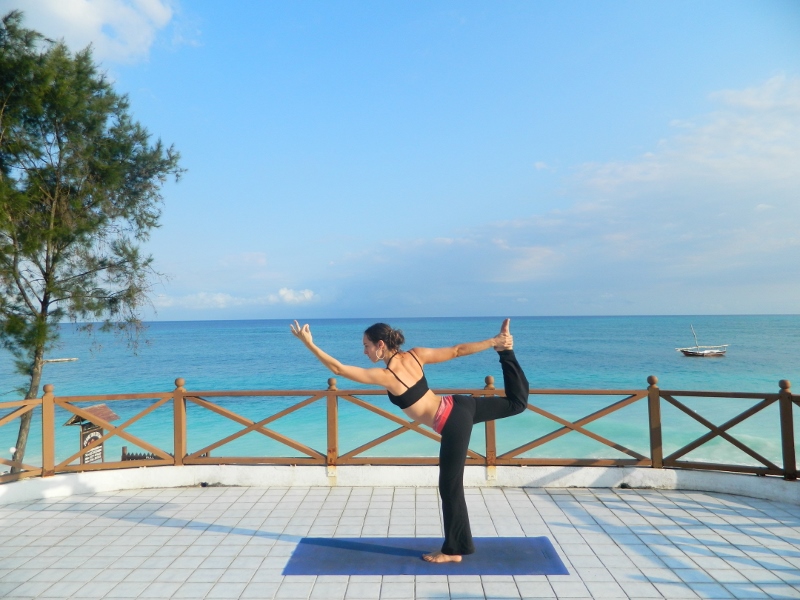
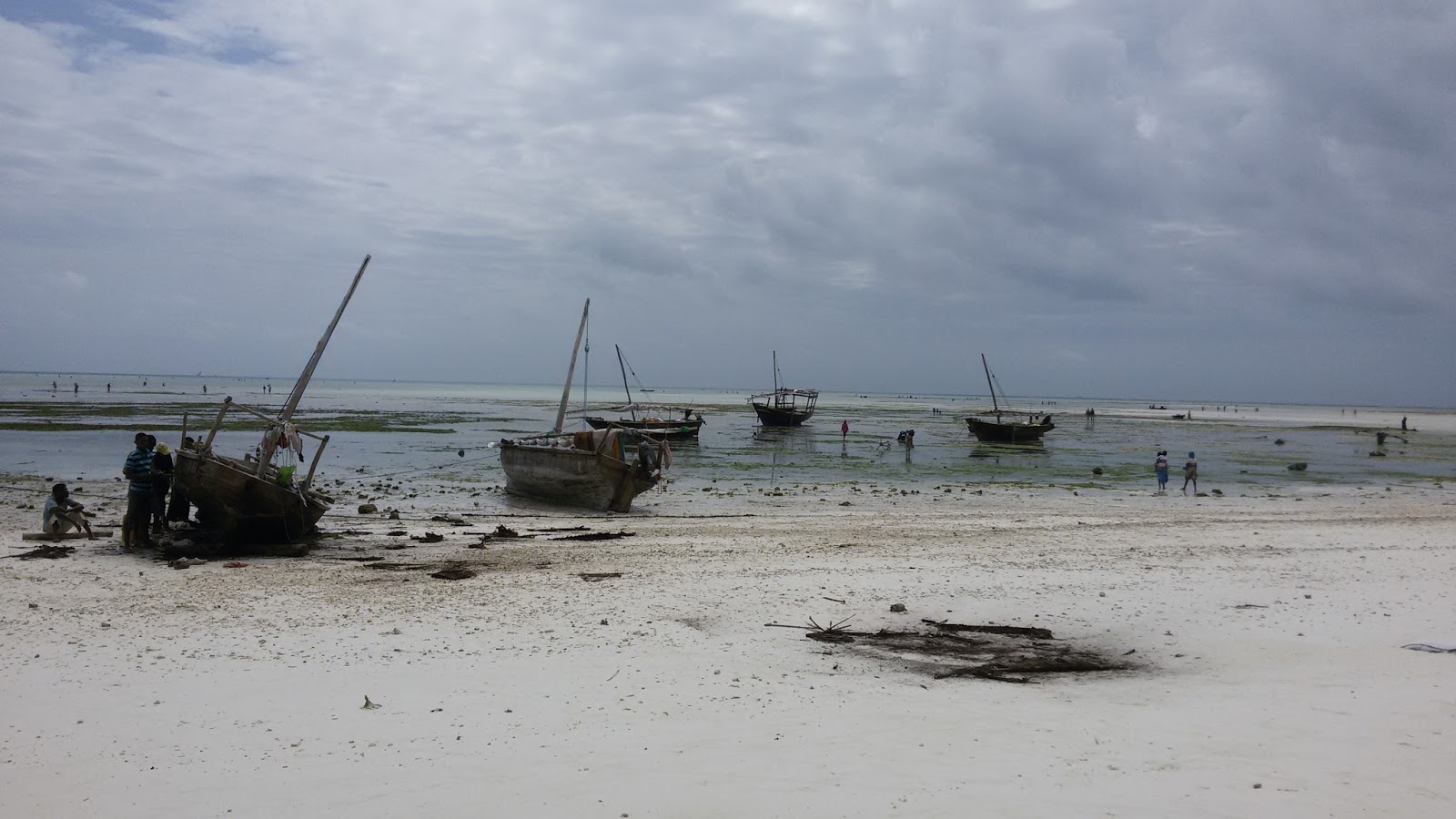
Author: Toby

  • Reflections on a Birthday: Wandering, Searching, & Answering the Call

    Yesterday, I turned 24.

    The past year has been anything but boring as vagabonded my way from Europe to Africa to the U.S. and back, teaching yoga, doing marketing, starting work at elephant journal and publishing over 100 pieces of writing along the way.

    Some of it I’ve written about here; much of it I haven’t. I’m committed to keeping this a travel blog only, and so today, that’s what I’d like to focus my birthday reflections on: this journey.

    A little over a year ago, I decided to go on a vision quest—four hungry days and nights alone in the Vermont wilderness.

    I was looking for something… I didn’t find it.

    I found nothing, in fact, save for a few lovely dragonflies, ducks, and one very long, very cold night stranded beneath the stars.

    Traveling—maybe—is a little bit like that.

    First, we answer the call. Second, we set out into the unknown. And third… third maybe we bring back nothing from our journey. What then?

    As I’ve written before, I’m not searching for [fill in the blank], and so it’s very unlikely that I’ll find “it” anytime soon. And sometimes I find myself stranded beneath those metaphorical stars—cold, hungry or lost… or all three!—and I wonder how the hell I ended up there. What crazy, impulsive, excellent decision got me there?

    But it’s always the right place.

    The stars never wonder why I’m there; they know, and at least that’s one of us.

    You see, I have a philosophy I love about journeys, choices and life, and it basically goes like this:

    Each of our lives is like a forest, or a valley, a mountain a desert, etc—it doesn’t matter—absolutely covered in paths.

    When we look around, we see all of those paths—infinite options, possibilities—choices to be made.

    But when we look behind us, we see only one path—our footsteps in the sand, tracks through the woods, etc—our path.

    That path—our path—is the only path we could have walked, because it is the one we have walked. And each choice we make—once it is made—is the only choice we could have made, because there it is behind us—another footprint, another step on our path—past.

    We answer the call; we make our choices. 


    I find this outlook deceptively simple, quite practical and deeply compelling. Maybe you will too.
    When I look at the year behind me, I see each step that has brought me to this place (a cozy couch in London, England at this particular moment). I regard that winding journey without regret and with no small measure of appreciation, for without it I would not be here—the only place I could possibly be.

    When I look at the year ahead, well, I do so with butterflies in my stomach and wings on my heels, because the forest is so vast—the paths so numerous—that I can take in but a fraction of it at a time.

    And that is every life—not only mine. Every year, every birthday, every moment and every step.

    I believe that, and the stars agree.

    Thank you for being a part of this journey—as a reader, a friend, a star, or all three!

    ***
  • I Want to Do All of the Things

    This is not a bucket list.

    I wrote this list a few weeks ago as the realization dawned on me that, without exaggeration, I want to do “all of the things.”

    There is not a country I wouldn’t want to visit, a language I wouldn’t like to study, an art or dance I wouldn’t want to learn or a food I wouldn’t want to try.

    Whenever someone shares a story of adventure, I listen carefully—not only out of friendly curiosity, but also out of a vested self-interest—making mental notes for the day I can follow their trail, or blaze my own.

    In the invigorating—and overwhelming—rush of ideas that tends to accompany an “I want to do all the things” epiphany (it’s not my first) I decided to try something new.

    I decided to write it all down.

    This list is a work in progress. I have surely forgotten things, and will doubtless add other ideas I haven’t even thought of yet. The list of places on the left is woefully incomplete, and I know I’m missing something major… no matter.

    One thing is certain, however: This is not a bucket list.

    These are not things I’m hoping to do some day in the future, before I “kick the bucket”; rather, these are (all) things I want do do now. Tomorrow. Next month. As soon as possible… It might take a decade or five, but I’m starting yesterday.

    My list includes the following items:

    • Travel the TransSiberian (or TransMongolian) Railway
    • Go to Argentina to study Tango—and Spanish
    • Go to Brazil to study Capoeira—and Portuguese
    • Travel across a country by horseback
    • Join the circus (learn a circus skill first)
    • Travel through Poland and Eastern Europe with my grandmother’s suitcase.
    • Chase the Northern Lights (I tried last week… no success)
    • Hike the Long Trail (VT)
    • Climb some tall mountains
    • Find a way to contribute—anywhere… everywhere.

    That’s just a few.

    Is it an extraordinary privilege to be able to look at every single item on this list as a real possibility? Absolutely yes. Am I still searching for the right way to be of service as I pursue these passions? Of course—although, since starting work at elephant journal I feel more assured of that side of things.

    Perhaps most importantly, why? Why do I want to do/try/learn/see all this?

    Why the tireless pursuit of adventure?

    A little secret: There is no why.

    There are secondary reasons—to learn, understand and grow are all real and valid motives. But they are secondary. The primary “reason why” is formless.

    Because.

    Adventure, travel, wandering, journeying for me have always been (and may always be) a raison d’être. A “why” unto themselves.

    That is, I do not wander because ______, or travel to _______; but rather, when in movement, when in the pursuit of adventure, I have no need of why’s.

    I do not wonder why I am here, what I should be doing or what my purpose is… I simply am.

    And so I want to do “All of the Things,” because so long as this list (and its much longer mental counterpart) are close to my heart, my wings beat of their own accord. Existence, then, is its own end—and that is every thing.

    So… what’s on your list?
    ***
    [I’ll be in London now through (almost) the end of October. Checking in after 2 weeks in Helsinki, Finland, which were so packed with adventure I haven’t had time to write about them yet! Much more to come on that very soon.]

  • An Incomplete Guide to Sicily in Quotes & Pictures

    Valle dei Templi (Valley of the Temples), Agrigento, Sicily

    “The climate’s delicate; the air most sweet.
    Fertile the isle, the temple much surpassing
    The common praise it bears.”
    — Shakespeare

    I could write—and, indeed, have written—many pages about Sicily. However, I’m hardly the first person to be taken with the island’s complex history, natural beauty and unique charms, so for a change I would like to share the words of other writers, whose perspectives, combined with pictures from my recent visit, make for a woefully incomplete (but very poetic) look at the place. I hope it may whet your appetite for more, as I never tire of convincing people to visit!

    Scala dei Turchi (Stair of the Turks), Realmonte, Sicily.  
    “Ho capito che la Sicilia è molto più complessa di quello che si può pensare: la paragonerei ad una cipolla dai molti strati.” — Paco Ignacio Taibo II
    (“I have understood that Sicily is much more complex than one might think: I would compare it to an onion of many layers.”)
    Cattedrale di San Givanni Battista, Ragusa.
    “Sicily has suffered 13 foreign dominations from which she has taken both the best and the worst. The sequence of different cultures has made Sicily a fascinating place, quite unlike any other.” — Andrea Camilleri
    Valle dei Templi.

    “This is the homeland of the Gods of Greek mythology. Near these places, Pluto abducted Persephone from her mother. In this wood we just walked through, Ceres ceased her swift running and tired of her fruitless search, sat on a rock, and despite being a goddess, she wept, the Greeks say, since she was a mother. In these valleys, Apollo pastured his flocks; these groves, stretching down to the seashore, have echoed with Pan’s flute; the nymphs got lost under their shade and breathed their scent. Galatea fled from Polyphemus and Acis, close to succumbing to the blows of his rival, enthralled these shores leaving his name here … In the distance you can see the lake of Hercules and the rocks of the Cyclops. Land of gods and heroes!” — Alexis De Tocqueville

    Valle dei Templi.

    “Sicily is more beautiful than any woman.”
    Truman Capote

    Valle dei Templi.
    “Il siciliano è il prodotto di un territorio che non è un pezzo staccato d’Italia, che non ha mai fatto parte di alcuna parte del mondo in epoca storica, che è stato occupato da nord, sud, est, ma mai è stato assimilato, l’isola in cui niente è stabile se non il movimento, il non-stabile, dove un giorno distrugge quanto l’altro giorno ha costruito, dove vulcanismo e nettunismo sono continuamente all’opera, dove un giorno trasforma la storia di secoli.” — Paul Yorck von Wartenburg

    (“The Sicilian is the product of a territory that is separate from Italy, that has never been part of any part of the world in any period of history, that has been occupied by the North, South, East, but never assimilated, the island in which nothing is stable except movement, non-stability, where one day destroys that which another the other day built, where volcanic and marine forces are always at work, where one day transforms the history of centuries.”)

    “Sicilians build things like they will live forever and eat like they will die tomorrow.” — Plato

    Valle dei Templi.

    “For over twenty-five centuries we’ve been bearing the weight of superb and heterogeneous civilizations, all from outside, none made by ourselves, none that we could call our own.”

    This violence of landscape, this cruelty of climate, this continual tension in everything, and even these monuments of the past, magnificent yet incomprehensible because not built by us and yet standing round us like lovely mute ghosts; all those rulers who landed by main force from every direction who were at once obeyed, soon detested, and always misunderstood, their only expressions works of art we couldn’t understand and taxes which we understood only too well and which they spent elsewhere: all these things have formed our character, which is thus conditioned by events outside our control as well as by a terrifying insularity of mind.”

    ― Giuseppe Tomasi di Lampedusa

    Sunset from a lighthouse.
    “I was enchanted… the limpidity of the sky, the restless splendor of the sun, the beauty of the countryside, a certain excitement of the fantasy…which brought to mind the time when in the fields one encountered the divine.” — Jean Houel

    Ragusa Ibla, Sicily

    “In Sicilia abbiamo tutto. Ci manca il resto.” — Pino Caruso
    (“In Sicily we have everything. We’re just missing the rest.”)


    Valle dei Templi.
    “Noi fummo i Gattopardi, i Leoni; quelli che ci sostituiranno saranno gli sciacalletti, le iene; e tutti quanti gattopardi, sciacalli e pecore, continueremo a crederci il sale della terra.”

    (“We were the Leopards, the Lions; those who will replace us will be little jackals, hyenas; and all of us Leopards, jackals and sheep, we’ll go on thinking ourselves the salt of the earth.”)
    ― Giuseppe Tomasi di Lampedusa

    Macalube, Aragona, Sicily.

    “Per me la Sicilia ha una luce particolare, qualcosa di primordiale. Io non sono nato in Sicilia anche se mia madre è di Palermo. È come se con questa terra ci fosse un richiamo anche più lontano della mia esistenza, che appartenga alla mia memoria. Scrivo volentieri qui, c’è un’aria speciale, istintiva. Non mi va neanche di dargli un nome sennò darei dei confini che non ha.” — Emanuele Crialese

    (“For me, Sicily has a particular light, something of the primordial. I wasn’t born in Sicily even though my mother is from Palermo. It’s as if with this land were a recollection even further back in my existence, which belongs to my memory. I write often here, there’s a special atmosphere, instinctive. I do not even give it a name, as to do so would give it boundaries which it does not have.”)
    Scala dei Turchi.

    “There it was again: the sweeping verbal gesture magnified in the prism of Sicily, the pronouncement so poetic it nullified any arguments before they could take their first breath. The vines, the amphorae, the thousands of years of history, the palmenti, the volcano, the beauty, the power of it all. In Italy, of course, beauty is next to holiness. Sicily was long the most treasured daughter of the Mediterranean. So who can teach Sicily anything about beauty?” — Robert Camuto

    Fountain, Ragusa, Sicily.

    “All of Sicily is a dimension of the imagination.” — Leonardo Sciascia

    “Raccontano, infatti, che secondo il mito la Sicilia è sacra a Core poiché qui avvenne il suo rapimento e perché l’isola fu offerta alla dea come dono di nozze.” — Plutarco
    (“They say, in fact, that according to legend Sicily is sacred to Persephone since her abduction took place here and because the island was offered to the goddess as a wedding gift.”)

    Train tracks at the edge of the Valle dei Templi.

    “And anyone who has once known this land can never be quite free from the nostalgia for it.” — D. H. Lawrence

    *** 
    [All translations mine. :)]
  • What is this Feeling? …Nostalgia??

    Stunning views from my seat flying Catania, Sicily to Istanbul (on my way to Stockholm…
    I should not have opted to fly that way, and now I have no luggage… ah, well… collateral.)

    Lately, I’ve been experiencing a sentiment I’ve never known before.

    A strange tightening in my chest when it’s time to pack.

    An odd sensation as I watch the ground shrink below me during take-off.

    An unfamiliar twinge as I lift my hand to wave goodbye.

    I feel excited to be continuing on to the next place—of course, that goes without saying, and, I suspect, will never change.

    And yet… and yet…

    I think I would call it nostalgia, this new feeling.

    First it was Zanzibar, and now Sicily.

    Maybe I’m growing sentimental in my old age. (Just kidding—my old age is a long, long way away!) Maybe I’m allowing the places (or these people… or these lives, discretely wrapped packages of time, space and possibility) I briefly inhabit to reach a little bit deeper than I used to—sending out just the finest roots beneath my skin.

    Or maybe it’s an inevitable side-effect, which has simply run unrecognized along the sidelines up until now.

    Wherever it comes from, this nostalgia weaves a duskier hue at the edges of my leave-takings. A slight reluctance (never stronger than the bolder urge to continue on, but there nonetheless). A bittersweet recognition that I may in fact miss this place (these people… this time… this particular configuration of life)—that I was happy here.

    It’s the taste of the last sip of hot chocolate, and the color of the faded corner of a photograph. Savoring. It’s the feeling of lingering before standing up to leave a cafe… and it adds, I think, a lovely dimension to each journey onward—a depth, a balance to anticipation.

    While this feeling—this nostalgia—is unfamiliar to me, I welcome it. I acknowledge it (for it undoubtedly deserves its place in the scheme of things), and then I leave it beside the photographs, memories and written pages—where it belongs.

    So. Nolstalgia… welcome to the adventure!

    ***
    Greetings from Stockholm, Sweden, where I am visiting my oldest friend for the week. My luggage is dwelling in Istanbul at the moment, but I will be sharing some amazing shots from Sicily as soon as it finds it’s way over here!
    ***
  • Being versus Seeing


    So, what are you doing here?

    They say it kindly—with honest curiosity—and they say it in Italian, but that is the question.

    The woman at the cheese shop who patiently helps me taste 10 local varieties before wrapping up my selections. The barista at the cafe on the large piazza near my apartment. The elderly gentleman who insists on guiding me through the steep valley from Ragusa (the newer city where I stay) to Ragusa Ibla (the old medieval part of town).

    They want to place me, and I want to help them.

    Entering the valley.

    I explain, in as few words as possible, my work-travel creation. That is, more working than traveling; more living than exploring.

    And, sheepishly, I recall inwardly how disappointing a tourist I have been…

    I managed to climb the bell tower of the main cathedral. I spent an hour in Modica, one of the next towns over, tasting chocolate made the traditional (unbelievably delicious) way and eating granita. I’ve visited a few beautifully restored churches (a huge earthquake in 1693 destroyed most of the older architecture, and I’ve wandered many of the small, hilly streets, eating gelato, canoli or any other treats I stumble upon. I have the good fortune to be staying with two teachers, and have attended a few dinners, lectures and expositions with them, too.

    Cattedrale di San Giovanni Battista (and the piazza)

    It’s not nothing, but it’s not much, considering I’ve been here 10 days already. Compared to past trips, when I managed to cover as many countries in a month and spent entire days on an expedition to see a city from top to bottom, it’s not much at all.

    What’s changed? Quite a bit…

    These days, I don’t have so much free time.

    Between trying to regain a daily yoga practice after injuring my hip, working six to seven hours, chatting with my hosts (my Italian gets better by the minute!), cooking all my meals and trying to write besides, I watch my days fill up fast.

    Most days, I’m happy to get a walk in, a visit to the market and maybe an hour at a cafe.

    In the valley: gate to nowhere.

    So when I feel “guilty” for not doing or seeing as much as I can while I’m in this new town—this place I’ve never been before—I gently remind myself that actually, I’m not here to visit, to tour, or to see.

    I am here to be.

    Not, I am in Ragusa to ____.

    Rather, I am in Ragusa.

    That’s all.

    Ragusa Ibla.

    It’s a subtle shift, but it relieves some of that odd pressure of being a tourist or traveler—here to see, absorb and record as much as possible.

    And I find I am only capable of this shift because I have “an excuse.” I’m working, I’m not on vacation, I’m girando (moving around), but I’m not a tourist… blah, blah blah. Excuse or no excuse, maybe this is the way to do it—for me. (You can do it however is the right way for you, of course.)

    Seeing what I see and doing what I manage to do, but moving my focus away from quantity of recordable events, I can experience my existence here without expectations. The same way I would anywhere, without the badge of “travel” tacked onto the box where I store and process those stories.

    What does it mean to focus on “being” in a place, rather than “seeing” a place?

    Well, that’s what I’m figuring out right now… I’ll let you know.

    Ragusa Ibla.

    ***

  • Snapshot: Bar Willy

    8:30a.m., Trastevere, Roma — 24 August 2015

    I begin the day with that most Italian of concoctions… il bar.

    Bar Willy sits at one corner of a busy plaza in Trastevere—at the edge of Rome.

    Its staff are a typically diverse mix, representing Asia, Africa and “the Continent” too. (Rome is a massive epicenter for immigrants to the country.) They joke about regional linguistic variations, for which Italy is famous.

    At 8:30 on a Sunday, the bar (anywhere else it would be a “cafe”) is buzzing with activity. The tables outside, however, are mostly empty, for—in typical Italian fashion—most of the patrons prefer to take their morning coffee and cornetto (croissants, but, sorry, not as good) standing up.

    And so the bar pulses with the ins and outs of customers on their way to the Sunday market just outside.

    They order a caffe’ (espresso), cappuccino or latte macchiato (hot milk with a touch of coffee), and the sounds of their orders rebound from barista to cashier to my ears and back. The clatter of tiny spoons on plate, plate on bar, cup on plate; the rustle of pastry on napkin and hands on newspaper; the din of shouts, greetings and laughter—all combines to a decibel of energy to which I am unaccustomed so early in the morning, but which, for some strange reason, pleases me.

    It is good-natured—all of it. It is pleasant, honest cheer—a thing the Italians (I find) do better than any others. It is the thing that pulls me back to this country again and again. It is the lushness of fresh pressed olive oil on green figs (speaking of which, the food I’m eating will have to wait for another day…).

    It is magnetic, for me—and clearly I’m not the only one.

    ***
  • Why Am I Here?

    2:00 a.m. Rome, Italy. Fiumicino Airport.

    I arrive haggard, disoriented and ready to drop after a red-eye from Detroit, a 12-hour layover in Amsterdam, and a much delayed flight to Rome.

    Naturally, my pack is last to appear at the baggage claim.

    Even so, I fall into a taxi (my only option at this hour) reluctantly—unaccustomed to paying so much for so little. I direct the driver to Trastevere—my favorite Roman neighborhood, where I will spend the next five days. My Italian, which received a surprising amount of use in Africa, rises quickly to my tongue.

    I sit back, desperately wishing, but unable, to sleep.

    As the damp night speeds past my window, I watch it in a daze. Thanks to some alchemical blend of exhaustion and disorientation, I feel none of my usual enthusiasm.

    And for what may be the first time in my entire life, I find myself wondering, “Why am I here?”

    The answer is simple to a fault. I chose to come to Italy (rather than return to Zanzibar) because 1. I love Italy, 2. I speak Italian, and 3. It was easy to get here from Amsterdam, where I had an un-cancelable flight to anyway.

    I have many times answered the question, “Why travel?” for my own benefit and others’. I have many times defended wandering as a path and destination unto itself. So why ask, why am I here? Why now, when finally I have a great job that I love and the first green shoots of a writing career to show for my efforts over the last year and a half?

    Perhaps it is the openness of it all—my life, that is. The lack of timeline, the total freedom of movement, the sheer vastness of being, which, when made reality, frankly baffles me.

    If you asked me right now why I am here, what I am going to do or where I am going—in the metaphysical, not the practical sense of the words—I would answer you honestly: I don’t know.

    Right now, though, a few crumbs remain scattered from my meal over the red and white checkered tablecloth. A nearly-empty glass of red wine sits before me, and across the lane, a mesmerizing wall of quivering paper butterflies. Beside that, a pile of selfie sticks.
    Tourists wander by in their summer dresses and Sophia Loren style hats, carrying cones of gelato or holding hands. The cobblestones are worn and smooth here, and high yellow walls rise up into the night. The streets are lined with tiramisu kisses, echoes of tambourine music, and spiralling jewelry I would like to buy. The air breathes slowly, wafting the scent of basil, garlic and bread through the scene.
    In this moment, then, I do not ask, “Why am I here?” 
    I am simply here.
    That–so simple and yet so profoundly complete–is the point. I am here. Tomorrow I will be here, and the day after that, and every day, hour, moment following.
    A hundred voices clatter against the wall–Italian, French, English, Spanish and others I can’t understand–and I am here, listening.
    The tang of red wine (della casa, of course) lingers on my tongue, and I am here, tasting.
    A yellow glow bathes the faces of visitors walking their dream across the butterfly wall, and I am here, watching. I am grateful to call this my reality.
    The particularities of the scene around me confront my senses–the man selling lighters shaped like toilet seats; the couple beside me who have returned to this same restaurant after visiting two years ago; the tap tap of gold heels on cobblestones; the clutter of languages in my ear; the fatigue of lingering jet-lag–and I am here, living in it.
    Why am I here?
    That I don’t know, but I am.
    ***
  • I Might Really Miss This Place

    A rainbow came out especially for my “picture-taking day.”

    As I prepare to leave Zanzibar (Nungwi, more specifically; East Africa, more broadly), the place that has begun to feel like home, I find myself struck by surprising waves of nostalgia…

    With one foot over the proverbial threshold, I observe this place with the forgiving nostalgia of things already past.

    Mambo poa? Poa, vipi? Poa poa. Za asubui? Salaama, na wei wei? Mzuri sana. Mzima. Mzima.

    The daily greetings—long and impossible to translate (in all honesty, I don’t know the meanings so much as the sense)—through which I finally navigate with ease after months in the region.

    For Travellers: Next door to my home, Kipangani Villa.
    The familiarity of Hafizi, the vegetable guy, Chef, the owner of “Chef’s Baking Shop,” and several other business owners and neighbors who, day by day, have slowly accepted my presence in their world—though I will never “fit in” here. To a few, I am not anonymous—more than a transient foreign face—and that means something.

    Chef’s Baking Shop (and Restaurant).

    Hafizi, the vegetable (and fruit) guy.

    My hard-won comfort—with the basics of Ki-Swahili; with the daily trials of moving through an unfamiliar cultural and physical landscape; with all the tiny frustrations that sometimes build… and sometimes fade into irrelevance.

    The neighborhood cow.

    Road to my house.

    The herds of cows on uneven dirt tracks, which I pass through on my borrowed bicycle with its one brake and working bell on my way to work; the brief but regular power outages and occasional mysterious absence of water in the taps; the proliferation of rambutan spiders, mangos and goats and the scarcity of apples, cheese pets and pavement; the trash cart hitched to a skinny cow, the call to prayer at sundown and the rocks that bite holes in my sandals.

    Nungwi Village.

    All of it—tiny details insignificant to some, inconveniences to others—to me, these minutiae are the source of my nostalgia. They are symbols, signifying that I am “there”: someplace far far older than I, but new to me. Not “here” in the familiar, alike, easy—“elsewhere,” and thriving in it.

    Second-to-last sunset.

    And then there are the sunsets over the ocean, the orange-gold breeze as I teach yoga, the palm trees and the beach; the sumptuous Arabic-style décor of restaurants that charge less than MacDonald’s for a feast, the silhouette of dhow sails on the horizon—the part from guidebooks and travel adverts is also here, though far more complicated than the brochures would have you believe.

    Of course, a hundred moments of frustration, anger, discomfort, exasperation and rage punctuate that seeping, honeyed nostalgia, reminding me why I am leaving—why I am ready to go.

    Nonetheless, I think I might really miss this place.
    As I write this, I am sipping my last cappuccino at the Zanzibar Coffee House (my favorite place in Stone Town) and uploading the handful of pictures I managed to take in my last days on the island. I will go to the airport this evening and travel about 40 hours for a brief visit with my family in Vermont.

    Next stop: Sicily.

    I hover in the place of in-between’s as I figure out what is next—uncertainty looms as always in shades of vibrant expectation and somber apprehension. I am reminded, again, that home is a thing that fits in a cupboard in my mind… the trick is remembering where I left the keys.

    ***

  • The Joker

    Photo: Wikimedia Commons

    His eyebrows are raised at the center in a perpetual arc of surprise.

    A cap typical of observant Muslim men in Zanzibar perches over his round, childlike face, but he resides squarely in middle age. He wears a blue t-shirt and blue jeans, and in his arms he holds a little girl dressed in powder blue satin.

    She is not his daughter.

    Throughout the bus journey from Nungwi to Stone Town, each time a child arrives at the back of the open-air bus, the man immediately reaches down to lift it on board. Sometimes he returns it to the parent, sometimes he holds it on his lap.

    The children are unfazed, far more concerned with staring at me through kohl-rimmed eyes. He is normal; I am not.

    At one point, the man holds two children on his lap. He is a joker—comical expressions etched on his face. He loves children, he says. It becomes a joke: the women around him laugh each time he jealously pulls a child into the bus and onto his lap. No one thinks it odd, and no one at all questions his motives, as would surely happen in the U.S.

    He loves children, he says, and it is his great luck that there are so many aboard today.

    Maybe he has no family of his own. Maybe he is unable to have children. I don’t know, nor would I ask; nor could I understand the answer had I wanted to.

    Watching the man before me—the joker in the blue shirt and blue jeans, little doll baby dressed in blue satin on his lap—I can’t help but smile along with the other women.

    Photo: Wikimedia Commons

    This is one of the things I love about Zanzibar, and places like it: When it comes to minding children, everyone helps everyone. Neighbor helps neighbor; kin help kin; strangers help strangers.

    When a mother and her child approach a bus (more of an open-air, low-back truck), ten pairs of hands instantly reach to lift the child into the vehicle and hold it steady.

    You won’t see that in the U.S. or most of Europe (although, to be fair, getting on the bus in the U.S. is not quite the same ordeal). There, if a man went to hold a child he didn’t know, he would probably be screamed off the bus.

    I love the trust and community underlying the scene before me.

    That said, my appreciation is hardly romantic. This is one context… Where is that community when it comes to the “every man for himself” mentality of Nungwi businesses? I want to know. Where is that trust and support when business owners attempt to navigate the cloudy waters of the tourism industry, stepping on one another to keep from drowning? I don’t see it.

    Still, the man with the round, surprised face makes me smile today. I consider—not for the first time—that I will really miss this place.

    ***
  • In Zanzibar. Paradise has Cracks. (Poem)

    In Zanzibar. Paradise has Cracks. (Poem)

    In Zanzibar
    Fruit falls from trees–
    Like shimmering coins–
    And is trampled underfoot.

    No one wants to sell it
    When tourist dollars
    Taste so much sweeter.

    In Zanzibar
    Living is cheap
    But being a peacock
    Is free.

    Proud muscles;
    Proud feathers…
    Looks the same to me.

    In Zanzibar
    The clock starts
    At 6 o’clock–
    It’s rarely on time.

    The sunset is melted caramel
    On heaving tides,
    But no one wakes for sunrise.

    In Zanzibar
    If you read between the lines
    Hakuna matata doesn’t really mean
    No worries.

    In Zanzibar
    Glittering veils drape
    Over hair piled high,
    But eyes are dull.

    In Zanzibar
    Alcohol is haram
    But Konyagi is cheap–
    The rules change at night.

    In Zanzibar
    The sky is heavy
    And God is white.

    In Zanzibar
    Pole pole’ is a slogan
    Crafted from handicap.

    In Zanzibar.
    The rain is sudden.

    In Zanzibar.
    The colors are hard.

    In Zanzibar.
    Life is white and black.

    In Zanzibar.
    Paradise has cracks.

    In Zanzibar… In Zanzibar… In Zanzibar.

    In Zanzibar
    Fruit falls from trees,
    And I want to pick it up.

  • The Importance of a Quest

    Today, I spent an hour looking for soap.
    Not just any soap (those who know me will know how picky I am about my soap… shampoo, lotion and face wash too!), but a soap without chemicals, fragrance, glycerin or dye.
    As I walked down the uneven dirt road from the beach to the village—slick with mud from the rains that won’t stop this year—I thought about three things:
    First, I wondered if my skin would be red later from the inescapable equatorial sun, still hot-hot at three in the afternoon. Second, I considered the fact that a less stubborn person would have long ago sucked it up and bought any of the ten brands of Imperial Leather impersonators—all rich with the aromas of chemical fragrance and a lingering colonial stench. And last, I recalled countless similar hunts from this trip and others past, and I wondered why they were so important to me.
    I love a good quest.
    A walk through a crowded market becomes a treasure hunt when I am looking for an uncommon fruit, or a rare blend of spices. The simplest of goals—acquiring a cup of chai, the perfect gift, stamps or fish sandwiches; finding a historical monument; the beach; the highest outlook or the bus onward—transmutes the everyday into something vital and full of purpose.
    When I am looking for something, no matter how trivial, every interaction suddenly has a point. Intensity. Urgency. Meaning. Senseless conversation finds itself replaced by words imbued with the strongest magic: A reason for existing.
    I am not merely walking; I am searching. And a search is an adventure.
    Now, I will be the first to champion aimless wandering for the sake of wandering—searching not for,but because. A search for nothing is far preferable to no search at all. But a search for somethinganything—well, that is the best of all.
    As I stride from supermarket—proffering Dettol, Imperial Leather, medicated soap, skin lightening crap and a host of other pastel-hued and plastic-scented delights–to gift shop stocked floor to ceiling with everything but soap, I exchange the now familiar greetings and then ask for soap (sabuni ya kuoga). I explain in a mish-mosh of Swahili and English that I don’t want chemicals, and people are helpful, understanding, and repeatedly direct me onward, toward the village.
    Stepping into a shop selling only soap and flip flops, I am presented with more options. An unmarked, waxy pink bar, which I don’t trust because it is the color of pepto bismal. A new and equally off-putting brand of skin-lightening bullshit. And a bar of clove soap marked “herbal” and “home-made” on the box, on which the lack of ingredients at least allows for the possibility that it is actually chemical-free.
    I buy it and return home. My quest is complete.
    A search for soap—or chai, or the beach, or any number of things—is, on the one hand, silly and hardly worth thinking about. And yet, a quest is a quest, no matter how small. Those who have experienced the alchemical change that occurs when purpose is added to their day’s equation will understand that it is not the depth, but rather the presence of an objective that counts.
    Today, it was soap. Tomorrow perhaps it will be a decent cappuccino, gifts for my family or an empty stretch of shoreline. I won’t know until the next whim or need grips me and I set off again in pursuit of something, someplace or even someone (I may hate waiting, but it is another kind of purpose, after all).

    There is joy in wandering, and there is joy in searching simply because, but the single-mindedness of quest is a different, and I think necessary, component of travel and life.
    ***
  • Cows on the Beach (Photos)

    There is something delightful about seeing herds of cows wandering along the beach.

    Sure, when I stop to think about how much manure is probably swept up during high tide, it’s suddenly much less delightful. But still, they’re adorable and particularly photogenic, so I’ve found myself taking a (uselessly) large quantity of pictures of cows on the beach.

    Lest they be wasted, I am sharing the best ones here.

    Don’t worry—more are surely on the way. I will update this post with more cows on the beach as I see them!
    ***
  • The Invisibility Wish


    Living here, I find I cycle between feeling very comfortable and, dare I say it, assimilated (as much as such a thing is possible), and feeling totally out-of-place and exhausted with sticking out. This is a stream of consciousness on the latter:

    Sometimes, I wish I could be invisible here.

    A foreign feeling for me, who always wanted so much to stand out;
    Now here, hard as I may try, I could not hope to blend in,
    And though it is freeing at times and instructive at others,
    Sometimes, I would like to be invisible.

    Anonymity—a luxury I never appreciated—suddenly seems so very appealing:

    To spend a day where no cars screech to a stop to watch me pass, and no strangers want to talk to me simply because I am white (or foreign, or tourist, or moneyed or different… it’s all the same. And it is because I am white and foreign; I watch the women walking here, and no one wants to talk to them)…

    To spend a day anonymous; to slip under the water of hyper-conscious observation and simply watch for a change; to sit on the bus in silence—what a day that would be.

    Sometimes, when every day is a crowded audience for which I perform my life, I wouldn’t mind stepping into the shadows and only watching for a while.

    But I can’t.

    You can’t watch without being watched. You can’t be an observer without creating ripples through the world you observe. I think physics taught us that.

    You can’t be a white woman in Africa without recognizing the remnants of colonialism. (Irrelevant that at my ancestors were far removed at the time, living their lives in Eastern Europe at the time. I am still a white woman in Africa, here.) You can’t be a tourist without accepting that your money talks and it’s saying, “come talk to me.” You can’t be a foreigner without relinquishing your right to anonymity.

    Or maybe you can, but I haven’t figured out the secret. I will have to do without invisible days and unobserved observation, as I do without good cheese and potable tap water. Luckily, I have a vivid imagination—sometimes I pretend laughing cow is really a luscious Camembert, and sometimes I pretend the shouts and stares are all imaginary, and the beach is really a calm and peaceful oasis.

    It’s all perspective, anyway.

    *** 
  • “Hakuna Matata”

    Photo Credit: Flickr


    “Hakuna Matata! It means no worries…”

    I’m sure everyone can finish that sentence–especially those who, like me, grew up on The Lion King and other Disney movies.

    Except, did you know “hakuna matata” actually does mean “no worries” in Ki-Swahili? Maybe I’m the odd one out, but I didn’t!

    Hakuna, “there are no,” matata, “problems” (or worries, colloquially).

    Incidentally, Simba, our favorite main character’s name, means “lion,” Rafiki, our favorite supporting monkey, means “friend,” and Nala means “gift.” The list actually goes on and on, fatally crushing my (totally baseless) childhood assumption that Disney had made it all up. That I can recall, no credit was given. Classic.

    What I find really fascinating is the way the phrase “Hakuna Matata” has come to define tourism along the Swahili Coast in many ways.

    The following are my observations and hypotheses only, and in no way represent a comprehensive study or survey of tourism in the region. With that caveat in mind, I think we have some good old-fashioned Orientalism at play here.

    Very briefly put, “Orientalism” describes a process (first laid out by Edward Said in his 1978 book by the same name) by which Western, largely fictional accounts of an exotic, Eastern “Other” serve to reinforce existing cultural stereotypes. This “knowledge” is then internalized by those “Others” when they observe themselves through Western lenses and reflected back to Western observers as reality. The original sense of Orientalism was limited to academia and a particular corner of the globe; however, the concept can have far-reaching applications.

    When it comes to the phrase “Hakuna Matata,” Disney’s The Lion King effectively fed generations of Americans (and others) a heavily fictionalized and distorted portrait of Swahili culture without our realizing it.

    Now, in the parts of Tanzania and Kenya I have visited, it’s a catchphrase for rastas on the beach, shopkeepers, souvenirs (T-shirts, pottery, paintings, postcards, keychains, sarongs, and every form of kitsch) and tourism.

    Photo Credit: The Hunt

    It has managed to insinuate itself into the most mundane of daily interactions between tourists and locals: “Hi, how are you?” “I’m fine.” “Everything good? Hakuna Matata?” Or: “Coconut oil? Bracelet? Sister, you want something?” “No, thank you brother, I’m okay.” “Okay. Hakuna matata.”

    And even in intrusive non-interactions: “Wei (You)! Where are you going? Just walking? Very good, Hakuna Matata.” Or muttered, half-interactions: “Helloooo.” “Hi.” “Jambooo. Helooo. Hakuna Matata…”

    I don’t know what role those words played pre-Lion King and multi-million dollar tourism industry, but I doubt they were quite so widespread. Now, for the tourist world and the people that cater to it, those words are everything. I’ve started thinking of this as the “Hakuna Matata Complex,” though perhaps that’s undeserved.

    My point is, whatever the initial impetus (did tourists’ expectations start the trend? did an enterprising salesman realize the opportunity for profit? I don’t know.), Hakuna Matata has become more than a catchy phrase to print on souvenirs.

    It’s an identity and a brand. The East African coast seems to be turning into a caricature of itself—or, at least the face it presents to tourists is:

    The carefree, “no worries” attitudes of the young men who roam the beach offering boat rides, bracelets and (sometimes) romantic flings. The escapist, happy-go-lucky language covering hotel brochures and tourism websites. The one-dimensional, highly stereotypical idea of a culture that is packaged, sold and summed up in two words: Hakuna Matata.

    Most interesting are the many manners in which our favorite Swahili-turned-Disney slogan is used. Sometimes there is irony, and a look that I interpret as, “I am making a lot of money off your daft willingness to believe my culture boils down to two silly words, so I’ll follow the script.” Sometimes I read eagerness and sincerity: “Welcome to the land of Hakuna Matata. Really.” And sometimes I perceive something like resentment, which, considering the veritable flood of foreigners, would be understandable.

    Sometimes, when I’ve heard “Hakuna Matata” for the thirtieth time that day, I want to tear someone’s Hakuna Matata T-shirt to shreds. I don’t. I just file it away in the Hakuna Matata compartment in my brain and keep walking… at some point, I will open that box and sort out what I’ve collected there. (This is a first attempt.)

    I wonder: How many tourists go home thinking, “This is East Africa”?

    I don’t know.

    How many of the young men on the beach present this idea of themselves with sincerity, and genuinely identify with the Hakuna Matata Africa of brochures and T-shirts?

    I don’t know. If they do, though, then these old and tired cultural stereotypes have triumphed, and indeed a limiting caricature has been made reality.

    Or. Or maybe the joke is on us. Maybe there is more self-awareness and agency than I can observe from my position as an outsider. Maybe it’s not tourist demand driving Hakuna Matata supply, but a cheeky, ironic or simply pragmatic internal effort to determine how and by whose terms outsiders may experience Swahili culture.

    I draw no conclusions as of yet, and only offer my working theories as food for thought. If anyone has been to this region and has a different perspective to share, I would love to hear it.

    One thing is certain: It’s a wonderful phrase!

    ***
  • The Difference A Word Makes

    [Greetings from Nungwi, Zanzibar, my new home-for-the-moment! It was a tough choice, but I decided to switch tracks and will now be living here and teaching yoga for the summer. Come visit. J]

    ***

    Considering I will be here for so long, and mostly on my own, I decided my favorite method of dealing with unwanted attention and attempted sales—the “ignore and conquer” tactic—may not be my best option here. After all, I don’t really want to be that rude muzungu lady who never talks to anyone for three months (even if, secretly, I would be totally happy to have three reclusive months free of dealing with strangers).
    Instead, I’ve decided, I will engage. Stop to chat with, or at least greet, everyone. Practice my increasingly passable Ki-Swahili.
    And it’s amazing the difference a few words make. Knowing that “poa” is the response to “mambo,” the most common greeting. Even better, greeting with “mambo vipi,” a more colloquial version, rarely used by tourists.
    Five basic words of greeting are all it takes to distance myself from foreigners “fresh off the Zanzibar ferry.” The fact that I can hold an introductory conversation and explain that I am here to live and work, all in (broken) Ki-Swahili? Just icing.
    Being able to decline, politely, in Ki-Swahili when offered goods and services means I usually only need to say “no” once, rather than six or seven times. Already, I think I have probably avoided hours of pointless sales pitches for jet-skiing, fishing trips and spice tours.
    It is truly incredible to observe the difference a word or two makes. Some seem to appreciate my effort, smiling or laughing with good-natured surprise. Others just respond in English, but my language skills are far too rudimentary for me to take offense at that. Overall, the response has convinced me to share my experience here.
    To those traveling or living abroad who are tired of being treated as wallets (or breasts) with legs, try learning a few words of the local language. You’ll still stand out (and women, you’ll still be harassed), but you’ll also stand out from other tourists.
    You don’t have to be fluent—no one expects you to be—even ten words will often make a huge difference.

    Have you ever experienced the difference a word makes? What was it like?
    ***