Author: Toby

  • Johnny Cash and Slow Travel

    Johnny Cash and Slow Travel

    8:15 a.m. Self-Service Restaurant “Mediterraneo.” Grandi Navi Veloci ferry from Tangier to Barcelona.

    I look up from my breakfast—a somewhat sad assortment of boxed orange juice, cold croissant and drinkable cappuccino—and observe the other diners. Some are in groups or pairs. Many are young Moroccan families. Many are alone.

    Of this last group, few are doing anything (checking phones, or even reading). They’re just sitting there, drinking coffee, looking around. For some reason it reminds me of Johnny Cash’s famous response when asked for his definition of paradise:

    “This morning, with her, having coffee.”

    I’m not even a particular Johnny Cash fan, but something about that phrase—or more, the slowness it implies—fits this mood.

    People choose to travel by ferry (around thirty hours from Tangier to Barcelona, rather than two or three by plane) for many reasons. The slightly cheaper cost. The relative ease and comfort of sleeper cabins and lots of space to roam. The vaguely romantic allure of faded, Titanic-style old world luxury.

    And—I suspect—some people choose it for the slowness.

    Sitting in a deck chair for hours watching the boat’s trailing wake. Pacing the endless red-carpeted hallways, hands skimming smudged brass banisters, stepping inside and outside and inside again with no special aim.

    Sitting there, drinking coffee, looking around.

    Because there’s nothing better to do. Because the boat will get there—slowly—and we have time. Because, just like Johnny Cash, we recognize that the smallest moments contain the whole universe—if we slow down enough to dwell there for a while.

    For me, that is the essence of slow travel: dwelling in a moment while everything shifts around us, knowing that we’re on our way.

    Another reason to take the ferry: They have puppies!!! (If you’re lucky…)
  • It’s. A. Trap! (Fair Doesn’t Always Mean Equal)

    It’s. A. Trap! (Fair Doesn’t Always Mean Equal)

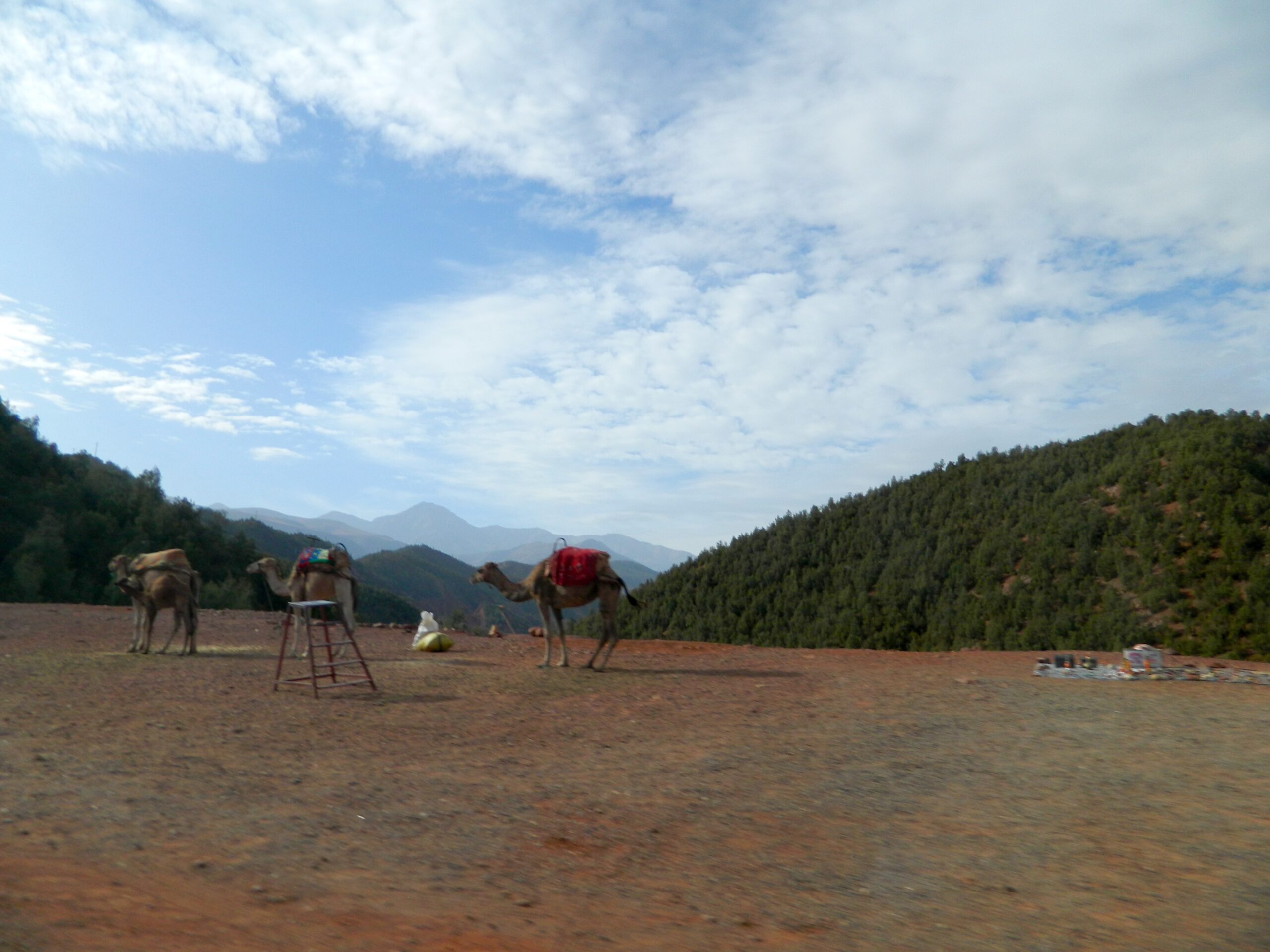
    Ourika Valley, near Marrakech, Morocco

    “Very good price. Very low. Better than free.”

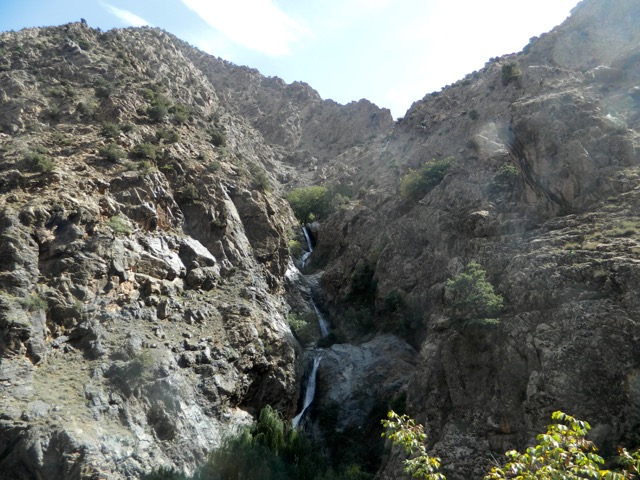
    We’re standing outside the van on the road to Ourika Valley, a verdant, majority-Berber region about two hours from Marrakech, popular with tourists for its many waterfalls.

    A half-dozen camels on short tethers wait for curious tourists to approach. It’s well past 11 o’clock, but the sun is just making it over the mountains to warm the deep valley.

    The man speaking proffers a tangle of necklaces. Plastic. The artisanal products are waiting in well-planned shops, with tougher hagglers behind the counter. My companions for the day, a French couple from outside of Paris, laugh and tell him that’s a good marketing plan.

    In a way it is, but then…maybe not.

    You see, I don’t want anything for free (unless it’s a sincere gift). I don’t want the cheapest price (anymore). I want a fair price.

    And that’s a very different thing.

    Ostensibly we’ve stopped for photos, but the view was around the last bend, and we’re really here to have time to spend money. We’ll stop at three more tourist establishments (some would call them traps, but I won’t today and I’ll explain why soon) before actually reaching our intended destination.

    > The Argan Oil Cooperative. Smiling women sit outside the building grinding argan nuts into a paste, which will later be separated into cosmetic oil and the base ingredient for savon noir (black soap). They beckon us to sit beside them. Ashkid, ashkid. (Come, come.) You can take pictures, we’re told. No problem. There’s a dish in front of the women with a few dirham notes in it. We can leave money there.

    > The Berber House. A traditional Berber house, which I might have found more exciting had I not spent a great deal of the last five weeks visiting my Berber friends in their (yes) Berber Houses. We’re shown the kitchen, the store room, the family room, the hamam (bath) and the backyard. You can take pictures. No problem. On the way out, there’s a well-placed souvenir shop and a donation box for the welcoming Berber House family.

    > The Guide. We stop in the village near the waterfalls to pick up the guide. We haven’t asked for the guide, but the guide is going to come with us. He accompanies our small group halfway up the trail, to the first set of falls, and then tells us it’s time to turn back. When we insist on continuing, and he insists on not going back without us, I convince him to wait at the halfway-up cafe while we finish the hike.

    Now, I don’t like being forced to pay for things I didn’t ask for or want in the first place. I also don’t like not paying someone for work completed or services rendered. I don’t like feeling cheated out of my money. And I don’t like feeling I’ve cheated someone out of their fairly-earned money.

    Most people in the world would probably agree with those sentiments.

    I think all of these scenarios and concerns come down to the same fundamental issue: fairness. Fairness to local people working in the tourism sector, and fairness to tourists seeking to spend their money well (ethically, reasonably and in a way that feels good to them).

    So, what’s fair?

    I’m going to seriously oversimplify for a moment. The tourist-local marketplace dynamic—as I see it—breaks down like this:

    Tourists don’t want to feel ripped off or trapped. (That’s a low bar.) These things are traps: Telling someone to take a picture (no problem, pictures are free!), and then asking them to pay for it. Insisting someone take a bracelet as a gift—and then insisting they pay for it. Following someone through the souk, though they have clearly stated they do not want a guide—and then asking them to pay for it. (These are all common experiences for unsuspecting foreigners in Morocco.)

    Tourists do want to feel like they’re getting a good deal. Sure, some are pinching pennies, but most just want fair. Many, like me, will feel frustrated when they know an item’s market price, and then are asked to pay four times that because said item has been handily transported into a souvenir shop. They don’t want to pay “tourist prices.”

    Local people want to make a decent living. They see foreign tourists and assume (reasonably) that if they had enough money to pay for a plane ticket to Morocco, they also have enough money to pay a few dollars above market price for a bottle of oil, silver necklace, taxi ride, and everything else. They might also encourage (or push) said tourists to spread their money evenly—a few gifts at the Argan Cooperative, a dollar to the Berber House, a tip to the guide. From this perspective, those tourist establishments mentioned above are not traps, but simply an integral component of the day’s adventure.

    Some believe that tourists should pay tourist prices, because they can. And hey, I get where they’re coming from.

    Naturally, I also get where tourists are coming from. I’ve been pondering this a lot lately, and I think the fair solution is neither “equal” (tourists often do earn significantly more than the locals they’re buying from, so why shouldn’t they pay more too?), nor excessive (no one likes traps and cheating). Rather, it’s somewhere in the middle, where everyone is happy—or at least not pissed off.

    So, when buying abroad, keep three questions in mind:

    1. How much is this worth to me? (How much do I want to spend on it? Keep in mind, for perspective, what you would spend at home.)

    2. What is the “market price”? (What would this cost a local?)

    3. What can I afford? (What’s my budget for this day? Week? Holiday? Will this meal/souvenir/excursion put me over?)

    The “fair” price exists somewhere at the nexus of those three answers.

    Happy shopping!

    *** 

    And to justify this blog title:

    Youtube video
     

  • Ah, The Life Of A Vagabond (Poetry)

    It’s rare that I share poetry here (if you want more of that, check out my column on elephant journal). But I would like to share this piece with you, as I think it gets at the heart of something bittersweet and utterly beautiful, which I and my vagabonding friends sometimes struggle to express.

    I hope it will speak to you.

    ***
    Ah, the life of a vagabond—
    We all say it with the same
    self-mocking irony
    and laughing-sad eyes.
    The same funny mix
    of melancholy
    and mad joy.
     
    Ah, the life of a vagabond—
    We choose to be the mad ones,
    don’t you think?
    Must keep choosing it,
    lest the madness
    Slip
    through our twirling hands
    and leave us with
    mundanity.
     
    So we love
    madly—
    and leave
    And dance
    wildly—
    and believe
    Seek ceaselessly—
    and receive,
    Maybe.
     
    Ah, the life of a vagabond—
    Do you ever wonder
    why we don’t
    just
    stay?
    I do, but then I remember
    we are all following the same
    piper,
    dancing a rhythm only some can hear—
    The call doesn’t stop,
    and neither
    can
    we.
     
    Ah, the life of a vagabond—
    Keep choosing it,
    lest the madness
    Slip
    out of reach
    like tears,
    lest passion
    settle back down
    to the silt
    at the depths of our eyes,
    lest love become
    a rarity.
     
    Ah, the life of a vagabond—
    They intone,
    and I echo their prayer.
    Call
    and response.
    A psalm
    for swirling, wandering
    souls,
    A litany so powerful
    we must believe it,
    An incantation writ on the horizon—
    we go to it dancing.
    we go to it dancing.
    ***
  • 6 Awesome-Sauce Pictures of Morocco (or, Why you Should Follow Me on Instagram)


    I haven’t been writing much the last couple weeks. I think sometimes, when it comes to writing about our experiences, there have to be periods of writing—and then periods of experiencing. So, let’s just say it’s been the latter, and I’ll get to the writing part again soon.

    In the meantime, did you know I’m on Instagram these days? I share snippets of writing or travelogue with nearly every post. Here are five reasons to follow me:

    *

    *

    *

    *

    ***

  • How to Pour Tea, It’s Out of our Hands, and Other Lessons from the Moroccan Coast

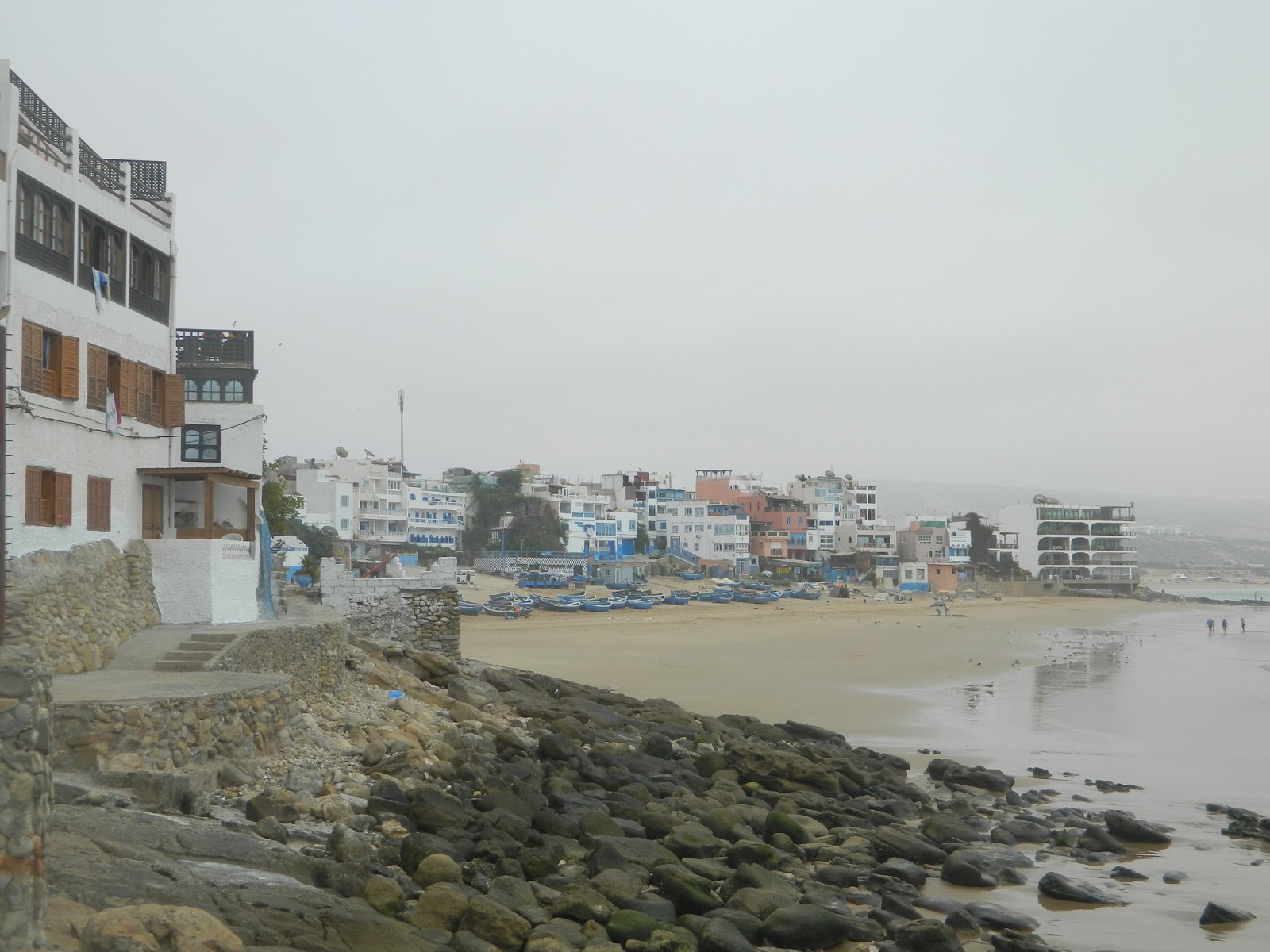
    View of Taghazout from one of my favorite cafes.

    We watch the waves crash against the cliffs beneath our table, the spray catching the sunlight over and over again.

    Our tea arrives—the classic combination of Moroccan mint and strong green that everyone drinks, but without the usual pound of sugar, per my request. A simple silver teapot with a long spout. Two small glasses (not mugs, but glasses).

    I lift the teapot and pour, starting low, then lifting higher, and higher, and a bit higher, steam rising up from the cascade of tea and a slight froth forming at the top of each glass.

    (If I wanted to mix in sugar, I would pour out glasses of tea and dump them back in the pot several times to avoid using a spoon—bad luck, I learned later. But I don’t, so I only pour once.)

    I can’t remember where I first learned to pour tea—properly. I think it was in a Senegalese village when I was 16. Everyone laughed at my first attempts, of course. Even today I spill more than any veteran tea pourer ever would. But I know the technique, and I can make a few bubbles.

    It’s a small thing, arguably, pouring tea well, and yet drinking tea proves such a fundamental aspect of so many cultures that I think it’s important, too. Worth learning. Worth sharing.

    ***

    Let’s drink tea together tomorrow!

    Inshallah.

    You should open a cafe there—you would get so much business!

    It’s a good idea. Inshallah.

    Are you moving this week?Inshallah.

    When does the high season start?

    Things will get busy next week—inshallah.

    Inshallah (also written insha’Allah). If God wills it. God willing. Used throughout the Arabic-speaking and Muslim world—and often. At times my plan-making mind gets irritated by the ceaseless string of Inshallahs spoken and exchanged each day.

    Is nothing certain?

    Well, no, it’s not—is it? To visitors from outside cultures, I think this nonstop Inshallah business can seem like a cop out. Noncommittal. But I suspect (I don’t know nearly enough to say for certain) that it stems more from a different perspective.

    Everything—everything—is out of our hands. Maybe. It’s probably a good brain exercise to consider the possibility, even if you disagree. Living here, then, is like a daily mind workout.

    ***

    Every day I learn here.

    I learned that until the 1950s there was a small Jewish settlement alongside the Berber ones in the mountains behind Taghazout. I visited a new friend’s home in those mountains, and I could feel the history in the ground under my feet.

    I learned that Friday is couscous day and that soup is a summer food.

    I learned that no length of fabric will cover my foreignness here—no matter how Mediterranean I like to think I look.

    I’ve learned that if you sit long enough in one spot it is really possible to see every person you know in this town, and that if you start walking you can spend a whole day just stopping in for chats with old and new friends.

    I’ve learned how to roll under a wave with my surfboard, and that lip sunburn is real.

    I’ve learned to count to ten (though I’ve forgotten at the moment), and how to greet.

    There’s no other message today. There are lessons everywhere, every day and in every culture; I hope you’ll go find some!

    ***

  • Taghazout, Morocco: 10 First Impressions in 10 lines

    First impressions aren’t everything, but they are something. After nine days in the small town of Taghazout, Morocco, I’d like to offer a (first) glimpse into my experience.

    When people greet, they touch their their heart after shaking hands. For some reason, it reminds me of my brother. I like it.
    The air is cool—cold even—after dark. Fog rolls in at dusk and wraps up the boys playing soccer on the beach, the tourists strolling to dinner, the shouts and drumbeats floating in the air.
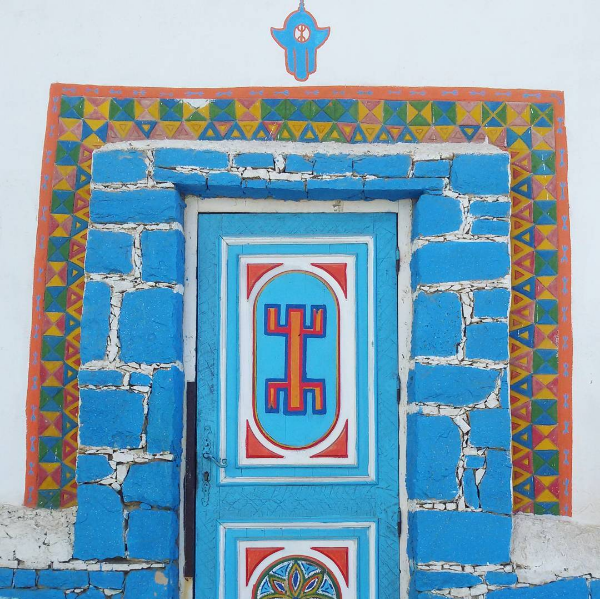
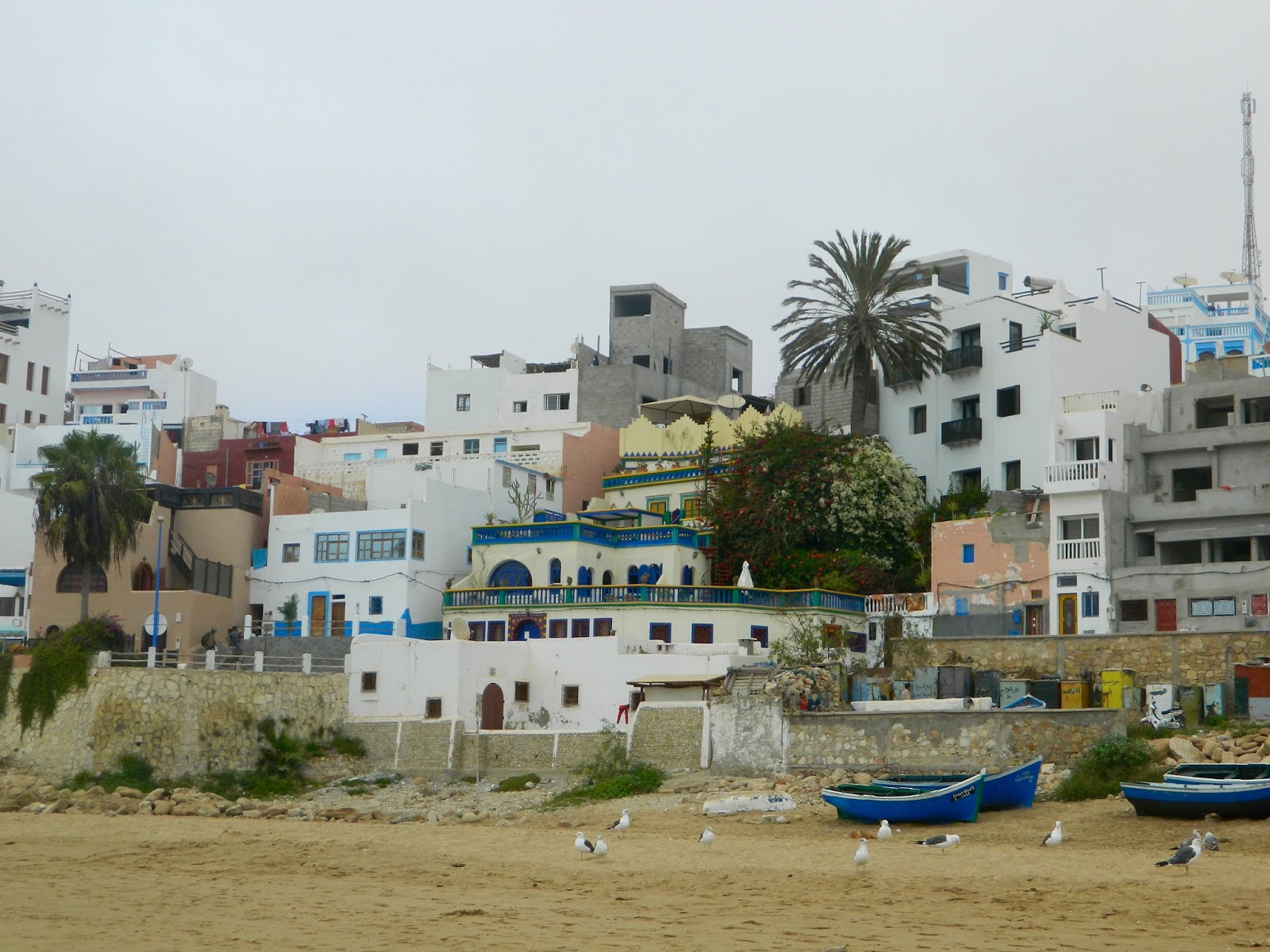
    Blue tiles everywhere—in bits of mosaic, in staircases. Blue paint, too—on houses, on boats laid out in dozens on the shore.
    A population explosion of cats and dogs. The dogs follow me on my morning run, a pack at my heels—I just hope I’m the alpha. The cats seem determined to ruin my clothes—and my laptop.
    Narrow streets, all leading to the sea, all quite clean, except for that one path that smells like sewage.
    Where are the women?? I wonder. The cafes are full of men. The streets, too. And the beaches. The few women I do see don’t seem like they want to be my friends. The little girls, yes. (That’s true everywhere.)
    Tagine every day. Layers of chicken or fish, potatoes, carrots, spices, olives, citrus—slow-cooked until soft in a clay pot with a conical lid. Fragrant.
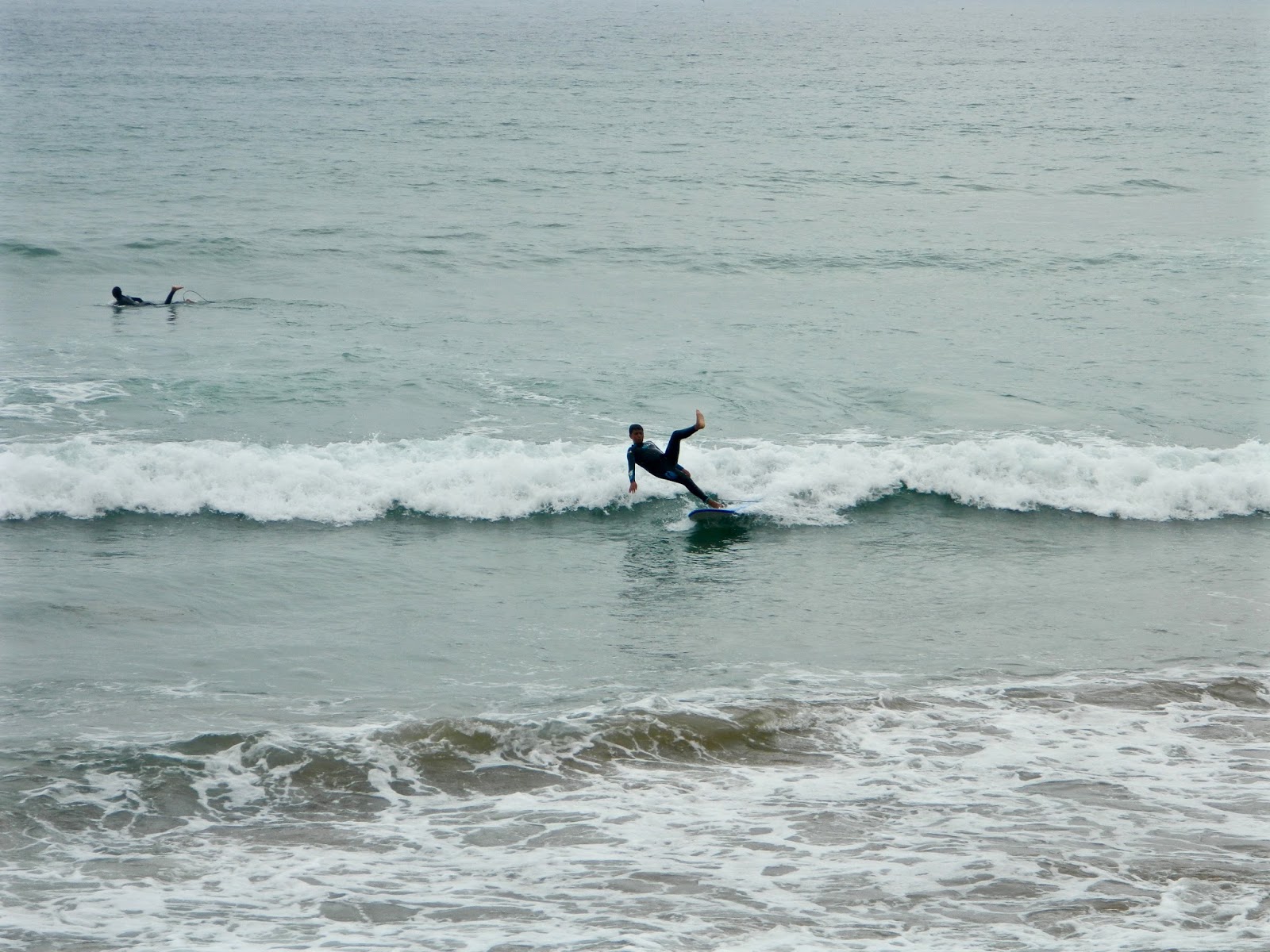
    I’m going to get good at surfing; I’m determined. For now, though, I’m focusing on wiping out. The water is muddied with sand most days. Photographs come out in gradations of blue-brown.

    There is no atm in this town. No bar (welcome to Morocco). Surf hotels, corner shops and small cafes abound, though. Everyone knows everyone, too—and that’s not just an impression, I think it’s really true!

    Every house has a terrace. Every terrace a view of the ocean. Every view meets the sound of waves crashing on shore, and I am content to sit and listen.

    ***


  • “Don’t go to Morocco Alone.” And other Fear-mongering you should Ignore.

    A rooftop terrace in Taghazout, Morocco.

    Me: “I’m thinking of going to Morocco.”

    Everyone: “Awesome! Just don’t go alone.”

    As you may have guessed, I didn’t listen to everyone, and here I am: in Morocco, very much solo, and so far quite pleased about it.

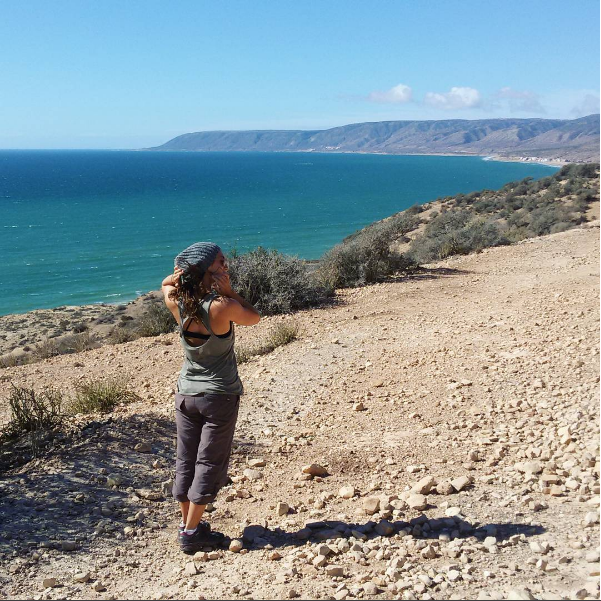
    (For the next month, I’ll be living in Taghazout, a small town on the Atlantic coast, teaching some yoga, learning the fine art of surf bummery, and generally winding down after an overly hectic few months. And I’ll have time to visit a few Moroccan cities afterward, not to worry!)

    There is a saying here, which a new friend taught me:

    One rotten fish can make the whole bucket stink.

    For those who work in the tourism industry, that rotten fish (in the form of robberies, political unrest or an isolated attack) is the proverbial boogeyman. Just a whiff of danger and foreigners will cancel their flights. An act of terror (as occurred while I was living in Kenya)? Total disaster for the industry—and, by extension, a great many people’s livelihoods.

    I digress somewhat. I don’t to tell you what happens to the tourism industry when the fear-mongers win. I want to tell you why you shouldn’t listen to them in the first place.

    Every country- or city-shaped bucket has a rotten fish—often many.

    In my opinion, those rotten fish are the reason why people will tell women not to travel solo to India, Zanzibar, Turkey, fill-in-the-blank-with-your-country-of-choice. “It’s not safe.” “Men don’t respect women there.” “It won’t be pleasant.” Et cetera, et cetera, et cetera.

    And sure, there’s a good chance I will encounter an asshole or two before I leave Morocco in six months’ time. I’ve spent time alone in all of the aforementioned countries, and I’ve had occasional negative experiences in all of them (though always far outweighed by the positive). But do you know where I’ve encountered the most assholes? On college campuses in the U.S. In Parisian metro stations. Walking down the street in Boston.

    So what can we learn here?

    ***

    Well, for starters, check your assumptions. Are you giving more credence to warnings of danger or disrespect because the destination in question is “over there”? Keep in mind that nowhere is perfect, and nowhere is particularly “safe.” I have yet to investigate, but I’ve heard Morocco may be one of the statistically safest countries in the world. Chew on that.

    Second, ask yourself if you’re discounting cultural differences. If so, you may be falling victim to the understandable yet problematic epidemic of Western ethnocentrism. That is, judging another culture purely by your own values. Quick tips for women wishing to avoid harassment while traveling alone: cover your hair, cover your shoulders, and cover your legs (generally, follow cultural codes for modesty and behavior). Oh yes, that’s problematic in its own way, and I take issue with it sometimes, but we don’t get to make the rules when we visit someone else’s home.

    Lastly, choose your devil, because there is nowhere—nowhere–you will be utterly and inalterably at ease.

    ***

    I (and just about every woman ever) learned since birth to fear. Fear attack. Fear violence. Fear bad men. Fear everything, right? Society teaches us that.

    And it’s true. Of course it’s true! The world is a scary place. Especially for women. We’re working on it, but we have a very, very long way to go. Change, however, has never happened when we stick to the status quo. Fear-mongering doesn’t keep us safe; it keeps us the same. So if you want something different, you have to ignore the fear-mongers.

    There’s a lot of space between reckless risk-taking and bubble-girl-style caution. Here’s what you may find there:

    > Deserted tropical islands where you can run naked across miles of sand, because you are totally, beautifully alone.

    > Kind shop owners who will invite you inside for tea, show you pictures of their wife and children, and invite you to stay with their family if ever you return to their country.

    > Fascinating strangers on trains, buses and trails, in hostels, campsites and smoke-filled restaurants, whom you never would have met if you hadn’t been traveling solo.

    > The best meal of your month, discovered only by following your nose and your intuition (yours alone) through a labyrinthine bazaar.

    > And last, but unavoidably, rotten fish. It’s part of the travel bucket. But hey, it’s part of every bucket, and you can’t avoid them all.

    I hope, if nothing else, this will make you think—maybe reconsider. Please share your thoughts in the comments if so inclined!

    ***
  • Zen & the Motorcycle Passenger

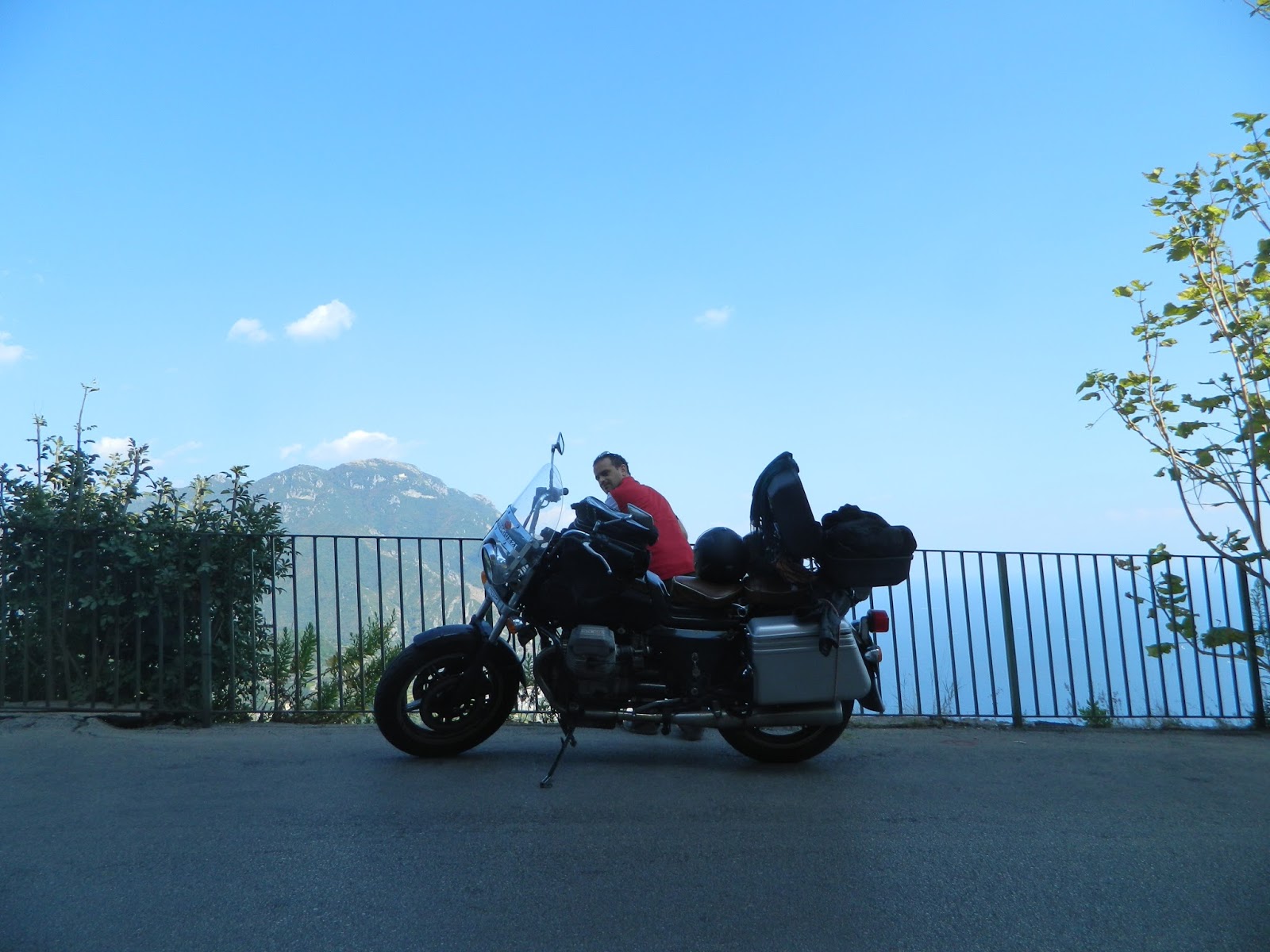
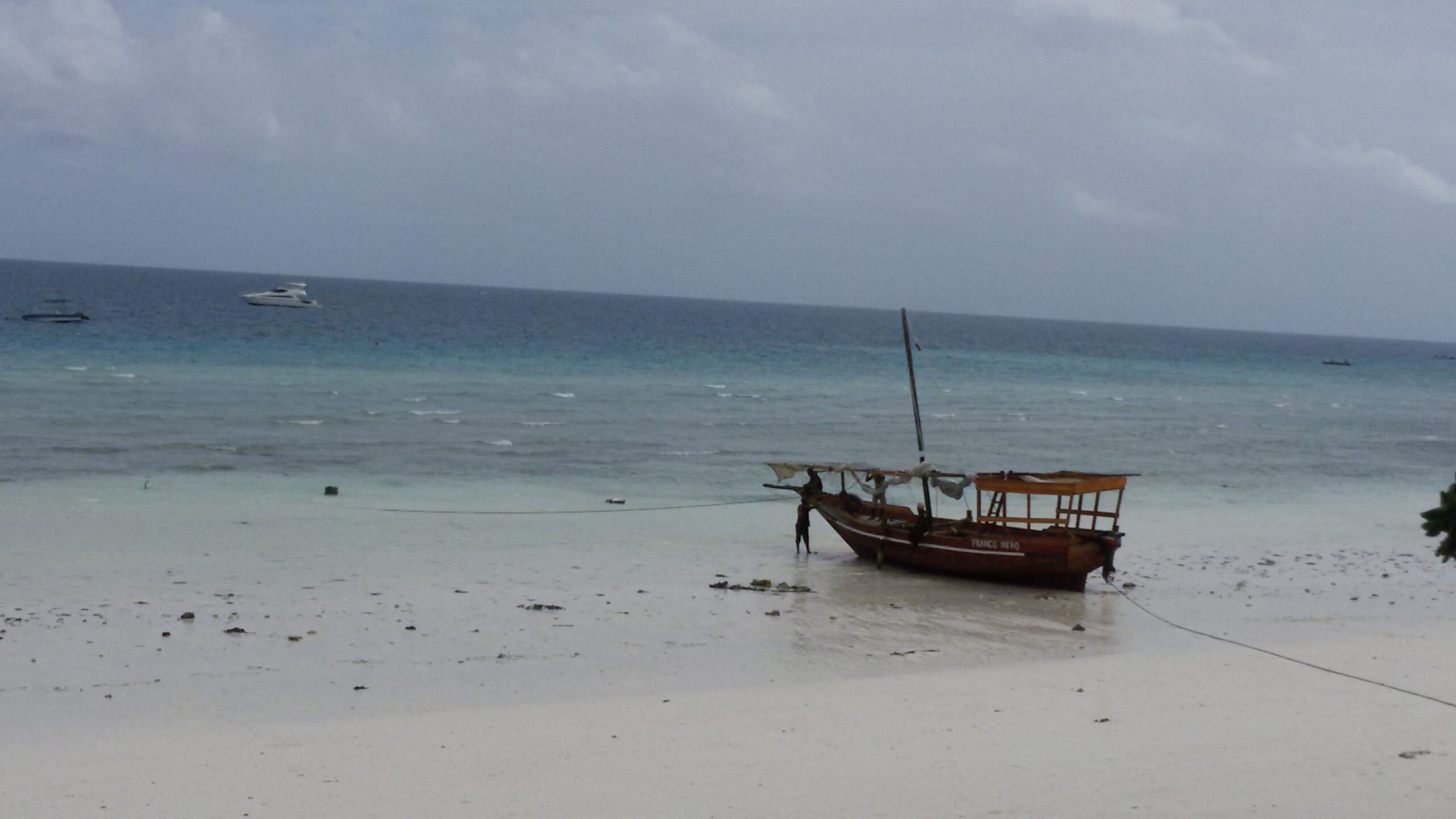
    Sorrento Coast,  Italy

    (Mom, you’ll want to skip this one.)
    The headlights of oncoming cars are a blur as we race down the center line of the autostrada (highway) from Sorrento to Napoli. I settle into the peculiar flow of this navigating traffic as we weave in and out.
    Yellow lines, black sky, breathe in, breathe out.
    Yellow lights, black tires, breathe in, breathe out.
    Accelerate, brake. In. Out.
    It’s just me (passenger-monkey) and my friend (driver-pilot). Fear hopped off this train hours ago, and I’ll tell you why.
    ***
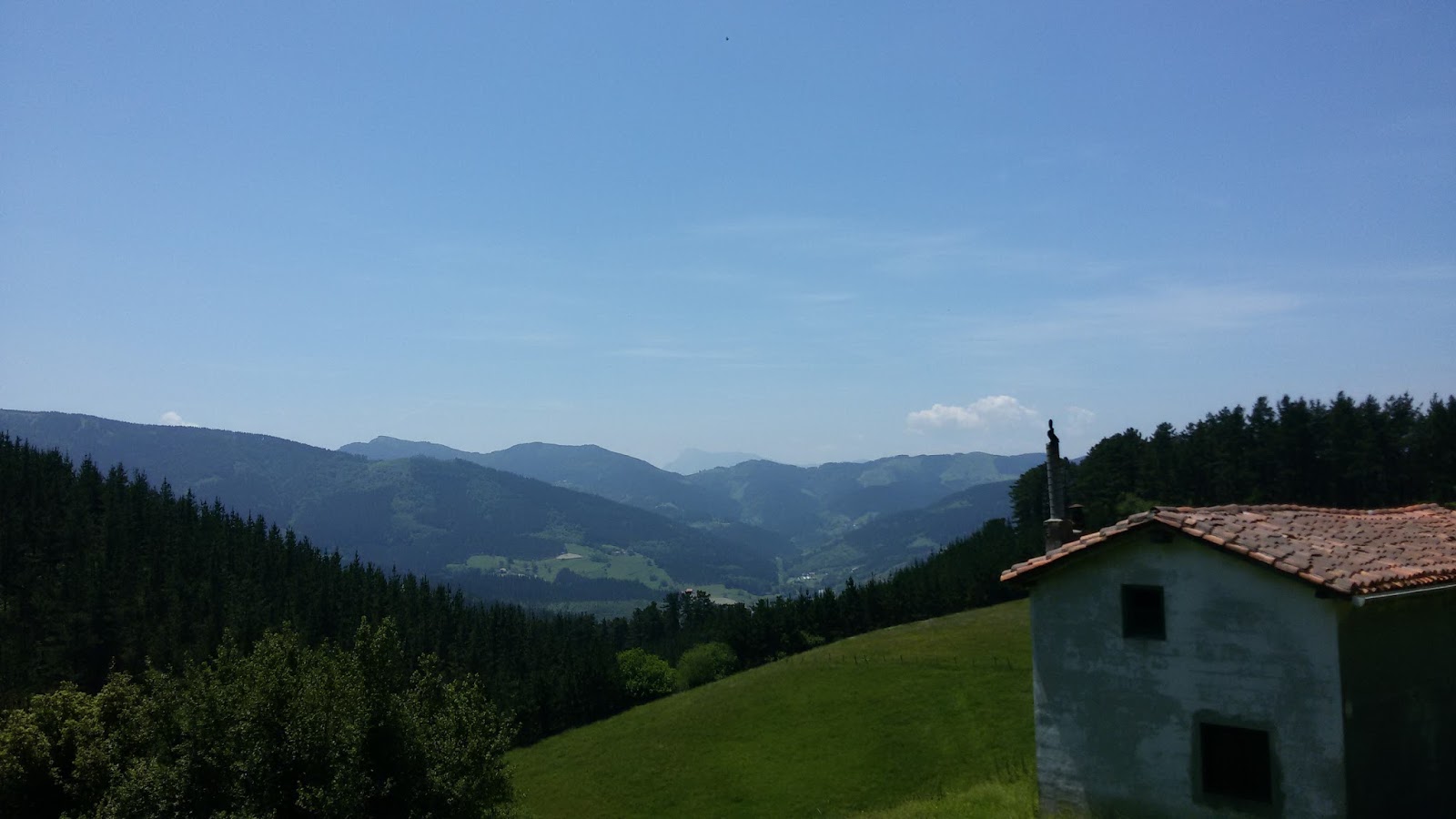
    È stata una giornata bellissima. It was a gorgeous day. Perfect. My friend met me with his vintage motorcycle at the Salerno train station (a half-hour train ride from Napoli), and we (along with seemingly every Italian ever on this last weekend of summer) set off for the Amalfi Coast.
    The fresh wind in my face balanced the hot sun as we followed hairpin turns opening onto one dazzlingly beautiful vista after another. The hum (or, more accurately, roar) of the engine blended with the waves and the wind, and conversation was sparse. The sky turned to dusty rose, orange, teal as we rounded past Amalfi and up the Sorrentino coast at sunset.
    I must have contemplated my death a hundred times that day.
    I usually do when I travel as a motorcycle passenger, and I don’t think it’s morbid. There is a quality of zen to this process of that renders it uniquely compelling for me.
    There’s the, “oh shit, this is dangerous” moment, followed by the, “there’s nothing I can do to change my vulnerability in this situation” realization, culminating in (temporary) total surrender to the inalterable fact of my own mortality.
    Then a sudden acceleration and, “oh shit,” and we begin again. As the minutes or hours blur on, I slowly stop picturing the many gruesome ways in which this could end badly, my pulse slows, and my shoulders relax. Once that last ripple of fear smooths out, I ender a space of zen acceptance—it’s pretty blissful there.
    If you’re thinking I sound nuts, allow me to ask you a question:
    How often, in your day-to-day life, do you contemplate your own mortality?
    If you’re a healthy, well-enough-off human, I’m guessing it’s not all that often. And yet, we are all mortal; we are all helplessly vulnerable to myriad risks. We all walk a fine line between life and death all the time.
    We are all on a precipice.
    ***
    That yellow double line of a Napoletano highway, framed by black sky and black asphalt, is only a metaphor, no more and no less terrifying than the reality we all face. Every day.
    The magic of this motorcycle zen is not the “added risk.” Rather, it (and surely a thousand other activities) forces me to reckon with the transience always enveloping me—always enveloping us—and to breathe in, breathe out, and enjoy the view.
    ***

    I took a video so you could catch a view, too!

     
  • 3 Macabre Stories that Capture the Essence of Napoli

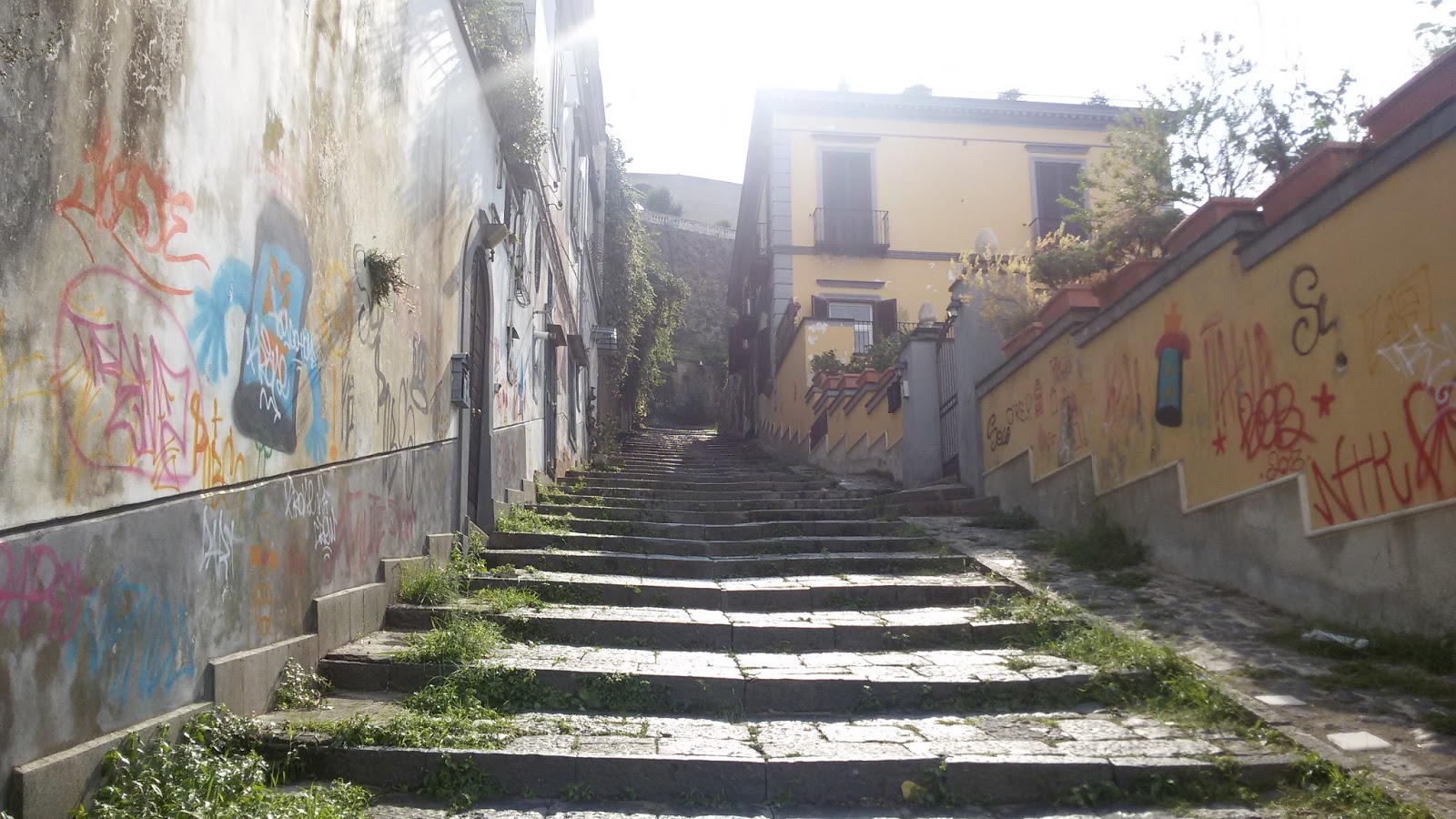
    Climbing hundreds of stairs for a good view, as per usual.
    Thursday, 1 September, Napoli, Italy

    The weather was a bit mercurial, and we took shelter from a sudden downpour in a nearby cafe. As the storm passed and we prepared to continue on our way, my friend (a Napoli native) informed me that we were about to cross an invisible boundary. 
    The police don’t come to this part of the city. It’s controlled by a powerful family (think mafia). Recently, three young men from a different, neighboring family were shot dead as they walked down the street.
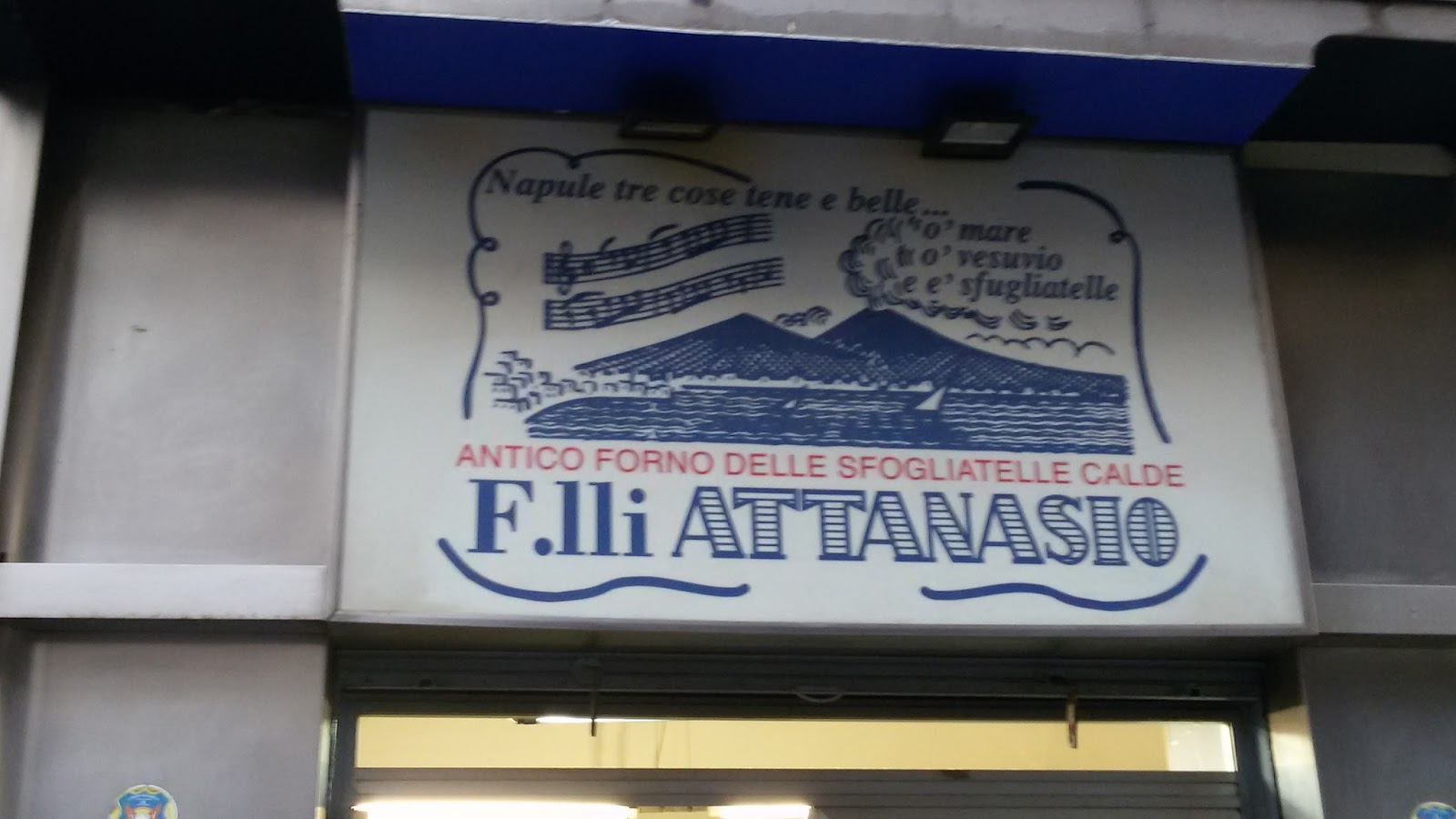
    Suffice it to say, this was not a safe neighborhood. At least, unlike most tourists, I was acutely aware of the risk involved as we ambled onward on our quest for the best sfogliatelle in Napoli (and thus, seeing as it’s a Neapolitan specialty, the best sfogliatelle in the world).
    Go fish! Can you find this famous Napolitano bakery? 🙂
    Now, if you’re thinking it’s insane to risk your life for a pastry, you’ve never eaten sfogliatella.
    Flaky layers of crisp pastry, artfully shaped to resemble a seashell, filled with sweet ricotta cream lightly flavored with local orange, and dusted with powdered sugar—one is already too much, too rich, and yet I bought four just in case.
    Napoli has a bit of a reputation as the more dangerous, more sordid Southern cousin of the well-frequented tourist destinations to the North (Rome, Florence, Venice, Milan). And indeed, the crowded warren of twisting streets layered atop a cavernous subterranean void (in turn layered atop the lava fields that fuel Vesuvius) is not the Italy many tourists may imagine.
    It may be better.
    As we walked from one end of the city to the other on our quixotic pastry mission, my friend, uniquely knowledgeable about Napoli’s architecture, history, language and culture, regaled me with stories—many macabre—that endeared me to this dark gem of a city.
    Here are three of them:

    Rub a skull for good luck.
    The Old Ladies and the Catacomb Skulls
    Twenty years ago, the old ladies of Napoli still maintained this tradition, originating in the plague years, or perhaps the war years (regardless, years of extraordinarily high mortality rates). Each would “care for” a particular skull in the catacombs beneath the city, bringing it flowers, offering it prayers, and grieving the death of a stranger who perhaps had no family left to mourn their passing. Sometimes, vicious arguments would break out over a particular skull when more than one woman lay claim to it. Questa è la mia testa! No! È la mia! (This is my head! No! It’s mine!) Talk about macabre.
    San Gennaro (Saint Januarius), Patron Saint of Napoli, and the Curious Affair of the Keys to the Church
    San Gennaro is not officially a saint, but don’t try telling that to the citizens of Napoli, who are particularly dedicated to their patron. A vial of the saint’s blood purportedly resides in the main church of the city, and twice a year, the miracle of the liquefaction takes place, in which the dried remains turn to liquid once again. Interestingly, the remains of San Gennaro do not belong to the church, but rather to a mysterious ancient sect with a centuries-old history in Napoli. They allow the church to hold the remains in exchange for the keys to the building. If you’re picturing creepy Satanic rituals in the catacombs of the cathedral, yeah, I’m right there with you.

    L’Ospedale delle Bambole (Doll Hospital)—a whole different kind of creepy.
    The Hospital of the Incurable Ones
    In medieval times, when pilgrimage to Jerusalem was a popular undertaking, Napoli occupied an important step along the journey. In plague years, and other times too, pilgrims would frequently fall ill and find themselves unable to complete their pilgrimage. Many of these stopped in Napoli, and the city became their final resting place. The Church built a thriving business around this occurrence, constructing buildings to house the sick and dying—partially out of Christian charity, surely, and partly because dying pilgrims, unable to reach Jerusalem, proved particularly disposed to leave everything to the Church instead. One of these, L’Ospedale deli Incurrabili (Hospital of the Incurables), still operates today, although I believe it is more concerned with saving lives than saving souls.

    This dark and fascinating history lays a particular foundation for the vibrant crush of life filling Napoli today. Young people sporting dark 70s-style fashion, 80s-style hair, lots of attitude and even more tattoos loiter outside cafes, nightclubs, pizzerias and bars. Crowds line up outside the best gelateria, stroll along the waterfront and press into the narrow streets of the Old City. The Napoletano language is alive and well, spoken by many if not most locals, changing and adapting as any healthy, living language should. Musicians play tarantela in the streets, and motorcyclists and pedestrians weave past, seemingly unaware of one another, in a seething dance. 

    There is life here. Tons of it. And maybe that’s the point of all the macabre underpinnings; they tell a story about all the living happening now.

    ***
  • La Notte della Taranta—or, Where I was on Saturday

    A post shared by Toby Israel (@tobyintheworld) on


    On the road to Melpignano

    Melpignano, Puglia, Italy; Saturday, 8:00 p.m.

    The sound of tambourines fills the air—not just from the stage, where the opening acts are performing, but also from thousands of tambourine-bearing audience members.

    Raucous festival-goers pass around three-liter jugs of local red wine. They dance in pairs, sometimes circles, in a style of dance that (to my Jewish eyes) most closely approximates the hora.

    It’s an odd blend: mostly Italians, from babies in carriages to elderly observers avoiding the crush in the center of the crowd (here, things more closely resemble a mosh pit), but mostly young people. Most appear to know the songs and sing along; many know the traditional steps, too.

    The main concert hasn’t even begun, and it’s already difficult to find a free patch of ground close to the stage. I have come from Rome for five days, pretty much just to witness this unique event. After hearing about the Notte della Taranta and the Pizzica style of dance and music that goes with it, I became fixated on experiencing it for myself.

    The History:

    In the twenty-first century, La Notte della Taranta (the Night of the Tarantula) is a modern music festival occurring every August throughout the Salento region of Puglia (Apulia) and culminating in a finale event in Melpignano. Its roots, however, stretch much, much farther back. The event centers on the Pizzica, a style of folk music and dance that originated in the Salento region in pre-Christian Italy.

    According to tradition, women in this region would become possessed by the spirit of the tarantula after being bitten by a spider during a certain season. They would begin to act out with strange antics and wild dancing. Nights of the Tarantula would break out in various villages as the spirit spread and more and more women succumbed to its grip.

    Now, through a modern anthropological lens, this is a clear case of a ritualized upheaval of social order and codes, whereby women living in an oppressive culture could express rage and wildness in a way that would normally be totally unacceptable. Stories of possession by various animal spirits, leading to trance, hysteria or other phenomena, abound across world folk cultures.

    La Notte della Taranta Today:

    I can’t speak too much to this, having only been to the main concert. Today, at least in Melpignano, the tradition seems to have been somewhat sanitized. 200,000 attendees can do that. The Pizzica has come a long way from the village square, and it looks a lot different with lights and sound production and weeks of rehearsal than (I imagine) it would have even a century ago.

    But who cares? I was hypnotized by the twirling white skirts on stage, fascinated by the folk lore surrounding the spirit of the spider, and enchanted by the percussive rhythms rolling on for hours.

    Worth the trip? Absolutely.

    Some outcomes of this excursion:

    1. I own a tambourine—which i can’t stuff into my backpack and which I will have to figure out how to carry with me everywhere.
    2. I must add another dance style on my to-learn list.
    3. I have a new love for a layer of Italian culture I never even knew existed until a few months ago.

    Looking for somewhere to go next August? Maybe check it out—don’t buy a tambourine, though.

    Youtube video

    Skip to minute 4:00 if ten minutes of Italian folk music isn’t your thing.


    Youtube video
    Skip to minute 5:00 to see a bit of traditional dancing.


    ***
     
  • The Intoxicating Unknown, and Solitude

    The Intoxicating Unknown, and Solitude

    The plane lands with a jolt. Rolls to the gate. Shuts off the engines.

    You and the other passengers file off the aircraft. Through the terminal. Past immigration. Baggage Claim. Customs.

    You step outside into a country where you know no one.

    Perhaps you don’t speak the language. The air is different. Heavy and humid. Or maybe cold and sharp. Your nose catches new smells and catalogues them as memories—later, this will be a remembered place.

    Welcome. You have just crossed into a vast field of unknowns.

    Is it terrifying—or exhilarating?

    Someone asked me recently if it ever gets lonely, this solo traveling.

    There are many answers to that question. I’m having a bit of deja vu, because I think I’ve offered some of them before (maybe in this, or this), but I have something new to say about it today.

    Basically, no, I don’t.

    I have experienced dozens of iterations of the above scenario—arriving by air, land or sea—and for me it is always exhilarating. That is, in part, why I will fly from Rome to Agadir, Morocco at the end of September—to spend six or seven weeks in a place where I know nobody.

    While I love traveling with or visiting friends (and do so often), I crave the spaciousness that only comes with solitude. Maybe you do too.

    Nothing can replicate it. It arrives the moment we leave every known thing behind us. Hug our loved ones goodbye outside the airport. See our traveling companion to the train station, then turn back to a foreign city alone. Click “complete payment” on a one-way ticket for one.

    Solitary spaciousness arrives when face the forest, the mountains, the desert—whatever our alluring yet frightening place may be—with a pack on our shoulders and uncertainty in our chest, knowing that no one is coming with us this time.

    Does that scare you? It probably should. There are monsters in the forests, the mountains and most of all the cities. But more than that—more than that there are monsters in our hearts and minds.

    I believe that is what people fear most of all when they fear setting out to travel alone. There is the external risk, of course, but I suspect loneliness—ourself facing ourself—instills greater terror.

    Why don’t I ever get lonely, then? I’m not actually sure, not entirely. Maybe I do, but it no longer scares me, and so I call it solitude instead of loneliness. I do know this:

    Our comfort zone expands every time we step outside of it and thrive there. There is nothing more intoxicating, full of life and purpose, than entering the unknown territory alone.

    So go.

    “The cave you fear to enter holds the treasure you seek.”

  • This Is Why We Walk—Maybe

    This Is Why We Walk—Maybe

    spain, camino, walk

    Ancient Practice in the Modern Landscape


    Sixteen kilometers of open road. No turns. No twists.
    The trees are thick on either side, and I’m grateful for the shade they provide. The road tilts up, then drops down again. Relentless.
    It is my third-to-last day on the Camino del Norte. My legs are already tired, my feet already sore. I have walked already ten kilometers when I begin this section of road.
    Normally, there are trails, or a dirt edge to walk on at the least. Not today.
    The occasional car speeds past. They will arrive at the end of the road in minutes.
    The road is hard. Straight. Empty.
    Relentless.

    ***

    I’ve said it before: traditions have a way of reviving themselves.

    We as humans are wired for ritual. We seek it, gravitate toward it and cling to it, and when we don’t find it the world suffers.

    It has been theorized that there is a cross-cultural link between lack of ritual and conflict. Or, to put it positively, ritual is a necessary component of conflict resolution. That’s a longer discussion I’d love to have with you personally.

    If this gravitation is (as theorized) a response to a lack of ritual in modern society, the wild success of trends like yoga and meditation would arguably be the same. I believe that tendency to seek meaning through practice has everything to do with the recent resurgence of interest in the Camino—and other pilgrimage.

    The juxtaposition of this ancient journey with the modern landscape through which it now passes fascinated me from start to finish.

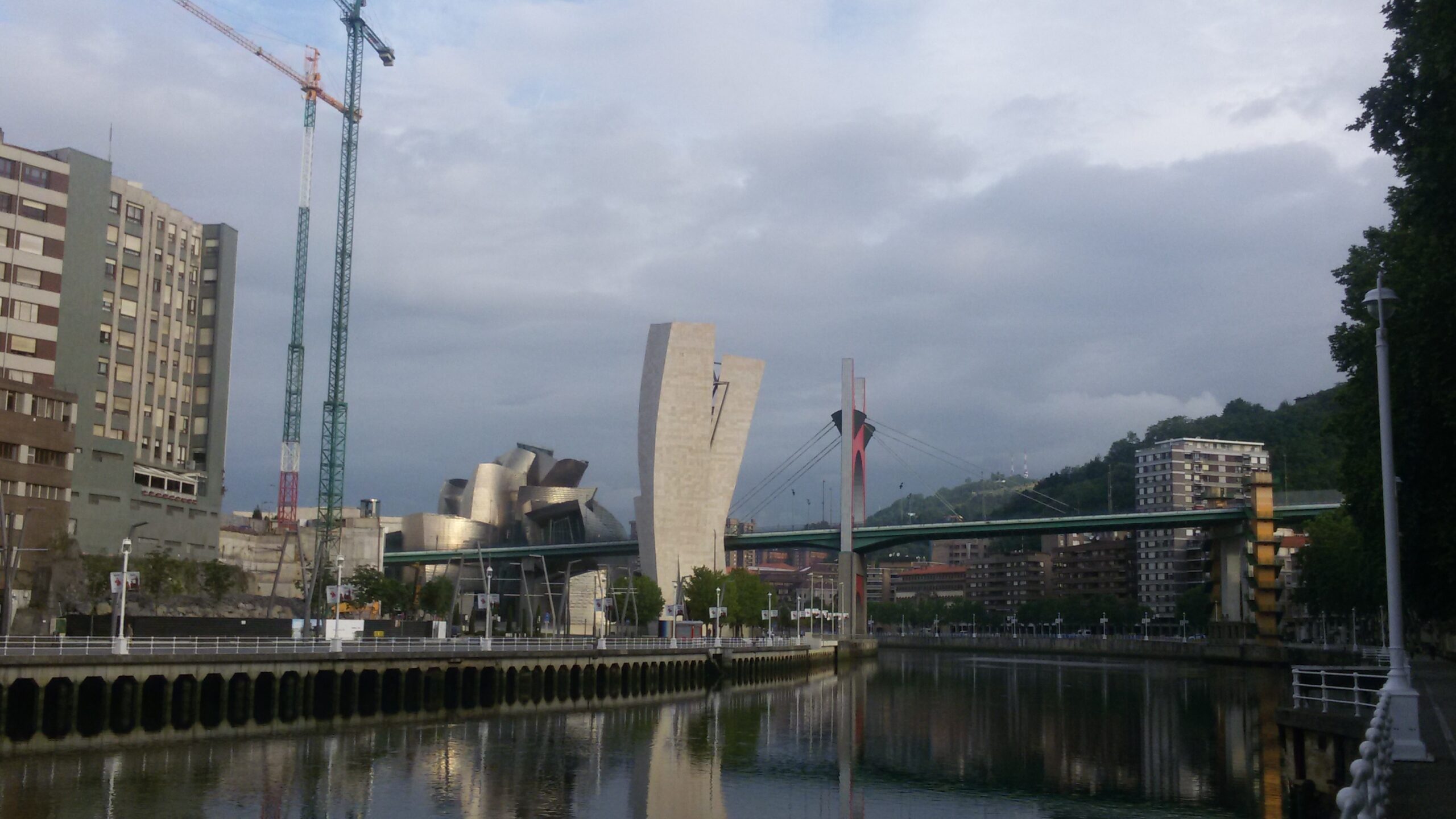
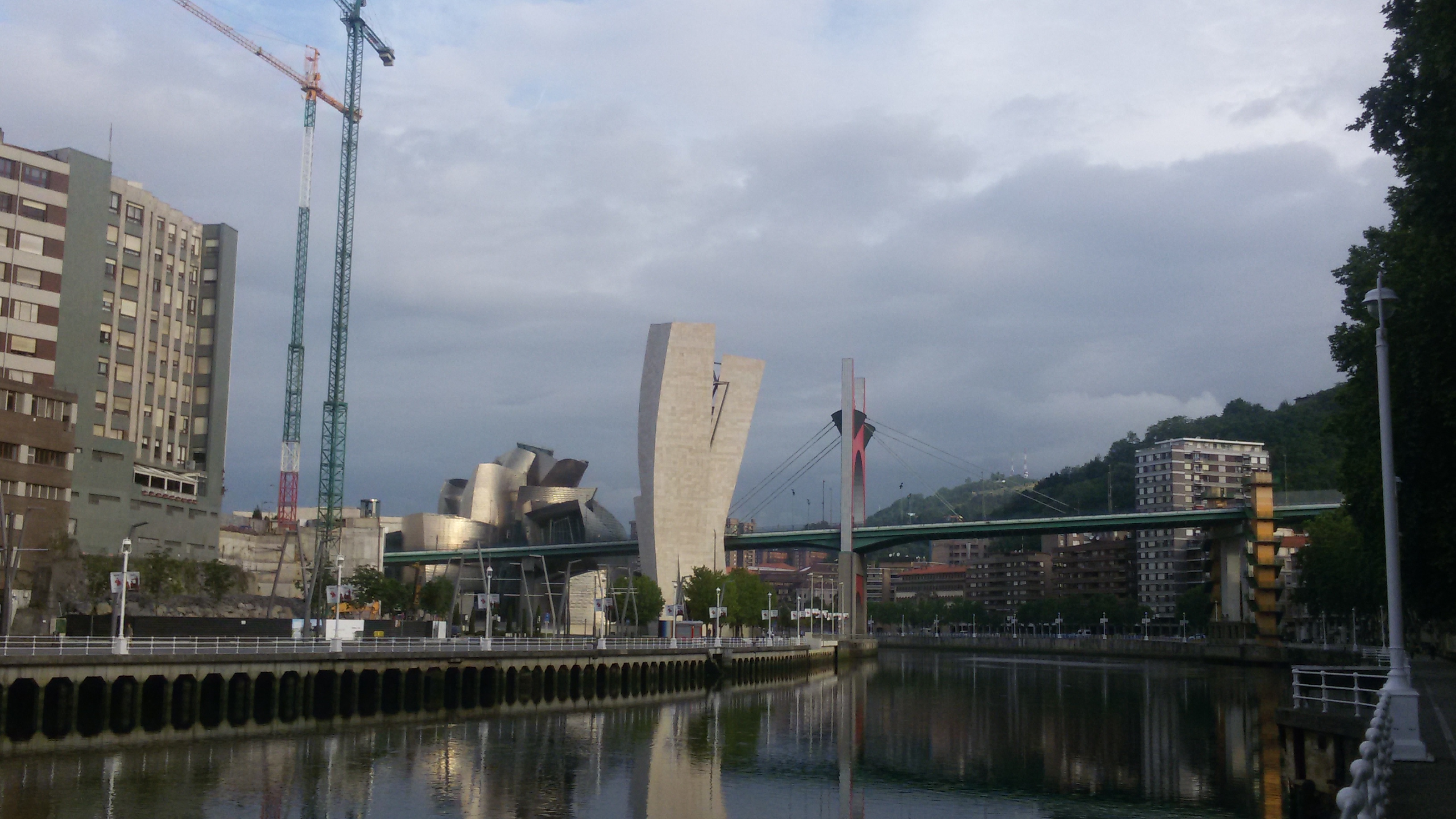
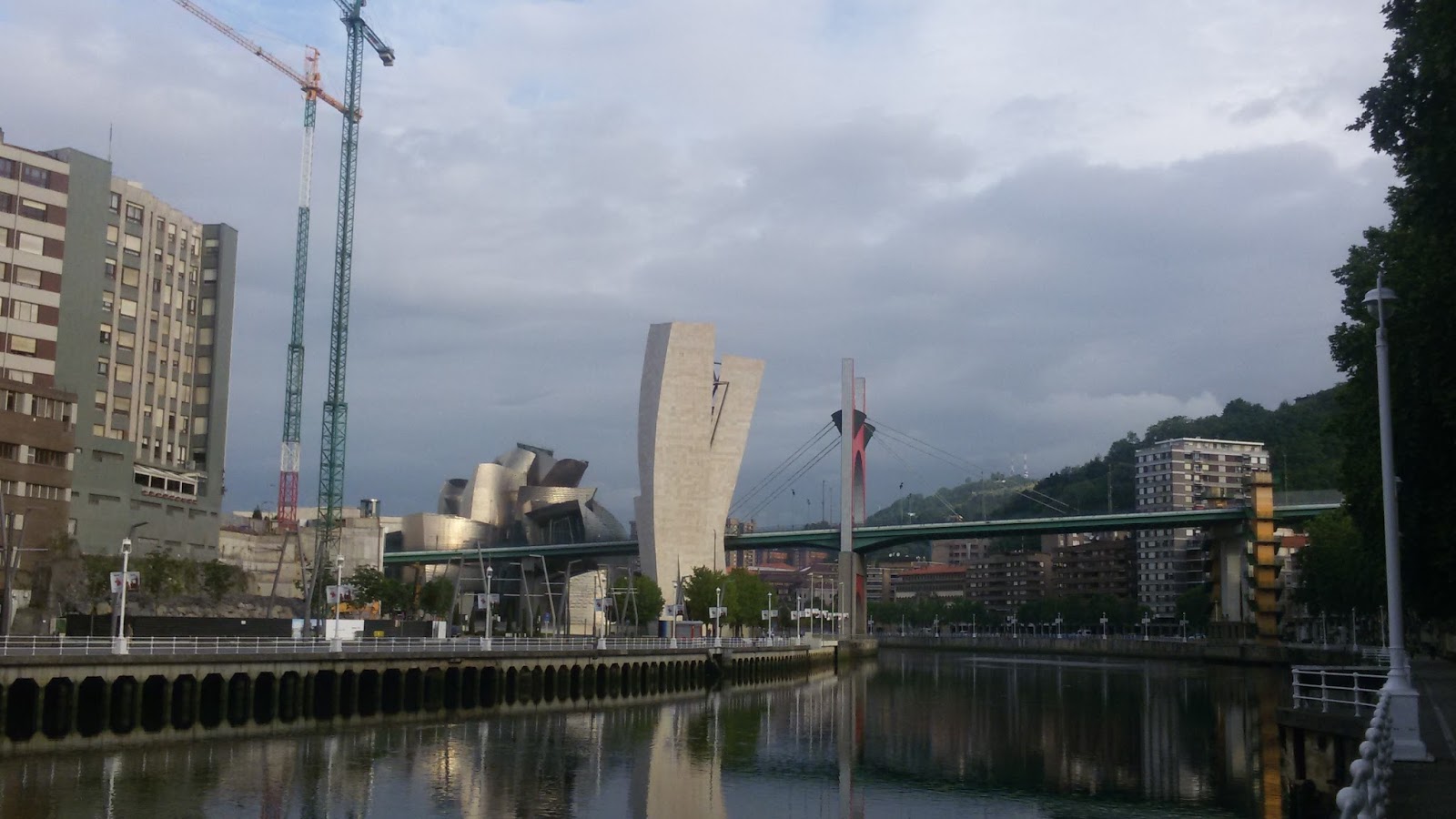
    What does it mean to walk a centuries-old trail alongside a six-lane highway? Beside a railroad track? Through a buzzing city like Bilbao?

    How does the addition of asphalt, smartphones, gortex and wifi change the experience? Enhance it? Devalue it?

    If you change everything—the trappings, the clothing, often the landscape, the food, the language, the Road itself—but keep the journey, is it still the same Camino?

    I’m inclined to say yes—in spirit.

    If you take a human body, give it artificial limbs, blood transfusions, organ transplants—replace everything, say—do you still have the same person?

    Your answer may depend on whether or not you believe in a consciousness, a soul, a Self (call it what you will) that is greater than the sum of all its parts.

    If you change every piece of the Camino, from the culture around it and the people walking it to the very structure and environment of the journey, what remains the same?

    In my opinion, it is the spirit of the journey. It is the seeking, the act of walking, that has somehow drawn us across history to follow the same path.

    And you can lament the omnipresence of wifi or cell service, you can dismiss the validity of smartphone navigation, you can wax poetic about the good old days when pilgrims carried nothing but a skein of water and the cloaks on their backs…but to what end?

    This is our world.

    There is asphalt that wears down our joints. There are trains that travel many times faster than our feet. There is social media and multiculturalism and sturdy trekking gear.

    One thing has not changed.

    Us.

    We still walk on two feet (when we choose).

    We still require food and water to survive—for now.

    We still seek—relentlessly—to create meaning in our lives.

    That is why, I believe, an ancient rite like the Camino de Santiago still makes sense. In spite of this modern world and modern landscape. Maybe because of it.

    It is not just possible, but perhaps necessary to walk the same paths we have walked for centuries. Maybe that connection is the ritual we’re seeking.<

    What do you think?

  • Did You Find What You Were Looking For? (Camino Reflections, Part 10000)


    My last visit to London, in July of this year, I had dinner with a former classmate. We had taken “Intro to Buddhism” together.
    I didn’t know it then, in my first semester at Middlebury College, but many themes from that course would wind their way through the following years of my life.
    Over our glasses of red wine—Merlot, I think—I recounted a memory of that class that stands out from the rest. It’s funny, sometimes, what ends up sticking in our minds.
    Someone had asked our professor if he wanted to reach enlightenment—if that’s what he was seeking.
    He had answered softly (he always spoke softly):

    “I’m not so interested in enlightenment. I’m interested in the possibility of expanding my awareness.”

    Maybe this is unhelpful, and maybe I’ve spent too much time around Buddhist philosophy, but this is what I have to say in answer to that oft-repeated question, “Did you find what you were looking for.”

    No.

    Longer answer: 

    I wasn’t looking for anything, so I doubt I would find it. That’s the difference between a trip and a journey—only one has a destination.
    I found no thing on my Camino journey. Nothing. I did not have any epiphany. My life did not change.
    If you set out walking (meditating, praying, anything) in search of enlightenment, I think you will be disappointed.
    And that’s not depressing; it’s inspiring. It is exhilarating, this not knowing. It is enthralling, this seeking-but-not-finding. It is magnetic, this grey in-between-ness of no-thing—neither empty of wisdom nor full of answers.
    If “no” is not a satisfying response, I’m sorry, but it’s the only one I’ll give—at least for now.
    No, I did not find what I was looking for.
    I wasn’t looking for, you see.
    Something on the same subject I wrote about halfway through the Camino, in a moment of clarity:

    “Will I come back wiser?” asked my ego. 

    I don’t know, my more honest self replied. I think I’d be the last to know.Do any of us come back “wiser” from anything? 

    I have my doubts. 

    I will come back with bigger calves from walking and stronger shoulders from carrying my pack. 

    This is certain. 

    I will carry in my heart thirty peaceful mornings where dawn breaks over still meadows, and the wind whispers a song only I can hear. 

    This is certain.

    I’m not interested in finding. The beauty is in the in-between.

    ***
  • Pilgrimage Today—It’s Still Relevant

    Pilgrimage Museum, Santiago de Compostela, Galicia, Spain

    I placed the noise canceling headphones over my ears, and an ancient melody flowed straight to my soul.
    It was my foodsteps—hundreds, thousands of them—plucked from a harp. It was the daily rhythm of walking made song.
    I stood at that display in the Pilgrimage Museum for a long time, and I listened to some of the recordings of the Resonet Musica Antiga group more than once. Recreated from sheets music in the Cathedral’s archives and reconstructed medieval instruments, the music might have run through my head at a distance.
    But somehow it didn’t. Somehow it connected.
    I arrived in Santiago on Friday, July 1, 2016. That Friday marked the culmination of a month of walking across Northern Spain (approximately 800 kilometers) begun in the vague interest of “seeking.”
    (We can talk about what I “found” once I figure that out—story for another day.)
    Pilgrimage is an ancient phenomenon. Historians have found evidence of its occurrence in Mesopotamia, Vedic India and ancient Egypt. Wherever it appears in human history, it follows the same principle: an outward, often arduous journey serving as an allegory for the spiritual path.
    Since the alleged discovery of the remains of Saint James (one of the Twelve Apostles) in the ninth century, Santiago—and its cathedral—has been one of the most important pilgrimage sites in the world. It is said that the Camino de Santiago—the Way to Santiago, and there are many—is a metaphor for the trail marked by the Milky Way across the sky. Again, a physical manifestation of a metaphysical path.
    That sounds heady and outmoded, right?
    Wrong.
    In the last decade, traffic on the Camino Frances (the most popular route) has surged into the thousands. Clearly, the ancient tradition still resonates. And lately, its popularity is growing fast.
    Just as ritual will always revive itself and traditions will be reborn, pilgrimage is finding its place in the modern world.
    The scallop shell, long worn as an insignia by peregrinos walking to Santiago, now hangs from my backpack, too. Symbol of water, life and healing, it is as timeless, endlessly resonant, as it is timeworn.
    These themes are eternal:

    WanderingSeekingThe JourneyWalkingLooking to the SkyWalking upon the Earth
    Questioning 

    The WarriorThe SeekerThe Scholar [1]

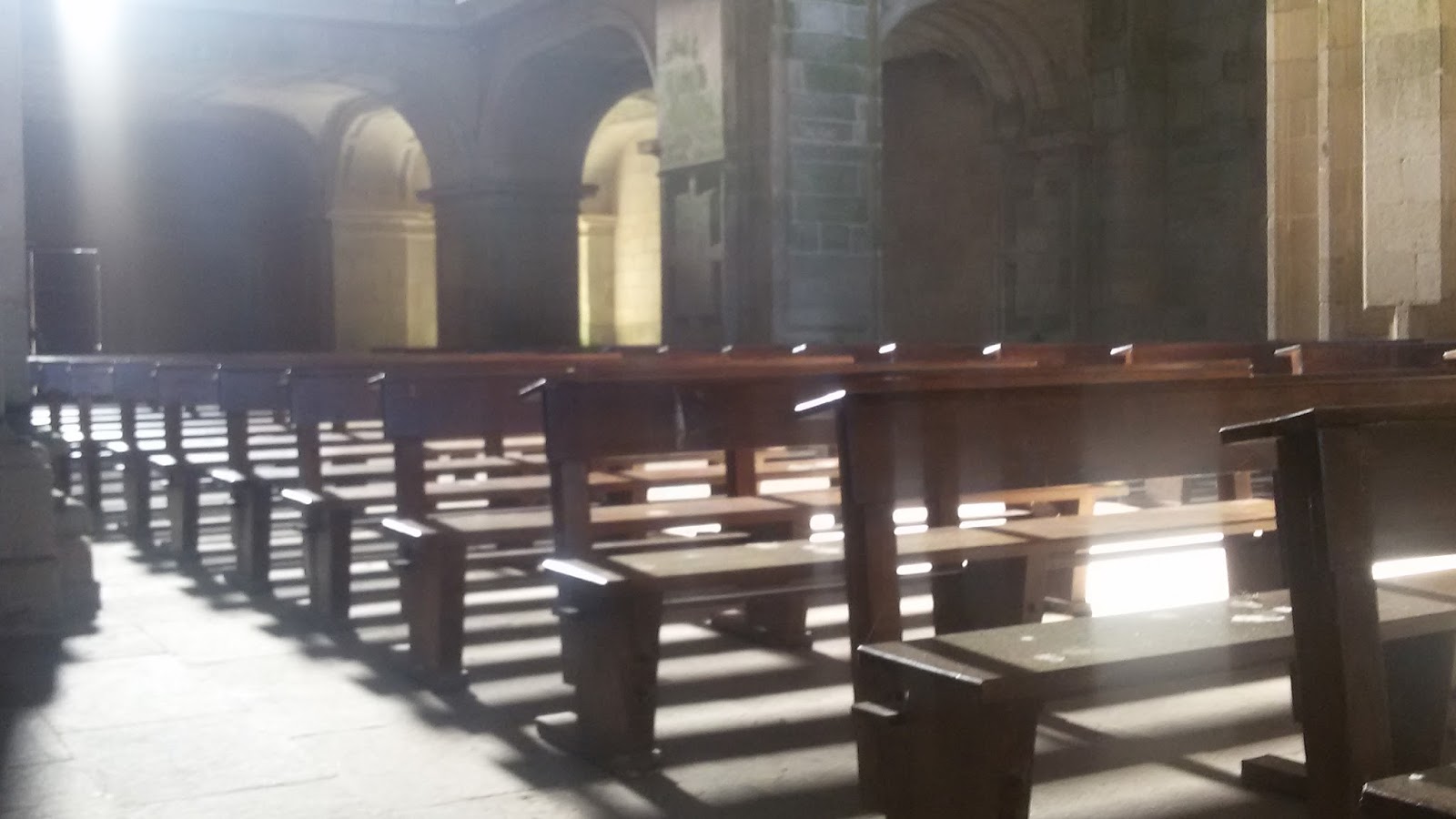
    As I listened to those modern recordings of centuries-old music, I heard my experience translated—so precisely—into sound. I walked a path that thousands, perhaps millions, had walked before me, and though the asphalt beneath my feet and electric lights in the distance were new, the the experience had somehow been the same. [2]

    That, in short, is why pilgrimage is still deeply relevant today.

    ***

    [1] The Warrior, The Seeker and The Scholar are the three archetypes represented by Saint James.
    [2] Sadly I have not been able to find the same recordings anywhere online. This is the closest I could find, but you may have to visit the Pilgrimage Museum in Santiago to hear the music I’ve described:
    Youtube video
    ***

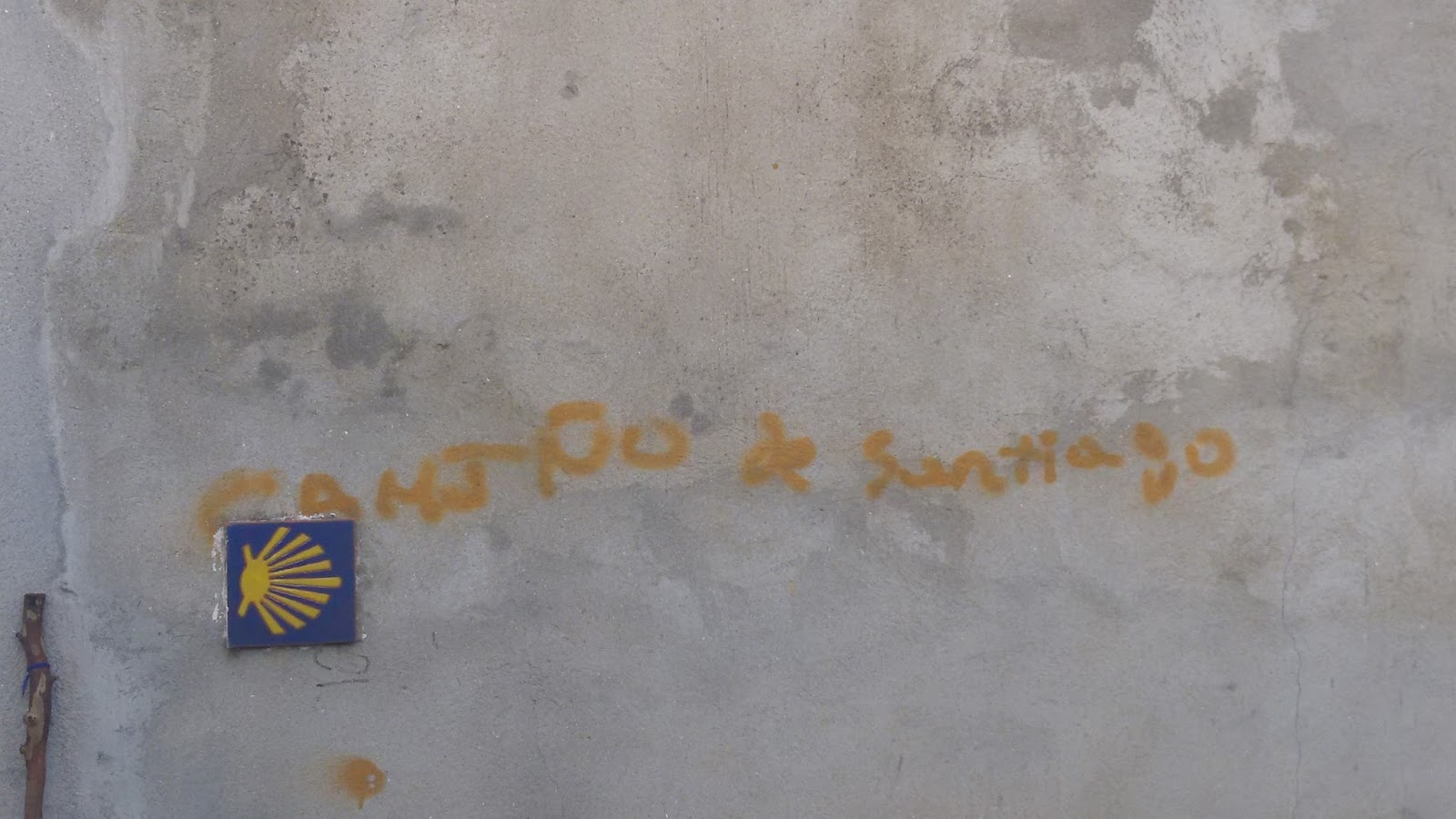
  • The Camino de Santiago in 100 words and 27 Untouched Pictures

    When I set out for the San Sebastian (my starting point for the Camino del Norte) at the start of June, I decided not to take my camera with me.
    Too heavy. Too much of a burden. Too unnecessary.
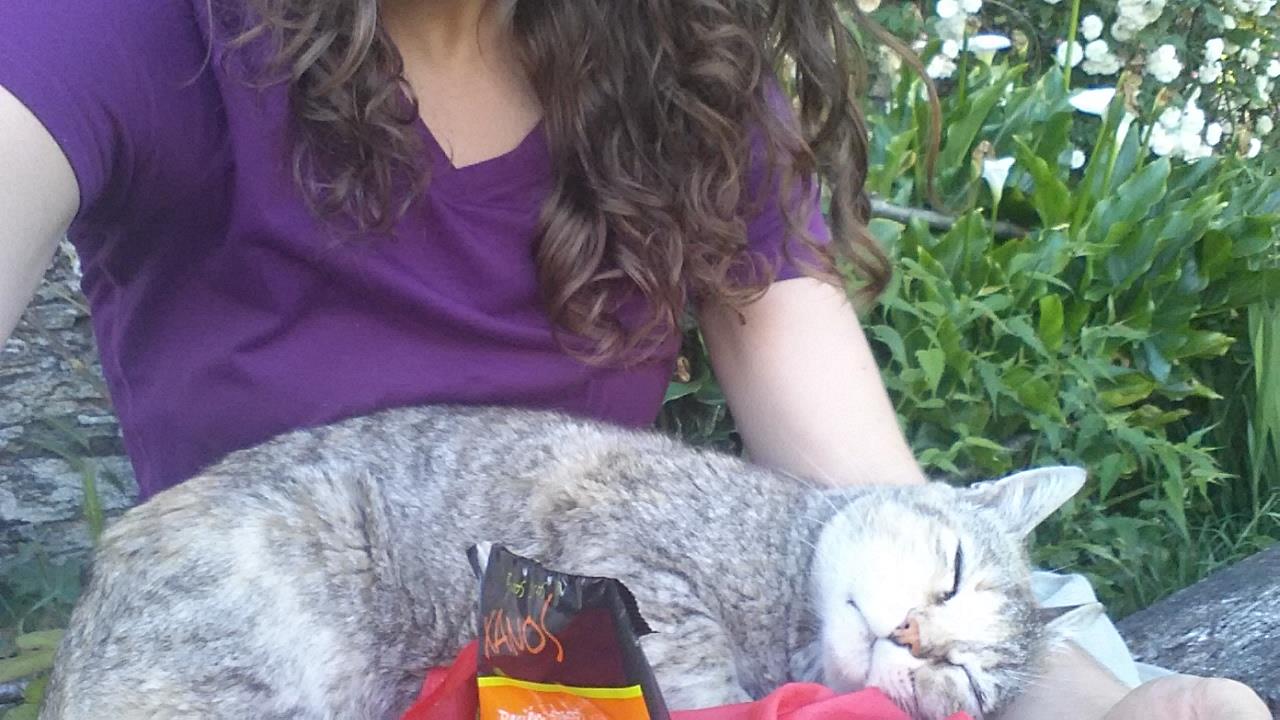
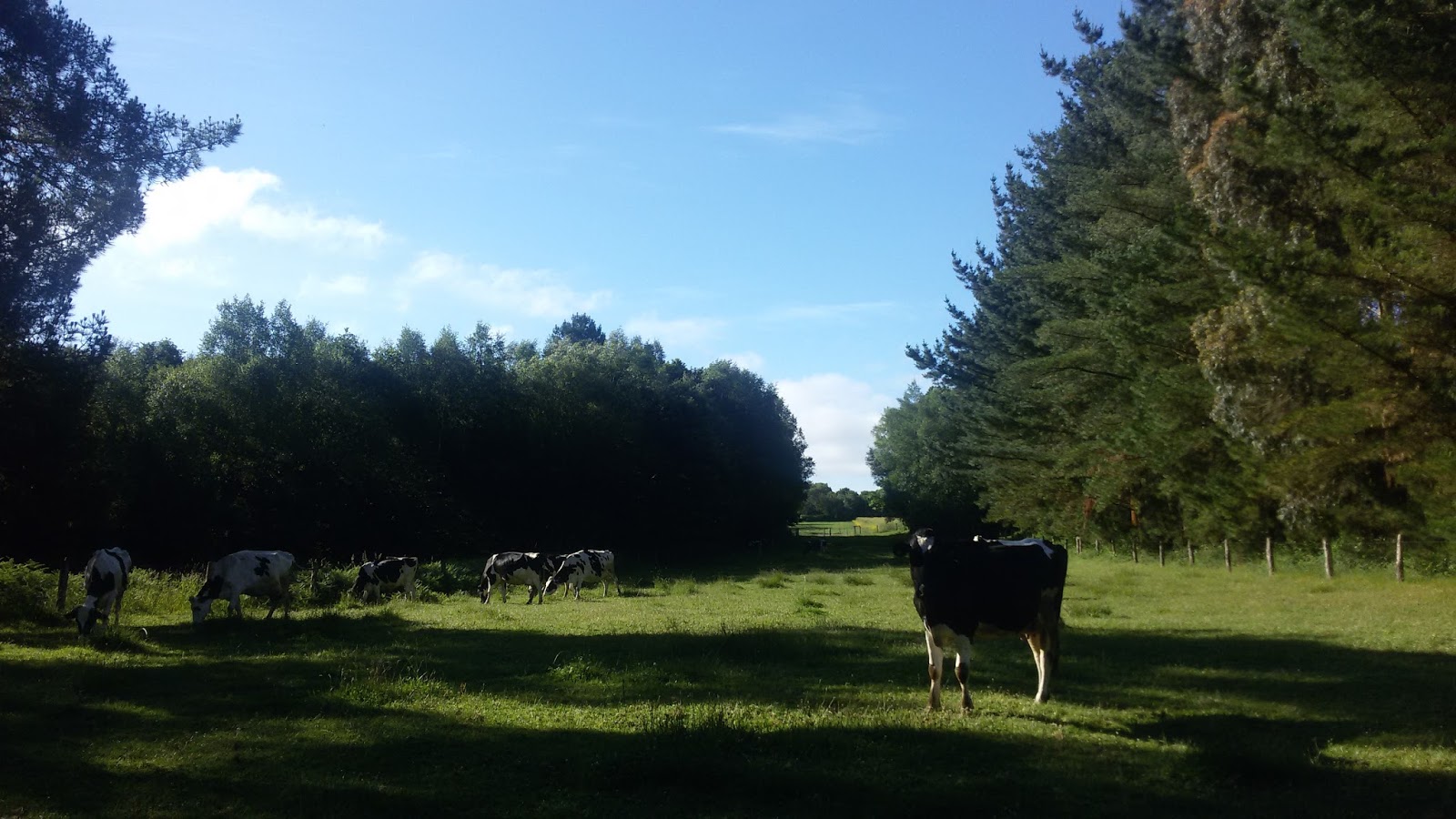
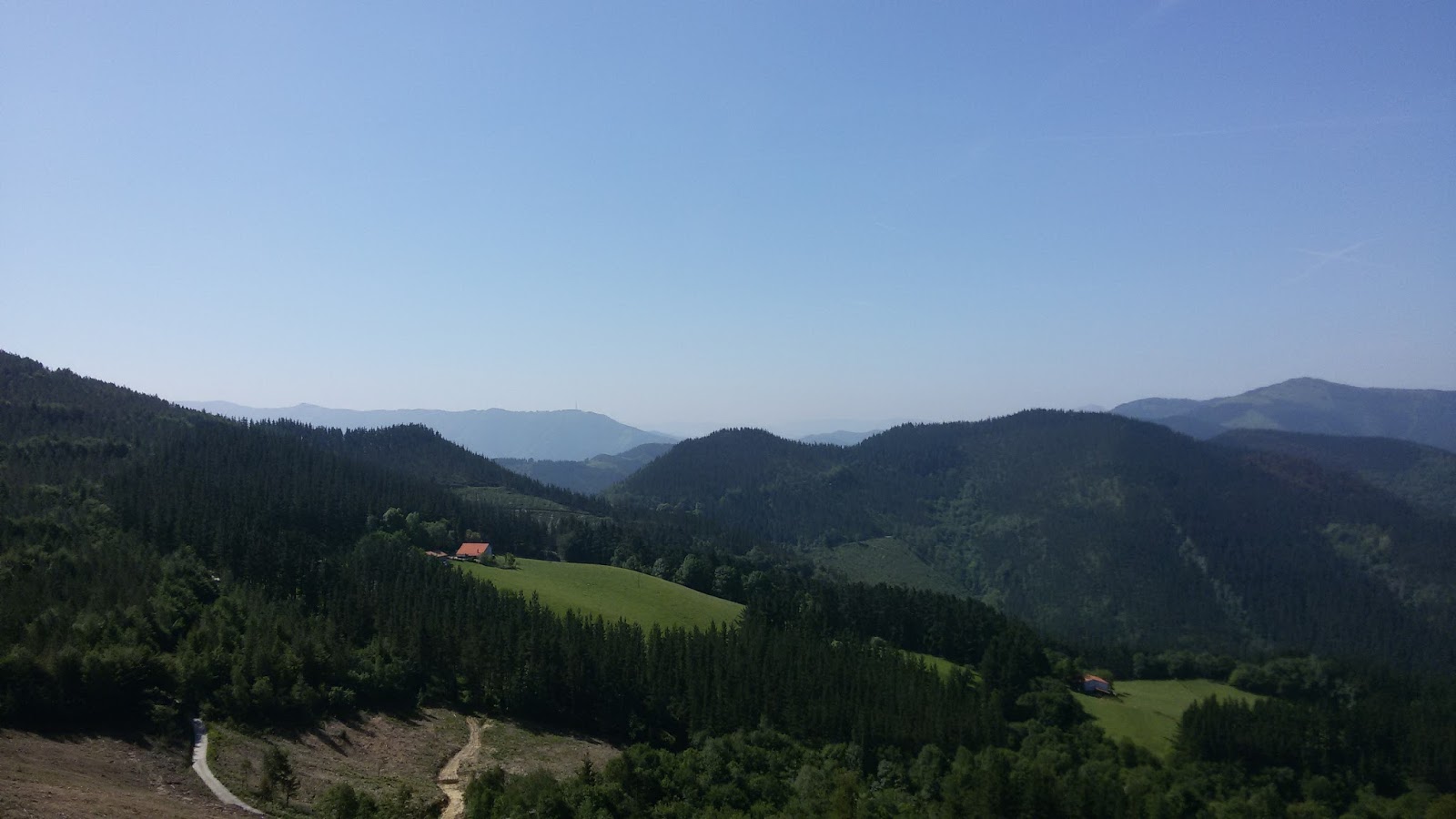
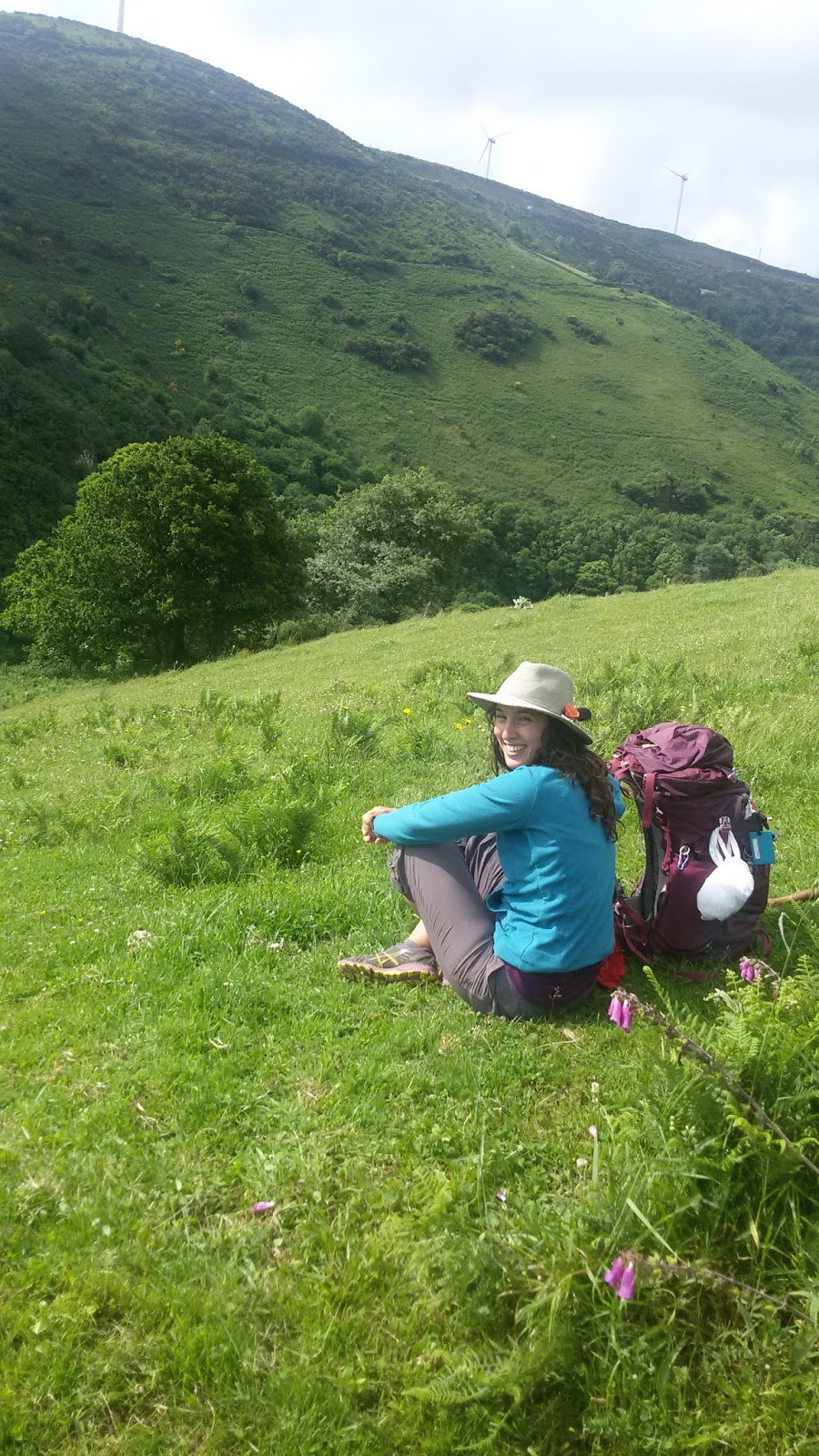
    Then came the bright idea to take only one to two (smartphone) photos per day throughout my thirty-day walk. To capture what captured my heart, without being a slave to documenting the journey—that was the idea.
    And I think it worked pretty well. On average, I took two pictures a day—sometimes none, sometimes three—and while the result is not comprehensive, I believe it is in some way representative of those days.
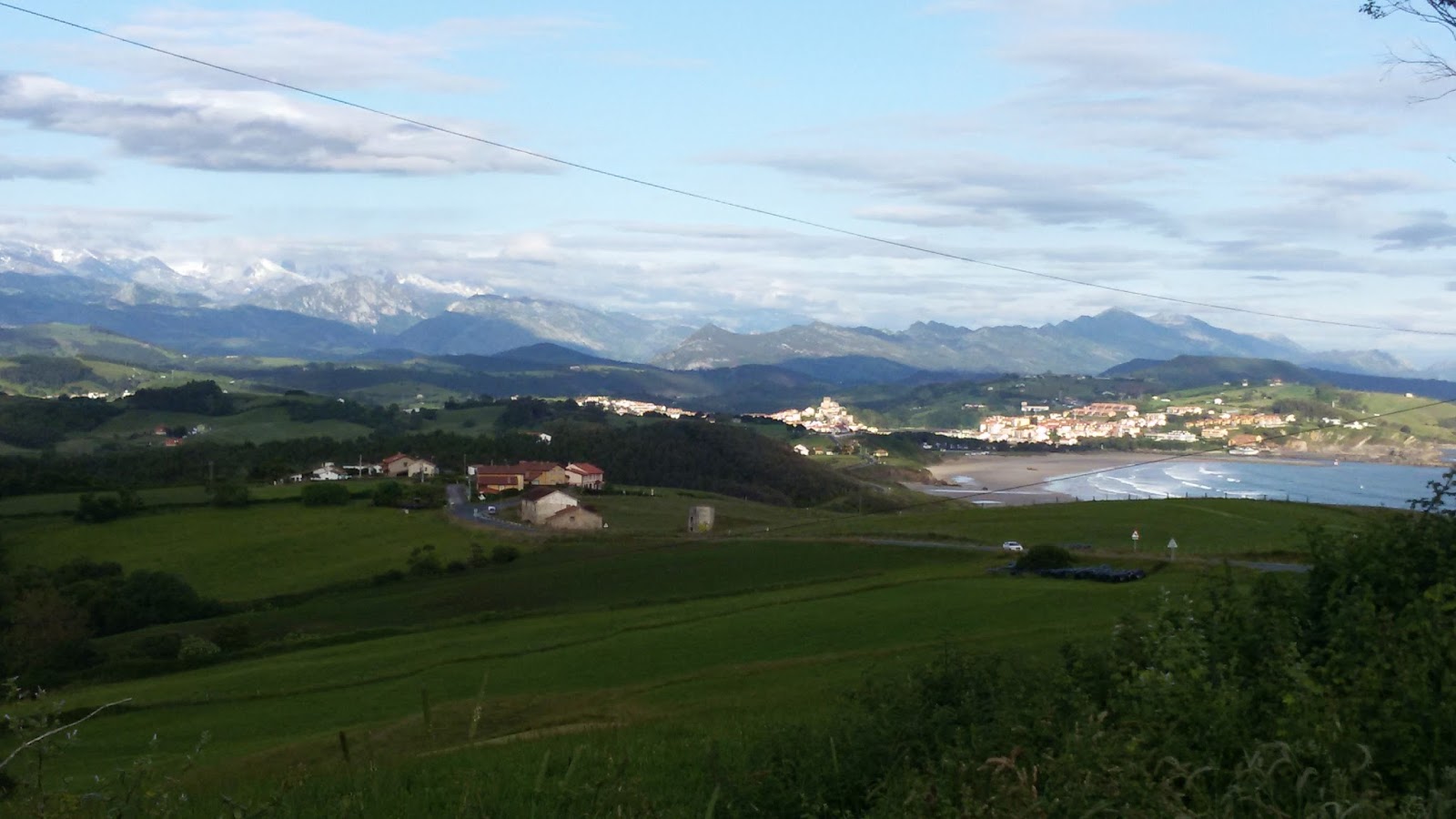
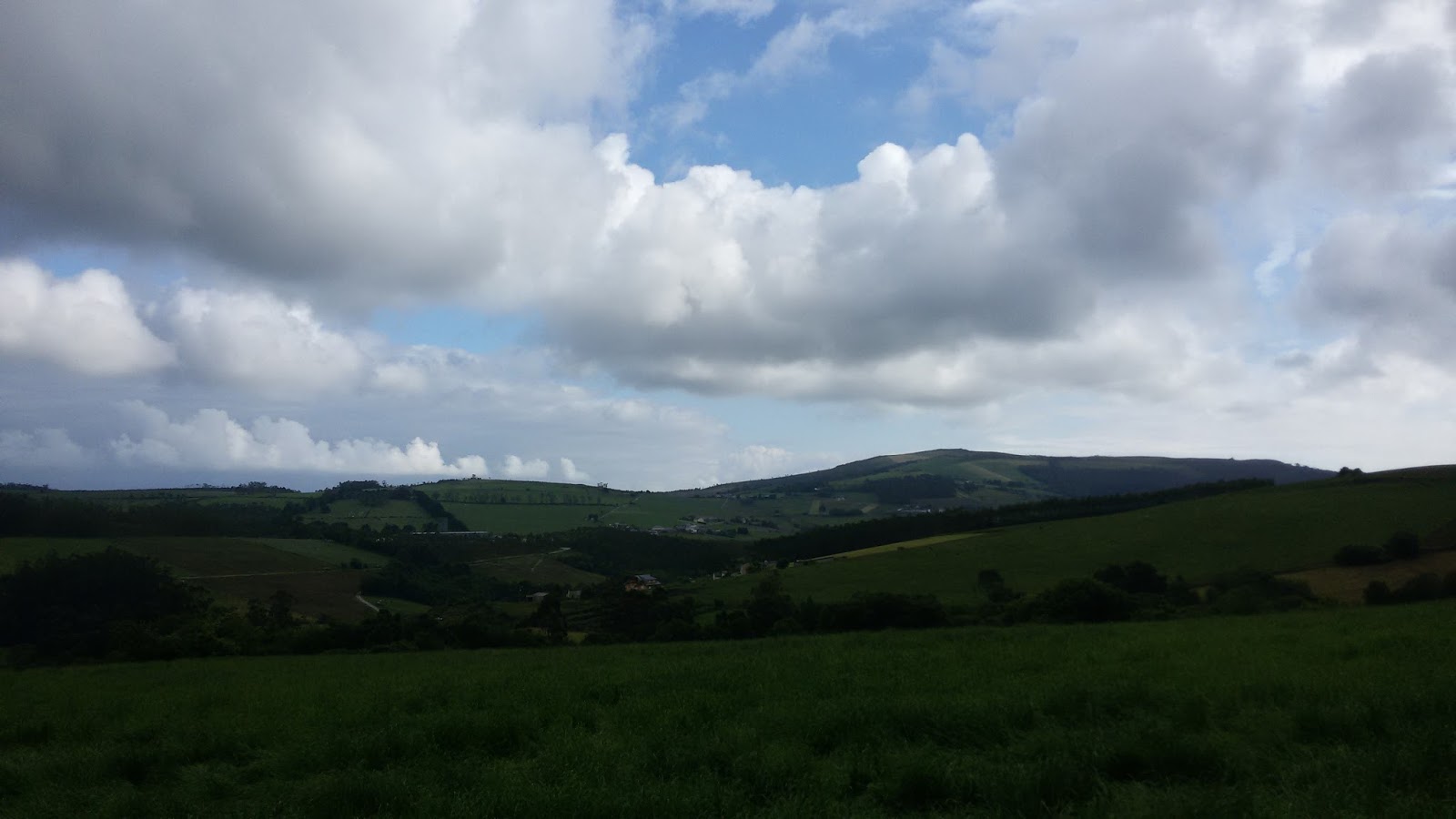
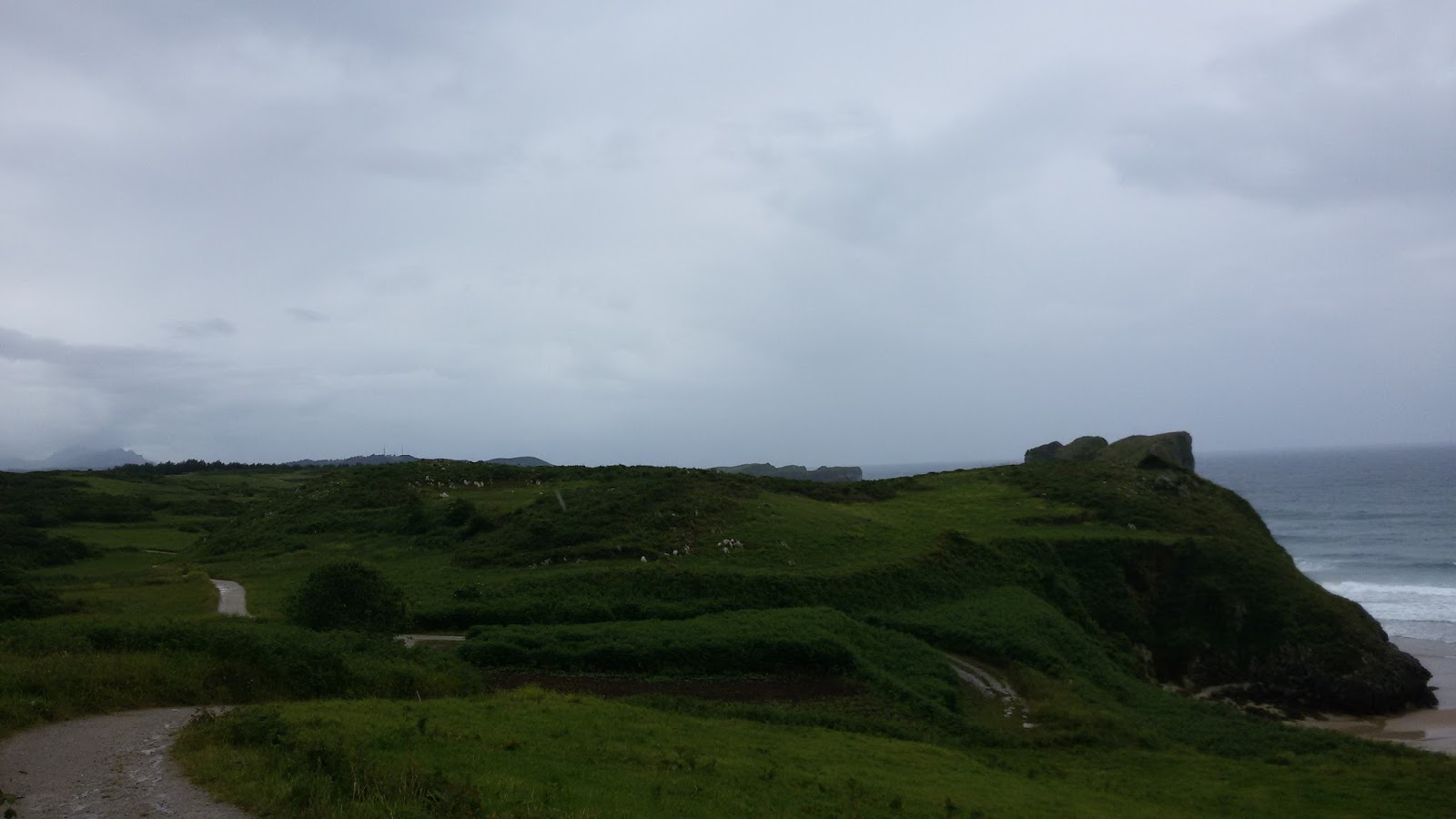
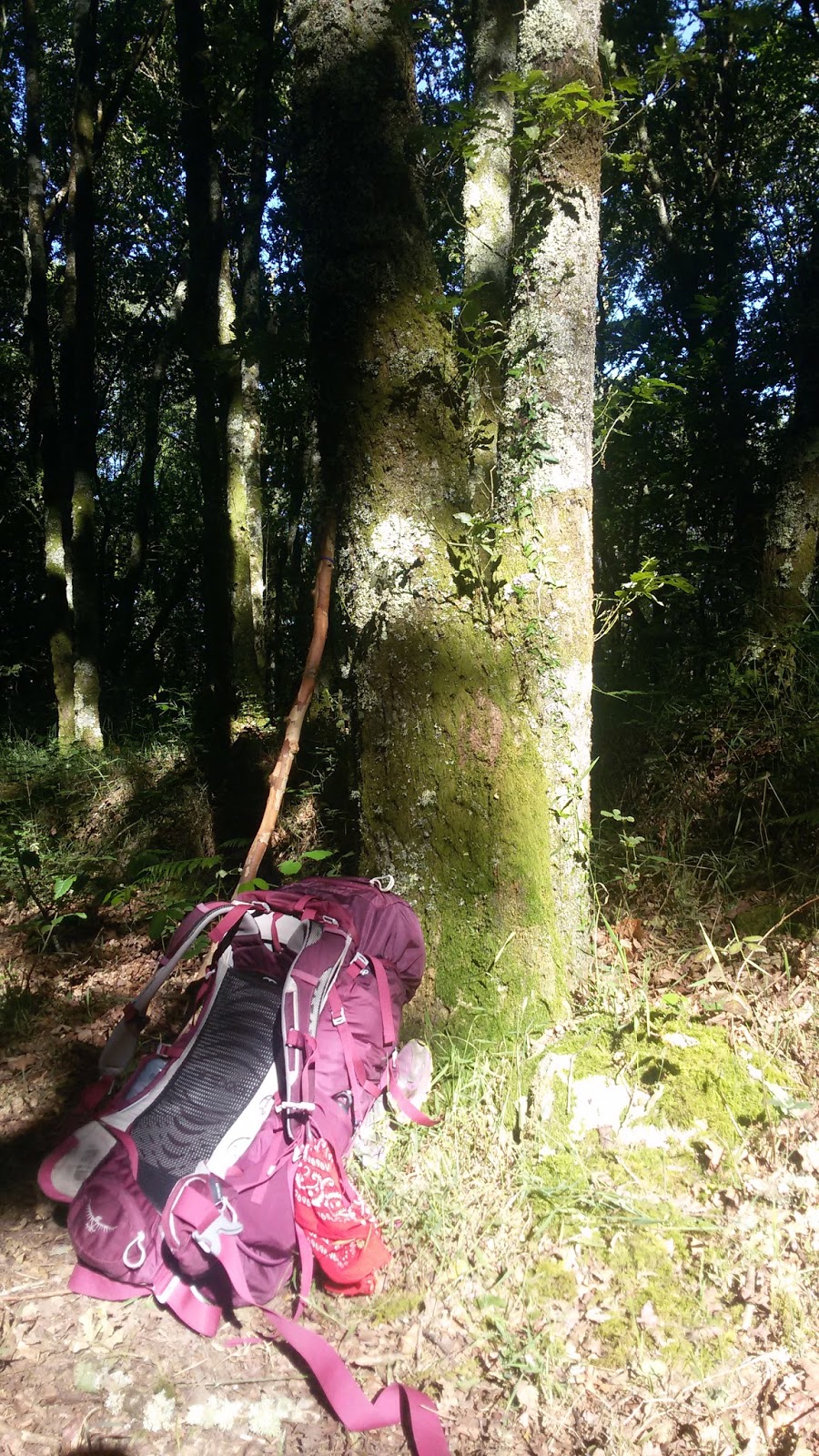
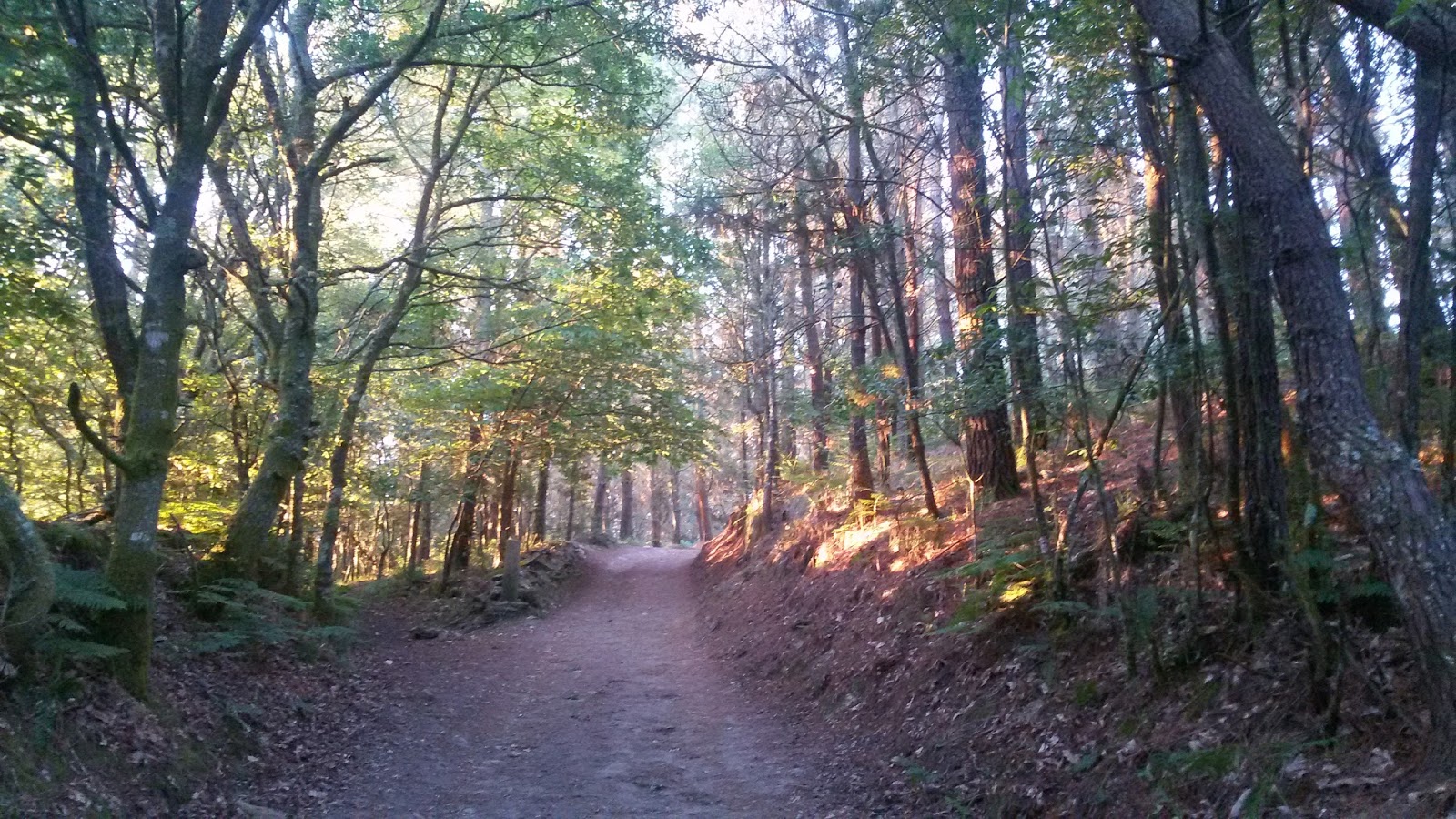
    I have selected twenty-seven of those sixty photos and paired them with lines from a brief stream of consciousness I wrote one day to summarize the experience of walking the Camino. The collection below is not chronological, and it isn’t complete, but I think it is more true than a complete, chronological photo diary could ever be.

    ***
    Walking. 
    Walking in mud, in rain, 
    in grass; 
    on gravel, asphalt, 
    bridges stone, wood, paved; 
    at first light, 
    at last light, 
    under clear skies 
    and into fading sunsets.
    Waking beneath stars in freezing meadows, 
    waking in a village whose name already evades recollection.
    Glossy maps,  
    cafe chairs, 
    Spanish words that somehow make sense.
    Bare feet,
    dirty feet, 
    tired and sore feet.
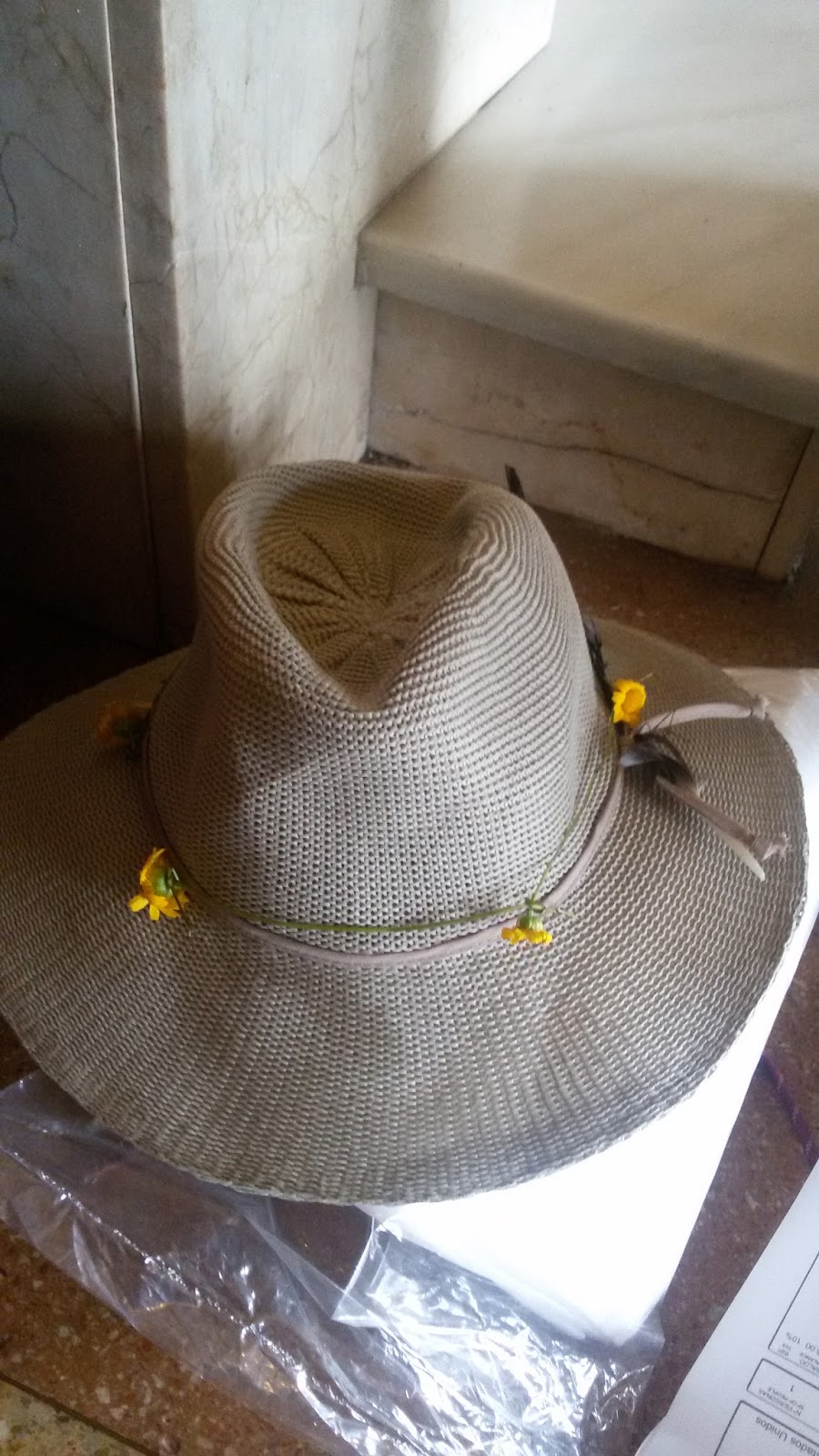
    The same hat every day, always a different flower in it.
    Yellow arrows, yellow arrows, yellow arrows.
    The path ahead. 
    Sleep that comes without invitation. 
    Absence of thought.
    Peace of 
    single-minded activity. 
    Never boring. 
    Seashells. 
    The way forward. 
    Yellow arrows.

    ***

    The Camino in Short: 

    Walking. Walking in mud, in rain, in grass; on gravel, asphalt, bridges stone, wood, paved; at first light, at last light, under clear skies and into fading sunsets. Waking beneath stars in freezing meadows, waking in a village whose name already evades recollection. Glossy maps, plastic cafe chairs, Spanish words that somehow make sense. Bare feet, dirty feet, tired and sore feet. The same hat every day, always a different flower in it. Yellow arrows, yellow arrows, yellow arrows. The path ahead. Sleep that comes without invitation. Absence of thought. Peace. Single-minded activity. Never boring. Seashells. The way forward. Yellow arrows.

    ***

    About