Author: Toby

  • The Modern-Day Renunciate

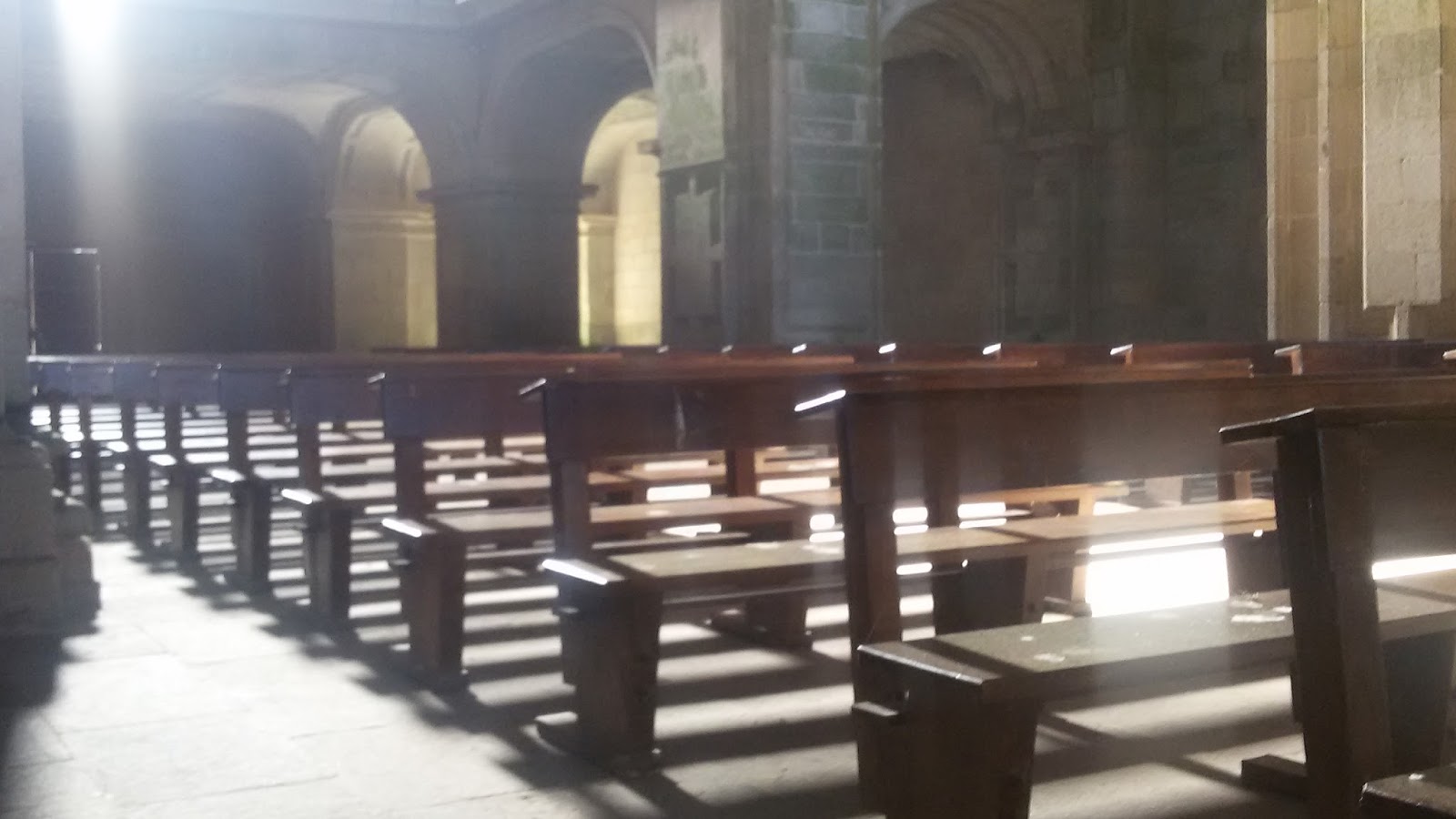
    Sobrado de Monxes Cathedral, Galicia, Spain.
    He asked if there was water nearby.
    The two dogs, attached to his belt by lengths of thick rope, were thirsty.
    We were about sixty kilometers (or several days) outside of Santiago when we met him. I regret that we didn’t get a chance to ask his name.
    He carried a huge walking stick, clearly decorated and carved by him, and an unraveling straw hat with a green band around it advertising for Amstel. He carried fishing gear, slept in a tent with his dogs and was running out of money. He had lost his passport one night in a flash flood, given away his watch. His hair and beard were unkempt and reddish brown. His eyes, wide, never quite focused on ours.
    In a thick, thick accent, he briefly told us his story.
    He had been a farmer in the Czech Republic. In December of 2015, the bank took his farm and everything he owned. So, he left with his dog and started walking. The second dog they found drowning in a river one night—still a puppy, it had huge paws, sure to be a big dog.
    When he reached Santiago via the Camino Frances (the most popular route, a bit farther south), he turned around and started walking the other direction along the Camino Norte (the Northern Way, where we met him). After telling us about the dog, the money, the passport and the watch, he concluded:

    “So probably I will spend my life walking. Just me, the dogs. I speak Spanish, so when I run out of money maybe I will find work somewhere, for a while. I think it is a good way to live, just to walk.”

    I think I can empathize. If I lost everything like that, I would probably lose any faith I had in property, money, things. I would probably—maybe—start walking and settle into a state of non-owning, non-needing, non-grasping, too.
    On the Camino, you run into a few of these modern-day renunciates.
    They’re not out for a month-long holiday, or even a six-month sabbatical. They’ve dropped—or lost—everything, and they’re walking, not for pilgrimage, not for a temporary detox, but for life. 

    I admire them, just as I admire anyone with a single-minded passion so single-minded that it borders on pathological. I think I understand the impulse, though I can’t imagine ever committing my life to just one activity. Different strokes, is all.
    More than anything, I’m fascinated by what appears to me to be a growing global trend, as the “real world” becomes harder and harder to stomach, of starting walking (or traveling, or what have you) and never stopping.
    Society has always had its renunciates. Those who live outside the bounds of normalcy—normal time, normal family, normal work, normal life—and follow another Way. I suppose the only difference is that our modern world doesn’t know as well what to do with them. It demands passports. It requires that we identify our place, our role, our function. It is, quite frankly, nonplussed by this growing race of outsiders. And yet, they are growing. 
    If you ask me, there will always be renunciates—those who chose not to participate in the world offered to them. And if you ask me, it’s not a problem; rather, it is for the rest of us to accept and allow their presence, walking the narrow paths between the borders of society.
    We told the former Czech farmer that there was a small shop in a house in the next town, just a kilometer farther along. He woke the dogs from their nap on the sidewalk, and we set off in opposite directions.

    Without a doubt, he is still walking.
    ***

  • Welcome to the World: First Post-Camino Reflections and Impressions.

    Sunrise over Bolibar, Basque Country, after an accidental four a.m. start time.
    High heels tap-tapping on the pavement. SALE signs in every storefront. The familiar turning on sound of my shiny laptop that I haven’t heard in a month. 
    Not one single “hola, peregrina!”* as I pass crowds of strangers in the streets.
    Walking through central London is quite the “welcome” to the world. But arriving in London town on this beautiful July day, that’s just what I’ve done, scallop shell hanging from my backpack, dusty shoes on my feet and cool breeze on my face.
    While many reflections are sure to follow, here are the first thoughts I’ve had since officially “returning” from my journey:

    I’m damn proud of what I’ve just done.
    Estimates vary from 795 to 863 kilometers (San Sebastian to Santiago de Compostela), but whichever way you hang it, that’s a long walk. I’m proud of these legs that have put up with unplanned 35-kilometer days, these feet that have weathered blisters and mysterious swelling without (much) complaint, this brain that has learned passable Spanish in four weeks. While part of me was underwhelmed by my accomplishment and tempted to understate it, another part of me felt like turning around in the street and shouting, “Look what I did!”
    I really want others to know that they can do it too.
    Over the past month, I have heard of or personally encountered pilgrims on horseback, bicycle (“bicigrinos”) and wheelchairs; overweight men, non-athletic girls and heavy smokers; young children, women in their seventies and everything—everything—in between. Think you can’t do the Camino? I think you can.
    Being a pilgrim is a privileged way to experience another place—maybe the most privileged.
    Never have I been so utterly accepted in my travels, nor my purpose and my role so completely understood. As a pilgrim (as opposed to a traveler/tourist/visiter/all the other things I have been), I found local people exceptionally welcoming, caring, understanding and accommodating. The people of Northern Spain have happily put up with my (and thousands of other pilgrims’) poor language skills, smelly clothes, abysmal navigation and overall cluelessness as we passed through their homes. It was a privilege to be received so kindly.
    I’ll miss it.
    Backpack, staff, sturdy shoes and scallop shell. The trappings of the modern day pilgrim are different from those of our predecessors, but nonetheless unmistakeable. On a daily basis I received unsolicited directions and support from passerby. From farmers in their fields, cyclists whizzing by and cars on the road, shouts of “Hola, peregrina!” and “Buen Camino!” were common and comforting. To be so firmly rooted in a fixed purpose, and to have that role understood and supported by the community, infrastructure and even landscape around you is a rare gift. Though difficult to describe, pilgrimage as a state of being was an unparalleled experience, and I will miss it.
    I definitely don’t know what I’ve learned yet.
    Deep thoughts? Rare. More common: “My feet hurt.” “I’m hungry.” “Why is the sky still spitting at me?” “Ooohhh, that’s a pretty mountain.” “Cows are funny.” “Goats are funny.” “Hehe, sheep are really, really funny.” “Ooohhh, pretty horses.” “Hmm, my feet still hurt.”
    You get the idea. Even more common: “…  …  …” Clear mind. That was the best part. So, I don’t know yet what the big lessons were—but I’m sure they’re in there.
    But everything was perfect and exactly how it needed to be.
    There’s no “right” way to do the Camino. Everyone will walk at different paces, stop different places and learn different lessons. And that’s exactly as it should be. I’m still entirely in the processing phase of my return, but I know one thing for certain about my journey: It was perfect.


    *Peregrino(a) is the Spanish word for “pilgrim.”
    ***

    Some bonus awesomeness: Check out my friend and fellow pilgrim, Margaret’s inspiring campaign, WALKING FOR WOMEN WITH BREAST CANCER IN TIMOR-LESTE – HALIKU.

    ***

    I expect to be writing a fair bit in the coming weeks and months about the Camino, so if there’s anything in particular you want to hear about, please let me know!

  • Off to the Camino… Travel Update and See You Later!

    On Sunday, June fifth (yes, that’s tomorrow), I will close my laptop. I will put it on a shelf, and I will not see it again for a month. I will put two pairs of pants, three shirts and a sleeping bag into my backpack, and I will head to San Sebastian in the Northeast of Spain.

    I’ve been waiting for this day for a while now.

    I need a vacation, yes. I need a total break from society—also yes.

    But it’s more than that. It always is.

    The Camino de Santiago has been on my list for awhile now. (It’s not a bucket list. I like to call it my, “Do These Things as Soon as Possible List.”)

    I don’t know why I want to do it, just like I don’t know why I want to travel the Trans-Siberian Railway, ride on horseback across Mongolia or sail the seven seas (all on my list). Except, I know that it calls to me; I know that adventure is my way of searching—of seeking.

    I know that a search need not have an object—that it is the act of searching that matters—sometimes…


    ***

    So, that’s about it. I’m not packing my camera, so I’m sorry to say I may not have many beautiful pictures to show for this trip at the end of the month. I also haven’t decided how much, if at all, I’ll stay connected. I may be updating here over the next month—or I may not. If not, I’ll be back in a month with a whole lot of stories to tell. See you then! 🙂
  • Olive Oil on Everything—A Gastronomic Diary of Italy

    Sicily, 2013—where I first learned about putting olive oil on everything.
    Florence, Tuscany
    Gnocchi with fennel, mint and gorgonzola. A generous drizzle of olive oil (the frisky, green, good quality kind) on plain, unsalted bread.
    A lake near Rome somewhere
    Tiny fried fish, fresh marinated anchovies, mussels, salad with potato and octopus. Gnocchi with clams. Zucchini with mint. A drizzle of olive oil.
    Perugia, Umbria
    Hands dry from chalk after climbing. Spaghetti with shrimp, zucchini and tomatoes. Olive oil from my host’s grandmother’s home. On the pasta—and on my hands.
    It was in Italy that I learned you can truly put olive oil on everything. 

    This most recent visit was no different.
    I mean the good stuff, of course. The fresh, tangy-green and gorgeous kind. The kind with bite and soul that tastes like it came from somebody’s grandmother’s farm (it probably did).
    Here is a short list of ways I have seen olive oil used to perfection:
    • Drizzled (well, poured, really) into tomato sauce after it is cooked and off the heat.
    • Applied to dry hair, skin and lips—best directly after the shower while skin is damp.
    • On a plate with sea salt and balsamic vinegar, for dipping (soaking) bread.
    • Drizzled over pasta, salad, cut vegetables, meat, pizza—everything, I’m serious.
    • Straight from the jug—just a taste, a drop.

    Olive oil is everything. Condiment and cooking base. Start and finish. Salve for the body and soul. I suspect it could heal a broken heart, too, though I haven’t tried yet.

    In the North, butter features prominently in many recipes—but in the South, it’s always olive oil.
    And that’s really it. I mean, I could keep listing mouthwatering Italian meals. That never gets old for me… but I suspect others might have a shorter attention span.
    Olive oil. On everything. My time in Italy, in a nutshell.
    Try it. Don’t be moderate. Italian grandmothers never are. 
    Find the good stuff. Apply liberally. Buon appetito!

  • What Makes this Mountain Different from all other Mountains?

    Villa Borghese Gardens, Rome
    Valle Aurelia, Rome, Italy
    This could be any street in any city.
    Mixed-era apartment buildings. Imposing stone architecture at turns. Cobblestones and pavement following no particular logic. Crush of cars and scooters. Cafes. Hairdressers. Passerby dressed in scales of gray.
    So, what makes this different from any other street—any other city?

    ***
    As we made our way along a dry riverbed, through native South African fynbos vegetation, toward a spectacular (but, again, arguably nondescript) stretch of shoreline, my friend put to me a similar question. Not quite verbatim, it was this:

    Most mountains are pretty similar. Most cities are pretty similar. There are trees and rocks and wide sky spaces. There are streets and cafes and passerby in scales of gray. So, what makes these mountains different? If we can go hiking at home, why ever go anywhere else? And if we do go, how do we choose? 

    Why these mountains?

    The question was philosophical in nature. My friend is nearly as avid a traveler as I.
    I would like to offer three answers to these questions—one of which sounds nice, one of which I believe most strongly, and one of which I feel, irrationally, to be true.
    It doesn’t matter which is which.
    First, terroir. Terroir is a French term I fell in love with while studying the anthropology of food. Essentially, it claims that taste is deeply rooted in place—territory. The elements unique to a given locale—water, specific bacteria, culture, human traditions, soil, weather, everything—combine to create the particular circumstances in which a given food item is produced. And we can taste it. While terroir is a culinary concept, I believe it can just as easily apply to cities, landscapes and really anything else.
    Thus, these mountains are made unique by an intangible yet undeniably meaningful agregate of water, culture, air, bacteria, soil, and human idiosyncrasy. 
    Why go anywhere? Terroir.
    Second, intuition. Some part of our deepest self knows where we need to be. It doesn’t make sense, and it can’t be proven, but those who have experienced will swear that the voice of intuition is real—and that it is always right.
    So, how do we know, how do we decide where to go? Instinct.
    Or third, the difference isn’t out there at all. It’s us. The mountains are, more or less, all the same. Trees and rocks and wide sky spaces. The cities, too. We, however, change, and we can understand that change by observing its reflection in the places we visit—or rather our experiences of them.
    What makes these mountains different from all the rest? We do.
    Or, most probably, the answer is some combination of the three.
    What makes these mountains different from any others? Nothing, or precious little. Yet, they will be different, because we will change—always.
    Why go anywhere else? Terroir. 
    And if it’s all the same, how do we possibly decide on one mountain, one city, one street over another? Oh yes, intuition.
    Maybe this could be any street in any city, but it isn’t. It’s this one—the one I’m in. And it is utterly unique, both for its composition of individuals, elements and other intangibles, and for my experience of it, in this particular moment. No other street in any other moment will ever be this. I don’t know why I’m here—and not in another street, city, mountain—but I trust the voice that called me.

  • Pillowcases in the Desert, Rainbows in the Forest, and Hippies in the Holy Land: Another Perspective on Israel

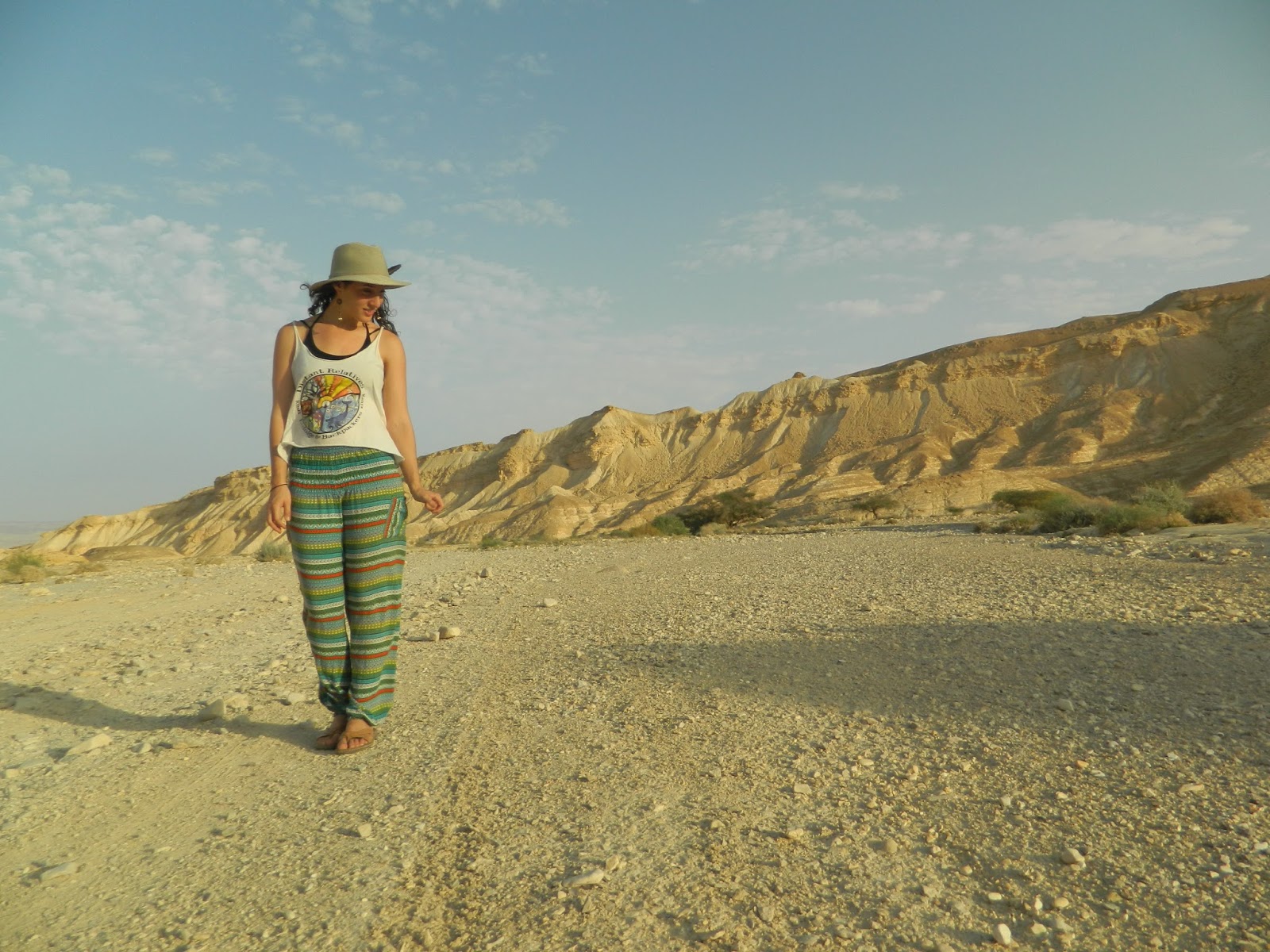
    Tzukim, Arava, Israel
    The whirring of the machine as I touch my foot to the pedal brings me back.
    To my grandmother’s home and her ancient Singer. To the costume room in the basement of my middle school theater. To my projects on the kitchen table in my childhood home in Brookline, Massachusetts.
    I haven’t used a sewing machine in a long time, and the rhythmic pull of needle on fabric is bringing me to a good meditative place.
    The air is so dry that drinking water does nothing for my thirst—the liquid seems to evaporate on my tongue—and there’s a super-fine layer of desert dust beneath my bare feet. (Hardly had we swept the floors, cleaning house to usher in Passover, than the relentless winds brought the dust back.)
    I’m staying with my brother’s friends and their five beautiful children in the mud house they built for themselves here in Tzukim; we (my brother and I) have been invited for Passover seder. They study and speak openly about Kabbalah, a central tenet of which is the concept of togetherness. And indeed, I feel more than welcomed here on my second stop of my second visit to Israel—I feel involved.
    Tonight, I am helping to sew pillowcases to decorate the rounded, light-filled common area of their home. Deep green, vivid red, heavy, rough, intricate, beautiful textiles. I hum tunelessly as I work; it’s a new habit I’ve found myself adopting since the term, “humming tunelessly” caught my eye in a book.
    The pillowcases are definitely of the wabi sabi variety—as is everything about the house. Perfectly imperfect. Made by hand with care and natural irregularity. Human. Filled with meaning.
    My brother’s friend works beside me, and she smiles when she tells me that each person who has stayed in the house has left a part of themselves in it. The pillowcases will be my part.
    ***
    After my last, particularly heavy post on Israel, I wanted to offer something lighter. A balancing perspective, if you will.
    The question came to mind: How would one write about Israel if it were just a place, with no history, no complexities and no enigmas—just sun and desert and sandy beaches and olive groves—a beautiful spot on the map? How would one describe it?
    Is such a thing possible? Of course not. Not for anywhere in the world. Total nonsense.

    And, what’s more, maybe misguided. 

    For, like my wabi sabi pillowcases, Israel is not beautiful—cannot be beautiful—in spite of its rough edges (rough edges is putting it mildly), but because of them. The same is true, I believe, for every spot on the map.
    ***
    Somewhere near Modi’in, Israel
    A man with one leg and no clothing flashes by, moving faster on crutches than I can usually manage to run.
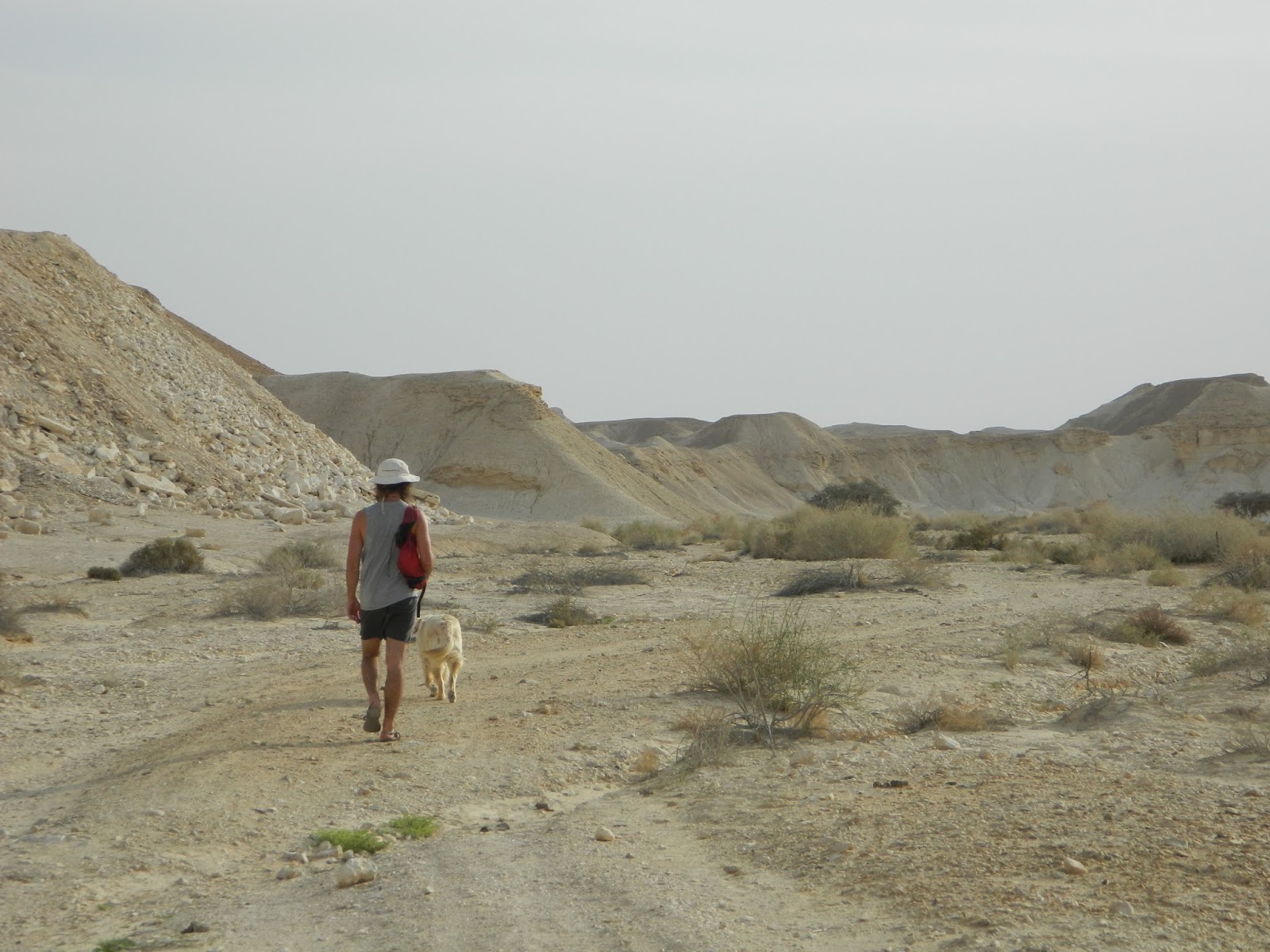
    As we traipse in with our camping gear a little before dusk, a crowd near the entrance shouts, “Welcome home!” as they always do at these gatherings. Participants spread out across the forested space to make camp, collecting in small population centers, or venturing further afield in search of silence and solitude.
    The activity centers around the communal cooking area, and a large bonfire where most gather after the shared evening meal for drumming, singing and sometimes dancing. Gauzy dresses, dreadlocks and bare skin are as common here as head scarves and black hats in Jerusalem.
    This is Rainbow Israel, and if you aren’t familiar with Rainbow Gatherings and you want to understand what they are (you do), you should go here.
    We stay only one night, but I could have happily stayed a week. There’s something special about a community where anything goes, and (usually) nothing bad comes of it.

    Tel Aviv, Israel
    On my last night in Israel, I sit with an old friend on the steps of the big Synagogue, sipping a beer as we catch up on six or seven years of life. 

    He describes his experiences with medicines in Peru (yes, others would call them drugs), his work with sound healing and his studies on homeopathy and Kabbalah. I describe my work with elephant journal, a publication focused on mindfulness, my yoga teaching and my nomadic lifestyle. I think the intervening years have brought us both a good deal closer to our life paths.

    This last evening, along with other conversations, meetings and interactions like it, balances out my more complicated experiences of Israel, renders me more grounded in my time here. There’s violence and oppression in the Holy Land, but there are hippies too.
    So, what do wabi sabi pillowcases, rainbow gatherings and hippies all have in common?
    For starters, they’re all positive, forgiving, inclusive and somewhat alternative entities.
    And, they all exist in Israel.
    It would take many lifetimes to write enough to do justice to a single spot on a map. It would take a million voices, on a thousand days, to tell every facet of every side of every story cradling that spot.


    For now, I’ll content myself with having told two facets of one story—my own—and I hope you’ll be wise enough and brave enough not to take my word for it. Make your own stories, wherever you may be called to do so!

    ***

  • Okay, Let’s Talk about Israel

    View from Old Jaffa, Tel Aviv
    “If the Arabs didn’t kill me, my wife would.”
    Bloody hell. Did he just say that?
    After the split second necessary for me to process his words and maintain a neutral expression, I answer:
    “Why’s that?”
    “She doesn’t want me walking through the Arab neighborhood.”
    Obviously.
    We are talking, of course, about which gate to use to exit the kotel (the Western Wall, the holiest place for Jews to pray in Jerusalem).
    I think he means it as a joke, but it’s not funny.
    On this visit to Israel, I have been floored multiple times by this kind of abject fear, prejudice and even hatred—veiled and otherwise—toward the vaguely-defined “Arabs.”

    ***
    I don’t want to write about this hatred, but I feel I must. I could not in good faith write at some length on post-apartheid South Africa, yet stay silent on the subject of Israel. I don’t mean to criticize the incredible people who have welcomed me here, but I feel an obligation to present my experiences as they have been—without convenient omissions. I come from a class of American Jews for whom criticism of Israel is practically the equivalent of self-hatred. Yet, to be silent is to be complacent.
    ***
    Imagine my surprise when, fifteen minutes later, I learn that we are to join this man and aforementioned wife for Shabbat dinner.
    As we walk across the large stone plaza by the Western Wall (toward the “safe,” acceptable gate), the call to prayer echoes across the open space. It is, as I always find it to be, hauntingly beautiful.
    Dissonance.
    I steel myself for an… interesting (challenging) evening.
    But nothing ever happens the way we expect.
    Eighteen guests break bread (matzah) around a generously laden table, and before we take turns introducing ourselves, our hostess delivers a brief speech full of lovely sentiments on perspective, understanding and peace. 
    How we should all get along.
    Our hosts turn out to be warm, exuberant, slightly odd, good-hearted and generous humans. They delight in opening their homes to strangers every Friday night.
    The dissonance still has me reeling three days later.
    How can people who live according to laws of loving-kindness, compassion, charity and devotion also spread hate?
    It is the paradox of our times—perhaps of every time.

    ***
    I do not want to write about this ugly, complicated tangle of politics, identity, religion, culture and hate. But to stay silent is to be complacent.
    Growing up in Jewish communities in the U.S., I have seen how stories of persecution and oppression—and survival—perpetuate themselves.
    I know how seductive it is to believe ourselves always the David to another’s Goliath. Such archetypes are practically written into our genetic code. After all, everyone wants to be the hero, the victorious underdog, the resilient victim. To put it in contemporary terms, most of us see our obstacles with clarity—but rarely our privilege.
    All of us have our hands too close to our faces to read our palms.
    And six years ago, when I first visited Israel, I was still too close to the flattering, awe/fear-inspiring story with which most Jews are inoculated. Two years ago, when I wrote my senior thesis in Anthropology on female Jewish identity, I had taken a few steps back.
    Again, I have gained more perspective.
    I am hardly informed enough to offer you a well-shaped, well-researched and well-defended opinion, but neither am I too scared to present my experience and observations as I have found them, with as much accuracy as any individual could hope to achieve.
    I don’t have any answers to offer, but I have questions that are churning in my brain, and I want them to churn in yours, too.
    ***

    Market abundance.
    “Now, some people are saying that Israel is an apartheid state,” he says in a classic Brooklyn accent unaffected by twenty plus years living in Israel.
    The patriarch of the family (another family, in another Jerusalem neighborhood, for another Passover week dinner) sits at the head of the table.
    I certainly wasn’t planning on opening that can of worms, and I hold my peace while he holds forth.
    “That is simply not true.”
    He goes on to explain why point-to-shoot, border walls, checkpoints and other security policies are justified and necessary to the self-preservation of the Jewish people.
    I hold my peace and wait for the subject to pass.

    But it’s so much more complicated.
    While in Cape Town, I, too, heard some people—many people—referring to Israel as an apartheid state.
    Takes one to know one?
    I don’t know. I do know, however, that the arguments are compelling and not insubstantial. It’s not an entirely ludicrous claim, as others would declare.
    This family of religious Jews is, like the other, extraordinarily kind, warm, welcoming, generous and loving.

    They ply us with food, wine, friendly interrogation on every aspect of our lives. There is joy and laughter and exuberance at this table, and we are folded into the melody. Yet, every so often a “joke” slips out at the edge of conversation, and the note falls flat on my ears.
    Dissonance.
    Again, my mind turns over and over the same questions:
    How can people have such open hearts, yet such narrow minds? How can we preach love, but spread hate? How can we celebrate our survival, and at the same time justify—advocate for—the oppression of our fellow man?
    I’m not deaf. I’ve heard this dissonance a hundred times in a hundred places. Contradictions spoken by a hundred mouths in a hundred languages. The pairing of hate and love in a hundred hearts; the conflict of logic and fear in a hundred minds.
    But this, now, in Israel, is different for me.
    It hurts me to see a group of people—to whom I belong; whom I am proud to call my own; whose story of survival is my story of survival—display these confusing contradictions.
    Dissonance.
    The shelves of history are crowded with stories of the oppressed who became the oppressors—the Hutu and the Tutsi; the early pilgrims to America; Britain (if you go far enough back); Burma/Myanmar—a narrative so common as to almost be an historical cliché.
    It is easy—too easy—to live out the patterns of conflict handed down by past generations. In Israel and Palestine, these stories exist now in abundance on both sides of the proverbial—and literal—fence.
    It is far harder to pull our hands away from our eyes and read the map of where we have walked—and where we are walking.
    Is Israel an apartheid state? I’ll leave that to the history books to answer, though we know those will only ever tell part of the story.
    I am far more concerned with the answer to this:
    How can people have such open hearts, yet such narrow minds? How can we contain such love and generosity—and such anxiety and fear—within our individual—or national—bodies?
    I would like to know.
    I don’t.

    I do know, however, that I wish I had not held my peace for the sake of harmony—as I so often do. For to stay silent is to be complacent.
    ***
    I regretted saying nothing at that first dinner, so at the second dinner, when I introduced myself to the 19 other guests and our hosts (the instructions? talk about something—anything), I told a story. It wasn’t a Jewish story; I think I’ve heard it’s Cherokee, and the original version I saw goes like this:

    An old man is teaching his grandson about life. “A fight is going on inside me,” he said to the boy.

    “It is a terrible fight and it is between two wolves. One is evil – he is anger, envy, sorrow, regret, greed, arrogance, self-pity, guilt, resentment, inferiority, lies, false pride, superiority, and ego.” He continued, “The other is good – he is joy, peace, love, hope, serenity, humility, kindness, benevolence, empathy, generosity, truth, compassion, and faith. The same fight is going on inside you – and inside every other person, too.” 

    The grandson thought about it for a minute and then asked his grandfather, “Which wolf will win?” 

    The old Cherokee simply replied, “The one you feed.”

    I don’t know if my message reached anyone, but at least this time I tried. 

    And I’ll keep trying.
  • De-Nile, and other Ugandan States

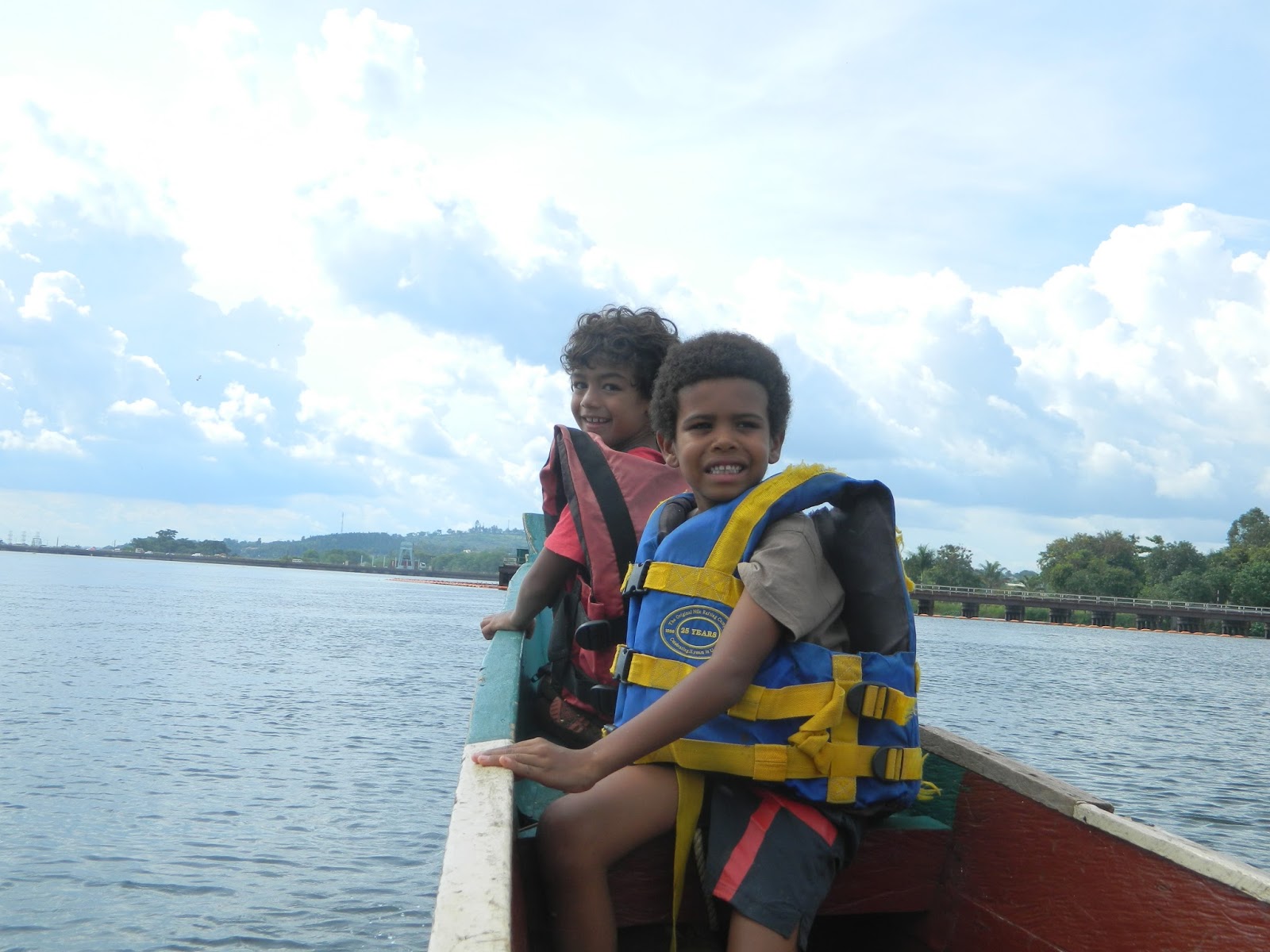
    Last week, I visited friends in Jinja “Source of the Nile” Uganda and stayed with them at the lodge they manage.
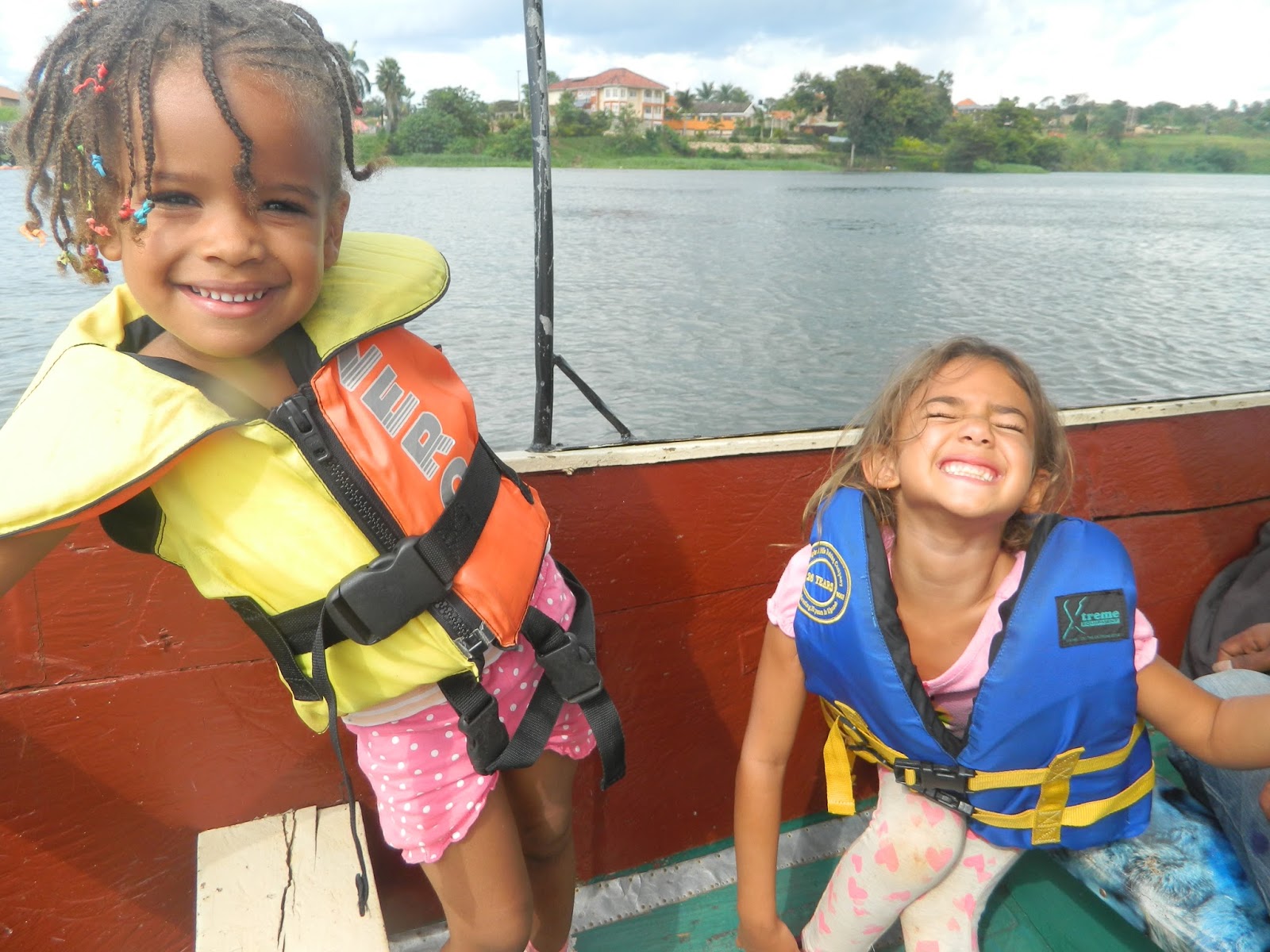
    Between playing sharks and mermaids with their two beautiful children, drinking excessive amounts of African tea laced with ginger, feasting on their restaurant’s famous ribs (had to be a bad Jew for a day before heading to Israel for Passover!), practicing yoga poolside and working full time, there wasn’t much time for sightseeing.
    So, for my last day in town, all of us—plus a few extra kids and friends—hopped on a boat to check out Lake Victoria, some wildlife, and the infamous source of the Nile.

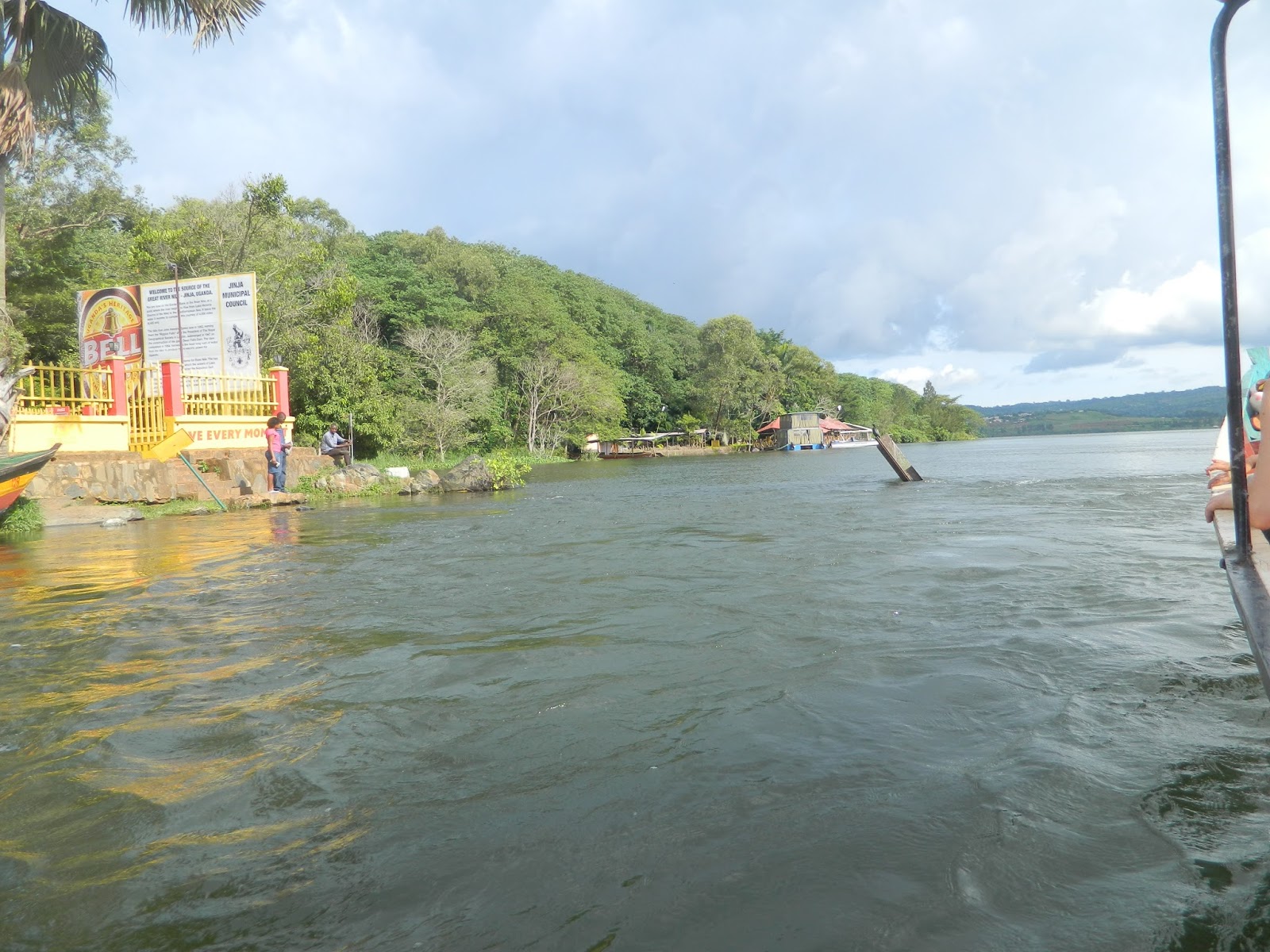
    Jinja lay claim to an impressive 5-meter column of water springing from the river’s start at the edge of Lake Victoria. The world class rapids along this following stretch attracted droves of adventure seeking tourists, fueling an industry of rafting and whitewater kayaking.
    On August 3rd, 1858, an avidly adventurous Englishman named John Hanning Speke “discovered” the source of the Nile, although it wasn’t until after his death that his claims were finally verified. Our guide, however, pointed out the exact spot from which Speke first spotted it.
    A few minuscule drops of rain excepted, it was a perfect afternoon for a boat ride. We observed vibrant-hued kingfishers and bee-eaters, ungainly pelicans and a particularly ugly vulture-type bird whose name I’ve forgotten, monitor lizards, otters and more.
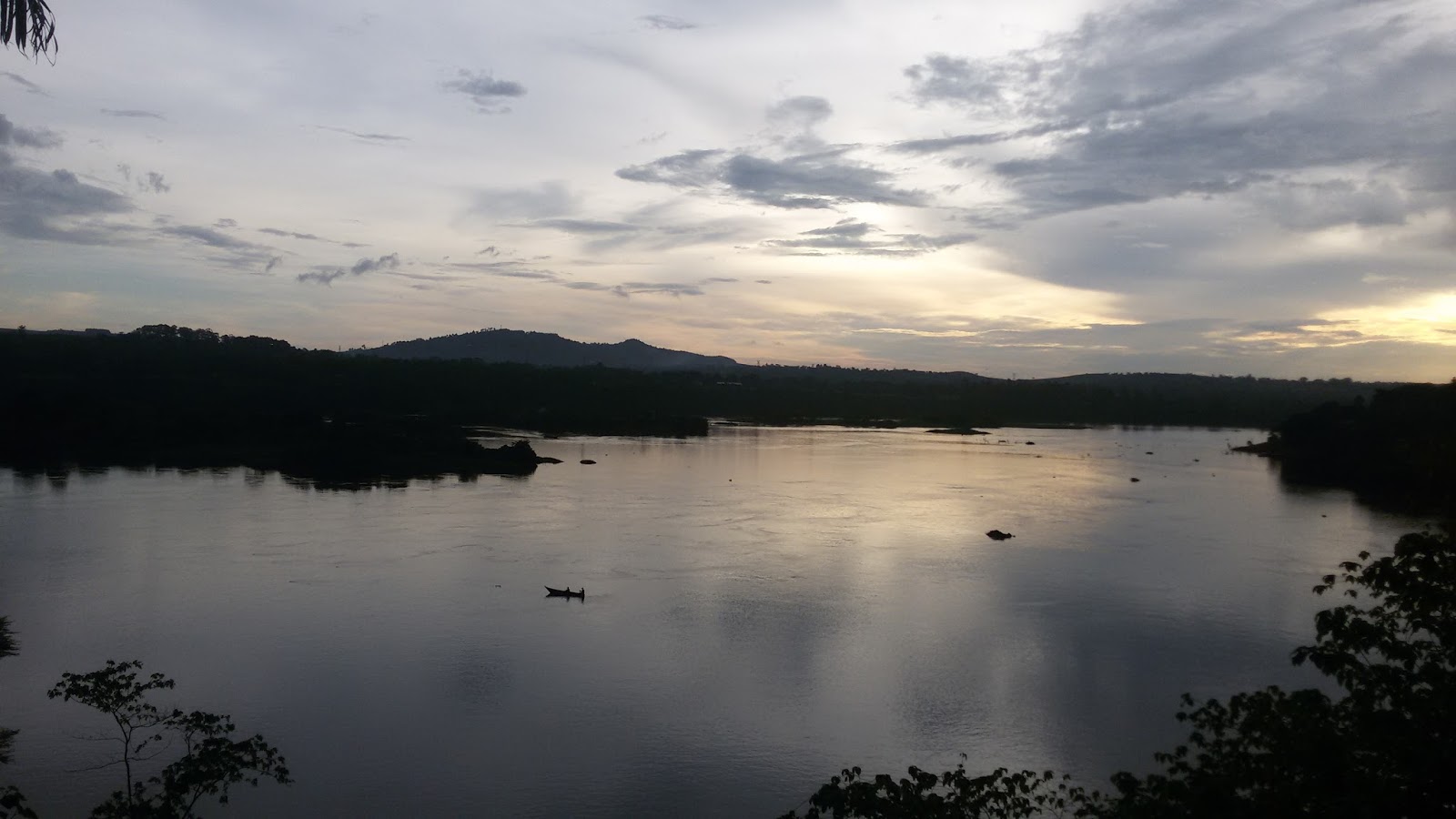
    When we neared the source of the Nile and our gaze followed our guide’s finger between two small Islands, I already knew what to expect:

    The construction of two hydroelectric dams downriver in 2012 quickly turned the wild origins into the Nile into the still lovely—but rather more staid—river that meandered past my tent:

    The full ecological (and economic) implications of this shift remain to be seen.
    In classic irony, we had to run generators at the lodge for nearly two days when the power cut out. (Rumor has it Uganda is selling all that juicy new electricity from the dams to neighboring Kenya.)
    The car ride home hosted a 45-minute game of “I Spy,” in which I participated as a laughing spectator to the shenanigans of three rowdy kids (two small, and one grown up). Back in Entebbe airport in Kampala the following day, I studied a bevy of glossy banners promoting the #PearlOfAfrica’s lush green landscapes, diverse wildlife and smiling inhabitants.

    Juxtaposing those lustrous landscapes and straightforward hashtags, I am struck now—as I so often am—by the depth of the gray space between simple facades and complex realities. Fraught with tensions, ironies, vibrancy and intensity as they are, I’ll always choose the latter.

    ***


  • 10 Hours in Nairobi (Airport!)

    Final Destination: Jinja, Uganda—the mouth of the Nile

    Tuesday, 12 April, 2016—Nairobi, Kenya

    The New York Times may have all the tips for how to spend your 36-hour weekend in Nairobi, but you only need 10 hours to enjoy all the delights of the Jomo Kenyatta International Airport!

    It’s going to be a long day, so wear comfortable shoes. The following is only a sample itinerary—feel free to craft your own.
    5:50 a.m. Early bird gets the worm and all that. Arrive at Nairobi airport from whatever your previous port of embarkment may be. Drink in the fresh morning air (but please, not the water) and stumble toward your connecting flight. 
    (Note: This is best enjoyed on minimal rest, so try not to sleep too much on your red eye.)
    7:15 a.m. Pole pole (slowly), friends. Delays are normal, especially with Kenya Airways. The Avanti Cafe on the ground floor has reasonably priced tea and friendly and sympathetic staff. (They’ve heard your story before; don’t bother.)
    Savor your mediocre latte and partake of the only free wifi in NBO. Don’t miss the sights: Watching disgruntled tourists aimlessly milling about in growing impatience is one of the unique pleasures of the airport experience.
    8:15 a.m. Board your flight and prepare for take-off. Don’t worry, your day’s not over that quickly—we’re just going for a quick aerial tour of the beautiful city of Nairobi.
    Sit back, relax, and enjoy the view on your 10-minute cruise above Kenya. “Technical issues” are just an official way of saying, “please don’t leave yet, Nairobi airport has so much more to offer.” 
    9:35 a.m. Make good use of an hour on the ground before deplaning, and get to know your fellow adventurers. Enjoy a stale, rubbery apology croissant, courtesy of the airline, too. You’ll need your fuel; we still have 6 hours to go! You may also like to observe the unloading of your luggage, which was heading toward your final destination just minutes before.
    10:50 a.m. Experience extreme disorganization first-hand. Join the pack, and wander confusedly from gate to gate, really getting to know the twists and turns of the Nairobi airport. Intimate knowledge like this is rare for the average tourist; you may even have time to peruse the least authentic curio shops in all of Kenya.
    11:25 a.m. Head to Table 49 for a classic airport dining experience. As you sample your chocolate-cardboard muffin and piping hot tea, you may appreciate the opportunity to practice your Italian, French, Swahili or German language skills with some of the other diners—this is an international airport, after all.
    12:10 p.m. Wave goodbye to some of your new friends as they head to the next (now fully booked) flight, then get to know some of the airline staff as they place you on the next one—5 hours later.

    12:45 p.m. Why not head back to the unsurpassed Avanti Cafe for another visit? After all, no one has given you any free water, and you’re probably thirsty. Browse through Facebook, and daydream about arriving at your destination before dark.

    1:25 p.m. Stroll upstairs to Table 49 for another complimentary meal. Totally edible chicken, rice and spinach, and a bottle of water to boot! Enjoy getting to know the remaining stranded passengers from the morning, and observe the effect that sleep deprivation may have on your conversational skills (hint: they improve).
    2:55 p.m. Meander down those gray, expressionless airport terminal hallways one last time before you have to leave. Join the desperate crowd at gate 15, and since you’re early, why not finish up your conversations with your new friends.
    3:50 p.m. Get on that plane, friends, it’s time to fly. Cross your fingers that your checked baggage makes it on with you, and settle in for a nap—you’ll need it. Safari njema (safe travels)!

    ***
    In complete seriousness, as desperately long and painfully disorganized as my unplanned, extended layover in Nairobi was, I don’t think I’ve ever had as many conversations, in as many languages, with as many strangers, in one day. We were all looking out for each other, united in common misfortune and misery—which, miserable as it was, was also pretty cool.
    And, it’s always better to laugh. Running on 3 hours of sleep and very disappointed to be spending my day off in an airport—instead of with friends in Uganda—I quickly found the entire situation completely absurd, and I had to laugh.
    You have to laugh.
    Frustration is useless, especially in airports, and a bit of humor can make a bleak day far more bearable.

    So, enjoy your next visit to the Nairobi Airport, and let me know if you want any more tips—I’m probably an expert now.

    ***

    Update: In Jinja, Uganda now, visiting some friends I haven’t seen since a year ago in Kenya, and enjoying some much-needed R and R. My checked luggage, if you were wondering, miraculously made it here, too!

    ***

  • Journeys All The Way Down

    Goes into the post office to mail home some books… 30 minutes and 90 stamps later ^^

    Once, a great guru came to a small village. 

    He gave a long speech and held forth on many subjects, and he claimed that the world rested on the back of four elephants. These, in turn, stood on the back of a turtle.

    After the wise man had finished talking, an old woman came to ask him a question.

    “Guru-ji,” she said, “You say the world is held by four elephants, which in turn are standing on the back of a turtle. But I want to know, what is the turtle standing on?”

    The man’s eyes sparkled as he answered, “Why, it’s standing on the back of another turtle.”

    “But what is that turtle standing on?” asked the old woman. 

    He smiled and said, “Madam, it’s turtles all the way down.”

    The above is an amalgamation of a dozen versions of one of my favorite philosophical tales (variously attributed to Eastern and Western lore). It comes to mind today as I slowly, dare I say reluctantly, pack my things and prepare to leave Cape Town.
    Why, I’m not exactly sure, but I think its suggestion of infinite yet symmetrical unknowns appeals to me in this moment of transition.
    As I clear out the fridge, eating my last grapefruit, savor my last coffee at my favorite cafe, enjoy a last (unseasonably hot) afternoon at Clifton Beach and write a “last blog post” before shipping off to my next destination, I seek a clever way to avoid the “lasts” altogether.
    An enigmatic symmetry and circularity have entered into my travels lately. Returns and revisits abound, and endings, more often than not, prove to be intermissions.
    And so as I peer into the infinite unknowns ahead, I suspect there is more circularity in my future. Journeys bending and spiraling in on themselves in unexpected ways.
    After my last coffee, I go to the post office to mail home a few notebooks’ worth of extra weight. Thirty minutes later, I leave behind a medium-sized envelope impressively plastered with 90 stamps.
    The scenario is comical and exaggerated; together, the post office teller and I systematically paste rows of stamps onto the package.
    I’m reminded of other boxes and envelopes I have shipped from other locations—usually filled with items whose monetary value falls far short of the cost of shipping. (Of course, you can’t put a price on memories.) Often accompanied by absurd postage situations.
    Circularity and symmetry.
    No “lasts” in sight.
    If I were to ask a wise man to surmise my future, I think I could guess at the conversation:

    “What comes after today?” 

    “It’s another journey ahead for you, of course.”

    “And what comes after that journey?”

    “Why Madam, it’s journeys all the way down.”


    Journeys all the way down…

    ***
  • Coffee Culture, Slow Food, and Why Cape Town Has Both

    Coffee Culture, Slow Food, and Why Cape Town Has Both

    cape town coffee culture slow food

    A side alley off Buitenkant Street, Gardens, City Center, Cape Town

    The first sip is bitter, sour, almost acrid, before my palette adjusts and the taste mellows into a more complex configuration of nutty, earthy, sweet and rich.

    This is good coffee.

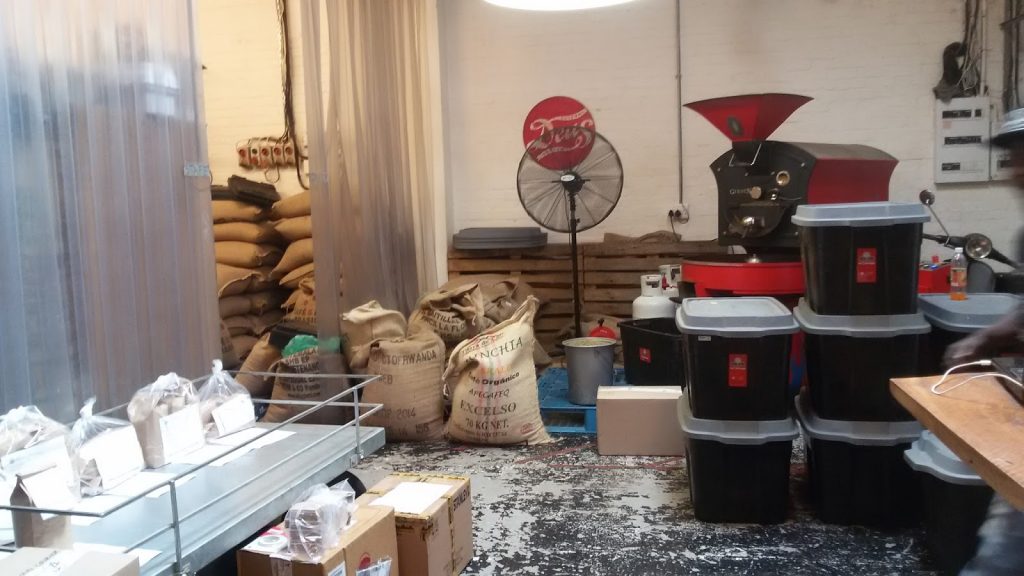
    I’m sitting at my favorite Cape Town cafe, Deluxe Coffee (also called YARD, the Dog’s Bollocks and the Bitch’s Tits), where motorcycle parts, vintage bicycles and canvas sacks of wholesale coffee beans make for original decor.

    I’ve occupied this stool at the counter for well over an hour now, and nobody cares. Par for the course.

    Cape Town has an exceptional coffee culture. (The reason I’ve consumed more coffee in the past three months than probably the last three years prior—well, that, and the fact that a cappuccino costs a bit more than a dollar.)

    What is “coffee culture”?

    Well, to answer in negatives, the U.S. does not have a coffee culture—or a cafe culture, to be more precise. A coffee culture does not “run” on coffee (like Americans run on Dunkins), but rather stops. Sits. Stays. Connects.

    And when you stop to taste your “cup of joe,” quality matters. Deluxe Coffee may be my favorite spot, but easily half a dozen others tie for second. There is a lot of good coffee in this city.

    To-go cups are more rare, too, and at least among my friends, “going for coffee” is an hour(s)-long undertaking—not a five-minute quick fix.

    Cape Town generally moves more slowly. Less rush, less stress, none of the high-powered, shiny, corporate velocity of New York, London or Hong Kong. None of the humorless, chain-brand cafes, either.

    Starbucks hasn’t made it to Cape Town, yet, but I hear it’s coming. When it gets here, I hope Cape Townians will put it out of business.

    In a cafe culture, independent roasters, brewers and purveyors of coffee thrive. Character and personality matter—or maybe that’s just me.

    And I think there’s a common denominator between coffee cultures and Slow Food. Shared values. An appreciation of quality, and a willingness to wait for it.

    Many of the cafes where I go to do work have some of the worst service I have seen anywhere in the world. Friendly, but extraordinarily slow.

    But, good food. Good coffee.

    See the connection? I do.

    I am more than a little bit enamored of the Slow Food movement—and of Cape Town’s coffee culture.

    I like the pace, the time for detail, the space for real connection. This is what a cafe should be, in my opinion.

    This is how coffee should taste. This is how life should move.

  • Vagabonding vs Bonding: On Staying in Touch

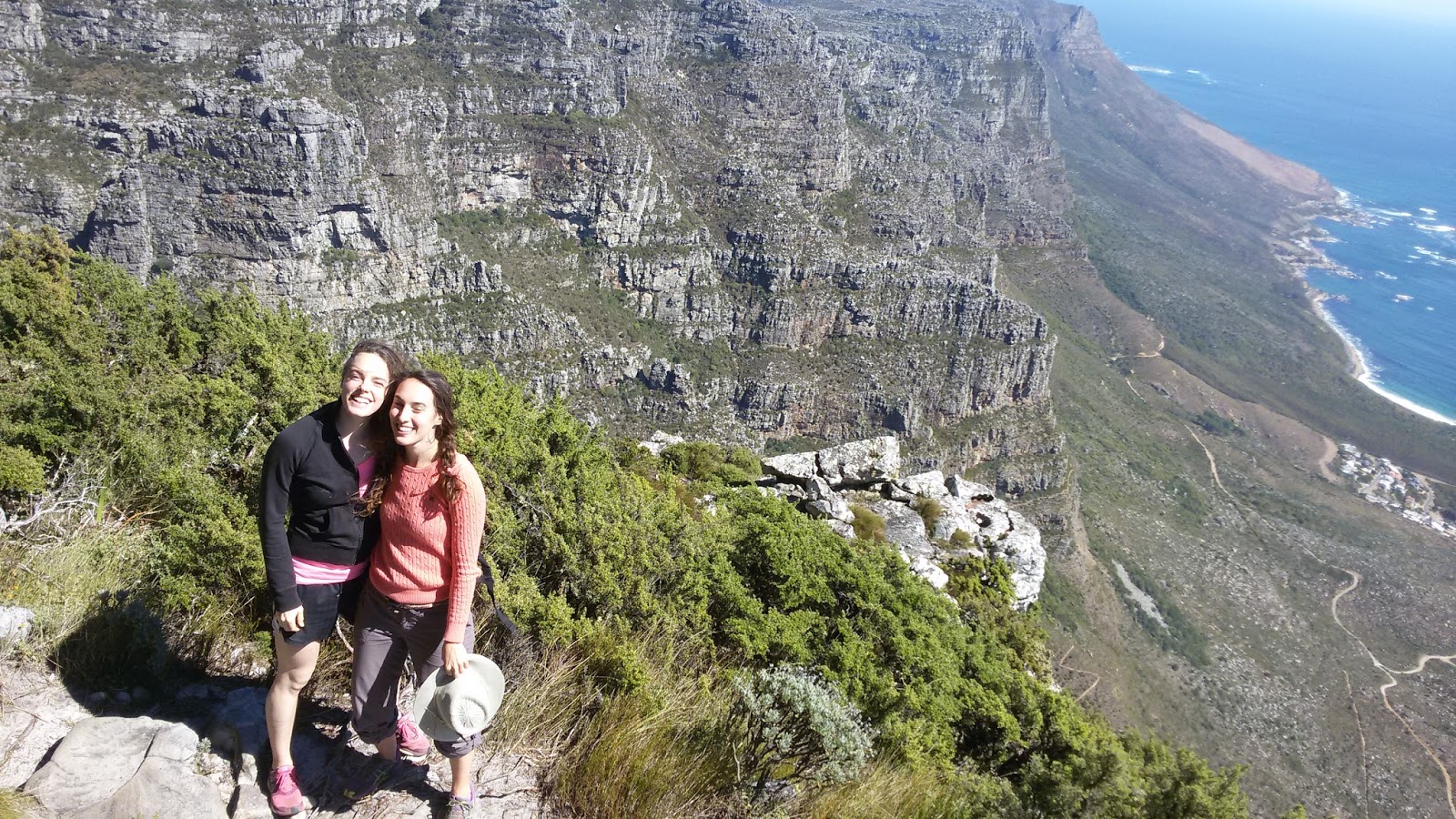
    Reunited in Cape Town: Hiking Table Mountain
    Is it hard to form deep, enduring friendships when you’re always moving around?
    I get that question a lot.
    The answer, as you could probably guess, is no and yes.
    My close friends and family span the globe, but I know I could call any one of them today—or, better yet, show up at their doorstep—and they would offer me all the love and support I could need. Of course, it goes both ways… minus the doorstep, which I don’t always have.
    And then, I typically find it easy to connect with the people around me, wherever I find myself.
    My neighbor? New friend and dance buddy.
    My housemate? New friend and hiking buddy.
    Strangers on a train? You get the idea.
    Answer one: Depth is easy. So no, it’s not difficult to connect deeply—be it for an hour, a week or a month. The more layers of artifice I burn, the more easily, and more deeply, I find connection—everywhere.
    But then there’s that other, more elusive quality: endurance. 
    Does it last? How? And if it doesn’t, how meaningful is a friendship formed in Thailand and set to rest in Laos? How deep does connection really run if it can’t follow me across borders and years?
    Answer two is longer…
    Recently, a close friend from university paid me an impromptu visit in Cape Town. Keeping the spontaneity flowing, we rented a car, picked it up the next day, and drove nearly 1,000 kilometers east, toward the Garden Route (a popular region for tourists) and a particularly beautiful place called Nature’s Valley (though we didn’t know yet that we were going there).
    As we drove on the wrong side of the road through endless stretches of caramel-colored hillsides, we caught up on the milestones of the last year of our lives. As we hiked through fynbos (vegetation unique to the Western Cape) and down to wild, windswept beaches, we discussed philosophy and travel, mistakes and purpose. As we pitched our tiny camping tent amidst rows of elaborate palatial campsites in a dilapidated caravan park, we laughed like no time at all had passed.
    Time had passed. Clear from the very new lines around my eyes and the shifting sands of love, death and discovery that shaped the contours of the interim months—or was it years?—of our lives.
    And yet, connection had endured.

    Roadside picnic on the Garden Route, and a very rare selfie.
    I could list a dozen more examples off the top of my head. Old friends joining me for segments of my travels; new friends opening their homes to me when I arrive in their city; strangers offering me a place to sleep, and becoming friends through that inimitable alchemy of giving and gratitude.
    And then there are the other friendships, the ones that take root in the rich soil of new experiences shared, yet wither when transplanted to the barren realms of social media and virtual communication—or perhaps they refuse to leave in the first place.
    Still, these, too, endure in their own way.
    A note out of the blue from a passing acquaintance met several years prior.
    A supportive comment on an article from a familiar face whose name I had forgotten.
    An unexpected coffee with a high school friend with whom correspondence had been sporadic and stunted.
    Silence doesn’t always mean disinterest.
    I should know, since I rarely hear from many I consider my closest friends.
    Distance doesn’t mean detachment.
    I should know, since I repeatedly choose to be continents, miles and time zones away from my loved ones.
    Staying in touch is remarkably difficult for an era of unprecedented “connectedness.” I have nothing to brag about—those who know me will be sure to tell you—but I am constantly working to do better.
    I’ll repeat: distance doesn’t mean detachment. 
    Connection is there. Depth is there. Consistency? We’re all working on it. 

    Forced to choose between travel and connection (that is, vagabonding and bonding), I’ll choose “C” every time. No and yes. Both. I think it’s possible.

    ***
  • Playing Tourist—Because, Penguins

    More tourist-ing on the way to the Garden Route.

    Sometimes, it’s fun to play tourist in your own town—or, you know, any town.

    Funny, coming from me, the anti-tourist. I know.

    And sure, I believe the following to be true:

    1) There are no “have to’s” in travel. (No must-see’s, no can’t misses. Things are only as meaningful as the value we ascribe to them.) 

    2) Tourist traps are just that—traps. (You want me to pay how much to play with a tiger? Which, by the way, I’m pretty sure has been drugged.)

    3) There’s nothing better than simply being wherever we are. (Sitting at my “local” cafe all day reading? Check. Wandering aimlessly through a new city? All the time.)

    Still, once in a while, the tourist things call.

    Because, well, penguins.

    Need I say more?

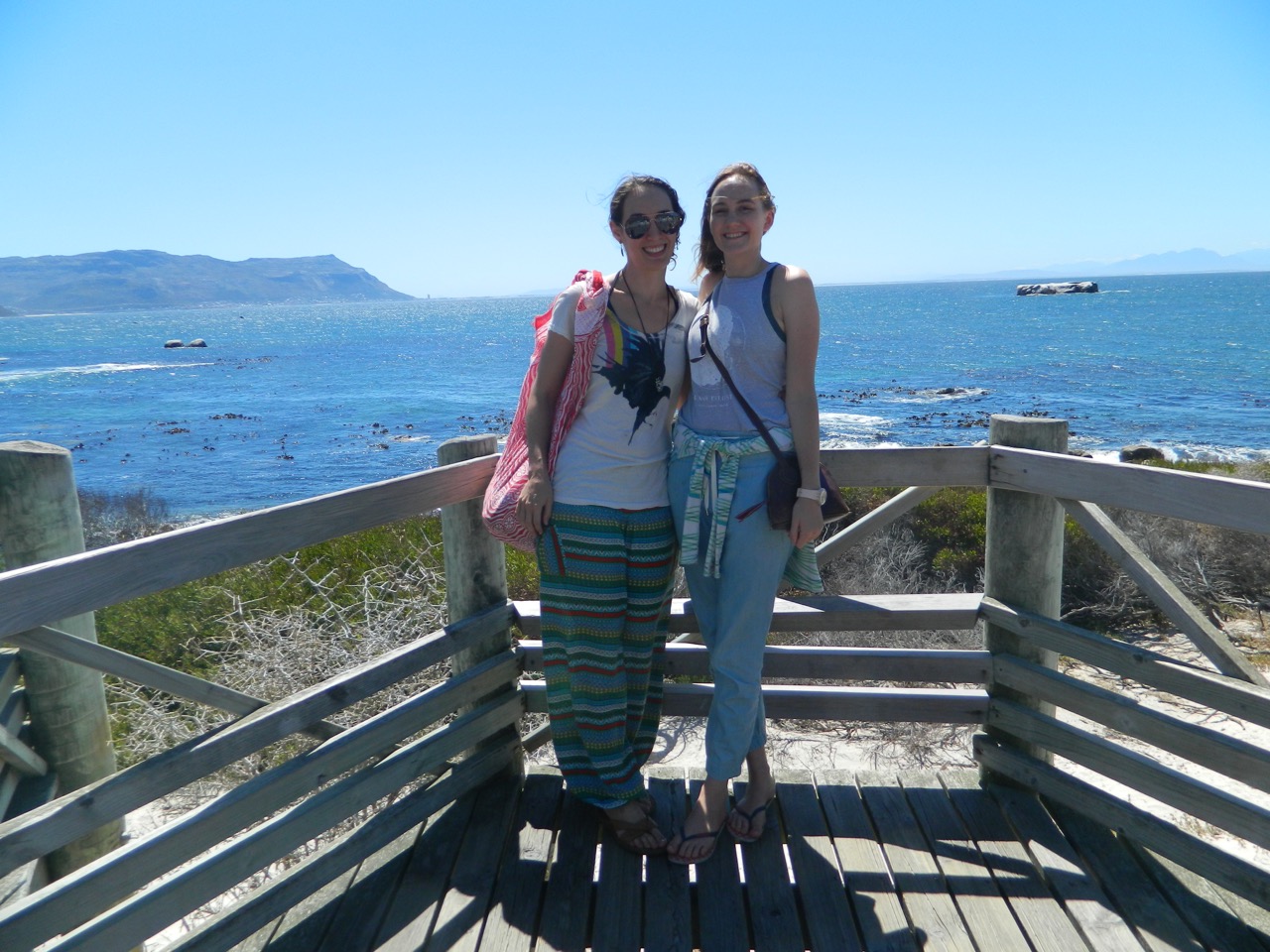
    Tuesday before last found me and a friend driving south out of Cape Town, bound for Boulders Beach and Simon’s Town.

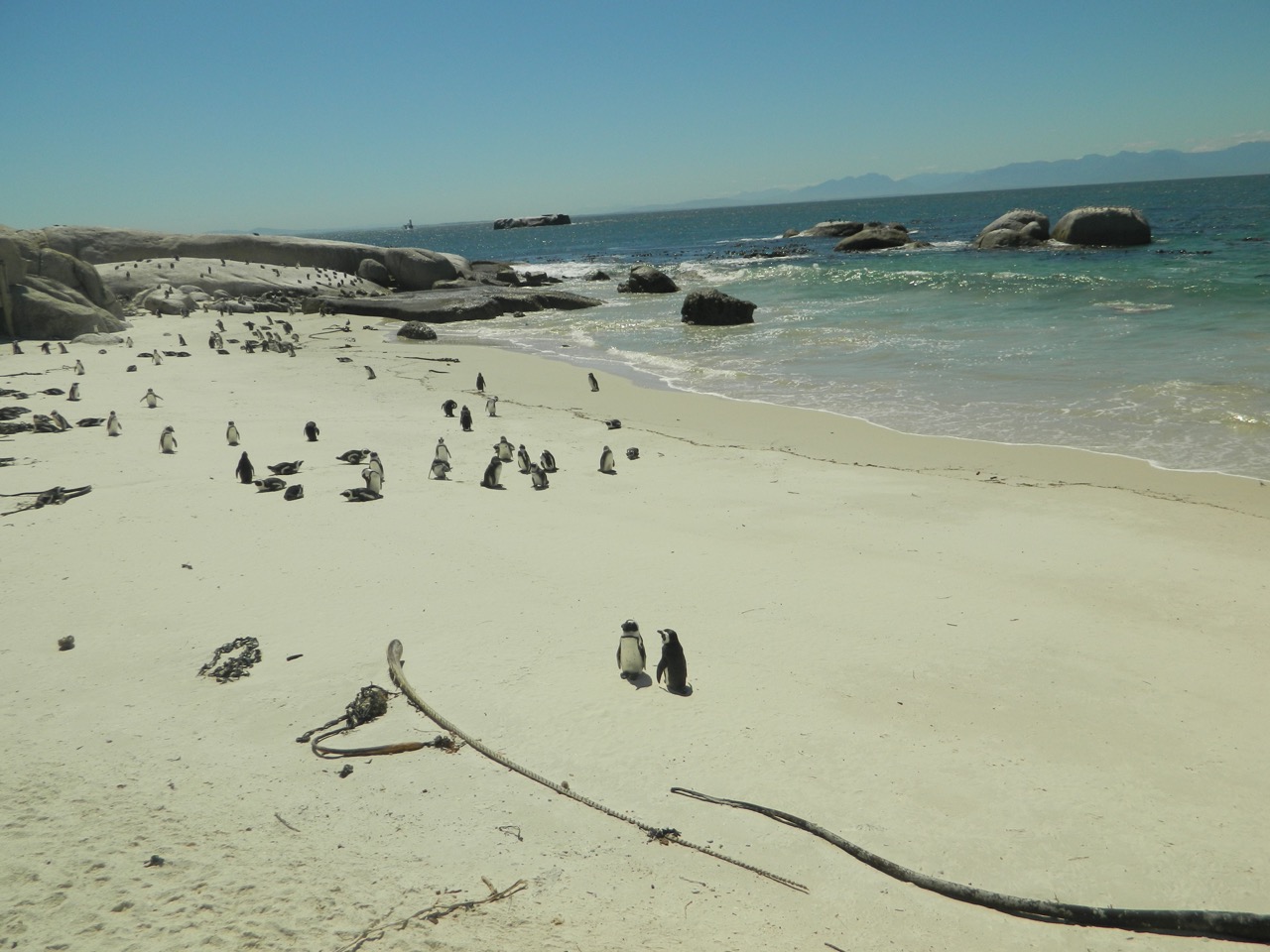
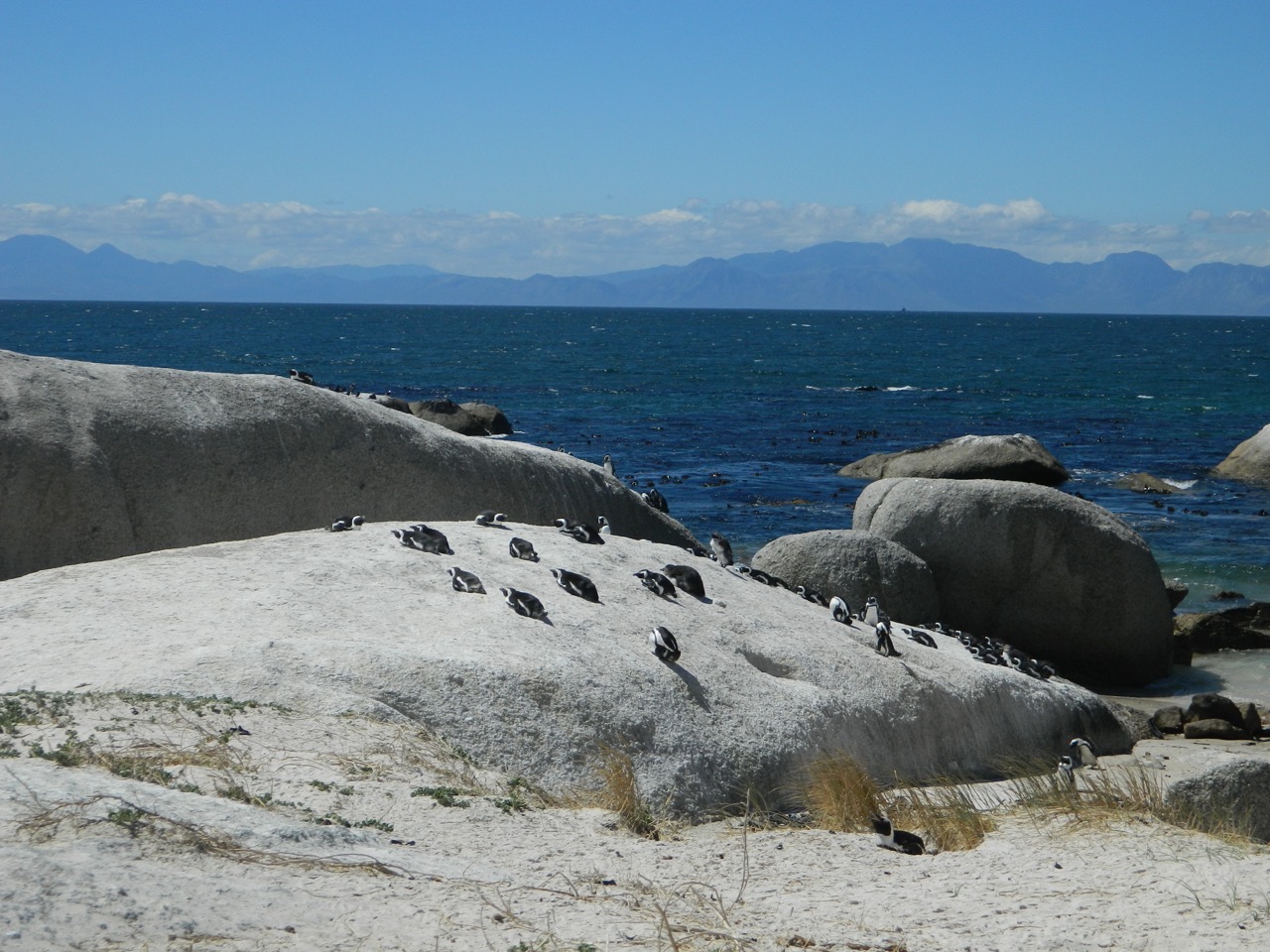
    Boulders Beach, if you didn’t know, is home to the largest colony of African penguins in town. They come for the slightly-warmer-than-icy water, and stay for the spectacular turquoise water and blinding white beaches.

    Oh wait, that’s us. The penguins just come for the warm water. Thousands of them.

    Flop.

    And yup, they are adorable.

    So there we were, one local and one wannabe-local standing on the viewing platforms along with dozens of other camera’d, sunblock’d and visor’d observers, utterly entertained.

    Funny, because the penguins seem committed to accomplishing as little as possible during their stay at Boulders Beach (the ultimate beachgoers). I watched one duo (African penguins mate for life) for a solid ten minutes, and neither moved a muscle.

    “Do you wanna do something else?” “No.” “Good, me neither.”

    They are also brilliant waddlers and unrivaled loafers.

    Afterward, we ate fish and chips, wandered through beachside shops oddly reminiscent of New England charm, and reviewed our pictures.

    These are our happy penguin faces.

    Sometimes, it’s fun to play tourist.

    You get to see penguins, climb spectacular mountains or window shop on streets overflowing with “custom designed African culture.”

    Shop on Long Street—my favorite street for tourist-ing.

    Fun. Nothing more, maybe, but nothing less, either.

    Many penguin acquaintances were indeed made.

    ***
  • Cape Town Snapshots

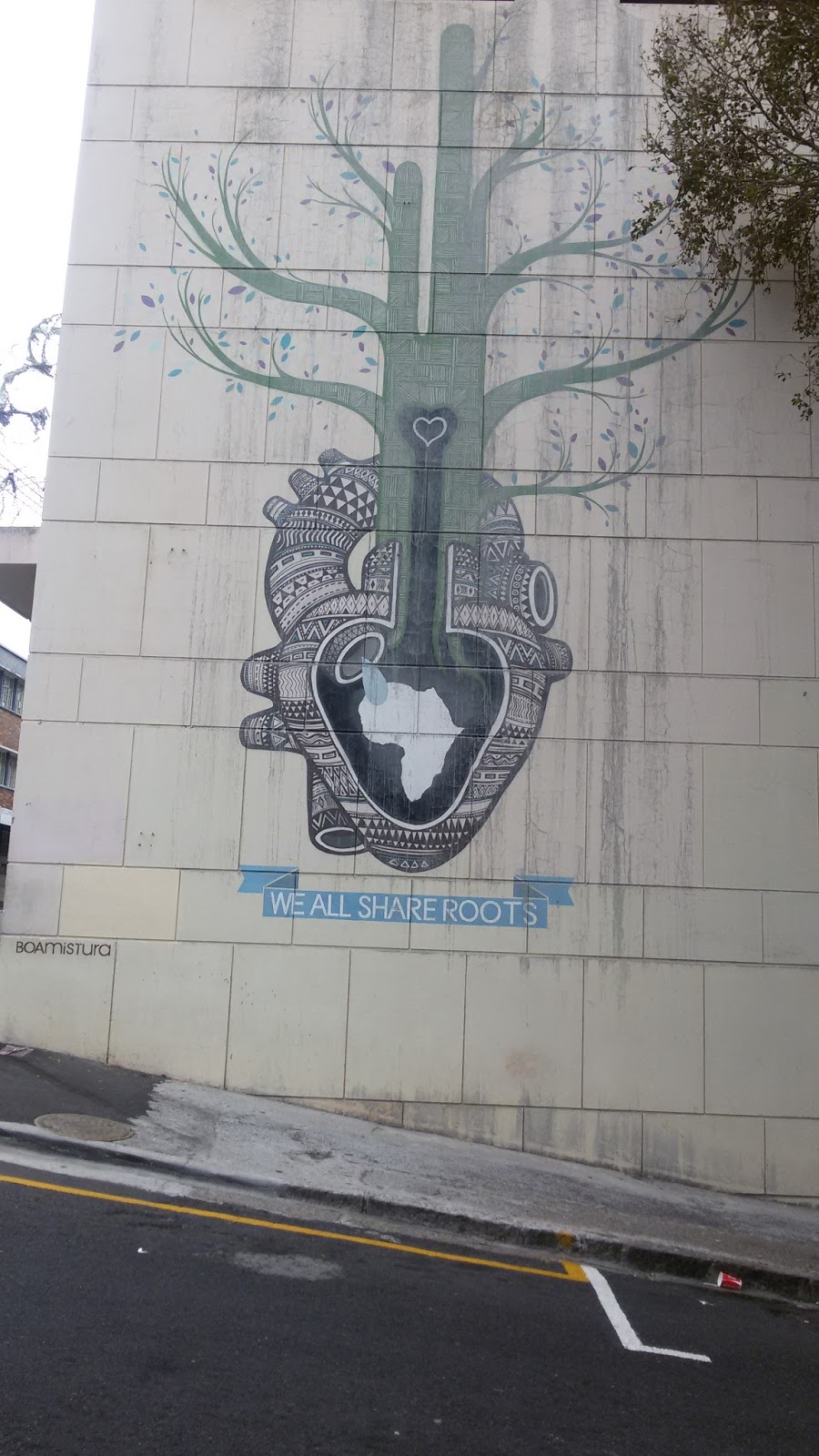
    Street art near Assembly, Cape Town.

    Are these snapshots I share so often an exercise in lassitude or creativity?

    I’ll admit I write them when I can’t think of a full article I want to lay out. At the same time, I think they might capture more of life in fewer words than any other format. I hope they serve to inspire your imaginations and whet your appetite to form your own snapshot memories of these places.

    Cape Town Snapshots:

    ***

    Two long-legged, long-necked birds cross the road near the Civic Center. One, then the other. Each looks both ways, takes a few steps, stops, looks, and steps again. Traffic flows around them. Their mother must have taught them about looking both ways.

    ***

    The wet sand along Long Beach, Kommetjie reflects the mountains in the early morning light. My friend’s golden retriever, a streak of ocher against shads of blue, plays in the surf.

    ***

    Saucer-eyed children materialize around the outdoor table off Long Street where my friend and I have just begun to eat our vegan lasagna and salad. Plant, the restaurant is called. The danger of sitting outside to eat in Cape Town: the reality of the city is on the same side of the window as you.

    ***

    The white-haired sales clerk at the Simon’s Town boutique is more interested in conversation than sales. “Nobody really needs any of this,” she confesses, “but sometimes you just have to buy something nice for yourself!” She laughs. When she hears my friend speaking in Afrikaans on the phone she says excitedly in her high, soft voice, “You have an Afrikaans friend! She’ll be your friend for life.” We all smile.

    ***

    Heaps of fresh fruit in every supermarket. Most (or all) of it grown here. Mangos, avocados and pomegranates, oranges, peaches and nectarines, papaya, apples, plums and grapes. I am spoiled for choice, wish I could buy some of everything, but know I couldn’t possibly eat it all fast enough. Choose just one or two each time I buy my groceries.

    ***
    We teach the students, all in their last years of high school, how to copy and paste, type in urls on a browser and do basic formatting in Word. I am helping my friend with the class he volunteer teaches on Monday afternoons in Masiphumelele, a township near Kommetjie. I never thought I had any computer skills to speak of—I realize I was wrong.
    ***

    The train to the coastal area south of Cape Town emits a banshee screech each time it heaves to a stop. Pick a compartment with lots of people, and don’t carry valuables, I was advised. The train is full of everyday commuters and seems mundane and secure, but I’ve heard the stories and I know looks can be deceiving.

    ***

    A cross between a motorcycle bar and a hipster cafe (my friend’s words, not mine) of my favorite cafes in Cape Town serves the best coffee and a morning’s worth of decorations to occupy the unhurried observer. No mirrors. In the bathroom, only a bare, framed cement square with black painted letters spelling, “You Are Fucking Amazing.”

    ***
    Thick fog rolls down over Table Mountain as the sun drops and the air chills. The “tablecloth,” this misty white blanket is called. It covers and reveals, slowly, silently. The city hides and reveals, slowly, silently. Every day a new facet. Every day a new mystery.

    View of False Bay from the southbound train.
    [Penguins and beaches—lots of pictures on the way, just as soon as I get them onto my computer!]
  • Kindness as an Act of Radical Subversion

    Where I don’t hitchhike. (C’mon, I’m not crazy!)
    “I haven’t told anyone this yet—not even my business partner,” said Jack.
    Two pairs of bluebell eyes stared at me gravely—Jack’s, and his infant son’s. Our Jeep sat in Cape Town traffic at the edge of the City Bowl.
    Well, their Jeep, to be precise, since I was just the friendly neighborhood hitchhiker.
    Jack’s secret? I’m not going to tell, of course But it had to do with life choices and changes and quitting one job for another.
    Traffic began to flow, and the lush greenery of Constantia Nek blurred outside, then transitioned to cityscape as we entered Cape Town proper. Jack is hardly the first stranger to tell me his life story—nor, I suspect, will he be the last.
    When a hitchhiker enters a car, we enter into a tacit agreement with our driver. We are storytellers, listeners and, most of all, amiable company. We may not offer gas money, but the goods we trade in—words—are far more valuable.
    “I don’t know why I’m telling you all this,” Jack mused as we neared my destination (Jack would continue on to the airport to pick up his wife), “it’s like you’re my unofficial shrink.”
    Yes, we’re that, too.
    As I found my way around during my first weeks in Cape Town I often walked or hitchhiked to get from point A to B. (I’ve since moved into the city, and do less of both.)
    When I walk, I make a point of meeting the gaze of each person I pass (their responses are alternately inquisitive, friendly and mildly hostile), smiling and saying, “hello.”
    When I hitchhike, I introduce myself and make conversation. Those with whom I temporarily share that journey meet my gaze, smile and respond in kind.
    In the past couple months, I have met a fellow Bostonian, a Singaporean family, a young surfer and an aging contractor—just to mention a few. Each one unique. Each one kind enough to stop for me. Hitchhikers are rare these days, though my local friends tell me they were once common.
    What does all this have to do with subversion?
    I will explain.
    In a world that expects the worst, I believe offering the best of ourselves is a fundamental act of radical subversion.
    In a society that sees mal-intent, hate, danger and selfishness everywhere—with or without due cause—what is more rebellious than goodwill, love and selfless support of our fellow human beings?
    I enjoy all manner of privilege and bias in my experience of kindness—as some will be quick to point out. A young white woman? Oh, yes, I enjoy more than my share of privilege.
    This fact is somewhat irrelevant, in the context of this discussion, however (although I will freely accede to its verity). For while none of us controls what the world gives to us—hate, or love; malcontent, or goodwill—each of us decides what we offer in return.
    Rebellion, sometimes, is a broad smile.
    Subversion, maybe, is the wide open arms of anyone who chooses love and trust in this crazy world.
    And in that case, what is more radically subversive than acts of kindness? What is more rebellious than accepting that kindness—with an optimistic smile?

    You may choose your own acts of subversion, make your own revolutions, but this—kindness, trust and love—is the revolution I want to be a part of.

    ***