Tag: south africa

  • How I’m Overcoming the Tension of Teaching Storytelling in Africa

    How I’m Overcoming the Tension of Teaching Storytelling in Africa

    In my first workshop meeting, I share a TED Talk by Nigerian author Chimamanda Ngozi Adichie and she discusses how throughout history those in power—especially colonialists—have dispossessed others by choosing how to tell their stories.

    I am a young, white, American woman facilitating a workshop in Cape Town, South Africa sponsored (I think) by the U.S. embassy.

    The title of this workshop? Storytelling for Social Justice.

    As my “students” introduce themselves at our first of five meetings, they speak with courageous vulnerability about identity, hope, passion, and overcoming adversities I can scarcely imagine—genocide, violence, disease, loss.

    They are mostly African, mostly POC, and mostly ten years older than me.

    Sitting at the table with these eight extraordinary individuals in a bland classroom in the “American Corner” of the Central Library, I facilitate a discussion about “finding our authentic voice.”

    Am I following in the well-worn tracks of those colonialists and neo-colonialists who sought to dictate how the stories of the African continent should be told?

    Am I, too, somehow disempowering my students by seeking to facilitate their storytelling? Is “facilitate” just a nice word for “control”?

    Damn, I sure hope not.

    But I also hope that my race, age, and nationality do not disqualify me from sharing what I know with this exceptional group of human beings. They have honored me with their trust, their time, and their attention—and I feel humbled and motivated in equal measure. I want to support them in telling their stories, and I want to do it in the right way. So, as I do, I’ve spent a lot of time thinking about what the “right way” would be.

    I’ve never quite faced a situation like this before. I’ve taught dance and yoga, but writing is another level. When we talk about telling stories—our stories—we step into sensitive territory.

    For too long academia has arrogantly claimed ownership of the world’s stories. For too long,  media and politics have propagated incomplete stories, visiting a kind of violence on their subjects by flattening them into one dimension. For too long, those who possess privilege and power have thought to police the self-expression—the stories—of those who have less.

    And on and on and on…yes, storytelling is sensitive territory.

    But, I’m still facilitating the workshop. This is how I’m moving past these stumbling blocks:

    1. I choose the word “facilitate” over “teach.”

    I would not presume to teach a group of people older, wiser, and more seasoned than me. I prefer to understand my role as that of facilitator, enabling my workshop participants to learn from one another and from my experience. (I also expect to learn just as much from them as they do from me!)

    2. To that end, I focus on the knowledge I do have to share, which may be of value.

    Introducing this workshop, I told my group that I came to them primarily as an editor who has worked on thousands of articles and several full-length books. I also come to them as a writer who has published for years on many online platforms. I believe the knowledge I have gathered from that work could benefit anyone wishing to improve their writing skills.

    3. I accept the tension.

    I think there is an inherent tension to my position. There are layers of nuance whenever a person steps into a teaching role, travels in foreign countries, or enters any cultural context other than their own—and I’m doing all three. That’s okay. I hope that by keeping those nuances in mind I will manage to avoid any particularly inappropriate gaffes.


    ***


    Photo Credit: Zen Monkey Photography
  • The Wild-Tame Peculiarity of Safari (and 10 Wild Photos)

    The Wild-Tame Peculiarity of Safari (and 10 Wild Photos)

    Sabi Sand Game Reserve, Mpumalanga, South Africa

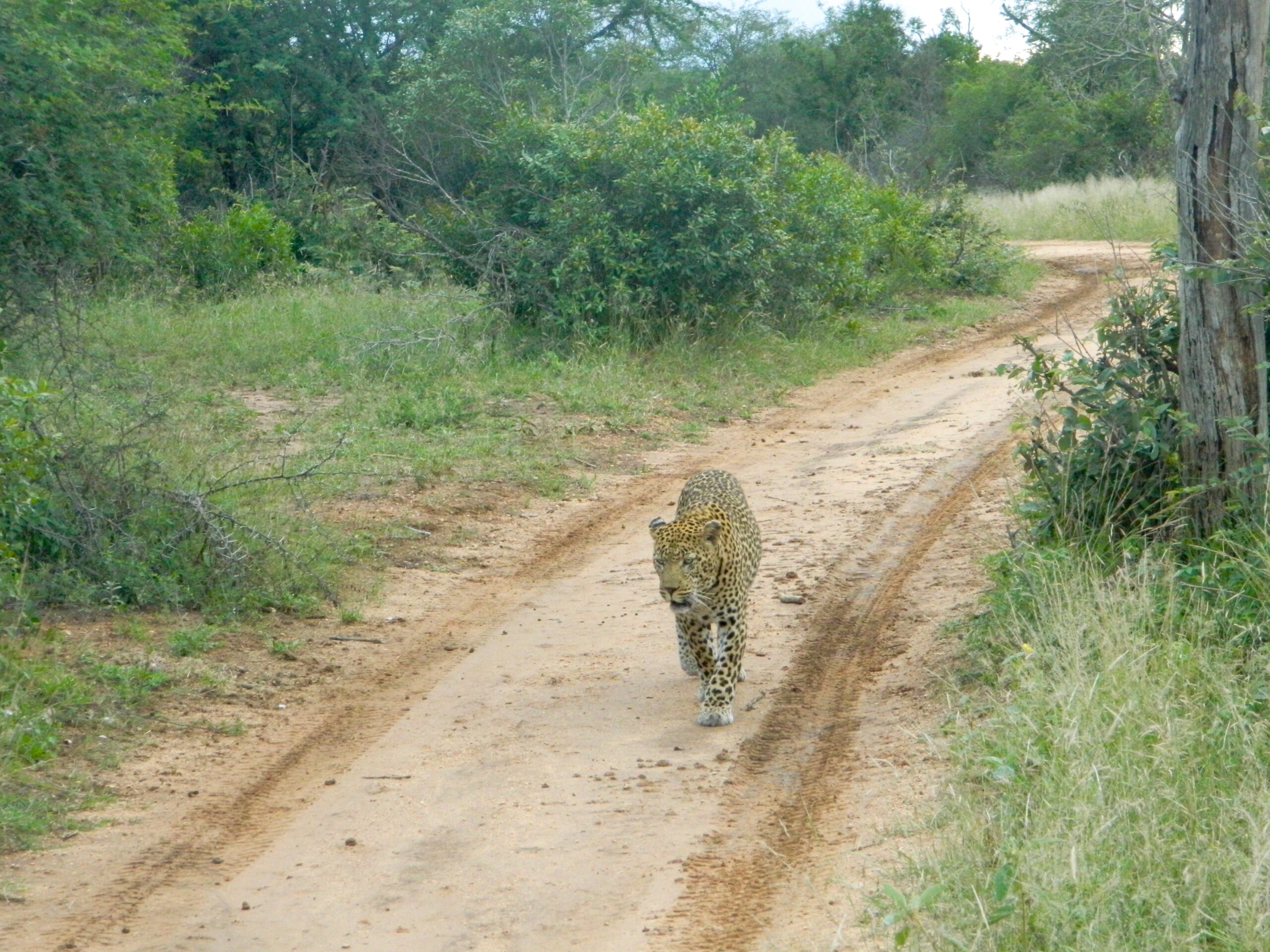
    A male leopard wakes from his nap and stretches lazily.

    Three safari cars—Land Rovers, I think—have parked just meters away.

    The leopard yawns, stretches again, and begins to move.

    His eyes are amber-grey, and he gives us only the briefest of disinterested sidelong glances before deciding to ignore us entirely and amble along the road. He remains impervious as the three cars crisscross his path to allow their passengers optimum angles—a bizarre new animal behavior pattern to which he and many other species in the bush appear wholly adapted.

    At one point he passes so close to my side of the car that I can see the individual hairs that make up his spots and the supple play of muscle beneath his skin.

    ***

    There is something both bizarre and breathtaking about finding yourself within hand’s reach of a wild animal and knowing that you’re safe.

    That is the wild-tame peculiarity of safari. Or, at least, of my safari.

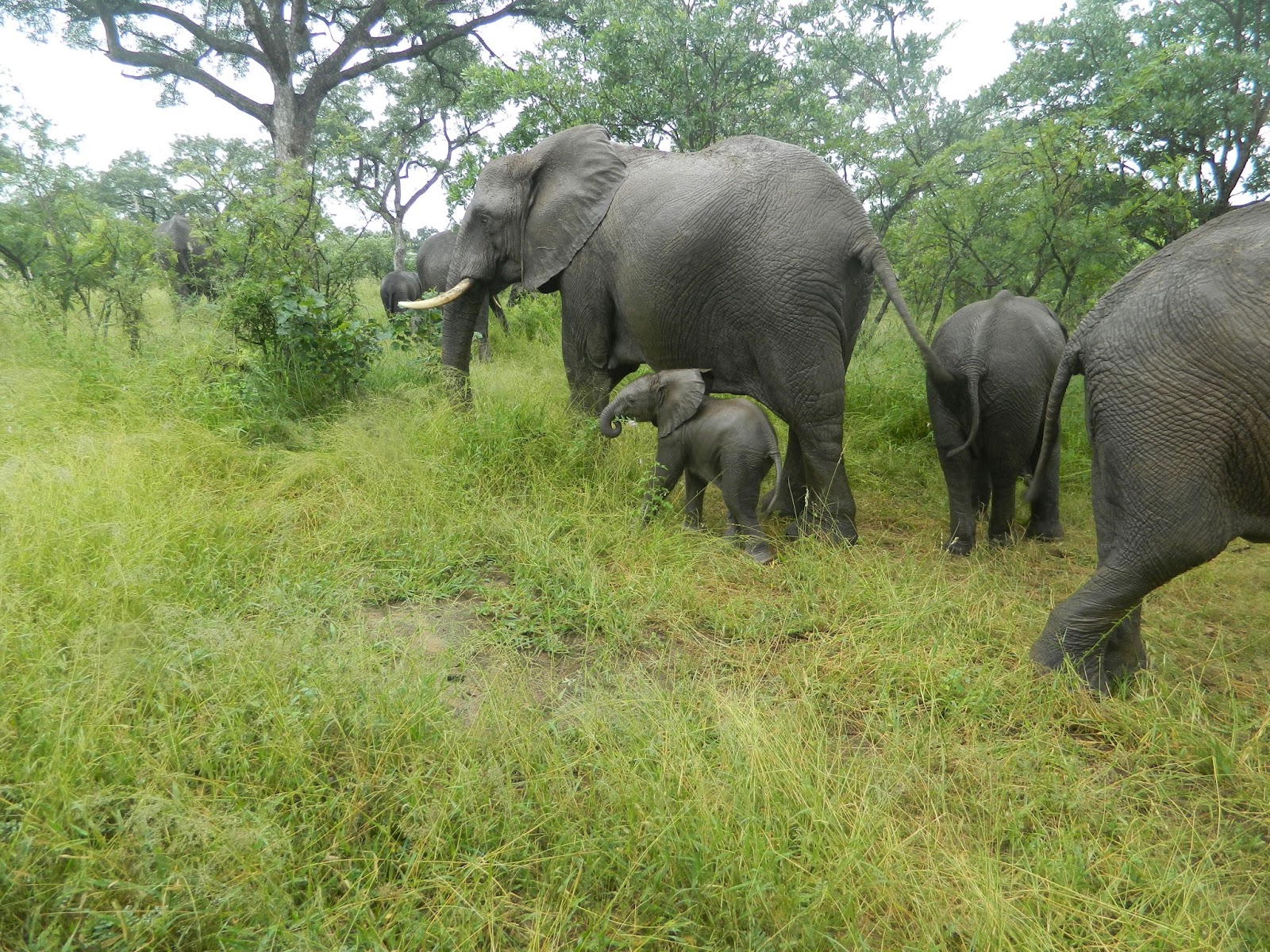
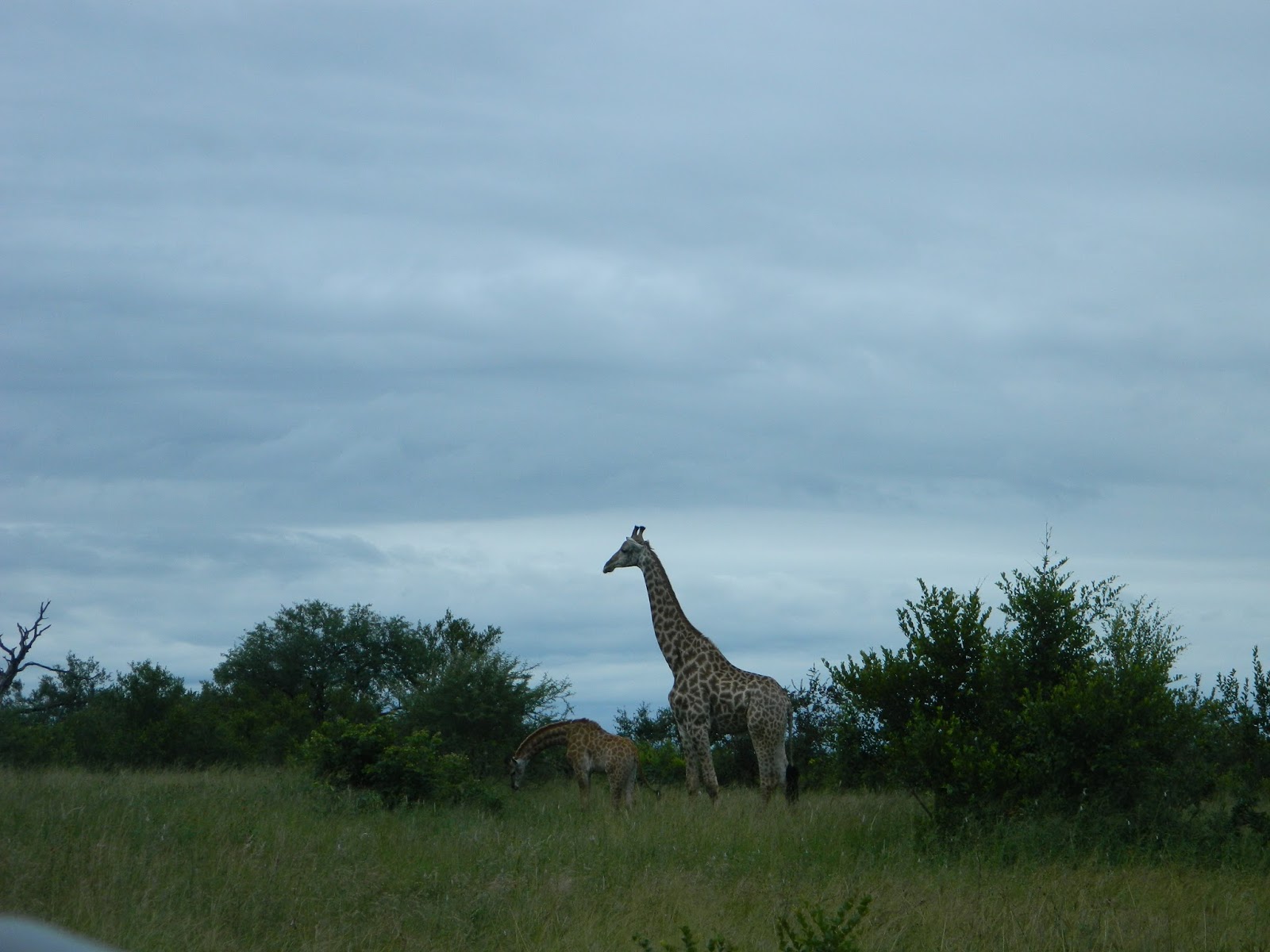
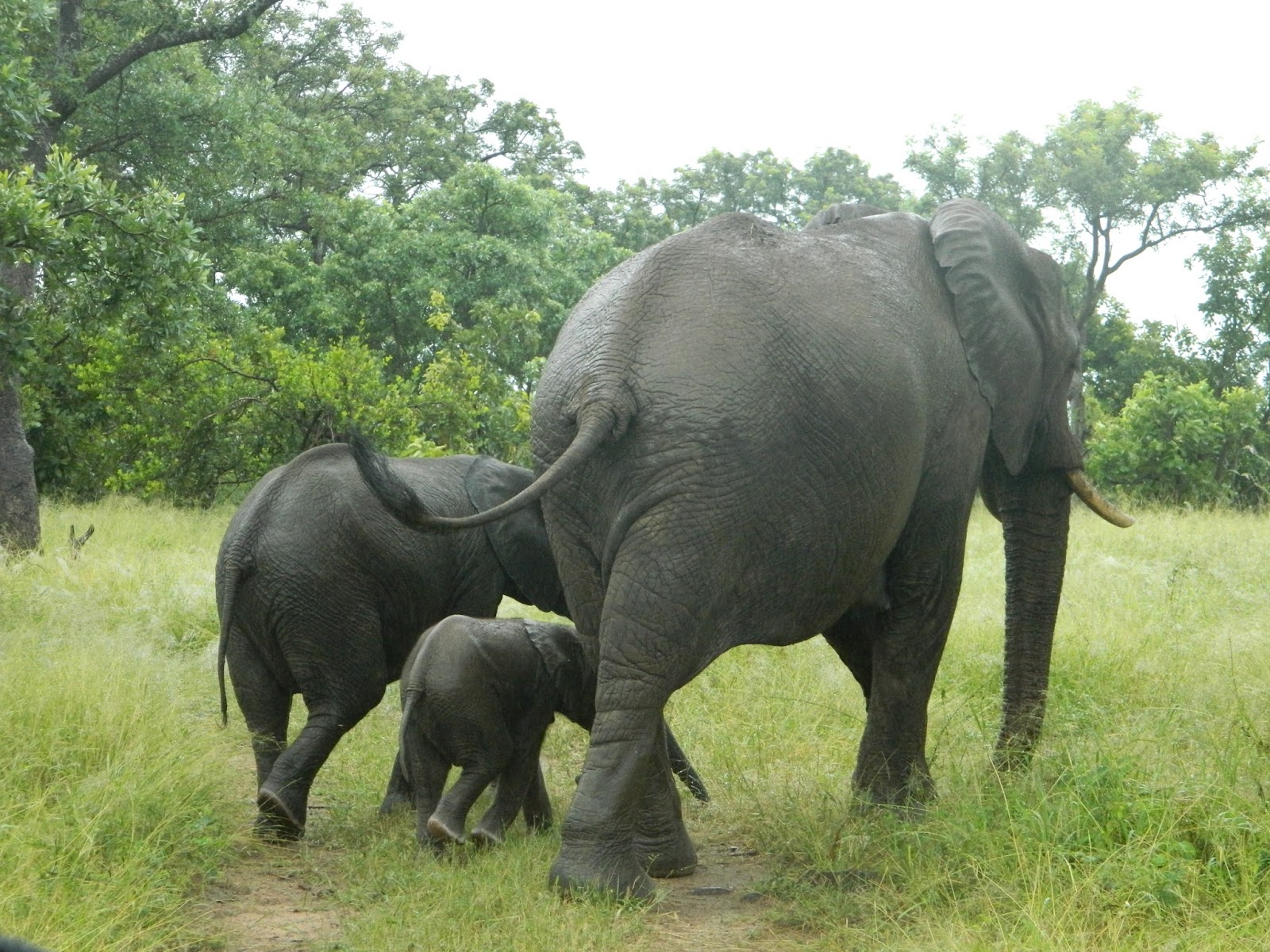
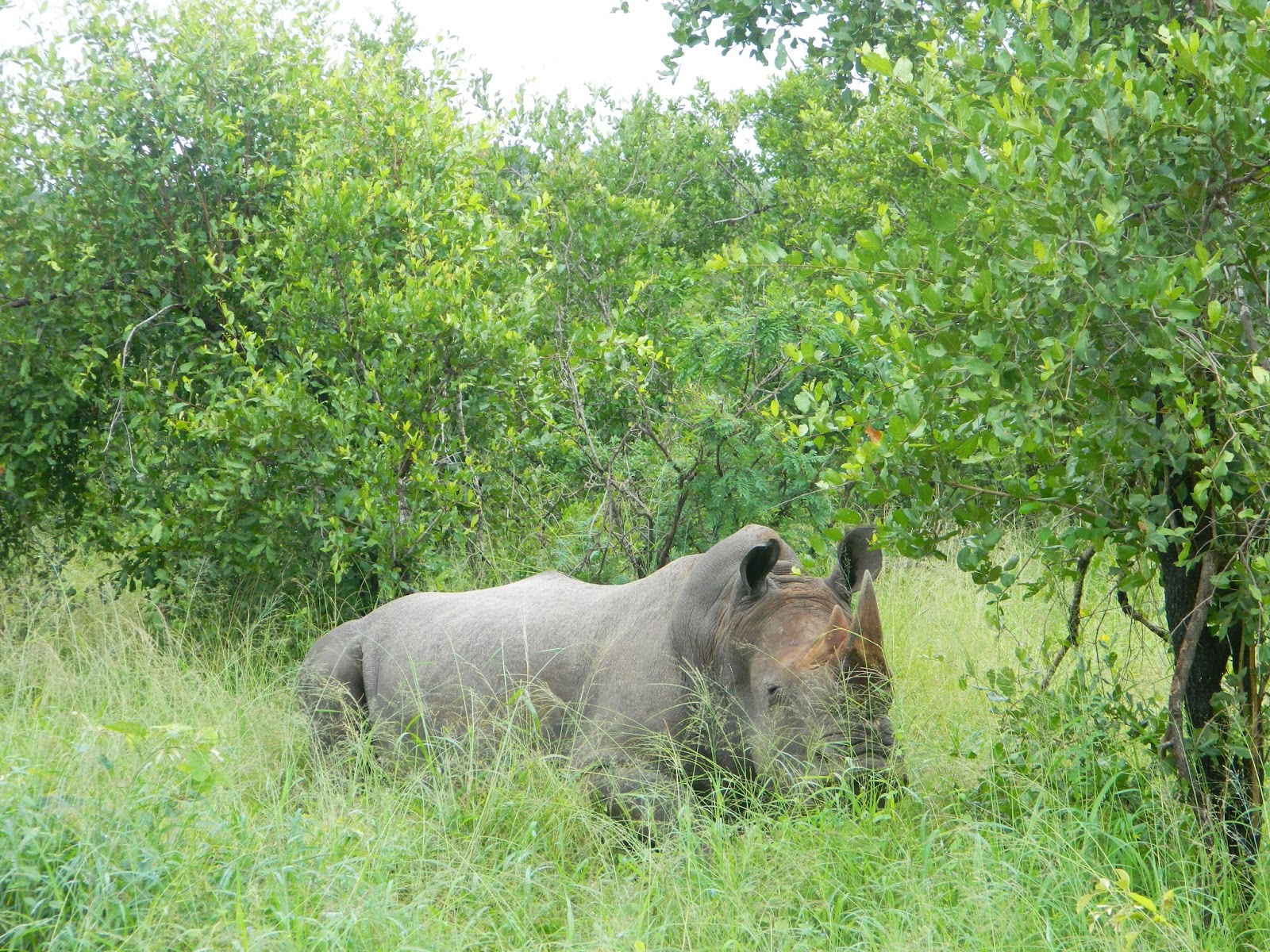
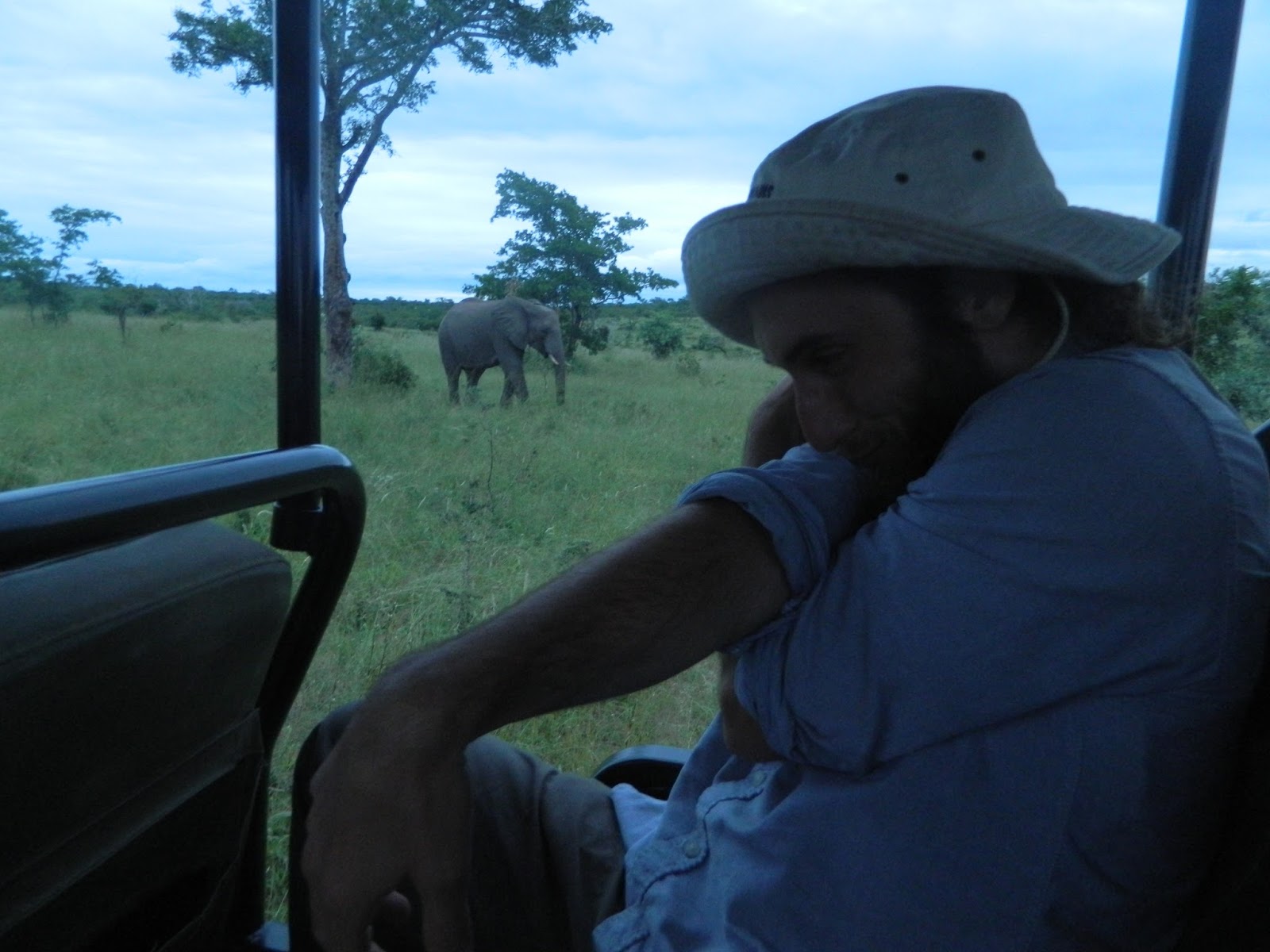
    Over the course of three days, my family and I found ourselves nose-to-nose with elephants, zebra, giraffes, leopards, and lions, thanks to the skill of our third-generation guide and the collaboration of the game reserves. We observed hippos, white rhinos, hyenas, and vultures from just a couple meters away.

    The sheer size, power, and wildness took my breath away—and it made me wonder about this paradoxical dynamic whereby wild animals accept wacky, camera-toting tourist behavior as the norm and an ecological system seems to evolve to accommodate it.

    Predator and prey alike enjoy the ease of travel on dirt roads cut for the convenience of safari trucks. A mother leopard defends her cubs against hyenas as you would expect, but observes our approach with indifference. Some—though not all—impala (a species of adorable antelope) fail to shy away at the no-longer-alien sounds of car engines and human voices.

    One thing is certain: This industry is a boon for the anti-poaching efforts across the safari-regions of the African continent. It brings revenue to places that desperately need it, and government protection to the wild animals responsible for it.

    Perhaps even more important, it has the potential to raise awareness about and appreciation for species and environments slipping into endangerment or collapse. A key element of environmental protection not to be underestemated.

    I hope to share more as I learn more, but in the meantime, here are some “up close and personal” photos of the wild animals that allowed us to share their space:

    Mama leopard with cubs.
     
    Fun fact: A herd of zebras can also be called a dazzle.


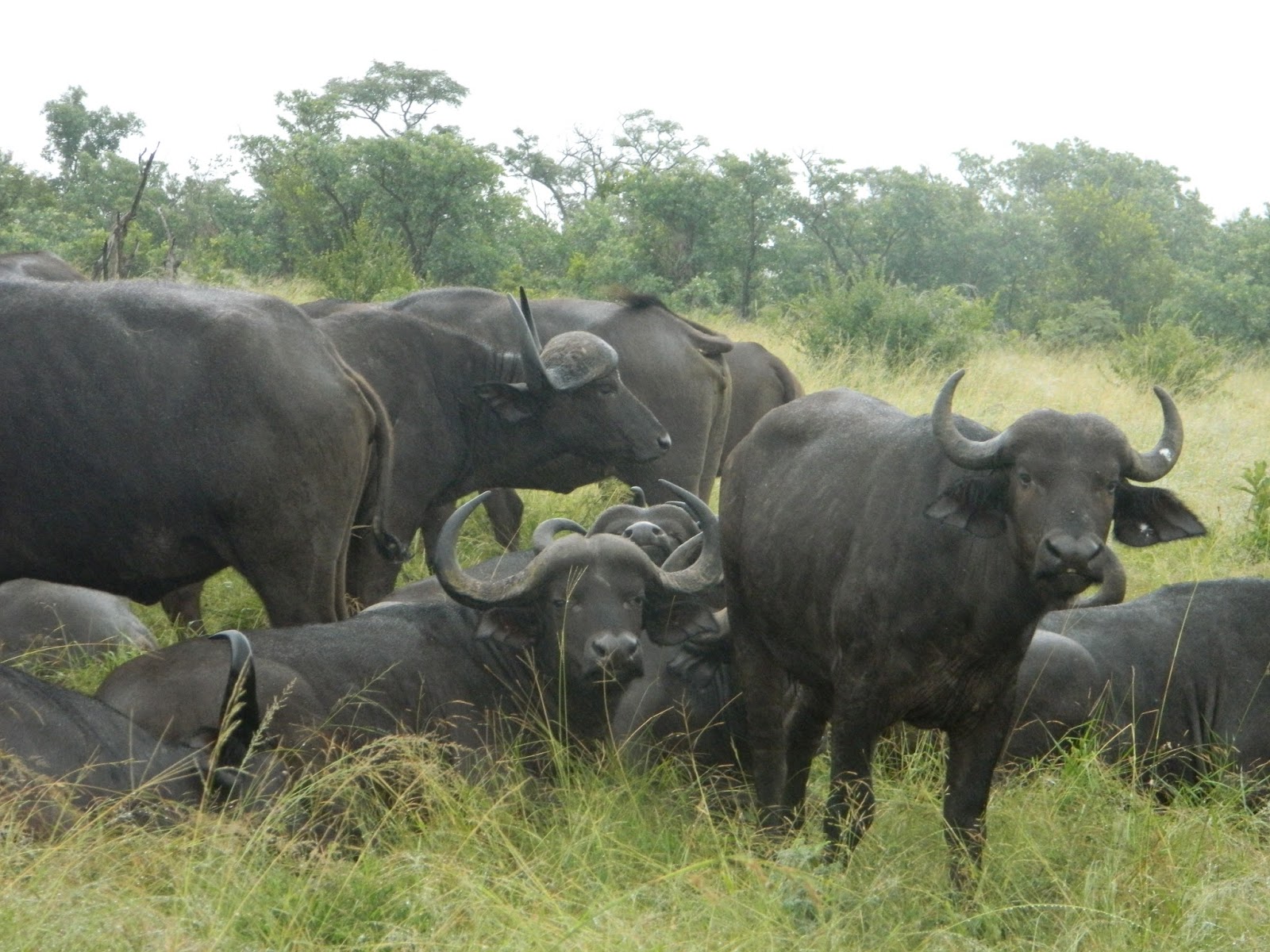
    “They look at you like you owe them money.” — Unknown, on water buffaloes
    No introduction needed.
    Who wants to go for a swim?
    So many elephants!
    The animal that evolution seems to have forgotten.
     
    My brother, the rarest of the wild animals.
  • Don’t Take My Word For It

    Don’t Take My Word For It

    Everything I have ever written, everything I will ever write, represents an infinitesimal slice (mine) of an infinitely complex whole.

    I may speak of the universality of experiences such as fear, joy, loss and love. And I do believe in the value of sharing knowledge. But still, someone else’s words will never be enough.

    A single truth only brings us so far.

    I can write that it is Saturday, that I am in Muizenberg, South Africa, that the sun is hot and high for so early in the day. And that is all true.

    I can write that I am sitting at one of the southernmost edges of the world watching the waves roll in against a backdrop of rocky peaks; that the wind and my hair and the sky taste of salt; that my shoulders ache from surfing; that seashells crunch under my feet as I walk. And that is all true.

    But this information is mine only. What of yours?

    The Buddha was fond of saying, “Don’t take my word for anything; go find out for yourself.” (I’m paraphrasing here.) In the Jewish tradition, debate and inquisitiveness are encouraged. We are not to simply take another’s words (or even doctrine) as truth, but rather—to fall back on a much-overused phrase—to discover our own.

    I believe much of the world’s wisdom boils down to this:

    Go and see.

    Today, I was going to write a snapshot of Muizenberg, a small coastal town just a thirty-minute train ride from Cape Town. But I changed my mind.

    You can Wikipedia that, and I think this is more important.

    “Go and see” does not necessarily mean, “Drop everything and go travel the world.” Although, if that is within your means and your calling, I certainly recommend it.

    “Go and see” means, “Experience the world—any world, your world—for yourself. Don’t just take my word for it.”

    Perhaps you won’t venture to the southernmost edge of the world, but touch the edge of something.

    Maybe you won’t be crossing international borders, but find a limit, a frontier, and surpass it.

    You may not “watch the sunset from every coast,” but you can watch the sunset every evening—and if it’s the watching that counts, then that’s kind of the same thing.

    There are many ways to seek, many ways to wander, many ways to cross borders; I share only mine. And while I hope you enjoy seeing a certain world through my particular gaze, I also hope you will go and see, because these words, these truths, are only the beginning.

  • White Spaces: Combatting Racism with Subtle Awareness

    White Spaces: Combatting Racism with Subtle Awareness

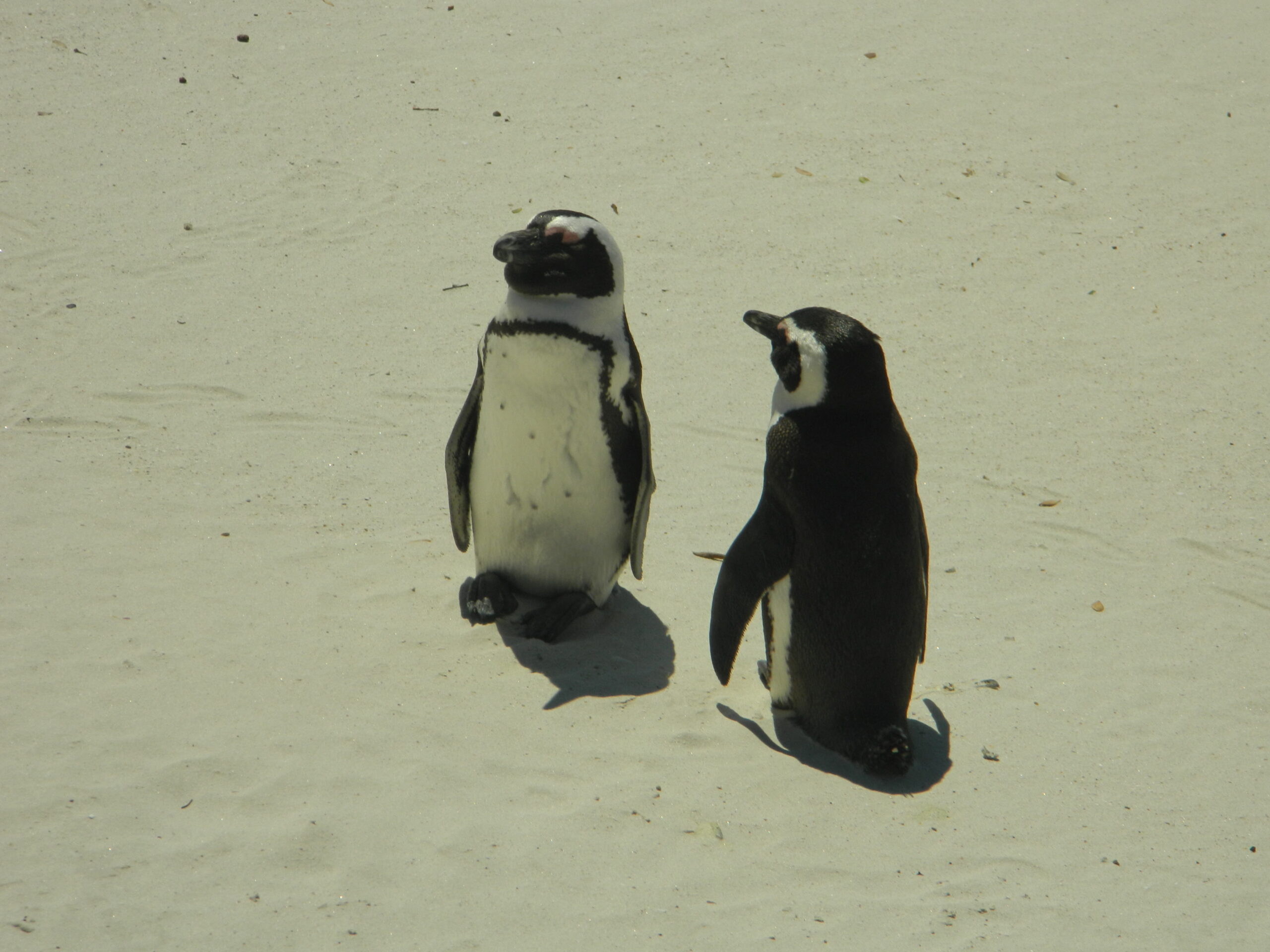
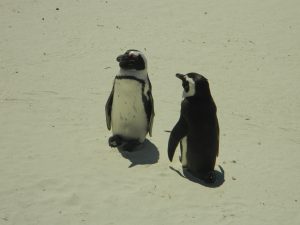
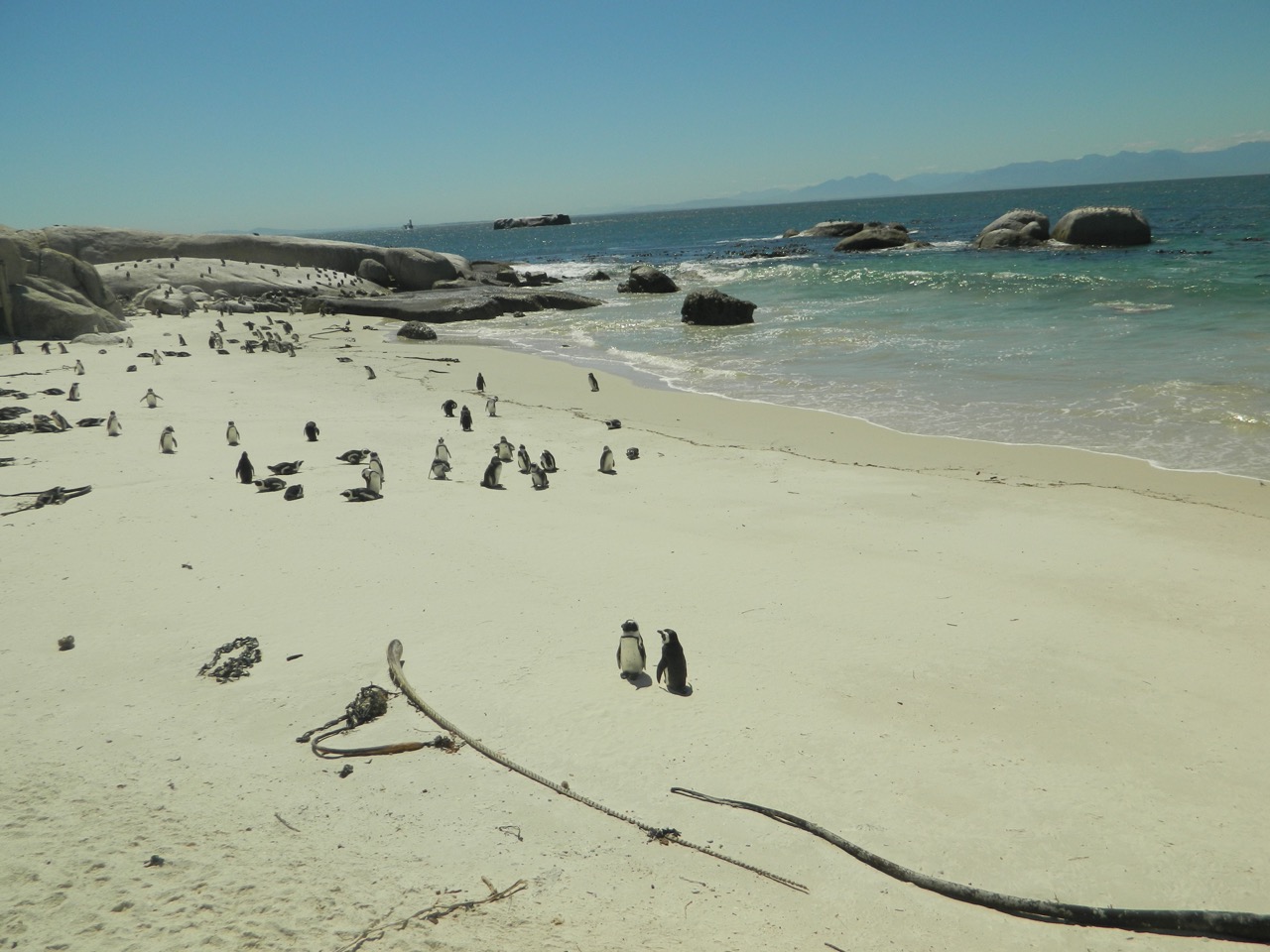
    Here’s a totally irrelevant picture of penguins to lighten the mood…

    Late December, Sea Point, Cape Town

    The walls and tables are painted a matte black, with the name of the cafe written in white. The decor is rustic-chic—a style I’m beginning to identify as a hallmark of upper-middle class Capetonian hipster culture. Bonobo plays on the stereo.

    When I look around, I’m not surprised to see that all of the customers here are white. The servers (just as predictably) are black, but let’s leave that aside for now.

    While the prevalence of these “white spaces” no longer surprises me here (or anywhere, for that matter), I still find them troubling: the climbing gym, music venues, bars, cafes…

    A conversation with my new housemates this morning brought this subject to the front of my mind, though I’ve repeatedly followed this line of thinking during my time in Cape Town—both this year and last. And I think it’s pretty relevant to any society (not just South African) that is both highly stratified and intricately diverse.

    Disclaimer: This is one tiny, ~800-word slice of a massively complex issue. I am not offering any solutions. If I make you stop, think, examine, I will be more than satisfied.

    So.

    The reason for which these white spaces exist are plentiful and fairly obvious. A massive wealth gap divided along racial lines, cultural differences in taste and recreation—the list goes on. Rather than discuss why we have them, however, I’d like to focus on how (or even if) we can confront this phenomenon.

    To be precise, I would like to share how I confront it, in the hopes that it may help someone else. Note that I’m sharing from my position as a white woman experiencing “white spaces”—I’d be curious how the response changes (or doesn’t) when the deck shifts.

    Situation One:

    You walk into a funky little cafe, bar, concert, fill-in-the-blank, and the homogeneity of the whitewashed crowd immediately strikes you, given that you’re in a country whose population is less than 10% white.

    Here’s what you don’t do: You don’t turn around and walk out, because you actually dig this band, the coffee’s awesome, or you’re getting super hungry. You don’t harangue your fellow customers with your guilt-laden complaints about the bitter vestiges of apartheid ruining your cappuccino, because that’s pointless. And you don’t call up your non-white friend to see if they want to hang out—immediately—because, well, I think it’s obvious.

    Here’s what I actually do; it’s something I’d call subtle awareness, and I believe it to be meaningful:

    > First, I acknowledge that I have indeed entered a glaringly white space. I’m not going to ignore it or deny it. The first step to addressing any issue is being aware of it.

    > Second, I examine my motives for being here. Am I drawn to this cafe because it is comfortably, familiarly, safely white? Or have my 25 years of cultural conditioning simply predisposed me to seek out cafes, bars and activities that equally appeal to others of my socioeconomic and cultural background? It’s probably the latter, but it’s always good to check in—honestly—with myself.

    > Lastly, I enjoy my goddamn cappuccino and write this blog while I’m at it, because at this particular moment, what else am I going to do?

    Situation Two:

    You start to notice a pattern. You seem to be consistently ending up in these homogenous spaces, and you’re worried that it’s not helping you become a more aware, cross-culturally fluent or educated individual.

    Here’s what you don’t do: Dig in your heels and maintain your status quo, all the while patting yourself on the back for being more enlightened than “those” people at the table next to you. You don’t immediately dump all your friends and hobbies and look for better ones, either, because that’s silly.

    Here’s what I’ve done in the past:

    > If I think I’m ending up in these spaces because my neighborhoods of choice are problematically homogenous, I may choose to spend time in other, more integrated areas.

    > If I notice that one of my activities (like salsa dance) or one of my favorite bars appears to be more inclusive, I may give that preferential treatment when deciding how to use my time.

    > If I observe one of my regular cafes promoting exchange and openness of any kind, I will offer it my patronage more frequently.

    I don’t know that any of these actions are solutions, really, but I believe they are steps we can take as individuals to ensure that—at the very least—we are not unconsciously supporting subtle segregation in our cities.

    And, I’m not saying there’s not a time and a place for homogenous spaces. Religious, ethnic and other identity groups have every right, and valid need, to assemble as such; however, when we never step beyond our insular spaces, everyone loses.
    Don’t you want to meet and learn from as many (and as many kinds of) people as possible? I certainly do.

  • Coffee Culture, Slow Food, and Why Cape Town Has Both

    Coffee Culture, Slow Food, and Why Cape Town Has Both

    cape town coffee culture slow food

    A side alley off Buitenkant Street, Gardens, City Center, Cape Town

    The first sip is bitter, sour, almost acrid, before my palette adjusts and the taste mellows into a more complex configuration of nutty, earthy, sweet and rich.

    This is good coffee.

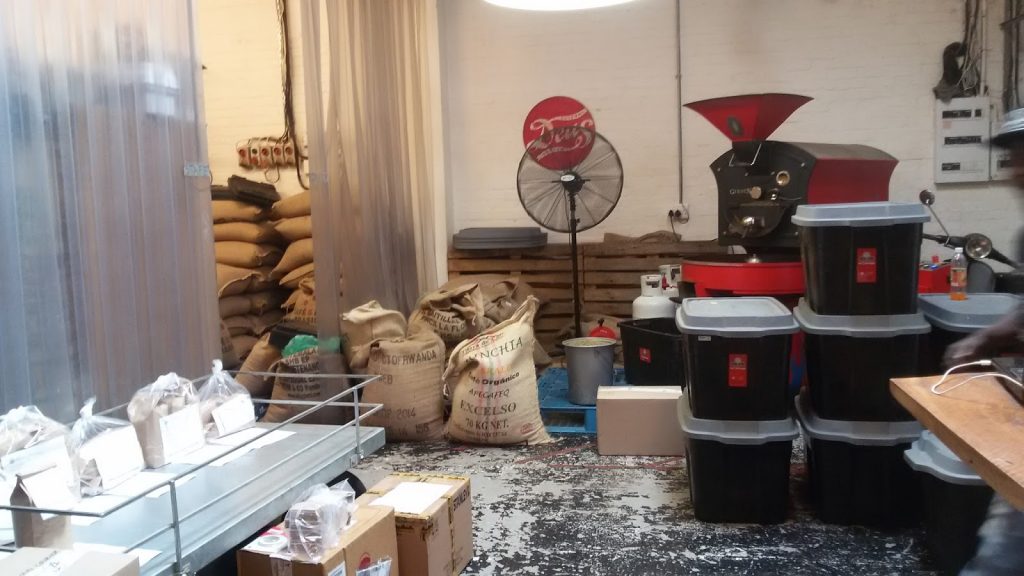
    I’m sitting at my favorite Cape Town cafe, Deluxe Coffee (also called YARD, the Dog’s Bollocks and the Bitch’s Tits), where motorcycle parts, vintage bicycles and canvas sacks of wholesale coffee beans make for original decor.

    I’ve occupied this stool at the counter for well over an hour now, and nobody cares. Par for the course.

    Cape Town has an exceptional coffee culture. (The reason I’ve consumed more coffee in the past three months than probably the last three years prior—well, that, and the fact that a cappuccino costs a bit more than a dollar.)

    What is “coffee culture”?

    Well, to answer in negatives, the U.S. does not have a coffee culture—or a cafe culture, to be more precise. A coffee culture does not “run” on coffee (like Americans run on Dunkins), but rather stops. Sits. Stays. Connects.

    And when you stop to taste your “cup of joe,” quality matters. Deluxe Coffee may be my favorite spot, but easily half a dozen others tie for second. There is a lot of good coffee in this city.

    To-go cups are more rare, too, and at least among my friends, “going for coffee” is an hour(s)-long undertaking—not a five-minute quick fix.

    Cape Town generally moves more slowly. Less rush, less stress, none of the high-powered, shiny, corporate velocity of New York, London or Hong Kong. None of the humorless, chain-brand cafes, either.

    Starbucks hasn’t made it to Cape Town, yet, but I hear it’s coming. When it gets here, I hope Cape Townians will put it out of business.

    In a cafe culture, independent roasters, brewers and purveyors of coffee thrive. Character and personality matter—or maybe that’s just me.

    And I think there’s a common denominator between coffee cultures and Slow Food. Shared values. An appreciation of quality, and a willingness to wait for it.

    Many of the cafes where I go to do work have some of the worst service I have seen anywhere in the world. Friendly, but extraordinarily slow.

    But, good food. Good coffee.

    See the connection? I do.

    I am more than a little bit enamored of the Slow Food movement—and of Cape Town’s coffee culture.

    I like the pace, the time for detail, the space for real connection. This is what a cafe should be, in my opinion.

    This is how coffee should taste. This is how life should move.

  • Vagabonding vs Bonding: On Staying in Touch

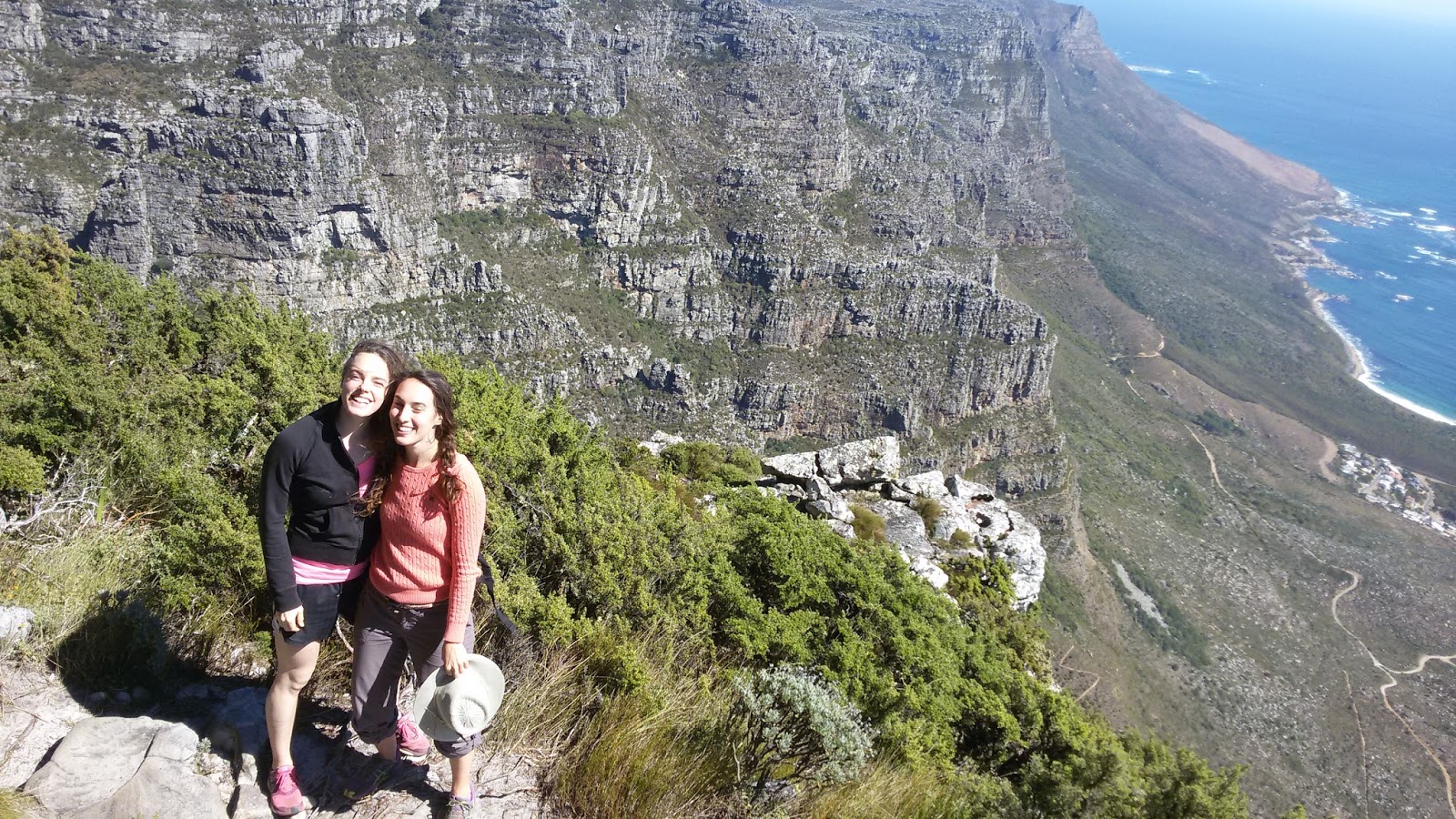
    Reunited in Cape Town: Hiking Table Mountain
    Is it hard to form deep, enduring friendships when you’re always moving around?
    I get that question a lot.
    The answer, as you could probably guess, is no and yes.
    My close friends and family span the globe, but I know I could call any one of them today—or, better yet, show up at their doorstep—and they would offer me all the love and support I could need. Of course, it goes both ways… minus the doorstep, which I don’t always have.
    And then, I typically find it easy to connect with the people around me, wherever I find myself.
    My neighbor? New friend and dance buddy.
    My housemate? New friend and hiking buddy.
    Strangers on a train? You get the idea.
    Answer one: Depth is easy. So no, it’s not difficult to connect deeply—be it for an hour, a week or a month. The more layers of artifice I burn, the more easily, and more deeply, I find connection—everywhere.
    But then there’s that other, more elusive quality: endurance. 
    Does it last? How? And if it doesn’t, how meaningful is a friendship formed in Thailand and set to rest in Laos? How deep does connection really run if it can’t follow me across borders and years?
    Answer two is longer…
    Recently, a close friend from university paid me an impromptu visit in Cape Town. Keeping the spontaneity flowing, we rented a car, picked it up the next day, and drove nearly 1,000 kilometers east, toward the Garden Route (a popular region for tourists) and a particularly beautiful place called Nature’s Valley (though we didn’t know yet that we were going there).
    As we drove on the wrong side of the road through endless stretches of caramel-colored hillsides, we caught up on the milestones of the last year of our lives. As we hiked through fynbos (vegetation unique to the Western Cape) and down to wild, windswept beaches, we discussed philosophy and travel, mistakes and purpose. As we pitched our tiny camping tent amidst rows of elaborate palatial campsites in a dilapidated caravan park, we laughed like no time at all had passed.

    Time had passed. Clear from the very new lines around my eyes and the shifting sands of love, death and discovery that shaped the contours of the interim months—or was it years?—of our lives.
    And yet, connection had endured.

    Roadside picnic on the Garden Route, and a very rare selfie.
    I could list a dozen more examples off the top of my head. Old friends joining me for segments of my travels; new friends opening their homes to me when I arrive in their city; strangers offering me a place to sleep, and becoming friends through that inimitable alchemy of giving and gratitude.
    And then there are the other friendships, the ones that take root in the rich soil of new experiences shared, yet wither when transplanted to the barren realms of social media and virtual communication—or perhaps they refuse to leave in the first place.
    Still, these, too, endure in their own way.
    A note out of the blue from a passing acquaintance met several years prior.
    A supportive comment on an article from a familiar face whose name I had forgotten.
    An unexpected coffee with a high school friend with whom correspondence had been sporadic and stunted.
    Silence doesn’t always mean disinterest.
    I should know, since I rarely hear from many I consider my closest friends.
    Distance doesn’t mean detachment.
    I should know, since I repeatedly choose to be continents, miles and time zones away from my loved ones.
    Staying in touch is remarkably difficult for an era of unprecedented “connectedness.” I have nothing to brag about—those who know me will be sure to tell you—but I am constantly working to do better.
    I’ll repeat: distance doesn’t mean detachment. 
    Connection is there. Depth is there. Consistency? We’re all working on it. 

    Forced to choose between travel and connection (that is, vagabonding and bonding), I’ll choose “C” every time. No and yes. Both. I think it’s possible.

    ***
  • Playing Tourist—Because, Penguins

    More tourist-ing on the way to the Garden Route.

    Sometimes, it’s fun to play tourist in your own town—or, you know, any town.

    Funny, coming from me, the anti-tourist. I know.

    And sure, I believe the following to be true:

    1) There are no “have to’s” in travel. (No must-see’s, no can’t misses. Things are only as meaningful as the value we ascribe to them.) 

    2) Tourist traps are just that—traps. (You want me to pay how much to play with a tiger? Which, by the way, I’m pretty sure has been drugged.)

    3) There’s nothing better than simply being wherever we are. (Sitting at my “local” cafe all day reading? Check. Wandering aimlessly through a new city? All the time.)

    Still, once in a while, the tourist things call.

    Because, well, penguins.

    Need I say more?

    Tuesday before last found me and a friend driving south out of Cape Town, bound for Boulders Beach and Simon’s Town.

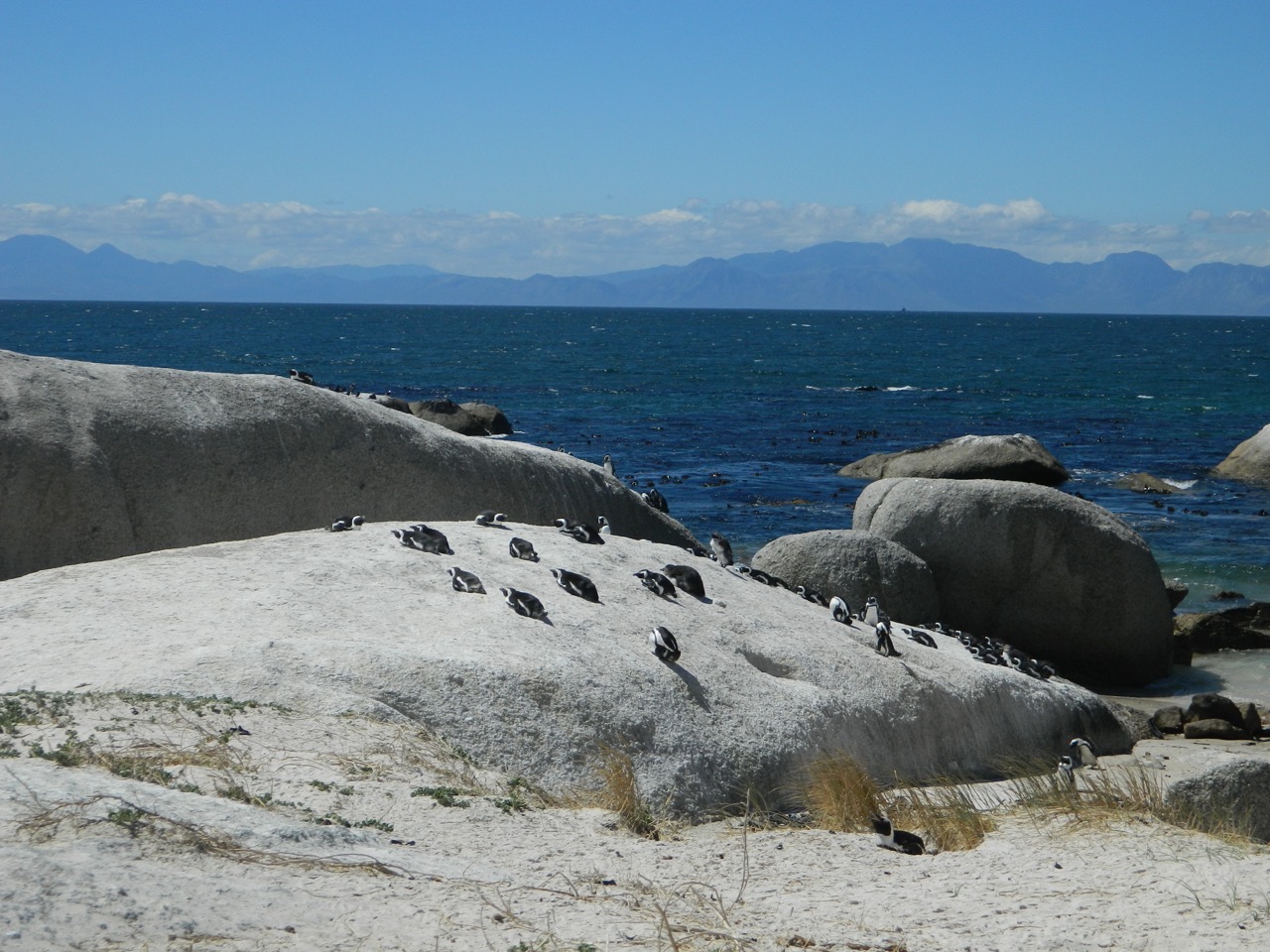
    Boulders Beach, if you didn’t know, is home to the largest colony of African penguins in town. They come for the slightly-warmer-than-icy water, and stay for the spectacular turquoise water and blinding white beaches.

    Oh wait, that’s us. The penguins just come for the warm water. Thousands of them.

    Flop.

    And yup, they are adorable.

    So there we were, one local and one wannabe-local standing on the viewing platforms along with dozens of other camera’d, sunblock’d and visor’d observers, utterly entertained.

    Funny, because the penguins seem committed to accomplishing as little as possible during their stay at Boulders Beach (the ultimate beachgoers). I watched one duo (African penguins mate for life) for a solid ten minutes, and neither moved a muscle.

    “Do you wanna do something else?” “No.” “Good, me neither.”

    They are also brilliant waddlers and unrivaled loafers.

    Afterward, we ate fish and chips, wandered through beachside shops oddly reminiscent of New England charm, and reviewed our pictures.

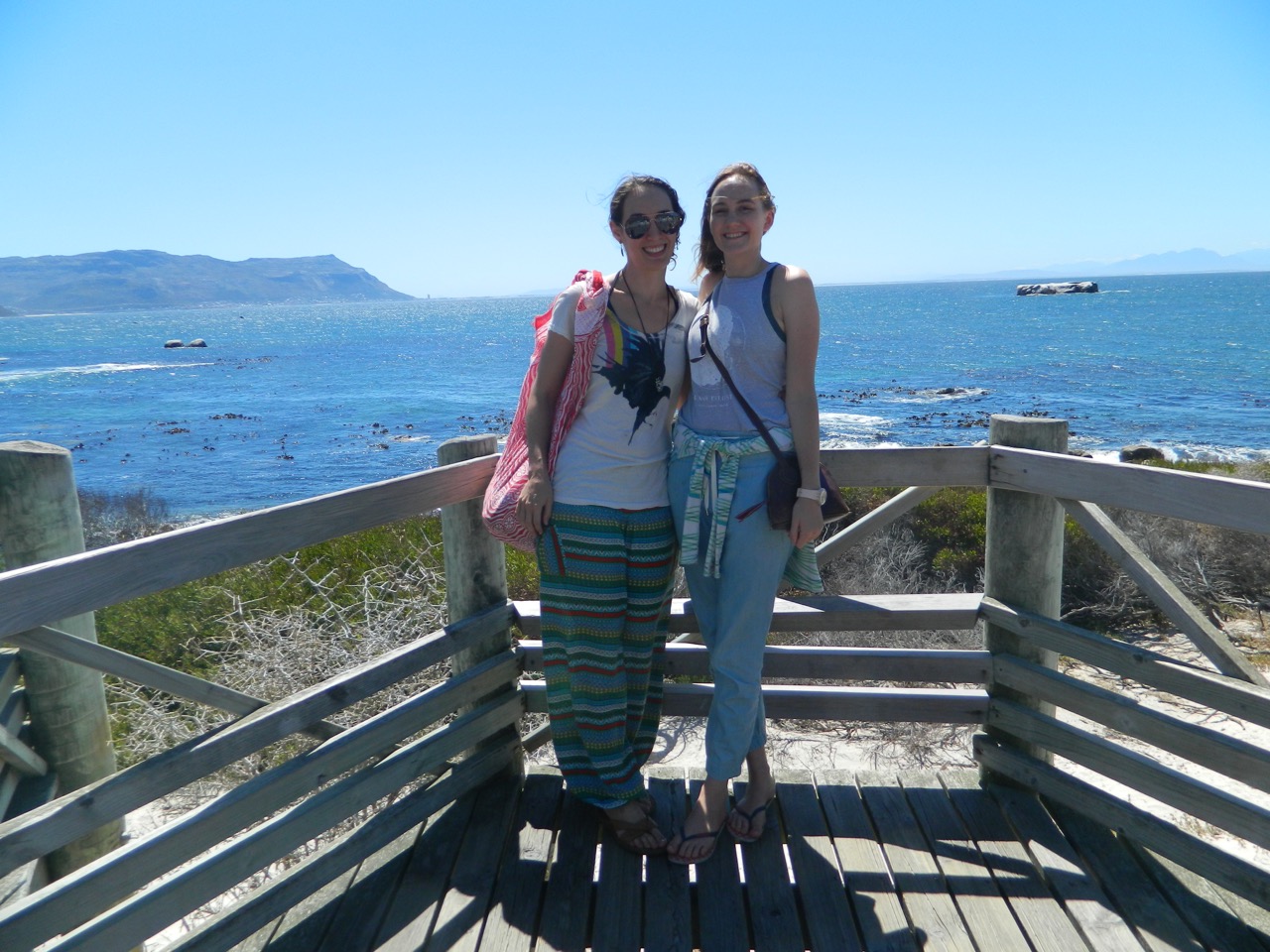
    These are our happy penguin faces.

    Sometimes, it’s fun to play tourist.

    You get to see penguins, climb spectacular mountains or window shop on streets overflowing with “custom designed African culture.”

    Shop on Long Street—my favorite street for tourist-ing.

    Fun. Nothing more, maybe, but nothing less, either.

    Many penguin acquaintances were indeed made.

    ***
  • Cape Town Snapshots

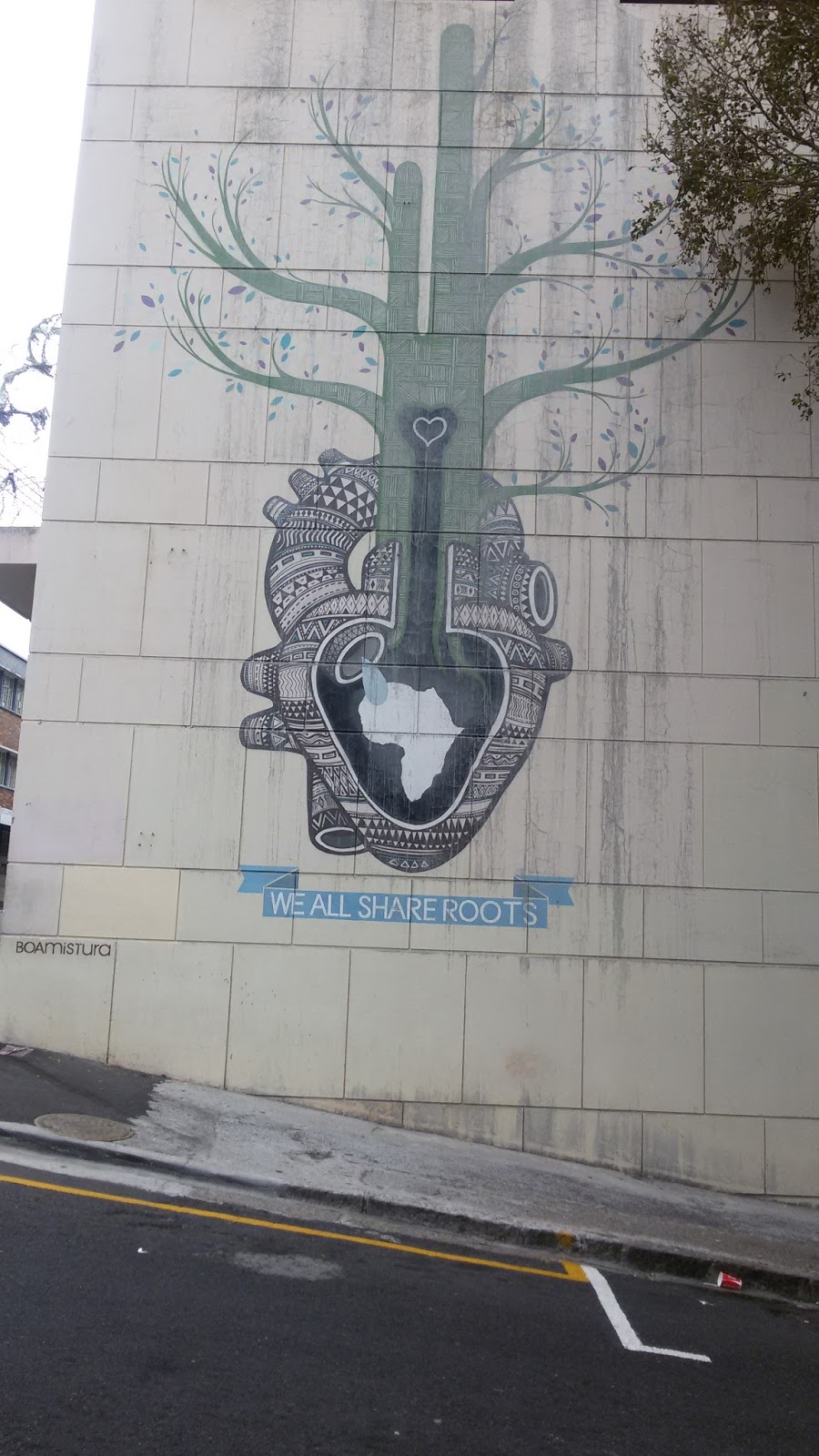
    Street art near Assembly, Cape Town.

    Are these snapshots I share so often an exercise in lassitude or creativity?

    I’ll admit I write them when I can’t think of a full article I want to lay out. At the same time, I think they might capture more of life in fewer words than any other format. I hope they serve to inspire your imaginations and whet your appetite to form your own snapshot memories of these places.

    Cape Town Snapshots:

    ***

    Two long-legged, long-necked birds cross the road near the Civic Center. One, then the other. Each looks both ways, takes a few steps, stops, looks, and steps again. Traffic flows around them. Their mother must have taught them about looking both ways.

    ***

    The wet sand along Long Beach, Kommetjie reflects the mountains in the early morning light. My friend’s golden retriever, a streak of ocher against shads of blue, plays in the surf.

    ***

    Saucer-eyed children materialize around the outdoor table off Long Street where my friend and I have just begun to eat our vegan lasagna and salad. Plant, the restaurant is called. The danger of sitting outside to eat in Cape Town: the reality of the city is on the same side of the window as you.

    ***

    The white-haired sales clerk at the Simon’s Town boutique is more interested in conversation than sales. “Nobody really needs any of this,” she confesses, “but sometimes you just have to buy something nice for yourself!” She laughs. When she hears my friend speaking in Afrikaans on the phone she says excitedly in her high, soft voice, “You have an Afrikaans friend! She’ll be your friend for life.” We all smile.

    ***

    Heaps of fresh fruit in every supermarket. Most (or all) of it grown here. Mangos, avocados and pomegranates, oranges, peaches and nectarines, papaya, apples, plums and grapes. I am spoiled for choice, wish I could buy some of everything, but know I couldn’t possibly eat it all fast enough. Choose just one or two each time I buy my groceries.

    ***
    We teach the students, all in their last years of high school, how to copy and paste, type in urls on a browser and do basic formatting in Word. I am helping my friend with the class he volunteer teaches on Monday afternoons in Masiphumelele, a township near Kommetjie. I never thought I had any computer skills to speak of—I realize I was wrong.
    ***

    The train to the coastal area south of Cape Town emits a banshee screech each time it heaves to a stop. Pick a compartment with lots of people, and don’t carry valuables, I was advised. The train is full of everyday commuters and seems mundane and secure, but I’ve heard the stories and I know looks can be deceiving.

    ***

    A cross between a motorcycle bar and a hipster cafe (my friend’s words, not mine) of my favorite cafes in Cape Town serves the best coffee and a morning’s worth of decorations to occupy the unhurried observer. No mirrors. In the bathroom, only a bare, framed cement square with black painted letters spelling, “You Are Fucking Amazing.”

    ***
    Thick fog rolls down over Table Mountain as the sun drops and the air chills. The “tablecloth,” this misty white blanket is called. It covers and reveals, slowly, silently. The city hides and reveals, slowly, silently. Every day a new facet. Every day a new mystery.

    View of False Bay from the southbound train.
    [Penguins and beaches—lots of pictures on the way, just as soon as I get them onto my computer!]
  • One Reason I Am in Love with Cape Town

    South Africa—Cape Town included—is a complicated place. 

    It is complex, fraught with tension and not particularly safe. It is fascinating, for this half-anthropologist, half-writer (and 100% curious human being), and it is sad. Cape Town, specifically, is diverse, vibrant, disjointed, anachronistic, cosmopolitan, wild, chilled, cohesive and embattled, all at once.
    It is the kind of city you fall in love with.
    But you could take all that away, and I would still love Cape Town for the simple fact that this natural beauty
    is everywhere.

    Mountains. Lakes. Oceans. Rivers.
    Sparkling cobalt water,
    An ecosystem like nowhere else in the world, and more hikes than I could possibly cover in 3 months of weekends,
    All literally within the city.
    No adjectives could do these mountains justice, but they are enough to steal your heart.
    ***

  • My 9 Favorite South African Words & Phrases (so far)

    This guy knows what I’m talking about.

    Just a short one for today, as I want to spend the remainder of my day off out there in the sunshine!

    South African English has proven to be full of delightful expressions that are just too good not to pick up. If you hear me using these in everyday speech, now you’ll know what the heck I’m talking about. Spend enough time here, and I bet you’ll find yourself using these words too!
    Without further ado…

    My 9 Favorite South African Words & Phrases (so far):


    1. Lekker
        (Nice, great, good. Can be used to describe just about anything. From the Dutch word.)

    2. Robots
        (Traffic Lights. I have no clue why they’re called robots.)

    3. Isit? 
        (Is that so? Really? Oh yeah? Response to just about anything. Hard not to use once you start.)

    4. Braai
        (Barbecue, both the verb and the noun. But somehow way more fun to talk about.)

    5. Boet (5b. Bru)
        (A bro, “bru” then being the term boets would use to address one another… as I understand it.)

    6. Yoh!
        (An exclamation of surprise, like “wow!” Pronounced with an aspiration on the “Y.”)

    7. Aswell 
        (Me too. Emphasis on the “as.”)

    8. Now now
        (Expresses immediate action—kind of. This should be #1, as it’s my new favorite expression.)*

    9. Shebeen 
        (An illegal shop/drinking establishment. I haven’t been yet, but I can’t wait to go so I can use this word more frequently.)**

    Well, there you have it. Come visit me in Cape Town—and you won’t be entirely lost in the verbaiage.

    South African friends? Feel free to correct me if I got something wrong. Or share your favorite words, and I’ll add them to the list!

    ***

    *The precise meanings of “now now” and its close counterpart, “just now” are quite nuanced and difficult to describe succinctly. Suffice it to say that neither of these actually promise imminent action.
    **Update: Shebeens are no longer illegal, it would seem, and now hold licenses like any other store/restaurant in Cape Town… though it seems likely that illegal shebeens still exist!
  • Post-Apartheid South Africa and “Post-Racism” America

    A totally irrelevant picture of Clifton Beach at sundown—Camps Bay, sundown.
    Yes, there is an analogy to be made here.
    Excuse me friends, I’m going to digress from my usual steady word diet of adventure tales and travelogue to get just a little bit political…
    I’ve had an unprecedented number of responses to my first (and, I thought, fairly innocuous) post about Cape Town, “High Security,” so much so that I feel the need to write a follow up. What I have to say is in no way a judgement of any individual reader or responder. I don’t know you, and I withhold any opinion about your life, social beliefs or general good-will as a person (in fact, I’m sure you’re all good people—most are).
    However, this is a judgement on a system—two systems, in fact—and how we can talk about them.
    In July of 2015, one of the best explanations I’ve seen made the internet rounds to clarify why exactly answering #AllLivesMatter to the rallying call of #BlackLivesMatter is, well, missing the point. Below is an excerpt from Reddit user Geek Aesthete’s answer:

    “Imagine that you’re sitting down to dinner with your family, and while everyone else gets a serving of the meal, you don’t get any. So you say “I should get my fair share.” And as a direct response to this, your dad corrects you, saying, “everyone should get their fair share.” Now, that’s a wonderful sentiment — indeed, everyone should, and that was kinda your point in the first place: that you should be a part of everyone, and you should get your fair share also. However, dad’s smart-ass comment just dismissed you and didn’t solve the problem that you still haven’t gotten any!
    The problem is that the statement “I should get my fair share” had an implicit “too” at the end: “I should get my fair share, too, just like everyone else.” But your dad’s response treated your statement as though you meant “only I should get my fair share”, which clearly was not your intention. As a result, his statement that “everyone should get their fair share,” while true, only served to ignore the problem you were trying to point out.
    […]
    Just like asking dad for your fair share, the phrase “black lives matter” also has an implicit “too” at the end: it’s saying that black lives should also matter. But responding to this by saying “all lives matter” is willfully going back to ignoring the problem. It’s a way of dismissing the statement by falsely suggesting that it means “only black lives matter,” when that is obviously not the case. And so saying “all lives matter” as a direct response to “black lives matter” is essentially saying that we should just go back to ignoring the problem.”
    (For great further discussion, check out this article on Fusion or this one in the guardian.)

    That implicit “too” exists everywhere in critical discussion of racism—both in the U.S., and in South Africa, which I currently call home. I am hardly more enlightened on the racial, political and social complexities of South Africa than I was a week ago, at the time of writing “High Security,” but I think I still have have something valuable to offer by way of this analogy.
    The implicit “too.”
    It is there when activists in the U.S. say, “Black Lives Matter,” because up to now these lives have mattered less to our legal (and social and educational and economic) institutions.
    When others answer, “but, All Lives Matter,” they, “willfully go back to ignoring the problem.” That is, they ignore all the conditions that have created the need for such a statement in the first place. Furthermore, they in turn implicitly erase centuries of racial violence, injustice, intolerance and bigotry, filing history away into that closed box conveniently labeled, “Not Anymore.”
    The implicit “too” is there when I say, “there is a wealth gap in this country, much of which is divided along racial lines,” and a South African white responds, “but there are poor white South Africans, too.”
    Indeed, there are, and they have certainly not benefitted from the post-Apartheid systems put in place to (attempt to) correct a long history of colonial oppression. Yet, to address real racial income inequality in South Africa* by saying that white South Africans suffer poverty too is to once again willfully avoid the unavoidable: racism and inequality are still massive problems, here, as in the U.S.
    In much the same way, saying, “but there’s so much crime within those communities, too,” when we bring up the issue of police violence toward people of color, is a whole lot like saying, “but there is corruption amongst black South African politicians, too” when someone else decries past actions of Afrikaans leaders in this country. Indeed, it is true, but the former does not invalidate the latter. To answer in this way is, just maybe, to suggest that police violence (or Apartheid violence) is somehow less upsetting, less in need of remedying, less bad because that “black-on-black crime” (or that new corruption) also exists.
    Let’s take this one step further.
    The spirit of the implicit “too” similarly comes into play when we in the U.S. bring up the issue of institutional racism, that is, racism that exists at the institutional level—which is both greater and more subtle than any individual’s lack-of-racism. When someone says, “racism still exists in America,” those who would answer, “but I’m not a racist,” miss the point. The issue does not lie with them (and, by the by, neither does the fault, though that’s somewhat of a more complex question), but rather with the system to which they are inexorably tied.
    Similarly, when the topic of racism in pre- and post-Apartheid South Africa arises, arguing, “but I had/have non-white friends,” or, “but some schools were already mixed,” or even, “but not everyone was racist, bigoted, intolerant, hateful, violent, fill-in-the-blank,” is the same as a white American today saying, “but I have black friends,” (and so there must not be racism), or, “but my neighborhood is so diverse,” (so there is no socioeconomic disparity), or, “but my family didn’t have slaves,” (and so, slavery didn’t exist?).
    The individual experience of tolerance and friendship does not change the historical fact of the Apartheid system. The individual history of love does not change a national history of hate. To pretend otherwise is to ignore the reality that the majority of South Africans faced under the Apartheid system. 

    It is to be complice to an unjust system, past or present. 
    It is to ignore yesterday and sugar-coat today, in the hopes that tomorrow will be better.
    But until we acknowledge yesterday for what it was, and see today as it is, tomorrow isn’t going to look any different.
    In the U.S., and in South Africa.
    And that, in my humble opinion, is what post-Apartheid South Africa and “post-racism” America have in common.

    ***

    *Interesting tangential reading here, here and here.
  • High Security

    The view from my patio, Hout Bay, Cape Town.

    Hout Bay, Cape Town, South Africa
    “You need to watch that the gate closes to make sure no intruders get in,” says my neighbor.
    To enter the compound where I live, I click the green button on the remote attached to my set of keys, then press it again to close the gate behind me. To enter the cottage where I’m living, I must unlock a metal grate outer door, then the regular house door. I live in one of the calmest areas of Cape Town—it is like this everywhere (but this is nothing, so I’m told, compared to Joburg).
    From my back patio (which includes a garden and pool), you can just make out the township that lies a couple kilometers away.
    The bus I took from the City to Hout Bay a few days ago drove through the township, and the corrugated iron building materials, open front barbershops and markets, cows, snaking roads and general vibrancy marked a stark contrast with the carefully gated houses on my street.
    The juxtaposition is not lost on me.
    I have been in Cape Town for seven days now, and it seems necessary to get this out of the way before I begin to write anything else about my life here.
    The high security is the first thing I noticed when I arrived (truly unlike anywhere I have ever traveled), and all that it implicitly reveals about this place underlies everything else—or such is my impression. I could hardly boast any depth of understanding of these complex social, political and racial tensions, so for now, suffice it for me to say that they are there, and to share these few observations and facts:
    • The current unemployment rate in South Africa is between 25 and 45%, depending on whom you ask.
    • When I walk the three kilometers from my house to the supermarket, I am typically the only white person on foot.
    • When I take the minibuses (similar to matatus in Kenya), I am the only white person on the bus, too.
    • There is a massive wealth gap.

    • Racial tension is very real, and politically fueled.
    • Theft, break-ins and other crimes are extremely common (the high security isn’t just paranoia).
    • Apartheid ended in 1994; that’s nearly 22 years ago. (Although, coming from the U.S., I’d call that quick progress!)
    • When I asked my Uber driver about the social climate in Cape Town, he continued to call me “ma’am” as he proceeded to heatedly discuss the circumstances that he and his community and family face. (“Ma’am, I was black enough to fight in the riots against apartheid, but I was not black enough to get a job in the new government after the elections.” “Ma’am, the people in my community, when they vote now, they don’t see boxes; they see color.”)
    Right, so what does it all mean?

    That is probably something I will spend the next few months investigating in depth. However, I feel it is necessary to offer these initial comments and observations as prelude to future posts on Cape Town—whether it seems relevant to those topics or not, everything is always connected.

    ***