Category: Europe

  • This Is Why We Walk—Maybe

    This Is Why We Walk—Maybe

    spain, camino, walk

    Ancient Practice in the Modern Landscape


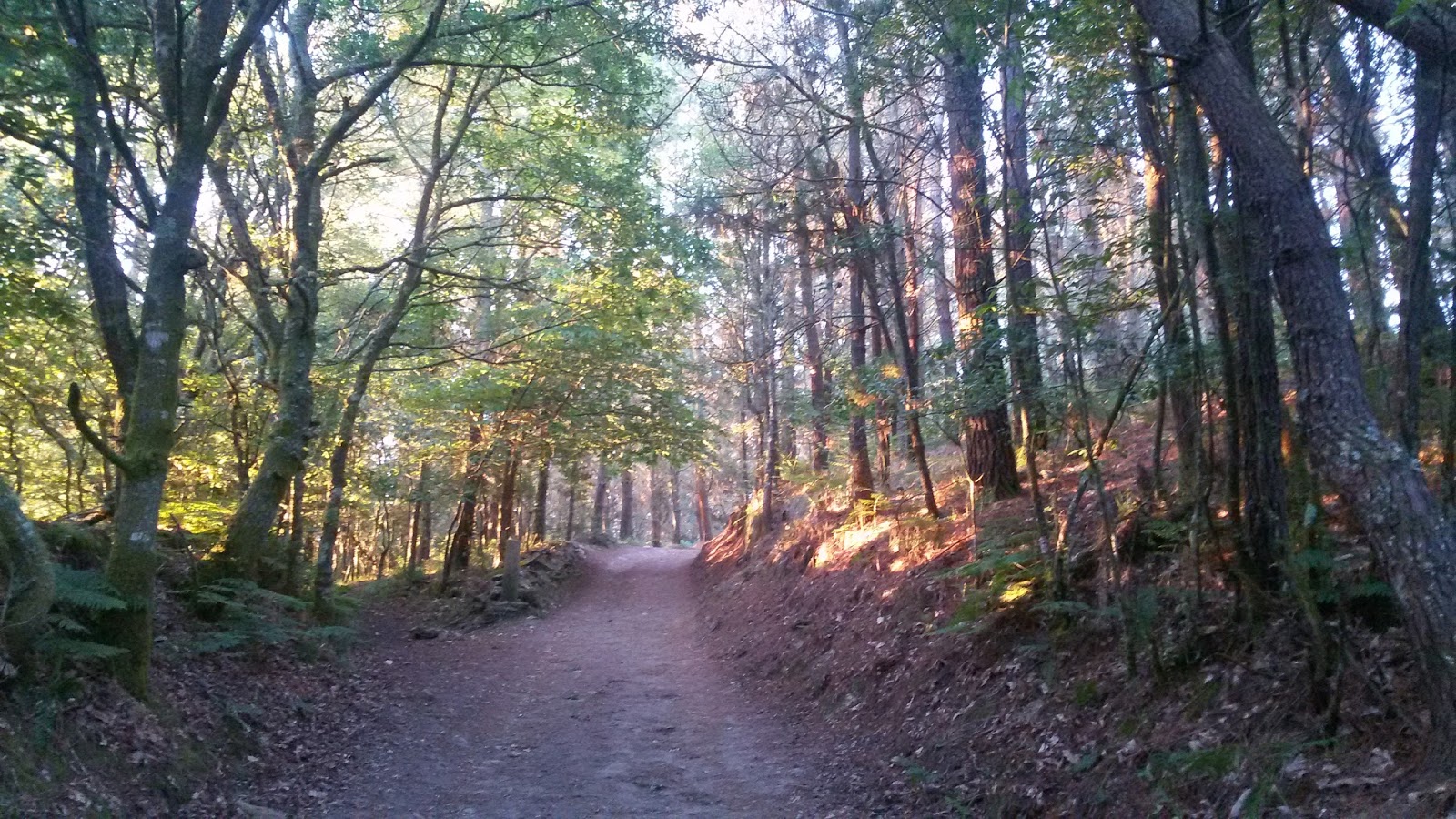
    Sixteen kilometers of open road. No turns. No twists.
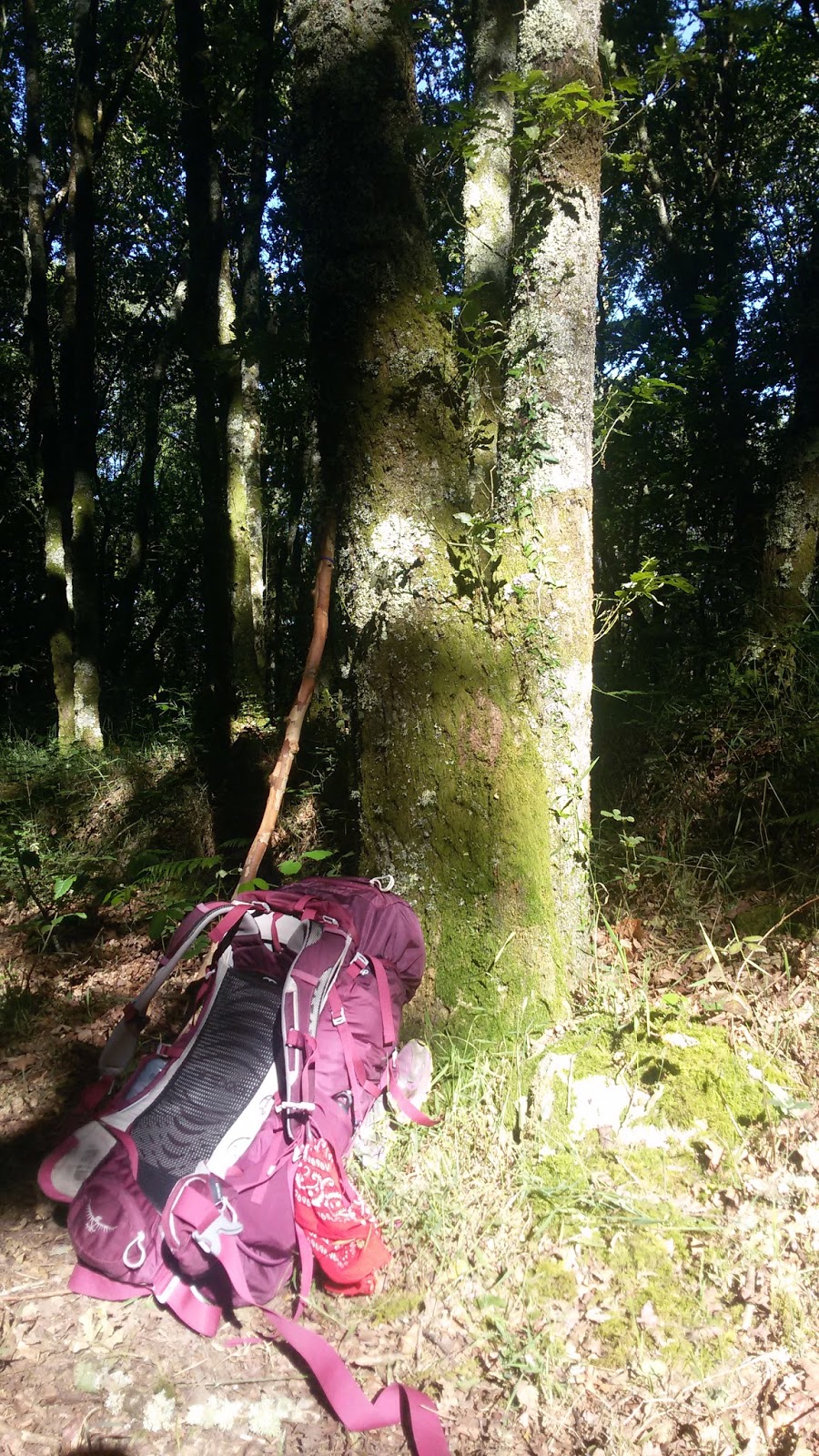
    The trees are thick on either side, and I’m grateful for the shade they provide. The road tilts up, then drops down again. Relentless.
    It is my third-to-last day on the Camino del Norte. My legs are already tired, my feet already sore. I have walked already ten kilometers when I begin this section of road.
    Normally, there are trails, or a dirt edge to walk on at the least. Not today.
    The occasional car speeds past. They will arrive at the end of the road in minutes.
    The road is hard. Straight. Empty.
    Relentless.

    ***

    I’ve said it before: traditions have a way of reviving themselves.

    We as humans are wired for ritual. We seek it, gravitate toward it and cling to it, and when we don’t find it the world suffers.

    It has been theorized that there is a cross-cultural link between lack of ritual and conflict. Or, to put it positively, ritual is a necessary component of conflict resolution. That’s a longer discussion I’d love to have with you personally.

    If this gravitation is (as theorized) a response to a lack of ritual in modern society, the wild success of trends like yoga and meditation would arguably be the same. I believe that tendency to seek meaning through practice has everything to do with the recent resurgence of interest in the Camino—and other pilgrimage.

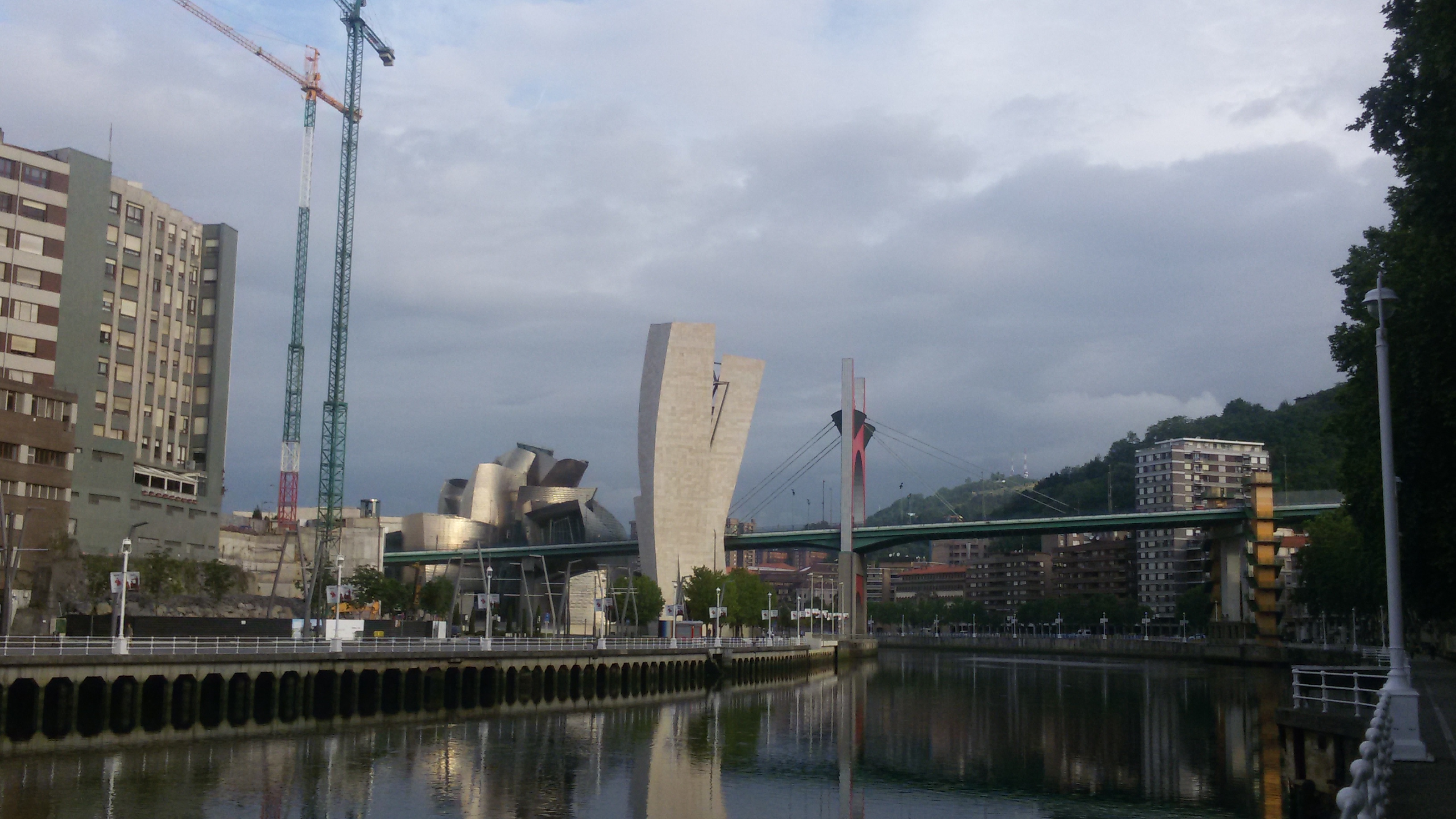
    The juxtaposition of this ancient journey with the modern landscape through which it now passes fascinated me from start to finish.

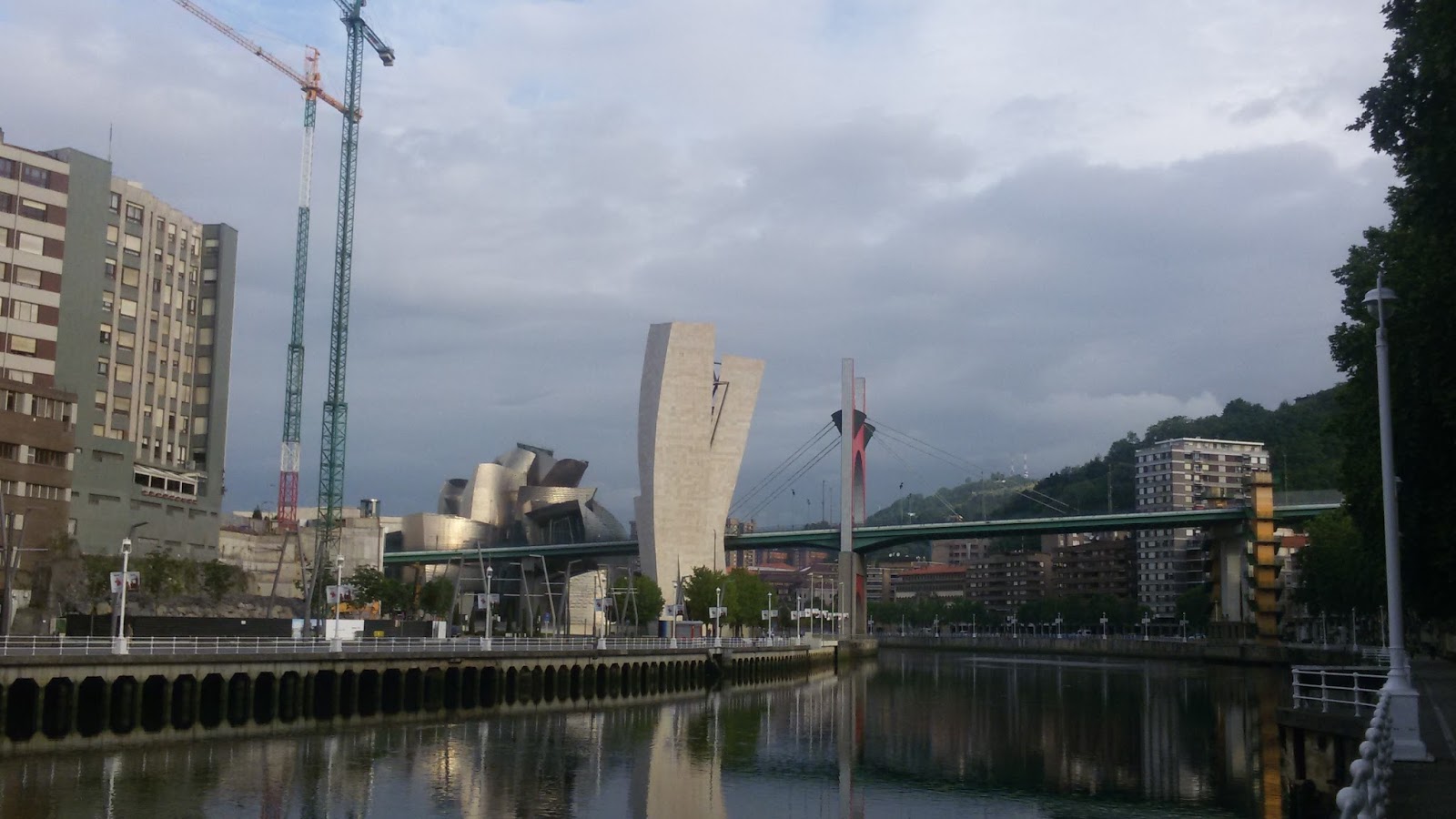
    What does it mean to walk a centuries-old trail alongside a six-lane highway? Beside a railroad track? Through a buzzing city like Bilbao?

    How does the addition of asphalt, smartphones, gortex and wifi change the experience? Enhance it? Devalue it?

    If you change everything—the trappings, the clothing, often the landscape, the food, the language, the Road itself—but keep the journey, is it still the same Camino?

    I’m inclined to say yes—in spirit.

    If you take a human body, give it artificial limbs, blood transfusions, organ transplants—replace everything, say—do you still have the same person?

    Your answer may depend on whether or not you believe in a consciousness, a soul, a Self (call it what you will) that is greater than the sum of all its parts.

    If you change every piece of the Camino, from the culture around it and the people walking it to the very structure and environment of the journey, what remains the same?

    In my opinion, it is the spirit of the journey. It is the seeking, the act of walking, that has somehow drawn us across history to follow the same path.

    And you can lament the omnipresence of wifi or cell service, you can dismiss the validity of smartphone navigation, you can wax poetic about the good old days when pilgrims carried nothing but a skein of water and the cloaks on their backs…but to what end?

    This is our world.

    There is asphalt that wears down our joints. There are trains that travel many times faster than our feet. There is social media and multiculturalism and sturdy trekking gear.

    One thing has not changed.

    Us.

    We still walk on two feet (when we choose).

    We still require food and water to survive—for now.

    We still seek—relentlessly—to create meaning in our lives.

    That is why, I believe, an ancient rite like the Camino de Santiago still makes sense. In spite of this modern world and modern landscape. Maybe because of it.

    It is not just possible, but perhaps necessary to walk the same paths we have walked for centuries. Maybe that connection is the ritual we’re seeking.<

    What do you think?

  • Did You Find What You Were Looking For? (Camino Reflections, Part 10000)


    My last visit to London, in July of this year, I had dinner with a former classmate. We had taken “Intro to Buddhism” together.
    I didn’t know it then, in my first semester at Middlebury College, but many themes from that course would wind their way through the following years of my life.
    Over our glasses of red wine—Merlot, I think—I recounted a memory of that class that stands out from the rest. It’s funny, sometimes, what ends up sticking in our minds.
    Someone had asked our professor if he wanted to reach enlightenment—if that’s what he was seeking.
    He had answered softly (he always spoke softly):

    “I’m not so interested in enlightenment. I’m interested in the possibility of expanding my awareness.”

    Maybe this is unhelpful, and maybe I’ve spent too much time around Buddhist philosophy, but this is what I have to say in answer to that oft-repeated question, “Did you find what you were looking for.”

    No.

    Longer answer: 

    I wasn’t looking for anything, so I doubt I would find it. That’s the difference between a trip and a journey—only one has a destination.
    I found no thing on my Camino journey. Nothing. I did not have any epiphany. My life did not change.
    If you set out walking (meditating, praying, anything) in search of enlightenment, I think you will be disappointed.
    And that’s not depressing; it’s inspiring. It is exhilarating, this not knowing. It is enthralling, this seeking-but-not-finding. It is magnetic, this grey in-between-ness of no-thing—neither empty of wisdom nor full of answers.
    If “no” is not a satisfying response, I’m sorry, but it’s the only one I’ll give—at least for now.
    No, I did not find what I was looking for.
    I wasn’t looking for, you see.
    Something on the same subject I wrote about halfway through the Camino, in a moment of clarity:

    “Will I come back wiser?” asked my ego. 

    I don’t know, my more honest self replied. I think I’d be the last to know.Do any of us come back “wiser” from anything? 

    I have my doubts. 

    I will come back with bigger calves from walking and stronger shoulders from carrying my pack. 

    This is certain. 

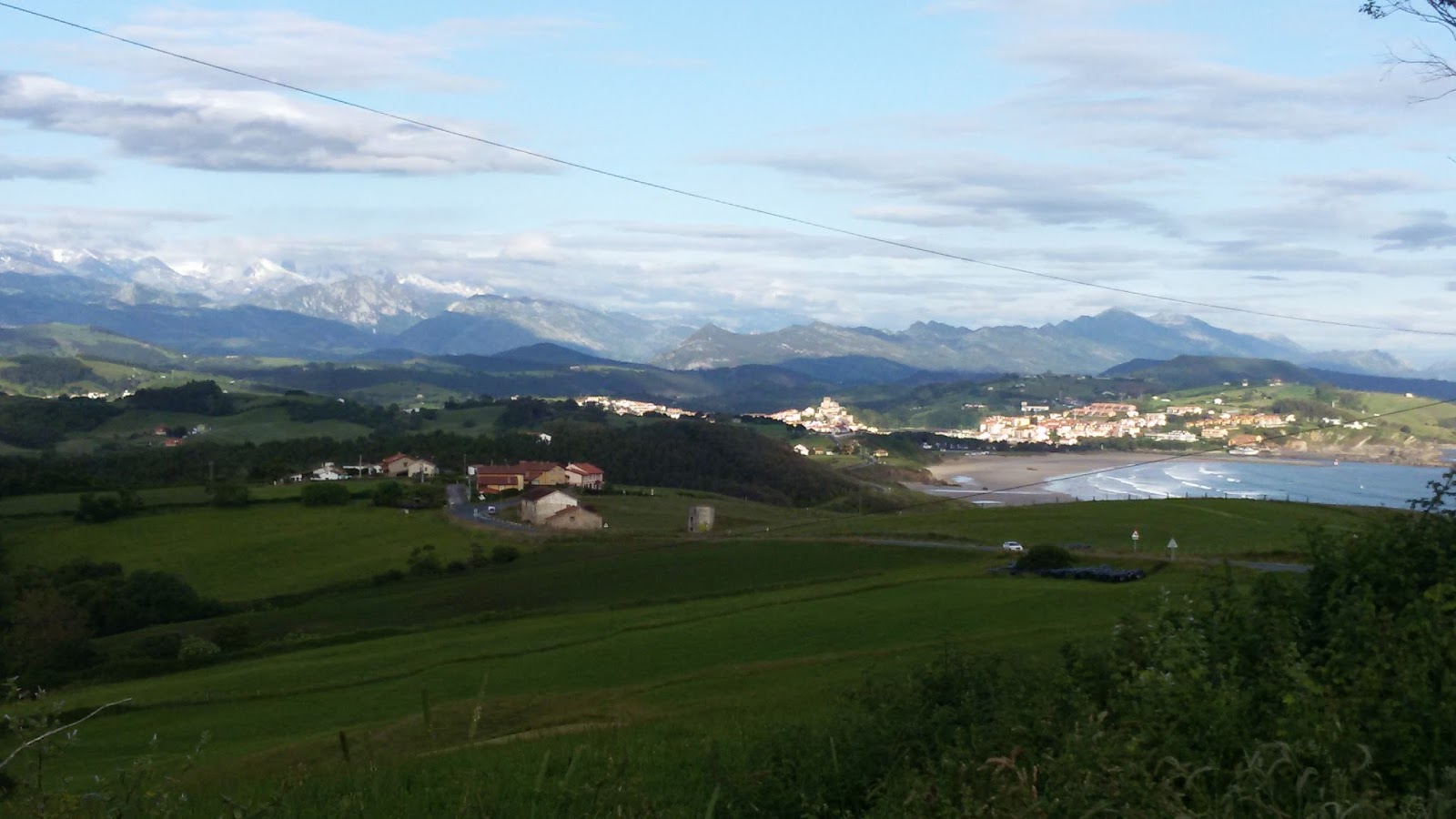
    I will carry in my heart thirty peaceful mornings where dawn breaks over still meadows, and the wind whispers a song only I can hear. 

    This is certain.

    I’m not interested in finding. The beauty is in the in-between.

    ***
  • Pilgrimage Today—It’s Still Relevant

    Pilgrimage Museum, Santiago de Compostela, Galicia, Spain

    I placed the noise canceling headphones over my ears, and an ancient melody flowed straight to my soul.
    It was my foodsteps—hundreds, thousands of them—plucked from a harp. It was the daily rhythm of walking made song.
    I stood at that display in the Pilgrimage Museum for a long time, and I listened to some of the recordings of the Resonet Musica Antiga group more than once. Recreated from sheets music in the Cathedral’s archives and reconstructed medieval instruments, the music might have run through my head at a distance.
    But somehow it didn’t. Somehow it connected.
    I arrived in Santiago on Friday, July 1, 2016. That Friday marked the culmination of a month of walking across Northern Spain (approximately 800 kilometers) begun in the vague interest of “seeking.”
    (We can talk about what I “found” once I figure that out—story for another day.)
    Pilgrimage is an ancient phenomenon. Historians have found evidence of its occurrence in Mesopotamia, Vedic India and ancient Egypt. Wherever it appears in human history, it follows the same principle: an outward, often arduous journey serving as an allegory for the spiritual path.
    Since the alleged discovery of the remains of Saint James (one of the Twelve Apostles) in the ninth century, Santiago—and its cathedral—has been one of the most important pilgrimage sites in the world. It is said that the Camino de Santiago—the Way to Santiago, and there are many—is a metaphor for the trail marked by the Milky Way across the sky. Again, a physical manifestation of a metaphysical path.
    That sounds heady and outmoded, right?
    Wrong.
    In the last decade, traffic on the Camino Frances (the most popular route) has surged into the thousands. Clearly, the ancient tradition still resonates. And lately, its popularity is growing fast.
    Just as ritual will always revive itself and traditions will be reborn, pilgrimage is finding its place in the modern world.
    The scallop shell, long worn as an insignia by peregrinos walking to Santiago, now hangs from my backpack, too. Symbol of water, life and healing, it is as timeless, endlessly resonant, as it is timeworn.
    These themes are eternal:

    WanderingSeekingThe JourneyWalkingLooking to the SkyWalking upon the Earth
    Questioning 

    The WarriorThe SeekerThe Scholar [1]

    As I listened to those modern recordings of centuries-old music, I heard my experience translated—so precisely—into sound. I walked a path that thousands, perhaps millions, had walked before me, and though the asphalt beneath my feet and electric lights in the distance were new, the the experience had somehow been the same. [2]

    That, in short, is why pilgrimage is still deeply relevant today.

    ***

    [1] The Warrior, The Seeker and The Scholar are the three archetypes represented by Saint James.
    [2] Sadly I have not been able to find the same recordings anywhere online. This is the closest I could find, but you may have to visit the Pilgrimage Museum in Santiago to hear the music I’ve described:
    Youtube video
    ***

  • The Camino de Santiago in 100 words and 27 Untouched Pictures

    When I set out for the San Sebastian (my starting point for the Camino del Norte) at the start of June, I decided not to take my camera with me.
    Too heavy. Too much of a burden. Too unnecessary.
    Then came the bright idea to take only one to two (smartphone) photos per day throughout my thirty-day walk. To capture what captured my heart, without being a slave to documenting the journey—that was the idea.
    And I think it worked pretty well. On average, I took two pictures a day—sometimes none, sometimes three—and while the result is not comprehensive, I believe it is in some way representative of those days.
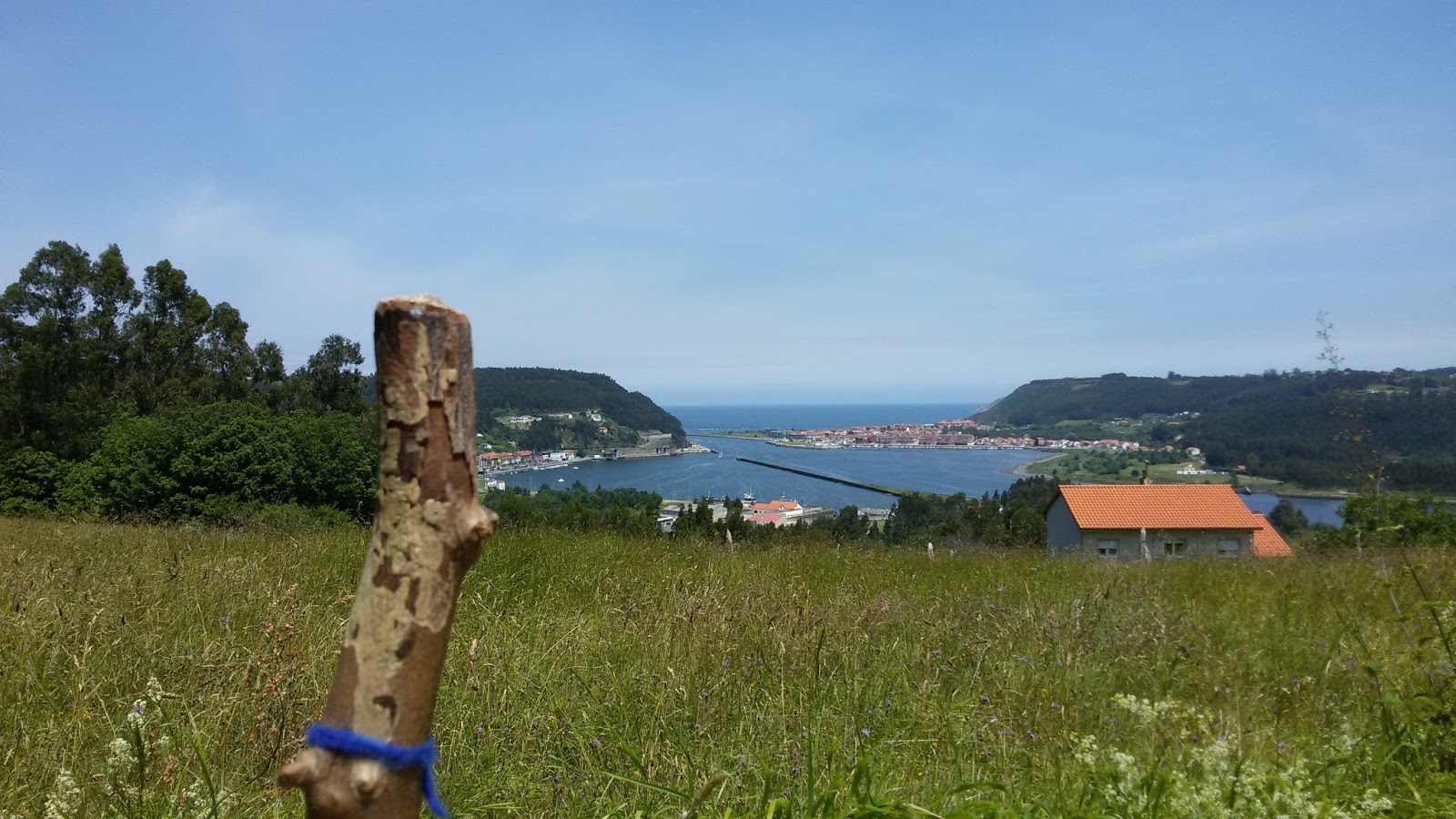
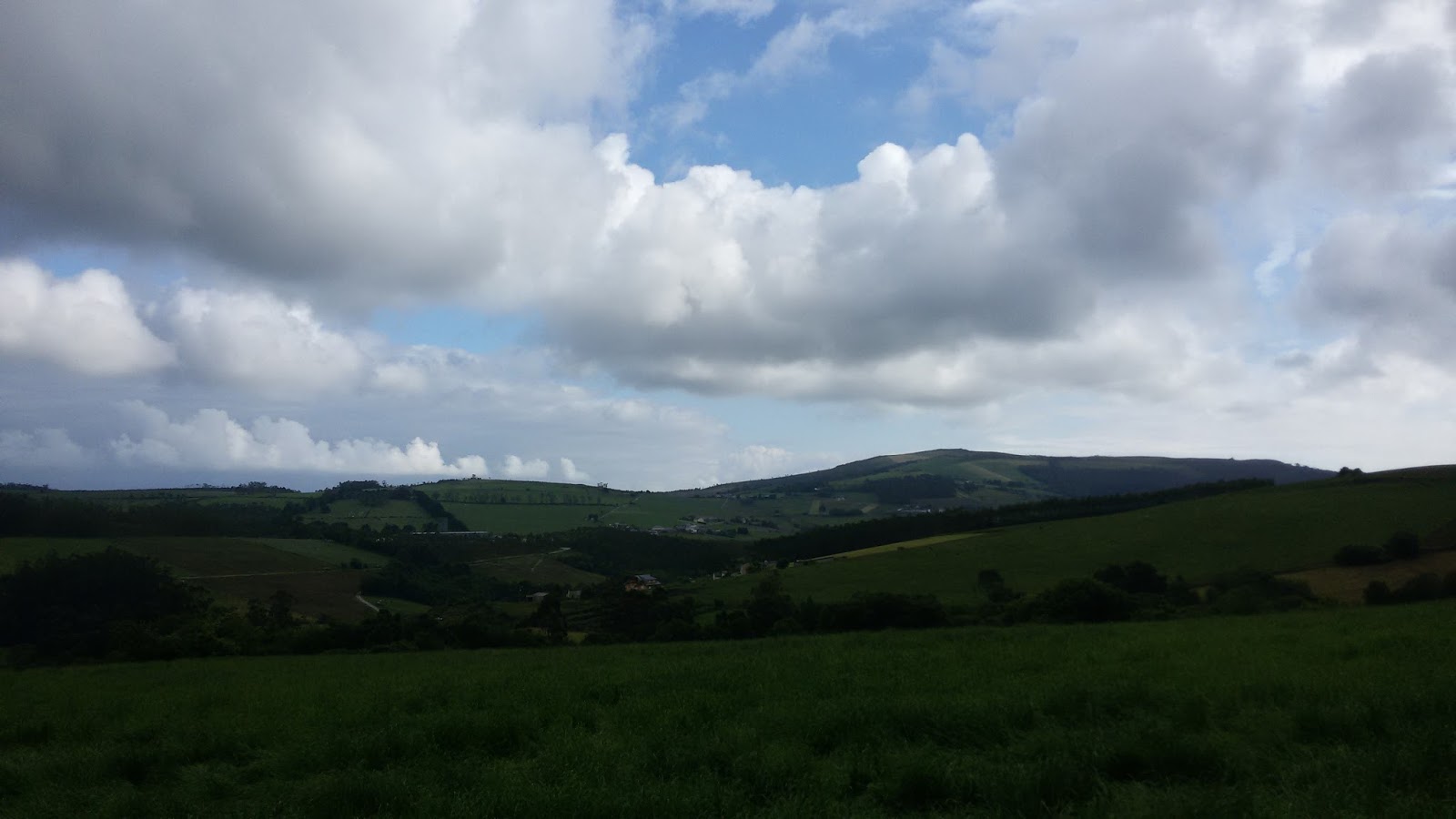
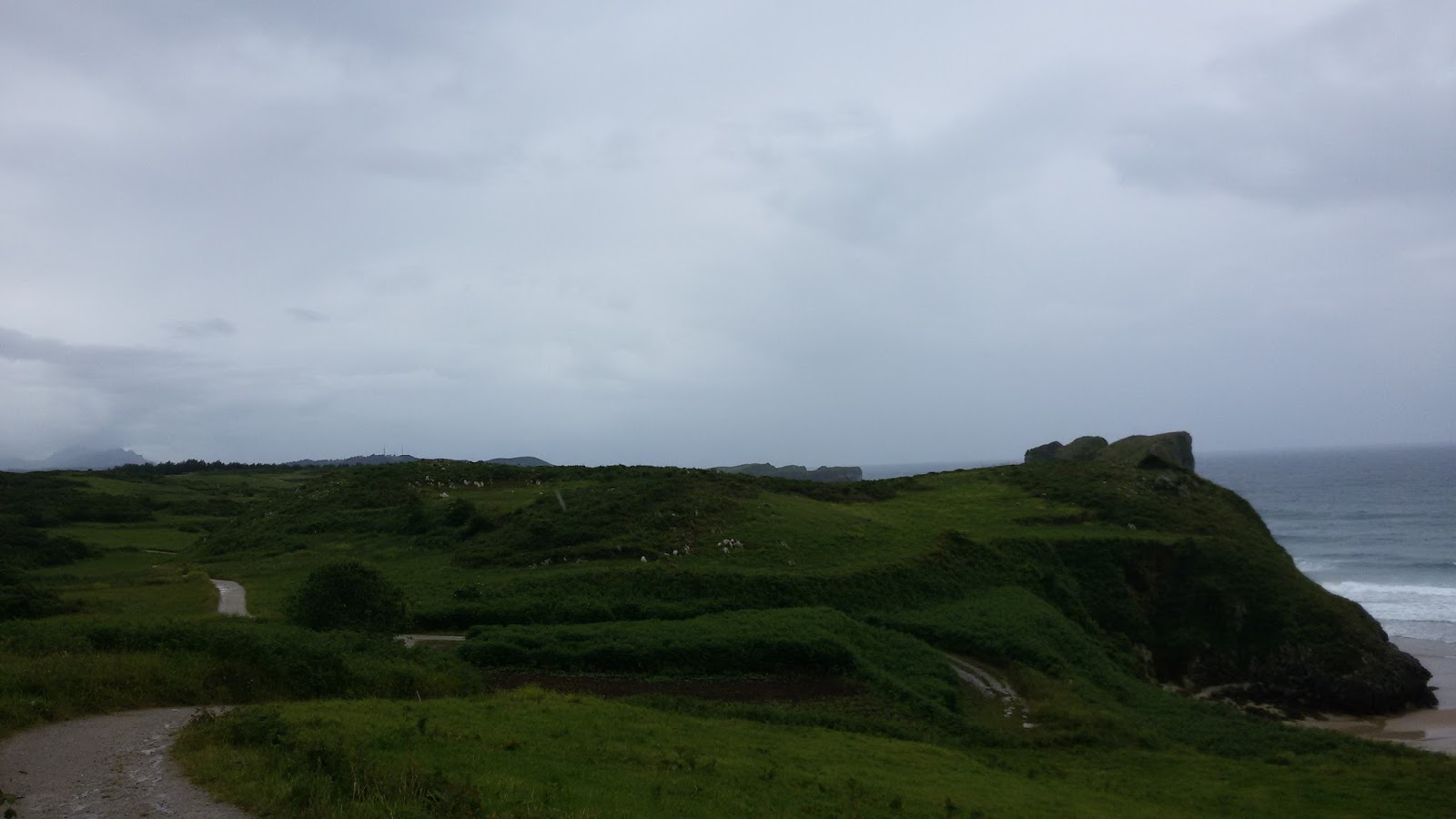
    I have selected twenty-seven of those sixty photos and paired them with lines from a brief stream of consciousness I wrote one day to summarize the experience of walking the Camino. The collection below is not chronological, and it isn’t complete, but I think it is more true than a complete, chronological photo diary could ever be.

    ***
    Walking. 
    Walking in mud, in rain, 
    in grass; 
    on gravel, asphalt, 
    bridges stone, wood, paved; 
    at first light, 
    at last light, 
    under clear skies 
    and into fading sunsets.
    Waking beneath stars in freezing meadows, 
    waking in a village whose name already evades recollection.
    Glossy maps,  
    cafe chairs, 
    Spanish words that somehow make sense.
    Bare feet,
    dirty feet, 
    tired and sore feet.
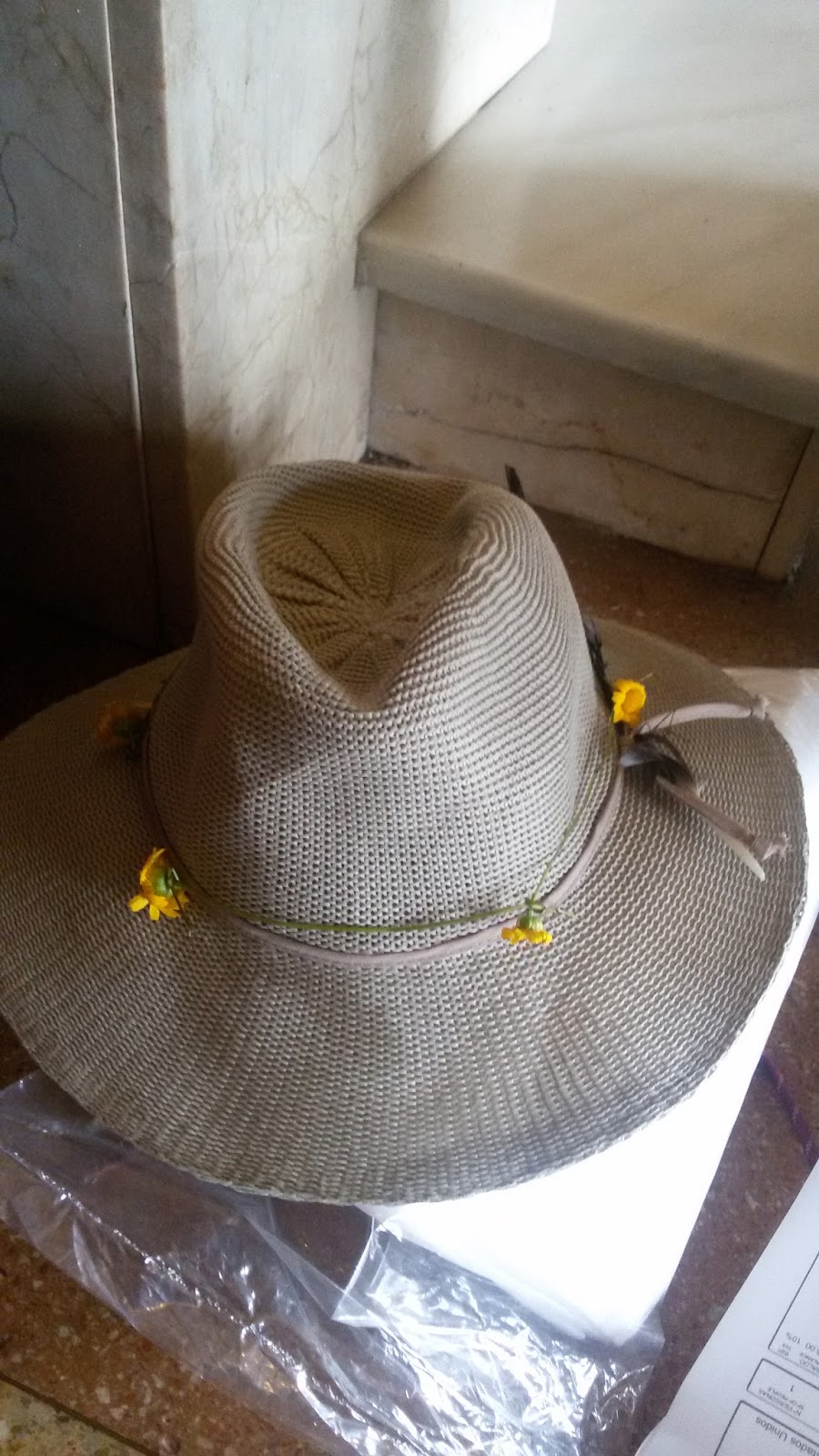
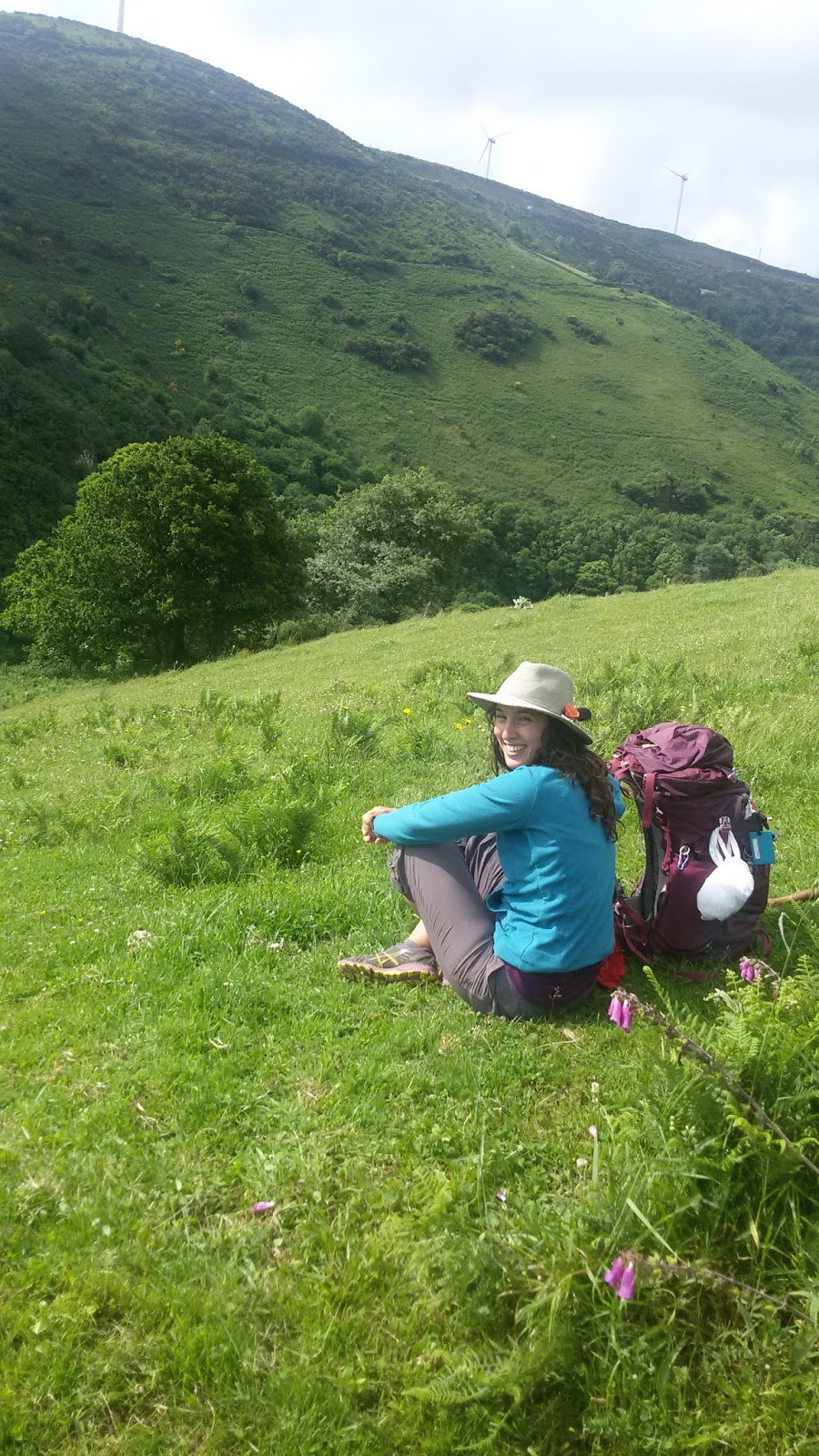
    The same hat every day, always a different flower in it.
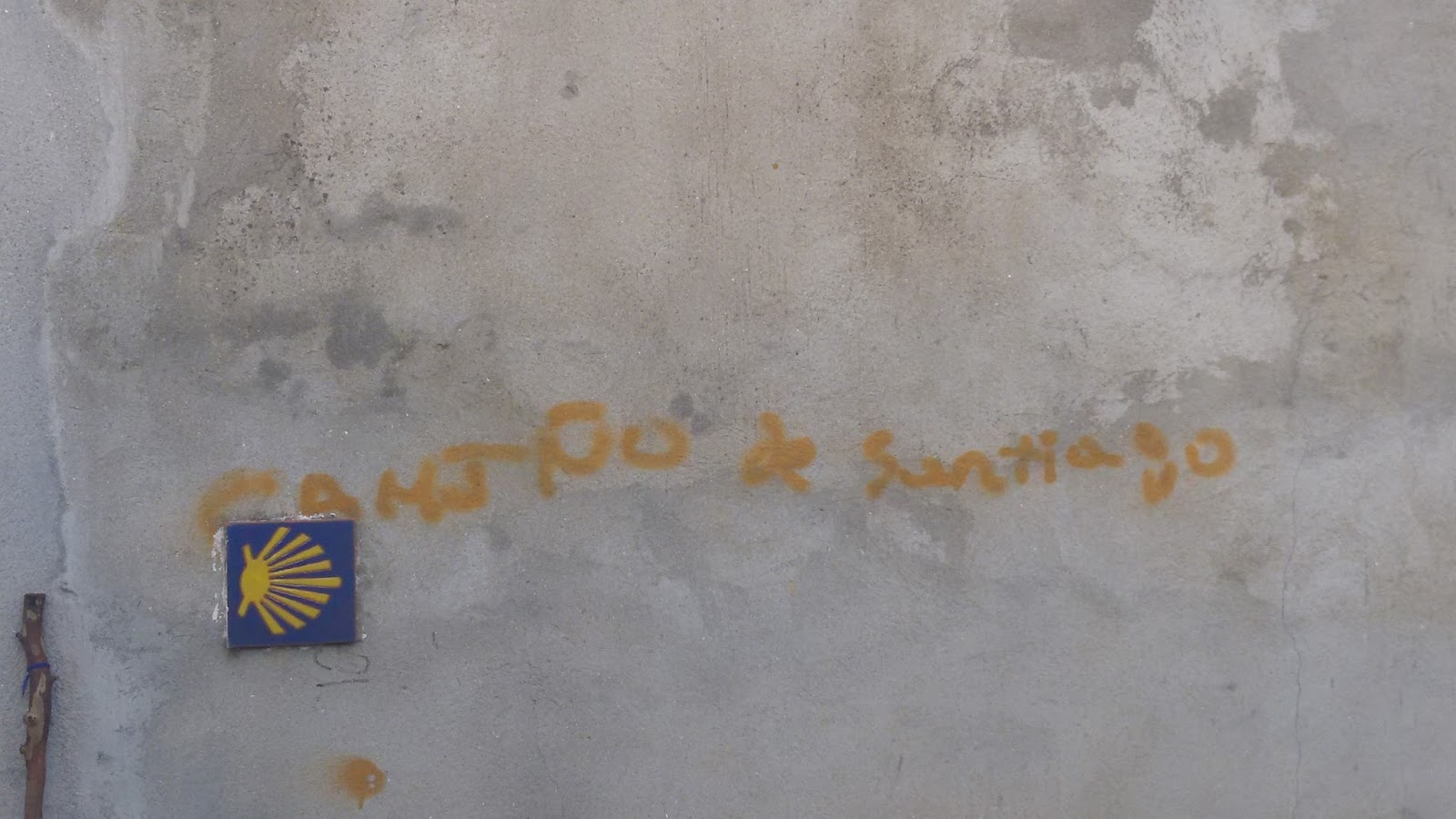
    Yellow arrows, yellow arrows, yellow arrows.
    The path ahead. 
    Sleep that comes without invitation. 
    Absence of thought.
    Peace of 
    single-minded activity. 
    Never boring. 
    Seashells. 
    The way forward. 
    Yellow arrows.

    ***

    The Camino in Short: 

    Walking. Walking in mud, in rain, in grass; on gravel, asphalt, bridges stone, wood, paved; at first light, at last light, under clear skies and into fading sunsets. Waking beneath stars in freezing meadows, waking in a village whose name already evades recollection. Glossy maps, plastic cafe chairs, Spanish words that somehow make sense. Bare feet, dirty feet, tired and sore feet. The same hat every day, always a different flower in it. Yellow arrows, yellow arrows, yellow arrows. The path ahead. Sleep that comes without invitation. Absence of thought. Peace. Single-minded activity. Never boring. Seashells. The way forward. Yellow arrows.

    ***

    About

  • The Modern-Day Renunciate

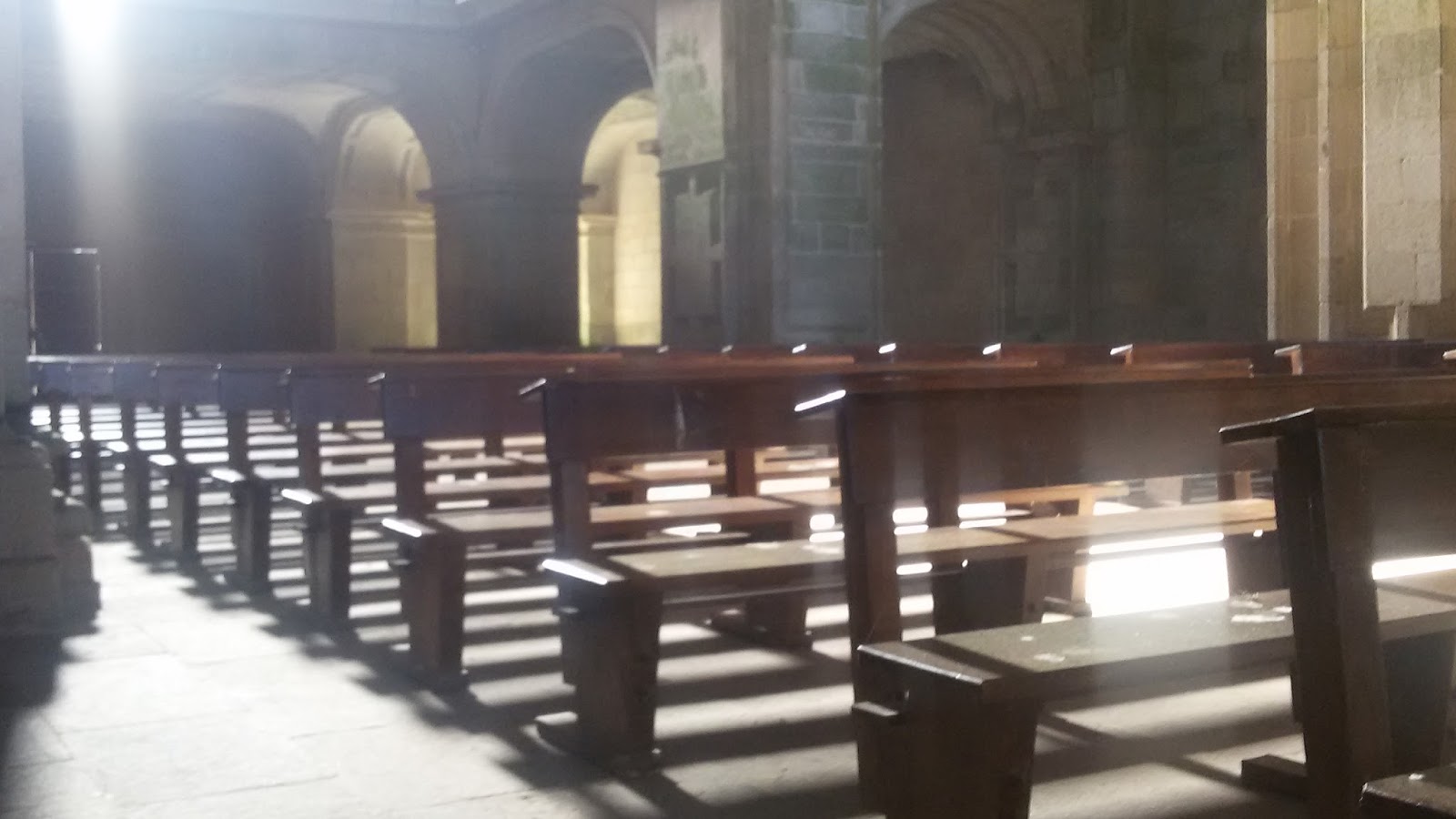
    Sobrado de Monxes Cathedral, Galicia, Spain.
    He asked if there was water nearby.
    The two dogs, attached to his belt by lengths of thick rope, were thirsty.
    We were about sixty kilometers (or several days) outside of Santiago when we met him. I regret that we didn’t get a chance to ask his name.
    He carried a huge walking stick, clearly decorated and carved by him, and an unraveling straw hat with a green band around it advertising for Amstel. He carried fishing gear, slept in a tent with his dogs and was running out of money. He had lost his passport one night in a flash flood, given away his watch. His hair and beard were unkempt and reddish brown. His eyes, wide, never quite focused on ours.
    In a thick, thick accent, he briefly told us his story.
    He had been a farmer in the Czech Republic. In December of 2015, the bank took his farm and everything he owned. So, he left with his dog and started walking. The second dog they found drowning in a river one night—still a puppy, it had huge paws, sure to be a big dog.
    When he reached Santiago via the Camino Frances (the most popular route, a bit farther south), he turned around and started walking the other direction along the Camino Norte (the Northern Way, where we met him). After telling us about the dog, the money, the passport and the watch, he concluded:

    “So probably I will spend my life walking. Just me, the dogs. I speak Spanish, so when I run out of money maybe I will find work somewhere, for a while. I think it is a good way to live, just to walk.”

    I think I can empathize. If I lost everything like that, I would probably lose any faith I had in property, money, things. I would probably—maybe—start walking and settle into a state of non-owning, non-needing, non-grasping, too.
    On the Camino, you run into a few of these modern-day renunciates.
    They’re not out for a month-long holiday, or even a six-month sabbatical. They’ve dropped—or lost—everything, and they’re walking, not for pilgrimage, not for a temporary detox, but for life. 

    I admire them, just as I admire anyone with a single-minded passion so single-minded that it borders on pathological. I think I understand the impulse, though I can’t imagine ever committing my life to just one activity. Different strokes, is all.
    More than anything, I’m fascinated by what appears to me to be a growing global trend, as the “real world” becomes harder and harder to stomach, of starting walking (or traveling, or what have you) and never stopping.
    Society has always had its renunciates. Those who live outside the bounds of normalcy—normal time, normal family, normal work, normal life—and follow another Way. I suppose the only difference is that our modern world doesn’t know as well what to do with them. It demands passports. It requires that we identify our place, our role, our function. It is, quite frankly, nonplussed by this growing race of outsiders. And yet, they are growing. 
    If you ask me, there will always be renunciates—those who chose not to participate in the world offered to them. And if you ask me, it’s not a problem; rather, it is for the rest of us to accept and allow their presence, walking the narrow paths between the borders of society.
    We told the former Czech farmer that there was a small shop in a house in the next town, just a kilometer farther along. He woke the dogs from their nap on the sidewalk, and we set off in opposite directions.

    Without a doubt, he is still walking.
    ***

  • Welcome to the World: First Post-Camino Reflections and Impressions.

    Sunrise over Bolibar, Basque Country, after an accidental four a.m. start time.
    High heels tap-tapping on the pavement. SALE signs in every storefront. The familiar turning on sound of my shiny laptop that I haven’t heard in a month. 
    Not one single “hola, peregrina!”* as I pass crowds of strangers in the streets.
    Walking through central London is quite the “welcome” to the world. But arriving in London town on this beautiful July day, that’s just what I’ve done, scallop shell hanging from my backpack, dusty shoes on my feet and cool breeze on my face.
    While many reflections are sure to follow, here are the first thoughts I’ve had since officially “returning” from my journey:

    I’m damn proud of what I’ve just done.
    Estimates vary from 795 to 863 kilometers (San Sebastian to Santiago de Compostela), but whichever way you hang it, that’s a long walk. I’m proud of these legs that have put up with unplanned 35-kilometer days, these feet that have weathered blisters and mysterious swelling without (much) complaint, this brain that has learned passable Spanish in four weeks. While part of me was underwhelmed by my accomplishment and tempted to understate it, another part of me felt like turning around in the street and shouting, “Look what I did!”
    I really want others to know that they can do it too.
    Over the past month, I have heard of or personally encountered pilgrims on horseback, bicycle (“bicigrinos”) and wheelchairs; overweight men, non-athletic girls and heavy smokers; young children, women in their seventies and everything—everything—in between. Think you can’t do the Camino? I think you can.
    Being a pilgrim is a privileged way to experience another place—maybe the most privileged.
    Never have I been so utterly accepted in my travels, nor my purpose and my role so completely understood. As a pilgrim (as opposed to a traveler/tourist/visiter/all the other things I have been), I found local people exceptionally welcoming, caring, understanding and accommodating. The people of Northern Spain have happily put up with my (and thousands of other pilgrims’) poor language skills, smelly clothes, abysmal navigation and overall cluelessness as we passed through their homes. It was a privilege to be received so kindly.
    I’ll miss it.
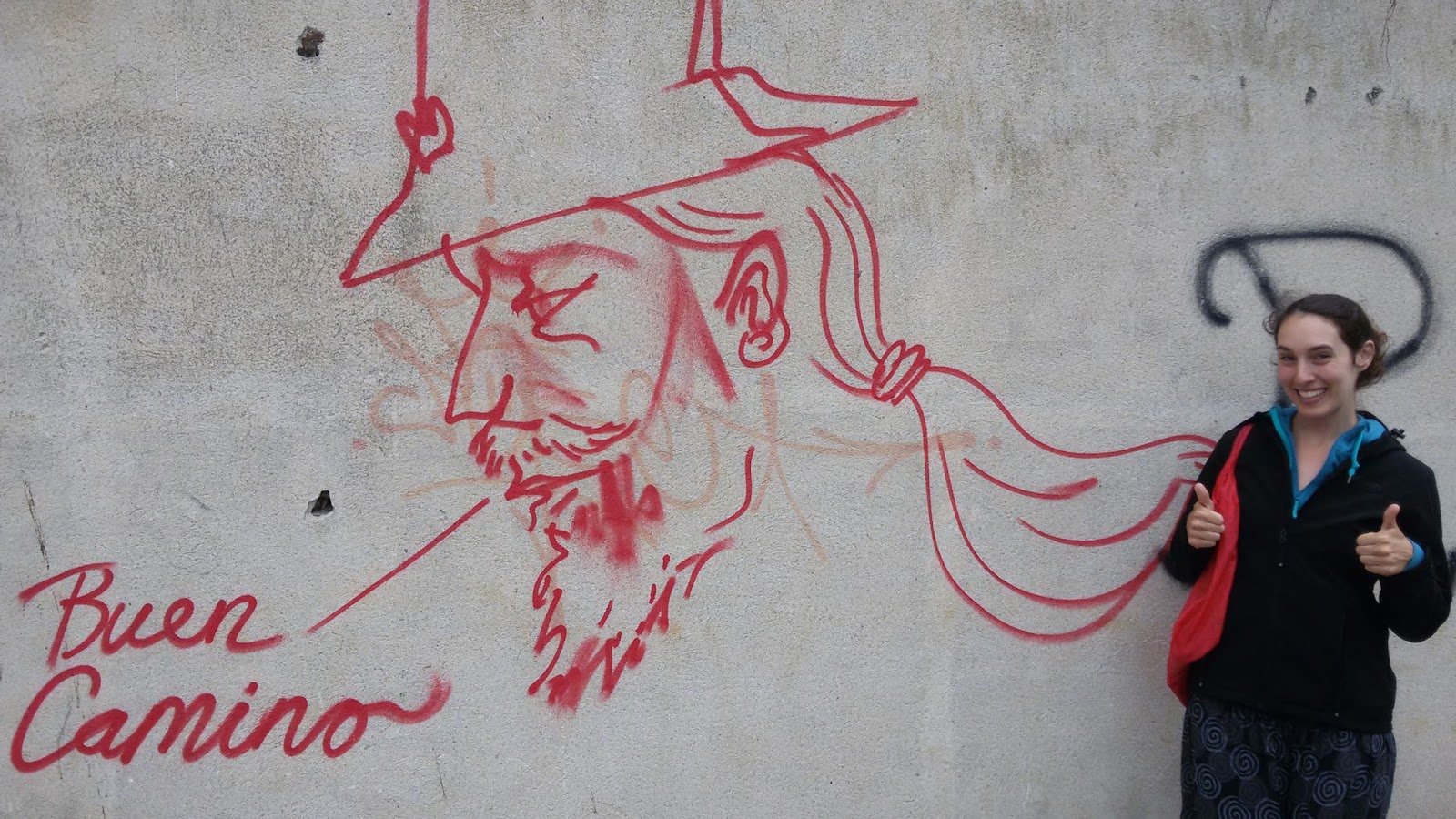
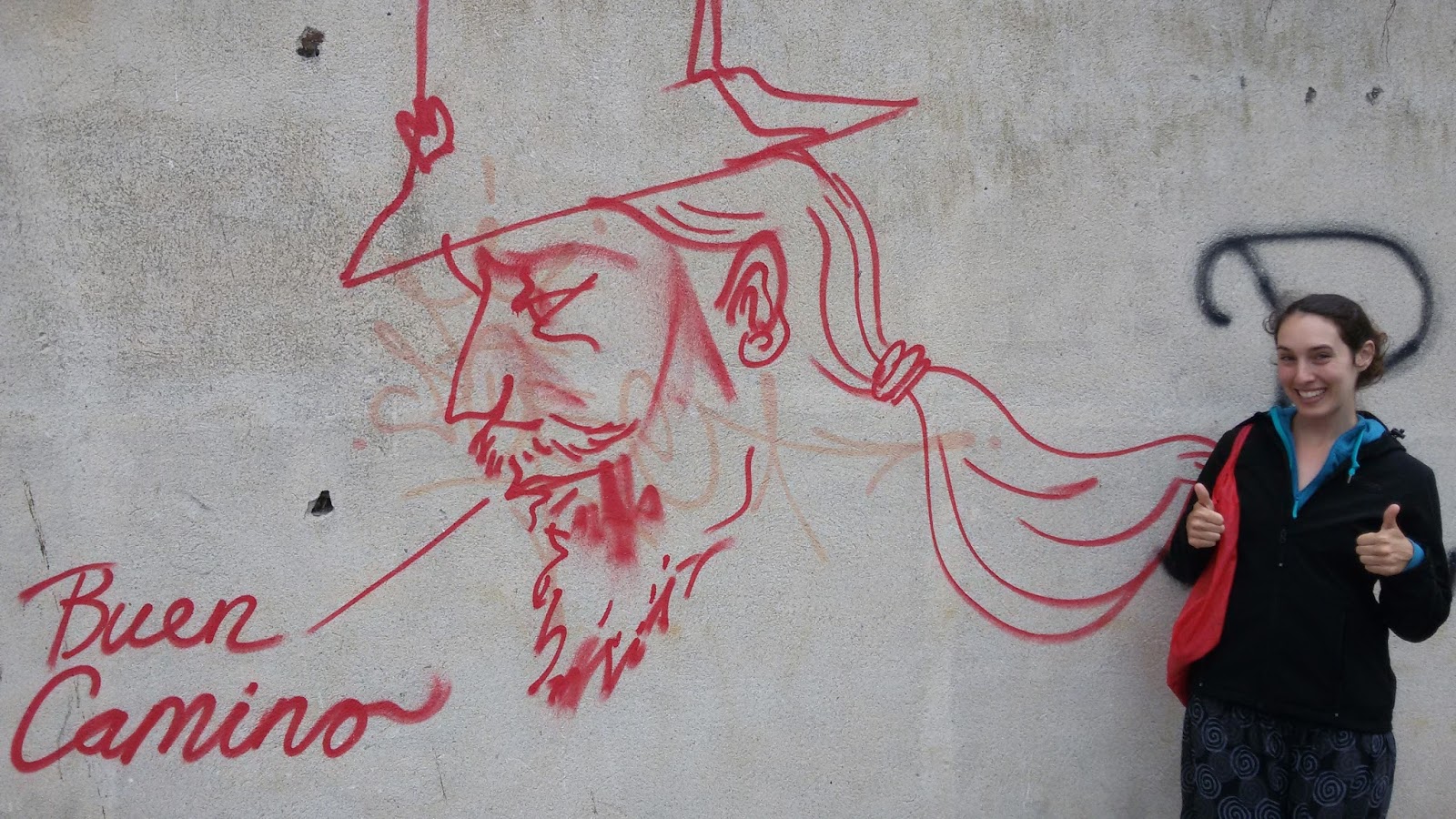
    Backpack, staff, sturdy shoes and scallop shell. The trappings of the modern day pilgrim are different from those of our predecessors, but nonetheless unmistakeable. On a daily basis I received unsolicited directions and support from passerby. From farmers in their fields, cyclists whizzing by and cars on the road, shouts of “Hola, peregrina!” and “Buen Camino!” were common and comforting. To be so firmly rooted in a fixed purpose, and to have that role understood and supported by the community, infrastructure and even landscape around you is a rare gift. Though difficult to describe, pilgrimage as a state of being was an unparalleled experience, and I will miss it.
    I definitely don’t know what I’ve learned yet.
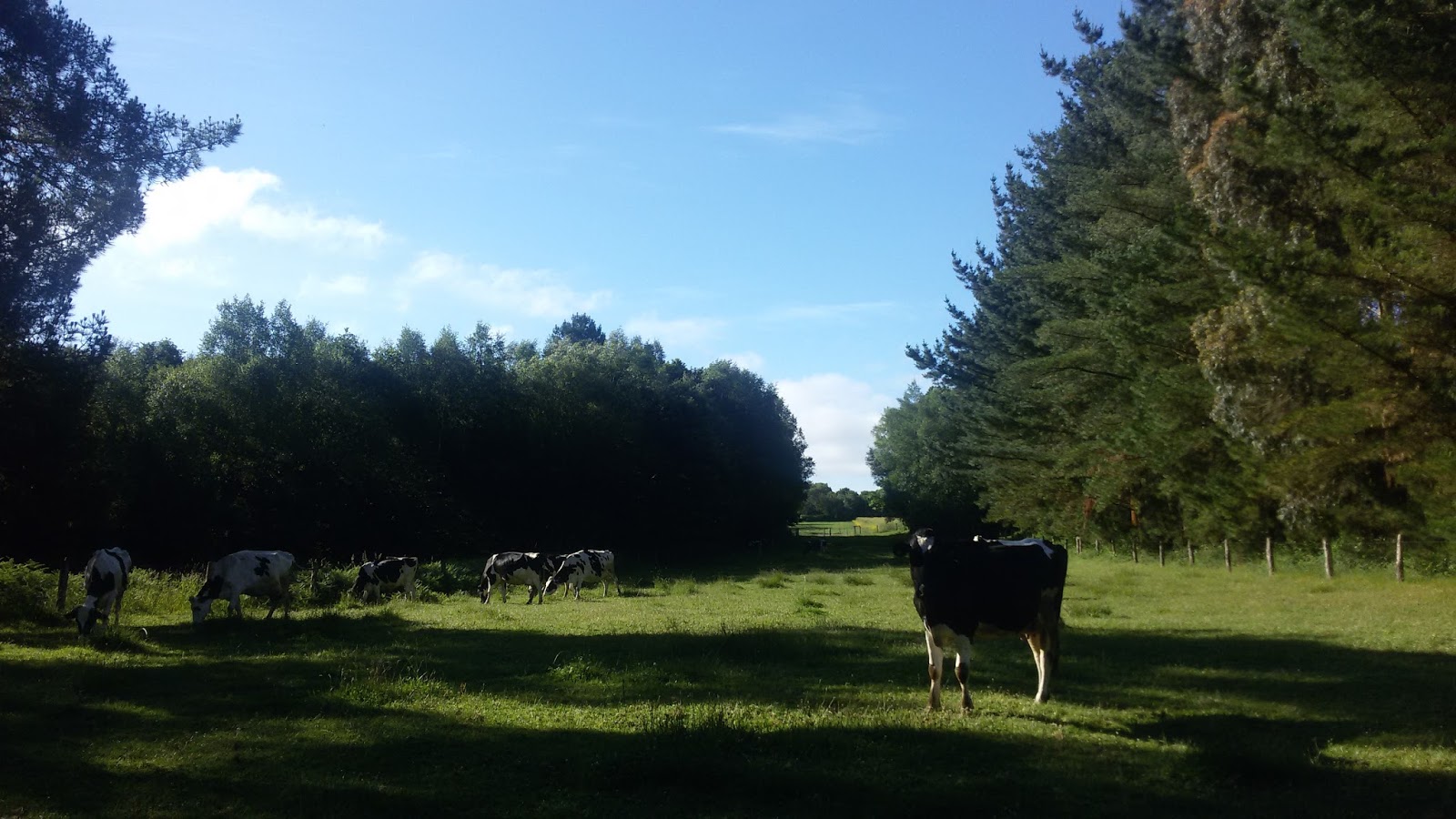
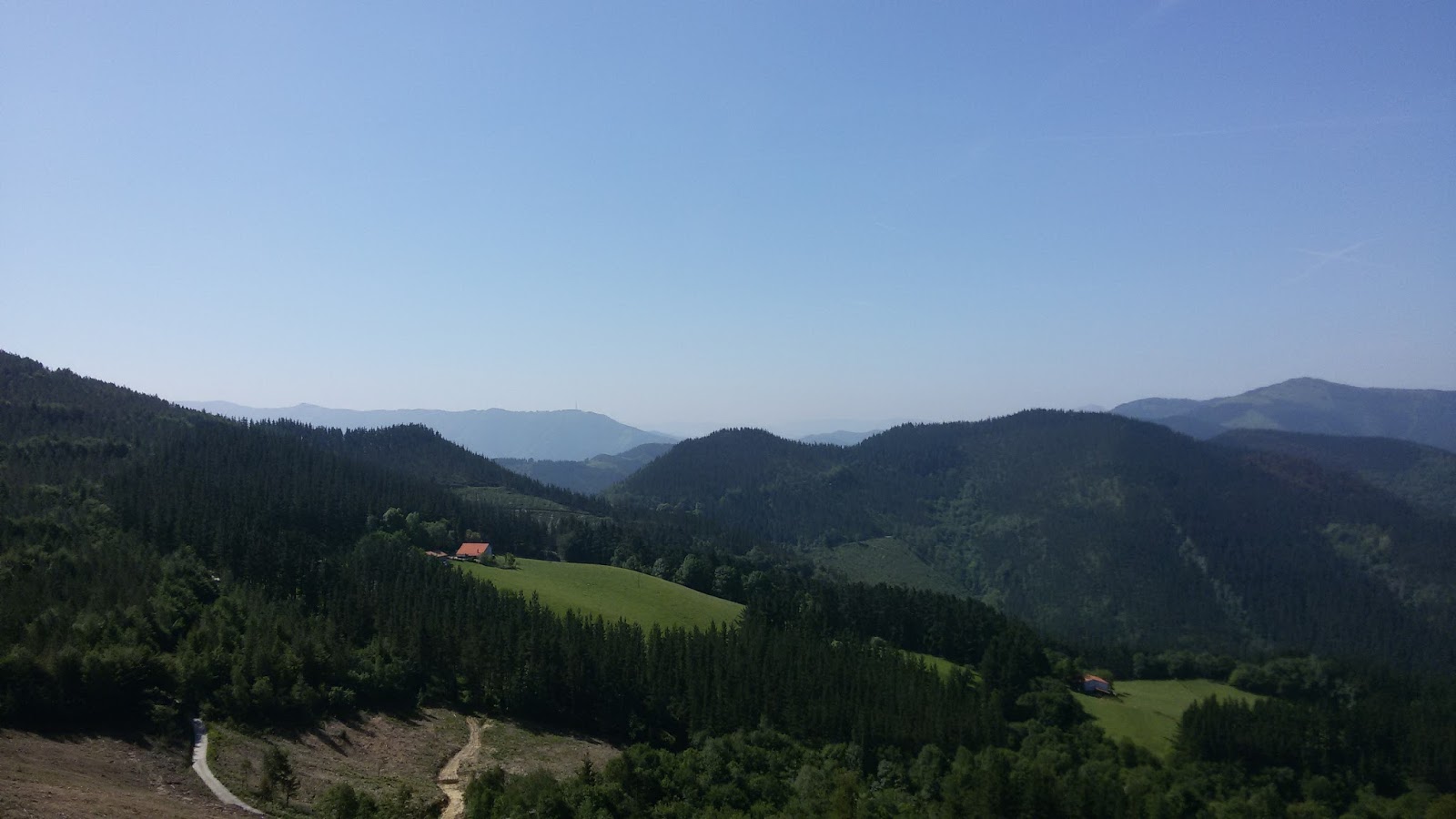
    Deep thoughts? Rare. More common: “My feet hurt.” “I’m hungry.” “Why is the sky still spitting at me?” “Ooohhh, that’s a pretty mountain.” “Cows are funny.” “Goats are funny.” “Hehe, sheep are really, really funny.” “Ooohhh, pretty horses.” “Hmm, my feet still hurt.”
    You get the idea. Even more common: “…  …  …” Clear mind. That was the best part. So, I don’t know yet what the big lessons were—but I’m sure they’re in there.
    But everything was perfect and exactly how it needed to be.
    There’s no “right” way to do the Camino. Everyone will walk at different paces, stop different places and learn different lessons. And that’s exactly as it should be. I’m still entirely in the processing phase of my return, but I know one thing for certain about my journey: It was perfect.


    *Peregrino(a) is the Spanish word for “pilgrim.”
    ***

    Some bonus awesomeness: Check out my friend and fellow pilgrim, Margaret’s inspiring campaign, WALKING FOR WOMEN WITH BREAST CANCER IN TIMOR-LESTE – HALIKU.

    ***

    I expect to be writing a fair bit in the coming weeks and months about the Camino, so if there’s anything in particular you want to hear about, please let me know!

  • Off to the Camino… Travel Update and See You Later!

    On Sunday, June fifth (yes, that’s tomorrow), I will close my laptop. I will put it on a shelf, and I will not see it again for a month. I will put two pairs of pants, three shirts and a sleeping bag into my backpack, and I will head to San Sebastian in the Northeast of Spain.

    I’ve been waiting for this day for a while now.

    I need a vacation, yes. I need a total break from society—also yes.

    But it’s more than that. It always is.

    The Camino de Santiago has been on my list for awhile now. (It’s not a bucket list. I like to call it my, “Do These Things as Soon as Possible List.”)

    I don’t know why I want to do it, just like I don’t know why I want to travel the Trans-Siberian Railway, ride on horseback across Mongolia or sail the seven seas (all on my list). Except, I know that it calls to me; I know that adventure is my way of searching—of seeking.

    I know that a search need not have an object—that it is the act of searching that matters—sometimes…


    ***

    So, that’s about it. I’m not packing my camera, so I’m sorry to say I may not have many beautiful pictures to show for this trip at the end of the month. I also haven’t decided how much, if at all, I’ll stay connected. I may be updating here over the next month—or I may not. If not, I’ll be back in a month with a whole lot of stories to tell. See you then! 🙂
  • Olive Oil on Everything—A Gastronomic Diary of Italy

    Sicily, 2013—where I first learned about putting olive oil on everything.
    Florence, Tuscany
    Gnocchi with fennel, mint and gorgonzola. A generous drizzle of olive oil (the frisky, green, good quality kind) on plain, unsalted bread.
    A lake near Rome somewhere
    Tiny fried fish, fresh marinated anchovies, mussels, salad with potato and octopus. Gnocchi with clams. Zucchini with mint. A drizzle of olive oil.
    Perugia, Umbria
    Hands dry from chalk after climbing. Spaghetti with shrimp, zucchini and tomatoes. Olive oil from my host’s grandmother’s home. On the pasta—and on my hands.
    It was in Italy that I learned you can truly put olive oil on everything. 

    This most recent visit was no different.
    I mean the good stuff, of course. The fresh, tangy-green and gorgeous kind. The kind with bite and soul that tastes like it came from somebody’s grandmother’s farm (it probably did).
    Here is a short list of ways I have seen olive oil used to perfection:
    • Drizzled (well, poured, really) into tomato sauce after it is cooked and off the heat.
    • Applied to dry hair, skin and lips—best directly after the shower while skin is damp.
    • On a plate with sea salt and balsamic vinegar, for dipping (soaking) bread.
    • Drizzled over pasta, salad, cut vegetables, meat, pizza—everything, I’m serious.
    • Straight from the jug—just a taste, a drop.

    Olive oil is everything. Condiment and cooking base. Start and finish. Salve for the body and soul. I suspect it could heal a broken heart, too, though I haven’t tried yet.

    In the North, butter features prominently in many recipes—but in the South, it’s always olive oil.
    And that’s really it. I mean, I could keep listing mouthwatering Italian meals. That never gets old for me… but I suspect others might have a shorter attention span.
    Olive oil. On everything. My time in Italy, in a nutshell.
    Try it. Don’t be moderate. Italian grandmothers never are. 
    Find the good stuff. Apply liberally. Buon appetito!

  • What Makes this Mountain Different from all other Mountains?

    Villa Borghese Gardens, Rome
    Valle Aurelia, Rome, Italy
    This could be any street in any city.
    Mixed-era apartment buildings. Imposing stone architecture at turns. Cobblestones and pavement following no particular logic. Crush of cars and scooters. Cafes. Hairdressers. Passerby dressed in scales of gray.
    So, what makes this different from any other street—any other city?

    ***
    As we made our way along a dry riverbed, through native South African fynbos vegetation, toward a spectacular (but, again, arguably nondescript) stretch of shoreline, my friend put to me a similar question. Not quite verbatim, it was this:

    Most mountains are pretty similar. Most cities are pretty similar. There are trees and rocks and wide sky spaces. There are streets and cafes and passerby in scales of gray. So, what makes these mountains different? If we can go hiking at home, why ever go anywhere else? And if we do go, how do we choose? 

    Why these mountains?

    The question was philosophical in nature. My friend is nearly as avid a traveler as I.
    I would like to offer three answers to these questions—one of which sounds nice, one of which I believe most strongly, and one of which I feel, irrationally, to be true.
    It doesn’t matter which is which.
    First, terroir. Terroir is a French term I fell in love with while studying the anthropology of food. Essentially, it claims that taste is deeply rooted in place—territory. The elements unique to a given locale—water, specific bacteria, culture, human traditions, soil, weather, everything—combine to create the particular circumstances in which a given food item is produced. And we can taste it. While terroir is a culinary concept, I believe it can just as easily apply to cities, landscapes and really anything else.
    Thus, these mountains are made unique by an intangible yet undeniably meaningful agregate of water, culture, air, bacteria, soil, and human idiosyncrasy. 
    Why go anywhere? Terroir.
    Second, intuition. Some part of our deepest self knows where we need to be. It doesn’t make sense, and it can’t be proven, but those who have experienced will swear that the voice of intuition is real—and that it is always right.
    So, how do we know, how do we decide where to go? Instinct.
    Or third, the difference isn’t out there at all. It’s us. The mountains are, more or less, all the same. Trees and rocks and wide sky spaces. The cities, too. We, however, change, and we can understand that change by observing its reflection in the places we visit—or rather our experiences of them.
    What makes these mountains different from all the rest? We do.
    Or, most probably, the answer is some combination of the three.
    What makes these mountains different from any others? Nothing, or precious little. Yet, they will be different, because we will change—always.
    Why go anywhere else? Terroir. 
    And if it’s all the same, how do we possibly decide on one mountain, one city, one street over another? Oh yes, intuition.
    Maybe this could be any street in any city, but it isn’t. It’s this one—the one I’m in. And it is utterly unique, both for its composition of individuals, elements and other intangibles, and for my experience of it, in this particular moment. No other street in any other moment will ever be this. I don’t know why I’m here—and not in another street, city, mountain—but I trust the voice that called me.

  • Helsinki Snapshots


    Monday, 11 January 2016
    It is 2:30 pm, and the sky already seems to be getting dark as I make my way to the Helsinki airport… in a taxi (gasp! I know! But my tennis shoes and single layer of pants just aren’t going to make it to the bus stop in this -20º C weather). 
    Somehow I have managed to visit this city three times over the past several months, for a total of six or seven weeks, and it’s about time I shared some snapshots of life here. What I lack in photos (I’ve taken very few) I’ll try to make up for with riveting description…
    The in-between bingo sets show… it’s pretty much what it looks like.
    Sunday nights find me at Mascot cafe with my friend Ella (and her friends) for bingo. A young, rambunctious crowd plays for free drink vouchers and the satisfaction of winning. They sing along with the flamboyant host (an out-of-costume drag queen who hardly looks his 40 years) for certain numbers—“I am 16 going on 17…” “when I’m 64…”—and cheer loudly whenever a player gets Bingo! I begin to get a solid grasp on Finnish numbers just in time to leave.
    Two locals sitting outside the fray stop me this week on my way to the door to ask what’s happening. But isn’t bingo just for old people? They say. Sometimes not, apparently! It is always when I can tell a local something they didn’t know about their own city that I begin to feel I have really settled in.
    Mascot, a down-to-earth bar with a lobby plastered with graffiti-letter posters advertising underground events, also plays host to Helsinki’s first spoken word festival, among other things.

    German Sparkle Party capture (not mine).
    My friend’s house in Käpylä, where I am very kindly welcomed as a long-term guest (maybe there is no Finnish saying about houseguests and fish…) is green. Snow covers the front lawn; when I first arrived it was autumn leaves and apples instead. Seven unique individuals coexist there with surprising harmony, and instantly make me feel at home. We practice jiujitsu on the tatami mats in the attic (later we will move the mats to make room for a massive “German Sparkle Party” (warning, click at your own risk) complete with mojito bar and black light dance floor.) and we play pinball on a vintage machine in the living room while sipping Salmiakki (licorice liqueur). In proper Finnish fashion, I become thoroughly addicted to the sauna in the basement. I learn that if you add a splash of beer to the ladle of water before tossing said water onto the hot stones, it makes a delightful smell (really). 
    Elephant journal HQ, Helsinki—my coworker, Sara and I working at the kitchen table.
    From the small kitchen table where I work, I can watch the light changing outside, fat snowflakes drifting lazily past the window or bunnies appearing from behind trees.
    The bouldering gym where I go to climb a couple times a week is small, but intense. Typically crowded and obscured by a haze of chalk, its routes challenge me and always hold my interest. In an open loft workout area, I observe people displaying more varied exercise routines than I have ever seen in my life. I become noticeably stronger over the weeks that I train here.
    At my favorite supermarket, I learn to distinguish between smoked and raw salmon, free-range and organic eggs, full fat and lactose-free milk, and more kinds of berries than I can name even now. My Finnish vocabulary seems to consist of equal halves food words and profanities.

    The hill.
    Finally, a quick walk from the house I briefly call home brings me to the top a small hill (the highest in Helsinki) topped with crumbling bunkers and criss-crossed with paths. When I don’t want to go anywhere else, I step outside, turn right and then right, and make my way there.

    ***

    Welcome to (what was) my world for a short while, I hope you enjoyed the tour! As of yesterday, I am now in Cape Town, South Africa—currently settling in, but lots more on this new place to come!
  • Will the Real Santa Claus Please Stand Up?

    “Joulupukki” by Lauri Rantala from Espoo, Finland – Santaclaus at Helsinki Cathedral.

    Consider this my holiday blog post. I could talk about Hanukkah (the holiday I celebrate), or Christmas markets (delightful all around the world), or any number of things. But why would I when scary monsters and mythology are on the menu?

    ***

    It is September, and I am walking through the the Finnish tunturi (mountains in Lapland, way North), the setting sun to my right. Low bushes, a few turned to orange, carpet the ground. The trail is wide and mostly flat, and it carries me and my hiking partner past Pyhäkero (Sacred Mountain), herds of reindeer silent as dusk and rocca (unique shards formed by the freezing of water in crevices of rock and their subsequent explosion).

    As the colors in the sky deepen and a nighttime chill settles over this landscape, I learn the real story of Santa Claus and his Nordic predecessor, Joulupukki (Yule Goat).

    A terrifying creature with a goat’s skull for a head and flaming eyes, Joulupukki—so it is said—appears at homes during the Christmas season, demanding food, occasionally taking away those who have not been good. He dresses in gray furs and sows fear wherever he walks.

    Jolly Saint Nick, is it?

    Eventually, this Joulupukki became more or less synonymous with the Christian Santa we all know today. Funny how we always seem to do that to the less cuddly figures of mythology.

    As I listen to this alternate (and, I must admit, much more interesting) Yuletide legend, I consider the gray, shifting light of this place and conclude it is much better suited to such a dark and mystical creation than a rotund, white-bearded figure in red.

    Near Rovaniemi, where the train from Helsinki leaves us and we begin our journey, there is a place called The North Pole, where tourists seeking a merrier experience can visit Santa Claus’ Village.

    I opt out. Biting wind, icy mountain lakes and ever-so-slightly magical mountains do so much more justice to this fascinating culture.

    As for Joulupukki, the “real” Santa Claus? No, I didn’t run into him. But, it wouldn’t have surprised me if I had…

    ***

    {Update: Family matters brought me back to the U.S. sooner than my planned visit, and I have been quietly and busily staying under the radar in Michigan these past few weeks. I’ll be in the Northeast a few weeks longer, then it’s on to the next adventure. Where is that, you ask? …I’ll let you know when I do!}
  • Tallinn Snapshots

    Greetings from Tallinn!

    On Monday, my friend and I took the 2-hour ferry from Helsinki, Finland to Tallinn, Estonia.

    Our mission? Like nearly every other passenger on board, buying alcohol. Tallinn, evidently, is the everyman’s solution to avoiding Finland’s high taxes and stocking up on liquor for parties and general consumption.

    With a house party coming up this weekend, we had an important task to complete, and an extra seven hours to explore Tallinn… Here’s just a taste:

    The ferry itself is six stories tall, boasting its own liquor store, luxury “trends” store and nightclub—where drinking habits go to breed and a night out consists of a round trip to Tallinn without ever leaving the boat.

    The breakfast buffet offers Karelian tarts (hailing from the Finnish region of Karelia, pastries full of rice, topped with a special “egg butter”), smoked salmon and cold cuts, mysterious meatballs and an assortment of very particular cured fish. We spend the entire trip to Tallinn slowly working our way through it all.

    My favorite poster from the day.

    Tallinn’s Old Town winds away from the harbor, a pleasant mix of cobblestones I’m still feeling in my sore legs, kitsch tourist restaurants loosely modeled after medieval times, posters that seem stuck in another century, souvenir shops and folk art galleries.

    My friend, travel sister and current host, posing with an eye-catching door.

    Outside one of those restaurants, bored waiters crouch down to scatter crumbs to a few pigeons. Next door, a woman in full-on (presumably) traditional Estonian garb acts as a human signboard—brightly colored embroidery, tightly braided pigtails and elaborate headdress demanding the passerby’s attention. We try to covertly get a picture of her… and fail:

    I think she saw us…

    But, we are photo-bombed brilliantly by a passing stranger, which makes up for it:

    Never seen this guy before in my life.

    I spot Captain Jack Sparrow walking down one of the main streets, swagger and all. I get a little bit too excited, fumbling with my camera and missing the photo op. I still wonder what restaurant he was promoting.

    As Jack Sparrow disappears down the street, we follow the sound of a Steel HandPan to a busker, and I meet my soulmate in puppy form:

    More puppy pictures to come.

    As is the case in dedicated tourist towns the world over, we are met with considerable indifference by a considerable portion of Tallinn’s population, with some friendly exceptions. As dusk falls (around 4p.m. in this part of the world), exhausted from some combination of cobblestones and cloudy skies, we settle in for a dinner of Modern Estonian Cuisine before making our way back to the ferry.

    Tallinn at dusk—beautiful.

    It’s a good day.

    ***
  • Stockholm Snapshots

    Believe it or not, this is right in Stockholm!

    I’ve fallen behind. There are several cities I have seen and enjoyed without writing a single word… And so now I’m revisiting not only in person, but also in spirit as I backtrack to bring you these snapshots.

    Stockholm first.

    (Evidently I have almost no pictures, so these will mostly be word snapshots.)

    I arrive in Stockholm in mid-September to visit my oldest friend (for all intents and purposes my big sister) in her new Swedish life. She and her boyfriend graciously share their one-bedroom apartment with me for a week, and I get in what sightseeing I can between work and catching up.

    We bake miniature apple pies for fika, Sweden’s infamous coffee and cake time, and cook kugel (noodle casserole) and brisket (Jewish soul food) for a belated Rosh Hashanah celebration.

    Based on the tradition of fika alone, I should probably move to Sweden.

    I also discover morotsmuffins (the most delicious carrot cake muffins in existence, with cardamom and cream cheese frosting), of which I unfortunately have no photographic evidence. (Ben & Jerry’s, on the other hand, I find myself morally obligated to document—the VT brand has officially gone global.)

    Ben & Jerry’s in Stockholm? Oh yeah!
    (No, I didn’t buy any. Morotsmuffins, remember?)

    I dip my toes into my friend’s life here, meeting friends and learning a few useful Swedish phrases: “tak” (thanks), “hey” (you guessed it, hey) and “var festin mit fulla killor?” (where’s the party with the drunk guys?) I think I should be all set, no?

    We also discuss politics and the refugee crisis (with Sweden poised to take in 200,000, it’s a particularly salient topic), but that is a far more serious discussion for another time.

    Entrance to Haga Park.

    Haga Park, just minutes from my friend’s Solna apartment, is a sprawling oasis sprinkled with a few architectural oddities. “Am I really in Stockholm?” I write as I watch the shadows grow over a massive lake. Difficult to believe.

    Haga park—attempted dusk capture.

    And lastly, wandering through Gamla Stan (Old Town) on my rainy day off, I stumble upon a marching band playing Abba’s “Dancing Queen” as a motley group of protesters waits to march through the square—one of many wonderfully incongruous details I observe over the course of the week.

    I might as well stop there, as nothing could be better…

    ***

    (Stay posted for Helsinki and Amsterdam/Haarlem snapshots!)

  • Revisiting

    “Revisiting” Sicily

    I have rarely been one to visit the same place twice.

    I always used to squirm uncomfortably when new friends, by way of goodbye, would ask when I was coming back, because I knew I didn’t know. I didn’t know if I would, indeed, be coming back.
    Lately, however, I meet those new friends’ eyes and say with confidence, “I’ll see you next time,” because I’ve since learned that the universe likes nothing more than to send us what, where and whom we least expect. (It seems to particularly delight in setting me down on the same path twice.)
    I can never say when or where or how this next meeting will occur, but it no longer seems so far-fetched to expect that it will.
    You see, though I was never one to visit the same place twice—the pull of the uncertain new always stronger than that of the friendly and inviting known—I can no longer claim this to be so. In the last two and a half months, I have revisited: Rome, Sicily, London and Amsterdam. I have seen friends made in Serbia, Kenya, Germany, India and Vermont.
    As I write this, I am en route to Helsinki for visit number 2.
    Lonely shoe, Helsinki.
    For a serial seeker of new places, it is an odd thing to go back to—to revisit—a place.
    And then, as most strange things are, it is also wonderful.
    I find, in revisiting, that such an act does not in fact exist; it is impossible to visit the same place twice. Friends cut their hair, or grow it; beloved restaurants close, and new ones open; memories, friendships and connections are planted, and new experiences grow from those seeds.
    More important than anything, my perspective—ever evolving, never exactly the same—makes of each “known” something entirely new, and so, in going back, I find I am always going forward, after all.
    The repercussions of this fact are almost terrifying in their magnitude. For each step that I take, there are infinite possibilities, not only ahead of me, but behind me as well. The tree that I see in summer might present itself entirely anew stripped bare in winter; the rose in bud another matter altogether in flower; the city of my 17-year-old travels lent a thousand shades of nuance by seven years’ distance.
    And so?
    And so.
    Sunset on the plane…
    Always moving onward, but am I?
    Maybe I am no longer “not one to visit the same place twice.” Maybe only now does it truly sink in that “everything” or “everywhere” is a receding mirage, the pursuit of which can carry us in endless circles.
    And still, I pursue it—encouraged, not dissuaded by the ever-expanding nature of the illusion—I willingly, obligingly circle back, and forward, and back again.
    Moving forward, or backward, exploring the new, or revisiting the old, I find the unknown in everything everyone everyplace, and I am inspired, in-spiralled, enthralled…
    “It’s no use going back to yesterday, because I was a different person then.” — Lewis Caroll
     
    ***
  • Strangers on a Train

    “We’re on our way to bible study,” says my friend. (He likes to make up stories, but let’s get real, who doesn’t?)

    It’s 10:00 pm, and we’re on the Circle Line, retracing our steps into Central London after hopping the wrong train. Across from us sits a young couple—friendly, talkative, and maybe a touch too willing to believe his absurd stories. They are sipping from a water bottle of vodka and fanta, on their way to a night out “raving.”
    Thus begins my Saturday night this past weekend. My friend alights at King’s Cross Station to head home, and I follow these strangers (soon to be friends) to Fabric, one of London’s most famous House clubs.
    We will meet another stranger on our way out of the Tube, and together walk to the venue. We will spend the next four or five hours dancing to some of the best House music I’ve heard in a year, adding new strangers (new friends) to our group as we went, and they will become, over the course of the night, no longer strangers.
    And all because we had all looked up across the aisle of a Circle Line train and said hello.
    A week prior, I went to meet my coworker in Oxford for the first time. On the trip home, the train was rush-hour packed—standing room only. Series of unexpected events, I found myself squished next to a fellow American; as foreigners are wont to do, we struck up a conversation, found it fascinating, and continued it over a particularly delicious dinner in Notting Hill.

    And all because I had asked (in my unmistakably American accent), “Is this the train to London?”
    When did we grow afraid of strangers? When did the popular wisdom for travelers shift from, trust the road and the good Samaritans who walk it, to, trust no one? When did two strangers—or four strangers—talking on the train become the exception, rather than the rule?
    I have an advantage, in that nothing about my thin five foot five frame and wide smile inspires fear or mistrust. There are fewer barriers for me to cross to arrive at the human beings inside their protective circles.
    Some of my most entertaining nights out, fascinating conversations and closest connections have occurred simply because I looked up and said hello. Though I occasionally forget and succumb to the comfortable bubble of my own world, I try to make a rule of talking to strangers—I have yet to regret it.
    And then, when you think about it, aren’t we all just strangers on a train?
    Busy watching for our station, looking out the window, or within, or anywhere but around us, we don’t realize that the train is it. There are no stations, no stops, and for all we know no destination.
    Our fellow passengers? We’re stuck with them—better hope they don’t smell—and we can make of that a party or a burden. The Buddhists will tell you the train is an illusion; the Jews will tell you it’s the only thing that’s real. One thing I know for certain: It’s what we make of the ride that counts.
    So we can either look up and say hello, and make the journey worthwhile, or we can keep staring at our shoes, waiting for the conductor to call our stop.

    Try saying hello to a stranger today and see what happens. Maybe they’ll tell you their life story. Maybe they won’t respond. Maybe that stranger will change your life—or your day, or your next ten minutes. But no matter what, isn’t it more interesting than your toes?

    ***