Category: Transformation

  • How Empowerment Self-Defense Can Improve Our Relationships

    How Empowerment Self-Defense Can Improve Our Relationships

    empowerment self-defense, toby israel, envision festival, costa rica
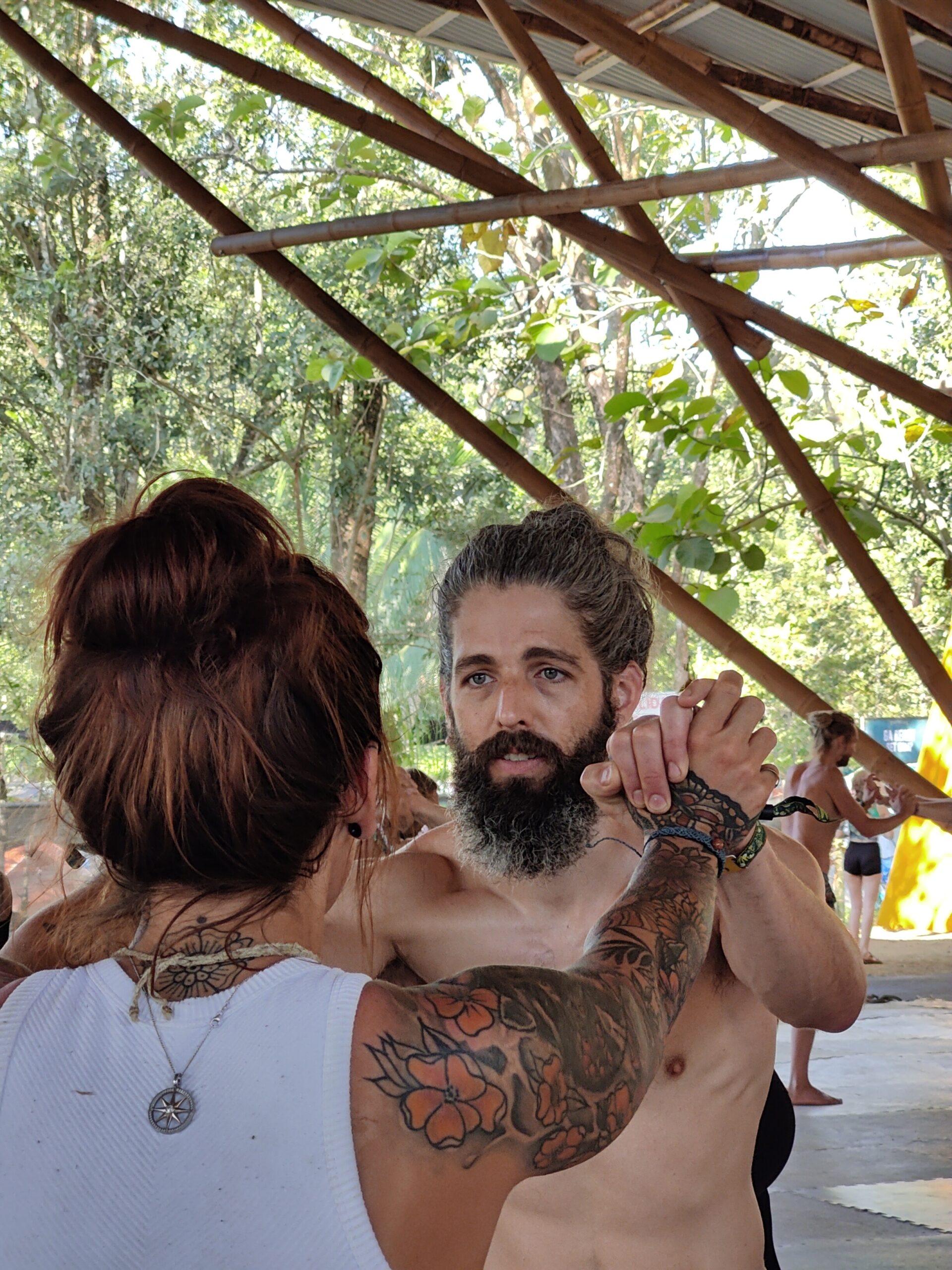
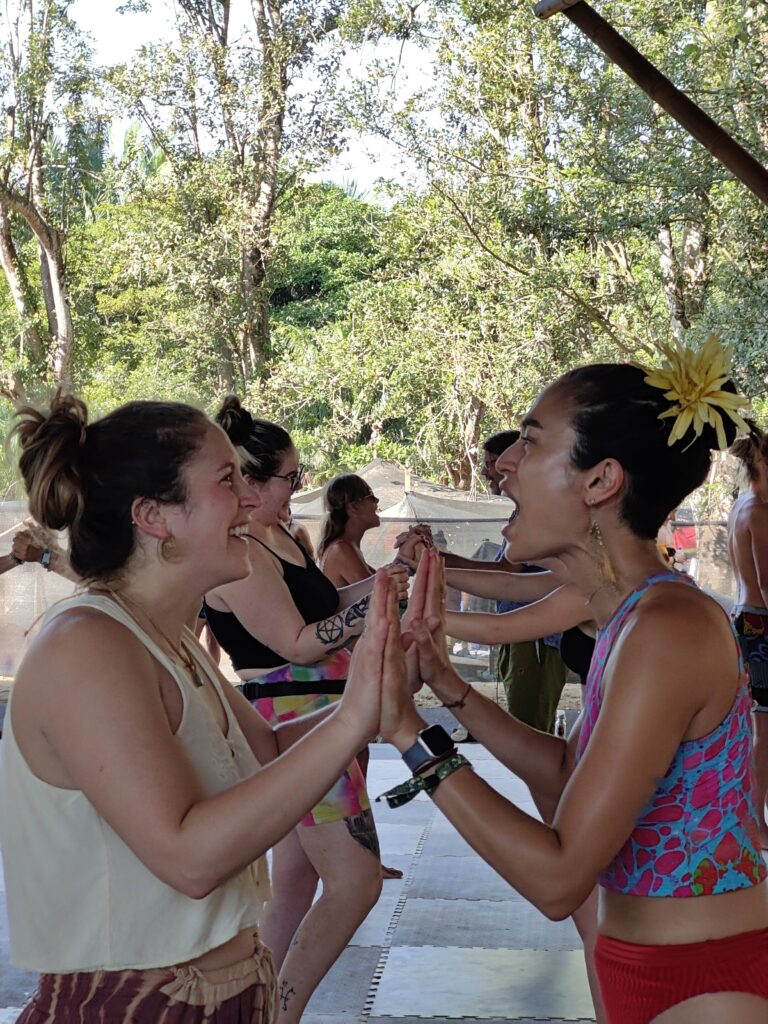
    Empowerment Self-Defense workshop at Envision Festival in Costa Rica, 2023.

    Understanding the traffic light approach to evaluating risk — & safety.

    What does self-defense mean to you? Is it just about martial arts strikes and yelling at an attacker? Or is it also about expressing firm boundaries, communicating a “No” without excuses or apologies, and interrupting uncomfortable situations before they become dangerous.

    Or, is it about improving our relationships, relaxing into deeper connection and pleasure, knowing that the tools for self-defense are within reach, just in case.

    For me, the answer is D, all of the above.

    As an empowerment self-defense instructor, I define both violence and self-defense along a broad spectrum. An attack by a stranger in the street or on the beach is violence. Emotional abuse is violence. Street harassment is violence.

    As a general rule, we humans don’t learn basic skills for defending ourselves anywhere along this spectrum. Empowerment self-defense provides choices and practical strategies — both verbal and physical — for dealing with risk, danger, or simple discomfort in ways that support safety and agency.

    At its best, I think it can also improve our day-to-day interactions with family, friends, and partners by helping us dial into our needs, desires and boundaries, hone our intuition, and speak from it with confidence and power.

    The Interview: Leaning Back from Danger (Red)

    Perhaps the first step to building healthy relationships is learning to listen to the voice of intuition and hit the brakes at the red flags.

    News stories and popular culture give the impression that gender-based violence always appears out of nowhere. You’re walking down the street and someone attacks you. You’re alone at the beach and someone attacks you. You’re in your house and someone attacks you…

    While these situations are real, they don’t represent the majority of cases of violence.

    It is a well-documented fact that gender-based violence (whether initiated by someone known or unknown) normally begins with an “interview.” In an interview, the potential agressor tests your boundaries, little by little, to see how you will respond. In a public space, the interview might start with a simple, “Hey, how’s it going?” and then escalate to more intimate questions or a breach of your personal space. With someone known, the interview could begin with “innocent” but undesired touch, and then proceed to cross more serious boundaries.

    The interview (along with domestic violence) makes it especially difficult to practice self-defense, for two reasons. First, the social contract demands that we respond politely (or politely ignore) these first, “harmless” steps of the interview process, even if we feel uncomfortable. Second, agressors aptly erode a person’s boundaries and trust in their own intuition.

    The question is: When will you pay attention to your intuition and put a stop to the behavior that is making you uncomfortable? This is exactly what a potential aggressor is waiting to see.

    We can interrupt the interview with the assertive and direct communication of a boundary: “I don’t want to talk.” “Don’t touch me.” “You’re making me uncomfortable. Stop.” If successful, we won’t have to use any other self-defense techniques.

    That’s why I don’t like to draw a distinction between physical and verbal self-defense. All the techniques have the same objective: to protect your safety.

    The Traffic Light: Leaning into Safety (Green)

    In empowerment self-defense, we like to use the metaphor of a traffic light to understand boundaries and risk.

    When we are in green, everything is okay, normal, calm. The body should be relaxed, without too much tension, the breath even, and the heartrate at a natural resting rhythm.

    An intimate relationship, friendship, or work environment should feel green most of the time, for most of us. This is a healthy place for our nervous systems, a place where healing and learning can occur, because the heart and mind are open to receive and connect.

    When we are in yellow, we are on higher alert. We notice that something isn’t right, we feel uncomfortable, or someone is crossing a personal boundary. The body may become more tense, the heartrate or breath might accelerate, and our posture and body language display more awareness.

    And finally, when we are in red, we are already in danger, and we need to apply self-defense principles (Think, Yell, Run, Fight, or Tell/Seek Support) in order to stay safe. Unfortunately, these situations often occur with someone we know, but we have the power to interrupt them.

    It is critical to understand that self-defense does not begin when we are in red. Self-defense begins when we are in green, with a continual process of self-discovery and exploration. It starts with knowing our boundaries, understanding what we like and want, and getting clear about which behaviors we will not allow.

    This clarity can improve all of our relationships — especially with the people we really want to have close to us.

    Then, empowerment self-defense continues in yellow, when we express our boundaries and put a stop to potentially risky situations before we get to red.

    Staying Curious about Our Needs & Boundaries (Yellow)

    Boundary work is complex and constantly changing. Keep in mind that your red and green zones may look different than your best friend’s, your partner’s, or your family’s. Rembember that no one else gets to tell you where your boundaries are, or if the lines you draw are “reasonable” or “valid.”

    We can stay curious about our yellow zone, especially, asking ourselves when discomfort is an invitation to question our biases or explore the possibility for healing, and when it is a simple warning cry to step away from danger and into safety. We can embrace the discomfort of genuine growth, while also protecting our hearts, minds, and bodies against violence.

    Remember, too, that we are in a process of constant evolution, and that we may have different boundaries today than we did yesterday, and that tomorrow will surely bring another shift. Accepting and honoring this process of change and growth — in ourselves and in our loved ones — is a perpetual challenge. But, I think the rewards are worth it.

    A Short Exercise in Defining Boundaries

    Where are your boundaries today? Make a list of ten “green” situations, ten “yellow” situations, and ten “red” situations. Don’t forget that boundaries are personal! The important thing is how each situation feels for you.


    Originally published on Medium.

  • Boundary Skills 101 for Festivals—& Life

    Boundary Skills 101 for Festivals—& Life

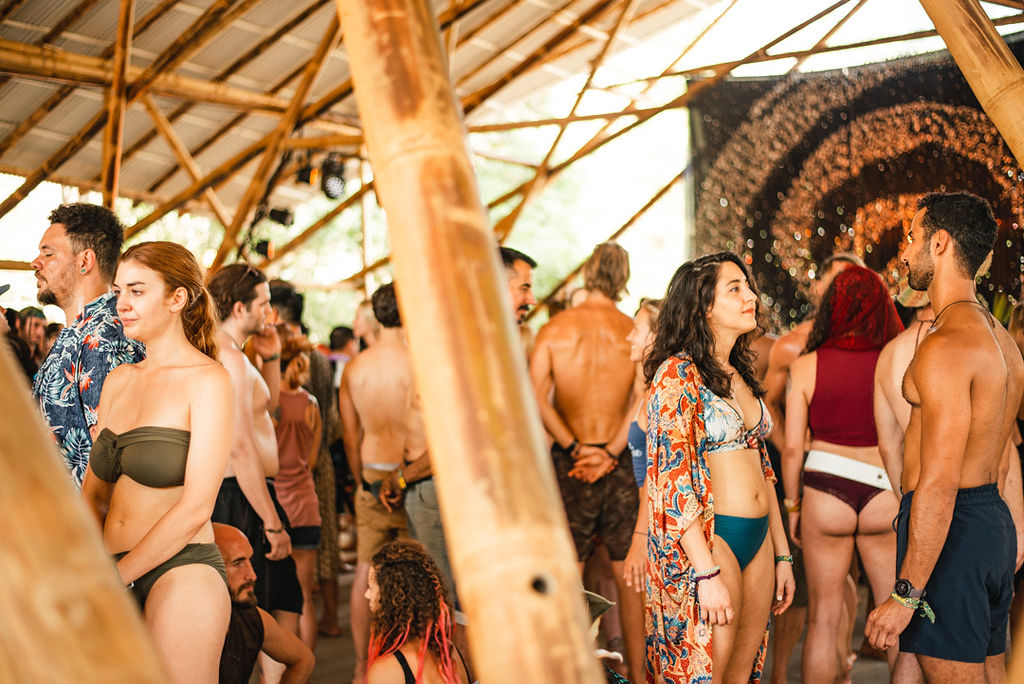
    Empowerment Self-Defense at Envision Festival, Costa Rica, 2023 | Photo Credit: Hestia Photograph Experience

    Heading to any festivals this year? Brush up on your boundary skills before you go to make it the most integrated, aligned and FUN experience possible!

    The motto of my holistic self-defense project, Mujeres Fuertes Autodefensa, is “Find your NO. Live your YES.” I believe that when we understand our boundaries and have the tools to express them (and defend them if necessary) we are better equipped to fully embody our “yes”—to live with openness and curiosity, and to enjoy deep connection, pleasure, and play.

    Festivals are unique spaces for exploration, expanding limits, and broadening comfort zones. This is a wonderful thing, as long as we go into them with self-awareness, a working understanding of consent, and a toolbox full of tools for staying safe.

    It is my wish that every festival-goer, dancer, lover, and seeker be able to experience the magic of these spaces feeling secure and confident in their safety and agency. To that end, below I will share 6 tools for boundary setting and assertive communication. I hope they will empower your festival journey—and your day-to-day life!

    Before we dive in, remember: 

    1. Boundaries are personal. No one else gets to tell you where yours are… and vice versa.
    2. Boundaries can change. It is okay and totally normal to want one thing one day, and something different the next. You get to decide how and when your boundaries shift, always.
    3. It depends on context. Your boundaries may be different with different people or in different spaces or situations, and again, that’s okay and normal!
    4. It is never too late to set a boundary. You can always let someone know a minute, hour, or year later that they crossed a line.
    5. You are responsible for communicating your boundary, but not for how other people react to that. Usually the people who react negatively to your boundaries don’t want you to have any.
    6. There are always (at least) two sides to consent. Try to treat other people’s boundaries the way you would like yours to be treated.
    7. When in doubt, trust your gut. If it feels wrong, unsafe, or undesired, it is.

    6 Boundary Setting Tools for a Safe & Expansive Festival Experience

    1. Listen to Your Intuition. 

    We often internalize the social conditioning that everyone else knows more about our boundaries and our bodies than we do. In fact, we know very well when a situation is unsafe and, conversely, when we can relax and settle. Intuition is the soft, quiet voice that whispers in your gut, “Yes.” “No.” “This way, not that way.” “Danger.” “All clear. The trick is learning to listen, and then trust that voice. 

    Intuition warns us when a person, place or situation is potentially dangerous. It may feel like tightness in the chest or belly, shaking in the hands or legs, buzzing in the forehead, or a general sense of tension or closing in. And, it will guide us to know when to trust new friends or dive into “risky” adventures. That may feel like openness in the chest, relaxation or softness in the belly or jaw, or a general feeling of leaning in. The more we heed these signs and engage with our intuitive mind, the sharper it will become.

    1. Be Aware.

    Awareness is key for staying and feeling safe, no matter where we are. Staying conscious of our environment—no need for stress or tension—not only helps us to identify danger or risk well before it becomes an emergency; it also can help us get oriented in a new environment, observe more details and beauty along our journey, and enjoy our adventure with full-bodied presence. As we rely more and more heavily on technology for navigation and communication, we may feel the urge to check our phones frequently, even at festivals. But the best thing to do is keep your eyes up, phone away, and look and act like you are confident and at ease.

    Alert body language communicates to the outside world that you are confident and aware (and you are). And, it sends a message to your own brain and body that you are not afraid to take up space, increasing your self-confidence and security at a cellular level.

    The Power Stance, Mujeres Fuertes Handbook
    1. Say No.

    Remember, you have a right to set the boundaries that feel good to you, no explanation required. With the crowds and stimulation of a festival environment, sometimes you need to say “no” to a dance, a hug, or any number of other invitations. It can be a “no” with a smile, or a “no, but thank you so much.” However, if the message isn’t getting across with gentle, polite communication, sometimes you have to be more assertive: “I said no,” on repeat, with an even, low tone of voice and confident posture, usually gets results.

    “No” is a complete sentence, requiring neither apology nor explanation. Do not fall into the trap of negotiating over your no, or you will end up spending time and energy on conversations, situations, and people you don’t actually want. Of course you can apologize or explain if you want to. The point, as I am constantly reminding students in my self-defense classes, is that it is a choice, not an obligation.

    1. Be a Broken Record. 

    When dealing with harassment—unwanted touch, flirtation, or other behavior—a similar technique works well. Choose one line (e.g. “I don’t want to talk right now.” “Do not touch me.” “Leave me alone.”) and stick with it. It is hard to argue or manipulate past stolid repetition. Be a broken record, repeating your one, assertive line until the person gets the message. There is no need to shout or get defensive unless the harasser becomes more threatening.

    A low, even tone, confident body language, and a refusal to enter into any negotiations (but why? Come on… I’m just being nice, etc.) can put a stop to a lot of unwanted behaviors. Even in festival spaces, where consent culture tends to be dominant and the vibes are high, it is good to be prepared to neatly end unwanted interactions or uncomfortable, potentially unsafe situations.

    1.  Name and Transform It. 

    An alternative strategy involves “naming” the behavior we want to change or stop. This is one of my favorite techniques. We first name the behavior (e.g. “Your hand is on my leg.” “You’re staring at me.” “You’re following me.”) without questions or qualifications. Questions invite response, denial, or negotiation. In a dangerous or uncomfortable situation, we don’t want to start a conversation or argue over the facts; we just want to make the necessary changes to feel safe. 

    After naming the behavior, we demand the change we wish to see (e.g. “Stop touching me.” “Leave me alone.”) without feeling obliged to ask nicely or say please. If once is not enough, we can return to repetition until the message lands.

    I love this technique for several reasons. First, it leaves no room for doubt; we both know what’s going on here, and we’re not going to argue over that. Second, it alerts any bystanders to the situation. Finally, it clearly states a boundary: “You’re doing this. I don’t want you to. Stop.” If the behavior persists, we then know a person does not respect our boundaries or care about our needs.

    1. Don’t be Afraid to Get Loud.

    If the situation calls for it, you may also want to turn up the volume. Yelling has been shown to prevent as many as 50% of assaults against women. The voice is a powerful self-defense tool. To yell effectively, be sure to use your belly—singers, actors, and public speakers will already know how to do that—to protect your vocal chords and bring more power and resonance to your voice. 

    I encourage trying this at home! Grab a few friends, blast some music, and practice shouting “NO!” as loud as you can. Remember to yell from your center; it can be helpful to keep your hands on your belly as a tactile reminder when practicing.

    Boundary Skills for Festivals—& Life (on YouTube)

    Youtube video
  • From Dreams to Action with Regenerative Living

    From Dreams to Action with Regenerative Living

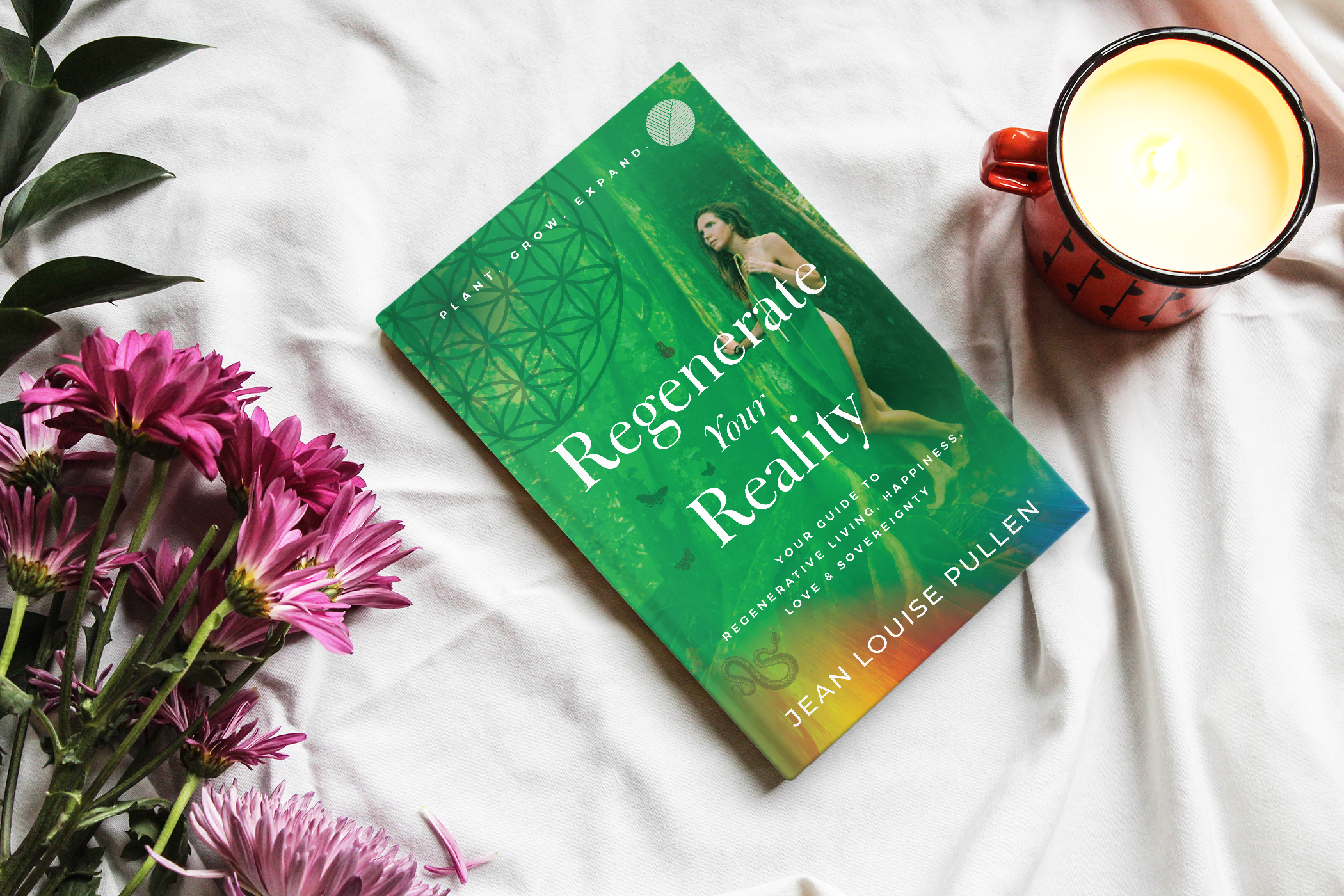
    An Excerpt from “Regenerate Your Reality: Your Guide to Regenerative Living & Sovereignty

    Guest Post by Jean Pullen

    regenerative living, regenerate your reality

    Jean Pullen is a multi-talented artist, gardener, cook, musician, writer, and entrepreneur. Jean is founder of Regenerate Your Reality, partner & director at  Jungle Project, and a Soil Advocate at  Kiss the Ground. Jean believes we can be part of the solution to the climate crisis, and that we all can play our part by living regeneration and coming back to our essence of love.


    regenerative living, regenerate your reality

    Writing a book about my regenerative lifestyle has been such a unique journey, and it wouldn’t have been the same without the support and involvement of many special humans, whose contributions appear throughout my book.

    Toby is one of those humans. She has also been my editor, walking me through the entire book creation process. I highly recommend working with her 🙂 I am so grateful for the beautiful insights and inspiration that she brings to my book, and I appreciate her allowing me to share a small piece of what we’ve co-created on her website.

    I am so excited to share with you all an excerpt from my soon-to-be-published book, Regenerate Your Reality: Your Guide to Regenerative Living, Happiness, Love & Sovereignty, including a special contribution from Toby!

    The book is already available for pre-order. If what you read here resonates with you, consider buying your copy now at: https://www.regenerateyourreality.com/bookpayment.

    regenerative living, regenerate your reality

    Affirmation: I take action on my dreams every day.

    As I write today, I know I live my dream, every single day. Freedom is a state of mind, a vibrant and holistic way of life. It is easier said than practiced. The freedom I’m talking about starts with loving ourselves, accepting ourselves, and liberating ourselves from limiting beliefs.

    Happiness is not a destination; it is a way of life. When I began traveling solo, I entered a “thrival mode” (the opposite of survival mode) of creating my own reality.

    When we live our dream every day—satisfying our basic needs, cultivating self-love, and taking care of the earth and each other—we live with purpose. We paint each brushstroke with beautiful moments and cherish the simple pleasures.

    As I started to go inward and assess each aspect of my life, I understood what was real and what was illusory. I followed my heart through Central America, and I thought I would make it all the way down to Patagonia, but found my home in Costa Rica instead.

    Just because we are born somewhere, that doesn’t mean we can’t migrate. Our dreams and outlook evolve as we grow and learn about the world. When our dreams and perspectives evolve and grow, sometimes we need a different environment to contain them.

    Our dreams and goals ebb and flow with the cycles of life. They can change in an instant when we wake up from the “fog” of social conditioning, or from familial expectations, and start to find our own way.

    My dreams changed as I grew and learned, evolving from my childhood dreams, to dreams in my early twenties, to the dreams I have today. Sometimes our deepest beliefs can change, and we open to new opportunities our minds can’t even comprehend. Perhaps we reach all our dreams and goals, and then we still keep dreaming, living in the present and believing that everything is possible.


    “Maybe you haven’t even dreamed it yet!

    —Toby Israel, Author of Vagabondess, Founder of Mujeres Fuertes @mujeresfuertescostarica@vagabondesstravel

    We often talk about making our dreams come true. The sky’s the limit, that kind of thing…

    But, going out on a limb here, what about the things we never dared to dream? What about the possibilities that didn’t even enter into our orbit of awareness? What if the sky *isn’t* the limit?

    I’ve had a lot of conversations recently about the gnarled, labyrinthine trails we call our life path.

    I didn’t dream up this life; I lived it into existence, one day at a time. In fact, I couldn’t have dreamed it even if I’d tried! So many key ingredients hadn’t come into my path yet.

    I think it’s great to have goals and aspirations. They keep us focused and challenge us to grow. However, I would argue that when we limit (yes, limit) ourselves *only* to what we can dream, two things happen:

    1. We dream small, because we are scared to dream too big. I notice this in myself all the time as I vision new projects. Why do you think it took me so long to write my book? A travel blog was an “achievable” dream. But a book… What if I failed? Or worse, what if I succeeded?!
    2. We don’t know what we don’t know. I can’t plan a future full of people I haven’t met yet, experiences I have yet to live, and information I haven’t yet learned. I can only set goals that exist within the realm of conscious possibility. But what about all the possibilities I can’t even imagine.

    Ten years ago, I never could have imagined the life I have today. Today, I know that I have *no idea* what my life will look like ten years from now. The people, places, ideas, and projects that will populate it—maybe I haven’t even met them yet. I certainly haven’t dreamed them.”


    The Regenerate Your Reality Book is ready to pre-order!

    Regenerate Your Reality will plant a seed of restoration in your path and remind you that we are all forces of nature. Pre-order your copy now to get it early 2022: https://www.regenerateyourreality.com/bookpayment (A portion of proceeds will support the planting of three trees for each book purchased.)

    Thank you so much for reading! If you don’t know the project, Regenerate Your Reality uses permaculture, agroforestry, and education to bring sovereignty and happiness to our communities. ⁣It is our mission to restore the relationship between humans and the earth and build a regenerative future. Share the mission and learn more at www.regenerateyourreality.com.

    Be sure to follow Regenerate Your Reality on Instagram and Facebook to stay tuned about all our upcoming webinars, workshops, farm tours, and book release.

    regenerative living, regenerate your reality

  • Co-Living is More than a Buzzword—it’s a Lifestyle

    Co-Living is More than a Buzzword—it’s a Lifestyle

    If I had to choose, I would probably call myself an introvert.

    As often as not, I don’t really like being around people. Solo time nourishes me. Silence feeds me.

    But then, I also crave (conscious) community, and I thrive on substantive social interaction. That’s why I let go of my isolated one-bedroom cottage in the Costa Rican jungle and moved to Unity, an urban conscious community and NuMundo impact center in the heart of San Jose.

    And I’m glad I did. Solitude may be very comfortable, but I have always found that co-living pushes me to grow—deeper, and at an accelerated pace.

    Most broadly defined, co-living describes, “any shared living space that improves quality-of-life for its residents.” The exact difference between a co-living space and an urban intentional community depends, perhaps entirely, on who you ask. For me, there’s a significant amount of overlap.

    co-living

    Here are just a few of the ways co-living and community living can support personal transformation and self-growth:

    1. Everyone is a mirror. People will push your buttons. All of them. And when something objectively unimportant, like forgetting to take out the compost, sets you off, you’ll realize a critical truth: your problems are… yours. Everyone is walking their path. It’s not about them. In co-living spaces, repeatedly confronted with qualities that irk us, we must acknowledge and overcome our own blocks and biases.
    2. Everyone is valuable. In co-living spaces, you will share time, energy, and maybe bathrooms with some people you may never have gotten to know otherwise. The inherent intimacy of co-living will continually remind you that every soul is equally bright—and equally important.
    3. You don’t have to like someone to live with them. I have long let go of the unfounded notion that I should like everyone. (I don’t.) However, when you connect with intentional communities and co-living spaces, you learn that respect—not affability—is the requisite foundation to harmony and evolution.
    4. Learn to Set Boundaries. Boundaries are everything. You’ll learn to say no. A lot. You’ll set firm-yet-loving boundaries around personal time and self-care—if not from day one, then very soon thereafter. In so doing, you’ll take a necessary step in personal development toward assertive communication.
    5. Co-Living is a Natural Incubation Process. Assuming your community or cohabitants are also committed to self-actualization (chances are good), then a co-living space will nourish your dreams, projects, and lifestyle in equal measure.
    6. Healthy Challenges. There’s a saying I’ve heard a lot in the ecovillage movement: community makes life easier. Now that may be true in some ways, but living in community—co-living—is also incredibly challenging, especially for those of us raised in individualistic cultures. The good news? That challenge is fertile territory for growth. Develop core life skills that you can’t learn alone: patience, compromise, and clear communication.
    7. Journey without to journey within. As with our physical travels, any foray into new external territory kindles deeper exploration of our inner landscape. Co-living is another adventure, both on our inner path to self-development, and on the outer one to global transformation.

    How has co-living supported your transformational journey? Please share in the comments!

    co-living, costa rica, digital nomads

    Want to experience transformational co-living—NuMundo style—for yourself? Sign up for the NuLiving Experience: 10, 5 or 3 days of coworking, living, and playing in paradise before Envision Festival… Enter my code, TOBY, at checkout for $100 off!

  • What is Transformational Travel, Really?

    What is Transformational Travel, Really?

    transformational travel, costa rica, toby israel, numundo

    Look closer. That yoga class is a portal into mindful movement and heightened self-awareness. That farm tour is an introduction to the revolutionary world of permaculture, closed-system loops, and community living. That simple sharing circle is an initiation into a different way of communicating and relating.

    Look closer. Our world is shifting…evolving…transforming — for better and worse. Widespread ecological degradation, disconnection from self and nature, and lack of purpose urgently demand solutions. We must respond with a global shift toward regeneration, reconnection, and repurposing.

    We are already responding. These shifts are happening.

    They are present in the inspiring growth of the global ecovillage movement. They are present in the increasing traffic to platforms like NuMundo, Gen Europe, and Fellowship for Intentional Community.

    Look closer, and you’ll see that the regenerative future is right under your nose.


    View this post on Instagram


    A post shared by lola méndez☽ ethical travel (@missfilatelista) on

    Last month, I had the unique privilege of both facilitating and participating in a press trip highlighting the thriving transformational travel movement in Costa Rica.

    We visited NuMundo impact center Rancho Margot, an exceptional permaculture research, education and retreat center in the Arenal area, and Nammbu, the physical manifestation of your dream (eco) beach getaway. Along the way, we explored the theme of transformation in theory and practice, with ceremonies, yoga classes, excursions in nature, sharing circles, profound conversation and a collective effort toward digital detox.


    View this post on Instagram


    A post shared by The Tico Times (@theticotimes) on

    The pre-trip documents included the following thoughts on the multifaceted travel phenomenon at the heart of our mission:

    “What is Transformational Travel?

    This is not a simple question. As “Transformational Travel” becomes an increasingly popular buzzword in the wellness tourism industry, it is getting harder to pin down the essence of this trend. But we believe it’s important to try…

    A woman jumps from a waterfall, conquering her fear of heights and reigniting her hunger for adventure and new experiences.

    Is this transformational travel?

    Following a difficult breakup, a young professional quits their job, sells everything but a backpack’s worth of belongings, and sets off to explore the world. They discover many ways of living they never could have imagined at home.
    Is this transformational travel?

    Burnt out from a stressful, overstimulated life in the city, a woman travels to Costa Rica for a 7-day nature and yoga retreat. After delving into many mindfulness practices she never had the time to try, she rearranges her world to support a healthy mind, body, and spirit.

    Is this transformational travel?

    A man participates in a plant medicine ceremony, facilitated by trained guides, and returns to his former life with entirely altered thought patterns and a new connection to nature.

    Is this transformational travel?

    The answer to all of these questions is yes. Each of these scenarios is, potentially, a perfect example of transformational travel. Of course, this is far from an exhaustive list.


    View this post on Instagram


    A post shared by Tui @ Blue Butterfly CR (@blubutterfly88) on

    Overall, this evolution marks an exciting progression toward traveling with greater intention, growth, positive impact, and (of course) transformation.

    Transformational travel is, to us, more than the “next big thing” to follow sustainable travel, intentional travel, and eco travel. It represents the deep potential for tourism (a rapidly growing global industry) to evolve into meaningful, life-enhancing journeys. And it simultaneously supports the notion that the tourism industry can be regenerative — rather than extractive — for local people and environments.

    Those are some big shoes to fill. It won’t happen all at once, but we’re extremely optimistic about the trends toward eco-restorative and human-restorative travel in our home of Costa Rica… and around the world!”


    View this post on Instagram


    A post shared by Nu_Mundo (@nu_mundo) on

    Beneath the Buzz: The reality of Transformational Travel

    As I’ve mulled over this concept in preparation for our press trip(s), I’ve come to believe we can break down this buzzword into a couple key components:

    Transformational travel is personal. It can be small, like deciding to keep a regular mindfulness practice or cooking at home more. It can be a massive life shift like moving to the other side of the world or starting a new business. But there is some kind of internal shift, personal growth, or deepening of self-awareness.

    But it also ripples out to touch our communities back “home.” Transformational travel doesn’t stop when the trip ends. Or rather, a transformational journey does not have a fixed end point. Transformation is about process, evolution, and action. And so, the movement sparked by a transformational experience continues, according to the laws of inertia, far beyond the initial impetus. It follows us, fuels us, and ignites further shifts in our communities.

    And it must have a positive impact on the places visited. This last element is crucial. It makes the difference between a nice-sounding travel trend and a real, meaningful shift in the tourist/traveler mindset. Transformational travel requires that we flip the traditional extractive model of tourism on its head — regenerating and contributing rather than Not to be confused with “eco-tourism” or “greenwashing,” transformational travel implies grassroots, integrated, inclusive initiatives that benefit local communities on their own terms.


    View this post on Instagram


    A post shared by Amarna Miller (@amarnamiller) on

    Of course, this summary is far from exhaustive. In conversations about transformational travel, each press trip participant offered their own perspectives, based on their own experiences, expertise, and passions. Some focused more on adventure and conquering self-imposed limitations, others on spirituality and self-actualization, and still others on getting off the beaten path and into truly local experiences.

    All of these are valid, and all bring value to our dynamic conversation about the evolution of travel.

    Because ultimately, transformational travel is about you. It’s about me. And it’s about how we’ll connect — to one another and to our communities — to create something real.


    View this post on Instagram


    A post shared by Toby Israel (@tobyintheworld) on

    What Do You Think?

    This is a conversation, and there are as many answers as there are travelers experiencing true transformation through their journeys. So, I’d love to hear from you:

    What does transformational travel mean to you? How can we do it, share it, and live it?

    Please share your thoughts and experiences!


    Originally published on the NuMundo blog.

    This unique experience came to fruition in collaboration with Desafio Adventure Company, Blue Butterfly Events, and the Costa Rica Tourism Board.

    Check out my upcoming transformational experiences at my retreats page!

  • No One is Talking about God (Poetry)

    No One is Talking about God (Poetry)

    Quite a few months ago, I traveled down to the south of Costa Rica to visit friends living in a remote community on a very special stretch of coastline.

    I had a lot of time to reflect. A lot of time to sit in the dark too. Real dark, untouched by any trace of electric light.

    That kind of darkness opens us up to a kind of spirituality, or creativity, often blinded by the modern world. At least, it seemed that way to me.

    That kind of darkness brought me a lot of words. These are a few of them:

    god, wanderlust, woman, travel, ocean

    Talking about God

    I went to the ocean on a cloudy night, just to stare at darkness.

    I felt my heart beat faster as the waves rolled against the beach,
    and my body rolled too, in sympathy.
    This was solitude.
    Utter blankness upon the canvas of my cornea.
    This was emptiness.
    Division between water and sky barely visible on the horizon.

    My voice, when I sang out to that ocean beat,
    was unique in all the darkness,
    for it was the only thing that told itself to itself.
    The sea spoke to the moon,
    the raindrops spoke to the trees,
    the rocky beach spoke to the colonies of crickets —
    and then, there was me.

    I want so much to be a part of it.
    To lose track of my voice in harmony with the waves.
    To see my footprints disappear,
    my skin melt into the everything
    of that shifting, sucking darkness.

    I love my life, my body, my breath.
    Just, I want to be a part of it.
    The whole.

    You see, no one I know seems to be talking about god —
    it’s out of vogue to seek the divine,
    the mysterious, the ethereal and the invisible;
    children learn to count money but hear nothing of souls;
    we don’t care why we’re here as long as there’s football —

    And no one I know seems to be talking about god;
    we’re all too educated for that,
    leave it to the zealots and the black hats,
    write your gratitude journal and bow down to the fat cats —

    No, no one I know seems to be talking about god,
    but I want to find her,

    so I go down to the water and look into my own heart,
    because a wise teacher or two once said
    I would find a spark —
    there, where all the secret things we pretend not to believe in sing;
    where the ancient longing we don’t understand goes to hide;
    where the invisible and magical and wild abide.

    I heard, once, that god was at the heart of everything,
    including me.
    I read, once, that gods played and ate and shifted faces
    at the bottom of the sea.
    I knew, once —
    I knew, I knew, I knew, I knew, I knew —
    about the mysteries dancing at the horizon,
    where water meets sky,
    about the spirits who live between worlds
    and send stories with serpents and dolphins and dragonflies,
    about the beauty that gave birth to every single thing.

    But I forgot,
    we forgot,
    and I want so much to remember:
    I am part of it.

    No one I know seems to be talking about god,
    but, call me crazy,
    I want to find her.
    So every day, for a few minutes,
    I try to stare at darkness.
    I dive into that shifting, sucking water,
    and I look into my own heart.


    Originally published on Rebelle Society, July 2018.

    Written in November, 2017 at Finca Morpho.

  • I’m not responsible for anyone’s Transformation

    I’m not responsible for anyone’s Transformation

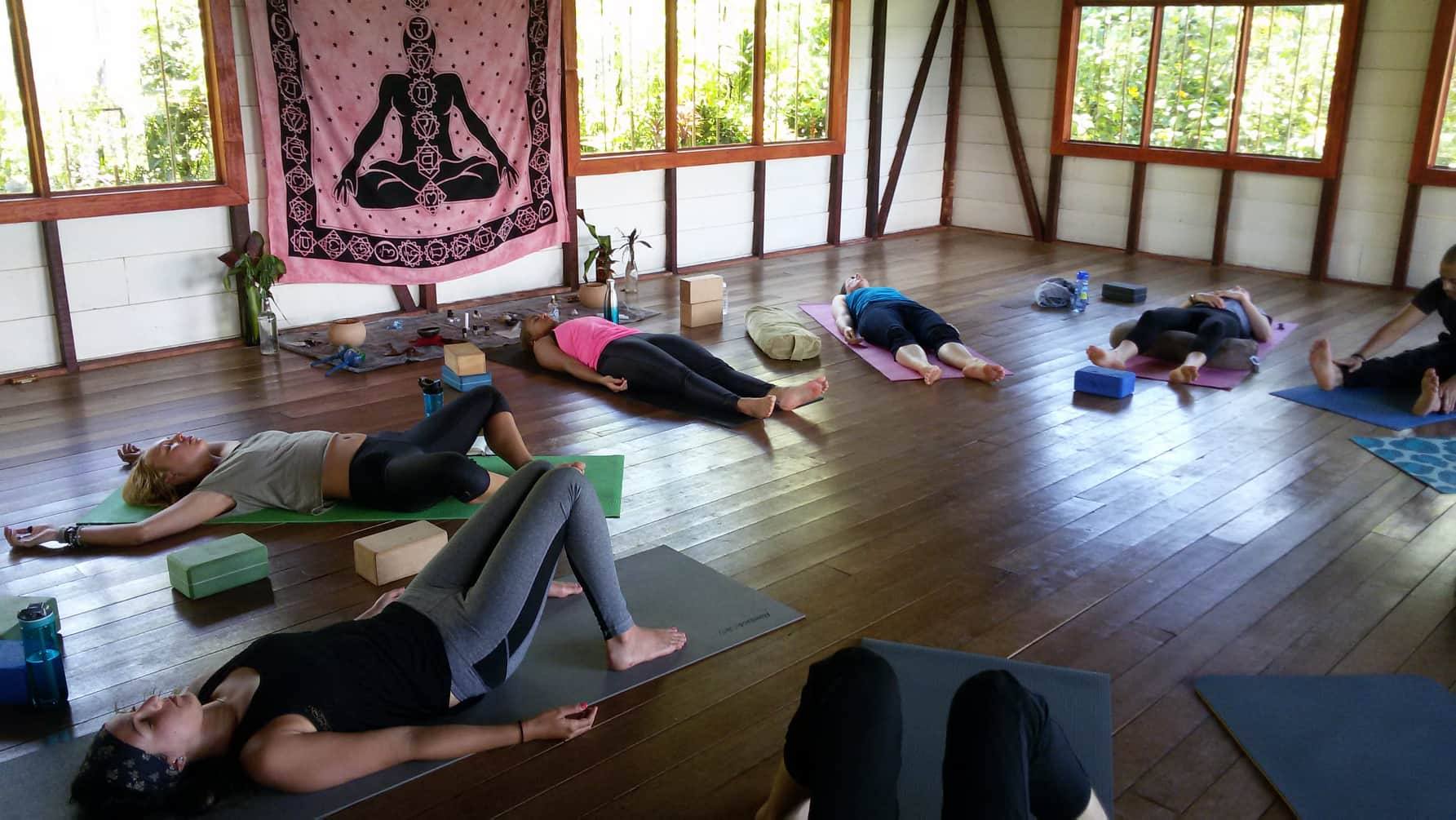
    Saturday, 23 June, 2018 — Finca Agroecologica La Flor, Cartago, Costa Rica — Yoga & Mindfulness Immersion

    I sit straddling the drum, rocking forward with each beat—the only way I know to comfortably play this instrument.

    My knee has slipped off the mat and onto the hard studio floor, but the pain dulls in the background, my focus absorbed in rhythm. Driving rhythm. Holding rhythm.

    As I relax into the drumbeat pattern, I am able to expand my awareness to the people in the circle with me: One has moved to the back of the room to dance; others lie down, motionless; and others sing, sway or clap in conversation with the music. A web of sound makes our many points of connection nearly-tangible.

    finca la flor, yoga retreat, transformation, costa rica, travel

    I should be exhausted after co-facilitating our first “Yoga & the Art of Listening” retreat at Finca la Flor, Costa Rica, but I have wings.

    Maybe it’s the cacao we drank, still sharp and bitter in my throat. Yet, this sense of inspired-ness—of in-purpose-ness—has been building since day one of our five-day experience.

    Eyes closed to hold onto our rhythm, I see the room in my mind’s eye instead: low light, candles at the center of a rainbow of yoga mats, faces glowing—transformed.

    “I did this!” my ego wants to shout, claiming for itself all the credit for this transformation, but no… there’s something truer beneath this voice:

    At my core, another, wiser self is in awe. I am in awe.

    A post shared by Toby Israel (@tobyintheworld) on

    In retreat, as in ceremony, we have each held space for one another to delve inward and to expand outward. I am in awe of the sheer beauty and courage and power of each individual who answered the call and co-created a unique container for accelerated growth. I am in awe of the journey that brought us to the selves sitting together in our closing ceremony, expressing and blessing with joy and freedom and grace.

    My ego, of course, is wrong. I didn’t do this.

    I didn’t make this transformation happen in the space of five short days. That would be madness. An impossible task.

    Each participant was responsible for their own growth and (dare I say it?) transformation.

    A post shared by Toby Israel (@tobyintheworld) on

    I—as a co-facilitator, co-creator, and co-learner—may have shared movement and mindfulness practices. I may have designed a schedule. But I am not responsible for the scene tonight, which makes me (rarely sentimental) feel like tearing up.

    This is why I prefer the term “facilitator.” A facilitator facilitates individual and collective self-inquiry and development through invitation, sharing, and loving support. A facilitator does not presume to have any monopoly on knowledge—or potential outcomes.

    After this experience (the first of hopefully many to follow), I feel grateful, blessed, honored and inspired by what I helped to create. But I do not feel the pride of ownership, because I don’t own this outcome, laid out tonight in my mind’s eye, dancing over drums and twining with the taste of cacao. I recognize that our collective effort, love, and generosity made the experience what it was.

    I didn’t do this; we did.

    And I am in awe of that.