Tag: safety

  • Yes, I’m Traveling Solo: Self-Defense as a Path to Freedom

    Yes, I’m Traveling Solo: Self-Defense as a Path to Freedom

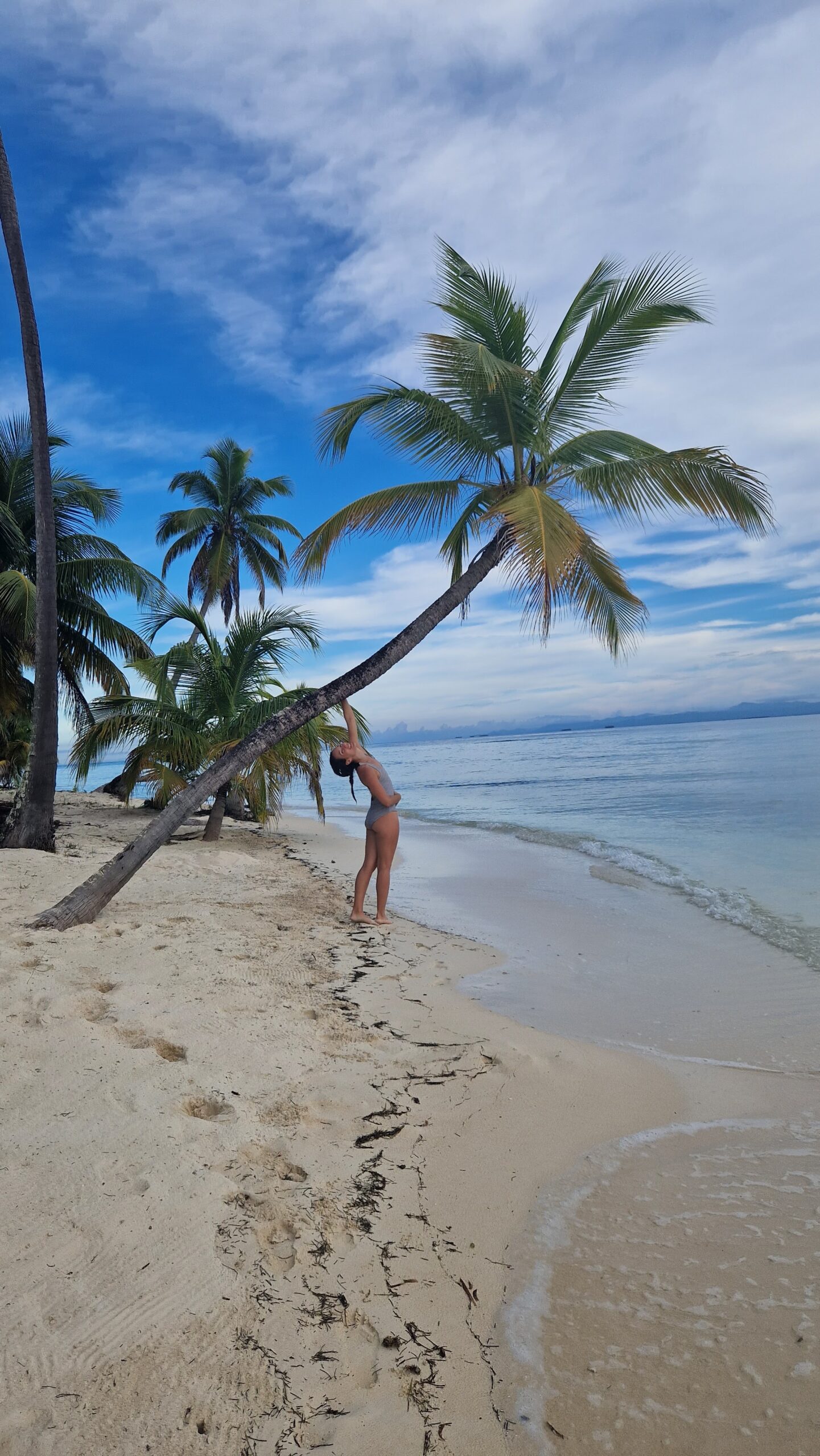
    Ometepe, Nicaragua | January, 2023 | Photo: Thomas Blanc

    Safety is a human right. So is solitude.

    Solo female travel? That’s not possible. It’s too dangerous. Women shouldn’t do that. You should never travel alone. What if you get kidnapped? Aren’t you scared? Go with someone, a friend, a partner—ideally a man.

    As a woman, I have heard every argument in the book against going out into the big, bad world on my own. The fears and warnings above are just the tip of the iceberg.

    These questions/concerns do not intend to fear-monger. They come from friends, parents, uncles, lovers, and well-meaning readers—people who want to see me safe and well. Yet it seemed unfair from the outset that I had to bear the brunt of my family’s concern as I traveled solo, while my older brother had jetted off first without much ado. The double standard always chafed. Of course it all came from love, but that’s not the point. 

    Why did everyone worry so much about my safety, and yet no one ever suggested I take it into my own hands?

    The problem is not so easily reduced to a few knee-jerk comments and Hollywood-induced travel phobias alone. Rather, it’s how these well-intentioned aphorisms reinforce an out-dated social contract that discourages women from enjoying the same freedoms men do that does the bulk of the harm.

    There is a depressing kind of fatalism in writing off solo travel for women forever because, “the world is a dangerous place,” rather than consider, for a moment, that there might be solutions. That there might be strategies for personal safety that do not come at the high cost of freedom and adventure.

    For most of my years of solo travel, I got by on instinct and bravado. “Fake it ‘til you make it” was my response to getting lost, harassed, followed, or accosted. Act like you know where you’re going, like you’re fearless, like you’re unshakeable. Most people will believe it. Eventually, you will too.

    And while this worked, I made it through a decade of solo adventures unscathed, I still lacked some basic tools to not only stay safe, but also enjoy solo travel more. 

    In 2018, however, I seized an opportunity to train as an Empowerment Self-Defense instructor with ESD Global, an organization dedicated to women’s safety around the globe. Realizing that many women yearned to travel solo, but were held back by fear, I decided to offer more than just words of advice or encouragement. It was time for practical skills.

    Action is the antidote to fear. 

    Developed over the past 50 years by female martial artists and violence prevention experts, ESD teaches a compelling mix of physical techniques and verbal strategies for deescalation and boundary setting. 

    It was the missing link, a one-stop shop for women desiring to feel both safer and freer in any environment. After nearly four years teaching this methodology across Central America, I can confidently attest to the transformative power of discovering our inner fire. Knowing what our body and voice can do, and trusting we know exactly how to use them, instills cultivates a valuable baseline of confidence and self-reliance for solo female travelers.
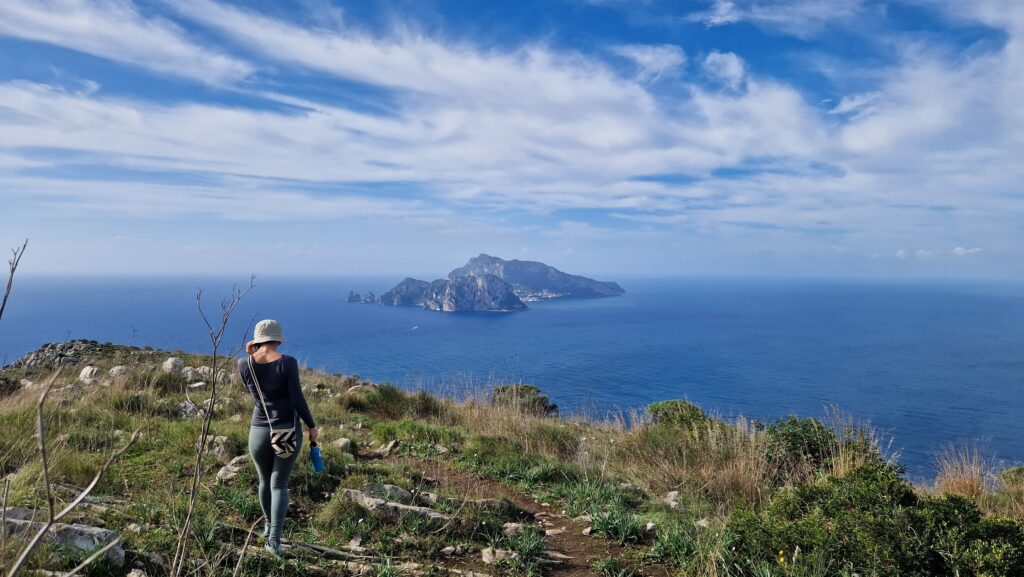
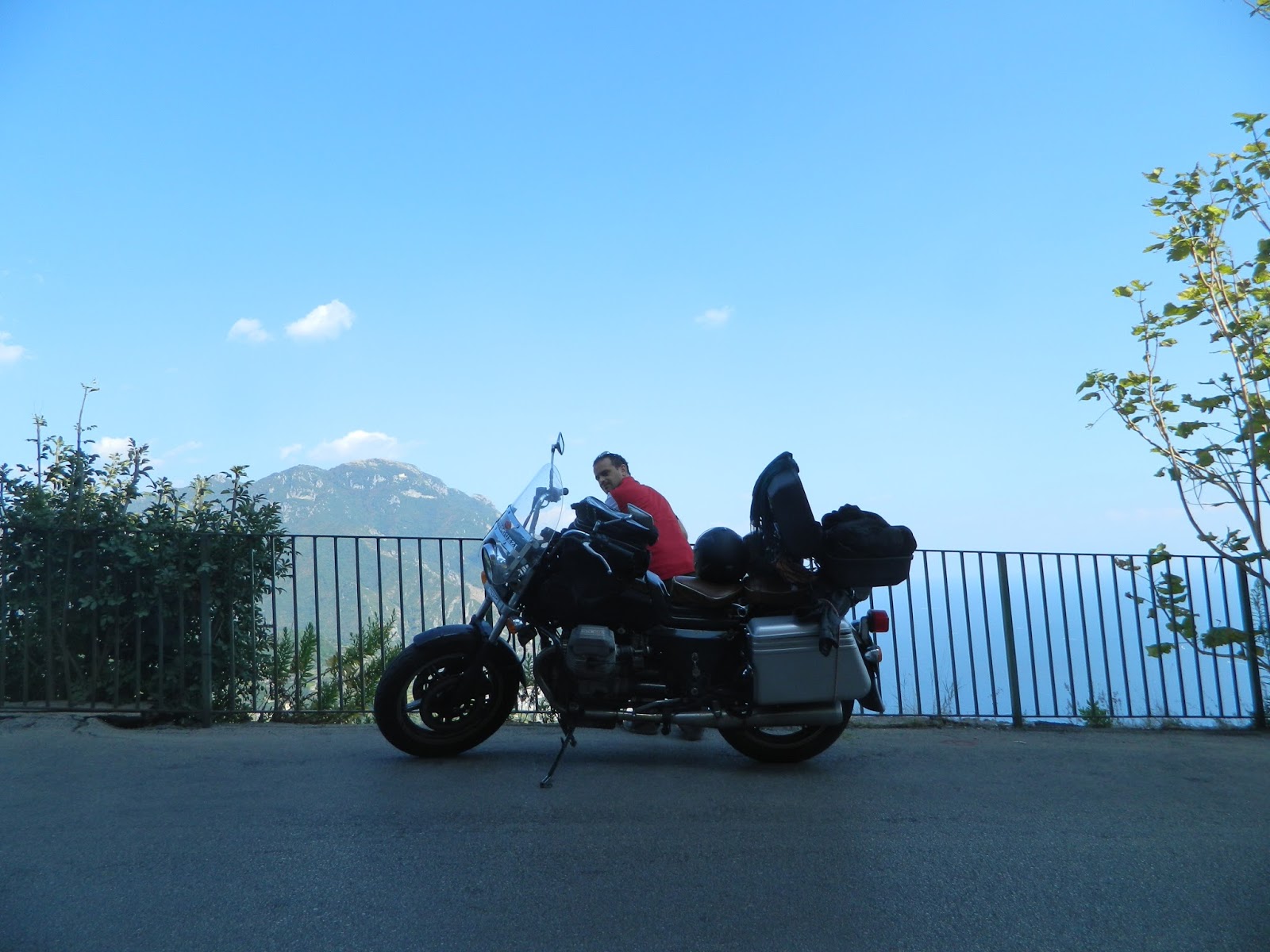
    Amalfi Coast, Italy | November 2023 | Photo: Thomas Blanc

    Below are my 5 go-to strategies for staying safe as you travel, without sacrificing a single glorious moment of your solo adventure.

    1. Listen to Your Intuition 
      Women too often internalize the social conditioning that everyone else knows more about our boundaries and our bodies than we do. In fact, we know very well when a situation is unsafe and, conversely, when we can relax and settle.Intuition is the soft, quiet voice that whispers in your gut, “Yes.” “No.” “This way, not that way.” “Danger.” “All clear. The trick is learning to listen, and then trust that voice. When we are conditioned to ignore our gut, intuition feels ungrounded and impractical.In fact, it is very much the opposite. Intuition warns us when a person, place or situation is potentially dangerous. It may feel like tightness in the chest or belly, shaking in the hands or legs, buzzing in the forehead, or a general sense of tension or closing in. And, it will guide us to know when to trust new friends or dive into “risky” adventures. That may feel like openness in the chest, relaxation or softness in the belly or jaw, or a general feeling of leaning in. The more we heed these signs and engage with our intuitive mind, the sharper it will become.We can practice listening to our intuition in small ways—eating when hungry, resting when tired, changing position or taking a deep breath when our body asks for it—and with mindfulness practices such as yoga, meditation, martial arts, or unhurried time in nature.
    2. Understand “The Interview”
      The interview is a well-documented occurrence in gender-based violence, whereby a potential attacker “interviews” a potential victim by slowly and progressively pushing her boundaries to see if or when she will act in self-defense.Whereas popular culture leads us to think that violence against women is sudden and unexpected, most attacks are in fact slow and deliberate. Each step of the interview is an opportunity to set a boundary: They follow you in the street or on the trail. They start to ask you personal questions on the bus or at your campsite. They touch you in a way that feels uncomfortable. They don’t respect your “no.”We will often wait to be “sure” of a person’s intentions before setting a hard boundary or expressing a firm “no.”Fear of offending or overreacting leads us to disregard our own needs and our own intuition to avoid rocking the boat. This is exactly what a would-be attacker is counting on. The sooner you can identify an “interview” situation while traveling, the more easefully you can de-escalate, speak up, escape, seek support, or otherwise stay safe.
    3. Use Your Voice
      Be loud, assertive, and unapologetic. The best way to stop “the interview” in its tracks is to use one of the most powerful weapons in our arsenal: our voice. Setting clear, firm boundaries can deter a would-be attacker and deescalate a potentially violent situation before it starts. Your intuition will tell you when and how to use your voice, be it calmly stating a boundary, or shouting “NO” at the top of your lungs.
      Women often learn from a very young age to stay quiet, to play nice. And so it takes practice to override this conditioning and train ourselves to speak up when we feel uncomfortable or unsafe. It is vital that we do so, however. In a situation of attempted assault, it can save our life. (Note: Using the voice is not about calling for help, although we can also ask for support from bystanders if that feels like an option. Activating the voice connects us to our own core power, disrupts the “freeze” response to danger, and also discourages a potential attacker.)
    4. Stay (& Look) Aware
      Whether on the road, in the woods, or right at home in your neighborhood, awareness is key for personal safety. Staying vigilant—no need for stress or tension—not only helps us to identify danger or risk well before it becomes an emergency; it also can help us get oriented in a new environment, observe more details and beauty along our journey, and enjoy our adventure with full-bodied presence. As we rely more and more heavily on technology for navigation and communication, we may feel the urge to check our phones frequently. As a traveler, the best thing you can do is keep your eyes up, phone away, and look and act like you are confident and at ease, regardless of how you feel.
      Keeping your shoulders back, your chin up, your gaze relaxed and alert, and your feet wide serves two purposes: It communicates to the outside world that you are confident and aware (and you are). And, it sends a message to your own brain and body that you are not afraid to take up space, increasing your self-confidence and security at a cellular level.
    5. Keep it in Context
      Let’s put the concept of women’s safety in context. At least 90% of gender-based violence worldwide is perpetrated by someone known to the victim. 59% by an intimate partner. The “stranger danger” narrative of personal safety and self-defense ignores the bigger picture: As women, we are not at higher risk out in the woods or on the road. In fact, we may be safer there. Despite the cultural narrative around personal safety, all the fears and warnings I shared above, solo female travel is not in fact more dangerous than being a woman at home, at work, or in a relationship. So if doubts about safety are holding you back, or if friends or family challenge your travel choices, it may be helpful to consider that just being a woman is risky stuff.
      Staying home won’t necessarily keep you safe, and neither will staying close to friends or significant others. At times, these may in fact pose a greater threat. So you might as well go out there solo and live your adventure. (If you would like to dive deeper into this kind of training, I recommend exploring ESD or IMPACT Personal Safety Classes in your area.)

    Empowerment Self-Defense is about offering new options and alternatives, not tossing out all the strategies we already have. I know every single one of you already has a toolkit packed with self-defense techniques, whether you call them by that name or another.

    So what would you add to this list? What are your go-to strategies for feeling secure and confident on your solo adventures? Share your experience in the comments!


    Originally published on Roofnest.

    Learn more about my empowerment self-defense work at www.mujeresfuertes.org, or support our fundraising efforts here.
  • How Empowerment Self-Defense Can Improve Our Relationships

    How Empowerment Self-Defense Can Improve Our Relationships

    empowerment self-defense, toby israel, envision festival, costa rica
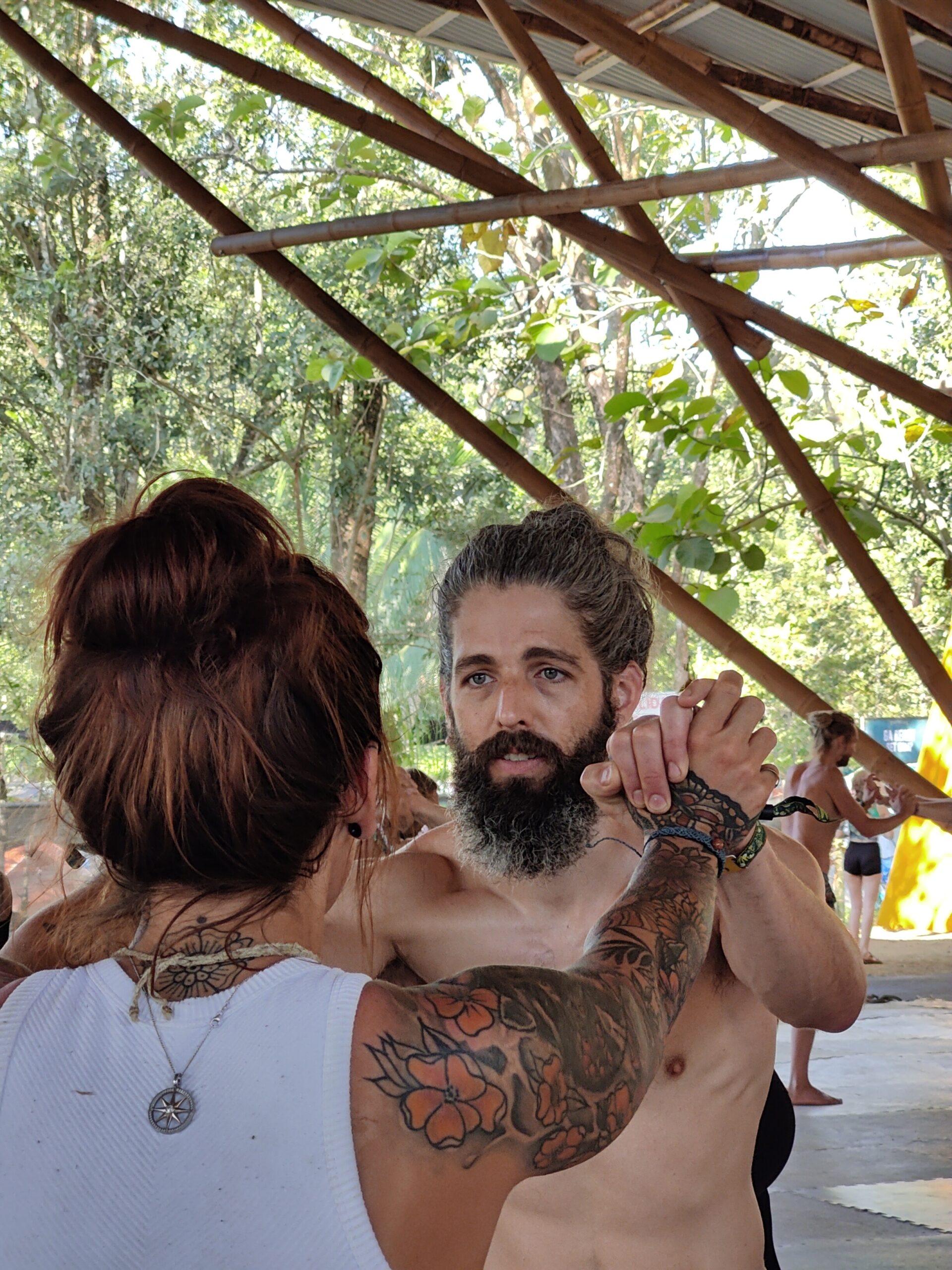
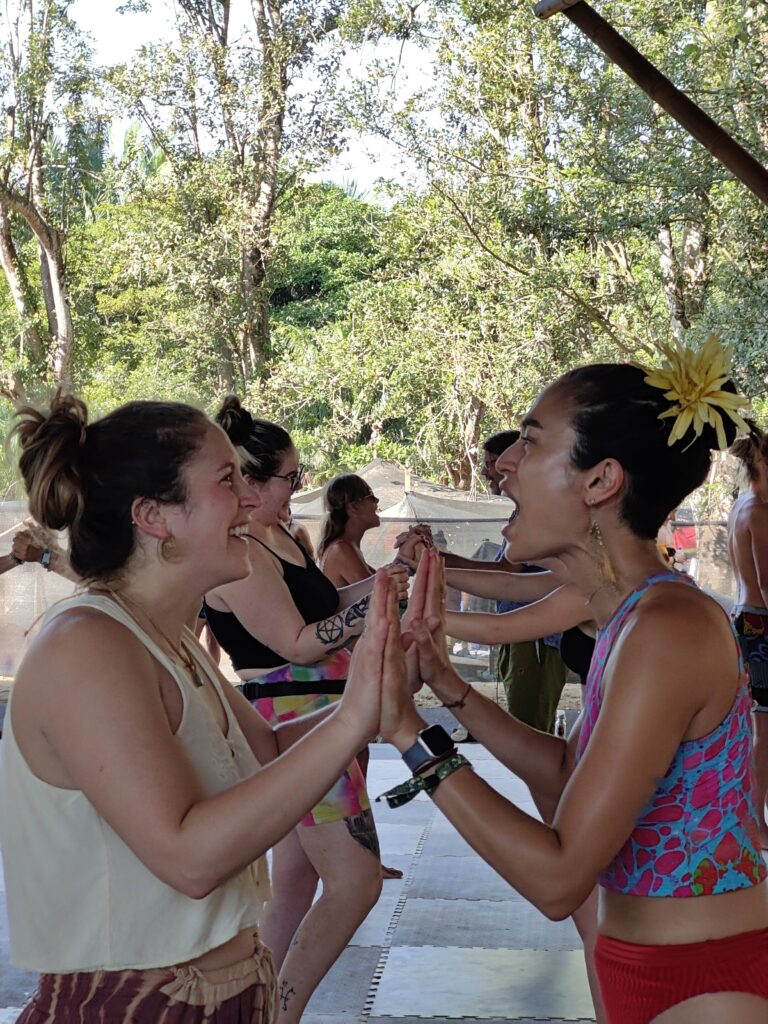
    Empowerment Self-Defense workshop at Envision Festival in Costa Rica, 2023.

    Understanding the traffic light approach to evaluating risk — & safety.

    What does self-defense mean to you? Is it just about martial arts strikes and yelling at an attacker? Or is it also about expressing firm boundaries, communicating a “No” without excuses or apologies, and interrupting uncomfortable situations before they become dangerous.

    Or, is it about improving our relationships, relaxing into deeper connection and pleasure, knowing that the tools for self-defense are within reach, just in case.

    For me, the answer is D, all of the above.

    As an empowerment self-defense instructor, I define both violence and self-defense along a broad spectrum. An attack by a stranger in the street or on the beach is violence. Emotional abuse is violence. Street harassment is violence.

    As a general rule, we humans don’t learn basic skills for defending ourselves anywhere along this spectrum. Empowerment self-defense provides choices and practical strategies — both verbal and physical — for dealing with risk, danger, or simple discomfort in ways that support safety and agency.

    At its best, I think it can also improve our day-to-day interactions with family, friends, and partners by helping us dial into our needs, desires and boundaries, hone our intuition, and speak from it with confidence and power.

    The Interview: Leaning Back from Danger (Red)

    Perhaps the first step to building healthy relationships is learning to listen to the voice of intuition and hit the brakes at the red flags.

    News stories and popular culture give the impression that gender-based violence always appears out of nowhere. You’re walking down the street and someone attacks you. You’re alone at the beach and someone attacks you. You’re in your house and someone attacks you…

    While these situations are real, they don’t represent the majority of cases of violence.

    It is a well-documented fact that gender-based violence (whether initiated by someone known or unknown) normally begins with an “interview.” In an interview, the potential agressor tests your boundaries, little by little, to see how you will respond. In a public space, the interview might start with a simple, “Hey, how’s it going?” and then escalate to more intimate questions or a breach of your personal space. With someone known, the interview could begin with “innocent” but undesired touch, and then proceed to cross more serious boundaries.

    The interview (along with domestic violence) makes it especially difficult to practice self-defense, for two reasons. First, the social contract demands that we respond politely (or politely ignore) these first, “harmless” steps of the interview process, even if we feel uncomfortable. Second, agressors aptly erode a person’s boundaries and trust in their own intuition.

    The question is: When will you pay attention to your intuition and put a stop to the behavior that is making you uncomfortable? This is exactly what a potential aggressor is waiting to see.

    We can interrupt the interview with the assertive and direct communication of a boundary: “I don’t want to talk.” “Don’t touch me.” “You’re making me uncomfortable. Stop.” If successful, we won’t have to use any other self-defense techniques.

    That’s why I don’t like to draw a distinction between physical and verbal self-defense. All the techniques have the same objective: to protect your safety.

    The Traffic Light: Leaning into Safety (Green)

    In empowerment self-defense, we like to use the metaphor of a traffic light to understand boundaries and risk.

    When we are in green, everything is okay, normal, calm. The body should be relaxed, without too much tension, the breath even, and the heartrate at a natural resting rhythm.

    An intimate relationship, friendship, or work environment should feel green most of the time, for most of us. This is a healthy place for our nervous systems, a place where healing and learning can occur, because the heart and mind are open to receive and connect.

    When we are in yellow, we are on higher alert. We notice that something isn’t right, we feel uncomfortable, or someone is crossing a personal boundary. The body may become more tense, the heartrate or breath might accelerate, and our posture and body language display more awareness.

    And finally, when we are in red, we are already in danger, and we need to apply self-defense principles (Think, Yell, Run, Fight, or Tell/Seek Support) in order to stay safe. Unfortunately, these situations often occur with someone we know, but we have the power to interrupt them.

    It is critical to understand that self-defense does not begin when we are in red. Self-defense begins when we are in green, with a continual process of self-discovery and exploration. It starts with knowing our boundaries, understanding what we like and want, and getting clear about which behaviors we will not allow.

    This clarity can improve all of our relationships — especially with the people we really want to have close to us.

    Then, empowerment self-defense continues in yellow, when we express our boundaries and put a stop to potentially risky situations before we get to red.

    Staying Curious about Our Needs & Boundaries (Yellow)

    Boundary work is complex and constantly changing. Keep in mind that your red and green zones may look different than your best friend’s, your partner’s, or your family’s. Rembember that no one else gets to tell you where your boundaries are, or if the lines you draw are “reasonable” or “valid.”

    We can stay curious about our yellow zone, especially, asking ourselves when discomfort is an invitation to question our biases or explore the possibility for healing, and when it is a simple warning cry to step away from danger and into safety. We can embrace the discomfort of genuine growth, while also protecting our hearts, minds, and bodies against violence.

    Remember, too, that we are in a process of constant evolution, and that we may have different boundaries today than we did yesterday, and that tomorrow will surely bring another shift. Accepting and honoring this process of change and growth — in ourselves and in our loved ones — is a perpetual challenge. But, I think the rewards are worth it.

    A Short Exercise in Defining Boundaries

    Where are your boundaries today? Make a list of ten “green” situations, ten “yellow” situations, and ten “red” situations. Don’t forget that boundaries are personal! The important thing is how each situation feels for you.


    Originally published on Medium.

  • The Sacred Pause: from Dance to Self-Defense

    The Sacred Pause: from Dance to Self-Defense

    March 24-31, 2023 – Dance Your Medicine Retreat at Posada Natura Healing Center in Londres, Costa Rica. (Photo by: Foster Snell | @FosterTheEexplorer)

    One breath can change everything.

    The “sacred pause” can be the difference between reaction and response, between contraction and expansion, between inaction and action.

    In the spaciousness at the top of our inhale, everything expands and possibilities open before us. In the emptiness at the bottom of our exhale, clarity crystalizes.

    After a week of exploring “mindful partner dance” with the amazing humans behind CoCrea last month, I found myself thinking a lot about the “sacred pause.” In dance, this pause can be a single breath, or even a microsecond of stillness that allows us to listen to our own body and our partner’s—and allow movement to arise from there.

    It is a moment of beauty, attunement, and awareness, rich with potential. And it is a moment to reconnect with our own body and its needs, giving ourselves the opportunity to act in integrity with our own self-knowing.

    Here is where we can carry the sacred pause with us from dance into self-defense.

    That same, seemingly-insignificant moment of renewed awareness, when applied to a situation of danger or violence, can again change everything. The sacred pause can restore our agency and power when we find ourselves in an adrenalized or activated state, helping us to access our self-defense toolkit, in spite of fear or confusion.

    In the holistic self-defense classes I teach through my empowerment project, Mujeres Fuertes, we often encourage participants to take a breath before practicing a strike. We also regularly discuss the importance of taking time to check in with ourselves when a person or situation makes us feel uncomfortable or unsafe. In this moment, we choose how we want to respond, if we need to set a boundary, if we would rather get up and walk away, and so on.

    Fear can easily cloud our judgment as well as affect our coordination; pausing helps us choose, speak, and act with clarity.

    Similarly, the social contract and social conditioning around “niceness” and “politeness” often keep us in places we actually don’t want to be. Utilizing the pause to touch base with our intuition and listen to the body, we can recognize more easily when a situation is “yellow” or “red.”

    From a trauma-informed perspective, the sacred pause—taking a breath and bringing awareness back to the present moment—can mean the difference between freezing or acting (yelling, running, fighting, and so on) to defend ourselves. When the alarm system is activated in the brain, most people unconsciously default to their go-to adaptive strategy: fight, flight, freeze, flop, or fawn. For many, and especially for women, the freeze/flop/fawn response is a well-honed survival strategy.

    “What if I freeze?” is probably the most frequent question in our self-defense classes.

    No one can guarantee breaking the freeze response, nor do we wish to write it off entirely, as it is itself a survival strategy. However, we do know that the more we practice pausing, breathing, and bringing awareness to the body when adrenalized or activated, the more we augment our capacity to notice—and to choose a different response.

    Furthermore, we invite participants to reframe freezing as “active waiting.” The animal that freezes in nature when danger approaches often proceeds to run away or otherwise act in self-preservation. People are no different. Through training our body to breathe through discomfort or fear, notice our instinctive reactions, and then yell, run, or fight, we curtail the freeze response and prepare ourselves for what follows.

    The more tools and options we have, the more possibilities will open ahead of us in the momentary lift of the sacred pause.

    Why “sacred”? Because for me, anything that connects us with our embodied wisdom, intuition, or inner knowing is a mystical practice. Anytime we enter into communion with that soft, clear voice who speaks or dances from our center, I believe we are in conversation with the divine. And what is more sacred than that?

    How do you apply the sacred pause in your life, relationships, or creative work? I would love to read your perspectives!

    Finally, I invite you to remember the sacred pause when you feel afraid, uncomfortable, confused, or overwhelmed.

    In the spaciousness of this moment, everything is possible.


    Originally published at elephant journal.

  • Boundary Skills 101 for Festivals—& Life

    Boundary Skills 101 for Festivals—& Life

    Empowerment Self-Defense at Envision Festival, Costa Rica, 2023 | Photo Credit: Hestia Photograph Experience

    Heading to any festivals this year? Brush up on your boundary skills before you go to make it the most integrated, aligned and FUN experience possible!

    The motto of my holistic self-defense project, Mujeres Fuertes Autodefensa, is “Find your NO. Live your YES.” I believe that when we understand our boundaries and have the tools to express them (and defend them if necessary) we are better equipped to fully embody our “yes”—to live with openness and curiosity, and to enjoy deep connection, pleasure, and play.

    Festivals are unique spaces for exploration, expanding limits, and broadening comfort zones. This is a wonderful thing, as long as we go into them with self-awareness, a working understanding of consent, and a toolbox full of tools for staying safe.

    It is my wish that every festival-goer, dancer, lover, and seeker be able to experience the magic of these spaces feeling secure and confident in their safety and agency. To that end, below I will share 6 tools for boundary setting and assertive communication. I hope they will empower your festival journey—and your day-to-day life!

    Before we dive in, remember: 

    1. Boundaries are personal. No one else gets to tell you where yours are… and vice versa.
    2. Boundaries can change. It is okay and totally normal to want one thing one day, and something different the next. You get to decide how and when your boundaries shift, always.
    3. It depends on context. Your boundaries may be different with different people or in different spaces or situations, and again, that’s okay and normal!
    4. It is never too late to set a boundary. You can always let someone know a minute, hour, or year later that they crossed a line.
    5. You are responsible for communicating your boundary, but not for how other people react to that. Usually the people who react negatively to your boundaries don’t want you to have any.
    6. There are always (at least) two sides to consent. Try to treat other people’s boundaries the way you would like yours to be treated.
    7. When in doubt, trust your gut. If it feels wrong, unsafe, or undesired, it is.

    6 Boundary Setting Tools for a Safe & Expansive Festival Experience

    1. Listen to Your Intuition. 

    We often internalize the social conditioning that everyone else knows more about our boundaries and our bodies than we do. In fact, we know very well when a situation is unsafe and, conversely, when we can relax and settle. Intuition is the soft, quiet voice that whispers in your gut, “Yes.” “No.” “This way, not that way.” “Danger.” “All clear. The trick is learning to listen, and then trust that voice. 

    Intuition warns us when a person, place or situation is potentially dangerous. It may feel like tightness in the chest or belly, shaking in the hands or legs, buzzing in the forehead, or a general sense of tension or closing in. And, it will guide us to know when to trust new friends or dive into “risky” adventures. That may feel like openness in the chest, relaxation or softness in the belly or jaw, or a general feeling of leaning in. The more we heed these signs and engage with our intuitive mind, the sharper it will become.

    1. Be Aware.

    Awareness is key for staying and feeling safe, no matter where we are. Staying conscious of our environment—no need for stress or tension—not only helps us to identify danger or risk well before it becomes an emergency; it also can help us get oriented in a new environment, observe more details and beauty along our journey, and enjoy our adventure with full-bodied presence. As we rely more and more heavily on technology for navigation and communication, we may feel the urge to check our phones frequently, even at festivals. But the best thing to do is keep your eyes up, phone away, and look and act like you are confident and at ease.

    Alert body language communicates to the outside world that you are confident and aware (and you are). And, it sends a message to your own brain and body that you are not afraid to take up space, increasing your self-confidence and security at a cellular level.

    The Power Stance, Mujeres Fuertes Handbook
    1. Say No.

    Remember, you have a right to set the boundaries that feel good to you, no explanation required. With the crowds and stimulation of a festival environment, sometimes you need to say “no” to a dance, a hug, or any number of other invitations. It can be a “no” with a smile, or a “no, but thank you so much.” However, if the message isn’t getting across with gentle, polite communication, sometimes you have to be more assertive: “I said no,” on repeat, with an even, low tone of voice and confident posture, usually gets results.

    “No” is a complete sentence, requiring neither apology nor explanation. Do not fall into the trap of negotiating over your no, or you will end up spending time and energy on conversations, situations, and people you don’t actually want. Of course you can apologize or explain if you want to. The point, as I am constantly reminding students in my self-defense classes, is that it is a choice, not an obligation.

    1. Be a Broken Record. 

    When dealing with harassment—unwanted touch, flirtation, or other behavior—a similar technique works well. Choose one line (e.g. “I don’t want to talk right now.” “Do not touch me.” “Leave me alone.”) and stick with it. It is hard to argue or manipulate past stolid repetition. Be a broken record, repeating your one, assertive line until the person gets the message. There is no need to shout or get defensive unless the harasser becomes more threatening.

    A low, even tone, confident body language, and a refusal to enter into any negotiations (but why? Come on… I’m just being nice, etc.) can put a stop to a lot of unwanted behaviors. Even in festival spaces, where consent culture tends to be dominant and the vibes are high, it is good to be prepared to neatly end unwanted interactions or uncomfortable, potentially unsafe situations.

    1.  Name and Transform It. 

    An alternative strategy involves “naming” the behavior we want to change or stop. This is one of my favorite techniques. We first name the behavior (e.g. “Your hand is on my leg.” “You’re staring at me.” “You’re following me.”) without questions or qualifications. Questions invite response, denial, or negotiation. In a dangerous or uncomfortable situation, we don’t want to start a conversation or argue over the facts; we just want to make the necessary changes to feel safe. 

    After naming the behavior, we demand the change we wish to see (e.g. “Stop touching me.” “Leave me alone.”) without feeling obliged to ask nicely or say please. If once is not enough, we can return to repetition until the message lands.

    I love this technique for several reasons. First, it leaves no room for doubt; we both know what’s going on here, and we’re not going to argue over that. Second, it alerts any bystanders to the situation. Finally, it clearly states a boundary: “You’re doing this. I don’t want you to. Stop.” If the behavior persists, we then know a person does not respect our boundaries or care about our needs.

    1. Don’t be Afraid to Get Loud.

    If the situation calls for it, you may also want to turn up the volume. Yelling has been shown to prevent as many as 50% of assaults against women. The voice is a powerful self-defense tool. To yell effectively, be sure to use your belly—singers, actors, and public speakers will already know how to do that—to protect your vocal chords and bring more power and resonance to your voice. 

    I encourage trying this at home! Grab a few friends, blast some music, and practice shouting “NO!” as loud as you can. Remember to yell from your center; it can be helpful to keep your hands on your belly as a tactile reminder when practicing.

    Boundary Skills for Festivals—& Life (on YouTube)

    Youtube video
  • Assertive Communication for Solo Female Travelers

    Assertive Communication for Solo Female Travelers

    assertive communication, envision festival, empowerment self-defense
    Teaching Empowerment Self-Defense & Assertive Communication at Envision Festival, March 2023.
    Photo Credit: Hestia Photo Experience.

    Originally published on Roofnest.

    How to set boundaries and utilize assertive communication tools in any culture and any situation

    Stories of harassment and stalking for solo female travelers are a dime a dozen. At home as much as on the road, a woman’s body, space, and boundaries are liable to be disrespected on a daily basis. Assertive communication can make a world of difference—wherever you want to go in the world.

    Harassment is an unforgivably common part of the female experience, and it has become unremarkable in its ubiquity. However, just because we have normalized this behavior, that does not mean it is in any way acceptable. 

    Particularly for women traveling alone, harassment can be a serious issue, causing feelings of insecurity, potentially leading to serious danger, and almost always turning an epic adventure into a battle for basic respect. The good news? It is entirely possible—and necessary!—to communicate and enforce boundaries with grounded assertiveness whenever you feel unsafe or at risk. 

    It may feel uncomfortable at first. That’s okay. It gets easier. You’ll probably even start to enjoy your newfound no-nonsense communication style after a while. 

    You have a right to move through the world without the socially mandated protection of a travel companion or partner. You have a right to define and defend your boundaries, regardless of who is traveling beside you—if anyone.

    As women, as travelers, and as human beings, we have an opportunity to practice setting and standing up for our boundaries in small ways every single day. As a self-defense instructor, I believe it is imperative that we do so.

    In this blog I will share my top three strategies for boundary setting and assertive communication. These are my favorite verbal techniques to teach in my self-defense workshops, and I believe they are critical skills to practice in daily life—whether in your home territory, out on the road, or on the other side of the world.

    Note: While it is good to push beyond your comfort zone and engage with an unfamiliar culture as much as possible, a hard no is still a hard no. Cultural differences are real, and may impact norms around communication, personal space and physical affection. Nonetheless, you are in charge of your body and your space, and ultimately you decide what is okay for you, and what isn’t.

    3 Fundamental Boundary Setting Techniques for Solo Female Travelers:

    1. Say No. As a solo traveler, you should quickly get comfortable with saying no: “No, I don’t need a taxi.” “No, I don’t want a guide.” “No, thank you, that’s beautiful, but I don’t want to buy it.” It can be a “no” with a smile, or a “no, but thank you so much.” However, if the message isn’t getting across with gentle, polite communication, sometimes you have to be more assertive: “I said no,” on repeat, with an even, low tone of voice and confident posture, usually gets results.

      Unfortunately, just about anywhere you go in the world, a woman’s “no” doesn’t receive the same immediate respect as a man’s. Nevertheless, “no” is a complete sentence, requiring neither apology nor explanation. Do not fall into the trap of negotiating over your no, or you will end up spending time, money, and energy on conversations, things, and people you don’t actually want. Of course you can apologize or explain if you want to. The point, as I am constantly reminding students in my self-defense classes, is that it is a choice, not an obligation.
    2. Be a Broken Record. When dealing with harassment—unwanted touch, flirtation, or other behavior—a similar technique works well. Choose one line (e.g. “I don’t want to talk right now.” “Do not touch me.” “Leave me alone.”) and stick with it. It is hard to argue or manipulate past stolid repetition. Be a broken record, repeating your one, assertive line until the person gets the message. There is no need to shout or get defensive unless the harasser becomes more threatening.

      A low, even tone, confident body language, and a refusal to enter into any negotiations (but why? Come on… I’m just being nice, etc.) can put a stop to a lot of unwanted behaviors.
    3. Name and Change It. An alternative strategy involves “naming” the behavior we want to change or stop. This is one of my favorite techniques. 

      We first name the behavior (e.g. “Your hand is on my leg.” “You’re staring at me.” “You’re following me.”) without questions or qualifications. Questions invite response, denial, or negotiation. In a dangerous or uncomfortable situation, we don’t want to start a conversation or argue over the facts; we just want to make the necessary changes to feel safe. 

      After naming the behavior, we demand the change we wish to see (e.g. “Stop touching me.” “Leave me alone.”) without feeling obliged to ask nicely or say please. If once is not enough, we can return to repetition until the message lands.

      I love this technique for several reasons. First, it leaves no room for doubt; we both know what’s going on here, and we’re not going to argue over that. Second, it alerts any bystanders to the situation. Finally, it clearly states a boundary: “You’re doing this. I don’t want you to. Stop.” If the behavior persists, we then know a person does not respect our boundaries or care about our needs.

      If the situation calls for it, you may also want to turn up the volume. Yelling has been shown to prevent as many as 50% of assaults against women. The voice is a powerful self-defense tool. To yell effectively, be sure to use your belly—singers, actors, and public speakers will already know how to do that—to protect your vocal chords and bring more power and resonance to your voice. I encourage trying this at home! Tell your neighbors you’re taking an acting class (this explains everything), grab a few friends, blast some music, and practice shouting “NO!” as loud as you can. Remember to yell from your center; it can be helpful to keep your hands on your belly as a tactile reminder when practicing.

      People who attack, assault, or harass other people are not superhumans. They are vulnerable to someone shouting in their face, the shame of being called out publicly, or the human discomfort of being confronted directly with their bad behavior. While it should never, ever be anyone’s responsibility to avoid assault or harassment—and a victim is never, ever to blame—these are real risks, especially for women, everywhere in the world. Whether close to home or abroad, we should all feel prepared to take our safety into our own hands.

      Solo travelers, what are your go-to strategies for setting boundaries and keeping your communication clear and assertive? Share your wisdom in the comments!

      Want to learn more solo travel safety tips? Check out these 5 Essential Safety Strategies for Solo Travel.
  • “Don’t go to Morocco Alone.” And other Fear-mongering you should Ignore.

    A rooftop terrace in Taghazout, Morocco.

    Me: “I’m thinking of going to Morocco.”

    Everyone: “Awesome! Just don’t go alone.”

    As you may have guessed, I didn’t listen to everyone, and here I am: in Morocco, very much solo, and so far quite pleased about it.

    (For the next month, I’ll be living in Taghazout, a small town on the Atlantic coast, teaching some yoga, learning the fine art of surf bummery, and generally winding down after an overly hectic few months. And I’ll have time to visit a few Moroccan cities afterward, not to worry!)

    There is a saying here, which a new friend taught me:

    One rotten fish can make the whole bucket stink.

    For those who work in the tourism industry, that rotten fish (in the form of robberies, political unrest or an isolated attack) is the proverbial boogeyman. Just a whiff of danger and foreigners will cancel their flights. An act of terror (as occurred while I was living in Kenya)? Total disaster for the industry—and, by extension, a great many people’s livelihoods.

    I digress somewhat. I don’t to tell you what happens to the tourism industry when the fear-mongers win. I want to tell you why you shouldn’t listen to them in the first place.

    Every country- or city-shaped bucket has a rotten fish—often many.

    In my opinion, those rotten fish are the reason why people will tell women not to travel solo to India, Zanzibar, Turkey, fill-in-the-blank-with-your-country-of-choice. “It’s not safe.” “Men don’t respect women there.” “It won’t be pleasant.” Et cetera, et cetera, et cetera.

    And sure, there’s a good chance I will encounter an asshole or two before I leave Morocco in six months’ time. I’ve spent time alone in all of the aforementioned countries, and I’ve had occasional negative experiences in all of them (though always far outweighed by the positive). But do you know where I’ve encountered the most assholes? On college campuses in the U.S. In Parisian metro stations. Walking down the street in Boston.

    So what can we learn here?

    ***

    Well, for starters, check your assumptions. Are you giving more credence to warnings of danger or disrespect because the destination in question is “over there”? Keep in mind that nowhere is perfect, and nowhere is particularly “safe.” I have yet to investigate, but I’ve heard Morocco may be one of the statistically safest countries in the world. Chew on that.

    Second, ask yourself if you’re discounting cultural differences. If so, you may be falling victim to the understandable yet problematic epidemic of Western ethnocentrism. That is, judging another culture purely by your own values. Quick tips for women wishing to avoid harassment while traveling alone: cover your hair, cover your shoulders, and cover your legs (generally, follow cultural codes for modesty and behavior). Oh yes, that’s problematic in its own way, and I take issue with it sometimes, but we don’t get to make the rules when we visit someone else’s home.

    Lastly, choose your devil, because there is nowhere—nowhere–you will be utterly and inalterably at ease.

    ***

    I (and just about every woman ever) learned since birth to fear. Fear attack. Fear violence. Fear bad men. Fear everything, right? Society teaches us that.

    And it’s true. Of course it’s true! The world is a scary place. Especially for women. We’re working on it, but we have a very, very long way to go. Change, however, has never happened when we stick to the status quo. Fear-mongering doesn’t keep us safe; it keeps us the same. So if you want something different, you have to ignore the fear-mongers.

    There’s a lot of space between reckless risk-taking and bubble-girl-style caution. Here’s what you may find there:

    > Deserted tropical islands where you can run naked across miles of sand, because you are totally, beautifully alone.

    > Kind shop owners who will invite you inside for tea, show you pictures of their wife and children, and invite you to stay with their family if ever you return to their country.

    > Fascinating strangers on trains, buses and trails, in hostels, campsites and smoke-filled restaurants, whom you never would have met if you hadn’t been traveling solo.

    > The best meal of your month, discovered only by following your nose and your intuition (yours alone) through a labyrinthine bazaar.

    > And last, but unavoidably, rotten fish. It’s part of the travel bucket. But hey, it’s part of every bucket, and you can’t avoid them all.

    I hope, if nothing else, this will make you think—maybe reconsider. Please share your thoughts in the comments if so inclined!

    ***

  • Zen & the Motorcycle Passenger

    Sorrento Coast,  Italy

    (Mom, you’ll want to skip this one.)
    The headlights of oncoming cars are a blur as we race down the center line of the autostrada (highway) from Sorrento to Napoli. I settle into the peculiar flow of this navigating traffic as we weave in and out.
    Yellow lines, black sky, breathe in, breathe out.
    Yellow lights, black tires, breathe in, breathe out.
    Accelerate, brake. In. Out.
    It’s just me (passenger-monkey) and my friend (driver-pilot). Fear hopped off this train hours ago, and I’ll tell you why.
    ***
    È stata una giornata bellissima. It was a gorgeous day. Perfect. My friend met me with his vintage motorcycle at the Salerno train station (a half-hour train ride from Napoli), and we (along with seemingly every Italian ever on this last weekend of summer) set off for the Amalfi Coast.
    The fresh wind in my face balanced the hot sun as we followed hairpin turns opening onto one dazzlingly beautiful vista after another. The hum (or, more accurately, roar) of the engine blended with the waves and the wind, and conversation was sparse. The sky turned to dusty rose, orange, teal as we rounded past Amalfi and up the Sorrentino coast at sunset.
    I must have contemplated my death a hundred times that day.
    I usually do when I travel as a motorcycle passenger, and I don’t think it’s morbid. There is a quality of zen to this process of that renders it uniquely compelling for me.
    There’s the, “oh shit, this is dangerous” moment, followed by the, “there’s nothing I can do to change my vulnerability in this situation” realization, culminating in (temporary) total surrender to the inalterable fact of my own mortality.
    Then a sudden acceleration and, “oh shit,” and we begin again. As the minutes or hours blur on, I slowly stop picturing the many gruesome ways in which this could end badly, my pulse slows, and my shoulders relax. Once that last ripple of fear smooths out, I ender a space of zen acceptance—it’s pretty blissful there.
    If you’re thinking I sound nuts, allow me to ask you a question:
    How often, in your day-to-day life, do you contemplate your own mortality?
    If you’re a healthy, well-enough-off human, I’m guessing it’s not all that often. And yet, we are all mortal; we are all helplessly vulnerable to myriad risks. We all walk a fine line between life and death all the time.
    We are all on a precipice.
    ***
    That yellow double line of a Napoletano highway, framed by black sky and black asphalt, is only a metaphor, no more and no less terrifying than the reality we all face. Every day.
    The magic of this motorcycle zen is not the “added risk.” Rather, it (and surely a thousand other activities) forces me to reckon with the transience always enveloping me—always enveloping us—and to breathe in, breathe out, and enjoy the view.
    ***

    I took a video so you could catch a view, too!

     
  • Okay, Let’s Talk about Israel

    View from Old Jaffa, Tel Aviv
    “If the Arabs didn’t kill me, my wife would.”
    Bloody hell. Did he just say that?
    After the split second necessary for me to process his words and maintain a neutral expression, I answer:
    “Why’s that?”
    “She doesn’t want me walking through the Arab neighborhood.”
    Obviously.
    We are talking, of course, about which gate to use to exit the kotel (the Western Wall, the holiest place for Jews to pray in Jerusalem).
    I think he means it as a joke, but it’s not funny.
    On this visit to Israel, I have been floored multiple times by this kind of abject fear, prejudice and even hatred—veiled and otherwise—toward the vaguely-defined “Arabs.”

    ***
    I don’t want to write about this hatred, but I feel I must. I could not in good faith write at some length on post-apartheid South Africa, yet stay silent on the subject of Israel. I don’t mean to criticize the incredible people who have welcomed me here, but I feel an obligation to present my experiences as they have been—without convenient omissions. I come from a class of American Jews for whom criticism of Israel is practically the equivalent of self-hatred. Yet, to be silent is to be complacent.
    ***
    Imagine my surprise when, fifteen minutes later, I learn that we are to join this man and aforementioned wife for Shabbat dinner.
    As we walk across the large stone plaza by the Western Wall (toward the “safe,” acceptable gate), the call to prayer echoes across the open space. It is, as I always find it to be, hauntingly beautiful.
    Dissonance.
    I steel myself for an… interesting (challenging) evening.
    But nothing ever happens the way we expect.
    Eighteen guests break bread (matzah) around a generously laden table, and before we take turns introducing ourselves, our hostess delivers a brief speech full of lovely sentiments on perspective, understanding and peace. 
    How we should all get along.
    Our hosts turn out to be warm, exuberant, slightly odd, good-hearted and generous humans. They delight in opening their homes to strangers every Friday night.
    The dissonance still has me reeling three days later.
    How can people who live according to laws of loving-kindness, compassion, charity and devotion also spread hate?
    It is the paradox of our times—perhaps of every time.

    ***
    I do not want to write about this ugly, complicated tangle of politics, identity, religion, culture and hate. But to stay silent is to be complacent.
    Growing up in Jewish communities in the U.S., I have seen how stories of persecution and oppression—and survival—perpetuate themselves.
    I know how seductive it is to believe ourselves always the David to another’s Goliath. Such archetypes are practically written into our genetic code. After all, everyone wants to be the hero, the victorious underdog, the resilient victim. To put it in contemporary terms, most of us see our obstacles with clarity—but rarely our privilege.
    All of us have our hands too close to our faces to read our palms.
    And six years ago, when I first visited Israel, I was still too close to the flattering, awe/fear-inspiring story with which most Jews are inoculated. Two years ago, when I wrote my senior thesis in Anthropology on female Jewish identity, I had taken a few steps back.
    Again, I have gained more perspective.
    I am hardly informed enough to offer you a well-shaped, well-researched and well-defended opinion, but neither am I too scared to present my experience and observations as I have found them, with as much accuracy as any individual could hope to achieve.
    I don’t have any answers to offer, but I have questions that are churning in my brain, and I want them to churn in yours, too.
    ***

    Market abundance.
    “Now, some people are saying that Israel is an apartheid state,” he says in a classic Brooklyn accent unaffected by twenty plus years living in Israel.
    The patriarch of the family (another family, in another Jerusalem neighborhood, for another Passover week dinner) sits at the head of the table.
    I certainly wasn’t planning on opening that can of worms, and I hold my peace while he holds forth.
    “That is simply not true.”
    He goes on to explain why point-to-shoot, border walls, checkpoints and other security policies are justified and necessary to the self-preservation of the Jewish people.
    I hold my peace and wait for the subject to pass.

    But it’s so much more complicated.
    While in Cape Town, I, too, heard some people—many people—referring to Israel as an apartheid state.
    Takes one to know one?
    I don’t know. I do know, however, that the arguments are compelling and not insubstantial. It’s not an entirely ludicrous claim, as others would declare.
    This family of religious Jews is, like the other, extraordinarily kind, warm, welcoming, generous and loving.

    They ply us with food, wine, friendly interrogation on every aspect of our lives. There is joy and laughter and exuberance at this table, and we are folded into the melody. Yet, every so often a “joke” slips out at the edge of conversation, and the note falls flat on my ears.
    Dissonance.
    Again, my mind turns over and over the same questions:
    How can people have such open hearts, yet such narrow minds? How can we preach love, but spread hate? How can we celebrate our survival, and at the same time justify—advocate for—the oppression of our fellow man?
    I’m not deaf. I’ve heard this dissonance a hundred times in a hundred places. Contradictions spoken by a hundred mouths in a hundred languages. The pairing of hate and love in a hundred hearts; the conflict of logic and fear in a hundred minds.
    But this, now, in Israel, is different for me.
    It hurts me to see a group of people—to whom I belong; whom I am proud to call my own; whose story of survival is my story of survival—display these confusing contradictions.
    Dissonance.
    The shelves of history are crowded with stories of the oppressed who became the oppressors—the Hutu and the Tutsi; the early pilgrims to America; Britain (if you go far enough back); Burma/Myanmar—a narrative so common as to almost be an historical cliché.
    It is easy—too easy—to live out the patterns of conflict handed down by past generations. In Israel and Palestine, these stories exist now in abundance on both sides of the proverbial—and literal—fence.
    It is far harder to pull our hands away from our eyes and read the map of where we have walked—and where we are walking.
    Is Israel an apartheid state? I’ll leave that to the history books to answer, though we know those will only ever tell part of the story.
    I am far more concerned with the answer to this:
    How can people have such open hearts, yet such narrow minds? How can we contain such love and generosity—and such anxiety and fear—within our individual—or national—bodies?
    I would like to know.
    I don’t.

    I do know, however, that I wish I had not held my peace for the sake of harmony—as I so often do. For to stay silent is to be complacent.
    ***
    I regretted saying nothing at that first dinner, so at the second dinner, when I introduced myself to the 19 other guests and our hosts (the instructions? talk about something—anything), I told a story. It wasn’t a Jewish story; I think I’ve heard it’s Cherokee, and the original version I saw goes like this:

    An old man is teaching his grandson about life. “A fight is going on inside me,” he said to the boy.

    “It is a terrible fight and it is between two wolves. One is evil – he is anger, envy, sorrow, regret, greed, arrogance, self-pity, guilt, resentment, inferiority, lies, false pride, superiority, and ego.” He continued, “The other is good – he is joy, peace, love, hope, serenity, humility, kindness, benevolence, empathy, generosity, truth, compassion, and faith. The same fight is going on inside you – and inside every other person, too.” 

    The grandson thought about it for a minute and then asked his grandfather, “Which wolf will win?” 

    The old Cherokee simply replied, “The one you feed.”

    I don’t know if my message reached anyone, but at least this time I tried. 

    And I’ll keep trying.

  • Minibus Freedom: On Risk and Reward

    Stand-Up Paddleboarding (well, kneel-up paddleboarding) in Smitswinkel Bay.

    “Better the devil you know than the devil you don’t…”
    The sun beats down on my left arm, and the wind blows strong from the sea. I watch waves break and sparkle offshore as my minibus taxi races down the coastal road from Hout Bay to Cape Town.
    The views are magnificent. Breathtaking. Spectacular.
    Although, my fellow passengers seem desensitized to the sight, for which we pay 12 rand ($0.75) each.
    South African music blasts from the speakers, a mix of African polyrhythmic beats, electronic pulse and gospel-like vocals. The driver skips tracks on the mix CD—yup, mix CD—as he holds a cell phone in the other hand, seemingly impervious to the perils of this endeavor.
    These minibus taxis—cheaper and faster than a regular bus, and far cheaper than a cab—evoke a sense of freedom that their more staid (and safer) counterparts do not. Diverse rhythms, accents and languages swirling in my ear, unfettered ocean wind in my hair, shimmer of merciless heat in the air, my senses tingle, come alive to welcome the spectrum of experience on offer.
    It is more than physical freedom, though that is part of it. (By now I know the fastest, car-less route to just about anywhere I want to go in Cape Town.) It is more than the speed and ease of movement, more than the volume of wind and music, and more than the independence of needing to rely on no one to go wherever I please.
    No, if I am honest with myself—and you—there is another kind of freedom epitomized by these minibus journeys, which eclipses all the others.
    It is the freedom of choosing my own risks.

    Cape Town has huge populations of great white sharks in its waters, but that doesn’t
    stop dozens of surfers, paddleboarders and swimmers from getting out there every day.
    I’m not talking about risk-seeking behavior here. Rather, I believe most of us take most of our risks unconsciously. We drive our cars, smoke our cigarettes, drink our six packs of beer, eat our pesticide-laden food—that is, dance with our proverbial devils—all the while pretending, or perhaps believing, that our existence is safe. Secure. Unthreatened.
    I have written about this before, but maybe never so explicitly.
    I believe it is because we tend to ignore risk (or rather, complacently engage in it) where it is an accepted norm, that consciously, actively choosing our risks can inspire such a deep sense of freedom.
    People ask me, how can you hitchhike, take the minibus taxis, travel alone, go out alone, [fill-in-the-blank] as a woman, a foreigner, a young person, a small person? Aren’t you scared?
    Aren’t you scared when you cross the street, go to the mall, eat your food, send your children anywhere alone, smoke your cigarette, drive your car? How can you be a human being in this world—frail, feeble, mortal, vulnerable—day after day after day?
    That is, essentially, the question you are asking me.
    Better the devil we know. Better the risk we acknowledge.
    There is risk everywhere. We are never safe. We are weak, mortal, vulnerable to the vagaries of the world every day of our lives.
    Yet, we cross the street. We live anyway.
    I know the risks I take, and I choose them willingly, because the benefits (ah, the benefits, story for another time) far outweight them.
    The other side of the street; the end of the dance; the other side of risk?
    It’s worth it.
    On one level, my choices bring me joy, full-bodied experience, and inspiration

    But if you wanted to get philosophical about it, each time I choose my own risks, I also acknowledge and make peace with my own mortality—and that is a powerful freedom, indeed.

    Smitswinkel Bay.

    ***


  • High Security

    The view from my patio, Hout Bay, Cape Town.

    Hout Bay, Cape Town, South Africa
    “You need to watch that the gate closes to make sure no intruders get in,” says my neighbor.
    To enter the compound where I live, I click the green button on the remote attached to my set of keys, then press it again to close the gate behind me. To enter the cottage where I’m living, I must unlock a metal grate outer door, then the regular house door. I live in one of the calmest areas of Cape Town—it is like this everywhere (but this is nothing, so I’m told, compared to Joburg).
    From my back patio (which includes a garden and pool), you can just make out the township that lies a couple kilometers away.
    The bus I took from the City to Hout Bay a few days ago drove through the township, and the corrugated iron building materials, open front barbershops and markets, cows, snaking roads and general vibrancy marked a stark contrast with the carefully gated houses on my street.
    The juxtaposition is not lost on me.
    I have been in Cape Town for seven days now, and it seems necessary to get this out of the way before I begin to write anything else about my life here.
    The high security is the first thing I noticed when I arrived (truly unlike anywhere I have ever traveled), and all that it implicitly reveals about this place underlies everything else—or such is my impression. I could hardly boast any depth of understanding of these complex social, political and racial tensions, so for now, suffice it for me to say that they are there, and to share these few observations and facts:
    • The current unemployment rate in South Africa is between 25 and 45%, depending on whom you ask.
    • When I walk the three kilometers from my house to the supermarket, I am typically the only white person on foot.
    • When I take the minibuses (similar to matatus in Kenya), I am the only white person on the bus, too.
    • There is a massive wealth gap.

    • Racial tension is very real, and politically fueled.
    • Theft, break-ins and other crimes are extremely common (the high security isn’t just paranoia).
    • Apartheid ended in 1994; that’s nearly 22 years ago. (Although, coming from the U.S., I’d call that quick progress!)
    • When I asked my Uber driver about the social climate in Cape Town, he continued to call me “ma’am” as he proceeded to heatedly discuss the circumstances that he and his community and family face. (“Ma’am, I was black enough to fight in the riots against apartheid, but I was not black enough to get a job in the new government after the elections.” “Ma’am, the people in my community, when they vote now, they don’t see boxes; they see color.”)
    Right, so what does it all mean?

    That is probably something I will spend the next few months investigating in depth. However, I feel it is necessary to offer these initial comments and observations as prelude to future posts on Cape Town—whether it seems relevant to those topics or not, everything is always connected.

    ***
  • Strangers on a Train

    “We’re on our way to bible study,” says my friend. (He likes to make up stories, but let’s get real, who doesn’t?)

    It’s 10:00 pm, and we’re on the Circle Line, retracing our steps into Central London after hopping the wrong train. Across from us sits a young couple—friendly, talkative, and maybe a touch too willing to believe his absurd stories. They are sipping from a water bottle of vodka and fanta, on their way to a night out “raving.”
    Thus begins my Saturday night this past weekend. My friend alights at King’s Cross Station to head home, and I follow these strangers (soon to be friends) to Fabric, one of London’s most famous House clubs.
    We will meet another stranger on our way out of the Tube, and together walk to the venue. We will spend the next four or five hours dancing to some of the best House music I’ve heard in a year, adding new strangers (new friends) to our group as we went, and they will become, over the course of the night, no longer strangers.
    And all because we had all looked up across the aisle of a Circle Line train and said hello.
    A week prior, I went to meet my coworker in Oxford for the first time. On the trip home, the train was rush-hour packed—standing room only. Series of unexpected events, I found myself squished next to a fellow American; as foreigners are wont to do, we struck up a conversation, found it fascinating, and continued it over a particularly delicious dinner in Notting Hill.

    And all because I had asked (in my unmistakably American accent), “Is this the train to London?”
    When did we grow afraid of strangers? When did the popular wisdom for travelers shift from, trust the road and the good Samaritans who walk it, to, trust no one? When did two strangers—or four strangers—talking on the train become the exception, rather than the rule?
    I have an advantage, in that nothing about my thin five foot five frame and wide smile inspires fear or mistrust. There are fewer barriers for me to cross to arrive at the human beings inside their protective circles.
    Some of my most entertaining nights out, fascinating conversations and closest connections have occurred simply because I looked up and said hello. Though I occasionally forget and succumb to the comfortable bubble of my own world, I try to make a rule of talking to strangers—I have yet to regret it.
    And then, when you think about it, aren’t we all just strangers on a train?
    Busy watching for our station, looking out the window, or within, or anywhere but around us, we don’t realize that the train is it. There are no stations, no stops, and for all we know no destination.
    Our fellow passengers? We’re stuck with them—better hope they don’t smell—and we can make of that a party or a burden. The Buddhists will tell you the train is an illusion; the Jews will tell you it’s the only thing that’s real. One thing I know for certain: It’s what we make of the ride that counts.
    So we can either look up and say hello, and make the journey worthwhile, or we can keep staring at our shoes, waiting for the conductor to call our stop.

    Try saying hello to a stranger today and see what happens. Maybe they’ll tell you their life story. Maybe they won’t respond. Maybe that stranger will change your life—or your day, or your next ten minutes. But no matter what, isn’t it more interesting than your toes?

    ***
  • Lamu, Kiwayu and the Danger of Playing it Safe

    For those of you who have been following recent events in Garissa, Kenya, and who were aware of the proximity of Lamu and Kiwayu Island (my location this past week) to the Somali border, you will be happy to know that I am back safe in Kilifi, several hundred kilometers away.
    As events progressed and the news of Al Shabab’s brutal attack on Garissa University broke, sitting on a bus for eight hours while following updates on Twitter, stopping at multiple police checkpoints and traveling with a police escort could have been a nerve-wracking experience, but with the company of my three travel mates and the shaky consolation that lightening rarely strikes twice, we managed to comfortably ride out the journey.
    I don’t want to write about Garissa today, though. (I’ve done that already here.) I want to share a little about the gorgeous regions in the north of Kenya devastated not just by attacks, but also by foreign travel advisories. 
    At 7:30am on Friday, March 27th, three friends and I boarded a bus bound for Lamu, a Unesco World Heritage Site on the north coast of Kenya accessible only by boat.
    Well, to be exact, we waited at the bus stop for three hours first, bags baking in the sun, and then boarded…
    ***
    Day 1: Friday
    At 3:00pm, we pull off the road and wait a couple hours more for an armed convoy to escort us and the other buses of the afternoon through the more forested area north of Garsen. The roads become increasingly rough as the buses continually race past one another for no apparent reason.
    We arrive at Mokoi Port around 7:30pm and crowd into an already packed ferry. The stars grin overhead as we move towards Lamu Island, and I trail my fingers in the dark water.
    After a quick meal of the best nyama choma (grilled kebabs) I have yet tasted in Kenya, I sleep heavily.
    Day 2: Saturday
    I rise at dawn in order to wander the alleys of Lamu before the town and the sun are fully awake. 
    Winding stone pathways tinted with just the slightest bit of tension (or perhaps desperation would be more precise) speak eloquently of Lamu’s prosperous past as a key Swahili port. The sunlight glows on the waterfront, casting in shadow the men who accumulate around boats and food stalls, hoping for better business. 
    We are the only tourists in sight so far. Gorgeous old houses filled with guest rooms stand empty.
    At 6pm, we learn that the dhow (boat) that should have carried us on to Kiwayu Island (originally at noon, then at 7pm) will not leave until the next day. We make a split-second decision to take a speed boat instead, and are spirited away in the night to an even more remote location. We hurriedly load water, produce and other supplies for 5 days and head out into open water.
    The stars are bright bright and curved around the sky like a snow globe.
    Around 9pm, we arrive at Champali (a luxury camp made available to us four grateful travelers through family connections). My room is quintessential island paradise in one room-sized package: big bed, balcony overlooking the ocean, woven mats and open windows on all sides.
    Day 3: Sunday
    I wake again at dawn in a pool of light, the soft sounds of birds and water lapping at the shore welcoming me into the day. I move slowly, from morning yoga to a brief walk away from the camp, to cooking breakfast.
    We play cards and lounge for a while, then make the fifteen-minute “trek” to the other side of the island and eight kilometers of wild, empty beach. Strewn with seaweed, backed by sand dunes and with an unobstructed view of the Indian Ocean, this beach is the definition of remote. My definition, anyways. You would never guess, to stand there, that several hundred people inhabit the island, residing largely in two villages.
    The cicadas in the trees here are terrifyingly loud at times, their buzzing so pervasive it seems to be coming from inside my own head. A noise like that could drive you crazy if you were stuck in a tree with it for long enough.
    Day 4: Monday
    This time we bring boogey boards to the other beach, and for the first time I really understand why people find this activity fun. The waves are just big enough to carry me all the way to shore when I catch them right. I stand up dripping seaweed and sand, and feel decidedly like a six-year-old mermaid version of myself.
    A walk into the village later in the afternoon reveals the hub of human activity that the exterior of the island obscures. The women are beautiful, dressed in a style that looks almost Indian to me, and the children are utterly enthralled by our appearance, trailing behind our small group as we wander a web of thatch-roofed homes and dirt paths speckled with shells—remnants of an aquatic time long past.
    As the sun begins to set we start for Champali, stopping at a beach along the way to watch the color show.
    Day 5: Tuesday
    We all wake up before dawn to race to the top of “Conical Hill,” the tallest point on the island, in time for sunrise.
    Afterwards, we visit Mike and his camp a long walk further down the beach. He, like Kenya’s tourist economy, is struggling. Since two English tourists were kidnapped in 2011, Kiwayu has hardly been a popular destination. All of Lamu region, really, has suffered.
    Gorgeous island getaways stare out at a magnificent ocean view, empty and waiting to be filled again.
    That afternoon, I return to the village and a local woman covers my left arm—from fingers to shoulder—with bold henna designs.
    Day 6: Wednesday
    I wake up slowly, recovering from the long day on Tuesday, luxuriating in the comfort of my big bed. We savor our last hours on Kiwayu, knowing that we will leave at 4am the next day.
    We sit on my balcony to watch one more sunset, the day fading from yellow to orange to dark.
    Day 7: Thursday
    Our boat is late bringing us back to Lamu. We leave at 5:30 instead of 4:30. When we sit down at La Banda, a reasonably priced restaurant overlooking the water, for breakfast, the first news on the Garissa attacks plays on a television at the back of the room.
    The bus ride back to Kilifi is as long and dusty as the first. I feel refreshed and content, though—despite the danger, despite the unrest, I feel secure…

     ***

    I describe my trip in such detail not to brag, but rather to make a point.

    I almost didn’t go.
    When Earl backed out days before our planned departure, I considered doing the same and making the trip another time. Finally though, despite increased travel advisories, Kiwayu’s proximity to Somalia, and the general tone of fear set by foreign governments, international media and even some locals, I decided to go.
    I do not believe I put myself in any serious danger, but I certainly did not “play it safe” according to the conventional wisdom of travel. As more and more tourists opt to visit Tanzania rather than Kenya (playing it safe), unemployment rates here continue to rise (48% for Kenyan youth). These are not conditions for recovery, stability or growth. There is a serious danger there.
    The region of Kenya I just returned from is among the most beautiful areas I have ever visited… the whole coast of Kenya is, in fact. Following yesterday’s events, this hardly seems the moment to encourage anyone to visit, and yet, I want to remind you that there is more here than what you see on the news. That is true everywhere—everything is more than what you hear secondhand.

    Everything you see is certainly true, but it is only one piece of a 1,000-piece puzzle.

    ***

  • Where Do You Go When Nowhere Is Safe?

    Naturally, after our disappointment at the Moroccan embassy and finally, finally finding a place we could both visit without visas (Kenya), new obstacles have arisen. Al Shabab has been targeting non-Muslim Kenyans in the North, Mombassa and Nairobi in retaliation for Kenya’s recent military action in Somalia. Is nowhere safe? I find myself wondering.
    To turn on the news of late is to open the floodgates to a barrage of ill-tidings. Terrorist attacks, Ebola, protests, and political turmoil. That is not to write off the gravity of these situations, for they are undeniably serious. But still, I can’t help wondering where is left to visit. Where do you go when nowhere is safe?
    My musings inspired the creation of this folk tale:
    ~
    Once upon a time, there was a girl. She loved to explore and go on adventures. The spray of light on the horizon played a lilting melody on the back of her eyelids.
    One day, the girl announced that she wished to go into the woods at the edge of town.
    “Don’t go into the woods!” Cried the townspeople. “Don’t go; don’t go,” they pleaded. “The woods are not safe,” they admonished. “There are wolves and witches and monsters and men. Nowhere is safe. Nowhere is safe,” they said.
    And so she stayed, safe in the town, and gazed at the woods, imagination aglow. “Oh how I wish to go into the woods,” thought the girl. “Oh how I wish to go!”
    Months passed, and the girl’s gaze shifted. “I will go to sea,” she announced one day, “to see what lies beyond it.” The townspeople shuddered and shivered and quivered with fear:
    “Don’t go out to sea,” they cried. “Don’t go; don’t go! The sea is not safe,” they admonished. “There are sharks and storms and sirens and surges. Nowhere is safe, my girl. Nowhere is safe; stay here,” they said.
    So the girl sighed and laid aside her plans, and she did not go. But she sat upon the shore and watched the waves, and her thoughts crashed against her skull in time: “Oh how I wish to go out to sea. Oh, how I wish to go!”
    In only a few weeks, she had yet another design: “Surely the mountains are safe enough… that is where I will go,” said the girl, jaw set.
    “Oh!” Cried the townspeople. “Don’t go to the mountains!” They pleaded with her. “Don’t go; don’t go! The mountains are not safe,” they admonished. “There are winds and ghosts and bandits and banshees. Nowhere is safe, you see. Nowhere is safe; stay here,” they said.
    The girl craned her neck to look up at the rocky crags that broke up the sunsets and cast long evening shadows across the town. And she did not go. She sat and she glowered  and her mind raced on. “Oh how I wish to go to the mountains,” thought she. “Oh how I wish to go!”
    Again and again she presented new ideas, and again and again the townspeople shuddered and shivered and shook their fingers sternly:
    “Nowhere is safe, my girl. Nowhere is safe,” they said. “Don’t go there; no you mustn’t go there. There is war and sickness and there are demons and dragons; you see, the world is not safe, my girl. Best to stay here—oh yes, best to stay here,” they repeated. “Don’t go! Don’t go!”
    Months passed in this way, or perhaps they were years, and the girl began to sit longer, to stare farther, to think deeper. Finally, this is what she thought: “If the woods and the sea and the mountains are not safe, then surely neither is this town,” she said to herself. “And indeed if nowhere is safe, then it is “nowhere” where I must go!”
    And with that, she packed her bag with books and bread and blankets and bottles and she set out along the road. The townspeople, when they caught sight of the girl, ran after her, calling frantically, “Where are you going? Where are you going?”
    “Nowhere!” The girl shouted over her shoulder. “I am going nowhere. You needn’t worry—it is safe there!” And she laughed and walked on.
    And she crossed the woods and the sea and the mountains, “nowhere” always just ahead. She encountered dragons and dangers, monsters and men, but fairies and angels and vagabonds, too, and these last guided her way.
    “Nowhere is safe. Nowhere is safe. Oh how I wish to go,” her thoughts chanted through her head in time with her feet, and never did they tire. On the girl walked. Up and out and onward she looked.
    “Go,” whispered the sun. “Go! Go!”
    ~
    Much to my regret, we don’t live in the world of fairy tales and fables. The troubles reported nightly are very real—though occasionally exaggerated by those on the outside. We can’t totally ignore them like the girl in my story. And so, though we still plan to fly to Kenya next week, we will do so cautiously, avoiding population centers like Nairobi and Mombassa and staying in the Lake Victoria region, which appears to remain out of danger.
    Where do you go when nowhere is safe? That is the question facing the 21stcentury nomad, isn’t it.

    ~
  • Hostels: Beyond the Horror Movie Story

    Picture it: A group of Portuguese boys play ping pong and try not to spill beer. Behind them, Spanish girls converse– loudly– with strangers via a smartphone translation app. Upstairs, Karaoke. Someone knocks over a stool with a bang. Ten bunk beds crowd into a room about 5m2; the room is rarely quiet. Dirty dishes accumulate in the sink, and most people cook pasta.
    No, it’s not an international frat house. It’s a hostel.
    If it sounds rowdy, messy and overwhelming, well, it often is. If it also sounds like a one-stop-shop for meeting other travelers and making friends from other places, well, it’s that too.
    Once upon a time, I loved to stay in hostels. At 18, I found the chaotic collision of cultures exhilarating. Likewise the endless procession of potential friends. The noise, the mess and the banality of bar-stool banter? It was new to me.
    Over the last five years, however, something has shifted. I prefer noise in moderation. Though I still enjoy meeting new friends—and I hope I always will—I am no longer awestruck by the air of international cool that hostels exude.
    Last week, I spent six days in a Barcelona hostel after all better options fell through. For seven euros a night, I didn’t mind that one of the two stoves didn’t work, or that I had to share space with twenty people smellier than me.
    My second evening I overheard a conversation that brought home the change in my relationship to hostels. What once would have seemed a thrilling exchange of travelers’ stories and philosophy now felt decidedly, disappointingly… trite, I suppose.
    What’s changed?
    Certainly not the people, the stories, or the philosophy. So it must be me. Hostels are the same everywhere, anytime, and maybe that’s the problem. I have started to see what is the same rather than what stands out and enchants. My god, I have never felt so cynical!
    As I look at hostels now, I see less the excitement, more the noise. I see lecherous older men rather than good stories. I see travelers who never leave their rooms and parties that I could just as easily find at home.
    This is no longer where I want to be.
    ~
    Picture it: “Dragon’s breath” fog rolls in between purple mountains in the twilight. Terraces of fruit trees reach out above it. The nearest town, where square white houses cling to the mountainside, measures an altitude of 4,000ft. Nobody speaks English. Home is a small caravan with one outlet and the most spectacular view of sunrises and sunsets. Farmers load bags of almonds onto mules to carry them up the slopes.
    For the next two weeks I will be “wwoofing” (working on an organic farm) in the south of Spain. I still like parties and socializing and noise, but lately this environment feels much more my speed. There is nothing wrong with hostels, per se—my criticism may be heavy-handed—but I think I am done with them.

    I feel good here—in the heavy quiet of fog and deep space I can breathe. I can write, too, and that is more than I could say in Barcelona.
    ~